The “water footprint”of solar and wind power is far less than for coal and nuclear
 Solar, wind power can alleviate water stress https://www.businesstimes.com.sg/energy-commodities/solar-wind-power-can-alleviate-water-stress, MON, OCT 21, 2019 – Solar, wind power can alleviate water stress https://www.businesstimes.com.sg/energy-commodities/solar-wind-power-can-alleviate-water-stress, MON, OCT 21, 2019 –
SOLAR and wind power could be in for another boost once policy makers begin accounting for the vast volumes of water needed to keep the lights on.
That’s the conclusion of research published this week by the European Union’s Joint Research Centre, which is urging the bloc’s leaders to pay closer attention to the amount of water used by traditional coal, natural gas and nuclear power plants. It takes more than 1,300 litres of water – enough to fill four bathtubs – to generate the electricity each European resident uses each day. “For the EU, to decarbonise and increase the share of renewables of its energy supply, it needs to formulate policies that take the water use of energy sources into account,” wrote water and energy researchers led by Davy Vanham. Solar, wind, geothermal and run-of-river hydropower account for a “small fraction” of water used compared with what is consumed by biofuels and traditional thermal plants, they said. The findings focus attention on the rising competition for water resources among households, industry and agriculture, exacerbated by a string of heatwaves and lower rainfall levels that have prompted shutdowns at power plants across the continent during periods of peak strain. Some of those incidents have been traced back to climate change. The issue has been replicated in the US, India and China, underscoring how policies that touch on water, energy and food supplies tend to have impacts in all three spheres. Coal, oil and nuclear plants account for about 30 per cent of the water needed to produce the electricity that Europeans consume. That compares with a 1.7 per cent share for all renewables combined, including solar, wind, geothermal and hydropower combined. “The choice of which renewables to promote is essential to alleviate water stress and maintain ecosystems and their services,” the peer-reviewed paper said. “Policies on future energy investments therefore need to consider which renewables have low unit water footprints.” Thermal power plants need water to cool reactions and use the steam to turn giant turbines for electricity. Solar panels and wind turbines can turn sunshine and air currents directly into electricity without producing the residual heat. The researchers looked at energy consumption and generation data from the 28 EU nations, overlayed with information on climate change and water resources. They pinpointed areas in France, Poland and Spain where big power plants rely on large volumes of water. “Recent summer droughts and heatwaves, such as in 2003, 2006, 2015 and 2018, which will only become more frequent due to climate change, have already led to water being a limiting resource for energy production throughout the EU,” they wrote. BLOOMBERG |
|
|
Russian nuclear submarine aborts ballistic missile test
|
Russian nuclear submarine aborts ballistic missile test, MOSCOW (Reuters) 21 Oct 19, – A Russian nuclear submarine aborted the test firing of an intercontinental ballistic missile during a military exercise overseen by President Vladimir Putin last week, the Ministry of Defence said on Monday.The nuclear submarine, K-44 Ryazan, part of Russia’s Pacific Fleet, was meant to launch two R-29R ballistic missiles from the Sea of Okhotsk on Oct. 17, but fired only one successfully with the other remaining in its tube onboard the submarine, the Vedomosti daily reported earlier on Monday.
The incident occurred on the same day as Putin oversaw the drills from a command center at the Defence Ministry in Moscow. The aborted drill was part of wider war games for Russia’s armed forces, known as ‘Thunder 2019,’ which were designed to test the readiness of the country’s strategic forces for a nuclear conflict. ….Reporting by Alexander Marrow; Editing by Andrew Osborn https://www.reuters.com/article/us-russia-missiles-drills/russian-nuclear-submarine-fails-to-test-fire-ballistic-missile-vedomosti-idUSKBN1X010P |
|
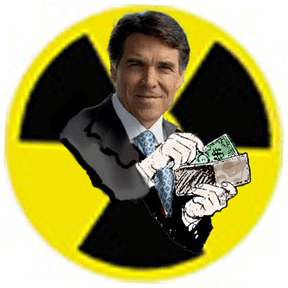
US Energy Secretary Perry turns New Nuclear Salesman to Europe
|
Messianic Perry preaches nuclear to sceptical Europeans, By Frédéric Simon | EURACTIV.com 21 Oct 19, Small nuclear reactors can help “vulnerable nations take control of their destinies,” the US energy secretary said in Brussels today (21 October), claiming that small off-grid nuclear plants can bring electricity to poor nations and “disperse the darkness” around the globe.
Countries with nuclear power “can’t be controlled by other countries wielding energy as a geopolitical weapon”, US Secretary of State Rick Perry said in Brussels as he addressed a forum of policymakers and industry representatives from both sides of the Atlantic. Nuclear power helps “vulnerable nations take control of their destinies,” Perry claimed, arguing that “energy security also bolsters national security”. Perry attended the first EU-US high-level forum on small modular reactors. His remarks on energy independence were chiefly aimed at Eastern European countries, which have repeatedly complained about Russian interference in national politics, using gas as a lever. Nuclear is a divise topic in Europe. While countries like France opted for it decades ago, others like Germany and Austria are strongly opposed. “Nuclear energy is neither safe and sustainable nor cost-effective,” said German State Secretary for Energy, Andreas Feicht, during a recent meeting of EU energy ministers, firmly rejecting suggestions that EU money might be used to extend the lifetime of existing nuclear plants. But Perry’s message was broader, and was also addressed at developing nations whom he said could benefit from small off-grid nuclear plants………. |
|
Nuclear shill Rick Perry switching from DOE Secretary to Small Nuclear Reactor Salesman
Perry to Resign as DOE Secretary, With Nuclear Weapon Programs on 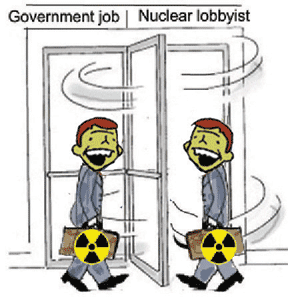 Autopilot, OCTOBER 18, 2019, BY DAN LEONE,Rick Perry on Thursday announced his resignation as the Donald Trump administration’s first secretary of energy after more than two-and-a-half years on the job. In a published letter to President Donald Trump, Perry said he would resign “later this year”…(subscribers only) https://www.exchangemonitor.com/perry-resign-doe-secretary-nuclear-weapon-programs-autopilot/
Energy Wire 17th Oct 2019, Energy Secretary Rick Perry will head back to Europe next week as part of an effort to boost the U.S. advanced nuclear industry’s ability to export its technologies across the globe.
https://www.eenews.net/energywire/2019/10/17/stories/1061299145
More evidence of safety risks: Hunterston B nuclear reactors should be closed
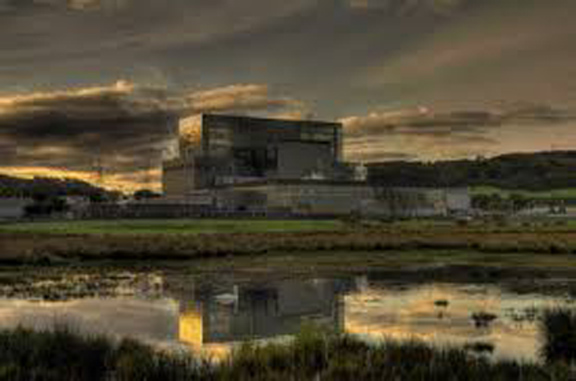
 The Ferret 17th Oct 2019, Hunterston, The graphite cores of two ageing nuclear reactors at Hunterston in North Ayrshire have begun to crumble as cracks spread, prompting safety inspectors to impose tough new conditions threatening future operations.
Technical reports released by the UK government’s Office for Nuclear
Regulation (ONR) reveal that at least 58 fragments and pieces of debris
have broken off the graphite bricks that make up the reactor cores.
According to ONR there is “significant uncertainty” about the risks of
debris blocking channels for cooling the reactor and causing fuel cladding
to melt. This could cause an accident and a leak of radioactivity.
The 50-strong group of Nuclear Free Local Authorities (NFLA) is urging ONR to close down both reactors at Hunterston. “These latest alarming
revelations about the graphite reactor cores at Hunterston B starting to
crumble and potential issues with the fuel make us even more convinced that
reactor three should not be allowed to resume operation,” said NFLA
Scotland convener and Glasgow SNP councillor, Feargal Dalton.
“We will be pressing the Office for Nuclear Regulation very hard to examine very carefully any justification which EDF Energy puts forward to reopen reactor four after its initial four month trial, and to be open and transparent
about what they find.
The precautionary principle would suggest that this reactor too should stay closed.” NFLA radiation consultant, Dr Ian Fairlie, described ONR’s latest reports as “very worrying”. By considering the melting of fuel cladding the regulatory agency was “getting into even more dangerous matters than before”. He added:
“These reports and their harder language make one wonder why ONR granted
a four month extension to reactor four in August. Taken together the new
revelations strengthen the calls by local residents to close both reactors
at Hunterston B.” https://theferret.scot/hunterston-graphite-debris-nuclear/
Bradwell B – UK’s futile nuclear project
BANNG 17th Oct 2019, Andy Blowers ponders the question, ‘Why, since Bradwell B is such a futile project, don’t the regulators stop it now?’ in the BANNG column for Regional Life, October, 2019. Why is it that so often decision makers fail to see or, perversely, choose to ignore the blindingly obvious?
This thought occurred to me during a recent meeting of BANNG with officials from the Office for Nuclear Regulation (ONR) and the Environment Agency (EA) about the Bradwell B site?
There are at least three major ‘showstoppers’ that should have already made Bradwell B, to borrow a phrase, ‘dead in the water’: Cooling water – the Blackwater estuary cannot possibly provide or sustain the volume of cooling water needed.
Emergency plan – in the event of a serious accident it will be impossible
to evacuate the surrounding area. Climate change – the Bradwell site is
fragile and vulnerable to rising seas, storms and erosion which will,
sooner or later, impact on the power station and its dangerous nuclear
waste stores. https://www.banng.info/news/the-show-must-not-go-on/
Safety concerns over Berkshire nuclear weapons factories
 Safety concerns over Berkshire nuclear weapons factories, BBC, 17 Oct 19, Two nuclear weapons factories are to remain under extra scrutiny due to safety concerns over their ageing facilities, a government watchdog said. BBC News
The AWE sites in Aldermaston and Burghfield, Berkshire, make and maintain the UK’s nuclear warheads.
The Office for Nuclear Regulation (ONR) said the sites will be scrutinised closely for at least two years.
Contractor AWE Plc said the replacements for the outdated facilities had been delayed.
The private company manufactures the warheads for Trident, the UK’s nuclear deterrent at sea.
AWE had planned to replace the Burghfield facilities by 2016, but due to construction delays it is expected to be completed in 2023, according to the Local Democracy Reporting Service. …. https://www.bbc.com/news/uk-england-berkshire-50099579
Russia showcases its nuclear arsenal with huge war games
|
Russia kicks off huge war games to test its nuclear arsenal, CBS News, BY DARIA LITVINOVA, OCTOBER 15, 2019 MOSCOW — Russia kicked off a sweeping military exercise of its Strategic Missile Forces on Tuesday. The Defense Ministry said the drills would include 16 practice launches of cruise and ballistic missiles.
Dubbed “Thunder-2019,” the war games were set to last three days and involve 12,000 troops, 213 missile launchers, 105 aircraft, 15 surface warships and five nuclear submarines………
Last week, Putin announced that Russia would start developing short- and intermediate-range missiles in response to U.S. plans to deploy such weapons in Asia. They are missiles that were banned for decades under the INF. Russia formally withdrew from the Reagan-era treaty soon after the U.S., which had accused Moscow of working on new missiles that violated the terms of the accord. https://www.cbsnews.com/news/russia-war-games-thunder-2019-test-strategic-nuclear-weapons-today-after-inf-collapse-2019-10-15/ |
|
Removal of highly radioactive material from 60 year old Dounreay Fast Nuclear Reactor (DFR).

BBC 15th Oct 2019, Radioactive material jammed inside a Scottish nuclear reactor since the 1970s has been removed for disposal. Remotely-operated tools were specially made to extract the breeder elements from the Dounreay Fast Reactor (DFR).
The DFR and its dome-shaped housing are to be demolished as part of the
wider decommissioning of the former nuclear power site near Thurso.
Dismantling the 60-year-old DFR is among the most challenging of the
decommissioning work.
https://www.bbc.co.uk/news/uk-scotland-highlands-islands-50055003
Switzerland’s old Beznau nuclear power plant
|
The world’s oldest nuclear power plant, By Jack Unwin Power Technology, 16 Oct 19, A look at Beznau nuclear power plant in Switzerland, the world’s oldest nuclear power plant currently in operation…….
Construction on the plant began in 1965 and Beznau 1 began producing power on 1 September 1969, with Beznau 2 following in 1972. It has two pressurised water reactors (PWR) built by Westinghouse with a capacity of 365MW each, for a total capacity of 730MW and able to produce 6000 gigawatt-hours (GWh) of energy. The plant is owned and operated by Swiss private company Axpo Holdings.
Accidents will happenDespite its long run producing power, Beznau has been no stranger to accidents at its site. According to the Swiss Federal Nuclear Safety Inspectorate, there were 91 nuclear security incidents between 1995 and 2014. However 86 of these were at level 0 on the International Nuclear Event Scale (INES), the least severe on its scale. Four were at level 1 and one in 2009 that was level 2, when two workers at the plant were exposed to “inadmissible” levels of radiation . Following its reopening four incidents were recorded at in 2018.
Protests and closureProtestors in Switzerland have targeted Beznau in particular, and nuclear power in general. Following the Fukushima nuclear disaster in Japan in 2011, 20,000 protestors gathered in the town of Doettingen to condemn Beznau in the largest anti-nuclear protest in the country for 25 years. In 2014 100 Greenpeace activists broke into Beznau and scaled one of the buildings at the site with a banner proclaiming “the end” of nuclear power due to safety concerns for the ageing plant. These concerns appeared to be well-founded in October 2015 when Beznau 1 was found to have 1000 holes, cracks and indentations around the reactor. Beznau was closed for repairs when “anomalies” were found in its steam generators from March 2015 to March 2018. The future of nuclear power in SwitzerlandDespite still producing power and being one of five nuclear plants that form35% of Switzerland’s energy mix, Beznau and nuclear power itself is under threat. Switzerland will instead develop renewable energy from wind, solar and hydropower as part of its Energy Strategy 2050 plan. Meanwhile there will be no new general licenses for nuclear power plants, but old plants like Beznau will continue to run until they are decommissioned…..https://www.power-technology.com/features/worlds-oldest-nuclear-power-plant/ |
|
Soaring costs of France’s Flamanville project casts a blight on the global nuclear industry
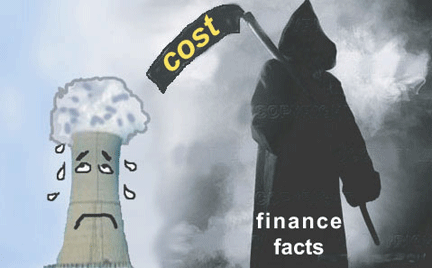
EDF said that its European pressurised reactor in Flamanville was now expected to cost €12.4 billion. This is €1.5 billion more than the previous estimate.
Initially it was supposed to cost €3.3 billion and the reactor was supposed to come on stream in 2012. The company says that under the revised plan it hopes to load fuel at Flamanville at the end of 2022, a decade late.
EDF is an electrity business with interests worldwide, including operating 58 nuclear reactors in its home country. It is majority-owned by the French state, which holds an 83.7 per cent stake…(subscribers only) https://www.thetimes.co.uk/edition/business/edf-admits-flamanville-reactor-will-cost-four-times-original-estimate-k55qjn9b5?fbclid=IwAR0-APtlBA77Q8ixdA4VPMl3YCO24A_ivA0dL9Xf_Hyo0mwKn4w0898zmjY
The million year problem – deep burial of nuclear wastes
Quite apart from the technological challenges and ethical issues these solutions present, both have one major drawback: to be successful they rely on external, uncontrollable factors. How could the knowledge required to interpret these things this be guaranteed to last?
Semiotician Thomas Sebeok recommended the creation of a so-called Atomic Priesthood. Members of the priesthood would preserve information about the waste repositories and hand it on to newly initiated members, ensuring a transfer of knowledge through the generations.
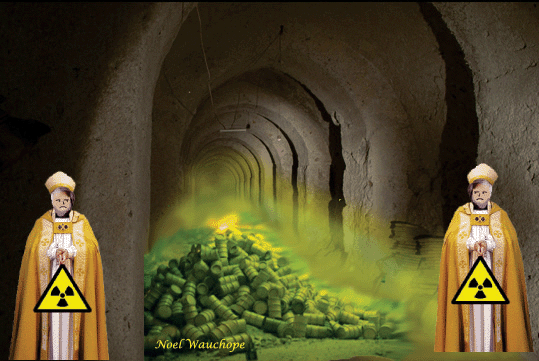
Buried nuclear waste stays dangerous for a million years — here’s how scientists plan to stop a future disaster
In thousands of years’ time, will they even understand the language written on our ‘keep out’ signs? https://inews.co.uk/news/long-reads/buried-nuclear-waste-danger-underground-future-disasters-814704
By Helen Gordon, Monday, 14th October 2019 The red metal lift takes seven juddering minutes to travel nearly 500 metres down. Down, down through creamy limestone to reach a 160-million-year-old layer of clay.
Here, deep beneath the sleepy fields and quiet woods along the border of the Meuse and Haute-Marne departments in north-east France, the French National Radioactive Waste Management Agency (Andra) has built its underground research laboratory.
The laboratory’s tunnels are brightly lit but mostly deserted, the air dry and dusty and filled with the hum of a ventilation unit.
Blue and grey metal boxes house a series of ongoing experiments – measuring, for example, the corrosion rates of steel, the durability of concrete in contact with the clay. Using this information, Andra wants to build an immense network of tunnels here.
It plans to call this place Cigéo, and to fill it with dangerous radioactive waste. It is designed to be able to hold 80,000 cubic metres of material.
Long-term risks of nuclear waste Continue reading
Putin warns on the need for a new nuclear weapons treaty
 PUTIN TAKES SWIPE AT TRUMP FOR WITHDRAWING FROM NUCLEAR TREATY: ‘IT WAS NOT WORTH RUINING’, Newsweek,
In an interview with Arabic-speaking journalists ahead of his visit to Saudi Arabia and the United Arab Emirates, Putin reiterated Russia’s opposition to the withdrawal in February from the INF, which had been signed in 1987 by Soviet leader Mikhail Gorbachev and President Ronald Reagan.
It banned missiles with ranges of between 310 and 3,400 miles but the U.S. and Nato had accused Russia of violating the pact by deploying a new type of cruise missile, a claim Moscow denied.
Putin said: “It think it was a mistake…and that they could have gone a different path. I do understand the U.S. concerns. While other countries are free to enhance their defences, Russia and the U.S. have tied their own hands with this treaty. However, I still believe it was not worth ruining the deal; I believe there were other ways out of the situation.”
Putin said that the U.S. must back a new START Treaty, which expires in 2021, to restrict a race to acquire strategic nuclear weapons.
“The new START Treaty is actually the only treaty that we have to prevent us from falling back into a full-scale arms race. To make sure it is extended, we need to be working on it right now. We have already submitted our proposals; they are on the table of the U.S. administration. There has been no answer so far.
“If this treaty is not extended, the world will have no means of limiting the number of offensive weapons, and this is bad news. The situation will change, globally. It will become more precarious, and the world will be less safe and a much less predictable place than today,” Putin said, according to a transcript of the interview on the Kremlin website.
Putin said that his doubt over the U.S. commitment to nuclear disarmament stretched back to 2002, when under President George W. Bush, Washington withdrew from the Anti-Ballistic Missile (ABM) Treaty, which had imposed limits on missile defence systems……… https://www.newsweek.com/putin-start-treaty-trump-arms-race-1464921
North West Evening Mail (UK) gives a fine example of incorrect pro nuclear goobledygook
 Radiation Free Lakeland 12th Oct 2019, New Nuclear** On the anniversary of the Windscale disaster and in the midst of the building of a new gas plant especially for Sellafield, the North West Evening Mail publishes a press release from the nuclear industry touting the ‘Rediscover Nuclear’ campaign.
Some of the laughable descriptions include “homegrown” “safe” “low carbon”. Each of these claims is a big fat lie. As Phil Johnstone tweets: UK “homegrown” nuclear. “UK only ever sold 2 reactors back in 60s, British Energy no longer exists. The UK doesn’t really have much of a civil nuclear industry. What is “homegrown” about it? Electricite de France? China General Nuclear Power Corporation?
https://mariannewildart.wordpress.com/2019/10/12/homegrown-dont-make-me-laugh/
Russia and the quest for nuclear power in space

 Ekipazh: Russia’s top-secret nuclear-powered satellite, The Space Review, by Bart Hendrickx, Monday, October 7, 2019 There is strong evidence from publicly available sources that a Russian company called KB Arsenal is working on a new type of military satellite equipped with a nuclear power source. Called Ekipazh, its mission may well be to perform electronic warfare from space.
Regulatory issues
One of the Principles stipulates that nuclear reactors may be operated on interplanetary missions, orbits high enough to allow for a sufficient decay of the fission products, or in low-Earth orbits if they are boosted to sufficiently high orbits after the operational part of the mission. As explained earlier, the latter procedure was followed for the Soviet-era RORSAT missions, but it is highly unlikely that Russia would want to risk repeating the Cosmos 954 experience of 1978. In fact, the very presence of a “transport and energy module” on Ekipazh is a sure sign that it will be placed into an orbit high enough to prevent any harm. Before the nuclear-powered TEM is even activated, a liquid-fuel propulsion system may first boost the satellite to an orbital altitude of at least 800 kilometers, the same procedure that has been described for the one-megawatt TEM. During a recent question-and-answer question with students in St. Petersburg, Roscosmos chief Dmitri Rogozin confirmed that 800 kilometers is the minimum operating altitude for nuclear reactors. Judging from Russian press reports, Rogozin was actually replying to a question about Ekipazh, but seemingly dodged that by talking about the one-megawatt reactor instead.[38]
The results of this safety assessment, together with, to the extent feasible, an indication of the approximate intended time-frame of the launch, shall be made publicly available prior to each launch and the Secretary-General of the United Nations shall be informed on how States may obtain such results of the safety assessment as soon as possible prior to each launch.
Outlook
One also wonders if the Russians are biting off more than they can chew by simultaneously working on two nuclear electric space tugs (Ekipazh and the one-megawatt TEM). An attempt to streamline this effort seems to have been made by giving KB Arsenal a leading role in both projects in 2014, making it possible to benefit from the company’s earlier experience in the field and infrastructure that it may already have in place to test related hardware. Still, the two projects use fundamentally different nuclear reactors built by different organizations.
1 This Month
23-25 October – on Zoom – World BEYOND War’s annual global conferenc


Shut down the radiation-damaged Heysham nuclear reactors now
To see nuclear-related stories in greater depth and intensity – go to https://nuclearinformation.wordpress.com

Say No to NASA’s Reckless Nuclear Reactor on the Moon
Say No to NASA’s Reckless Nuclear Reactor on the Moon
-
Archives
- October 2026 (170)
- September 2026 (339)
- August 2026 (330)
- July 2026 (355)
- June 2026 (287)
- May 2026 (306)
- April 2026 (356)
- March 2026 (251)
- February 2026 (267)
- January 2026 (308)
- December 2025 (358)
- November 2025 (359)
-
Categories
- 1
- 1 NUCLEAR ISSUES
- business and costs
- climate change
- culture and arts
- ENERGY
- environment
- health
- history
- indigenous issues
- Legal
- marketing of nuclear
- media
- opposition to nuclear
- PERSONAL STORIES
- politics
- politics international
- Religion and ethics
- safety
- secrets,lies and civil liberties
- spinbuster
- technology
- Uranium
- wastes
- weapons and war
- Women
- 2 WORLD
- ACTION
- AFRICA
- Atrocities
- AUSTRALIA
- Christina's notes
- Christina's themes
- culture and arts
- Events
- Fuk 2022
- Fuk 2023
- Fukushima 2017
- Fukushima 2018
- fukushima 2019
- Fukushima 2020
- Fukushima 2021
- general
- global warming
- Humour (God we need it)
- Nuclear
- RARE EARTHS
- Reference
- resources – print
- Resources -audiovicual
- Weekly Newsletter
- World
- World Nuclear
- YouTube
-
RSS
Entries RSS
Comments RSS

