Documents reveal UK’s plans for rolling out nuclear weapons
 World War 3: UK’s plan for ‘rapid deployment of nuclear weapons’ in 24 hours exposed https://www.express.co.uk/news/world/1219002/world-war-3-uk-nuclear-weapon-deployment-24-hours-soviet-union-cold-war-spt, by CALLUM HOARE, Mon, Dec 30, 2019 |
THE UK planned to roll out its nuclear arsenal in as little as 24 hours in what would have been a “frenetic” response to the Soviet Union’s escalation of war in the Eighties, documents seen by Express.co.uk reveal.
The 1983 papers came at a time of intense tensions, as the Cold War reached boiling point, threatening to topple into World War 3. The US and the Soviet Union were jostling for world supremacy and, as the threat of nuclear war increased, allies on both sides prepared for how they would respond, including the UK. Ministry of Defence documents expose a top secret mission for “rapid deployment of nuclear weapons” in the event things spiralled out of control.
One document seen by Express.co.uk reads: “The Secretary of State asked for further advice on the arrangements which would be needed for the rapid deployment of Tactical Nuclear Warheads (TNW) in a crisis on the assumption that all naval nuclear weapons were stored in the UK in peacetime.
“A plan – Operation Perfidious – is already in existence to allow for the rapid deployment of TNW from the stock-pile at RAF Honington in Suffolk, either directly by helicopter to the ship, or to service airfields in the UK by helicopter or C130 Hercules aircraft for onward transmission to ships.
“Theoretically, transfer from Honington to sea could take as little as 24 hours, but this assumes that the ships are close to the Norfolk coast and that all the assets from the movement are available.
The documents go on to discuss the need to act quickly, and the risks the Soviet Union posed.
They add: “Nuclear stockpiles are known to be prime targets for Soviet Special Forces.
“Additionally, each time a nuclear weapon is moved there is a safety risk, a security risk, and, if the timing of the move can be predicted, a risk of civil, industrial or even military intervention.
“The risks are small if the move is preplanned and conducted in isolation of all other activities.
The risks would be higher if hurried embarkation of a large number of TNW were attempted amidst all the other preparations for war under the eagle eyes of the media and anti-war faction.
“Nuclear stockpiles could be created around the country, but the cost in preparing storage facilities and the manpower necessary to service and guard such areas would be disproportionately high.”
Thankfully, they were never needed.
While tension did reach unthinkable levels, both the US and the Soviet Union were aware of each other’s nuclear capabilities.
As a result, the doctrine of Mutually Assured Destruction was accepted between the two.
This was the belief that a full-scale use of nuclear weapons by two or more opposing sides would cause the complete annihilation of both the attacker and the defender.
It is based on the theory of deterrence, which holds that the threat of using strong weapons against the enemy prevents the enemy’s use of those same weapons.
“Potentially faulty electrical components” in France’s nuclear backup systems
 Montel 27th Dec 2019, EDF has replaced 28 “potentially faulty electrical components” making backup systems for the Penly 2 nuclear reactor (1330 MW) unavailable and is checking whether other units could present the same “safety” problem, said France’s ‘Nuclear Safety Authority (ASN) and EDF Friday. Montel 27th Dec 2019, EDF has replaced 28 “potentially faulty electrical components” making backup systems for the Penly 2 nuclear reactor (1330 MW) unavailable and is checking whether other units could present the same “safety” problem, said France’s ‘Nuclear Safety Authority (ASN) and EDF Friday.
https://www.montelnews.com/fr/story/edf-change-des-pices-dfectueuses-%C3%A0-penly-2/1074523 |
|
Swiss nuclear power station shut down, due to a technical problem
Once the cause has been clarified, the plant will be put back into operation as soon as possible, the operator said. It is not clear when that will be. ……
Transducers replaced
Two reactor shutdowns had already occurred at Leibstadt in April and May 2019. Both had the same cause. According to ENSI a malfunctioning transducer led to incorrect values in a channel of the main steam pressure measuring system. These triggered a rapid closure of the turbine inlet valves.
……Saturday’s shutdown comes a week after the 47-year-old Mühleberg nuclear power plant near Bern was permanently switched off. It was the first Swiss nuclear power reactor to be decommissioned. https://www.swissinfo.ch/eng/leibstadt_technical-problem-shuts-down-swiss-nuclear-power-station/45461886
Goats irradiated in 1950s now pose possible environmental danger in Berkshire, UK
Contamination in Berkshire, Berkshire Live 21st Dec 2019, Goats injected with radioactive chemicals could be buried in Berkshire. The
animals, said to have been experimented on in the 1950s and 60s, could now
be buried on land in Shinfield.
Those living nearby have raised concerns
after learning scientists at the University of Reading injected the goats
with radioactive isotopes. The experiments were said to have been looking
into how radiation affected milk and metabolism.
It formed part of research
into milk production and the dairy industry, by The National Institute for
Research in Dairying (NIRD), based in Shinfield and closed in 1985. The
goats were apparently ‘famous in folklore’, according to one American
professor, Margaret Neville. Burying dead livestock is now banned to stop
the spread of disease. But before the 2003 ban, farmers would reportedly
often bury dead animals in pits on their own land.
Russia deploys first hypersonic missiles
Russia has deployed its first hypersonic nuclear-capable missiles, with Vladimir Putin boasting that it puts his country in a class of its own.
The president described the Avangard hypersonic glide vehicle, which can fly at 27 times the speed of sound, as a technological breakthrough comparable to the 1957 Soviet launch of the first satellite.
Putin has said Russia’s new generation of nuclear weapons can hit almost any point in the world and evade a US-built missile shield, though some western experts have questioned how advanced some of the weapons programmes are.
The Avangard is launched on top of an intercontinental ballistic missile, but, unlike a regular missile warhead, which follows a predictable path after separation, it can make sharp manoeuvres en route to its target, making it harder to intercept……. https://www.theguardian.com/world/2019/dec/27/russia-deploys-first-hypersonic-missiles-nuclear-capable
European Union split on nuclear energy, but manages a draft Green Finance deal.
Green-finance deal survives EU split on nuclear energy. European Central Bank chief Christine Lagarde has underlined the importance of the reform, with sustainable finance deals reaching one half a trillion dollars in 2018.
But the long-standing disagreement over nuclear energy has undermined the EU’s efforts to cut greenhouse emissions, with a promise last week by EU leaders for carbon neutrality by 2050 nearly scuppered by a feud over atomic energy.
https://www.khmertimeskh.com/50671303/green-finance-deal-survives-eu-split-on-nuclear-energy 23 Dec 19, EU negotiators have been struggling for weeks to finalise a harmonised classification system for green finance in Europe that could decide the fate of hundreds of billions of euros in investment.
The lobbying frenzy in Brussels over the new EU norm has been immense, with soon to Brexit Britain also making its voice heard while protecting the interests of the City of London financial hub.
“This is a historic moment… the much-needed enabler to get green investments to flow and help Europe reach climate neutrality by 2050,” said EU Commission Vice President Valdis Dombrovskis.
Late on Monday, EU lawmakers approved an offer by member states that delayed the nuclear question – as well as the role of natural gas cherished by Berlin – until the end of 2021.
“I am fully aware that the nuclear problem will return in two years’ time. We pushed back the matter,” said the chairman of the European Parliament’s Environment Committee, French centrist MEP Pascal Canfin.
“The risk was to take the whole classification hostage,” he added.
Ever since the European Commission’s proposal was put on the table in May 2018, nuclear energy has been the subject of a huge fight between its supporters, led by France and backed by Eastern European countries.
But opponents of nuclear power – such as Germany, Austria, Luxembourg and Greece – have refused to back down, with domestic opinion fearing atomic energy disasters, such as Fukushima or Chernobyl.
The compromise suggested by Finland, which holds the EU’s rotating presidency, was reached with MEPs behind closed doors and needs final approval by member states envoys on Wednesday.
Once approved, the European Commission will then have two years to draw up detailed lists of sectors eligible for a Green finance label, based on the criteria.
Germany’s next nuclear reactor closure on December 31st
|
German nuclear exit continues as planned with next reactor to close Dec 31, https://www.spglobal.com/platts/en/market-insights/podcasts/crude/122319-capitol-crude-oil-market-top-geopolitical-risks-2020. Andreas Franke Editor. Dan Lalor — Germany’s planned phasing out of nuclear power will continue with the closure next Tuesday of the 1.5 GW Philippsburg 2, leaving six reactors with a combined 8 GW online for the next 2-3 years. Federal environment minister, Svenja Schulze, said in a statement that the consensus in Germany behind the nuclear phase-out was “rock solid”. The last reactor will close by the end of 2022. “The nuclear exit makes our country safer [as it avoids radioactive waste]…It is important to emphasize in times when some propagate nuclear power as supposed climate savior that it solves no single problem, but creates new problems for a million years,” Schulze said. Germany decided in 2011 amid the aftermath of the Fukushima nuclear accident in Japan to immediately close reactors built before 1980 and reverse a planned run-time extension for modern nuclear plants by setting final closure dates. Nuclear operators still had to pay a combined Eur23 billion ($25.6 billion) into a state-run fund for the financing of mid- and long-term nuclear storage in Germany. So far, two modern reactors were shut in 2015 and 2017, with Philippsburg 2 the third reactor to close. The final shutdowns are more concentrated with three reactors set to close in December 2021 and the final three by the end of 2022. |
|
Scientists track down the source of radioactive plume, – Russian cover-up of a nuclear accident

|
Russia appears to have kept a major nuclear accident secret. But scientists called the ‘Ring of 5’ tracked the plume of radiation to its source. https://www.businessinsider.com.au/russia-nuclear-accident-radiation-timeline-2017-2019-12?r=US&IR=T, ARIA BENDIX DEC 21, 2019
A group of scientists called the “Ring of Five” noticed something unusual in the atmosphere in late 2017: Air across Europe showed “unprecedented” levels of the radioactive isotope ruthenium-106.
The isotope is often made when reprocessing nuclear fuel. “We were stunned,” Georg Steinhauser, a professor at the University of Hanover in Germany who is part of the group, told Business Insider in August. “We did not have any anticipation that there might be some radioactivity in the air. We were just measuring air filters as we do on a weekly basis, 52 times a year, and suddenly there was an unexpected result.” The Ring of Five, which had been monitoring Europe’s atmosphere for elevated levels of radiation since the mid ’80s, spent the next two years looking for the cause of the spike.
The culprit, according to a study released in July, was an undisclosed nuclear accident at the Mayak nuclear facility in Russia, which was once the centre of the Soviet nuclear-weapons program. Mayak was also the site of the 1957 Kyshtym explosion, the world’s third-worst nuclear accident. More than 10,000 nearby residents were forced to evacuate at the time. Russia has never acknowledged that any nuclear accident happened at the Mayak facility in 2017, and has not responded to any findings from the Ring of Five. But now, the scientists have unravelled the mystery even further.A second study published last month offers even more evidence that an accident occurred at Mayak in 2017. It even pinpoints a timeline: Most of the ruthenium was emitted on September 26, 2017.
Tracing a radioactive plume across EuropeThe Ring of Five is so named because the group was originally made up of scientists from five nations – Sweden, Germany, Finland, Norway, and Denmark – but it now includes researchers from 22 countries. Their monitoring work takes takes place 24 hours a day, 365 days a year. The new study suggests that the Mayak facility likely released 250 terabecquerels (a measurement of radioactivity) of ruthenium into the atmosphere. The Kyshtym explosion, by comparison, released around 2,700 terabecquerels of ruthenium. The world’s worst nuclear accident, Chernobyl, released around 5.3 million terabecquerels of radioactive material, according to a 2013 analysis.
To find out where the 2017 radioactive plume came from, scientists traced the path of the wind at the time using more than 1,100 measurements from the fall of that year. That required studying the wind’s altitude and direction, as well as weather conditions that may have changed its course.
The scientists determined that the plume started out in the Southern Urals, where the Mayak facility is located, then was driven towards southwest Russia. It arrived in Romania on September 29, then split in two. The main part of the plume spread toward Central Europe, where it encountered rain in Bulgaria. Plant and soil samples taken in the country showed elevated levels of ruthenium at the time. After that, the plume moved north to Scandinavia before arriving in Italy on October 2, 2017. That day, Italian scientists sent an alert to the Ring of Five about elevated levels of ruthenium in Milan. Steinhauser called this the “single greatest release from nuclear-fuel reprocessing that has ever happened.” Russia has not responded to the Ring of Five’s findingsAt the time of the alleged accident in 2017, Russian officials said the Mayak facility wasn’t the source of the release, even though the nation showed elevated levels of ruthenium. Instead, officials in Russia attributed the radiation to a satellite that burned up in the atmosphere. Russia still hasn’t issued a response to either of the studies the Ring of Five published this year. “We should not forget that Mayak is a military facility – and, of course, the Russian Federation is very reluctant when it comes to talking about military facilities,” Steinhauser said. “I presume this would not be much different for other superpower nations.” The scientists don’t consider the levels of radiation they detected to be an immediate threat to people’s health. Last year, France’s Institute for Radiological Protection and Nuclear Safety determined that the levels of ruthenium-106 in the atmosphere do not pose danger to human health or the environment. But the long-term consequences are unknown. Another unanswered question, Steinhauser said, is whether the population near the Mayak facility breathed any radiation into their lungs. He added that there could be reason to monitor food safety if radiation leaked into the soil and water. “We would like to get some more in-depth information on what actually happened,” he said. “There’s a good chance that we’ll catch every single accident – but, in the present case, surprise was on our side.” |
|
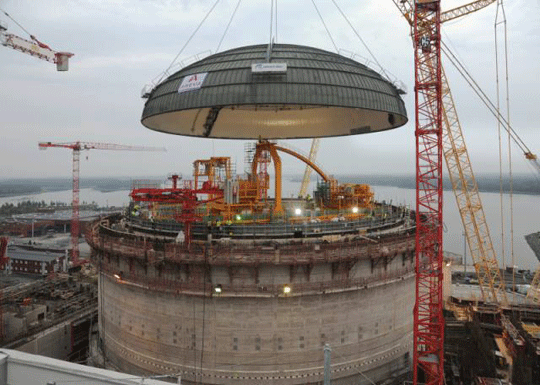
Yet more delay – Finland’s Olkiluoto 3 nuclear reactor already 12 years behind schedule
|
Olkiluoto 3 nuke delayed yet again, now 12 years behind schedule https://yle.fi/uutiset/osasto/news/olkiluoto_3_nuke_delayed_yet_again_now_12_years_behind_schedule/11128489
– 20 Dec 19, Finland’s fifth nuclear reactor will not begin regular operations before 2021, rather than 2009 as originally planned. The startup date for the Olkiluoto 3 (OL3) nuclear reactor on Finland’s southwest coast has been pushed back again. Plant owner Teollisuuden Voima (TVO) said on Thursday that it had been informed of the new schedule by the main supplier, the Areva-Siemens Consortium.The supplier now says that fuel will be loaded into the reactor next summer ahead of grid connection in November 2020. Regular electricity production would start in March 2021, instead of September 2020 as most recently announced. Faulty components foundTVO says the latest delays are due to slow progress in system testing and shortcomings in spare part deliveries. For instance auxiliary diesel generators were found to have faulty components. “Because of numerous delays we have to do maintenance to equipment and components already installed to ensure fluent start-up and continuous operation. The manufacturing and deliveries of the spare parts take time,” OL3 Project Director Jouni Silvennoinen said in a TVO statement. Construction work on OL3 started nearly 15 years ago. According to the original timetable, it was to have gone online in 2009. Since then there have been many delays, lawsuits and massive cost overruns. With a total cost estimate of at least 8.5 billion euros, it has been described as the second-most expensive building in human history, behind a hotel complex in Mecca. Construction of the original atomic power station began in 1973. The first unit began commercial operations six years later, becoming the country’s second reactor after one in Loviisa. The Fennovoima consortium hopes to build Finland’s first entirely new nuclear plant since the 1970s in Pyhäjoki, near Raahe. That project too has been beset by delays and is yet to receive a construction permit.
|
|

A quarter of Russia’s Andreeva Bay’s spent nuclear fuel stack removed, with Norway’s help
Norway helps pay for transporting old Russian navy nuclear waste
A shipment of 14 containers with spent nuclear fuel from Andreeva Bay to Atomflot in Murmansk took place this week. Barents Observer By Thomas Nilsen December 20, 2019
|
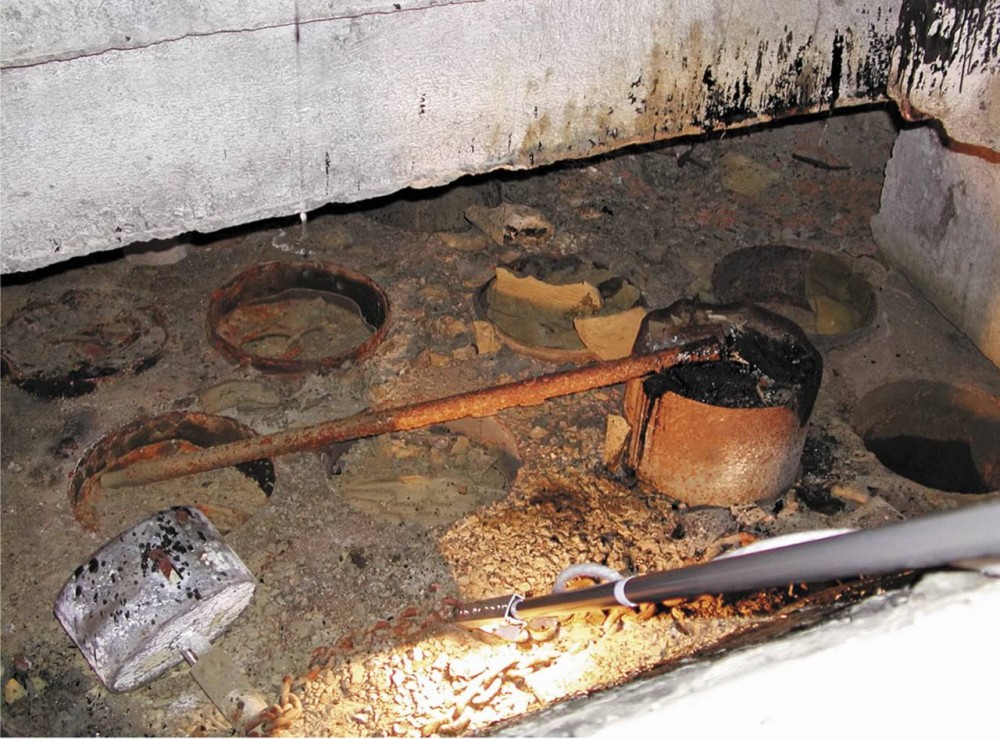
“This is the first time we will pay for removing. The ship was fully loaded. 14 containers with spent nuclear fuel,” says project coordinator Per-Einar Fiskebeck to the Barents Observer. The removed waste contained about one million Curie (37.000 TBq) of long lived isotopes. Unloading the 40-years old spent uranium fuel elements from the rundown storage tanks and repacking them to transport containers came with a price-tag of 5 million kroner (€500.000), while the shipment from Andreeva Bay to Murmansk will cost additional 2,5 million kroner (€250.000). This week’s shipment is the fourth this year, but the first one paid by Norway. Per-Einar Fiskebeck, an engineer with the County Governor of Troms & Finnmark, has since the 1990s worked in close cooperation with SevRao, Russia’s regional enterprise in charge of cleaning up the nuclear waste site on the western banks of the Litsa fjord. Here, only 65 kilometers from the border to Norway, the Soviet navy packed away its lethal leftovers. Without too much thought for the costs of future clean up. In Norway, like in Russia, the demand for action came out of fears for possible radioactive leakages that could have potentially negative impact on the important fisheries in the Barents Sea. So far, isotopes contamination has only been discovered in the sediments in the near proximity off the shore and not further out in the bay. Concerns of nuclear accidents and radioactive leakages are also why Norwegian authorities have granted hundres of millions kroner in aid to secure and clean up the site……. In 2017, the first load of containers with spent nuclear fuel left Andreeva Bay towards Murmansk, from where it go by rail to Mayak, Russia’s reprocessing plant north of Chelyabinsk east of the Ural Mountains. So far in 2019, three shipments paid by Russia and one shipment paid by Norway have left Andreeva Bay. “25% of the original amount of spent nuclear fuel is now removed,” says Per-Einar Fiskebeck. With one-fourth of the waste removed in two and a half years doesn’t mean the remaining will be shipped away with the same speed. «The fuel elements lifted out and re-packed so far have been undamaged,” Fiskebeck says. Both tank No. 1 and No. 2 are believed to hold mostly unproblematic elements. He explains how some of the other elements will be a much more challenging task. Tank 3A holds numerous rusty, partly destroyed steel pipes where concrete of poor quality was filled in the space between. Some of those fuel assemblies are stuck in the canisters, while some of the canisters are stuck in the cells. This is high level nuclear waste with radiation levels close to the uranium fuel comparable to the melted fuel rods inside the ill-fated Chernobyl reactor. Risk-assessments give a clear recommendation: Do not try to lift any of the assemblies before you are sure nothing falls out.
A worst case scenario is uranium pellets falling to the bottom, becomes unstable, creating an uncontrolled nuclear fission chain reaction with radionuclides being airborne. Three different kind of containers to handle damaged elements are now under development and testing, a work Fiskebeck estimates will take all of 2020 and 2021. “Risk assessment and environmental safety studies are core to all Norwegian funded projects,” Fiskebeck tells……… Another groundbreaking milestone in the clean up work took place earlier this fall when the retrieval of six abandoned, highly radioactive spent nuclear fuel assemblies from the bottom of Building No. 5 were successfully completed. Building No. 5 is a former pool storage, where several elements fell to the floor following a water-leakages in 1982. Traces of uranium and other radionuclides remained in the sludge at the bottom of the pool. The radiation on site was too high for humans to work safely. “You can’t have humans there. Robotics were needed to do the job,” Per-Einar Fiskebeck explains. Such remote controlled equipment were made and the six elements are now safely transferred to the nearby storage building No. 151 in Andreeva Bay……. https://thebarentsobserver.com/en/ecology/2019/12/norway-helps-pay-transporting-40-years-old-russian-navy-nuclear-waste |
|
Switzerland to shut down uneconomic Mühleberg nuclear reactor
|
Switzerland to shut down first nuclear reactor le News18/12/2019 BY LE NEWS
On 20 December 2019, Switzerland will shut down the Mühleberg nuclear reactor in the canton of Bern. The plant went into operation in 1972, making it the nation’s second oldest nuclear power station after Beznau, which started its first reactor in 1969. The Mühleberg power station, which takes its cooling water from the Aare river, was originally scheduled for shutdown in 2012. This date was later extended to 2019. Fissures in the mantle surrounding the reactor and rising operating costs mean the plant is no longer economically viable. Groups concerned about the safety of the reactor are celebrating. The safety justification for the nation and it neighbours for shutting down this reactor has existed for a long time, according to Philippe de Rougemont, a spokesperson for the group Sortir du nucléaire, a group that organised an unsuccessful referendum in 2016 to precipitate the phaseout of Switzerland’s nuclear power industry. The Mühleberg reactor, which is the closest Swiss reactor to Lausanne and Geneva, must now be decommissioned. Radioactive material must be cooled, processed and disposed of safely. The organisation Sortir du nucléaire said it will keep a close eye on this process, which it considers a major risk. Switzerland has five nuclear reactors on four sites. After the 2011 nuclear accident at Fukushima in Japan, the Federal Council, Switzerland’s executive, said it would build no new nuclear reactors and decommission existing nuclear power plants at the end of their safe operational lifespans. It estimated the safe operational lifespan to be about 50 years, which means Beznau I would be taken offline in 2019, Beznau II and Mühleberg in 2022, Gösgen in 2029 and Leibstadt in 2034. However, the government made no commitment to close any nuclear reactor by a specific date. The Federal Council was supported by parliamentary and upper house majorities……. https://lenews.ch/2019/12/18/switzerland-to-shut-down-first-nuclear-reactor/ |
|
Hazards of Russia’s nuclear colonialism- example South Africa
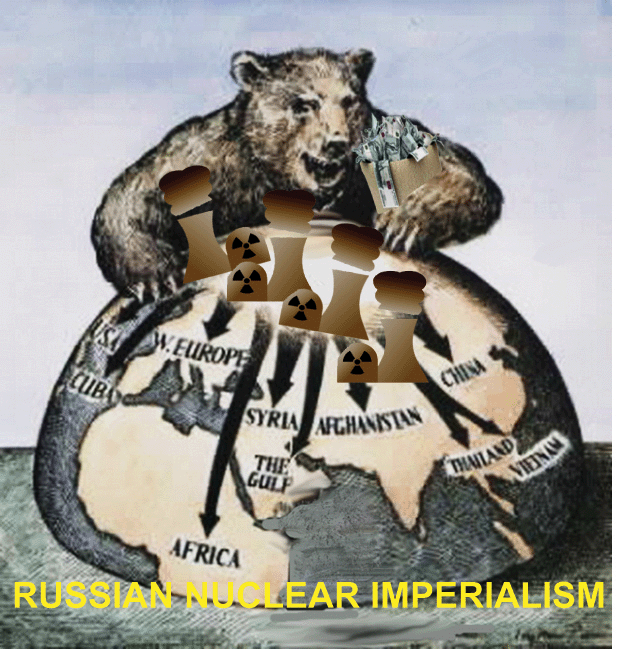
 Africa, Russia squandered close ties with the South African government by overplaying its hand and getting caught up in a corrupt nuclear energy pact. Carnegie Endowment For International Peace (thoroughly researched and referenced) 16 Dec 19,
 SUMMARY
 Amid the widespread attention the Kremlin’s recent inroads in Africa have attracted, there has been surprisingly little discussion of South Africa, a country which, for nearly a decade, unquestionably represented Russia’s biggest foreign policy success story on the continent. As relations soared during the ill-starred presidency of Jacob Zuma (2009–2018), the Kremlin sought to wrest a geopolitically significant state out of the West’s orbit and to create a partnership that could serve as a springboard for expanded influence elsewhere in Africa. Continue reading
 European Union’s “taxonomy” of sustainable activities includes nuclear
 Green-Finance Deal Reached by EU States on Nuclear Compromise https://www.bloomberg.com/news/articles/2019-12-16/green-finance-deal-reached-by-eu-states-on-nuclear-compromise
By Alexander Weber, December 16, 2019, Green-Finance Deal Reached by EU States on Nuclear Compromise https://www.bloomberg.com/news/articles/2019-12-16/green-finance-deal-reached-by-eu-states-on-nuclear-compromise
By Alexander Weber, December 16, 2019,
Diplomats from the European Union’s 28 countries agreed to advance with key legislation for green financial products, bringing the bloc a step closer to embedding environmental goals in standards for banks, money managers and insurers. Envoys signed off on a deal on the EU’s list of sustainable activities after more lenient wording on the inclusion of nuclear energy won the backing of countries including France and the U.K., according to an official involved in the talks, who asked not to be named, in line with policy. A first attempt to strike a deal last week failed amid divisions over the role that nuclear energy should play in the framework. The EU’s list of sustainable activities for investment purposes, dubbed “taxonomy,” is the centerpiece of its push to regulate the fast growing market of green finance, in the hope of directing trillions of euros to fund a radical revision of the region’s economy. It’s meant to define what’s green and what’s not, an effort that could find a range of uses and serve as an example for governments around the world. The difficulty of agreeing on the rules shows what kind of obstacles the EU has to overcome to meet its ambitious climate targets. Leaders last week agreed that the bloc should achieve zero net emissions in 2050, paving the way for a flurry of legislation that’s needed for the unprecedented clean-up of the economy. The member states now have to present their compromise to the European Parliament, which has been critical of allowing fossil fuels and nuclear power to be classified as sustainable and thus eligible to be financed with green bonds and similar financial products. |
|
In France, over the next decade renewable energy is ‘on track to overtake nuclear’
 Renewables ‘on track to overtake nuclear’ in France https://www.powerengineeringint.com/2019/12/16/renewables-on-track-to-overtake-nuclear-in-france/ Kelvin Ross A new study claims that renewables are on track to overtake nuclear power as the dominant energy source in France in the next decade.The share of renewables in France will hit 42.9 per cent of the country’s power mix by 2023, up from 19.9 per cent in 2018, according to analytics company GlobalData. Renewables ‘on track to overtake nuclear’ in France https://www.powerengineeringint.com/2019/12/16/renewables-on-track-to-overtake-nuclear-in-france/ Kelvin Ross A new study claims that renewables are on track to overtake nuclear power as the dominant energy source in France in the next decade.The share of renewables in France will hit 42.9 per cent of the country’s power mix by 2023, up from 19.9 per cent in 2018, according to analytics company GlobalData.
And the research suggests that renewables will continue to rise as nuclear reactors come offline. The report examining France’s power outlook to 2030 reveals that in 2018 nuclear power dominated the capacity mix by 47.2 per cent, followed by renewables, hydropower and thermal power. In the non-hydro renewable energy mix, wind contributed 56.7 per cent followed by solar PV with 35.6. GlobalData analyst Piyali Das said that France “is aiming to boost the renewable energy sources through tender mechanism. Renewable power sources are expected to increase at a compound annual growth rate of 8.9 per cent between 2019 and 2030 with a net capacity addition of around 50 GW. “Installed capacity for onshore wind will double from its current levels of 15.1 GW by 2026, and to support the expansion the government has announced doubling of the renewable energy budget. Solar PV is not behind by much in terms of growth and will witness an addition of more than 24 GW during the same period.” Das said that in the long-term, the French government has decided to cut down its fossil fuel dependency and is replacing coal and oil power stations with gas-fired plants. The government also has wants to reduce nuclear generation to 50 per cent of net generation by 2035, with a plan to decommission around 14 reactors by 2035 and fill the gap with renewable sources. “To date the development of renewable energy is largely supported by public support mechanisms,” explained Das. “These mechanisms finance the difference between the remuneration of their production on the wholesale market and the purchasing price guaranteed by the state to the renewable producer. |
|
Anger as EDF tries to shrink emergency zone around Scottish nuclear plant
Follow The emergency zone around Hunterston B, an ageing nuclear power plant in Scotland, sprawls for more than 2km in every direction. Residents of this zone are regularly given iodine pills to take in the event of a nuclear disaster.However, French state-owned EDF Energy has come under fire for attempting to reduce the emergency zone to 1km, potentially exposing residents further away to harmful levels of radiation if an accident were to take place.
Activists claim the zone should be expanded rather than contracted. A recent change in the law has placed the responsibility for zoning around nuclear facilities with local authorities, rather than the Office of Nuclear Regulation (ONR).
North Ayrshire...(subscribers only) https://www.telegraph.co.uk/business/2019/12/16/anger-edf-tries-shrink-emergency-zone-around-scottish-nuclear/
1 This Month
23-25 October – on Zoom – World BEYOND War’s annual global conferenc


Shut down the radiation-damaged Heysham nuclear reactors now
To see nuclear-related stories in greater depth and intensity – go to https://nuclearinformation.wordpress.com

Say No to NASA’s Reckless Nuclear Reactor on the Moon
Say No to NASA’s Reckless Nuclear Reactor on the Moon
-
Archives
- October 2026 (170)
- September 2026 (339)
- August 2026 (330)
- July 2026 (355)
- June 2026 (287)
- May 2026 (306)
- April 2026 (356)
- March 2026 (251)
- February 2026 (267)
- January 2026 (308)
- December 2025 (358)
- November 2025 (359)
-
Categories
- 1
- 1 NUCLEAR ISSUES
- business and costs
- climate change
- culture and arts
- ENERGY
- environment
- health
- history
- indigenous issues
- Legal
- marketing of nuclear
- media
- opposition to nuclear
- PERSONAL STORIES
- politics
- politics international
- Religion and ethics
- safety
- secrets,lies and civil liberties
- spinbuster
- technology
- Uranium
- wastes
- weapons and war
- Women
- 2 WORLD
- ACTION
- AFRICA
- Atrocities
- AUSTRALIA
- Christina's notes
- Christina's themes
- culture and arts
- Events
- Fuk 2022
- Fuk 2023
- Fukushima 2017
- Fukushima 2018
- fukushima 2019
- Fukushima 2020
- Fukushima 2021
- general
- global warming
- Humour (God we need it)
- Nuclear
- RARE EARTHS
- Reference
- resources – print
- Resources -audiovicual
- Weekly Newsletter
- World
- World Nuclear
- YouTube
-
RSS
Entries RSS
Comments RSS

