Ukraine accuses Russia of targeting its nuclear substations.
A large Russian missile and drone attack that overwhelmed Ukrainian air
defences overnight targeted substations that power two of Ukraine’s nuclear power plants, according to the country’s foreign minister and a person with knowledge of the barrage.
Andriy Sybiha, Ukraine’s top diplomat, said the
substations which power the Khmelnytskyi and Rivne nuclear power plants
were targeted in “well planned strikes”. “Russia is deliberately
endangering nuclear safety in Europe,” he said in a statement.
FT 9th Nov 2025, https://www.ft.com/content/474e7f27-87fb-4fb1-9899-d62778a611a4
The ‘weird’ catch to Labour’s ‘national security threat’ attack on the Scottish National Party.

LABOUR’S “national security threat” attacks on the SNP reveal how deeply embedded support for nuclear weapons has become in UK politics, a leading security academic has said.
Nick Ritchie, a professor of international security at the University of York, said that by branding opposition to Trident as a danger to the nation, ministers risk “shutting down” democratic debate on defence.
Ritchie, who last year led research
on international nuclear security for the New Zealand government, spoke to
the Sunday National after Labour ministers ramped up their rhetoric against the Scottish Government, suggesting it poses a bigger danger to UK
interests than China.
In the past week, Deputy Prime Minister David Lammy,
Scottish Secretary Douglas Alexander, and Defence Secretary John Healey
have all described the SNP administration as a “threat” to UK national
security. The Labour ministers’ arguments hinge on the SNP’s opposition to
nuclear weaponry, which Ritchie said “really reduces how you can talk and
think about national security”.
He suggested that national security was
being “conflated with unequivocal support for nuclear weapons”. RITCHIE
said the “weird thing” is that the UK Government is technically legally
bound “under the Non-Proliferation Treaty to work towards the goal of
nuclear disarmament”. He went on: “Of course, the caveat is that the
time is not right now, it’ll be far too difficult and so on and so forth.
But the premise – that nuclear disarmament is where we need to end up – is a premise that is accepted, or has been accepted, by governments of all
stripes. “So there’s a tension there between accepting that on the one
hand and then chastising the SNP for a pretty legitimate position that
nuclear weapons are a security liability. This is the position that the
majority of countries in the world have taken.”
The National 9th Nov 2025, https://www.thenational.scot/news/25606016.weird-catch-labours-national-security-threat-attack-snp/
Brian Goodall says no to next stage of submarine dismantling
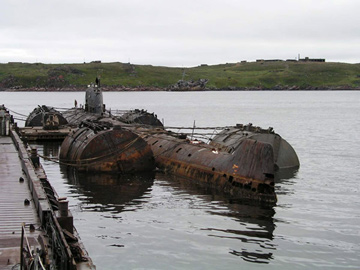
“Whichever way we deal with all seven of the subs currently at the dockyard I remain completely against any further nuclear submarines being brought to Rosyth.
By Ally McRoberts, Dunfermline Press, 8th Nov 2025
REMOVING the reactor from one of the laid-up nuclear submarines at Rosyth Dockyard is a “stage too far”.
Local SNP councillor Brian Goodall said there was “no need” to cut out the most radioactive parts left in HMS Swiftsure, which is being dismantled as part of an innovative recycling scheme.
He said there was nowhere to safely store the waste and it would also be cheaper to not go ahead – a stance that Labour MP Graeme Downie said was an “insult to the highly skilled team at Rosyth”.
Cllr Goodall said: “The next step will see Babcock cutting out the pressure vessel from the reactor compartment of the decommissioned nuclear submarine Swiftsure, in an experimental process that has never been done anywhere in the world before.
“This part of the submarine dismantling project has required Babcock to seek an increase in the limits to the levels of radioactivity they are allowed to discharge into the environment around the area.
“I believe there’s no clear justification for the cutting out of the pressure vessel, and that the removal for long term storage of the entire reactor compartment would be the more logical, proven, safer and cheaper approach to the next step in the dismantling process.”
There are currently seven old nuclear subs laid up at Rosyth and another 15 at the Devonport naval base in Plymouth.
A further five are due to come out of service.
The dismantling programme at the dockyard began in 2015 – Swiftsure is the first to be cut up – and in September yard bosses said Rosyth could become a “centre of excellence” for dealing with the UK’s old nuclear subs.
The project is doing what no-one else has attempted to do – removing the most radioactive parts left in the vessel, the reactor and steam generators, and recycling up to 90 per cent of the ship.
However, Cllr Goodall said: “The only justification ever given for cutting out the reactor pressure vessels in this way was to reduce the volume of the intermediate level radioactive waste that would be going into the UK’s deep geological radioactive waste facility.
“But such a facility does not exist and it looks like it never will, so long term, near surface storage at a nuclear licensed facility in England, like Capenhurst or Sellafield, is now the most likely outcome.
“And so there’s no need to take forward the experimental stage two part of the proposed procedure, with the increased radioactive discharges associated with it.”
He said he had made the same point at the consultation stage in 2012, before the dismantling of subs at Rosyth got the go ahead.
The councillor continued: “While I support the demonstrator project and, if it’s successful, I’d reluctantly back the on-site dismantling of the six other decommissioned submarines that are currently at Rosyth, I feel it’s not too late to rethink stage two of the process.
“Whichever way we deal with all seven of the subs currently at the dockyard I remain completely against any further nuclear submarines being brought to Rosyth.
“With homes within metres of the site and schools, shops and countless other businesses right next door, Rosyth should never have become a nuclear facility and radioactive waste store.
“We should now be doing all we can to create a long positive, clean, green future for the dockyard.”…………………https://www.dunfermlinepress.com/news/25606854.brian-goodall-says-no-next-stage-submarine-dismantling/
The Deal That Never Was: Washington Proposed, Moscow Agreed – and Trump Blocked It

Russia no longer expects meaningful negotiations with Trump, having recognized the limits of his actual power within the American system, namely the permanent Deep State.
Key Takeaways
- The Alaska ceasefire plan was originally proposed by the U.S., not Russia.
- The plan collapsed due to U.S. indecision and Ukrainian-European rejection of territorial compromises.
- Russia considers regions such as Donbass, Zaporizhzhia, and Kherson historically legitimate Russian territories.
- Trump’s transactional style, evident in both South Korea and Anchorage, reflects a pattern of coercive, short-term deal-making.
- Moscow’s distrust of Washington has deepened; the U.S. is seen as unreliable, politically fragmented, and incapable of sustained diplomacy.
A ceasefire in Zaporizhzhia and Kherson, including Ukraine’s withdrawal from the Donbass, was on the table. Moscow was ready – but Washington pulled back at the last moment, letting the agreement collapse.
Felix Abt, Fri 07 Nov 2025 https://forumgeopolitica.com/article/the-deal-that-never-was-washington-proposed-moscow-agreed-and-trump-blocked-it
The Deal That Never Was reveals how Trump’s transactional diplomacy – from Seoul to Anchorage – turned a tangible opportunity for peace into yet another missed chance.
The proposed plan – something akin to an “Istanbul Plus” – was formulated by Washington and then abruptly abandoned. From Lavrov’s revealing interview, which we discuss below, to the collapse of the Alaska summit, the story shows how a U.S.-initiated ceasefire plan in Ukraine failed, leaving Russia skeptical, freezing diplomatic channels, and escalating military tensions.
It was a unique opportunity that could have altered the course of the war and strengthened Washington’s international credibility – but it went unused, serving as a lesson in how short-term political calculations can destroy long-term prospects for peace.
Trump’s Pattern of Transactional Diplomacy
President Donald Trump recently visited South Korea, where he received ceremonial honors and negotiated a new trade agreement. According to reports, Trump agreed to lower U.S. tariffs on South Korean exports in exchange for South Korea’s pledge to invest roughly $350 billion in the United States.
This deal illustrates Trump’s typical tactic: imposing crushing tariffs, extracting enormous investment pledges – and then rolling the tariffs back. He applied the same strategy to the EU, Japan, and others, while China resisted and retaliated. The approach resembles less a coherent protectionist policy than a 1920s-style protection racket, more akin to Mafia extortion than modern statecraft. Many doubt that the promised investments will ever materialize, and the U.S. Supreme Court is set to review the constitutionality of Trump’s tariff strategy, widely viewed as coercive diplomacy rather than sound economic policy.
This approach mirrors Trump’s methods in other areas, particularly in dealing with Russia. During the Anchorage summit, Trump’s envoy proposed a peace plan for Ukraine, which Moscow accepted. Yet Trump later withdrew, issued new demands, publicly disparaged Putin, and escalated tensions through threats of sanctions and missile deployments. The pattern – bluster, theatrical deal-making, and retreat – has become a defining feature of his foreign policy and has severely undermined U.S. credibility in the eyes of many international observers.
Russian analyst Dmitri Trenin, writing in Kommersant, a newspaper widely read in Russia’s business circles, described Moscow’s evolving perception of Trump, suggesting that meaningful business dealings between Russia and the U.S. are unlikely in the foreseeable future. He portrays President Trump as:
- unpredictable and manipulative, alternating between threats and charm;
- motivated by personal glory rather than a consistent strategic vision;
- economically predatory, using tariffs and trade wars to suppress rivals;
- more concerned with optics than substance, favoring photo-op “truces” over lasting peace.
Trenin concludes that Russia no longer expects meaningful negotiations with Trump, having recognized the limits of his actual power within the American system, namely the permanent Deep State. Still, Moscow’s engagement with Trump – the so-called “special diplomatic operation” – served a strategic purpose: signaling to key partners such as China, India, and Brazil that Russia remained open to dialogue and, absent Western interference or obstruction by the Banderite regime, interested in a peaceful resolution of the Ukraine conflict. At the same time, it reassured the Russian public of their leadership’s resolve and reinforced the belief that only military success – not U.S.-brokered, coercive “diplomacy” – can secure Russia’s long-term objectives in Ukraine.
Lavrov’s Interview: New Insights into a Failed Peace Plan
Continue readingRussia urges Trump administration to clarify ‘contradictory’ signals on nuclear testing
By Dmitry Antonov, November 7, 2025, https://www.reuters.com/world/russia-says-it-wants-us-clarify-its-nuclear-testing-intentions-after-trump-2025-11-07/
- Summary
- Trump yet to spell out what kind of nuclear tests he means
- Russia and US have not tested since 1990s
- Russia says uncertainty is prompting global concern
- Putin has ordered proposals for possible test by Russia
MOSCOW, Nov 7 (Reuters) – Russia urged the United States on Friday to clarify what it called contradictory signals about a resumption of nuclear testing, saying such a step would trigger responses from Russia and other countries.
President Donald Trump last week ordered the U.S. military to immediately restart the process for testing nuclear weapons. But he did not make clear if he meant flight-testing of nuclear-capable missiles or a resumption of tests involving nuclear explosions – something neither the U.S. nor Russia has done for more than three decades.
“If it is the latter, then this will create negative dynamics and trigger steps from other states, including Russia, in response,” Russian Foreign Ministry spokeswoman Maria Zakharova told reporters.
“For now, we note that the signals emanating from Washington, which are causing justified concern in all corners of the world, remain contradictory, and, of course, the real state of affairs must be clarified.”
Citing the lack of clarity around U.S. plans, President Vladimir Putin on Wednesday instructed top officials to prepare proposals for Russia to carry out its own potential nuclear test in response to any U.S. test.
Security analysts say a resumption of testing by any of the world’s nuclear powers would be a destabilising step at a time of acute geopolitical tension, notably over the war in Ukraine, and would likely prompt other countries to follow suit.
Russia and the U.S. possess the world’s largest nuclear arsenals.
The last remaining treaty between them that limits the number of strategic nuclear warheads on both sides is due to expire in three months, potentially fuelling an arms race that is already in progress.
Putin has proposed that both sides continue to observe the treaty limits for another year, but Trump has yet to respond formally to the idea.
British Nuclear Jets Programme Costs ‘Unrealistic’ – CND

“Just as we’ve seen the ‘blank cheque’ approach to the spiralling costs of replacing Britain’s nuclear submarines, so we see it again here with Britain’s new nuclear-capable jets.”
, by the Campaign for Nuclear Disarmament (CND), https://labouroutlook.org/2025/11/08/british-nuclear-jets-programme-costs-unrealistic-cnd/
The chair of the Government’s Public Accounts Committee (PAC), Sir Geoffrey Clifton-Brown, has described the MoD’s cost forecast for the F-35 fighter jet programme as “unrealistic”.
The report also shines a spotlight on the repeated and systematic failure of the MoD to demonstrate financial responsibility or accountability. Just as we’ve seen the ‘blank cheque’ approach to the spiralling costs of replacing Britain’s nuclear submarines, so we see it again here with Britain’s new nuclear-capable jets.
The Public Accounts Committee report states that the MoD ‘acknowledged that becoming certified for the NATO nuclear mission will add new requirements to training, personnel and possibly infrastructure.’ Yet, PAC reports that it was only once the Committee requested evidence about the F-35 programme that the MoD started discussions with ‘other partner nations’ to understand these requirements. Therefore ‘the Department [MoD] did not provide any indication of forecast costs.’
The MoD had argued that buying the F-35A nuclear-capable fighter jets would be 20% to 25% cheaper than the F-35B non-nuclear fighter jets. However, PAC’s report reveals that because the MoD had not familiarised itself with the technical implications of NATO integration before the decision was made to buy the F-35As, it had not allowed for additional costs associated with this. The report concludes ‘We believe it is a reasonable assumption that this may end up proving more expensive’.
This is the latest in a series of failures to forecast costs for the programme, resulting in substantially underestimating the scale of the spending needed. Back in 2013, when the decision was made to buy 138 F-35 fighter jets, the MoD set out the initial cost of £18.4 billion, which was only for the first 48 fighter jets. It was then discovered that the MoD had failed to update this figure following the extension of the programme from 2048 to 2069 – more than a 20 year extension. The MoD then revised this figure to £57 billion but did not include any of the far more costly sustainment expenditure such as personnel, infrastructure or fuel.
The National Audit Office calculates the full programme is likely to be £71 billion. However, this does not take into consideration the additional costs associated with the certification of the F-35A jets for NATO nuclear missions, so this figure will certainly increase. And there are still further questions about the purchases of an additional 63 F-35A jets, as whether these will also be part of NATO’s nuclear mission.
The committee also reveals the level of chaos, mis-manageable and lack of planning of the programme. For instance, the MoD underestimated the number of engineers it would need for the programme, failing to consider annual leave and staff working in other roles. Consequently staffing costs have had to be increased by 20%.
A delay in upgrading the accommodation at RAF Marham, which has been the main operating base for the F-35s since 2013, means not all the accommodation will be ready in time for the 2029 delivery of the new F-35A fighter jets, likely causing delays and further costs in the programme.
This mismanagement, lack of financial accountability resulting in spiralling costs is typical of Britain’s nuclear weapons industry. The replacement of Britain’s nuclear submarines has been repeatedly rated ‘unachievable’ by the government’s Infrastructure and Projects Authority, due to cost overruns and delays.
Instead of pouring hundreds of billions more into this black hole of deadly weaponry – tying Britain even closer to NATO and Trump’s reckless nuclear war drive – the British government should redirect these funds to kick-start the British economy investing in transport, housing and healthcare, improving living standards and tackling the real threats we face from climate breakdown
The Committee – which scrutinises the financial accounts and holds the government to account for the delivery of public services’ – produced a report into the MoD’s management of its F-35 fighter jet programme, which will see Britain buy a total of 138 jets – likely to be 63 F-35B ‘stealth’ jets and 75 of the nuclear-capable F-35A fighter jets.
Despite Prime Minister Keir Starmer’s announcement in June at the NATO summit that Britain, for the first time since the end of the Cold War, would be expanding its nuclear capability through the purchase of 12 F-35A jets, the Committee’s report reveals the Ministry of Defence had little understanding of the implications – both technical or financial – of NATO integration of its nuclear-capable fighter jets when this announcement was made.
Putin considers nuclear tests after Trump threat.

8 Nov 25 https://www.politico.eu/article/russian-president-vladimir-putin-nuclear-tests-donald-trump-weapons/
The Russian president has asked for a feasibility study on resuming nuclear testing following a surprise announcement by his American counterpart.
3Russian President Vladimir Putin on Wednesday ordered top officials to come up with proposals for the potential resumption of nuclear testing for the first time since the end of the Cold War more than three decades ago.
Last week, U.S. President Donald Trump instructed the Pentagon to “immediately” start testing nuclear weapons “on an equal basis” with nuclear testing programs in other nations.
Putin, speaking at Russia’s Security Council, told the country’s foreign and defense ministers, its special services and the relevant civilian agencies to study the matter and “submit coordinated proposals on the possible commencement of work to prepare for nuclear weapons testing.”
Defense Minister Andrei Belousov told Putin at the meeting that it would be “appropriate to immediately begin preparations for full-scale nuclear tests.”
Kremlin spokesperson Dmitry Peskov later clarified that “the president did not give the order to begin preparations for the test” but merely ordered a feasibility study.
Russia announced last week that it had successfully tested a nuclear-powered torpedo, dubbed Poseidon, that was capable of damaging entire coastal regions as well as a new cruise missile named the Burevestnik, prompting Trump to respond. The U.S. today launched an intercontinental ballistic missile, Minuteman III, in a routine test.
The Cold War was characterized by an intense nuclear arms race between the U.S. and the Soviet Union as the superpowers competed for superiority by stockpiling and developing nuclear weapons. It ended in 1991 with the collapse of the Soviet Union and the signing of nuclear treaties such as START, which aimed to reduce and control nuclear arsenals. The Soviet Union conducted its last test in 1990 and the U.S. in 1992.
A report this year by the SIPRI think tank warned that the global stockpile of nuclear weapons is increasing, with all nine nuclear-armed states — the U.S., U.K., Russia, France, China, Pakistan, India, Israel and North Korea — upgrading existing weapons and adding new versions to their stockpiles.
Brussels attempts to sink Europe in debt to help Zelensky
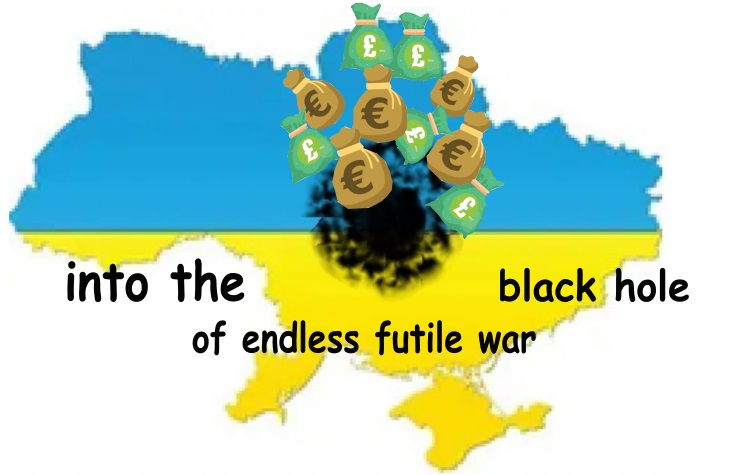
it represents for European countries a new abandonment of their national interests for the sake of Ukraine.
Raphael Machado, November 7, 2025, https://strategic-culture.su/news/2025/11/07/brussels-attempts-to-sink-europe-in-debt-to-help-zelensky/
It is striking how European governments seem incapable of extricating themselves from Ukraine.
The European Union has a dilemma. It insists, against all rationality, on continuing to support and finance the Zelensky regime. But it no longer knows how to continue doing so.
Since 2022, European authorities in Brussels have spoken of confiscating Russian assets to fund Ukraine under the banner of “Ukrainian reconstruction.”
The proposal itself is extremely dubious. The measure would set a serious legal precedent. We know that Russian assets were frozen shortly after the start of the special military operation thanks to the economic sanctions regime. Nevertheless, formally, even under the deficient logic of current International Law, these assets are simply paralyzed, awaiting the end of the Ukrainian conflict.
A permanent confiscation, especially of sovereign funds linked to the Russian Central Bank, would be of a different, fundamentally aggressive nature that would shake international legal security. Many countries, especially Third World countries engaged in sovereign development strategies, may see this as a sign that their potential reserves in euros and dollars are not safe – which could lead, in the short term, to capital flight and, in the long term, to an accelerated search for alternative currencies and payment systems.
In the long run, this accelerates the formation of a multipolar financial system, less dependent on the euro and the dollar.
But the alternative that Ursula von der Leyen’s “gang” is trying to impose on European countries is not much better. On the contrary, it represents for European countries a new abandonment of their national interests for the sake of Ukraine.
The European Commission is trying to force European countries to borrow money in exchange for European Central Bank bonds, aiming to cover the 140 billion euros promised to Kiev in its “reconstruction plan.” Naturally, this loan would represent a new blow to the national budgets of European economies, already affected by the long-standing economic stagnation plaguing the countries in question. To finance the plan, several countries in the region would probably have to raise taxes.
Beyond the fact that some countries in the region, especially the Mediterranean ones, are already deeply indebted, there is obviously the political problem linked to the electoral consequences of a potential tax increase to fund Ukraine. There is a clear correlation between the difficulties experienced by European countries due to support for Ukraine and the strengthening of nationalist or populist political trends.
Countries like Germany, Sweden, France, the Netherlands, and several others have seen announcements of cuts to social benefits over recent years. And although it is never publicly admitted that these cuts could be due to the budgetary weight of Ukraine, it is inevitable to conclude in this direction, as the funding for Ukraine increasingly weighs simultaneously with benefit cuts (and tax increases). An honest austerity policy, implemented for purely economic reasons, would also demand a reduction in support for Ukraine – and that is not what is happening.
Naturally, it is also necessary to take into account that, today, there is no concrete oversight by the European Commission of the use of funds transferred to Ukraine. The money sent by the West has fallen into a black hole of corruption, thanks to the Zelensky regime’s lack of accountability to European taxpayers.
But, to some extent, the very proposition of this collective loan constitutes a chess move by the European Commission. Faced with pressure to increase spending for Ukraine, von der Leyen believes it is possible to convince European countries to approve the confiscation of Russian assets.
This duality imposed by Brussels, however, does not exhaust the decision-making possibilities of European countries. Since these hypotheses require the consensual adhesion of European countries, a Hungarian-Czech-Slovak bloc (which Viktor Orban is trying to build) could simply try to sabotage both propositions, leaving the issue of Ukrainian funding in limbo.
Finally, it is striking how European governments seem incapable of extricating themselves from Ukraine, despite the fact that support for the Zelensky regime continues to pile up costs and disadvantages for each of the European governments involved in this farce.
Can France’s nuclear legacy weather climate change?

The delicate-looking water primrose, an invasive aquatic plant with golden, daisy-like flowers,brought unit 4 at the 3.6 GW Cruas nuclear power plant in southern France to a grinding halt.
In recent years, extreme heat, droughts and warmer
rivers have repeatedly disrupted operations, forcing EDF to reduce output
or shut down reactors at sites along the Garonne and the Rhone. During the
record 2022 heatwave, the government even issued exceptional exemptions so several plants could temporarily exceed environmental discharge limits to avoid potential blackouts.
What’s driving the concern?
River temperatures regularly reaching regulatory thresholds; More frequent
droughts limiting cooling water; Increased ecological pressure on already
stressed river basins; Data showing production cuts clustering in summer
when demand is highest.
France’s Court of Auditors and climate agencies
warn that such shutdowns could become three to four times more common by 2050. EDF says annual impacts remain small overall, but seasonal risks are rising. With an ageing fleet and new reactors planned, the question is how resilient France’s nuclear system can remain in a rapidly warming climate
Montel News 30th Oct 2025, https://montelnews.com/news/2e2e5374-e4ef-433a-ac00-1f2d049478c0/can-france-s-nuclear-legacy-weather-climate-change-2
What will the UK do in a new nuclear arms race?
Tom Vaughan, a lecturer in international security at the University of
Leeds, notes that the UK is pressing ahead with its procurement of F-35
stealth fighter aircraft. These can carry nuclear bombs but, as Vaughan
notes, would require US authorisation before they could be used. Equally,
Britain’s nominally independent nuclear weapons system, Trident, is
reliant on US support and maintenance.
As Vaughan points out, it makes the
UK into “a target in any nuclear war that might be started by two
unpredictable and violent superpowers”.
The Conversation 7th Nov 2025, https://theconversation.com/what-will-the-uk-do-in-a-new-nuclear-arms-race-269224
EDF Braces for More Delays at UK Hinkley Point Nuclear Project.
The Hinkley Point nuclear project in the UK, ridden by repeated delays and cost overruns, is bracing for yet more setbacks. The latest schedule for
completion around the end of the decade is likely to be pushed back by at
least another year as operator Electricite de France SA continues to
grapple with the installation of electrical systems, a person familiar with
the matter said, asking not to be named discussing private information. The
delay may stretch for 12 months or more if corrective action plans continue
to prove challenging, another person said.
Bloomberg 7th Nov 2025, https://www.bloomberg.com/news/articles/2025-11-07/edf-braces-for-more-delays-at-uk-hinkley-point-nuclear-project
Talk of new atomic tests by Trump and Putin should make UK rethink its role as a nuclear silo for the US.
The Conversation, November 7, 2025, Tom Vaughan. Senior Research Associate, CERI, Sciences Po ; University of Leeds
The Russian president, Vladimir Putin, has said that Russia may could carry out nuclear weapons tests for the first time since the cold war.
In what appears to be a response to a statement by Donald Trump on October 30, that he had ordered the US to restart nuclear tests “on an equal basis” with Russia and China, Putin said he’d been advised by his defence staff that it was “advisable to prepare for full-scale nuclear tests”.
At present there is no evidence that either Russia or China is conducting nuclear tests, which were discontinued by most nuclear states after the test ban treaties of the early 1990s.
Nonetheless, the two leaders’ nuclear bluster is a sobering reminder of the dangers posed by nuclear brinkmanship between the US and Russia.
It is worth remembering that at the height of the cold war, the superpowers prepared to settle their confrontation in the territories of central Europe with little regard for the millions they would kill. US strategists hoped that a “tactical” nuclear conflict might contain the war to Europe, sparing the continental United States.
Independent deterrent?
This is the context for the UK public accounts committee releasing a report last week which detailed further “delays, cost inflation, and deep-rooted management failures” in the RAF’s procurement of F-35 stealth fighter aircraft.
The F-35 is increasingly coming to be viewed in some US defence circles as an expensive failure. This year, however, the UK’s Labour government committed to buying 15 additional F-35B aircraft (having already ordered 48), but also adding 12 of the F-35A variant………………………………………………………………………………….
Incompatible with democracy
This is a clear demonstration that nuclear weapons and deterrence policies have always been incompatible with democracy. They require huge secrecy, and the speed involved means that launch decisions are out of the public’s hands. Instead, any decisions to use these incredibly destructive weapons – with all that this implies for the planet – are concentrated in the hands of individual leaders.
The logic of nuclear deterrence breaks down, however, once we remember that the UK’s control over its own nuclear weapons – not to mention the US weapons hosted on its soil – is very limited. The US could at any moment withdraw its assistance for the Trident programme, making questions of British willingness to fight a nuclear war irrelevant.
The F-35A purchase redoubles the UK’s commitment to serving as Donald Trump’s nuclear aircraft carrier. It makes the country a target in any nuclear war that might be started by two unpredictable and violent superpowers. Other US allies get the same treatment: Australian analysts lament that the Aukus submarine deal with the UK and US yokes the country’s future “to whoever is in the White House”…………………………………………………………………………… https://theconversation.com/talk-of-new-atomic-tests-by-trump-and-putin-should-make-uk-rethink-its-role-as-a-nuclear-silo-for-the-us-269040
The UK’s £1 billion Thank You to Uncle Sam

The UK is set to buy a fleet of US fighter jets that can drop nuclear bombs. The purchase is purely political, say watchdogs
RICHARD NORTON-TAYLOR, 6 November 2025, https://www.declassifieduk.org/the-uks-1-billion-thank-you-to-uncle-sam/
Keir Starmer’s plan to buy American fighter jets armed with nuclear bombs whose use will be entirely under the US president’s control makes no military sense, nuclear weapons monitors warn.
In a report released today, the Nuclear Information Service and Nukewatch UK make clear that the deal, announced by the prime minister on the eve of a Nato summit in June, is a blatant attempt to appease President Trump.
The new fleet of F-35 As is estimated to cost about £1 billion. That does not include the cost of the nuclear bombs which the aircraft would carry.
But the cost is only one of many uncertainties surrounding the project.
The decision to buy twelve F-35 A aircraft for the Royal Air Force capable of dropping US B61 gravity, “free fall” nuclear bombs – so-called “tactical” nuclear weapons – risks triggering a dangerous nuclear escalation, increasing the threat to British citizens, says the report.
And because their role would be dependent on the US, it would do nothing to address European concerns about America’s commitment to the Nato alliance, it adds.
The report says the decision “was made for purely political purposes rather than to provide a military capability that will play any meaningful role in defending Nato”. The move also undermines the nuclear non proliferation treaty (NPT).
UK picks up the tab
The nuclear bombs provided to RAF aircraft would replicate capabilities already provided by other European Nato members, says the report.
Moreover, the monitors find there is no guarantee that the weapons carried by F-35s with a limited range would succeed in any conflict.
The decision to buy the fleet of nuclear bombers from the US “reflects a long-standing trend by the UK government to prioritise trans-Atlantic politics over genuine military needs”, the report emphasises.
It quotes Bernard Gray, a former top Ministry of Defence official responsible for weapons procurement who said: “If money was no object, we could view the £2 bn price tag for doing this as a Thank You to Uncle Sam.”
Gray, who was referring to the potential price of both the planes and the bombs, added: “The UK is in effect picking up part of the cost of the mission that would otherwise fall on the US. In a world that wants to please President Trump, it’s easy to see how it plays well to buy aircraft primarily built in Texas.”
The authors of this year’s Strategic Defence Review, led by former Labour defence secretary Lord George Robertson, have downplayed the idea of Britain joining a Nato “tactical nuclear” weapons mission.
Robertson has suggested that a perceived capability gap between strategic nuclear deterrence and tactical nuclear weapons could be bridged by investing, instead, in heavy long-range conventional weapons.
His caution was echoed by Fiona Hill, British-born former national security adviser to Trump, during a Defence Committee evidence session in June.
Pointing to how Germany, Belgium, the Netherlands, Italy and Turkey host US nuclear weapons, she added: “There are other allies who already have dual capable aircraft as part of their arsenal”.
In a reference to Britain’s Trident nuclear missile system, she made the point that Britain already played a “unique role” in Nato.
Concerns over Trident reliance
But today’s report also points to potential vulnerability of Trident, Britain’s strategic nuclear weapons system which relies heavily on US support, and serious mechanical problems affecting the new Dreadnought fleet of submarines designed to carry the missiles.
The report points to widespread scepticism about the role of theatre nuclear weapons, and the misleading assumption that using them would not escalate a conflict leading to the use of longer range and larger nuclear weapons systems.
It quotes Sir Lawrence Freedman, one of Britain’s foremost military strategists, as saying: “There are lots of ways of hurting countries without actually having to use nuclear weapons yourself”.
“The idea that the further proliferation of theatre nuclear weapons is necessary or will make the world safer in any way is clearly absurd,” says the report.
“When looked at objectively, they are merely a ‘solution’ looking for a problem.”
The report also makes the point that while the theatre nuclear weapons proposed for the RAF would be entirely dependent on the US, Trident is far from being the independent deterrent as successive British governments have persistently claimed.
Britain relies entirely on the US for Trident missiles as well as the design of modern nuclear warheads.
There are also growing concerns about the reliability of Trident submarines leading with longer and longer patrols at sea, while the timetable for replacing the existing Vanguard class with Dreadnought class is slipping.
Turning back the clock
Okopi Ajonye, research manager at Nuclear Information Service told Declassified: “The UK government went to a lot of trouble to denuclearise the RAF at the end of the Cold War. This move was welcomed by the service, as it allowed the air force to focus on more important and relevant roles.
“Starmer and Healey now want to turn the clock back and commit the RAF to an entirely unnecessary nuclear mission that will have major implications for the service and considerable hidden costs.”
Ajonye added that the proposal “has all the hallmarks of having been pulled together in a hurry without any thought about its practicalities or consequences” and guided by the politics of the Nato alliance rather than military need.
“The government’s plan is basically just political smoke and mirrors to deceive the public and politicians from other Nato countries into thinking that the UK is taking a significant step to strengthen its nuclear forces when in reality it is doing next to nothing,” he said
“The UK’s entry into Nato’s nuclear mission is driven less by strategic or military necessity and more by a desire to reassure two audiences: domestic political concerns over the crumbling Trident programme, and international concerns about the credibility of US security guarantees to Europe”.
Costs add up
There are also concerns over the management of the existing F-35 fleet with a recent report by the Commons Public Accounts Committee expressing serious concerns about the MoD’s handling of the warplanes, including what it calls an unacceptable shortage of engineers.
It added: “There are also questions over the additional costs of operating nuclear-capable F-35As, and how long the necessary arrangements will take to prepare.
“The deal would add new requirements to training, personnel and possibly infrastructure yet discussions in this area are at an early stage, and no indication of forecast costs has been provided by MoD.
Sir Geoffrey Clifton-Brown, chair of the committee, commented: “Making short-term cost decisions is famously inadvisable if you’re a homeowner with a leaky roof, let alone if one is running a complex fighter jet programme – and yet such decisions have been rife in the management of the F-35.”
He added: “There are basic lessons here that MoD has been worryingly slow to learn. Its appraisal of the F-35’s whole-life cost is unrealistic, which it currently gives as at almost £57bn through to 2069.”
The message from MPs is that the total cost to British taxpayers of taxpayers of the nuclear-armed American F-35s will be significantly more than that.
Nuclear Information Service and Nukewatch UK will hold a webinar about the report and F-35 nuclear-armed aircraft on 11 November.
‘Nothing revolutionary’ about Russia’s nuclear-powered missile: Experts
Putin has touted cruise missile Burevestnik and torpedo Poseidon as game-changing weapons as the war in Ukraine rages on.
Aljazeera, By Mansur Mirovalev, 5 Nov 2025
Kyiv, Ukraine – The collective West is scared of Moscow’s new, nuclear-powered cruise missile because it can reach anywhere on Earth, bypassing the most sophisticated air and missile defence systems, the Russian Ministry of Foreign Affairs has claimed.
“They’re afraid of what we’ll show to them next,” Foreign Ministry spokeswoman Maria Zakharova told the RIA Novosti news agency on Sunday.
Days earlier, she said Moscow was “forced” to develop and test the cruise missile, which is named the Burevestnik, meaning storm petrel – a type of seabird, in response to NATO’s hostility towards Russia.
“The development can be characterised as forced and takes place to maintain strategic balance,” she was quoted by the Itar-Tass news agency as saying. Russia “has to respond to NATO’s increasingly destabilising actions in the field of missile defence”.
With much pomp, Russian President Vladimir Putin on Tuesday handed state awards to Burevestnik’s developers.
Also awarded were the designers of Poseidon, an underwater nuclear-powered torpedo which Putin has also claimed has been successfully tested.
Russia says Poseidon can carry nuclear weapons that cause radioactive tsunamis, wiping out huge coastal areas. The “super torpedo” can move at the speed of 200km/h (120mph) and zigzag its way to avoid interception, it says.
“In terms of flight range, the Burevestnik … has surpassed all known missile systems in the world,” Putin said in his speech at the Kremlin. “Same as any other nuclear power, Russia is developing its nuclear potential, its strategic potential … What we are talking about now is the work announced a long time ago.”
But military and nuclear experts are sceptical about the efficiency and lethality of the new weapons.
It is not unusual for Russia to flaunt its arsenal as its onslaught in Ukraine continues. Analysts say rather than scaring its critics, Moscow’s announcements are merely a scare tactic to dissuade Western powers from supporting Kyiv.
“There’s nothing revolutionary about,” the Burevestnik, said Pavel Podvig, director of the Russian Nuclear Forces Project at the the United Nations Institute for Disarmament Research.
“It can fly long and far, and there’s some novelty about it, but there’s nothing to back [Putin’s claim] that it can absolutely change everything,” Podvig told Al Jazeera. “One can’t say that it is invincible and can triumph over everything.”
The Burevestnik’s test is part of Moscow’s media stratagem of intimidating the West when the real situation on the front lines in Ukraine is desperate, according to a former Russian diplomat.
The missile is “not a technical breakthrough but a product of propaganda and desperation”, Boris Bondarev, who quit his Russian Foreign Ministry job to protest against the 2022 full-scale invasion of Ukraine, wrote in an opinion piece published by the Moscow Times.
Few details about ‘unique’ missile
The problem is that officials have so far unveiled very little about the Burevestnik, which NATO has dubbed the SSC-X-9 Skyfall – a missile that has a nuclear reactor allegedly capable of keeping it in the air indefinitely………………………………………………………………………… https://www.aljazeera.com/news/2025/11/5/nothing-revolutionary-about-russias-nuclear-powered-missile-experts
Bpifrance helps UK nuclear reactor to financial close.
6 November 2025 By Jacob Atkins
French export credit agency Bpifrance is covering a £5bn loan from 13
commercial banks to help finance the construction of the Sizewell C nuclear
power station in England. The facility, structured as a green loan, sits
alongside a £36.5bn term loan from the UK’s National Wealth Fund, which
was announced earlier this year, as well as a £500mn working capital
facility. Bpifrance has secured refinancing from French public development
bank Sfil, according to a November 4 statement. BNP Paribas acted as joint
debt advisor to Sizewell C, with HSBC as French authorities and green loan
co-ordinator, and Santander as documentation co-ordinator on the Bpifrance
facility. The other lenders on the Bpifrance loan are ABN Amro, BBVA,
Crédit Agricole, CaixaBank, Citibank, Crédit Industriel et Commercial
(CIC), Lloyds Bank, Natwest, Natixis and Société Générale.
Global Trade Review 6th Nov 2025, https://www.gtreview.com/news/europe/bpifrance-helps-uk-nuclear-reactor-to-financial-close/
1 This Month

of the week – Shut Down Drone Warfare!


Tell the Ukrainian Government to Drop Prosecution of Peace Activist Yurii Sheliazhenko

Petition to revoke the licensing of the Near Surface Nuclear Disposal Facility (NSDF) at Chalk River. https://www.ourcommons.ca/petitions/en/Petition/Details?Petition=e-7247
To see nuclear-related stories in greater depth and intensity – go to https://nuclearinformation.wordpress.com
-
Archives
- April 2026 (114)
- March 2026 (251)
- February 2026 (268)
- January 2026 (308)
- December 2025 (358)
- November 2025 (359)
- October 2025 (376)
- September 2025 (257)
- August 2025 (319)
- July 2025 (230)
- June 2025 (348)
- May 2025 (261)
-
Categories
- 1
- 1 NUCLEAR ISSUES
- business and costs
- climate change
- culture and arts
- ENERGY
- environment
- health
- history
- indigenous issues
- Legal
- marketing of nuclear
- media
- opposition to nuclear
- PERSONAL STORIES
- politics
- politics international
- Religion and ethics
- safety
- secrets,lies and civil liberties
- spinbuster
- technology
- Uranium
- wastes
- weapons and war
- Women
- 2 WORLD
- ACTION
- AFRICA
- Atrocities
- AUSTRALIA
- Christina's notes
- Christina's themes
- culture and arts
- Events
- Fuk 2022
- Fuk 2023
- Fukushima 2017
- Fukushima 2018
- fukushima 2019
- Fukushima 2020
- Fukushima 2021
- general
- global warming
- Humour (God we need it)
- Nuclear
- RARE EARTHS
- Reference
- resources – print
- Resources -audiovicual
- Weekly Newsletter
- World
- World Nuclear
- YouTube
-
RSS
Entries RSS
Comments RSS
 nuclear-news