The Human Dimension to Kazakhstan’s Plutonium Mountain

April 24, 2023, Sig Hecker https://nonproliferation.org/the-human-dimension-to-kazakhstans-plutonium-mountain/
The following is an excerpt from the Stanley Center for Peace and Security.
As we drove deeper into the Semipalatinsk Nuclear Test Site, we found kilometer-long trenches that were clearly the work of professional thieves using industrial earth-moving equipment, rather than hand-dug trenches made by nomad copper-cable-searching amateurs on camelback. Our Kazakh hosts said they could do nothing to stop these operations. In fact, they weren’t sure they had a legal right to stop them from “prospecting” on the site.
It was the sight of these trenches that urged me to convince the three governments that they must cooperate to prevent the theft of nuclear materials and equipment left behind when the Soviets exited the test site in a hurry as their country collapsed.
When the Soviet Union collapsed in December 1991, the most urgent threat to the rest of the world was no longer the immense nuclear arsenal in the hands of the Russian government but rather the possibility of its nuclear assets—weapons, materials, facilities, and experts—getting out of the hands of the government. As director of the Los Alamos National Laboratory, I helped to initiate the US–Russia lab-to-lab nuclear cooperative program in 1992 to mitigate these nuclear threats.
The trilateral US–Russia–Kazakhstan cooperation began in 1999 to secure fissile materials that were left behind by the Soviets at the Semipalatinsk Nuclear Test Site, which was now in the newly independent country of Kazakhstan. The project was kept in confidence until the presidents of the three countries announced it at the Seoul Nuclear Security Summit in 2012
In Doomed to Cooperate, individuals from the three countries recount their cooperative efforts at Semipalatinsk. Unlike the US–Kazakhstan projects initiated earlier on nuclear test tunnel closures, identifying experiments that left weapons-usable fissile materials (plutonium and highly enriched uranium) at the huge test site—whether in the field, in tunnels, or in containment vessels—required trilateral cooperation. The Russian scientists who conducted these experiments were the only ones who knew what was done and where. It required American nuclear scientists who conducted similar tests in the United States to assess how great a proliferation danger the fissile materials in their current state may constitute. And it required Kazakh scientists and engineers to take measures to remediate the dangers. The project also required the political support of all three countries and the financial support of the American government because it was the only one at the time with the financial means. That support came from the US Cooperative Threat Reduction (or Nunn-Lugar) program.
Continue reading at the Stanley Center for Peace and Security.
Russia is deploying nuclear weapons in Belarus. NATO shouldn’t take the bait
By Nikolai N. Sokov Bulletin of the Atomic Scientists
Nikolai N. Sokov, a senior fellow at the Vienna Center for Disarmament and Non-Proliferation, previously worked at the Soviet and Russian Ministry. April 24, 2023
In June 2022, Russian President Vladimir Putin announced a new policy of Russia deploying some of its nuclear weapons in Belarus. The nuclear sharing arrangements between Russia and Belarus represent a fundamental change in Russian nuclear policy and the European security landscape. But as is usual with changes in Russian defense policy, the story developed slowly and has been full of unnecessary intrigue with important information revealed in small portions.
More than nine months after the initial announcement, the Russia-Belarus nuclear sharing is still very much incomplete; further developments may depend on the still uncertain evolution of the ongoing Russian war against Ukraine as well as any future changes in the scope and scale of Western assistance to Ukraine. But despite the many uncertainties, some key implications of Russia’s new policy of nuclear sharing can already be anticipated—especially as regard to its consequences for strategic stability.
Slow developments, false intrigue………………………………………………………………………….
Uncertainties. Unlike NATO’s nuclear sharing, which is built around nearly 100 B-61 gravity bombs, the Russia-Belarus one will involve a mix of gravity bombs and ground-launched missiles……………………………………………………………………………………………………….
The location of the storage site(s) for the nuclear warheads is perhaps the greatest of all uncertainties surrounding the Russia-Belarus nuclear sharing……………………………
Strategic consequences. The impact of Russia’s decision to institute nuclear sharing with Belarus will have wide-ranging consequences.
For the first time since the end of the Cold War, short-range, tactical nuclear weapons have acquired a distinct military mission…………………………………………………………………………..
the Russia-Belarus nuclear sharing—which involves preparation for deployment of nuclear weapons and may eventually entail the actual transfer of Russian nuclear weapons to Belarus—is by far the boldest move by Russia because it comes supported with new capability. Moreover, if the delivery systems and warheads under these arrangements are deployed near the western border of Belarus where they are highly vulnerable, the only conceivable mode for them is to strike first. The number of nuclear weapons involved may be relatively small—perhaps only about one-third of the entire inventory of B-61 bombs—but ready to use
The message is undoubtedly addressed to the West; nuclear use against Ukraine has never even indirectly featured in any Russian statements.
……………………………………………. The seriousness of the new signal does not mean that nuclear use in Europe is an immediate threat. First, it is reserved for extreme circumstances, such as a major defeat of Russia, which would put the regime at risk. Second, it would only result from a relatively lengthy process of escalation. ………………………….
Do not respond in kind. Recent nuclear signaling and actions by Russia are clearly a step on the escalation ladder. ………………………………. The wisdom of a symmetrical, tit-for-tat response to Russia’s escalatory steps is questionable
……………………….. NATO would be better off to continue the current policy and rally international opinion against Russia’s possible nuclear use. As Allies’ defense production continues to ramp up, assistance to Ukraine will become more efficient and consequential. Escalation may be tempting, but it is both unnecessary and potentially dangerous. https://thebulletin.org/2023/04/russia-is-deploying-nuclear-weapons-in-belarus-nato-shouldnt-take-the-bait/
Maintenance impacted at Zaporizhzhia, says IAEA

24 April 2023 https://www.world-nuclear-news.org/Articles/Maintenance-impacted-at-Zaporizhzhia,-says-IAEA
The current situation at the Zaporizhzhia nuclear power plant is having a significant impact on the plant’s maintenance capability, the International Atomic Energy Agency (IAEA) said.
Plant management informed the IAEA experts present at plant that the scope of maintenance performed during outages on all units in 2022 was reduced compared with the planned scope, due to reduced maintenance staff, absence of external contractors who perform a significant part of the work, and a lack of spare parts needed for the maintenance, including critical components.
The Zaporizhzhia plant currently has only about one-quarter of its regular maintenance staff available, the IAEA said. It noted new staff are being hired but it will take some time until they are fully trained. The plant said a substantial list of required spare parts has recently been submitted to Russian state nuclear corporation Rosatom.
“As a result of the significant reduction of staff, the ZNPP currently does not have a systematic maintenance and in-service inspection schedule,” the IAEA said. “Before restarting any of the reactor units, the site is considering obtaining advice from an engineering organisation within Rosatom that will assess the status of the plant and provide recommendations for all structures, systems and components important to safety regarding their maintenance or any necessary replacement before operation. The site considers that this maintenance/replacement work may be undertaken using the services of a centralised Rosenergoatom company that is capable of performing these types of maintenance tasks.”
“This shows again the continuing detrimental impact that the current situation on the site is having on the seven indispensable pillars for ensuring nuclear safety and security, in this case pillars two and five on safety and security systems and equipment and logistical supply chain,” IAEA Director General Rafael Mariano Grossi said.
The IAEA noted that the Zaporizhzhia plant continues to rely on the only remaining functioning 750kV power line for the external electricity it needs for reactors cooling and other essential nuclear safety and security functions. Meanwhile, a back-up 330kV power line that was damaged on 1 March on the other side of the Dnipro River from the Russian-controlled plant remains unrepaired, with Ukraine having said military action is preventing its experts from safely accessing the location situated in territory it controls to repair the line.
Russia reported last month that Rosatom was working to remove damaged equipment from the open switchyard, with the aim of restoring three 330kV lines to the grid system in currently Russian-controlled territory. The IAEA team will access the site to assess the situation.
Four of the six reactors have been in cold shutdown, with two (units 5 and 6) in hot shutdown – which allows them to provide heat to the plant and the nearby town of Energodar where many of the workers live. However, the IAEA said that, with the weather warming, unit 6 has now been transferred to cold shutdown.
France’s struggle to deliver a second nuclear era
An ambitious reactornconstruction programme aimed at reducing carbon emissions is running into the realities of skilled worker shortages.
For 10 years, Gaetan Geoffray
worked as a plasterer and painter, before learning metalwork at a company
that made cranes. Arnaud Dupuy was a policeman. A third colleague at their
factory in the depths of rural Burgundy used to be a baker.
The factory is owned by Framatome, a subsidiary of state-controlled power utility EDF, and the trio are hoping to qualify for one of the most sought-after jobs in
France, as nuclear-grade welders. If all goes well, they’ll one day be
allowed to work on the most intricate features of the steel parts assembled
in the plant, where the all-important 24-metre-long casings protecting the
core of atomic reactors are made.
For now, that goal is at least three to
four years off, so exacting are the demands in a field in which imperfect
finishes can delay a project by months and cost millions, if not billions,
of dollars. For France, the next intake of hires and welding apprentices
can’t come a day too soon.
After years of political dithering over whether
or not to cut its reliance on nuclear power, a hesitation echoed globally
after the 2011 Fukushima nuclear accident in Japan, the country has gone
all-in with Europe’s most ambitious atomic construction project in decades.
In order to stand a chance of turning this vision into reality, the
government estimates it needs to find another 100,000 nuclear specialists
of all guises, from engineers and project supervisors to boilermakers and
electricians, over the coming six years.
Looming large, beyond hurdles with
design approvals and financing for the €52bn programme, is an even more
basic question — whether France, Europe’s main atomic nation, still has
the industrial capacity and people to make the projects happen on a scale
it has not contemplated since the 1970s.
FT 23rd April 2023
https://www.ft.com/content/d23b14ae-2c4e-458c-af8a-22692119f786
Water shortage at Sizewell: the environmental cost
Pete Wilkinson: (From Feb 2022) Building the Sizewell C plant, which
requires vast amounts of fresh water, in an area of water scarcity makes no
sense. The availability of water is something we barely give a thought to:
only ten percent of people consider water shortage to be an environmental
issue, yet without it, it’s curtains. According to the Environment Agency
(EA), England could fail to meet national demand by 2050.
As the driest part of the country, Eastern England has been designated as a
water-stressed area and future pressures include climate change, economic
and housing development. Suffolk is recognised as an area of water
scarcity, facing predictions of a water shortage in the coming years.
East Anglia Bylines (accessed) 23rd April 2023
Oh Goody – America is going to sell heaps of Holtec’s Small Nuclear Reactors to Ukraine!

“This cooperation agreement will lead to economic development, creation of jobs, establishment of modern manufacturing facilities, training facilities, R&D, and thus help Ukraine emerge as the regional hub for Holtec’s nuclear reactor technology…….”
Mass deployment of Holtec SMRs in Ukraine is part of accord’s aims
WNN 24 April 2023, Up to 20 Holtec SMR-160 plants will be built in Ukraine under a cooperation agreement signed between Holtec International and Ukrainian national nuclear operator Energoatom. The agreement calls for the first plant to begin supplying power by March 2029.
The agreement was signed on 21 April by Energoatom President Petro Kotin in Kiev and Holtec CEO Kris Singh in Camden, New Jersey, USA. The ceremony was also attended by Ukraine’s Minister of Energy Herman Galushchenko and the vice president of Holtec International operations in Ukraine Riaz Avan……………………………………………..
“This cooperation agreement will lead to economic development, creation of jobs, establishment of modern manufacturing facilities, training facilities, R&D, and thus help Ukraine emerge as the regional hub for Holtec’s nuclear reactor technology…….”
………………………………………………………… In June 2019, Holtec, Energoatom and Ukraine’s State Scientific and Technology Centre formally entered into a partnership to advance the SMR-160 for deployment in Ukraine. The partners ratified the creation of a consortium partnership that bound the three companies into a cooperative undertaking to progress the deployment of the SMR-160 small modular reactor in the country. The consortium is a US company registered in Delaware with each of the three parties owning allotted shares. Its technology operation centre will be based in Kiev, Ukraine. https://www.world-nuclear-news.org/Articles/Accord-sees-mass-deployment-of-Holtec-SMRs-in-Ukra
Russia’s political and economic winner – its nuclear exports to Western countries
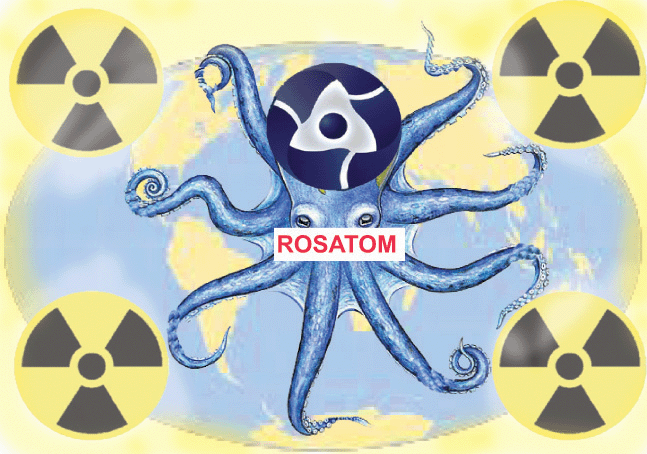
West scrambles as Putin reveals his energy war trump card. Kremlin has
spread its tentacles through the US and Europe – and countries are
struggling to fight back. In an effort to punish Vladimir Putin, western
governments have hit Russia’s energy industry with a barrage of punishing
sanctions since his invasion of Ukraine.
But one sector has conspicuously
escaped their ire so far: nuclear power. Since the conflict erupted,
Russian nuclear exports are actually thought to have increased while those
of coal, oil and gas have been squeezed.
Meanwhile, despite the key role it
has played in Moscow’s takeover of the Zaporizhzhia nuclear power plant
in Enerhodar, eastern Ukraine, state monopoly Rosatom remains untouched by
western sanctions.
The reason, say experts, is the complicated nature of
nuclear supply chains – from the supply of uranium to the construction of
reactors – and the dominant role Russia currently plays in many of them.
Through its global nuclear network, Moscow can exert political and economic
pressure on friends and foes alike, the White House has warned. A new
partnership between the UK, the US, Canada, Japan and France aims to change
this. Together the five countries want to squeeze Russia’s share of
nuclear exports and “ensure Putin, nor anyone like him, can ever think
they can hold the world to ransom over their energy again,” said Grant
Shapps, the Energy Security Secretary. The group aims to become independent
from Moscow and help other countries do the same, the agreement says.
Telegraph 24th April 2023
Dogs of war — Chornobyl

Chornobyl dogs are distinct group, researchers find
Dogs of war — Beyond Nuclear International By Linda Pentz Gunter 23 Apr 23,
DNA research among Chornobyl’s dogs could provide answers about the effects of living in a radioactive environment
Pity the poor dogs (and cats) of Chornobyl. Abandoned in 1986 by owners fleeing the nuclear disaster, their descendants live on in the Chornobyl Exclusion Zone, an area deemed too radioactive for human habitation and in a country now at war.
…………………………………..The presence today of at least several hundred semi-feral domestic dogs living around the Chornobyl plant and beyond, indicates that the 1986 cull was not, of course, entirely successful. The Dogs of Chornobyl — and their more furtive feline friends — continue to survive down the generations in a highly radioactive environment. There are other threats too, including exposure to rabies and wolf packs that prey on the dogs and their puppies.
…………..So how are these animals surviving? And how well?
A new study, — The dogs of Chernobyl: Demographic insights into populations inhabiting the nuclear exclusion zone — published in the journal, Science Advances, has not yet answered this fundamental question. But the researchers have been able to gather important data to enable that next step.
The group studied the DNA of three sets of dog populations: those living at the Chornobyl power plant itself; those around nine miles away in Chornobyl City and another group around 28 miles away in Slavutych.
Their task was made easier by a surprising discovery: the dogs were not living in the traditional manner of wild dogs, or their closest ancestor, the Grey Wolf, but in distinct family units.
…………..These distinct family groups and lack of intermingling meant the researchers could easily identify different dogs through their DNA and thus distinguish those living at the nuclear plant from those living further away.
Co-author Tim Mousseau, professor of biological sciences at the University of South Carolina, has been visiting the Chornobyl site and studying the fate of its wildlife there since the late 1990s. At the same time, he began collecting blood samples from the Chornobyl dogs, curious to know how their bodies were handling such a significant radioactive load. Those samples are now being used in the current study to examine the dogs’ DNA. Wrote the authors in their paper:
“Hence, the dogs of Chernobyl are of immense scientific relevance for understanding the impact of harsh environmental conditions on wildlife and humans alike, particularly the genetic health effects of exposure to long-term, low-dose ionizing radiation and other contaminants, i.e., their adaptation to harsh living conditions makes them an ideal system in which to identify mutational signatures resulting from historical and ongoing radiation exposures.”
Mousseau’s wildlife studies have revealed shortened lifespans among birds and small mammals as well as the prevalence of tumors, sterility and cataracts among other phenomena considered related to exposure to radiation.
How or if the DNA of the Chornobyl-affected dogs has altered can now be examined……………………..
This in turn may lead to enlightenment on whether or not radiation damage is accumulating in their genomes and how this may affect their health and longevity — and that of other mammals similarly exposed — now and into the future https://beyondnuclearinternational.org/2023/04/23/dogs-of-war/
Pension funds shun Sizewell C in major blow to Britain’s nuclear ambitions

Asset managers ‘extremely sceptical’ about nuclear push despite project’s ‘sustainable’ status
By Matt Oliver and Szu Ping Chan, 22 April 2023 •
The Government’s push to find investors for the £20bn Sizewell C nuclear
power station has suffered a significant blow as Britain’s biggest fund
managers have snubbed the scheme.
Jeremy Hunt, the Chancellor, sought to
make the project more attractive to green-focused asset managers in his
Spring Budget by proposing to give it “sustainable” status under UK
financing rules. Ministers have also reformed the funding model for nuclear
plants to hand investors more up-front rewards.
But senior sources in the
asset management industry and two of the country’s biggest fund managers
have dismissed the changes as irrelevant and insisted it would not persuade
them to back Sizewell C.
Nuclear power is seen as vital to Britain’s energy
security in the wake of the Ukraine war, with ministers calling for it togenerate 25pc of the country’s electricity needs by 2050. But despite
introducing new funding models and classifying it as “green” to attract
investors, the Government has struggled to persuade sceptical pension funds
and asset managers to get behind Sizewell C.
Legal & General – Britain’s
biggest money manager with £1.3 trillion of assets – said Mr Hunt’s
announcement will have no bearing on its opposition to large nuclear energy
schemes, as it is focused on supporting alternatives such as wind and
solar. A spokesman for Legal & General Capital told The Telegraph: “Our
stance hasn’t changed: we are focused on investing in and supporting other
innovative, viable, and cost-effective clean energy solutions that are
already delivering results.” Barclays has been brought in to run the financing process but this has not yet begun, prompting concerns it could
be held up by a potential general election next year.
Telegraph 22nd April 2023
https://www.telegraph.co.uk/business/2023/04/22/uk-nuclear-ambitions-pension-funds-shun-sizewell-c/
Rolls Royce shares OK for civil aviation, but investment in small nuclear reactors is risky

Will going nuclear send Rolls-Royce shares into meltdown?
Dr James Fox takes a closer look at Rolls-Royce shares. What’s next for the British engineering giant after the recent rally came to an end in March?
The Motley Fool, Dr. James Fox 23 Apr 23
Rolls-Royce (LSE:RR) shares have been red-hot in recent months, going from strength to strength. But the FTSE 100 stock has plateaued since March.
So what could drive the share price forward in the coming years? Could it be Rolls-Royce’s entry into the nuclear space?
Rolls-Royce (LSE:RR) shares have been red-hot in recent months, going from strength to strength. But the FTSE 100 stock has plateaued since March.
So what could drive the share price forward in the coming years? Could it be Rolls-Royce’s entry into the nuclear space?
For some, the jury is out on the future profitability of the modular nuclear reactor programme — the plan was given government approval and funding last year.
………. In theory, Rolls would ‘mass produce’ these small reactors, with a capacity of 470MW, and sell them for around £2bn.
………..there are challenges. First among them are reports that the UK government is preparing to invite international bids for next-generation nuclear power projects, thus removing its backing for Rolls-Royce’s product in development.
With billions of forecast development costs, it would be disastrous if the government started to favour other companies — the share price would really suffer.
What matters more?
The nuclear programme is interesting but, in reality, other sectors are more important — for now at least. In the near term, I’m hoping to see more signs of the recovery in civil aviation. This is Rolls’ biggest sector and a post-pandemic recovery will propel the company forward.
…………………..Despite the risks in the SMR space, I’m not fearing a share price meltdown. https://www.fool.co.uk/2023/04/23/will-going-nuclear-send-rolls-royce-shares-into-meltdown/
—
UK seeks a nuclear energy renaissance – but experts question whether it’s value for money
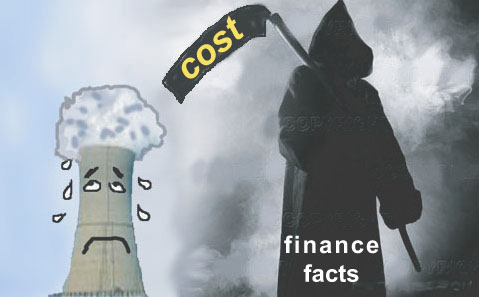
The most powerful argument against nuclear could be economic as most plants take at least ten years to commission, design and build
inews, By Leo Cendrowicz, Brussels Correspondent, 21 Apr 23,
BRUSSELS – As Europe scrambles for new energy sources, Britain has joined the countries seeking a nuclear renaissance.

Chancellor Jeremy Hunt announced last month the creation of Great British Nuclear, a body to oversee the roll-out of a fleet of nuclear power stations.
However, there are concerns about the environmental impact of nuclear, with campaign groups saying that the risks of nuclear reactions and the difficulties in disposing of nuclear waste mean it cannot be considered green.
And the most powerful argument against nuclear could be economic. Most plants take at least ten years to commission, design and build. Delays are frequent: Europe’s largest nuclear reactor, the Olkiluoto 3 plant in Finland, came online last week a full 14 years after its scheduled date, beset by technological problems that led to lawsuits – while its final price tag ballooned to around €11bn (£9.74bn), almost three times the initial estimate.
The steep upfront building costs for nuclear power plants, along with the long construction times, have raised questions about whether nuclear energy represents value for money.
Now that renewable costs are going down – especially in solar, wind and batteries – renewable is likely to be cheaper in the longer term, making nuclear commissions look less worthwhile.
The fact that Europe has built few nuclear plants since the boom wave of the 60s also means there is little expertise available across the value chain. The EU Internal Market Commissioner Thierry Breton has said a “colossal” investment in nuclear energy will be needed over the next 30 years to meet the EU’s emissions-reduction targets and electricity demand.
“The big question on nuclear is the economics of building new nuclear plants,” says Ben McWilliams, an energy research analyst at Bruegel – a Brussels-based think tank. “When you compare it to something like solar or wind, which are also modular technologies, so you can have much larger economies of scale – you have to ask if it is sensible to start building new nuclear plants that will come online in 15 or 20 years when they’re going to compete in a grid that should be largely renewable dominated?”
……………………………… France, Europe’s champion, has not been the best advertisement recently: last November, almost half of the country’s reactors were offline, thanks to maintenance issues in its ageing nuclear fleet.
The UK’s strategy is to focus on small modular reactors (SMRs) to ensure faster build times. These mini reactors would generate between 50 and 500 megawatts of power, compared with the 3.2-gigawatt Hinkley Point C in Somerset, the UK’s only large nuclear plant under construction, which is plagued by delays and cost overruns.
………………………….. . In February, 11 EU energy ministers signed a declaration committing to “cooperate more closely” across the entire nuclear supply chain and promote “common industrial projects” in new generation capacity as well as new technologies like small reactors.
While energy policy is mostly set at national level within the European Union, the long-term push is for green, renewable energy. The European Commission has attempted to nudge governments to wean themselves off fossil fuels, adopting a controversial measure that labels nuclear investments as sustainable “transitional” sources, if they replace dirtier fuels. Last Tuesday, Greenpeace and other campaign groups announced plans to take the Commission to the EU Court of Justice of the EU. https://inews.co.uk/news/world/uk-nuclear-energy-renaissance-expert-money-2289161
Earth Day 2023: A Newly Post-Nuclear Germany vs. California’s Reactor Relapse

Germany’s initiative calls out California’s backpedaling.
BY HARVEY WASSERMAN , APRIL 22, 2023
This year’s Earth Day marks a massive green energy triumph in Germany that stands in stark contrast to a bitter nuclear challenge in California.
A wide range of estimates put the two regions at a virtual tie for the world’s fourth and fifth-largest economies.
They also share a leading growth industry—renewable energy, with unprecedented investments in wind, solar, batteries, and efficiency.
But when it comes to atomic power, they are headed in very different directions.
On April 15, Germany claimed a huge global landmark by becoming one of the world’s wealthiest nations to renounce atomic power.
The decision dates back to 2011, when Germany’s powerful Green movement led a national demonstration aiming to shut the seventeen atomic reactors that, at the time, provided around a quarter of the nation’s electricity.
Before the rally took place, four reactors blew up in Fukushima, Japan, sending huge clouds of radioactive fallout into the air and ocean.
Germany’s then-Chancellor Angela Merkel—who has a Ph.D. in quantum chemistry—ordered eight reactors immediately shut, and soon announced a plan to shut the remaining nine by December 31, 2022.
This energiewende, or “energy transition,” substitutes wind, solar, battery storage, and increased efficiency for nuclear power reactors, moving Germany toward full reliance on renewables. Germany, since then, has invested billions in the renewables sector, transitioning whole towns to locally-owned rooftop solar and corporate wind power pumped in from large turbines in the North Sea.
The shutdown of the final three reactors was delayed by nearly four months due to natural gas shortages caused by the Russian war in Ukraine.
It was also complicated by a major atomic breakdown in neighboring France. Heavily reliant on nuclear power, France’s more than fifty standard-design reactors succumbed to a wide range of problems, including generic structural flaws and warming rivers too hot to cool their super-heated radioactive cores. In 2022, with more than half its fleet of reactors under repair, France made up for the energy shortfall by importing power from Germany, much of it fired by the burning of coal.
This prompted the nuclear industry to criticize Germany’s plan by pointing to a rise in the country’s CO2 emissions from burning increased quantities of coal, failing to note that much of that power was being exported to France to compensate for its own shuttered reactors.
California, whose economy may now be slightly larger than Germany’s, has taken an opposite route.
Two of its last four reactors—at San Onofre, between Los Angeles and San Diego—were shuttered in 2012 and closed permanently in 2013 after flaws were found in the turbines and other components.
In 2016, a deal was reached to shut the Golden State’s last two reactors, located at Diablo Canyon, nine miles west of San Luis Obispo. In the 1970s and 1980s, thousands of protestors were arrested at Diablo Canyon, more than at any other American nuclear plant.
The 2016 shutdown deal involved another energiewende, based on blueprints to replace Diablo’s power with a huge influx of new wind, solar, battery, and efficiency installations. The agreement was approved by the California state legislature, Pacific Gas & Electric (PG&E), the federal Nuclear Regulatory Commission (NRC) and the state Public Utilities Commission. It was signed by then-Governor Jerry Brown, then-Lieutenant-Governor Gavin Newsom, and a wide range of local governments, unions, and environmental groups, all of whom assumed the state would thus be nuke-free once Unit Two was shut in 2025—the date its original forty-year license would expire.
But along the way, the state experienced two close calls with partial blackouts. During both incidents, Newsom, now the governor, asked consumers to dial back their energy use. Ironically, independent battery capacity—mostly controlled by individual owners—helped the state stay lit.
But Newsom reversed course and now argues that California must keep Diablo open. Infuriating the national safe energy movement, Newsom rammed through the legislature a $1.4 billion midnight bailout for PG&E, to be funded by all of the state’s consumers, including many who live hundreds of miles from the plant, and receive no energy from it at all.
The Biden Administration also kicked in $1.1 billion, money that safe energy advocates angrily argue would be far better spent on renewables.
In 2019 a statewide petition signed by Hollywood’s Jane Fonda, Martin Sheen, Lily Tomlin, Eric Roberts, and some 2,500 other Californians demanded that Newsom facilitate an independent inspection. Nearing forty years of age, both Diablo reactors suffer a wide range of structural and age-related defects.
They are also surrounded by at least a dozen known earthquake faults, sitting just forty-five miles from the infamous San Andreas fault. Former NRC site inspector Michael Peck, who was stationed at Diablo for five years, has warned it might not survive a major earthquake, for which its owner, PG&E, has little or no private insurance. The state has never made public any plans to evacuate Los Angeles or other heavily populated areas in the event of an accident.
Newsom has also supported moves by state regulators to severely slash compensation paid by utilities to solar panel owners who feed their excess energy into the grid. While 1,500 workers are stationed at Diablo, some 70,000 work in the state’s solar industry, which angrily charges that Newsom’s pro-nuclear, anti-green positions are crippling the state’s top job creator.
Indeed, the irony of these twin economies heading in opposite energy directions is hard to ignore. In the 1970s, much of America’s early anti-nuclear movement was inspired by mass demonstrations led by German Greens (with the slogan “Atomkraft? Nein, danke!”). Both movements succeeded in massively moving their communities toward a renewable future.
But at this critical moment, Germany appears to be moving beyond nuclear power, while California clings to a hugely controversial technology it had once planned to transcend.
French-Russian nuclear relations turn radioactive
Ukraine and several EU countries want France to cut commercial ties with Russia’s atomic sector.
Politico, BY VICTOR JACK, APRIL 20, 2023
BRUSSELS — Pressure is building on France to fully cut ties with Russia’s atomic sector as the EU mulls its latest sanctions package against Moscow.
The European Commission is set to meet with diplomats from the EU’s 27 member countries on Friday to start discussions on the bloc’s 11th round of Russia sanctions. Hitting Moscow’s state-run nuclear company Rosatom — a divisive issue for some EU countries reliant on Russia for nuclear fuel — is likely come under the spotlight once again.
That means increased scrutiny of France’s ties to Rosatom, the Moscow-based atomic firm…………………………..
“I am sure” that Paris has a moral duty to encourage its state-backed companies to cut ties with Rosatom, Ukraine’s Energy Minister German Galushchenko told POLITICO last month, adding that Kyiv wants all EU countries with links to Russian’s nuclear industry to cut them.
“All of our public scrutiny has been on Germany and not so much on France,” for ties with Russia, said a diplomat from one EU country, who spoke on condition of anonymity, “whereas I think if you look closely … they haven’t been the best kid in the class either.”…………………………………………..
Paris and Moscow’s nuclear ties, which date back to the Cold War, are most apparent in the links between Rosatom and state-controlled EDF, France’s largest utility that runs the country’s nuclear fleet. It signed a strategic cooperation agreement with Rosatom on green hydrogen in 2021, as well as a joint declaration to develop research cooperation.
The Rosatom spokesperson called it “a win-win partnership” that is “a driver of development both in the field of nuclear energy and scientific projects.”……………………….
When Rosatom builds a nuclear plant abroad, it often relies on technology from French companies — typically spending up to €1 billion per project, Faudon said. Those orders usually include command and control systems from Framatome, which is majority-owned by EDF.
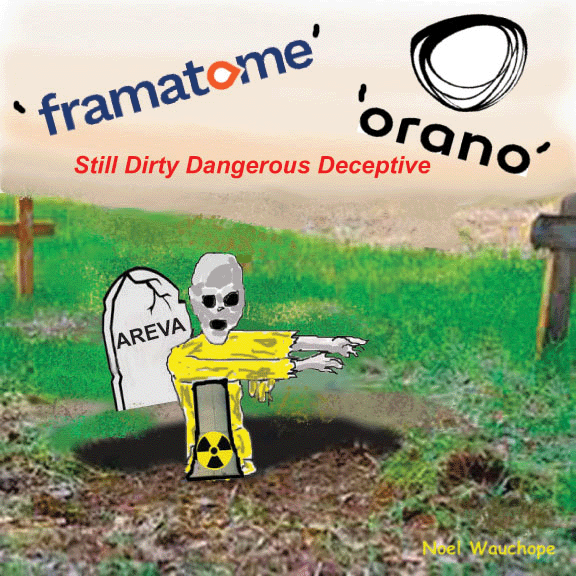
Framatome has an ongoing role in Russian nuclear construction projects around the world, including at Paks. The company aims to set up a joint venture with Rosatom to produce nuclear fuel in western Germany, a project that has been sharply criticized by local authorities.
The French firm also signed a strategic cooperation agreement with Rosatom in December 2021 to expand collaboration on fuel fabrication and other technologies.
Framatome didn’t comment on its ongoing contracts but with reference to the 2021 agreement, a company spokesperson said: “Everything has been postponed until further notice,” adding that Framatome will “re-examine the agreement if and when that is appropriate.”
EDF declined to comment…………………………..
And while France isn’t dependent on Russia for its nuclear fuel and security of supply, it bought enriched uranium worth €359 million from Moscow last year, more than three times the amount it bought in 2021.
It’s not the only such sale to the West. The U.S. bought $830 million of enriched uranium from Russia last year. Moscow also supplies fuel to reactors in Bulgaria, the Czech Republic, Finland, Slovakia and Hungary…………………
In February, the European Parliament overwhelmingly passed a resolution calling on Rosatom to face sanctions. ……………………………….
https://www.politico.eu/article/french-russian-nuclear-relations-radioactive-rosatom-sanctions/
‘There’s a lot of posturing’: Europe’s nuclear divide grows as one plant opens and three close
Guardian Jon Henley Europe correspondent, and Kate Connolly in Berlin, 21 Apr 23,
When Europe’s first new nuclear reactor in 16 years came online in Finland, it was hailed by its operator as a “significant addition to clean domestic production” that would “play an important role in the green transition”.
The opening last Sunday of the long-delayed Olkiluoto 3 plant, Europe’s largest, means about 40% of Finland’s electricity demand will soon be met by nuclear power, which the government says will boost energy security and help it achieve its carbon neutrality targets.
Across the Baltic Sea and just hours before the Finnish plant came on stream, Germany was finally pulling the plug on its last three nuclear power plants, shutting down the steaming towers of Isar II, Emsland and Neckarwestheim II reactors late on Saturday.
The environmental group Greenpeace, at the heart of Germany’s long-lived and powerful anti-nuclear movement, organised a party at the Brandenburg Gate in Berlin. “Finally, nuclear energy belongs to history,” it proclaimed.
There are few clearer illustrations of Europe’s nuclear divide. One faction, led by Germany, argues that the costs are too high and the risks – from reactor accidents and toxic waste – are, as the Green environment minister, Steffi Lemke, put it, “ultimately unmanageable”.
Another, headed by France, argues equally forcefully that nuclear power is a reliable, low-carbon alternative to fossil fuels for electricity, and that phasing it out as Europe tries to meet vital green targets is ecologically damaging and economically senseless.
The debate is not new. But with a third of the bloc’s nuclear reactors nearing the end of their original lifespan by 2025, and a legally binding aim of cutting net greenhouse gas emissions by 55% from 1990 levels by 2030, it is becoming increasingly intense.
The energy shock that followed Russia’s invasion of Ukraine last year, which brought an end to cheap gas imports and led Germany to briefly delay closing its last nuclear plants, has only entrenched the divisions.
“There’s a lot of posturing,” the centrist MEP Pascal Canfin, who chairs the European parliament’s environment committee, said. “Different member states have made very different choices and have very different positions – and interests.
According to Eurostat, 25.4% of the EU’s electricity was nuclear generated in 2021, with 100-odd reactors in 13 member states. France, which has 56 operable nuclear reactors, accounting for just over half of that total.
The divide across the bloc, though, is stark. If France has the highest share of nuclear in its electricity mix (almost 70%), followed by Slovakia (52.4%) and Belgium (50.6%), others hardly touch it. The Netherlands stands at barely 3%…………
Advocates of its “Energiewende” green transition plan note that the 46% share of its electricity generated by renewables is far greater than the share that was produced by nuclear when its phase-out was first announced in 1998.
While its plan, aimed at winning long-term public and industry support, will increase fossil fuel consumption and CO2 emissions in the short term (coal is due to be phased out by 2038 or earlier), Germany argues it will also stimulate renewables growth.
Immediate energy supply concerns meant public opinion swung against the shutdown last weekend, but polls before the war in Ukraine showed broad support for the principle. Other countries hold similar views.
Several have already phased out nuclear, or plan to do so. Italy shut all its plants in 1990, after a 1987 referendum (in a 2011 plebiscite, held weeks after the Fukushima disaster, 94% of voters rejected a government plan to reintroduce nuclear power).
Belgium was planning to close the last of its seven reactors by 2025, but recently extended the life of the two newest for a further decade, saying they were “critical to our energy security”. Spain aims to phase out its five active plants by 2035.
Other opponents include Portugal, Denmark and Austria – which, along with Luxembourg, is suing the European Commission for classing nuclear energy as a “bridge technology” on the path to net zero, and thus as a “green” investment.
In the French-led pro-nuclear camp, meanwhile, are Bulgaria, Croatia, the Czech Republic, Finland, Hungary, the Netherlands, Poland, Romania, Slovakia and Slovenia – which this year launched an alliance to boost nuclear cooperation within the bloc.
Far from phasing out nuclear, Romania has doubled production in the last 15 years; Hungary and the Czech Republic have increased theirs by a fifth. Sweden is drafting a law to allow it to build more, while France aims to extend its plants’ life to 50 years and open at least six new ones by 2035.
“Certain countries have made the extreme choice of turning their back on nuclear energy,” President Emmanuel Macron said when unveiling his plans in February. “Not France.” The country launched its nuclear programme after the 1973 oil crisis; a poll last year showed nearly 80% of voters support it, up 20 points from 2016.
The nuclear standoff – at its most tense between France and Germany – has the potential to disrupt a range of vital EU projects, from changes to the bloc’s electricity market to the Green Deal programme supporting industry’s transition to net zero………………………… https://www.theguardian.com/world/2023/apr/21/europe-nuclear-divide-grows-one-plant-opens-three-close-finland-germany
Germany okays Ukrainian strikes on Russian soil
21 Apr 23, https://www.rt.com/news/575139-german-defense-minister-ukraine-strikes-russia/—
Defense Minister Boris Pistorius has argued that such attacks are “fully normal” as long as the civilian population is not affected.
Ukraine has every right to conduct strikes and other military operations on Russian territory, German Defense Minister Boris Pistorius has argued. He noted, however, that civilians should not be hurt in the process.
Ukraine has regularly shelled several Russian border regions ever since Moscow launched its military campaign last February. Dozens of civilians have lost their lives as a result, with many more injured.
Appearing on Germany’s ZDF TV channel on Thursday, Pistorius said that it is “fully normal” that the “attacked [party] also moves into enemy territory, for instance to cut supply routes.”
“So long as cities, civilians, civilian areas are not attacked, you will unavoidably have to accept this,” the minister clarified.
However, Pistorius said that the West should not simply automatically rubber-stamp any weapons request by Kiev.
“If Ukraine asks for certain types of bombs that are outlawed globally, then we must say no,” the minister stressed.
Speaking about Kiev’s chances of joining NATO, the German official said that “this is now not the time to decide this.” Ukraine and NATO should for the time being prioritize “repelling this attack,” Pistorius insisted. Should these efforts prove successful, the US-led military bloc will have to “carefully weigh” this step, the minister said.
Pistorius went on to point out that NATO cannot admit Ukraine into its ranks purely “out of solidarity,” but should rather “decide with a cold head and hot heart, and not the other way round.”
Russian border regions – particularly those of Belgorod, Kursk and Bryansk – have repeatedly come under Ukrainian attacks over the past year. Kiev’s forces have used explosive-laden drones, mortars, artillery, and missiles in these strikes.
The toll taken on Belgorod Region in particular has been significant. Earlier this week, the region’s governor, Vyacheslav Gladkov, revealed that a total of thirty civilians in his region have been killed in Ukrainian attacks since February 2022, with 123 more people sustaining injuries. More than 3,000 homes have also been either destroyed or damaged, the official said. Dozens of schools and power facilities have also been hit.
Furthermore, the Donetsk People’s Republic, which joined Russia after a referendum last fall, has been subjected to regular shelling by the Ukrainian military since 2014. The attacks appear to be largely indiscriminate, with scores of civilians having lost their lives as result.
1 This Month





PLEASE OPPOSE HR 8255 AND S.3639 – bills would accelerate satellite deployment, with no environmental review or safeguards – https://ncstd5li.quorum.us/campaign/169331/
To see nuclear-related stories in greater depth and intensity – go to https://nuclearinformation.wordpress.com
-
Archives
- October 2026 (40)
- September 2026 (339)
- August 2026 (330)
- July 2026 (355)
- June 2026 (287)
- May 2026 (306)
- April 2026 (356)
- March 2026 (251)
- February 2026 (267)
- January 2026 (308)
- December 2025 (358)
- November 2025 (359)
-
Categories
- 1
- 1 NUCLEAR ISSUES
- business and costs
- climate change
- culture and arts
- ENERGY
- environment
- health
- history
- indigenous issues
- Legal
- marketing of nuclear
- media
- opposition to nuclear
- PERSONAL STORIES
- politics
- politics international
- Religion and ethics
- safety
- secrets,lies and civil liberties
- spinbuster
- technology
- Uranium
- wastes
- weapons and war
- Women
- 2 WORLD
- ACTION
- AFRICA
- Atrocities
- AUSTRALIA
- Christina's notes
- Christina's themes
- culture and arts
- Events
- Fuk 2022
- Fuk 2023
- Fukushima 2017
- Fukushima 2018
- fukushima 2019
- Fukushima 2020
- Fukushima 2021
- general
- global warming
- Humour (God we need it)
- Nuclear
- RARE EARTHS
- Reference
- resources – print
- Resources -audiovicual
- Weekly Newsletter
- World
- World Nuclear
- YouTube
-
RSS
Entries RSS
Comments RSS

