On European hypocrisy and warmongering
Not only is the idea of an endless war immoral, but it plays with an immense risk of nuclear escalation.
Branko Milanovic, Aug 27, 2026, https://branko2f7.substack.com/p/on-european-hypocrisy-and-warmongering
When Russia invaded Ukraine in February 2022, the world reactions were predictable. The strongest reaction came from the United States, that saw itself as a guardian of the old system and possibly as a guarantor of Ukraine’s NATO eventual membership. Europe’s reaction was several octavos lower as it generally was during the Cold War. Finally, the rest of the world, while mostly condemning Russia for an obvious violation of the international law and UN rules, was not overly concerned.
Things have changed. They began changing already under Biden who, while very critical of Russia, including through the imposition of the most radical sanctions ever (with the seizure of private property and property of a government with which the United States was not at war), still observed some rules from the Cold War—namely avoidance of unnecessary escalations with a nuclear-armed power. This was evident in Biden’s policy that did not allow strikes on Russian territory. But even under Biden that policy was gradually abandoned and the US de facto entered the war through its selection and direct targeting of places in Russia.
Over the past two years, the situation has further evolved. The US has continued with a policy where it is a de facto participant in the war but has also shown a desire to wrap-up the conflict in one form or another. What was surprising is that the thirst for war has become almost insatiable in several European countries, principally in the Nordic and Baltic countries, but more recently also in Germany, and, for long-term historical reasons that go to the 18th century, in the UK too.
The role of small countries—that through their geopolitical irresponsibility can wreck great damage to the world—tends to pass under the radar. The Nordic-Baltic coalition is essentially calling for a war with Russia, citing its own fears and traumas of Russian/Soviet control and occupation. Leaving aside the discussion about the full one-sidedness of such claims (could not Russians argue that the Latvian riflemen played a key role in the Russian revolution?), this type of warmongering by small nations is extraordinarily hypocritical. It is based on the idea that one can advocate for war but bear no consequence of such a war. It tries to do everything possible to make interests of great powers become entangled with interests of small powers so that great powers can fight it out, millions die, yet the objectives of small countries be satisfied after a general war.
This attitude is bad enough in itself—but what is worse is that there are clear historical precedents in Eastern Europe and the Middle East of similar policies that brought global cataclysms. Serbia was playing off Russia in the run-up to the First World War. Poland and Hungary participated in the dismemberment of Czechoslovakia which paved the way for Nazi Germany to continue with aggressions. Israel has been playing up the United States for several decades in the Middle East, most obviously right now when the US entered the war against Iran –very similarly to the way Russia entered the war against Ukraine—without knowing why, or what are the political aims of that war. But the outcome arranges Israel because it weakens another Middle Eastern power and deepens the chaos in the region.
The world is now facing a similar situation where several countries, whose combined populations hardly reach the number of inhabitants of a Tier II Chinese city, want, in order to cure their frustrations and traumas, to plunge the entire world into a catastrophe that may more or less end civilization. It is an incredibly irresponsible policy. It is also hypocritical because it is based on the assumption that somebody else (in this case, the United States) will fight for them. For if they were so keen on the war and convinced of its moral value, why don’t enter it themselves? Why don’t they attack Russia directly and see what happens? It would be madness but at least it would not be irresponsible towards the rest of the world and not hypocritical.
Of course, the argument for a war (fought by somebody else) is that accepting to speak of a ceasefire along the current lines gives the advantage to the aggressor. But according to that logic, all wars should be fought until the end, until everybody is destroyed. There should never have been any negotiations. Diplomacy should not exist. The Korean war should be still fought—in fact, it probably would not because had the policies advocated by the Nordic-Baltic alliance been followed then (as McArthur wanted), we would have never been born and our parents or grandparents would have all died long ago.
The Nordic-Baltic alliance also forgets that if the cease-fire is established along the current lines of control, the territory of the Donbass etc. will indeed be controlled by Russia but no single country in the world would officially recognize it. Did they not notice that no country from the Commonwealth of Independent States has recognized it? Did they not notice that not even Belarus recognizes it? Such, indeed fragile, peace not only puts an end to today’s carnage, but leaves open a possibility of eventual long-term solution between Russia and Ukraine. Neither Putin, nor Zelensky, nor the social forces that support them are eternal. Things will change in Russia, and in Ukraine. Negotiations can take place in ten or twenty years—but at least people would be alive rather than dead.
They mention that it would lead to a “frozen conflict”. But is a frozen conflict worse than an open conflict? Is absence of death inferior to continued carnage? There are dozens of frozen conflicts all around the globe, from Cyprus to Kosovo to Western Sahara to Malvinas to Kashmir. Should we reopen them all? They are loath to answer the moral questions because the implicit value they place on Ukrainian lives is zero, and the implicit value they place on Russian dead is a plus. Consequently, an endless conflict is a positive sum game from their point of view.
Not only is the idea of an endless war immoral, but it plays with an immense risk of nuclear escalation. During the Cold War that risk was taken seriously by the two major powers. That’s why they had four binding nuclear agreements, all of which have lapsed. Today, people assume that nuclear weapons do not exist. This is an entirely invalid assumption, but even if there were just one-millionth probability of nuclear war happening, the costs of such a war are so immense (since such a war is uncontrollable), that every rational person’s calculation must be to do everything to avoid it.
The Nordic-Baltic warmongering under the current conditions is therefore (i) irresponsible, (ii) hypocritical, (iii) immoral, and (iv) flirts with a disaster of immense proportions.
France’s 47 Rafale F5s Will Carry Hypersonic Nuclear Missiles, Command Stealth Drones
France is preparing at least 47 Rafale F5 fighters to carry the ASN4G hypersonic nuclear missile, command stealth combat drones and penetrate advanced air defences by 2035.
(DEFENCE SECURITY ASIA Sep 7, 2026) — France plans to field at least 47 Rafale F5 fighters by 2035, creating a nuclear-certified combat fleet designed to penetrate advanced air defences, command stealth drones, and preserve sovereign strike options as Europe’s future airpower architecture fractures.
The programme converts Rafale from a networked 4.5-generation fighter into an airborne command node integrating the ASN4G hypersonic nuclear missile, enhanced sensors, digital electronic warfare, resilient connectivity, and manned-unmanned teaming for contested operations through the 2040s.
Under the revised 2024–2030 Military Programming Law adopted in July 2026, France targets at least 47 aircraft built or upgraded to F5 standard within a wider 225-aircraft combat fleet comprising 185 air-force and 40 naval fighters.
The figure represents a minimum F5-standard inventory rather than a discrete order for 47 newly manufactured jets, because existing airframes may be upgraded while approximately 20 previously scheduled F4 deliveries shift from 2031–2032 into 2033–2034 production slots.
That industrial rescheduling makes nuclear readiness, rather than conventional fleet expansion, the programme’s decisive pacing requirement, since Rafale F5 must integrate ASN4G by 2035 while maintaining sufficient aircraft availability across land-based squadrons and France’s carrier aviation force.……………………….
France prioritises the Strategic Air Forces for F5 deployment, but naval Rafale M aircraft must eventually share the standard, enabling nuclear and conventional missions from Charles de Gaulle and later the future PA-NG carrier without dependence upon allied aircraft.
This force posture matters beyond France because the F5 combines national nuclear command authority with forward-deployment potential, giving Paris a more visible European signalling instrument while remaining outside NATO’s American B61 nuclear-sharing arrangements and associated operational dependencies
The accompanying stealth combat drone provides the battlespace mechanism behind that posture, penetrating defended airspace, stimulating hostile radar emissions, supporting suppression or destruction of enemy air defences, and transmitting targeting information while the crewed Rafale remains farther from concentrated threats.
However, public information leaves important uncertainties unresolved, including the drone’s final size, funding trajectory, production quantity, control architecture, conformal-tank adoption, sensor performance, and whether every proposed F5 capability will reach operational maturity simultaneously by the stated 2035 objective.………………………………………………………………….. https://defencesecurityasia.com/en/france-47-rafale-f5-asn4g-hypersonic-nuclear-missile-stealth-drones/
Boris Johnson Continues to Lie About Subverting Ukraine Peace Talks
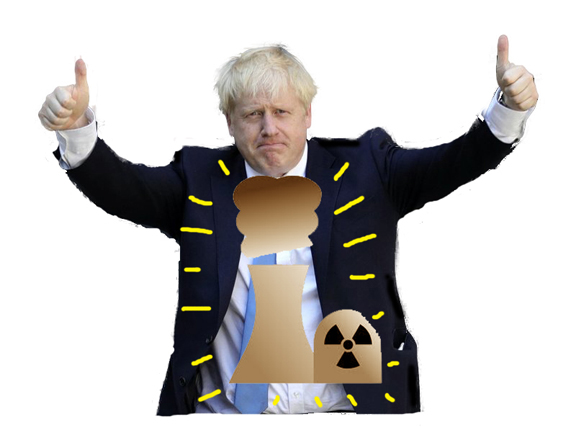
The origin of the Johnson sabotage story is not Russian propaganda. It was first reported by Ukrainska Pravda. The Ukrainian paper says that as soon as Ukraine and Russia had “agreed on the structure of a future possible agreement in general terms, UK Prime Minister Boris Johnson appeared in Kyiv almost without warning.” He told Zelensky that Putin “should be pressured, not negotiated with” and that “even if Ukraine is ready to sign some agreements on guarantees with Putin, they are not.”
Johnson also wooed Zelensky with promises of “influence” and “fame” as a great war hero.
The charge against Johnson is supported not only by Ukrainian testimony, but by British testimony
Columnist Ted Snider takes on the former PM
Ted Snider is a columnist for The Libertarian Institute and a contributing editor for The American Conservative. He is also a frequent contributor to Responsible Statecraft and other outlets.
In a recent interview, former UK Prime Minister Boris Johnson repeated his denial that he discouraged Ukraine from negotiating peace in the first days of the war. “This is complete, utter nonsense,” Johnson said. He insisted that the story was just the Kremlin spreading allegations.
Johnson has used that defense before. In January 2024, he told The Times that “This is nothing but total nonsense and Russian propaganda.”
But none of the sources of the charge are Russian. They are all either Ukrainian or British.
Johnson denies that he encouraged Zelensky to fight. He says that Zelensky’s mind was already set on fighting and that “there was not a single European or Western leader who could have stopped the Ukrainians from fighting for their country.”
That was not true at the time. In a February 25, 2022 address to Ukrainians, Zelensky said, “We are not afraid to talk to Russia. We are not afraid to say everything about security guarantees for our state. We are not afraid to talk about neutral status.”
The origin of the Johnson sabotage story is not Russian propaganda. It was first reported by Ukrainska Pravda. The Ukrainian paper says that as soon as Ukraine and Russia had “agreed on the structure of a future possible agreement in general terms, UK Prime Minister Boris Johnson appeared in Kyiv almost without warning.” He told Zelensky that Putin “should be pressured, not negotiated with” and that “even if Ukraine is ready to sign some agreements on guarantees with Putin, they are not.”
That story, first reported in the Ukrainian press, was confirmed by the head of the Ukrainian negotiating team, Davyd Arakhamia, who says that when the Ukrainian team “returned from Istanbul, Boris Johnson came to Kiev and said that we would not sign anything with them at all, and let’s just fight.” He adds that the West “actually advised us not to go into ephemeral security guarantees.”
Far from Russian propaganda, the charge against Johnson has a Ukrainian media source backed by primary source confirmation from the lead Ukrainian negotiator.
Though it carries less weight because she was not there and because she was no longer in office at the time, there is also secondary source confirmation from within Zelensky’s administration. Iuliia Mendel, Zelensky’s press secretary from 2019-2021, retells the story of Johnson rushing to Kiev to urge the Ukrainians to keep fighting. She also adds the claim, without support or attribution, that Johnson also wooed Zelensky with promises of “influence” and “fame” as a great war hero.
The charge against Johnson is supported not only by Ukrainian testimony, but by British testimony. A senior government source told The Times at the end of March 2022 that the British government warned Zelensky not to be bullied into concessions and that it was the position of the UK that he shouldn’t be “too eager… to settle” and that “Ukraine needs to be in the strongest possible position militarily before those talks can take place.”
Johnson did say that the UK “would back Ukraine a thousand percent.” But he also said, “I could not see for the life of me what the deal could be, and I thought that any deal with Putin was going to be pretty sordid.” He then told Zelensky that “as far as I am concerned, Putin must fail and Ukraine must be entitled to retain full sovereignty and independence.” Johnson then made the promise of providing the Ukrainian armed forces with military supplies.
In The Russo-Ukrainian War: Follies of Empire, Richard Sakwa reports an earlier phone conversation in which Johnson told Zelensky that the UK “would not stand as a guarantor power and urged Zelensky to refuse the deal.”
It is important to set Johnson’s perjury straight not just to correct the historical record, but to remember that, at a time when the war is becoming increasingly hopeless for Ukraine, before most of the death and destruction, there was the chance of peace, and that Johnson contributed to discouraging it and encouraging this horrible war.
Does Britain really face an imminent Russian threat?
By Anatol Lieven, 8 Sept 26, . https://unherd.com/newsroom/does-britain-really-face-an-imminent-russian-threat/
Diane Abbott has been subjected to ferocious attacks on her character for claiming on Wednesday that “the imminent threat from Russia is a Nato fiction.” The Labour MP added that the alliance was attempting “to justify their complete capitulation to Trump’s demands for more military spending. The increase should not go ahead.” Conservative Party leader Kemi Badenoch branded the comments “reprehensible”, while another Tory, Ben Obese-Jecty, labelled Abbott “Putin’s useful idiot”. The Hackney North and Stoke Newington MP even received criticism from her own Labour colleagues.
Many of the responses to Abbott are little more than attempts to shut down public debate on a question of vast importance to the United Kingdom. However, it is also true that she would have been much closer to the facts had she emphasised one word and added another: “The imminent conventional threat from Russia is a Nato fiction.”
Put like this, the argument is persuasive. Any suggestion of a Russian invasion or sustained air campaign in Western Europe is absurd. The Russian military and air force are already occupied with a grinding war in Ukraine: where is Moscow supposed to find a new army with which to attack Nato? How would the Kremlin pay for the resulting war when Nato has practically shut down Russia’s maritime trade?
Had she phrased her statement in these terms, Abbott would have been close to what sensible Nato figures and analysts have been saying. In June, the American Supreme Allied Commander in Europe (SACEUR), General Alexus Grynkewich, said that “Russia is not looking for a conflict […] They do understand the term ‘defensive alliance’, and they do understand that we have a number of asymmetric advantages.” Really, Russia’s threats have been intended to deter a direct war with Nato in Ukraine, not to start one.
Russian-organized hybrid attacks in Europe and Britain are a much more realistic danger, one which Abbott should have mentioned. Moscow has engaged in cyber warfare, as well allegedly organizing arson attacks and the sabotage of railway lines and undersea cables. Last month, explosive drones were discovered close to Ukrainian planes with military supplies at Leipzig/Halle Airport in Germany.
So far, however, the effects have been small, suggesting that Russia’s campaign has been either highly incompetent or deliberately restrained. If the latter, this is presumably because the Kremlin still wants to maintain some element of plausible deniability, and because these attacks are meant to be warnings rather than attempts to do serious damage and cause casualties.
Russian Foreign Ministry spokeswoman Maria Zakharova has threatened that “the response to Ukrainian strikes using British missiles on Russian territory may become [attacks on] any military sites and equipment of Britain in Ukraine, or beyond its borders.” This would mean making Russian hybrid attacks overt — a strategy Vladimir Putin has thus far avoided, both because of the risk of a radical increase in Western help to Ukraine, and perhaps because his instincts as a former intelligence officer are more geared towards covert operations.
In war, accidents happen. On the first day of the American-Israeli war on Iran, the US unintentionally destroyed an Iranian elementary school, killing 120 children. In 1988, American forces mistakenly shot down an Iranian airliner, killing 290 people. Russian contacts assure me that if a British missile were to destroy a school or an airliner in Russia, a direct response against the UK would be unavoidable.
At present, though, a direct threat from Russia to Britain is far from imminent. What is needed is a realistic public debate about the escalation of British support for Ukraine and its possible consequences, and a serious negotiating strategy rather than one that sabotages US initiatives. Support for Ukraine is legitimate, but it is the interests and security of the British people that ministers should be prioritizing. https://unherd.com/newsroom/does-britain-really-face-an-imminent-russian-threat/
Anatol Lieven is a former war correspondent and Director of the Eurasia Program at the Quincy Institute for Responsible Statecraft in Washington DC.
Nature at risk

by beyondnuclearinternational,
https://beyondnuclearinternational.org/2026/09/06/nature-at-risk/
UK Nuclear regulations will destroy havens for wildlife. This needs to be stopped, argues The Wildlife Trusts
The following is a position statement put out by The Wildlife Trusts in Britain, after the UK government published its response to the Nuclear Regulatory Review 2025. (Note: Ed Miliband is no longer the the Secretary of State for Energy Security and Net Zero since the departure of Prime Minister Keir Starmer.) After a massive public outcry, the most environmentally damaging proposals have been watered down. However, the Labour government has committed to new guidance about how to apply nature rules. This tinkering with protections could still lead to damage to nature-rich spaces. Writes the The Wildlife Trusts, “Resistance to this dismissive approach to nature is growing and we’ll keep sticking up for nature.” Their statement:
Recommendations in the Nuclear Regulatory Review put nature at risk
Wildlife and natural places need more protection, not less. But the UK Government is thinking about making it even easier and cheaper for developers to destroy our last few natural spaces.
A report called the Nuclear Regulatory Review is suggesting that protections for nature should be weakened. It says these protections result in unnecessary costs for developers. This is not true. We can’t afford to destroy the few havens we have for wildlife.
This isn’t policy yet – there’s still time to stop this from happening. That’s why we encouraged our supporters to take our simple action to send an email to Ed Miliband, the Secretary of State for Energy Security and Net Zero, and help us to stop this in its tracks.
The Nuclear Regulatory Review proposes weakening the Habitat Regulations
The Review proposes amending the Habitats Regulations so that developers don’t have to worry about avoiding harm to nature sites when they build nuclear plants. It also proposes removing a duty on public bodies to further the conservation and public access purpose of National Parks and National Landscapes.
Nature cannot afford this. Evidence continues to show that nature is in decline, and damage to nature is also damage to climate.
The Prime Minister previously suggested he wants the proposals to apply beyond the nuclear sector
In a speech on 1st December, the [then] Prime Minister said he agreed with all recommendations in the Nuclear Regulatory Review and also asked the Business Secretary to apply them to sectors beyond nuclear in the upcoming Industrial Strategy. This means the harmful recommendations could be extended beyond potential new nuclear energy sites.
If Department for Energy Security and Net Zero (DESNZ) gives the green light for the harmful Nuclear Regulatory Review recommendations, it makes a second damaging Planning Bill inevitable. This will slam the door on nature’s recovery and make net zero even harder to achieve.
If those proposals go ahead, people will suffer as well as wildlife
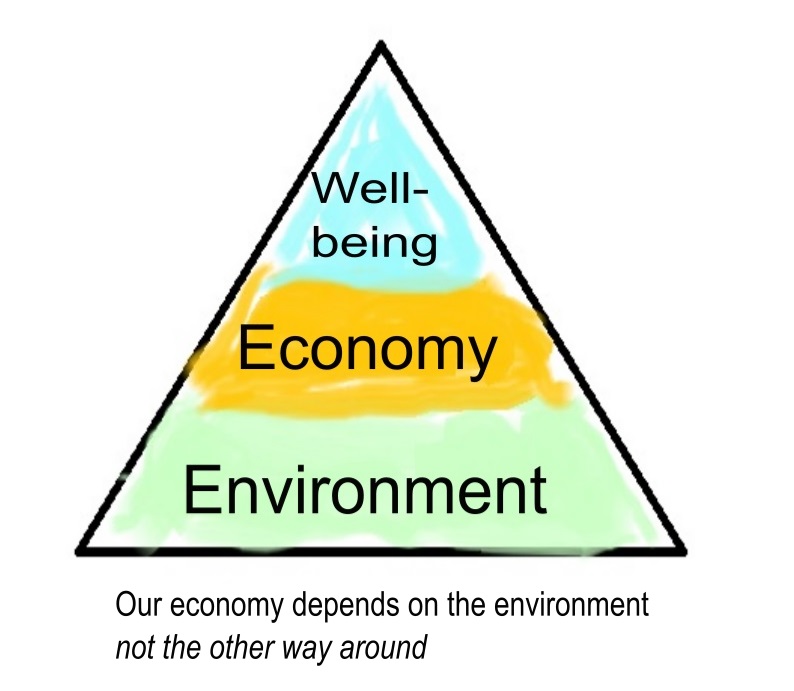
The recommendations in the Review will make natural spaces less safe from development and more vulnerable to damage and loss. These spaces might be close to where you live, or special landscapes that you visit and care about. The UK has already lost more biodiversity than any other country over the last few decades.
The risks of environmental damage through these recommendations will also have knock-on impacts for economic stability, which affects everyone through the cost of living.
Allowing the natural world to be neglected in this way will only benefit a handful of developers who can cut costs by bending the rules in future.
In the last year, the UK Government has targeted nature and wildlife, calling spiders and bats and newts ‘blockers’ and deliberately getting rid of legal safeguards and policies that are supposed to help nature recover. This goes against all evidence, and the public’s views that nature is necessary to everyone. Evidence shows a healthy environment underpins our economy and our wellbeing, and that building with nature in mind helps to ensure development is high quality and sustainable.
The original published statement can be read here on The Wildlife Trusts website.
Local ceasefire in place for Zaporizhzhia power line repairs
World Nuclear News 7th Sept 2026
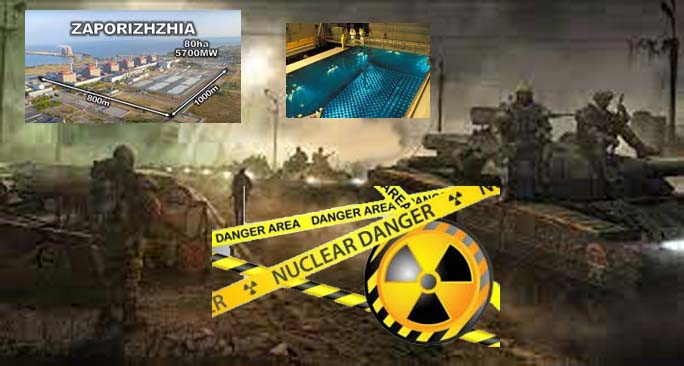
The International Atomic Energy Agency says that a seventh ceasefire is in place to allow demining and repair work to take place to restore external power to the Zaporizhzhia Nuclear Power Plant.
“……………….. The last remaining external power line was disconnected on 20 August “after military activity on the northern side of the Dnipro River”, which has left the plant relying on its fleet of emergency diesel generators to provide the power required for the six-unit plant.
Grossi said: “As the ZNPP’s emergency generators drained the available diesel to little more than a week of supplies, forcing its cooling pumps to be run only intermittently, I continued my persistent efforts to broker a ceasefire so that the Ferosplavna-1 power line could be repaired.”……
Repairs were carried out on a second line in June during another ceasefire, but it remains unavailable because of damage at a substation, he said.
“It goes without saying that nuclear power plant staff must be able to carry out their essential work without being attacked or placed at risk. I solemnly call on all military commanders in the region to stop attacks on nuclear power plants and their staff, and to exercise maximum military restraint. I say this because last month a drone explosion at a bus stop used by plant staff and subcontractors travelling to Zaporizhzhia nuclear power plant caused multiple casualties. The ZNPP informed the IAEA team at the plant that the explosion caused 20 casualties, including one death and three serious injuries………….
The Zaporizhzhia nuclear power plant has been under Russian military control since early March 2022. It is located on the frontline of Russian and Ukrainian forces and has lost offsite power on 26 occasions since the war began, including 10 times since June.
https://www.world-nuclear-news.org/articles/local-ceasefire-in-place-for-zaporizhzhia-power-line-repairs
Small modular reactor client lines up £1.1bn Wylfa early works deal

07 Sep 2026 By Harmsworth,
https://www.constructionnews.co.uk/buildings/small-modular-reactor-client-lines-up-1-1bn-wylfa-early-works-deal-07-09-2026/
CGI of former plans for a nuclear site at Wylfa Newydd
Great British Energy – Nuclear (GBE-N) has outlined plans for an early works contract worth up to £1.1bn as part of its small modular reactor (SMR) programme.
The government-owned nuclear developer said the package would cover civil engineering, infrastructure, buildings, mechanical and electrical work and earthworks at the Wylfa site in Anglesey, north Wales.
The contract has an indicative value of £730m-£1.1bn and is expected to run from June 2028 until June 2034, GBE-N said in a preliminary market engagement notice.
It also included an option to extend the contract until June 2037.
The client said it had previously considered splitting the work into two packages but ultimately decided to combine them to reduce interfaces between contractors.
The successful supplier will take responsibility for design from RIBA stage four and delivery of site-enabling works.
07 Sep 2026 By Harmsworth
CGI of former plans for a nuclear site at Wylfa Newydd
Great British Energy – Nuclear (GBE-N) has outlined plans for an early works contract worth up to £1.1bn as part of its small modular reactor (SMR) programme.
The government-owned nuclear developer said the package would cover civil engineering, infrastructure, buildings, mechanical and electrical work and earthworks at the Wylfa site in Anglesey, north Wales.
The contract has an indicative value of £730m-£1.1bn and is expected to run from June 2028 until June 2034, GBE-N said in a preliminary market engagement notice.
It also included an option to extend the contract until June 2037.
The client said it had previously considered splitting the work into two packages but ultimately decided to combine them to reduce interfaces between contractors.
The successful supplier will take responsibility for design from RIBA stage four and delivery of site-enabling works.
Work will include species relocation, remediation, site clearance, site establishment, construction utilities, drainage and haul roads supporting bulk earthworks.
The works are intended to establish ground levels, provide construction access and create the physical platform required for later phases.
GBE-N said the programme will cover planning, licensing, design and construction needed before its technology partner installs and commissions SMR technology.
Key parts for a new UK nuclear power station will be made in the North East.
The Siemens Energy plant in Byker, Newcastle, will manufacture steam turbines for Rolls-Royce’s flagship small modular reactors (SMRs) being built on Anglesey in North Wales.
It is the first time that such components will be produced for a small modular reactor anywhere in Europe.
Energy secretary Miatta Fahnbulleh visited Siemens Energy’s Shields Road facility on Thursday morning and said that the deal showed “what our golden age of nuclear looks like in practice”…………….
Ms Fahnbulleh said that the SMR station, which is due to open in the mid-2030s, would help deliver long-term energy bill savings for families……………
Rolls-Royce SMR selected Siemens Energy as its global turbine supplier in 2025 and has also secured contracts for similar nuclear power stations in Sweden and Czechia……………………
Rolls-Royce SMR CEO, Chris Cholerton, called Siemens Energy a “world class” supplier.
He said: “This is a perfect example of reindustrialisation and the golden age of nuclear bringing that to life.” https://www.northumberlandgazette.co.uk/news/politics/nuclear-power-station-parts-to-be-built-in-the-north-east-under-deal-for-siemens-energy-factory-8960138
Norway seizes Russian research ship in Arctic waters at Kiev’s request
Signs of the Times, 3 Sept 26
The Professor Molchanov, which was carrying scientists, passengers and vital supplies, was seized in Svalbard as Ukraine’s Naftogaz pursues Russian assets.
Norway has seized a Russian research vessel in Svalbard at the request of Kiev, prompting Russian President Vladimir Putin to denounce the capture of civilian vessels as “state terrorism.”
The vessel, called the Professor Molchanov, was detained while docked in Barentsburg, a Russian-operated settlement on the Norwegian-administered Arctic archipelago. The ship has been barred from leaving after a local court granted a request by Ukraine’s state-owned energy company Naftogaz.
Moscow has since summoned Norway’s ambassador in protest and vowed to challenge the seizure.
Why was a Russian state vessel in Norway in the first place, why does Kiev want it, and what could happen to the ship now?
What exactly happened
The Professor Molchanov arrived in Barentsburg on Tuesday on a scheduled voyage from Murmansk carrying scientists, passengers and supplies for the Russian settlements on the Norwegian-administered Arctic archipelago of Svalbard.
Norwegian officials first boarded the vessel for what Svalbard Governor Lars Fause described as an ordinary border and customs inspection, of a kind the ship had undergone numerous times before.
On Wednesday, Norwegian police, accompanied by an interpreter, boarded the ship again and read a court order to its captain, barring the vessel from leaving. Nobody aboard was arrested.
The order was issued on August 31 by the Nord-Troms and Senja District Court after an application from Ukraine’s Naftogaz.
What happened to the passengers and crew
The exact number of people on board when the ship arrived in Barentsburg has not been officially confirmed. The Professor Molchanov can accommodate up to 80 people, including at least 20 crew members and as many as 60 scientists and other expedition personnel.
Norwegian media have reported that around 50 passengers and crew were affected by the seizure………………………………………………
The Professor Molchanov
The ship, named after renowned Soviet meteorologist Pavel Molchanov, is a Russian state-owned, ice-strengthened research vessel with more than four decades of experience operating in polar waters.
Built in Finland for the Soviet hydrometeorological service and launched in late 1982, the 71-meter-long ship was designed for Arctic oceanographic and weather research. It carries four laboratories on board and can accommodate dozens of researchers alongside its crew.
The ship continues to be actively used in Arctic research, including studies of weather, marine ecosystems, microbiology, biodiversity and environmental conditions in the Barents and Kara seas…………………..
Why is goes to Svalbard
The voyage to Svalbard was part of a regular route between Murmansk and Barentsburg, a Russian mining settlement where the state-owned Arktikugol trust has operated for decades.
Since 2025, the Professor Molchanov has carried scientists, Arktikugol employees, contractors, family members and supplies to Barentsburg and another Russian settlement called Pyramida. Ten round trips were planned for 2026………………………………………………………………………………………………………………………………………………………………………………………. https://www.sott.net/article/508230-Piracy-Norway-seizes-Russian-research-ship-in-Arctic-waters-at-Kievs-request
Consortium formed for Swedish SMR project

Thursday, 3 September 2026
Studsvik has selected GE Vernova Hitachi Nuclear Energy and Samsung C&T as its strategic partners for an initial four-unit BWRX-300 small modular reactor project, either at its existing licensed nuclear site in Nyköping or at the Målma site in Valdemarsvik.
Swedish nuclear technical services provider Studsvik, GE Vernova Hitachi Nuclear Energy (GVH), GE Vernova Financial Services, DS Investment Partners and Samsung C&T announced the signing of an agreement to advance the ReFirm nuclear programme at Studsvik’s sites in Sweden. The agreement is exclusive for a fixed period, which the parties may extend.
ReFirm is a multi-site small modular reactor (SMR) and new nuclear development programme that became part of the Studsvik Group through the acquisition of Kärnfull Next earlier this year. The programme is focused on light-water SMR technology, with plans for multiple units at “SMR parks”. Its plan is for the first unit to be commissioned in the mid-2030s. Kärnfull Next has worked with GE Vernova Hitachi on BWRX-300 deployment in Sweden since 2022 and entered a strategic teaming agreement with Samsung C&T in December 2024.
Under the new agreement, the partners will begin joint development work immediately, including commercial, technical, regulatory and financing activities during the exclusivity period. Studsvik will lead permitting, the environmental impact assessment, site rights, community engagement and the dialogue with the Swedish state. GVH will lead reactor design, licensing support and cost estimation and acts as design authority, and, together with Samsung C&T, acts as the execution team, giving the project single-point responsibility for design and construction delivery. During the exclusivity period, South Korean investment firm DS Investment Partners will lead the investment and GE Vernova Financial Services participates in an advisory and financial structuring capacity in support of the consortium.
A joint project company will be established to support development, financing, construction, ownership and operation of the plants, with details to be finalised in definitive agreements, Studsvik said. It noted that the agreement marks the next phase of development and does not constitute a final investment decision or authorisation to construct.
Ministry of Defence withheld information about nuclear test veterans’ records, ex-minister claims

He said the information was “deliberately withheld” by the MoD and claimed there was an effort to delay its release until surviving veterans had passed away.
2 Sept 26, Tabby Wilson, https://www.bbc.com/news/articles/c3d787k9kpyo
Former veterans minister Tobias Ellwood has accused the Ministry of Defence (MoD) of deliberately withholding the medical records of Cold War veterans who oversaw nuclear tests, calling it “an absolute cover-up”.
Ellwood told BBC Newsnight he now believes some information he gave to Parliament about the UK’s nuclear programme, based on MoD briefings, was “a complete lie”.
Veterans have campaigned for the release of their medical histories, arguing blood and urine test results could help them prove that nuclear exposure damaged their health.
An MoD spokesperson said the government had conducted an “extensive records discovery exercise” to address questions about the programme, with its findings published in full.
As many as 25,000 members of the UK armed services, scientists and civilians took part in the nuclear testing programme between 1952 and 1967 at sites including Australia and several islands in the Pacific Ocean.
Veterans have claimed the tests caused severe lifelong health problems, alleging they have suffered cancers of the liver, bone, bowel, skin and brain, as well as leukaemia, heart disease, stillbirths and generational birth defects as a result of their exposure.
Ellwood, who served as a junior defence minister between June 2017 and July 2019, said he believed ministers over the years had been briefed to say they had no evidence to help nuclear test veterans, despite thousands of documents about the programme being held.
He said the information was “deliberately withheld” by the MoD and claimed there was an effort to delay its release until surviving veterans had passed away.
“The more you unpick this story, the more murky, the more shady, the concerning it becomes,” Ellwood told Newsnight, calling it bigger than the infected blood, Windrush and Post Office scandals “because of the longevity… and the number of people that have been involved”.
“This is a scandal. It’s absolutely tarnished the reputation of the MoD.”
Calling for an independent tribunal into the matter, Ellwood asked: “Why it is that the MoD – rather than help veterans, provide the information – closed ranks and said ‘nothing to see here’, and then told ministers such as me ‘actually we haven’t got that information and we’re not willing to help the veterans’?”
The ministry in 2024 promised to embark on a comprehensive examination of any information the department held on the issue, and has since released five reports.
In those, it said there were a number of factors affecting the way medical records were kept, including the lack of a centralised approach and high levels of Cold War “secrecy”.
Ellwood conceded that some documents were to be handed to the National Archives, but said they would still be heavily redacted: “They have to be declassified. This isn’t enough to help the veterans, who understandably remain deeply angry.”
An MoD spokesperson said the government had examined “tens of thousands of documents to address long-standing questions from veterans about blood and urine testing policies during the nuclear testing programme”.
They said it had been published in its entirety “following regular engagement between Ministers, nuclear test veterans and community groups throughout the process.”
“We owe an enduring debt of gratitude to the more than 22,000 Service personnel, scientists and civilians who contributed to the UK’s nuclear testing programme and helped safeguard our national security,” the spokesperson said.
UK government does not know what datacentres are being used for, FoI request shows

Lack of information raises fears over environmental impact of the AI boom
Pippa Neill Environment reporter, Wed 2 Sep 2026 ,
https://www.theguardian.com/uk-news/2026/sep/02/uk-datacentres-ai-boom-foi-environment
The UK government does not know what the country’s datacentres are being used for despite fears over the growing environmental impact of the AI boom.
When asked in a freedom of information (FoI) request who was using the largest sites and what for, the Department for Science, Innovation and Technology said it did “not hold the requested information”. The ministry has since been dissolved.
With hundreds of datacentres awaiting planning permission and 315 queueing to connect to the National Grid, there is growing concern over a lack of transparency and justification for these projects given their environmental impact.
Ministers announced plans in January to allow qualifying datacentres to opt into the Nationally Significant Infrastructure Project scheme. This lets developments bypass local planning committees by securing approval from the government. Campaigners say this “insulates” datacentres from local scrutiny.
Zack Polanski, the Green party leader in England and Wales, said: “The government plans to steamroller over local opposition so private companies can build these facilities – yet they can’t even explain what the benefits are and who is benefiting.”
Datacentres use a huge amount of resources. The Guardian revealed last month that two planned sites will have higher carbon emissions than ExxonMobil in the UK, with concerns raised over how this will fit within the country’s carbon targets.
The government designated datacentres as critical national infrastructure in 2024 and campaigners fear this could mean the water-hungry sites are prioritised over households in times of drought. Water UK, the trade body representing water companies in Britain and Northern Ireland, warned in July that the UK did not have enough water for the datacentre expansion.
Polanski said: “What is more ‘critical’ than people’s access to water? What is more ‘critical’ than our need to transition to a low-energy, low-pollution world so we can put the brakes on climate extremes?”
While there is consensus that datacentres can provide some essential services, there are concerns that developments with a huge environmental impact and local opposition are being prioritised regardless of their use.
Oliver Hayes of Global Action Plan, the environmental charity which submitted the FoI request, said: “It’s highly likely that we’re going to end up seeing datacentres given favourable and preferential treatment when it comes to resources that are actually running chatbots or enabling people to do benign and very wasteful, pointless things.
“At the more serious end, these datacentres could be powering chatbots that enable people to nudify teens without their consent and much worse, frankly.”
With reports that the Scottish government is inching toward a moratorium on new datacentres, there is growing pressure for the UK government to follow suit.
Friends of the Earth is calling for a ban on new sites until environmental safeguards are in place. The campaign group wants the government to publish clear environmental rules for new and existing datacentres, including requirements for 100% additional renewable energy generation for new projects.
Anisah Khan, the campaigns manager at Global Action Plan, said: “When individuals across the country are facing hosepipe bans and essential housebuilding is being delayed because datacentres are gobbling up grid connections, what we need is not more chatbots at any cost.”
The government did not respond to a request for comment over its failure to say what large datacentres were being used for.
A spokesperson said: “A pause on building new datacentres would simply send investment and good jobs abroad, while leaving Britain dependent on other countries for the processing of sensitive health and defence data. Put simply: it would be a disaster for jobs and national security.”
Putin says Ukraine peace deal is possible, calls for full restoration of U.S.-Russia relations
[your]NEWS, Thu, 03 Sep 2026
Russian President Vladimir Putin said Thursday that Moscow sees “a chance” for peace with Ukraine and wants to restore full relations with the United States, citing continued contacts with Washington and ongoing communication between Russian and Ukrainian intelligence services.
Russian President Vladimir Putin said Thursday that there is “a chance” to reach a peace agreement with Ukraine and signaled that Moscow also wants to rebuild its relationship with the United States after years of confrontation.
Speaking Sept. 3 during a session of the Eastern Economic Forum in Vladivostok, Putin said Russia remains appreciative of international efforts aimed at ending the war but maintained that Moscow and Kyiv must ultimately reach an agreement directly.
Moscow is “grateful to everyone who is trying to contribute to resolving this issue,” Putin said, adding that in his view there is “a chance” of achieving peace, according to Russian state news agency TASS. For the fighting to end, Putin said, “Russia and Ukraine must first reach an agreement” between themselves.
He acknowledged that “all other countries are ready to support and assist” the two sides in reaching such an agreement.
Despite the continuing war, Putin revealed that Moscow and Kyiv have maintained lines of communication through their respective intelligence services.
He said it was difficult to determine “to what extent these contacts are leading to a peace agreement,” but confirmed that communication between the two governments has not completely ceased.
Putin also used his remarks in Vladivostok to address the future of relations between Russia and the United States.
He confirmed that Moscow remains in contact with Washington and said he hopes those channels remain open.
The Russian president pointed to cooperation involving U.S. and Russian intelligence services as well as officials appointed by President Donald Trump, saying the process is “working” and expressing hope that it will “ultimately lead to a positive outcome.”
Putin said Russia wants a broader normalization of relations with Washington.
Moscow is “in favor of restoring relations with the United States in full, but this does not depend solely on us; it depends on the American side,” he said.
Putin nevertheless indicated that he believes Trump is personally interested in improving ties. He said Trump is “determined to engage in such positive, constructive work.”
Putin’s comments came one day after Trump said any future face-to-face meeting between the two leaders should take place in connection with an actual peace agreement.……………………………………………………………………………………………………………………………….
During an Aug. 24 Independence Day speech in Kyiv, Zelenskyy said Ukraine wants peace but would not capitulate.
Those positions remain at the center of the diplomatic challenge.
Putin says Moscow sees a possible route toward agreement and favors restoring full relations with Washington, while Trump has increasingly tied future high-level diplomacy with the Kremlin to tangible progress toward ending the conflict.
Zelenskyy, meanwhile, has publicly endorsed negotiations while insisting that peace cannot come through Ukrainian surrender…………………. https://www.sott.net/article/508247-Putin-says-Ukraine-peace-deal-is-possible-calls-for-full-restoration-of-US-Russia-relations
I inadvertently misled parliament over a British nuclear scandal. Now I’m calling for justice
Tobias Ellwood, 3 Sept 26,
https://www.theguardian.com/commentisfree/2026/sep/02/british-nuclear-tests-compensation-for-veterans
Thousands of service personnel took part in dangerous cold war-era nuclear tests. The government owes them the truth – and compensation.
In December 2018, as defence minister, I inadvertently misled parliament. Asked whether blood samples had been taken from service personnel for radiological monitoring during the nuclear bomb tests, I relayed the line provided to me by the Ministry of Defence: it was “unable to locate any information” suggesting blood samples had been taken for radiological monitoring at the tests.
I now know the reality was very different – these samples were taken across the armed services branches. But those veterans seeking compensation for serious illnesses developed after radiation exposure have been unable to access them. This is among the greatest scandals in Britain, and it must be addressed.
More than 20,000 armed forces personnel took part in dozens of nuclear tests and nearly 600 radiation experiments, the majority between 1952 and 1967. This was for the entirety of the cold war. The science was deemed necessary. How effective were our own bombs and, just as importantly, how well could our military function if the Soviet Union used theirs against us? Test after test was conducted in the Australian desert, at Christmas Island in the Pacific, and we also sent service personnel into the atomic clouds of allies and enemies. Yet their medical records for the period are missing.
Other nuclear nations, such as the US, France and the Soviet Union, did the same. Yet they acknowledged that it happened and created dedicated compensation schemes for nuclear test veterans who subsequently developed serious illnesses. Britain stands apart here. In Britain, the burden was placed on veterans to prove their case. But how do you claim what happened decades earlier when potentially vital records are missing or inaccessible?
In 2007, about 1,000 nuclear test veterans and families took the MoD to court seeking compensation. Pilots had been instructed to fly through mushroom clouds. Service personnel sailed and crawled through fallout. Others witnessed nuclear explosions, in some cases just two miles from ground zero. Surely our service personnel deserved better?
This is where the scandal turns ugly. To deal with the veterans’ litigation, the MoD instructed the Atomic Weapons Establishment (AWE) to collate relevant documentation into a searchable database called Merlin. More than 28,000 documents were eventually assembled, covering radiation, precautions, health monitoring and what was known about the possible biological effects of the tests. Yet the veterans’ lawyers had no practical access to this vast archive. Thanks to the extraordinary investigative journalism of Susie Boniface, historical documents began emerging referring to blood and urine testing.
When I saw the evidence, I raised it in November 2022 as chair of the defence committee. The MoD finally acknowledged that the AWE held copies of blood-test results and urine-radioactivity measurements for “a small number of individuals”. That took me straight back to my parliamentary answer four years earlier.
I challenged the then defence secretary, Ben Wallace. If this information existed within the MoD, why had ministers not been given the full picture? He agreed that withholding relevant medical information would be “deeply wrong” and undertook to investigate.
The dam was beginning to burst. Searches of Merlin for “blood” and “urine” subsequently identified 151 documents. Then another extraordinary twist. A software change meant the AWE could no longer provide a historical audit trail showing who had accessed Merlin.
Devonport nuclear submarine dock upgrades could be accelerated
Navy Lookout 3rd Sept 2026
The MoD hopes to speed up two major dock renewal projects at Devonport following the site operator’s release from 12 years of enhanced nuclear safety oversight. A parliamentary answer this week confirmed that acceleration of work on 10 and 14 Dock is being explored as part of the £7.1Bn Project Royal Oak investment in the base.
Responding to a written Parliamentary question, Defence Minister Luke Pollard, who is also MP for Plymouth Sutton and Devonport, said: “opportunities to accelerate work on 10 and 14 Dock are being explored”. Following the nuclear regulatory review, delivery of both projects is being driven forward. Work on 10 Dock was originally scheduled to be completed in late 2027, but the current target date for handover is unclear.
The Office for Nuclear Regulation (ONR) review concluded in March 2026 and returned Devonport Royal Dockyard Limited (DRDL) to routine regulatory attention. The site had been under ‘enhanced attention’, effectively special measures, since 2014 over concerns about ageing facilities, organisational capability and control of work. ….. With enhanced oversight lifted, there should be fewer regulatory obstacles to progressing complex nuclear construction work at the site.
Faster progress cannot come soon enough. The RN currently has just three facilities able to take a nuclear submarine out of the water: the shiplift at Faslane and 9 and 15 Docks at Devonport. 9 Dock is occupied by HMS Victorious in deep maintenance, while HMS Audacious only vacated the refurbished 15 Dock in June after becoming the first Astute-class boat to dock at Devonport. HMS Astute will take her place as she begins a lengthy mid-life validation period.
Under a £750M contract awarded in 2023, 10 Dock is being modernised to provide a second Devonport dock certified for both SSN and SSBN maintenance. Any acceleration would directly benefit submarine availability.
Work on 14 Dock addresses a different but equally longstanding bottleneck. Its recommissioning will allow submarine defuelling to resume at Devonport for the first time since 2004, when the old facilities were judged to fall short of modern standards. Of the 14 decommissioned boats stored afloat in 3 Basin, 10 still contain nuclear fuel, while their storage and maintenance costs around £30M annually. The old defuelling cranes have been replaced by a Reactor Access House that moves on rails over the reactor compartment, with roughly one boat per year expected to be defuelled once operations begin.
As part of Project Royal Oak, £7.1Bn will be invested in Devonport naval base and dockyard over the next decade, the largest share outside Faslane of the £26Bn naval infrastructure programme confirmed in July’s Defence Investment Plan. The scale of the investment reflects historic underinvestment as well as evolving operational requirements.
The upturn in work is visible in DRDL’s newly filed accounts for the year to 31 March 2026, with revenue rising 6.7% to £1.87Bn, driven by increased submarine maintenance across both the Astute and Vanguard classes. Operating profit reached £131M despite a one-off £5.9M charge relating to a closed group pension scheme, while profit after tax jumped from £76M to £132M, helped by a lower tax charge and higher interest income.
DRDL’s long-term order book fell from £2.1Bn to £1.7Bn, reflecting completion of Year 5 of the Future Maritime Support Programme (FMSP), only partly offset by a six-month bridging contract. This gives added importance to the Gateway Agreement now being negotiated with the MoD, a successor contract intended to run from September 2026 until March 2032, covering the period in which SSN-AUKUS work begins to build.
DRDL is a Babcock subsidiary and employs around 10,200 people, with staff costs of £670M. The Secretary of State for Defence also continues to hold a £1 special golden share in the company, providing powers to overrule ordinary shareholders in extreme circumstances. https://www.navylookout.com/devonport-nuclear-submarine-dock-upgrades-could-be-accelerated/
1 This Month



Shut down the radiation-damaged Heysham nuclear reactors now
To see nuclear-related stories in greater depth and intensity – go to https://nuclearinformation.wordpress.com

Say No to NASA’s Reckless Nuclear Reactor on the Moon
Say No to NASA’s Reckless Nuclear Reactor on the Moon
-
Archives
- October 2026 (256)
- September 2026 (339)
- August 2026 (330)
- July 2026 (355)
- June 2026 (287)
- May 2026 (306)
- April 2026 (356)
- March 2026 (251)
- February 2026 (267)
- January 2026 (308)
- December 2025 (358)
- November 2025 (359)
-
Categories
- 1
- 1 NUCLEAR ISSUES
- business and costs
- climate change
- culture and arts
- ENERGY
- environment
- health
- history
- indigenous issues
- Legal
- marketing of nuclear
- media
- opposition to nuclear
- PERSONAL STORIES
- politics
- politics international
- Religion and ethics
- safety
- secrets,lies and civil liberties
- spinbuster
- technology
- Uranium
- wastes
- weapons and war
- Women
- 2 WORLD
- ACTION
- AFRICA
- Atrocities
- AUSTRALIA
- Christina's notes
- Christina's themes
- culture and arts
- Events
- Fuk 2022
- Fuk 2023
- Fukushima 2017
- Fukushima 2018
- fukushima 2019
- Fukushima 2020
- Fukushima 2021
- general
- global warming
- Humour (God we need it)
- Nuclear
- RARE EARTHS
- Reference
- resources – print
- Resources -audiovicual
- Weekly Newsletter
- World
- World Nuclear
- YouTube
-
RSS
Entries RSS
Comments RSS

