Germany to scrap deadline for finding a nuclear waste storage site

04 Mar 2026, https://www.cleanenergywire.org/news/germany-scrap-deadline-finding-nuclear-waste-storage-site
Germany has given up on naming a deadline for finding a suitable location for the safe and long-term storage of highly radioactive waste, reports public broadcaster Deutschlandfunk. A draft bill by the environment ministry, which is in charge of the process, says the existing 2031 target date is not realistic. A statutory deadline does not fit the complex requirements of the site selection process, the draft said, according to the broadcaster.
Germany shut down its last nuclear power plants in 2023, but must still safely dispose of decades of accumulated radioactive waste. A report commissioned by the country’s Federal Office for the Safety of Nuclear Waste Management (BASE) said in 2024 that the search for a suitable site was likely to last until the 2070s. The environment ministry has also said the 2031 target was unrealistic, but argued that progress in the search process should still be considered when assessing possible timelines.
Only weeks ago, environment minister Carsten Schneider said the goal was to decide on a location by the middle of the century. However, the draft bill no longer mentions this target date.
The 2031 deadline was set in the country’s 2013 law on finding and choosing a nuclear waste repository.
Germany must find a place to safely store 1,900 large containers, or around 28,100 cubic metres, of high-level radioactive waste in a location that can be considered secure for hundreds of thousands of years. The material must remain retrievable for the first 500 years to allow for implementing alternative solutions.
Heat-generating nuclear waste accounts for only five percent of Germany’s radioactive refuse, but causes 99 percent of the radiation. It is currently held at temporary storage facilities near the nuclear power stations and in central interim repositories. Once a decision on a location is made, building the final repository is scheduled to take about 20 years. Transporting and storing the refuse will then take several decades more, meaning the entire process will last well into the next century.
Starmer’s Self-Defence Fudge: The UK’s Growing Involvement in the Iran War

Healey confirmed that the US was using British bases to target Iranian missile sites from RAF Fairford in Gloucestershire and Diego Garcia in the Indian Ocean.
The dangers of closer involvement with the US in this war should be all too clear for Starmer and the Labour Party. In March 2003, as a human rights lawyer, he warned the government of Tony Blair that pre-emptive action against Iraq to disarm the regime of Saddam Hussein of alleged weapons of mass destruction would find itself, from a legal perspective, on thin ice.
10 March 2026 Dr Binoy Kampmark, https://theaimn.net/starmers-self-defence-fudge-the-uks-growing-involvement-in-the-iran-war/
Wars can distract, and for leaders in political purgatory, they can be particularly useful. It remains to be seen whether the UK’s increasing involvement in the illegal war being waged on Iran by Israel and the United States will serve that purpose. Prime Minister Sir Keir Starmer, the great saviour of the British Labour Party in taking them to victory in 2024, is finding himself in sinking desperation. Being less popular than a pandemic, he has much work to do if he is to retain his premiership till and after the next election.
This deepening involvement in the Iran War has been messy. Britain, along with France and Germany, were initially clear in their joint February 28 statement that they had not participated in the strikes on Iran but were “in close contact with our international partners, including the United States, Israel, and partners in the region.” Instead of condemning the pre-emptive attack on Tehran as a crime of aggression in breach of the United Nations Charter and international law, the statement went on to “condemn Iranian attacks on countries in the region in the strongest terms.”
Within a matter of hours, Starmer rebadged his country’s engagement in the conflict as a matter of self-defence under Article 51 of the United Nations Charter, making what can only be regarded as a spurious use of international law – or whatever was left of it. The press release on March 1 again reiterated condemnation for Iran’s “reckless and ongoing discriminate attacks against countries in the region,” taking no account as to why Tehran was engaged in such an avenging task. But international law permitted the UK and its allies “to use or support force in such circumstances where acting in self-defence is the only feasible means to deal with an ongoing armed attack and where the force used is necessary and proportionate.”
It followed from this that the UK had “military assets flying in the region to intercept drones or missiles targeting countries not previously involved in the conflict.” A request from Washington had also meant that his government would “facilitate specific and limited defensive action against missile facilities in Iran which were involved in launching strikes at regional allies.” The statement went on, weakly, to ward off suggestions of any “wider involvement in the broader ongoing conflict between the US, Israel and Iran.”
On March 9, in an oral statement to the House, the UK Secretary of State for Defence John Healey revealed the sheer scale of British involvement. The briefest of references was made to Starmer’s justification along lines of collective self-defence under international law. To put some flesh on the bone, it was important to inflate the threat posed by the Iranian regime, a force of cruel destruction that had “slaughtered protestors in its own streets,” supplied Shahed drones to Russia in its “illegal invasion of Ukraine” and conducted cyber-attacks against Britain and plotted assassinations on it streets.
Healey confirmed that the US was using British bases to target Iranian missile sites from RAF Fairford in Gloucestershire and Diego Garcia in the Indian Ocean. He also outlined various “defensive operations” that had taken place: the destruction of Iranian drones over Jordan by F-35s; the use of Typhoons to shoot “down targets heading towards Qatar”; and “counter-drone units defeating further attacks against coalition bases in Iraq.” Various “defensive air sorties in support of the UAE” were also being conducted. Given this burgeoning list, it is surely a matter of time, given the prolongation of conflict, for Starmer to join the full-blooded effort and hit sites in Iran proper. The pretence to legality will have all but collapsed by that point.
The US President Donald Trump, for his part, has been petulant, scornful of Starmer for not doing more. “This is not Winston Churchill,” he moaned to journalists over the PM’s initial tardiness in permitting the use of British bases to launch strikes on Iran. In a social media post, Trump revealed that the UK, “our once Great Ally, maybe the Greatest of them all, is finally giving serious thought to sending two aircraft carriers to the Middle East.” With a bitchy turn, the President informed the PM that “we don’t need them any longer – But we will remember.” He had “no need for people that join Wars after we’ve already won!”
The dangers of closer involvement with the US in this war should be all too clear for Starmer and the Labour Party. In March 2003, as a human rights lawyer, he warned the government of Tony Blair that pre-emptive action against Iraq to disarm the regime of Saddam Hussein of alleged weapons of mass destruction would find itself, from a legal perspective, on thin ice. “The mere fact that Iraq has a capacity to attack at some specified time in the future is not enough.” No one believed that Iraq was imminently about to attack the UK or its allies, and any claim to self-defence “would sit uncomfortably with the US position that military action is justified to destroy such weapons of mass destruction as Iraq may have, and to bring about a change of leadership.”
Despite these warnings, Blair, with a poodle’s dignity, joined President George W. Bush alongside that other servitor, Australia, to attack Iraq, finding no WMDs and inviting the deserved opprobrium of the international law community. The public inquiry into Britain’s involvement in the war, chaired by John Chilcot, noted that “the circumstances in which it was decided there was a legal basis for UK military action were far from satisfactory.” The phase of planning and preparations for a post-Saddam also proved “wholly inadequate.” But the inquiry report also made an unimpeachable observation troublingly relevant as Britain gets ever more involved in the current crime of aggression: “The US and UK are close allies, but the relationship between the two is unequal.”
While Hinkley Nuclear Was Being Built, The UK Grid Decarbonized
Clean Technica, Michael Barnard, 6th March 2026
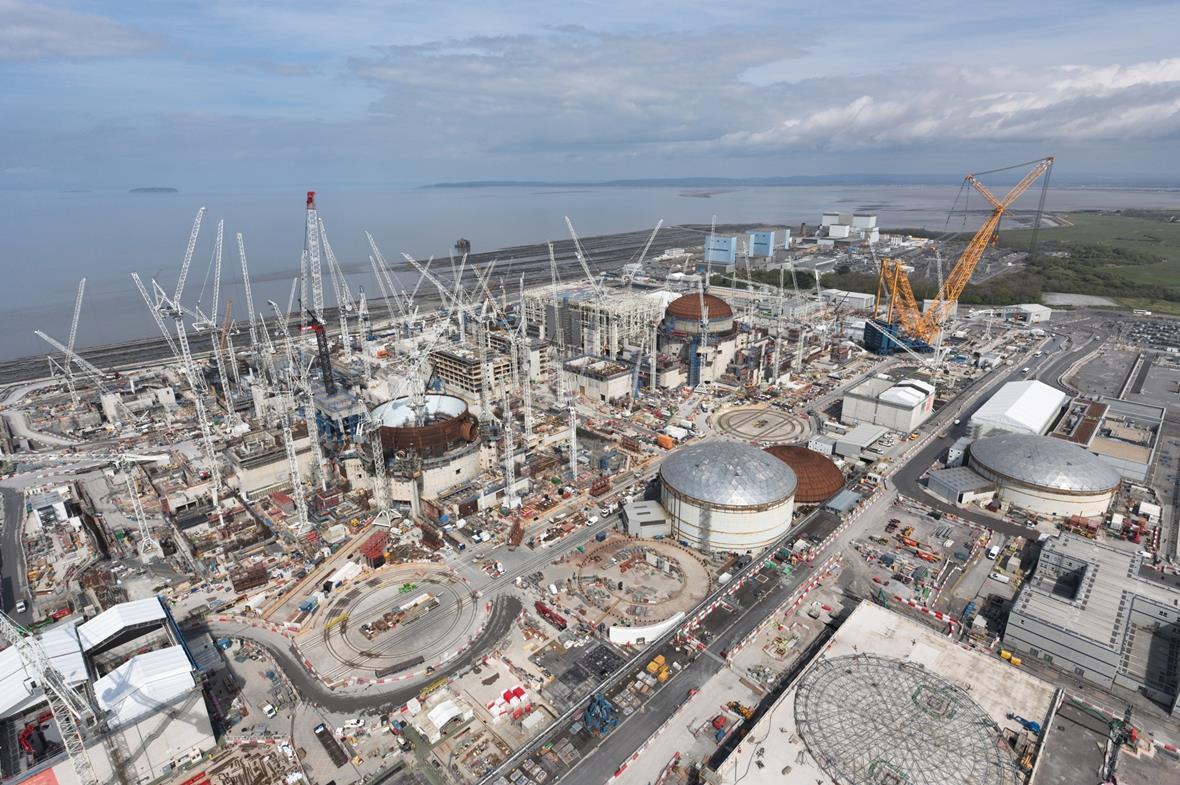
The latest announcement about Hinkley Point C was predictable. The first reactor at the plant in Somerset is now expected to begin generating electricity in 2030. The cost estimate has climbed again, now reaching roughly £35B in 2015 pounds or about £49B in current money according to Electricité de France. When the project received final approval in 2016, the expected construction cost was £18B and the first reactor was expected to begin operating in 2025. In the span of a decade, the expected capital cost nearly doubled while the schedule slipped by five years. The project illustrates the pattern described by Oxford megaproject scholar Bent Flyvbjerg. Large infrastructure projects tend to run over budget, over schedule, and deliver fewer benefits than originally promised. Hinkley Point C appears to be achieving the full trifecta.
To understand how the project arrived at this point it is necessary to revisit the electricity system that existed when Hinkley was first proposed……………………………Policymakers faced a looming capacity gap as aging coal plants approached retirement under European pollution rules and older nuclear reactors approached the end of their operating lives. Large baseload nuclear plants seemed like a logical replacement for retiring coal and nuclear capacity while maintaining system reliability and reducing emissions.
EDF entered the picture in 2008 when it acquired British Energy for about £12.4B. This acquisition gave the French utility access to several UK nuclear sites including Hinkley Point in Somerset……………………… T.he UK government supported the project through a Contract for Difference that guaranteed a strike price of £92.50 per MWh in 2012 pounds for 35 years. Adjusted for inflation that price is now roughly £120 to £130 per MWh in current money.
The timeline of the project reflects the slow progress typical of large nuclear builds……………………………………………………….. The most recent revision places the cost at about £35B in 2015 pounds with startup expected in 2030. If the schedule slips to 2031, EDF estimates another £1B in additional cost..
Hinkley is not an isolated example. The reactor design used at the site is the European Pressurized Reactor. Other projects using this design have experienced similar difficulties. Olkiluoto 3 in Finland began construction in 2005 and entered commercial operation in 2023. The project took roughly 18 years from start to finish and cost about €11B compared with an original estimate of about €3B. Flamanville 3 in France began construction in 2007 and only began producing electricity in 2024 after more than a decade of delays and cost escalation. These projects demonstrate that modern nuclear construction faces structural challenges including complex regulatory oversight, large supply chains, and one-off engineering work.
While Hinkley Point C progressed slowly, the electricity system around it began to change rapidly. UK grid carbon intensity fell from about 520 gCO2 per kWh in 2006 to roughly 120 gCO2 per kWh in 2025 according to National Grid data. That represents a reduction of about 77%. Coal generation collapsed during the same period. In 2012 coal still produced about 40% of UK electricity. By 2024 the last coal plant closed and coal generation fell to zero. Gas generation initially increased as coal declined, providing a bridge fuel that cut emissions roughly in half per kWh compared with coal. At the same time renewable energy expanded quickly.
Wind power became the largest contributor to this change. ……………………………………………………………………………..
The grid also evolved to accommodate the growing share of renewable energy. Market reforms played a significant role. The Contract for Difference program created long term price stability for renewable developers………………High voltage direct current interconnectors connected the UK to electricity markets in France, Norway, Belgium, and Denmark. These interconnectors allow power to flow between regions and help balance variable generation.
Grid operations also changed to manage a system with lower inertia and higher renewable penetration. Batteries began appearing in grid services markets around 2017. These batteries provide fast frequency response and reserve capacity.
The economic dynamics of electricity generation shifted during the same period. Nuclear plants represent a form of megaproject economics. Each plant is a large custom built facility that takes many years to construct. Learning effects are limited because each plant is unique. Wind turbines and solar panels follow a different model. These technologies are manufactured in large volumes. Production learning and scale economies reduce costs over time. ………………………………………………………………..
The rising cost of Hinkley also raises questions about opportunity cost. The current estimated cost of about £49B in today’s money represents a very large capital investment. Offshore wind projects in Europe commonly cost between £2M and £3M per MW of installed capacity depending on location and turbine size. At £2.5M per MW, £49B could finance roughly 20 GW of offshore wind capacity. With a typical offshore wind capacity factor of about 45%, that capacity would produce around 79 TWh of electricity annually. Hinkley Point C is expected to produce about 25 TWh annually. The comparison is not exact because nuclear provides firm generation while wind is variable. The scale difference is significant.
……………………………………………………………………………………………………………. The next UK nuclear project, Sizewell C in Suffolk, raises obvious questions about what lessons policymakers are drawing from the experience at Hinkley Point C. Sizewell C is planned as a near replica of Hinkley using the same European Pressurized Reactor design and similar capacity of about 3.2 GW. The estimated construction cost is currently around £20B to £30B depending on assumptions about financing and schedule. Unlike Hinkley, the project will be financed through a regulated asset base model that allows developers to collect revenue from electricity consumers during construction. This structure reduces financing risk for investors but shifts more cost exposure onto the public.
The core question is whether the UK energy system in the 2030s and 2040s still requires additional nuclear megaprojects built on decade long timelines when wind, solar, and storage technologies continue expanding on much shorter deployment cycles. A second question concerns opportunity cost. If Sizewell C ultimately approaches the capital intensity seen at Hinkley, the same level of investment could finance tens of gigawatts of renewable capacity or large expansions of grid infrastructure. Policymakers therefore face a strategic choice between continuing the megaproject model for firm low carbon generation or allocating capital toward technologies that can scale incrementally and rapidly across the electricity system.
The broader lesson from the Hinkley experience concerns the pace of technological change in energy systems. Large infrastructure projects require long planning and construction timelines. Energy technologies such as wind turbines, solar panels, and batteries follow faster innovation cycles driven by manufacturing scale and global deployment. Between the time Hinkley Point C was conceived and the time it will enter operation, the UK electricity system transformed itself. Coal disappeared. Wind capacity expanded more than tenfold. Carbon intensity fell by more than three quarters. The project will arrive into a grid that has already undergone much of the transition it was designed to support.
https://cleantechnica.com/2026/03/06/while-hinkley-nuclear-was-being-built-the-uk-grid-decarbonized/
A chilling reminder of the deceit & violence of Iraq war
March 09, 2026, by Bruce K. Gagnon
This film ‘Official Secrets’ is a true story. It’s now airing on Netflix and I urge folks to watch it.
‘Official Secrets,’ which opened in 2019, is the best movie ever made about how the Iraq War happened. It’s startlingly accurate, and because of that, it’s equally inspiring, demoralizing, hopeful, and enraging.
It’s been mostly forgotten now, but the Iraq War and its abominable consequences — the hundreds of thousands of deaths, the rise of ISIS terrorism, the nightmare oozing into Syria, arguably the presidency of Donald Trump — almost didn’t happen.
In 2003, as politicians in Britain and the US scheme to invade Iraq, GCHQ translator Katharine Gun leaks a classified e-mail that urges spying on members of the UN Security Council to force through the resolution to go to war.
Charged with breaking the Official Secrets Act, and facing imprisonment, Katharine and her lawyers set out to defend her actions. With her life, liberty and marriage threatened, she must stand up for what she believes in…
During this present Iran war – packed with lies, distortions and evil boasts of killing by the US and Israel – this 2019 film reveals the kind of ugly twists and turns that are regularly used to pull the wool over the public’s eyes.
Now and then a principled person stands against the dark wall of endless war.
Hungary detains Ukrainians transporting tens of millions in cash and gold
Hungarian authorities have launched an investigation into potential money laundering, but Ukraine insists those facilitating the transfer were state-owned bank employees carrying out their job

Thomas Brooke, ReMix News, 2026-03-06, https://rmx.news/article/hungary-detains-ukrainians-transporting-tens-of-millions-in-cash-and-gold/
Hungarian authorities have detained seven Ukrainian citizens and seized tens of millions of dollars, euros, and gold that were being transported through the country in armored vehicles, triggering the latest diplomatic dispute between Budapest and Kyiv.
Hungary’s National Tax and Customs Administration (NAV) confirmed on Friday that criminal proceedings had been launched on suspicion of money laundering following an operation carried out on March 5. Authorities intercepted two armored cash-transport vehicles traveling through Hungary from Austria toward Ukraine.
According to the Hungarian authorities, the vehicles were carrying approximately $40 million, €35 million in cash, and 9 kilograms of gold.
Hungarian Foreign Minister Péter Szijjártó said the case raised serious questions about the movement of large quantities of physical cash through the country.
“Since January, a total of $900 million and €420 million in cash has been transported through Hungary, and 146 kilograms of gold bars have also been transported through the country,” he said, as cited by Magyar Hírlap.
“We have a number of serious questions about this. First of all, this is a huge amount of cash, and we wonder why Ukrainians need to transport such a large amount of cash. If it is true that this is a transaction between banks, then the question rightly arises as to why the banks do not settle this between themselves by bank transfer, why it is necessary to transport such a large amount of cash, and why it has to be transported through Hungary,” Szijjártó added.
“These questions arise mainly because these cash shipments are accompanied by people who have clear ties to Ukrainian secret services.”
Hungarian Prime Minister Viktor Orbán’s political director, Balázs Orbán, also commented on the case, raising concerns about the purpose of the funds.
“Hundreds of millions in cash and gold moving through Hungary toward Ukraine — escorted by people linked to Ukrainian intelligence. Armored vehicles, suitcases full of money, staggering sums,” he wrote on X……………………………………………………………………………………….. https://rmx.news/article/hungary-detains-ukrainians-transporting-tens-of-millions-in-cash-and-gold/
The Welsh dragon is getting ready to roar.
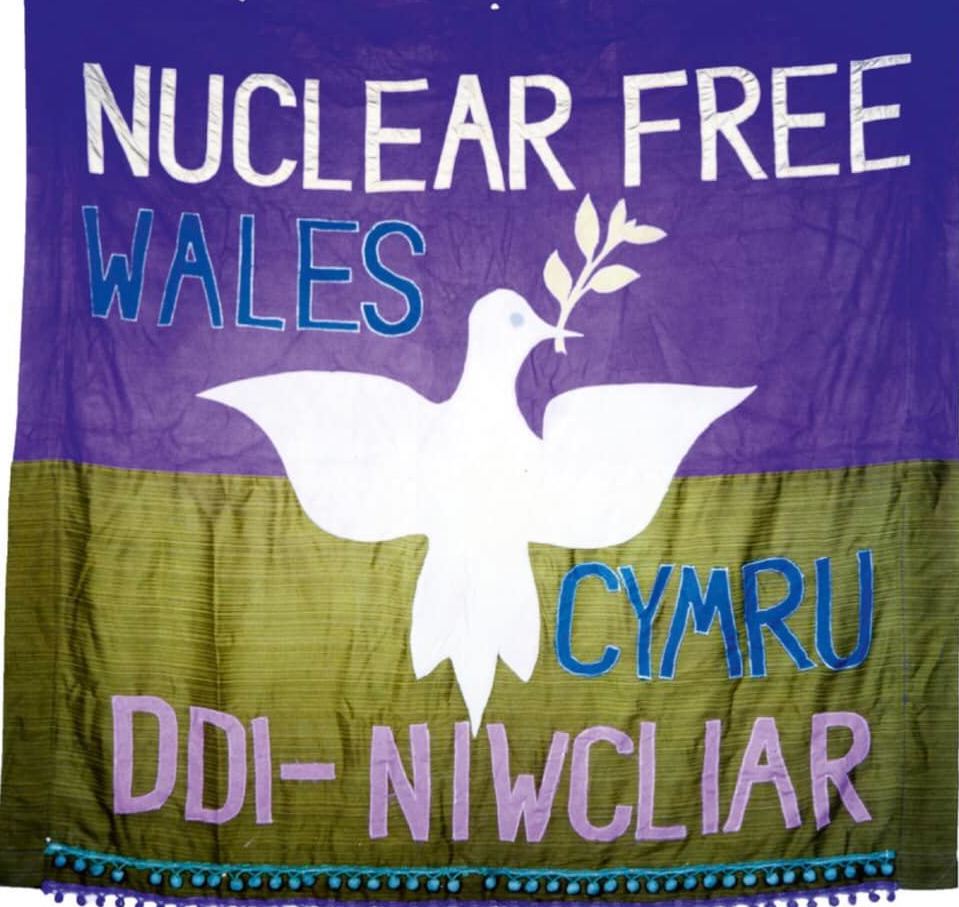
Citizens of Wales are gearing up for another assault on their right to a safe, clean and healthy environment
Anti-nuclear campaigners meeting in Wrexham last October issued a declaration calling on politicians representing Welsh constituencies in parliaments in Cardiff and Westminster to work for a nuclear-free, renewables-powered Wales.
Welsh campaigners are working with US, Canadian and other UK activists to establish a Transatlantic Nuclear-Free Alliance to campaign on issues of common concern. The new initiative came in conjunction with a screening of the award-winning film SOS: The San Onofre Syndrome, which highlights the impact of the decommissioning and the legacy of managing deadly radioactive waste faced by the neighbors of the San Onofre nuclear power plant in California.
The film’s messages resonate with international audiences faced with identical threats and challenges. At the screening, the audience heard from the filmmakers Marybeth Brangan and the now sadly late Jim Heddle as well as from Professor Stephen Thomas, Emeritus Professor in Energy Policy at Greenwich University and Richard Outram, Secretary of the Welsh Nuclear Free Local Authorities.
“The nuclear industry tries to assure us the radioactive waste disposal and reactor decommissioning are established processes with easily affordable costs,” Thomas said. “The truth is that we are three or more decades away from permanent disposal of waste and of carrying out the most challenging stages of decommissioning. The cost will be high, and the failure of previous funding schemes means the burden will fall on future taxpayers, generations ahead”.
Despite this, the UK Government will introduce developer-led siting plans, permitting nuclear operators to apply to locate new plants in sites throughout Wales, and intends to reduce regulation in the nuclear industry.
A recent Memorandum of Understanding was also signed with the United States that could lead to British regulators being obliged to accept US reactor designs not currently approved for deployment in the UK. Great British Energy – Nuclear has also acquired land at Wylfa in Anglesey (Ynys Môn) as a potential site for the deployment of one or more so-called Small Modular Reactors being commissioned from Rolls-Royce and the US company Westinghouse has also expressed interest in constructing a larger nuclear plant there.
The Welsh Government specifically created Cwmni Egino to develop a new nuclear plant on the Trawsfynydd site at the heart of the beautiful Eryri National Park. And in South Wales, US newcomer Last Energy is seeking permission to deploy multiple micro reactors on a former coal power station site at Llynfi outside Bridgend.
Eight leading campaign groups have backed the Wrexham Declaration which denounces the continued political obsession with the pursuit of nuclear power as a ‘fool’s errand’. NFLA Secretary Richard Outram explains why:
“Nuclear is too slow, too costly, too risky, contaminates the natural environment compromising human health, and leaves a legacy of nuclear plant decontamination and radioactive waste management lasting millennia that is ruinously expensive and uncertain. And nuclear plants represent obvious targets to terrorists and, as we have seen in Ukraine, to hostile powers in times of war”.
Campaigners are also convinced that nuclear power will worsen fuel poverty and climate change. As Welsh people face spiraling energy costs, with many in fuel poverty, while a new nuclear levy is to be added to all customers’ energy bills to help pay for the construction of the eye-wateringly expensive Sizewell C nuclear plant in Suffolk. Further, nuclear generation costs much more than generation from renewables, meaning more expensive electricity for consumers……………………………………………………………………………………………………………………………………………………………………………………………………………………… Read the Declaration. https://beyondnuclearinternational.org/2026/03/08/the-dragon-is-getting-ready-to-roar/
Trident workers to strike in row over nuclear job cuts.
Union says staff have been ‘pushed to the brink’ and warns walkout could cost millions of pounds
The workers who build and maintain Britain’s Trident nuclear arsenal are
to go on strike in a row over hundreds of job cuts at the Ministry of
Defence’s atomic weapons factories. Members of the Prospect union voted
81pc in favour of strike action at the Atomic Weapons Establishment (AWE),
which is responsible for manufacturing warheads intended for use on the
UK’s nuclear submarines.
The ballot covered sites including the AWE’s
plants in Aldermaston and Burghfield. Strikes are expected to take place on
March 12 and March 26. Union leaders accused the agency of a “litany of
errors” in a dispute over a restructuring that is expected to see as many
as 800 jobs cut.
Telegraph 6th March 2026,
https://www.telegraph.co.uk/business/2026/03/06/trident-workers-to-strike-in-row-over-nuclear-job-cuts/
14 March – Protesters to rally at Faslane base in anti-nuclear demonstration

PROTESTERS are set to rally at the Faslane naval base to protest against
the UK’s nuclear arsenal. The rally, organised by the Scottish Campaign for
Nuclear Disarmament (CND), will be held at HMNB Clyde’s north gate on March
14. The Scottish CND told The National that “nuclear weapons are a threat
to Scotland and the whole world”, saying the presence of the UK’s nuclear
submarines in Scotland is putting “a target on our backs”.
The National 3rd March 2026,
https://www.thenational.scot/news/25903195.protesters-rally-faslane-base-anti-nuclear-rally/
Coastal erosion risks to planned Sizewell C nuclear power station
Letter Nicholas Malins-Smith: : The comment by Sir David King, the former
chief scientific adviser, about how the eastern side of Britain is
“tilting into the sea”, particularly around Norfolk and Suffolk, is the
result of more than just aggressive coastal erosion caused by climate
change (“Residents lambast ‘nuts’ location of Sizewell C as coastal
erosion gains pace”, Report, February 24).
Britain is still experiencing
land mass movement where the north and western parts are slowly rising,
while the south and eastern parts are sinking. This phenomenon is a very
gradual geological process known as “glacial isostatic adjustment”
(GIA). During the last ice age, the weight of massive ice sheets pressed
down on Scotland and northern Britain, forcing the land to subside.
Meanwhile, the southern part of Britain acted as a counterweight and was
raised slightly. The melting of the ice sheets resulted in the land that
was pressed down to begin slowly rising, causing a “see-saw” effect
that lowers the south by an approximate equal amount.
The “tilting”
effect of GIA has been going on quite independently of more recent concerns
about sea-level rise caused by climate change, although the combination
exacerbates the likely impact on certain coastal areas.
The Suffolk
shoreline has long known about the effects of coastal erosion. Most of the
original town of Dunwich was lost to the sea in storms a very long time
ago. The little that is left of Dunwich is about 3.5 miles north of where
the Sizewell C nuclear power station will be built.
FT 4th March 2026, https://www.ft.com/content/bb9265e4-a235-4830-8c4b-49b6953cf753
Capenhust-based nuclear facility faces prosecution after uranium leak
A WIRRAL company that transports uranium overseas will be prosecuted for
health and safety offences following an incident involving a leak at its
facility. The Office for Nuclear Regulation (ONR) has notified
Capenhurst-based Urenco ChemPlants Ltd that it faces prosecution
alongside contractor Babcock Critical Services Ltd after the incident in
2024. According to the ONR in February 2024 at the Tails
Management Facility on the Urenco UK Ltd. nuclear licensed
site in Capenhurst, a metal container holding almost 11
tonnes of uranium oxide powder fell from a forklift
truck, striking surrounding equipment within the facility.
Wirral Globe 4th March 2026, https://www.wirralglobe.co.uk/news/25905939.capenhust-based-nuclear-facility-faces-prosecution-uranium-leak/
Trump Threatens Full Trade Embargo Over Spain’s Refusal to Be Complicit in Iran Attacks
Ripping the US president’s “flagrant disregard for European sovereignty—and security,” co-general coordinator of Progressive International declared: “Close the bases. All of them.”
Jessica Corbett, Common Dreams, Mar 03, 2026
President Donald Trump on Tuesday threatened to cut off all trade with Spain over the Spanish government’s refusal to allow US aircraft to use its military bases for the war that the United States and Israel are waging on Iran.
Speaking with reporters at the White House beside German Chancellor Friedrich Merz just after noon Eastern time, Trump initially signaled that he’d already taken action against Spain, but less than 10 minutes later, the president suggested he was still deciding.
Referring to Treasury Secretary Scott Bessent, who was also in the room, Trump said: “Spain has been terrible. In fact, I told Scott to cut off all dealings with Spain.”
Trump claimed that “it started” last year, when every other NATO member caved to US pressure to aim for spending 5% of gross domestic product on defense by 2035, “and Spain didn’t do it.”
“And now Spain actually said that we can’t use their bases. And that’s all right. We could use their base if we want. We could just fly in and use it. Nobody’s going to tell us not to use it. But we don’t have to. But they were unfriendly,” the president continued. “Spain has absolutely nothing that we need other than great people. They have great people but they don’t have great leadership.”
Again complaining about their refusal to commit to 5%, he said that “we’re gonna cut off all trade with Spain. We don’t want anything to do with Spain.”………………………………………………………………………………………………………………………………………….
Francesca Albanese, the United Nations special rapporteur focused on the occupied Palestinian territories and a target of Trump administration sanctions, responded to the US president by praising the “strength” of Spanish Prime Minister Pedro Sánchez.
“The peoples of Europe do not want to be complicit in a system that kills children and protects those who profit from their blood,” Albanese said. “Europe deserves better, and you are already part of that change. Thank you.”https://www.commondreams.org/news/iran-spain
Residents invited to have say on Hunterston nuclear forum
By Calum Corral, Ardrossan Herald 3rd March 2026, https://www.ardrossanherald.com/news/25903086.residents-invited-say-hunterston-nuclear-forum/
A PUBLIC meeting of the Hunterston Site Stakeholder Group will take place at Seamill Hydro on Thursday, March 5, to discuss the ongoing decommissioning of the former Hunterston A and B nuclear power stations
EDF is handing Hunterston B over to Nuclear Restoration Services (NRS), the decommissioning subsidiary of the Nuclear Decommissioning Authority, which will take ownership of the site and manage the long‑term clean‑up programme.
The event begins at 1.30pm
France officially enters Nuclear Arms Race

4 March 2026
In what can only be called a worst case scenario, the burgeoning nuclear arms race has officially broken its bounds and will now include the world’s fourth largest nuclear superpower, France. (Counting only nuclear weapons actively deployed, France ranks third, behind the US and Russia, as less than 5% of China’s nuclear stockpile is actually deployed.)
Without offering precise numbers, French President Emmanuel Macron announced on Monday that France would increase its nuclear stockpile, currently estimated to include 290 nuclear warheads.
Macron also announced plans to build a second nuclear-powered aircraft carrier that would, like the currently deployed Charles de Gaulle, be capable of launching nuclear armed Rafale fighter jets.
In addition, Macron announced that some nuclear-capable Rafale jets might be temporarily deployed to allied European countries, naming Britain, Germany, Poland, the Netherlands, Belgium, Greece, Sweden, and Denmark. This move expands France’s “nuclear umbrella” and places intermediate range missiles closer to Russia; it also positions France to replace US nuclear-armed aircraft currently deployed in three of those countries (Germany, Belgium, and The Netherlands) in the case of US withdrawal from NATO.
France, like the US, Russia, China, and Great Britain, is a signatory to the Treaty on the Nonproliferation of Nuclear Weapons. That Treaty requires nuclear-armed states to pursue “in good faith” a cessation of the arms race and complete nuclear disarmament “at an early date.” Since the signing of that Treaty more than fifty years ago, the US and Russia have intermittently engaged in negotiations leading to reductions in stockpile size, but both have also maintained nuclear arsenals with more than 3,500 warheads and show no signs of attempting a full disarmament campaign.
That reality, along with the consistent refusal of the nuclear powers to provide required reports to the United Nations about efforts to comply with NPT obligations, led non-nuclear nations to adopt the Treaty on the Prohibition of Nuclear Weapons in 2017. The TPNW entered into force in January 2021 and now has the support of a majority of global states.
The United States government has been dismissive of the TPNW, denouncing it when it was being negotiated in 2017 and ignoring it since then. The government’s attempt to pretend the Treaty does not exist has been abetted by US mainstream media that resolutely refuses to mention the TPNW even in articles exploring the current status of the nuclear threat that include hand-wringing about the failure of arms control efforts.
That same mainstream media has, in recent months, begun to speak of the new global nuclear arms race—something OREPA has been warning about for more than a decade. Fifteen years ago, we pointed out that US investment in “modernization” of its nuclear capabilities, including building new bomb plants like the Uranium Processing Factility in Oak Ridge, was pushing the world toward a new nuclear arms race.
Unfortunately, our prescience has since been validated. Today, as mainstream media used words like “verge” and “brink” to talk about the nuclear arms race, some media with deeper knowledge describe the situation more accurately. The Bulletin of Atomic Scientists, for instance, has stated that we are in a full-blown global nuclear arms race.
Until Macron’s announcement, that global nuclear arms race was considered to be between the US, Russia, and China. But as the illusion of the old “rules-based” world order collapses, nuclear weapons are once again being deployed as viable threats and, potentially, the beginning of the end for planet Earth.
Macron’s Monday speech did follow one long-standing rule of the nuclear establishment—never mention the human cost of nuclear weapons. Any conversation that includes the damage done to human beings, men, women, children, families, by nuclear weapons production, testing, use, and threat of use; or that mentions the trillions of dollars being spend on these weapons of mass destruction while hundreds of millions of people go hungry and lack health care and shelter; or that accounts for massive environmental damage at mines, processing, production, and testing sites around the world; or that warns of the effects of nuclear winter in the event of a nuclear exchange—would undermine if not erase arguments that nuclear weapons have a role in providing security in any rational, human sense.
As victims of nuclear weapons, the hibakusha, survivors of Hiroshima and Nagasaki, winners of the 2024 Nobel Peace Prize, courageously share their witness, telling the story of the worst day of their lives, the unimaginable horror of the devastation, death, and destruction wrought by bombs that, by today’s standards, are tiny. Their conclusion is the only one that makes sense—nuclear weapons must never be used again, and the only way to guarantee that is to abolish them altogether.
There exists today a path to nuclear disarmament, and it is not the path laid out by Emmanual Macron. It is the Treaty on the Prohibition of Nuclear Weapons, the only hope we have of avoiding a nuclear holocaust. As then-director of the International Campaign to Abolish Nuclear Weapons, Beatrice Fihn, said in accepting the 2017 Nobel Peace Prize: “There are only two possible outcomes to the story of nuclear weapons. Either we do away with them, or they will do away with us.”
Sellafield recruitment opens for Authorised Firearms Officers

The CNC has opened AFO recruitment at Sellafield as part of a rolling programme to sustain armed protection at one of the UK’s most sensitive nuclear sites.
The Civil Nuclear Constabulary (CNC) has opened recruitment for Authorised Firearms Officers (AFO) at Sellafield as part of a rolling national programme to sustain continuous armed protection at one of the UK’s most sensitive nuclear sites.
The CNC provides 24/7 armed policing to protect civil nuclear sites, materials and facilities across England and Scotland. Maintaining that capability requires ongoing recruitment and training to ensure operational resilience and a deterrent to those who would threaten critical national infrastructure………
Civil Nuclear Constabulary 3rd March 2026,
https://www.gov.uk/government/news/sellafield-recruitment-opens-for-authorised-firearms-officers
Macron plans to deploy nuclear weapons to Britain
French president announces dramatic increase in arsenal and says allies could host its aircraft.
Henry Samuel in Paris. James Crisp, 02 March 2026
French nuclear-armed jets could be stationed in Britain and other allied European countries after Emmanuel Macron unveiled a dramatic expansion of France’s deterrence doctrine…
The French president also used the symbolic
setting of Île Longue, the country’s Atlantic nuclear fortress in
Brittany, to announce the first increase in its nuclear warhead stockpile
since the 1990s.
Telegraph 2nd March 2026,
https://www.telegraph.co.uk/news/2026/03/02/macron-plan-nuclear-weapons-britain/
1 This Month
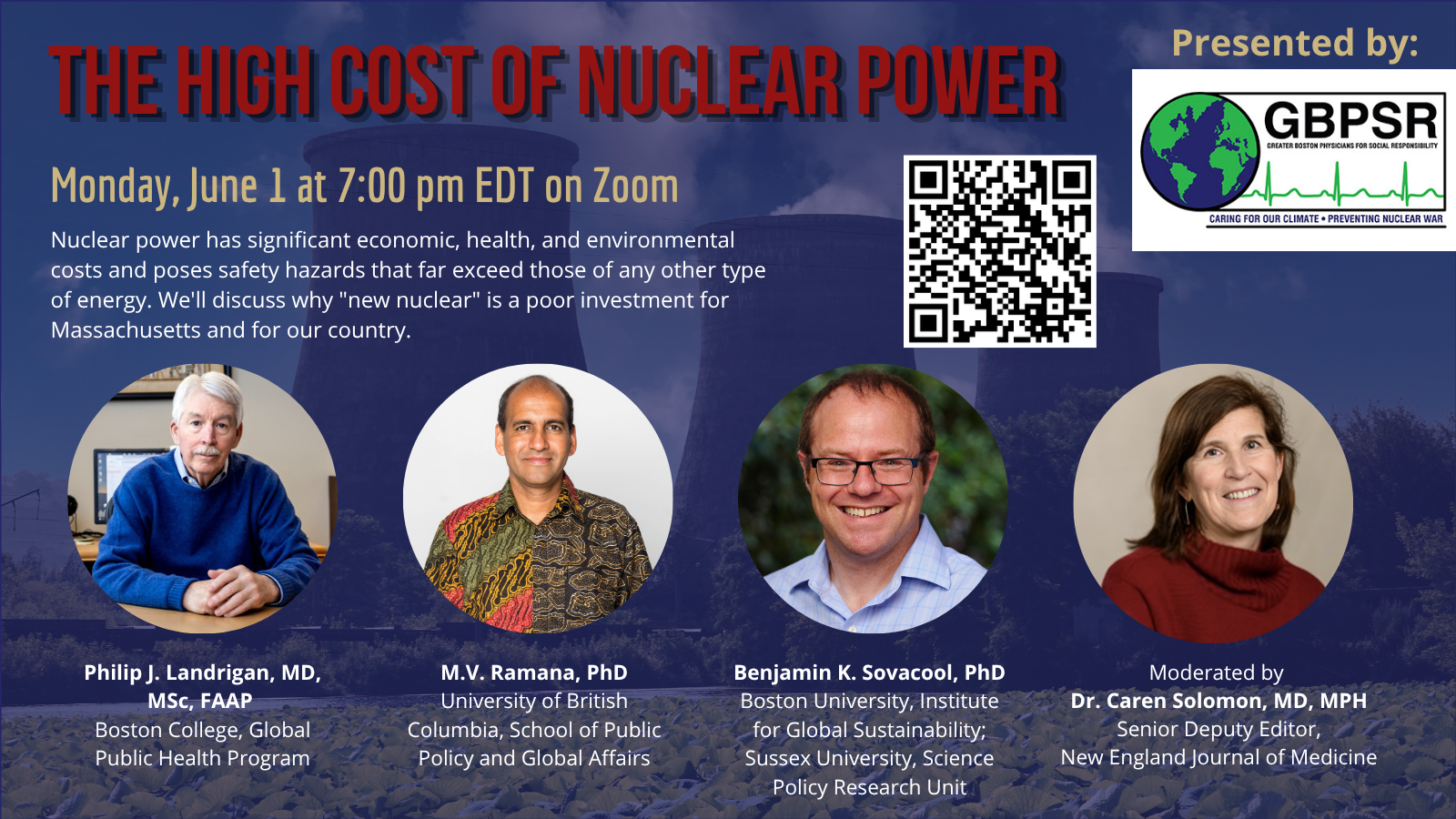
1 June Webinar – The High Cost of Nuclear Power – Register
6 June – WEBINAR- Get Inspired by Protests Against Military Bases!


Cuba Is Not a Failed State – It Is a Besieged State
PETITION: “Global Appeal to Endorse Palestinian Right of Return of Refugees”


of the week– Nuclear Reactor Information Task Force
To see nuclear-related stories in greater depth and intensity – go to https://nuclearinformation.wordpress.com
-
Archives
- June 2026 (27)
- May 2026 (306)
- April 2026 (356)
- March 2026 (251)
- February 2026 (268)
- January 2026 (308)
- December 2025 (358)
- November 2025 (359)
- October 2025 (376)
- September 2025 (257)
- August 2025 (319)
- July 2025 (230)
-
Categories
- 1
- 1 NUCLEAR ISSUES
- business and costs
- climate change
- culture and arts
- ENERGY
- environment
- health
- history
- indigenous issues
- Legal
- marketing of nuclear
- media
- opposition to nuclear
- PERSONAL STORIES
- politics
- politics international
- Religion and ethics
- safety
- secrets,lies and civil liberties
- spinbuster
- technology
- Uranium
- wastes
- weapons and war
- Women
- 2 WORLD
- ACTION
- AFRICA
- Atrocities
- AUSTRALIA
- Christina's notes
- Christina's themes
- culture and arts
- Events
- Fuk 2022
- Fuk 2023
- Fukushima 2017
- Fukushima 2018
- fukushima 2019
- Fukushima 2020
- Fukushima 2021
- general
- global warming
- Humour (God we need it)
- Nuclear
- RARE EARTHS
- Reference
- resources – print
- Resources -audiovicual
- Weekly Newsletter
- World
- World Nuclear
- YouTube
-
RSS
Entries RSS
Comments RSS
 nuclear-news