Interconnector gives Ireland a stake in France’s fraught nuclear debate https://www.irishtimes.com/opinion/interconnector-gives-ireland-a-stake-in-france-s-fraught-nuclear-debate-1.4086989
The bill for modernising 54 ageing reactors is currently estimated at €100bn, Nov 19, 2019, Tony Kinsella In October 2nd, 2018, the European Commission agreed to provide €530 million (56 per cent of the total cost) for an Ireland-France 700MW Celtic electricity interconnector. France can export cheap base-load nuclear electricity surpluses along this interconnector, while Irish wind-generated power can flow in the opposite direction.
However, French nuclear policy is a mess. The bill for modernising its ageing reactors is currently estimated at €100 billion, a figure that can only rise.
France’s first commercial nuclear plants were commissioned in the 1960s. Construction was boosted following the 1974 oil shock, with 54 pressurised water reactors (PWR) commissioned between 1978-1991, with a programmed life span of 40 years.
The ageing reactors are due to be replaced by EPR reactors jointly developed by France’s Areva and Siemens of Germany. EPR is third-generation pressurised water reactor technology.
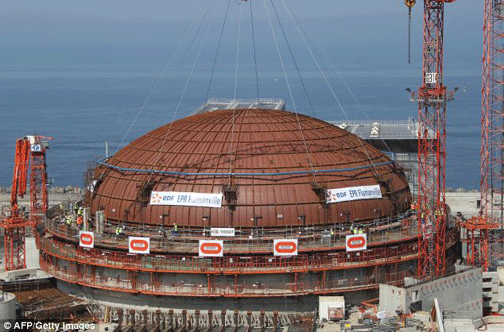
The first EPR project was the 2005 Olkiluoto 3 plant in Finland, followed by the 2007 Flamanville plant in Normandy, France. They will both take four times as long to build and cost between three and four times their original estimates – Olkiluoto is due to start operating from 2020 having cost nearly €9 billion and Flamanville in 2023 for €12.4 billion.
The world’s first two operational EPR reactors opened in Taishan, China, last year. These two 1,750MW plants cost €3.5 billion each, and took nine years to build.
On October 28th, the French government received a damning 34-page report on the Flamanville nuclear project. Jean-Martin Folz, former head of carmaker Peugeot, was, at the behest of the government, tasked by Électricité de France (EDF) with producing a “no-holds barred” review of the Flamanville project in July 2019. He submitted a chillingly realistic report.
Some key elements of the Flamanville plant are defective. Repairing or replacing them will involve partial demolition of the plant. It might now prove cheaper to simply abandon it.
Wasted away
At the heart of the problem is that Europe’s once highly-skilled nuclear industry has wasted away since the 1990s. We no longer have enough experienced nuclear contractors, engineers, welders and technicians. This problem also bedevils the €22 billion Hinkley Point project in the UK.
Despite this EDF remains committed to new plants. Le Monde published an internal EDF note on November 9th on the company’s plans to build a further six EPR plants for €7 billion apiece.
The French minister for energy, Élisabeth Borne, moved quickly to publicly distanced herself from this position. She told the Political Questions show on national television that it was “not a view I share”.
Borne, an engineer and former head of the Paris RATP transit authority, went on to underline that the “option of 100 per cent renewable electricity had not been sufficiently studied”.
Borne is a respected technocrat. When she calls on EDF to “reflect on its role in a 100 per cent renewable situation” she means business.
She confirmed that no decisions on nuclear plants would be taken before mid-2021, and that “no new nuclear plants will be approved until Flamanville is operational”.
France has fallen behind in the installation of renewable power. Successive governments have chopped and changed in their approaches, denying renewable developers clear long-term perspectives. Less than 40 per cent of projects approved under a national tendering system since 2010 have actually been built.
President Giscard d’Estaing argued in 1974 that ‘France does not have oil but it has ideas’. Macron now needs to embrace ‘ideas’
Planning approval systems where every project is processed separately on a narrow basis create an additional obstacle. The fact that certain project technology has been approved in, say, Normandy offers no guarantee that an identical project will get the go-ahead in Burgundy.
Full planning approval on a very restricted technical basis takes over five years. Minor changes in processes and equipment can mean that planning approval is no longer valid, and the developer has to either begin again or abandon the project. This has been fatal for many renewable projects where available technologies evolve between the planning application and construction.
Cumbersome and therefore expensive procedures act as barriers to local projects and the involvement of regional and local authorities or co-operatives.
Administrative culture
Realisation of significant renewable energy projects in France will require a shift in French administrative culture. The financial costs may be relatively low, but more than one reform has foundered on the rocks of French administrative immobility.
If France is to expand its renewable sector from its current 18 per cent it needs to achieve two things – boost the European transmission grid and simplify procedures for renewable energies in France.
The French government needs to decide just what kind of electricity mix it wants, what France needs, and what the French electorate will accept by mid-2021, with the debate closed by the May 2022 presidential elections.
Paris could decide on a number of new EPR plants for around €10 billion apiece, invest to extend the working life of its current reactors, or significantly facilitate renewable energies and storage capacity.
President Giscard d’Estaing argued in 1974 that “France does not have oil but it has ideas”. Macron now needs to embrace “ideas”.
One 700MW connector can almost replace one nuclear reactor. A second Franco-Irish interconnector could now be on the cards.
Tony Kinsella is an entrepreneur and commentator. He divides his time between Ireland and southwest France
November 21, 2019
Posted by Christina Macpherson |
ENERGY, France, Ireland |
Leave a comment
France extends nuclear reactors outage after earthquake, France 24 13 Nov 19, French utility EDF on Tuesday extended outages at three nuclear reactors at its Cruas plant until Nov. 15 following a 5.1 magnitude earthquake in southeast France that forced it to temporarily suspend electricity generation at the site.A sensor at the plant was activated during the earthquake in the region on Monday, requiring the state-controlled utility to carry out further checks for potential damage.
A spokesman for EDF said the outage extension would allow enough time for thorough visual and advanced checks across the plant, including in the nuclear buildings to ascertain that the units could function properly when they restarted.
France’s ASN nuclear safety agency on Monday said it was monitoring the situation and would decide when the reactors could restart.
The outage at the three reactors reduced French power generation by 2,700 megawatts (MW)……https://www.france24.com/en/20191112-france-extends-nuclear-reactors-outage-after-earthquake
November 14, 2019
Posted by Christina Macpherson |
France, safety |
Leave a comment
 France’s EDF expects six new nuclear reactors to cost 46 billion euros: Le Monde, PARIS (Reuters) 11 Nov 19
– French power utility EDF estimates it would cost at least 46 billion euros ($51 billion) to build six of its latest generation EPR nuclear reactors if the government decides to build them, French newspaper Le Monde reported on Saturday.The estimate was in a confidential document presented to the board of state-controlled EDF at the end of July, it said.
The EPR model is the latest generation reactor being built by EDF, with complex engineering and enhanced safety features put in place after the Fukushima nuclear meltdown in Japan.
However, the Flamanville EPR reactor under construction in northern France has been plagued by cost overruns and a series of technical problems resulting in years of delays.
EDF, in which the state has an 84% stake, said in October the project which began in 2006 would cost 1.5 billion euros more than previously expected, raising the total cost to 12.4 billion euros.
November 12, 2019
Posted by Christina Macpherson |
business and costs, France, politics |
Leave a comment

The world’s largest nuclear power producer is melting down, MSN, Bloomberg, Francois De Beaupuy, 1 Nov 19,
On the shores of the English channel in Normandy, engineers are struggling to fix eight faulty welds at a plant that’s supposed to showcase France’s savoir faire in nuclear power.As they consider sending in robots to access hard-to-get-to areas between two containment walls, for Electricite de France it’s just the latest setback in a project that’s running a decade late and almost four times over budget.
“We hear every year that there’s a new problem,” Finance Minister Bruno Le Maire said on Monday. It is not acceptable that one of the most prestigious and strategic sectors for our country is facing so many difficulties.”
The Flamanville plant is now slated to be completed in 2022 at a price tag of 12.4 billion euros ($13.8 billion), with the latest glitch costing a whopping 1.5 billion euros. Bemoaning the loss of France’s edge in the sector because of a 15-year gap between the start of construction at the plant and that of the previous reactor, Le Maire has given EDF a month to come up with an action plan to restore the industry’s know-how before the country can determine whether it will build any new atomic plants.
For the world’s largest producer of nuclear power producer, Flamanville is just one of many challenges. Across the channel, delays at two U.K. reactors have upped the cost to as much as 22.5 billion pounds ($28.9 billion), 2.9 billion pounds more than previously estimated. EDF also faces mounting costs of maintaining 58 domestic nuclear plants that provide more than 70% of France’s power.
Add to the mix the fact that the former electricity monopoly is losing market share among French corporate and residential clients as rivals buy a part of the electricity it generates at below-market prices, and it’s easy to see why investors are bearish about the company. EDF’s stock has lost 34% this year, making it the second worst-performing utility in the Stoxx 600 Utilities Index of European companies.
A year ago, EDF was Europe’s biggest utility by market value. Now, its market capitalization stands at 28 billion euros, less than half that of Italy’s Enel SpA, which has swelled to 69 billion euros on the success of its renewable business. RWE AG, the German utility planning to shut down its nuclear plants and progressively phase out coal-fired plants, is up 43% this year and Orsted A/S, the Danish champion in offshore wind, whose revenue is about a sixth of EDF’s, has surpassed the French giant.
“Investors are staying away because of current uncertainties following the strongly negative news flow on the reputation of the nuclear industry,” said Auguste Deryckx, an analyst at AlphaValue. “The CEO’s stubbornness in pursuing nuclear, which is limiting potential growth in renewables that are better valued by the market, remains a black spot.”
EDF is struggling to cover the 15 billion euros it needs annually to maintain its aging nuclear reactors, build new atomic and renewable projects, upgrade its electricity network and roll out smart meters, even after cutting 1.1 billion euros in cost cuts in the past four years. Profits have been hit not only by falling power prices, but by safety issues that have forced reactors to be shut for several months in France and the U.K. Other clouds on the horizon—the decommissioning of two of its oldest reactors next year and a dozen more by 2035, and the treatment of nuclear waste.
The one-time monopoly—now about 83% owned by the state—needs some drastic measures, says Chief Executive Officer Jean-Bernard Levy, who’s pushing the state for an increase in the regulated prices at which rivals buy the company’s nuclear power……..https://www.msn.com/en-au/news/world/the-worlds-largest-nuclear-power-producer-is-melting-down/ar-AAJEHRZ?li=AAgfYrC&fbclid=IwAR2c-xzdRQS6grHOpiPYl5e7lEPRCPkPIQCGEWCP3vT5mxgDkH4sfc9alJo
November 2, 2019
Posted by Christina Macpherson |
business and costs, France |
Leave a comment
 Greenpeace 28th Oct 2019, In the early hours of 12 October 2017, eight people sneaked inside the grounds of the Cattenom nuclear plant in northern France. Without much difficulty, they reached the foot of a spent fuel pool – where the still highly radioactive fuel rods are stored after use.
It was a scenario Greenpeace France had been warning about since 2001 through numerous reports, letters and speeches. France’s aging fleet of reactors is poorly protected, and not designed to withstand big impacts, such as an explosion set off by terrorists.
A loss of water from the spent fuel pools – protected by walls only 30cm thick – could lead to a massive release of radioactivity. Fortunately, the eight intruders turned out to be peaceful activists from Greenpeace France; they set off some fireworks to demonstrate their presence and then allowed themselves to be led away.
The ease with which they had penetrated alarmed the government of Luxembourg, which lies just north of Cattenom. It also finally spurred the French authorities into action; a parliamentary investigation into nuclear safety
was announced the following month. It’s a textbook example of the role of
non-violent direct action (NVDA) in a democracy, much like the recent
climate strikes.
When the authorities are sleeping at the wheel, and not
responding to polite arguments, citizen action is needed to wake them up.
In this case, it did. A happy end? Unfortunately not.
In a classic case of shooting the messenger, prosecutors have pressed for stiff penalties. In February 2018, a court in Thionville sentenced the ‘Cattenom nine’ – the eight activists and a Greenpeace France employee. It imposed a 2-month jail sentence on two of the individuals, and suspended sentences on the
rest. It also ordered Greenpeace France to pay €50,000 to the power
company, EDF as ‘moral damages’.
https://www.greenpeace.org/international/story/25273/cattenom-nine-activists-face-jail-for-sounding-the-alarm-bell-on-nuclear-safety/
October 31, 2019
Posted by Christina Macpherson |
France, incidents, opposition to nuclear |
Leave a comment
EDF given a month to draw up a fix for Flamanville’s nuclear woes French energy group under pressure to address faults highlighted in a new report. https://www.ft.com/content/877eedae-f987-11e9-a354-36acbbb0d9b6 David Keohane in Paris, 28 Oct 19.
The French government has given energy group EDF a month to deliver a plan to fix the litany of problems at the state-backed group’s over-budget flagship nuclear project at Flamanville. The planned plant at Flamanville in north-west France is considered a litmus test for the next-generation European Pressurised Reactor technology, and will help determine whether the French government will build further nuclear plants.
EDF had warned earlier this month that the cost of the project had ballooned by €1.5bn to €12.4bn, in part due to faulty weldings. On Monday, a government-commissioned report into the failings at Flamanville lambasted EDF. It pointed to several issues besetting the wider French nuclear industry, including a lack of specific skills at EDF, poor project management and headaches the group has had in integrating the nuclear business of its failed competitor Areva.
“This is a failure for the entire French nuclear power industry, we must recognise this failure and treat it and address all the consequences,” Bruno Le Maire, French finance minister, said at a press conference in Paris.
Flamanville was “supposed to have cost €3bn and its construction was supposed to have lasted four and a half years; it will now cost four times as much, and its construction will last for 15 years,” Mr Le Maire added.
A decision by French president Emmanuel Macron on whether to build new nuclear plants comes as the government aims to cut the percentage of nuclear electricity used in France from 72 per cent to 50 per cent. Even as the overall percentage generated by nuclear drops, new plans may need to be build as older ones are shut.
Construction at Flamanville has been delayed until the end of 2022, having previously been scheduled for the end of 2019. EDF, which is controlled by the government, is also gearing up for an internal reorganisation of its structure.
For EDF, the quid pro quo for reorganising itself is the hope of a new higher price for its nuclear energy — assuming it can be agreed with Brussels.
Flamanville is just one of three projects being built in Europe using the next-generation EPR technology. The other two are the Olkiluoto project in Finland, which is more than a decade late, and the UK’s Hinkley Point, which is also delayed and mired in controversy over its high costs.
https://www.ft.com/content/877eedae-f987-11e9-a354-36acbbb0d9b6
October 29, 2019
Posted by Christina Macpherson |
business and costs, France, politics |
Leave a comment
‘Curse of Flamanville’ strikes again as cost of EDF’s reactor soars, 14 Oct 19, The French energy group that is building Britain’s new
nuclear reactors has admitted that a similar project in Normandy will cost almost four times the original estimate.
EDF said that its European pressurised reactor in Flamanville was now expected to cost €12.4 billion. This is €1.5 billion more than the previous estimate.
October 15, 2019
Posted by Christina Macpherson |
business and costs, France |
Leave a comment
Quite apart from the technological challenges and ethical issues these solutions present, both have one major drawback: to be successful they rely on external, uncontrollable factors. How could the knowledge required to interpret these things this be guaranteed to last?
Semiotician Thomas Sebeok recommended the creation of a so-called Atomic Priesthood. Members of the priesthood would preserve information about the waste repositories and hand it on to newly initiated members, ensuring a transfer of knowledge through the generations.
Buried nuclear waste stays dangerous for a million years — here’s how scientists plan to stop a future disaster
In thousands of years’ time, will they even understand the language written on our ‘keep out’ signs? https://inews.co.uk/news/long-reads/buried-nuclear-waste-danger-underground-future-disasters-814704
By Helen Gordon, Monday, 14th October 2019 The red metal lift takes seven juddering minutes to travel nearly 500 metres down. Down, down through creamy limestone to reach a 160-million-year-old layer of clay.
Here, deep beneath the sleepy fields and quiet woods along the border of the Meuse and Haute-Marne departments in north-east France, the French National Radioactive Waste Management Agency (Andra) has built its underground research laboratory.
The laboratory’s tunnels are brightly lit but mostly deserted, the air dry and dusty and filled with the hum of a ventilation unit.
Blue and grey metal boxes house a series of ongoing experiments – measuring, for example, the corrosion rates of steel, the durability of concrete in contact with the clay. Using this information, Andra wants to build an immense network of tunnels here.
It plans to call this place Cigéo, and to fill it with dangerous radioactive waste. It is designed to be able to hold 80,000 cubic metres of material.
October 15, 2019
Posted by Christina Macpherson |
France, Reference, wastes |
Leave a comment
 EDF Cost Overrun at French Plant Piles Pressure on Nuclear Giant, by
- Repairs at Flamanville reactor will lift cost to $13.6 billion
- Plant won’t load nuclear fuel until end of 2022 at earliest
Electricite de France SA said repairs of
faulty welds at a nuclear plant under construction in western France will boost the project’s cost by 14% to 12.4 billion euros ($13.6 billion), adding further financial strain to the cash-strapped atomic power giant.
October 12, 2019
Posted by Christina Macpherson |
business and costs, France, safety |
Leave a comment

EDF adds further €1.5bn to Flamanville nuclear plant costs https://www.ft.com/content/fc6a8610-ea5e-11e9-a240-3b065ef5fc55 French energy group also confirms latest delay to opening of long-awaited project.
David Keohane in Paris 9 Oct 19, French energy giant EDF announced increased costs to its long-troubled flagship nuclear project at Flamanville on Wednesday as it confirmed delays to the opening of the plant due to faulty weldings. The company said construction costs would rise by €1.5bn to €12.4bn and the loading of nuclear fuel would be delayed until the end of 2022, which had previously been scheduled for the end of 2019 with commercial activity starting in 2020. The group, which is 83.7 per cent owned by the French government, had flagged the delays at the plant in north-western France to the end of 2022 during its half-year results in July. Flamanville was originally expected to cost €3.3bn and start operations in 2012.
Analysts at Morningstar said that the increase in costs was in line with estimates but warned “the worst-case scenario has not gone away totally” — alternative more expensive plans — since EDF had to get approval for its repair proposals by the end of 2020. This involves the use of remotely operated robots. Flamanville is considered a litmus test for the next-generation European Pressurised Reactor technology. One EPR is already up and running in China, but Flamanville remains the bigger test for EDF because it is 100 per cent owned by the company and the French regulators are known to be exacting. There are two other EPR projects being built in Europe: The Olkiluoto project in Finland, which is more than a decade late, and the UK’s Hinkley Point, which EDF warned in September would cost an extra £2.9bn to complete.
The news comes as EDF pushed back the formal presentation to the government of an internal reorganisation plan, called Project Hercules, which had been due by the end of the year, at the request of French president Emmanuel Macron. Project Hercules will create a government-owned mother company, EDF Bleu, containing the nuclear assets as well as hydroelectric assets. Bleu’s main subsidiary, EDF Vert, will house renewable energy, the networks and the services businesses and will be listed, with some 20 per cent to 40 per cent sold to raise funds.
The quid pro quo for the reorganisation, as seen by EDF, is a new regulated price for nuclear energy, assuming it can be agreed with Brussels. However, Project Hercules has been deferred due to delays in discussions with Europe. In an internal email to staff sent late last week, EDF chief executive Jean-Bernard Lévy said “a reorganisation without better regulation would not be enough to give EDF the financial means to play its role in the investments necessary for the success of [France’s] energy transition”.
October 10, 2019
Posted by Christina Macpherson |
France, politics |
Leave a comment
 Times, 30 Sept 19
President Macron’s economy minister has accused the French state-owned
company building Britain’s new nuclear plant of “unacceptable” failings as he threatened sweeping change at the group.
Bruno Le Maire said yesterday that the French nuclear sector was like “a state within a state” and he
denounced cost overruns and delays in the construction of the Hinkley Point C nuclear reactor in Somerset and similar projects in Flamanville in Normandy and Olkiluoto in Finland. “We will not accept this drift month after month, year after year,” Mr Le Maire said.
His words appeared to weaken the position of Jean-Bernard Lévy, 64, who was given a second
four-year term as chief executive of EDF by Mr Macron in February. Mr Le Maire said that he had ordered an independent audit into the French nuclear industry, which provides about 75 per cent of nation’s electricity, and into the decision to build a new generation of the increasingly questioned European pressurised reactors in Britain, France, Finland and China.
The conclusions will be delivered on October 31, he said. The audit will interest Whitehall, given that the EPRs being built in Somerset are supposed to supply 7 per cent of Britain’s electricity. EDF said last week
that Hinkley Point C would cost £3 billion more than expected and may not meet its latest launch date of 2025, which is already eight years late.
The glitches at Hinkley Point C come after setbacks at Flamanville, which initially was due to come on stream in 2012 at a cost of €3.3 billion, but which will not now be linked to the grid until 2022 at the earliest at a cost of at least $10.9 billion. The Finnish plant was scheduled to be operational in 2009, but is still not complete.
https://www.thetimes.co.uk/article/2a8ccefa-e2e8-11e9-bc3e-661ff0438ed9
October 4, 2019
Posted by Christina Macpherson |
business and costs, France, politics |
2 Comments

10% of French Nuclear Reactors Have Potentially Faulty Parts Installed as Fukushima Fears Persist https://sputniknews.com/europe/201909181076832892-10-of-french-nuclear-reactors-have-potentially-faulty-parts-installed-as-fukushima-fears-persist/
|
by Tim Korso Most European states have taken a course to reduce to zero the use of nuclear plants since the disaster at the Japanese plant Fukushima in 2011 that led to the contamination of nearby land and sea.
Six (around 10% of the total amount) of nuclear reactors in France are using parts that had “manufacturing deviations” Electricite de France (EDF) SA, the country’s biggest power supplier reported. The irregularities were found in 16 steam generators used on nuclear power plants in Blayais, Bugey, Fessenheim, Dampierre-en-Burly, and Paluel. At the same time, EDF stated that the issue is not a pressing one and doesn’t require immediate attention.
The report comes in line with an ongoing programme of reactor checks in France following the discovery of carbon-content irregularities in the steel produced by Le Creusot Forge in 2016, which made the metal weaker than usual. The checks led to the temporary suspension of numerous reactors, and a spike in energy prices both in France and in nearby states due to the former’s need to import energy to cover the deficit.
Some European states have even announced their intention of completely phasing out the use of nuclear energy, gradually shutting down existing nuclear plants and aborting the construction of newer ones following the 2011 disaster at the Japanese plant Fukushima, which left significant patches of land and sea contaminated. The incident happened after the plant was hit by a powerful tsunami that knocked out its power and left reactors without cooling systems.
Three countries, namely Belgium, Switzerland and Germany, are planning to eventually switch to renewable energy sources, while using gas in the transitional period. France, however, despite initially considering such option decided to keep its nuclear industry. Still, Paris opted for a reduction of its portion in the country’s energy generation from over 70% down to 50% by 2035.
|
September 19, 2019
Posted by Christina Macpherson |
France, incidents |
Leave a comment
 France to distribute free iodine tablets to 2.2 million people
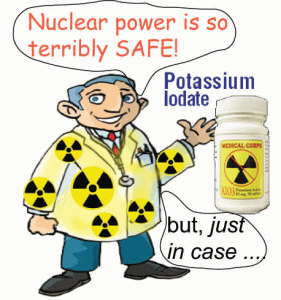
France will give out free iodine tablets to around 2.2 million people living close to nuclear plants to help protect them from radiation in case of an acciden https://eutoday.net/news/environment/2019/france-to-distribute-out-free-iodine-tablets-to-2-2-million-peoplet, Euronews reports.
The country’s nuclear regulator agency ASN said on Tuesday people living within 10-20 kilometres from one of EDF’s 19 nuclear plants, as well as some 200,000 institutions including schools, will receive a letter in the incoming days informing them they can pick up the tablets from the nearest pharmacy.
Previously, France distributed iodine tablets to people living within a 10 kilometre radius from a nuclear plant but has now decided to widen the radius.
During nuclear accidents, radioactive iodine is released into the atmosphere that when inhaled or swallowed by the thyroid gland can cause cancer in later years.
When the thyroid gland is saturated with stable iodine, it no longer absorbs the radioactive iodine.
ASN said that in case of a nuclear accident, people should seek shelter in buildings and not go pick up their children from school.
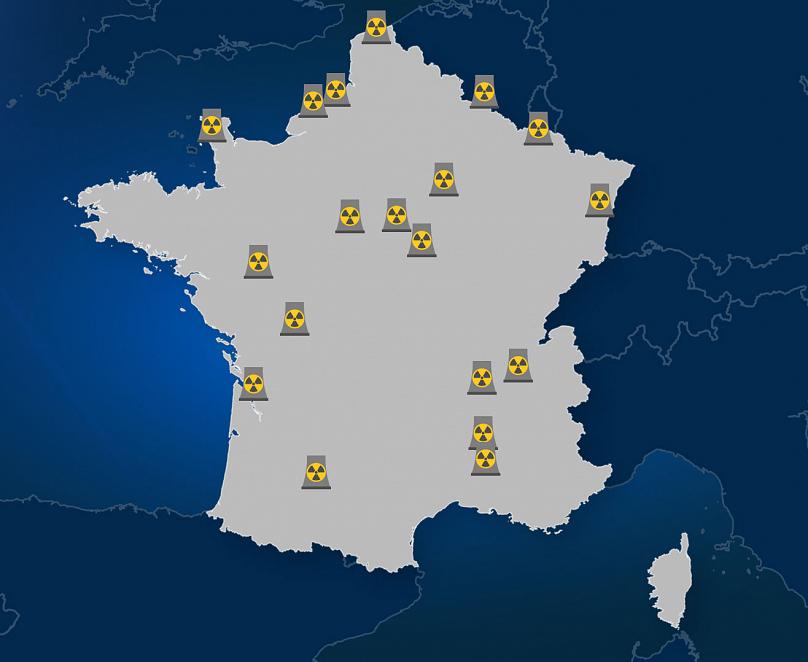
France is the world’s most nuclear-reliant nation, with three-quarters of its electricity produced by state-owned EDF’s 58 nuclear reactors in 19 plants spread all over the country.
|
|
September 19, 2019
Posted by Christina Macpherson |
France, safety |
Leave a comment
France flags welding fault at five or more EDF nuclear reactors, PARIS (Reuters) 13 Sept 19, – At least five nuclear reactors operated by French utility EDF might have problems with weldings on their steam generators, a fault which has raised fears of closures, France’s nuclear regulator was quoted as saying.
State-controlled EDF, whose shares were down 0.9% on Thursday, had said on Tuesday it had identified issues with weldings of some existing reactors, sparking a stock price fall of nearly 7%.
France has the world’s second-largest fleet of nuclear reactors behind the United States, but a spate of technical problems, coupled with hitches at reactors under construction, has tarnished EDF’s image as a leader in nuclear technology.
EDF has exported to China, Finland, South Africa and South Korea, with Britain also set to use its equipment.
“At least five nuclear reactors are affected by this problem,” Le Figaro newspaper quoted Bernard Doroszczuk, head of the ASN regulator, as saying.
“EDF has advised that in around a week it will give an exact number of facilities affected,” Doroszczuk added.
A spokesman for EDF said that there was no plan to shut down the reactors involved for the time being, but the situation could change and it would be for ASN to decide.
The spokesman added that EDF could also decide to halt the affected reactors…….. https://www.reuters.com/article/us-edf-safety/france-flags-welding-fault-at-five-or-more-edf-nuclear-reactors-idUSKCN1VX0N7
September 14, 2019
Posted by Christina Macpherson |
France, safety |
Leave a comment
France’s nuclear love affair shows signs of souring, https://finance-commerce.com/2019/09/frances-nuclear-love-affair-shows-signs-of-souring/ By: Bloomberg News September 11, 2019
Electricite de France SA’s announcement that some of its nuclear reactors at home may contain substandard components is the latest setback in the country’s 40-year love affair with atomic energy.
France launched its nuclear program in the 1970s to reduce its dependence on fossil fuels as unprofitable coal mines progressively closed and Western economies were roiled by two consecutive oil shocks. EDF commissioned 58 reactors between 1978 and 2002, which has seen the country get more of its power from nuclear than any other nation. It also means it’s got an aging energy infrastructure, with its oldest plants embarking on large modernization programs to extend their lifecycle.
“The French nuclear fleet is now aging, meaning that some plants will have to be halted in the next 15 years,” said Marc-Antoine Eyl-Mazzega, director of the Center for Energy at the Institut Francais des Relations Internationales. “Some say that nuclear energy is very risky. Renewable energies come with tens of thousands of jobs, but France has been lagging behind.”
After commissioning its 58th reactor in 2002, EDF started building a new type of atomic plant in 2007. Its flagship Flamanville project in Western France was initially due be completed in 2012, though it’s been beset by construction problems.
EDF has also faced setbacks at its existing fleet of French reactors. In 2016, its main supplier Framatome disclosed anomalies in manufacturing records for large equipment, leading to prolonged halts at almost a third of the utility’s reactors. Tuesday’s announcement’s by EDF that some of its reactors may contain substandard components made by Framatome, now 75.5%-owned by EDF, is reigniting fears of prolonged shutdowns.
Given France gets three quarters of its energy generation from nuclear energy, the financial impact of disruption could be severe.
“There should be a significant uplift in French and Central European power prices based on likely future French nuclear outages, which could potentially mean EDF having to buy French generation output that it is short at a premium price,” Barclays Bank analysts Peter Crampton and Dominic Nash wrote in a note.
The stakes are high for the French nuclear industry, which employs about 220,000 people. President Emmanuel Macron has pledged to reduce nuclear output to 50% of France’s power mix in 2035 by shutting down 14 aging reactors to make room for renewables.
Even as the price of electricity stemming from wind and solar has sunk below that of new nuclear builds, the French president has asked EDF to prove by mid-2021 that it can build more competitively-priced nuclear plants, to provide large volumes of carbon-free power as a 100% renewable electricity system seems likely to remain out of reach for at least several decades.
It comes as state-controlled EDF struggles to fund the billions of euros needed each year to maintain its nuclear plants and build new ones within existing cash flows. It’s considering spinning off a minority stake in an entity that would include its power-distribution, renewables and energy-services businesses to raise funds.
September 12, 2019
Posted by Christina Macpherson |
France, politics |
Leave a comment