Macron facing NUCLEAR nightmare as scorching heatwave cripples SIX reactors.

THE RAGING heatwave that currently engulfing Europe has threatened to worsen France’s energy crisis, as six nuclear power plants have been crippled this month.
https://www.express.co.uk/news/science/1643201/emmanuel-macron-france-facing-energy-nightmare-six-nuclear-reactors-scorching-heatwave By ANTONY ASHKENAZ, Jul 20, 2022 , Experts have warned that parts of France are currently facing a “heat apocalypse” as temperatures reach record levels across Europe. Aside from triggering horrifying forest fires, these scorching temperatures are now also threatening to worsen France’s energy crisis. As a result of higher temperatures, rivers like the Rhone and Rhine, which are used by nuclear power plants for cooling, have become too warm to be used in the energy generation process.
Without cooler water supplies, six nuclear power plants in France have been forced to reduce their output drastically.
Without cooler water supplies, six nuclear power plants in France have been forced to reduce their output drastically.
EDF’s nuclear plants along these rivers use the waters to regulate the temperature of their reactors, discharging warm water back into the waterway.
Regulations are in place that limits reactor production during times of high heat to prevent the process from damaging local wildlife.
However, these rules could soon be scrapped at the cost of regional flora and fauna, as France’s nuclear safety authority green-lighted “temporary modification” of regulations for Blayais, Golfech and St Alban nuclear power plants.
Energy expert Thibault Laconde tweeted: “To state the obvious, it also highlights the vulnerability of #nuclear power to climate change, in particular the vulnerability of ‘French-style’ nuclear power, with its large reactors, large power plants and therefore large cooling needs.
“Climate change has to be factored in nuclear projects.
“Especially as France is preparing to renew its fleet, it would be unimaginable to build reactors if we cannot demonstrate that they will be able to operate with the #climate they will experience throughout their lifetime”
The heatwave crippling nuclear power plants could be devasting for Mr Macron, as France has already been suffering a major energy crisis after half of EDF’s ageing nuclear power plants were forced to shut down recently over safety concerns.
Experts have previously warned Mr Macron of significant corrosion safety problems in EDF nuclear power plants in France as cracks were detected in some nuclear reactors.
Speaking to Express.co.uk, Dr Bernard Laponche, the co-author of a recent study on EDF’s reactors warned that cracks in the cooling systems of many of these reactors could result in horrifying disasters that are only comparable to events like “Three Mile Island or Fukushima”.
As a result of these corrosion problems, four 1500 MW, seven 1300 MW and one 900 MW reactors are shut down.
As a result of these reactor shut downs, EDF has been forced to lower its power output this year, amidst fears of a disastrous winter where fears grow Vladimir Putin could cut Europe off its gas supply.
Dr Laponche also warned that more reactor shutdowns could happen in the future, as EDF power stations are currently under investigation for similar reactor flaws.
Evacuation of site in France , as wildfires rage near nuclear power plant being decommissioned
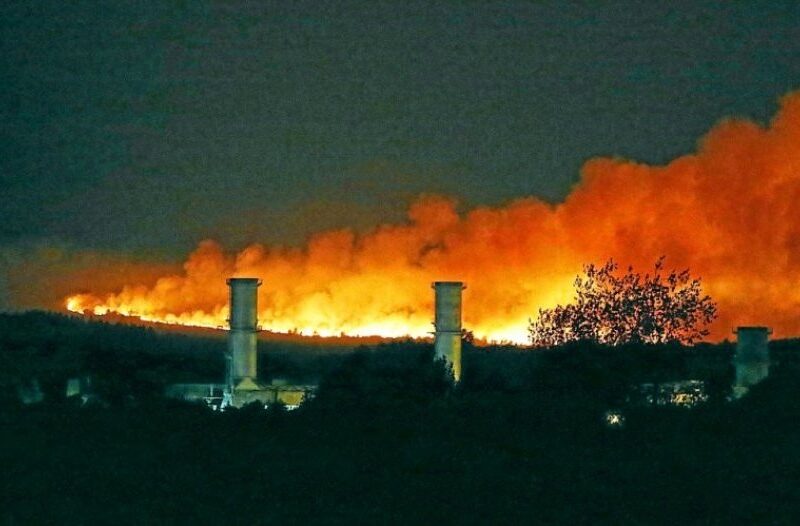
The EDF site in Brennilis, consisting of a nuclear power plant being deconstructed and a thermal power plant in operation, was evacuated around 1 p.m., due to the fumes stinking the air. It’s 10 a.m. on Tuesday morning.
The swirling fire, fanned by a wind blowing at 40 – 45 km/h, plays hide and seek with the firefighters. Claire Maynadier, sub-prefect of Châteaulin, has just hung up with the director of the Brennilis nuclear power plant . The evacuation of personnel is therefore not envisaged. “The fire front
is not near. Nevertheless, it remains uncontrolled. We remain vigilant,” she explains.
Le Telegramme 19th July 2022
Employee shareholders to sue EDF over France nationising nuclear industry
An association of EDF employee shareholders announced on Sunday their plan
to sue the French state regarding its nationalisation of the power giant.
“Today the state needs to explain itself for the management as
ultra-majority stakeholder of the company,” the association “Energie en
actions” said in a statement.
The association holds that the government’s
decision goes against the interest of the company and the minority
shareholders, the statement added. The government will announce details of
its plan to fully nationalise the EDF, which runs the nation’s nuclear
power plants, by July 19.
Reuters 17th July 2022
4 French nuclear reactors authorized to discharge hotter water during heatwave, as 29 others remain offline
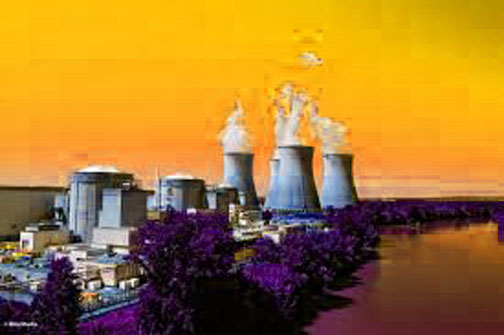
Heat wave: a fourth nuclear power plant authorized to release hotter water than normal to continue operating. Twenty-nine French reactors out of 56 are currently unavailable for various reasons. Hence these exemptions.
A temporary derogation from environmental rules has been granted to a new nuclear power plant, that of Bugey, in Ain, to allow it to continue to operate “at a minimum level of power” during the heat wave, according to a decree published on Sunday July 17. in the Official Journal .
“The reactors of the Bugey nuclear power plant discharging effluents into the Rhône may, during the fixed period (…), continue to practice these discharges as long as the heating after mixing of the effluents into the Rhône (.. .) does not exceed 3 ° C in average daily value” , specifies the decree of Sunday.
On Friday, a derogation had been granted to the nuclear power plants of Golfech (Tarn-et-Garonne), Blayais (Gironde) and Saint-Alban (Isère). For these three power stations and that of Bugey, the
authorization was granted until July 24th.
And this, while 29 French reactors out of 56 are currently unavailable for various reasons. Since
2006, each plant has had its own regulatory water discharge temperature limits that must not be exceeded. The power plants indeed pump water to cool the reactors, before rejecting it. The derogation device, which aims to guarantee the proper functioning of the electricity network, had so far only been used once, in 2018 for the Golfech power plant, for a period of 36 hours.
France Info 17th July 2022
Nationalisation of EDF seen as ‘inevitable’ to carry out France’s nuclear plans
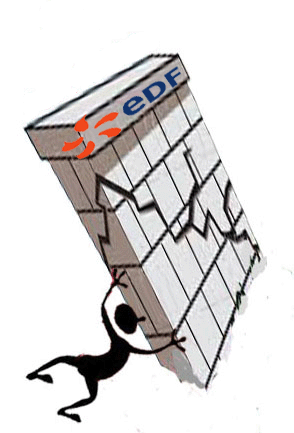
EDF’s market capitalisation has collapsed in the past few years, going from €150 billion in 2007 to less than €40 billion today.
A debt estimated at more than €43 billion, fuelled by delays in constructing its new fourth-generation reactors, also puts the company in a difficult spot.
https://www.euractiv.com/section/energy/news/nationalisation-of-edf-seen-as-inevitable-to-carry-out-frances-nuclear-plans/ By Paul Messad | EURACTIV.fr | translated by Daniel Eck 18 July 22
The government’s decision to nationalise Electricité de France, announced on 6 July, provoked mixed reactions in the French Parliament.
Yet, according to Jean-Michel Gauthier, director of the Energy & Finance Chair at HEC Paris, the decision was “inevitable” because of the regulatory constraints faced by the company.
Under French law, EDF must sell part of its nuclear electricity to the competition at a set price (€42/MWh) and buy it back on the market like any other supplier.
But because of the pandemic and the war in Ukraine, the current market price stands above €200/MWh, according to France’s electricity transmission system operator RTE.
This means EDF is selling at a loss to feed the competition, something unions and many observers have decried as a “plundering” of the French company.
On top of that, the state has also asked EDF to dish out €8 billion for the so-called “tariff shield” to limit gas prices in times of crisis.
EDF’s market capitalisation has collapsed in the past few years, going from €150 billion in 2007 to less than €40 billion today.
A debt estimated at more than €43 billion, fuelled by delays in constructing its new fourth-generation reactors, also puts the company in a difficult spot.
But according to Professor Gauthier, the company’s debt “is not at all the subject”. It is even “irrelevant, with regard to the major subjects of energy and industrial policy in France,” he told EURACTIV.
According to Gauthier, the main challenges lie in the company’s vast nuclear programme. First, EDF will have to spend more than €50 billion by 2030 to extend the life of existing nuclear power plants.
As announced by President Emmanuel Macron in February, the French energy giant must also adopt measures to build six new fourth-generation EPR-type reactors. According to the latest estimates, that effort will cost €50-60 billion.
Going under full state ownership will offer EDF a debt guarantee, as well as lower rates to raise additional debt, Gauthier says.
More worrying, according to him, is the number of key points the state has dropped from its nuclear industrial policy in recent years.
“These are the major issues: what is to be done with the EPR 2, the third generation reactors, the ASTRID project and the small modular reactors (SMR),” he said.
The professor also questioned the state’s means to meet its pledged energy ambitions.
Renewables in all this?
However, these multi-billion euro projects only deal with nuclear without addressing EDF’s capacity to deploy renewable energies – another major priority of the government.
“Today, given the bubble around green finance, there is no reason for the state to own solar or wind power capacity,” explained Gauthier.
“We can therefore imagine [that we] go back to square one […], i.e. that the State puts the portfolio of EDF Renewables, a subsidiary wholly owned by EDF, on the market,” he added. This project could revive divisions between the state and the unions if green-lighted.
For the time being, it is necessary “to keep a single EDF”, the company’s CEO Jean-Bernard Lévy told broadcaster BFM TV on Monday (11 July).
EDF without renewables would be a dark “utopia”, he also said.
When it comes to energy-related decisions, the state must be the “only pilot” on board and the “only decision-maker”, Gauthier concluded.
France’s nationalisation of nuclear energy corporation EDF raises more questions than it answers
Just as Europe attempts to move away from its dependence on Russian gas and grapples with soaring power prices, problems at some of EDF’s existing 56 reactors in France have caused shutdowns and sent its energy output to multi-decade lows.
At the site of France’s first new nuclear reactor in more than 20 years, robots are whirring away fixing faulty welding as developer EDF races to open the plant after a decade of delays that have damaged its reputation.
Ahead of it lies a challenge of a different order of magnitude: a construction program to build six more, just as the French government, which owns 84 per cent of the business already, plans to take full control.
The full nationalization of EDF, which was announced earlier this month, comes as a series of crises pile pressure on the group’s finances.
In theory this will provide it with some relief away from the glare of public markets. So far, however, the state buyout has raised more questions than it has answered, including how the government thinks it might do a better job at fixing long-running industrial problems that have plagued projects at EDF, some of them as basic as a lack of experienced welders. “It’s not because the government will now have 100 percent that it’s going to suddenly take three years less to build a reactor,” one person close to the company said. “Right now, we’re in symbolic territory with this nationalization. It does not resolve any of the main problems we know the group is facing – will it allow EDF to bolster the skills it needs?” said Cécile Maisonneuve, a senior adviser at the center for energy and climate at French think thank IFRI. “None of the industrial or regulatory issues were linked to its capital structure.”
Just as Europe attempts to move away from its dependence on Russian gas and grapples with soaring power prices, problems at some of EDF’s existing 56 reactors in France have caused shutdowns and sent its energy output to multi-decade lows.
FT 17th July 2022
https://www.ft.com/content/7d7225ad-dd3b-4b95-95a6-c270a0089277
More delays for the multi-billion-euro ITER nuclear fusion project in France
The multi-billion-euro ITER nuclear fusion project in France faces yet
more delays because transport sanctions imposed in response to the invasion
of Ukraine could stop key parts from Russia reaching Europe, according to a
senior official in Europe’s contribution to the initiative. Leonardo
Biagioni, deputy chief financial officer at Fusion for Energy, which
manages Europe’s contribution to ITER, said that sanctions would “most
likely” delay the project. Speaking this morning at the EuroScience Open
Forum (ESOF) in Leiden, he said that transport sanctions against Russia,
including restrictions on Russian registered vessels docking in European
ports, risk making it hard to move parts manufactured by Russia to ITER’s
site in the south of France.
Science Business 14th July 2022
https://sciencebusiness.net/news/iter-faces-further-delays-if-key-parts-stuck-russia
Climate change hitting France’s nuclear power – the technology that’s supposed to solve climate change !
Electricity prices across Europe are expected to rise as the heatwave sweeping Europe has crippled nuclear power output in France. State-owned electricity provider EDF must reduce or halt nuclear output when river temperatures reach certain thresholds under French legislation.
This is to ensure that the water used to cool the plants won’t harm the environment when it is pumped back out. Climbing temperatures in the Garonne River mean that production will likely be slowed at the Golfech nuclear plant in the South of the country from Thursday, Electricite de France SA said.
Independent 12th July 2022
Macron’s nationalisation of nuclear energy corporation EDF will be a disaster for France
Macron’s energy power grab will be a disaster for France.
Nationalisation of the nuclear energy giant is an ill-thought-out, populist
response from a president overwhelmed by a political crisis. European
leaders have yet to come up with any convincing answers to the global
energy crisis. ………..
France’s energy system is in
complete disarray and Emmanuel Macron’s solution is arguably the worst of
the lot, in a decidedly crowded field – an ill-thought out, knee-jerk
populist response from a president battling a massive political crisis at
home. Faced with long delays and huge budget overruns on new nuclear plants
at home and abroad, corrosion problems at many of its existing reactors,
and the same spiralling cost of living crunch that has gripped most of
Europe, Macron has decided that now is the time to renationalise heavily
indebted electricity titan EDF.
. You can see the attractions, limited though
they are. As the country’s biggest utility by a sizeable margin, EDF has
become the face of France’s energy crisis. Taking EDF into state hands
removes it from the glare of the stock market, making it easier, in theory,
to tackle its huge financial and operational problems head on with the
approval of private shareholders no longer required.
Nevertheless, for all the political hype, it is a move that I am willing to bet will almost
certainly backfire – and in spectacular fashion, too. Whatever the
problem, nationalisation is rarely, if ever, the solution. History has
taught us that. It is even harder to believe that nationalisation will
improve EDF’s widespread operational issues.
One of the main reasons why
its finances are in such a sorry state is that scores of corroding reactors
have forced it to shut down many of its existing nuclear plants, strangling
output. It is also suffering from huge cost overruns and missed deadlines
on new projects. EDF is beset by a host of problems, almost none of which
are likely to be solved by vanishing into the bowels of the notoriously
inefficient, heavily technocratic, work-shy French state. Telegraph 13th July 2022
EDF the first company to take advantage of the European Union’s taxonomy classification of nuclear power as ”green”
EDF has become the first issuer to harness last week’s hard-fought
inclusion of nuclear power in the European Union’s taxonomy of
sustainable activities and will use a new green financing framework to
support nearly €8bn of annual nuclear spending.
IFR 12th July 2022
https://www.ifre.com/story/3439095/edf-galvanises-nuclear-green-bonds-d6zm8jhtf5
France’s Competition Authority accuses 6 nuclear decommissioning companies of being an illegal cartel
France’s Competition Authority has accused six companies in the nuclear
decommissioning market of illegally exchanging information and rigging
public procurement procedures.
GCR 12th July 2022
https://globalcompetitionreview.com/article/france-alleges-nuclear-decommissioning-cartel
France and the big nuclear energy mistake
The French government wants to expand nuclear production in France and it also wants EDF to spend big money on the rehabilitation of numerous nuclear power generating stations. It has put pressure on EDF to embrace those policies and we suspect that it could force the issue as the majority shareholder.
France plans to renationalize EDF, its giant utility. That doesn’t sound like a big deal because the government already owns 84% of EDF’s outstanding shares.
But here is how we read the story.
The French government wants to expand nuclear production in France and it also wants EDF to spend big money on the rehabilitation of numerous nuclear power generating stations. It has put pressure on EDF to embrace those policies and we suspect that it could force the issue as the majority shareholder.
But a board of directors, with a fiduciary responsibility to shareholders and other providers of capital, would have a hard time approving a strategy that looked too risky or economically uncompetitive. EDF is, after all, not a division of the ministry of defense, but rather a somewhat privatized company with the government as its biggest and controlling shareholder. At least that is the appearance it would want to give to its shareholders. If France requires more nuclear power for geopolitical or strategic reasons,
despite its seeming cost disadvantage in the marketplace, we have no quarrel with that decision.
Our issue is with the current policy—to require some non-governmental shareholders to bear national security burdens and take financial risks that really belong uniquely to the government. The French have approached the matter with admirable clarity.
Oil Price 8th July 2022
https://oilprice.com/Energy/Energy-General/Europes-Big-And-Expensive-Energy-Mistake.html
European Heatwave Risks Curbing French Nuclear Power Production
- Output from Golfech plant may be reduced from Thursday
- That comes as Europe needs France’s electricity more than ever
By Lars Paulsson July 12, 2022
The hot weather hitting Europe this week is set to reduce power output from France’s fleet of nuclear reactors, risking even higher electricity prices as the continent endures its worst energy crunch in decades.
Warm temperatures in the Garonne River mean that production restrictions are likely at the Golfech nuclear plant in the south of the country from Thursday, Electricite de France SA said in a filing with grid operator RTE. Temperatures in France and the Iberia region will be well above average over the next five days and even hotter next week, according to forecaster Maxar. ….. (subscribers only) https://www.bloomberg.com/news/articles/2022-07-12/french-nuclear-output-seen-curtailed-as-river-temperatures-rise#xj4y7vzkg
France’s parliament could block Macron’s plan to nationalise EDF
French parliament could block EDF reform – analyst. French government
plans to reform utility EDF face being blocked in parliament due to
bolstered opposition from far right and left-wing parties, an analyst said
this week. “You’re going to have a lot of potential blockages with the EDF
reform,” said Phuc-Vinh Nguyen of the Jacques Delors Institute think tank.
“It is one of the major issues of the five-year term, which will have a
major impact on the revival of nuclear power, renewables and energy policy.
Without an agreement, your hands are tied.” French president Emmanuel
Macron’s ruling Renaissance party lost its absolute majority in the lower
house in parliamentary elections in June. This was due to major gains by
the Eurosceptic far right party, RN, now the leading opposition group in
the National Assembly and the left-wing Nupes party, which opposes
Macron’s plan to build new nuclear reactors.
Montel News 8th July 2022
https://www.montelnews.com/news/1334284/french-parliament-could-block-edf-reform–analyst
France’s government working out how to take full control of indebted nuclear company EDF
Banks line up for French state buyout of EDF. The French government is
working with Goldman Sachs and Société Générale as it explores taking
full control of utility EDF, with a tender offer to minority shareholders
the preferred option, according to people familiar with the matter. The
government announced this week it would take back the 16 per cent of EDF it
does not already own, saying the move would bolster the energy group’s
finances as it prepares for more investment in expensive nuclear reactors
and allow France to gain even greater control on its electricity production
as Europe is rocked by an energy crisis. The government has yet to detail
how it will take full ownership of the indebted company. A public offer to
EDF shareholders, rather than trying to push a nationalization bill through
parliament, appears to be the quickest and most feasible plan, according to
three people familiar with the matter.
FT 8th July 2022
https://www.ft.com/content/96336649-eff5-44af-850b-8996d4bde19c
1 This Month



Shut down the radiation-damaged Heysham nuclear reactors now
To see nuclear-related stories in greater depth and intensity – go to https://nuclearinformation.wordpress.com

Say No to NASA’s Reckless Nuclear Reactor on the Moon
Say No to NASA’s Reckless Nuclear Reactor on the Moon
-
Archives
- October 2026 (256)
- September 2026 (339)
- August 2026 (330)
- July 2026 (355)
- June 2026 (287)
- May 2026 (306)
- April 2026 (356)
- March 2026 (251)
- February 2026 (267)
- January 2026 (308)
- December 2025 (358)
- November 2025 (359)
-
Categories
- 1
- 1 NUCLEAR ISSUES
- business and costs
- climate change
- culture and arts
- ENERGY
- environment
- health
- history
- indigenous issues
- Legal
- marketing of nuclear
- media
- opposition to nuclear
- PERSONAL STORIES
- politics
- politics international
- Religion and ethics
- safety
- secrets,lies and civil liberties
- spinbuster
- technology
- Uranium
- wastes
- weapons and war
- Women
- 2 WORLD
- ACTION
- AFRICA
- Atrocities
- AUSTRALIA
- Christina's notes
- Christina's themes
- culture and arts
- Events
- Fuk 2022
- Fuk 2023
- Fukushima 2017
- Fukushima 2018
- fukushima 2019
- Fukushima 2020
- Fukushima 2021
- general
- global warming
- Humour (God we need it)
- Nuclear
- RARE EARTHS
- Reference
- resources – print
- Resources -audiovicual
- Weekly Newsletter
- World
- World Nuclear
- YouTube
-
RSS
Entries RSS
Comments RSS

