EDF’s nuclear security shortfalls
EDF under scrutiny for nuclear security ‘shortfalls’. Hinkley Point C
developer placed under enhanced monitoring over threat of digital attacks.
Nuclear regulators have stepped up their monitoring of French power giant
EDF amid concerns about cyber security. The UK’s Office for Nuclear
Regulation (ONR) has put the company under “enhanced attention” after
finding “shortfalls” in its cyber security plans, The Telegraph can
reveal.
French state-owned EDF owns and runs the UK’s nuclear power
fleet. It is also building the UK’s first new nuclear power station in a
generation, Hinkley Point C in Somerset, with its minority Chinese partner
CGN.
Cyber security is of heightened concern nationally amid Russia’s war
on Ukraine. Russia has been blamed for cyber attacks which disrupted
windfarms in Europe on the eve of its invasion and security officials have
called on British organisations to bolster their defences.
In a blog post
last week, Dr Marsha Quallo-Wright, deputy director for Private Sector
Critical National Infrastructure at the National Cyber Security Centre,
said “now is not the time for complacency” despite no significant cyber
attacks on UK organisations since Russia’s invasion.
The ONR has stepped
up monitoring of EDF following a string of routine inspections over the
past 12 months, during which it said it “identified shortfalls in
governance, risk and compliance and certain technical controls”. EDF said
the shortfalls related to cyber security. A spokesman added: “EDF works
in very close partnership with the National Cyber Security Centre and some
joint studies with them identified some areas for improvement, such as in
risk awareness. “We are constantly striving to improve security and work
with various bodies, including the ONR, to achieve this. The cyber threat
is a constantly evolving area and we want to stay ahead of the threat.”
Telegraph 9th July 2022
https://www.telegraph.co.uk/business/2022/07/09/edf-scrutiny-nuclear-security-shortfalls/
Nationalising EDF is no cure-all for France’s nuclear industry troubles
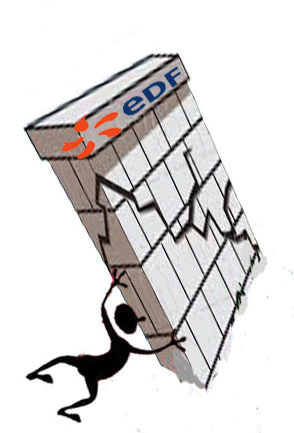
The French state has said it will fully nationalise EDF, the debt-laden utility that runs the nation’s nuclear power plants and which the government has so far struggled to restructure. It has not said whether it
will buy out minority shareholders on the market or take control by law.
But however it is nationalised, it doesn’t guarantee a fix for EDF’s mountain of debt or its corroding reactors and it won’t reduce the cost of shielding consumers from sky-high energy prices.
Analysts say the government’s main goal may be to secure a freehand in running a business that has a roughly 80% share of the French electricity market, once it is delisted and the state no longer has to answer to any other shareholders.
About half of EDF’s 56 nuclear reactors in France are now offline, in part due to corrosion issues. EDF has repeatedly cut its planned nuclear output for 2022, just as Europe scrambles to find alternative energy sources as Russian gas supplies dwindle.
As well as problems with old reactors, it is also running years late and billions of euros above budget in building a new-generation of reactors in France and Britain, raising questions about whether it has to fix fundamental design faults. Furthermore, EDF has been hobbled by a regulated tariff system, known as Arenh, forcing it to sell 100 terawatt/hours (TWh) of nuclear generation to power retailers and large
consumers at 42 euros/MWh, which is well below market levels.
Reuters 7th Aug 2022
France to Nationalize Debt-Laden EDF as Energy Crisis Mounts
https://www.bloomberg.com/news/articles/2022-07-06/french-premier-says-state-wants-to-own-100-of-edf By Francois De Beaupuy, Ania Nussbaum, and William Horobin July 7, 2022
- Premier says EDF full control needed for energy sovereignty
- France to invest in new nuclear plants to fight climate change
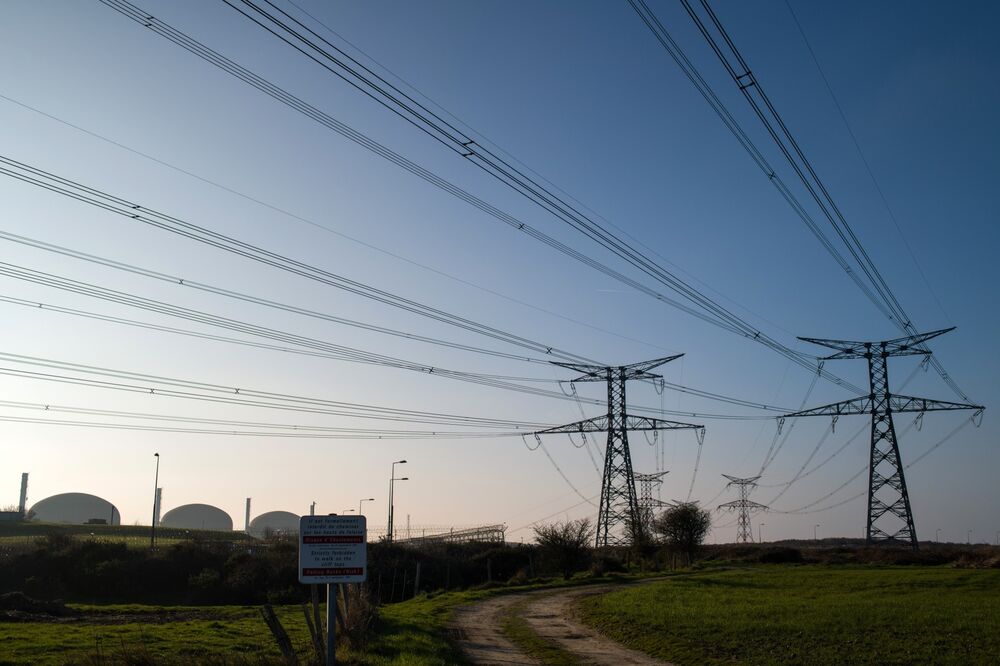
The French government will nationalize its financially struggling nuclear giant Electricite de France SA to help it ride out Europe’s worst energy crisis in a generation and invest in new atomic plants.
“The climate emergency requires strong, radical decisions,” Prime Minister Elisabeth Borne said during a policy speech in parliament in Paris on Wednesday. “We need to have full control of the production and our energy future. We must ensure our sovereignty faced with the consequences of the war and the colossal challenges ahead.”
Borne didn’t provide specific details of the government’s plans, beyond saying the state will raise its stake in EDF to 100% from 84% currently. No decision has been made at this stage on the modalities of the operation, a spokesman for the finance ministry said.
EDF shares jumped on Borne’s announcement and closed 15% higher in Paris after having been down sharply prior to her comments. The utility’s debt also gained
…………………………. EDF has been grappling in recent years with various issues at its aging fleet of reactors and cost overruns when building new ones. Its problems are being exacerbated by a government-imposed cap on electricity prices and Russia’s invasion of Ukraine, which is making it more expensive for the company to cover its own electricity-output shortfall.
A positive exit catalyst for minority shareholders in EDF, Europe’s largest nuclear power producer, comes with confirmation that France will acquire the 16% stake not already owned and nationalize the company.
……………….. The CGT and FO labor unions welcomed the plan for nationalization, but also expressed concern that the government could subsequently revive a plan to “dismantle” the utility.
………………. A nationalization of EDF may reassure creditors that are concerned about the utility’s net financial debt, which stood at 43 billion euros at the end of last year and is set to climb even higher despite a 3.2-billion euro capital increase in April.
Credit-rating firms, which downgraded the utility in February, warned of further potential cuts as the company is grappling with repairs at some of its atomic power stations and cost overruns at nuclear plants under construction in France and the UK.
Drought and hot weather this summer are adding to France’s nuclear power generation problems at the worst possible moment.
Drought and hot weather this summer are adding to France’s nuclear power
generation problems at the worst possible moment. As Europe grapples with
low Russian gas supply and the threat of no Russian supply at all,
non-Russian energy sources are more important than ever.
French power giant
Electricite de France (EDF) warned on Tuesday that it may have to reduce
nuclear power generation as the water levels of rivers are low and water
temperatures high. France has been experiencing outages at its nuclear
reactors in recent months, slashing power generation from nuclear power
plants. France’s nuclear power generation accounts for around 70 percent
of its electricity mix and when its reactors are fully operational it is a
net exporter of electricity to other European countries.
Prolonged
maintenance at several nuclear reactors this year, however, means that
France—and the rest of Europe—have less nuclear-generated power supply
now.
Oil Price 5th July 2022
France’s EDF says hot summer could hit nuclear output, shares fall
PARIS, July 5 (Reuters) – France’s EDF (EDF.PA) might be forced to cut nuclear output further because of expected prolonged hot temperatures over the summer months, an executive told a briefing on Tuesday, prompting a sharp fall in the company’s shares.
EDF’s shares ended down 7.5% on the Paris stock market, underperforming the Stoxx Europe 600 Utilities (.SX6P) index, which lost 2.03%.
“We have a peculiar year due to the drought that has started early, especially in southeastern France. But there is generally a little bit less water available this year,” Catherine Laugier, Environment Director at EDF, told a news conference.
France is already grappling with reduced electricity generation because of unexpected maintenance at its aging nuclear reactors.
EDF faces the prospect of having to reduce output because of insufficient river water, which is often used for cooling nuclear reactors before being returned to the river at a higher temperature.
Regulations are in place to limit reactor production during times of exceptional heat and low water levels to prevent the process from damaging local wildlife.
“We’ve had some production cuts between end May and early June. That was indeed pretty early (…) And there are some global evaluations suggesting (…) this might be a very long summer and the levels could be impacted in September,” Laugier said.
Since the start of the year, EDF has lost 20.6% of its value, well below a 12.9% sector-wide decline……………. https://www.reuters.com/business/energy/frances-edf-says-hot-summer-could-hit-nuclear-output-shares-fall-2022-07-05/
Macron says he doesn’t want to ‘annihilate’ Russia
While the French president has backed anti-Russia sanctions, he has refrained from the extreme rhetoric of his US and UK counterparts/
French President Emmanuel Macron condemned “Anglo Saxon” leaders for openly wishing annihilation upon Russia in clips from a recent documentary. Macron has already been criticized by some of Ukraine’s most fervent supporters for staying in contact with Russian President Vladimir Putin.
While he has condemned Russia’s military operation in Ukraine and supported EU sanctions on Moscow, the French president has spoken to Putin by phone on several occasions since February. These calls have apparently not brought Ukraine any closer to peace, but have earned Macron scorn from Kiev’s supporters, including Polish Prime Minister Mateusz Morawiecki, who castigated his French counterpart for talking to a man he compared to “Hitler.”
However, in a documentary recently broadcast on French television, Macron gave some insight into his approach to diplomacy.
Filmed on a train back from Kiev last month, Macron explained that talking to Putin is necessary to prevent the conflict in Ukraine from becoming a wider war. Describing “Anglo Saxon” leaders as pushing the message that “we must annihilate Russia, weaken it permanently,” Macron said that his goal is instead to “help Ukraine to win,” and “not to fight against Russia, let alone annihilate it.”
Whatever the practical similarities between Macron’s approach and that of his US and UK counterparts, all of whom have provided Kiev with weapons and ammunition, there exists a clear difference in rhetoric between France and the “Anglo Saxon” world.
While US President Joe Biden has accused Russia of committing “genocide” in Ukraine, Macron has cautioned the West against bandying around such loaded terms. Likewise, he has dismissed requests from Kiev that he declare Russia a “sponsor of terrorism.”
And while US Secretary of State Lloyd Austin has described the conflict in Ukraine as an opportunity to leave Russia “weakened” and Biden has let slip that he wishes for regime change in Moscow, Macron has stated that the West “must not humiliate Russia,” in order to make a peace deal possible some day.
In Britain, Prime Minister Boris Johnson has compared Putin to a “crocodile” and repeatedly dismissed the idea of peace talks with Moscow. Meanwhile, the newly-appointed chief of Britain’s armed forces has declared that the UK’s military must prepare for the possibility of “defeating Russia in battle.”……………. https://www.rt.com/news/558308-macron-russia-anglo-saxon/
Macron facing ‘Fukushima-style’ accident, as EDF reactor cracks force shutdown

FRENCH President Emmanuel Macron is facing a nightmare situation as cracks in EDF’s reactors threaten to create accidents as devastating as Fukushima, Express.co.uk was told.

EDF is in a parlous financial state, with huge debts, and all the builds of its flagship EPR reactor have had huge cost and time over-runs – not a good look.
Antony Ashkenaz, Express, Jul 3, 2022
https://www.express.co.uk/news/science/1633756/macron-facing-nuclear-nightmare-edf-reactor-crack-risks-fukushima-style-horror-energy France is facing a relatively unique energy crisis when compared to other countries in Europe. The country is not heavily dependent on natural gas, Russian or otherwise, getting most of its energy supplies from nuclear power, which generates 70 percent of the country’s electricity. However, Paris has been forced to shut down many French reactors, as a recent report warned Mr Macron of significant corrosion safety problems in EDF [Electricité de France] nuclear power plants in France as cracks were detected in some nuclear reactors.
Speaking to Express.co.uk, Dr Bernard Laponche, the co-author of this study warned that in many of these reactors, cracks to cooling systems could cause devastating accidents.
He said: “If the defects are detected in or near the welds, or near the junction between these and the primary cooling circuit cause a breach in the cooling system with an important loss of water, this can lead to the partial or total melting of the fuel assemblies in the reactor core.
“That means the possibility of a Three Mile Island or a Fukushima-type accident.”
As a result of these corrosion problems, four 1500 MW, seven 1300 MW and one 900 MW reactors are shut down.
Meanwhile, engineers are working on fixing segments of the cooling circuits where the cracks were identified.
Dr Laponche warned that all other reactors will likely be checked for these issues within the next year.
If further evidence of cracks are found, the corresponding part of the reactor will be removed and replaced, in a procedure that Dr Laponche estimates could take a year.
He added: “This means that a large part of the EDF nuclear fleet will be gradually shut down.
“Next winter, France will reopen coal and gas plants. But the country has very few of them and it will have to import a maximum of electricity from abroad.
“Important efforts will be necessary to reduce electricity consumption, particularly at the winter peak (due in particular to a high proportion of electrical heating).”
Last week, the heads of France’s major energy companies penned a letter, issuing a dire warning about the energy crisis, urging individuals and businesses to limit power consumption immediately.
They wrote: “We need to work collectively to reduce our consumption in order to regain room to manoeuvre.
“Taking action as soon as this summer will allow us to be better prepared at the start of next winter, notably for preserving our gas reserves.”
The news of cracks in EDF reactors in France could also spell danger for the energy company’s nuclear projects in the UK, Dr Laponche warned.
He continued: “Although all the EPRs reactors are shut (Olkiluoto and Taishan) or not yet functioning (Flamanville 3 in France), there is a high probability that the same problem does exist on these reactors, including those at Hinkley Point.
“EDF should be questioned on this point.”
EDF is currently building the Hinkley Point C nuclear power station in Somerset and was previously set to come online in 2026, but has since been delayed due to Covid-19.
Speaking to Express.co.uk, Dr Paul Dorfman, an associate Fellow at SPRU University of Sussex, who was not involved in the study criticised EDF and the French nuclear fleet as whole saying: “The French nuclear corporation, EDF, runs the UK nuclear reactor fleet, is building at Hinkley Point C and wants to build at Sizewell C.
“But EDF is in a parlous financial state, with huge debts, and all the builds of its flagship EPR reactor have had huge cost and time over-runs – not a good look.
!As Lord Deben, Chair of UK Parliamentary Committee on Climate Change has just said: ‘The nuclear industry doesn’t deliver on time and doesn’t deliver to budget…. So there’s a real concern about how qualified (EDF) are to do these things.’
Express.co.uk has reached out to EDF for comments on the findings of the report.
In France, drought, and multiple problems in nuclear power plants add energy crisis to the climate crisis.
In the midst of the war in Ukraine, the energy crisis is taking precedence
over the environmental crisis. On Thursday, the government called on the
French to reduce their consumption by 10% in 2 years. On Sunday, EDF, Total
and Engie even deemed it necessary to make efforts “immediately”. Their
fear: a real risk of cuts this winter. when the drought and the multiplication of problems in nuclear power plants add crisis to crisis.
Indeed, it is not only Russian oil and gas that will be missing from the
European energy mix in the future. Declining flow in rivers is a problem
for hydropower plants.
And even worse, the state of the French nuclear
fleet raises many concerns. Called to satisfy 40% of electricity
consumption in France, it has suffered from the health crisis to the point
that production fell by 8.7% in 2020 compared to 2019, falling to a level
that had not been observed since the late 1990s.
All this has delayed maintenance operations. And now we suddenly discover corrosion where we did
not expect it on 12 reactors, which were automatically shut down. It is
therefore half of the 56 French reactors which are out of service for a
certain time. A hard blow impossible to compensate for immediately with the
major projects intended in the long term to increase the share of renewable
energies in our energy mix.
La Depeche 27th June 2022
France to build nuclear reactors in Poland, and is supplying finance
French power utility EDF has signed cooperation agreements with five Polish
firms as part of its efforts to become a strategic partner in the
development of Poland’s first nuclear plants. It has also revealed that the
French government is supporting its involvement, including in securing
financing.
Last year, EDF submitted a preliminary offer to construct four
to six EPR nuclear reactors in Poland at two or three sites, representing a
total installed capacity of 6.6 to 9.9 GW. The French company estimated the
cost of building four reactors at around €33 billion and six at €48.5
billion.
Notes from Poland 29th June 2022
Macron warned of horror ‘nuclear accident’ as CRACKS appear in EDF’s reactors
 |
|
FRENCH President Emmanuel Macron has been sent a horrifying warning as cracks have been detected in some of EDFs nuclear reactors in France.
https://www.express.co.uk/news/science/1625813/edf-cracks-nuclear-reactor-accident-power-plant-France-energy-emmanuel-macron— By ANTONY ASHKENAZ, Wed, Jun 15, 2022 ,
A new report has warned Mr Macron of significant corrosion safety problems in EDF nuclear power plants in France as cracks detected in some nuclear reactors could risk causing “nuclear accidents”. The cracks were first detected in an emergency cooling circuit of reactor no. 1 of the Civaux power plant in October. The report also warned that the upcoming Hinkley Point reactor in the UK could face a similar situation Similar cracks have been discovered in three other 1500 MW reactors and of the Penly 1 reactor (1300 MW) , prompting them to be shut down as well.
The report notes that several reactors have faced “stress corrosion” which is often characterised by “cracking of a material… the stresses are linked to manufacturing operations and in particular to welding operations”.
Dr Bernard Laponche, the co-author of this study warned that the risk from stress corrosion is serious writing: “If the defects detected on the welds evolve, they can cause a breach in the main reactor cooling system.
While France has a large fleet of nuclear reactors generating about 70 percent of its energy, many of these reactors are ageing, with French regulators pushing the scheduled shutdown of over half of EDF’s reactors by over a decade.
The report added that there are a number of likely reasons why several of these reactors were cracking, which include “a degradation mechanism that simultaneously involves the material and its intrinsic characteristics, the mechanical stresses to which it is subjected and the nature of the fluid that circulates.”
According to the French nuclear regulator ASN, the “geometry” of the circuits concerned is the main cause for this defect, while EDF blames “thermal stratification”, or contact between two types of steam with different temperatures coming into contact.
The authors warned against France’s decision to extend the lifespan of these nuclear reactors from 40 years to 50 after 58 of the country’s reactors were set to shuitdown.
The authors wrote: “In any case, if the vulnerability of the 900 MW reactors were confirmed, the question of extending the operating life of these reactors beyond 40 years would have to be re-examined.
“It would also be necessary to examine the possibility that the EPR reactors at Flamanville, Olkiluoto and Taïshan, as well as those under construction at Hinkley Point, might themselves be concerned, insofar as they were designed on the basis of the 1500 MW N4 model.”
EDF is currently building the Hinkley Point C nuclear power station in Somerset and was previously set to come online in 2026.
Last month, EDF warned that as a result fo the pandemic, Hinkley Point C would be delayed by another year to June 2027, and will cost another £3billion to complete.
However, they assured that there would be no cost impact to the British taxpayer as a result of the delay.
Following Russia’s invasion of Ukraine, the UK has invested heavily in nuclear energy, announcing plans to generate a quarter of the UK’s energy supply from nuclear sources by 2050.
The Government aims to launch 8 new nuclear reactors to replace 5 of the 6 existing plants that are set to be shut down by the end of the decade.
Express.co.uk has reached out to EDF for comment.
France’s nuclear output lowers, as climate change affects cooling water systems of reactors.
French Nuclear Outages Risk Making Europe’s Gas Crisis Worse, By Todd Gillespie and Rachel Morison, 17 June 2022,
The cost of electricity in France jumped, adding to Europe’s gas woes, as depressed nuclear output squeezes the market.
France’s nuclear reactors are operating at less than half their full capacity and this week have produced the least electricity at this time of year since at least 2008, according to data compiled by Bloomberg. The country, where warm weather is already making it tougher to cool the fleet of reactors, is importing power from neighboring countries like the UK, which historically has taken energy from France.
Electricity generation from state-run Electricite de France SA, the continent’s largest producer of atomic energy, is struggling under lengthy maintenance of its aging fleet and risks heightening the continent’s dependence on gas, which is in short supply. The company may now need to import power from neighbors in winter, straining wider European supply and burdening consumers with higher costs………………. https://www.bloomberg.com/news/articles/2022-06-17/french-nuclear-outages-risk-making-europe-s-gas-crisis-worse
Fresh blow for EDF with probe into practices at Tricastin nuclear plant

PARIS, June 9 (Reuters) – French power utility EDF faces an investigation into alleged non-disclosure of safety incidents at its Tricastin nuclear power plant, the lawyer of a whistleblower told Reuters on Thursday, in another setback for the state-controlled company.
Last month, EDF said the nuclear outages related to an inspections and repairs program would cost it 4.5 billion euros ($4.82 billion), more than estimated earlier.
The company has been forced to launch checks across its nuclear fleet after discovering corrosion on high-pressure pipes which has prompted outages and repairs.
The whistleblower’s lawyer William Bourdon told Reuters that his client, an EDF employee, filed a complaint against the management of the site in November claiming “endangerment of people’s lives” and violations of civil law.
EDF is not the subject of a probe as yet, but prosecutors have launched an investigation “against X”, Bourdon said, confirming media reports, which allows them to investigate the actions of several parties.
EDF declined to comment, and the Marseille prosecutors leading the investigation in southern France were not immediately available to comment.
EDF, in which the French state owns more than 80%, operates 56 reactors across France and is responsible for about 70% of the country’s power supply.
Despite the news of the probe, EDF shares were up almost 5% shortly after 0830 GMT after business daily Les Echos said the government planned to nationalise the company, a prospect flagged by Emmanuel Macron during his reelection campaign.
EDF delays the scheduled maintenance shutdowns of 7 French nuclear reactors.

| EDF has pushed back scheduled shutdowns for next winter of seven French reactors and plans to delay an eighth, Remit data showed on Wednesday. These changes concern the shutdowns of the Bugey 5 (880 MW), Cattenom 2 (1,300 MW), Cruas 4 (915 MW), Golfech 2 (1,310 MW), Gravelines 1 (910 MW), Nogent 2 (1,310 MW) reactors. ) and Paluel 1 (1,330 MW). The delays vary from several weeks to about a month. The company also plans to push back for two weeks, until February 25, the scheduled shutdown of its St Alban 1 reactor (1.3 GW). EDF gave no explanation for these measures. They come amid fears of a shortage of electricity supply in France next winter, due to a record drop in nuclear generation. The public nuclear electric company was forced to unexpectedly shut down several reactors for checks and repairs following the discovery of corrosion on important safety circuits at the end of last year. Last month, EDF revised the dates of thirteen scheduled reactor outages, citing corrosion-related checks and repairs. Montel 8th June 2022, https://www.montelnews.com/fr/news/1326472/edf-retarde-les-arrts-hivernaux-de-7-racteurs-franais |
Much hyping for France’s NUWARD small modular reactor (SMR) design: construction to start in 2030 (but will it be a lemon?)

France’s NUWARD SMR Will Be Test Case for European Early Joint Nuclear Regulatory Review, Power, 5 June 22. The French Nuclear Safety Authority (ASN), the Czech State Office for Nuclear Safety (SUJB), and Finland’s Radiation and Nuclear Safety Authority (STUK) have picked France’s NUWARD small modular reactor (SMR) design as a test case for an early joint regulatory review for SMRs. The development marks a notable step by European regulators to align practices in a bid to harmonize licensing and regulation for SMRs in the region.
EDF, an entity that is majority held by the French government, on June 2 announced the reactor design will be the subject of the review, which “will be based on the current set of national regulations from each country, the highest international safety objectives and reference levels, and up-to-date knowledge and relevant good practice.”
The technical discussions and collaborative efforts associated with the review will both help ASN, STUK, and SUJB “increase their respective knowledge of each other’s regulatory practices at the European level,” as well as “improve NUWARD’s ability to anticipate the challenges of international licensing and meet future market needs,” it said.
A European Frontrunner
NUWARD, which is still currently in the conceptual design phase, may be a frontrunner in the deployment of SMRs in Europe. It was unveiled in 2019 by EDF, France’s Alternative Energies and Atomic Energy Commission (CEA), French defense contractor Naval Group, and TechnicAtome, a designer of naval propulsion nuclear reactors and an operator of nuclear defense facilities. The consortium in May tasked Belgian engineering firm Tractabel with completing—by October 2022—conceptual design studies for parts of the conventional island (turbine hall), the balance of plant (water intake and servicing system), and the 3D modeling of the buildings that will house those systems.
Launched as a design that derives from the “best-in-class French technologies” and “more than 50 years of experience in pressurized water reactor (PWR) design, development, construction, and operation,” the design proposes a 340-MWe power plant configured with twin 170-MWe modules. NUWARD is based on an integrated PWR design with full integration of the main components within the reactor pressure vessel, including the control rod drive mechanisms, compact steam generators, and pressurizer, CEA says.
As “the most compact reactor in the world,” the design is well-suited for power generation, including replacing coal and gas-fired generation, as well as for electrification of medium-sized cities and isolated industrial sites, CEA says. According to Tractabel, the next phase of the NUWARD project—the basic design completion—is slated to begin in 2023. Construction of a reference plant is expected to start in 2030.
Crucial to SMR Deployment: Harmonization of Regulations
On Thursday, EDF noted that while SMR technology innovation is important, deployment of SMRs, which will be integral to the energy transition toward carbon neutrality, will require “a serial production process and a clear regulatory framework.” Harmonization of regulations and requirements in Europe and elsewhere will be “an essential element to support aspirations of standardization of design, in-factory series production and limited design adaptations to country-specific requirements,” it said.
Several efforts to encourage collaboration on SMR licensing and regulatory alignment are already underway in Europe. These include the European SMR Partnership led by FORATOM, the Brussels-based trade association for the nuclear energy industry in Europe, and the Sustainable Nuclear Energy Technology Platform (SNETP), as well as the Nuclear Harmonisation and Standardisation Initiative (NHSI), which the International Atomic Energy Agency launched in March.
The European Union is separately spearheading the ELSMOR project, which aims to enhance the European capability to assess and develop the innovative light water reactor (LWR) SMR concepts and their safety features, as well as sharing that information with policymakers and regulators.
SMRs Part of Future Plans for France, Czech Republic, Finland
Participation of the three countries—France, the Czech Republic, and Finland—is noteworthy for their near-term plans to expand generation portfolios with new nuclear. French President Emmanuel Macron on Feb. 10 said France will build six new nuclear reactors and will consider building eight more. Macron also notably said $1.1 billion would be made available through the France 2030 re-industrialization plan for the NUWARD SMR project.
In the Czech Republic, which has six existing nuclear reactors that generate about a third of its power, energy giant ČEZ has designated a site at the Temelín Nuclear Power Plant as a potential site for an SMR. ČEZ has signed a memorandum of understanding on SMRs with NuScale, and it also has cooperation agreements with GE Hitachi, Rolls-Royce, EDF, Korea Hydro and Nuclear Power, and Holtec.
Finland has five operating reactors, and it is in the process of starting up Olkiluoto 3, a 1.6-GW EPR (EDF’s next-generation nuclear reactor), whose construction began in 2005. Two others were planned: Olkiluoto 4 and Hanhikivi 1. Early in May, however, Finnish-led consortium Fennovoima said it had scrapped an engineering, procurement, and construction contract for Russia’s state-owned Rosatom to build the 1.2-GW Hanhikivi 1, citing delays and increased risks due to the war in Ukraine. On May 24, Fennovoima withdrew the Hanhikivi 1 nuclear power plant construction license application.
The VTT Technical Research Centre of Finland is actively developing an SMR intended for district heating. While Finland now mostly relies on coal for district heat, it has pledged to phase out coal by 2029. VTT, notably, coordinates with the ELSMOR project for European SMR licensing practices. In addition, VTT says it is leading a work package related to the new McSAFER project, which is developing next-generation calculation tools for the modeling of SMR physics.
—Sonal Patel is a POWER senior associate editor (@sonalcpatel, @POWERmagazine).
A warning from France, about nuclear delusions of grandeur,
Nuclear: ” Industrialists are in denial, politicians know nothing about it “

France had the madness of grandeur in wanting to build more and more powerful reactors.
Gaspard d’Allens and Émilie Massemin (Reporterre) Reporterre 28th May 2022
Nuclear ” unacceptable “, ” industrial disaster ” of the EPR , France and its ” delusions of grandeur “… Pillar of the fight against the atom, the engineer Bernard Laponche warns of the dangers of this technology.
You are reading Bernard Laponche’s great interview. The first part is here .
Reporterre — How do you analyze the return to grace of the nuclear industry by Emmanuel Macron, with the construction of six EPR2s and the study of eight additional ones ?
Bernard Laponche — It’s communication ! This operation is part of the mythology that goes back to General de Gaulle, and that Emmanuel Macron has taken over, according to which civil and military nuclear power is the basis of France’s independence.
EDF ‘s nuclear fleet is going through its worst crisis since its birth. The stalemate of the Flamanville EPR site , the chain shutdowns of reactors due to problems of corrosion and cracks, the problems at the Orano reprocessing plants in La Hague and the manufacture of Mox [1] in Marcoule, EDF on the verge of bankruptcy … This is unheard of. Between 2010 and 2020, nearly a hundred incidents occurred throughout the park. Bernard Doroszczuk, president of the Nuclear Safety Authority ( ASN ), recognized this on April 7, 2021 during a hearing in the Senate : “ A nuclear accident is possible in France. »
In this situation, it seems very difficult to hold a triumphant speech on nuclear power. But the industrialists are in denial, the politicians who promote it know nothing about it. All are surfing on the argument of the fight against climate change to promote the sector.
Why nuclear won’t save the climate ?
Greenhouse gas emissions are far from negligible. Nuclear fissions in an operating reactor, the source of the energy produced, do not effectively emit CO₂ . But all nuclear activities in a plant in operation – 800 employees on average – or during shutdowns for maintenance work, yes. These activities also very often cause leaks of gases that are very active in global warming, such as refrigerants (1,000 times warmer than CO₂) and especially sulfur hexafluoride (23,500 times more warming). The extraction of uranium from the mines of Canada, Niger and Kazakhstan, the construction of nuclear plants and power stations, the manufacture of nuclear fuels, the transport and storage of radioactive materials and waste also emit considerable quantities of CO ₂ and other greenhouse gases. For example, the work for each fourth ten-year inspection of a 900 megawatt ( MW ) reactor — there are thirty-two of them — mobilizes 5,000 workers, between six months and a year.
………………………………….. Take the case of the Flamanville EPR : very high CO₂ emissions during construction — several thousand cubic meters of concrete, hundreds of tons of steel and thousands of workers since 2007 — and we do not know still not sure if it will start one day, or when.
Today, nuclear represents only 10 % of the world’s electricity production and only makes it possible to avoid 2.5 % of the world’s greenhouse gas emissions. For it to contribute significantly to the fight against climate change, its share in the global electricity mix would have to be multiplied by at least five. Which, given the duration of construction of a plant, is absolutely technically impossible, even in fifty years.
Finally, due to accelerating global warming, power stations on the banks of the river will increasingly be confronted with warming waters and the reduction of this resource, and those on the seashore with rising ocean waters, caused by melting ice.
But above all, the nuclear issue cannot be reduced to greenhouse gas emissions. Other factors must be taken into account when choosing the electricity mix: the risk of a serious or major accident , the radioactive waste which accumulates for thousands of years, the proliferation of nuclear weapons through the enrichment uranium and the production of plutonium, via the reprocessing of irradiated fuel. This technique is unacceptable for the threat it poses to humanity.
As you remember, the setbacks accumulate for the sector. Which do you think is the most serious ?
The management of radioactive waste is very problematic. In the other nuclear-powered countries, irradiated fuel is considered waste as soon as it leaves the reactors. France, on the other hand, reprocesses its irradiated fuel to produce plutonium, initially for the atomic bomb. Nearly 70 tons of this radioactive material are currently stored at La Hague. The plutonium produced is now used to manufacture Mox fuel. Used in about twenty 900 MW reactors , it is more radioactive and more dangerous than ordinary enriched uranium fuel and is not reprocessed once it is irradiated.
The La Hague plant is one of the most dangerous installations in the world. It stores in its pools, unprotected against external attacks, the equivalent of 100 reactor cores in irradiated fuel. And she is aging. Some evaporators are down, preventing the site from operating at full capacity. The risk of bottling the fuels to be reprocessed and saturation of the storage pools is increasing.

It is urgent to stop reprocessing. The Nuclear Safety Authority recently mentioned the difficulties that are accumulating in the management of irradiated fuels. But the sector is stubborn, and prefers to mitigate the risk of saturation by asking to build a new large storage pool .
Even if we stopped reprocessing, the question of waste would still arise. What do you think of the only seriously studied project in France to bury them 500 meters underground in Bure (Meuse) ?
………………….. There are many criticisms and questions about this project, in particular from the Environmental Authority , independent experts, environmental organizations and local populations: on the legacy to future generations of hazardous waste for hundreds of thousands of years, on the risks during the 150-year period of construction and operation, on the choice of clay, on the risks of fire, hydrogen production, water pollution, etc. Such experiences abroad of deep burial of chemical or nuclear waste have proven to be catastrophic: Stocamine in France , Asse in Germany , WIPP in the United States. In addition, the cost of Cigéo, not yet estimated [4] , would be considerable, not to mention the CO ₂ emissions of such a project………………………………..
The number of reactors currently shut down is historically high. How do you assess the state of the park ?
France had the madness of grandeur in wanting to build more and more powerful reactors.
After the French natural uranium graphite gas ( UNGG ) model was abandoned in 1969, France bought the American Westinghouse license for pressurized water reactors. Framatome [5] was tasked with implementing the 1974 Messmer plan and delivered the first 900 MW reactors under Westinghouse license. EDF has thus built 34 reactors in less than ten years, which is a performance.
Framatome then developed a 1,300 MW model , then achieved a further power jump of around 1,450 MW . This latest model presented design problems from the start. The Civaux and Chooz plants were delivered two years late.
The difficulties continued with the EPR , of 1,650 MW , a veritable industrial disaster. The Flamanville EPR began construction in 2007 and was due to start in 2012. It has accumulated failures: concrete of its platform, welds to be redone several times, refusal of control command, falsification of equipment certificates, delivery of a non-compliant tank… The cost of the EPR , initially established at 3 billion euros, is now estimated at 19 billion euros by the Court of Auditors . The two Taishan reactors in China, built faster and commissioned in 2018 and 2019, are shut downsince the discovery of radioactive leaks from damaged fuel sheaths – without the cause of this phenomenon being understood yet.
……….. Every time you increase the power of a reactor, you have to redesign everything. The calculations to be performed are extremely complex. But if these leaks turned out to be linked to a design problem, it would be catastrophic for EDF , because all the EPRs would be affected.
Finally, for several months, EDF has been faced with a problem of corrosion and cracks on the emergency cooling circuits connected to the primary circuit of several reactors in the fleet, primarily its most powerful reactors (1,450 megawatts) at Civaux and Chooz, but also those of 1,300 MW and probably those of 900 MW . The Civaux, Chooz and Penly reactors have been shut down for several months and will perhaps remain so for years, for inspections after cutting and examination of the parts concerned in the safety cooling circuits ( RIS ) and the cooling circuits at the stop ( RRA), for repair. All reactors must be checked by the end of 2023. The cause of these faults is still poorly explained [6] and would be multifactorial: quality of the steel of the parts, method of welding, layout of the circuits…
Currently, between a third and a half of EDF ‘s reactors are shut down due to these difficulties and almost daily incidents on such and such a reactor.
During the war in Ukraine, civilian nuclear power became a military target with the seizure of the Chernobyl and Zaporijia power plants. How do you view this new risk ?
In Ukraine, the Chernobyl power plant, located on the northern border with Belarus, was equipped with four Soviet RBMK reactors commissioned between 1974 and 1983. After the 1986 disaster on reactor 4, the other three were definitively stopped between 1991 and 2000. There now remains on the site the destroyed reactor containing the molten core protected by a sarcophagus, a new arch intended to confine the radioactivity, but not at all designed to withstand strikes ; three reactors to be dismantled ; as well as storage facilities for irradiated fuel and radioactive waste. Many workers remain on site. The entry of Russian tanks into the prohibited fenced area of 2,600 km 2produced significant resuspension of radioactive aerosols and air contamination. Russian soldiers who dug trenches were irradiated. On March 30, the Russian army began to evacuate the Chernobyl site.
( Zaporizhia)…………………………………..The reactors, even shut down, and the storage facilities for irradiated fuels, must be supplied with cooling water and therefore constantly supplied with electricity. They are therefore extremely fragile vis-à-vis any external aggression in a situation of armed conflict or terrorist attack. Even if the reactor itself is not targeted, any bombardment, missile or shell can lead to a loss of water, by the piercing of a pipe for example, or of electricity by loss of the network or lack of fuel for emergency diesels. With the key to a risk of serious accident as in Three Mile Island (United States), even major as in Fukushima and Chernobyl. This intrinsic fragility is a warning for all nuclear plants and power stations in the world.
Reporterre 28th May 2022 https://reporterre.net/Nucleaire-Les-industriels-sont-dans-le-deni-les-politiques-n-y-connaissent-rien
1 This Month



Shut down the radiation-damaged Heysham nuclear reactors now
To see nuclear-related stories in greater depth and intensity – go to https://nuclearinformation.wordpress.com

Say No to NASA’s Reckless Nuclear Reactor on the Moon
Say No to NASA’s Reckless Nuclear Reactor on the Moon
-
Archives
- October 2026 (256)
- September 2026 (339)
- August 2026 (330)
- July 2026 (355)
- June 2026 (287)
- May 2026 (306)
- April 2026 (356)
- March 2026 (251)
- February 2026 (267)
- January 2026 (308)
- December 2025 (358)
- November 2025 (359)
-
Categories
- 1
- 1 NUCLEAR ISSUES
- business and costs
- climate change
- culture and arts
- ENERGY
- environment
- health
- history
- indigenous issues
- Legal
- marketing of nuclear
- media
- opposition to nuclear
- PERSONAL STORIES
- politics
- politics international
- Religion and ethics
- safety
- secrets,lies and civil liberties
- spinbuster
- technology
- Uranium
- wastes
- weapons and war
- Women
- 2 WORLD
- ACTION
- AFRICA
- Atrocities
- AUSTRALIA
- Christina's notes
- Christina's themes
- culture and arts
- Events
- Fuk 2022
- Fuk 2023
- Fukushima 2017
- Fukushima 2018
- fukushima 2019
- Fukushima 2020
- Fukushima 2021
- general
- global warming
- Humour (God we need it)
- Nuclear
- RARE EARTHS
- Reference
- resources – print
- Resources -audiovicual
- Weekly Newsletter
- World
- World Nuclear
- YouTube
-
RSS
Entries RSS
Comments RSS

