Further cuts in output predicted, from France’s nuclear reactors as heat wave continues.
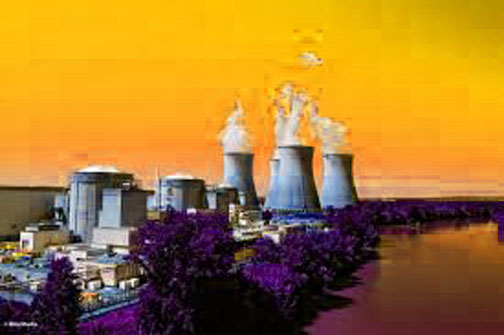
State owned French energy major EDF is reducing output at nuclear power
stations on the Rhône and Garonne rivers as heatwaves push up river
temperatures, restricting its ability to use river water to cool the
plants. EDF, which is Europe’s biggest producer of nuclear energy, has
said it would extend output cuts at several NPPs on the two rivers as the
hot spell continues, but that a minimum level of output, 400 MW, would be
maintained.
Further cuts in output are likely in the near future at nuclear
power plants Tricastin (3.6 GW), St Alban (2.6 GW, but now at 700 MW) and
Golfech (2.7 GW) owing to high temperatures in the Rhône and Garonne
rivers. EDF started imposing production restrictions in mid-July at
Tricastin, St Alban and Bugey on the Rhône and Blayais at the mouth of the
Garonne as temperature rose to unusually high levels.
Modern Power Systems 9th Aug 2022
https://www.modernpowersystems.com/news/newsedf-cuts-output-from-nuclear-generation-9915875
Nuclear reactors at Bugey, Blayais, Saint-Alban-Sanit-Maurice, Golfech and Tricastin allowed to release hotter water into rivers

New thermal discharge limits applicable to the reactors of the Bugey,
Blayais, Saint-Alban-Saint-Maurice, Golfech and Tricastin power plants have
been set and will be valid until 11 September. The nuclear power plants of
Blayais, Saint-Alban-Saint-Maurice, Golfech, Bugey and Tricastin will
benefit until September 11 from environmental exemptions concerning water
discharge temperatures due to high temperatures, despite impacts possible
negative effects on the environment.
A decree published on Saturday in the
Official Journal sets ” new thermal discharge limits applicable to the
reactors of the nuclear power plant of Bugey, Blayais,
Saint-Alban-Saint-Maurice, Golfech and Tricastin “. It is specified that
the implementation of these measures will be “associated with a
reinforced environmental monitoring program”.
Le Figaro 6th Aug 2022
Bad luck for the river environment – nuclear reactors allowed to release hotter water.
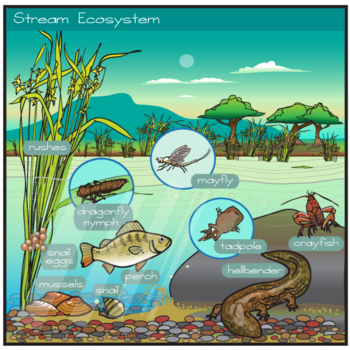
Heat wave: the State grants environmental exemptions to maintain the
activity of five nuclear power plants. These derogations will allow the
power stations to discharge warmer water than usual, which could have
negative effects on the environment.
The nuclear power plants of Blayais, Saint-Alban-Saint-Maurice, Golfech, Bugey and Tricastin will benefit until September 11 from environmental exemptions concerning the temperatures of
water discharge because of the high temperatures. With a downside: possible
negative effects on the environment.
France Info 6th Aug 2022
France importing power, as nuclear stations cut output because of global heating
EDF has warned it will be forced to cut power output from some of its
nuclear reactors as hot weather in France drives up river temperatures. It
leaves Europe facing even higher prices as the energy giant is unable to
use the Rhône and Garonne river to cool its plants.
The company’s S Alban plant’s output will be reduced, from 2.6 gigawatts to 700 megawatts
from Saturday, to adhere to environment regulations. Cutbacks are also
expected at the Tricastin plant, where two units will stay at a minimum
level of 400 megawatts.
EDF’s nuclear fleet is already operating below
capacity due to reactor faults that it is trying to fix, an issue that has
pushed up electricity prices and forced France to rely on power imported
from Britain.
Telegraph 3rd Aug 2022
https://www.telegraph.co.uk/business/2022/08/03/water-shortage-cripples-nuclear-reactors-france/
France’s problems with nuclear corporation EDF
Following my previous post on EDF’s woes and their impact on the
European market, here’s a list of topics, both practical and political,
that the company needs to deal, and their domestic impact in France.
Corrosion issues. 12 plants, mostly the more modern ones, have been stopped
due to cracks in pipes;
Flamanville. The only new nuclear plant in
construction in France, it has been beset by delays and cost overruns;
Overall supply levels. With the existing nuclear fleet getting older, it
will likely require more maintenance (both scheduled and unscheduled), and
become more vulnerable to loss of skills as experienced nuclear workers
retire and are only partly replaced given the uncertain prospects of the
sector; Expensive imports. The lower production levels mean that EDF needs
to import increasing volumes of power. With the current gas crisis
triggered by the Russian invasion of Ukraine, this leads to very high power
prices and significant costs;
Blocked retail prices. After years of being
told that France has the cheapest electricity thanks to nuclear, the price
of retail electricity is a highly volatile political topic. Energy prices
are a hot-button issue everywhere, but they are specifically so for
President Macron;
The ARENH boondoggle. As part of the opening of the
French power market pushed by the EU commission, EDF has been forced to
sell a chunk of its nuclear production (initially 100 TWh/y, ie roughly 25%
of its production) at a fixed price (42 EUR/MWh) to new competitors on the
retail market;
EDF restructuring and EU competition issues. Several of the
items above remind us that EDF is a topic closely watched in Brussels. The
earlier EDF restructuring concept (codename “Hercule”) which proposed
to split EDF in 2 entities (nuclear and hydro, publicly owned: networks and
renewables, to be listed) was opposed by unions, and viewed with skepticism
in Brussels;
One of the topics that derailed the Hercule process was what
to do with EDF’s large portfolio of hydro generation. The EU commission
has long wanted to open up that sector to competition and force the
government to tender the dams when the concessions granted to EDF come to
an end. The fact that EDF has proven unable to build the next-generation
EPRs is either seen as a temporary blip, or a plot by outsiders to weaken
the country (anti-nuclear policies, pushed in particular by Germany, are
seen to have willfully weakened France’s industrial base). Renewables,
despite all evidence to the contrary, are still seen as either a useless
greenwashing sideshow or a dangerous distraction.
Jerome in Paris 4th Aug 2022
https://jeromeaparis.substack.com/p/edf-the-strategic-questions-and-to
Drought may force nuclear power production cut
https://journalrecord.com/2022/08/05/drought-may-force-nuclear-power-production-cut/ Associated Press August 5, 2022 0
PARIS — French Prime Minister Elisabeth Borne warned that France is facing the “most severe drought” ever recorded in the country and announced the activation of a government crisis unit.
The crisis unit will be in charge of monitoring the situation in the hardest-hit areas and coordinate measures like bringing drinking water to some places. It will also monitor the impact of the drought on France’s energy production, transport infrastructure and agriculture.
The drought may force French energy giant EDF to cut power production at nuclear plants which use river water to cool reactors.
France now has 62 regions with restrictions on water usage due to the lack of rain.
Borne said many areas in France are going through a “historic situation” as the country endures its third heatwave this summer.
“The exceptional drought we are currently experiencing is depriving many municipalities of water and is a tragedy for our farmers, our ecosystems and biodiversity,” the statement said.
EDF cuts output at nuclear power plants as French rivers get too warm

The production cuts mean that France, traditionally an energy exporter, is relying on imports from countries such as Spain, Switzerland, Germany and the UK
Company says it is reducing production for few hours where possible as ability to cool plants is restricted https://www.theguardian.com/business/2022/aug/03/edf-to-reduce-nuclear-power-output-as-french-river-temperatures-rise Julia KolleweThu 4 Aug 2022
The French energy supplier EDF is temporarily reducing output at its nuclear power stations on the Rhône and Garonne rivers as heatwaves push up river temperatures, restricting its ability to use river water to cool the plants.
The majority-state-owned company, Europe’s biggest producer of nuclear energy, said it would extend output cuts at several power stations on the two rivers as the hot spell continues – but that a minimum level of output would be maintained to keep the grid steady.
EDF warned of potential output cuts at its nuclear power plants Tricastin, St Alban and Golfech in coming days due to high temperatures in the Rhône and Garonne rivers. It started imposing production restrictions in mid-July at Tricastin, St Alban and Bugey on the Rhône and Blayais at the mouth of the Garonne amid sweltering temperatures.
A spokesperson told the Guardian that the company was lowering production “for a few hours” where possible but not shutting the reactors completely.
After the 2003 heatwave, France’s nuclear safety authority (ASN) set temperature and river flow limits beyond which power stations must reduce their production, to ensure the water used to cool the plants will not harm wildlife when it is released back into the rivers.
Temperatures in southern France are expected to reach 40C over the next two days, according to the forecaster Météo-France.
Since 2000, production losses due to high river temperatures and low river flows have represented an average of 0.3% of annual production. However, half of EDF’s 56 nuclear reactors are offline due to planned maintenance and work to repair corrosion which was delayed by the pandemic, just as Europe faces an energy crunch following Russia’s invasion of Ukraine.
As a result of the maintenance work, EDF estimates its power output this year will be the lowest in more than three decades. The company issued its fourth profit warning of the year last Thursday when it reported a first-half loss of €5.3bn. The French government, which owns 84% of EDF, is in the process of buying out minority shareholders to take full control of the business.
The production cuts mean that France, traditionally an energy exporter, is relying on imports from countries such as Spain, Switzerland, Germany and the UK.
EDF is buying electricity at high market prices, after Russia’s war in Ukraine sparked an energy crisis, leaving European countries scrambling to find alternative supplies. Another strain on EDF’s finances comes from a power tariff cap imposed by the government to shield consumers from soaring energy prices.
The latest power cuts threaten to push energy prices even higher after they were sent spiralling by Russia’s invasion of Ukraine in late February.
Reduced electricity output from France’s nuclear reactors due to high temperatures.
French utility EDF warned on Wednesday of potential output cuts of up to
3.8 GW at its nuclear power plants Tricastin, St Alban and Golfech due to
high temperatures in the Rhone and Garonne rivers. The output curbs could
start tomorrow at Golfech (2.6 GW).
Montel 3rd Aug 2022
https://www.montelnews.com/news/1339940/edf-warns-of-up-to-38-gw-cuts-on-cooling-issues
French finance minister and MPs clash over future of nuclear power
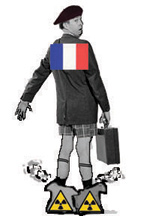
to “all those who confuse reality with their fantasies […] nuclear power does not work”.
By Paul Messad | EURACTIV.fr | translated by Arthur Riffaud, Jul 29, 2022
Left-wing MPs and Economy Minister Bruno Le Maire came to heated debate in the French National Assembly over a reduction in nuclear power production during the vote on the rectifying finance bill.
On Tuesday night (26-27 July), French MPs adopted the rectifying finance bill, in which it was agreed the country’s public energy supplier EDF should be nationalised. At a minimum, it was agreed that the state will make a public offer to buy the remaining 16% of the company that it does not already own, a sum amounting to €9.7 billion……….
LFI MP Antoine Léaument said that the cost of the ‘Grand Carénage’ programme, aimed at extending the life of power plants, would represent the same budget as the construction of 33 to 76 offshore wind farms, which would produce more installed power than that of nuclear.
The themes of the discussion are not new. In June, LFI’s party leader Jean-Luc Mélenchon revived debate over nuclear’s votality, saying that while this is not a “fact”, the current situation of climate breakdown is such that “what was not intermittent yesterday will become more and more so.”
He added that “France is now the country lagging furthest behind in its renewable energy objectives” within the European Union.
On renewable profitability
On 18 July, the French Energy Regulation Commission (CRE) unveiled its assessment of the public service costs of energy to be compensated by the state for 2023.
The report concludes that renewables will generate revenue for the State in 2023, due to the current very high price of megawatt hours (MWh). When prices are set higher than the feed-in tariff set by the state, operators pay the difference to public authorities.
This has prompted some observers to insist on the profitability of renewable energies, in particular wind power.
“France is reactivating its coal power plants while at the same time there are currently 4.7 GW of wind projects and 3 GW of solar projects being put on hold”, said Anne-Catherine Tourtier, president of the France Energie Eolienne association.
The government has already announced a bill to speed up the development of renewable energies for the autumn. https://www.euractiv.com/section/energy-environment/news/french-finance-minister-and-mps-clash-over-future-of-nuclear-power/
However, the outcome was not easy to swallow, particularly for those on the left.
In reality, nuclear production is at half mast. France is significantly importing electricity: up to 10 GW on a single day, as the country’s transmission system operator RTE figures show, a noteworthy figure considering that the country is usually a net exporter.
Nuclear capacity
Currently, about thirty reactors are shut down, more than half of France’s fleet. Some are closed for maintenance, and 12 for problems with corrosion. Others have been impacted by the weather, with extreme temperatures endangering the cooling capacities of the plants.
EDF announced that it has lost €5.3 billion euros in the first half of the year, mainly associated with the forced closure of many of the nuclear plants.
The French Nuclear Safety Authority (ASN) extended a temporary derogation to the shutdown rules for such situations on Friday (22 July) to “ensure the safety of the electricity network” during this critical period. The power plants of Golfech, Saint-Alban, Blayais and Bugey will thus be permitted to operate until 7 August 2022.
Heated debate in the National Assembly
During the debate on the draft rectifying finance law in the National Assembly, Green MPs and others from the left-wing party La France Insoumise (LFI) condemned the government’s irresponsibility in its approach to nuclear energy.
Julien Bayou, Europe Écologie Les Verts (EELV) MP for Paris and party executive, repeatedly said: to “all those who confuse reality with their fantasies […] nuclear power does not work”.
Nuclear giant EDF and waste company Veolia continue to do business with Russia – the nuclear industry gets uranium from Russia, and sends wastes there.
Two utility giants raking in billions from British customers are STILL doing business with Russia — five months after Vladimir Putin ‘s forces invaded Ukraine.
Energy supplier EDF and waste firm Veolia have been accused of indirectly funding the war. Despite the death of 5,000 civilians, EDF Group’s contracts include a deal to source uranium from state-run nuclear power giant Rosatom. And Veolia – like EDF, French-owned – has a number of lucrative heating and waste supply contracts. Both firms insist they comply with international sanctions and that their activities are to provide essential public services.
But critics believe they should cut all ties immediately. Lib Dem energy spokesperson Wera Hobhouse said: “EDF should do the right thing by ending their business with brutal dictator Putin.”
Mirror 23rd July 2022
https://www.mirror.co.uk/news/uk-news/two-energy-firms-earning-billions-27560187
Protest against radioactivity-contaminated water, at French nuclear site

ALERT Cigéo = radioactivity = contaminated water http://burestop.free.fr/spip/spip.php?article1040&fbclid=IwAR05l37LqSVNJwx7JOKpqVBxYmfqiTd8ggXjx_YYpUxc1w1Ock_MoaMBjyY COMMUNIQUE COORDINATION CIGEO/BURE STOP – 23/07/2022,
Small rafts to warn of the danger threatening a large territory!
The Coordination Stop Cigéo organized this Saturday 23/07/2022 a symbolic action in Bar-le-Duc, to make visible what Andra does not show, to tell what Andra is silent about: operating discharges of Cigeo for 150 years, just as those resulting from an underground accident will be impossible to control.
The small wooden rafts, painted with radioactive symbols and arrows, mentioning Cigéo/Bure and Paris and thrown over the water in the Ornain, symbolized the phenomenal danger that threatens water resources, this common good.
SEE THE PICTURES ( Pictures )
Indeed, the water discharges contaminated by the operation of the site or in the event of an accident, would come out in an anarchic way on the sector in a few days, towards Saulx via the losses of Orge, towards Bar-le-Duc via Haironville, towards Saint-Dizier via Ménil-sur-Saulx, towards Joinville, haphazardly… knowing that everything would end up flowing into the Marne. The impacts of Cigeo (1) would not be confined to the ultra-local perimeter as Andra claims, but would be diluted in the hydrographic network towards Paris.
A gigantic site, a scary future
The high water consumption of the site would clearly have an impact on the local resource and its distribution… which worries many municipalities today. What will become of local waterways (fragile natural environments)? What effects on tap water? What are the impacts of chemical and radioactive releases on activities such as fishing, market gardening, etc.? All these simple but essential questions have never been addressed. Afraid to tell the truth?
Cigeo could endanger the territory and beyond, permanently, if the water were to suffer contamination and scarcity. At a time when heat and drought are becoming an agonizing and lasting reality, there is still time to refuse such an impacting project for man and nature and to change course.
Public utility, obtained on a file more than inadequate
Andra repeats that the public utility of Cigéo does not mean authorization of the project. But the recent signatures of the DUP and OIN decrees are incomprehensible, given the lack of figures on the real impact of nuclear storage on water resources and surface waters. Beyond the inadequacy of the data in the DUP file, Andra is postponing the potential conclusions of the research until later, at the stage of the creation authorization application, which according to it, would serve as an application for authorization of rejection. And that is not enough for us!
Everyone at the Bure’lesques festival, August 5-6-7, 2022 in Hévilliers
The question of water from here and water from elsewhere, threatened by nuclear power and its waste, will be at the heart of the conferences and round tables of the Bure’lesques 2022. Three days of exchanges and information but not only! Film screenings, shows, concerts and good food, a rich and beautiful program is announced for this 3 rd edition. ALL INFO on https://burefestival.org/
EDF to change design of EPR nuclear reactors following troubles of the China one – (making it up as they go?)
EDF to redesign flagship UK nuclear reactors after China shutdown
Company to change way fuel rods are held in place in pioneering EPR generators,
By Rachel Millard, 23 July 2022 • The power company charged with driving Britain’s nuclear revolution is to overhaul the design of its flagship new reactor to avoid a repeat of damage to fuel rods that forced a unit in China to shut down. …https://www.telegraph.co.uk/business/2022/07/23/edf-redesign-flagship-uk-nuclear-reactors-china-shutdown/
Nuclear Power Plants Are Struggling to Stay Cool
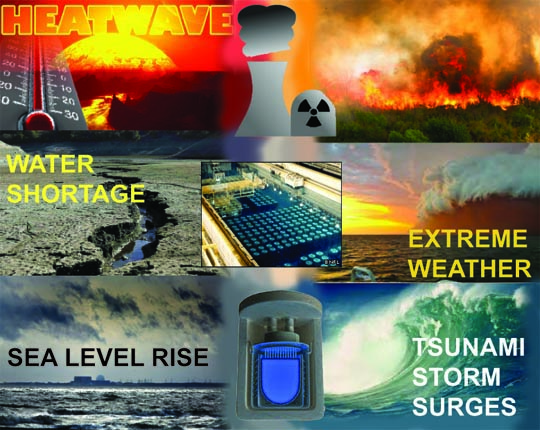
Wired, 22 July 22”……………………………. Amidst a slow-burning heat wave that has killed hundreds and sparked intense wildfires across Western Europe, and combined with already low water levels due to drought, the Rhône’s water has gotten too hot for the job. It’s no longer possible to cool reactors without expelling water downstream that’s so hot as to extinguish aquatic life. So a few weeks ago, Électricité de France (EDF) began powering down some reactors along the Rhône and a second major river in the south, the Garonne. That’s by now a familiar story: Similar shutdowns due to drought and heat occurred in 2018 and 2019. This summer’s cuts, combined with malfunctions and maintenance on other reactors, have helped reduce France’s nuclear power output by nearly 50 percent…………………
Nuclear technicians are known to refer to their craft as a very complicated way of boiling water, producing steam that spins turbines. But much more is usually required to keep the reactor cool. That’s why so many facilities are located by the sea and along big rivers like the Rhône.
Plenty of other industries are affected by hotter rivers, including big factories and power plants that run on coal and gas. But nuclear plants are unique because of their immense size and the central role they play in keeping energy grids online in places like France. And warming and dwindling rivers are not the only climate challenges they face. On the coasts, a combination of sea level rise and more frequent and intense storms means heightened flooding risks. Scientists have also pointed to other, more unusual challenges, like more frequent algal blooms and exploding jellyfish populations, which can clog up the water pipes.
……………………… The nuclear industry and environmental groups continue to disagree on whether existing regulations capture the latest science, particularly on the topic of sea level rise.
……………….. . In 2019, the NRC began approving 20-year extensions to some reactors—starting with the Turkey Point power plant in South Florida. Environmental groups filed interventions to halt the plan, arguing that a combination of more intense hurricanes and sea level rise would threaten the low-lying plant in ways that regulators had not adequately considered. In February, the NRC reversed the extension for Turkey Point and other plants pending a more extensive environmental review.
So far, most production cuts are due to warming waters—not just in the Rhône and Garonne, but in places like the Tennessee River in the US, and in the coastal seas where many more plants are sited. In recent years, nuclear plants across Northern Europe have been forced to shut down or reduce output because seawater became too warm to safely cool the reactor cores. Over the past decade, the Millstone power plant in Connecticut saw a series of shutdowns on hot summer days until regulators raised the temperature limit of its cooling waters by 5 degrees Fahrenheit.
………………………. the impact is growing as temperatures continue to rise. In an analysis published in Nature Energy last summer, a Stanford researcher found that there had been eight times the number of heat-related outages in the 2010s compared with the 1990s. In a 2011 study on the impact of warming on nuclear cooling systems, EDF scientists projected a 3 degree Celsius increase in the Rhône’s temperature by 2050, spelling more potential for shutdowns during heat waves.
,,,,,,,,,,,,,,,,,,,,,,, “The key issue is when we start building new plants, how can we take into account the impact of climate change for the full lifespan of the plant to 2080 or 2100,” Laconde says, noting that France’s new generation of reactors, recently announced by President Emmanuel Macron, are mostly being built by the coasts.
,,,,,,,,,,,,,,,,,,,,,,,,,, in France, regulators are expecting a long summer ahead. While the heat may pass, low water levels can persist, resulting in cutbacks that last for weeks or months. EDF recently told reporters that it expects more cuts in the coming months as water levels continue to fall—leaving the country hoping for the relief of cold, hard rains. https://www.wired.com/story/nuclear-power-plants-struggling-to-stay-cool/
La Hague is still threatened by wildfires Monday afternoon: firefighters mobilized on July 18 not far from the Orano nuclear site
by Christophe Meunier, After being mobilized all day Sunday July 17, 2022 on landage fires in Herquemoulin, the firefighters of the Channel had to fight against another fire this night, still in the sector of La Hague. The second fire regained strength during the afternoon on Monday. The nearby Orano La Hague site has significant means of protection if it were to be threatened by flames.
Up to 108 firefighters were mobilized this Sunday, July 17, 2022 on a landage fire in Herquemoulin, in the La Hague sector, which broke out around 3 a.m. It was only at the end of the evening, after 10 p.m., that the system was lightened. Thirty firefighters, three forest fire tanker trucks, a firefighters’ van, a water carrier and the command echelon remained on site to maintain surveillance of the site. This surveillance is maintained this Monday morning. But in the meantime, the means of the SDIS had to be mobilized on another fire……………….
It was shortly before midnight that a new brush fire broke out in the La Hague sector, this time in Vauville, at a place called Les Pierres-Poquelées. About sixty firefighters, from Saint-Lô, Carentan, La Haye, La Hague, Barneville, Granville, Cherbourg, Bricquebec, Canisy, St Pierre, Valognes but also from Calvados, were engaged in this new operation. Six tank trucks and a fire engine were deployed on site. A command post was set up in Beaumont-Hague at the RD 901/RD 403 roundabout. “The personnel faced unfavorable conditions linked to the topography, the night and the wind “, indicated the Departmental Service Channel Fire and Rescue……………………..
The two fires that have occurred since Sunday in the La Hague sector are both near the Orano waste reprocessing site. ………………………….
France3 18th July 2022
New failure on the Flamanville EPR, the reactor control system’s malfunction
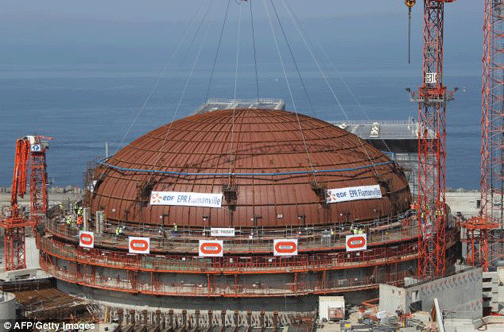
After problems with concrete, steel or welds, the reactor under
construction experienced a new malfunction.
Part of the installation’s control systems is out of order. The structural failure, known since 2019,
is now recognized by EDF. Flamanville and its EPR reactor, umpteenth
episode.
We thought we knew everything about the setbacks of the calamitous
EDF project which has been dragging on for fifteen years now on the nuclear
power plant in the Manche department and whose bill has gone in seventeen
years from 3.3 billion to 12.7 billion euros ( and even 19 billion with
interest and launch costs according to the Court of Auditors ).
Well no !
After the concrete problems during the construction of the reactor
building, the poorly forged steel of the bottom and the cover of the
nuclear vessel or the poorly made welds on the reactor piping, EDF has a
new problem on its hands.
And a big one: two essential systems which make
it possible to control the reactor are victims of a problem problem for the
start of the EPR. A tile known for several years by the operator and the
Nuclear Safety Authority (ASN), but which has not been the subject of any
publicity and has still not been resolved, according to information from
Liberation . We already knew that this powerful 1,650 MWe nuclear reactor
would not enter service before the end of 2023, more than ten years behind
the date initially planned.
Liberation 19th July 2022
1 This Month



Shut down the radiation-damaged Heysham nuclear reactors now
To see nuclear-related stories in greater depth and intensity – go to https://nuclearinformation.wordpress.com

Say No to NASA’s Reckless Nuclear Reactor on the Moon
Say No to NASA’s Reckless Nuclear Reactor on the Moon
-
Archives
- October 2026 (256)
- September 2026 (339)
- August 2026 (330)
- July 2026 (355)
- June 2026 (287)
- May 2026 (306)
- April 2026 (356)
- March 2026 (251)
- February 2026 (267)
- January 2026 (308)
- December 2025 (358)
- November 2025 (359)
-
Categories
- 1
- 1 NUCLEAR ISSUES
- business and costs
- climate change
- culture and arts
- ENERGY
- environment
- health
- history
- indigenous issues
- Legal
- marketing of nuclear
- media
- opposition to nuclear
- PERSONAL STORIES
- politics
- politics international
- Religion and ethics
- safety
- secrets,lies and civil liberties
- spinbuster
- technology
- Uranium
- wastes
- weapons and war
- Women
- 2 WORLD
- ACTION
- AFRICA
- Atrocities
- AUSTRALIA
- Christina's notes
- Christina's themes
- culture and arts
- Events
- Fuk 2022
- Fuk 2023
- Fukushima 2017
- Fukushima 2018
- fukushima 2019
- Fukushima 2020
- Fukushima 2021
- general
- global warming
- Humour (God we need it)
- Nuclear
- RARE EARTHS
- Reference
- resources – print
- Resources -audiovicual
- Weekly Newsletter
- World
- World Nuclear
- YouTube
-
RSS
Entries RSS
Comments RSS

