Faslane nuclear base tugboats may be built in China
UK Defence Journal By George Allison, January 12, 2026
New tugboats intended to support operations at HM Naval Base Clyde, the UK’s nuclear submarine hub at Faslane, may be constructed in China under a major fleet replacement programme, depending on how the contractor applies its global production model.
The vessels form part of the Defence Maritime Services Next Generation programme, under which Serco is replacing a wide range of Royal Navy harbour and support craft. The programme covers tugs, pilot boats and barges used at naval bases across the UK, including Faslane, which hosts the UK’s continuous at-sea nuclear deterrent.
Under the current arrangements, the Ministry of Defence pays Serco to provide support services at the Royal Navy’s principal bases, and allows Serco, as the prime contractor, to determine its own supply chain for vessel replacement.
Build locations and Damen’s production model
Damen operates a distributed shipbuilding model, with construction spread across a network of yards in Europe and Asia depending on vessel type and production capacity. The company has historically built a range of smaller commercial and support vessels at yards in China and Vietnam, including certain classes of tugboats, while other workboat types are constructed at European facilities in countries such as Poland and Romania. Final outfitting, integration and delivery preparation are often carried out in the Netherlands or at European partner yards, depending on the contract.
Neither Serco nor Damen has publicly confirmed the specific build locations for individual vessels within the programme. However, Damen’s established production model suggests that some tugboats could be built outside Europe, including at shipyards in China that form part of Damen’s wider manufacturing network……………………………………………………………………………………………….
Not the first time
A similar issue emerged in Australia in 2025, when the national broadcaster ABC reported that a new fleet of tugboats ordered for the Royal Australian Navy had been built in China under a contract awarded to Dutch shipbuilder Damen. The report said certification documents showed the vessels were constructed at Damen’s Changde shipyard in China, before being delivered to Australia under a civilian-operated support arrangement.
In response to the reporting, Australia’s Department of Defence confirmed that the tugboats had been built in China, while stating that they were not commissioned naval vessels and would be operated by a civilian contractor. Defence officials emphasised that sustainment activity would take place domestically and that the vessels were intended for harbour support roles rather than frontline operations…………………….
Wider security context
In a separate but related context, the Ministry of Defence has in recent months issued internal guidance concerning the use of vehicles containing Chinese-manufactured components, amid broader concerns about information security and connected systems. Media reporting has said warning notices were placed in some MoD-leased vehicles advising personnel not to discuss sensitive matters inside them or connect official devices, and that certain vehicles were restricted from accessing sensitive military sites. The measures were described as precautionary, with no publicly confirmed security breach.
Parliamentary questions have also raised wider issues about reliance on overseas-manufactured systems within defence and government operations. Ministers have acknowledged the need to assess potential vulnerabilities linked to global supply chains, while maintaining that decisions are taken on a case-by-case basis and that there has been no evidence of compromise.
Competing views on cost, transparency and social value
Those defending the programme argue that the arrangements reflect commercial shipbuilding norms rather than a deliberate policy decision. They note that hull construction in Asia can reduce costs and production timelines, with final outfitting, systems integration and acceptance carried out later in Europe under established regulatory oversight. Critics argue that the lack of transparency over build locations risks undermining confidence, especially where vessels operate at nuclear sites. They contend that clearer public disclosure is needed on where vessels are constructed and what safeguards apply during the build process.
Louise Gilmour, secretary of GMB Scotland, said the decision to source the workboats overseas represented a missed opportunity to support domestic shipbuilding capacity, particularly at Ferguson Marine, where the union represents the largest section of the workforce. She said the vessels were well suited to the type of work the yard had carried out for generations and argued that contracts of this scale could play a role in sustaining skills and employment in Scotland.
https://ukdefencejournal.org.uk/faslane-nuclear-base-tugboats-may-be-built-in-china/
“Condemning US imperialism for its illegal invasion and violation of sovereignty”
Over the weekend, 56 groups across the country marched to condemn the United States and to demonstrate solidarity with Venezuela, Palestine, and anti-imperialists…
North Korea News, Reporter Lee Seung-hyun , 2026.01.10
Actions condemning the US’s illegal invasion of Venezuela continued across the country over the weekend.
Fifty-six civic groups, including the Joint Action to Stop Trump Threats (preliminary), the National People’s Action, and the Independent Unification and Peace Solidarity, held a “Citizens’ March Condemning the US for Illegal Invasion and Sovereignty Violation” in front of KT in Gwanghwamun, Seoul, on the afternoon of the 10th. The march continued through the city center, through Jongno, Gwanghwamun, and finally to the US Embassy.
Citizens who gathered in front of KT in Gwanghwamun, braving the bad weather of heavy snow, cold waves, and strong winds, chanted in one voice: △ Condemn Trump, a war criminal who aims to plunder resources and change the regime; △ Immediately release President Maduro, who has been illegally kidnapped; △ Stop the tyranny and war of aggression of US imperialism.
Yang Kyung-soo, chairman of the Korean Confederation of Trade Unions, said, “The tariff war waged by the United States against the world last year shows that the economic order that guaranteed the limitless greed of capital through neoliberalism is over, and that the history of the United States, which boasted sole global hegemony based on neoliberalism and powerful military power, and that the hegemony of the United States are also coming to an end,” adding, “The same goes for the US’s acts of aggression in Venezuela.”
He also mentioned that President Trump signed a proclamation on the 7th (local time) withdrawing from 66 international organizations, including 31 UN agencies and 35 non-UN agencies, and said, “This means that the United States, which is leaving behind both the universal value of responding to the climate crisis and the value of human rights, which are common values for all of humanity, can no longer lead the world order.” He emphasized, “We must stand together with the people of the world who oppose war and the United States, and with the people who love peace, to create a new world where peace, equality, and independence are guaranteed.”
Lee Eun-jung, standing representative of the National Women’s Solidarity, fiercely criticized, “The wars and military interventions the United States has waged in Iraq, Afghanistan, Libya, and Syria over the past several decades were organized violence by an imperialist state to protect its oil and resource hegemony.” She also strongly criticized, “The United States’ invasion of Venezuela and the arrest of President Maduro and his wife are also clear violations of sovereignty, theft of resources, and a declaration of colonial rule.”
However, times have changed, and the people of the world will not accept the war that the United States wages for its own interests and greed as its destiny, and will never be isolated, he said, raising his voice, saying, “The awakened people of the world will fight together against the imperialist United States that carries out barbaric and illegal invasions and violations of sovereignty
Pastor Hong Deok-jin of the National Council of Clergy Justice and Peace said, “The airstrike on Caracas, Venezuela and the forcible repatriation of the national leader by the Trump administration in the United States on January 3rd is not a simple military action, but an act of neo-imperialism that tramples on the sovereignty of a country and shakes the foundations of international law, and a direct challenge to peace-loving people around the world.” He demanded, “The United States must cease all military operations and withdraw its troops immediately.”
He also emphasized that “the international community must not tolerate U.S. violence,” and that “we must reject Pax Americana, which is dominated by the logic of great power, and we must mobilize all international means to stand in solidarity so that only the self-determination of the Venezuelan people can determine the future of their land.”
He urged the South Korean government to declare its principle of opposing war of aggression rather than worrying about what the United States thinks.
Palestine Peace Solidarity activist Hana said that although Palestine, Venezuela, and Korea are geographically distant, they are closely linked in the criminal plans of the United States and imperialism, and emphasized that “the struggles of the Venezuelan and Palestinian people, who are at the forefront of the fight against imperialism, should also be at the center of the anti-imperialist movement in Korea.”
He pointed out that the US’s support of Israel as a proxy agent in the Middle East to control oil flow and prices is similar to the imperialist greed to maintain hegemony by dominating resources.
He pointed out that since October 2023, Israel has indiscriminately killed at least 72,000 Palestinians by pouring more bombs into the Gaza Strip, an area half the size of Seoul, than the bombs dropped during World War II. He also pointed out that the US has vetoed eight UN resolutions demanding an end to genocide and has provided hundreds of billions of dollars in military aid, making them the main culprits of genocide.
In addition, the government urged Dana Petroleum, which is 100% owned by Korea National Oil Corporation, to stop its complicity in colonial plunder, saying that it is conducting gas exploration activities in the western part of the Leviathan gas field near the Gaza Strip by paying a license fee of 20.4 billion won to the Israeli government.
Citizens’ actions condemning the US war of aggression were also held in Busan (Busan Station Plaza), Daegu and Gyeongbuk (in front of CGV Daegu Hanil), Daejeon (in front of Ian Kyungwon on Euneungjeong Street), and Jeju (in front of the Jeju City Hall Civil Affairs Office) that afternoon.
Plunging Toward Armageddon: U.S. and Russia on the Brink of a New Nuclear Arms Race

Beginning on February 6th, Russian and American leaders will face no barriers whatsoever to the expansion of those arsenals or to any other steps that might increase the danger of a thermonuclear conflagration.
Both the United States and Russia have already committed vast sums to the “modernization” of their nuclear delivery systems
By Michael Klare. 8 Jan 26, https://tomdispatch.com/plunging-into-the-abyss/
Plunging Into the Abyss. Will the U.S. and Russia Abandon All Nuclear Restraints?
For most of us, Friday, February 6, 2026, is likely to feel no different than Thursday, February 5th. It will be a work or school day for many of us. It might involve shopping for the weekend or an evening get-together with friends, or any of the other mundane tasks of life. But from a world-historical perspective, that day will represent a dramatic turning point, with far-reaching and potentially catastrophic consequences. For the first time in 54 years, the world’s two major nuclear-weapons powers, Russia and the United States, will not be bound by any arms-control treaties and so will be legally free to cram their nuclear arsenals with as many new warheads as they wish — a step both sides appear poised to take.
It’s hard to imagine today, but 50 years ago, at the height of the Cold War, the U.S. and Russia (then the Soviet Union) jointly possessed 47,000 nuclear warheads — enough to exterminate all life on Earth many times over. But as public fears of nuclear annihilation increased, especially after the near-death experience of the 1962 Cuban Missile Crisis, the leaders of those two countries negotiated a series of binding agreements intended to downsize their arsenals and reduce the risk of Armageddon.
The initial round of those negotiations, the Strategic Arms Limitation Talks I, began in November 1969 and culminated in the first-ever nuclear arms-limitation agreement, SALT-I, in May 1972. That would then be followed in June 1979 by SALT-II (signed by both parties, though never ratified by the U.S. Senate) and two Strategic Arms Reduction Treaties (START I and START II), in 1991 and 1993, respectively. Each of those treaties reduced the number of deployed nuclear warheads on U.S. and Soviet/Russian intercontinental ballistic missiles, submarine-launched ballistic missiles, and long-range bombers.
In a drive to reduce those numbers even further, President Barack Obama and Russian President Dmitry Medvedev signed a New Strategic Arms Reduction Treaty (New START) in April 2010, an agreement limiting the number of deployed nuclear warheads to 1,550 on each side — still enough to exterminate all life on Earth, but a far cry from the START I limit of 6,000 warheads per side. Originally set to expire on Feb. 5, 2021, New START was extended for another five years (as allowed by the treaty), resetting that expiration date for February 5, 2026, now fast approaching. And this time around, neither party has demonstrated the slightest inclination to negotiate a new extension.
So, the question is: What, exactly, will it mean for New START to expire for good on February 5th?
Most of us haven’t given that a lot of thought in recent decades, because nuclear arsenals have, for the most part, been shrinking and the (apparent) threat of a nuclear war among the great powers seemed to diminish substantially. We have largely escaped the nightmarish experience — so familiar to veterans of the Cold War era — of fearing that the latest crisis, whatever it might be, could result in our being exterminated in a thermonuclear holocaust.
A critical reason for our current freedom from such fears is the fact that the world’s nuclear arsenals had been substantially diminished and that the two major nuclear powers had agreed to legally binding measures, including mutual inspections of their arsenals, meant to reduce the danger of unintended or accidental nuclear war. Together, those measures were crafted to ensure that each side would retain an invulnerable, second-strike nuclear retaliatory force, eliminating any incentive to initiate a nuclear first strike.
Unfortunately, those relatively carefree days will come to an end at midnight on February 5th.
Beginning on February 6th, Russian and American leaders will face no barriers whatsoever to the expansion of those arsenals or to any other steps that might increase the danger of a thermonuclear conflagration. And from the look of things, both intend to seize that opportunity and increase the likelihood of Armageddon. Worse yet, China’s leaders, pointing to a lack of restraint in Washington and Moscow, are now building up their own nuclear arsenal, only adding further fuel to the urge of American and Russian leaders to blow well past the (soon-to-be-abandoned) New START limits.
A Future Nuclear Arms Race?
Even while adhering to those New START limits of 1,550 deployed nuclear warheads, both Russia and the United States had taken elaborate and costly steps to enhance the destructive power of their arsenals by replacing older, less-capable intercontinental ballistic missiles (ICBMs), submarine-launched ballistic missiles (SLBMs), and nuclear bombers with newer, even more capable ones. As a result, each side was already becoming better equipped to potentially inflict catastrophic damage on its opponent’s nuclear retaliatory forces, making a first strike less inconceivable and so increasing the risk of precipitous escalation in a crisis.
The Russian Federation inherited a vast nuclear arsenal from the former Soviet Union, but many of those systems had already become obsolete or unreliable. To ensure that it maintained an arsenal at least as potent as Washington’s, Moscow sought to replace all of the Soviet-era weapons in its inventory with more modern and capable systems, a process still underway. Russia’s older SS-18 ICBMs, for example, are being replaced by the faster, more powerful SS-29 Sarmat, while its remaining five Delta-IV class missile-carrying submarines (SSBNs) are being replaced by the more modern Borei class. And newer ICBMs, SLBMs, and SSBNs are said to be in development.
At present, Russia possesses 333 ICBMs, approximately half of them deployed in silos and the other half on road-mobile carriers. It also has 192 SLBMs on 12 missile-carrying submarines and possesses 67 strategic bombers, each capable of firing multiple nuclear-armed missiles. Supposedly, those systems are currently loaded with no more than 1,550 nuclear warheads (enough, of course, to destroy several planets), as mandated by the New START treaty. However, many of Russia’s land- and sea-based ballistic missiles are MIRVed (meaning they’re capable of launching multiple independently targetable reentry vehicles) but not fully loaded, and so could carry additional warheads if a decision were ever made to do so. Given that Russia possesses as many as 2,600 nuclear warheads in storage, it could rapidly increase the number of deployed nuclear weapons at its disposal beginning on February 6, 2026.
Rather than confront such challenges, the leaders of both countries may instead choose to retain the New START limits voluntarily. Indeed, Vladimir Putin has already agreed to a one-year extension of this sort, if the United States is willing to do likewise. But pressures (which are bound to increase after February 5th) are also building to abandon those limits and begin deploying additional warheadsmost missile-tracking radars.
The United States is engaged in a comparable drive to modernize its arsenal, replacing older weapons with more modern systems. Like Russia, the U.S. maintains a “triad” of nuclear delivery systems — land-based ICBMs, submarine-launched SLBMs, and long-range bombers, each of which is now being upgraded with new warheads at an estimated cost over the next quarter century of approximately $1.5 trillion.
The existing New START-limited U.S. nuclear triad consists of 400 silo-based Minuteman-III ICBMs, 240 Trident-II SLBMs carried by 14 Ohio-class submarines (two of which are assumedly being overhauled at any time), and 96 strategic bombers (20 B-2s and 76 B-52s) armed with a variety of gravity bombs and air-launched cruise missiles. According to current plans, the Minuteman-IIIs will be replaced by Sentinel ICBMs, the Ohio-class SSBNs by Columbia-class ones, and the B-2s and B-52s by the new B-21 Raider bomber. Each of those new systems incorporates important features — greater accuracy, increased stealth, enhanced electronics — that make them even more useful as first-strike weapons, were a decision ever made to use them in such a fashion.
When initiated, the U.S. nuclear modernization project was expected to abide by the New START limit of 1,550 deployed nuclear warheads. After February 5th, however, the U.S. will be under no legal obligation to do so. It could quickly begin efforts to exceed that limit by loading all existing Minuteman-IIIs and future Sentinel missiles on MIRVed rather than single-warhead projectiles and loading the Trident missiles (already MIRVed) with a larger number of warheads, as well as by increasing production of new B-21s. The United States has also commenced development of a new delivery system, the nuclear-armed sea-launched cruise missile (SLCM-N), supposedly intended for use in a “limited” regional nuclear conflict in Europe or Asia (though how such a conflagration could be prevented from igniting a global holocaust has never been explained).
In short, after the expiration of the New START agreement, neither Russia nor the United States will be obliged to limit the numbers of nuclear warheads on their strategic delivery systems, possibly triggering a new global nuclear arms race with no boundaries in sight and an ever-increasing risk of precipitous nuclear escalation. Whether they choose to do so will depend on the political environment in both countries and their bilateral relations, as well as elite perceptions of China’s nuclear buildup in both Washington and Moscow.
The Political Environment
Both the United States and Russia have already committed vast sums to the “modernization” of their nuclear delivery systems, a process that won’t be completed for years. At present, there is a reasonably broad consensus in both Washington and Moscow on the need to do so. However, any attempt to increase the speed of that process or add new nuclear capabilities will generate immense costs along with significant supply-chain challenges (at a time when both countries are also trying to ramp up their production of conventional, non-nuclear arms), creating fresh political disputes and potential fissures.
Rather than confront such challenges, the leaders of both countries may instead choose to retain the New START limits voluntarily. Indeed, Vladimir Putin has already agreed to a one-year extension of this sort, if the United States is willing to do likewise. But pressures (which are bound to increase after February 5th) are also building to abandon those limits and begin deploying additional warheads.
In Washington, a powerful constellation of government officials, conservative pundits, weapons industry leaders, and congressional hawks is already calling for a nuclear buildup that would exceed the New START limits, claiming that a bigger arsenal is needed to deter both a more aggressive Russia and a more powerful China. As Pranay Vaddi, a senior director of the National Security Council, put it in June 2024, “Absent a change in the trajectory of the adversary arsenal, we may reach a point in the coming years where an increase from current deployed numbers is required, and we need to be fully prepared to execute if the president makes that decision.”
Those who favor such a move regularly point to China’s nuclear buildup. Just a few years ago, China possessed only some 200 nuclear warheads, a small fraction of the 5,000 possessed by both Russia and the U.S. Recently, however, China has expanded its arsenal to an estimated 600 warheads, while deploying more ICBMs, SLBMs, and nuclear-capable bombers. Chinese officials claim that such weaponry is needed to ensure retaliation against an enemy-first strike, but their very existence is being cited by nuclear hawks in Washington as a sufficient reason for the U.S. to move beyond the New START limits.
Russian leaders face an especially harsh quandary. At a moment when they are devoting so much of the country’s state finances and military-industrial capacities to the war in Ukraine, they face a more formidable and possibly expanded U.S. nuclear arsenal, not to mention the (largely unspoken) threat posed by China’s growing arsenal. Then there’s President Trump’s plan for building a “Golden Dome” missile shield, intended to protect the U.S. from any type of enemy projectile, including ICBMs — a system which, even if only partially successful, would threaten the credibility of Russia’s second-strike retaliatory capability. So, while Russia’s leaders would undoubtedly prefer to avoid a costly new arms buildup, they will probably conclude that they have little choice but to undertake one if the U.S. abandons New START.
Racing to Armageddon
Many organizations, individuals, and members of Congress are pleading with the Trump administration to accept Vladimir Putin’s proposal and agree to a voluntary continuation of the New START limits after February 5th. Any decision to abandon those limits, they argue, would only add hundreds of billions of dollars to the federal budget at a time when other priorities are being squeezed. Such a decision would also undoubtedly provoke reciprocal moves by Russia and China. The result would be an uncontrolled arms race and a rising risk of nuclear annihilation.
But even if Washington and Moscow were to agree to a one-year voluntary extension of New START, each would be free to break out of it at any moment. In that sense, February 6th is likely to bring us into a new era — not unlike the early years of the Cold War — in which the major powers will be poised to ramp up their nuclear war-fighting capabilities without any formal restrictions whatsoever. That comfortable feeling we once enjoyed of relative freedom from an imminent nuclear holocaust will also then undoubtedly begin to dissipate. If there is any hope in such a dark prognosis, it might be that such a reality could, in turn, ignite a worldwide anti-nuclear movement like the Ban the Bomb campaigns of the 1960s, 1970s, and 1980s. If only.
Hiroshima, Nagasaki urge Japanese government to uphold non-nuclear principles
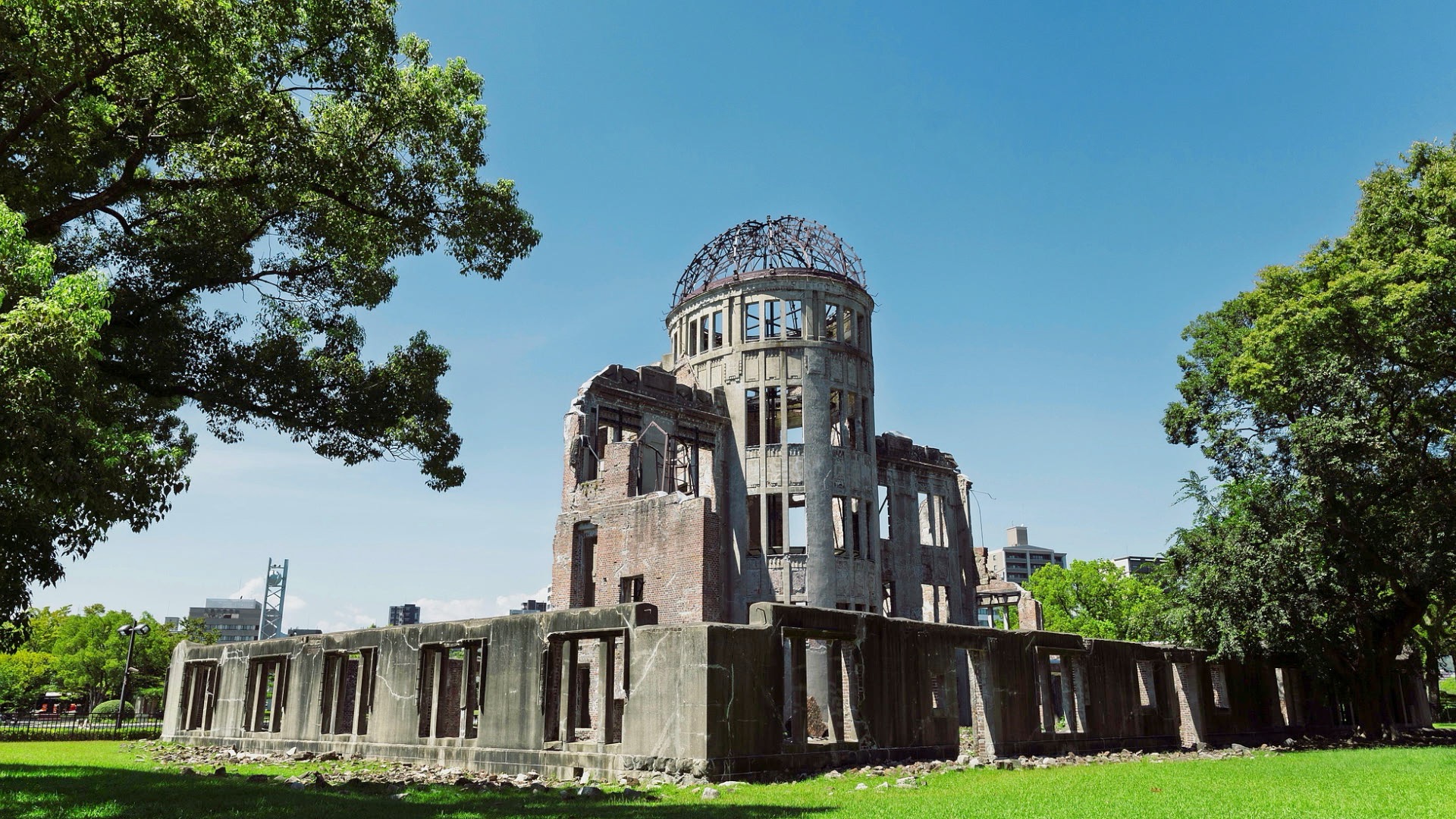
10-Jan-2026 CGTN. https://news.cgtn.com/news/2026-01-10/Hiroshima-Nagasaki-call-on-Japan-to-uphold-non-nuclear-principles-1JOBGW72YxO/p.html
The city assemblies of Hiroshima and Nagasaki have adopted statements urging the Japanese government to adhere to the country’s Three Non-Nuclear Principles, Kyodo News reported.
The Hiroshima City Assembly unanimously adopted its statement on Friday, pointing out that the ruling party’s attempt to revise the non-nuclear principles has caused concern, and strongly urging the Japanese government to take the feelings of people in the atomic-bombed cities seriously and to uphold the Three Non-Nuclear Principles, the report said.
The Nagasaki City Assembly passed its statement on Thursday by a majority vote, noting that successive Japanese governments have regarded the Three Non-Nuclear Principles as a national policy. It said the ruling party’s intended revision of the principles while amending the country’s security documents is totally unacceptable.
On August 6 and 9, 1945, in an effort to force Japan, which had launched a war of aggression, to surrender as soon as possible, the U.S. military dropped atomic bombs on Hiroshima and Nagasaki, respectively. The Three Non-Nuclear Principles – not possessing, not producing, and not allowing the introduction of nuclear weapons into Japanese territory – were first declared by then-Japanese Prime Minister Eisaku Sato in 1967 and formally adopted by parliament in 1971, establishing them as Japan’s basic nuclear policy. The National Security Strategy, one of the three documents approved by the Cabinet in 2022, states, “The basic policy of adhering to the Three Non-Nuclear Principles will remain unchanged in the future.”
Japanese media have previously reported that Prime Minister Sanae Takaichi is considering reviewing the third of the Three Non-Nuclear Principles, which prohibits nuclear weapons from entering Japan’s territory, when updating related documents.
The Unbroken Thread: China’s Civilisational-State vs. The West’s Contractual Empire – A Study in Divergent Destinies

10 January 2026 Andrew Klein, PhD, https://theaimn.net/the-unbroken-thread-chinas-civilisational-state-vs-the-wests-contractual-empire-a-study-in-divergent-destinies/
Abstract
This article contrasts the developmental trajectories of China and the United States (representing the modern West) by examining their foundational civilisational codes, historical experiences, and political philosophies. It argues that while the U.S. follows the extractive, individual-centric model of a classic maritime empire (extending the Roman pattern), China operates as a continuous civilisational-state, its policies shaped by a deep memory of collapse and humiliation and a Confucian-Legalist emphasis on collective resilience. The analysis critiques the Western failure to comprehend China through the reductive lens of “Communism,” ignoring the profound impact of the “Century of Humiliation” and China’s subsequent focus on sovereignty, infrastructure, and social stability as prerequisites for development. The paper concludes that China’s model, focused on long-term societal flourishing over short-term extraction, presents a fundamentally different, and perhaps more durable, imperial paradigm.
Introduction: The Mandate of History vs. The Mandate of Capital
The rise of China is often analysed through the prism of Western political theory, leading to a fundamental category error. To compare China and the United States is not to compare two nation-states of similar ontological origin. It is to compare a civilisational-state – whose political structures are an outgrowth of millennia of unified cultural consciousness and bureaucratic governance – with a contractual empire – a relatively recent construct built on Enlightenment ideals, but ultimately sustained by global financial and military hegemony (Jacques, 2009). Their paths diverge at the root of their historical memory and their core objectives.
China’s Catalysing Trauma: Modern China’s psyche is indelibly shaped by the “Century of Humiliation” (c. 1839-1949), beginning with the Opium Wars – a stark example of Western imperial extraction enforced by gunboats (Lovell, 2011). This was compounded by the collapse of the Qing dynasty, civil war, and the horrific suffering during the Second World War. The foundational drive of the People’s Republic, therefore, was not merely ideological victory but the restoration of sovereignty, stability, and dignity (Mitter, 2013). Every policy is filtered through the question: “Will this prevent a return to fragmentation and foreign domination?”
America’s Founding Myth: The U.S. narrative is one of triumphant exceptionalism. Born from anti-colonial revolution, it expanded across a continent it saw as empty (ignoring Native nations) and engaged with the world primarily from a position of growing strength. Its traumas (Civil War, 9/11) are seen as interruptions to a forward progress, not as defining, humiliating collapses. This fosters an optimistic, forward-looking, and often abistorical mindset (Williams, 2009).
2. Political Philosophy: Meritocratic Collectivism vs. Individualist Democracy
China’s System: The “Exam Hall” State. China’s governance synthesises Confucian meritocracy and Legalist institutionalism. The modern manifestation is a rigorous, multi-decade screening process for political advancement, emphasising administrative competence, economic performance, and crisis management (Bell, 2015). The objective is governance for long-term civilisational survival. The Communist Party frames itself as the contemporary upholder of the “Mandate of Heaven,” responsible for collective welfare. Political legitimacy is derived from delivery of stability and prosperity.
The West’s System: The “Arena” State. Western liberal democracy, particularly in its U.S. form, is a contest of ideas, personalities, and interest groups. Legitimacy is derived from the procedural act of election. While capable of brilliance, this system incentivises short-term focus (electoral cycles), polarisation, and the influence of capital over long-term planning (Fukuyama, 2014). Expertise is often subordinated to popularity.
3. The Social Contract: Infrastructure & Security vs. Liberty & Opportunity
China’s Deliverables: Post-1978 reforms shifted focus to development, but within the framework of the party-state. The state prioritises and invests heavily in tangible foundations: universal literacy, poverty alleviation, high-speed rail networks, urban housing, and food security (World Bank, 2022). The social contract is explicit: public support in exchange for continuous improvement in material living standards and national prestige.
The West’s Deliverables: The Western social contract, historically, promised upward mobility and individual liberty protected by rights. However, the late-stage extractive economic model has led to the decline of public goods: crumbling infrastructure, unaffordable higher education, for-profit healthcare, and eroded social safety nets (Piketty, 2013). The contract feels broken, leading to societal discord.
4. Global Engagement: Symbiotic Mercantilism vs. Extractive Hegemony
China’s Method: Development as Diplomacy. China’s Belt and Road Initiative (BRI) is the archetype of its approach: offering infrastructure financing and construction to developing nations, facilitating trade integration on its terms. It is a form of state-led, long-term strategic mercantilism aimed at creating interdependent networks (Rolland, 2017). Its “soft power” is not primarily cultural, but commercial and infrastructural.
The West’s Method: The post-WWII U.S.-led order, while providing public goods, has been characterised by asymmetric extraction: structural adjustment programs, financial dominance, and military interventions to secure resources and political alignment (Harvey, 2003). It maintains a core-periphery relationship with much of the world.
Conclusion: The Durability of Patterns
The West’s mistake is viewing China through the simple dichotomy of “Communist vs. Democratic.” This ignores the 4,000-year-old continuum of the Chinese statecraft that values unity, hierarchical order, and scholarly bureaucracy. China is not “learning from Communism”; it is learning from the Tang Dynasty, the Song economic revolutions, and the catastrophic lessons of the 19th and 20th centuries.
China’s course is different because its definition of empire is different. It seeks a Sinic-centric world system of stable, trading partners, not necessarily ideological clones. Its focus is internal development and peripheral stability, not universal ideological conversion. Its potential weakness lies in demographic shifts and the challenge of innovation under political constraints. The West’s weakness is its accelerating internal decay and inability to reform its extractive, short-termist model.
Two imperial models are now in full view. One, the West, is a flickering, brilliant flame from Rome, burning its fuel recklessly. The other, China, is a slowly rekindled hearth fire, banked for the long night, its heat directed inward to warm its own house first. History is not ending; it is presenting its bill, and the civilisations that prepared their ledger will write the next chapter.
References…………………………..
Japan’s ‘most dangerous’ nuclear power plant admits to manipulating earthquake safety data

Regulator halts review to restart Hamaoka power plant after 14 years
Shweta Sharma, Tuesday 06 January 2026, https://www.independent.co.uk/asia/japan/japan-nuclear-plant-data-manipulation-earthquake-b2895086.html
A Japanese power plant operator has admitted to cherry-picking critical safety data to pass the screening process of the nuclear safety regulator to restart two of its offline reactors.
Chubu Electric said on Monday that it had set up an independent panel of experts to investigate possible misconduct in compiling data as part of a process to restart two reactors at the Hamaoka nuclear power plant.
The plant originally had five reactors but two were permanently shut down in 2009. The remaining three reactors were taken offline in the wake of the 2011 Fukushima disaster.
Concerns about data manipulation mean the power plant is unlikely to restart anytime soon. It’s also a likely setback for Japan’s efforts to shift back to nuclear power to boost energy security and cut greenhouse gas emissions.
Chubu told regulators it had selected an earthquake wave model closest to the average of 20 possible patterns to calculate the Hamaoka plant’s “standard seismic motion”, the maximum shaking the reactors could withstand. However, the company admitted, employees in charge could have deliberately chosen that model to make the plant appear safer and speed up the screening process.
We sincerely apologise for the incident,” Chubu Electric president Kingo Hayashi told a press conference. “The actions could potentially shake the foundations of the nuclear power business.”
The regulator learned about the misconduct last February after it was contacted by a whistleblower.
A senior agency executive called the matter “unbelievable” saying it broke trust in the operator and would make the people question its eligibility.
The industry ministry has now ordered Chubu Electric to submit a detailed report by 6 April explaining the cause of the misconduct and outlining measures to prevent it from happening again.
The Hamaoka power plant, 200km south-west of Tokyo, has been described as the “world’s most dangerous” nuclear power facility by some seismologists and anti‑nuclear campaigners. Government forecasts have predicted an 87 per cent chance of a powerful quake in the area, which sits on two major subterranean faults. A major accident would be likely to force the evacuation of Greater Tokyo, home to 28 million people.
Professor Katsuhiko Ishibashi, a seismologist and a former member of a Japanese government panel on nuclear reactor safety, said in 2003 that Hamaoka was “the most dangerous nuclear power station” in Japan because of the potential for an earthquake to trigger a nuclear disaster.
He assessed at the time that such an incident would devastate a broad area between Tokyo and Nagoya, destroying more than 200,000 buildings and resulting in a huge tsunami.
The plant was ordered to shut down reactors 4 and 5 and cancel the planned restart of reactor 3 following the Fukushima disaster, when a magnitude 9 earthquake triggered tsunami waves up to 15m high. Hamaoka was built to withstand only an 8.5-magnitude quake and an 8m tsunami.
Chubu applied for a review to restart the Hamaoka reactors between 2014 and 2015, and it was approved for standard seismic motion in September 2023.
Shares of Chubu Electric dropped 8.2 per cent, its steepest fall since April 2025, after the latest revelations.
Why talk of a Japanese nuclear option is resurfacing – and why it alarms critics
Conservatives are calling for a rethink of nuclear taboos, while critics warn of risks to the global non-proliferation regime
Julian Ryall, SCMP,3 Jan 2026
An editorial in the Sankei Shimbun has reopened a long-taboo debate in Japan over whether the country should even discuss acquiring nuclear weapons, after off-the-record remarks by a senior security official arguing the country should have them sparked domestic and regional backlash.
The conservative daily argued that growing threats from Japan’s neighbours mean no option for protecting the public should be beyond discussion, a stance that has drawn praise from some on the right and alarm from critics who warn that even signalling such intent could destabilise the global non-proliferation system.
The editorial, published on Monday, was accompanied by a graphic comparing regional nuclear forces, stating that Russia has an estimated 5,580 nuclear warheads, North Korea around 50 and China about 500, with the latter figure projected to rise to more than 1,000 by 2030.
It appeared 10 days after the senior national security official in the Prime Minister’s Office said – in an off-the-record remark reported by Japanese media during a background briefing – that he personally believed Japan should possess nuclear weapons.
The remarks prompted a fierce reaction at home and abroad, including from Beijing, where Guo Jiakun, a spokesperson for China’s foreign ministry, told reporters the situation was a “serious issue that exposes the dangerous attempts by some in Japan to breach international law and possess nuclear weapons”.
“China and the rest of the international community must stay on high alert and express grave concern,” he added.
Japan has for decades adhered to its three non-nuclear principles – not possessing, producing or permitting the introduction of nuclear weapons – while relying on the United States for extended deterrence and is a signatory to the Nuclear Non-Proliferation Treaty (NPT), which commits non-nuclear states to forgo developing or acquiring nuclear arms.
The Sankei editorial urged Prime Minister Sanae Takaichi not to “give in” to calls for the aide to be dismissed, arguing that doing so would “stifle free debate on how best to protect the Japanese people”.
It dismissed objections from China and North Korea as “ludicrous” and “hypocritical”, noting that both possessed nuclear weapons and were strengthening their arsenals.
“For Japan, the point of the debate is how to safeguard the public, not merely whether or not to actually possess nuclear weapons,” it added. “From that standpoint, making it taboo to merely mention the nuclear weapons option is the worst possible stance to adopt.”………………………………………………………………………………………………………………………. https://www.scmp.com/week-asia/politics/article/3338570/why-talk-japanese-nuclear-option-resurfacing-and-why-it-alarms-critics
Safety fears as Japan prepares to restart nuclear plant ‘built on tofu’
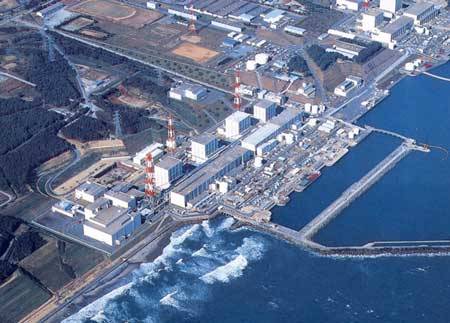
the greatest risk remains the region’s susceptibility to seismic activity.
the will of the majority of residents today is opposition to a restart and that opposition is f
While Fukushima operator Tepco says it is ‘committed to safety’ at Kashiwazaki-Kariwa, critics believe it is a disaster waiting to happen.
Julian Ryall, 27 Dec 2025
Campaigners against nuclear energy have condemned Japan’s decision to resume operations at the Kashiwazaki-Kariwa power plant, claiming that the facility will be unable to withstand a major earthquake as it was “built on tofu”.
Tokyo Electric Power Co (Tepco), the operator of the Niigata prefecture plant, on Wednesday applied for a final examination of the facility to the Nuclear Regulation Authority (NRA). Approval is likely to be a formality as the prefectural assembly already gave the nod on Tuesday.
Tepco, which has been fiercely criticised for its handling of the Fukushima Daiichi nuclear power plant disaster in March 2011, intends to restart one reactor at Kashiwazaki-Kariwa on January 20.
It would be the first of Tepco’s nuclear reactors to resume since three of Fukushima’s six reactors melted down after a magnitude 9 offshore earthquake unleashed devastating tsunamis.
Tepco has been working hard in recent years to convince the local government and residents of Niigata prefecture that it has made upgrades to secure the site from natural disasters.
Its president, Tomoaki Kobayakawa, told the media that as the operator “responsible” for the Fukushima accident, the company was now “committed to prioritising safety” at Kashiwazaki-Kariwa.
Many people remain unconvinced.
“The plant was famous for having been built on tofu – the bedrock is 30 metres (100 feet) below the surface – with many fault lines running through the site as well as offshore,” said Shaun Burnie, senior nuclear energy specialist for Greenpeace.
“Kashiwazaki-Kariwa is one of the world’s largest nuclear plants and the only one in theory capable of operating for Tepco. So restarting operations has been a priority for both the company and the government for more than a decade,” Burnie told This Week in Asia.
“But resistance from Niigata residents, the scale of safety issues and the incompetence of Tepco have undermined all efforts until now.”
History repeating itself?
Nearly 15 years after the Fukushima plant was the site of the second-worst nuclear accident in global history, Burnie warns that serious problems are being overlooked again.
Even during the preliminary planning stages, in the mid-1970s, it was apparent that ground conditions at the site by the Sea of Japan were not suitable, he said.
That was shown in July 2007, when the Chuetsu-oki earthquake struck. The magnitude 6.6 quake occurred on a previously unknown offshore fault line about 11km (7 miles) off the coast, followed 13 hours later by a 6.8 tremor around 330km (205 miles) to the west.
The nuclear plant, 19km (12 miles) due south from the epicentre of the initial quake, registered a peak ground acceleration – essentially how much the ground shook – of 6.8 metres (22 feet) per second squared in reactor No 1. The design specification for achieving a safe shutdown is 4.5m/s², while the restart level for key equipment in the plant is 2.73m/s².
Burnie said the original design specifications at the site “turned out to be gross underestimates”, with the quakes causing damage of varying degrees at 3,000 places within the plant.
A fire in an electric transformer caused the most serious damage. It left a pall of black smoke over the plant and alarmed local residents. There were also a number of leaks of mildly radioactive water and spills of radioactive cobalt-60, iodine and chromium-51 from overturned storage drums.
Given the events of 2007 and 2011, Burnie said local residents’ concerns were justified, particularly as new issues have come to light.
“We should have no confidence in Tepco assurances on safety at Kashiwazaki-Kariwa,” he said. “For example, two months after the NRA had approved the reactors’ basic safety assessment in late 2017, Tepco revealed that … the site under the emergency hydrogen ventilation buildings at units five, six and seven was vulnerable to liquefaction.”
Tepco “immediately came under pressure to explain the scale of liquefaction at the site, prove that it does not extend to the reactor buildings and how it was that the NRA was not informed prior to granting approval”, Burnie said.
Equally, he said, the NRA had to explain how it failed to identify liquefaction as a problem for a site before it granted basic safety approval.
A series of security incidents have also been cause for concern. There have been accusations of poor handling of sensitive documents, malfunctioning intruder detection systems and an employee borrowing a colleague’s pass to enter the restricted main control room in 2020.
Shaken by fears
But the greatest risk remains the region’s susceptibility to seismic activity.
“There are multiple seismic fault lines in the area of the Kashiwazaki-Kariwa site, including large-scale submarine active faults,” Burnie said. “The enormous seismic risks at the site remain unresolved and are certain to dominate the debate about the safety of any reactor restart, including in ongoing legal challenges.”
In a statement issued on Tuesday, Tepco said it would “carefully cooperate with all inspections performed by the NRA while also continuing to prioritise safety and steadily making each and every preparation for a restart”.
Takeshi Sakagami, a member of the Citizens’ Association for Monitoring Nuclear Regulation, said that a recent survey conducted by Niigata prefecture determined that 60 per cent of local residents believed that “conditions are not right” to resume operations at the plant.
“The governor explained that support should increase as understanding deepens,” Sakagami said. But “opponents counter that the will of the majority of residents today is opposition to a restart and that opposition is firm”.
Sakagami believed the government was hastening to restart the reactors “because they fear that Japan’s nuclear technology will fall behind the rest of the world”.
For him, the direction that Japan should take is simple.
“I believe Japan should abandon nuclear power and boldly shift towards renewable energy sources and energy conservation,” he said.
When the USSR and China saved humanity: How they won the World Anti-Fascist War.
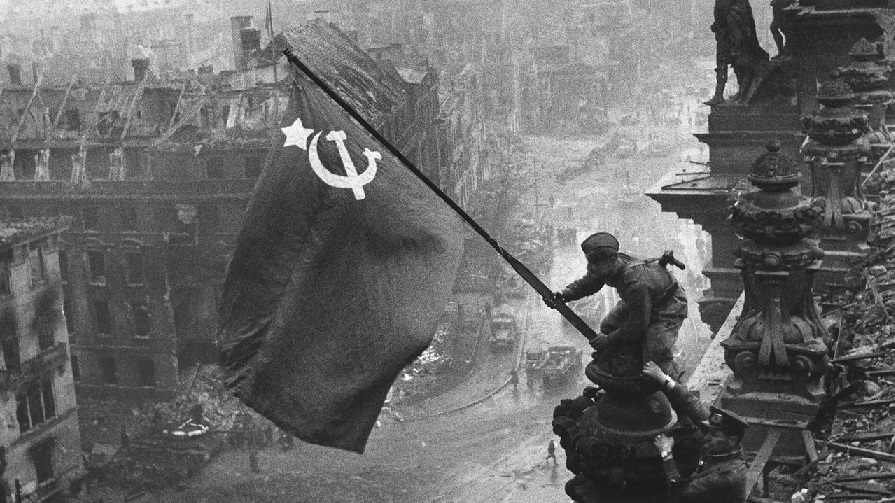
December 28, 2025 , By Ben Norton, https://geopoliticaleconomy.com/2025/12/26/ussr-china-world-anti-fascist-war/
It was the Soviet Union and China that defeated fascism in WWII. Their heroic contribution was later erased by the West. In the First Cold War, the US recruited former Nazis.
2025 marked the 80th anniversary of the defeat of fascism in World War Two. Unfortunately, the history of this extremely important conflict is not very well understood today.
It was not the United States and its Western allies that defeated fascism in WWII. That is a myth that is promoted by Hollywood movies.
In reality, it was the Soviet Union and China that defeated fascism in WWII. However, their heroic contribution was later erased by the West, when the US waged the First Cold War against the global socialist movement.
The vast majority of Nazi casualties, approximately 80%, were on the Eastern Front, in the Third Reich’s savage, scorched-earth battles against the Soviet Red Army.
More than 26 million Soviets died in the Nazi empire’s genocidal war. Compare that to the just over 400,000 US Americans who died, and the roughly 450,000 Brits who lost their lives.
This means that 62 Soviets were killed for every US American who died in WWII. Yet, tragically, their sacrifice has been forgotten in the West – or, better said, erased from public consciousness for political reasons.
The fact that the USSR defeated Nazi Germany was even admitted by the inveterate anti-communist Winston Churchill, an explicit racist, colonialist, and erstwhile admirer of Hitler who oversaw the British empire’s extreme crimes, including a famine in Bengal in 1943.
In a speech in August 1944, Churchill acknowledged:
“I have left the obvious, essential fact to this point, namely, that it is the Russian Armies who have done the main work in tearing the guts out of the German army. In the air and on the oceans we could maintain our place, but there was no force in the world which could have been called into being, except after several more years, that would have been able to maul and break the German army unless it had been subjected to the terrible slaughter and manhandling that has fallen to it through the strength of the Russian Soviet Armies”.
Then, in October 1944, Churchill said, “I have always believed and I still believe that it is the Red Army that has torn the guts out of the filthy Nazis”.
Read more: When the USSR and China saved humanity: How they won the World Anti-Fascist War.In fact, the USSR wanted to crush fascism even earlier by proposing a surprise attack on Nazi Germany in 1939, weeks before Hitler invaded Poland. Soviet military officers made an official request to British and French officials to form an alliance against Nazi Germany in August 1939, but London and Paris were not interested. The USSR had a million troops ready to fight, but the Western European powers were not prepared.
What the capitalist countries in Western Europe and North America had hoped for was that Nazi Germany would attack the Soviet Union, which they considered their main enemy. This is why the Western imperial powers had long appeased Hitler, signing shameful deals like the 1938 Munich Agreement, which allowed the Nazi empire to expand in Europe.
What the Western capitalist “liberal democracies” and the fascist regimes shared in common was mutual hatred of communism. The rich oligarchs who controlled Western governments feared that they would lose their privileges if workers in their countries were inspired by the Bolshevik Revolution.
In the 1930s, the US State Department spoke positively of fascism as an alternative to communism, and the US chargé d’affaires in Germany praised the supposedly “more moderate section of the [Nazi] party, headed by Hitler himself … which appeal[s] to all civilized and reasonable people”.
It must be emphasized that, when the Japanese empire officially allied with Nazi Germany in 1936, the name of the deal they signed was the Agreement Against the Communist International, or the Anti-Comintern Pact. Benito Mussolini’s fascist regime in Italy subsequently signed the agreement in 1937, and the fascist regimes in Spain, Hungary, and other European countries joined in the following years. It was extreme, violent anti-communism that united all of these fascist powers.
While there is widespread ignorance about the Soviet Union’s leading role in crushing Nazi Germany in WWII, the heroic contribution that the people of China made to the defeat of the Japanese empire is even less well known.
For Europe, WWII began in 1939, when Nazi Germany invaded Poland. For the people of China, the war started much earlier, in 1931, when the Japanese empire invaded the Manchuria region of northern China.
For 14 years, the people of China resisted Japan’s aggression, as the imperial regime sought to colonize more and more Chinese territory.
By the end of the war in 1945, roughly 20 million Chinese had lost their lives. This means that approximately 48 Chinese were killed for every US American who died in WWII.
In China, WWII is known as the Chinese People’s War of Resistance Against Japanese Aggression, and it was part of a larger conflict called the World Anti-Fascist War.
China held an important event on 3 September 2025 commemorating the 80th anniversary of the defeat of fascism. It featured key leaders of countries that are today, once again, fighting against imperialism and fascism, including China’s President Xi Jinping, Russia’s President Vladimir Putin, the DPRK’s leader Kim Jong-un, Iran’s President Masoud Pezeshkian, and officials from other countries in Asia, Africa, and Latin America, including Cuba’s President Miguel Díaz-Canel and Nicaragua’s representative Laureano Ortega Murillo.
The United States has long taken credit for the defeat of the fascist Japanese empire, but this erases the enormous, heroic, 14-year contribution made by the Chinese people.
Although it is true that the United States was briefly allied with the USSR and China during WWII, and it did provide significant military assistance through its 1941 Lend-Lease Act, Washington immediately terminated that partnership in 1945.
In fact, even before WWII officially ended, the United States had already started to recruit fascists to help them wage the First Cold War. US intelligence agencies saved many Nazi war criminals in the infamous Operation Paperclip. Instead of facing justice, these genocidaires assisted Washington in its subsequent attacks on the Soviet Union and its communist allies in Eastern Europe.
Later, the CIA and NATO created Operation Gladio, in which they used fascist war criminals as foot soldiers of their new global imperialist war on socialism. The former top Nazi military officer Adolf Heusinger was appointed the chair of NATO’s military committee, and the ex Nazi Hans Speidel became commander of NATO’s land forces in Central Europe.
The United States even rehabilitated Nazi war criminal Reinhard Gehlen, who had directed Hitler’s military intelligence on the Eastern Front in WWII, and who later led the CIA-backed Gehlen Organization to help Washington wage its cold war against communists.
The United States did not defeat fascism; it rehabilitated and absorbed fascism into the capitalist empire that Washington built after WWII, centered in Wall Street and based on the dollar.
The contemporary German government published the results of a study in 2016, called the Rosenberg project, which sifted through classified documents from 1950 to 1973. It found that, at the height of the Cold War, the government of capitalist West Germany, which was a member of NATO, was full of former Nazis.
In fact, 77% of senior officials in West Germany’s Justice Ministry had been Nazis. Ironically, there had been a lower percentage of Nazi Party members in the Justice Ministry in Berlin when the genocidal dictator Adolf Hitler himself was in charge of the Third Reich.
Similarly, in Japan after WWII, US occupation forces released Japanese war criminals from prison and used them to construct an imperial client regime. The CIA helped to create and fund the powerful Liberal Democratic Party (LDP), which has essentially governed Japan as a one-party state, with few exceptions, since 1955.
Notorious war criminal Nobusuke Kishi had overseen genocidal crimes against humanity against the Chinese people as an administrator of the Japanese empire’s puppet regime of Manchukuo, in Manchuria, during WWII. After the war ended, the United States strongly supported Kishi, who led the LDP, established the de facto one-party state, and became prime minister of the country.
Still today, the Kishi dynasty is one of the most powerful families in Japan. Kishi’s grandson Shinzo Abe also led the LDP and served as prime minister from 2012 and 2020, closely allying Japan with the United States, while antagonizing China and rewriting the history of WWII.
In short, after the Soviet Union and China led the fight to defeat fascism in WWII, the US empire recruited fascists to fight its global war against socialism.
Today, it is extremely important to learn these facts and correct the historical record, because 2025 is the 80th anniversary of the end of WWII, and it is clear that the proper lessons have not been learned in the West.
The planet is still plagued by extreme imperial violence, and closer than ever to another world war.
The United States and Israel have been carrying out a genocide against the Palestinian people in Gaza, committing atrocities that are reminiscent of the fascists’ crimes against humanity in WWII.
Fascism has its roots in European colonialism. The genocidal tactics that the European empires used in Asia, Africa, and Latin America were later used by the fascists inside Europe.
Nazi leader Adolf Hitler was inspired by the genocidal crimes that the German empire had committed in southern Africa, and also by the genocide that the US colonialists had carried out against indigenous peoples in North America. The Nazis were likewise influenced by the US government’s racist laws against Black Americans, in its apartheid system known as Jim Crow.
Given the close links between fascism and Western imperialism, it is not surprising to see that, today, the US regime has become increasingly fascist. Politicians in Washington scapegoat immigrants and foreigners for the many domestic problems in their country, including the significant growth in inequality, poverty, and homelessness. They have no solutions other than more violence, racism, and war.
The increasing political desperation and instability in Washington is combining in a toxic mixture with the greed of US corporations in the military-industrial complex, which profit from war, and are thus incentivized to push for more conflict, not for peace.
The United States, as the leader of NATO, has already been waging a proxy war against Russia in Ukrainian territory, using the people of Ukraine as cannon fodder in an imperial war, tragically destroying an entire generation of Ukrainians in a vain attempt to maintain US global hegemony.
The US empire has also used its Israeli attack dog to wage war on the people of Iran, in an attempt to overthrow the revolutionary government in Tehran and impose a puppet regime, like the former king, the shah, who was propped up by Washington.
The number one target of the US empire today, however, is the People’s Republic of China. US imperialists fear that China is the only country powerful enough to not only challenge but to defeat Washington’s global hegemony.
The US empire is waging a Second Cold War against China, and it has weaponized everything in this hybrid war, imposing sanctions and tariffs to wage economic war, using its control over the dollar system in a financial war, and exploiting the media to spread disinformation and fake news as part of an information war.
Part of the US empire’s strategy in this information war is to erase the Chinese people’s major contribution to the defeat of fascism and imperialism in WWII.
This is why it is so crucial to defend the facts, and to teach the true history of WWII to people today. If we don’t correct the historical record, the fascists and imperialists of the 21st century will weaponize ignorance in order to carry out the same crimes that their ideological brethren committed in the 20th century.
‘Pay price for wrongdoing’: China Sanctions 20 US defence firms after Trump approves Taiwan arms sale
China on December 27 announced sanctions on 20 U.S. defense companies and 10 senior executives, including Palmer Luckey of Anduril Industries, following the Trump administration’s approval of an $11.1 billion arms package for Taiwan.
by Aditi, December 27, 2025 , https://www.financialexpress.com/world-news/pay-price-for-wrongdoing-china-sanctions-20-us-defence-firms-after-trump-approves-taiwan-arms-sale/4089711/
China announced sanctions against 20 US defence companies and 10 top executives on Friday — the latest in a series of tit-for-tat measures. The announcement came soon after the Trump administration approved a major weapons sale to Taiwan. The sanctions list includes well-known companies like Northrop Grumman and Boeing’s defence unit in St. Louis, as well as Palmer Luckey, founder of Anduril Industries.
China said it will freeze the assets of these companies in the country, block them from doing business with Chinese organisations, and prevent the executives from entering mainland China, Hong Kong, and Macau, according to a report from the Wall Street Journal. Both Washington and Beijing have also announced export controls, investment restrictions, visa and travel bans and curtailed use of sensitive technology over the past year.
The Chinese Foreign Ministry said the US arms sale “interferes in China’s internal affairs and seriously undermines China’s sovereignty and territorial integrity.” The sanctions were announced on December 27, and according to a Global Times report, took immediate effect. Officials said the US decision went against the one-China principle and the three China-US Joint Communiques.
China sanctions US defence firms over Taiwan arms sale
Under the new measures, China has imposed sanctions on 20 US defence-related companies that it claims are involved in supplying weapons to Taiwan in recent years. The companies named include Northrop Grumman Systems Corporation, L3Harris Maritime Services, Boeing in St. Louis, Gibbs & Cox, Advanced Acoustic Concepts, VSE Corporation, Sierra Technical Services, Red Cat Holdings, Teal Drones, ReconCraft, High Point Aerotechnologies, Epirus, Dedrone Holdings, Area-I, Blue Force Technologies, Dive Technologies, Vantor, Intelligent Epitaxy Technology, Rhombus Power, and Lazarus Enterprises.
China announced that all movable and immovable assets of these companies located within the country will be frozen. Chinese individuals and organisations have also been barred from doing business or cooperating with these firms in any form.
Sanctions extended to senior executives
In addition to companies, China has also imposed restrictions on 10 senior executives in the defence sector. Among them is Palmer Luckey, founder of Anduril Industries, along with top executives from companies such as L3Harris and VSE Corporation, according to ANI. According to the Foreign Ministry, these executives will face restrictions on assets located in China and activities related to the country.
Taiwan is a ‘red line’, says China
A spokesperson for the Chinese Foreign Ministry said the Taiwan issue is at the very core of China’s national interests and is a red line in China-US relations. The spokesperson warned that anyone attempting to provoke China on the Taiwan question would face a firm response. In a statement, the ministry said, “Anyone who attempts to cross the line and make provocations on the Taiwan question will be met with China’s firm response. Any company or individual who engages in arms sales to Taiwan will pay the price for the wrongdoing. No country or force shall ever underestimate the resolve, will and ability of the Chinese government and people to safeguard national sovereignty and territorial integrity.”
China claims Taiwan as part of its territory — contending that the autonomously governed island must eventually be reunified with the mainland. The United States does not officially recognise Taiwan as a sovereign nation under the ‘One China’ policy, but maintains unofficial ties with the administration.
US arms supply to Taiwan
The reaction from China comes after the administration of US President Donald Trump approved a major arms package for Taiwan last week. According to the US State Department, the proposed sales are valued at more than USD 10 billion and include medium-range missiles, howitzers, and drones.
According to Focus Taiwan, the potential sale involves eight arms packages, including HIMARS rocket systems, anti-tank missiles, and drones, with a total estimated cost of USD 11.1 billion.
Former Japanese PM Ishiba again criticizes remarks advocating nuclear armament.
Asia18:02, 27-Dec-2025. CGTN, https://news.cgtn.com/news/2025-12-27/Ex-Japan-PM-Ishiba-in-fresh-broadside-against-nuclear-armament-remarks-1JrH8p2oIaA/p.html
Former Japanese Prime Minister Shigeru Ishiba has again criticized recent remarks by a senior government official suggesting that Japan should possess nuclear weapons.
Speaking on a program aired Friday night by Japan’s BS11 television, Ishiba said that as the only country in the world to have suffered atomic bombings, Japan should take a clear stance on preventing nuclear proliferation and should not make statements that undermine that position.
On December 18, an anonymous senior official in charge of security at the Prime Minister’s Office told reporters that Japan should possess nuclear weapons. After the remarks were made public, they sparked widespread criticism and controversy within Japan.
Addressing the issue earlier, Ishiba said that if Japan were to acquire nuclear weapons, it would be forced to withdraw from the Treaty on the Non-Proliferation of Nuclear Weapons as well as the International Atomic Energy Agency.
He stressed that such a move would render Japan’s nuclear energy policy – which underpins the country’s energy system – untenable, adding that “this would by no means be beneficial for Japan.”
According to a report on the online edition of the Japanese magazine Shukan Bunshun on December24, the official who made the remarks was Oue Sadamasa, a special advisor to Prime Minister Sanae Takaichi, whose portfolio includes nuclear disarmament and non-proliferation.
1A 15 years after Fukushima disaster locals fear return of Japan’s nuclear power.
Sarah Hooper, December 24, 2025, https://metro.co.uk/2025/12/24/15-years-after-fukushima-disaster-locals-fear-return-of-japans-nuclear-power-25764288/
Japan is returning to nuclear energy almost 15 years after the Fukushima disaster – but not everyone is convinced it’s a good idea.
The world’s largest nuclear power plant, Kashiwazaki-Kariwa, shut down most of its reactors after the deadly 2011 earthquake and tsunami.
The Fukushima nuclear disaster was triggered in March 2011 when four of the plant’s reactor buildings were damaged in the most powerful earthquake in Japan’s history, which had a magnitude of 9.0.
In the aftermath, Japan began the process of shutting down many of its nuclear power plants, including Kashiwazaki-Kariwa, north of Tokyo.
But as the country looks to become self-sufficient when it comes to energy, it’s rebooting many of the nuclear plants shut down after the tsunami.
Restarting nuclear facilities is a ‘significant move’ for Japan
Dr Leslie Mabon, a Senior Lecturer in Environmental Systems in the School of Engineering and Innovation at the Open University, has researched how nuclear facilities affect the environment and communities near Fukushima in Japan.
He told Metro that none of the reactors which are going to be restarted are in nuclear stations in Fukushima Prefecture, but restarting Kashiwazaki-Kariwa is a significant move
‘What is significant about this restart is not only the size of the plant – the largest in Japan – but also that it is operated by Tokyo Electric Power Company (TEPCO), who are also responsible for the Fukushima Dai’ichi plant that faced the meltdowns in 2011,’ he explained.
‘A crucial question at the heart of the controversy over nuclear restarts in Japan is: who does it benefit?’
Local governments and citizens living near nuclear plants have raised concerns about the safety of the plants, especially because the electricity produced won’t power their own communities.
‘Electricity from the plant primarily benefits those living in the Tokyo metropolitan area, some 200km south-east,’ Dr Mabon added.
‘Citizens and political figures in Niigata, and other regions like it, where restarts are on the horizon, may well be asking why they have to take up the risk for a power plant that benefits those living far away.’
An ageing and declining population in rural areas where the nuclear power plants are also located poses another problem.
‘Local and regional politicians face a very difficult balancing act between the jobs and economic benefits that hosting a nuclear plant brings on one hand, versus the concerns some of their citizens might have about safety and fairness on the other,’ he said.
Widespread outcry over nuclear power
Local residents aren’t supportive of the move, however, with dozens of protesters assembling outside after politicians voted to reopen the plant.
TEPCO, the energy company which will operate the plants, said in a statement: ‘We remain firmly committed to never repeating such an accident and ensuring Niigata residents never experience anything similar to 2011.’
Despite widespread outcry by residents – some 60% of whom don’t believe conditions to restart the plant have been met – it will reopen in January.
Local resident Ayako Oga was protesting after the vote – she was forced to relocate after the meltdown of the Fukushima plant placed her home inside the exclusion zone.
She said: ‘As a victim of the Fukushima nuclear accident, I wish that no one, whether in Japan or anywhere in the world, ever again suffers the damage of a nuclear accident.’
Radioactive substance leaks from Fukui nuclear power plant in Japan
Jen Mills, Metro 24 Dec 2025
Radioactive water leaked from a disused power plant in Japan today during work to decommission it.
Parts of the Fugen nuclear plant in Fukui Prefecture are being dismantled, and while this took place, around around 20ml of water containing a ‘high’ amount of the radioactive isotope tritium leaked from a pipe.
Japanese broadcaster NHK One reported earlier that detailed investigations were underway to see if any workers were splashed with the water, though internal exposure via inhalation had been ruled out.
Citing the Nuclear Regulation Authority, they said no radioactive material had leaked outside the controlled area of the plant.
Israel’s growing role in Taiwan’s air defense alarms Beijing.
Israel’s expanding ties with Taiwan, particularly in missile defense, are quietly reshaping regional geopolitics and alarming Beijing. In this context, even small defense transfers could undermine years of careful diplomatic calibration.
Uriel Araujo, BRICS, Monday, December 22, 2025
Uriel Araujo, Anthropology PhD, is a social scientist specializing in ethnic and religious conflicts, with extensive research on geopolitical dynamics and cultural interactions.
Israeli-Taiwanese cooperation, long discreet and underreported, is now moving into far more sensitive terrain. Recent reports indicate that Israeli know-how has been quietly feeding into Taiwan’s emerging missile-defense architecture, the so-called “T-DOME,” a system explicitly inspired by Israel’s Iron Dome. As a matter of fact, this development has already triggered a blunt diplomatic rebuke from Beijing, raising uncomfortable questions about Israel’s long-standing balancing act between rival global powers.
A detailed account of this growing cooperation comes from Nadia Helmy, Visiting Senior Researcher at the Centre for Middle Eastern Studies (CMES), who notes that Chinese intelligence agencies have detected expanding Israeli assistance to Taiwan’s missile shield, particularly in radar integration, command-and-control architecture, and layered interception concepts. According to Helmy, Beijing views this cooperation not as an isolated commercial exchange but as a strategic signal, thereby crossing a political red line.
Taiwan’s T-DOME project is ambitious enough. Taipei plans to spend over USD 40 billion on a multi-layered air and missile defense system combining indigenous technology with foreign expertise, drawing lessons from Israel’s battlefield experience.
What makes the situation more delicate is not simply the technology itself but the political choreography surrounding it. Taiwan’s deputy foreign minister reportedly made a secret trip to Israel in December 2025 to discuss defense cooperation, a visit confirmed by multiple outlets. Israeli lawmakers have also traveled to Taiwan, prompting a formal condemnation from China’s embassy in Israel.
There is a context to such moves. Taiwan’s political discourse has increasingly framed Israel as both a security model and a civilizational reference point. One may recall that Taiwanese officials have even invoked biblical imagery when criticizing authoritarianism, explicitly citing Israel as an example. Meanwhile, pro-Israel lobbying networks linked to AIPAC have been expanding their presence in Taiwan, a fact documented but rarely discussed in mainstream Western media.
Israel, for its part, has historically prided itself on its ability to balance competing global relationships. Thus far, it has managed to maintain workable ties with Russia and Ukraine simultaneously, for instance, while also navigating relations with both the US and China.
Be as it may, Taiwan represents a different category of sensitivity altogether. Unlike commercial technology transfers or infrastructure investments, missile defense cooperation touches the core of China’s security concerns. Suffice to say, Beijing’s reaction has been measured rather than escalatory, but unmistakably firm nonetheless. In any case, from China’s perspective, Israeli involvement in Taiwan’s air defense is not neutral, regardless of how it is framed in Tel Aviv.
Some analysts, such as geopolitical expert Sergio Restelli, have already warned that this (and other developments) could mark the end of Israel’s careful balancing with China.
Others argue that Israel is simply responding to pressure from Washington, especially under the Trump administration, which has doubled down on strategic competition with China while encouraging allies to “choose sides.” I’ve written before about how the Trump administration has been pressuring, “sidelining” and “leveraging” the Jewish State in a number ways, including through its Gaza Plan, apparently as part of an effort to rebalance the complex US-Israeli relationship………………………………….. https://infobrics.org/en/post/74234
Hiroshima urges Japanese government to uphold non-nuclear principles
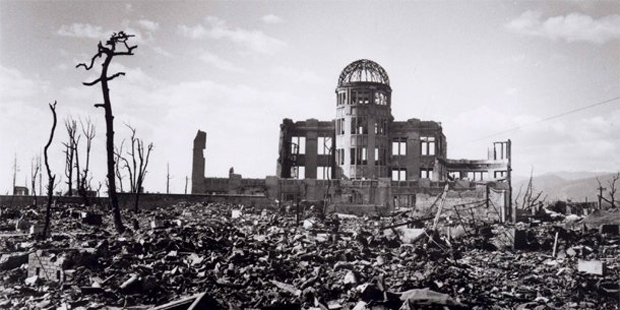
Japan’s Hiroshima Prefecture on Monday issued a statement urging the national government to uphold the country’s non-nuclear principles, after a security official recently suggested the country should possess nuclear weapons.
The Hiroshima prefectural assembly unanimously adopted the written opinion, citing local concerns about reviewing the long-standing Three Non-Nuclear Principles, which prohibit possessing, producing or permitting the introduction of nuclear arms into Japanese territory, Kyodo News reported.
“It is our duty, as the only country to have suffered atomic bombings, to continue striving toward the realization of a world without nuclear weapons,” the statement said.
The statement comes after an official involved in devising security policy under the government led by Prime Minister Sanae Takaichi recently said that Japan should possess nuclear weapons, inciting backlash from locals, including atomic bomb survivors.
It is the first written opinion by the prefectural or city assemblies of Hiroshima or Nagasaki, both devastated by U.S. atomic bombs, regarding the country’s reconsideration of the non-nuclear principles, the report said.
Itsunori Onodera, head of the ruling Liberal Democratic Party’s security research council, said on a TV program on Sunday that Japan needs to debate the future of its non-nuclear principles.
Last month, Japanese media quoted government sources as saying that, as the Takaichi administration gears up to revise the country’s key national security documents by the end of 2026, Takaichi was considering reviewing the third of the Three Non-Nuclear Principles, which prohibits nuclear weapons from entering Japan’s territory, raising strong doubts and concerns at home.
1 This Month
23-25 October – on Zoom – World BEYOND War’s annual global conferenc


Shut down the radiation-damaged Heysham nuclear reactors now
To see nuclear-related stories in greater depth and intensity – go to https://nuclearinformation.wordpress.com

Say No to NASA’s Reckless Nuclear Reactor on the Moon
Say No to NASA’s Reckless Nuclear Reactor on the Moon

-
Archives
- October 2026 (247)
- September 2026 (339)
- August 2026 (330)
- July 2026 (355)
- June 2026 (287)
- May 2026 (306)
- April 2026 (356)
- March 2026 (251)
- February 2026 (267)
- January 2026 (308)
- December 2025 (358)
- November 2025 (359)
-
Categories
- 1
- 1 NUCLEAR ISSUES
- business and costs
- climate change
- culture and arts
- ENERGY
- environment
- health
- history
- indigenous issues
- Legal
- marketing of nuclear
- media
- opposition to nuclear
- PERSONAL STORIES
- politics
- politics international
- Religion and ethics
- safety
- secrets,lies and civil liberties
- spinbuster
- technology
- Uranium
- wastes
- weapons and war
- Women
- 2 WORLD
- ACTION
- AFRICA
- Atrocities
- AUSTRALIA
- Christina's notes
- Christina's themes
- culture and arts
- Events
- Fuk 2022
- Fuk 2023
- Fukushima 2017
- Fukushima 2018
- fukushima 2019
- Fukushima 2020
- Fukushima 2021
- general
- global warming
- Humour (God we need it)
- Nuclear
- RARE EARTHS
- Reference
- resources – print
- Resources -audiovicual
- Weekly Newsletter
- World
- World Nuclear
- YouTube
-
RSS
Entries RSS
Comments RSS

