Amid the Iran chaos, war over Taiwan just became less likely
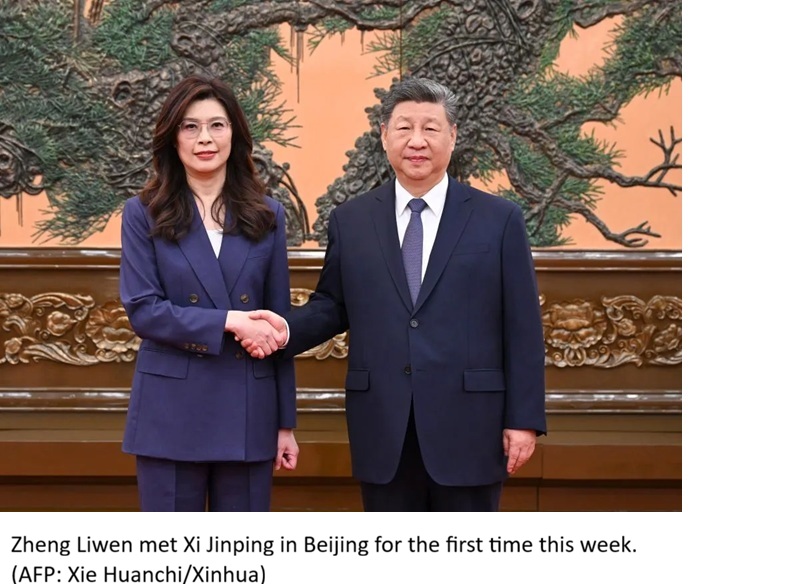
by Marcus Reubenstein | Apr 15, 2026, https://michaelwest.com.au/amid-the-iran-chaos-war-over-taiwan-just-became-less-likely/
Last week’s meeting between Beijing and Taiwan’s main opposition leader is a bad sign for the China hawks and a sign of rapprochement. Marcus Reubenstein reports.
The combination of the US-Israel war on Iran and the anti-China media narrative in Australia has meant the visit of the leader of Taiwan’s main opposition party, Cheng Li-wun, to China has largely been ignored. Cheng chairs the Kuomintang (KMT) party, and she spent five days in mainland China from the 7th until the 12th of April.
Her public pronouncements indicate a belief that it is not in Taiwan’s interest to pin all of its hopes on an economic and military alliance with the US, and its future is better served with a pivot towards Beijing.
A significant proportion of Taiwan’s population does not want armed conflict with China. More importantly, Taiwan’s political leaders are acknowledging the fact that the US is becoming an increasingly unhinged and unreliable ally.
As reported by NBC News, Cheng points to Ukraine, saying,
“People do not want to see Taiwan become the next Ukraine.”
Add to that mix that Taiwan gets 70% of its oil from the Middle East, there is sentiment in Taiwan that the US bombing of Iran has been disastrously thought out and delivers Taiwan massive economic pain. Will Taiwan risk becoming the centrepiece of a future US military disaster?
In December, Cheng told the New York Times, “Could it be the United States is treating Taiwan as a chess piece, a pawn strategically opposing the Chinese Communist Party at opportune times?”
Taiwan’s ruling DPP (Democratic Progressive Party) had attempted to push a $US40B arms deal with the US through parliament in March, but that was sunk by Cheng’s KMT. The ruling DPP was eventually able to get a deal worth just $US11B through – around one third of an AUKUS submarine.
Cheng’s China visit
The visit to China by Taiwan’s opposition leader took in three very significant cities, Nanjing, Shanghai and Beijing. Shanghai and Beijing, as financial and political capitals, were logical, but Nanjing is of great historical significance.
She visited the Sun Yat‑sen Mausoleum in Nanjing with a large Taiwanese delegation, a site honouring the founding father of the Republic of China, revered in both Taiwan and mainland China. Nanjing is also the site of one of Japan’s greatest wartime atrocities, the so-called Rape of Nanjing.
A small number of hardline figures in Japan’s ruling LDP continue to deny Japanese participated in any wartime atrocities. The LDP’s newly elected prime minister, Sanae Takaichi, stating that Japan would send in its military to aid Taiwan in any conflict with China, has dramatically escalated tensions between Beijing and Tokyo.
Takaichi is one of Japan’s most pro-US leaders, and Cheng’s visit to Nanjing would not be lost on the US. By extension, Cheng’s point of visiting Nanjing could be seen as a backhanded message to Japan, which hosts 55,000 US troops, to stay out of Taiwan’s affairs.
Implications for Australia
Cheng’s trip to China has implications for Australia and our foreign policies towards both our biggest trading partner and most important strategic partner.
The Albanese government has gone all in on the US’s East Asia military push, and now the US is showing clear signs of stress. The US has redeployed Thaad missile systems from South Korea to fight its war with Iran, while supercarrier naval vessels based in Japan, and operating in the South China Sea, have also been sent to the Gulf. Despite being the greatest military power in global history, it’s obvious it doesn’t take much to wear US forces thin.
Neither Prime Minister Anthony Albanese, Foreign Minister Penny Wong, nor Defence Minister Richard Marles has deviated from Australia’s blind support for the US war on Iran.
The question is, will they follow the US into an inevitably disastrous war against China or, worse still, act as a proxy in a future war?
Australia’s tilt towards offensive military capability, also enthusiastically supported by the LNP opposition, and the billions committed to submarines which may never arrive, do not augur well.
If the US cannot defeat Iran, there is no path to victory against an equally determined China, far better equipped, with the world’s second largest economy, and that is not a pariah state.
1×1515
2:54 / 8:51
1×1515
0:16 / 8:51
Last week’s meeting between Beijing and Taiwan’s main opposition leader is a bad sign for the China hawks and a sign of rapprochement. Marcus Reubenstein reports.
The combination of the US-Israel war on Iran and the anti-China media narrative in Australia has meant the visit of the leader of Taiwan’s main opposition party, Cheng Li-wun, to China has largely been ignored. Cheng chairs the Kuomintang (KMT) party, and she spent five days in mainland China from the 7th until the 12th of April.
Her public pronouncements indicate a belief that it is not in Taiwan’s interest to pin all of its hopes on an economic and military alliance with the US, and its future is better served with a pivot towards Beijing.
A significant proportion of Taiwan’s population does not want armed conflict with China. More importantly, Taiwan’s political leaders are acknowledging the fact that the US is becoming an increasingly unhinged and unreliable ally.
As reported by NBC News, Cheng points to Ukraine, saying,
People do not want to see Taiwan become the next Ukraine.
Add to that mix that Taiwan gets 70% of its oil from the Middle East, there is sentiment in Taiwan that the US bombing of Iran has been disastrously thought out and delivers Taiwan massive economic pain. Will Taiwan risk becoming the centrepiece of a future US military disaster?
In December, Cheng told the New York Times, “Could it be the United States is treating Taiwan as a chess piece, a pawn strategically opposing the Chinese Communist Party at opportune times?”
Taiwan’s ruling DPP (Democratic Progressive Party) had attempted to push a $US40B arms deal with the US through parliament in March, but that was sunk by Cheng’s KMT. The ruling DPP was eventually able to get a deal worth just $US11B through – around one third of an AUKUS submarine.
Cheng’s China visit
The visit to China by Taiwan’s opposition leader took in three very significant cities, Nanjing, Shanghai and Beijing. Shanghai and Beijing, as financial and political capitals, were logical, but Nanjing is of great historical significance.
She visited the Sun Yat‑sen Mausoleum in Nanjing with a large Taiwanese delegation, a site honouring the founding father of the Republic of China, revered in both Taiwan and mainland China. Nanjing is also the site of one of Japan’s greatest wartime atrocities, the so-called Rape of Nanjing.
A small number of hardline figures in Japan’s ruling LDP continue to deny Japanese participated in any wartime atrocities. The LDP’s newly elected prime minister, Sanae Takaichi, stating that Japan would send in its military to aid Taiwan in any conflict with China, has dramatically escalated tensions between Beijing and Tokyo.
Takaichi is one of Japan’s most pro-US leaders, and Cheng’s visit to Nanjing would not be lost on the US. By extension, Cheng’s point of visiting Nanjing could be seen as a backhanded message to Japan, which hosts 55,000 US troops, to stay out of Taiwan’s affairs.
Implications for Australia
Cheng’s trip to China has implications for Australia and our foreign policies towards both our biggest trading partner and most important strategic partner.
The Albanese government has gone all in on the US’s East Asia military push, and now the US is showing clear signs of stress. The US has redeployed Thaad missile systems from South Korea to fight its war with Iran, while supercarrier naval vessels based in Japan, and operating in the South China Sea, have also been sent to the Gulf. Despite being the greatest military power in global history, it’s obvious it doesn’t take much to wear US forces thin.
Neither Prime Minister Anthony Albanese, Foreign Minister Penny Wong, nor Defence Minister Richard Marles has deviated from Australia’s blind support for the US war on Iran.
The question is, will they follow the US into an inevitably disastrous war against China or, worse still, act as a proxy in a future war?
Australia’s tilt towards offensive military capability, also enthusiastically supported by the LNP opposition, and the billions committed to submarines which may never arrive, do not augur well.
If the US cannot defeat Iran, there is no path to victory against an equally determined China, far better equipped, with the world’s second largest economy, and that is not a pariah state.
Respected US political scientist Professor John Mearsheimer says, US President Donald Trump’s war with Iran is “manna from heaven” for China. He argues the war on Iran has made the US an irresponsible stakeholder in the international system and that China looks like the “adults in the room.”
China’s carrot and stick
China’s approach to Taiwan, and more broadly to much of its global diplomacy, has been a mix of carrot and stick. Beijing is still dangling carrots in front of Taiwan. Reunification with Taiwan remains the endgame,
“but the overwhelming desire is that it should be achieved peacefully.”
Cheng was warmly received by Chinese President Xi Jinping, and following Cheng’s visit, the Chinese government announced a list of ten new policies to promote economic and travel initiatives to strengthen ties between Beijing and Taiwan.
In the background, a looming stick could be an easily achievable Chinese blockade of commercial shipping around Taiwan. As Iran’s blockade of the Strait of Hormuz demonstrates, it doesn’t take a great deal of military firepower to cripple an economy.
What would, or could, Australia do to intervene? Hypothetically, that is a question which may face Australia, but a reconciliation, indeed possible unification between Taiwan and China, would render moot Australia’s current strategic policy.
Taiwan’s future?
While opinions in Taiwan about Cheng are divided, she has a realistic chance of becoming Taiwan’s next president at the 2028 election. To win, she doesn’t only have to run on China policy; there are plenty of domestic issues facing voters. Also, there is no suggestion that a reunified Taiwan would be considered as a province of China. Instead, it would become a special administrative region, citizens would keep their Taiwanese passports, and the New Taiwan Dollar would remain the official currency.The line in the sand for Beijing would be separatist movements and their sympathisers speaking out publicly. Taiwan would also be prohibited from entering into any military alliances or agreements with other nations.
While this is the same set of conditions imposed on Hong Kong, Taiwan hardly has a tradition of democracy. For its first four decades as a territory, it was governed under martial law, and it wasn’t until 1996 that democratic presidential elections were held.
Current president, Lai Ching-te, is unpopular with his approval rating sinking to 33% in late 2025, having recovered to the low 40% mark in the most recent polls. Cheng’s approval rating is lower, reflecting the distrust Taiwanese people have for their political leaders.
In terms of specific issues, concerns over the economy rank first for Taiwanese voters.
The Chinese, that is to say those of Chinese ethnicity, are by and large very pragmatic. Cheng is betting on a belief that close ties with China represent the future and that the
“Taiwanese people will come to distrust Washington more than they distrust Beijing.”
Xi–Zheng Meeting Sends Clear Signal: Peaceful Reunification Framed as Strategic Imperative for Chia’s Future
Author: Xu Jijun, founder of Han Tang Zhi Ku Analytical Centre, Apr 10, 2026
On the morning of 10 April 2026, inside the East Hall of the Great Hall of the People in Beijing, Xi Jinping, General Secretary of the Communist Party of China, met Zheng Liwen, Chair of the Kuomintang. The encounter marked the first meeting between leaders of the two parties in a decade. It unfolded at a moment of mounting global instability and heightened tensions across the Taiwan Strait, giving it both historical weight and immediate political relevance.
The meeting was not merely ceremonial. It articulated a shared position that people on both sides of the Strait seek peace and oppose division. It also set out a political direction aimed at returning cross-Strait relations to a path of peaceful development, with the stated goal of eventual peaceful reunification.
A venue heavy with history
For mainland observers, the deeper meaning of the Xi–Zheng meeting is tied closely to its setting. The East Hall has hosted landmark moments in China’s modern history, including events linked to the return of Hong Kong and Macau. Its reuse for high-level dialogue between representatives of the two sides of the Strait carries unmistakable symbolism.
The message conveyed is straightforward. Both sides belong to one China, and Taiwan is regarded as an inseparable part of it. External complexities do not alter this premise. Questions concerning the Chinese nation are framed as matters to be resolved internally, with peaceful dialogue presented as the appropriate course.
A world defined by conflict
The significance of the meeting becomes clearer when placed against the current global backdrop. Armed conflicts in recent years have illustrated the scale of destruction associated with modern warfare.
The Russia–Ukraine conflict continues to impose heavy losses. According to the Kyiv School of Economics (KSE Institute), in its March 2026 assessment, Ukraine has suffered cumulative income losses of approximately 1.7 trillion US dollars since the escalation of hostilities in 2022, including projected losses through the end of 2026. Urban areas have been devastated, energy infrastructure repeatedly targeted, millions displaced, and environmental damage described as long-lasting.
Since February 2026, military action by the United States and Israel against Iran has produced similarly severe consequences. Around 80 per cent of Iran’s air defence systems have been destroyed, along with more than 450 missile installations. Its capacity for ballistic missile retaliation has reportedly fallen by 90 per cent. Production lines for “Shahed” unmanned aerial vehicles have been eliminated, reducing output by 85 per cent. The Iranian navy has seen approximately 160 vessels sunk or disabled, its naval headquarters destroyed, and its control over the Persian Gulf lost. Up to 90 per cent of the defence industrial base, including key shipyards, has been destroyed.
After just 38 days of conflict, Iran’s military capability, built over four decades, has been largely dismantled. Regional shipping has been disrupted, energy markets have experienced sharp volatility, tens of thousands have been killed, and millions displaced. Regional stability has effectively collapsed.
These developments illustrate the destructive potential of modern high-technology warfare. Precision-guided munitions, drone swarms, and long-range strike systems can disable power supplies, destroy transport infrastructure, contaminate land, and set back economic and social development by decades in a matter of weeks.
Taiwan and the global economy
Against this background, the text argues that any attempt to pursue “Taiwan independence” carries serious risks. A conflict in the Taiwan Strait would likely exceed the scale and impact of the wars in Ukraine and the Middle East.
Taiwan occupies a central position in the global semiconductor industry. Firms such as TSMC hold a dominant share of advanced manufacturing capacity. In the event of war, supply chains would be disrupted immediately.
Simulations by international institutions suggest that, in a worst-case scenario, global GDP could fall by nearly 10 per cent in the first year of a Taiwan Strait conflict. Economic losses could reach 10.6 trillion US dollars, equivalent to around 333 trillion New Taiwan dollars. Taiwan’s own economy could contract by as much as 40 per cent. The shock would be felt across mainland China, the United States, Japan, South Korea, and the European Union.
The military consequences would be severe. High-density missile strikes, electronic warfare, and naval and air blockades could lead to large-scale destruction of infrastructure on the island. Casualties would be significant, while environmental and humanitarian damage could prove irreversible. Given the close social and cultural ties between people on both sides of the Strait, any armed confrontation would result in profound human cost. Regional tensions would escalate rapidly, posing risks to stability in East Asia and beyond.
Political signalling and red lines
Within this framework, the position presented is that “Taiwan independence” represents a path with no viable outcome. It is described as running counter to shared interests and broader historical trends.
The alternative, as outlined, lies in adherence to the 1992 Consensus and opposition to separatism. Zheng Liwen’s visit, described as a “journey for peace”, emphasised the notion of cross-Strait kinship and was framed as aligning with public sentiment and prevailing conditions.
The meeting between the leaderships of the Communist Party and the Kuomintang reaffirmed a shared political foundation. It also conveyed a clear warning that any attempt at secession would meet firm opposition from the Chinese population as a whole and would carry significant costs.
Peaceful reunification and national strategy
eaceful reunification is presented as both a collective aspiration and a structural requirement for what is described as the “great rejuvenation of the Chinese nation”. It is framed as a pathway to shared economic benefits and improved living standards for people in Taiwan within a broader national framework.
The argument also stresses its role in preventing war, preserving stability, and enabling joint prosperity. At a regional and global level, it is depicted as contributing to stability in the Asia-Pacific and demonstrating China’s role as a responsible major power.
Historical experience is cited to support this position. Periods characterised by adherence to the One China principle and the promotion of peaceful cross-Strait relations have coincided with stability and active exchanges. By contrast, deviations from this approach have led to tension and economic disruption.
A milestone with wider implications
The Xi–Zheng meeting is thus framed as another milestone in the trajectory of cross-Strait relations. It highlights what is described as the mainland’s consistent commitment to the principle that both sides form one family, alongside a stated willingness to pursue peaceful reunification with sincerity.
For the international community, the meeting is presented as an example of the principle that China’s internal affairs should be resolved domestically. It offers a contrast to conflict-driven approaches that have produced severe consequences in other regions.
The conclusion drawn is one of confidence. With sustained efforts on both sides of the Strait, the prospect of peaceful reunification is portrayed as increasingly attainable. The broader objective, the rejuvenation of the Chinese nation, is framed as a long-term historical trajectory.
No external force, the argument suggests, will ultimately be able to obstruct this course.
Conclusion
Peaceful reunification is presented as beneficial in the present and significant for generations to come. The current moment is described as a critical historical opportunity. By deepening economic integration, expanding cultural exchange, and strengthening cooperation in social development, both sides of the Strait are encouraged to move towards closer family ties, more integrated industries, broader opportunities for younger generations, and greater shared prosperity.
The overarching message is clear. The opportunity should be seized in the interests of people on both sides of the Strait and in pursuit of a more stable and prosperous future linked to the wider project of national rejuvenation.
TEPCO halts cooling of spent fuel pool at Fukushima Daini plant
April 6, 2026 (Mainichi Japan),
https://mainichi.jp/english/articles/20260406/p2a/00m/0bu/002000c
FUKUSHIMA, Japan (Kyodo) — The operator of the Fukushima Daini nuclear power plant being decommissioned said Sunday it halted cooling of a spent fuel pool after receiving an alert about a pump malfunction.
According to Tokyo Electric Power Company Holdings Inc., the alarm for the spent fuel pool of the No. 1 reactor was triggered at around 2:45 p.m. Sunday. Workers shut down the pump after smoke was confirmed at the site, suspending the pool’s cooling.
The four-reactor Fukushima Daini plant is located about 12 kilometers south of the Fukushima Daiichi plant, devastated by the March 2011 earthquake and tsunami disaster.
TEPCO has decided to decommission both complexes following the disaster.
The latest incident has not affected the radiation level outside, and no one has been injured, TEPCO said. The company is investigating the cause.
The No. 1 unit spent fuel pool at the Fukushima Daini complex stores 2,334 used fuel assemblies, as well as 200 new fuel ones.
The water temperature at the time when the cooling system was halted was 26.5 C, and it will take about eight days to exceed the temperature level set for safe operation, according to TEPCO.
The Nightmare of Fukushima 15 Years Later

SCHEERPOST, By Joshua Frank, March 20, 2026
“…………………………………………………………………………………… The Fukushima Daiichi nuclear plant, built by General Electric (GE) in the mid-1960s, was designed to withstand natural disasters, but its creators never foresaw an earthquake like that. When the plant’s sensors detected the quake, its reactors automatically shut down. That emergency shutdown (or scram) halted its fission process, triggering backup power to keep cold seawater flowing through the reactors and spent-fuel containers to prevent overheating. Things at Fukushima were going according to plan until that massive tsunami battered the plant, washing away transmission towers and damaging electrical systems. There were backup generators in the basement, but those, too, had been inundated by waves of seawater, and an already bad situation was about to get far worse.
A power outage at a nuclear power plant is known as a “station blackout.” As you might imagine, it’s one of the worst scenarios any nuclear facility could possibly experience. If all electricity is lost, that means water is no longer being pumped into the reactor’s scalding-hot core to cool it down. And if that core isn’t constantly being cooled, one thing is certain: disaster will ensue. The fission process itself may be complicated, but that’s basic physics. To make matters worse, there were three operating reactors at Fukushima Daiichi. Luckily, three others had already been shut down for maintenance. If power wasn’t restored in short order, that would mean that all three of Fukushima’s reactors were in very big trouble.
We would later learn that no one — not at TEPCO, GE, or among Japanese regulators — had ever considered the possibility that all the reactors might lose electricity at once. They had only drawn up plans for one reactor to go down, in which case the others could keep the plant running. But all of them offline, and every generator out of commission? There was no precedent or playbook for that.
The nuclear industry has a reasonably polite name for a disaster like the one that was rocking Fukushima. They refer to it as a “beyond design-basis accident” because no single nuclear plant design can account for every possible problem it might encounter in its lifetime. The fact that there’s a term for this should make you anxious.
Meltdowns and Fallout
Over the next several days, the emergency at Fukushima Daiichi only worsened. Every effort to restore power to its reactors hit a dead end. On-site radiation-detection equipment, which would have triggered warnings and guided evacuation efforts for those in danger, was no longer functioning. Plans to pump water into the reactors to cool them had faltered. Their cores kept overheating, and the boiling pools of spent fuel were at risk of drying out, potentially triggering a massive fire that would release extreme amounts of radiation.
Within three days, following a series of fires, hydrogen explosions, and panic among those aware of what was happening, Fukushima’s Units 1, 2, and 3 experienced full-scale core meltdowns. Over 150,000 people within an 18-mile radius had already been forced to evacuate, and radiation plumes would take two weeks to spread across the northern hemisphere, although the Japanese government wouldn’t admit publicly that any meltdown had occurred until June 2011, three months later.
The only good news for the 13 million people living 150 miles south in Tokyo was that, during and immediately after the meltdowns, prevailing winds carried much of Fukushima’s radioactive material away from the smoldering reactors and out to sea. It’s estimated that 80% of the fallout from Fukushima ended up in the ocean, meaning most of it headed east rather than toward population centers to the south and west. The other fortunate news was that the spent fuel containers had somehow survived it all. If their water levels in the pools had been drained, far more radiation would have been released.
But Tokyo wasn’t completely spared. After years of research, scientists discovered that cesium-rich microparticles had blanketed the greater Tokyo area, an unpopular discovery that drew backlash and threats of academic censorship. Areas around the Fukushima exclusion zones recorded the highest radiation levels. Japanese government officials continually downplayed the dangers of the accident and were reluctant to even classify the event as a Level 7 nuclear disaster, the highest rating on the International Nuclear Event Scale, which would have placed it on a par with the 1986 Chernobyl nuclear disaster. Japanese officials have also failed to conduct long-term epidemiological studies that would include baseline measurements of cancer rates, which has cast doubt on thyroid screenings that found troubling incidents of cancer far higher than researchers expected.
Radioactive Fish
Prior to the earthquake, the ocean’s cesium-137 levels near Fukushima were 2 Becquerels (a unit of radioactivity) per cubic meter, well below the recommended drinking water threshold of 10,000 Becquerels. Just after March 11, 2011, cesium-137 levels there spiked to fifty million before decreasing as sea currents dispersed the radioactive particles away from the coast. The ocean, however, had been poisoned.
In the years that followed the Fukushima nuclear disaster, researchers documented a frightening, yet predictable trend. Radioactive isotopes in seawater were taken up by marine plants (phytoplankton), which then moved up the food chain into tiny marine animals (zooplankton) and, eventually, to fish.
Cesium-137 consumed by fish can reside in their bodies for months, while Strontium-90 remains in their bones for years. If humans then eat such fish, they will also be exposed to those radioactive particles. The more contaminated fish they eat, the greater the radioactive buildup will be.
In 2023, over a decade after the incident, radiation levels remained sky-high in black rockfish caught off the Fukushima coast. Other bottom-dwelling species have been found to be laden with radioactivity, too, including eel and rock trout. Further concerns have been raised about the treated radioactive water that TEPCO continued to release into the ocean, prompting China to suspend seafood imports from Japan. Aside from those findings, there have been very few studies examining the effects of Fukushima’s radiation on ecosystems or on the people of Japan.
“Japan has clamped down on scientific efforts to study the nuclear catastrophe,” claims pediatrician Alex Rosen of International Physicians for the Prevention of Nuclear War. “There is hardly any literature, any publicized research, on the health effects on humans, and those that are published come from a small group of researchers at Fukushima Medical University.”
Recognizing such levels of radiation, even if confined to the waters near Fukushima, would cast the country’s nuclear industry as a significant threat — not only to Japan but globally. Any admission that Fukushima’s radiation is linked to increased cancer rates would raise broader concerns about nuclear power’s future viability. Radiation exposure is cumulative and, although Fukushima didn’t immediately cause mass casualties, it wasn’t a benign accident either. It took decades before it was accepted that Chernobyl had caused tens of thousands of excess cancer deaths. It may take even longer to completely understand Fukushima’s full effects. In the meantime, the still ongoing cleanup of the burned-out facilities may cost as much as 80 trillion yen ($500 billion).
It’s been 15 years since Fukushima’s reactors experienced those meltdowns and we still don’t fully understand their long-term repercussions. Nuclear power advocates will argue that Fukushima wasn’t a serious incident and that nuclear technology is still safe. They’ll minimize radiation threats, remain optimistic that new reactor designs will never falter, dismiss the fact that there’s simply no permanent solution for radioactive waste, and overlook the inseparable connection between nuclear power and atomic weapons. After all, among other things, we’ll undoubtedly need nuclear energy to help power the artificial intelligence craze, right?………………………………………………………………………………………………………………………………………………………………………. With nine nuclear-armed nations and roughly 12,000 nuclear warheads on this planet, worries about nuclear war are unavoidable. However, the danger of a nuclear disaster at a seemingly “peaceful” nuclear facility is often ignored. The future of atomic energy remains uncertain, but it is our duty to eliminate this hazardous energy source before another Fukushima triggers a war-like catastrophe all its own.mhttps://scheerpost.com/2026/03/20/searching-for-solace-in-a-nuclearized-world/
Joshua Frank, a TomDispatch regular, is co-editor of CounterPunch and co-host of CounterPunch Radio. He is the author of Atomic Days: The Untold Story of the Most Toxic Place in America, and the forthcoming Bad Energy: AI Hucksters, Rogue Lithium Extractors, and Wind Industrialists Who are Selling Off Our Future, both with Haymarket Books.
Drone video from inside a Fukushima reactor shows a hole in pressure vessel, likely fuel debris
Daily Mail. By ASSOCIATED PRESS, 20 March 2026
TOKYO (AP) – A video taken by tiny drones sent into one of three damaged reactors at the Fukushima Daiichi nuclear power plant showed a gaping hole in the thick-walled steel container of the core, with lumps of likely melted fuel debris hanging from it, in a first sighting of a pressure vessel bottom since the meltdown 15 years ago.
The rare footage was taken by micro-drones – measuring 12 by 13 centimeters (4.7 by 5.1 inches) and weighing only 95 grams (3.3 ounces) each – deployed for a two-week mission to collect visual, radiation and other data from inside the Unit 3 reactor. It was released late Thursday.
The March 11, 2011 massive quake and tsunami destroyed cooling systems at the Fukushima Daiichi plant, causing meltdowns at reactors No. 1, 2 and 3.
The three reactors contain at least 880 tons of melted fuel debris with radiation levels still dangerously high. Tokyo Electric Power Company Holdings, which manages the plant, successfully took tiny melted fuel samples from the Unit 2 reactor last year, but internal details remain little known.
TEPCO plans more remote-controlled probes and sampling to analyze melted fuel and to develop robots for future fuel debris removal that experts say could take decades more.
Sending drones as close as possible to the pressure vessel’s bottom was an important goal of the latest probe, according to the plant operator, Tokyo Electric Power Company Holdings……………………………..
TEPCO spokesperson Masaki Kuwajima said officials confirmed there was a hole at the bottom of the vessel and that those hanging objects, lumps and deposits are believed to be melted fuel debris…….
The latest drone mission came nearly a decade after an earlier underwater robot probe provided a less clear picture of the inside of the Unit 3 reactor.https://www.dailymail.co.uk/wires/ap/article-15663749/Drone-video-inside-Fukushima-reactor-shows-hole-pressure-vessel-likely-fuel-debris.html
Xi Hints At More Top Purges, Issues Warning To ‘Corrupt Elements’ In Chinese Army

by Tyler Durden, Mar 09, 2026, https://www.zerohedge.com/geopolitical/xi-hints-more-top-purges-issues-warning-corrupt-elements-chinese-army
One of the big themes to come out of China over the past several months (and even years) has been Chinese President Xi Jinping’s (apparently ongoing) sweeping purge of PLA military command ranks on the basis of “corruption” – or rather what is most probably perceived disloyalty.
Already there’s been several top dismissals including the firings of multiple members of the Central Military Commission (CMC) and dozens of generals – some even placed under house arrest, as well as a broad purge of the Chinese Communist Party.
Xi this weekend hinted there could be more to come, freshly warning Saturday during a speech to delegates from the People’s Liberation Army (PLA) and the People’s Armed Police that disloyalty to the party – or else selfish dealings and corruption – will not be tolerated.
“There must be no place in the military for those who are disloyal to the party, nor any place for corrupt elements,” Xi said.
He then called for strict oversight in “key areas such as fund flows, the exercise of power, and quality control” during the country’s next five-year plan which is set to be approved later this month.
Here’s more of what he said via Chinese state sources:
It is essential to fully strengthen the Party’s leadership and Party building in the military, and make Party organizations at all levels even stronger, Xi said, stressing the need to translate the Party’s leadership strength into development momentum.
It is important to consolidate the ideological foundation that ensures officers and soldiers follow the Party and its guidance, and ensure that modern weaponry and equipment are placed in the hands of politically committed personnel, Xi said.
A former CIA analyst who follows Chinese elite politics, Christopher K. Johnson, recently told the NY Times of the ongoing purge trend:
“This move is unprecedented in the history of the Chinese military and represents the total annihilation of the high command.”
The PLA has seen significant internal turmoil, especially since the Communist Party’s 20th Congress in late 2022. Several top military figures – including Defense Ministers Li Shangfu and Wei Fenghe, and CMC Political Work Department head Miao Hua – have disappeared or been removed, and many more followed.
U.S. and Japan Ponder Nuclear Energy Project in Massive $550 Billion Deal

By Michael Kern – Oil Price 4th March 2026, https://oilprice.com/Latest-Energy-News/World-News/US-and-Japan-Ponder-Nuclear-Energy-Project-in-Massive-550-Billion-Deal.html
The United States and Japan have been considering the inclusion of a nuclear power project involving Westinghouse in the $550-billion package of investment that Japan has pledged in the U.S. under the bilateral trade deal, sources familiar with the plans told Reuters on Wednesday.
Last year, as part of the U.S.-Japan trade agreement, Japan pledged to buy $8 billion worth of American products per year. The Government of Japan has also agreed to invest $550 billion in the United States, the White House said.
At the time, U.S. Secretary of Commerce, Howard Lutnick, hailed the deal as “historic” and said that the U.S. would use the $500-billion Japanese investment “to build our energy infrastructure, chip manufacturing, critical minerals mining, and shipbuilding to name a few.”
The plan for a nuclear power project, as well as a copper refining facility, is being discussed and could be talked into details later this month when Japan’s Prime Minister Sanae Takaichi is due to meet with U.S. President Donald Trump at the White House on March 19, according to Reuters’ anonymous sources.
Westinghouse, which could be involved in the nuclear power project, was named as a company that has expressed interest to launch projects in the energy sector, according to a joint fact sheet for the Japan-U.S. Investment.
TEPCO planning to send probe into Fukushima nuke reactor
By TOMOYUKI SUZUKI/ Staff Writer, March 4, 2026 ,
https://www.asahi.com/ajw/articles/16341286
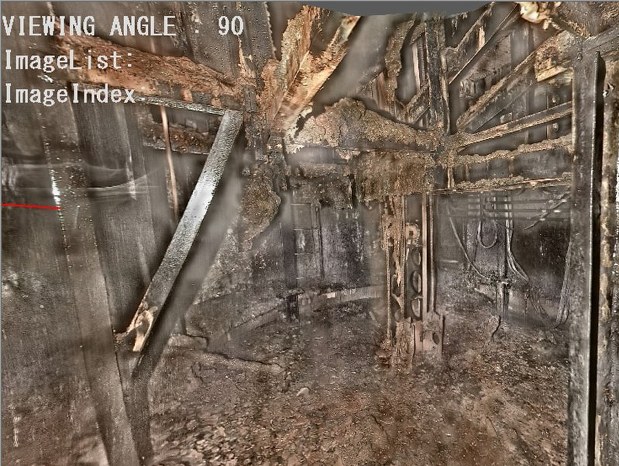
Tokyo Electric Power Co. will soon launch a probe, the first of its kind, into the pressure vessel at one of the hobbled reactors at its Fukushima No. 1 nuclear power plant to scope out the current conditions.
The effort is part of TEPCO’s long-standing goal of retrieving melted nuclear fuel debris, left in the aftermath of the triple reactor meltdowns following the 2011 Great East Japan Earthquake and tsunami.
TEPCO officials said they are planning to insert a camera-equipped fiberscope into the plant’s No. 2 reactor to shoot footage and measure radiation levels during the first half of fiscal 2026 between April and September.
An estimated 880 tons of fuel debris remain inside the No. 1, 2 and 3 reactors at the Fukushima No. 1 plant.
TEPCO plans to approach the contaminated debris, which remains in the pressure vessels, from the tops of the reactor buildings and pulverize the debris to reduce the volume and collect it by sucking it from the side or by other means.
TEPCO officials are hoping, during the planned probe, to monitor the interior of the pressure vessel visually and ascertain the radiation levels on a location-by-location basis to help work out concrete methods for retrieving the fuel debris.
The fiberscope to be used in the probe, which resembles an endoscope, will be inserted into the pressure vessel from the side through piping.
The officials said they will be probing not the core part of the vessel but the outer side of a shroud of stainless steel, which has been installed to surround nuclear fuel, to determine, among other things, if the shroud has been deformed and if there is any debris in sight.
They said they will conduct mock-up drills in the days and months to come. They added that they will take measures to block air from leaking from the pressure vessel’s interior so workers will not be exposed to radiation.
The probe was initially scheduled to begin in fiscal 2024, but the work has been delayed because the development of a dosimeter-equipped fiberscope and other processes have turned out to be more time-consuming than expected.
“When the distribution of dose levels is known, that could, depending on the circumstances, help give an estimate of the amount of residual fuel (which has yet to turn into debris),” said Akira Ono, president of TEPCO’s Fukushima Daiichi Decontamination & Decommissioning Engineering Co., which is overseeing the corresponding processes at the Fukushima No. 1 nuclear plant.
TEPCO plans to start large-scale retrieval of the Fukushima No. 1 plant’s debris at its No. 3 reactor in fiscal 2037 or later.
The dose levels and circumstances of the areas surrounding the reactor buildings are not the same for the No. 1, 2 and 3 reactors.
TEPCO officials said they have set a target date of 2027 for studying the design of debris removal equipment and other specifics for those reactors.
2222222
Japan Eyes Pacific Island for Nuclear Waste Disposal Site
Tokyo, March 3 (Jiji Press)
https://jen.jiji.com/jc/eng?g=eco&k=2026030300561
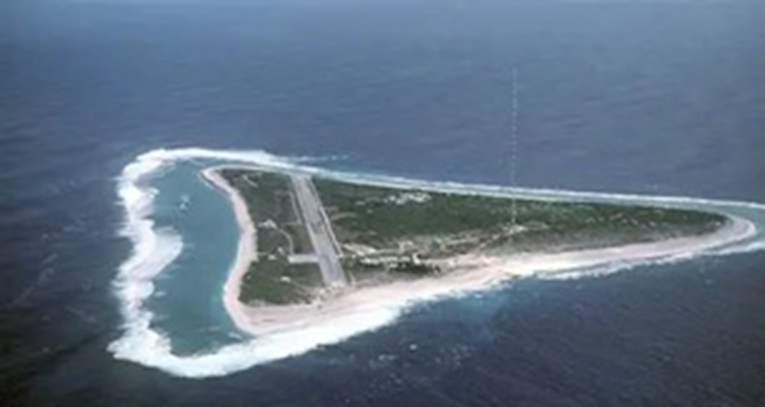
–The Japanese government is considering Minamitorishima, a remote Tokyo island in the Pacific, as a possible site for the final disposal of highly radioactive waste from nuclear power plants, it was learned Tuesday.
At a press conference on the day, industry minister Ryosei Akazawa said that the government will submit a request for a related literature survey to the Tokyo village of Ogasawara, where the island is located, as early as later in the day.
“Minamitorishima is considered to be an area with favorable conditions (for a nuclear waste disposal site),” Akazawa said.
Similar surveys have so far been conducted in the town of Suttsu and the village of Kamoenai, both in the northernmost prefecture of Hokkaido, and the southwestern town of Genkai, Saga Prefecture.
TEPCO removing empty tanks to advance Fukushima plant decommissioning work
February 28, 2026 (Mainichi Japan) https://mainichi.jp/english/articles/20260228/p2g/00m/0na/010000c
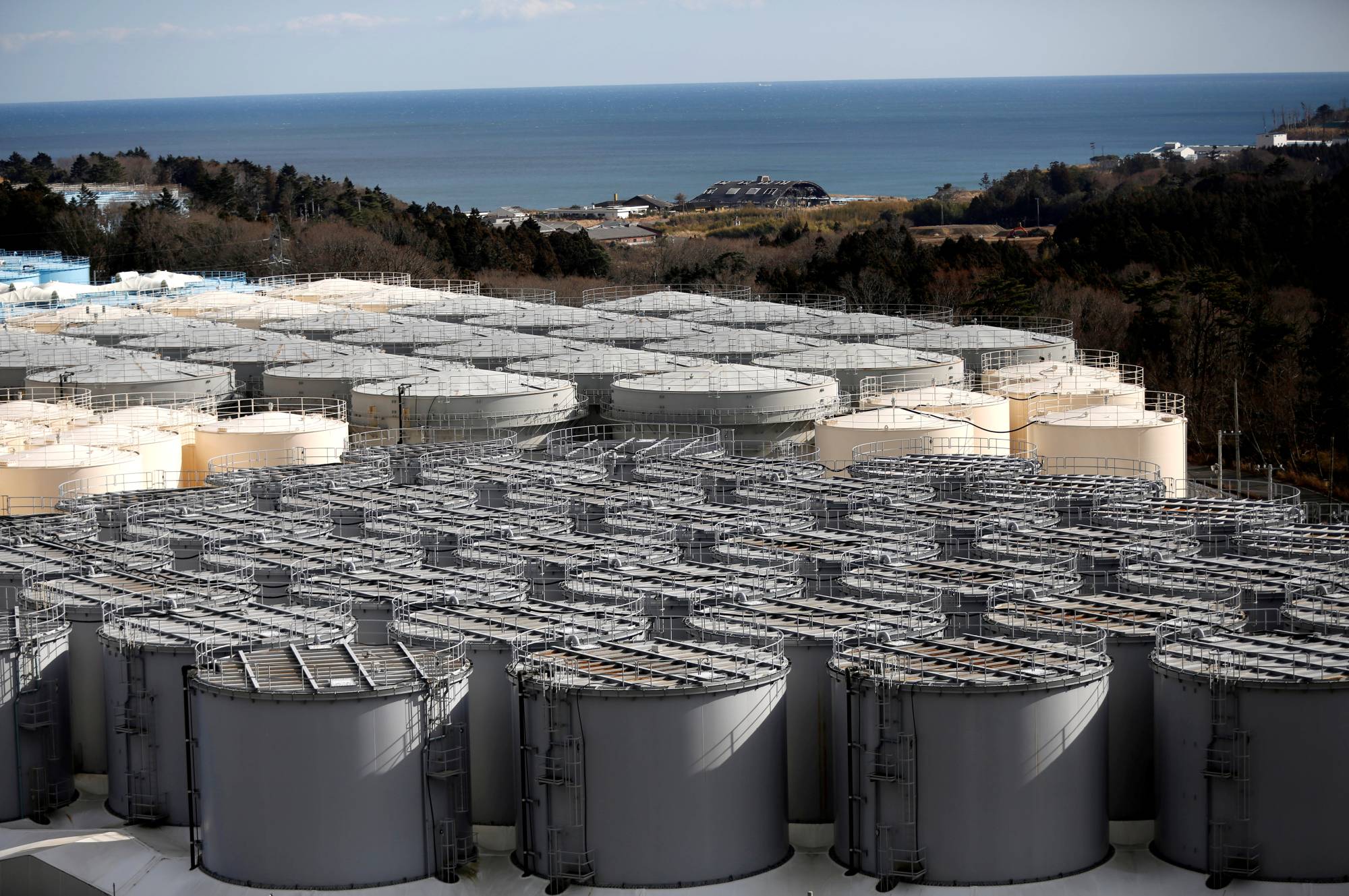
TOKYO (Kyodo) — The operator of the Fukushima Daiichi nuclear power plant continues to demolish tanks emptied by the release of treated radioactive water into the sea, aiming to use the freed-up space to build facilities to advance decommissioning work.
Nearly 15 years after the nuclear accident triggered by a massive earthquake and tsunami, Tokyo Electric Power Company Holdings Inc. is still coping with radioactive water generated in the process of cooling melted reactor fuel, although the daily buildup is on track to be the smallest in the current fiscal year.
The discharge of treated water into the Pacific Ocean began in August 2023, as more than 1,000 tanks installed at the site to store the wastewater were deemed to be taking up too much space and hindering progress in decommissioning work.
The first tank dismantling following the water release took place in February 2025 in an area known as J9. After workers finished removing a dozen tanks there by September, they moved on to the adjacent area known as J8, where nine tanks stand.
Each of the nine tanks is 12 meters tall and 9 meters wide, with a capacity of 700 tons. Removing the tanks in the two sections will free up about 2,900 square meters.
The utility plans to use the land to build facilities to store melted fuel debris to be retrieved from the No.3 reactor and to conduct maintenance for debris removal devices.
Some 880 tons of debris are estimated to remain in the Nos. 1 to 3 reactors that suffered core meltdowns in the world’s worst nuclear crisis since the 1986 Chernobyl disaster. Hydrogen explosions damaged the buildings housing the Nos. 1, 3 and 4 units.
TEPCO and the government plan to start full-fledged removal of debris at the No. 3 reactor no earlier than fiscal 2037, pushing back the early 2030s target due to the time needed for preparation.
Radiation levels inside the empty tanks have been confirmed to be lower than the average air dose level outside, indicating that contamination was relatively low, according to the operator.
Disassembled tank parts will be cut into small pieces using gas cutting torches and stored in cargo containers on the power plant premises.
China’s Retaliation: when will it happen?

And more appropriately, what form will it take?
Jerrys take on China, Feb 18, 2026, https://jerrygrey2002.substack.com/p/chinas-retaliation-when-will-it-happen?utm_source=post-email-title&publication_id=1744413&post_id=188346536&utm_campaign=email-post-title&isFreemail=true&r=ln98x&triedRedirect=true&utm_medium=email
A few comments about why China is like it is – first of all, in the last 45 years, there has been no invasions, despite what people like little Marco Rubio of the US and Richard Marles the Australian Defence Minister might say, China is not and does not pose a threat to any of these countries – Japan might think there is a threat, China does not agree, in fact the opposite is true, Japan poses a much larger threat to China than China has ever posed to Japan.
China is concerned about, and in fact does feel threatened by Japan’s military expansion because the last time it happened literally millions of Chinese were murdered by the Japanese. Australia’s defence minister, Marles, asks us to consider why China has the world’s largest military expansion but he’s wrong – we have to hope he’s wrong because he’s been misinformed and is too dim to check out for himself, but more likely he knows he’s lying about this as China spends considerably less money than the US, in terms of not only its population but its geographical size, it’s quite entitled to spend more cash, when on a per capita basis, the amount is tiny compared to the US, on a ratio to GDP, it’s smaller than the US, it’s one third or less than NATO has been required to spend in terms of percentage of GDP and there’s one more very important factor that the US with only two neighbouring countries doesn’t have – that is 14 neighbouring countries with a shared land border.
Here’s another thing. China was invaded when they were weak, the British did it, the Americans did it, the eight nations alliance did it, Britain carved up part of Burma and took away some of China, it carved up India and took away parts of China, the Russians carved up Mongolia and Heilongjiang, taking away parts of China, the Japanese invaded and occupied China for 14 years. The classic twists and mental gymnastics people like Marles make would have us believe that the hundreds of US bases around China are to prevent China from doing what they’ve NEVER done – going out to invade other countries.
He, and several pundits would like us all to believe is that the US is keeping the world safe from China by arming their neighbours, interfering in the Provinces, Regions and the SARs but the reality is, China is building a military that will defend Chinese people inside China and Chinese land that belongs to China now – it’s not looking to reclaim land back, except in disputed regions.
Those disputed regions include parts of Tibet that the British took away and gave to India, parts of the South China Seas that the Japanese took away and both the US and UK, at the end of the Second World War, agreed would come back to China. There’s one military base in Africa, which is in a region shared with many other countries, including the USA, Japan, France, Italy, Germany Spain and even Saudi Arabia. Taiwan is NOT one of these disputed regions – the entire world whether they recognise Beijing or Taipei as the capital, recognises that there is one China and Taiwan is part of it – anyone who suggests that Taiwan is a country is either a liar, deliberately misleading us, or is far too dim to read the Constitution of the Republic of China, which not only claims all of the Chinese Mainland, it also wants those disputed regions back too.
China has something else which its detractors hate to admit and will lie about – that’s a policy of non-interference in the affairs of a sovereign nation – when it invests in another nation, it doesn’t call for democracy or elections, it doesn’t even ask that Communism or Socialism are accepted, it doesn’t send military to protect its assets, it won’t send missionaries to convert their subjects and it won’t impose conditions that force countries to give up their national assets or utilities if they can’t make the payments – if that sounds familiar and if it’s because you’ve been hearing that China will do all of those things and, if you think they have, I’d implore you to find me an example of where it’s happened, outside of opinion pieces written by people who want you to believe they have, almost every incident where we can find any of these things alleged, will be speculative – they’ll tell us what China might do, what China could do, what China may be doing, is alleged to have done or suspected to be involved in.
We might find individual cases of rogue Chinese people, Chinese criminals even and they use these tiny individual examples to tell you that this is “what China does” when that person who has broken the law has usually already been punished by the time they report it in western media and, if they mention that at all, it’ll be after the third paragraph where most of us have stopped reading.
On the other hand, I can find literally hundreds of examples where the USA is doing these things, where the UK and France have done these things, where Germany, Belgium, even Spain and Portugal have done them.
So then some of the comments I have been getting relate to the Port in Darwin, the ports in Panama and the Pirelli saga in Italy. Just for some background here, Sinochem owns 37% of Pirelli, the big Italian tyre company which wants to expand into the USA, of course the US won’t allow that while China has such a controlling interest. The share of Sinochem hasn’t changed, the only change is that the board, and remember Sinochem had controlling interest being the largest single shareholder, has declared that Sinochem no longer has control, giving the board more autonomy, – Sinochem agreed to this, so this isn’t a situation where anything has been taken from China, merely an agreement that the board retains control which a Chinese corporation retains more shares.
Erich, one of my followers said this: “if China doesn’t protect its assets it will lose them like Pirelli in Italy, the Ports in Panama, etc. Maybe at some point China will start caring about these things.”
My response is that it’s not just Erich, it’s literally hundreds of people, probably thousands but many in my responses who are misunderstanding China. China cares very deeply about the assets its people and corporations invest in, particularly overseas, but it will not break international laws, or contractual Agreements in order to protect them from people or governments which do break laws.
China will react to this in the same way it reacts to every other illegal action against it, by negotiations, and where they fail, arbitration, it will, when all else fails, take the appropriate legal action, which might be appeals to the WTO and perhaps even the UN or more likely the local courts – it knows there will be no satisfaction from those appeals but they are the legal mechanisms open to Chinese corporation. China as a government participates in legal and lawful bodies and does not want to overthrow them, to do so, makes China another USA – so the actions China takes, which will definitely be retaliatory, will be legal, they can, and probably will reduce purchases from offending countries, and of course, they will be much more careful in the decisions when investing in those countries both of which are well within their legal rights.
What China will not do is: unilaterally sanction anyone, any country or even any organisation within the country, it will not militarily defend its assets, it will not interfere in the internal affairs of another country but there is no doubt in my mind that if any country persists and acts on threats to China’s investments, there will be repercussions, probably it’s best not to call them retaliations, they are simply normal responses to a situation of risk.
In Australia for example, if they persist with this challenge to the legal investments Landbridge has made, investments that are compliant in every way and even beneficial to the people of the Northern Territory in jobs and payroll taxes, as well as increased business going through it’s port and beneficial to the people of Australia in 4.5 million income tax paid last year, those are the people who will suffer – China will find other suppliers for the things Australia sends – so far, the only one which is not directly sourced elsewhere is iron ore and, if China stops buying that in any great quantity, it will kill Australia’s economy.
Just continuing to use Darwin Port as an example, it is a critical trade hub in Northern Australia, handling minerals, agriculture, and livestock, with 2,295 vessel visits recorded in 2024-25, marking a 31.07% increase on the previous year. Darwin serves as a key gateway to Asia, managing significant exports of manganese, titanium, iron ore, and livestock. Given that China is the major trading partner of Australia, a huge proportion, unfortunately, there’s no way I can find out, would be Chinese owned, flagged, operated or destined ships, they would be travelling between China and Darwin – that’s 44 ships a week, many of which will simply divert to other ports, or, if the asset has been seized they’re more likely to simply stop coming altogether – how can that possibly benefit the warehouses, the truckers, the waste management, the catering and hospitality venues that the sailors use, the customs brokers, the security and surveillance companies – there’s an entire eco-system of industries deriving their income from a well-operated port and Darwin, which is a small city will feel a very heavy impact from no Chinese ships arriving and departing there. There will also be a lot of farmers, miners and other suppliers using that port to ship to China – it will all stop.
So, to think China will just sit back and do nothing is wrong, they are very mindful that their investments are not just at risk but under threat – business leaders in China understand this and are already taking action – there’s an April 2024 KPMG report, that’s almost 2 years old now showing that China’s investments in Australia have declined from a peak in 2016, just after the Free Trade Agreement was signed to the lowest level since 2006. It’s well worth a read if you’re interested, the report defines all kinds of factors but fails to mention the obvious one – Australia simply doesn’t want Chinese investment, they feel threatened by perceptions given to them by media which are completely false.
In keeping with the maxim that one person’s loss is another’s gain, the vast majority of China’s Overseas Direct Investment is now going to One Belt One Road countries – these are safe destinations, they are countries that welcome trade with and investments from China. In the Western world, that’s not many countries. Leaders of Canada and the UK were recently in China seeking investment opportunities, in both cases, they returned to their home countries to media criticism. It remains to be seen how they will handle this but they, as leaders, and their business leaders all know the truth – the media is lying, a few politicians who are actually paid by Washington to further lie about China are losing influence. Some people will assume that I’m either exaggerating about this but the reality is there for all to see, if you don’t believe me, go look up who are the main funders of the Inter Parliamentary Alliance on China (IPAC). It states clearly on its website that it does not accept funds from governments. But then lists the Taiwan Foundation for Democracy, the National Endowment for Democracy, the International Republican movement, Hello Taiwan the National Democratic Institute and others, all of which are government funded and almost all of which can trace their funds back to Washington DC and congressionally approved expenditure.
The vast majority of the Non-US aligned world realises – there is no threat from China and, once again I reiterate something I’ve said many times, the people telling you China is a threat are more likely to damage your economy and your global standing than China ever will – China isn’t a threat, it’s those people telling you it is, who are.
Harrowing six final words of nuclear worker as his skin fell off during 83 days of agony
WARNING: DISTRESSING CONTENT Nuclear plant worker Hisashi Ouchi suffered the highest radiation dose in history after 1999 Japan accident, enduring 83 agonising days before death.
Edward Easton and Jane Lavender Associate Editor, 18 Feb 2026, https://www.dailystar.co.uk/news/world-news/harrowing-six-final-words-nuclear-36730407
What You Need to Know
Hisashi Ouchi, a 35‑year‑old nuclear plant worker, survived a 1999 criticality accident that delivered the highest recorded radiation dose to a human, enduring 83 days of severe medical complications before dying of multiple organ failure. A government probe later blamed inadequate supervision, safety culture, and training, leading to negligence charges against six plant officials.
Key points:
On September 30, 1999, a criticality accident at a Japanese nuclear fuel processing plant exposed worker Hisashi Ouchi to an estimated 17,000 millisieverts of radiation.
The dose Ouchi received was about 850 times the annual occupational limit for nuclear workers and roughly 140 times higher than the exposure of residents near Chernobyl.
Ouchi was hospitalized at the University of Tokyo Hospital, where he underwent experimental treatments for 83 days, during which his skin sloughed off, his eyelids fell off, and his digestive system collapsed.
Medical staff administered up to ten blood transfusions daily, and painkillers were reported to be ineffective; Ouchi reportedly said, “I can’t take it anymore. I am not a guinea pig.”
He died on December 21, 1999, and the official cause of death was recorded as multiple organ failure
****************************************************************************************************.
A nuclear facility worker suffered what many consider to be the most agonising death ever recorded after a routine procedure went catastrophically wrong.
Hisashi Ouchi, 35, was exposed to an incomprehensible level of radiation when colleagues accidentally added excessive uranium to a processing vessel, sparking an uncontrolled nuclear chain reaction on September 30, 1999.
The unfortunate Ouchi was positioned nearest to the vessel, consequently subjecting him to 17,000 millisieverts of radiation – equivalent to 200,000 X-rays.
The exposure he received was 850 times the safe yearly limit for nuclear facility workers, 140 times greater than what Chernobyl residents experienced after the 1986 catastrophe, and the most severe dose ever documented in human history.
Within seconds and minutes of his exposure, Ouchi became violently sick. Whilst most individuals subjected to such levels would die within days, Ouchi survived, reports the Mirror.
He was taken to hospital alert but in critical condition, as his white blood cell count had been virtually eliminated, leaving him completely without an immune system.
Medical staff moved him to the University of Tokyo Hospital, where they tried various experimental procedures in a frantic bid to preserve his life.
What ensued was 83 days of torment for the nuclear facility worker.
Radiation had completely obliterated Ouchi’s capacity to heal and regenerate cells, causing his skin to gradually slough away, his blood vessels to fail, and his eyelids to fall off.
Fluids seeped relentlessly from his ravaged flesh and accumulated in his lungs, compelling medics to maintain him on life support.
Making his ordeal even more harrowing, his digestive system collapsed entirely, inflicting excruciating agony and causing litres of fluid to drain from his body daily. Despite numerous skin grafts and stem cell treatments, his body remained unable to recover.
Breathing became impossible without mechanical assistance, and nourishment could only be administered via feeding tube.
The agony became so unbearable that, two months into his treatment, Ouchi’s heart ceased beating, yet medical staff chose to revive him.
His wife reportedly held onto hope that he would survive until at least January 1, 2000, so they could welcome the new millennium together.
During lucid moments, he remained fully aware of his deteriorating condition.
According to accounts, Ouchi eventually reached breaking point and spoke six chilling words to hospital staff: “I can’t take it anymore. I am not a guinea pig.”
Medical professionals were compelled to administer up to ten blood transfusions daily merely to sustain his life. Painkillers appeared utterly ineffective, and at one stage, he reportedly pleaded for the treatment to cease.
Ouchi passed away on December 21, 1999, from multiple organ failure, nearly three months following the incident. Multiple organ failure was recorded as the official cause of death.
Four months afterwards, in April 2000, his colleague Shinohara also died from multiple organ failure at the age of 40.
Supervisor Yokokawa, who had been seated at his workstation when the criticality incident unfolded, managed to survive.
A probe by the Japanese government determined that the accident was due to a lack of regulatory supervision, a deficient safety culture, and insufficient training for employees.
Six officials from the company running the plant were subsequently charged with professional negligence and breaches of nuclear safety laws. In 2003, they received suspended prison sentences for their deadly neglect.
Fukushima review – a devastating account of disaster and denial in 2011 nuclear catastrophe
A tense return to the disaster foregrounds the heroism of the ‘Fukushima 50’ while raising questions about corporate secrecy and nuclear safety.
Peter Bradshaw, Wed 18 Feb 2026, https://www.theguardian.com/film/2026/feb/18/fukushima-review-2011-nuclear-disaster-japan
The terrifying story of Japan’s Fukushima nuclear accident of 2011, caused by a cataclysmic earthquake and tsunami, is retold by British film-maker James Jones and Japanese co-director Megumi Inman. The natural disaster left 20,000 dead, and 164,000 people were displaced from the area around the nuclear plant, some with no prospect of return. The earthquake damaged the cooling systems that prevent meltdowns and caused three near-apocalyptic explosions, bringing the nation close to a catastrophe that would have threatened its very existence. Incredibly, the ultimate calamity was finally staved off by nothing more hi-tech than a committed fire brigade spraying thousands of tons of water on the exposed fuel rods.
The film plunges us into the awful story moment-by-moment, accompanied by interviews with the chief players of the time – prominently nuclear plant employee Ikuo Izawa, a shift supervisor and de facto leader of the “Fukushima 50” (actually 69 people) who became legendary in Japan and beyond for their self-sacrificial courage, staying in a nightmarish reactor when everyone else had been evacuated.
Perhaps we could have been given more context and less immediate drama, particularly more background about the plant’s dismal corporate owners, the Tokyo Electric Power Company, or Tepco, which had closed a nuclear plant in 2007 after an earthquake, with a resulting loss of profits. But to skimp on the drama might be obtuse, given the pure hair-raising shock of events. The archive footage of the tsunami spreading across the fields and farmland of Japan is deeply disturbing; “nightmare” is a word casually used, but appropriate here.
The Japanese soul had been uniquely traumatised by the nuclear issue in 1945 and Fukushima was the opening of an old wound; Barack Obama’s offers to help were received warily and the film hints that some of a certain age might have even suspected a kind of opportunistic emergency takeover, like the Douglas MacArthur rule that followed the war. There is something chillingly military in the company’s need for volunteers for a so-called “suicide squad” to vent the reactors to forestall a pressure buildup.
And as far as comparisons with the Chornobyl disaster go, that involved a single reactor; Fukushima had six ready to blow. Before I watched this film, I assumed that Japan’s modern democracy would at least have meant more transparency than the sclerotic and malign Soviet apparatchiks. But maybe not. Tepco has still not released a full history of exactly what went wrong and what discussions took place at the time. And in any case, politicians were themselves dismally eager to cover themselves by tentatively blaming Tepco.
The most robust witness here is the New York Times’s Tokyo bureau chief Martin Fackler, who gives us a crisp account of the official chaos and bungling – and the fact that Tepco had already received a report indicating the Fukushima plant was vulnerable to an earthquake and did nothing. He is interesting on corporate obeisance to the “safety myth”, an industry article of faith which does not result in vigilant and innovative efforts to improve safety, but rather icy disapproval of anyone who questions existing safety provisions. Doing so was disloyalty to the industry and could damage your career.
Perhaps inevitably, the larger questions are left open. Fossil fuels cause slow-motion catastrophe to the planet – in fact, not so slow – while nuclear fuel does not cause climate change, but could cause instant calamity. So is the answer simply what the industry says it is? More and better safety? Or can other renewables fill the gap? Either way, this is a gripping film.
Fukushima is out in the UK and US from 20 February.
This article was amended on 19 February 2026 to clarify that the death toll relates to the natural disaster alone.
Uranium Neo-colonialism in Mongolia: Crime but No Punishment

The unexplained illnesses and deaths of animals, a desert veterinary clinic run by a uranium mining corporation, and its attempts to ignore the troubling facts are perplexing.
Orano has set a stark precedent, demonstrating that even lenient mining laws are no real constraint. According to activists, the company simply ignored the required environmental impact assessment for some of its ISL mining projects in Dornogobi Aimag. Coincidentally, Orano was also bribing officials to secure mining licenses during this same period.
Environmentalists square off against a French mining company.
By Tatyana Ivanova | February 12, 2026, https://fpif.org/uranium-neo-colonialism-in-mongolia-crime-but-no-punishment/
On a warm April 1st day last year, Budee Khekhee, head of local non-profit The Power of Unity for the Sake of Our Homeland, led a team into the Gobi Desert to investigate reports of a mysterious illness causing the death of wild and domestic animals, which he obtained from the local herders. A former resident who’d assisted his father’s veterinary work, Budee knew the terrain and knew authorities had ignored previous alarms.
In Zamyn Ud, they spotted numerous white-tailed gazelles lying on the ground, unable to get up, and twitching their legs convulsively. The activists livestreamed their discovery. “My heart was overwhelmed with despair,” Budee later testified. “I realized I couldn’t just abandon them here to die.”
Suspecting that the epidemic was caused by French uranium company Orano’s in-situ leach operations, he loaded four gazelles aboard a truck and drove to the corporation’s clinic gate, broadcasting on Facebook. Orano had built and was operating a veterinary clinic in the mining area. Budee didn’t trust them a lot, but he hoped that the staff would assist in rescuing the animals. Those hopes were dashed when, after two hours of standing outside the locked clinic doors, no one appeared, and the animals died. Left with little choice, the activists dissected the gazelles’ bodies and took tissue samples for independent analysis. They livestreamed their actions to Facebook.
For many Mongolian herders, resource neocolonialism is not an abstract concept. They have resulted in tangible losses, illness, and deaths. Descendants of the Mongol Empire now face uranium mining invaders. After the Soviets departed—leaving behind a legacy of toxic mining—the “clean” French uranium industry arrived, reproducing similar patterns of corruption while poisoning the land. At the same time, these colonialists have participated in the persecution of environmental activists.
Should they be held accountable before domestic and international communities?
The Revenge
In official reports, human rights defenders often refer to the persecution of activists as “unjust” or “disproportional punishment.” However, what happened in the case of the Mongolian herders was closer to pure revenge. Unidentified individuals made police reports accusing Khekhee of illegal hunting. He was subjected to repeated questioning for several months after the criminal investigation began.
The local prosecutor’s office then reclassified the matter as an administrative offense. The state’s Environmental Protection Office determined that Khekhee illegally pursued and killed four gazelles. They penalized him $1,200, a substantial sum for an average Mongolian. His July appeal was denied in full in September, but the court of first instance postponed the sentence for three months, thereby conceding that the case lacked merit.
Neither the investigation nor the court determined why Budee Khekhee allegedly needed to kill the gazelles. However, a local journalist discovered the “motive,” writing in August 2025 that it was done “to mislead the public about the consequences of uranium mining by the joint Mongolian-French enterprise ‘Badrakh Energy’ LLC.”
Prosecution for Independent Dosimetry
The unexplained illnesses and deaths of animals, a desert veterinary clinic run by a uranium mining corporation, and its attempts to ignore the troubling facts are perplexing. Especially when combined with the absurd accusation of poaching directed at an environmental activist whose action was widely livestreamed. When connected to other similar events, a pattern emerges.
In mid-August 2025, the same non-profit invited Russian nuclear physicist Andrey Ozharovskiy to conduct dosimetry measurements. Their focus on radioactive pollution was encouraged by groundwater assessments, which had revealed high uranium and arsenic levels in the area. Ozharovskiy, who had extensive experience in identifying radioactive sources, agreed to come. He entered Mongolia legally with his dosimetry and spectrometry equipment for “business purposes.”
On August 15–17, activists drove him along dirt roads in the Gobi Desert to Orano’s pilot ISL uranium extraction wells, where locals reported trucks carrying pregnant solution or liquid waste. It didn’t take the Russian expert long to discover three dried-up puddles emitting gamma radiation 20-50 times above background levels. Spectrometry identified uranium decay products—radium-226, bismuth-214, and lead-214, which, according to Ozharovskiy, was consistent with mining spills rather than natural radiation. The activists published their finding on social media, and this is how the Mongolian authorities learned about the expedition.
The group later traveled across Mongolia along similar dirt roads to Maradai. On August 19, while measuring radiation near abandoned Soviet mining sites, the group was detained by a border officer and some people in plain clothes. According to the activists, the authorities used drones to spot them in the desert. After spending a day or two in several offices, Ozharovskiy was transferred to the Main Intelligence Directorate in Ulaanbaatar. There, after being questioned, he was told that he was suspected of espionage and immigration violations.
Although the authorities released Ozharovskiy, they took his passport so that he couldn’t leave the country. A few days later he was taken again, forced to admit administrative violations, including using unregistered dosimetry devices, and to pay a fine. Then they brought him to the border with Russia and expelled him without his belongings but with a 10-year entry ban. The local activists, meanwhile, have spoken of intimidation, police reporting requirements, smartphone searches, and non-disclosure agreements.
In the same days the Mongolian Nuclear Regulatory Commission issued a formal statement, where accused Ozharovskiy of spreading false information about radiation background. Some media labeled the activists foreign agents undermining Franco-Mongolian projects in Russia’s interest.
A System That Favors Abuse and Distrust
Mongolian law prohibits radiation measurements using devices that haven’t been registered with the country’s Nuclear Regulatory Commission. After his first detention, Ozharovskiy donated some of his measuring devices to the non-profit. Activists brought them to the NRC but were denied certification with no clear explanation. The only reason provided, though invalid, was that the devices belonged to a Russian citizen.
The activists explained why they hadn’t registered the devices beforehand: they didn’t want authorities to know about their survey in advance. “If they knew about the devices, they wouldn’t let us measure anyway,” one activist said. “We don’t trust them,” Khekhee added.
This distrust is entirely justified given the broader context documented by prominent human rights organizations. Mongolia has earned a reputation for cracking down on critics and human rights defenders, particularly those challenging the mining industry. Amnesty International’s 2024 report documents that criticism of authorities and mining corporations has become effectively criminalized. According to the report Our Land, these corporations commit massive environmental violations, causing significant environmental pollution and deterioration of public health, and undermining traditional Mongolian livelihoods. To attract investors, Mongolian mining lobbyists even managed to pass corporate-friendly legislation. According to Our Land, in 2006 and again in 2013–2015 they weakened environmental safeguards, reducing water protection zones and allowing mining on private and even protected lands.
Another Face of the French Republic
Continue readingJapan Restarts Nuclear Power at Kashiwazaki Kariwa After 14 Years
By Alex Kimani – Feb 11, 2026,
https://oilprice.com/Latest-Energy-News/World-News/Japan-Restarts-Nuclear-Power-at-Kashiwazaki-Kariwa-After-14-Years-in-the-Dark.html
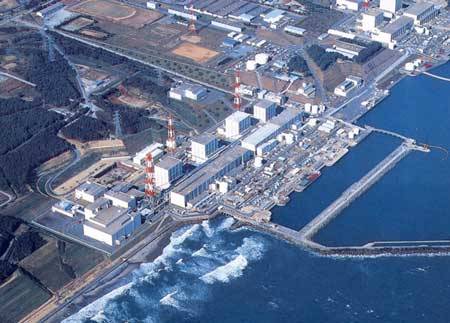
Japan’s Tokyo Electric Power Company (TEPCO) has restarted Unit 6 of the Kashiwazaki-Kariwa nuclear power plant, following a 14-year shutdown following the 2011 Fukushima disaster. The 1,360 MW reactor is the first unit to come online since the nuclear accident that saw Japan halt operations at all its nuclear plants pending regulatory changes.
The accident was caused by the 9.1-magnitude T?hoku earthquake – the third-largest in the world since 1900 – that triggered a tsunami, resulting in electrical grid failure and damage to nearly all of the power plant’s backup energy sources. With a total capacity of roughly 7,965 MW, the Kashiwazaki-Kariwa Nuclear Power Plant is the largest in the world.
TEPCO has implemented extensive, multi-layered safety enhancements at the Kashiwazaki-Kariwa Nuclear Power Plant to prevent accidents, particularly focusing on tsunami, earthquake, and terrorism risks. The company has constructed a 15-meter-high reinforced concrete seawall (extending 1,000 meters) to protect against tsunamis far exceeding the predicted maximum of 7-8 meters; critical buildings, including reactor and turbine buildings, have been fitted with heavy, watertight doors and barriers to prevent water from entering during a flood while essential equipment and emergency diesel generators have been moved to higher ground (up to 35 meters) to remain operational if the site floods.
Similar to many Western nations, Japan is doing a 180 on nuclear power after virtually ditching the power source as it looks to enhance energy security, reduce heavy reliance on expensive imported fossil fuels, meet rising electricity demand (including for AI data centers), and achieve 2050 carbon neutrality goals. Japan imports 60-70% of its electricity resources. In 2024, the country spent nearly $70 billion on liquefied natural gas (LNG) and coal imports, with nuclear power offering a [?] cheaper, [?] home-grown alternative.
1 This Month
23-25 October – on Zoom – World BEYOND War’s annual global conferenc


Shut down the radiation-damaged Heysham nuclear reactors now
To see nuclear-related stories in greater depth and intensity – go to https://nuclearinformation.wordpress.com

Say No to NASA’s Reckless Nuclear Reactor on the Moon
Say No to NASA’s Reckless Nuclear Reactor on the Moon

-
Archives
- October 2026 (247)
- September 2026 (339)
- August 2026 (330)
- July 2026 (355)
- June 2026 (287)
- May 2026 (306)
- April 2026 (356)
- March 2026 (251)
- February 2026 (267)
- January 2026 (308)
- December 2025 (358)
- November 2025 (359)
-
Categories
- 1
- 1 NUCLEAR ISSUES
- business and costs
- climate change
- culture and arts
- ENERGY
- environment
- health
- history
- indigenous issues
- Legal
- marketing of nuclear
- media
- opposition to nuclear
- PERSONAL STORIES
- politics
- politics international
- Religion and ethics
- safety
- secrets,lies and civil liberties
- spinbuster
- technology
- Uranium
- wastes
- weapons and war
- Women
- 2 WORLD
- ACTION
- AFRICA
- Atrocities
- AUSTRALIA
- Christina's notes
- Christina's themes
- culture and arts
- Events
- Fuk 2022
- Fuk 2023
- Fukushima 2017
- Fukushima 2018
- fukushima 2019
- Fukushima 2020
- Fukushima 2021
- general
- global warming
- Humour (God we need it)
- Nuclear
- RARE EARTHS
- Reference
- resources – print
- Resources -audiovicual
- Weekly Newsletter
- World
- World Nuclear
- YouTube
-
RSS
Entries RSS
Comments RSS

