Nuclear reactor in Takahama to go back online on July 26

July 20, 2022
Kansai Electric Power Co. will resume generating and transmitting electricity at the No. 3 reactor at the Takahama nuclear power plant on July 26, the company announced on July 19.
The company had said the timing of resuming operations was undecided after a regular inspection that started in March discovered damage to heating tubes at the nuclear reactor in Takahama, Fukui Prefecture.
However, the company has decided it has done enough fact-finding and put in place enough countermeasures so that it can resume operations.
Of the company’s nuclear reactors, the No. 3 and No. 4 reactors at the Oi plant in Oi, Fukui Prefecture, are currently in operation.
The company plans to bring a total of five nuclear reactors online by the end of this year.
They will include the No. 3 reactor at the Mihama plant in Mihama, Fukui Prefecture, which started operations more than 40 years ago, as well as the No. 4 reactor at the Takahama plant, which is currently undergoing a regular inspection.
The government plans to have up to nine reactors operating this winter to prepare for expected severe energy shortages, including those of Kyushu Electric Power Co. and Shikoku Electric Power Co., Prime Minister Fumio Kishida announced at a news conference on July 14.
Aomori Rokkasho Reprocessing Plant Stops Cooling Function “Valve Mistakenly Closed?”

July 19, 2022
Regarding the trouble at a spent nuclear fuel reprocessing plant in Rokkasho Village, Aomori Prefecture, where the cooling function for high-level radioactive liquid waste temporarily stopped, the operator, JNFL, revealed the results of its investigation, which indicated that workers likely accidentally closed a valve on an operating pipe that circulates water for cooling.
At the Rokkasho Reprocessing Plant, the cooling system at one of the tanks storing high-level radioactive liquid waste stopped for about eight hours on the second of this month, and JNFL was investigating the cause.
There are two systems of piping for circulating cooling water, and as a result of the investigation, it was revealed at the press conference that there is a high possibility that workers mistakenly closed the valve of the piping in operation, when they were instructed to close the piping under construction.
According to JNFL, the valves were not clearly labeled and instructions were given only orally. JNFL said that it will take measures by the end of this month, such as attaching tags to valves in more than 500 locations in the building where the trouble occurred, so that the status of the system and valves open and closed can be identified.
JNFL has informed the Nuclear Regulation Authority and the local government of the results of the investigation and measures to prevent recurrence. We have strongly requested that JNFL take all possible safety measures, and the village will continue to closely monitor the response.
https://www3.nhk.or.jp/news/html/20220719/k10013725711000.html?fbclid=IwAR1JCD1htc96PAjbz9jJ3Zn7SKjRBvKTuL1akwhNLcdRkRH5J0fsUzTp7zM
Japan halts shipment of black rockfish caught off Fukushima over radiation
Reuters https://www.reuters.com/world/asia-pacific/japan-halts-shipment-black-rockfish-caught-off-fukushima-over-radiation-2022-02-08/
OKYO, Feb 8 (Reuters) – Japan’s health ministry said on Tuesday it had ordered the suspension of shipments of black rockfish caught off Fukushima prefecture after radiation exceeding an upper limit was detected in a catch late last month.
The development comes on the heels of an announcement by Taiwan that it would relax a ban on food imports from Japan put in place after the 2011 Fukushima nuclear disaster.
The suspension means the targetted fish would not be shipped, regardless of the destination, a ministry official said.
Fukushima bosses ordered to pay billions for failing to prevent nuclear disaster
The Chemical Engineer, by Adam Duckett, 18 July 22,
FOUR former bosses of the Fukushima Daiichi nuclear plant have been ordered by a Tokyo court to pay ¥13trn yen (US$94bn) in damages for failing to prevent disaster at the site in 2011.
The lawsuit was filed by shareholders in 2012 and is the first to find former executives of utility company Tepco liable for compensation. Kyodo News reports that the presiding judge said the utility’s countermeasures for the tsunami “fundamentally lacked safety awareness and a sense of responsibility,” ruling that the executives failed to perform their duties.
A huge earthquake knocked out power supply to the plant and triggered a tsunami thought to measure as high as 15 m. This easily washed over the 5.5 m seawalls designed to protect the plant, flooding key infrastructure, including the backup diesel generators that had kicked in to power the cooling of the reactors. Without this power, the three units operating at the plant melted down, the reactor pressure vessels were breached, and radioactive material was released into the environment.
The trial focused on whether the management had taken appropriate decisions on how to manage the risk of tsunami after a Tepco unit estimated in 2008 that a tsunami measuring up to 15.7 m could strike the plant based on a Government analysis published in 2002, Kyodo News reports. The former executives’ lawyers argued that the assessment lacked reliability. The court disagreed and said the Government’s assessment obliged the company to take measures. It ruled that the decision not to act was “extremely irrational and unforgivable”.
The four executives found guilty include former Chairman Tsunehisa Katsumata, former President Masataka Shimizu, and former vice presidents Sakae Muto and Ichiro Takekuro. The sum they have been ordered to pay is well beyond their personal wealth, but they are expected to pay as much as their assets allow. A fifth defendant, former Managing Director Akio Komori, was found not liable for damages……………. more https://www.thechemicalengineer.com/news/fukushima-bosses-ordered-to-pay-billions-for-failing-to-prevent-nuclear-disaster/
Push towards nuclear power in Japan, but delays, hurdles, opposition make it an unlikely development
To deal with concerns about electricity shortages this winter, Prime
Minister Fumio Kishida said Thursday that he will push to have up to nine
nuclear reactors in operation by then. But while 10 reactors are officially
listed as having been restarted, only five are actually providing power.
One of them, Genkai No. 4 in Saga Prefecture, will soon be offline to
finish necessary safety work for the winter. The other five are sitting
idle because they are either finishing safety work needed to be switched
back on, or they are offline for regular inspection.
While there are recent
signs that restarts are growing more acceptable to the public, given
concerns about rising energy prices, opposition nonetheless remains. A
nationwide poll conducted by NNN and the Yomiuri Shimbun on Monday and
Tuesday showed that, as long as reactors meet safety standards set by the
Nuclear Regulation Authority, 54% of respondents supported their restart,
while 37% were opposed.
Anti-nuclear groups could also slow the restart
process by filing requests for temporary injunctions or lawsuits in local
district courts over safety concerns. Victory could stop any restart effort
while the decision is appealed by the operator in a higher court.
Japan Times 15th July 2022
https://www.japantimes.co.jp/news/2022/07/15/national/kishida-nuclear-power-plants-online-winter/
Fukushima nuclear power plant disaster: Court slaps 94 billion dollar fine on ex-Tepco bosses
Four former executives failed to fulfil their duty to implement the utmost safety precautions despite knowing the risks of a serious accident in case of a major tsunami, the court said.
New Indian Express15th July 2022 By Express News Service
TOKYO: A Tokyo court on Wednesday ordered four former executives of the utility operating the tsunami-wrecked Fukushima nuclear power plant to pay 13 trillion yen ($94 billion) to the company, holding them liable for the 2011 disaster.
In the closely watched ruling, the Tokyo District Court said the former chairman of Tokyo Electric Power Company Holdings (Tepco), Tsunehisa Katsumata, and three other former executives failed to fulfil their duty to implement the utmost safety precautions despite knowing the risks of a serious accident in case of a major tsunami.
It said they could have prevented the disaster if they had taken available scientific data more seriously and acted sooner…………………………………………………. https://www.newindianexpress.com/world/2022/jul/15/fukushima-nuclear-power-plantdisaster-court-slaps-94-billion-dollarfine-on-ex-tepco-bosses-2476787.htm
❎
Increasingly economical renewables mean now’s no time for South Korea to cling to nuclear power
In these changing times, it is unfortunate that Korea is choosing to cling to the nuclear industry, the marketability of which is becoming increasingly unclear.
https://english.hani.co.kr/arti/english_edition/english_editorials/1051124.html Jul.15,2022
The new administration’s nuclear power advocacy runs counter to global trends toward renewables.
A new report released by the International Renewable Energy Agency (IRENA) has revealed that global solar and wind power generation costs are down 13%-15% compared to one year ago.
According to IRENA’s “Renewable Power Generation Costs in 2021” report released on Wednesday, the global weighted average levelized cost of electricity (LCOE) of new onshore wind projects added in 2021 fell by 15% year on year while that of new utility-scale solar PV and offshore wind both declined by 13%.
The report explains that the LCOE of a given technology is the ratio of lifetime costs to lifetime electricity generation; it is used as a measure to compare the economic feasibility of the various methods of generating electricity.
In 2021, renewables’ share of total power generation capacity growth reached 81%. It seems that these figures continue to improve as the economy gets stronger.
In Korea, however, the perception that nuclear power equals cheap energy is still strong. This is despite the fact that globally, renewable energy dominates nuclear power in terms of economic feasibility.
According to a report released by Lazard, a global asset management company, in October of last year, the average cost of electricity per megawatt-hour (MWh) of solar power fell by 90%, from $359 in 2009 to $36 last year. Wind power also fell 72% from $135 to $38.
Comparatively, nuclear power saw a 36% increase in cost from $123 to $167 during the same period. In fact, nuclear power has already become 4.5 times more expensive than renewable energy.
This is because, while technology is developing day by day as investment into renewable energy increases in step with the global trend of transitioning to cleaner energy sources, construction costs for nuclear power plants are increasing as safety regulations are strengthened after the Fukushima incident.
Advanced economies, particularly those in Europe, are scrambling to come up with energy policies centered on renewable energy. To this end, the EU announced in May that it would increase the share of renewable energy from the current 22% to 45% by 2030. This is an upward revision of the 40% target set a year ago.
The change is reportedly aimed at quickly getting rid of Europe’s dependency on Russian energy. In other words, Europe seems to be choosing to expand its use of renewable energy as a solution to its current energy crisis.
South Korea, however, is running counter to this trend by advocating to become a leader in the nuclear power field. By 2030, the proportion of Korea’s energy mix derived from nuclear power will increase to more than 30% while the proportion of renewable energy will reportedly be adjusted to a “reasonable” level.
The plan is to lower the existing renewable energy target, which stands at 30.2% by 2030, because it is perceived as being too high.
In the near future, whether or not companies use renewable energy is likely to act as a new trade barrier. In these changing times, it is unfortunate that Korea is choosing to cling to the nuclear industry, the marketability of which is becoming increasingly unclear.
China Reaffirms Support for ASEAN’s Nuclear Weapon-Free Zone
https://jakartaglobe.id/news/china-reaffirms-support-for-aseans-nuclear-weaponfree-zone BY :JAYANTY NADA SHOFA. JULY 11, 2022
Jakarta. China recently pledged to take its ties with ASEAN to greater heights, among others, by backing the Southeast Asian bloc’s nuclear-weapon-free treaty.
China reaffirmed its readiness to ink the protocol to the treaty when its senior diplomat Wang Yi visited the ASEAN Secretariat in Jakarta on Monday.
“We will continue to support ASEAN’s efforts in building a nuclear-weapon-free zone and reaffirm that China is ready to sign the protocol to the Treaty of Southeast Asia Nuclear-Weapon-Free Zone at any time,” Wang Yi said at the ASEAN Secretariat.
According to Wang Yi, over the past years, China has made several historic milestones in its ties with ASEAN, among others, in regard to the country’s support to help keep the Southeast Asian region free of nuclear arms.
“[China was] the first to publicly express its willingness to sign the protocol to the Southeast Asia nuclear-weapon-free zone,” Chinese Foreign Minister Wang Yi said.
In 1995, the ten ASEAN member states, including Indonesia, agreed to a nuclear weapons moratorium treaty known as the Bangkok Treaty.
The protocol for this treaty is open for signature by the five nuclear-weapon states recognized by the Non-Proliferation Treaty, namely China, France, the UK, the US, and Russia.
The protocol obliges its signatories not to use or threaten to use nuclear weapons within the zone or against any state party to the treaty. To date, none of the nuclear-weapon states has penned the protocol.
Chinese President Xi Jinping has pledged to sign the protocol as early as possible. Xi Jinping made this commitment at last year’s China-ASEAN Special Summit, which marked the 30th anniversary of dialogue relations between the two sides.
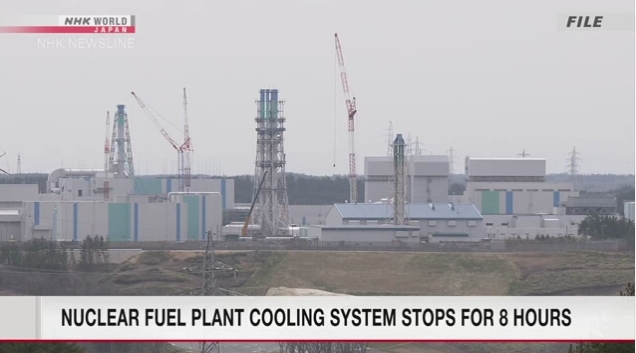
Nuclear plant cooling system stops working for 8 hours.
July 3, 2022
The operator of a nuclear fuel reprocessing plant in Aomori Prefecture, northern Japan, says a cooling system for highly radioactive waste liquid stopped functioning for about eight hours on Saturday.
Japan Nuclear Fuel Limited reported the problem at a plant compound in Rokkasho Village on Sunday. It says the glitch poses no threat to the environment.
The operator says one of the tanks storing radioactive waste lost its cooling functions for about eight hours from around 3:30 p.m.
About 2,600 liters of waste liquid produced during a test operation was stored in the tank.
The operator says it found cooling water levels dropping at around 7 p.m. on Saturday. An inspection discovered that the valve of a circulating water piping system had been turned off for some reason.
The operator said the temperature of the waste liquid briefly rose to 32 degrees from the usual 24 degrees. It says there is no leakage of radioactive substances.
The operator said it officially confirmed at 2:26 a.m. on Sunday that the cooling function had stopped working, explaining why it announced the problem one day after it occurred.
The Aomori prefectural government has dispatched officials to the plant and urged the operator to determine the cause of the problem and come up with measures to prevent a recurrence.
Decadal trends in 137Cs concentrations in the bark and wood of trees contaminated by the Fukushima nuclear accident.
Abstract
Understanding the actual situation of radiocesium (137Cs) contamination of trees caused by the Fukushima nuclear accident is essential for predicting the future contamination of wood. Particularly important is determining whether the 137Cs dynamics within forests and trees have reached apparent steady state. We conducted a monitoring survey of four major tree species (Japanese cedar, Japanese cypress, konara oak, and Japanese red pine) at multiple sites. Using a dynamic linear model, we analyzed the temporal trends in 137Cs activity concentrations in the bark (whole), outer bark, inner bark, wood (whole), sapwood, and heartwood during the 2011–2020 period. The activity concentrations were decay-corrected to September 1, 2020, to exclude the decrease due to the radioactive decay. The 137Cs concentrations in the whole and outer bark samples showed an exponential decrease in most plots but a flat trend in one plot, where 137Cs root uptake is considered to be high. The 137Cs concentration ratio (CR) of inner bark/sapwood showed a flat trend but the CR of heartwood/sapwood increased in many plots, indicating that the 137Cs dynamics reached apparent steady state within one year in the biologically active parts (inner bark and sapwood) and after several to more than 10 years in the inactive part (heartwood). The 137Cs concentration in the whole wood showed an increasing trend in six plots. In four of these plots, the increasing trend shifted to a flat or decreasing trend. Overall, the results show that the 137Cs dynamics within forests and trees have reached apparent steady state in many plots, although the amount of 137Cs root uptake in some plots is possibly still increasing 10 years after the accident. Clarifying the mechanisms and key factors determining the amount of 137Cs root uptake will be crucial for predicting wood contamination.
Introduction
After the Fukushima Dai-ichi Nuclear Power Plant (FDNPP) accident in March of 2011, a wide area of forests in eastern Japan was contaminated with radionuclides. In particular, radiocesium (137Cs) has the potential to threaten the forestry and wood production in the contaminated area for many decades because it was released in large amounts (10 PBq)1 and has a relatively long half-life (30 years). Radiocesium levels for some wood uses are strictly regulated in Japan (e.g., 40 Bq kg−1 for firewood2 and 50 Bq kg−1 for mushroom bed logs3), meaning that multipurpose uses of wood from even moderately contaminated areas are restricted. Although a guidance level of radiocesium in construction wood has not been declared in Japan, the permissible levels in some European countries (370–740 Bq kg−1)4,5,6 suggest that logging should be precautionary within several tens of kilometers from the FDNPP, where the 137Cs activity concentration in wood potentially exceeds 1,000 Bq kg−1 [refs. 7,8]. To determine whether logging should proceed, the long-term variation in wood 137Cs concentration must be predicted as accurately as possible. Many simulation models successfully reproduce the temporal variations in the early phase after the FDNPP accident, but produce large uncertainties in long-term predictions9. To understand the 137Cs dynamics in forests and trees and hence refine the prediction models, it is essential to provide and analyze the observational data of 137Cs activity concentrations in tree stem parts.
Accident-derived 137Cs causes two types of tree contamination: direct contamination by 137Cs fallout shortly after the accident, and indirect contamination caused by surface uptake from directly contaminated foliage/bark10,11 and root uptake from contaminated soil12. The 137Cs concentration in bark that pre-exists the accident was affected by both 137Cs drop/wash off from bark surfaces and 137Cs uptake because the bark consists of a directly contaminated outer bark (rhytidome) and an indirectly contaminated inner bark (phloem). Given that the 137Cs content was 10 times higher in the outer bark than in the inner bark in 201213 and the 137Cs concentration in the whole bark decreased during the 2011–2016 period at many study sites8, the temporal variation in the whole bark 137Cs concentration during the early post-accident phase must be mainly contributed by drop/wash off of 137Cs on the outer bark surface.
In contrast, stem wood (xylem) covered by bark was contaminated only indirectly. Although 137Cs distribution in sapwood (outer part of stem wood; containing living cells) and heartwood (inner part of stem wood; containing no living cells) is non-uniform and species-specific8,13,14,15, the 137Cs concentration in whole wood depends on the amount of 137Cs uptake. Because the dissolvable 137Cs on the foliar/bark surface decreased significantly within 201116, the main route of 137Cs uptake since 2012 is likely root uptake rather than surface uptake. A monitoring survey during 2011–2016 showed that the temporal trend in the whole wood 137Cs concentration can be increasing, decreasing, or flat8, suggesting that 137Cs root uptake widely differs among sites and species.
Meanwhile, many simulation models have predicted an initial increase in the whole wood 137Cs concentration after the accident, followed by a gradual decline9. The initial increase is attributable to the increase in soil 137Cs inventory, and the following decline is mainly attributed to radioactive decay, dilution by wood biomass increment, and immobilization in the soil. Therefore, the trend shift from increasing to decreasing is a good indicator that shows the 137Cs dynamics within the forest have reached apparent steady state, which is characterized by slower changes in 137Cs concentration, bioavailability, and partitioning in the forest12,17,18. However, the timing of the trend shift predicted by the models have large uncertainty, varying from several years to a few decades from the accident9. Moreover, the trend shift has not been confirmed by observational data after the FDNPP accident. Although our monitoring survey cannot easily identify the key driving factors of the temporal trends, it can directly discern the trend shift from increasing to decreasing, and the timeframe of the increasing trend. The confirmation of the trend shift will accelerate the understanding of key factors of 137Cs root uptake, because important parameters such as transfer factor and CR are originally defined for a steady state condition18.
The present study aims to clarify the temporal trends of 137Cs concentrations in bark and wood of four major tree species (Japanese cedar, Japanese cypress, konara oak, and Japanese red pine) at multiple sites during the 10 years following the FDNPP accident. Detecting a trend shift from increasing to decreasing in the wood 137Cs concentration was especially important to infer whether the 137Cs dynamics within the forest have reached apparent steady state. We update Ohashi et al.8, who analyzed the monotonous increasing or decreasing trends during 2011–2016, with observational data of 2017–2020 and a more flexible time-series analysis using a dynamic linear model (DLM). The DLM is suitable for analyzing data including observational errors and autocorrelation, and has the advantage of being applicable to time-series data with missing years. For a more detailed understanding of bark contamination and the 137Cs dynamics in tree stems, we also newly provide data on the 137Cs concentrations in the outer and inner barks. The temporal trends in the 137Cs CRs of outer bark/inner bark, heartwood/sapwood, and inner bark/sapwood were analyzed to confirm whether the 137Cs dynamics within the trees have reached apparent steady state.
Materials and methods
Monitoring sites and species
The monitoring survey was conducted at five sites in Fukushima Prefecture (sites 1–4 and A1) and at one site in Ibaraki Prefecture (site 5), Japan (Fig. 1). Sites 1, 2, and A1 are located in Kawauchi Village, site 3 in Otama Village, site 4 in Tadami Town, and site 5 in Ishioka City. Monitoring at sites 1–5 was started in 2011 or 2012, and site A1 was additionally monitored since 2017. The tree species, age, mean diameter at breast height, initial deposition density of 137Cs, and sampling year of each sample at each site are listed in Table 1. The dominant tree species in the contaminated area, namely, Japanese cedar (Cryptomeria japonica [L.f.] D.Don), Japanese cypress (Chamaecyparis obtusa [Siebold et Zucc.] Endl.), konara oak (Quercus serrata Murray), and Japanese red pine (Pinus densiflora Siebold et Zucc.) were selected for monitoring. Japanese chestnut (Castanea crenata Siebold et Zucc.) was supplementally added in 2017. The cedar, cypress, and pine are evergreen coniferous species, and the oak and chestnut are deciduous broad-leaved species. Sites 1 and 3 each have three plots, and each plot contains a different monitoring species. Site A1 has one plot containing two different monitoring species, and the remaining sites each have one plot with one monitoring species, giving ten plots in total.


Sample collection and preparation
Bulk sampling of bark and wood disks was conducted by felling three trees per year at all sites during 2011–20168,25 and at sites 3–5 and A1 during 2017–2020. Partial sampling from six trees per year was conducted at sites 1 and 2 during 2017–2020 (from seven trees at site 2 in 2017) to sustain the monitoring trees. All the samples were obtained from the stems around breast height. During the partial sampling, bark pieces sized approximately 3 cm × 3 cm (axial length × tangential length) were collected from four directions of the tree stem using a chisel, and 12-mm-diameter wood cores were collected from two directions of the tree stem using an automatic increment borer (Smartborer, Seiwa Works, Tsukuba, Japan) equipped with a borer bit (10–101-1046, Haglöf Sweden, Långsele, Sweden). Such partial sampling increases the observational errors in the bark and wood 137Cs concentrations in individual trees26. To mitigate this error and maintain an accurate mean value of the 137Cs concentration, we increased the number of sampled trees from three to six. The sampling was conducted mainly in July–September of each year; the exceptions were site-5 samples in 2011 and 2012, which were collected irregularly during January–February of the following year. The collected bark pieces were separated into outer and inner barks, and the wood disks and cores were split into sapwood and heartwood. The outer and inner bark samples during 2012–2016 were obtained by partial sampling of barks sized approximately 10 cm × 10 cm from 2–3 directions on 2–3 trees per year.
The bulk samples of bark, sapwood, and heartwood were air-dried and then chipped into flakes using a cutting mill with a 6-mm mesh sieve (UPC-140, HORAI, Higashiosaka, Japan). The pieces of the outer and inner bark were chipped into approximately 5 mm × 5 mm pieces using pruning shears, and the cores of the sapwood and heartwood were chipped into semicircles of thickness 1–2 mm. Each sample was packed into a container for radioactivity measurements and its mass was measured after oven-drying at 75 °C for at least 48 h. Multiplying this mass by the conversion factor (0.98 for bark and 0.99 for wood)8 yielded the dry mass at 105 °C.
Radioactivity measurements
The radioactivity of 137Cs in the samples was determined by γ-ray spectrometry with a high-purity Ge semiconductor detector (GEM20, GEM40, or GWL-120, ORTEC, Oak Ridge, TN). For measurements, the bulk and partial samples were placed into Marinelli containers (2.0 L or 0.7 L) and cylindrical containers (100 mL or 5 mL), respectively. The peak efficiencies of the Marinelli containers, the 100-mL container, and the 5-mL container were calibrated using standard sources of MX033MR, MX033U8PP (Japan Radioisotope Association, Tokyo, Japan), and EG-ML (Eckert & Ziegler Isotope Products, Valencia, CA), respectively. For the measurement of the 5-mL container, a well-type Ge detector (GWL-120) was used under the empirical assumption that the difference in γ-ray self-absorption between the standard source and the samples is negligible27. The measurement was continued until the counting error became less than 5% (higher counting errors were allowed for small or weakly radioactive samples). The activity concentration of 137Cs in the bark (whole) collected by partial sampling was calculated as the mass-weighted mean of the concentrations in the outer and inner barks; meanwhile, the concentration in the wood (whole) was calculated as the cross-sectional-area-weighted mean of sapwood and heartwood concentrations. The activity concentrations were decay-corrected to September 1, 2020, to exclude the decrease due to the radioactive decay.
Discussion
Causes of temporal trends in bark 137Cs concentration
The 137Cs concentration in the whole bark decreased in many plots, clearly because the outer bark 137Cs concentration decreased. However, the whole bark 137Cs concentration showed a relatively small decrease or even a flat trend in some plots (site-2 cedar and site-1 cypress and oak). In the site-1 cypress plot, where the whole bark 137Cs concentration decreased relatively slowly, the inner bark 137Cs concentration notably increased. Similarly, although we lack early phase monitoring data in the site-2 cedar and site-1 oak plots, the inner bark 137Cs concentration in both plots is considered to have increased prior to monitoring because the sapwood 137Cs concentration increased in both plots and the CR of inner bark/sapwood was constant in all other plots. Therefore, the low-rate decrease or flat trend in the whole bark 137Cs concentration in some plots was probably caused by an increase in the inner bark 137Cs concentration, itself likely caused by high 137Cs root uptake (as discussed later).
The 137Cs concentration in the outer bark decreased in all four plots monitored since 2012 (site-1 and site-3 cedar, site-1 cypress, and site-3 pine), confirming the 137Cs drop/wash off from the bark surface. The constant (exponential) decrease in three of these plots indicates that the 137Cs drop/wash off was still continuing in 2020 but with smaller effect on the outer bark 137Cs concentration. In contrast, the decrease in the site-1 cypress plot seemed to slow down since around 2017. Furthermore, Kato et al.32 reported no decrease in 137Cs concentration in the outer bark of Japanese cedar during the 2012–2016 period. Such cases cannot be fitted by a simple decrease of the outer bark 137Cs concentration. As a longer-term perspective, in the outer bark of Norway spruces (Picea abies) affected by the Chernobyl nuclear accident, the biological half-life of 137Cs concentration was extended in areas with higher precipitation, suggesting that high root uptake of 137Cs hinders the decreasing trend33. The present study showed that 70–80% or more of the 137Cs deposited on the bark surface (outer bark) was removed by drop/wash off after 10 years from the accident and that the 137Cs CR of outer bark/inner bark became constant in some plots. These facts suggest that the longer-term variations in outer bark 137Cs concentration will be more influenced by 137Cs root uptake, although it is uncertain whether root uptake caused the slowing down of the decrease rate seen in the site-1 cypress plot. Further studies are needed to understand the 137Cs concentration in newly formed outer bark and to determine the 137Cs CR of outer bark/inner bark at steady state.
Causes of temporal trends in wood 137Cs concentration
The temporal trends of the 137Cs concentration in the whole wood basically corresponded to those in the sapwood. The exceptions were the site-3 and site-4 cedar plots, where the sapwood 137Cs concentration did not increase but the whole wood 137Cs concentration was raised by the notable increase in the heartwood 137Cs concentration. This behavior can be attributed to a species-specific characteristic of Japanese cedar, which facilitates Cs transfer from sapwood to heartwood8,15,34. The present study newly found that the increase in the 137Cs CR of heartwood/sapwood in the cedar plots became smaller or shifted to a flat trend around 2015–2016, indicating that 137Cs transfer between the sapwood and heartwood has reached apparent steady state at many sites 10 years after the accident. Therefore, after 2020, the whole wood 137Cs concentration in cedar is unlikely to increase without a concomitant increase in the sapwood 137Cs concentration.
The increasing trends in the 137Cs concentrations in whole wood and sapwood (site-2 cedar, site-1 cypress, and site-1 and site-3 oak plots) are seemingly caused by the yearly increase in 137Cs root uptake; however, the wood 137Cs concentration can also increase when the 137Cs root uptake is constant or even slightly decreases each year. This behavior can be shown in a simple simulation of the temporal variation in the wood 137Cs content (the amount of 137Cs in stem wood of a tree). If the 137Cs dynamics within a tree have reached steady state and the proportion of 137Cs allocated to stem wood become apparently constant, the wood 137Cs content in a given year can be considered to be determined by the amount of 137Cs root uptake and the amount of 137Cs emission via litterfall. The flat 137Cs CR trend of inner bark/sapwood during 2012–2020 (see Fig. 5) indicates that the 137Cs dynamics, at least those between the inner bark and sapwood, reached apparent steady state within 2011. Here we assume that (1) the annual amount of 137Cs root uptake is constant, (2) the proportion of 137Cs allocated to stem wood is apparently constant, and as assumed in many forest Cs dynamics models17,35,36,37, (3) a certain proportion of 137Cs in the stem wood is lost via litterfall each year. Under these conditions, the simulated amount of 137Cs emission balanced the amount of 137Cs root uptake after sufficient time, and the wood 137Cs content approached an asymptotic value calculated as [root uptake amount × allocation proportion × (1/emission proportion − 1)]. Note that the asymptotic value increases with increasing root uptake amount and decreasing emission proportion and does not depend on the amount of 137Cs foliar/bark surface uptake in the early post-accident phase. Nevertheless, the amount of 137Cs surface uptake in the early phase critically determines the trend of the wood 137Cs content. More specifically, the trend in the early phase will be increasing (decreasing) if the surface uptake is smaller (larger) than the asymptotic value. Finally, the temporal variation of the 137Cs concentration in wood is thought to be the sum of the dilution effect of the increasing wood biomass and the above-simulated variation in the wood 137Cs content. Therefore, in the early post-accident phase, the wood 137Cs concentration will increase when the wood 137Cs content increases at a higher rate than the wood biomass. As the wood 137Cs content approaches its asymptotic value (i.e., steady state), its increase rate slows and the dilution effect proportionally increases. Then, the wood 137Cs concentration shifts from an increasing trend to a decreasing trend. The trends of the 137Cs concentrations in whole wood and sapwood in the site-3 oak plot follow this basic temporal trend, which is similarly predicted by many simulation models9.
In other plots with the increasing trend (site-2 cedar and site-1 cypress and oak), the increase in the 137Cs concentrations in whole wood and sapwood became smaller or shifted to a flat trend around six years after the accident; however, it did not shift to a decreasing trend. This lack of any clear shift to a decreasing trend, which was similarly seen at sites with hydromorphic soils after the Chernobyl nuclear accident38,39, cannot be well explained by the above simulation. A core assumption of the simulation that the yearly amount of 137Cs root uptake is constant is probably violated in these plots, leading to underestimations of the root uptake amount. Although the inventory of exchangeable 137Cs in the organic soil layer has decreased yearly since the accident, that in the mineral soil layer at 0–5 cm depth has remained constant40. In addition, the downward migration of 137Cs has increased the 137Cs inventory in the mineral soil layer below 5-cm depth41,42. If the steady state 137Cs inventory of the root uptake source can be regarded as sufficient for trees, any increase in the 137Cs root uptake is likely explained by expansion of the root distribution and the increase in transpiration (water uptake) with tree growth. When the wood 137Cs content increases at a similar rate to the wood biomass, the increasing trend will not obviously shift to a decreasing trend. Therefore, assuming the 137Cs allocation and emission proportions in the mature trees do not change considerably with time, the amount of 137Cs root uptake is considered to be increasing yearly in these four plots.
In the remaining plots with the decreasing or flat trend (site-1 cedar, site-4 cedar without outliers, site-5 cypress, and site-3 pine), according to the above simulation, the amount of initial 137Cs surface uptake was larger than or similar to the asymptotic value, i.e. the amount of 137Cs root uptake is relatively small and/or the proportion of 137Cs emission via litterfall is relatively high. However, the amount of 137Cs root uptake in the plots with the flat trend is possibly increasing because the flat trend has not shifted to a decreasing trend. In these plots, although it is difficult to confirm apparent steady state of the soil–tree 137Cs cycling because of the lack of an initial increasing trend, the recent flat trends in the 137Cs CRs of heartwood/sapwood and inner bark/sapwood indicate that the 137Cs dynamics, at least within the trees, have reached apparent steady state.
Various factors were found to increase the 137Cs root uptake after the Chernobyl nuclear accident; for example, high soil water content, high soil organic and low clay content (i.e., low radiocesium interception potential [RIP]), low soil exchangeable K concentration, and high soil exchangeable NH4 concentration12,43. After the FDNPP accident, the 137Cs transfer from soil to Japanese cypress and konara oak was found to be negatively correlated with the soil exchangeable K concentration44,45 and the 137Cs mobility is reportedly high in soils with low RIP46. However, neither the soil exchangeable K and Cs concentrations nor the RIP have explained the different 137Cs aggregated transfer factors (defined as [137Cs activity concentration in a specified component/137Cs activity inventory in the soil]) of Japanese cedars at sites 1–446,47. Because the 137Cs dynamics within the forest and trees in many plots reached apparent steady state at 10 years after the FDNPP accident, the 137Cs aggregated transfer factor is now considered to be an informative indicator of the 137Cs root uptake. Therefore, a comprehensive analysis of the 137Cs aggregated transfer factor and the soil properties at more sites than in the present study will be important to understand key factors determining the amount of 137Cs root uptake by each tree species at each site.
Validity and limitation of the trend analyses
Although the application of the smooth local linear trend model failed in plots monitored for less than five years, it was deemed suitable for analyzing the decadal trend because it removes annual noises, which are probably caused by relatively large observational errors (including individual variability)26. Moreover, the algorithm that determines the trend and its shift between 2 and 4 delimiting years was apparently reasonable, because the detected trends well matched our intuition. However, when judging a trend, the algorithm simply assesses whether the true state values significantly differ between the delimiting years. Therefore, it cannot detect changes in the increase/decrease rate (i.e., whether an increasing/decreasing trend is approaching a flat trend). For example, the whole bark 137Cs concentration in the site-1 cypress plot was determined to decrease throughout the monitoring period. In fact, the decrease rate slowed around 2014 and the decreases were slight between 2014 and 2020 (see Fig. 2). Similarly, the sapwood 137Cs concentration in the site-1 cypress and oak plots was determined to increase throughout the monitoring period, but the increase rate has clearly slowed since around 2017. To more sensitively detect the shift from an increasing/decreasing trend to a flat trend, other algorithms are required. Nevertheless, this algorithm is acceptable for the chief aim of the present study; that is, to detect a trend shift from increasing to decreasing.
Conclusions
In many plots monitored at Fukushima and Ibaraki Prefectures, the 137Cs concentrations in the whole and outer bark decreased at almost the same yearly rate for 10 years after the FDNPP accident, indicating that the direct contamination of the outer bark was mostly but not completely removed during this period. Moreover, the 137Cs concentration in the whole bark decreased at relatively low rates or was stable in plots where the 137Cs root uptake was considered to be high. This fact suggests that indirect contamination through continuous root uptake can reach the same magnitude as direct contamination by the accident.
In all of our analyzed plots, the 137Cs CR of inner bark/sapwood has not changed since 2012, indicating that 137Cs transfer among the biologically active parts of the tree stem had already reached apparent steady state in 2011. In contrast, the 137Cs CR of heartwood/sapwood in six out of nine plots increased after the accident. In four of these plots, the 137Cs CR of heartwood/sapwood plateaued after 3–6 years; in the other two plots, the plateau was not reached even after 10 years. Therefore, saturation of 137Cs in heartwood (an inactive part of the tree stem) requires several years to more than one decade.
The 137Cs concentration in the whole wood showed an increasing trend in six out of nine plots. In four of these plots, the increasing trend shifted to a flat or decreasing trend, indicating that the 137Cs dynamics in many forests reached apparent steady state at 10 years after the accident. However, the lack of the clear shift to a decreasing trend indicates that the 137Cs root uptake is probably still increasing in some plots. Continuous monitoring surveys and further studies clarifying the complex mechanisms of 137Cs root uptake in forests are needed in order to refine the simulation models and improve their prediction accuracy.
Nuclear power in Japan may be a mistake we are doomed to repeat
https://www.asahi.com/ajw/articles/14663000VOX POPULI: Nuclear power in Japan may be a mistake we are doomed to repeat. Vox Populi, Vox Dei is a daily column that runs on Page 1 of The Asahi Shimbun., July 7, 2022
The Supreme Court was extremely lenient with the government in its June 17 verdict concerning the Fukushima nuclear catastrophe of 2011.
Multiple high courts had already ruled that the government was liable for damages for failing to order Tokyo Electric Power Co. to take sufficient preventive measures against a potentially disastrous tsunami.
The top court, however, overturned all these rulings.
Explaining the reason, the presiding justice noted to the effect that the tsunami turned out to be “simply too massive.”
The gist of his argument was that since the accident would have occurred anyway even if the government had ordered TEPCO to install a seawall, his court could not hold the government responsible as a nuclear safety regulator.
What an utterly magnanimous ruling for a government that failed to do its part. This is akin to giving someone a pass because they are too inexperienced or immature to be treated seriously.
I could not possibly support this ruling. However, trying to go along with the court’s reasoning just for the sake of argument, the conclusion to be drawn is the government was never capable of regulating a nuclear power plant at all.
Ultimately, any discussion of nuclear power boils down to whether humans are ever capable of being a party to handling it.
Radioactive nuclear waste must be kept isolated for an utterly mind-boggling period of 100,000 years. We have also learned that once a nuclear accident occurs, we cannot even go near the accident site, let alone control it.
For some years after the Fukushima disaster, the idea of ending nuclear power generation was a major issue in national elections.
A decade has elapsed, however, and the issue is hardly “hot” in the July 10 Upper House election. In fact, the recent rise in energy prices has given a boost to advocates for a greater reliance on nuclear energy.
If radioactive nuclear waste could talk, it must be scoffing at our forgetfulness and taunting us: “You will never be able to measure us by your yardstick.”
Amid Iran nuclear impasse, China calls out US for AUKUS ‘double standards’

AUKUS pact’s negative impact on political, diplomatic settlement of Iran nuclear issue cannot be undone, says Chinese envoy
AA Riyaz ul Khaliq |01.07.2022 ISTANBUL
Calling for an “early and positive outcome” in ongoing talks on the Iran nuclear deal, China has urged the US to “abandon double standards” on non-proliferation of nuclear weapons.
Referring to the AUKUS pact between the US, UK and Australia, China’s UN envoy Zhang Jun told a Security Council session: “(It) is the first time since the NPT (Treaty on the Non-Proliferation of Nuclear Weapons) was concluded that a nuclear weapon state has openly transferred nuclear weapon materials to a non-nuclear weapon state.”
Under the AUKUS deal signed last year, Australia will build nuclear-powered submarines with the US and UK.
“Regardless of how the three countries may choose to name their nuclear submarine cooperation, the very essence of their nuclear proliferation behavior cannot be concealed,” Zhang said during a UNSC session on the Iran nuclear deal on Thursday.
“Its negative impact on the political and diplomatic settlement of the Iranian nuclear issue cannot be undone, the risk it poses to regional peace and stability is a reality that cannot be changed.”…………….
Welcoming the indirect talks between Washington and Tehran held in Qatar’s capital Doha this week, Zhang said: “The future of the Iranian nuclear issue is critical to the international nuclear non-proliferation regime, regional stability, and international peace and security.”
The meeting in Doha, however, concluded without any concrete progress.
Zhang said adhering to “the overarching goal of a political solution” will keep the “resumed Iranian nuclear talks on the right track with a view to an early and positive outcome.”
The Chinese ambassador also called for “eliminating interference in the negotiation process.”……………….. https://www.aa.com.tr/en/asia-pacific/amid-iran-nuclear-impasse-china-calls-out-us-for-aukus-double-standards/2628064
North Korea warns of nuclear war risk as Japan, US and South Korea increase military ties
The Nation 3 Jul 22, Tensions on the Korean peninsula have been heightened by a series of North Korean missile tests. North Korea condemned US, Japanese and South Korean military co-operation on Sunday, claiming that Washington was increasing the risk of nuclear war in East Asia.
The three countries are discussing joint military exercises in the region after North Korean ballistic missile tests, several of which were test-fired towards Japan.
On March 24, North Korea said it had fired a long range intercontinental ballistic missile towards an ocean target more than 1,000 kilometres away, a test that Japanese authorities said landed within the country’s territorial waters, north of the Hokkaido……………..
“The prevailing situation more urgently calls for building up the country’s defence to actively cope with the rapid aggravation of the security environment of the Korean Peninsula and the rest of the world,” the North Korean Foreign Ministry said.
The statement took issue with a trilateral meeting by US, South Korean and Japanese leaders at a Nato summit last week, during which they underscored the need to strengthen their co-operation to deal with the North Korean nuclear threat.
“The chief executives of the US, Japan and South Korea put their heads together for confrontation with [North Korea] and discussed the dangerous joint military countermeasures against it including the launch of tripartite joint military exercises,” the North said.
North Korea views US-led military exercises in the region, particularly ones with rival South Korea, as an invasion rehearsal, though Washington and Seoul have repeatedly said they have no intentions of attacking the North…………….
Earlier last month, the defence chiefs of the US, South Korea and Japan agreed to resume their combined missile warning and tracking exercises as part of their efforts to deal with North Korea’s escalating weapons tests.
North Korean accused the US of exaggerating rumours about North Korean threats “to provide an excuse for attaining military supremacy over the Asia-Pacific region including the Korean Peninsula”…………..
North Korea claimed the recent Nato summit proves an alleged US plan to contain Russia and China by achieving the “militarisation of Europe” and forming a Nato-like alliance in Asia. It said “the reckless military moves of the US and its vassal forces” could lead to dangerous consequences like a nuclear war simultaneously taking place in both Europe and Asia-Pacific……….. https://www.thenationalnews.com/world/2022/07/03/north-korea-warns-of-nuclear-war-risk-as-japan-us-and-south-korea-increase-military-ties/
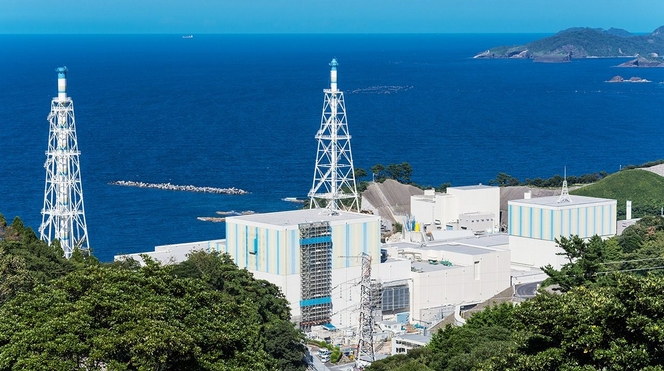
Japan’s Nuclear Power Plants in 2022
June 29, 2022
As of June 2022, 10 nuclear reactors at six power stations have been given the go-ahead to restart in Japan but only 4 reactors are currently in operation. Despite local governments agreeing to restart the reactors, some have not yet become operational due to the time required to implement safety measures and complete other construction work.
Prior to the Great East Japan Earthquake of 2011, 54 nuclear reactors were in operation in Japan, supplying approximately 30% of the country’s electric power. However, the disaster at the Fukushima Daiichi Nuclear Power Plant was a drastic blow to nuclear power’s reputation, leading to increased distrust and unease toward the energy source.
As of June 2022, only 10 reactors have been restarted with local approval at the following six power stations: Ōi, Takahama, and Mihama (Kansai Electric Power Company), Genkai and Sendai (Kyūshū Electric Power Company), and Ikata (Shikoku Electric Power Company). These plants based in western Japan all use pressurized water reactors, which are different from the boiling water reactors at the Fukushima Daiichi Nuclear Power Plant.
Boiling water reactors at the Onagawa (Tōhoku Electric Power Company), Kashiwazaki-Kariwa (Tokyo Electric Power Company), Tōkai Daini (Japan Atomic Power Company), and Shimane (Chūgoku Electric Power Company) nuclear power stations have all been approved under the new regulatory standards, but none have received the green light to restart.
In total, 21 nuclear reactors have been decommissioned since the 2011 Great East Japan Earthquake.

Nuclear Power Plants: Major Developments Since the Great East Japan Earthquake


(Translated from Japanese. Banner photo: Shimane Nuclear Power Plant, operated by Chūgoku Electric Power Company. © Pixta.)
Pakistan Reaffirms Pledge To Nuclear Non-Proliferation Goals
Eurasia Review , By Sher Bano
1540 Support Unit of Office for Disarmament Affairs (UNODA) hosted a side event entitled “Regional Approaches to Supporting UNSCR 1540 (2004)” on 1st June, 2022. UNSCR 1540 came in 2004 as a response to the threats of WMDs, non-proliferation and terrorism that emerged in 21st century. ……………………….
Pakistan conveyed its consistent view during the general debate that the international instruments and standards that are designed to address the threats to international security and peace posed by WMDs must be developed through multilateral and inclusive negotiations. Pakistan being a responsible nuclear state and member of the Security Council has being fulfilling its obligations under the resolution 1540 in order to strengthen the global framework for the non-proliferation of biological, nuclear and radiological weapons to the non-state actors. …………………….
Pakistan also seeks a non-discriminatory global regime on non-proliferation that is principle-based, inclusive and underpinned by the cardinal principle of equal and undiminished security for all states. Genuine progress on disarmament necessitates a conducive regional and global security environment as well as the resolution of long-standing disputes and conflicts. https://www.eurasiareview.com/01072022-pakistan-reaffirms-pledge-to-nuclear-non-proliferation-goals-oped/
 | |||
|
| |||
|
1 This Month


PLEASE OPPOSE HR 8255 AND S.3639 – bills would accelerate satellite deployment, with no environmental review or safeguards – https://ncstd5li.quorum.us/campaign/169331/
To see nuclear-related stories in greater depth and intensity – go to https://nuclearinformation.wordpress.com
-
Archives
- September 2026 (194)
- August 2026 (330)
- July 2026 (355)
- June 2026 (287)
- May 2026 (306)
- April 2026 (356)
- March 2026 (251)
- February 2026 (267)
- January 2026 (308)
- December 2025 (358)
- November 2025 (359)
- October 2025 (375)
-
Categories
- 1
- 1 NUCLEAR ISSUES
- business and costs
- climate change
- culture and arts
- ENERGY
- environment
- health
- history
- indigenous issues
- Legal
- marketing of nuclear
- media
- opposition to nuclear
- PERSONAL STORIES
- politics
- politics international
- Religion and ethics
- safety
- secrets,lies and civil liberties
- spinbuster
- technology
- Uranium
- wastes
- weapons and war
- Women
- 2 WORLD
- ACTION
- AFRICA
- Atrocities
- AUSTRALIA
- Christina's notes
- Christina's themes
- culture and arts
- Events
- Fuk 2022
- Fuk 2023
- Fukushima 2017
- Fukushima 2018
- fukushima 2019
- Fukushima 2020
- Fukushima 2021
- general
- global warming
- Humour (God we need it)
- Nuclear
- RARE EARTHS
- Reference
- resources – print
- Resources -audiovicual
- Weekly Newsletter
- World
- World Nuclear
- YouTube
-
RSS
Entries RSS
Comments RSS
 nuclear-news