Radiation lingering in sea near Fukushima
 much of the radioactive material will still be sinking down to the seabed and being absorbed by marine life
Fukushima’s radioactive sea contamination lingers, New Scientist September 2011 by Andy Coghlan Levels of radiation in the sea off the Fukushima-Daiichi nuclear plant remain stubbornly high six months after the earthquake and tsunami struck Japan on 11 March.
After levels peaked at around 100,000 becquerels per cubic metre of seawater in early April, much of the radioactive iodine, caesium and plutonium from Fukushima was expected to rapidly disperse in the Pacific Ocean. Continue reading
Radiation standards for children should be lower than for adults
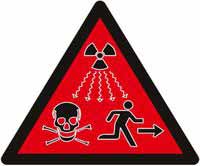 “Safety standards established in nuclear power countries are currently set for adults,” .. “It is a given fact that children are far more vulnerable to exposure.”
 New Radiation Limits Demanded for Children, By Suvendrini Kakuchi TOKYO, Sep 29, 2011 (IPS) – The threat of radioactive contamination faced particularly by children after the Mar. 11 nuclear disaster in Japan has touched the heart of the Japanese public, and become a major political and social issue.
Mothers are inevitably in the forefront of citizen groups working to protect children. At a meeting this week at the Ministry of Welfare, they presented an appeal that included a demand for the world’s first radiation safety standards for minors. Continue reading
Taiwan moves to increase the liability of nuclear operators
 the draft proposes that operators be responsible for natural disaster damage. The draft also raises the time in which an injured individual can seek compensation from nuclear power plant operators to 10 years from the current three years.
 India’s clash between democracy and nuclear power
 The government is not able to comprehend the scale of challenge it’s facing at the moment..
 Is Democracy Thwarting India’s Nuclear Power Ambitions?, WSJ, By Megha Bahree, SEPTEMBER 26, 2011, India’s democratic process is changing the country’s nuclear energy program at startling speed.
First it was protests at the proposed nuclear power plant at Jaitapur in Maharashtra. Now it’s protests at the plant under construction at Kudankulam in Tamil Nadu, and at practically every site across the country that has been designated for a new power plant. And at most places, people’s concerns about the risks of nuclear power are clashing with the government’s plans to power the country with nuclear energy….. Continue reading
The catastrophic level of radiation to Japanese from Fukushima nuclear disaster
In March, 2006, 20 years after the accident, the people whose health had been damaged in Russia, the Ukraine and Belarus numbered 7,000,000.
 excerpt from: Fukushima Meltdown: The World’s First Earthquake-Tsunami-Nuclear Disaster[Kindle Edition] Takashi Hirose http://www.amazon.com/dp/B005OD75J2/?tag=theasipacjo0b-20
Collusion still, between Japanese government and nuclear industry
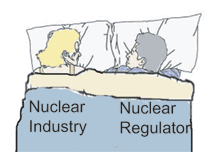 The collusive ties between government and industry were what undermined nuclear safety regulations. One would think that given the nuclear disaster, the practice of “amakudari” (literally “coming down from the heavens”), in which retiring bureaucrats acquire jobs in the industries that they formerly regulated, would have diminished, but that hasn’t been the case…..
 Noda must make promoters of nuclear power take responsibility for disaster, Mainichi Daily News, By Takao Yamada, 26 Sept 11, “……..there’s something I want to ask Noda, and that is this: Haven’t you forgotten one very crucial issue? The big question that was on everyone’s minds just six months ago? That is, to clarify what responsibility the main promoters of nuclear power — also known as Japan’s “nuclear village” spanning industry, government and academia — have over the still ongoing disaster? Continue reading
South Korea’s history of seeking nuclear weapons
 CIA documents shed light on S Korea’s nuke ambition in 1970s, The Korea Herald/Asia News Network, Sep 26, 2011 As the international community continues to grapple with how best to thwart North Korea’s nuclear ambitions, a Seoul-based publication has revealed declassified US Central Intelligence Agency documents shedding light on South Korea’s own efforts to acquire nuclear weapons four decades ago.
Global Asia, a publication of the East Asia Foundation in Seoul, said the previously secret US documents show that South Korea continued to develop nuclear weapons at least two years after Washington thought it had ceased during the 1970s……..
Park’s efforts to acquire nuclear weapons may have influenced North Korea’s own threat perception at the time, and fuelled the North’s desire to acquire its own nuclear weapons ? a fact that continues to be relevant today……
 these historical documents illustrate that engaging North Korea from a position of political, economic and military strength ? not extended nuclear deterrence ? remains the best policy option…http://www.asiaone.com/News/Latest%2BNews/Asia/Story/A1Story20110926-301465.html
Put nuclear plant in Tokyo – say protestors

About 50 anti-nuclear power demonstrators shouted: “Let’s build a nuclear power plant in Tokyo!”
“If they are not lying about nuclear safety, they might as well bring a nuclear power plant to Tokyo, right?” said organiser Angelo De Rosa, a 45-year-old Italian language teacher based in Tokyo. “In this rally, I also want to question if the government has provided people correct information on nuclear safety.”
The rally came a week after tens of thousands held one of the biggest anti-nuclear demonstrations in Tokyo, calling for an end to nuclear energy after the March 11 disaster sparked the worst atomic crisis since Chernobyl.
Demonstrators at Sunday’s rally carried banners showing remarks of authorities, politicians and professors that organisers said promoted nuclear power.
The crowds also mocked several politicians and scientists, including a Fukushima Medical University professor who reportedly said that radiation does not affect people who smile.With widespread public distrust of nuclear technology, Prime Minister Yoshihiko Noda has pledged a shift away from atomic power, which accounted for a third of Japan’s energy supply before the disaster. http://www.google.com/hostednews/afp/article/ALeqM5gSEdloFcehuqDDOaf2HPlJCeH1fQ?docId=CNG.b1c65bdc1e0bef497e1f81f732897709.ce1
Fukushima radiation levels – danger to children
Global resources needed to combat radiation levels, Statesman.journal.com by Warren Binford, Sep. 25, 2011 This month marked the half-year anniversary of the Fukushima earthquake and tsunami, and TEPCO and the Japanese government remain unable to control the nuclear emergency that continues to unfold.
Radiation levels exceed the Chernobyl disaster and now reach a level that is unknown to humans or machines. Radiation leakage from the Fukushima Daiichi Nuclear Power Plant was so high in August it exceeded the monitoring equipment’s maximum measuring capacity. Continue reading
Indian public willing to pay more for renewable energy
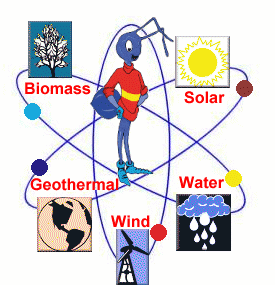 Majority of survey respondents (90 percent) argued government should support renewable energy. A significant share (82 percent) of survey respondents overwhelmingly supports renewable energy projects…..
Indians Ready to Pay More for Electricity from Renewable Energy Sources: Mercom Survey, Technology World, Rajani Baburajan 24 Sept 11 A recent survey conducted by Mercom Capital Group on renewable energy awareness in India finds that only 56 percent of Indian consumers have heard of ‘renewable energy’ or ‘clean energy.’ Further only 27 percent of customers have heard of ‘energy efficiency.’
Kudankulam nuclear power project in earthquake prone area
 ‘Project unwise as area quake-prone’, Times of India, TNN | Sep 26, 2011, MADURAI: Activists opposing the Kudankulam nuclear power plant have alleged that the implementing authority has violated certain essential rules in the establishment of the project. Anti-nuclear committee member Dr R Ramesh has claimed that Kudankulam Nuclear Power Project officials got a No-Objection Certificate (NOC) for setting up two reactors for generating 440 mega watts of power but had instead built two 1,000 mega watt units. He urged the state government either to suspend or cancel the NOC granted to the plant. Continue reading
India evacuates over 2,000 to test its nuclear capable missile
India tests nuclear-capable missile, Dawn.com 26 Sept 11, BHUBANESHWAR: India tested a medium-range nuclear-capable missile along its eastern coast on Saturday, an official said, as part of the nation’s efforts to build up its atomic deterrent…..
With a striking range of 434 miles, the missile uses solid propellant and is capable of carrying a 1,000 kilogram warhead. Due to security concerns, authorities evacuated over 2,000 people, including women and children living close to the testing range, and shifted them to temporary shelters.. http://www.dawn.com/2011/09/25/india-tests-nuclear-capable-missile-3.html
Fukushima: five local governments anxious about radiation to residents
Fukushima municipality heads concerned over lifting of evacuation advisory, Mainichi Daily News, 26 Sept, FUKUSHIMA (Kyodo) — Heads of five municipalities in Fukushima Prefecture affected by the ongoing nuclear crisis have aired concerns over the government’s plan to lift its evacuation advisory in the event of an emergency, saying not enough has been done to ensure the safety of residents. Continue reading
Fukushima area: ionising radiation in rice
High Radiation Found in Japanese Rice, WSJ, By YOSHIO TAKAHASHI, 26 Sept, TOKYO—Japan has detected high levels of radiation in rice growing near the damaged Fukushima nuclear power plant, a government official said Saturday.
A preparatory test ahead of the official examination of the safety of rice in Nihonmatsu, a city about 30 miles west of the stricken power plant, found that a sample of unharvested rice contained 500 becquerels of cesium per kilogram, the maximum permissible level, the Fukushima Prefecture official said. Rice with up to 500 becquerels of cesium per kilogram is considered safe for consumption, but shipments of rice exceeding that level are banned in Japan.
The cesium level found in the rice sample in Nihonmatsu is the highest discovered since the regulations were set in April, and no rice shipments have been banned, an official at Japan’s Ministry of Agriculture, Forestry and Fisheries said. Rice with 500 becquerels of cesium per kilogram still can be shipped.
Fukushima Prefecture will conduct the official tests of rice for radiation in Nihonmatsu as soon as possible at 300 spots—many more than the initially planned 38 spots—as a a result of the latest discovery. Preparatory tests are aimed at determining how many spots rice should be tested in each area……http://online.wsj.com/article/SB10001424053111903791504576590724000963708.html
Kaminoseki village election a pointer to nuclear power’s future in Japan
With the national government feeble and divided, the future of nuclear power now is being shaped more in communities where reactors are located or planned.
 Nuclear Power Drives Japan Village Election, Mayor Who Has Backed Reactor Plan Faces Anti-Nuke Challenger, WSJ, By JAMES SIMMS, 22 Sept 11 KAMINOSEKI, Japan—This small fishing village has become the next front in Japan’s battle over nuclear power, with an anti-nuke protester threatening to oust the pro-nuke mayor in an election Sunday.
At stake: the fate of a long-planned reactor for which ground-breaking is supposed to take place next year.
More broadly, the defeat of a mayor whose economic development strategy has centered around a controversial power plant could fuel the country’s increasingly influential anti-nuclear movement. Continue reading
1 This Month
23-25 October – on Zoom – World BEYOND War’s annual global conferenc


Shut down the radiation-damaged Heysham nuclear reactors now
To see nuclear-related stories in greater depth and intensity – go to https://nuclearinformation.wordpress.com

Say No to NASA’s Reckless Nuclear Reactor on the Moon
Say No to NASA’s Reckless Nuclear Reactor on the Moon

-
Archives
- October 2026 (231)
- September 2026 (339)
- August 2026 (330)
- July 2026 (355)
- June 2026 (287)
- May 2026 (306)
- April 2026 (356)
- March 2026 (251)
- February 2026 (267)
- January 2026 (308)
- December 2025 (358)
- November 2025 (359)
-
Categories
- 1
- 1 NUCLEAR ISSUES
- business and costs
- climate change
- culture and arts
- ENERGY
- environment
- health
- history
- indigenous issues
- Legal
- marketing of nuclear
- media
- opposition to nuclear
- PERSONAL STORIES
- politics
- politics international
- Religion and ethics
- safety
- secrets,lies and civil liberties
- spinbuster
- technology
- Uranium
- wastes
- weapons and war
- Women
- 2 WORLD
- ACTION
- AFRICA
- Atrocities
- AUSTRALIA
- Christina's notes
- Christina's themes
- culture and arts
- Events
- Fuk 2022
- Fuk 2023
- Fukushima 2017
- Fukushima 2018
- fukushima 2019
- Fukushima 2020
- Fukushima 2021
- general
- global warming
- Humour (God we need it)
- Nuclear
- RARE EARTHS
- Reference
- resources – print
- Resources -audiovicual
- Weekly Newsletter
- World
- World Nuclear
- YouTube
-
RSS
Entries RSS
Comments RSS

