Failure to control radioactive waste water continues, at crippled Fukushima nuclear site
Engineer: Outright failures continue to plague Fukushima plant — “Public may think worst is over… Nothing could be further from the truth” — Japan TV: New method failing to stop flow of highly contaminated water — Experts: ‘Diluting’ radiation in ocean adds to danger; Spreading it out only makes health damages worse (VIDEO)http://enenews.com/outright-failures-continue-plague-fukushima-japan-tv-new-method-failing-stop-flow-highly-contaminated-water-public-thinks-worst-could-be-further-truth-video?utm_source=feedburner&utm_medium=email&utm_campaign=Feed%3A+ENENews+%28Energy+News%29
Dr. Steve Elwart, professional engineer and expert for Dept. of Homeland Security, Dec 14, 2014 (emphasis added): With most of the media silent about the cleanup, the public may think the worst is over [at Fukushima Daiichi]… Nothing could be further from the truth… [Radioactive water is] leaking out into the ocean, allowing it to spread… around the world through ocean currents [and this has] prompted grave concerns over the impact on sea life in the area and around the world. [Officials] decided to build an “ice wall” around the reactor site… TEPCO conceded defeat and announced the efforts to construct the plug failed… As if things couldn’t get worse, less than two months ago, TEPCO once again came out with an announcement that it was having problems with the ice wall [and] was going to cease operations on the ice wall and pour cement… TEPCO President Naomi Hirose stated officials “will never give up” on the wall…debate continues over how to stop water from leaking into the ocean… outright failures continue to plague the Fukushima cleanup efforts.
NHK Transcript, Dec 26, 2014: TEPCO is still struggling to deal with contaminated water at the Fukushima Daiichi nuclear power plant.
NHK, Dec 26, 2014: New method for contaminated water may be failing — [TEPCO] has indicated that a new method aimed at tackling a large volume of highly radioactive wastewater at the Fukushima Daiichi nuclear power plant has not been entirely successful. TEPCO gave a progress report on its work to a panel of experts at the Nuclear Regulation Authority on Friday. The utility last month began pouring cement into underground tunnels filled with the contaminated water from the reactor buildings to stop the water inflow. The water is believed to be leaking into the sea… officials said that when they pumped water up from one of the pits, the water level at another pit changed. That suggests that gaps exist in the concrete-filled tunnels.
Documentary featuring radiation experts (at 6:30 in):
- Dr. Alice Stewart, physician and epidemiologist: All recommendations say one big hit is more dangerous than just a little one… It’s the basis of the control of nuclear waste — if you dilute it enough, it will be safe. Well, we say dilute it and it will add to the dangers.
- Jan van de Putte, radiation safety specialist: There’s a philosophy called the dilution philosophy, which means if you dilute something, then it doesn’t give any harm. But with all the knowledge we have today, we must say radiation is inducing health damage regardless of how little the doses of are. If you dilute radiation… all the health effects will only be more widely distributed. This is the only effect of this dilution philosophy.
- Dr. Richard Piccioni, biophysicist: Whether you have put it all in one place or have spread it out, the total irradiation of human beings… is the same. In fact if what some researchers like Dr. Stewart are saying is true, it will be even worse.
- Watch the documentary here
Fukushima released 13,000,000,000 times more neutrons than initially estimated — “Obvious implication for human health”
- We estimated a lower limit of 5.2 × 10²¹ slow neutrons m–2 sec–1 [m–2 sec–1 = per sq. meter per second] were emitted from the nuclear fuel rods to the sea water injected in the reactors
- Priyadarshi et al. (2011) have estimated a release amount of 4 × 10¹¹ slow neutrons m–2. The large difference with our estimation [13,000,000,000 times higher] comes from the intrinsic limit of the box model study by Priyadarshi et al.
- Our model directly estimates the amount of material released from the reactor core
- The estimated… number of neutron represent a lower limit of the amount of radiation emitted from the nuclear reactors… These values can be used as a proxy to the total amount of radiation emitted since the melt down
- [The authors] express their gratitude to… the Japanese Ministry of Environment…Ministry of Education, Culture, Sports, and Technology (MEXT)… [and] the Cabinet Office
Source: Scientists from Tokyo Institute of Technology, U. of California San Diego & Kyushu U., made available Oct 16, 2014
_a_numerical_simulation_global_transport
Evidence of neutron leakage at the Fukushima nuclear plant… Despite the obvious implication for human health and the surrounding ecology, there are no quantitative estimates of the neutron flux leakage… Heat must be removed by cooling the system to prevent… meltdown, which results in injection of neutrons and other fission products into the atmosphere… [T]ons of seawater were used as a coolant… A consequence is that salts and minerals present in seawater become radioactive by reaction with thermal neutrons… We calculated the total number of neutrons that leaked from the reactor core [and] estimate that a total of 4 × 10¹¹ neutrons per m2 were released before March 20.
Source: Priyadarshi et al.:
http://www.pnas.org/content/108/35/14422.full
Slow Neutrons: “In water-cooled reactors like the ones at Fukushima, the right combination of slow neutrons and enriched fuel leads to a self-sustaining process… [Water] acts as a so-called moderator, slowing down the neutrons and keeping the reaction going.”
Health effects of neutron radiation:
- Wikipedia: [Neutron] radiation is considered to be the most severe and dangerous radiation to the whole body when it is exposed to external radiation sources [and] roughly ten times more effective at causing biological damage compared to gamma or beta
- Dr. Robert Gale, MD (In 2011 Gale was called to Japan to deal with medical consequences of the Fukushima disaster): All three types of particles… can harm humans. Neutrons are the most dangerous because they are very energetic, can penetrate deeply, and deposit large amounts of energy into tissues.
- US Nuclear Regulatory Commission: Neutrons… have an exceptional ability to penetrate other material… neutrons are the only [type of ionizing radiation] that can make objects radioactive… neutrons can travel great distances in air.
- Dept. of Health & Human Services: Neutrons… are significantly more potent carcinogens [and] induces… chromosomal aberrations, mutations, and DNA damage… more efficiently
Source: Enenews
http://enenews.com/fukushima-released-13000000000-times-neutrons-initially-estimated
Radioactive contamination level jumped over 57 times outside of underground wall

January 13, 2015
Cs-134/137 and all β nuclides (including Sr-90) density showed the rapid increase in groundwater, according to Tepco.
The sample was taken in the seaside of Reactor 2. Sampling date was 1/12/2015.
Compared to the previous measurement of 1/8/2015, Cs-134/137 density rose up by 57 times, all β nuclides density also rose up by 57 times.
This is the highest reading measured from this boring. Tepco hasn’t identified the reason. This boring is located outside of the underground wall to stop contaminated groundwater flowing to the sea.
TEPCO groundwater plume mapping assumed the contaminated water released from the unit 1 turbine building would eventually reach this area.
TEPCO said within recent weeks that the portions of this trench that were not yet filled in with concrete were seeing contaminated water re-fill the trench as they pumped it out and that both ends of the trench seem to rise and fall with each other.
The concreting of the unit 2 trench that had been full of highly contaminated water since 2011 has caused leaking contaminated water to divert over to this area.
Theoretically, it is natural to assume the high level of contamination is flowing to the sea without anything to stop.
http://www.tepco.co.jp/nu/fukushima-np/f1/smp/2015/images/2tb-east_15011202-j.pdf
http://www.tepco.co.jp/cc/press/2015/1247139_6818.html
Source: Fukushima Diary
Radioactive contamination level jumped over 57 times outside of underground wall
India’s Koodankulam reactor no 1 not really functioning, repeated shutdowns

 Reactors from Russia are unsafe and unreliable, India shouldn’t buy them: Russian environmentalist Vladimir Slivyak DiaNuke.org, 9 Jan 15 “……..The Koodankulam reactor no 1, despite its commissioning with much fanfare last year, is not really functioning and has seen repeated shut-downs. The people’s movement in Koodankulam says its because of the sub-standard equipments from Russia and it is unsafe. What do you think?
Bad quality of equipment and reactor components coming from Russia is not a secret anymore. It was noticed in China as well. Under current management, Rosatom became deeply corrupted which resulted in regular public scandals and arrests. In last 3 years several deputy directors of Rosatom were arrested on corruption charges, and in total about 300 people were fired from Rosatom’ organizations for the same reason. Very huge scandal happened with Zio-Podolsk producing steam-generators for nuclear plants – people there used cheap metal for manufacturing, instead of expensive one required by technology. Difference in price of cheap and expensive metals was going into pockets of top-management. Another scandal was about stealing money for radioactive waste treatment, and another one about bribes and procurement, etc.
Bad quality of reactor components, you are likely dealing with in case of Kudankulam, is a direct consequence of corruption. You can read more on corruption issue in the special report on Russian nuclear industry published in December (can be downloaded here)…….http://www.dianuke.org/russian-reactors-are-unsafe-and-unreliable-india-shouldnt-buy-them-russian-environmentalist-vladimir-slivyak/
Safety concerns may close South Korea’s Wolsong No.1 reactor
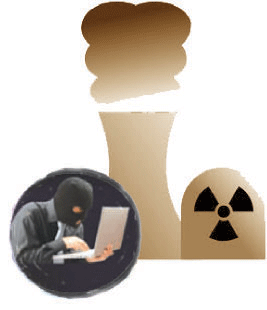
 Hacking of Korea’s nuclear operator raises risk of aging reactor closures Yahoo News By Meeyoung Cho SEOUL (Reuters) 12 Jan 15, – The hacking of South Korea’s nuclear operator means the country’s second-oldest reactor may be shut permanently due to safety concerns, said several nuclear watchdog commissioners, raising the risk that other aging reactors may also be closed.
“The operator failed to prevent it (the hack) and they don’t know how much data has been leaked. If the old reactor is still allowed to continue to run, it will just hike risks,” said Kim Hye-jung, one of the nine commissioners who will this month review an application to restart the Wolsong No.1 reactor.
The future of Wolsong No.1, shut in 2012 after reaching its 30-year lifespan, is seen as critical to the fate of other reactors, including the oldest Kori No.1 which had its lifespan extended by 10 years to 2017………
Even those commissioners who deem the reactor safe think that other issues such as public pressure will likely influence their decision, which is expected in February at the earliest.
Concerns over nuclear power have grown since the Fukushima disaster in Japan in 2011 and revelations in 2012 of fake certificates for reactor parts in South Korea.
(Additional reporting by Sohee Kim and Brian Kim; Editing by Henning Gloystein and Michael Perry) http://news.yahoo.com/hacking-koreas-nuclear-operator-raises-risk-aging-reactor-070014531–finance.html
Little chance that USA will get India to really change its Nuclear Liability Act
 Insuring nuclear power The Financial Express | January 12, 2015 Given the relatively low level of political capital it has in the Rajya Sabha, and the backdrop of the Bhopal gas tragedy and recent tragedies such as the Fukushima disaster in 2011, it seems unlikely the government is going to go out of its way to try and amend the Civil Liability of Nuclear Damage Act in a hurry—the Act has once again come to the forefront with US President Barack Obama coming to the Republic Day function.
 Since no US firm is going to build nuclear plants in India until Section 17(b) of the Act allows the Nuclear Power Corporation of India Limited (NPCIL) to take action against them in case of a nuclear accident, revoking this has been on the US agenda for a long time. Apart from the political sensitivity around such an action, as finance minister Arun Jaitley acknowledged at a seminar on the Act earlier this week, both the BJP and the Congress had passed the Act—so changing an integral part of the Act doesn’t look as if it is on the cards…….http://www.financialexpress.com/article/economy/editorial-insuring-nuclear-power/28748/
North Korea’s nuclear deal offer to USA
 North Korea Offers U.S. Deal to Halt Nuclear Test, NYT By CHOE SANG-HUNJAN. 10, 2015 SEOUL, South Korea — North Korea said Saturday that it had told the United States that it would impose a temporary moratorium on nuclear tests if Washington canceled its joint annual military exercises with South Korea to help promote dialogue on the divided Korean Peninsula.
The North proposed its “crucial step” in a message it delivered to the United States on Friday through an unspecified channel, the North’s official Korean Central News Agency said. In the past, North Korea has relayed messages to Washington through its United Nations mission in New York.
Until now, the United States has dismissed North Korea’s routine demand for an end to its joint military exercises with South Korea. The North has called them a rehearsal for an invasion while the United States and South Korea have insisted that their annual war games are defensive in nature.
But the North’s latest proposal included a new incentive for Washington, offering to temporarily suspend nuclear tests in return for a suspension of the joint military exercises this year.
The North’s overture followed the New Year’s Day speech of its leader, Kim Jong-un, in which he said he was ready to meet with President Park Geun-hye of South Korea if “the mood was right.” Mr. Kim said the two Koreas should mark their 70th anniversary of liberation from Japanese colonial rule this year with great strides toward inter-Korean reconciliation. North Korea has since significantly toned down its habitually harsh language when referring to South Korea…….
The United States on Saturday rebuffed the North Korean proposal……..http://www.nytimes.com/2015/01/11/world/asia/north-korea-offers-us-deal-to-halt-nuclear-test-.html?_r=0
Renewable Energy projects keenly supported in Indian States
Renewable Energy Project Developers Flock To Indian State Of Telangana , Clean Technica 9 Jan 12 “…….As the auction for renewable energy projects (especially solar power) gets ever more competitive, some project developers are approaching the state governments directly to set up projects and potentially secure power purchase agreements at the base tariffs determined by state-level regulatory bodies.
SunEdison recently successfully undertook this approach in Rajasthan. The company signed a memorandum of understanding with the Rajasthan government to install 5 GW solar power capacity over the next five years.
Greenko is planning to aggressively expand its renewable energy base in India. On 30 September 2014, the company had an operational capacity of 715 MW. It plans to increase the operational capacity to 1 GW by the end of this year. The company has a cumulative capacity of 2.5 GW of power generation capacity in its pipeline.http://cleantechnica.com/2015/01/11/renewable-energy-project-developers-flock-indian-state-telangana/
Environmental problems remain after the Fukushinma nuclear disaster
 Environmental Issues Remain in Spotlight Following Fukushima Nuclear Disaster Institute for International JournalismBy: William Hoffman Produced & Edited By: Zainab Kandeh Tuesday, December 9, 2014
When three of the six nuclear reactors at the Fukushima power plant went into meltdown after the 2011 tsunami hit, radioactive material started spilling into the water and land and became the largest nuclear disaster since Chernobyl.
Families and businesses are still suffering from the effects of this disaster and it has caused an upheaval of environmental issues and a focus on a new green movement in Japan that has consequences in many different facets of East Asian environmental issues: radiation, agriculture, social responsibility and sustainability in business.
One of the areas that has been most affected by the disaster is agriculture and fishery markets. Mari Takenouchi, an independent journalist in Japan, has followed the effects of the disaster, and found the government is doing a lot to hide some of the radiation’s effects.
She speculates strontium 90 and yttrium 90 radiant raise the incidence of leukemia, diabetes, suppressed immune systems, damage of nervous systems and developmental damage to unborn babies. However, the government was slow to include these radiant in its initial reports.
“Since the Japanese government acknowledged the severe danger of strontium 90, they are doing their best to avoid this topic,” Takenouchi said. “Since there is no scientists who do the research on this in Japan, nobody can say the negative impacts for sure, but I think it is already happening.”
Radiation Effects More Than General Area
These effects can travel far when the fish are affected by this radiation, Takenouchi said, yet canned pacific fish are still being exported to countries such as Cambodia, Ghana, Senegal, the Congo and Sri Lanka. While no connection to the radiation can definitively be made, Takenouchi said the reports of adverse health effects come from school children out of that country are cause to stop exportation of pacific fish to these developing countries……..http://scrippsiij.blogspot.ie/
Radiation may account for poor resistance of some Japanese to flesh-eating bacteria”
TV: Record level of “flesh-eating bacteria” cases in Japan — Spike began around 2011 Fukushima disaster — Now at 400% normal rate — US Gov’t: Radiation from nuclear accident greatly reduces ability to fight this infection — Officials: We don’t know what’s triggering it; Seek immediate help if symptoms develop (PHOTOS & VIDEO)http://enenews.com/tv-flesh-eating-bacteria-record-levels-japan-spike-began-2011-400-previous-average-govt-radiation-exposure-after-nuclear-accidents-greatly-reduces-ability-fight-infection-video?utm_source=feedburner&utm_medium=email&utm_campaign=Feed%3A+ENENews+%28Energy+News%29 6 Jan 15
New studies by scientists from Fukushima Institute of Public Health and others:Yomiuri Shimbun, Dec. 24, 2014 (emphasis added): Patients with ‘flesh-eating bacteria’ hit record — A record high 263 patients are suffering from streptococcal toxic shock-like syndrome (STSS), a deadly infection… National Institute of Infectious Diseases (NIID) is calling on people to visit a doctor… immediately after a possible STSS symptom is detected, such as a severe sore throat… [A] maximum of 100 patients suffered from the disease annually until 2010… This year, that number reached 263 as of Dec. 14, topping the previous worst record of 242 in 2012… Tokyo ranked first with 41… The infection is mainly caused by Group A Streptococcus… but details remain unclear. It is unknown what triggers the disease… The condition may lead to a state of shock, multiple organ failure and other results in a few days… It is also called “flesh-eating bacteria” [affecting] tissues such as on limbs and the face… NIID official said [to] “seek immediate treatment… should STSS symptoms appear.”
- Increased prevalence of group A streptococcus isolates in streptococcal toxic shock syndrome cases in Japan from 2010 to 2012, published 2014: Streptococcal toxic shock syndrome (STSS) is a severe invasive infection characterized by the sudden onset of shock, multi-organ failure, and high mortality… STSS is mainly caused by group A streptococcus (GAS). Although an average of 60–70 cases of GAS-induced STSS are reported annually, 143 cases were recorded in 2011. [We examine] the reason behind this marked increase… mefA-positive emm1 isolates has escalated since 2011.
- Evaluation of streptococcal toxic shock-like syndrome caused by group B streptococcus[GBS] in adults in Japan between 2009 and 2013, published 2014: In recent years, [Streptococcus infection] is an important cause of morbidity and mortality among adults… disease similar to streptococcal toxic shock syndrome have recently been reported… underlying disease was present in 47.4% of the patients.
US Dept. of Defense, 2012: (Photo – “Crew member is checked for radiation [in] Japan… March 2011″); Ch. 5 – Therapy for Bacterial Infections following Ionizing Radiation Injury… [C]oncerns about nuclear disasters have… shifted to emphasize the low-dose acute and low-dose–rate chronic irradiation scenarios of nuclear accidents… nonlethal doses of ionizing radiation enhance susceptibility to exogenous bacterial infections… The predominant bacteria isolated from wounds included… b-hemolytic [and] a-hemolytic Streptococcus… [I]mmune responses are greatly diminished within a few days after irradiation…individuals should be monitored continually for… symptoms of infection [which] aredifficult to treat effectively in those who receive whole-body ionizing radiation.
Al Jazeera: What does Polonium do to a person?… An amount equivalent to the size of a particle of dust is lethal. After being taken into the body… it bombards people’s cells with millions of radioactive alpha particles [and] damages the intestines, causing toxic shock syndrome.
Dr. Nick Priest, toxicology professor at Middlesex Univ.: If polonium is ingested [it] will travel through the gut… Destruction of the inner gut wall will lead to… toxic shock syndrome.
North Korea nvesting in miniaturising nuclear warheads
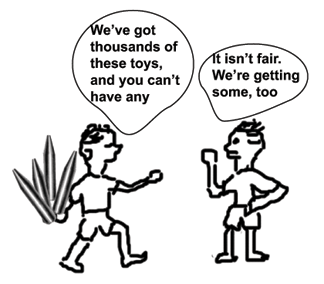
 North Korea ‘close to miniaturising nuclear warheads’, Telegraph UK, 6 Jan 15 South Korea believes Pyongyang’s scientists close to making the regime’s missiles capable of carrying nuclear warheads North Korea has achieved “a significant level” of the technology required to miniaturise nuclear warheads in order to mount them on ballistic missiles, according to South Korea’s ministry of defence.
In a white paper released on Tuesday, the ministry added that North Korea is believed to have obtained more than 88lbs of weapons-grade plutonium by repeatedly reprocessing spent nuclear fuel rods.
Additional efforts are also being made to produce highly-enriched uranium, the report stated.
An official of the ministry told Yonhap News that there was no solid evidence that North Korean scientists have perfected the technique of miniaturising a nuclear warhead, but the North is known to have invested heavily in the process………http://www.telegraph.co.uk/news/worldnews/asia/northkorea/11327412/North-Korea-close-to-miniaturising-nuclear-warheads.html
Pakistan makes a big move towards renewable energy with feed in solar tariffs

 Pakistan to pull solar energy into national power grid – TRFN BY AAMIR SAEED REPORTING BY AAMIR SAEED; EDITING BY LAURIE GOERING Tue Jan 6, 2015 ISLAMABAD, (Thomson Reuters Foundation) – Amid a worsening energy crisis, Pakistan has approved the use of grid-connected solar energy, rooftop solar installations and mortgage financing for home solar panels to boost uptake of clean energy in the country.
The government has also reversed course and eliminated a 32.5 percent tax imposed on imported solar equipment in the country’s 2014-2015 budget. The reversal aims to bring down the cost of installing solar panels.
The approval of net-metering – which allows solar panel purchasers to sell power they produce to the national grid – is a major breakthrough that could spur use of solar energy and help Pakistan’s government cut power shortages in the long run, said Asjad Imtiaz Ali, chief executive officer of the Alternative EnergyDevelopment Board, a public organisation.
“The initiative will help scale up demand for solar energy acrossPakistan,” he said, “and we hope the increased demand will also result in sufficient decreases in the price of solar equipment.”
Ali said the government decided to cut newly imposed taxes on the import of solar panels following pressure from business owners, the public and media.
And the decision to allow solar generators to sell their excess generating capacity means “consumers can now install rooftop solar systems and sell the extra energy to the national grid,” he said……….
Qamar-uz-Zaman, an expert on climate change with Lead Pakistan, a non-profit organisation in Islamabad, predicted net-metering and private sector financing for solar installation would revolutionise the use of renewable energy in Pakistan, as it has done for many other developed and developing countries.
“Pakistan can cut carbon emissions to a significant extent and access international climate financing by promoting solar energy, besides overcoming its energy crisis,” he said. http://www.reuters.com/article/2015/01/06/pakistan-solar-idUSL6N0UL15J20150106
In the fourth winter since the nuclear disaster in Fukushima, Japan, many of the displaced residents are still in limbo.
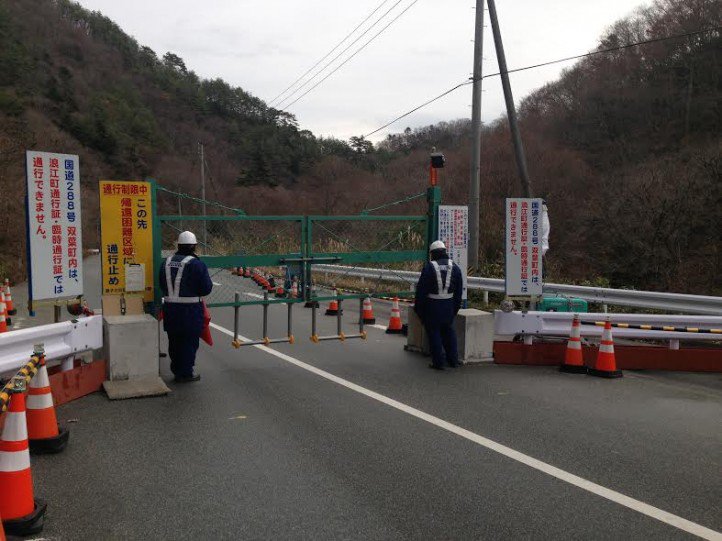
“No, nothing. I have nothing planned for New Year’s. Nothing at all. No one is coming.” A shy, round-faced woman spat these words like darts into the protective mask she wore. Moments earlier she had been laughing happily together with several other former residents of the small town of Tomioka as they reminisced about a friend they all knew. She quickly became raw, however, when asked about the coming holidays.
Tomioka counted 15,839 residents before the March 11, 2011 nightmare of earthquake, tsunami, and nuclear explosion began. All but one person has left — Matsumura Naoto, the now well-known rice farmer who refuses to abandon his family’s fifth-generation farm.
Confusion and despair among the others is common, a state of existence that government officials bewilderingly made even worse on March 25, 2013 when they divided the roughly 25-square-mile seaside spot into three zones: never to return, return for short periods, and in preparation to return. Government-sponsored scientists determined such divisions here and in other areas near the nuclear plant based on so-called acceptable annual dosage rates. Such designations may make surreal sense in scientific terms. In daily life, however, it means streets separated down the middle, one side “safe” while houses around the corner are condemned for tens of thousands of years to come.
All involved understand that the official designations are of critical significance in terms of compensation. If your property was anywhere but “never to return” you won’t be paid for much longer. Less appreciated is how such nuances taken together are playing out among those on the verge of their fourth winter in limbo.
Life in Internal Exile
Many of the former residents of Tomioka are now living 25 miles to the west in the rural town of Miharu, famous for its 1,000-year-old cherry tree. Miharu currently houses about 2,000 people of a total of nearly 140,000 officially classified as “displaced” by the crisis. The term “nuclear refugee” is out. All are lumped together as one. Yet those permanently shut out of their former lives since the Fukushima Daiichi power plant spiraled into meltdown include some who have been in as many as 10 shelters in three-and-a-half years.
On a recent afternoon a small group of Tomioka’s forever “displaced” villagers gathered to talk in a brightly lit common room hidden among twenty or so rows of tightly spaced sand-colored buildings that have been subdivided into small rooms for couples and individuals mainly in their sixties and seventies. A younger man in his fifties stood out. Before the crisis, his business supplied lunches for workers at the nuclear power plant. Vibrant and seemingly able to go anywhere, he is trapped by rules that among other things prevent him from living in Tomioka yet allow him several times a week to visit his beloved dachshund Chocolat, whom he refuses to leave to die.
Many of the displaced still believed in the possibility of return up to a few months ago. The group’s mayor Matsumoto-san no longer sees such a resolution. “If only they had told me then, told me that we wouldn’t be able to go back, I could have taken my family and moved to Aomori (in northern Japan), and we would be together,” he said. He was sharing what many express as the worst of it: families torn apart, children and grandchildren now living scattered throughout Japan and rarely if ever visiting. The shelters offer small, attached units, yet there is little open space, and certainly no land to farm. Freshly painted signs on the streets point to the housing units and appear welcoming, yet those inside say they know they are “in the way” and that “after a while you understand they don’t want you anymore.”
A Lottery Winner
One woman had a surprise for the others. “I’m so sorry I didn’t tell you before,” she began, perhaps taking advantage of the two strangers in the mix to break her news. “I applied to the (housing) lottery, and I’m sorry to tell you that I won. I’m very sorry. In a few weeks I’ll move away to a permanent unit. It isn’t much. I know I had a better chance because I’m on my own. I hope you’ll forgive me.”
Some might reduce these words to cultural essentialisms, yet a powerfully unprocessed atmosphere filled the room. The thin sense of community was yet again torn asunder, and while a few wished her luck — she had been in six different shelters before this — the rest gradually looked as if they would be sick and said nothing. Another woman fought off tears.
The newly published housing policy appears under the awkward slogan in Japanese and English — “Future From Fukushima” — and reveals itself for what it has been from the beginning: make it up as it goes along. Tiny details drive home the point. Even if you’re fortunate enough to win a permanent place and you manage to survive for more than 11 years, you’ll start having to pay rent.
The woman who won did not know this, nor did anyone fill her in if they did. She would escape to a place to call home this winter. Meanwhile, some among the others would become part of a sad statistic, one of the only clear facts to come out since March 2011. More people have died from stress-related causes than from the initial disasters in Fukushima.
Number of injured workers soars at Fukushima No. 1 nuclear plant
Jan 6, 2015
The number of workers injured at the Fukushima No. 1 nuclear plant this fiscal year, which ends March 31, far exceeded the 2013 figure by November, Tokyo Electric Power Co. officials said.
The rise mainly reflects an increase in the overall number of workers at the disaster-hit plant, according to the officials.
Thirty-nine workers were injured at the plant between April and November 2014, while one became ill. In fiscal 2013, which ended in March last year, 23 were injured, including one who died.
Last Sept. 22, a worker from a partner company suffered a broken back after being hit by a falling iron pipe while building a storage tank for contaminated water.
During work to build a tank on Nov. 7, three workers were injured by falling steel weighing 390 kg. One was left temporarily unconscious, while another broke both ankles.
The average number of workers per day has continued to increase at the plant. It has exceeded 6,000 since September, nearly double the year-earlier level, due in part to the need to prepare new storage tanks for contaminated water.
Tepco believes the injuries were caused by poor on-site coordination and management by the partner company, according to the officials.
The utility has started holding monthly meetings with contractor firms to analyze the causes of problems and implement countermeasures, they said.
Source: Japan Times
Many Japanese municipalities near offline nuclear plants are not happy with the nuclear restart plan
Poll shows local governments split on how to restart nuclear reactors, Japan Times, KYODO JAN 4, 2015 Only about 20 percent of 160 prefectural and municipal governments that host or are located near nuclear plants support how a utility company in Kagoshima Prefecture went about getting the go-ahead for restarting its nuclear reactors, a Kyodo News poll showed Sunday……..
In November, Kyushu Electric Power Co. won consent from the Kagoshima Prefectural Government and the city of Satsumasendai for the restart of two nuclear reactors at its Sendai plant in the prefecture, which means the two reactors will become the first of the country’s 48 offline commercial reactors to resume operation.
In a survey conducted on 21 prefectures and 139 municipalities that are located within a 30-km radius of nuclear reactors, only 35 said the procedure adopted by Kyushu Electric — seeking the consent only of the host prefecture and host municipality — was appropriate.
While 55 municipalities or about 30 percent said the method taken by Kyushu Electric at the Sendai plant was not appropriate, 70 avoided clear-cut answers, including those that said they do not know.
None of the 55 municipalities host nuclear reactors.
Although the central government appears to back the way Kyushu Electric limited seeking approval to only the host prefecture and municipality concerned, the survey suggests that many municipalities near offline nuclear plants do not necessarily favor such a narrow approach…….http://www.japantimes.co.jp/news/2015/01/04/national/poll-shows-local-governments-split-on-how-to-restart-nuclear-reactors/#.VKriKtLF8nk
1 This Month
15 October. Joint Appeal for Nuclear Abolition Day -presentation to the UN on October 15 will be live on UNWebTV
Endorse the Nuclear Abolition Day Appeal
23-25 October – on Zoom – World BEYOND War’s annual global conference

To see nuclear-related stories in greater depth and intensity – go to https://nuclearinformation.wordpress.com
-
Archives
- October 2026 (131)
- September 2026 (339)
- August 2026 (330)
- July 2026 (355)
- June 2026 (287)
- May 2026 (306)
- April 2026 (356)
- March 2026 (251)
- February 2026 (267)
- January 2026 (308)
- December 2025 (358)
- November 2025 (359)
-
Categories
- 1
- 1 NUCLEAR ISSUES
- business and costs
- climate change
- culture and arts
- ENERGY
- environment
- health
- history
- indigenous issues
- Legal
- marketing of nuclear
- media
- opposition to nuclear
- PERSONAL STORIES
- politics
- politics international
- Religion and ethics
- safety
- secrets,lies and civil liberties
- spinbuster
- technology
- Uranium
- wastes
- weapons and war
- Women
- 2 WORLD
- ACTION
- AFRICA
- Atrocities
- AUSTRALIA
- Christina's notes
- Christina's themes
- culture and arts
- Events
- Fuk 2022
- Fuk 2023
- Fukushima 2017
- Fukushima 2018
- fukushima 2019
- Fukushima 2020
- Fukushima 2021
- general
- global warming
- Humour (God we need it)
- Nuclear
- RARE EARTHS
- Reference
- resources – print
- Resources -audiovicual
- Weekly Newsletter
- World
- World Nuclear
- YouTube
-
RSS
Entries RSS
Comments RSS

