India’s PM Modi does a hollow, but quite toxic, nuclear deal with Britain

 Modi’s nuclear deal with Britain is hollow, but quite toxic, catch news, KUMAR SUNDARAM, 15 Nov 15
The deal
- Narendra Modi has just inked a nuclear deal with Britain
- He called it symbol of “our resolve to combat climate change’
- The deal comes when the British nuclear industry is in a crisis
The danger
- Britain has little to offer India in terms of nuclear energy
- It reinforces the myth that n-power is green, climate-friendly
- India is missing the shift from n-power to renewable energy
More in the story
- India is among the few nations on a nuclear shopping spree in the post-Fukushima world. Why?
- Nuclear energy isn’t a solution to climate change. Why is the industry peddling this myth?
Keeping to the script, Modi has just announced a civilian nuclear agreement with Britain.
The pact is largely symbolic. But it’s dangerous.
Spent force
Britain has little to offer India when it comes to nuclear energy. Its nuclear industry is facing a terminal crisis. The two power plants planned in Hinkley Point have been plagued by escalating costs, forcing the investors to abandon the project, as well as serious design risks.
Britain’s new nuclear plants in Hinkley Point are plagued by escalating costs, serious design risks
Argentina to buy nuclear technology from China
 Argentina says signs nuclear plant construction deals with China, Reuters, BUENOS AIRES Nov 15 Argentina has signed two nuclear power plant construction deals with China for about $15 billion, the Argentine government said in a statement on Sunday, calling the deals “a fundamental step toward diversifying our energy matrix.”…...”Between both deals we are talking about financing of close to $15 billion” over 18 years, the Argentine statement said. (Reporting by Maximilian Heath; Editing by Leslie Adler)
http://www.reuters.com/article/2015/11/15/argentina-china-energy-idUSL1N13A0GF20151115#0Y2dUv0yhLfBpo7L.99
Radiation effects from Fukushima have been chronically underestimated
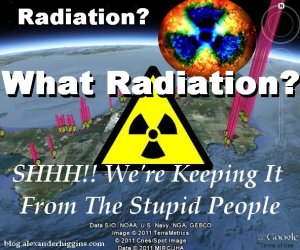 ‘Million Cancer Deaths From Fukushima Expected in Japan,’ New Report Reveals A shocking new report defies the chronically underestimated impacts of the Fukushima’s triple meltdown on the risk of cancer in exposed populations, which does not just include Japan, but arguably the entire world. Sayer Ji, Green Med Info Waking Times, 10 Nov 15
A new report from Fairewinds Energy Education (FEE), “Cancer on the Rise in Post-Fukushima Japan,” reveals that the ongoing multi-core nuclear meltdown at the Fukushima Daiichi plant that started in March 2011 has produced approximately 230 times higher than normal thyroid cancers in Fukushima Prefecture, and could result in as many as one million more cancers in Japan’s future as a result of the meltdown.
According to the new report, data provided by a group of esteemed Japanese medical professionals and TEPCO, confirm a direct link of numerous cancers in Japan to the triple meltdown. Continue reading
It seems that nobody will be liable for a nuclear disaster in India!
 liability for foreign suppliers may now be entirely removed, not just diluted.
In his one and a half year in office, Modi hasn’t demonstrated any particular penchant for consistency, but this would be his most dangerous U-turn, imperilling millions of innocent Indian lives.
Who will be liable for an Indian Fukushima? Nobody, it seems, Catch News, KUMAR SUNDARAM@pksundaram|10 November 2015
- India to entirely exempt foreign nuclear suppliers from liability – AEC said last week
- Who will be responsible in case of an accident then?
What breakthrough!
- There was a Indo-US breakthrough on N-liability – Modi last week
- Can a complete exemption from liability be called a breakthrough?
Highest cancer rate in Kerala, India, – (where natural radiation is high)
 Highest rate of cancer cases in Kerala: Chief Minister Oommen Chandy
South | Press Trust of India January 27, 2014 THIRUVANANTHAPURAM, KERALA: In a shocking revelation, Kerala Chief Minister Oommen Chandy today informed the state Assembly that the state has the highest number of cancer patients in the country.
Out of every one lakh males, 133 persons suffer from the disease while in the case of females, it is 123 for every one lakh females, he said while replying to a calling attention motion on the necessity to set up a cancer institute in Kochi.
As per statistics, nearly 50 per cent of cancer cases could be cured if the disease was identified in the initial stage itself and treatment started, Chandy said.
On the demand for a Cancer Institute, he said the cabinet had already decided to set up a Cancer Research Institute at the campus of Kochi Medical College hospital, which was taken over by the government from the co-operative sector……http://www.ndtv.com/south/highest-rate-of-cancer-cases-in-kerala-chief-minister-oommen-chandy-549016
USA trying to persuade Pakistan to constrain its nuclear weapons program
The Pakistan Nuclear Nightmare, NYT By THE EDITORIAL BOARD NOV. 7, 2015 With as many as 120 warheads, Pakistan could in a decade become the world’s third-ranked nuclear power, behind the United States and Russia, but ahead of China, France and Britain. Its arsenal is growing faster than any other country’s, and it has become even more lethal in recent years with the addition of small tactical nuclear weapons that can hit India and longer-range nuclear missiles that can reach farther.
These are unsettling truths. The fact that Pakistan is also home to a slew of extremist groups, some of which are backed by a paranoid security establishment obsessed with India, only adds to the dangers it presents for South Asia and, indeed, the entire world.
Persuading Pakistan to rein in its nuclear weapons program should be an international priority. The major world powers spent two years negotiating an agreement to restrain the nuclear ambitions of Iran, which doesn’t have a single nuclear weapon. Yet there has been no comparable investment of effort in Pakistan, which, along with India, has so far refusedto consider any limits at all.
The Obama administration has begun to address this complicated issue with greater urgency and imagination, even though the odds of success seem small. The recent meeting at the White House on Oct. 22 between President Obama and Prime Minister Nawaz Sharif of Pakistan appears to have gone nowhere. Yet it would be wrong not to keep trying, especially at a time of heightened tensions between Pakistan and India over Kashmir and terrorism.
What’s new about the administration’s approach is that instead of treating the situation as essentially hopeless, it is now casting about for the elements of a possible deal in which each side would get something it wants. For the West, that means restraint by Pakistan and greater compliance with international rules for halting the spread of nuclear technology. For Pakistan, that means some acceptance in the family of nuclear powers and access to technology………
The competition with India, which is adding to its own nuclear arsenal, is a losing game, and countries like China, a Pakistan ally, should be pushing Pakistan to accept that. Meanwhile, Narendra Modi, India’s prime minister, has done nothing to engage Islamabad on security issues, and he also bears responsibility for current tensions. The nuclear arms race in South Asia, which is growing more intense, demands far greater international attention. http://www.nytimes.com/2015/11/08/opinion/sunday/the-pakistan-nuclear-nightmare.html?_r=0
Japan’s nuclear reprocessing boondoggle – Monju reactor still in trouble
NRA’s ‘new management’ call for Monju reactor proves divisive, Japan Times, BY ERIC JOHNSTON OSAKA, 6 Nov 15, – Two decades after a sodium leak and fire shut it down and nearly six decades after it was first conceived, the Monju prototype fast-breeder reactor in Tsuruga, Fukui Prefecture, suffered another blow Wednesday when the Nuclear Regulation Authority called for it to be turned over to another operator.
To date, over ¥1 trillion has been poured into Monju — a plant that has never produced commercial electricity. Despite remaining inactive, safety measures alone cost ¥50 million a day.
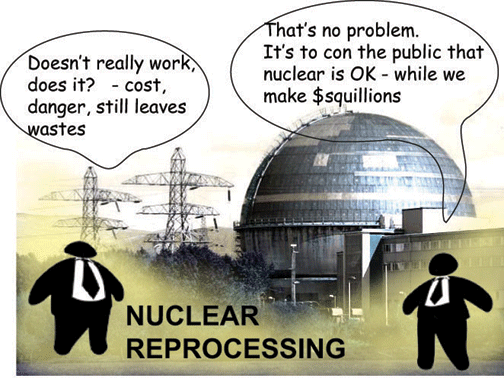
Anti-nuclear activists have hailed the NRA’s unusually critical language as an important step toward scrapping the reactor, which was supposed to burn plutonium mixed with uranium.
Fukui politicians who heavily support Monju, including the prefecture’s governor and the mayor of Tsuruga, doubt that another operator can be found. They also worry that scrapping it would create local concerns as well as safety issues.
“What does it mean when the NRA says that it can’t leave Monju’s operations to the (government-backed) Japan Atomic Energy Agency? There aren’t any other organizations it can be left to,” Tsuruga Mayor Takanobu Fuchikami told reporters after the decision…….
Monju, conceived in the 1950s, has faced nothing but technical trouble, domestic and international controversies, and scandals.
Originally slated to go live in 1970, monju did not reach criticality until 1994. It was shut down following a December 1995 leak and fire involving liquid sodium. The incident was at that time Japan’s worst nuclear-related accident.
Further delays and scandals meant that by 2005, when Monju was taken over by JAEA after its predecessor organization was disbanded, officials hoped it would be commercially viable by around 2050.
But after it was revealed in 2012 that JAEA had failed to inspect nearly 10,000 reactor components in and after 2010, the NRA ordered Monju not to engage in preparatory work until it was satisfied safety had been improved…..
Activists are urging the government to give up on the project.
“Monju should be permanently shut down. If the Japanese government is capable of immediately and permanently scrapping Monju, we can gain some trust that it intends to have a logical, functional basic energy policy,” said Aileen Mioko Smith, executive director of Kyoto-based anti-nuclear group Green Action. “If it continues the status quo by flogging a horse that has been dead for 20 years, it bodes badly for Japan’s energy future.” http://www.japantimes.co.jp/news/2015/11/05/national/nras-new-management-call-monju-reactor-proves-divisive/#.Vj0CA9IrLGj
Uncontrolled nuclear chain reactions could be underway at Fukushima

 Former Japan Ambassador: Uncontrolled nuclear chain reactions could be underway at Fukushima — “Troubling indications of recurring criticality” as Tellurium-132 detected over 100 miles from plant — ‘Recriticality’ discussed by Japan’s top nuclear official http://enenews.com/former-japan-ambassador-uncontrolled-nuclear-chain-reactions-suspected-fukushima-troubling-indications-recurring-criticality-tellurium-132-detected-100-miles-plant-recriticality-issue-discussed?utm_source=feedburner&utm_medium=email&utm_campaign=Feed%3A+ENENews+%28Energy+News%29
Japan Times, Nov 4, 2015 (emphasis added): The former Japanese ambassador to Switzerland,Mitsuhei Murata, recently suggested that Japan should stage an ‘honorable retreat’ from hosting the 2020 Olympics due to the unpredictable situation at the crippled Fukushima No. 1 nuclear power plant.
Japan Times (Hotline to Nagatacho — Brian Victoria, Kyoto), Nov 4, 2015: [F]ormer Japanese ambassador to Switzerland, Mitsuhei Murata, recently proposed… for Japan to stage an “honorable retreat” from hosting the 2020 Olympics… [I]n the September issue of Gekkan Nippon, Murata… noted the danger still posed by large numbers of spent fuel rods suspended in spent fuel pools in reactors 1, 2 and 3 [which] can’t be removed from the damaged reactor buildings due to the high levels of radioactivity surrounding these reactors… Murata’s gravest concern is a number of troubling indications of recurring criticality [ i.e. uncontrolled nuclear chain reactions] in one or more of the reactors at Fukushima No. 1. For example, he notes that in December 2014, both radioactive iodine-131 and tellurium-132 were reported as having been detected in Takasaki city, Gunma Prefecture [~130 miles SW of Fukushima Daiichi]. Given the short half-lives of these radioactive particles, their presence could not be the result of the original meltdowns at Fukushima.
Ambassador Murata to Dr. Thomas Bach (President of the International Olympic Committee), Jun 15, 2015: Allow me to send you a letter, motivated by my sense of mission to inform you of the worsening situation in Fukushima, which regrettably is being downplayed by our Government and does not seem to be well known internationally… Contrary to the assurances of the Japanese Government and [TEPCO], the situation at the site of the Fukushima Daiichi Nuclear Power Plant is not at all under control… Not only do we have a continued contamination of the groundwater and the Pacific Ocean… but the brittle structure of the damaged plant represents itself a serious threat, in particular in our earthquake prone region.
Ambassador Murata to Susana Malcorra (United Nations Chef de Cabinet), Aug 27, 2015: I am sending you my fourth message to President Bach of The IOC. I inform him of my message addressed to Prime Minister Abe. In my message… I ask for the first concrete international cooperation concerning the method of cooling spent fuel rods making use of zinc instead of water. This is crucially important. The Pacific Ocean is more and more contaminated with the daily release of more than 300 tons radioactive groundwater. I remind Prime Minister Abe that the decision to retreat from the Tokyo Olympic Games and carry out an international verification of the suspected re-criticality is urgently needed… My interview article was published in the magazine “Monthly Japan” (September). The article entitled “An honorable retreat from the Tokyo Olympic Games” is given a central place. Reactions are noteworthy and encouraging. Conscientious citizens start questioning the integrity of the IOC. Please convey my warmest greetings to Secretary-General Ban-kimoon.
Interestingly, two weeks ago the head of Japan’s Nuclear Regulation Authority addressed the recriticality issue:
Fukushima Minpo, Oct 20, 2015: Nuclear regulator chief says Fukushima Daiichi recriticality“physically impossible” — Shunichi Tanaka, chairman of the Nuclear Regulation Authority, visited the Minamisoma city government for talks with Mayor Katsunobu Sakurai on Oct. 22. Regarding Tokyo Electric Power Co.’s crippled Fukushima Daiichi nuclear power plant, Tanaka said, “We are no longer in a situation that prevents residents from returning (to their evacuated hometowns). Recriticality is physically impossible.”
India shuts down nuclear critic Greenpeace
 India orders Greenpeace to shut down http://www.heraldsun.com.au/news/breaking-news/india-orders-greenpeace-to-shut-down/news-story/81aa8e5e1c0e45927594dac4266c12fd November 7, 2015 India has cancelled Greenpeace International’s license to operate and given the group 30 days to close down, citing financial fraud and falsification of data.
Prime Minister Narendra Modi’s government has turned the spotlight on foreign charities since he took office last year, accusing some of trying to hamper projects on social and environmental grounds.
Last year, Modi government withdrew permission to Greenpeace to receive foreign funding, saying the money was used to block industrial projects.
Under the latest order issued by authorities in the southern Indian state of Tamil Nadu where Greenpeace is registered, the government said it had found the organisation had violated the provisions of law by engaging in fraudulent dealings.
A government official confirmed the closure order had been issued on Wednesday but did not elaborate.
Greenpeace India has campaigned against coal mines in forests, genetically modified crops, nuclear power and toxic waste management.
In recent months the federal government has toughened rules governing charities and cancelled the registration of nearly 9000 groups for failing to declare details of overseas donations.
Thyroid abnormailities in 112 of 173 children in Kashiwa city Chiba
 112 of 173 children diagnosed with thyroid abnormality
  , Fukushima Diary, by Mochizuki , November 4, 2015 On 10/30/2015, Kashiwa city government announced 112 of 173 children were diagnosed with thyroid cyst or nodule.
6 of them were diagnosed with cyst (larger than 5.1 mm) or nodule (larger than 20.1 mm), 11 of them were required to have follow-up test.
The testees are the children born in 1992 ~ 2011. It was implemented from this July to September.
In order to receive the subsidy to have this test, the parents were required to sign the declaration of consent. It declares that the test does not guarantee the potential health state in the future but only represents the present’s state, and also that it is not to evaluate the radiation effect because of the nuclear accident but only alleviate the anxiety for radiation exposure……http://fukushima-diary.com/2015/11/112-of-173-children-diagnosed-with-thyroid-abnormality-in-kashiwa-city-chiba/
A boon for bankers (but no-one else) – UK’s China Hinkley Point nuclear deal
 the decision to involve Chinese companies – initially with EDF at Hinkley Point and then on their own at Bradwell and Sizewell – only makes sense if it is seen as part of a quid pro quo for the previously announced financial services deal.
 They put the Chinese Communist Party and military at the heart of strategic infrastructure. They interlink the British and Chinese financial systems at a time when the latter is structurally weak, poorly regulated, and struggling with corruption.
 Britain’s nuclear deal with China is a boon for bankers – and no one else, The Conversation, Jeffrey Henderson November 6, 2015 At first glance, it seems an almost inexplicable paradox. A right-wing British government has invited companies controlled by the Chinese Communist Party – and in one case, the Chinese military – into the heart of the UK’s strategically vital energy infrastructure. The nuclear deal between Britain and China goes against the advice of the security services, the military and the US government.
So to explain this paradox, we must look carefully at another major deal in the British government’s flirtation with President Xi Jinping: the inter-penetration of the two countries’ financial services.
There would seem to be no possible connection between Chinese companies building and operating nuclear power stations in 2020s Britain and a curious political role created in 1571. But the fact that the Remembrancer, a representative of the City of London Corporation, is allowed to attend and monitor debates in the House of Commons, says much about Britain’s priorities.
When considering economic and budgetary policy, the Remembrancer is at hand to ensure that our elected representatives remember that, whatever other interests they might serve, the needs of financial services must be paramount. And the near-invisible hand of the Remembrancer seems recently to have been at work ensuring that Britain’s infrastructure is made accessible to Chinese state-owned companies. Continue reading
USA- India nuclear sales quietly fading, as nuclear financially unviable
Solar power developers have offered to sell electricity in India at less than Rs 5/unit. This makes solar competitive with traditional forms of energy, and makes new nuclear power plants financially unviable. India must register the changed reality, and discard the idea of expensive Western reactors. Time to scrap the India-U.S. nuclear deal?
Hard on the heels of falling oil prices and affordable shale, comes another dramatic energy changes for the energy industry: The falling cost of solar energy. This has many implications, but the most immediate impact the nuclear power industry, large parts of which may have just become obsolete. This means that the new nuclear power plants being planned by India, especially those with foreign collaboration, must be reconsidered and scrapped if they are financially unviable.
Time to stop Tokyo 2020 Olympics plan: instead deal with Fukushima nuclear disaster
Murata is not opposed to the Tokyo Olympic Games per se, but finds them a major distraction to what needs to be done immediately — namely, gathering the best minds and expertise from around the world and, with the full support of the Japanese government, doing everything humanly possible to bring Fukushima No. 1 truly “under control.” This will help to ensure the Pacific Ocean is no longer used as an open sewer for Fukushima-produced radiation, and also address the ongoing pain and distress of the residents of Fukushima Prefecture and beyond.

Time has come for an ‘honorable retreat’ from Tokyo 2020 over Fukushima, BRIAN VICTORIA
Kyoto http://www.japantimes.co.jp/community/2015/11/04/voices/time-come-honorable-retreat-tokyo-2020-fukushima/#.VjvGN9IrLGh
Dear Olympics minister Toshiaki Endo, Let me begin this message by offering you my sincerest condolences. Condolences for what? For the death of the belief that a trouble-free 2020 Tokyo Olympics would serve to showcase Japan’s economic revival.
Up to this point, the exact opposite has been the case, due to the scrapping of plans for a very expensive new National Stadium, the scuttling of the Olympic logo amid charges of plagiarism and newspaper headlines alleging, for example, that “Japan’s Olympics fiascoes point to outmoded, opaque decision-making.” Even more recently, Japan sports minister Hakubun Shimomura offered to resign over the Olympic stadium row.
Among these developments, the charge alleging “outmoded, opaque decision-making” is perhaps the most troubling of all, because it suggests that both of the major setbacks the 2020 Olympics has encountered are systemic in nature, not merely one-off phenomena. If correct, this indicates that similar setbacks are likely to occur in the future. But how many setbacks can the 2020 Olympics endure?
At this point it may be apt to recall the warning of 13th-century Zen master Dogen: “If there is the slightest difference in the beginning, the result will be a distance greater than heaven is from Earth.”
One lesson to be learned from Dogen’s words is that in order to understand the mess you are in now, you should reflect on how you got into it in the first place. When this is done, the “beginning” becomes clear, i.e., Prime Minister Shinzo Abe’s 2013 statement to the International Olympic Committee that the situation at the crippled Fukushima No. 1 nuclear plant was “under control.” The prime minister went on to tell the Diet, “The effect of radioactive substances in the nearby waters is blocked within 0.3 sq. km of the plant’s harbor.”
One needs only to look at recent stories describing the torrential downpours in the Fukushima area to know that this claim, if it were ever true, is clearly no longer valid. Even Tepco stated: “On Sept. 9 and 11, due to typhoon No. 18 (Etau), heavy rain caused Fukushima No. 1 drainage rainwater to overflow to the sea.” This is not to mention the high probability that relatively decontaminated areas have been contaminated once again by the heavy rains carrying radioactive particles lodged in the nearby mountains down onto the plains. Nor does it take into account that no one knows the location or condition of the melted fuel in reactors 1, 2 and 3.
At this point it may be apt to recall the warning of 13th-century Zen master Dogen: “If there is the slightest difference in the beginning, the result will be a distance greater than heaven is from Earth.”
One lesson to be learned from Dogen’s words is that in order to understand the mess you are in now, you should reflect on how you got into it in the first place. When this is done, the “beginning” becomes clear, i.e., Prime Minister Shinzo Abe’s 2013 statement to the International Olympic Committee that the situation at the crippled Fukushima No. 1 nuclear plant was “under control.” The prime minister went on to tell the Diet, “The effect of radioactive substances in the nearby waters is blocked within 0.3 sq. km of the plant’s harbor.” Continue reading
Malaysian govt prepares way for nuclear power, but big hurdles remain
Government prepares Act to pave way for nuclear programme http://www.theedgemarkets.com/my/article/government-prepares-act-pave-way-nuclear-programme By Ben Shane Lim / theedgemarkets.com | November 5, 2015 KUALA LUMPUR : The government is preparing to table a new Nuclear Energy Act that will pave the way for the country to adopt nuclear power into the energy mix by 2028.
The Act could be tabled in Parliament by next year, said Energy, Green Technology and Water Minister Datuk Seri Maximus Ongkili. However, Ongkili stressed that planning for nuclear power is still at a very early stage and not high on the ministry’s list of priorities.
“The original plan was to have nuclear make up 10% of generation capacity. This would diversify our energy sources. But since the unfortunate incident at Fukushima, [Japan], we are taking more time to study it,” Ongkili told reporters on the sidelines of the Fifth Korea-Malaysia Energy Cooperation Workshop here today.
The low commodity prices have also reduced the incentive to develop the nuclear programme swiftly. Not only are oil and gas prices low, coal is also at record low prices, noted Ongkili.
According to the 2014 Energy Sector Outlook report by the Energy Commission, there are plans to introduce nuclear power to the national grid by 2024. Ongkili said however, that deadline has since moved to 2028, noting that 13 years are plenty of time to study and develop a nuclear programme.
Normally, it takes 10 years to develop a nuclear power plant. “Dealing with the nuclear waste is one of the main issues we need to think about,” he added.For now, the government will place more focus on the renewable energy sector, which is targeted to make up 23% of generation capacity by 2020, said the minister.
Apart from the Nuclear Energy Act, Ongkili said the government plans to set up the institutional infrastructure necessary for the nuclear programme.
Environmental and safety issues aside, getting public support for a nuclear programme might be a challenge going forward, especially if it is more expensive than conventional power sources.
After all, with the removal of electricity subsidies and the introduction of the fuel cost pass-through mechanism, consumers will bear the full brunt of higher generation costs. Also not helping the case for nuclear power is the fact that Malaysia is able to produce its own natural gas.
There is no end to the Fukushima Daiichi Nuclear Disaster: it is just getting worse
 Fukushima Gets A Lot Uglier NOVEMBER 3, 2015 http://www.counterpunch.org/2015/11/03/fukushima-gets-a-lot-uglier/ by ROBERT HUNZIKER
As time passes, a bona fide message emerges from within the Fukushima Daiichi Nuclear Power Plant disaster scenario, and that message is that once a nuclear power plant loses it, the unraveling only gets worse and worse until it’s at its worst, and still, there’s no stopping it. Similar to opening Pandora’s box, there’s no stopping a ferocious atom-splitting insanity that knows no end.
Four years of experience with Fukushima provides considerable evidence that splitting atoms to boil water is outright unmitigated madness. After all, nuclear power plants are built to boil water; yes, to boil water; it’s as simple as that, but yet at the same time it’s also extraordinarily complex. Conversely, solar and wind do not boil water and are not complex and never deadly (Germany knows).
As it unfolds, the Fukushima story grows more convoluted and way more chilling. For example, according to The Japan Times, October 30th Edition: “Extremely high radiation levels and the inability to grasp the details about melted nuclear fuel make it impossible for the utility to chart the course of its planned decommissioning of the reactors at the plant.”
Thereby, the bitter truth behind a major nuclear meltdown shows its true colors: “Impossible for the utility to chart the course of its planned decommissioning…” is very definitive, divulging the weak underbelly of the fission-to-heat process; only one slip-up, and it’s deadly dangerous and likely out of control!
Not only that, but the entire Fukushima Daiichi Nuclear Power Plant complex is subject to recurring mishaps and setbacks, as well as various technical tribulations, something different going wrong on any given day. And, it’s always big, never small.
For example, according to The Japan Times, October 30thEdition: “Deadly 9.4 Sieverts Detected Outside Fukushima Reactor 2 Containment Vessel; Checks Stop.”
TEPCO also detected deadly radiation levels outside of reactor No. 1. According to a direct quote from the article: “People exposed to the maximum radiation dose for some 45 minutes will die.” Death in 45 minutes!
The potency contained within 9.4 Sieverts (Sv) is enormous. One Sievert, which is a measure of the health effect of radiation on the human body, is normally considered a massive dose, causing immediate radiation sickness. But, since levels beyond one Sievert are rarely, if ever, encountered in the normal course of everyday life, the industry standard uses millisieverts (mSv = 1/1000th) or microsieverts (uSv = one millionth of a Sievert) when measuring radiation.
Miserably, eight (8) Sieverts causes severe vomiting, severe headache, severe fever, incapacitation, and a 100% death rate over a period of time greater than 10 minutes within 48 hours (Radiation Survival Guide).
Chernobyl is a prime example of the potency of radiation. Immediately after the explosion (1986), radiation levels in the control room reached 300 Sv/hr, resulting in the deaths of the operators of the plant. Thirty years later, radiation levels in the same control room run approximately 8-10 mSv/hr.
It’s little wonder TEPCO finds it impossible to plan decommissioning of the Fukushima Daiichi Nuclear Power Plant, which begs the question of if, and when, decommissioning will be possible. Who knows, if ever?
Furthermore, according to The Japan Times’ article: TEPCO planned to start checking inside the containment vessel in August by use of a remote-controlled robot but “high radiation levels have stalled the examination.”
Unfortunately, not only is radiation sizzling outside of reactor No. 1, but a pipe connection at reactor No. 2 also shows extremely high radiation levels. Reactor No. 2 is where the hot melted radioactive core (corium) still has not been located. But, then again, with so much hot stuff sizzling throughout the entire Fukushima complex, how are workers expected to locate a melted nuclear core that may have already penetrated the steel-reinforced concrete containment vessel, entering the earth?
If total meltdown occurred/occurs, nobody has any idea of what to do next. There is no playbook. It’s likely impossible to do anything remedial once a melted nuclear core has burrowed into the ground because deadly isotopes uncontrollably spread erratically, ubiquitously into the surrounding underground soil and water. Then what?
In the final analysis, there is a distinct probability that Fukushima has no final analysis. . Reports out of Japan indicate that Fukushima Daiichi Nuclear Power Plant cleanup and decommissioning is severely restricted by extremely high radiation levels and the inability to grasp the details about melted nuclear fuel. What could be worse? Keep reading.
Footnote: China plans on building 400 nuclear plants “fast and cheap” over the next few decades. (Source: Oliver Tickell, Does China’s Nuclear Boom Threaten Global Catastrophe? CounterPunch, Oct. 30th.) Answer: YES!
Robert Hunziker lives in Los Angeles and can be reached at roberthunziker@icloud.com
-
Archives
- October 2026 (112)
- September 2026 (339)
- August 2026 (330)
- July 2026 (355)
- June 2026 (287)
- May 2026 (306)
- April 2026 (356)
- March 2026 (251)
- February 2026 (267)
- January 2026 (308)
- December 2025 (358)
- November 2025 (359)
-
Categories
- 1
- 1 NUCLEAR ISSUES
- business and costs
- climate change
- culture and arts
- ENERGY
- environment
- health
- history
- indigenous issues
- Legal
- marketing of nuclear
- media
- opposition to nuclear
- PERSONAL STORIES
- politics
- politics international
- Religion and ethics
- safety
- secrets,lies and civil liberties
- spinbuster
- technology
- Uranium
- wastes
- weapons and war
- Women
- 2 WORLD
- ACTION
- AFRICA
- Atrocities
- AUSTRALIA
- Christina's notes
- Christina's themes
- culture and arts
- Events
- Fuk 2022
- Fuk 2023
- Fukushima 2017
- Fukushima 2018
- fukushima 2019
- Fukushima 2020
- Fukushima 2021
- general
- global warming
- Humour (God we need it)
- Nuclear
- RARE EARTHS
- Reference
- resources – print
- Resources -audiovicual
- Weekly Newsletter
- World
- World Nuclear
- YouTube
-
RSS
Entries RSS
Comments RSS

