Social workers visit temporary housing in Motomiya, Fukushima Prefecture, to interview disaster victims in December.
By Mari Yamaguchi
The ashes of half a dozen unidentified laborers ended up at a Buddhist temple in this town just north of the crippled Fukushima nuclear plant. Some of the dead men had no papers, others left no emergency contacts. Their names could not be confirmed and no family members had been tracked down to claim their remains.
They were simply labeled “decontamination troops” — unknown soldiers in Japan’s massive cleanup campaign to make Fukushima livable again five years after radiation poisoned the fertile countryside.
The men were among the 26,000 workers — many in their 50s and 60s from the margins of society with no special skills or close family ties — tasked with removing the contaminated topsoil and stuffing it into tens of thousands of black bags lining the fields and roads. They wipe off roofs, clean out gutters and chop down trees in a seemingly endless routine.
Coming from across Japan to do a dirty, risky and undesirable job, the workers make up the very bottom of the nation’s murky, caste-like subcontractor system long criticized for labor violations. Vulnerable to exploitation and shunned by local residents, they typically work on three-to-six-month contracts with little or no benefits, living in makeshift company barracks. And the government is not even making sure that their radiation levels are individually tested.
“They’re cleaning up radiation in Fukushima, doing sometimes unsafe work, and yet they can’t be proud of what they do or even considered legitimate workers,” said Mitsuo Nakamura, a former day laborer who now heads a citizens’ group supporting decontamination laborers. “They are exploited by the vested interests that have grown in the massive project.”
Residents of still partly deserted towns such as Minamisoma, where 8,000 laborers are based, worry that neighborhoods have turned into workers’ ghettos with deteriorating safety. Police data shows arrests among laborers since 2011 have climbed steadily from just one to 210 last year, including a dozen yakuza, or gangsters, police official Katsuhiko Ishida told a prefectural assembly. Residents are spooked by rumors that some laborers sport tattoos linked with yakuza, and by reports that a suspect in serial killings arrested in Osaka last year had worked in the area.
“Their massive presence has simply intimidated residents,” said Mayor Katsunobu Sakurai. “Frankly, the residents need their help but don’t want any trouble.”
Most of the men work for small subcontractors that are many layers beneath the few giants at the top of the construction food chain. Major projects such as this one are divided up among contractors, which then subcontract jobs to smaller outfits, some of which have dubious records.
The Ministry of Health, Labor and Welfare examined more than 300 companies doing Fukushima decontamination work and found that nearly 70 committed violations in the first half of last year, including underpayment of wages and overtime and failure to do compulsory radiation checks. Those companies were randomly chosen among thousands believed to be working in the area.
“Violations are so widespread in this multilayer subcontract system. It’s like a whack-a-mole situation,” said Mitsuaki Karino, a city assemblyman in Iwaki, a Fukushima city where his civil group has helped workers with complaints about employers.
Karino said workers are sometimes charged for meals or housing they were told would be free, he said, and if they lose jobs or contracts aren’t renewed, some go homeless.
“It’s a serious concern, particularly for workers who don’t have families or lost ties with them,” he said.
Government officials say they see no other way than to depend on the contracting system to clean up the radiated zone, a project whose ballooning cost is now estimated at 5 trillion yen ($44 billion).
“That’s how the construction industry has long operated. In order to accomplish decontamination, we need to rely on the practice,” said Tadashi Mouri, a health and labor ministry official in charge of nuclear workers’ health. He said the ministry has instructed top contractors to improve oversight of subcontractors.
Several arrests have been made in recent months over alleged labor violations.
A complaint filed by a worker with labor officials led to the October arrest of a construction company president who had allegedly dispatched workers to Fukushima under misleading circumstances. The investigation found that the worker had been offered pay of 17,000 yen ($150) per day, but after middlemen took a cut he was getting only 8,000 yen ($70).
In another case, a supervisor and a crane operator were arrested in July for alleged illegal dumping of radiated plant debris in Minamisoma. Five companies heading the project were suspended for six weeks.
Most workers keep their mouths shut for fear of losing their jobs. One laborer in a gray jacket and baggy pants, carrying cans of beer on his way home, said he was instructed never to talk to reporters.
A 62-year-old seasonal worker, Munenori Kagaya, said he had trouble finding jobs after he and his fellow workers fought for and won unpaid daily “danger” allowance of 10,000 yen ($88) for work in Tamura city in 2012.
Officials keep close tabs on journalists. Minutes after chatting with some workers in Minamisoma, Associated Press journalists received a call from a city official warning them not to talk to decontamination crews.
Beyond the work’s arduous nature, the men also face radiation exposure risks. Inhaling radioactive particles could trigger lung cancer, said Junji Kato, a doctor who provides health checks for some workers.
Although most laborers working in residential areas use protective gear properly, others in remote areas are not monitored closely, according to workers and Nakamura, the leader of the radiation workers support group. Many are not given compulsory training or education about dealing with radiation, he said.
Though group leaders’ radiation exposure levels are regularly checked, decontamination workers’ individual levels have not been systematically recorded. The government introduced a system in 2013 but only for a fee, and many lower subcontractor workers are likely not covered. Even non-alarmist experts say that workers doses must be kept individually for their own records as well as for studies of low-dose radiation impact.
Mouri, the government official, said decontamination workers’ average annual dose fell to 0.7 millisievert last year, a fraction of the 20-millisievert annual limit for those working at the nuclear plant, and is not a concern.
Though no radiation-induced illness has been detected, workers have developed diabetes, cerebral and respiratory problems, often long untreated due to lack of money, awareness and social ties, local hospital intern Toyoaki Sawano said in a medical magazine last month.
Having trouble making ends meet, a growing number of laborers are seeking welfare assistance, local authorities say. The officials worry that they may end up staying on, like construction laborers did in Osaka and Tokyo after the 1960s building boom, forming Japan’s poorest ghettos.
Police and volunteers have started neighborhood patrols amid concerns about safety. Some big construction companies have taken steps to address concerns. Hazama Ando Corp. imposed an 11 p.m. curfew on workers.
Residents say they avoid convenience stores in the evenings, when many laborers stop by after work to buy snacks, bento boxes or beer on their way home. Some of them used to discard their contaminated gloves and masks in garbage bins there, triggering complaints from the neighborhood and prompting the government to launch a “manner” campaign in December.
At a convenience store in Minamisoma on a recent evening, workers came in waves, waiting quietly in line to pay for food and other items.
“The workers face heartless rumors as if they are all reckless outlaws. They are the same human beings. Like anywhere, there are good guys and bad guys,” said Nakamura, the support group leader.
One resident grateful for the workers is Hideaki Kinoshita, a Buddhist monk who keeps the unidentified laborers’ ashes at his temple, in wooden boxes and wrapped in white cloth.
“We owe a lot to those who clean this town, doing the work that locals don’t even want to,” he said.
Minamisoma city official Tomoyuki Ohwada said the worker population should decline next year, when intensive decontamination efforts are scheduled to end. But Kinoshita believes many will still be needed, given the amount of work left to do.
“There is no end to this job,” Kinoshita said. “Five years from now, the workers will still be around. And more unclaimed ashes may end up here.”
FIVE YEARS AFTER: 1 in 3 Fukushima evacuees giving up hope of ever returning home
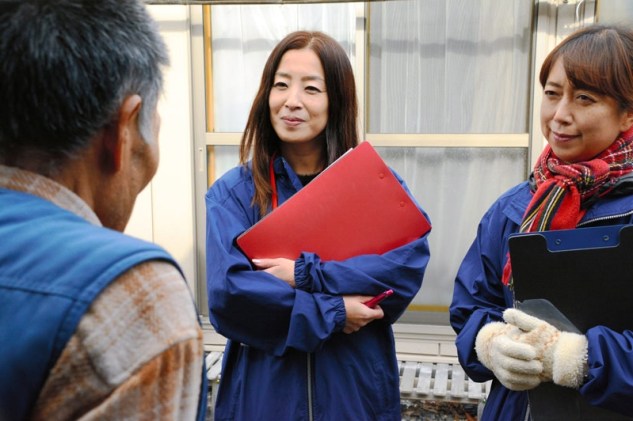
Social workers visit temporary housing in Motomiya, Fukushima Prefecture, to interview disaster victims in December.
More than one in three evacuees from the Fukushima nuclear disaster despair of ever returning home, a finding that points to a growing sense of hopelessness five years after the crisis unfolded.
This stark reality emerged in a survey carried out by The Asahi Shimbun and a research team headed by Akira Imai, a professor of local government policy at Fukushima University.
“There are so many people (outside Fukushima) today who are not aware that many people are still forced to live as evacuees,” a 34-year-old woman responded in the survey questionnaire. “No matter how we try to explain our plight, they seem unable to understand, and we feel saddened to realize that people tend to think we live outside our hometowns out of our own choice.”
Many respondents also wrote they were troubled by a perceived envy from other residents in their new communities over the compensation they receive from Tokyo Electric Power Co., the operator of the crippled Fukushima No. 1 nuclear power plant.
In the survey, of those who remain evacuated, 22 percent said they think they can return to their old homes within five years, 17 percent believe they can return home within 10 years and 9 percent said it might take up to 20 years.
Fourteen percent said it will take 21 years or longer to return home, while the remaining 38 percent said they believed they would never be able to return permanently.
As of March 9, the number of Fukushima residents living as evacuees within Fukushima Prefecture stood at 54,175. On Feb. 12, prefectural authorities reported that 43,149 evacuees were living outside the prefecture.
It was the fifth such survey by The Asahi Shimbun and Imai’s research team and was undertaken to mark the fifth anniversary of the nuclear accident, triggered by the Great East Japan Earthquake and tsunami, on March 11.
Questionnaires were sent to 398 evacuees who had responded to previous polls. Of the 225 respondents in Tokyo and 20 prefectures, 36, or 16 percent, said they had returned to their old homes.
Among those who remain evacuated, 65 people currently live in temporary housing for disaster victims, followed by 52 who have settled in homes they newly purchased.
Forty-one percent of those who remain evacuated said they want to eventually return to their old homes when their hometowns become safe, while 25 percent said they no longer want to return because it is unlikely the areas will ever be safe again.
The survey showed that evacuees are increasingly losing the will to hold on in their current plight, with only 32 percent of respondents saying they are determined to hold on, down from 55 percent in the previous survey in 2013.
Eighteen percent said they are losing the will to hold on. The same percentage said they are tormented by simmering anger. Both figures were up from the previous survey.
http://ajw.asahi.com/article/0311disaster/fukushima/AJ201603100059
FIVE YEARS AFTER: Local Fukushima disaster evacuation plans ignore central government instructions
“The central government’s guidelines are simply a desk theory,” said a local government official in Ibaraki Prefecture. “The harder you work on your evacuation plan, the more unrealistic it gets.”
Although the town of Namie is still evacuated five years after the Fukushima nuclear disaster, local officials are already at odds with the central government over evacuation plans for any similar crisis.
In its draft emergency plan, the town in Fukushima Prefecture decrees that residents can flee in a future accident even if radiation levels are below those warranting evacuation as dictated by the central government.
The draft was drawn up based on the lesson the disaster-hit town learned from the chaos that erupted in the wake of the triple meltdown at the Fukushima No. 1 nuclear power plant in 2011.
Although local governments are legally entitled to issue an order independently, the central government is not happy about Namie’s plan. Minami-Soma, the city adjacent to Namie, takes a similar approach in the evacuation plan it crafted in 2013.
The secretariat of the Nuclear Regulation Authority would not give a nod to the plans by Namie and Minami-Soma, saying such actions could compromise the evacuation of people facing imminent danger.
“In the Fukushima accident, more damage was done partly because people who were not in need of evacuation raced to flee,” said an official with the secretariat’s Emergency Preparedness/ Response and Nuclear Security Division. “The central government’s guidelines are designed to minimize radiation exposure risks.”
All the roads around Namie, located to the northwest of the crippled plant, were clogged with vehicles desperately trying to flee, hampering evacuation. Shelters were so packed that they could not accommodate all who rushed to them.
Namie Mayor Tamotsu Baba said the town, with a population of 18,700, has a responsibility to ensure smooth evacuation of residents by issuing an order on its own, instead of adhering to the central government’s guidelines formulated after the Fukushima accident.
“It is not easy to evacuate in an orderly fashion,” said Baba. “A panic will very likely occur if an accident comparable to the Fukushima nuclear disaster takes place.”
In the wake of the Fukushima disaster, the central government obliged 135 municipalities situated within a 30-kilometer radius of a nuclear facility to formulate evacuation plans under its new guidelines for responding to a nuclear disaster.
The guidelines call for the immediate evacuation of residents living within a 5-km radius of the site of a severe accident.
Residents within a 5- to 30-km zone, such as Namie and Minami-Soma, which are within 30 km of both the Fukushima No. 1 and No. 2 nuclear plants, are urged to stay indoors. They would be asked to evacuate within a few hours of radiation levels reaching 500 microsieverts an hour.
However, that is such a high radiation level that no municipalities more than 5 km from the Fukushima No. 1 nuclear plant experienced in the 2011 crisis, according to the NRA’s secretariat.
The guidelines also state that residents must evacuate within a week if radiation measuring 20 microsieverts an hour continues for at least 24 hours. These steps are recommended based on the idea that it would do more damage to the elderly to evacuate than to stay indoors. The guidelines are also aimed at preventing traffic gridlock so that residents living near a crippled facility can promptly flee to safety.
A serious situation could unfold again in Fukushima Prefecture if work to cool spent nuclear fuel rods were rendered impossible by a natural disaster or terror attack at the plants.
Before the Fukushima disaster, Namie was not asked by the central government to have an evacuation plan in place, just like the rest of the municipal governments beyond the 5-km range from a nuclear facility.
An evacuation order from either the central government or Tokyo Electric Power Co., which operates the embattled plant, failed to reach Namie due to the escalating chaos following the nuclear crisis in 2011. So the town government was forced to act alone to evacuate its residents.
Namie officials believe that even if people are only asked to flee within a week after a reading of radiation hit 20 microsieverts an hour under the new guidelines, some will choose anyway to evacuate immediately.
The officials said they would rather ensure smooth evacuation of local residents by acting independently of the central government.
In the case of Minami-Soma, residents were ordered to stay indoors due to the risk of radiation exposure at the time of the Fukushima accident.
But 55,000 of a total of 70,000 people evacuated voluntarily in the face of the scarcity of food in the city after the distribution network was jeopardized.
The NRA secretariat acknowledges that it will have to address the issue of how to distribute food and other relief aid to areas where people are asked to remain indoors as radiation levels rise.
Of the 135 municipalities, only 95 cities, towns and villages came up with evacuation plans.
But some in the prefectures of Ibaraki and Shizuoka are still void of their response measures since they have been unable to find shelters to accommodate all of the would-be evacuees.
The overall population in the 30-km zone in the two prefectures is nearly 1 million each, making the task formidable.
“The central government’s guidelines are simply a desk theory,” said a local government official in Ibaraki Prefecture. “The harder you work on your evacuation plan, the more unrealistic it gets.”
http://ajw.asahi.com/article/0311disaster/fukushima/AJ201603100018
INTERVIEW/ Kazuya Tarukawa: Reality of Fukushima is unrecoverable, uncompensable
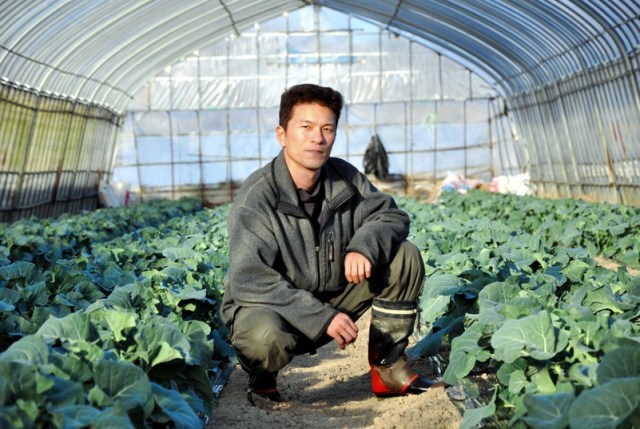
Farmer Kazuya Tarukawa at his greenhouse in Sukagawa, Fukushima Prefecture
Kazuya Tarukawa, a farmer in Sukagawa, Fukushima Prefecture, found himself in the media spotlight after his father committed suicide in the early stages of the disaster at the Fukushima No. 1 nuclear power plant.
In a recent interview with The Asahi Shimbun, Tarukawa recounted how his gratifying life as a farmer drastically changed on March 11, 2011.
He also shared his thoughts on the compensation system, rumors about Fukushima products, and how Tokyo Electric Power Co. sent him a fax instead of a direct apology for his father’s death.
Excerpts of the interview follow:
* * *
Question: What are things like five years after the disaster started?
Tarukawa: Radioactive materials fell on this central strip of Fukushima Prefecture, too. Rice paddies, farm fields and plastic greenhouses were all ruined, so our “workplaces” were contaminated. But Tokyo Electric Power Co., operator of the crippled nuclear plant, has not compensated us for lost assets or removed the radioactive substances.
Five years have passed, and that’s it. We have only sustained damage and suffering. I keep asking myself, “Why do we have to go through all this?”
We did receive 80,000 yen ($706) in the first year of the disaster and 40,000 yen in the second year for psychological suffering, but that was all. The thinking behind the payments was probably like, “Here’s 120,000 yen, so keep your mouth shut and wait for the radiation levels to go down on their own.”
How can that make up for the damage we sustained?
Q: I have been told that your father was dedicated to organic farming of vegetables. Could you elaborate?
A: He cared a lot about the environment. He began growing winter cabbage because you never get worms, even without a single disinfection, in winter. The cabbage grows under the snow and develops quite a sweet taste. All local schools were using our cabbage in their school lunches.
He was so happy to be feeding children with something really safe and tasty. He was once invited by school officials to give a talk about food education. He was proud of things like that.
He hanged himself on the morning the day after the central government told him to stop shipping his vegetables. Around 7,500 pre-harvest cabbages were ruined. His farmland was contaminated. His heart was probably heavy while he was wondering how he would get on with his life.
Q: You reached a settlement in the case through the intermediary of the Nuclear Damage Compensation Dispute Resolution Center, whereby TEPCO acknowledged a causal relation with the disaster. Could you elaborate on that?
A: I took the case to the center because I wanted to avenge my father so he would not die in vain. I finally won the settlement and received damages. I thought that TEPCO people would finally come to my place to offer incense and apologize. But that never happened. I got a fax instead.
Q: How is the cleanup work going?
A: Our rice paddies were cleaned up. The ground was plowed to about 40 centimeters using a big tractor, sprinkled with zeolite and then plowed again. We were told that the zeolite will absorb radioactive substances in the soil, and that’s the cleanup thing.
But it doesn’t make sense. Rice may stop pulling up radioactive materials, but the absolute amount in the soil remains the same.
We are toiling every day from morning until evening on contaminated soil. We are filled with anxiety about what will become of us in the future, and whether we might suffer the impact someday.
When we were negotiating with the central government, I repeatedly asked farm ministry officials on the podium: “Do you know the first kanji in the Japanese word for ‘cleanup?’ (The kanji means “remove.”) You are just stirring things up. How can that amount to a ‘cleanup?’”
Everyone then cast their eyes low at their documents. They must have thought I was right.
Q: Isn’t there a way to strip away the contaminated surface soil?
A: We would be luckier if only there was a way to strip it off in thin slices. But in the month after the disaster started, the prefectural government gave us directions, saying it was OK to plow the ground. I didn’t quite believe in that stuff, but everybody did plow the ground.
We shouldn’t have done the plowing thing back then. They could have told us to stop growing crops for a year, and you will be compensated for that. That was a big moment when the sides parted.
It’s easy to strip off soil with a machine. But if you remove 40 cm of soil, you wouldn’t get decent crops. It takes tens of years to make just 1 cm of fine, fluffy soil.
I stick to what I am doing because I don’t want to let my rice paddies go to ruin during my time, the time of the eighth generation.
The paddies would quickly go to ruin if you didn’t do anything about them and just let them lie around. That would also cause trouble with your neighbors. Come to think of it, if you didn’t grow anything, you also wouldn’t be getting compensation money, and you would be left without income. You couldn’t maintain your living.
Q: What compensation are you getting for the farm products you grow?
A: We are only being compensated for crops with records of sale and proof that we suffered damage. For example, if you sold something at 2,000 yen before the disaster but now are making only 1,500 yen from it, TEPCO will compensate you for the difference.
But we have not been compensated for cucumbers for the past two years because their prices soared due to the unseasonable weather. People are saying stuff like, “We are not paying you because you are selling them at higher prices than you did before the disaster.”
It’s funny, huh? We would be making more money if it were not for the disaster. We are getting less than in other prefectures. You know, TEPCO is loath to shell out money.
And there are so many things that we have no way to seek damages for. Things that will never be with us again. We used to grow shiitake mushrooms at our homestead every year for consumption. Butterbur sprouts and Japanese angelica tree shoots from the mountains–they have all been spoiled. But we are getting nothing for that.
Q: What about the impact of negative publicity?
A: The 2011 harvest of rice from our paddies measured up to 30 becquerels or so in radioactive content. That was a safe enough level because the regulation standard was 500 becquerels (per kilogram; 100 becquerels from fiscal 2012) or less. But it’s something that you are putting in your mouth, after all.
Frankly, I didn’t want to eat it myself. Well, I did eat it because I couldn’t have gone shopping elsewhere.
But I do have a sense of guilt about making shipments. So I know very well why Tokyoites don’t feel like eating things from Fukushima. Who would want to buy stuff to eat from a place with such a stupid old nuclear plant?
It’s not about “negative publicity.” You suffer from “negative publicity” when your sales have dropped because groundless rumors have spread. But our case is not like that. Everything is well-grounded. The radioactive materials actually fell.
Q: Do they still continue to be detected?
A: No radioactive materials were detected in rice last year and the year before last. In fact, we have done everything we can. We are spraying potassium chloride, which suppresses the absorption of radioactive substances, every year.
All bags of rice are being screened, and when you get measurement figures, you are not allowed to ship them. I believe that rice from Fukushima is now much safer than rice from other prefectures.
And our rice is selling well, in fact, in the restaurant industry and in hospitals because you may never know that the product is from Fukushima Prefecture. You may not see a lot on the surface, but vast quantities are on the move. Because Fukushima rice tastes good. It’s sticky and sweet. So restaurant industry people seem to be happy because they can buy tasty rice at cheap prices.
Q: What about vegetables?
A: Greenhouses were under plastic covers at the time of the disaster, so the soil in there was never contaminated. I decided to grow everything in greenhouses, so I have almost stopped growing things outdoors, including cabbage, because I don’t want to see measurement figures in my crops again.
I am now growing broccoli, but the prices are so cheap, beaten down. Urbanites don’t bother to differentiate between broccoli grown in greenhouses and those grown in open fields as long as they are from Fukushima Prefecture.
Q: Nuclear reactors are being brought back online these days. Your thoughts?
A: Japan remained free of nuclear power for some time. But look, was there any part of Japan where everything was pitch-dark at night during that time? We certainly had enough electricity.
We may have paid more for crude oil, and nuclear power may be cheaper in fuel costs. But think about it: How much do you have to pay to clean up after a disaster when one happens? It’s really a burden. What would become of this country if another nuclear plant were to fail somewhere? You could raise taxes, but would that be the end of it?
Q: With whom do you want to share your feelings now?
A: I could be better off if I didn’t raise my voice and kept silent. But I am somebody in the media spotlight because of my father. There are hosts of other farmers who feel like I do, that something is wrong. It’s not in my power, after all, to hold my voice about such feelings. Doing that is dishonest.
That’s why I decided to appear in the movie (“Daichi wo Uketsugu” (Taking over Mother Earth), a 2015 documentary directed by Junichi Inoue). I particularly want farmers in areas hosting nuclear plants to watch this film. I want them to know what will happen when there is a disaster.
My father used to say: “Human-made things will certainly fail someday. Nothing can stand the forces of nature.” And things have turned out exactly like that. And after five years, nobody has taken responsibility.
* * *
Born in 1975, Kazuya Tarukawa worked for a company in Iwaki, Fukushima Prefecture, after graduating from a university. He returned to his family home in Sukagawa, 65 kilometers from the Fukushima No. 1 nuclear power plant, 10 years ago to engage in farming.
Daily grind of decommissioning continues for workers at Fukushima plant
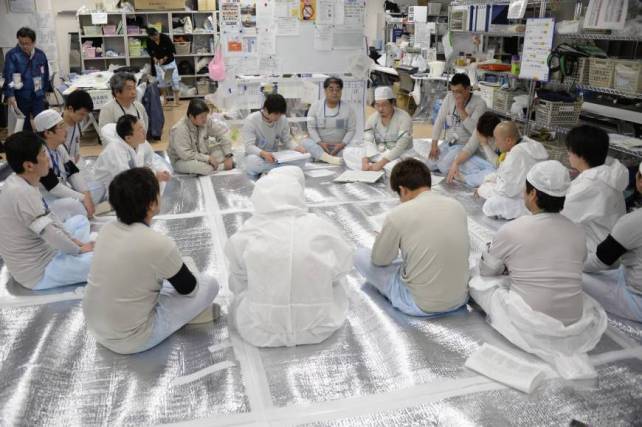
FUKUSHIMA – Five years after the March 2011 nuclear calamity started at the Fukushima No. 1 power plant, Tokyo Electric Power Co.’s efforts to contain the radioactive water at the site still makes headlines.
But not much is known about the daily lives and operations of some 7,000 workers at the plant engaged in decommissioning and other tasks.
To offer a glimpse of the workplace, Kyodo News followed Yasuki Hibi, 52, who heads major contractor Kajima Corp.’s civil engineering office at the wrecked plant, for a day last month. His office takes on a number of projects, including processing contaminated water and highly radioactive rubble.
“I feel that time has stopped here since that day,” said Hibi. “By taking part in the decommissioning work, I hope to let time flow again. Some of the workers were brought up in the local area, doing their best despite the circumstances.”
Hibi leaves his apartment in Iwaki, Fukushima Prefecture, about 50 km south of the complex, just before 8 a.m., dropping by at Kajima’s Iwaki office to check paperwork before traveling to another office in the town of Tomioka and then the nuclear plant. His wife and son live in Tokyo.
Kajima’s office at the plant is located in a building by the main gate. The building serves as a resting place for workers at the complex and houses offices for other firms engaged in decommissioning work.
Around 100 workers a day, including from affiliated companies, come and go at the Kajima office. The contractor is in charge of building sea walls near the plant aimed at prevent radiation-contaminated water from spilling into the ocean, as well as transporting highly radioactive soil to designated sites.
Hibi was posted to Kajima’s Fukushima plant office in January 2011, two months before the earthquake and tsunami struck. At the time, his job was to reinforce the earthquake resistance of reactors 5 and 6, which survived the disaster.
But after March 11, 2011, Kajima’s mission was focused on removing vehicles scattered by the tsunami and building a temporary sea wall, he said.
“Of Kajima’s civil engineering sections, the office at the Fukushima No. 1 nuclear power plant is unique,” Hibi said. “The radiation level in the air has dropped significantly, but there still are many hot spots around the reactor buildings.”
When Hibi arrives at the office, he makes sure the day’s work is in progress as scheduled. Some 20 workers on the early shift are already working at the complex by then.
Lunchtime is one of the few occasions where workers can relax.
The building’s eatery offers five different menu items, ranging from set meals to rice bowl dishes and noodles, and they are served at ¥380 with extra-large helpings for free. The food is cooked at a kitchen about 9 km away and carried there warm. Before the eatery opened, workers had to buy boxed lunches at convenience stores.
A large portion of Hibi’s work focuses on ensuring workers’ safety.
“Many other firms are involved and there are many cases in which workers need to work in small areas,” Hibi said. “I pay attention so that we won’t cause accidents.”
When he holds a meeting with staff who oversee the work site, Hibi asks detailed questions to avoid possible problems.
“Has there been anything wrong with the equipment recently?” Hibi asks the workers. “Is there any frost on the pipes?”
At noon, about 20 workers on the noon shift gather in the office, sitting in a circle for a meeting with Hibi. Afterward, they stand and together say: “Be safe!”
The workers change into disposable protective gear, including two thin rubber gloves on top of cotton ones. Adhesive tape is used to seal the gloves to the protective clothing so radiation won’t seep in.
Names and affiliations are written on the back and front of the protective gear in big, bold letters to clarify who’s who.
Workers appear used to the drill they have conducted for the past five years. One notable change is the half-face mask covering their mouth and nose, replacing a full-face mask used early on.
After seeing them off, Hibi also heads to the No. 1 reactor building, where workers are preparing to pour a bulking agent into an underground trench.
The radiation level is relatively high in this area, recording around 170 microsieverts per hour. A commercial flight between Tokyo and New York exposes passengers to about 10 microsieverts per hour. About 10 workers wear black vests made of tungsten over their protective gear. The vests reportedly reduce the radiation exposure to internal organs by 30 percent.
“Make sure that you are properly equipped to prevent a fall,” Hibi says to a worker through his mask. Checking various sites on the plant takes about two hours.
At 3:30 p.m., workers return to the office. Their working hours are limited to prevent excessive radiation exposure.
Shortly after 4 p.m., Hibi leaves the Kajima office. However, his day is not over yet. He heads to the firm’s office in Iwaki to check on upcoming construction schedules. It is close to 9 p.m. when he arrives back at his apartment.
Hibi’s day only illustrates a portion of what is going on at the Fukushima plant and he is well aware that the task of decommissioning has a long way to go.
“When I was involved in a project to dig a tunnel for a subway in Taiwan, I went to ride the train after it was completed,” Hibi said. “But decommissioning at the Fukushima No. 1 nuclear power plant won’t be completed anytime soon.
“I hope that when I turn 80-something, I can visit here and see how much progress has been made.”
Fukushima Report: 10,000 Excess Cancers Expected in Japan as a Result of 2011 Reactor Meltdowns, Ongoing Radiation Exposure
Report Gauges Cancer Prospects for Children, Rescue/Recovery Worker, and General Population; Japanese Government Criticized for “Disturbing” Failure to Examine Wider Radiation-Related Diseases
WASHINGTON, D.C. & BERLIN – March 9, 2016 – Residents of the Fukushima area and the rest of Japan will experience more than 10,000 excess cancers as a result of radiation exposure from the triple-reactor meltdown that took place on March 11, 2011, according to a new report from Physicians for Social Responsibility (PSR) and International Physicians for the Prevention of Nuclear War (IPPNW).
Titled “5 Years Living With Fukushima” and available online at www.psr.org/FukushimaReport2016, the PSR/IPPNW report laments that the full impact of Fukushima may never be known, due to Japan’s failure to immediately and fully track radiation exposures, as well as a “disturbing” lack of testing of the general population for radiation-related diseases and other impacts (miscarriages, fetal malformations, leukemia, lymphomas, solid tumors or non-cancerous diseases). The massive initial radioactive emissions were not recorded at the time of the triple-reactor meltdown and some radioactive isotopes (including strontium-90) have not been measured at all.
The PSR/IPPNW report uses the best available science and data to gauge the excess cancer rates among children, rescue and clean-up workers, and the general population of Japan. In addition to the 200,000 Fukushima residents relocated nearby into makeshift camps, the exposed include millions of others in Japan as a result of fallout-contaminated food, soil and water. Fukushima is often incorrectly seen as a “past” event; the reality is that radioactive emissions from the wrecked reactors continue to this day both into the atmosphere and in the form of 300 tons of leakage each day into the Pacific Ocean.
Key findings of the PSR/IPPNW report include the following:
- Children. “116 children in Fukushima Prefecture have already been diagnosed with aggressive and fast-growing, or already metastasizing, thyroid cancer – in a population this size about one to five case per year would normally be expected. For 16 of these children a screening effect can be excluded as their cancers developed within the last two years.”
- Workers. “More than 25,000 cleanup and rescue workers received the highest radiation dose and risked their health, while preventing a deterioration of the situation at the power plant site. If data supplied by the operator TEPCO is to be believed, around 100 workers are expected to contract cancer due to excess radiation, and 50 percent of these will be fatal. The real dose levels, however, are most likely several times higher, as the operator has had no qualms in manipulating the data to avoid claims for damages – from hiring unregistered temporary employees to tampering with radiation dosimeters and even crude forgery.”
- The rest of Japan. “The population in the rest of Japan is exposed to increased radiation doses from minor amounts of radioactive fallout, as well as contaminated food and water. Calculations of increased cancer cases overall in Japan range from 9,600 to 66,000 depending on the dose estimates.”
Catherine Thomasson, MD, report co-editor, and executive director, Physicians for Social Responsibility, said: “The health legacy of Fukushima will haunt Japan for years to come and it cannot be wished out of existence by cheerleaders for nuclear power. Unfortunately, the pro-nuclear Japanese government and the country’s influential nuclear lobby are doing everything in their power to play down and conceal the effects of the disaster. The high numbers of thyroid cancers already verified with 50 additional waiting for surgery in the children of Fukushima prefecture is astounding. The aim seems to be to ensure the Fukushima file is closed as soon as possible and the Japanese public returns to a positive view of nuclear power. This rush to re-embrace nuclear power is dangerous to the extent that it sweeps major and very real medical concerns under the rug.”
Dr. Alex Rosen, pediatrician and vice-chair, International Physicians for Prevention of Nuclear War, said: “One is of course reminded of the tobacco lobby disputing the notion that the horrific effects of its products have no adverse health impacts. This self-serving falsehood echoed for decades was made possible simply because the long-term health effects of smoking were not immediately observable. The 10,000 to 66,000 people who will develop cancer solely as a result of the “manmade disaster” are neither ‘negligible’ nor ‘insufficient,’ as Japanese authorities, the nation’s nuclear lobby, and various industry-dominated international bodies, would have you believe.”
Tim Mousseau, PhD, professor of Biological Sciences, University of South Carolina, said: “It is unfortunate that, in some regards, we have better and more complete data about the impacts of Fukushima radiation on trees, plants and animals than we do on humans. We are seeing higher mortality rates, reduction in successful reproduction and significant deformities. A great deal of this research has been done to date and it has troubling implications. The research findings should be heeded to direct human studies, particularly regarding the question of genetic and transgenerational effects of radiation.”
Robert Alvarez, senior scholar specializing in nuclear disarmament, environmental, and energy policies, Institute for Public Studies, and former senior policy advisor, US Department of Energy, said: “Radioactive fallout from the reactors has created de faco ‘sacrifice zones’ where human habitation will no longer be possible well into the future. In November 2011, the Japanese Science Ministry reported that long-lived radioactive cesium had contaminated 11,580 square miles (30,000 sq km) of the land surface of Japan. Some 4,500 square miles – an area almost the size of Connecticut – was found to have radiation levels that exceeded Japan’s allowable exposure rate of 1 mSV(millisievert) per year. Fourteen of the nation’s 54 reactors are permanently shut down as they are on fault lines and only four have been restarted.”
The PSR/IPPNW report also cautions that Fukushima was far from a one-time radiation incident: “The wrecked reactors have been leaking radioactive discharge since March 2011, despite assurances by the nuclear industry and institutions of the nuclear lobby such as the International Atomic Energy Organization that a singular incident occurred in spring 2011, which is now under control. This statement ignores the continuous emission of long-lived radionuclides such as cesium-137 or strontium-90 into the atmosphere, the groundwater and the ocean. It also ignores frequent recontamination of affected areas due to storms, flooding, forest fires, pollination, precipitation and even clean-up operations, which cause radioactive isotopes to be whirled into the air and spread by the wind. Thus, several incidents of new contamination with cesium-137 and strontium-90 have been discovered during the past years, even at considerable distance beyond the evacuation zone.”
The report also notes: “Finally, there are frequent leaks at the power plant itself – particularly from the cracked underground vaults of the reactor buildings and from containers holding radioactive contaminated water, which were hastily welded together and already exhibit numerous defects. According to TEPCO, 300 tons of radioactive wastewater still flow unchecked into the ocean every day – more than 500,000 tons since the beginning of the nuclear disaster. The amount and composition of radioactive isotopes fluctuate widely so that it is not possible to ascertain the actual effect this radioactive discharge will have on marine life. What is clear, however, is that increasing amounts of strontium-90 are being flushed into the sea. Strontium-90 is a radioactive isotope that is incorporated into living organisms in a similar way to calcium – in bones and teeth. As it travels up the marine food chain, it undergoes significant bioaccumulation and, because of its long biological and physical half-lives, will continue to contaminate the environment for the next hundreds of years.”
ABOUT THE GROUPS
Physicians for Social Responsibility has been working for more than 50 years to create a healthy, just and peaceful world for both the present and future generations. PSR advocates on key issues of concern by addressing the dangers that threaten communities. www.psr.org.
International Physicians for the Prevention of Nuclear War is a non-partisan federation of national medical groups in 64 countries, representing tens of thousands of doctors, medical students, other health workers, and concerned citizens who share the common goal of creating a more peaceful and secure world freed from the threat of nuclear annihilation. www.ippnw.org
http://www.psr.org/news-events/press-releases/fukushima-report-10000-excess-cancers-japan.html
Radiation fears keep Japan’s nuclear refugees from returning
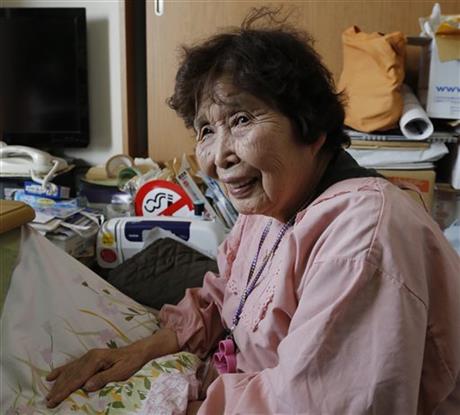
TOKYO (AP) — They feel like refugees, although they live in one of the world’s richest and most peaceful nations.
Five years ago, these people fled their homes, grabbing what they could, as a nearby nuclear plant melted down after being hit by a tsunami, spewing radiation. All told, the disaster in Fukushima displaced 150,000 by the government’s count.
About 100,000 are still scattered around the nation, some in barrack-like temporary housing units and others in government-allocated apartment buildings hundreds of kilometers (miles) away.
Although authorities have started to open up areas near the damaged reactors that were previously off limits, only a fraction of residents have returned. For example, in the town of Naraha, where evacuation orders were lifted in September, 459 people, or 6 percent of the pre-disaster population, have gone back.
Most say they don’t want to return for fear of lingering radiation. Some don’t want the upheaval of moving again after trying to start their lives over elsewhere.
With government housing aid set to end next year, many feel pressured to move back.
___
Tokiko Onoda, 80, lives with her husband in a cramped, cluttered apartment on the 21st floor of a high-rise in the edge of Tokyo where about 1,000 people displaced by the disaster live in rent-free housing.
Several Fukushima towns that were deserted now are urging residents to return, saying it is safe to live in certain areas. An ambitious effort to decontaminate vast swaths of land by removing topsoil and razing shrubbery has turned farmland and coastlines into stretches of dirt with rows upon rows of black garbage bags filled with grass, soil and debris.
When housing aid ends in April 2017, people in apartments under the government program will have to start paying rent or move out. Those whose homes in Fukushima that are in areas still off-limits for living will continue to receive the aid.
Onoda fears hers will be cut off because her home is in Namie, where evacuation orders are gradually being lifted in parts of the town.
She doesn’t believe it’s safe to go back. She feels duped because she had believed that nuclear power was safe.
Onoda angrily talks about how authorities are treating people like her. Why didn’t the government give her land elsewhere to build a new home?
When she lived in Fukushima, she had a big house with a garden where she grew vegetables and peonies. She picked mushrooms and ferns in the hills.
“We worked so hard to build that house,” she said, often stopping to wipe away tears. “We had no worries in the world except to plan vacation trips to the hot springs.”
That home is now in shambles. Although it survived the 9.0 magnitude quake on March 11, 2011, burglars have ransacked it and rats have chewed the walls. The last time she visited, the dosimeter ticked at 4 microsieverts an hour, more than 100 times the average monitored in-air radiation in Tokyo. That’s not immediately life-threatening but it makes Onoda feel uncomfortable because of worries that cancer or other sicknesses may surface years later.
Before the disaster, the government had set the safe annual radiation dosage level at 1 millisievert. Afterward, it has adopted the 20 millisievert recommendation of the International Commission on Radiation Protection set for emergencies, and 1 millisievert became a long-term goal.
Onoda says she has done her best to cope. She has made friends. She keeps busy with tea parties, art classes and a sewing circle.
And now they want her to go back, after all she has gone through?
“Only someone who has gone through this evacuation can understand,” she said.
___
Ryuichi Kino, a journalist who wrote, edited and compiled the 2015 book, “The White Paper on Nuclear Evacuees,” believes people like Onoda have been treated like “kimin,” which means “people who have been discarded” because they have been forgotten or abandoned by society.
“We don’t even know their real numbers,” he said, noting the government lacks a clear definition for “evacuees,” and bases its figures on tallies of those receiving aid. A recent count in Fukushima and a neighboring prefecture found the total number may be as high as 200,000, Kino said.
“Evacuation is a term that assumes the situation is temporary, and there is a place to go back,” said Kino.
The government is spending about 40 billion yen ($400 million) a year on housing aid for those displaced by the disaster. It’s also financially backing Tokyo Electric Power Co., operator of the damaged Fukushima Dai-ichi nuclear plant, to make monthly compensation payments, now at a cumulative 5.9 trillion yen ($59 billion) and rising.
Tests with volunteers who wore dosimeters for two weeks in the town of Naraha found average radiation exposure to be at a rate of 1.12 millsieverts a year.
Government official Yuji Ishizaki, who is overseeing the lifting of evacuation orders, says he is merely following policy.
“There is no clear boundary for what is safe or not safe for radiation,” he said. “Even 1 millisievert might not be absolutely safe.”
Fukushima Medical University, the main academic body studying the health effects of the nuclear disaster, says no sickness linked to radiation has been detected so far, although sickness from lack of exercise, poor diet and mental stress has been observed.
The more than 100 cases of thyroid cancer found among the 370,000 people 18 years old and younger at the time of the disaster the university calls “a screening effect,” or a result of more rigorous testing.
Some scientists say that is unusually high, given that thyroid cancer among children is rare at two or three in a million. Thyroid cancers among the young surged in the Ukraine and Belarus after the 1986 Chernobyl catastrophe.
___
Seiichi Nakate is relatively content in his new life with his wife and two children, 13 and 11, in the northern city of Sapporo, 600 kilometers (370 miles) from Fukushima. There, some 1,500 people from Fukushima have formed a support network, often getting together for drinks and helping each other find jobs.
Nakate recently bought a house and started a company that refers professional helpers to disabled people, and has hired former Fukushima residents. He vows to never return to Fukushima because of the radiation danger.
He believes that from the beginning, authorities underplayed those risks. He doesn’t trust them.
After the disaster, he immediately sent his wife and children to a relatives’ home in southern Japan. The family started living together in Sapporo a year later.
The end of government housing support makes people feel pressure to return, he says.
“The government abandoned the people of Fukushima, even the children. Now the policy is to push us to go back,” he said. “It’s a policy that forces radiation upon people.”
Megumi Okada, a mother of four, is fighting hard to keep her housing aid in Tokyo, getting people to sign petitions and meeting with government officials.
She scoffs at how officials keep saying that people are living “as normal” in much of Fukushima. She doesn’t want her children eating the food or breathing the air. They get periodic blood tests to make sure they are healthy.
Her husband has found a job as a construction worker in Tokyo. Their apartment is just two rooms and a kitchen, but the rent is covered. Okada wants to work, but publicly funded child-care is scarce in Japan, and private ones are costly.
“Nothing has progressed in five years,” she said. “We have the right to stay evacuated.”
Okada says she wants to apply for U.N. refugee status and move to Europe with her family, if she could.
“I know Japanese can’t become refugees now. But I wish we could,” she said. “It is about our staying alive.”
___
Government evacuation map for Fukushima September 2011: http://www.meti.go.jp/english/earthquake/nuclear/roadmap/pdf/evacuation_map_111125.pdf
Government evacuation map for Fukushima September 2015:
http://www.meti.go.jp/english/earthquake/nuclear/roadmap/pdf/150905MapOfAreas.pdf
Nuclear Scars: The Lasting Legacies of Chernobyl and Fukushima
There is no simple or easy way to clean up an aftermath of a nuclear accident. Indeed, this report shows that there is no such thing in reality as a complete decontamination of radioactively contaminated areas. The disasters that began at Chernobyl Nuclear Power Plant (NPP) in 1986 and at Fukushima NPP in 2011 have demonstrated not only the terrible initial consequences of major nuclear accidents; they also left us with long-term consequences for human health and the environment. These scars are still with us today and will be with us long after tomorrow.
The nuclear industry likes to frame these accidents in terms of downplayed numbers of deaths, but the reality is far more complex and insidious. The impacts go far beyond the tens of thousands of fatalities and hundreds of thousands suffering health consequences. Following a nuclear disaster, people are put under overwhelming pressures. They must evacuate their communities to avoid radiation risks. They are displaced from their friends, families and communities for years.
Despite all the evidence to the contrary, the nuclear industry and its government supporters continue to hide the threats of nuclear power from the public. The real risk of nuclear power, however, is inescapable for hundreds of thousands of Chernobyl and Fukushima survivors. Despite the immense suffering that accompanies losing your home or living in a contaminated environment, the scale and seriousness of these effects continue to be played down or misrepresented.
This report seeks to clarify how governments, reactor operators and nuclear regulators were unprepared to deal with not only emergency evacuations immediately after the accidents, but with the long-term management of hundreds of thousands of displaced persons, as well as with the contaminated communities and agricultural lands.
Nuclear scars: The Lasting Legacies of Chernobyl and Fukushima
Court issues surprise injunction to halt Takahama nuclear
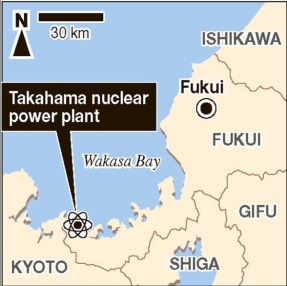 OTSU, SHIGA PREF. – In a surprise ruling that is likely to delay efforts to restart nuclear power generation nationwide, the Otsu District Court on Wednesday issued a provisional injunction ordering Kansai Electric Power Co. to shut down its No. 3 and No. 4 reactors at its Takahama facility in Fukui Prefecture.
While Kepco is expected to appeal the ruling, company officials said at a news conference that was hastily called after the decision that they would begin operations to shut down the No. 3 reactor on Thursday morning, and expected to complete the process by the evening.
The No. 3 reactor was restarted in January, and the No. 4, which had been scheduled to restart last month, was delayed due to technical problems.
“There are doubts remaining about both the tsunami response and the evacuation plan,” the ruling said.
The Otsu ruling comes just two days before the fifth anniversary of the Great East Japan Earthquake and the resulting tsunami and triple meltdown at Tokyo Electric Power Co.’s Fukushima No. 1 plant.
The jubilant plaintiffs expressed surprise and relief following the ruling, which emphasized technical problems regarding the two reactors, including issues concerning an outside power supply source in the event of an emergency. The ruling also raised concerns over the emergency protocol.
“This is a huge victory for the safety of children, people with disabilities, and the society and economy of not only the Fukui-Kansai region of Japan but the entire country,” said Aileen Mioko Smith of Kyoto-based Green Action, an anti-nuclear group. Smith was not a plaintiff in the case.
The lawsuit that sought the injunction was filed by Shiga residents who are fearful that an accident at the Takahama plant, which lies less than 30 kilometers from the northern part of Shiga Prefecture, would impact Lake Biwa, the nation’s largest freshwater body and the source of water for about 14 million people in the Kansai region, including Kyoto and Osaka.
The judgment — the first of its kind affecting reactors that were fired up under strengthened safety regulations following the March 2011 disaster — is a blow to the government’s renewed push for atomic power. The ruling could also cast doubt on the stringency of the new safety regulations.
Chief Cabinet Secretary Yoshihide Suga, however, told reporters following the ruling the government would not change its basic stance of promoting restarts.
In a separate case concerning the two reactors, the Fukui District Court issued an injunction last April banning Kansai Electric from restarting the units, citing safety concerns.
But the same court later lifted the injunction in December, allowing the utility to resume operations at both reactors. Plaintiffs appealed the court decision to the Kanazawa branch of the Nagoya High Court, where the case is pending.
Under the revamped safety regulations, which took effect in 2013, utilities are for the first time obliged to put in place specific countermeasures in the event of severe accidents such as reactor core meltdowns and huge tsunami — which was the initial cause of the crisis at the Fukushima nuclear plant.
Court orders Takahama reactor shut down, 2nd offline
A court has issued an unprecedented order for a nuclear reactor in western Japan to stop operating and ordered a second one to stay offline.
The Otsu District Court in Shiga Prefecture, which issued the injunction, said the emergency response plans and equipment designs at the two reactors have not been sufficiently upgraded despite the 2011 Fukushima crisis.
Wednesday’s order requires Kansai Electric Power Co. to shut down the No. 3 reactor immediately and keep the No. 4 offline at the Takahama plant in Fukui Prefecture, home to about a dozen reactors.
The two reactors restarted this year after a high court in December reversed an earlier injunction by another court.
The decision reflects Japan’s divisive views on nuclear safety and leaves only two of the country’s 43 reactors in operation.
http://ajw.asahi.com/article/behind_news/social_affairs/AJ201603090064
FIVE YEARS AFTER: Radioactive forests prevent logging revival in Fukushima
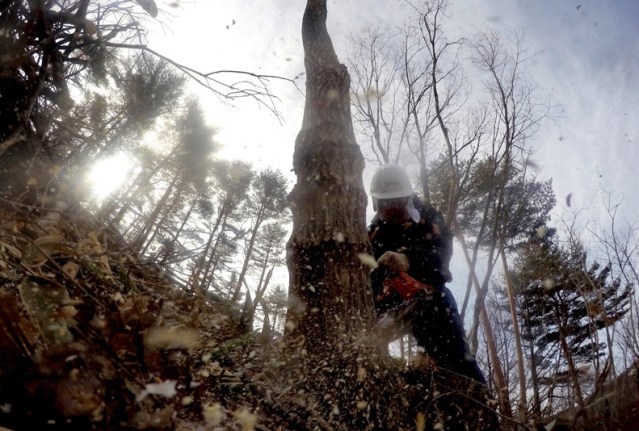
A logger cuts down a tree in a mountainous area of the Miyakoji district in Tamura, Fukushima Prefecture, in late February
TAMURA, Fukushima Prefecture–The once-thriving industry of log production for shiitake mushroom farming remains virtually nonexistent in Fukushima Prefecture after the 2011 nuclear disaster contaminated extensive mountain areas.
A year before the Great East Japan Earthquake and tsunami triggered the triple meltdown at the Fukushima No. 1 nuclear power plant on March 11, 2011, the prefecture produced logs for cultivating shiitake totaling 47,800 cubic meters, the third largest volume among Japanese prefectures.
But radioactive fallout from the nuclear accident meant that shiitake log production in the prefecture dwindled to about 1 percent of the pre-disaster level in 2014, which is having a serious impact on local industry.
In the Miyakoji district of Tamura, located about 20 kilometers inland from the crippled nuclear power plant, the lumber industry shipped around 200,000 logs annually before the 2011 disaster.
“More than 80 percent of this area’s land is covered by forests, and we cannot think of any other business opportunities that don’t involve forestry,” said Shoichi Yoshida, a 60-year-old executive of the Fukushima Central Forestry Association.
While the evacuation order covering an eastern strip of the district was lifted in 2014, radioactive levels of trees in the district remain above target levels, and the resumption of shipments is still nowhere in sight.
However, local forestry workers still routinely cut down oak and other trees, which are more than 20 years old, to maintain the mountain area’s capability of producing quality logs.
http://ajw.asahi.com/article/0311disaster/recovery/AJ201603090060
Five Years of Forgetting: The Fukushima Disaster and Nuclear Amnesia
Shunichi Yamashita, a proclaimed expert on the effects of radioactivity, was invited by the #Fukushima prefecture in the aftermath of the meltdowns to reassure rather than investigate.
“The effects of radiation,”he claimed, “do not come to people who are happy and laughing, they come to people who are weak-minded.”
“People’s understanding of disasters will continue to be constructed by media. How media members frame the presence of risk and the nature of disasters matters.” – Celine Marie Pascale, American University, Mar 10, 2015
Fearing radiation; terrified by the nuclear option. Perfectly sensible instincts that never seem to convince establishments and those who have long ceased to loathe nuclear power and its various dangerous by-products. Each nuclear disaster, such as the meltdowns at the Fukushima Daiichi plants five years ago, come with its treasure of apologetics and justifications. The reason is always the same: nuclear energy is safe and we cannot really do without it.
To that end, the emergence of “radiophobia” is a designation that dismisses as much as it supposedly diagnoses. It pokes fun at those ninnies who think that they are about to perish because of the effects of nuclear catastrophe and radiation contamination. Risk, according to this philosophy of concerted denial, is always exaggerated.
Shunichi Yamashita, a proclaimed expert on the effects of radioactivity, was invited by the Fukushima prefecture in the aftermath of the meltdown to reassure rather than investigate.
“The effects of radiation,” he claimed, “do not come to people who are happy and laughing, they come to people who are weak-minded.”
This Dr. Strangelove dismissiveness is as much an advertisement for the virtues of doom as it is about the brutal consequences, real and imaginary, of radiation poisoning. Radiation is the invisible killer that stalks the earth, but for many, it is hardly worth a thought. For one, it suggests a simple calculation in environments that are not, supposedly, that dangerous. “With low radiation doses,” argued this doctor of nuclear apologetics, “the people have to decide for themselves whether to stay or to leave.”
Despite this bubbling confidence on the part of his colleagues, Japanese American physicist Michio Kaku had little time for such views as Yamashita’s. In an interview soon after the meltdown, Kaku claimed that, “The slightest disturbance could set off a full-scale meltdown at three nuclear power stations, far beyond what we saw at Chernobyl.”
Smile with upbeat confidence, and the problem goes away. If people are depressed before radiation, suggests Yamashita, they will succumb as the negative dramatists they are. “Stress is not good at all for people who are subjected to radiation.” Then again, stress could hardly be deemed good for anybody in particular, irrespective of radiation.
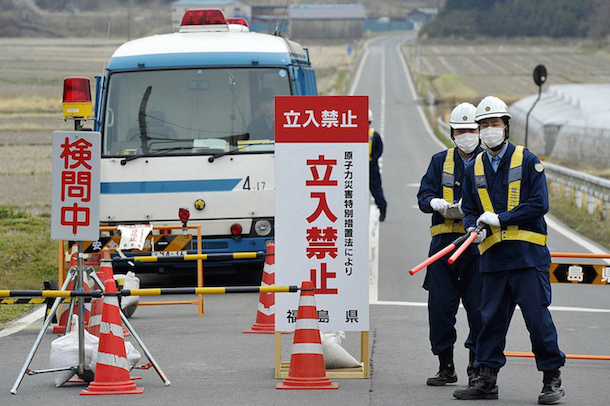
Security checkpoint outside Fukushima following the disaster.
Such fabulously misguided nonsense is central to the amnesiac context of Fukushima. Makiko Segawa put it rather poignantly in his contribution in the Asia-Pacific Journal: initial enthusiastic snaps and coverage by the press corps, an insatiable lust for disaster imagery, quietened in due course. Writing a year after the disaster, Segawa noted how “the journalists have packed up and gone and by accident of design Japan’s government seems to be mobilizing its agenda, aware that it is under less scrutiny.”
Robert Jacobs similar notes that Fukushima conforms to that litany of disasters that has afflicted the human experience, a matter of rejection and experience rather than learning and adapting. “Fukushima is taking its place alongside the many forgotten nuclear disasters of the last 70 years.”
Sociologist Celine Marie Pascale of the American University, on scouring some 2,100 news stories from four media outlets (The New York Times, Washington Post, The Huffington Post and Politico) came to the conclusion that a strategy of minimisation was underway. The implications of such an event had to be downplayed, de-emphasising the risk of massive contamination and environmental disaster. A mere 6 percent of the articles examined the health implications of the event. “We see articles in prestigious news outlets claiming that radioactivity from cosmic rays and rocks is more dangerous than the radiation emanating from the collapsing Fukushima Daiichi nuclear plant.”
A necessary process of mendacity has to come into play. The Tokyo Electric Power Plant (TEPCO), Japan’s largest power company and owner of the affected power plants, initially denied the existence of meltdowns when it knew three had taken place. It was a process of deception that continued for three months after the event, a situation made even more absurd for the fact that hundreds of thousands were evacuated in the vicinity. It is a disaster episode that keeps on giving.
Even in March 2015, their reassurances seemed less than comforting. Chief Decommissioning Officer Naohiro Masuda would claim rather blandly that, “Even if some contaminated water remains, I feel that we can reduce a substantial amount of risk.”
The nuclear genie is a creature that encourages the lie in planning establishments. There are lies about safety; there are lies about legacies. As Jacobs suggests, the Disneyfication of disaster sites affected by the nuclear or atomic scourge is all too real. The Manhattan Project that led to the development of the atomic weapons used on Hiroshima and Nagasaki became “Disney theme parks of American exceptionalism.” The quest for the nuclear option in both the military and energy contexts saw massive environmental degradation.
Even now, the ghostly sense of Fukushima should be a reminder of errors and negligence rather than dismissal and indifference. Jacobs suggests a simple but necessary formula to combat nuclear amnesia: see the impacts of radiation exposure “before they become vaguely visible as cancers nestled in health population statistics.”
The Broken Maps of Fukushima
by Robert Jacobs, March 9, 2016
When we look at maps of Fukushima what we see is disinformation. The maps of the radioactive contamination of Fukushima contain contradictions that embody our inability to understand the true nature of the dangers to people living there. This is rooted in the difficulty in understanding radiation. If we can separate the maps, we may be able to grasp the dangers more readily, and thus understand the situation in a more functional way.
Similarly, one can hold a Geiger counter up in the air in a village in Fukushima prefecture and declare that there is no radiation present. The assumption, therefore, is that there is no danger. The ways in which this can be both true, but only partial truth, are part of what we need to fully grasp to understand the situation in Fukushima.
I will begin with the Geiger counter.
Radiation is a very difficult thing to understand. For starters, we tend to assume that radiation is a “thing.” Something is radioactive or it is not. We are affected by the radiation or we are not. This is not quite accurate. Radiation is a quality: it is a process—something radiates. How it radiates can differ, and it is in this difference that half-truths can be told as whole truths. While there are many aspects to this, for the present article I will concentrate on the differences between gamma, beta and alpha radiation. Most of the discourse that you hear about radiation related to Fukushima is describing gamma radiation. The danger to most of the people continuing to live in contaminated areas is in the form of alpha or beta radiation, so when we hear people talk about radiation in Fukushima, most of the time they are not talking about what is of most concern and danger.
Here is a quick primer. Gamma radiation comes off of radioactive materials in waves. These waves can penetrate anything, and they are partially filtered by heavy materials, such as lead. You can think of gamma radiation as similar to x-rays. This is why you have a lead apron placed on you when you have dental x-rays, and why the technician goes behind a lead-lined wall. When gamma radiation passes through your body it does not stay in your body. Like x-rays, when the source is turned off, they stop and there is no more danger. To limit the damage to the body from gamma radiation we limit the total cumulative dose received, hence the person working with it protects themselves behind the lead wall; the patient receives a small dose, but if the technicians received that same small dose repeatedly every day, they would be at much higher risk.
Alpha and beta radiation comes from specific irradiated particles, such as individual atoms of plutonium, or cesium-137. These particles cannot penetrate through materials: they cannot penetrate through skin, or even paper. They are primarily dangerous when we internalize them inside of our bodies and they permanently lodge there. They generally give off a small amount of radiation because they are single atoms. If there are a lot of them present, they give off more radiation. If one is internalized into the body, it will give this small amount of radiation to the same surrounding cells for 24 hours a day. While the amount is small, 24/7 exposure to this radiation may cause mutations to these cells, and then cancer.
Gamma radiation fills an area equally, lessening quickly as you get further from the source. This is what most Geiger counters are set to measure—the levels of gamma radiation present. When you have alpha and beta-emitting particles scattered in an area, the amount of detectable radiation will likely vary. In Fukushima City last year (about 50 miles away from the nuclear plants), I held a Geiger counter at chest level on a street and found a low level of radiation. However, moments later when I placed that same Geiger counter on the ground, I found much higher levels of radiation. That is because particles fall and collect on the ground. When I then moved my Geiger counter to the gutter at the side of the street, I found dramatically more radiation. This is because rain washes the particles to the gutter. So the distribution of the particles is irregular, depending on how long ago they fell-out of the sky (fallout) and how much wind and rain there has been.
This is how you can hold a Geiger counter in the air (or place a public Geiger counter five or twenty feet in the air) and show very low levels of radiation, and yet there can still be significant dangers present. If the danger is from alpha and beta-emitting particles, the readings taken in mid-air can be low. The way that such particles are dangerous to us is if we internalize them into our bodies, typically by inhaling them, swallowing them, of having them enter through cuts in our skin. Once inside the body, they may pass through, but they may also permanently lodge there. The body is tricked into thinking that these particles are useful chemicals. Strontium-90 “mimics” calcium, and the body can put it into the bones. Since the body puts iodine into the thyroid gland, if someone has internalized iodine-131 (a radioactive form of iodine) the body may put that in the thyroid gland. Thyroid cancer is one of the first cancers to develop from internalized particles, and that is why our conversation about the health impacts in Fukushima are currently focused on thyroid cancer. Other cancers will follow as we move through their latency periods.
______________
Table 1
Some isotopes of concern after a nuclear accident:
Plutonium 239, half-life: 24,000 years, decay mode: alpha, decay energy: 5.24 MeV
Strontium 90, half-life: 29 years, decay mode: beta, decay energy: 0.546 MeV
Cesium 134, half-life: 2 years, decay mode: beta, gamma, decay energy: 0.698 MeV
Cesium 137, half-life: 34 years, decay mode: beta, gamma, decay energy: 1.76 MeV
Iodine 131, half-life: 8 days, decay mode: beta, gamma, decay energy: 971 keV
Tritium, half-life: 12 years, decay mode: beta, decay energy: 18.6 keV
Decay energy is measured in electron volts (eV), a measure of the particle’s momentum. 1 MeV is 1,000,000 eV, and 1 keV is 1,000 eV. According to the table, Plutonium 239 is the most dangerous internal emitter, but the hazards to public health depend on the relative quantities released and the relative quantities that people actually absorb. Some segments of the population are more vulnerable than others. Is it a matter of a single exposure or a continual exposure and accumulation? What parts of the body do different particles tend to go to, and how long on average do they tend to stay in the body (the biological half-life)? None of this complexity can be conveyed with a map and a simple declaration of a “safe” limit of external gamma radiation exposure. (Table added by Dianuke editor)
______________
These alpha and beta-emitters are particularly dangerous for children. Children are lower to the ground to start with, tend to put things into their mouths, and tend to play outdoors and suffer cuts and bruises, and since their bodies are growing rapidly, damage to cells can replicate faster. This is why parents agonize over whether to stay or evacuate an area that has had radiological fallout.
This is also why it is hard to be certain about the contamination to the food supply. It is virtually impossible to test all food, and so samples are tested: samples of rice from rice fields, samples of fish from catches, samples of fruit from orchards. Because the danger to these crops is not from gamma radiation, which would be equally distributed, but from their internalizing alpha and beta-emitting particles, portions of a crop, or haul of fish, can test negative while other portions contain significant amounts of radiation deposited on them or taken up through soil and water into the plant or fish itself.

Our ability to technologically determine the distribution of alpha and beta-emitting particles is limited because of the irregular deposit of the material from fallout clouds, and the subsequent scattering of the particles from wind and water. This is also why it is possible to “decontaminate” an area only to have it re-contaminated as the wind and rain redistribute the particles that fell on nearby forests. Technically it is not possible to “decontaminate” a natural area. The radioactive particles will remain dangerous for their natural life. For plutonium that is over 100,000 years. During that time, it cannot be decontaminated, it can only be moved. We can attempt to contain these particles, however most of them will long outlive the plastic bags into which we placed them, at which time they will re-enter the soil and the ecosystem and begin to cycle through it again.
Understanding the difference between the dangers from gamma, beta and alpha radiation is the key to understanding how the maps of Fukushima are broken. Below is a typical map that we see of Fukushima, produced by the Japanese government:

Map of Fukushima produced by MEXT of the Government of Japan and reproduced on the website of the IAEA.
There are two things that I want to point out. First, the concentric circles. These have the Fukushima Daiichi nuclear plant at their center. The second thing is the color coded splotches and streak. These show where the plumes of the three nuclear plant explosions deposited their fallout, in this case specifically measurements of cesium-134 and cesium-137. Notice how the representation of the areas of fallout are constrained by the outermost concentric circle.
These two things should be read separately.
Concentric circles describe relative distances from a point. In this case, distances from the nuclear plant. People were evacuated based on their distance from the plant. The mandatory evacuation zone was at 20 km and the suggested, or prepared evacuation zone was from 20-30 km (the key difference between “mandatory” and “suggested” evacuation is liability). The reason that people had to evacuate from these areas was because of the high levels of gamma radiation coming from the melted cores of the nuclear plants, and the high levels of gamma radiation where the plumes deposited the largest amounts of fallout close-by. The levels of gamma radiation near the reactors is lethally high. At this point, no human being can enter into the buildings where the nuclear cores melted. The gamma radiation levels are so high that they would be killed in minutes. We have yet to build robots capable of operating in these highly radioactive locations for longer than an hour or so. Moving away from the point at the center of these circles will decrease one’s exposure to radiation. The amount of gamma radiation coming from the plant is measurable and relatively constant across the areas at similar distances. Hence the use of circles, concentric circles marking decreasing levels of gamma radiation.
Here is a map of the evacuations:
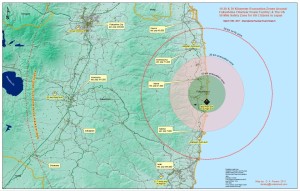
Concentric Circles Showing Areas of Evacuation, No-Fly Zone, and U.S. Safety Zone Around the Fukushima Daiichi Nuclear Plants, and the Populations of Nearby Towns.
When we look, instead, at a map of the radiological contamination of the downwind area, we are reading entirely different information. The splotches of color marking the levels of radiation from the plumes is irregular, unlike the neat and cleanly measured concentric circles. The colors mark the different grades of radiation from the fallout. They are created based on the gamma radiation from the fallout, however, the primary danger to people living in these areas is not based on the levels of the gamma radiation, but from internalizing individual alpha and beta-emitting particles. Since there is no single source, like the melted cores, but rather billions of individual particles, once the plume has fallen out and the particles have reached the ground, they begin to move through the ecosystem via the dynamic motion of wind and water, and then they are internalized in the bodies of animals. Rain will collect them along gutters and gullies and transport them. Wind will blow them along hillsides and valleys. Once these particles begin to move through the ecosystem, there is no center, no specific source that people must move away from. The dangers are unevenly distributed, and they are constantly changing. Once you are over 30 km away from the nuclear plants, surrounded by their concentric circles, moving further away from the direction of the plants may or may not provide more safety. The contamination that comes from alpha and beta-emitting particles is unpredictable, irregular, and changes over time. Each specific particle has a specific period of radioactivity and during that period, it will move through the ecosystem, being taken up by plants, moved by wind, entering soil, eaten by animals and returning to the soil when the animals die. They may move in the same direction that you are moving to get away from the center of the concentric circles, if the wind is blowing that way.
Here is a map showing the radiological contamination of the region, which differs from the specific places where the plumes first deposited:
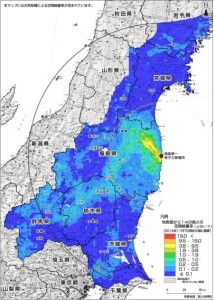
Map of Radiation Levels Downwind from the Fukushima Daiichi Nuclear Plants in 2014, Produced by the Nuclear Regulation Authority of the Government of Japan.
The maps of Fukushima are broken. These broken maps are reflections of the broken chain of information that has been provided to those living there and grappling with the dangers on a daily basis. Because these maps, and this information, are broken, disinformation can thrive and blossom. A March 7th editorial in the Yomiuri Shimbun in Japan makes use of these broken maps and the data that they convey to misinform people in Japan about the safety of former residents moving back into contaminated areas. With no sense of irony, it’s headline proclaims, “Correct Understanding of Radiation Needed to Speed Reconstruction.” Explaining that exposure to radiation is natural, the editorial claims that, “The government needs to continue carefully explaining to residents that there will be no health problems as long as the radiation exposure is at 20 millisieverts or lower.” For this reason, people need “correct understanding” to cooperate and return to areas that can only be decontaminated to 20 millisieverts. While there is significant debate about what level of gamma radiation is safe, and increasingly convincing data that no level is safe (see here), this argument ignores the fact that much of that 20 millisievert exposure is coming from alpha and beta-emitting particles, which pose an additional danger from that of the external exposure. For the people being advised to return, the areas they would return to are plagued by the more urgent risk of internalizing these particles, a danger that increases dramatically in areas where the external exposure is still measurably high. Their lives would be filled with the presence of large amounts of invisible atoms that will very likely cause cancers if inhaled or swallowed. These dangers are not factored into the 20 millisieverts the editorial writers so casually dismiss.
These broken maps, co-mingling the dangers of external and internal radiation in one graphic, present the idea that the dangers from radiation near Fukushima are fixed and knowable. This is not true. Massive amounts of radionuclides have deposited along large areas of Fukushima, and they will now pulse and fluctuate within the dynamics of that ecosystem for as long as each particle remains radioactive. Most of them will be hard to trace and difficult to control. People can be moved away from the plants, where the danger is in a fixed location and is measurable. Where the plumes deposited the particles the opposite is true. The dangers are unknowable and can move around, just like the people. This puts the health of those living there in a very different relationship to the risks.
To fix the maps, we need to fix the knowledge chain. Radiation is difficult to understand, and that difficulty allows disinformation to take root–disinformation like that contained in the editorial of the Yomiuri cited above, and in so many pronouncements from experts who omit information about alpha and beta-emitting particles and the dangers of internalized radiation when they speak down to people who must live with these dangers. For most people having to live with the radiation scattered by TEPCO’s meltdowns, clear information about internalized radiation and how these dangers persist in their communities is essential for them to map their own paths to a future of their choosing. No one should insist that they live with higher levels of radiation by changing their understanding to the “correct understanding.”
_____
Robert Jacobs is a historian of nuclear technologies and radiation technopolitics at the Hiroshima Peace Institute of Hiroshima City University.
Japan’s Fukushima radioactive water and debris – out of control
It’s time the Japanese government tackles the issues head-on. Either it takes the exceedingly unpopular step of imposing a more secure facility on one or more unwilling communities, or it must acknowledge the obvious, which is that the core of Fukushima’s exclusion zone will become a gigantic de facto nuclear waste dump indefinitely.
Playing Pass the Parcel With Fukushima http://www.nytimes.com/2016/03/08/opinion/playing-pass-the-parcel-with-fukushima.html?_r=0 PETER WYNN KIRBYMARCH 7, 2016 OXFORD, England — In the five years since the earthquake, tsunami and nuclear meltdowns that devastated Fukushima Prefecture, the Japanese government has undertaken mammoth efforts to decontaminate irradiated communities.
Thousands of workers have removed millions of tons of radioactive debris from backyards and fields, roadsides and school grounds. They have scraped away acres and acres of tainted soil, collected surface vegetal matter, wiped down entire buildings and hosed and scrubbed streets and sidewalks.
The cleanup effort is staggering in scale, and unprecedented. Japan’s leaders hope to restore for human habitation more than 100 cities, towns and villages scattered over hundreds of square miles. The government has allocated more than $15 billion for this work.
The Japanese authorities call these efforts josen (decontamination), but the word is misleading and the activity largely a fallacy. What’s happening is more like transcontamination: Once the radioactive debris is collected and bagged, it is transferred from one part of Fukushima to another, and then another.
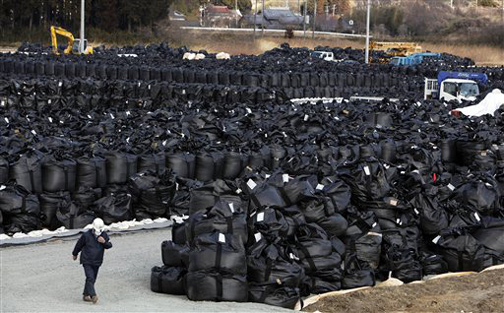
The waste is placed in bags, which are periodically collected and brought to provisional storage areas (kari-kari-okiba), before being moved to more secure, though still temporary, storage depots (kari-okiba). Officials at the Ministry of the Environment have said up to 30 million tons of radioactive waste will eventually be moved to yet another, third-level interim storage facility near the crippled Fukushima Daiichi plant. But no significant construction has begun. In fact, the authorities haven’t even managed to convince all the relevant absentee landowners in the area to sell the necessary plots.
So for now the radioactive waste is either lying around or being moved around. Throughout Fukushima, there are large cylindrical plastic sacks — each roughly the size of a hot tub and weighing about a ton when full — stacked in desultory heaps by the side of roads, near driveways or in abandoned lots. In the town of Tomioka in mid-October, I saw three dozen bags piled along the edges of a small cemetery, overtaken by weeds.
The bags deteriorate after three years, meaning that the waste has to be repackaged regularly. Sacks are sometimes moved from one facility to another, based on their levels of radioactivity, which vary and can shift over time. By last fall, there were more than 9 million one-ton bags of radioactive waste. Standard trucks carry fewer than 10 bags at a time — meaning that radioactive material is regularly rotating around Fukushima in a slow-motion version of pass the nuclear parcel. Continue reading
Fukushima’s million-ton headache – radioactive water everywhere
Fukushima Nuclear Disaster 5 Years On: Water, Water Everywhere (Part I), Forbes,
John Boyd , 7 Mar 16 “……….Now, on the fifth anniversary of what is known here as the Great East Japan Earthquake, how much progress has TEPCO and the government made in dealing with what was fundamentally a man-made disaster?
The answer is they continue to face the same four huge challenges they grappled with in 2011: dealing with contaminated water that has grown into a million-ton headache; locating and somehow retrieving the molten fuel debris; removing spent fuel rods from the damaged reactor storage pools; and disposing of millions of cubic meters of radioactive waste.
Most evident of these challenges is the contaminated water. Cooling water must be continuously circulated through the damaged reactors Units 1, 2 and 3, where nuclear fuel has melted through at least the inner containment vessels. Consequently, the cooling water injected into the reactor becomes contaminated and finds its way down into the turbine basements adjacent to each reactor; there, it mixes with incoming ground water to greatly compound the problem.
Some of the pooled water is partly decontaminated, cooled and recirculated through the reactors again, the rest is treated and pumped out and stored in tanks to prevent it flowing into the Pacific Ocean.
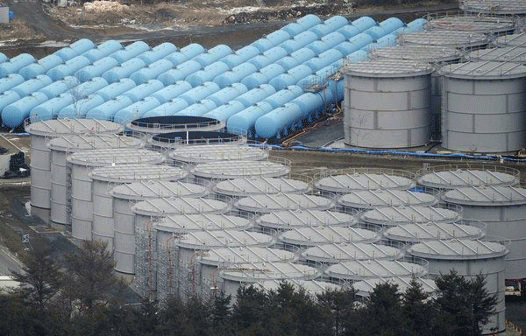
Naohiro Masuda, TEPCO’s Chief Decommissioning Office, told the foreign press in Japan March 2nd that there are over 1,000 such storage tanks located inside and outside the plant, each holding as much as 1,000 metric tons of treated water. And with groundwater streaming in at 150 metric tons a day, a new tank is being added weekly.
The stored water, while filtered and largely decontaminated, still contains tritium—radioactive hydrogen, which can cause cancer if ingested………http://www.forbes.com/sites/jboyd/2016/03/07/fukushima-nuclear-disaster-5-years-on-water-water-everywhere-part-i/#148a72ac1a35
Japan’s Nuclear Regulator urges vigilance, has doubts on efficacy of underground ice wall around Fukushima
Japan’s nuclear watchdog chief urges safety vigilance by government, utilities, Japan Times, KYODO MAR 8, 2016 The head of the Nuclear Regulation Authority is urging the government and utilities to redouble their vigilance to ensure reactor safety, warning them not to drop their guard simply because units have cleared the NRA’s tough safety screening.
NRA Chairman Shunichi Tanaka, chairman of the Nuclear Regulation Authority, said passing the screening is “not enough” during an interview Monday ahead of Friday’s fifth anniversary of the Fukushima No. 1 disaster……..
The NRA chairman said the situation at Fukushima No. 1 is calm, with cleanup work making steady progress.
But he expressed doubts about the efficacy of an underground ice wall that Tepco has built around reactor buildings to prevent groundwater from flowing into their basements.
The wall “will not essentially help reduce the risk” of an increase in toxic water, he said……http://www.japantimes.co.jp/news/2016/03/08/national/japans-nuclear-watchdog-chief-urges-safety-vigilance-government-utilities/#.Vt80nX197Gh
1 This Month





PLEASE OPPOSE HR 8255 AND S.3639 – bills would accelerate satellite deployment, with no environmental review or safeguards – https://ncstd5li.quorum.us/campaign/169331/
To see nuclear-related stories in greater depth and intensity – go to https://nuclearinformation.wordpress.com
-
Archives
- October 2026 (74)
- September 2026 (339)
- August 2026 (330)
- July 2026 (355)
- June 2026 (287)
- May 2026 (306)
- April 2026 (356)
- March 2026 (251)
- February 2026 (267)
- January 2026 (308)
- December 2025 (358)
- November 2025 (359)
-
Categories
- 1
- 1 NUCLEAR ISSUES
- business and costs
- climate change
- culture and arts
- ENERGY
- environment
- health
- history
- indigenous issues
- Legal
- marketing of nuclear
- media
- opposition to nuclear
- PERSONAL STORIES
- politics
- politics international
- Religion and ethics
- safety
- secrets,lies and civil liberties
- spinbuster
- technology
- Uranium
- wastes
- weapons and war
- Women
- 2 WORLD
- ACTION
- AFRICA
- Atrocities
- AUSTRALIA
- Christina's notes
- Christina's themes
- culture and arts
- Events
- Fuk 2022
- Fuk 2023
- Fukushima 2017
- Fukushima 2018
- fukushima 2019
- Fukushima 2020
- Fukushima 2021
- general
- global warming
- Humour (God we need it)
- Nuclear
- RARE EARTHS
- Reference
- resources – print
- Resources -audiovicual
- Weekly Newsletter
- World
- World Nuclear
- YouTube
-
RSS
Entries RSS
Comments RSS

