‘Pakistan wants India’s entire nuclear programme under IAEA safeguards’ http://www.pakistantoday.com.pk/2017/02/07/pakistan-wants-indias-entire-nuclear-programme-under-iaea-safeguards/ February 07, 2017 ISLAMABAD: Pakistan wants India to bring its entire civilian nuclear programme under the safeguards laid out by the International Atomic Energy Commission (IAEA), a statement quoting Director General Disarmament at the Foreign Office Kamran Akhtar said.
Akhtar was speaking at a round-table discussion in Islamabad on Fissile Material Cut-Off Treaty (FMCT), organised to prepare for the upcoming Conference on Disarmament (CD).
“It is incumbent on us to stand up for our own interest. We want an assurance that India’s whole three stage nuclear power programme would be under safeguards,” said Akhtar. “Pakistan will not agree to FMCT until it gets the assurance from India.”
He said negotiating a treaty that only bans future production of fissile material without taking into account the existing stockpiles would freeze “the existing asymmetries”.
The DG Disarmament was of the opinion that India has been given “discriminatory waivers”, which add to Pakistan’s security concerns.
He said that eight of the Indian reactors, its fast breeder programme and approximately five tonnes of reactor-grade plutonium were included in the safeguards of dictated by the IAEA.
The FMCT would put Pakistan at a permanent disadvantage and undermine its security interests, Akhtar added. There is a fear that the reactors not mandated by the safeguards might be used clandestinely for plutonium production and the existing stockpiles might be diverted to a military programme at a subsequent stage, the DG said.
“Pakistan should not be asked to agree to something that is not in its strategic interest. We have to factor into consideration possible actions by India that could undermine credibility of our nuclear deterrence,” he added.
February 8, 2017
Posted by Christina Macpherson |
India, Pakistan, safety |
Leave a comment
 Toshiba’s Nuclear Projects Falling Like a Row of Dominos February 6, 2017, The Energy Collective by Dan Yurman The Japanese conglomerate is expected to announce Feb 14 that it will pull out of projects in the UK (3 AP1000s) and India (6 AP1000s) due to its deep financial difficulties.
Westinghouse may be sold off for its technology and services lines of business, but new investors will be needed for the projects in the UK and India.A sense of panic is emerging globally as Toshiba, troubled by extensive losses and fake financial reports, heads toward a complete exit from the commercial nuclear energy industry. The two countries that will be hardest hit by the expected actions will be the UK and India.
Unlike the situation following the Fukushima crisis, in which the Japanese government in effect nationalized TEPCO, no bailout of Toshiba is expected to come to its rescue. ……..
NuGen Project Faces Investor Uncertainty
Toshiba will likely end its planned commitment for a 60% equity stake in the NuGen Consortium at the UK Moorside project located in Cumbria. An effort to build three 1150 MW Westinghouse AP1000 nuclear reactors will now need new investors or a new reactor vendor or both.
In the UK backers of the NuGen project are looking to see if the government will directly fund the effort with Westinghouse acting as a technology vendor uncoupled from its parent’s convoluted corporate structure. ……..
The question is whether South Korea would want to take on another major project while it is still completing the other three units in the UAE plus it has domestic reactors that have capital requirements. The risk of being overextended in terms of money and management capability is one the firm will likely weigh relative to its interest in entering the UK nuclear market.
It is also less likely that Chinese state owned nuclear firms will have an appetite for further investments in the UK’s new nuclear build. They already have a full plate. Two firms have combined to take a 33% stake in the massive Hinkley Point C project. Also, they have also committed to enter the costly and lengthy Generic Design Assessment effort for the Hualong One reactor.
The two firms building the units at Fangchenggang hope to export the Hualong One to the UK for the Bradwell site once the Hinkley project is complete sometime in the mid-2020s. The firms have plans for a majority equity stake in the Bradwell project which could cost $10 billion. That’s a lot to take on and the prospect of being overextended is very real.
NPCIL Sees Andhra Pradesh as Now Being “Impossible”
Efforts by Westinghouse to close a deal to build six AP1000s for NPCIL at a coastal site in the southern state of Andhra Pradesh will go by the boards. The Indian government has not make any official statement about Toshiba’s problems. However, Reuters reported that it was told it now looks to be “impossible” for the six unit project to move ahead.
The Indian utility had been seeking U.S. Export Import Bank loan guarantees for the project which has cost estimates of at least $15 billion. Congress throttled the bank’s loan powers in 2015 and is unlikely to loosen the restraints for a project sponsored by Toshiba, at least in its current financially distressed state.
What Future for Westinghouse?
The risks that Westinghouse faces even if the reactor division is able to establish itself as an independent vendor to EPC firms and investors include keeping its work force intact during what could be a lengthy transition. Layoffs and cost cutting could reduce the core competencies of the firm and its ability to meet the service needs of existing customers much less be a vendor of nuclear technologies for new projects…..
February 8, 2017
Posted by Christina Macpherson |
business and costs, Japan |
Leave a comment

 Seoul Court Orders Gov’t to Close Nuclear Reactor Amid Safety Concerns, Sputnik News, 7 Feb 17 The Seoul Administrative Court ordered the Nuclear Safety and Security Commission (NSSC) to cancel its resolution to extend the operation of a nuclear reactor located about 400 kilometers (250 miles) southeast of Seoul due to the commission’s failure to follow legal regulations.
MOSCOW — The Seoul Administrative Court ruled in favor of a lawsuit filed by a group of local residents to annul the NSSC’s approval of a 10-year extension of the operation of the Wolseong-1 reactor in Gyeongju, which was supposed to be shut down in 2012, the Yonhap news agency reported Tuesday.
The reactor was shut down in 2012 after reaching the end of its 30-year commercial operation period. However, the commission issued a new operation license for another 10 years and restarted the reactor in June 2015 after a total of 946 days offline. In the wake of the 2011 Fukushima nuclear disaster in Japan, the commission’s decision raised safety concerns and resulted in a collective suit filed by 2,167 nearby residents. However, the court recognized only the claims of those living within an 80-kilometer radius of the reactor. The court’s verdict was based on the NSSC’s failure to follow the legal procedures……..https://sputniknews.com/asia/201702071050421931-south-korea-nuclear-reactor/
February 8, 2017
Posted by Christina Macpherson |
Legal, South Korea |
Leave a comment
China’s solar power capacity more than doubles in 2016 http://www.reuters.com/article/us-china-solar-idUSKBN15J0G7, 4 Feb 17, China’s installed photovoltaic (PV) capacity more than doubled last year, turning the country into the world’s biggest producer of solar energy by capacity, the National Energy Administration (NEA) said on Saturday.
Installed PV capacity rose to 77.42 gigawatts at the end of 2016, with the addition of 34.54 gigawatts over the course of the year, data from the energy agency showed.
Shandong, Xinjiang, Henan were among the provinces that saw the most capacity increase, while Xinjiang, Gansu, Qinghai and Inner Mongolia had the greatest overall capacity at the end of last year, according to the data.
China will add more than 110 gigawatts of capacity in the 2016-2020 period, according to the NEA’s solar power development plan.
Solar plants generated 66.2 billion kilowatt-hours of power last year, accounting for 1 percent of China’s total power generation, the NEA said.
The country aims to boost the mix of non-fossil fuel generated power to 20 percent by 2030 from 11 percent today.
China plans to plough 2.5 trillion yuan ($364 billion) into renewable power generation by 2020.
(Reporting by Ryan Woo; Editing by Helen Popper)
February 6, 2017
Posted by Christina Macpherson |
India, renewable |
Leave a comment
Source: AAP
US President Donald Trump’s defense secretary has warned North Korea of an “effective and overwhelming” response if Pyongyang chooses to use nuclear weapons.
It came as he reassured Seoul of steadfast US support at the end of a two-day visit.
“Any attack on the United States, or our allies, will be defeated, and any use of nuclear weapons would be met with a response that would be effective and overwhelming,” Defense Secretary Jim Mattis said at South Korea’s defense ministry.
Mattis’ remarks come amid concern that North Korea could be readying to test a new ballistic missile, in what could be an early challenge for Trump’s administration.
North Korea, which regularly threatens to destroy South Korea and its main ally, the United States, conducted more than 20 missile tests last year, as well as two nuclear tests, in defiance of UN resolutions and sanctions.
The North also appears to have also restarted operation of a reactor at its main Yongbyon nuclear facility that produces plutonium that can be used for its nuclear weapons program, according to US think tank 38 North.
“North Korea continues to launch missiles, develop its nuclear weapons program and engage in threatening rhetoric and behaviour,” Mattis said.
North Korea’s actions have prompted the United States and South Korea to respond by bolstering defenses, including the expected deployment of a US missile defense system, known as Terminal High Altitude Area Defense (THAAD), in South Korea later this year. The two sides reconfirmed that commitment on Friday.
February 4, 2017
Posted by Christina Macpherson |
North Korea, politics international, USA, weapons and war |
Leave a comment
The nuke biz is going down like dominoes. Hitachi announces a nearly $6.2 billion loss on its U.S. uranium enrichment joint effort with GE.

Electronics giant Hitachi Ltd. is set to lose tens of billions of yen this fiscal year due to the withdrawal from a project to develop a new method of uranium enrichment by a joint venture in the United States.
The loss, forecast by Hitachi on Feb. 1, was disclosed shortly after Toshiba Corp. made a similar announcement last month of deficits brought on by its nuclear power business.
Hitachi is expected to report a 70 billion yen ($620 million) non-operating loss by the time books are closed for fiscal 2016 at the end of March, said Mitsuaki Nishiyama, a senior vice president of the Tokyo-based conglomerate, in a news conference on the company’s performance through the third quarter.
The deficit is largely attributed to the joint venture GE Hitachi Nuclear Energy Inc. withdrawing from the uranium enrichment project. Due to this decision, Hitachi no longer expects any profits from the North Carolina-based company, of which it owns 40 percent and the rest by General Electric.
After allocating the losses, the value of Hitachi’s share of the joint venture comes to only about 11 billion yen.
Despite the gloomy news, Nishiyama said that “there are no more large deficit risks.”
Hitachi and GE were expecting more nuclear power plants to be built when they launched the joint fuel enrichment business, but orders have been sluggish across the globe, forcing the project to be shelved.
Nevertheless, Hitachi will be sticking with its nuclear power business. The company said that it plans to proceed with its project to build a plant in Britain by ensuring costs are thoroughly managed.
http://www.asahi.com/ajw/articles/AJ201702020042.html
February 3, 2017
Posted by dunrenard |
Japan | Hitachi, Loss, nuclear |
3 Comments
The writing is on the wall. Ban uranium mining now: “Tepco’s termination of the contract would affect about 9.3 million pounds of uranium deliveries through 2028, worth about $1.3 billion in revenue.”
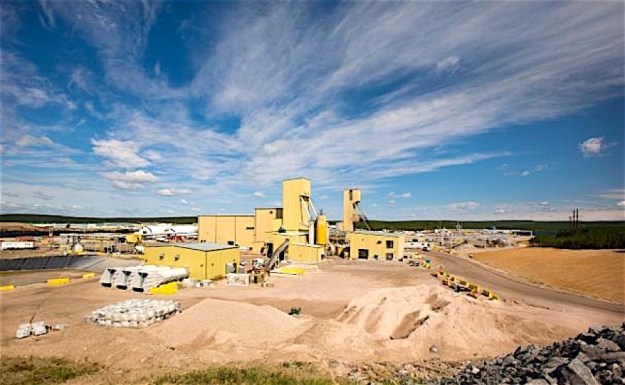
Cigar Lake, in northern Saskatchewan, Canada, is the world’s highest-grade uranium mine.
Uranium miner Cameco (TSX:CCO; NYSE:CCJ) is weighing its options after a key Japanese customer attempted to cancel its contract, which would mean $1.3 billion in lost revenue for the Canadian company.
Tokyo Electric Power Company Holdings (TEPCO), the operator of Japan’s wrecked Fukushima nuclear plant, issued a termination notice for a uranium supply contract on Jan. 24 and, earlier this week, it said it would not accept a delivery that was scheduled for Feb.1.
Such contract cancellation would affect about 9.3 million pounds of uranium deliveries through 2028, including about 855,000 pounds annually in 2017, 2018 and 2019, Cameco said.
Shares collapsed on the news. They were trading down 12.5% to Cdn$14.50 in Toronto at 1:00 pm, and 13.3% down in New York to $11.06 at 1:26 pm ET.
Cameco said the Japanese power company has cited forces beyond its control — specifically government regulations arising from the 2011 Fukushima nuclear accident — that have prevented the operation of its nuclear plants.
The Canadian firm insisted that there’s no basis for terminating the contract and considers TEPCO to be in default. It said it will pursue its rights — including binding arbitration.
“We are surprised and disappointed that TEPCO is seeking to terminate its contract given all the past productive discussions we have had to date,” Cameco’s president and CEO Tim Gitzel said in the statement.
The company noted it has sufficient financial capacity to manage any loss of revenue in 2017 as a result of the dispute.
Including income coming from TEPCO, Cameco expects 2017 earnings will range between $2.1 billion to $2.2 billion. More information on the uranium miner’s financial position will be released next week.
http://www.mining.com/cameco-to-lose-1-3bn-as-japans-tepco-cancels-uranium-contract/
February 3, 2017
Posted by dunrenard |
Japan | Cameco, Tepco, Uranium supply |
1 Comment
Hitachi to take a 70 billion yen hit after U.S nuclear project fails, Asahi Shimbun By SATOSHI SEII/ Staff Writer February 2, 2017 Electronics giant Hitachi Ltd. is set to lose tens of billions of yen this fiscal year due to the withdrawal from a project to develop a new method of uranium enrichment by a joint venture in the United States.
The loss, forecast by Hitachi on Feb. 1, was disclosed shortly after Toshiba Corp. made a similar announcement last month of deficits brought on by its nuclear power business.
Hitachi is expected to report a 70 billion yen ($620 million) non-operating loss by the time books are closed for fiscal 2016 at the end of March, said Mitsuaki Nishiyama, a senior vice president of the Tokyo-based conglomerate, in a news conference on the company’s performance through the third quarter.
The deficit is largely attributed to the joint venture GE Hitachi Nuclear Energy Inc. withdrawing from the uranium enrichment project. Due to this decision, Hitachi no longer expects any profits from the North Carolina-based company, of which it owns 40 percent and the rest by General Electric.
After allocating the losses, the value of Hitachi’s share of the joint venture comes to only about 11 billion yen……
Hitachi and GE were expecting more nuclear power plants to be built when they launched the joint fuel enrichment business, but orders have been sluggish across the globe, forcing the project to be shelved……http://www.asahi.com/ajw/articles/AJ201702020042.html
February 3, 2017
Posted by Christina Macpherson |
business and costs, Japan |
Leave a comment
Cameco to contest Tepco’s termination of supply contract
Cameco announced today that Tokyo Electric Power Company Holdings (Tepco) has issued a termination notice for a uranium supply contract with Cameco Inc that it does not accept. “Cameco Inc sees no basis for terminating the contract, considers Tepco to be in default, and will pursue all its legal rights and remedies,” the Saskatchewan, Canada-based uranium producer said.
The Japanese utility confirmed yesterday it would not accept a uranium delivery scheduled for 1 February and would not withdraw the contract termination notice it provided to Cameco on 24 January, according to Cameco’s statement. Tepco alleges that an event of ‘force majeure’ has occurred because it has been unable to operate its nuclear generating plants for 18 consecutive months due to government regulations arising from the Fukushima nuclear accident in March 2011.
“We are surprised and disappointed that Tepco is seeking to terminate its contract given all the past productive discussions we have had to date,” said Tim Gitzel, president and CEO of Cameco. “For the past six years we have worked in good faith with Tepco to restructure this contract, and would continue to do so if there was any basis for a commercial resolution. During the past week we tried to engage Tepco to obtain clarification given conflicting information we had received previously from them and only received confirmation of their intent to terminate the contract yesterday.”
Cameco will “vigorously pursue” remedies to recover value for its shareholders and other stakeholders, Gitzel added.
Under the contract, Tepco has already received and paid for 2.2 million pounds of uranium since 2014. The termination would affect about 9.3 million pounds of uranium deliveries through 2028, worth about $1.3 billion in revenue to Cameco, including about $126 million in each of 2017, 2018 and 2019 based on 855,000 pounds of deliveries in each of those years. In 2017, Cameco’s consolidated revenue, including the Tepco volume, is expected to range between $2.1 billion to $2.2 billion.
Cameco said it will be “moving expeditiously” to enforce its rights under the uranium supply contract to recover losses arising from Tepco’s actions.
“As with any commercial dispute, it will take some time for a resolution to be achieved, particularly if it proceeds all the way to arbitration,” Cameco said.
The company, which is scheduled to release its annual results after markets close on 9 February, said it has “sufficient financial capacity” to manage any loss of revenue in 2017 as a result of the dispute.
A spokesman for Tepco said: “We have terminated the uranium concentrate supply agreement with Cameco by giving written notice to Cameco in accordance with the terms and conditions of the agreement. We are aware that Cameco is showing their objection to our assertion of termination. However, our notice complies with the agreement and we will take appropriate action.”
http://www.freep.com/story/news/2017/02/01/trump–nuclear-waste-lake-huron/97346178
Tepco scraps uranium supply contract with Canada’s Cameco
Feb 1 Canadian uranium producer Cameco Corp said on Wednesday that Tokyo Electric Power (Tepco) , the operator of Japan’s wrecked Fukushima nuclear plant, had scrapped its uranium supply contract with the company.
Shares of Cameco slid 12.2 percent to C$14.55 in early trading on Wednesday.
The company, one of the world’s largest uranium producers, said it considered Tepco’s move to terminate the contract unfair and that it would pursue legal action.
Cameco said Tepco cited a force majeure for ending the contract as it had been unable to operate its nuclear plants for 18 straight months due to Japanese regulations arising from the 2011 Fukushima nuclear accident.
The company said it was notified of the contract termination by Tepco last week.
Tepco’s termination of the contract would affect about 9.3 million pounds of uranium deliveries through 2028, worth about C$1.3 billion ($995.41 million) in revenue to Cameco, the Saskatoon, Canada-based company said.
Cameco’s earnings before interest, taxes, depreciation and amortization could take a 10-15 percent hit in the near-term as a result of the Tepco dispute, said Edward Sterck, an analyst at BMO Capital Markets.
Tepco’s move comes amid a fall in demand for uranium that is largely a result of the Fukushima nuclear plant meltdown, which led to shutdowns of all of Japan’s nuclear reactors.
Some reactors have since come back online, but global inventories of the radioactive metal remain high.
Cameco warned late last year that the uranium market would remain depressed until Japan’s nuclear reactors were restarted and excess supply was depleted.
Cameco also said it expected 2017 revenue of C$2.1 billion to C$2.2 billion, inclusive of Tepco’s volume, adding that it could withstand any potential loss of revenue this year from the dispute.
http://www.reuters.com/article/cameco-contract-tep-hldg-idUSL4N1FM35I
February 1, 2017
Posted by dunrenard |
Japan | Cameco, Tepco, Uranium supply |
Leave a comment

Ryuichi Yoneyama, governor of Niigata Prefecture, poses for a photograph in Tokyo on Jan. 23.
The man blocking the world’s largest nuclear plant says he grew opposed to atomic energy the same way some people fall in love.
Previously an advocate for nuclear power, Ryuichi Yoneyama campaigned against the restart of the facility as part of his successful gubernatorial race last year in Niigata Prefecture.
He attributes his political U-turn to the “unresolved” 2011 disaster at the Fukushima No. 1 nuclear power plant and the lack of preparedness at the larger facility in his own prefecture, both owned by Tokyo Electric Power Company Holdings Inc.
“Changing my opinion wasn’t an instant realization,” Yoneyama said in an interview. “It was gradual. As people say, you don’t know the exact moment you’ve fallen in love.”
Yoneyama won’t support the restart of the Kashiwazaki-Kariwa plant in Niigata Prefecture until an investigation is complete into the chain of events that resulted in the triple meltdown at Fukushima No. 1, which he visited Wednesday. While utilities don’t need approval from local authorities to restart plants, power companies are tradition-bound not to move ahead until they get their consent.
Yoneyama, a 49-year-old doctor and native of Niigata, is one of the highest-profile local opponents pitted against a political establishment led by Prime Minister Shinzo Abe. The establishment sees nuclear power as crucial for the country’s long-term energy security and environmental goals.
Regulations and public opinion are keeping nearly all of Japan’s atomic stations shut almost six years after the meltdowns at Fukushima, where the search has barely begun for fuel that burned through to the bottom of the reactors.
“If the local governor remains firmly opposed to the restart, it will be very difficult for the reactors to come back online,” said James Taverner, an analyst at IHS Markit Ltd. “In addition to the local government, building the support and trust of local residents is key.”
A Kyodo News poll on the day of Yoneyama’s October election showed about 64 percent of Niigata voters opposed the restart of Kashiwazaki-Kariwa, known popularly as KK. The restart of the facility was one of the key issues in the race to replace Gov. Hirohiko Izumida, who was famous for his tough stance against Tepco. He unexpectedly announced in August that he wouldn’t seek a fourth term.
To the residents of the prefecture, Yoneyama was the candidate who would make nuclear safety a priority, while his main opponent gave off the vibe that he was a member of the reactor restarts camp, the former governor said by email.
In last year’s gubernatorial race in Kagoshima Prefecture, where Kyushu Electric Power Co. operates the Sendai nuclear plant, a three-term incumbent was defeated by an opponent campaigning to temporarily close the reactors. A district court last year barred Kansai Electric Power Co. from running two reactors at its Takahama station in Fukui Prefecture only weeks after they’d been turned back on.
Yoneyama supported bringing back online Japan’s reactors during his unsuccessful bid in 2012 for a seat in the Lower House. The country was being forced to spend more on fossil fuel imports after the disaster, so restarting the plants was needed to help the economy recover, he said at the time.
Though Yoneyama’s position switch helped secure his first electoral victory after four failed campaigns for the Diet, nuclear opponents see him driven by more than political opportunism.
“I had my reservations about Yoneyama,” said Takehiko Igarashi, an official at the Niigata division of the anti-nuclear group Nakusou Genpatsu. “But after he was vetted and endorsed by the Japanese Communist Party and other smaller parties that have an anti-nuclear slant, I knew that I could trust him.”
Tepco and Abe’s government see restarting KK as one way for Japan’s biggest utility to boost profits and help manage its nearly ¥16 trillion ($139 billion) share of the Fukushima cleanup. Resuming reactors 6 and 7 will boost annual profits by as much as ¥240 billion, the utility has said.
The economic argument, however, is beginning to hold less sway, with Yoneyama saying the benefits to the local economy are “overstated.” While the prefecture risks missing out on ¥1.1 billion a year in government support without the restarts, that represents a small slice of the prefecture’s budget, which tops ¥1 trillion, according to Yoneyama.
Abe, a strong backer of nuclear power, leads a government aiming for nuclear to account for as much as 22 percent of the energy mix by 2030, compared with a little more than 1 percent now.
While restart opponents like Yoneyama demand the government guarantee the safety of the reactors, they’ve also criticized the evacuation and emergency response plans as inadequate.
In his first meeting with Tepco executives since taking office, Yoneyama earlier this month told Chairman Fumio Sudo and President Naomi Hirose that he won’t support KK’s restart until a new evacuation plan is drawn up using the results of a Fukushima investigation. Tepco will fully cooperate with the probe and stay in communication with the governor, the company said in response to a request for comment.
“Once I realized that the Fukushima disaster couldn’t be easily resolved, of course my opinion changed,” Yoneyama said. “If another accident occurs, overseas tourism will become a distant dream. Even Japanese may flee the country.”
http://www.japantimes.co.jp/news/2017/02/01/national/niigata-governor-ryuichi-yoneyama-stands-firm-against-restart-of-kashiwazaki-kariwa-plant/#.WJHSePLraM9
February 1, 2017
Posted by dunrenard |
Japan | antinuclear, Kashiwazaki-Kariwa NPP, Niigata Governor |
Leave a comment
 Trust banks preparing to sue Toshiba – report http://www.channelnomics.com/channelnomics-us/news/3003570/trust-banks-preparing-to-sue-toshiba-report Vendor also preparing to sell part of its memory business, Scharon Harding, 30 Jan 17, Toshiba may be hit with lawsuits from Japanese trust banks that could total over 1 billion yen ($8.8 million) over the accounting scandal it endured in 2015, Reuters reports.
According to the report, Mitsubishi UFJ Trust and Banking Corp. said today it is getting ready to sue the Japanese vendor in the name of its clients’ pension funds after revelations the vendor had been exaggerating profits caused share prices to drop.
Reuters added that Sumitomo Mitsui Trust Bank Ltd and Mizuho Trust & Banking Co. are organizing “similar” lawsuits, according to anonymous sources.
News of the potential lawsuits comes three days after Toshiba announced plans to sell parts of its memory business, including its SSD business, by 31 Marcch. The move is an attempt to minimize damage from an upcoming writedown for its U.S. nuclear business that could reach billions, according to CNBC.
Toshiba is already facing a pile of cases in relation to findings that the company’s bookkeeping practices led to the overstating of profits by over 170 billion yen (about $1.4 billion) by 45 institutional investors for 16.7 billion yen ($146 million) and 15 Japanese entities totaling 15.3 billion yen ($134 million), Reuters said.
February 1, 2017
Posted by Christina Macpherson |
business and costs, Japan, Legal |
Leave a comment
 Japan’s ‘Unresolved’ Disaster Sways Former Advocate of Nuclear Power, Bloomberg by Stephen Stapczynski and Emi Urabe, January 30, 2017,
The man blocking the world’s largest nuclear plant says he grew opposed to atomic energy the same way some people fall in love.
Previously an advocate for nuclear power in Japan, Ryuichi Yoneyama campaigned against the restart of the facility as part of his successful gubernatorial race last year in Niigata. He attributes his political U-turn to the “unresolved” 2011 Fukushima Dai-Ichi disaster and the lack of preparedness at the larger facility in his own prefecture, both owned by Tokyo Electric Power Co. Holdings Inc.
“Changing my opinion wasn’t an instant realization,” Yoneyama said in an interview. “It was gradual. As people say, you don’t know the exact moment you’ve fallen in love.”
Yoneyama won’t support the restart of the Kashiwazaki-Kariwa plant in Niigata until an investigation is complete into the chain of events that resulted in the triple meltdown at Fukushima, which he plans to visit Wednesday. While utilities don’t need approval of local authorities to restart plants, Japanese power companies are tradition-bound not to move ahead until they get their consent……
In last year’s gubernatorial race for the southern prefecture of Kagoshima, where Kyushu Electric Power Co. operates the Sendai nuclear plant, a three-term incumbent was defeated by an opponent campaigning to temporarily close the reactors. A district court last year barred Kansai Electric Power Co. from running two reactors at its Takahama station in western Japan only weeks after they’d been turned back on……….
Tokyo Electric and Abe’s government see restarting KK as one way for Japan’s biggest utility to boost profits and help manage its nearly 16 trillion yen ($139 billion) share of the Fukushima cleanup. Resuming reactors No. 6 and No. 7 will boost annual profits by as much as 240 billion, the utility has said.
The economic argument, however, is beginning to hold less sway, with Yoneyama saying the benefits to the local economy are ‘overstated.’ While the prefecture risks missing out on 1.1 billion yen a year in government support without the restart, that represents a small slice of the prefecture’s budget, which tops 1 trillion yen, according to Yoneyama……..
“Once I realized that the Fukushima disaster couldn’t be easily resolved, of course my opinion changed,” Yoneyama said. “If another accident occurs, overseas tourism will become a distant dream. Even Japanese may flee the country.” https://www.bloomberg.com/news/articles/2017-01-29/japan-s-unresolved-disaster-sways-symbol-of-nuclear-opposition
February 1, 2017
Posted by Christina Macpherson |
Japan, politics |
1 Comment
Toshiba Corporation (aka Westinghouse) is withdrawing from the nuclear power construction business… Captains of Toshiba and Westinghouse are abandoning their nuclear Titanic sunk on economic iceberg!!!!!
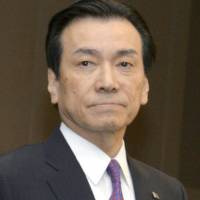
Toshiba Corp. will cease taking orders related to the building of nuclear power stations, sources said Saturday, in a move that would effectively mark its withdrawal from the nuclear plant construction business.
The news comes amid reports Toshiba’s chairman may resign over the massive write-down that has doomed the company’s U.S. nuclear business.
The multinational conglomerate said Friday it will review its nuclear operations and spin off its chip business to raise funds in a bid to cover an expected asset impairment loss of up to ¥700 billion ($6.08 billion).
After Toshiba ceases taking new orders, it will focus on maintenance and decommissioning operations, according to the sources.
The company will continue work on four nuclear plants under construction in the United States that are expected to be completed by 2020.
The Japanese industrial conglomerate may announce company chairman Shigenori Shiga’s resignation as soon as Feb. 14, when it reports its April-December financial results, the sources also said.
Shiga once served as president of the U.S. nuclear unit, Westinghouse Electric Co., which Toshiba has said could face a multibillion-dollar loss due to cost overruns from delays in plant projects.
The post of Toshiba chairman is expected to remain vacant after Shiga’s resignation.
Westinghouse Chairman Danny Roderick is also set to step down, the sources said, but Toshiba President Satoshi Tsunakawa is likely to stay on.
Shiga, Roderick and Tsunakawa took their current posts last June as Toshiba reshuffled its management following an accounting scandal that surfaced in 2015.
Shiga was the vice president in charge of the power systems business when Westinghouse acquired CB&I Stone & Webster in late 2015. CB&I Stone & Webster is the U.S. nuclear plant construction firm at the heart of Toshiba’s massive write-down problem.
http://www.japantimes.co.jp/news/2017/01/28/business/corporate-business/toshiba-chairman-resign-struggling-u-s-nuclear-business#.WIycNpKdlmA
Toshiba to sell part of chip business, puts overseas nuclear ops under review
Toshiba Corp (6502.T) said it will sell a minority stake in its memory chip business as it urgently seeks funds to offset an imminent multi-billion dollar writedown, adding that its overseas nuclear division – the cause of its woes – was now under review.
The drastic measures are set to be just some of the tough choices the Japanese conglomerate will have to take as proceeds from the sale are likely to only cover part of a charge that domestic media has put at $6 billion.
Still battered by a 2015 accounting scandal, Toshiba was plunged back into crisis when it emerged late last year that it had to account for huge cost overruns at a U.S. power plant construction business recently acquired by its Westinghouse division.
Describing the nuclear division as no longer a central business focus for the firm, Chief Executive Satoshi Tsunakawa said Toshiba will review Westinghouse’s role in new projects and whether it will embark on new power plant construction. The division will also now fall under direct CEO supervision.
Tsunakawa added Toshiba was looking to sell less than 20 percent of its memory chip business – the world’s biggest NAND flash memory producer after Samsung Electronics (005930.KS) – which comprises the bulk of the conglomerate’s operating profit.
The firm is rushing to complete the sale by the end of the financial year in March as failure to do so will likely mean that shareholder equity – just $3 billion in the wake of the accounting scandal – would be wiped out by the charge.
Sources have said Toshiba aims to raise more than 200 billion yen ($1.7 billion) from the sale and potential investors include private equity firms, business partner Western Digital Corp (WDC.O) and the government-backed Development Bank of Japan.
It is also selling other assets although it ruled out the sales of any of its infrastructure businesses – which include water treatment, railway and elevator firms.
“We’ve been raising funds through sales of stock holdings, real estate and other assets,” Tsunakawa told a news conference without disclosing the amount, adding that various measures were being considered to boost the firm’s capital base by March.
Toshiba also said it may eventually list the memory chip business.
http://mobile.reuters.com/article/idUSKBN15A2IT
January 29, 2017
Posted by dunrenard |
Japan | Nuclear Plant Construction, Toshiba |
Leave a comment
 http://gbtimes.com/world/china-bans-nuclear-materials-export-north-korea CHINA RADIO INTERNATIONAL
2017/01/26 China has released a new list of restricted goods that cannot be exported to North Korea, many of which are “dual use” items that could be used to build weapons of mass destruction.
The comprehensive list comes amid mounting speculation over an expected test by North Korea of an intercontinental ballistic missile that might be able to reach the west coast of the United States.
The items include materials and equipment to develop nuclear missiles, software related to rockets or drones, high-speed video cameras, submarines, sensors and lasers.
The Ministry of Commerce said the list was meant to comply with the requirements of a round of UN sanctions imposed in November in response to North Korea’s fifth and largest nuclear test in September.
The list was jointly released with the Ministry of Industry and Information Technology, the State Administration of Science, Technology and Industry for National Defense, the China Atomic Energy Authority and the Customs Bureau.
US officials said last week that they had seen indications that North Korea may be preparing for a new missile test-launch.
It’s widely believed a launch could be an early test of the administration of President Donald Trump, who was sworn in last Friday.
January 28, 2017
Posted by Christina Macpherson |
China, North Korea, politics international |
Leave a comment
Reported by Gao Shan for RFA’s Mandarin Service, and by Goh Fung for the Cantonese Service. Translated and edited by Luisetta Mudie.Ran Bogong, former politics professor at Toledo University, agreed.
“We should judge them by their deeds rather than their words,” Ran said. “The most important thing is what will Trump actually do.”
“I believe there will be some changes in the U.S.-China relationship, but I don’t think there will be war, at least not in the short term,” he said.
Meanwhile, Claude Barfield, an expert on international trade at the American Enterprise Institute (AEI), a former U.S. think-tank adviser to the US Trade Representative’s Office, said in a recent report that China’s tight controls over online content have negatively affected overseas suppliers.
Eight of the world’s top 25 traffic sites are banned in China, including Google, Facebook, Twitter, and YouTube, Barfield wrote, saying the complex system of blocks, filters and human censorship known as the Great Firewall breaks international trade rules on market access.
He said such practices could be seen as discriminatory protectionism under World Trade Organization (WTO) rules.
Sang Young, information security expert at the Hong Kong Internet Society, said the Great Firewall definitely inconveniences foreign businesses operating in China.
“The ‘discrimination’ refers to not allowing people to see overseas content, but allowing people to access content provided by China,” Yeung told RFA.
“The failure to allow suppliers to provide services to the Chinese mainland would seem to contravene WTO rules and the concept of free trade,” he said.
China’s 730 million netizens must currently use virtual private networks (VPNs) to access Facebook, Twitter and most foreign news sites, according to rights activist Jia Pin.
“You see, activists here in China often need to access these foreign sites; any political content is generally prohibited browsing, which means that you must use a VPN to get ‘over the Wall’,” Jia.
But China has said that it will crack down in 2017 on the use of VPNs to get around the Great Firewall with new rules requiring service providers to obtain government approval before they can operate.
Jia said such a comprehensive obstacle to the flow of information in China would be a “major hindrance” to rights activists there.
Continue reading →
January 28, 2017
Posted by Christina Macpherson |
China, politics international |
Leave a comment