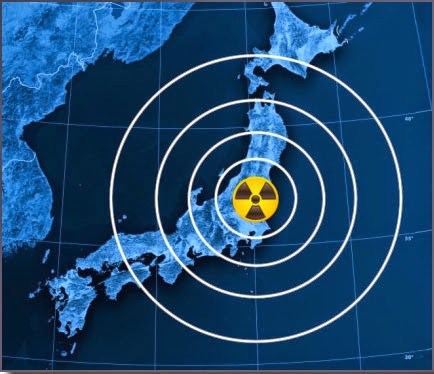
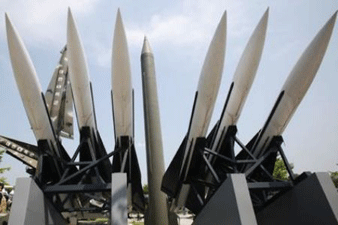
How to stop a North Korean nuclear trainwreck, The Hill, BY PHILIP W. YUN, – 03/17/17 The assassination of Kim Jong Nam, the older half-brother of North Korean dictator Kim Jong Un, is yet another bizarre episode in a string of reality TV events that is now commonplace in our public discourse.
It’s easy to get sucked into the intrigue, but it distracts from the big picture: The United States is in the middle of a slow-motion trainwreck with North Korea over its nuclear weapons and missile program. North Korea’s missile tests on Monday are just the latest alarm in what could spiral into a full-blown crisis.
We better start listening.
Unless we do something about it now, a “metal on metal” collision could be in the offing, marked by more North Korean tests and calls within Washington for military strikes to stop them.
Kim Jong Nam’s murder and the subsequent media circus obscure more crucial events: China’s decision last month to ban all coal imports from North Korea; the Feb. 11 test launch of a mobile, land-based, solid-fueled missile; and, critically, the annual U.S.-South Korean military exercises happening this month, that almost certainly sparked last weekend’s tests………
we have no choice but to swallow a bitter pill. Using what little leverage and pressure we have, we must talk with the North Koreans at sufficiently high levels, something we haven’t done for some time.
But we must make these hard choices now — or they will be made for us.
Philip W. Yun is executive director of Ploughshares Fund, a San Francisco-based peace and security foundation. He previously served as senior adviser to the assistant secretary of State for East Asian and Pacific Affairs and as a senior adviser to two U.S. coordinators for North Korea Policy: former Secretary of Defense William J. Perry and former Under Secretary of State Wendy Sherman. Yun was a member of a government working group that managed U.S. policy and negotiations with North Korea under President Clinton and was part of the U.S. delegation that traveled to North Korea with then-Secretary of State Madeleine Albright in 2000. http://thehill.com/blogs/pundits-blog/defense/324461-how-to-stop-a-north-korean-nuclear-trainwreck
March 18, 2017
Posted by Christina Macpherson |
North Korea, politics international, USA |
Leave a comment
 Fukushima Daiichi is still the world’s largest bleeding sore http://rabble.ca/blogs/bloggers/2017-03-17t000000/fukushima-daiichi-still-worlds-largest-bleeding-sore, Penney Kome March 17, 2017 Six years after the March 2011 earthquake and tsunami ruined four nuclear reactors at Fukushima Daiichi, urgently needed clean up is still stalled.
Despite the $188 billion cost (and counting), engineers haven’t even been able to build a robot that can survive radiation inside the plant long enough to send back images of the inferno. Apparently nothing that moves can operate in such a hot and radioactive environment — much less a human, who would be dead seconds.
We do know that fuel in at least two out of three of the reactors melted right through the reactor floors. Time Magazine reported in 2011, “that means that…the fuel itself lies in a clump — either at the bottom of the pressure vessel, or in the basement below or possibly even outside the containment building. Engineers don’t know for sure…” Fuel rods won’t explode, but they can burn if exposed to air, producing massive clouds of radioactive smoke.
On February 13, 2017, muon tomography images offered a slightly clearer picture, but not much more hopeful. TEPCO learned that radiation levels at reactor number two were actually emitting about 530 sieverts, not 73 sieverts, as they had expected. Administered to a human, a one sievert dose causes acute radiation poisoning, and a 10 sievert dose is fatal.
Although the disaster is local, the toxins travel. Unlike other environmental disaster areas (e.g. Love Canal) Fukushima Daiichi sheds toxins daily — widely — because every day TEPCO pours 400 tons of water over the fuel rods to keep them from overheating.
More than 962,000 tons of contaminated water are now stored on site. Last fall, TEPCO poured 300 million tons of it into the Pacific Ocean, into currents that reach the North American West Coast. After the 2011 earthquake, the tsunami wave and the wind spread contamination broadly across the Fukushima prefecture.
Unlike Russia, Japan doesn’t have enough land to be able to sequester the damaged plants and leave them alone for centuries — the half-life of some radioactive isotopes — even if reactor number two was stabilized, which it is not.
Instead, the Japanese government evacuated people and conducted massive decontamination programs, scraping and replacing the top two inches of soil, leaving 9,000,000 bags of contaminated soil all around the area. Now it is urging 100,000 displaced citizens to return to their cleaned up villages. Not everybody is convinced that the land is safe.
Greenpeace Japan noted on March 11, “this year will be the first time that some of the more heavily contaminated areas...are being opened up for resettlement….despite radiation still far exceeding long-term targets in places where decontamination work has been done.
“Levels in nearby forests are comparable to the current levels within Chernobyl’s 30 kilometre exclusion zone, which, more than 30 years after the accident, remains formally closed to habitation…”
Greenpeace measured radiation across the village of Iitate (population 6,000) which is 75 per cent forest, and found high levels of contamination even in areas that had been officially decontaminated. Packs of radioactive wild boars are patrolling the empty village.
Fukushima has become one of the largest of the global nuclear sacrifice zones, such as Three Mile Island and Chernobyl, which have afflicted the world since 1930. That’s when uranium refining started in Hanford, Montana, which eventually provided fuel for the first atomic weapons.
These days, the whole town of Hanford is a toxic waste supersite, containing some 55 million gallons of some of the world’s most dangerous radioactive wastes. The entire congressional delegation for the area has petitioned President Trump to give top priority to Hanford clean-up funding, despite the staggering $2 billion cost annually for 30 or 40 years.
Nuclear power plants have an operating life of about 30 to 50 years. Most existing plants were built in the 1970s, before anybody actually had plans for how to de-commission them. However, Reuters reported in 2011, that along with its 104 operating commercial nuclear power plants, the US also had 23 plants in the process of being de-commissioned, at a cost of $500 million to $1 billion each, including 10 that had been “completely cleaned up.”
Seven of the remaining 13 reactors are in SAFSTOR — shut down, under guard, but still holding nuclear materials. In Canada, Quebec’s Gentilly-2 nuclear power plant and units 2 and 3 of the Pickering Nuclear Generating Station, Pickering, Ontario, are already in safe storage — essentially no-human-zones although not permanently sacrificed.
However, Fukushima Daiichi is different from other sacrifice zones because of the ongoing seething nuclear reaction in reactor number two, and because (unlike other zones where habitation is forbidden) Prime Minister Abe’s government wants people to live there.
PM Abe’s government and some media reports downplay radiation’s potentially horrifying effects on humans and babies not yet born. Public relations campaigns label former residents (mostly women, mostly mothers) who resist returning to the ostensibly decontaminated land as neurotically “radiophobic,” even though 174 children in Fukushima prefecture have been diagnosed with — or are suspected of having — thyroid cancer since the nuclear meltdown.
Meanwhile, as evidence emerges that TEPCO has lied about how serious the crisis is, radiation leaks into the Pacific Ocean and the world’s airshed, and one melted-down plant at Fukushima Daiichi threatens to burst into a catastrophic nuclear fire.
“For the global nuclear industry, the Fukushima disaster is an historic — if not fatal — setback,” said Worldwatch President Christopher Flavin. He introduced a draft copy of Worldwatch’s 2011 World Nuclear Industry Status Report.
Among other points, the report noted that every single nuclear power plant under construction in the world was chosen by central planners. Not one faced any competition from local markets or alternatives. And even during the nuclear binge building years, only 41 per cent of the approved power plants ever achieved operating status. Major delays and massive cost overruns were the rule.
In the foreword, Amory Lovins wrote that “long before Fukushima, nuclear power was dying of an incurable attack of market forces.” Wind and solar devices now offer more flexibility at half the price or less.
Indeed, Lovins said, “just as computing no longer needs mainframes, electricity no longer needs giant power plants.” Instead, the Pentagon prefers to rely on a variety of mass-produced generators networked in microgrids,” for resilience. So could the public.
More troubling, though, Lovins noted that the accident “vaporized” TEPCO’s balance sheet. “A 2007 earthquake had cost the company perhaps $20 billion; this one could cost it $100 plus billion. TEPCO is now broke and is becoming, in whatever form, a ward of the state.”
If the company is “a ward of the state,” that means its liabilities are too. Yet Japan’s government seems determined to repopulate Fukushima prefecture even as the doomed reactors overheat in the distance. Volunteer organizations like Greenpeace have to provide radioactivity monitoring for local air, water, soil and food.
On the other hand, what affects one nation affects us all. There has to be some point where the public stands up and says, “no more sacrifice zones!” The ongoing Fukushima Daiichi tragedy cries out for the United Nations to step in, take charge, and direct all the world’s best minds and resources to containing the disaster and rescuing the people who live there.
March 18, 2017
Posted by Christina Macpherson |
Fukushima continuing |
1 Comment

Court: State and TEPCO must compensate
A court in Japan has ordered the government and Tokyo Electric Power Company to pay damages to evacuees of the 2011 nuclear accident.
The ruling is the first among similar suits filed across the country to order compensation.
137 evacuees mainly living in Gunma Prefecture northwest of Tokyo, filed the suit. They were seeking damages for emotional distress suffered after losing their livelihoods.
https://www3.nhk.or.jp/nhkworld/en/news/20170317_23/
Court decision expected in Fukushima damages suit
A district court in eastern Japan will announce its decision Friday on a damages lawsuit filed by evacuees of the 2011 Fukushima nuclear accident against the state and Tokyo Electric Power Company.
137 people, mainly evacuees living in Gunma Prefecture, filed the suit with the Maebashi District Court, seeking compensation worth about 13 million dollars. The ruling will be the first damages suit of its kind in Japan.
The plaintiffs include those who fled evacuation zones and other parts of Fukushima Prefecture after the accident at the Fukushima Daiichi nuclear plant. They say they suffered emotional distress after losing their livelihoods. They are seeking about 97,000 dollars each.
The points of contention include whether the Japanese government and plant operator TEPCO could have foreseen the major tsunami and prevented the damage, as well as whether the compensation TEPCO is paying evacuees is appropriate.
The plaintiffs claim the tsunami was predictable, citing a 2002 prediction of a massive earthquake by the government’s Headquarters for Earthquake Research Promotion.
But the government and TEPCO say many researchers voiced differing views, and an installation of tide embankments based on the prediction would not have prevented the damage.
The plaintiffs say the compensation they received is insufficient. The government and TEPCO say it is appropriate.
More than 12,000 people have filed similar suits in 18 prefectures.
https://www3.nhk.or.jp/nhkworld/en/news/20170317_10/
March 17, 2017
Posted by dunrenard |
- Fukushima 2011 | Compensation, Court Decision, Fukushima Evacuees, Fukushima Suit, State, Tepco |
Leave a comment
Fukushima to host Tokyo Olympics events to help recovery from nuclear disaster

Some baseball and softball events will be held about 70km from nuclear power plant that suffered triple meltdown in 2011, Guardian, Justin McCurry , 17 Mar 17, Fukushima has been chosen to host baseball and softball matches at the 2020 Tokyo Olympics, organisers said on Friday, a move they hope will boost the region’s recovery from the March 2011 nuclear disaster.
Azuma baseball stadium, about 70km north-west of the ruined Fukushima Daiichi nuclear power plant, will host at least one baseball game – possibly the opening match – and one or more softball fixtures, according to Yoshiro Mori, the 2020 organising committee president.
“By hosting Olympic baseball and softball events, Fukushima will have a great platform to show the world the extent of its recovery in the 10 years since the disaster,” Mori said in a statement……
Mori said the “fantastic idea” to hold baseball and softball matches in the affected area had originated in a meeting between the president of the International Olympic Committee (IOC), Thomas Bach, and Japan’s prime minister, Shinzo Abe, in October last year.
Two months later, however, the IOC initially declined to add Azuma to the main baseball venue in Yokohama.
Riccardo Fraccari, the president of the World Baseball Softball Confederation, welcomed the IOC’s change of heart, describing it as a “great step” that would to “inspire hope and highlight the regeneration in Fukushima”…..
The Fukushima prefectural government has offered to cover the costs of the refurbishment and renovation work needed to bring the 30,000-seat stadium up to Olympic standards, according to organisers……
No evacuation order has ever been in place in the part of Fukushima prefecture where the baseball stadium is located. The Azuma sports park complex served as an evacuation centre for people fleeing radiation caused by the triple meltdown triggered by a magnitude-9 earthquake and tsunami on 11 March 2011.
Nuclear power officials in Japan insist the 40-year effort to decommission Fukushima Daiichi, including the storage of nuclear waste, will not affect people visiting the region to attend Olympics events………https://www.theguardian.com/world/2017/mar/17/fukushima-to-host-tokyo-olympics-events-to-help-recovery-from-nuclear-disaster
March 17, 2017
Posted by Christina Macpherson |
Fukushima continuing, Japan |
Leave a comment
TEPCO to decommission 1 reactor at Fukushima No. 2 plant, mulling fate of 3 others http://mainichi.jp/english/articles/20170317/p2a/00m/0na/024000c
March 17, 2017 (Mainichi Japan) Tokyo Electric Power Company Holdings Inc. (TEPCO) has informally decided to decommission the No. 1 reactor at its Fukushima No. 2 Nuclear Power Plant, it has been learned.
In the wake of the March 2011 Great East Japan Earthquake and tsunami and ensuing meltdowns at the Fukushima No. 1 plant in Fukushima Prefecture, local bodies and residents of the area who suffered extensive damage requested that all four reactors at the No. 2 plant also be decommissioned.
TEPCO had avoided stating a clear position on the No. 2 plant’s reactors, but there had been pressure from the government and ruling coalition for it to make a decision. The company accordingly decided to decommission the plant’s No. 1 reactor, which suffered the most damage, and will consider what to do with the other three reactors in the future.
The No. 1 reactor of the Fukushima No. 2 plant began operating in 1982. It was flooded by tsunami on March 11, 2011, and all four reactors at the plant remain idled. The No. 2 plant suffered less damage than the No. 1 plant, and if it passed screening by the Nuclear Regulation Authority, its reactors could be restarted. But the Fukushima Prefectural Government and all 59 local assemblies have asked TEPCO and the government to decommission all reactors in the prefecture.
TEPCO has remained busy handling compensation claims relating to the Fukushima nuclear disaster and the disaster cleanup. If it were to decommission all of the No. 2 plant’s reactors, they would lose value and it would have to write down huge losses. Company president Naomi Hirose has therefore avoided taking a clear position on the issue, saying, “I would like to consider it and make a decision as a business operator.”
Last year, however, officials decided to create a fund to cover the huge cost of handling the nuclear disaster, which is expected to reach 21.5 trillion yen, nearly double the original prediction. There was accordingly pressure from the government for TEPCO to reach an early decision on the fate of the No. 2 plant’s reactors.
The No. 1 reactor at the No. 2 plant is the oldest of the plant’s four reactors. It temporarily lost its cooling functions in the March 2011 disaster, and suffered the most damage among the four reactors. TEPCO believes that by limiting decommissioning to one reactor for the time being, it will be able to hold the decommissioning cost below 100 billion yen, minimizing the impact on company finances and on decommissioning work at the Fukushima No. 1 plant. However, a decision to decommission only one reactor at the No. 2 plant is unlikely to win public approval.
March 17, 2017
Posted by Christina Macpherson |
decommission reactor, Fukushima continuing, Japan |
Leave a comment
 Can Tillerson Crack North Korea?, Carnegie Endowment For International Peace, RICHARD SOKOLSKY, JOEL WIT , March 15, 2017, Secretary of State Rex Tillerson’s visit to Northeast Asia this week comes as tensions are running high in the region. North Korea recently conducted a simultaneous test of four ballistic missiles that could be used to attack South Korea and Japan, as well as U.S. forces stationed in those countries with nuclear weapons. The impending American deployment of an anti-ballistic missile system in South Korea to defend against a missile attack has provoked China’s strong opposition. South Korean president Park Geun-hye has just been removed from office for corruption, and a presidential election that could bring the opposition party to power will be held in May. While all this is happening, the Trump administration is doing some serious soul-searching about how to deal with North Korea. In short, Secretary Tillerson will face a diplomatic landscape that is littered with landmines on his first big troubleshooting mission overseas.
………..The jury is still out on whether Pyongyang has reached its tipping point. Besides some press leaks, there has been little publicity about decapitation, and it is unclear whether the overflights will take place. The recent North Korean missile tests may have been just an immediate one-off reaction to the ongoing joint U.S.–South Korean military exercises. And Pyongyang may still want to exercise caution, with the South Korean election now scheduled soon. Or the tests could reflect a decision that a “wait and see” posture is unlikely to produce results, ushering in a period of bigger and better nuclear weapons and missile tests, possibly including an intercontinental ballistic missile able to reach the United States. If that’s the case, the crisis on the peninsula is only likely to intensify.
The diplomatic hat trick the Trump administration needs to pull off is finding a solution that can stop the growth of the North Korean threat, rebuild cooperation with Beijing and gain support from U.S. allies, particularly a new South Korean government. That’s a very tall order, especially since the overwhelming temptation in Washington will be to double down on sanctions, including measures against Chinese banks and businesses that have ties with North Korea, and to ratchet up rhetoric about military options for eliminating Pyongyang’s WMD threat. If that’s all Secretary Tillerson brings to Asia, his mission will fail. He will only create more running room for Pyongyang to move forward with its nuclear and missile programs by making cooperation between Washington and Beijing even more difficult to achieve.
The smart move would be to defuse tensions while laying the groundwork for a strategy that combines threats with leaving the door open a crack for renewed dialogue with North Korea. The first two stops on his trip—Tokyo and Seoul—will provide him with an opportunity to pledge Washington’s firm commitment to their security. But the real centerpiece of Secretary Tillerson’s trip will be Beijing. China’s public proposal last week that the United States suspend its joint military exercises—a key demand by North Korea—in return for Pyongyang suspending its nuclear and missile tests—a move that would serve Washington’s interests—signals that it is willing to play an active, even positive role in avoiding a “head-on collision,” in the words of Chinese foreign minister Wang Yi. While the Trump administration quickly rejected the proposal, rather than just leaving the matter there, Secretary Tillerson should pick up the diplomatic gauntlet.
Caution, always the watchword when dealing with North Korea, should be reflected in the secretary’s counterproposal. Rather than dive headlong into new negotiations, step one should be “talks about talks”: unconditional preliminary discussions to see if North Korea is willing to put its nuclear weapons program on the table. “Unconditional” is the key word. While the United States has insisted in the past that North Korea agree ahead of time to focus on giving up its nuclear weapons, Pyongyang’s view is that talks should be held without preconditions. There seems to be little if no downside in adopting that approach, since the North Koreans understand that their program will be Washington’s number one topic for discussion. Step two in this process will be a decision by President Trump and Kim Jong-un, based on the results of these preliminary talks, whether formal negotiations should resume. If North Korea proves willing to address Washington’s WMD concerns, formal negotiations can start. If North Korea is not serious, the United States should then move on to putting greater diplomatic pressure on China, enacting new sanctions, and taking further measures to protect Seoul and Tokyo.
Whether the Trump administration adopts this approach or just presses the policy default button—more sanctions and military measures—is the $64,000 question. Consequential secretaries of state solve the thorniest and most important national security problems through patient, skillful diplomacy and negotiations. Fair or not, Secretary Tillerson has been pilloried by the press and pundits as missing in action. This sensitive diplomatic mission offers him an opportunity to show his mettle. The last thing Washington needs, at a time when America’s global leadership and position in Asia is under challenge, is for Secretary Tillerson to leave the region empty-handed, or in worse shape than he found it.
This piece was originally published by the National Interest. http://carnegieendowment.org/2017/03/15/can-tillerson-crack-north-korea-pub-68278
March 17, 2017
Posted by Christina Macpherson |
North Korea, politics international, USA |
Leave a comment
 US anticipates new round of missile, nuclear testing by North Korea By Barbara Starr, CNN Pentagon Correspondent, March 16, 2017 Story highlights
March 17, 2017
Posted by Christina Macpherson |
North Korea, weapons and war |
Leave a comment
 Tillerson concedes US efforts to ‘denuclearise North Korea’ have failed
US secretary of state starts four-day Asia-Pacific trip by calling for new approach towards Pyongyang’s weapons programme, Guardian, Justin McCurry , 16 Mar 17 The US secretary of state, Rex Tillerson, has conceded that 20 years of US attempts to “denuclearise” North Korea have failed, and called for a new approach towards the regime’s nuclear weapons programme.
Speaking in Tokyo at the start of a four-day visit to Japan, South Korea and China, Tillerson said on Thursday: “I think it’s important to recognise that the political and diplomatic efforts of the past 20 years to bring North Korea to the point of denuclearisation have failed.
“That includes a period where the United States has provided $1.35bn in assistance to North Korea as an encouragement to take a different pathway.
“In the face of this ever-escalating threat, it is clear that a different approach is required. Part of the purpose of my visit to the region is to exchange views on a new approach.”
Tillerson said he and his Japanese counterpart, Fumio Kishida, had discussed a fresh approach to North Korea’s “dangerous and unlawful” nuclear programme, but neither revealed details.
US administration officials have said that all options are on the table, including military strikes, but Tillerson indicated that Washington would continue to demand the full implementation of UN sanctions and press China to make more effective use of its leverage with the North Korean regime.
Calls for an alternative to the multinational sanctions supported by previous Japanese and US administrations have grown amid worrying evidence that the measures have not prevented North Korea from edging closer to its aim of developing nuclear weapons capable of striking the US mainland.
Japan and South Korea, which host tens of thousands of American troops, are within range of North Korean missiles…….
Chinese cooperation has been further complicated by the forthcoming deployment of a controversial US anti-missile system in South Korea.
China has objected to the Terminal High Altitude Area Defence (Thaad) missile defence system, describing its advanced radar as a threat to its own security. Military officials in the US and South Korea insist that Thaad’s sole purpose is to thwart missile attacks from North Korea……..
Tillerson said making Japan the first stop on his visit “does underscore the importance that the United States places on the Japanese-US relationship, but also the importance of the Asia-Pacific region to the United States. The US-Japan alliance remains the cornerstone of peace and stability in the Asia-Pacific region.”
Tillerson was due to hold talks with Japan’s prime minister, Shinzō Abe, on Thursday evening. On Friday, he will meet South Korea’s acting president, Hwang Kyo-ahn, and visit the demilitarised zone – the heavily armed border separating South and North Korea.
In Beijing at the weekend, Tillerson is expected to attempt to calm Chinese fears over Thaad, play down talk of a possible trade war between the world’s two largest economies, and finalise plans for the Chinese leader, Xi Jinping, to visit Trump in April. https://www.theguardian.com/us-news/2017/mar/16/tillerson-concedes-us-efforts-to-denuclearise-north-korea-have-failed
March 17, 2017
Posted by Christina Macpherson |
North Korea, politics international |
Leave a comment
Netizens up in arms against Straits Times opinion piece about embracing nuclear power in Singapore, THE ONLINE CITIZEN, MARTHA SOEZEAN ON MARCH 16, 2017 Lim Soon Heng, managing director of Floating Solutions LLP, suggested a floating nuclear power plant for Singapore. He wrote his thoughts on the subject as an opinion in The Straits Times on 15 March……“The way I see it, there is only one option to future-proof our economy: Go nuclear,” he declared.
“I am convinced that floating assets unrelated to oil and gas are the new horizon and a new area to develop. In particular, floating nuclear power plants are a disruptive technology worthy of the challenge.” He said at the end of his writing.
However, a lot of Singaporeans do not agree with him, as shown by most of the more than 170 comments on the news on The Straits Times Facebook post when this article is made.
Some comments were considerable detailed in comparison to what you would normally see in a Facebook comment thread.
One such comments come from a netizen, Teow Loo Shuin who asked fellow commenters to consider some points on the article.
1. What is the author’s source when he commented that Singapore is a significant polluter on a per capital basis?
2. Natural gas is the least pollutive among all other fossil fuels.
3. Regasification and tanks are only needed for LNG, most of imported gas from neighbouring countries are compressed natural gas.
4. Yes, based on some scientific studies, genetic mutation, which give rise to genetic diversity maybe due to natural radiation. However we don’t need anymore of it than necessary.
5. The commonly used unit is millisievert (mSv) instead of microsievert. Yes the recommended annual safe dose is 100 mSv or 100,000 microsievert. In comparison a single CT scan give 10 to 16 mSv. By stating such a large figure of 100,000 may give the impression that one need receive a large radiation dosage without harm.
6. Max radiation level record at Fukushima is 400 mSv per hour. And Tokyo is more than 100km away from Fukushima. I doubt that Singapore can place a nuclear reactor 100+km away from the main island.
7. Current reactor design with passive cooling (so called Gen 3+ reactor design), are still under construction, and haven’t been proven yet in operations. The first such reactor is expected to start operation this year in China.
8. Small modular reactors, reactors running on thorium, or Gen 4 reactors designs are still years away from being reality.
9. Although reactors have long lifespan, but current reactors need to refuel about every 2 years in operations. The uranium fuel rods have to be removed, store in a cooling pool before shipping it out for reprocessing. Do we have space to store these rods on-site especially when these rods are highly radioactive?
10. The idea of floating nuclear plant is interesting, but security? If it blows, where can it go? To Indonesia’s or Malaysia’s water? Also Singapore’s surrounding sea may be contaminated, which will affect our desalinated water supply.
Another commenter questioned the writer’s apparent vested interest, Hong Qixian wrote, “The writer Lim Soon Heng is the managing director of Floating Solutions LLP and obviously has vested interests in projects which involve floating plants or structures…..
A few other of the comments are quoted below….. https://www.theonlinecitizen.com/2017/03/16/netizens-up-in-arms-against-straits-times-opinion-piece-about-embracing-nuclear-power-in-singapore/
March 17, 2017
Posted by Christina Macpherson |
ASIA, media, opposition to nuclear |
Leave a comment
http://dailycaller.com/2017/03/16/defectors-astounding-theories-about-a-potential-north-korean-nuclear-apocalypse-discredited/ RYAN PICKRELL A high-ranking North Korean defector believes the North intends to test a nuclear bomb over a dozen times larger than anything it has previously tested, but that theory is a bit off.
“The nuclear test which the North is trying to conduct at the Punggye-ri test site will break the country into two pieces,” Thae Yong-ho, a former North Korean diplomat who defected last year due to his disillusionment with the young dictator Kim Jong-un’s “reign of terror,” told Voice of America Tuesday.
He asserted that the blast would lead to a nuclear apocalypse. “If a massive explosion pollutes the area, and subsequently Pyongyang loses its control over the border areas, a massive defection will take place there,” he added, suggesting that North Korea’s next nuclear test could destabilize the country and topple the regime. While the idea of Kim Jong-un destroying his own regime with his relentless pursuit of bigger and better nuclear weapons may be fun to think about, it is currently unlikely.
Thae’s “astounding” assessment of the situation was based on South Korean media reports that misinterpreted research by Frank Pabian and David Coblentz presented by the U.S.-Korea Institute at Johns Hopkins University’s School of Advanced International Studies.
“Thae’s background is in diplomacy, but it is clear that he is not an expert on nuclear testing,” 38 North, a research site run by the U.S.-Korea Institute, explained.
The initial research said that commercial satellite imagery showed extensive tunneling at the Pungye-ri Nuclear Test Site. The larger facilities could support the testing of a nuclear weapon with a yield up to 282 kilotons; however, there is no evidence suggesting that North Korea would attempt a test of a weapon that size.
North Korea’s carried out its fifth nuclear test last September, and the yield was around 20-30 kilotons.
“We believe that if the North Koreans follow the testing patterns of other countries, the next tests — whenever they happen — will be progressively larger, but still in the tens of kilotons,” 38 North noted, adding, “The North Koreans have a tendency to over bury their tests, so it is highly unlikely that there will be a breach of any kind.”
“Sorry Mr. Thae, but perhaps an introductory course at MIT is in order,” the site concluded.
March 17, 2017
Posted by Christina Macpherson |
North Korea, secrets,lies and civil liberties, spinbuster |
Leave a comment
North Korea’s nuclear EMP attack to ‘plunge US into DARK APOCALYPSE’ http://www.dailystar.co.uk/news/latest-news/596437/Kim-Jong-un-Donald-Trump-World-War-3-Nuclear-War-North-Korea-US-EMP-Pyongyang

KIM Jong-un could send the US back to the Stone Age by unleashing a devastating Cold War-style attack on its power grid, a former CIA boss has warned. By Jamie Micklethwaite / Published 14th March 2017 North Korea and the US have been at loggerheads recently, with the tubby tyrant threatening to launch a devastating nuclear assault on US heartland.
Donald Trump has responded by promising repercussions for the hermit state and deploying anti-missile systems on their border.
But a former head of the country’s intelligence agency has warned The Donald that Kim could detonate a nuclear missile into the atmosphere, unleashing a terrifying “electromagnetic pulse” attack.
This would knock out the US’ energy infrastructure, unleashing a doomsday apocalypse scenario.
Former CIA chief chief James Woolsey said: “I think this is the principal, the most important and dangerous, threat to the United States.
“If you look at the electric grid and what it’s susceptible to, we would be moving into a world with no food delivery, no water purification, no banking, no telecommunications, no medicine.
“All of these things depend on electricity in one way or another.”
EMPs can naturally occur – but can also be created with nuclear weapons in the atmosphere.
During the Cold War, the US experimented with this, exploding a nuclear weapon above the Pacific, that knocked out lights and telephone wires in Hawaii. Ex-CIA worker Peter Vincent Pry revealed even a small nuclear bomb could cause a devastating EMP attack.
He said: “One of the myths out there is that you need a high-yield weapon to do an EMP attack.
“Even a low-yield, primitive weapon like the bomb used in Hiroshima will produce a potentially catastrophic EMP field because it’s simply attacking things that are not hardened.”
Terror expert Scott Stewart added that the US grid was very vulnerable, and any EMP attack could trigger a nuclear war.
He said: “Nuclear weapons give (Kim) a deterrent.
“That you can draw a nuke on Seoul very easily is far more of a deterrent than an EMP strike against the United States. “Nothing would take his government down quicker than an actual war against the US.”
The North has launched five missiles this year in a chilling warning to the US.
US troops, including elite marines who killed Osama bin Laden and nuclear bombers are currently taking part in military exercises on the North Korean border with South Korea.
http://www.dailystar.co.uk/news/latest-news/596437/Kim-Jong-un-Donald-Trump-World-War-3-Nuclear-War-North-Korea-US-EMP-Pyongyang
March 15, 2017
Posted by Christina Macpherson |
South Korea, USA, weapons and war |
Leave a comment
Defector: North Korea’s next nuclear test could lead to collapse http://www.upi.com/Top_News/World-News/2017/03/14/Defector-North-Koreas-next-nuclear-test-could-lead-to-collapse/6641489489192/ By Elizabeth Shim  | March 14, 2017 — The senior North Korea diplomat who defected to the South from Pyongyang’s Embassy in London said Kim Jong Un‘s nuclear ambitions could bring about state collapse.
Thae Yong-ho, who recently compared Kim to the Roman emperor Nero, said North Korea is headed down a dangerous path as it seeks recognition as a nuclear weapons state like “India or Pakistan,” Voice of America reported Tuesday.
“The Kim Jong Un regime will never give up nuclear weapons,” Thae said.
The high-profile defector added North Korea could “fall apart” if the regime decides to conduct a major nuclear test at its Punggye-ri nuclear site, where Pyongyang conducts tests of weapons of mass destruction.
Recent satellite images show tunnel digging continues at the site, which lies below the 800-meter Mount Mantap.
According to 38 North, the activity indicates North Korea may be prepared to conduct additional underground nuclear tests.
Thae said Tuesday the site is located on a road that connects Pyongyang to Hamgyong Province, and that “roads and railways that go up north pass by the nuclear test site.” “If a large explosion takes place and the area becomes contaminated with radiation while Pyongyang loses control of the border region of North Hamgyong Province, mass defections could take place,” Thae said.
A nuclear failure in a “small country like North Korea” could lead to disaster, the defector said, adding China and the international community must be aware of the danger.
Thae also said Kim Jong Un is trying to achieve parity with South Korea’s relatively more powerful military with his nuclear weapons program.
In an annual ranking of militaries around the world, South Korea troops ranked the 11th most powerful in 2016, while North Korea’s military strength ranked 25th in the survey by website Global Firepower.
March 15, 2017
Posted by Christina Macpherson |
North Korea, politics |
Leave a comment
 Toshiba pushes sale of nuclear unit Westinghouse as crisis deepens, Reuters, By Makiko Yamazaki and Taiga Uranaka | TOKYO, 14 Mar 17
Toshiba Corp (6502.T) is ‘actively considering’ a sale and other strategic options for U.S. nuclear unit Westinghouse, the group said on Tuesday, as it expanded a probe into problems there that caused it to miss an earnings deadline for a second time.
The Japanese conglomerate said it believed it could find buyers for a majority stake in Westinghouse despite the potential for future losses as the unit had a stable fuel and services business.
But Chief Executive Satoshi Tsunakawa sidestepped questions about a potential Chapter 11 filing for Westinghouse, saying only there were various options. Sources have said bankruptcy lawyers have been hired as an exploratory step.
A sale would represent the latest in a series of drastic steps as Toshiba grapples with a multibillion dollar financial maelstrom stemming from Westinghouse’s ill-fated purchase of a U.S. nuclear power plant construction company in 2015.
It has already put up most or even all of its prized memory chip business for sale to cope with an upcoming $6.3 billion writedown for the nuclear business and to create a buffer for potential losses down the road.
Westinghouse has been plagued by huge cost overruns at two U.S. projects in Georgia and South Carolina and liabilities related to those projects mean it is unlikely to be an easy asset to sell, despite attractive technology.
Tsunakawa emphasized that the projects were only a small part of Westinghouse’s business.
“Around 80 percent of Westinghouse’s revenues come from stable businesses in services and fuel-related businesses so I think that will be taken into consideration too,” he told a news conference.
He added, however, that it was not yet clear yet whether Toshiba would be paid by the buyer or would have to pay the buyer to take Westinghouse off its hands.
Toshiba aims to have Westinghouse off its consolidated accounts by the end of the next financial year in March 2018, he said.
South Korea’s KEPCO is seen by industry executives as the only potential buyer, as it expands in nuclear after a successful deal in the United Arab Emirates……..http://www.reuters.com/article/us-toshiba-accounting-idUSKBN16L02X
March 15, 2017
Posted by Christina Macpherson |
business and costs, Japan |
Leave a comment
 Toshiba misses earnings deadline again, faces delisting risk, Straits Times, 14 Mar 17, TOKYO (BLOOMBERG) – Toshiba Corp will miss its second deadline to report third-quarter earnings, delivering another blow to investor confidence and moving a step closer to being delisted from the Tokyo Stock Exchange.
The company applied for an extension until April 11 with authorities, citing the need for more time to complete an auditor review of the results for the period ended Dec 31, it said in a statement on Tuesday (March 14). If the application is rejected, the company has an eight-day period until March 27 to submit earnings to the TSE or face delisting.
Toshiba shares fell as much as 5.1 per cent during morning trading…….
Even if Toshiba clears these hurdles, there is a longer-term threat to stakeholders. The nuclear business writedown has pushed Toshiba’s liabilities beyond its level of assets. If the company can’t reverse the situation by the end of the fiscal year in March, it could face demotion to the second section of the Tokyo Stock Exchange. In turn, that would force an automatic selloff by some index funds……..http://www.straitstimes.com/business/companies-markets/toshiba-asks-again-to-extend-deadline-for-q3-earnings-filing
March 15, 2017
Posted by Christina Macpherson |
business and costs, Japan |
Leave a comment
 Japanese bishops want nuclear power abolished worldwide http://www.ucanews.com/news/japanese-bishops-want-nuclear-power-abolished-worldwide/77758 They released a statement urging people to learn from the experience of the Fukushima disaster ucanews.com reporter, Tokyo Japan December 1, 2016
The bishops’ conference of Japan has issued a statement calling for the worldwide abolition of nuclear power, five and a half years after the Fukushima Daiichi nuclear disaster.
The Catholic Bishops’ Conference of Japan (CBCJ) issued their statement, On the Abolition of Nuclear Power Generation: A Call by the Catholic Church in Japan, on Nov. 11.
That same day, Japanese Prime Minister Shinzo Abe met Indian Prime Minister Narendra Modi and signed an agreement that would allow Japan to export nuclear power technology to India.
“We, the CBCJ, appeal to all people who share a common home called Earth that we join hands, rise together and act in solidarity to end nuclear power generation,” the statement said.
“For that purpose, we turn first to the Catholic Church throughout the world, seeking cooperation and solidarity. While it may be unusual for the bishops’ conference of a single country to direct a statement to the entire world, what Japan has experienced in the five and a half years since the Fukushima disaster convinces us that we must inform the world of the hazards of nuclear power generation and appeal for its abolition.”
The CBCJ published English, German and Korean translations of the message on its website. They also condemned the Japanese government’s pro-nuclear stance.
The bishops also published a 290-page book in October that demonstrates the philosophical basis of their opposition.
Their outreach comes soon after a 7.4-magnitude earthquake hit the same area as the 2011 meltdown on Nov. 22. It caused a tsunami as high as two meters. A cooling system in a nuclear power plant in Fukushima was knocked out of service for over an hour.
The 2011 Fukushima disaster was the worst nuclear accident since Chernobyl. A huge tsunami hit the facility causing three reactors to melt down and release nuclear material. Up to 640 people could die from radiation-related cancer, according to one study.
March 15, 2017
Posted by Christina Macpherson |
Japan, opposition to nuclear, Religion and ethics |
Leave a comment