Tepco trying to get investment partners forf its nuclear business
 Japan’s Tepco to seek partners for nuclear business, Reuters, | TOKYO, 11 May 17 Japan’s Tokyo Electric Power Co said on Thursday it will seek partners for its nuclear business as part of a recovery plan after the Fukushima disaster of six years ago brought the utility to its knees and put it under state control.
The company, known as Tepco, is trying to place itself on a sounder financial footing after the government in December almost doubled its estimate for the costs related to the Fukushima disaster to 21.5 trillion yen ($188 billion).
It is the third attempt to boost its finances in the six years since the disaster, after the targets in previous plans proved to be unattainable.
Central to its efforts to boost profits and pay for the costs of the disaster is the restart of its Kashiwazaki-Kariwa (KK) nuclear plant in northern Japan, the world’s biggest power station not including hydroelectric dams…….
However, the governor of Japan’s Niigata prefecture, where KK is located, is opposed to a restart without a review of its safety plans, which could take several years. It also must resubmit applications with the national atomic regulator…….
Finding partners for Tepco’s nuclear business will be difficult. Top executives of Tohoku Electric Power and Chubu Electric Power, which operate in regions abutting Tepco’s service area, have said they were not considering any nuclear tie-ups with Tepco……
Tepco submitted the revised business plan to the government, which is expected to give its approval after providing its own input over the last few months.
Tepco plans to allocate 500 billion yen annually in the coming decades to pay for decommissioning at Fukushima and compensation.
Tepco is estimating net profit of 288 billion yen in the year through March 2018, more than double the year earlier period. Revenue is forecast to rise to 5.75 trillion yen from 5.36 trillion yen.
(Editing by Joseph Radford and Christian Schmollinger) http://www.reuters.com/article/us-japan-tepco-idUSKBN18718S
THAAD (Terminal High Altitude Area Defense) missile defense (MD) system a major environmental catastrophe waiting to happen
 THAAD Rocket Fuel: Likely Ground Water Contamination Coming to Seongju, South Korea http://www.globalresearch.ca/thaad-rocket-fuel-likely-ground-water-contamination-coming-to-seongju-south-korea/5589018, By Bruce Gagnon, May 07, 2017 Space4Peace The unwelcome US deployment of the THAAD (Terminal High Altitude Area Defense) missile defense (MD) system in Seongju, South Korea is not only a significant threat to regional peace but is also a major environmental catastrophe waiting to happen.

The urgent danger of wildfires in the radioactive Fukuhsima area
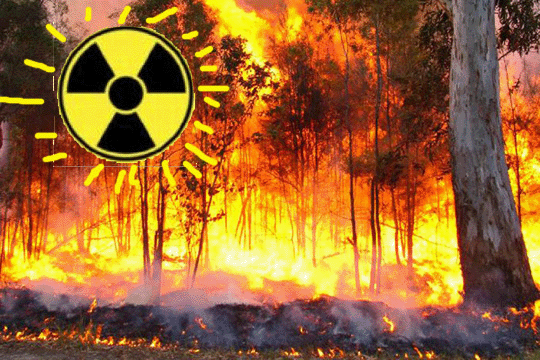 Fukushima a “ticking time bomb” — Fires now “raging” near nuclear plant — Blaze doubles in size; “Smoke rising from wide areas” — Concern over fallout of highly radioactive material; Officials closely watching radiation levels(video) http://enenews.com/fukushima-a-ticking-time-bomb-fires-now-raging-near-nuclear-plant-blaze-doubles-in-size-smoke-rising-from-wide-areas-concern-over-fallout-of-highly-radioactive-material-official
Mainichi, May 1, 2017: Wildfire rages in highly radioactive Fukushima mountain forest — A fire broke out in a mountain forest near the crippled Fukushima No. 1 Nuclear Power Plant on the evening of April 29, consuming an area approximately 20 hectares in size, according to prefectural authorities… As the fire continued to spread, however, helicopters from the GSDF, Fukushima Prefecture and other parties on May 1 resumed fire extinguishing operations from around 5 a.m. … As of May 1, there were no major changes to radiation levels in the heart of Namie and other areas near the fire scene, according to the Ministry of the Environment. “We will continue to closely watch changes in radiation doses in the surrounding areas,” said a ministry official.
Common Dreams, May 1, 2017: Sparking Fears of Airborne Radiation, Wildfire Burns in Fukushima ‘No-Go Zone’; Contaminated forests such as those outside fallout sites like Fukushima and Chernobyl ‘are ticking time bombs’ — A wildfire broke out in the highly radioactive “no-go zone” near the crippled Fukushima nuclear power plant over the weekend, reviving concerns over potential airborne radiation… Local officials were forced to call in the Japanese military… In a blog post last year, Anton Beneslavsky, a member of Greenpeace Russia’s firefighting group who has been deployed to fight blazes in nuclear Chernobyl, outlined the specific dangers of wildfires in contaminated areas. “During a fire, radionuclides like caesium-137, strontium-90 and plutonium rise into the air and travel with the wind,” Beneslavsky wrote. “This is a health concern because when these unstable atoms are inhaled, people become internally exposed to radiation.” Contaminated forests such as those outside fallout sites like Fukushima and Chernobyl “are ticking time bombs,” scientist and former regional government official Ludmila Komogortseva told Beneslavsky. “Woods and peat accumulate radiation,” she explained “and every moment, every grass burning, every dropped cigarette or camp fire can spark a new disaster.”
Sputnik News, May 1, 2017: Japanese Authorities Fighting Wildfire in Evacuation Zone Near Fukushima NPP… There were no reports either about the wind direction or the changes in the background radiation level in relation to the fire.
Sixth nuclear test planned by North Korea
 North Korea plans sixth nuclear test, Sky News, 10 May 2017– North Korea’s ambassador to the UK has told Sky News his country will go ahead with its sixth nuclear test at the time and place of its leader’s choosing.
In his first interview in the role, ambassador Choe Il said his country would continue its ballistic missile and nuclear programmes in spite of intentional warnings against them, and dismissed UN sanctions as having no legal grounds, and no effect.
‘In regards to the sixth nuclear test, I do not know the scheduled time for it, as I am here in the UK, not in my home country,’ Mr Choe said.
‘However, I can say that the nuclear test will be conducted at the place and time as decided by our supreme leader, Kim Jong-Un.’……..
He said a pre-emptive strike on his country would not be possible because they would turn US assets in the region ‘to ashes’ at the first sign of movement towards an attack.
‘The US cannot attack us first,’ the ambassador said, adding: ‘If the US moves an inch, then we are ready to turn to ashes any available strategic assets of the US……….
Sky News asked the ambassador whether his country would be prepared to stop anywhere short of a deliverable nuclear warhead – whether a formal peace treaty or the protection of China’s nuclear deterrent would convince them to suspend their programme and return to negotiations.
‘The only way to protect our country is that we strengthen our power enough to suppress any enemy countries,’ Mr Choe said. ‘This is the only way to protect our peace and security. This is a lesson we felt in our bones.’
He said his country had learned the lesson of US military interventions elsewhere. ‘As you have read on newspapers, the US has been attacking only the weak countries, including Afghanistan and Libya,’ he said.
‘They cannot actually attack the strong countries, although they talk about it. ‘We have to have nuclear power. We have shown our strong military power and nuclear power this April. Because of our strong military power, the US could not attack us first.’
This was a rare and frank interview, and the bottom line is clear – North Korea intends to continue pursuing nuclear weapons – regardless of the consequences.: http://www.skynews.com.au/news/top-stories/2017/05/10/north-korea-plans-sixth-nuclear-test.html#sthash.CTdEwYE1.dpuf
Hiroshima Mayor Kazumi Matsui calls on U.N. chief to attend nuclear disarmament conference in August
 Hiroshima mayor wants U.N. chief to attend nuclear disarmament conference in August http://www.japantimes.co.jp/news/2017/05/09/national/hiroshima-mayor-wants-u-n-chief-attend-nuclear-disarmament-conference-august/#.WRJEbEWGPGg
KYODO VIENNA – Hiroshima Mayor Kazumi Matsui has called on U.N. Secretary General Antonio Guterres to take part in a peace conference to be held in Nagasaki in August.
Matsui made the request in a Monday meeting with Izumi Nakamitsu, the new U.N. undersecretary general and high representative for disarmament affairs, handing over a letter written jointly with Nagasaki Mayor Tomihisa Taue.
Matsui, president of the nongovernmental organization Mayors for Peace, said he told Nakamitsu that many citizens, including survivors of the U.S. atomic bombings of Hiroshima and Nagasaki, hope for progress in the negotiations to ban nuclear weapons.
Mayors for Peace, an organization seeking nuclear disarmament and world peace, involves about 7,300 cities in 162 countries and regions. It is scheduled to convene a general conference in Nagasaki on Aug. 7-10.
Nakamitsu, who took her new posts on May 1, was quoted as saying that the key will be how nuclear powers and non-nuclear nations can work together to make the proposed nuclear ban treaty effective. So far, major nuclear powers have refused to join the negotiations.
Matsui and Nakamitsu met on the sidelines of a meeting in Vienna of the preparatory committee for a 2020 conference to review the Nuclear Non-Proliferation Treaty.
Water and steam leakage causes shutdown of Kudankulam Nuclear Power Reactor
Kudankulam Nuclear Unit Shut Down Due to Water, Steam Leakage,http://www.news18.com/news/tech/kudankulam-nuclear-unit-shut-down-due-to-water-steam-leakage-1393639.html The second unit of the Kudankulam Nuclear Power Project (KNPP) has been shut down due to water and steam leakage, an official said on Saturday.
The plant’s operator, Nuclear Power Corporation of India Ltd (NPCIL) said the Unit-II is likely to restart on May 11.
“The unit was shut down due to steam and water leakage. We have to first cool the reactor and then set right the system,” H.N. Sahu, Site Director, KNPP told IANS over phone from Kudankulam in Tirunelveli district around 650 km from here.
The NPCIL has two 1,000 MW nuclear power plants at KNPP built with Russian equipment.
The first unit was shut down on April 13, for annual maintenance and refuelling, a process that would take around two months.
Claim that North Korea’s man-made islands are being primed for nuclear attacks
North Korea’s man-made islands being primed for nuclear attacks, expert warns, NORTH KOREA could be preparing for “evil deeds” on mysterious man-made islands. Express, By JOEY MILLAR, May 9, 2017 North Korea experts are concerned the new lands, which were recently revealed by satellite imagery near the Sohae Satellite Launching Station missile testing site, could be used to launch devastating nuclear attacks.
Gordon Chang, an author of several books on Kim Jong-un’s hermit state, said the islands had set alarm bells ringing in Seoul, Washington and Tokyo. …….
Other North Korea experts, however, urged calm and said the islands could be used for non-violent means – possibly even agriculture.
Dr Bruce Bechtol said: “As far as the islands being something that could present a real imminent threat to the US or South Korea, I’m just not seeing it
“The land mass of those islands is too small to move around missiles.” He said farms, not the “raining fire” promised by Kim earlier this year, is the more likely end result.
Dr Bechtol said: “It’s interesting that they’re developing these islands, but they’re probably mostly for civilian use……http://www.express.co.uk/news/world/802139/north-korea-islands-war-nuclear-usa-kim-jong-un
North Korea’s reasons for persisting in testing nuclear weapons
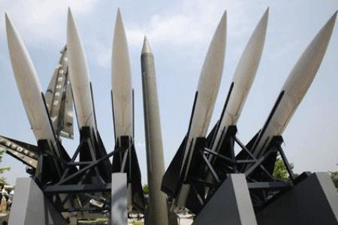 Why North Korea is testing nuclear weapons Pyongyang accuses Washington of plotting a ‘decapitation strike’, and sees in nuclear weapons a powerful deterrent, Aljazeera, 5 May 17
1. Guaranteeing security of the state
2. Economic development and prosperity
3. Gaining respect and prestige in the international arena
On April 14, North Korea’s Vice Foreign Minister said: “We’ve got a powerful nuclear deterrent already in our hands, and we certainly will not keep our arms crossed in the face of a US pre-emptive strike.”
North Korea’s deputy ambassador to the United Nations, Choe Myong-nam, referred to the annual joint drills between the US and South Korea to justify his country’s nuclear pursuits: “It is because of these hostile activities on the part of the United States and South Korea that we strengthen our national defence capability, as well as pre-emptive strike capabilities with nuclear forces as a centrepiece.”
North Korea is publicly stating that it is going ahead with its nuclear weapons programme, while the International Atomic Energy Agency on May 4 said it has “concrete information” that this is indeed the case, and points out that security risks would apply beyond the region.
New satellite images of the Punggye-ri site in North Korea have shown workers pumping out water at a tunnel believed to have been prepared for a forthcoming nuclear test, US monitors said.
Has North Korea declared war in 2017?
North Korea has not officially declared war on any country since 1950, but has threatened to launch a “great war of justice for national reunification” and to strike the US mainland in “full-out war… under the situation where the US hurts the DPRK by force of arms,” using the alternative name for North Korea.
In 1950, North Korea invaded South Korea, starting the three-year Korean War which ended in 1953 with an armistice, not a peace treaty. This mean that North Korea is still technically at war with South Korea.
The US has 28,500 troops stationed in South Korea, while the Korean Peninsula has been divided by a 4km-wide demilitarised zone stretching 250km along the border.
The US has been performing the annual Foal Eagle military drills with South Korea, imposed sanctions on North Korea and has deployed the Terminal High-Altitude Area Defence system, designed to intercept and destroy ballistic missiles fired at South Korea.
From its side, North Korea has defiantly carried out missile test launches despite regional and US condemnation, and continues to develop its nuclear weapons capability.
How did North Korea get nuclear weapons?…….
How many nuclear weapons does North Korea have?
It was estimated that North Korea may have produced up to 20 nuclear bombs by the end of 2016, although the true nuclear capability of the isolated and secretive North Korean state could not be verified.
Meanwhile, North Korea asserts it will keep building up its nuclear arsenal in “quality and quantity”.
In September 2016, Siegfried Hecker from Johns Hopkins University in Washington toured North Korea’s main Yongbyon nuclear facility in 2010 and estimated that North Korea produced enough highly enriched uranium to make additional six nuclear bombs a year.
Experts and governments estimate plutonium production levels from tell-tale signs of reactor operation in satellite imagery. http://www.aljazeera.com/news/2017/05/north-korea-testing-nuclear-weapons-170504072226461.html
Japan’s desperate hunt for a highly radioactive nuclear waste dump site
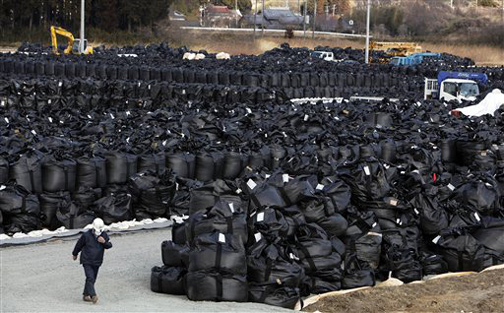 Japan seeks final resting place for highly radioactive nuclear waste http://www.dw.com/en/japan-seeks-final-resting-place-for-highly-radioactive-nuclear-waste/a-38709488, 5 May 17,
With communities refusing to come forward to host the by-product of Japan’s nuclear energy industry, the Japanese government is drawing up a map of the most suitable locations for underground repositories.
The Japanese government is putting the finishing touches to a map of the country identifying what its experts consider to be the safest location for a repository for 18,000 tons of highly radioactive nuclear waste for the next 100,000 years. The map is expected to be released next month and will coincide with the government holding a series of symposiums across the country designed to explain why the repository is needed and to win support for the project.
Given that the disaster at the Fukushima Dai-ichi nuclear plant in March 2011 is still fresh in the memory of the Japanese public, the government’s plan is not expected to win much understanding or support.
The original proposal for a repository for the waste from the nation’s nuclear energy sector was first put forward in 2002, but even then there were few communities that were willing to be associated with the dump. Fifteen years later, and with a number of Japan’s nuclear reactors closed down for good in the wake of the Fukushima accident, the need for a permanent storage site is more pressing than ever.
Radioactivity release
The disaster, in which a 13-meter tsunami triggered by an off-shore earthquake crippled four reactors at the plant and caused massive amounts of radioactivity to escape into the atmosphere, also underlined just how seismically unstable the Japanese archipelago is and the need for the repository to be completely safe for 100,000 years.
Aileen Mioko-Smith, an anti-nuclear campaigner with Kyoto-based Green Action Japan, does not believe the government can deliver that guarantee.
“You only have to look at what happened in 2011 to realize that nowhere in Japan is safe from this sort of natural disaster and it is crazy to think otherwise,” she told DW.
Given the degree of public hostility, Mioko-Smith believes that the government will fall back on the tried-and-trusted tactic of offering ever-increasing amounts of money until a community gives in.
Government funds
“They have been trying to get this plan of the ground for years and one thing they tried was to offer money to any town or village that agreed to even undergo a survey to see if their location was suitable,” she said.
“There were a number of mayors who accepted the proposal because they wanted the money – even though they had no intention of ever agreeing to host the storage site – but the backlash from their constituents was fast and it was furious,” Smith added.
“In every case, those mayors reversed their decisions and the government has got nowhere,” she said. “But I fear that means that sooner or later they are just going to make a decision on a site and order the community to accept it.”
The security requirements of the facility will be exacting, the government has stated, and the site will need to be at least 300 meters beneath the surface in a part of the country that is not subject to seismic activity from active faults or volcanoes. It must also be safe from the effects of erosion and away from oil and coal fields. Another consideration is access and sites within 20 km of the coast are preferred.
High-level waste
The facility will need to be able to hold 25,000 canisters of vitrified high-level waste, while more waste will be produced as the nation’s nuclear reactors are slowly brought back online after being mothballed since 2011 for extensive assessments of their safety and ability to withstand a natural disaster on the same scale as the magnitude-9 earthquake that struck Fukushima.
Stephen Nagy, a senior associate professor of international relations at Tokyo’s International Christian University, agrees that the government will have to pay to convince any community to host the facility.
“They will probably peddle it as subsidies for rural revitalization, which is a tactic that all governments use, but there are going to be some significant protests because Fukushima has created a nuclear allergy in most people in Japan,” he said.
“I expect that the government would also very much like to be able to phase out nuclear energy, but that is simply not realistic at the moment,” he said.
When it is released, the government’s list is likely to include places in Tohoku and Hokkaido as among the most suitable sites, because both are relatively less populated than central areas of the country and are in need of revitalization efforts. Parts of Tohoku close to the Fukushima plant may eventually be chosen because they are still heavily contaminated with radiation from the accident.
Electromagnetic Pulse Attack from North Korea is not likely
 A North Korean Nuclear EMP Attack? … Unlikely, http://38north.org/2017/05/jliu050517/ By Jack Liu
05 May 2017, Recent press articles warn about the possibility of the North Koreans launching an electromagnetic pulse (EMP) attack on the United States, and there are even suggestions that the recent missile test failures may represent a thinly veiled EMP threat. However, such an attack from North Korea is unlikely, as it would require the North to have much larger nuclear weapons and the missile capability to deliver them.
EMP Concerns
The Report of the Commission to Assess the Threat to the US from EMP Attack[1] states:
When a nuclear explosion occurs at high altitude, the EMP signal it produces will cover the wide geographic region within the line of sight of the detonation. This broad band, high amplitude EMP, when coupled into sensitive electronics, has the capability to produce widespread and long lasting disruption and damage to the critical infrastructures that underpin the fabric of U.S. society.
The effects of the pulse can be transferred directly to sensitive devices or as an electrical surge over power lines.
The generic diagram below [on original] shows an EMP to consist of three phases (E1, E2 and E3) occurring over vastly different time scales.[2] Of these, E1 is the most damaging. The others are 100 times (at minimum) less damaging than the first.
The E1 component of an EMP is a very brief but powerful electromagnetic field that can induce very high voltages in electrical conductors. Damage occurs by causing voltage limits in equipment to be exceeded and happens so fast that ordinary surge protectors cannot effectively protect computers and communications equipment. However, special transient protectors fast enough to suppress this part of an EMP exist and there has been significant progress in hardening critical systems against EMP.
The E1 component is produced when gamma radiation during the first 10 nanoseconds (1 nanosecond = 1 billionth of a second) from the nuclear detonation rips electrons out of the atoms in the atmosphere. The electrons travel at relativistic speeds (more than 90 percent of the speed of light) to illuminate the area beneath the blast. The Earth’s magnetic field acts on these electrons to change the direction of electron flow to a right angle to the geomagnetic field that may cause downward electron flow to produce a very large, but quick, electromagnetic pulse over the affected area.
The E2 component is generated by scattered gamma rays and gamma emissions produced by neutron collisions from the explosion. This component lasts from about one microsecond to one second after the beginning of the electromagnetic pulse and is similar to the electromagnetic pulse produced by lightning. Because of the similarities to lightning-caused pulses and the widespread use of lightning protection technology, the E2 pulse is generally considered to be the easiest to protect against.[3]
The E3 component of the pulse is a slow pulse, lasting tens to hundreds of seconds. It results from the nuclear detonation distorting the Earth’s magnetic field, followed by its restoration. This component is quite similar to a geomagnetic storm caused by a very severe solar flare. Like a geomagnetic storm, it can induce currents in long electrical conductors, with the potential to damage power line components.
Size Matters
This is an instance where size does matter: the larger the nuclear explosion, the larger the affected area. While technical reports and papers on EMP from nuclear detonations are mostly classified, there is a paper by D. Hafemeister of California Polytechnic Institute that provides sufficient detail to derive a simple rule of thumb on the relationship between affected distance and nuclear device yield. The paper makes some simplifying assumptions:
- The detonation is spherically symmetric (which may not always be the case);
- The Earth’s magnetic field is not accounted for;
- Prompt gamma rays account for 0.3 percent of the total energy of the explosion and are emitted within the first 10 nanoseconds of detonation;
- About 0.6 percent of the prompt gamma rays produce relativistic electrons that constitute the E1 component of the EMP; and
- The electric field damage threshold is 15,000 volts/meter or higher in the E1 component.
Plugging in the numbers and presuming these assumptions are appropriate, the rule of thumb is surprisingly simple: D = Y, where D is the maximum damage distance expressed in kilometers and Y is the yield of the blast in kilotons. So, a 20 KT bomb detonated at optimum height would have a maximum EMP damage distance of 20 km; a 1 MT (1,000 KT) bomb would damage out to 1,000 km. The largest North Korean test to date has been estimated to be about 20 KT.
Conclusions
Considering the physics behind EMP and the status of North Korea’s nuclear program to date, doomsday headlines in the press regarding the North’s potential EMP threat are grossly overstated.[4] North Korea’s nuclear tests have not yet demonstrated sufficient yield to cause damage to large areas through EMP. Moreover, with only a limited arsenal, it would not make sense for the North Koreans to conduct nuclear tests simply to develop EMP weapons.
[1] John Foster, et al., Report of the Commission to Assess the Threat to the United States from Electromagnetic Pulse (EMP) Attack—Critical National Infrastructures, April 2008.
[2] Edward Savage, James Gilbert, William Radasky. The Early-Time (E1) High-Altitude Electromagnetic Pulse (HEMP) and Its Impact on the U.S. Power Grid, Meta-R-320, Prepared for Oak Ridge National Lab., Jan 2010.
[3] According to the US EMP Commission, “In general, it would not be an issue for critical infrastructure systems since they have existing protective measures for defense against occasional lightning strikes. The most significant risk is synergistic, because the E2 component follows a small fraction of a second after the first component’s insult, which has the ability to impair or destroy many protective and control features. The energy associated with the second component thus may be allowed to pass into and damage systems.”
[4] In the early 1950s, above ground nuclear tests of a size similar to what the North Koreans have demonstrated were conducted at the Nevada Test Site just 65 miles from Las Vegas. There were no reports of power outages. The casinos continued to operate. Nuclear fallout was the bigger issue.
North Korea readying for another nuclear weapons test: China is worried.
Meanwhile satellite images indicate activity has resumed at North Korea’s nuclear test site, US-based analysts said Tuesday, as tensions remain high over fears of an sixth atomic test by the reclusive state.
 Monitor group 38 North warns North Korea is ready to conduct another nuclear weapons test, news.com.au 4 May 17 Beijing regularly calls for parties to avoid raising tensions — remarks that can apply to both Washington and Pyongyang — and in February it announced the suspension of coal imports from the North for the rest of the year, a crucial foreign currency earner for the authorities.
Chinese state-run media have called for harsher sanctions against the North in the event of a fresh atomic test, urged Pyongyang to “avoid making mistakes”, and spoken of the need for it to abandon its nuclear programmes.
The KCNA commentary denounced the People’s Daily, the official mouthpiece of the Chinese Communist party, and the Global Times, which sometimes reflects the thinking of the leadership, as having “raised lame excuses for the base acts of dancing to the tune of the US”.
China’s Global Times newspaper retorted that the nuclear-armed North was in the grip of “some form of irrational logic” over its weapons programs.
Beijing and Pyongyang have a relationship forged in the blood of the Korean War, and the Asian giant remains its wayward neighbour’s main provider of aid and trade.
But ties have begun to fray in recent years, with China increasingly exasperated by the North’s nuclear antics and fearful of a regional crisis. North Korean leader Kim Jong-Un has yet to visit Beijing, more than five years after taking power.
The rival texts are a sign of the level to which ties between the two have deteriorated. KCNA regularly carries vivid denunciations of the US, Japan, and the South Korean authorities, but it is rare for it to turn its ire on China.
“The DPRK will never beg for the maintenance of friendship with China, risking its nuclear programme which is as precious as its own life,” it said, referring to the North by its official name, the Democratic People’s Republic of Korea.
Pyongyang had acted as a buffer between Beijing and Washington since the Korean War in the 1950s and “contributed to protecting peace and security of China”, it said, adding that its ally should “thank the DPRK for it”.
Beijing should not try to test the limits of the North’s patience, it said, warning: “China had better ponder over the grave consequences to be entailed by its reckless act of chopping down the pillar of the DPRK-China relations.”
’NATIONALISTIC’ PASSION
In its response Thursday, the Global Times — which can sometimes stridently espouse what it sees as China’s interests — dismissed the KCNA article as “nothing more than a hyper-aggressive piece completely filled with nationalistic passion”.
“Pyongyang obviously is grappling with some form of irrational logic over its nuclear programme,” it added.
Beijing “should also make Pyongyang aware that it will react in unprecedented fashion if Pyongyang conducts another nuclear test”, it said.
“The more editorials KCNA publishes, the better Chinese society will be able to understand how Pyongyang thinks, and how hard it is to solve this nuclear issue,” the Global Times said.
Washington is meanwhile pushing Beijing — which says its influence is less than believed — to put more pressure on Pyongyang.
US Secretary of State Rex Tillerson last week warned the UN Security Council of “catastrophic consequences” if the international community — most notably China — failed to pressure the North into abandoning its weapons programme.
Chinese Foreign Minister Wang Yi brushed aside Tillerson’s comments, saying that “the key to solving the nuclear issue on the peninsula does not lie in the hands of the Chinese side”.
CHINA: GET OUT OF N KOREA
CHINA has called for all of its citizens to return from North Korea immediately as a US citizen is detained for allegedly trying to overthrow the country’s regime.
The Korea Times reports that the Chinese embassy in North Korea began advising Korean-Chinese residents to return to China.
A Korean-Chinese citizen told Radio Free Asia he was advised to ‘stay a while’ in China, and stated: ‘The embassy has never given such a warning. I was worried and left the country in a hurry.’
But he said most Chinese citizens in North Korea had opted not to heed the warning.
It comes as North Korea confirmed the detention of another American citizen for alleged acts of hostility aimed at overthrowing the country………
IMAGES SHOW RESUMPTION AT NUCLEAR SITE
Meanwhile satellite images indicate activity has resumed at North Korea’s nuclear test site, US-based analysts said Tuesday, as tensions remain high over fears of an sixth atomic test by the reclusive state……..
38 North said the latest images were “unusual and almost assuredly a component of an overall North Korean deception and propaganda effort” and the result of media reporting on the earlier volleyball sightings……
Washington is now exploring options at the UN Security Council to ramp up pressure on the North, with diplomats saying it was in discussion with China on possible sanctions.
Over the past 11 years, the Security Council has imposed six sets of sanctions on Pyongyang, including imposing a cap on coal exports among other measures in November. http://www.news.com.au/world/asia/monitor-group-38-north-warns-north-korea-is-ready-to-conduct-another-nuclear-weapons-test/news-story/d3504fd695e52c53f1dcc8aaaeb02e88
China tells its citizens – Get out of North Korea
GET OUT: North Korea ‘ready’ for new nuclear test, Northern Star, 4th May 2017 CHINA has called for all of its citizens to return from North Korea immediately as a US citizen is detained for allegedly trying to overthrow the country’s regime……https://www.northernstar.com.au/news/get-out-north-korea-ready-new-nuclear-test/3173765/
Japan wants stronger Nuclear Non-Proliferation Treaty
Taking part in the preparatory committee for the 2020 review conference of the Nuclear Non-Proliferation Treaty in Vienna, the first Japanese foreign minister to do so, Kishida also urged cooperation between nuclear states and non-nuclear states to prevent the spread of nuclear arms……..
The first session of the committee to prepare for the review conference in 2020 was held as countries remain at odds over a separate treaty on banning nuclear weapons.
Japan has said it aspires to a world free of nuclear weapons but will abstain from the U.N. negotiations in March for a treaty on a ban, alongside the five recognized nuclear weapons states — Britain, China, France, Russia and the United States.
Regarding the U.N. talks for a treaty on a ban, Kishida told the committee it would further deepen the gap between nuclear states and non-nuclear states, calling for a gradual approach to reducing nuclear weapons, which would be “realistic.”
The government’s decision, seen as reflecting its reliance on the U.S. nuclear umbrella, triggered criticism from the survivors of the U.S. atomic bombings of Hiroshima and Nagasaki, who saw the first-ever U.N. talks on the treaty as a step toward achieving a world free of nuclear weapons…….http://www.japantimes.co.jp/news/2017/05/02/national/japan-calls-stronger-nuclear-non-proliferation-treaty-amid-north-korea-threat/#.WQuYqEWGPGg
Russia: “It is evident that Pyongyang will not abandon its nuclear weapons as long as it sees itself directly threatene
 Moscow doubts North Korea will ditch nuclear weapons as long as ‘threat looms’ http://tass.com/politics/944297 May 03 17, The Russian diplomat stressed the necessity of consolidated diplomatic efforts to settle the situation on the Korean Peninsula. MOSCOW . North Korea will never abandon the idea of having nuclear weapons as long as it feels threat to its security, a Russian foreign ministry official said on Tuesday.
“It is evident that Pyongyang will not abandon its nuclear weapons as long as it sees itself directly threatened,” Mikhail Ulyanov, director of the ministry’s non-proliferation and weapons control department, said at the first session of the Preparatory Committee for the 2020 Review Conference of the Parties to the Treaty on the Non-Proliferation of Nuclear Weapons.
“We are nonetheless convinced that existing tensions on the Korean Peninsula are caused not only by Pyongyang’s nuclear and missile programmes, but also by an increased military activity in the North-East Asia of some regional and especially non-regional States,” he said.
The Russian diplomat stressed the necessity of consolidated diplomatic efforts to settle the situation on the Korean Peninsula. “No minute should be lost. Otherwise the confrontation logic may become overwhelmingly dominant,” he said. “Russia rejects the nuclear status of the DPRK. We do not accept nuclear tests conducted by Pyongyang and its defiance of the relevant UN Security Council resolutions.”.
Government to release map of potential final nuclear disposal sites this summer
 Solidified nuclear waste mixed with glass is placed in canisters at a reprocessing plant in Rokkasho, Aomori Prefecture, in 2012
The government has set the criteria for a map meant to identify potential final disposal sites for high-level radioactive nuclear waste, paving the way for its release as early as this summer.
The process of finding a host for nuclear waste could face challenges amid public concerns over safety.
Based on the map, the government will approach select municipalities to allow research to be conducted for suitable sites to store waste from nuclear power generation.
For permanent disposal, high-level nuclear waste needs to be stored at a final depository more than 300 meters underground for up to about 100,000 years until radiation levels fall and there is no longer potential harm to humans and the environment.
The government plans to create a permanent underground repository somewhere in stable bedrock so the canisters can be stored for tens of thousands of years.
The map is likely to classify which areas are geologically suitable for such a structure to be built deep enough underground. This would rule out areas near active faults and volcanoes as well as oil and coal fields.
Based on waste transport criteria, the map is likely to show that zones within 20 km of the coastline are favorable to host final disposal sites.
The government hopes other municipalities — not just the ones located near nuclear power plants — may also become interested in hosting the disposal facilities. It also wants to show that a variety of places nationwide are suitable for nuclear waste management.
The map was originally planned for a 2016 release but the publication date was later postponed, as some local governments were wary that disposal sites would be imposed on them.
About 18,000 tons of spent fuel currently exist in Japan. Including spent fuel that has already been reprocessed, the country’s total jumps to about 25,000 canisters of vitrified high-level waste, all of which needs to be managed.
The process to find local governments willing to host final storage started in 2002, but little progress was made due mainly to opposition from local residents.
In May 2015, the central government introduced a plan announcing that final depository site selection would be based on scientific grounds, rather than waiting for municipalities to volunteer.
Before presenting the map, the government will hold symposiums between mid-May and June at nine cities to explain the map criteria to the public. The cities include Tokyo, Nagoya and Fukuoka.
Radioactive waste is classified into two categories: The high-level type is generated from reprocessing spent fuel by separating the plutonium and uranium for recycling, while the low level type refers to all other waste.
High-level waste is a byproduct of fission in the reactor core, which is very hot and dangerous. It is mixed with glass and solidified before being placed in robust heat-resistant stainless steel canisters that are 130 cm high, 40 cm in diameter and weigh 500 kg each.
A full canister emits about 1,500 sieverts per hour — an extremely lethal biological level — and has a surface temperature in excess of 200 degrees.
Its radioactivity starts at 20,000 trillion becquerels. It will take about 1,000 years to fall to one-thousandth of that level, and tens of thousands of years to weaken to the same intensity as natural uranium ore, the Natural Resources and Energy Agency says.
Worldwide, only Finland and Sweden have been able to successfully decide on a final depository site for nuclear waste, while many other countries with nuclear plants face difficulties in doing so.
The United States decided in 2009 to call off a plan to build a site to dispose spent fuel in Nevada’s Yucca Mountain due to local opposition, but President Donald Trump earmarked funds to revive the plan in the budget proposal for fiscal 2018 unveiled in March.
In Japan, the selection process is also a touchy issue and has triggered conflicts in the communities around which prospective depository sites have been considered.
In one example, Minamiosumi Mayor Toshihiko Morita in Kagoshima Prefecture filed a criminal complaint against a 65-year-old resident for libel, claiming that his allegations that the rural town office had been actively inviting such a facility was not only groundless but also defamation.
The resident handed out flyers to about 500 households in the town in January which said Morita went to Tokai, Ibaraki Prefecture, and Horonobe in Hokkaido at the invitation of the private sector involved in the construction of nuclear waste disposal facilities. Both municipalities host nuclear-related facilities.
Morita flatly denied the allegations, telling Kyodo News in writing that he has heard “rumors” that there have been moves aimed at hosting a nuclear waste disposal facility but “I myself haven’t gone anywhere and been treated to anything.”
“I would reject any request from the central government” to host one, Morita said. The town approved an ordinance to reject a plan to host a nuclear waste disposal facility the year after the 2011 nuclear crisis at the Fukushima No. 1 plant.
A supporter of the mayor, however, did visit nuclear-related facilities in locations including Rokkasho, Aomori Prefecture, several years ago, according to the supporter’s admission, and a Tokyo company covered the expenses of the trip.
1 This Month




PLEASE OPPOSE HR 8255 AND S.3639 – bills would accelerate satellite deployment, with no environmental review or safeguards – https://ncstd5li.quorum.us/campaign/169331/
To see nuclear-related stories in greater depth and intensity – go to https://nuclearinformation.wordpress.com
-
Archives
- September 2026 (330)
- August 2026 (330)
- July 2026 (355)
- June 2026 (287)
- May 2026 (306)
- April 2026 (356)
- March 2026 (251)
- February 2026 (267)
- January 2026 (308)
- December 2025 (358)
- November 2025 (359)
- October 2025 (375)
-
Categories
- 1
- 1 NUCLEAR ISSUES
- business and costs
- climate change
- culture and arts
- ENERGY
- environment
- health
- history
- indigenous issues
- Legal
- marketing of nuclear
- media
- opposition to nuclear
- PERSONAL STORIES
- politics
- politics international
- Religion and ethics
- safety
- secrets,lies and civil liberties
- spinbuster
- technology
- Uranium
- wastes
- weapons and war
- Women
- 2 WORLD
- ACTION
- AFRICA
- Atrocities
- AUSTRALIA
- Christina's notes
- Christina's themes
- culture and arts
- Events
- Fuk 2022
- Fuk 2023
- Fukushima 2017
- Fukushima 2018
- fukushima 2019
- Fukushima 2020
- Fukushima 2021
- general
- global warming
- Humour (God we need it)
- Nuclear
- RARE EARTHS
- Reference
- resources – print
- Resources -audiovicual
- Weekly Newsletter
- World
- World Nuclear
- YouTube
-
RSS
Entries RSS
Comments RSS

