With its rapid growth in solar power, India now a leading clean energy generator
 ‘India plans big on solar, wind power’ http://www.thehindu.com/news/national/andhra-pradesh/india-plans-big-on-solar-wind-power/article19821527.ece SAKUNALA (KURNOOL DT.), OCTOBER 07, 2017 India has chalked out ambitious plans to generate 84 gigawatts of solar power and 32 gigawatts of wind power by 2022, asserted Anjali Jaiswal, India Director of Natural Resources Defence Council (NDRC), California, on Saturday.
South Korea’s Nuclear Energy Debate
On the one hand, the key schism here has been created by the lack of transparency in planning and implementing nuclear energy policy, which has been heavily dominated by key stakeholders including the central government, KHNP, nuclear academia, and business for several decades. The cover-up of a station blackout incident at the Kori nuclear power plant and the falsification of safety documents for nuclear power plant components are only a few examples among many. Although the knowledge and opinion of experts on nuclear technology should be respected in any case, it is notable that today’s conflicts on South Korea’s nuclear energy future are deeply rooted in the public’s growing distrust of the expert community, which failed to assure the public of their expertise in successfully preventing and controlling a potential nuclear accident…….
The deliberative polling with regard to the resumption of construction on the Shin Kori 5 and 6 reactors had its own limits, such as insufficient time assigned for deliberation and a lack of consideration for the voices of local residents around the plant. Despite these limits, this experiment in deliberative democracy is expected to serve as an important precedent for the new administration’s work on peacefully resolving or managing conflicts over other highly divisive issues, like the storage of spent nuclear fuel. Both pro- and anti-nuclear energy advocates, in addition to the Moon administration, now face a new task: how to effectively inform and persuade the public in this era of deliberative democracy. Politics is an art of persuasion, after all.
Se Young Jang is a nonresident scholar at the Nuclear Policy Program in the Carnegie Endowment for International Peace. more https://thediplomat.com/2017/10/south-koreas-nuclear-energy-debate/
With North Korean missiles, Japan’s nuclear sites form a terrible danger, of possible accident

 Nuclear plants, the Achilles heel in missile tests, remain exposed, By HIROYUKI KAWAI/ The Asahi Shimbun October 24, 2017 North Korea’s missile launches have prompted the government to issue alerts on TV and mobile phones, urging people to take cover in case something goes wrong.
But one puzzling question is why the government has not addressed the risks of keeping nuclear power plants in operation even when missiles are flying over Japan.
North Korea test-fired ballistic missiles 15 times last year and 13 so far this year.
In August, Pyongyang announced plans to fire intercontinental ballistic missiles over the prefectures of Shimane, Hiroshima and Kochi before they splash down in waters around the U.S. territory of Guam.
Instead, North Korea’s latest missile, fired on Aug. 29, flew over Hokkaido, Japan’s northernmost main island, and fell into the western Pacific Ocean………
The Japanese government has issued orders to intercept North Korea’s missiles, citing the need to safeguard people’s lives and assets against projectiles falling on Japanese territory. The government is on alert around the clock to issue such orders.
Evacuation drills have been staged in many regions.
When the J-Alert warning was issued soon after North Korea’s missile launches to urge people to take precautions, subway and Shinkansen bullet train services were suspended in some regions.
However, despite this state of high alert, nuclear power plants remain online.
While stressing the missile threat from North Korea, the government has made no mention of the danger to nuclear power plants.
An attack against a nuclear power plant could bring catastrophic consequences.
Experts say the operation of a single reactor for one year produces a level of radioactive material equivalent to 1,000 of the atomic bomb dropped on Hiroshima.
The destruction of a nuclear plant in a missile strike could put the nation’s very survival at stake.
That is why nuclear power plants are likened to nuclear warheads for potential adversaries……..
Even if a nuclear reactor completes an emergency shutdown after a missile launch is confirmed, the nuclear facility’s safety is not guaranteed.
The collapse of other nuclear plant components by a missile would present a formidable challenge for plant operators in dealing with decaying heat from nuclear fuel in the reactor. Averting a meltdown would be almost impossible under these circumstances as was demonstrated by the 2011 Fukushima disaster.
If a missile directly hit a nuclear reactor, we would all know what to expect.
The vulnerability of nuclear plants in light of a possible missile attack has been pointed out in a lawsuit demanding the suspension of operations at a nuclear facility.
When the presiding judge asked the utility the reason for not halting the plant, the company could not provide an immediate response.
North Korea is fully aware that Japan’s Achilles heel in national defense is its nuclear power plants…… If there exists even a 1 percent risk of conflict, nuclear power plants should be taken off-line as a safeguard measure. That is about ensuring the nation’s security…. http://www.asahi.com/ajw/articles/AJ201710240001.html
What a difference a word makes: Japan weakens its annual anti-nuclear resolution!
 “The omission of the word ‘any’ implies there could be a case of nuclear weapon use that would not cause inhumane consequences and therefore this type of use might be permitted”
“The Japanese draft resolution looks like one proposed by the United States or any other nuclear weapon states”
Japan waters down text of annual anti-nuclear resolution to imply acceptable use of nukes https://www.japantimes.co.jp/news/2017/10/21/national/politics-diplomacy/u-s-pressure-japan-waters-text-anti-nuclear-resolution/#.We0KUo-CzGg, BY MASAKATSU OTA KYODO Japan’s annual diplomatic effort to demonstrate its anti-nuclear credentials and create momentum for disarmament has run into a major obstacle in the form of its most important ally, as well as an atmosphere of division between states possessing atomic weapons and those without them.
A draft resolution recently proposed by the Abe government to the United Nations General Assembly was dramatically watered down under diplomatic pressure from the United States, government sources have revealed.
Last year, its proposed resolution was adopted at the assembly’s plenary session with support from 167 nations, including the United States, while China, North Korea, Russia and Syria opposed and 16 other nations abstained.
In the middle of October, Japan submitted a resolution titled “United action with renewed determination toward the total elimination of nuclear weapons.”
Close examination of the text has found a few major changes from past resolutions.
Since 2010, Japan has drafted annual resolutions that include the same common sentence, which emphasizes “deep concern at the catastrophic humanitarian consequences of any use of nuclear weapons.”
The phrase, “the catastrophic humanitarian consequences of any use of nuclear weapons,” has been a keyword used by international movements pursuing a denuclearized world in recent years.
In July, this anti-nuclear campaign culminated in the adoption of the Treaty on the Prohibition of Nuclear Weapons at the United Nations — the first international law that prohibits state parties from developing, testing, possessing and using nuclear weapons in any manner, including “threat of use.”
In the most recently proposed resolution, the government deleted the word “any” from the frequently used phrase, rendering it as “deep concern at the catastrophic humanitarian consequences of nuclear weapons use.”
It seems a minor rhetorical change, but the deletion of “any” has raised concerns and sparked severe criticism from nuclear disarmament specialists in Japan.
“The omission of the word ‘any’ implies there could be a case of nuclear weapon use that would not cause inhumane consequences and therefore this type of use might be permitted,” professor Tatsujiro Suzuki, director of the Research Center for Nuclear Weapons Abolition at Nagasaki University, pointed out.
“It can’t be helped if Japan will be regarded (by the international community) as an unfit advocate for the abolition of nuclear weapons,” Suzuki said.
“The Japanese draft resolution looks like one proposed by the United States or any other nuclear weapon states,” said Akira Kawasaki, an International Steering Group member of ICAN, or the International Campaign to Abolish Nuclear Weapons.
ICAN will receive the Nobel Peace Prize at the end of this year in Oslo for its worldwide grass-roots campaign for the adoption of the Treaty on the Prohibition of Nuclear Weapons.
During a recent interview, Kawasaki said “the deletion of ‘any’ is so problematic” that several nations which have supported Japan’s annual resolutions in the past may not become a cosponsor of the resolution this year.
That wold pose a serious setback for Japan, which has taken a leading position in the international disarmament based on its strong credentials.
Governmental sources suggested that the administration of U.S. President Donald Trump opposes including the word “any” in the draft resolution, and that Japan made the concession to get Washington’s support for the document.
Trump has indicated a desire to accelerate the modernization of the U.S. nuclear arsenal in light of North Korea’s nuclear and missile provocations. Prime Minister Shinzo Abe has been deepening security cooperation with the United States and repeatedly requested more U.S. security assurances for Japan, including the “nuclear umbrella.”
Another conspicuous change in the latest Japanese resolution is that it urges only North Korea to sign and ratify the Comprehensive Nuclear Test Ban Treaty without delay, rather than the eight nations it named for the previous resolutions.
Japan is a key advocate of accelerating the CTBT, which requires ratification by eight nations including North Korea, China and the United States. The U.S. Republican Party is widely known as a strong opponent of CTBT.
“Our new draft resolution is the result of policy considerations for creating a common ground between nuclear weapon states and nonnuclear weapons states for furthering a practical approach (toward nuclear abolition),” said one official of the Ministry of Foreign Affairs without specifically explaining why they decided to make the notable changes in the draft resolution.
Stresses on North Korea’s nuclear test mountain – becoming unstable?
After six tests, the mountain hosting North Korea’s nuclear blasts may be exhausted, SMH, Anna Fifield, 21 Oct 17 Tokyo: Have North Korea’s nuclear tests become so big that they’ve altered the geological structure of the land?
Some analysts now see signs that Mount Mantap, the 2200-metre-high peak under which North Korea detonates its nuclear bombs, is suffering from “tired mountain syndrome”.

The mountain visibly shifted during the last nuclear test, an enormous detonation that was recorded as a 6.3-magnitude earthquake in North Korea’s northeast. Since then, the area, which is not known for natural seismic activity, has had three more quakes.
“What we are seeing from North Korea looks like some kind of stress in the ground,” said Paul G Richards, a seismologist at Columbia University’s Lamont-Doherty Earth Observatory.
“In that part of the world, there were stresses in the ground but the explosions have shaken them up.”
Chinese scientists have already warned that further nuclear tests could cause the mountain to collapse and release the radiation from the blast.
North Korea has conducted six nuclear tests since 2006, all of them in tunnels burrowed deep under Mount Mantap at a site known as the Punggye-ri Nuclear Test Facility. Intelligence analysts and experts alike use satellite imagery to keep close track on movement at the three entrances to the tunnels for signals that a test might be coming.
After the latest nuclear test, on September 3, Kim Jong Un’s regime claimed that it had set off a hydrogen bomb and that it had been a “perfect success”.
After the latest nuclear test, on September 3, Kim Jong Un’s regime claimed that it had set off a hydrogen bomb and that it had been a “perfect success”.
Images captured by Airbus, a space technology company that makes earth observation satellites, showed the mountain literally moving during the test. An 85-acre area on the peak of Mount Mantap visibly subsided during the explosion, an indication of both the size of the blast and the weakness of the mountain.
Since that day, there have been three much smaller quakes at the site, in the 2 to 3 magnitude range, each of them setting fears that North Korea had conducted another nuclear test that had perhaps gone wrong. But they all turned out to be natural.
If the mountain collapses and the hole is exposed, it will let out many bad things.
Wang Naiyan, former chairman of the China Nuclear Society
That has analysts Frank V. Pabian and Jack Liu wondering if Mount Mantap is suffering from “tired mountain syndrome”, a diagnosis previously applied to the Soviet Union’s atomic test sites.
“The underground detonation of nuclear explosions considerably alters the properties of the rock mass,” Vitaly V. Adushkin and William Leith wrote in a report on the Soviet tests for the United States Geological Survey in 2001. This leads to fracturing and rocks breaking, and changes along tectonic faults.
Earthquakes also occurred at the US’ nuclear test site in Nevada after detonations there.
“The experience we had from the Nevada test site and decades of monitoring the Soviet Union’s major test sites in Kazakhstan showed that after a very large nuclear explosion, several other significant things can happen,” Richards said. This included cavities collapsing hours or even months later, he said.
Pabian and Liu said the North Korean test site also seemed to be suffering.
“Based on the severity of the initial blast, the post-test tremors, and the extent of observable surface disturbances, we have to assume that there must have been substantial damage to the existing tunnel network under Mount Mantap,” they wrote in a report for the specialist North Korea website 38 North.
But the degradation of the mountain does not necessarily mean that it would be abandoned as a test site – just as the United States did not abandon the Nevada test site after earthquakes there, they said. Instead, the US kept using the site until a nuclear test moratorium took effect in 1992.
For that reason, analysts will continue to keep a close eye on the Punggye-ri test site to see if North Korea starts excavating there again – a sign of possible preparations for another test.
The previous tests took place through the north portal to the underground tunnels, but even if those tunnels had collapsed, North Korea’s nuclear scientists might still use tunnel complexes linked to the south and west portals, Pabian and Liu said.
Chinese scientists have warned that another test under the mountain could lead to an environmental disaster. If the whole mountain caved in on itself, radiation could escape and drift across the region, said Wang Naiyan, the former chairman of the China Nuclear Society and senior researcher on China’s nuclear weapons programme.
“We call it ‘taking the roof off’. If the mountain collapses and the hole is exposed, it will let out many bad things,” Wang told the South China Morning Post last month……http://www.smh.com.au/world/after-six-tests-the-mountain-hosting-north-koreas-nuclear-blasts-may-be-exhausted-20171021-gz5ixm.html
Campaigns focus on economy and Constitution, but nuclear disaster-hit Fukushima sees other priorities
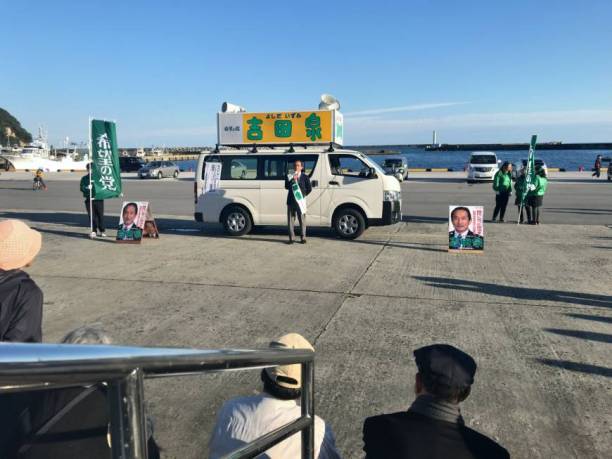
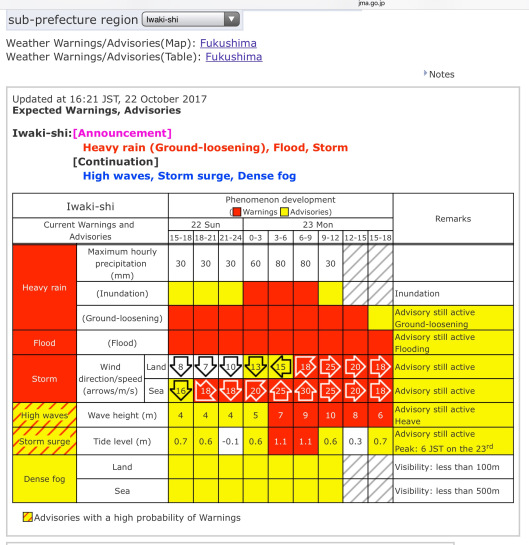
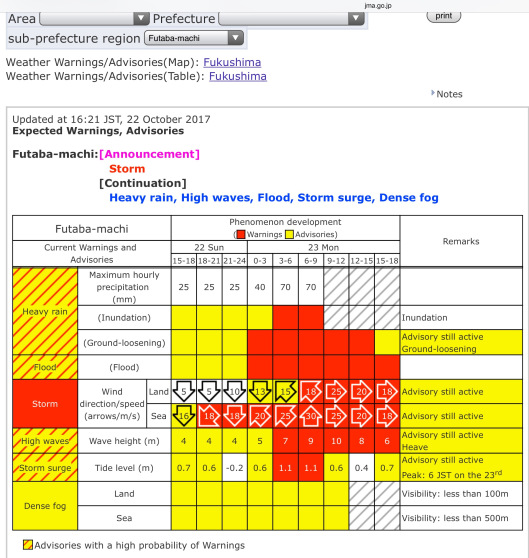
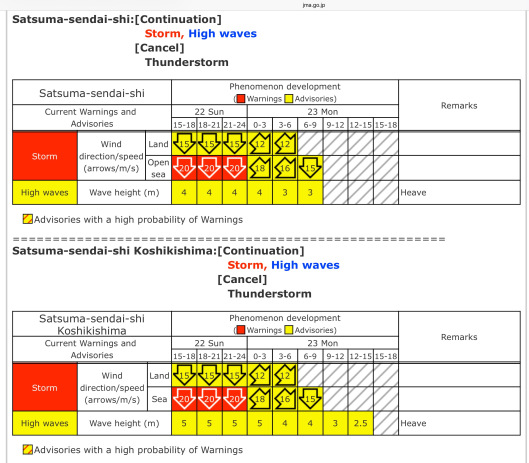
Typhoon Lan Targets Never-Ending Fukushima Nuclear Disaster Site Area With High Waves, Wind, Rains
 Typhoon Lan and Japan Nuclear Power Stations.

North Korea, within months, able to launch nuclear weapon at the US

 North Korea could launch nuclear weapon at the US within months, CIA director warns THE CIA director has issued a scary warning on rogue state’s intentions as Russia urges not to back North Korea into a corner. news.com.au 21 Oct 17, Debra Killalea@DebKillalea NORTH Korea is just months away from perfecting its nuclear weapons capabilities and could strike the United States within months.
That is the grim warning given by CIA Director Mike Pompeo who said the secretive state was getting closer to achieving its nuclear ambitions.
Mr Pompeo told a national security forum in Washington that US needed to behave as if “we are on the cusp of them achieving their objective of being able to strike the United States”.
“When you’re now talking about months, our capacity to understand that at the detailed level is in some sense irrelevant,” he said.
“Whether it happens on Tuesday or a month from Tuesday, we are at a time where the president has concluded that we need a global effort to ensure that Kim Jong-un doesn’t have that capacity.”
However he said there’s a difference between having the ability to fire a single nuclear missile and the capability of producing large amounts of material and developing an arsenal of such weapons.
During the same conference, US President Donald Trump’s National Security Adviser HR McMaster said the country was in a race to resolve the crisis.
“We are not out of time,” he told the forum, organised by the Foundation for Defense of Democracies think tank.
“But we are running out of time,” he said.
‘BACKED INTO A CORNER
It comes as Russia called for support for a plan between Moscow and Beijing to end US and South Korean military drills in exchange for North Korea halting its missile testing.
Foreign Minister Sergei Lavrov said a dialogue would prevent a huge humanitarian, economic and ecological catastrophe in the region.
Russian President Vladimir Putin has also repeated his calls for calm.
While condemning Pyongyang’s nuclear ambitions, Putin said the stand-off should be settled through dialogue and without “cornering North Korea, threatening to use force or going down to outright boorishness and swearing.”
….. US WILL ‘MEET MOST MISERABLE DEATH’
Meanwhile North Korea launched new violent threats against the US and South Korea overnight, promising any nations that provoke or invade the country would “meet the most miserable death”.
Speaking via KCNA, the rogue nation said the joint US-South Korean naval drill in the waters off the Korean Peninsula risked nuclear war……. http://www.news.com.au/finance/work/leaders/north-korea-could-launch-nuclear-weapon-at-the-us-within-months-cia-director-warns/news-story/ee8f1873f2938aec5ee45ff126b43832
If Trump attacks North Korea, China would enter the war against USA
 CHINA’S CHILLING MESSAGE TO DONALD TRUMP AND THE WORLD COMMUNITY, InQUISTR, Alan Ewart, 19 Oct 17, “…..The prospect of USA vs, North Korea war is terrifying. According to Global Firepower, the hermit nation has a standing army almost one million strong. North Korea also has a trained military reserve that is 5.5 million strong, and which could engage the U.S. in a Vietnam style guerrilla war for decades.
This leads some to think that a preemptive nuclear strike against North Korea would be the only effective way of waging war against a nation that is building a nuclear arsenal. Therein lies the danger, one which could easily tip the world into a nuclear World War 3. A nuclear attack on North Korean capital Pyongyang would kill millions and would be very likely to draw China into World War 3.
As you can see from the World Time and Date calculator, Pyongyang is just over 100 miles from Dandong, a Chinese city of almost one million people. Dandong would, therefore, be well within the fallout zone that would be caused by a nuclear strike on Pyongyang. Something that Chinese premier Xi Jinping will not tolerate.
As reported by the Daily Star, Xi Jinping has issued a chilling warning to the international community. In a speech at the 19th National Congress of the Communist Party President Xi warned that the Chinese army will be able to “prevail in both conventional and new theatres of operation.” China has the worlds biggest standing army with over 2.5 million regular troops. President Xi is currently pouring billions into new military hardware and boosting troop numbers.
China is North Korea’s main trading partner and only real ally, and there are real fears that Beijing would join any war on the side of Pyongyang. Chinese leaders have repeatedly told Donald Trump to “cool it” over North Korea as they try to find a peaceful resolution to the Korean conflict.
Trump is due to meet President Xi next month when he visits Asia. Let’s hope that the leaders can find a way to resolve the issue without the world being plunged into World War 3. https://www.inquisitr.com/4565345/world-war-3-china-chilling-message-donald-trump-news-world-community/
South Korea still to phase out nuclear power: commission voted to complete present construction
 Proposed resumption of nuclear reactors to delay Moon’s new energy policy http://english.yonhapnews.co.kr/national/2017/10/20/0301000000AEN20171020004651315.html SEOUL, Oct. 20 (Yonhap) — President Moon Jae-in was forced to push back the start of his new nuclear-free energy policy Friday after a public debate commission recommended resuming the construction of two unfinished nuclear reactors he earlier promised to scrap.
The resumption of the construction, however, may have limited effect on the president’s energy policy, which seeks to ultimately build a nuclear energy-free nation.
The commission said 59.5 percent of 471 citizens and experts who took part in the debate voted in favor of completing the Shin Kori-5 and Shin Kori-6 reactors, while 40.5 percent sided with the president to remove the unfinished reactors for good.
The presidential office Cheong Wa Dae said it respects the commission’s recommendation, adding it will soon take necessary measures to resume the construction of the two nuclear reactors.
Such a swift response from Cheong Wa Dae comes after the president earlier said he would respect the outcome of the debate, noting it would mark the start of what he called “deliberative democracy.”
“The process of reaching a social consensus requires a lot of time and money. But I believe it is a valuable process, considering the social cost we must bear when such decisions are made unilaterally,” the president said earlier.
Scrapping the two new nuclear reactors was a key election pledge of Moon.
Despite the inevitable delay in the start of Moon’s new energy policy, the outcome of the monthslong debate on the fate of the two new nuclear reactors will likely have little or no effect on the president’s ongoing plan to build a nation free of nuclear energy.
The president has noted his new energy policy did not seek to immediately shut down nuclear reactors that are currently in operation, but to do so when they run out their natural designed lifespan, a process he said would take at least four decades, considering the 40-year lifespan of the reactors recently built.
The Shin Kori reactors will also operate for at least 40 years following their completion, which is expected to take a few more years.
Before it was disrupted in July, the Korea Hydro & Nuclear Power Co. said the construction of the two reactors was 28.8 percent complete. Work on them began in 2016.
Officials at the presidential office Cheong Wa Dae insisted the president’s new energy policy was launched the day he took office in May, saying the policy also relied on not building any more nuclear reactors.
The public debate commission also hinted that its recommendation on the fate of the Shin Kori reactors may have been influenced by economic reasons, noting 53.2 percent of those who took part in the process voted in favor of reducing nuclear energy while 35.5 percent said the number of nuclear reactors should be maintained at the current level.
Only 9.7 percent said the number of nuclear reactors should increase, the commission said.
The government earlier said scrapping the construction of the Shin Kori reactors may cost more than US$2 billion for the payment of damages to developers and builders.
The president also remains firm on building a nuclear energy-free nation, the Cheong Wa Dae officials said.
“Up until now, the lives and safety of the people have been put in the backseat when establishing and implementing energy policies, while environmental considerations have also been overlooked,” Moon said earlier.
“To build a safe Republic of Korea and keep pace with the global trend, we … have to implement a great shift in our national energy policy that will reduce nuclear and coal-fired power plants, and implement and increase (the use of) clean, safe future energy.”
North Koreans support Kim Jong un’s bellicose policies
North Koreans undaunted by the prospect of nuclear war http://www.euronews.com/2017/10/19/north-koreans-undaunted-by-the-prospect-of-nuclear-war, By Robert Hackwill,
President Donald Trump’s bellicose rhetoric on North Korea appears to have had the effect of stiffening people’s resolve, with some North Koreans even believing they could survive nuclear conflict.
In this newly nuclear nation there seems to be more bikes on the road than cars. For decades they’ve had a military-first policy; that’s what we’re going to see. We are very quickly learning that President Trump’s rhetoric is having a profound effect. Officials here, talking to us about President Trump, the Vice Foreign Minister warning that he believes this region is on the brink of war, and if that is the case, then we are standing here on the front line,” reports NBC’s Kier Simmons.
“This is the border, the demilitarised zone between the north and South Korea. President Trump is expected to visit South Korea next month. I asked a Lieutenant-Colonel who is based here ‘What do you think about President Trump?’ He said to me, very plainly, that he believes the president is mentally ill. I spoke to another North Korean official who’s the father of a young son, and I said to him, ‘Aren’t you frightened by the prospect of war?’ And you know what he said to me? He said that all his life he has felt as if his existence is threatened by the United States, and he said that he thinks that North Korea and the North Koreans could even survive a nuclear war.”
North Korea’s belligerant response to USA-South Korea military drills
North Korea warns US of ‘unimaginable’ nuclear strike http://thehill.com/policy/defense/356166-north-korea-warns-us-of-unimaginable-nuclear-strike, BY OLIVIA BEAVERS – 10/19/17 North Korea is warning that the United States will face an “unimaginable” nuclear strike for conducting ongoing joint naval drills with the South Korean military on the Korean peninsula.
“The U.S. is running amok by introducing under our nose the targets we have set as primary ones,” the state-controlled news agency KCNA warned Thursday, Newsweek reported. “The U.S. should expect that it would face unimaginable strike at an unimaginable time.”
KCNA also reportedly blamed the U.S. for “creating tension on the eve of war” by participating in civilian evacuation drills in South Korea over the weekend.
The remarks come amid escalating tensions between Washington and Pyongyang.
President Trump has recently stepped up his rhetoric against North Korea and leader Kim Jong Un, whom he’s dubbed “Little Rocket Man.”
During his first address to the United Nations General Assembly last month, Trump threatened to “totally destroy North Korea” if it continued to threaten the U.S. and its allies.
The high-stakes war of words comes after North Korea conducted a series of intercontinental ballistic missile and nuclear tests to display its progress toward developing a nuclear missile capable of striking the U.S.
South Korea developing missiles to destroy North Korea nuclear facilities
https://www.upi.com/Top_News/World-News/2017/10/19/South-Korea-developing-missiles-to-destroy-North-Korea-nuclear-facilities/3121508418413/, By Elizabeth Shim — South Korea is preparing for full-scale war with North Korea by developing missiles that could destroy North Korea nuclear and missile facilities in the event of a conflict.
Gen. Kim Yong-woo, chief of staff of the South Korean army, said a plan to reduce to ashes North Korea’s weapons facilities, has been created, local newspaper Segye Ilbo reported Thursday. Kim, who submitted his report for an annual parliamentary audit by the National Assembly’s defense committee, said the objective of the plan is to decimate Pyongyang’s weapons of mass destruction while minimizing casualties.
“We will develop the concept of operations that suppresses North Korea’s weapons of mass destruction in the early stages, while minimizing damage,” Kim said Thursday.
The concept of operations includes the development of three types of all-weather, ultra-precise, high-power missiles, the formation of a special maneuvering unit, a combat bot and drone system, and “game changers” or cutting-edge military systems.
The three types of missiles include a tactical surface-to-surface missile, the Hyunmoo-2, and the Hyunmoo-4 missiles, according to local news network YTN. The Hyunmoo-4, capable of carrying a 2-ton nuclear warhead and of targeting North Korea’s underground military facilities, will begin development once U.S.-South Korea missile guidelines are revised.
Included in the plan is an air-ground task force that includes airborne and mechanized troops, that would be deployed to make a push into enemy territory and to neutralize nuclear and missile facilities, Seoul said.
In a separate statement on Thursday, the South Korean navy said the Korea-based three-axis system that includes Kill Chain, Seoul’s pre-emptive strike system, is under review.
Radiation hazard in Fukushima Olympics – as happened in Australia’s 1956 Olympics
The 1985 Royal Commission report into British Nuclear Tests in Australia discussed many of these issues, but never in relation to the proximity and timing of the 1956 Olympic Games. Sixty years later, are we seeing the same denial of known hazards six years after the reactor explosion at Fukushima?
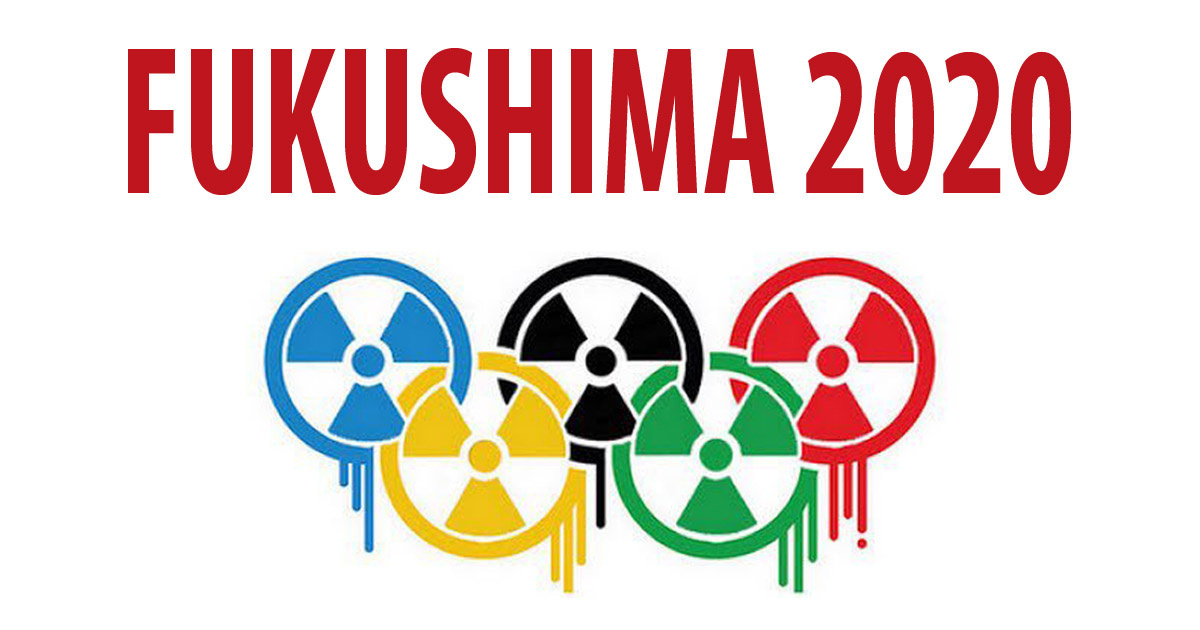 Australia’s nuclear testing before the 1956 Olympics in Melbourne should be a red flag for Fukushima in 2020, https://theconversation.com/australias-nuclear-testing-before-the-1956-olympics-in-melbourne-should-be-a-red-flag-for-fukushima-in-2020-85787, The Conversation, Part time tutor in Medical Education, University of Dundee, 20 Oct 17, The scheduling of Tokyo 2020 Olympic events at Fukushima is being seen as a public relations exercise to dampen fears over continuing radioactivity from the reactor explosion that followed the massive earthquake six years ago.
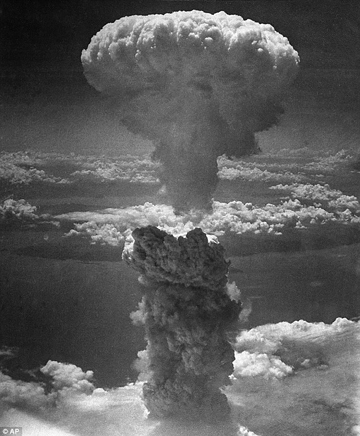 It brings to mind the British atomic bomb tests in Australia that continued until a month before the opening of the 1956 Olympic Games in Melbourne – despite the known dangers of fallout travelling from the testing site at Maralinga to cities in the east. And it reminds us of the collusion between scientists and politicians – British and Australian – to cover up the flawed decision-making that led to continued testing until the eve of the Games.
Australia’s prime minister Robert Menzies agreed to atomic testing in December 1949. Ten months earlier, Melbourne had secured the 1956 Olympics even though the equestrian events would have to be held in Stockholm because of Australia’s strict horse quarantine regimes.
The equestrians were well out of it. Large areas of grazing land – and therefore the food supplies of major cities such as Melbourne – were covered with a light layer of radiation fallout from the six atomic bombs detonated by Britain during the six months prior to the November 1956 opening of the Games. Four of these were conducted in the eight weeks running up to the big event, 1,000 miles due west of Melbourne at Maralinga.
Bombs and games
In the 25 years I have been researching the British atomic tests in Australia, I have found only two mentions of the proximity of the Games to the atomic tests. Not even the Royal Commission into the tests in 1985 addressed the known hazards of radioactive fallout for the athletes and spectators or those who lived in the wide corridor of the radioactive plumes travelling east. Continue reading
China looks to a second record breaking year in solar power installations
Renew Economy 18th Oct 2017, China is on track to install a record-smashing 50GW of solar PV in 2017,
with latest data showing that the nation has so far installed around 42GW,
taking its total installed PV capacity to around 120GW. According to the
latest report from Asia Europe Clean Energy Consultants (AECEA), China
needs to add just under 3GW of new solar in each remaining month of 2017 to
reach 50GW, and deliver a second consecutive record breaking year.
http://reneweconomy.com.au/china-set-add-50gw-new-solar-pv-2017/
1 This Month




PLEASE OPPOSE HR 8255 AND S.3639 – bills would accelerate satellite deployment, with no environmental review or safeguards – https://ncstd5li.quorum.us/campaign/169331/
To see nuclear-related stories in greater depth and intensity – go to https://nuclearinformation.wordpress.com
-
Archives
- September 2026 (323)
- August 2026 (330)
- July 2026 (355)
- June 2026 (287)
- May 2026 (306)
- April 2026 (356)
- March 2026 (251)
- February 2026 (267)
- January 2026 (308)
- December 2025 (358)
- November 2025 (359)
- October 2025 (375)
-
Categories
- 1
- 1 NUCLEAR ISSUES
- business and costs
- climate change
- culture and arts
- ENERGY
- environment
- health
- history
- indigenous issues
- Legal
- marketing of nuclear
- media
- opposition to nuclear
- PERSONAL STORIES
- politics
- politics international
- Religion and ethics
- safety
- secrets,lies and civil liberties
- spinbuster
- technology
- Uranium
- wastes
- weapons and war
- Women
- 2 WORLD
- ACTION
- AFRICA
- Atrocities
- AUSTRALIA
- Christina's notes
- Christina's themes
- culture and arts
- Events
- Fuk 2022
- Fuk 2023
- Fukushima 2017
- Fukushima 2018
- fukushima 2019
- Fukushima 2020
- Fukushima 2021
- general
- global warming
- Humour (God we need it)
- Nuclear
- RARE EARTHS
- Reference
- resources – print
- Resources -audiovicual
- Weekly Newsletter
- World
- World Nuclear
- YouTube
-
RSS
Entries RSS
Comments RSS

