North Korea is unlikely to ever give up all its nuclear weapons
Former Defense Secretary Robert Gates said North Korea is unlikely to ever give up all its nuclear weapons, and that President Donald Trump was right to walk away from deal with leader Kim Jong-un in February.In an interview with CBS that taped on May 10, Gates said North Koreans have come to see some modest nuclear capabilities as “essential to their national survival.”
“I believe that North Koreans will never completely denuclearize,” Gates said, adding that the Trump administration is “unrealistic in believing that they can get complete denuclearization.” ……. https://www.politico.com/story/2019/05/12/robert-gates-north-korea-1317623
Increased tension as U.S. has seized a North Korean ship for sanctions violations
 In Middle of Nuclear Standoff, U.S. Seizes North Korean Cargo Ship Illicitly
  Exporting Coal, Slate, By HANNON, 9 May 19
Donald Trump’s gamble with nuclear negotiations with North Korea – the risk of war if it falls apart
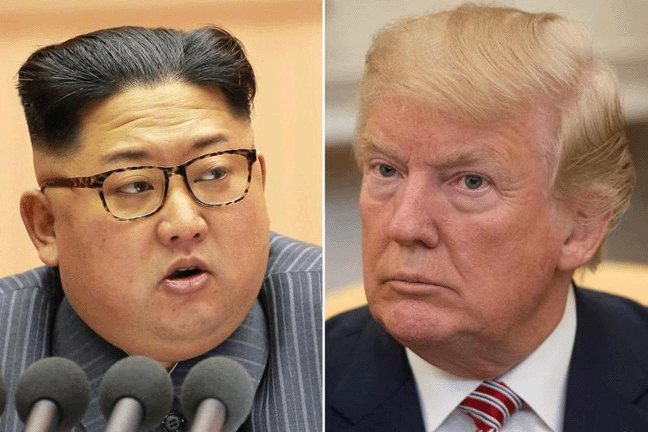 Trump’s Bet on Kim Might Not Pay Off, All that’s preventing the collapse of talks is that North Korea’s missiles haven’t flown far enough yet. The Atlantic URI FRIEDMAN, 10 May 19
Thousands homeless, 33 dead, as cyclone Fani hits India
|
India Cyclone Kills at Least 33, Hundreds of Thousands Homeless, Epoch Times
May 5, 2019 PURI, India—Hundreds of thousands of people were left homeless after a cyclone packing winds of about 200 km per hour slammed into eastern India, ripping out tin roofs and destroying power and telecom lines, officials said on Sunday, May 5.
At least 33 people were killed after cyclone Fani struck the state of Odisha on Friday but a million people emerged unscathed after they moved into storm shelter ahead of landfall. The death toll could have been much greater if not for the massive evacuation in the days before the storm made landfall, officials said….. Fani was the strongest summer cyclone in 43 years to hit Odisha, disrupting water supplies and transport links, the state’s chief minister Naveen Patnaik said in a statement. ….. https://www.theepochtimes.com/india-cyclone-kills-at-least-33-hundreds-of-thousands-homeless_2907764.html |
|
|
China says it won’t take part in trilateral nuclear arms talks
https://www.channelnewsasia.com/news/asia/china-says-it-won-t-take-part-in-trilateral-nuclear-arms-talks-11507850 BEIJING: China on Monday (May 6) dismissed a suggestion that it would talk with the United States and Russia about a new accord limiting nuclear arms, saying it would not take part in any trilateral nuclear disarmament negotiations.
US President Donald Trump said he and Russian President Vladimir Putin discussed on Friday the possibility of the new accord that could eventually include China in what would be a major deal between the globe’s top three atomic powers.
Chinese Foreign Ministry spokesman Geng Shuang said that the country’s nuclear forces were at the “lowest level” of its national security needs, and that they could not be compared to the United States and Russia.
“China opposes any country talking out of turn about China on the issue of arms control, and will not take part in any trilateral negotiations on a nuclear disarmament agreement,” Geng told a daily news briefing, when asked about Trump’s remarks.
China has always advocated the complete prohibition and thorough destruction of nuclear weapons, Geng added.
China believes that countries with the largest nuclear arsenals have a special responsibility when it comes to nuclear disarmament and should continue to further reduce nuclear weapons in a verifiable and irreversible manner, creating conditions for other countries to participate, he said.
The 2011 New START treaty, the only US-Russia arms control pact limiting deployed strategic nuclear weapons, expires in February 2021 but can be extended for five years if both sides agree. Without the agreement, it could be harder to gauge each other’s intentions, arms control advocates say.
U.S. Secretary of State Mike Pompeo ays that a nuclear deal with North Korea is still possible
|
Pompeo insists North Korea nuclear deal still possible despite weapons test, Secretary of state echoes the president, saying ‘there’s opportunity to get a negotiated outcome’ on a denuclearization deal, Guardian, Victoria Bekiempis in New York 6 May 2019 Secretary of State Mike Pompeo insisted Sunday that a nuclear disarmament deal between the US and North Korea was still possible, despite the country’s launch of several short-range projectiles into the sea one day earlier.“There’s an opportunity to get a negotiated outcome, where we get fully verified denuclearization” and said the US hopes to “get back to the table and find the path forward,” he told ABC’s This Week politics program on Sunday. He also claimed that North Korean leader Kim Jong-un is on board with coming to an accord. “Chairman Kim has repeated that,” Pompeo said. “He’s repeated that quite recently, in fact.” Pompeo said the latest missile launch did not cross any international boundaries. “That is, they landed in the water east of North Korea and didn’t present a threat to the United States or to South Korea or Japan,” he said. “And we know that they were relatively short-range.” Pompeo’s statements about brokering a deal echo those of Donald Trump, who said he still thought the US and North Korea would reach a nuclear dealdespite the fact that talks have stalled since the leaders’ recent unsuccessfulsummit meeting in Vietnam. ……. https://www.theguardian.com/world/2019/may/05/mike-pompeo-north-korea-disarmament-deal-possible-despite-weapons-test |
|
Donald Trump still predicting nuclear deal with Kim Jong Un
Trump insists nuclear deal will happen after North Korea fires projectiles, Guardian, 5 May 19, President tweeted on Saturday he believes Kim Jong-un understands North Korea’s ‘great economic potential’ and won’t interfere. Donald Trump said he still believes a nuclear deal with North Korea will happen, after the country fired several unidentified short-range projectilesinto the sea.
The US president tweeted on Saturday that he believes that leader Kim Jong-un “fully realizes the great economic potential of North Korea, & will do nothing to interfere or end it”……..
If it’s confirmed that the North fired banned ballistic missiles, it would be the first such launch since the North’s November 2017 test of an intercontinental ballistic missile. That year saw a string of increasingly powerful weapons tests from the North and a belligerent response from Trump that had many in the region fearing war.
Experts say the North may increase these sorts of low-level provocations to apply pressure on the US to agree to reduce crushing international sanctions
South Korea said it’s “very concerned” about North Korea’s weapons launches, calling them a violation of last year’s inter-Korean agreements to reduce tensions between the countries.
South Korea’s military has bolstered its surveillance in case there are additional weapons launches, and South Korean and US authorities are analyzing the details.
North Korea could choose to fire more missiles with longer ranges in coming weeks to ramp up its pressure on the US to come up with a roadmap for nuclear talks by the end of this year……..https://www.theguardian.com/world/2019/may/04/trump-north-korea-nuclear-deal-short-range-projectiles
How Does the Olympics Clean Up? (Or, Is There an Olympics Without Cleaning Up?)
Under these circumstances, whether the unresolved issues of radiation, without appropriate treatment of nuclear power facilities, disaster victims lacking a place to reside, the forcible relocation of American army bases or the dispersal of the homeless, the Japanese media has relentlessly broadcast the Olympics.
“The Tokyo Olympics will take place in a state of nuclear emergency. Those countries and the people who participate will, on the one hand, themselves risk exposure, and, on the other, become accomplices to the crimes of this nation.”
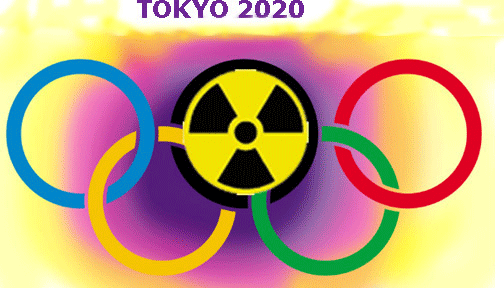
THE OLYMPICS CLEAN-UP: FUKUSHIMA, OKINAWA, HOMELESSNESS 陳黃金菊05/05/2019 ENGLISH INTERNATIONAL MAY 2019 How Does the Olympics Clean Up? (Or, Is There an Olympics Without Cleaning Up?)
Fukushima nuclear waste mess is by no means solved
THE OLYMPICS CLEAN-UP: FUKUSHIMA, OKINAWA, HOMELESSNESS 陳黃金菊05/05/2019 ENGLISH INTERNATIONAL MAY 2019 NUCLEAR PHYSICIST Hiroaki Koide has pointed out that although eight years have passed, there is still more than one million tons of irradiated water which still hasn’t been treated. The Tokyo Electric Power Company (TEPCO)’s “handling” method for this situation was to build a thousand sewage tanks to store the sewage. But as space was limited and the number of sewage tanks was also limited. As such, Koide asserts, “TEPCO will be compelled to release these waters into the sea in the near future.” [1] Moreover, with regards to the core meltdown of the reactor, the melted fuel rods remain unaccounted for.
As such, Koide has been staunch in advocating that the only solution to the Fukushima incident is a Chernobyl-style sarcophagus, covering the nuclear power plant. But he also admits, even in this case, “the containment of this disaster will not have been achieved even after all who are alive today have died.” [2]
Abe Shinzo issued an order for an end to an evacuation on April 1st, 2017, at the same time as he issued a compulsory repatriation policy. At this time, the town of Namie, 11.2 kilometers from the Fukushima nuclear power plant, has been described as a “ghost town.” As raised by now deceased mayor Baba Yushi before he died, after the end of the evacuation, 234 people—one percent of the population—returned to Namie to live. The majority of these were elderly, which is to say, the town lacked a working population. Without any means of transportation and open supermarkets. There was just one clinic. [3]
As a compensatory measure in line with the repatriation measure, TEPCO set a deadline, requesting that disaster victims assess their losses, and inform TEPCO of what kind of compensation they requested. Regarding this, the mayor of Namie stated that TEPCO never should have set this kind of deadline, but should account for the losses of disaster victims themselves.
What is even more incredible is that TEPCO could use “individual circumstances” as a way of avoiding the requests of disaster victims. For example, residents in twenty kilometers of the nuclear power plant were forcibly evacuated but TEPCO interpreted this instead as “voluntary evacuation”, and refused to pay compensation. [4] Even those who lost their real estate might not receive compensation, not to mention harms that could not be compensated for, such as those below the age of eighteen whose thyroids were inspected five years later, among them 172 were positive for or suspected of having thyroid cancer, and 131 had their thyroid glands removed by operation. [5]
At the same time, damages to the environment cannot be compensated. Who is it that would receive compensation? What kind of compensation would that be? Before the disaster, Fukushima’s agricultural industry and natural environment were comparatively famous. But after the disaster, farmers have been forced to the end of a rope, some of which have chosen death. [6] Completely clearing radiation from the land is also impossible, because in clearing remaining radiation in the forest, this would require cutting down all of the trees, and removing all of the topsoils. [7]
Protests by those who have developed thyroid cancer were criticized by the government, stating that their protests were causing “reputational damage”.[8] The government and TEPCO toss the ball to each other, and what is even stranger is that nobody seems to need to take responsibility. [9]…………..https://newbloommag.net/2019/05/05/olympics-fukushima-okinawa-eng/
1] See “The Fukushima Nuclear Disaster and the Tokyo Olympics”.
[2] Ibid.
[3] See “‘Save the Town’: Insolvable Dilemmas of Fukushima’s ‘Return Policy’”.
[4] Ibid.
[6] See the Green Citizen Action Alliance’s report “Environmental Front: Subscribing to 311 compensation” (〈環境前線:前仆後繼的311核災求償行動〉).
[7] See “Reconstruction Disaster: The human implications of Japan’s forced return policy in Fukushima”
[8] Ibid.
[9] See Tetsuya Takahashi’s book, Xisheng te tixi: Fudao ‧ Okinawa (2014, lit. The System of Sacrifice: Fukushima‧Okinawa), trans. Lee Yi-zhen.
[10] One can see the report “Decoding the US Military Bases in Japan with 9 Graphs” (九張圖解密日本美軍基地) in the News Lens and “Okinawa Government Sued by Japanese Government for ‘the Most Dangerous Military Bases’” (為了「全世界最危險的軍事基地」,沖繩縣政府被日本政府一狀告上法庭──觀光客看不到的美軍基地問題) in Crossing.
[11] One can see the report in UDN Global, “Okinawan Referendum: Say No to the US Military Again? The People Neglected by the Japanese Government” (沖繩基地公投:再次向美軍說NO?日美政府無視的43萬民意).
[12] See the editorial, “Henoko project clearly doomed; time to open talks with U.S” in Asahi and “US Military Base Threatens Biodiversity in Okinawa” in Truthout
Counterterrorism requirement puts financial strain on nuclear power plant operators
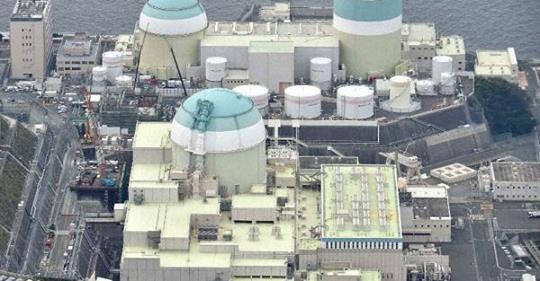
Japan to shut down nuclear plants if counterterror steps not taken in time
Exploitation of foreign workers in Japan’s Fukushima nuclear clean-up
Japan needs thousands of foreign workers to decommission Fukushima plant, prompting backlash from anti-nuke campaigners and rights activists, SCMP Julian Ryall , 26 Apr, 2019
Activists are not convinced working at the site is safe for anyone and they fear foreign workers will feel ‘pressured’ to ignore risks if jobs are at risk
Towns and villages around the plant are still out of bounds because radiation levels are dangerously high

Tokyo Electric Power Co (TEPCO) has announced it will take advantage of the government’s new working visa scheme, which was introduced on April 1 and permits thousands of foreign workers to come to Japan to meet soaring demand for labourers. The company has informed subcontractors overseas nationals will be eligible to work cleaning up the site and providing food services.
About 4,000 people work at the plant each day as experts attempt to decommission three reactors that melted down in the aftermath of the March 2011 Great East Japan Earthquake and the huge tsunami it triggered. Towns and villages around the plant are still out of bounds because radiation levels are dangerously high.
Activists are far from convinced working at the site is safe for anyone and they fear foreign workers will feel “pressured” to ignore the risks if their jobs are at risk.
“We are strongly opposed to the plan because we have already seen that workers at the plant are being exposed to high levels of radiation and there have been numerous breaches of labour standards regulations,” said Hajime Matsukubo, secretary general of the Tokyo-based Citizens’ Nuclear Information Centre. “Conditions for foreign workers at many companies across Japan are already bad but it will almost certainly be worse if they are required to work decontaminating a nuclear accident site.”
Companies are desperately short of labourers, in part because of the construction work connected to Tokyo hosting the 2020 Olympic Games, while TEPCO is further hampered because any worker who has been exposed to 50 millisieverts of radiation in a single year or 100 millisieverts over five years is not permitted to remain at the plant. Those limits mean the company must find labourers from a shrinking pool.
“It has been reported that vulnerable people have been illegally deceived by decontamination contractors into conducting decontamination work without their informed consent, threatening their lives, including asylum seekers under false promises and homeless people working below minimum wage,” the statement said. “Much clean-up depends on inexperienced subcontractors with little scrutiny as the government rushes decontamination for the Olympic Games.”
Cade Moseley, an official of the organisation, said there are “very clear, very definite concerns”.
“There is evidence that foreign workers in Japan have already felt under pressure to do work that is unsafe and where they do not fully understand the risks involved simply because they are worried they will lose their working visas if they refuse,” he said……
As Tokyo Olympics approach, Japan’s futile push to repopulate cleaned-up parts of radioactive areas of Fukushima
|
Japan’s nuclear horror relived as people return to Fukushima’s ghost towns, It is eight years since a devastating tsunami caused three reactors to meltdown at the Fukushima Daiichi nuclear power station on the north-east coast of Japan Mirror UK, Emily RetterSenior Feature Writer, Mirror UK, 29 Apr19
Only wild animals, and the 6ft weeds, which have rampaged through deserted homes and businesses, suffocating once-chatty barbers shops and bustling grocery stores; strangling playgrounds and their rusting rides which lie empty and eerily still. Once unextraordinary, mundane symbols of everyday lives have taken on the appearance of a horror film set in these areas closest to the Fukushima Daiichi nuclear power station on the coast of north-east Japan, eight years after the devastating tsunami which caused a meltdown at three of the plant’s reactors, forcing tens of thousands to flee. The earthquake on March 11, 2011, claimed 19,000 lives, and triggered the world’s largest nuclear disaster since Chernobyl. Radiation leaking in fatal quantities forced 160,000 people to evacuate immediately, and most to this day have not returned to their toxic towns and villages……. The official mandatory evacuation order was lifted, and while reports reveal just 367 residents of Okuma’s original population of 10,341 have so far made the decision to return, and most of the town remains off-limits, the Japanese government is keen this be seen as a positive start to re-building this devastated area……. The Japanese Prime Minister, Shinzo Abe, visited to mark the milestone.
Six Olympic softball games and a baseball game will be staged in Fukushima, the capital of this prefecture, which is free of radiation. The torch relay will even begin at J Village, which was once the base for the crisis response team. Hearteningly, it is now back to its original function, a football training centre. But the truth is, it is mainly older residents who have decided to return to their homes. Seimei Sasaki, 93, explained his family have roots here stretching back 500 years. His neighbourhood in Odaka district now only contains 23 of its original 230. “I can’t imagine what this village’s future looks like,” he admitted. Young families are few and far between – these areas are still a terrifying prospect for parents. But the re-built schools are slowly filling a handful of classroom seats. Namie Sosei primary and middle school, less then three miles from the plant, has seven pupils. One teacher said: “The most frustrating thing for them is that they can’t play team sports.” A sad irony as the Olympics approach. And with so many residents still fearful, so the deadly clean-up operation continues. Work to make the rest of Okuma safe is predicted to take until 2022. The area which was its centre is still a no-go zone. In the years following the disaster, 70,000 workers removed topsoil, tree branches, grass and other contaminated material from areas near homes, schools and public buildings.  Bags of nuclear waste generated after the meltdown of one of Fukushima’s nuclear power plants in 2011 are now stored in the nearby town of Naraha. MUST CREDIT: photo for The Washington Post by Shiho Fukada. A staggering £21billion has been spent in order to make homes safe. Millions of cubic metres of radioactive soil has been packed into bags. By 2021 it is predicted 14million cubic metres will have been generated. The mass scale operation uses thousands of workers. Drivers are making 1,600 return trips a day. But residents understandably want it moved out of Fukushima for good. As yet, no permanent location has agreed to take it, but the government has pledged it will be gone by 2045. At Daiichi itself, the decontamination teams are battling with the build up of 1m tonnes of radioactive water. …..https://www.mirror.co.uk/news/world-news/japans-nuclear-horror-relived-people-14420671 |
|
|

Constant military posturing from both Pakistan and India

India and Pakistan Will ‘Never Be Friends’ as U.S. Sits Out Aggressive Nuclear Threats https://www.ccn.com/india-pakistan-never-friends-nuclear-threats-us-sidelines
India’s minister of state for external affairs V.K Singh said this weekend that India and Pakistan will never be friends:
“A country which has been triggering proxy wars against India besides being a terrorist hub can never be treated as a friend. Treating Pakistan as a friend will be the biggest weakness of India.”
INDIA AND PAKISTAN: MONTHS OF NUCLEAR TENSION
The statement comes after months of tension between the two nuclear neighbors. The military posturing reached a peak last week when India’s prime minister Narendra Modi threatened Pakistan with the “mother of nuclear bombs.”
The military aggression first flared in February when Pakistan-based terrorist group JeM killed 40 Indians. India responded with airstrikes over the border and a series of aggressive military action followed on both sides.
PAKISTAN’S F-16 FIGHTER JET AGGRESSION: A VIOLATION OF US TERMS?
The United States has also been dragged into the ongoing conflict between India and Pakistan, but the Trump administration remains firmly on the sidelines. The US has refused to comment on Pakistan’s possible violation of US terms.
In February 2019, Pakistan shot down an Indian jet and captured its pilot. India claims this aggressive action was carried out by a Pakistani F-16 fighter jet, sold to Islamabad by the United States.
If India’s claims are true, it may be a violation of international terms. According to the US arms agreement, Pakistan is only permitted to use the F-16 fighter jets defensively.
Pakistan maintains it did not use the F-16 in the dogfight and, despite India’s claim that it shot down a Pakistani F-16 in the clash, a US count found that all jets were present and correct. India, however, submitted some evidence in the form of call-signs and weaponry used which are associated with Pakistani F-16s.
US STAYS ON THE SIDELINES
This weekend, the US refused to share any information with India about the possible violation of terms. Speaking to the Indian Express, an unnamed official said it was a matter solely for the US and Pakistan:
“Soon after we were informed by the Indian side about Pakistan using F-16 aircraft on Feb 27, we informed the Indians that we will not be sharing any information on the subject as it is a bilateral matter between the US and Pakistan.”
Pakistan maintains it did not use the F-16 in the dogfight and, despite India’s claim that it shot down a Pakistani F-16 in the clash, a US count found that all jets were present and correct. India, however, submitted some evidence in the form of call-signs and weaponry used which are associated with Pakistani F-16s.
The official said it was a strictly unbiased position and it would do the same if the tables were turned:
“If a third country tomorrow wants information about the C130 or C17 or Apaches that the IAF [Indian Air Force] uses, our answer would be the same. It is a bilateral matter between India and the US.”
PEACE IN THE INDIAN SUB-CONTINENT?Pakistan is on a mission to dispel fears of conflict, but not everyone is convinced. The country invited a handful of journalists to learn about Islamabad’s desire for peace, summed up by this Reuters commentary:
“Pakistan says it is tired of conflict, opposed to extremism, open for peace talks and clamping down on corruption. It also insists it is run by politicians, with the military partnering rather than dominating.”
But with constant military posturing from both Pakistan and India, the peaceful rhetoric doesn’t quite match the nuclear grandstanding.
Pakistan warns India against mentioning its nuclear power lightly
–‘Don’t test our resolve’: Pakistan warns India against mentioning its nuclear power lightly https://scroll.in/latest/921739/dont-test-our-resolve-pakistan-warns-india-against-mentioning-its-nuclear-power-lightly– 29 Apr 19, Pakistan’s military spokesperson Major General Asif Ghafoor reiterated Pakistan’s denial of India’s claim that it was responsible for the attack in Pulwama. Pakistan on Monday warned India against testing its military’s resolve and said that it was capable of protecting its citizens. Pakistan’s military spokesperson Major General Asif Ghafoor accused India of relying on false claims about the Pulwama attack in India and the Indian Air Force’s air strike in Balakot.The military spokesperson urged India to be a more responsible nuclear power. “In your [Indian] rhetoric, you keep using nuclear power as a threat,” Ghafoor said. “Nuclear powers are not a threat, they are a weapon of deterrence that should not be mentioned lightly…Do not test our resolve.”
Ghafoor was referring to Prime Minister Narendra Modi’s remark earlier this month that India’s nuclear weapons are “not meant for Diwali”. Modi had received criticism from several quarters for that statement.
Ghafoor denied that it was responsible for the attack in Pulwama that killed 40 Indian security personnel. “We told them we were not involved,” Ghafoor told reporters at a press conference. “India then violated our airspace, we then gave the ultimatum that we will respond when we see fit. Two months have passed since and India has told countless lies on the matter. We have not responded to the lies, not because we can’t, but because we don’t want to retaliate.”
Ghafoor reiterated that Pakistan had incurred no damage from India’s air strike in Balakot. He said hiding the downing of a plane is impossible in today’s day and age.
“International media came to Pakistan, we told them that they should go to the place and see for themselves what had happened. India had said that 300 people had died in their attack [in Balakot]. Then they said that they had used a small-scale missile that bore a tiny hole in the ceiling of the building and then exploded inside. We again offered to show your own [Indian] media the site,” he said.
1 This Month
26 September – International Day for the Total Elimination of Nuclear Weapons





PLEASE OPPOSE HR 8255 AND S.3639 – bills would accelerate satellite deployment, with no environmental review or safeguards – https://ncstd5li.quorum.us/campaign/169331/
To see nuclear-related stories in greater depth and intensity – go to https://nuclearinformation.wordpress.com
-
Archives
- September 2026 (291)
- August 2026 (330)
- July 2026 (355)
- June 2026 (287)
- May 2026 (306)
- April 2026 (356)
- March 2026 (251)
- February 2026 (267)
- January 2026 (308)
- December 2025 (358)
- November 2025 (359)
- October 2025 (375)
-
Categories
- 1
- 1 NUCLEAR ISSUES
- business and costs
- climate change
- culture and arts
- ENERGY
- environment
- health
- history
- indigenous issues
- Legal
- marketing of nuclear
- media
- opposition to nuclear
- PERSONAL STORIES
- politics
- politics international
- Religion and ethics
- safety
- secrets,lies and civil liberties
- spinbuster
- technology
- Uranium
- wastes
- weapons and war
- Women
- 2 WORLD
- ACTION
- AFRICA
- Atrocities
- AUSTRALIA
- Christina's notes
- Christina's themes
- culture and arts
- Events
- Fuk 2022
- Fuk 2023
- Fukushima 2017
- Fukushima 2018
- fukushima 2019
- Fukushima 2020
- Fukushima 2021
- general
- global warming
- Humour (God we need it)
- Nuclear
- RARE EARTHS
- Reference
- resources – print
- Resources -audiovicual
- Weekly Newsletter
- World
- World Nuclear
- YouTube
-
RSS
Entries RSS
Comments RSS

