Report on Modi’s remark on nuclear weapons sent to EC, says election official in Barmer
|
Report on Modi’s remark on nuclear weapons sent to EC, says election official in Barmer https://scroll.in/latest/921705/report-on-modis-remark-on-nuclear-weapons-sent-to-ec-says-district-election-officialThe prime minister had warned Pakistan at the rally last week, saying India’s nuclear weapons are ‘not meant for Diwali’.Election authorities in Barmer district of Rajasthan on Monday said they have submitted a factual report to the Election Commission after looking into the Congress’ allegation that Prime Minister Narendra Modi had “brazenly violated” the poll code by repeatedly invoking the armed forces at an rally in the district on April 21, PTI reported.
At the rally, Modi had said that India does not get scared of Pakistan’s nuclear strike threats anymore. “Every other day they used to say, ‘We have nuclear button, we have nuclear button’,” the prime minister had said. “What do we have then? Have we kept it for Diwali?” Following the complaint by the Congress the following day, the Election Commission had sought a report on the prime minister’s address. “The report has been forwarded with the copy of PM’s speech as per the direction of the commission,” said district election officer Himanshu Gupta. This is not the first instance of the ruling party invoking the armed forces during the campaign for these Lok Sabha elections. On April 18, the Election Commission warned Union Minister for Minority Affairs Mukhtar Abbas Naqvi for referring to the defence forces as “Modi ji ki Sena [Narendra Modi’s Army]” and asked him to be careful in the future. This came a few days after a warning was issued to Uttar Pradesh Chief Minister Adityanath for making the same remark. Apart from the Opposition parties, military veterans have also complained about such speeches made by BJP leaders. On April 12, more than 150 veterans of the Indian armed forces wrote to President Ram Nath Kovind, urging him to stop the politicisation of the military during election campaigns. The letter urged Kovind to “take all necessary steps to urgently direct all political parties that they must forthwith desist from using the military, military uniforms or symbols, and any actions by military formations or personnel, for political purposes or to further their political agendas”. The Election Commission has issued multiple advisories asking political parties not to indulge in political propaganda involving the defence forces. |
|
No to nuclear power: Taiwan’s president reaffirms anti-nuclear stance
 Taiwan’s president reaffirms anti-nuclear stance at march https://mainichi.jp/english/articles/20190428/p2g/00m/0in/056000c, April 28, 2019 (Mainichi Japan) TAIPEI, Taiwan (AP) — Taiwanese President Tsai Ing-wen on Saturday reaffirmed her opposition to nuclear power before marching with anti-nuclear protesters, reviving an issue that has proven politically divisive in the past.
Tsai said at a news conference that her administration was taking efforts to promote renewable energy and reduce the need for nuclear power.
“In the past, people often said we won’t have electricity without nuclear power, or that Taiwan does not have the conditions to develop renewable energy, or even that renewable and green energy are too expensive,” Tsai said. “But after the efforts we have made since taking office, such talk has dissipated.”
She also vowed to reach her targets in reducing emissions from thermal power plants and to retire current nuclear power plants, though without giving any timeline.
“We will carry on with the targets to eliminate nuclear power and reduce carbon,” Tsai said. “We will reach the targets and Taiwan will not be short of electricity” for the island’s 23 million people.
She then joined hundreds of people who marched through the streets of Taipei, the capital, beginning at the Presidential Office Building in the city’s center, in a show of opposition to nuclear power.
Tsai’s Democratic Progressive Party has long opposed the nuclear industry, particularly construction of the high-tech island’s fourth nuclear plant on the tip of the island, north of Taipei. Nuclear power now accounts for about 15% of Taiwan’s electricity generation, according to the World Nuclear Association.
The main opposition Nationalist Party has promoted nuclear power as one of the best ways to provide reliable energy to the island. The issue has in the past sparked occasionally violent clashes between proponents and supporters.
All Japan’s nuclear reactors may shutdown, as regulator is firm on safety measures
 Japan’s nuclear reactors face new near-total shutdown, Regulator refuses to extend deadlines for installing antiterrorism measures Ft.com, Robin Harding in Tokyo APRIL 25, 2019 Japan is heading towards another near-total shutdown of its nuclear reactors after regulators refused to extend deadlines for completing antiterrorism measures. The Nuclear Regulation Authority said it would enforce deadlines that expired next summer for many operating reactors. Electricity companies have said there was almost no chance they would be ready on time. The regulator’s stance is a fresh blow to a nuclear power sector that has never recovered from the Fukushima Daiichi disaster in 2011, when three reactors melted down after a tsunami knocked out their cooling systems. …….Each restarting reactor has its own deadline and a number of them expire next year — but none of the operators are likely to be ready in time. They will therefore have to shut the reactors down. For example, anti-terror work at the Sendai No 1 and No 2 reactors, run by Kyushu Electric, and the Takahama No 3 and No 4 reactors, run by Kansai Electric, must be completed next year.
……. Japan has struggled to restart its reactors in the face of strong public opposition and many are still offline. As of March 15, nine out of Japan’s 57 reactors had restarted. Several others have restarted only to shut down again because of injunctions issued by local courts.
……. the national government has not pushed for restarts, leaving it in the hands of regulators, utilities, courts and local politicians. The long-term future of the sector is therefore in doubt. https://www.ft.com/content/1b2c395e-6724-11e9-9adc-98bf1d35a056
Japan now has 9 operating nuclear reactors, all may close, due to inadequate safety measures
Japan nuclear plants threatened with closure over antiterrorism measures, Jakarta Post, The Japan News/Asia News Network, Tokyo, Japan / Fri, April 26, 2019 The Nuclear Regulation Authority has decided to order power companies to shut down nuclear reactors if they have not had certain facilities, legally required as antiterrorism measures, completed by specified deadlines.Nine reactors are currently online at five nuclear plants across the nation, and these are unlikely to have the necessary facilities completed before their deadlines. Consequently, it is possible that, one by one, these reactors will have to suspend operations.
NRA Chairman Toyoshi Fuketa emphasized the nuclear watchdog’s tough stance at a press conference Wednesday.
Reactors will be considered “nonconforming with required standards at the point the deadline passes,” Fuketa said.
“Overlooking any state of incompatibility would, in light of the authority’s position, be totally unacceptable,” he said.
The operators are required to build facilities from which nuclear reactors can be remotely controlled in the event of an emergency, such as an aircraft being deliberately flown into the plants. Installing such a facility became mandatory under new regulations introduced after the March 2011 accident at Tokyo Electric Power Company Holdings, Inc.’s Fukushima No. 1 nuclear power plant.
The Nuclear Reactor Regulation Law stipulates nuclear plants that do not meet certain conditions can be suspended from operating, but no decision had been made on how authorities would handle reactors currently online if the deadline for completing the emergency facility passes…….
Fuketa lobbed some stinging criticism at the utilities for the current situation.
“Not only were they overly optimistic about the construction work schedules, but they also were too optimistic about the reaction from the regulatory authorities,” Fuketa said. “They were grossly mistaken if they thought they might find a way through by asking for an extension when the deadline is drawing close.”
n a comment issued the same day, Kyushu Electric, Kansai Electric and Shikoku Electric said they would “continue making maximum efforts” to complete the facilities as soon as possible.
Profits could be hit
Halting the operation of nuclear reactors, which generate electricity at relatively low cost, could harm the earnings of power utilities and strike a major blow to their business performance.
Kyushu Electric is the utility facing the shortest deadline until it might have to switch off a reactor. Kyushu Electric’s No. 1 unit at the Sendai nuclear power plant was restarted in October 2015, which returned the company to profitability. Unplugging this reactor again would significantly affect the utility’s business performance……..https://www.thejakartapost.com/news/2019/04/26/japan-nuclear-plants-threatened-with-closure-over-antiterrorism-measures-.html
 |
ReplyForward
|
Russia’s President Putin supports North Korea, seeks multilateral talks on decnuclearising the Korean Peninsula
After Meeting Kim Jong-un, Putin Supports North Korea on Nuclear Disarmament, NYT, By Andrew E. Kramer and Choe Sang-Hun, April 25, 2019, MOSCOW — President Vladimir V. Putin of Russia made a public show of support for North Korea on nuclear disarmament, seeming to undermine President Trump’s approach to nuclear diplomacy, as Mr. Putin and Kim Jong-un on Thursday wrapped up their first summit meeting.
Russian officials have long insisted they wanted to support Mr. Trump’s efforts at one-on-one nuclear negotiations with Mr. Kim, the North Korean leader. But speaking to reporters after the meeting in Vladivostok, on Russia’s Pacific Ocean coast, Mr. Putin said that North Korea needs security guarantees from more nations than just the United States before abandoning its nuclear arsenal.
Mr. Putin also reiterated Russian backing for a gradual process of trading disarmament for sanctions relief. “If we take one step forward and two backward, then we would fail to achieve the desired result,” Mr. Putin said. “But it will eventually be possible to achieve this goal, if we move forward gradually and if we respect each other’s interests.”
At talks in February in the Vietnamese capital, Hanoi, Mr. Trump had proposed a “big deal” to lift punishing economic sanctions in return for a quick and complete elimination of North Korea’s nuclear weapons program. Mr. Kim offered, instead, only a partial dismantling of nuclear facilities — while keeping his arsenal of nuclear warheads and missiles — in exchange for relief from the most harmful sanctions.
With each side calling the other’s plan unacceptable the talks collapsed — in sharp contrast to the rosy picture both leaders painted of their first meeting in Singapore in June.
After the breakdown in talks in Hanoi, North Korea vented its frustration with a weapons test and accusations that Mr. Trump’s national security adviser, John R. Bolton, and secretary of state, Mike Pompeo, were sabotaging negotiations.
In his first trip abroad since the talks in Vietnam, Mr. Kim sought to stress his friendly relations with the Kremlin as a counterweight to the hard-line tactics of the Trump administration.
…….. Mr. Putin suggested Russia might welcome a revival of multilateral talks on North Korea, known as the six-party negotiations, which have been dormant for a decade and were previously derided by Mr. Trump
…….. “The most important thing, as we have discussed today during the talks, is to restore the rule of international law and revert to the position where global developments were regulated by international law instead of the rule of the fist,” Mr. Putin said. “If this happens, this would be the first and critical step toward resolving challenging situations such as the one on the Korean Peninsula.”
….. Before they collapsed in 2009, the six-party talks among China, Japan, North Korea, South Korea, the United States and Russia had produced agreements to halt North Korea’s nuclear program, but the North later abrogated them.
Any Russian attempt to revive them now is bad news for Mr. Trump, who has repeatedly cited them as the prime example of the failed tactics of previous administrations. He has claimed that his own leader-to-leader diplomacy with Mr. Kim stood a far better chance of bringing about the North’s denuclearization.
Russian foreign policy has a different starting point. “In Moscow’s thinking, Kim Jong-un has learned from the fates of Iraq’s Saddam Hussein and Libya’s Col. Muammar el-Qaddafi that for an authoritarian regime, the only safeguard against U.S. military intervention is the possession of nuclear weapons capable of hitting the American mainland,” Aleksandr Gabuev, a fellow at the Moscow Carnegie Center, wrote……… https://www.nytimes.com/2019/04/25/world/europe/summit-kim-putin-trump-nuclear-north-korea.html
Kim Jong Un’s round of summits: the latest with Vladimir Putin
 Ingram Pinn’s illustration of the week: Nuclear roundabout – (illustration on original) Kim Jong Un turns to Vladimir Putin, https://www.ft.com/content/fcd74e58-675a-11e9-a79d-04f350474d62 . INGRAM PINN
North Korean leader Kim Jong Un received a red-carpet welcome when he arrived by armoured train in Russia’s pacific port of Vladivostok for his first summit with Russian President Vladimir Putin. After four summits with Chinese President Xi Jinping and two with US President Donald Trump, Mr Kim has now turned to Mr Putin. The US-North Korea talks in Hanoi in February broke down in acrimony. Since then, North Korean state media has said they no longer wanted to deal with Mike Pompeo, US secretary of state, as a nuclear negotiator and that they wanted to work with someone “more careful and mature in communicating”. Mr Kim was also claimed to have launched a new missile designed to carry a “powerful warhead” and that the test was “of a very weighty significance in increasing the combat power of the (Korean) People’s Army”. “Chairman Kim Jong Un himself personally asked us to inform the American side about his position and the questions he has about what’s unfolding on the Korean Peninsula,” Mr Putin told reporters after the summit ended. “[And] of course I will speak tomorrow in Beijing, probably with the leadership of the People’s Republic of China.” INGRAM PINN
North Korean leader Kim Jong Un received a red-carpet welcome when he arrived by armoured train in Russia’s pacific port of Vladivostok for his first summit with Russian President Vladimir Putin. After four summits with Chinese President Xi Jinping and two with US President Donald Trump, Mr Kim has now turned to Mr Putin. The US-North Korea talks in Hanoi in February broke down in acrimony. Since then, North Korean state media has said they no longer wanted to deal with Mike Pompeo, US secretary of state, as a nuclear negotiator and that they wanted to work with someone “more careful and mature in communicating”. Mr Kim was also claimed to have launched a new missile designed to carry a “powerful warhead” and that the test was “of a very weighty significance in increasing the combat power of the (Korean) People’s Army”. “Chairman Kim Jong Un himself personally asked us to inform the American side about his position and the questions he has about what’s unfolding on the Korean Peninsula,” Mr Putin told reporters after the summit ended. “[And] of course I will speak tomorrow in Beijing, probably with the leadership of the People’s Republic of China.”
Japan’s nuclear regulators not impressed by nuclear facilities’ flimsy excuses about safety
VOX POPULI: Flimsy excuses by nuclear plant operators are unacceptable, Vox Populi, Vox Dei is a daily column that runs on Page 1 of The Asahi Shimbun., April 26, 2019 …………. three operators of nuclear power plants, seeking an extension of a very different kind of deadline, found the Nuclear Regulation Authority to be quite unforgiving.Kansai Electric Power Co., Shikoku Electric Power Co. and Kyushu Electric Power Co. were initially required to install anti-terror facilities against airborne attacks at their nuclear power plants by July 2018.
Having already failed to meet that deadline, the utilities on April 17 asked the government’s nuclear watchdog to extend it by another 12 to 30 months, but the plea was rejected on April 24.
The utilities have insisted in unison that installing facilities to remotely cool nuclear reactors would require the time-consuming work of drilling through mountains.
They probably thought this “excuse” was good enough to sway the government into extending the deadline.
No such luck.
The Sendai nuclear power plant in Kagoshima Prefecture will likely be shut down as a result, according to the NRA.
The utilities must be underestimating the odds of any of their nuclear power plants being targeted for a terrorist attack.
Have they already forgotten that North Korea was repeatedly test-launching its missiles until recently? And what about the Fukushima disaster of 2011, which occurred because virtually nobody wanted to consider the possibility of a mega-quake triggering a tsunami?
The “deadline” book mentioned above also contains an anecdote about author Akira Yoshimura (1927-2006), a stickler for punctuality who always handed in his manuscripts early, claiming he had a tendency to start panicking as the deadline approached. And he always attached a note to his editor, apologizing, in effect, for jumping the gun.
I guess it’s useless to expect the three utilities to emulate Yoshimura. http://www.asahi.com/ajw/articles/AJ201904260032.html
Safety and language problems, as Tepco plans to bring in foreign workers for Fukushima clean-up

|
Editorial: Safety, language measures needed for foreigners to work at Fukushima plant https://mainichi.jp/english/articles/20190424/p2a/00m/0na/004000c 24 Apr 19, Tokyo Electric Power Co. (TEPCO) is preparing to bring in foreign workers with special technical skills to join decommissioning work on the disaster-stricken Fukushima Daiichi nuclear plant.
At present, an average of 4,000 employees of TEPCO and cooperating firms work at the facility every day. Laws and regulations stipulate that workers’ radiation exposure must be limited to 50 millisieverts in a single year, and 100 millisieverts over five years. No one is allowed to stay at the plant once they hit one of these caps, so waves of new employees must be brought in to maintain worker numbers. Decommissioning the Daiichi plant, which suffered a triple core meltdown in the wake of the March 2011 Great East Japan Earthquake and tsunami, is expected to take 30 to 40 years. Whether the companies involved can sustain sufficient staffing levels will be one factor that determines the success or failure of the project. When it comes to tapping foreign labor to make up the required numbers, the Justice Ministry — which has jurisdiction over Japan’s immigration system — has already declined to approve sending foreign technical intern trainees to work at the plant. One of the core tenets of the foreign technical trainee program is that the job placements must provide the trainees with skills they can use in their home countries, and working to decommission a devastated nuclear plant did not fit the bill. TEPCO is now turning its eyes to foreign workers with Category 1 work visas, one of the new residency statuses launched on April 1 and aimed at those with certain skills and experience. Technical trainees with three years’ experience in Japan can obtain this visa without a skills exam. However, there is a real risk of radiation exposure at the Daiichi plant, and the terminology used on-site is highly technical, making for a difficult environment. TEPCO and its partners must not treat the new foreign worker system as an employee pool they can simply dip into. The workers’ Japanese level is particularly a cause for worry. To obtain a Category 1 visa, applicants must speak Japanese at only a “daily conversational” level. However, anyone working at the Daiichi site must understand a slew of technical terms related to radiation and other facets of the decommissioning process, meaning a very high level of Japanese is absolutely indispensable. If foreign employees begin working there without having learned the necessary terminology, we believe there is a real risk they could be ordered to do jobs that exposed them to radiation. TEPCO has said it is up to its project partners whether they employ Category 1 foreign workers. In fact, the majority of people at Fukushima Daiichi are employed by one of the firms that make up the layers upon layers of subcontractors working on the decommissioning. Nevertheless, as the company heading the project, TECPO has a responsibility to oversee the conditions of every worker, right down to the bottom of the pyramid. Furthermore, if a foreign worker has been exposed to radiation overseas, that dose must be added to their sievert count at the plant. However, it is up to the worker to report any previous radiation exposure, which can make it difficult to properly track and manage their doses. If a worker develops a radiation-related illness after returning to their home country, will they be able to smoothly apply for workers’ accident compensation? This is also a serious worry. If Japan is to accept foreign workers to help decommission the Fukushima Daiichi plant, it is absolutely essential to create the appropriate environment, including measures to boost their Japanese skills and strengthen radiation exposure management. |
|
Russia urges for six-part talks as the practical way to deal with North Korea
 Kremlin: Six-party talks only efficient way to tackle nuclear North Korea https://www.reuters.com/article/us-northkorea-russia-kremlin/kremlin-six-party-talks-only-efficient-way-to-tackle-nuclear-north-korea-idUSKCN1S01BNMOSCOW (Reuters) Writing by Anton Kolodyazhnyy; Editing by Maria Kiselyova – 24 Apr 19,The Kremlin said on Wednesday that six-party talks, which are currently stalled, were the only efficient way of addressing the de-nuclearisation of the Korean peninsula, but all other efforts also merited support. Kremlin: Six-party talks only efficient way to tackle nuclear North Korea https://www.reuters.com/article/us-northkorea-russia-kremlin/kremlin-six-party-talks-only-efficient-way-to-tackle-nuclear-north-korea-idUSKCN1S01BNMOSCOW (Reuters) Writing by Anton Kolodyazhnyy; Editing by Maria Kiselyova – 24 Apr 19,The Kremlin said on Wednesday that six-party talks, which are currently stalled, were the only efficient way of addressing the de-nuclearisation of the Korean peninsula, but all other efforts also merited support.
North Korean leader Kim Jong Un arrived in the Russian city of Vladivostok on Wednesday for a summit he is likely to use to seek support from Russian President Vladimir Putin while Pyongyang’s nuclear talks with Washington are in limbo. “There are no other efficient international mechanisms at the moment,” Kremlin spokesman Dmitry Peskov said. “But, on the other hand, efforts are being made by other countries. Here all efforts merit support as long as they really aim at de-nuclearisation and resolving the problem of the two Koreas,” he told reporters. |
|
Japan’s nuclear regular demands safety steps, or reactors must close down
Japan to shut down nuclear plants if counterterror steps not taken in time, Japan Times, KYODO, AFP-JIJI, REUTERS, APR 24, 2019
Japan’s nuclear regulator decided Wednesday not to let power companies operate reactors if they fail to install sufficient counterterrorism measures by specified deadlines.
The decision by the Nuclear Regulation Authority came after three utilities that operate five nuclear plants in western and southwestern Japan requested that their deadlines be extended as they expect delays in completing counterterrorism steps required under stricter regulations introduced in 2013 following the Fukushima nuclear crisis.
Kyushu Electric Power Co., Kansai Electric Power Co. and Shikoku Electric Power Co. had sought to postpone their five-year deadlines by one to three years, citing reasons such as the need to carry out massive construction work.
The three companies told the NRA that the measures would not be on time at 10 of their reactors, according to documents published on the regulator’s website.
But the regulator has declined their requests for extensions.
The power plant operators are required to build facilities that can keep reactors cool via remote control and prevent the massive release of radioactive materials if the units are the target of a terrorist attack, such as from planes being flown into them.
Nuclear plant operators need to set up such facilities within five years of the nuclear safety watchdog approving detailed construction plans for the plants.
But several firms have warned they will not meet these criteria. The NRA said after a meeting earlier Wednesday it would no longer push back the deadline as it has done in the past.
“There is no need to extend the deadline, and nuclear facilities have to stop operations if the operators fail to meet it,” an NRA official said.
He added that several other reactors were also at risk of being shut down……… https://www.japantimes.co.jp/news/2019/04/24/business/corporate-business/japan-halt-nuclear-plants-operations-anti-terrorism-steps-not-taken-time/#.XMDXGDAzbGg
Narendra Modi using threat of nuclear bombing Pakistan, as an election campaign tactic
 Dear Mr. Modi, A Nuclear Bomb Is Not A Campaign Prop, https://www.newsclick.in/narendra-modi-nuclear-bomb-diwali-pakistan In a campaign speech in Rajasthan on April 22, prime minister Narendra Modi casually threatened Pakistan with the use of nuclear bombs, saying India’s nuclear arsenal has not been saved for Diwali. Newsclick Team, 24 Apr 2019
Russia’s attitude to North Korea’s nuclear weapons
What Russia thinks about North Korea’s nuclear weapons, Bulletin of the Atomic Scientists, By Anastasia Barannikova, April 24, 2019, North Korean leader Kim Jong Un arrived in Russia today for a meeting with President Vladimir Putin….. Despite Russia’s past vote in favor of sanctions on Kim’s regime, Moscow has many reasons not to lean too hard on Kim over nuclear disarmament…………
Russia wants a stable North more than a non-nuclear North. Although, Russia continues to officially oppose North Korea’s nuclear status on the basis of its strict interpretation of the NPT, experts already speak about “nuclear emancipation” for the North, meaning recognition of its status as a lesser nuclear state. These ideas coincide with an idea some Chinese scholars have developed whereby North Korea would reduce its nuclear arsenal but keep some weapons as a deterrent. From Russia’s perspective, nuclear weapons now guarantee the security of the North Korean regime. The weapons can prevent attempts at violent regime change by external force. Through them, North Korean leadership has the independence to make changes within its borders. That’s good for Russia.
Many Russian analysts consider North Korea’s nuclear program to be defensive. Looking at the North’s nuclear doctrine, it seems likely the country wouldn’t use its nuclear weapons against a country that isn’t planning an attack. While little is known about Russia’s military planning beyond its publicly available doctrines, the specifics of the bilateral relations it holds with the North may guarantee that Russia has no plans to attack its neighbor.
……….The security of Kim’s regime, in turn, guarantees stability near Russia’s eastern borders. For Russia, a stable North Korean regime guarantees the absence of refugees flows, a normal feature of conflict zones, but also prevents US troops from deploying in a potentially disintegrating North. And with its nuclear weapons as diplomatic leverage, North Korea can maintain some independence from China. Thus, Moscow views Kim’s stability as providing something of a buffer between Russia and China.
Do North Korean nuclear weapons pose a threat to Russia? From Moscow’s perspective, the Korean Peninsula and Northeast Asia are relatively stable and don’t pose any immediate threats to security. Relations between Russia and North Korea are neutral, if not friendly. North Korean leadership appreciates Russia’s cautious, slow approach to the relationship, in contrast to China’s activist take on issues on the Korean Peninsula. Russia’s emphasis on the need to respect state sovereignty as a fundamental principle of international relations further lubricates the bilateral relationship: Russia avoids any attempt to interfere in the internal affairs of the North, so Pyongyang does not consider Russia as an external threat.
Many Russian analysts consider North Korea’s nuclear program to be defensive. Looking at the North’s nuclear doctrine, it seems likely the country wouldn’t use its nuclear weapons against a country that isn’t planning an attack. While little is known about Russia’s military planning beyond its publicly available doctrines, the specifics of the bilateral relations it holds with the North may guarantee that Russia has no plans to attack its neighbor.
But there is one scenario whereby North Korea’s nuclear weapons could threaten Russia. If Kim launches missiles against the United States, experts say they’ll fly over Russian territory. A US anti-missile response could, thus, risk a war between Russia and the United States. But Russian experts don’t believe that North Korea would ever attack the United States; they consider Kim Jong Un too rational for that. ………https://thebulletin.org/2019/04/what-russia-thinks-about-north-koreas-nuclear-weapons/
Despite World Trade Association ruling, Japan still asks S. Korea to lift ban on Fukushima seafood
Japan asks S. Korea to lift Fukushima seafood ban despite WTO ruling April 23, 2019 (Mainichi Japan) TOKYO(Kyodo) — Japan on Tuesday urged South Korea to lift import restrictions on Japanese seafood introduced in the wake of the 2011 Fukushima nuclear disaster, even after the World Trade Organization ruled in favor of Seoul over the issue……
Seoul imposed a ban on some types of seafood products from eight prefectures, including Aomori, Fukushima, and Chiba, in the wake of the 2011 reactor core meltdowns at the Fukushima Daiichi nuclear power plant triggered by a powerful earthquake and tsunami.
It expanded the ban in September 2013 to include all seafood products from the eight prefectures, and added a requirement that Japanese companies attach safety certificates when any traces of radiation are found in seafood from other regions.
In August 2015, Tokyo filed a complaint with the WTO against the restrictions, which it considers unfair discrimination, and an initial ruling by a dispute settlement panel sided with Japan. South Korea appealed the decision, however, and the WTO’s appellate body, the highest judicial entity of its dispute ettlement mechanism, ultimately ruled in Seoul’s favor on April 11…….. https://mainichi.jp/english/articles/20190423/p2g/00m/0na/059000c
India’s irresponsible behaviour in its pursuit of nuclear weapons supremacy
Indian Irresponsible Behavior as Nuclear Power, Modern Diplomacy, 23 Apr 19, South Asia is termed as one of the volatile regions of the world, where nuclear brinkmanship is probable because of the longstanding historical animosity between India and Pakistan. The onus of instability and volatility in the region rests with India’s inspiration for regional hegemon, which seeks domination through coercion and use of power. Its ambitions to join global cartels such as Nuclear Suppliers Group (NSG) without meeting the criteria is self-explanatory of its coercive yet illegitimate policies.
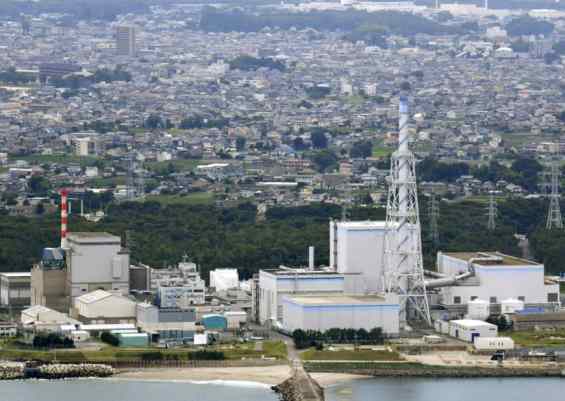
Japan Atomic Power considers launching unit that specializes in scrapping nuclear plants
1 This Month
26 September – International Day for the Total Elimination of Nuclear Weapons





PLEASE OPPOSE HR 8255 AND S.3639 – bills would accelerate satellite deployment, with no environmental review or safeguards – https://ncstd5li.quorum.us/campaign/169331/
To see nuclear-related stories in greater depth and intensity – go to https://nuclearinformation.wordpress.com
-
Archives
- September 2026 (291)
- August 2026 (330)
- July 2026 (355)
- June 2026 (287)
- May 2026 (306)
- April 2026 (356)
- March 2026 (251)
- February 2026 (267)
- January 2026 (308)
- December 2025 (358)
- November 2025 (359)
- October 2025 (375)
-
Categories
- 1
- 1 NUCLEAR ISSUES
- business and costs
- climate change
- culture and arts
- ENERGY
- environment
- health
- history
- indigenous issues
- Legal
- marketing of nuclear
- media
- opposition to nuclear
- PERSONAL STORIES
- politics
- politics international
- Religion and ethics
- safety
- secrets,lies and civil liberties
- spinbuster
- technology
- Uranium
- wastes
- weapons and war
- Women
- 2 WORLD
- ACTION
- AFRICA
- Atrocities
- AUSTRALIA
- Christina's notes
- Christina's themes
- culture and arts
- Events
- Fuk 2022
- Fuk 2023
- Fukushima 2017
- Fukushima 2018
- fukushima 2019
- Fukushima 2020
- Fukushima 2021
- general
- global warming
- Humour (God we need it)
- Nuclear
- RARE EARTHS
- Reference
- resources – print
- Resources -audiovicual
- Weekly Newsletter
- World
- World Nuclear
- YouTube
-
RSS
Entries RSS
Comments RSS

