Pro-nuclear incumbent Shingo Mimura wins fifth term in Aomori gubernatorial election

Japan to toughen screenings of seafood imports from S. Korea

Not a single watt of electricity, but still 1 trillion yen in basic revenue
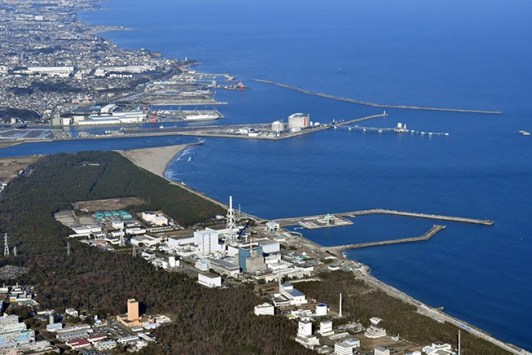
China wants to sell nuclear technology to Argentina – but big problems plague the industry
 Once again, the media here mindlessly regurgitates nuclear lobby propaganda that nuclear power is “zero carbon”. It’s not. Even the reactor’s operation emits a timy amount of carbon 14. But, more importantly, the entire fuel chain, and all its transport, from uranium mining through to the disposal of wastes and of the dead reactor – is highly carbon emitting.
Even if nuclear power were low carbon (which it’s not), it would require thousands of reactors to be built very very quickly, in order to have any effect on global warming.
Meanwhile, funds, and energy are being diverted from genuinely useful measures, in renewable energy, and above all, in energy conservation.
China eyes Argentina in global nuclear roll out, China Dialogue, Lili Pike, Fermín Koop, 04.06.2019 “……. Costs, emissions and safety at stake as Argentina and China look set to seal a nuclear power ……… With China looking to increase its nuclear power exports and countries seeking low-carbon electricity, the project in Argentina could be the beginning of a China-led renaissance. However, concerns over the cost and safety of nuclear power continue to plague the technology…….
The Atucha III project is part of an agreement signed in 2015 by former president Cristina Fernández de Kirchner, which approved two nuclear plants: one using Canadian technology in Argentina’s existing plants, and one using Chinese technology.
Macri scrutinised the deal on taking office, amid doubts over whether nuclear was a sufficiently economical energy source. He eventually approved construction, but Argentina’s economic crisis led one of the plants to be shelved to reduce the size of the loan.
“Argentina is going through an economic crisis and money is tight. Investing in nuclear requires a long-term commitment, but China can offer subsidised capital to its foreign customers,” said Mark Hibbs, senior fellow at Carnegie’s Nuclear Policy Program.
“This gives China an advantage over other nuclear exporting countries.” …….
Backlash
The nuclear deal attracted criticism from a group of former energy secretaries, who claimed in a November press release that it would be cheaper to develop solar and wind projects.
“Any future energy projects have to be part of a national and long-term energy plan, which now doesn’t exist. All new projects should be economically competitive and should be in line with the country’s mitigation commitments,” said Jorge Lapeña, a former energy secretary.
Environmental organisations that prioritise wind and solar proliferation agree.
“We don’t consider nuclear as renewable energy, it has many risks regarding the functioning of the reactors and waste. It’s not suitable for Argentina,” said Andrés Nápoli, head of Fundación Ambiente y Recursos Naturales (FARN).
The Argentina deal is one of the first success stories for Chinese nuclear overseas. Since 2000, Russia has dominated overseas nuclear power, supplying 45% of total capacity. China is the fifth largest exporter, supplying just 9%. So far, the only Chinese reactors constructed overseas are in Pakistan.
Beyond the Argentina and Pakistan deals, it is unclear whether China’s nuclear power reactors will find other markets.
“After the Fukushima accident, global demand for nuclear power hasn’t been strong, and the US, Germany, South Korea and others are phasing it out,” said Zhang Hua, a senior engineer at the State Power Investment Corporation’s Institute of Science and Technology.
Weighing risks
Even as the climate crisis deepens, countries may reject nuclear because of concerns over safety and cost.
Geopolitical tensions could also stymie China’s export ambitions. In the UK, where the utility China General Nuclear Power has gained a foothold through investment in nuclear plants and plans to build a Hualong One, critics have raised concerns over China’s involvement in sensitive infrastructure.
In markets new to nuclear power, researchers also warn that the regulatory environment may not be mature enough to assess and safely manage new Chinese plants.
In Argentina, several civil society groups oppose nuclear. Rio Negro province has already passed a law banning it………..
Japanese parish priests shared stories of suffering from victims of the Fukushima nuclear disaster
The forum, organised by the Nippon Sei Ko Kai (NSKK) – the Anglican Communion in Japan – follows the NSKKs General Synod resolution in 2012 calling for an end to nuclear power plants and activities to help the world go nuclear free.
The disaster in 2011 followed a massive earthquake and tsunami which caused a number of explosions in the town’s coastal nuclear power station and led to widespread radioactive contamination and serious health and environmental effects. The Chair of the forum’s organising committee, Kiyosumi Hasegawa, said: “We have yet to see an end to the damage done to the people and natural environment by the meltdown of TEPCO’s Fukushima Daiichi Nuclear Power Plant. I do think this man-made disaster will haunt countless people for years to come. We still see numerous people who wish to go back to their hometowns but are unable to. We also have people who have given up on ever going home.”
One pastor, Dr Naoya Kawakami, whose church was affected by the tsunami and is the General Secretary of the Sendai Christian Alliance Disaster Relief Network, Touhoku HELP, explained how he had supported sufferers in the aftermath and heard from priests supporting the survivors. He said: “I have been more than 700 times to meet with more than 180 mothers and about 20 fathers, all of whom have seen abnormalities in their children since 2011. . . Thyroid cancer has been found in more than 273 children and many mothers are in deep anxiety.
“The more the situation worsens, the more pastors become aware of their important role. The role is to witness . . . pastors who have stayed in Fukushima with the ‘voiceless survivors’ are showing us the church as the body of Jesus’s resurrection, with wounds and weakness . . . sufferers are usually in voiceless agony and most people never hear them.”
The forum was attended by bishops, clergy and lay representatives from each diocese, together with representatives from the US-based Episcopal Church, USPG, the Episcopal Church of the Philippines, the Diocese of Taiwan, the Anglican Church of Korea, and also ecumenical guests. International experts took part, along with local clergy who shared individual stories from those directly affected by the disaster……….https://www.anglicannews.org/news/2019/06/voices-of-fukushima-power-plant-explosion-victims-strengthens-call-to-ban-nuclear-energy.aspx
North Korea’s nuclear envoys apparently not executed or sent to labour re-education camp, as previously reported
North Korea’s former top nuclear envoy, Kim Yong-chol, accompanied leader Kim Jong Un to an art performance, state news agency KCNA said on Monday, signalling that the former spymaster is alive and remains a force in the power structure.
Sunday’s appearance followed conflicting reports of shake-ups in the team that led engagement with the United States last year, only for nuclear talks to collapse after Kim Jong-un and President Donald Trump failed to strike a pact at a February summit…….
On Friday, South Korean newspaper Chosun Ilbo had said Kim Yong-chol, the leader’s right-hand man and a counterpart of US Secretary of State Mike Pompeo before the failed summit, had been sent to a labour and re-education camp, citing an unidentified North Korean source.
Asked about reports of a “shake-up” of Kim’s negotiating team in a May 5 interview with ABC News, Pompeo said it did appear that his future counterpart would be somebody else, adding: “But we don’t know that for sure.”……..
As Kim Jong-un’s point man for the nuclear talks, Kim Yong-chol was stripped of a key party post in apparent censure for the summit’s collapse, a South Korean lawmaker said in April.
That move may have cleared the way for long-time diplomats sidelined during last year’s process to take centre stage if talks with the United States resumed, analysts said…….
The Chosun Ilbo report, which Reuters was unable to confirm independently, also said North Korea executed its working-level nuclear envoy to the United States, Kim Hyok-chol. …..
Some officials who worked with Kim Yong-chol have been out of the public eye since the summit. But other seasoned diplomats who appeared to have been sidelined, including Vice Foreign Minister Choe Son Hui, were seen returning to the spotlight. https://www.canberratimes.com.au/story/6195440/nkorea-shows-former-top-nuclear-envoy/
Japan’s Olympic torch relay to start in Fukushima – even children are invited to carry it
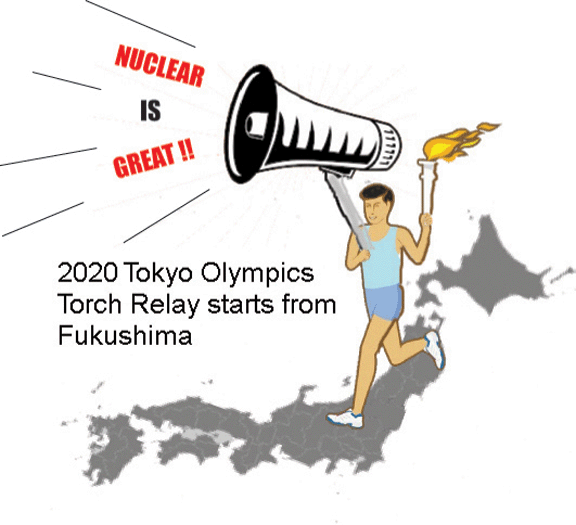
Tokyo 2020 reveals Olympic Torch route will begin in Fukushima, Inside the Games, By Matthew Smith, 1 June 2019
The Tokyo 2020 Organising Committee has revealed the Olympic Torch Relay route, which will take in many of Japan’s most historic and famous sites – and also areas touched by tragedy.
The Flame will be taken all over Japan inside 121 days, culminating in the Olympic Games next summer.
It will begin the final leg of its journey on March 26, 2020 from the J-Village National Training Centre in Fukushima, the training facility of the Japan football team.
The Flame will travel to all 47 prefectures of Japan, with the Organising Committee claiming around 98 per cent of Japan’s population live within one hour’s travel of the proposed route.
The route will take in World Heritage Sites such as Mount Fuji and Itsukushima Shrine, but will also visit areas affected by recent disasters.
Fukushima has been chosen as a start point after the Tohoku region was struck by an earthquake and tsunami in 2011, which also caused a nuclear incident at the Fukushima Daiichi Nuclear Power Plant.
As well as revealing the route, Tokyo 2020 also unveiled the Torchbearer uniforms and how members of the public could apply to take part in the Relay.
The uniform features the Relay emblem on the front and the Olympic symbol on the back.
The most notable design feature is a diagonal red stripe, echoing the sash used in place of batons in Ekiden, Japan’s historic long-distance relays…….
“In Japan, these Games are being referred to as ‘the Recovery Games’ and so the Olympic Flame will start its journey from an area affected by recent natural disasters……
Games organisers say the Olympic Torch Relay will feature around 10,000 Torchbearers including men, women and children of a wide range of nationalities and ages. People from all over the world are encouraged to apply and can do so here……..https://www.insidethegames.biz/articles/1079973/tokyo-2020-reveals-olympic-torch-route-will-begin-in-fukushima
Hiroshima and Nagasaki protest U.S. subcritical nuclear test
The United States conducted a subcritical nuclear test in Nevada on Feb. 13, according to a May 24 announcement by the U.S. Lawrence Livermore National Laboratory.
Yuzaki called the test “extremely regrettable.”
He said, “It destroys the hopes of Hiroshima residents who strongly wish the abolition of nuclear weapons.”
Trump arrived in Japan as state guest on May 25. He will wind up his visit on May 28.
Nagasaki Governor Hodo Nakamura, along with prefectural assembly chairman Mitsuyuki Segawa, also denounced the subcritical nuclear test.
They sent protest letters to U.S. Ambassador William Hagerty on May 26.
South Korean Report Says That North Korea Executed and Purged Top Nuclear Negotiators
|
North Korea Executed and Purged Top Nuclear Negotiators, South Korean Report Says, NYT, By Choe Sang-Hun, May 30, 2019, SEOUL, South Korea — North Korea has executed its special envoy to the United States on spying charges, as its leader, Kim Jong-un, has engineered a sweeping purge of the country’s top nuclear negotiators after the breakdown of his second summit meeting with President Trump, a major South Korean daily reported on Friday.Kim Hyok-chol, the envoy, was executed by firing squad in March at the Mirim airfield in a suburb of Pyongyang, the North Korean capital, Chosun Ilbo, South Korea’s largest daily, reported on Friday, citing an anonymous source. Mr. Kim faced the charge that he was “won over by the American imperialists to betray the supreme leader,” the newspaper said.
Four officials of the North Korean Foreign Ministry were also executed, the South Korean daily reported, without providing any hint of who its source might be or how it obtained the information. South Korean officials could not confirm the Chosun Ilbo report. North Korea has not reported any execution or purge of top officials in recent months. The country remains the world’s most isolated, and outside intelligence agencies have sometimes failed to figure out or have misinterpreted what was going on in the closely guarded inner circles of the country’s leader, Kim Jong-un. …… No American officials have spoken publicly of any intelligence they might have seen that would confirm or refute the rumors. Diplomats in Washington from other countries have also acknowledged hearing the rumors, but have said they have no confirmation. But some signs in recent weeks have led analysts in South Korea to speculate that Mr. Kim may be engineering a reshuffle or a purge of his negotiating team in the wake of the summit meeting, held in February in Hanoi, Vietnam. The meeting was widely seen as a huge embarrassment for Mr. Kim, who is supposedly seen as infallible in his totalitarian state. On Thursday, Rodong Sinmun, the official newspaper of the North’s ruling Workers’ Party, carried a commentary warning against “anti-party, anti-revolutionary acts” of officials who “pretend to work for the supreme leader in his presence but secretly harbor other dreams behind his back.” …… Chosun Ilbo, the South Korean newspaper, reported Friday that Kim Yong-chol, a senior Workers’ Party vice chairman who visited the White House as the main point man for diplomacy with the United States, had also been purged, sentenced to forced labor in a remote northern province. Also sent to a prison camp was Kim Song-hye, a senior female nuclear negotiator who teamed up with Kim Hyok-chol in working-level negotiations ahead of the Kim-Trump summit, the South Korean newspaper said. North Korea even sent a summit translator to a prison camp for committing a translation mistake, it said. During the Hanoi summit meeting, Mr. Kim demanded that Mr. Trump lift the most painful international sanctions against his country in return for partially dismantling his country’s nuclear weapons facilities. The meeting collapsed when Mr. Trump rejected the proposal, insisting on a quick and comprehensive rollback of the North’s entire weapons of mass destruction program before lifting sanctions. ……… Jung Chang-hyun, head of the Korean Peace and Economy Institute, a research group affiliated with South Korea’s Moneytoday news media group, said he had heard that four North Korean Foreign Ministry officials were executed by firing squad around March, not because of the breakdown of the Hanoi summit meeting, but rather for a separate corruption scandal. …….https://www.nytimes.com/2019/05/30/world/asia/north-korea-envoy-execution.html |
|
Nuclear envoys from Japan, U.S., South Korea discuss North Korea during trilateral meeting in Singapore
|
Nuclear envoys from Japan, U.S., South Korea discuss North Korea during trilateral meeting in Singapore, Japan Times, KYODO, MAY 31, 2019, SINGAPORE – Stephen Biegun, U.S. special representative for North Korea, held talks on the Korean Peninsula nuclear issue with his Japanese and South Korean counterparts in Singapore on Friday. Negotiations between Washington and Pyongyang are currently at a standstill.
The trilateral meeting was the first since North Korea fired projectiles that appeared to be short-range ballistic missiles on May 4 and May 9 in an apparent attempt to coax Washington into making concessions in denuclearization negotiations. Biegun met with Kenji Kanasugi, director-general of the Foreign Ministry’s Asian and Oceanian Affairs Bureau, and Lee Do-hoon, South Korea’s special representative for Korean Peninsula peace and security affairs. The outcome of the talks was not immediately available, but they probably exchanged views on how to pave the way for the resumption of denuclearization negotiations with Pyongyang, which have been stalled following the collapse of the second U.S.-North Korea summit in Hanoi in late February…… https://www.japantimes.co.jp/news/2019/05/31/national/politics-diplomacy/nuclear-envoys-japan-u-s-south-korea-discuss-north-korea-trilateral-meeting-singapore/#.XPGycBYzbGg |
|
Tokyo 2020 Olympic Torch Relay set to visit Fukushima nuclear complex
Tokyo 2020 Olympic Torch Relay set to visit Fukushima nuclear complex, PACNEWS, 1 June, 2019,
A staff takes out a banner featuring Tokyo 2020 Olympics emblem from the wall after a news conference in Tokyo, Japan June 30, 2017. REUTERS/Kim Kyung-Hoon
TOKYO, 01 JUNE 2019 (INSIDE THE GAMES) – A town devastated by the nuclear meltdowns in the Fukushima Prefecture in the wake of the 2011 earthquake and tsunami in Japan is set to feature on the route of the Olympic Torch Relay for Tokyo 2020. The relay course will pass through the Fukushima Daiichi Nuclear…. (subscribers only ) https://www.fijitimes.com/tokyo-2020-olympic-torch-relay-set-to-visit-fukushima-nuclear-complex/
World’s second EPR nuclear reactor starts work in China
The first nuclear fuel was loaded into the Taishan 2 reactor in early May in the southern Chinese province of Guangdong……….
EDF has faced serious problems rolling out the technology and has managed to sell just a handful of the reactors as construction problems piled up.
EDF has been building an EPR reactor at Flamanville along the Atlantic coast of northwest France. It was originally set to go online in 2012 but the project has been plagued by technical problems and budget overruns.
Levy acknowledged that the “difficulty” of the Flamanville project had been “underestimated.”
French President Emmanuel Macron has asked EDF to study the feasibility of building more next-generation EPR nuclear reactors in the country, but will wait until 2021 before deciding whether to proceed with construction. https://phys.org/news/2019-05-world-epr-nuclear-reactor-china.html
At June G20 meeting, Japan to push for international conference on nuclear waste disposal (but no talk on stopping making radioactive trash)
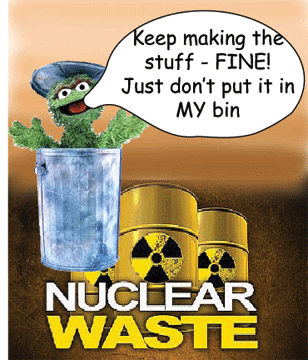 Japan to push for int’l conference on nuclear waste disposal at June G-20 meet https://mainichi.jp/english/articles/20190525/p2a/00m/0in/006000c TOKYO — The Japanese government announced May 24 that it plans to arrange an international meeting to consider how to dispose of highly radioactive nuclear waste.
Tokyo is set to get approval for the plan at the Group of 20 Ministerial Meeting on Energy Transitions and Global Environment for Sustainable Growth scheduled for mid-June in Karuizawa, Nagano Prefecture, and aims to launch the first roundtable this autumn.
High-level nuclear refuse is usually “vitrified” — mixed with melted glass and solidified — before being deposited in an underground storage facility. Japan’s own disposal plans call for holding the waste for 30 to 50 years to cool it before burying it in stable rock formations at least 300 meters below ground. Finland is already building a major underground disposal site, while its neighbor Sweden is conducting a safety evaluation at the location of its own planned facility. However, there is no precedent for actually operating such an installation, and Japan has not yet even begun the survey process to choose a site.
The Japanese government will thus use the June 15-16 G-20 environment and energy summit meeting to urge member nations to cooperate on realistic solutions. Specifically, Japan will press nations with advanced nuclear disposal technology including those in Europe to share their know-how, and also promote international collaboration among research facilities and staff exchanges. The international roundtable will put together a collection of proposals on a basic nuclear waste disposal cooperation strategy and how to explain the issue to the citizens of member nations.
240 shrines within 20 K of Fukushima reactor 1, so a move to build a new shrine
|
Damaged or inaccessible Fukushima shrines consider consolidation as way forward, Japan Times, KYODO, MAY 26, 2019, FUKUSHIMA – A plan has been forged to establish a new shrine in Fukushima Prefecture as a substitute for the many others that were damaged or made inaccessible by the 2011 quake-tsunami disaster and nuclear crisis, local authorities have said.
The local branch of the Association of Shinto Shrines said earlier this month they plan to build the new place of worship on the grounds of the tsunami-hit Hachiman Shrine by the end of March 2021. The shrine is located in the town of Futaba, one of the host communities of the crippled Fukushima No. 1 nuclear plant, but it is in an area where radiation levels are relatively low. At least 30 shrines in the prefecture remain badly damaged after the disasters and 44 are in areas where access is restricted due to high radiation levels. Representatives of each of the 74 affected shrines will decide whether to join the project or not……. All of Futaba’s residents continue to live outside the town following the nuclear crisis, one of the world’s worst ever, that resulted in three reactor core meltdowns. But the Hachiman Shrine, located in a coastal district of Nakano, was selected as a candidate site for the project because it experiences lower radiation levels and is located near the site of an envisioned memorial park Fukushima Prefecture is planning to build…… There are a total of 240 shrines within a 20-kilometer radius of the Fukushima No. 1 plant, which was designated as a no-go zone soon after the nuclear crisis began. Of the 74 struggling shrines, not all are within a radius of 20 kilometers. …… https://www.japantimes.co.jp/news/2019/05/26/national/damaged-inaccessible-fukushima-shrines-consider-consolidation-way-forward/#.XOsKOhYzbGg |
|
Pakistan Tests Nuclear-Capable Ballistic Missile
|
ISLAMABAD — VOICE OF AMERICA, 24 May 19,Pakistan says it has successfully conducted a “training launch” of a ballistic missile capable of carrying both nuclear and conventional warheads up to 1,500 kilometers.
The move came amid Pakistan’s heightened military tensions with neighboring rival India, and it is seen by observers as part of the efforts Islamabad is making to keep pace with New Delhi’s massive investments in military hardware and advancements……. Pakistan has already test-fired the Shaheen-III nuclear-capable missile with a range of up to 1,700 miles, enabling it to strike all corners of India and reach deep into the Middle East, including Israel. Thursday’s missile launch came a day after Pakistani Foreign Minister Shah Mehmood Qureshi spoke briefly with his Indian counterpart, Sushma Swaraj, on the sidelines of a meeting of the Shanghai Cooperation Organization member states in Kyrgyzstan. Following what he said was an informal interaction with Swaraj, Qureshi said he conveyed Pakistan’s readiness to engage in a dialogue with India to resolve all bilateral matters through negotiations. “We want to live like good neighbors and settle our outstanding issues through talks,” he said. Indian Prime Minister Narendra Modi announced in March the country had shot down a satellite in low orbit, making it the fourth country, after the United States, China and Russia, to have used an anti-satellite weapon. Islamabad had criticized the move as a “matter of grave concern” and a militarization of space by New Delhi. In the backdrop of India’s recent anti-satellite tests, Pakistan announced Wednesday it has signed a joint document with Russia on no-first placement of weapons in outer space. An official statement said the two countries have agreed to “make all possible efforts to prevent outer space from becoming an arena for military confrontation and to ensure security in our space activities.” Analysts estimate that both the South Asian rivals possess about 100 nuclear warheads each. Brink of war Pakistan and India have fought three major wars since 1947 and came close to the brink of another war earlier this year…… https://www.voanews.com/a/pakistan-tests-nuclear-capable-ballistic-missile/4929203.html |
|
1 This Month
26 September – International Day for the Total Elimination of Nuclear Weapons





PLEASE OPPOSE HR 8255 AND S.3639 – bills would accelerate satellite deployment, with no environmental review or safeguards – https://ncstd5li.quorum.us/campaign/169331/
To see nuclear-related stories in greater depth and intensity – go to https://nuclearinformation.wordpress.com
-
Archives
- September 2026 (291)
- August 2026 (330)
- July 2026 (355)
- June 2026 (287)
- May 2026 (306)
- April 2026 (356)
- March 2026 (251)
- February 2026 (267)
- January 2026 (308)
- December 2025 (358)
- November 2025 (359)
- October 2025 (375)
-
Categories
- 1
- 1 NUCLEAR ISSUES
- business and costs
- climate change
- culture and arts
- ENERGY
- environment
- health
- history
- indigenous issues
- Legal
- marketing of nuclear
- media
- opposition to nuclear
- PERSONAL STORIES
- politics
- politics international
- Religion and ethics
- safety
- secrets,lies and civil liberties
- spinbuster
- technology
- Uranium
- wastes
- weapons and war
- Women
- 2 WORLD
- ACTION
- AFRICA
- Atrocities
- AUSTRALIA
- Christina's notes
- Christina's themes
- culture and arts
- Events
- Fuk 2022
- Fuk 2023
- Fukushima 2017
- Fukushima 2018
- fukushima 2019
- Fukushima 2020
- Fukushima 2021
- general
- global warming
- Humour (God we need it)
- Nuclear
- RARE EARTHS
- Reference
- resources – print
- Resources -audiovicual
- Weekly Newsletter
- World
- World Nuclear
- YouTube
-
RSS
Entries RSS
Comments RSS

