North Korea issues warning on nuclear negotiations deadline
North Korea warns U.S. will face ‘harsh suffering’ if nuclear deadline passes, Market Watch, Nov 13, 2019, North Korean leader Kim Jong Un imposed an end-of-year deadline to salvage nuclear talks with the United States.
SEOUL, South Korea (AP) — North Korea’s supreme decision-making body lashed out Wednesday at planned U.S.-South Korean military drills and warned that the United States will face a “bigger threat and harsh suffering” if it ignores North Korean leader Kim Jong Un’s end-of-year deadline to salvage nuclear talks.
In a statement carried by state media, an unidentified spokesperson for the North’s State Affairs Commission said the drills would violate agreements between Kim and President Donald Trump on improving bilateral relations and compel North Korea to raise its war readiness.
Kim is chairman of the commission, which he established in 2016 following years of efforts to consolidate his power and centralize governance.
The statement is North Korea’s latest expression of displeasure over the military drills and slow pace of nuclear negotiations with Washington. The talks have stalled over disagreements on disarmament steps and sanctions relief.
North Korea has also ramped up its missile tests in recent months and experts say it is likely to continue weapons displays to pressure Washington as Kim’s deadline nears for the Trump administration to offer mutually acceptable terms for a deal.
The spokesperson said annual U.S.-South Korea military drills are continuing to cause a “vicious cycle” in relations between the U.S. and North Korea…… https://www.marketwatch.com/story/north-korea-warns-us-will-face-harsh-suffering-if-nuclear-deadline-passes-2019-11-13
US- North Korea negotiations may be revived
|
US-North Korea nuclear talks may stir back to life, SMH, 15 Nov 19, Seoul: North Korea is unhappy the United States has proposed a resumption of stalled nuclear negotiations next month through a third party.It comes as the two countries approach an end-of-year deadline set by North Korean leader Kim Jong-un for the Trump administration to offer an acceptable deal to salvage the talks, and as the US President faces an impeachment inquiry at home.
In a statement released by state media, new North Korean negotiator Kim Myong-gil didn’t clearly say whether the North would accept the supposed US offer. Kim Myong-gil said Stephen Biegun, Trump’s special envoy for North Korea, proposed via an unspecified third country to hold another round of talks in December. “I cannot understand why he spreads the so-called idea of DPRK-US relations through the third party, not thinking of candidly making direct contact with me, his dialogue partner, if he has any suggestions or any idea over the DPRK-US dialogue,” Kim Myong-gil said of Biegun. “His behaviour only amplifies doubts about the US.” He said North Korea had no interest in talks if they were aimed at buying time without discussing solutions. He said the North wasn’t willing to make a deal over “matters of secondary importance”, such as possible US offers to formally declare an end to the 1950-53 Korean War, which was halted by a ceasefire, not a peace treaty, or establish a liaison office between the countries. If the negotiated solution of issues is possible, we are ready to meet with the US at any place and any time,” said Kim Myong-gil, who called for Washington to present a fundamental solution for discarding its “hostile policy” towards North Korea. “If the US still seeks a sinister aim of appeasing us in a bid to pass the time limit – the end of this year – with ease as it did during the DPRK-US working-level negotiations in Sweden early in October, we have no willingness to have such negotiations,” he said, using the abbreviation of North Korea’s official name, the Democratic People’s Republic of Korea…… In a separate statement attributed to another senior official, North Korea demanded that the US scrap a planned military drill with South Korea to keep the momentum alive for dialogue. Responding to comments by US Defence Secretary Mark Esper, who said Washington could possibly modify its military activities with Seoul to make room for diplomacy, North Korean official Kim Yong-chol said he would like to consider Esper’s remarks as US intention to “drop out of the joint military drill or completely stop it.” ……..https://www.smh.com.au/world/asia/us-north-korea-nuclear-talks-may-stir-back-to-life-20191115-p53ayr.html |
|
Fukushima: Japan’s government has not solved its many technical, economic, and socio-political problems

|
An update from Fukushima, and the challenges that remain there, https://thebulletin.org/2019/11/an-update-from-fukushima-and-the-challenges-that-remain-there/ By Tatsujiro Suzuki, November 11, 2019 After more than eight years, Japan is still struggling with aftermath of the 2011 Fukushima nuclear disaster. The Japanese government and nuclear industry have not solved the many technical, economic, and socio-political challenges brought on by the accident. More worrying, they continue to put special interests ahead of the public interest, exacerbating the challenges and squandering public trust. The longer these issues remain unsolved, the more difficult it will be to restore this trust.
Technical challenges. The most difficult challenge is, of course, the decommissioning of the Fukushima Daiichi reactors. It would take too long to describe all of the technical challenges of the decommissioning operations, but two recent events are instructive of the overall difficulties. The first is the dismantlement of the joint exhaust stack for units one and two. This stack stands 120 meters tall and is at risk of collapse because of fractures in its pillars. It was also heavily contaminated by the venting of radioactive gases during the accident. So the stack must come down, and the operation to deconstruct it must be done remotely from the stack itself to avoid exposing workers to dangerous radiation. According to the Tokyo Electric Power Company (TEPCO), the operation was supposed to be simple: cut down the top of the tower using special remote-controlled equipment, slicing pieces from the top of the chimney one by one and guiding them down by crane. Originally, the operation was supposed to start in March 2019, but TEPCO deployed an operation tower that was about three meters too short for the task, meaning it needed to rebuild the tower before starting. The cutting operation began on August 1, but the project has already faced numerous additional delays because of technical difficulties that include malfunctions of the crane, the camera on the cutting machine (which is needed to monitor the operation), the saws of the cutting machine, and both the main generator and sub-generators. The operation was supposed to finish by the end of 2019 but will now drag on until at least March 2020. The second technical problem, which is much more serious than the first, is the management of contaminated water. The water is continuously injected into the reactors to cool the fuel debris, and then treated to remove most—though not all—of the radioactive materials. The so-called “treated water” is being stored on site and amounts to about 1.1 million tons, with several hundred tons being added every day. According to TEPCO, the total tank capacity to store treated water will be approximately 1.37 million tons by the end of 2020, but the volume of treated water will exceed storage capacity by 2022. A subcommittee of the Ministry of Economy, Trade, and Industry recommended that the treated water, which still contains tritium, should be released into the sea once the radioactive concentration is below the standard agreed beforehand. The agreed standard between TEPCO and the local fishing industry association is 1,500 becquerels per liter (Bq/l), which is far below the drinking water standard for tritium water of 10,000 Bq/l set by the World Health Organization. An additional condition of release, however, is that all other radioactive substances besides tritium must be removed below a detectable limit or in line with regulatory standards. Unfortunately, in August 2019 news outlets reported that some radioactive materials such as iodine 129 were not completely removed and that their concentration levels were above the regulatory standards. Most recently, the super typhoon Hagibis hit the eastern part of Japan, which includes Fukushima prefecture and the area affected by the nuclear accident. TEPCO reported irregular readings from sensors monitoring water at the Fukushima Daiichi plant but did not confirm whether any radioactive water leaked into the sea. In addition, according to the Tamura city government, some bulk bags filled with soil collected from decontamination operations were swept into a river during the typhoon on October 12. The bags were among 2,667 that have been temporarily stored at a site in the city. The Ministry of the Environment later confirmed that total of 11 bags were swept away and found downstream. Thankfully, there was no evidence that any of the contaminated soil leaked out. But this wasn’t the first time an incident like this has happened. In September 2015, several hundred bags were swept downstream during flooding caused by tropical storm Etau. The recurring close calls reveal the ongoing vulnerabilities of the Fukushima and associated sites. The contaminated soil will need to be stored for at least 30 years, and the risk of possible leakage remains if a larger and stronger typhoon, or a tsunami, hits the region again. Economic challenges. In December 2016, the Ministry of Trade, Economy, and Industry’s committee for reforming TEPCO published its latest estimate for total accident costs, including decommissioning the reactors, compensation, and decontamination of the land. The total cost was estimated at almost 22 trillion yen ($188 billion), which was twice as much as the previous estimate of 11 trillion yen ($96 billion). More recent estimates have put the figure even higher—up to 80 trillion yen ($736 billion) over 40 years. According to the legal scheme established by the ministry, TEPCO and other nuclear utilities will pay about 20 trillion yen of the total accident costs. But now the rest (2 trillion yen) will be footed by Japanese taxpayers. The 2016 report was the first time that the Japanese government admitted that tax money would be spent for the Fukushima accident costs. The government’s lack of transparency in agreeing to this scheme is a source of ongoing concern, not least because the taxpayer burden could balloon if total costs go up, or if the nuclear utilities cannot pay off the debt. The government has given no clear explanation why and how much tax money will be spent to cover the total accident costs. To make matters worse, the power utilities are passing on part of the accident cleanup costs to customers by increasing their electricity rates, but without disclosing the amount. This exceptionally high cost may have influenced the future economic competitiveness of nuclear power. At present, no utility has announced plans to build new reactors or to replace existing reactors. Socio-political challenges. On September 19, 2019, three former top executives of TEPCO were found not guilty of criminal negligence for their roles in the disaster, which resulted in the death of 44 and the injury of 13 others. The Tokyo district court ruled that it was not realistic for the former executives to have prevented the triple core meltdown because they were not able to predict all possible tsunami scenarios. This was the only criminal case so far involving TEPCO officials and, although they were found not guilty, the case revealed new facts regarding the tsunami predictions.A 2008 TEPCO internal study, based on a 2002 report by a government panel, concluded that a wave of up to 15.7 meters could hit the plant after a magnitude 8.3 earthquake, overwhelming the Fukushima site, which sits 10 meters above sea level. The findings were reported to the TEPCO executives, but they did not act to take measures against such high-tsunami scenarios. The court decision was totally unsatisfactory to the public, especially for the victims in Fukushima who were forced to leave their homes. For them, it is now clear that the accident was preventable and that no one at TEPCO will be held accountable for their lack of action to prevent it. Although the criminal case was highly symbolic, it is not the only legal one involving TEPCO and Fukushima. More than 100,000 evacuees have filed about 30 different civil lawsuits seeking compensation from TEPCO and the government. Several district courts have ruled that TEPCO could have predicted and prevented the nuclear crisis and have awarded millions of dollars in damages to the evacuees. TEPCO isn’t the only utility with a public relations problem. On September 27, 2019, the Kansai Electric Power Company held a press conference to disclose that 20 of its employees, including top executives, received inappropriate payments and gifts worth a total of $2.9 million from a senior local government official in Takahama, a town that hosts one of the company’s four nuclear power plants. This has become the biggest scandal since the 2011 Fukushima accident and has exposed the collusive relationship between the utility companies and local public officials as well as the connection between the utilities and local construction companies, which may have benefited from favorable contracts for necessary safety upgrades at the nuclear plants. In October, the chairman, executive vice president, and three executive directors resigned, while the president of the company stepped down from his position as the head of the powerful Federation of Electric Power Companies of Japan. Although Kansai Electric Power Company planned to restart units one and two of its Takahama nuclear plant earlier this year, that plan is now on hold indefinitely. These two recent events show that social and political problems persist even eight years after the Fukushima accident. According to the latest public polling conducted in 2018 by Japan Atomic Energy Relations Organization, a utility-sponsored pro-nuclear organization, only 6.7 percent of the public think nuclear industry organizations are trustworthy or somewhat trustworthy (a decline from 7 percent in 2017), and only 7.9 percent of the public think the government is trustworthy or somewhat trustworthy (a decline from 9.2 percent in 2017). Lessons not learned. The ongoing technical, economic, and socio-political problems demonstrate that the nuclear power industry and the Japanese government haven’t learned their lesson from the Fukushima accident, which is that transparency is the key to public trust. It is true that the quantity of information about cleanup has increased substantially over the years. But transparency means that the utilities and the government need to disclose information that the public needs, even when it is not favorable to them. One solution, which they have so far been unwilling to accept, would be to establish a truly independent third party to oversee their activities. Lack of such an independent oversight organization is one of the main causes for not taking alternative and possibly better, more appropriate measures over the last eight years. |
|
|
As Fukushima food export barriers fall, Japan aims to persuade China
Five markets still prohibit crops and seafood from nuclear disaster zone
$2.7 Billion Renewables Project to revitalise Fukushima
 Fukushima Starts $2.7 Billion Renewables Project https://www.bloomberg.com/news/articles/2019-11-10/fukushima-s-2-7-billion-project-takes-shape-nikkei-says By Isabel Reynolds November 10, 2019,
- 600 megawatt wind and solar project to supply Tokyo area
- Development Bank of Japan, Mizuho to provide part of funding
Work is set to begin on a $2.7 billion renewable energy project in Japan’s Fukushima, the site of one of the world’s worst nuclear disasters, the Nikkei newspaper said Sunday.
The plan is for the wind and solar project to generate and transmit up to 600 megawatts of power, which will be supplied to Tokyo and the surrounding area, according to the paper.
Development Bank of Japan and Mizuho Bank are among the institutions planning to provide the 300 billion yen in funds needed for the project by 2023, the paper said.
The project forms the main pillar of a government plan to help revive the region’s economy by generating energy in mountainous areas and on farmland that became unusable after the 2011 disaster, the Nikkei said.
11 solar power plants and 10 wind power plants for Fukushima prefecture
Twenty-one plants and new power grid to supply Tokyo metropolitan area SHIKO UEDA and SUGURU KURIMOTO, Nikkei staff writersNOVEMBER 10, 2019 TOKYO –– Japan’s northeastern prefecture of Fukushima, devastated during the 2011 earthquake and nuclear disaster, is looking to transform itself into a renewable energy hub, Nikkei has learned.
A plan is under way to develop 11 solar power plants and 10 wind power plants in the prefecture, on farmlands that cannot be cultivated anymore and mountainous areas from where population outflows continue.
The total cost is expected to be in the ballpark of 300 billion yen, or $2.75 billion, until the fiscal year ending in March 2024.
The government-owned Development Bank of Japan and private lender Mizuho Bank are among a group of financiers that have prepared a line of credit to support part of the construction cost.
The power generation available is estimated to be about 600 megawatts, or equivalent to two-thirds of a nuclear power plant. The produced electricity will be sent to the Tokyo metropolitan area.
The plan also envisions the construction of an 80-km wide grid within Fukushima to connect the generated power with the power transmission network of Tokyo Electric Power Co. That part of the project is expected to cost 29 billion yen.
Decommissioning Fukushima nuclear station – cost-cutting culture is causing mistakes

 Nuclear regulator says cost-cutting culture creating mistakes, delays at Fukushima plant, https://mainichi.jp/english/articles/20191107/p2a/00m/0na/025000c
November 8, 2019 (Mainichi Japan) TOKYO –– Decommissioning efforts following the disaster at the Fukushima Daiichi Nuclear Power Station have been hit by delays and a series of mistakes contravening safety rules relating to the operation of nuclear facilities.
In response to the issues, the Nuclear Regulation Authority (NRA) is carrying out a survey into whether operator Tokyo Electric Power Co. (TEPCO) has sufficient staffing numbers working on the project, and is seeking to have TEPCO’s board improve its preparations.
According to the secretariat of the NRA, this summer there were errors in the wiring of electrical cables to the No. 5 and 6 reactors, which caused problems when smoke started to emerge from equipment attached to the reactors.
Furthermore, drinking facilities are being continually installed in controlled zones with high levels of radioactivity where they are forbidden from being built, and it has emerged that workers have drunk water from those areas. In October, the NRA identified both incidents as contravening safety regulations.
Elsewhere, the continuation of work to remove spent nuclear fuel from storage pools at the No. 3 reactor has been delayed. NRA Chairman Toyoshi Fuketa said, “It appears the absolute number of such workers (who manage the work at the power station) is insufficient. If small mistakes continue, it creates the danger of leading to big mistakes.”
Ryusuke Kobayashi, head of the Fukushima Daiichi NRA Regional Office, attended a regular meeting of the NRA on Nov. 6. Regarding the situation at the power station, he said, “There’s a strong focus on cost-cutting at the site. It has an atmosphere which makes it difficult to speak out and say there are too few people working there.” At a press conference after the meeting, chairman Fuketa stressed that it was essential for more staff to be secured.
In response to the NRA, a representative at TEPCO said, “It’s believed an easing of vigilance at the site has been one reason (for the mistakes). The number of human errors has stayed at between 100 and 200 each year for the last five years. We want to proceed with a plan to resolve this considering the specific characteristics of the working environment at the site.”
(Japanese original by Yuka Saito and Suzuko Araki, Science & Environment News Department)
In Tamil Nadu, Rooftop Solar Has the Potential to Outdo Nuclear Power
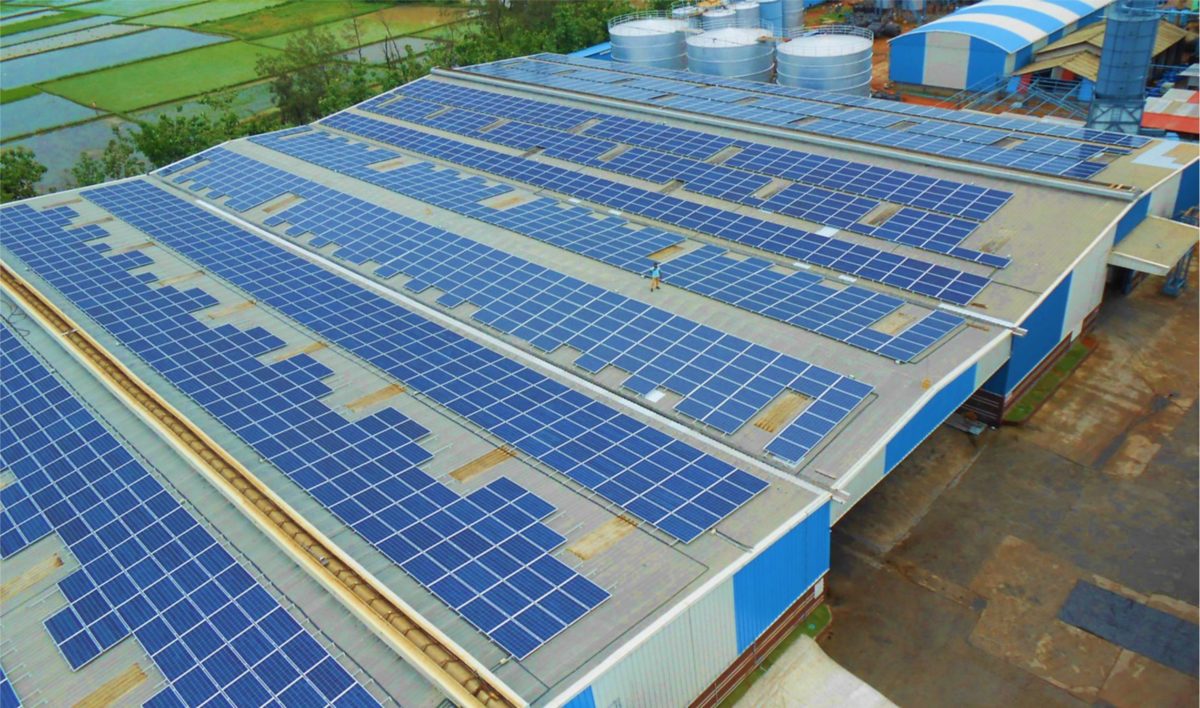
In Tamil Nadu, Rooftop Solar Has the Potential to Outdo Nuclear Power https://thewire.in/energy/tamil-nadu-rooftop-solar-nuclear-power Poonkuzhali 8 Nov 19,
Tamil Nadu has said its vision is to have an installed solar powergeneration capacity of 9,000 MW by 2023.
In September, India and Russia announced joint plans to set up 20 nuclear power units in the former over the next two decades.
India’s nuclear establishment believes that the use of nuclear energy can only be good for the country’s industrial development and prosperity. However, nuclear isn’t the only mode of power generation that can make such a claim.
Tamil Nadu is the only state in the country with two nuclear power plants: at Kalpakkam and Kudankulam.
The Kalpakkam complex, commissioned by 1986, has four operating units. Two of them are of 235 MW capacity and two of 600 MW capacity. The complex’s gross generation in 2017-2018 was 1,194 MU (at 64% availability; in 2015-2016, with an availability of 97%, it generated 1,861 MU).
The Kudankulam power plant is the single largest nuclear power station in India. It has two operational units of 932 MW (net) each. In 2018-2019, with an availability of 33%, it generated 2,797 MU.
Tamil Nadu isn’t the sole beneficiary of the power generated by these plants. In 2016, it required 100,319 MU. It received 99,691 MU from various sources, including state, central and private, and renewable and non-renewable. Of this, nuclear power plants supplied 4,999 MU.
As it turns out, it’s possible to generate this 4,999 MU from rooftop solar panels alone.
On March 31, 2017, Tamil Nadu had the highest installed capacity of grid-connected renewable power (10,562.39 MW), followed by a distant Maharashtra (7,647.60 MW), thanks to wind energy.
According to a 2014 book by S. Gandhi, former president of the Electrical Engineers’ Association of the Tamil Nadu Electricity Board, a 1-MW panel in Tamil Nadu produces 1.5 MU per year on average. This conversion accounts for various factors, including that power production happens only during the day and that production efficiency varies according to the season. Extrapolating from the book, to produce 4,999 MU, Tamil Nadu needs an installed capacity of 3,333 MW.
A 1-kW solar panel over 1,000 roofs can produce 1 MW, so to produce 3,333 MW, we need to install 1-kW solar panels over 3,333,000 roofs. A 1-kW rooftop panel requires about 100 sq. ft. According to state data, there are 2,392,457 buildings in town panchayats alone. Including the total area of all rooftops in Tamil Nadu’s urban centres, and assuming all roofs will generate 10 W/sq. ft., solar power should be easily able to provide the requisite 3,333 MW.
The Government of India and various state governments have consistently presented nuclear power as a safe, sustainable and preferable alternative to coal power. However, while nuclear power plants have very low carbon emissions and have historically caused the fewest fatalities, these advantages are substantially offset by the cost of disposing radioactive waste and an opaque administrative setup in India that has often disprivileged marginalised communities living around power generation complexes.
On the other hand, the biggest downsides of solar power generation are that solar panels lower the productivity of the land they’re setup on, and the batteries used to store power contain toxic materials whose extraction and processing has harmed people in other, often poorer, countries.
But both issues are quickly resolved in the current example. The question of land productivity doesn’t apply since the panels are to be installed on rooftops. Second, in its solar energy policy published in February 2019, the Tamil Nadu government declared it now has the technology to support grid-connected solar panels on a large scale. This means even domestic solar panels can be connected to the grid, obviating the need for power storage batteries.
According to its policy, the state government says its vision is to have an installed solar power generation capacity of 9,000 MW by 2023.
As of today, the Tamil Nadu government requires every new building erected in the state to be equipped with a rainwater harvesting system. If lawmakers issue a similar mandate vis-à-vis solar panels, at least for apartment complexes and non-residential buildings, Tamil Nadu could soon be self-sufficient about its energy needs, if not produce a surplus it can sell to its neighbours.
Poonkuzhali is a writer and activist based in Chennai.
Fukushima: Radioactive waste bags still missing after Typhoon Hagibis

In many municipalities in the prefecture, a lot of radioactive waste, including soil, was generated through decontamination work after the 2011 nuclear disaster at Tokyo Electric Power Company Holdings Inc.’s Fukushima No. 1 power plant. Numerous bags containing the waste are kept outdoors in temporary storage areas around the prefecture.
Heavy rains from the 19th typhoon of the year flooded storage space in many locations, sweeping away 44 bags in Kawauchi, 30 in Tamura, 15 in Nihonmatsu and one in Iitate.
By the end of October, 50 bags had been recovered. The contents had leaked from half of them. “We had far heavier rains than we expected. We did not cover bags of radioactive waste,” said an official of the Tamura Municipal Government.
The ministry and other organizations have mobilized 20 to 30 workers to look for the missing bags, wading into rivers when necessary and using drones to search areas that cannot physically be entered.
An aerial survey was conducted by helicopter on Oct. 23. On Friday, 29 workers searched the Furumichi River and areas along it in Tamura. Four bags were collected, but their contents had been lost.
“There has been no confirmation of any environmental impact due to the loss of the bags,” a ministry official said.
“We’ll continue searching in cooperation with local municipalities.”
Japan still has land space to store radioactive waste tanks, but tries to justify dumping into ocean
 Japan accused of trying to justify nuclear dump http://www.taipeitimes.com/News/taiwan/archives/2019/11/07/2003725403COVER? Tokyo Electric Power Co has said new storage tanks could be built to hold radioactive water at its stricken plant, a Greenpeace Germany member said Japan accused of trying to justify nuclear dump http://www.taipeitimes.com/News/taiwan/archives/2019/11/07/2003725403COVER? Tokyo Electric Power Co has said new storage tanks could be built to hold radioactive water at its stricken plant, a Greenpeace Germany member said
By Lin Chia-nan / Staff reporter The Japanese government’s claim that it will run out of room to store radiation-contaminated water at the Fukushima Dai-ichi nuclear power plant in two years is not true, and is simply an attempt to justify discharging polluted water into the Pacific Ocean, a Greenpeace International member said yesterday.
Shaun Burnie, senior nuclear specialist at Greenpeace Germany who has conducted long-term surveys in Japan, was invited by Greenpeace Taiwan to talk about the issue at a news conference in Taipei. An earthquake and a tsunami in March 2011 caused the plant’s reactor fuel rods to melt and large amounts of radioactive-contaminated water was released into the Pacific. As of Oct. 22, more than 1 million cubic meters of processed polluted water was stored at the treated water storage tank, while the current storage capacity is nearly 1.1 million cubic meters, Burnie said. Tokyo Electric Power Co in August said the tank would reach full capacity by the summer of 2022 and that there is no room for expansion at the site, he said. However, the company in a meeting in September said that land is available to build additional tanks, Burnie added. The claim of insufficient capacity is just an excuse to cover the Japanese government’s political agenda, Burnie said, adding that Tokyo has the option of storing contaminated water for a longer period. If Japan approves the discharge, radioactive tritium and other radionuclides in the water will likely enter the East China Sea, and eventually the waters surrounding Taiwan through the subtropical gyre, he said. However, even if the Japanese government decides to discharge polluted water into the ocean, it would not be able to carry out the plan immediately, as it might take years to build outflow pipelines, he said. In addition to protests from local fishers, especially those living along Japan’s Tohoku coast, the Japanese government would face strong pressure from the international community for discharging polluted water, he said, adding that it is a long-term problem that should be approached more cautiously. The Fukushima Dai-ichi disaster has led to catastrophic results, and the Taiwanese government should be lauded for making the “brave and correct” decision to phase out nuclear power plants, Burnie said. Taiwan should call on the Japanese government, via diplomatic or non-governmental channels, to shoulder its responsibility as a Pacific nation and not discharge radiation-contaminated water into the sea, National Nuclear Phase-out Action Platform spokesperson Tsuei Su-hsin (崔愫欣) said. As Taiwan generates less than 10 percent of its electricity from nuclear power — much lower than the ratio in Japan before the 2011 disaster, it should persist in its goal of phasing out all nuclear power plants by 2025, Tsuei said. |
|
TEPCO needs to make its case for bailing out aging nuclear plant

Heat deaths in India will increase greatly, if greenhouse emissions increase
 If Emissions Continue, India Could See 1 Million Heat Deaths a Year, https://www.scientificamerican.com/article/if-emissions-continue-india-could-see-1-million-heat-deaths-a-year/?utm_medium=social&utm_content=organic&utm_source=twitter 3 Nov 19,
Premature deaths from extreme heat next century could top those from infectious diseases today, A new study predicts there’ll be more than 1 million deaths a year from extreme heat in India by the next century if greenhouse gas emissions continue at their current level.Research by the Climate Impact Lab with the University of Chicago’s Tata Centre for Development projects India’s average annual temperature will rise 4 degrees by 2100.
When broken down by location, 16 of India’s 36 states and union territories will become hotter than Punjab, which is currently the hottest state, with an average annual summer temperature around 90 degrees Fahrenheit (32 degrees Celsius).
As temperatures rise, the number of extremely hot days is expected to rise, as well.
The state of Odisha will see the highest increase, with an average of 48.05 hot days by 2100 compared with 1.62 in 2010. Delhi is projected to experience 22 times as many days with extreme heat, and Haryana is estimated to see 20 times as many days.
The study estimates the combination of hotter summers and more high-heat days will contribute to more than 1.5 million deaths each year by 2100.
The projected death rate is as high as the current death rate from all infectious diseases in India today. Six states—Uttar Pradesh, Bihar, Rajasthan, Andhra Pradesh, Madhya Pradesh and Maharashtra—are expected to contribute to more than half of the excess death rate from rising temperatures.
“Having already seen 2,500 deaths due to a heat wave in 2015, the future is projected to be even more worrying if India—and the world—does not change course to mitigate the harmful effects of climate change,” said Amir Jina of the Climate Impact Lab.
If the world commits to the Paris Agreement and regularly updates its commitments, the study estimates India’s excess death rate from high heat will drop more than 80%.
The study comes as India’s energy use is expected to more than double by 2040, with fossil fuels serving as the main source.
The country’s 5% increase in coal demand last year contributed to a nearly equal percentage in its carbon emissions. India is currently the world’s third-largest carbon emitter (Climatewire, Aug. 14).
Michael Greenstone, faculty director at the Tata Centre and a co-founder of the Climate Impact Lab, said the continued reliance on fossil fuels will harm India in the years to come. The need to balance cheap and reliable energy sources while managing climate risks, he said, is “perhaps the defining challenge of our generation.”
United Nations adopts Japan’s nuclear disarmament resolution
|
They call for increased transparency of policies of nuclear-armed powers to build mutual trust between countries. The resolution urges the promotion of educational programs such as interaction with atomic bomb survivors. It also proposes a framework to facilitate dialogue between nuclear-armed nations and others. Members of the committee approved the resolution by a majority, with 148 of 178 countries voting in favor. Four countries objected and 26 abstained. The United States abstained, saying the plan does not reflect the world’s changing security environment. Brazil also abstained on the grounds that the resolution should call for stronger commitments from nuclear-armed nations to disarm. Brazil supports the UN Treaty on the Prohibition of Nuclear Weapons, which Japan has not joined. Members of the committee approved the resolution by a majority, with 148 of 178 countries voting in favor. Four countries objected and 26 abstained. The United States abstained, saying the plan does not reflect the world’s changing security environment. Brazil also abstained on the grounds that the resolution should call for stronger commitments from nuclear-armed nations to disarm. Brazil supports the UN Treaty on the Prohibition of Nuclear Weapons, which Japan has not joined. |
|

Radiation map of Fukushima now launched in English, in lead-up to Olympic Games
 Citizens’ group in Fukushima puts out radiation map in English, Asahi Shimbun, By SHINICHI SEKIN E/ Staff Writer, November 3, 2019 FUKUSHIMA—A citizens’ group here has released an English radiation-level map for eastern Japan created with input from 4,000 volunteers in response to requests from abroad ahead of the Tokyo Olympics.
“We want people outside Japan to understand the reality of radioactive contamination following the nuclear accident,” said Nahoko Nakamura, a representative of Minna-No Data Site (Everyone’s Data Site), which published the map……
Titled “Citizens’ Radiation Data Map of Japan,” the 16-page booklet summarizes the content of the original Japanese map, released in November last year. It also shows projected declines in radiation levels by 2041.
The Japanese version was based on results of land contamination surveys conducted over three years at the request of Everyone’s Data Site.
About 4,000 volunteers took soil samples at 3,400 locations in 17 prefectures in eastern Japan, including Fukushima and Tokyo, and measured radiation levels. The map was compiled with advice from experts…… http://www.asahi.com/ajw/articles/AJ201911030001.html
A Govt panel to decide on dumping Fukushima waste water
Panel deciding whether to dump radioactive water from Fukushima into the ocean https://www.seafoodsource.com/news/environment-sustainability/panel-deciding-whether-to-dump-radioactive-water-from-fukushima-into-the-ocean By Chris Loew October 30, 2019
The Japanese government may allow Tokyo Electric Power Company (TEPCO) to dump more than 250 million gallons of contaminated water accumulated in tanks around its Fukushima nuclear power plants into the ocean.
Environment Minister Yoshiaki Harada commented in September that he supports the plan, as it may be the only solution for the wastewater. An expert panel is now studying the options, and its recommendation is likely to become policy.
The contaminated water was used to cool the superheated fuel rods in the Fukushima Daiishi facility prior to and during the nuclear meltdown that occurred as a result of the Tōhoku earthquake and tsunami in March 2011. The water has already been treated by multiple facilities, including a multi-nuclide removal facility (an advanced liquid processing system, or “ALPS”), which removed most of the radioactive materials, including cesium and strontium, but not tritium. Tritium is difficult to separate from water, because it closely resembles hydrogen, which is a natural component of water.
Many methods, both practically tried and theoretical, do exist for separation and removal of tritium, and they were assessed in a report presented by the International Research Institute for Nuclear Decommissioning in 2013. But all of them had the drawback of requiring a large amount of energy and equipment. Also, performance is poor for the low concentrations in the water at Fukushima Daiichi.
Last year, a team of researchers from Kindai University and private companies in western Japan developed an aluminum filter with holes of five nanometers or less in diameter. Steam of water containing tritium can be stopped, while that of water can pass. However, another issue is that 400 cubic meters of groundwater flowing into the basements of the buildings every day needs to be pumped and treated, necessitating treatment on a very large scale. This may not be justified when considering the actual danger of release to the ocean, according to the report.
Before the accident, tritium in cooling water was thinned with circulated sea water so that the allowable concentration might not be exceeded, and the diluted tritium was routinely released into the sea. Releasing the water at a rate that would allow it to be well diluted may be the best option, the report said.
While tritium has a radioactive half-life of 12.3 years, its biological half-life in the human body is only 10 days, and in fish it is less than two days. This is because tritium easily bonds to water, replacing the hydrogen atom. So as we drink and expel water, the tritium is carried away rather than accumulating in tissues. While some radioactive materials become concentrated as they move up the food chain, tritium is diluted.
The main danger of the policy is not actual harm, but rather public perceptions about the safety of seafood from Fukushima and its neighboring prefectures. Countries that have been gradually relaxing restrictions on imports of Japanese seafood may be forced by public fears to take a wait-and-see approach before further easing—a setback to local seafood firms, which have waited for years to return to their pre-disaster export figures.
1 This Month
26 September – International Day for the Total Elimination of Nuclear Weapons





PLEASE OPPOSE HR 8255 AND S.3639 – bills would accelerate satellite deployment, with no environmental review or safeguards – https://ncstd5li.quorum.us/campaign/169331/
To see nuclear-related stories in greater depth and intensity – go to https://nuclearinformation.wordpress.com
-
Archives
- September 2026 (290)
- August 2026 (330)
- July 2026 (355)
- June 2026 (287)
- May 2026 (306)
- April 2026 (356)
- March 2026 (251)
- February 2026 (267)
- January 2026 (308)
- December 2025 (358)
- November 2025 (359)
- October 2025 (375)
-
Categories
- 1
- 1 NUCLEAR ISSUES
- business and costs
- climate change
- culture and arts
- ENERGY
- environment
- health
- history
- indigenous issues
- Legal
- marketing of nuclear
- media
- opposition to nuclear
- PERSONAL STORIES
- politics
- politics international
- Religion and ethics
- safety
- secrets,lies and civil liberties
- spinbuster
- technology
- Uranium
- wastes
- weapons and war
- Women
- 2 WORLD
- ACTION
- AFRICA
- Atrocities
- AUSTRALIA
- Christina's notes
- Christina's themes
- culture and arts
- Events
- Fuk 2022
- Fuk 2023
- Fukushima 2017
- Fukushima 2018
- fukushima 2019
- Fukushima 2020
- Fukushima 2021
- general
- global warming
- Humour (God we need it)
- Nuclear
- RARE EARTHS
- Reference
- resources – print
- Resources -audiovicual
- Weekly Newsletter
- World
- World Nuclear
- YouTube
-
RSS
Entries RSS
Comments RSS

