Fukushima Unit 3 Spent Fuel Damage Identified
Fukushima Unit 3 Spent Fuel Damage Identified, Simply Info [excellent photos], December 16, 2019
TEPCO has identified twelve fuel assemblies with damaged lifting handles. Further damage can not be identified at this point as the assemblies are still in the fuel racks in the spent fuel pool. The location of the newer 6 damaged assemblies are from the location where the fuel handling crane and a concrete hatch fell into the pool…. http://www.simplyinfo.org/?p=17842
USA rejects North Korea’s ‘hostile’ deadline over nuclear talks
|
Top US diplomat rejects North Korea’s ‘hostile’ deadline over nuclear talks and says Washington will not bow to Pyongyang’s ominous threat of a ‘Christmas Gift’ provocation,
By ROSS IBBETSON FOR MAILONLINE and AFP 17 Dec 19, A senior US diplomat has today slammed North Korea for making ‘hostile demands’ over nuclear talks and warned Kim Jong-un against his planned ‘Christmas Gift’ provocation. US special representative Stephen Biegun told reporters in Seoul that Washington would not bow to Pyongyang’s increasingly strident demands for concessions by 2020. ‘Let me be absolutely clear: The United States does not have a deadline. We are fully aware of the strong potential for North Korea to conduct a major provocation in the days ahead,’ Biegun said. ‘To say the least, such an action will be most unhelpful in achieving lasting peace on the Korean Peninsula.’….. Pyongyang has said that if Washington fails to make it an acceptable offer, it will adopt a so far unspecified ‘new way’. It has carried out a series of static tests at its Sohae rocket facility this month, after a number of weapons launches in recent weeks, some of them described as ballistic missiles by Japan and others – which Pyongyang is banned from testing under UN sanctions……Pyongyang has said that if Washington fails to make it an acceptable offer, it will adopt a so far unspecified ‘new way’. It has carried out a series of static tests at its Sohae rocket facility this month, after a number of weapons launches in recent weeks, some of them described as ballistic missiles by Japan and others – which Pyongyang is banned from testing under UN sanctions…https://www.dailymail.co.uk/news/article-7797205/Top-diplomat-rejects-North-Koreas-deadline-says-Washington-not-bow-threats.html |
|
|
Tohoku reactor restart: What is the state of Japan’s nuclear policy?
Their contempt for the Japanese’ public’s will and the health and well being of people, animals, plants, oceans, rivers, lakes, genetic pools and the economies of the northern hemisphere is appalling. Abe, LDP, nuke industry, anyone that’s pro-nuke.’
 Members of the government’s expert panel inspect Tohoku Electric Power Co.’s Onagawa nuclear power plant in Miyagi Prefecture in April.
Dec 9, 2019
OSAKA – In late November, the Nuclear Regulation Authority (NRA) gave the green light for restarting the No. 2 reactor at Tohoku Electric Power Co.’s Onagawa plant in Miyagi Prefecture, which had been damaged in the March 11, 2011, earthquake and tsunami. The announcement once again put the spotlight on the country’s nuclear power policy, not only in Tohoku but nationwide.
Why did the Onagawa restart attract so much attention?
While the Onagawa plant is actually the second damaged on 3/11, after the Tokai No. 2 power station in Ibaraki Prefecture, to pass the NRA’s new safety regulations for nuclear power plants prepared after the disaster, it happens to be the nuclear plant closest to the epicenter of the magnitude 9 quake that struck off the Tohoku coast that day.
The Onagawa facility is located near Ishinomaki, which received extensive damage and much domestic and international media attention after the tsunami claimed the lives of 74 Okawa Elementary School students.
In addition, the Onagawa reactor, which was flooded on 3/11, is the first boiling water reactor to have its restart application approved by the NRA.
There are three kinds of nuclear reactors in operation in Japan: 14 pressured water reactors (PWRs), four advanced boiling water reactors (ABWRs) and 13 boiling water reactors (BWRs), which are the same kind as those at the Fukushima No. 1 plant destroyed by the 3/11 quake and tsunami. The PWRs are considered more technologically stable than the other kinds, and have a better ability to contain radiation.
Now that the NRA has greenlighted Onagawa’s restart, does that mean it will happen anytime soon?
That depends on a number of factors. The Onagawa plant is not ready to be fired up tomorrow. It must first complete the installation of various anti-disaster measures, including a 29-meter-high, 800-meter-long seawall along the Pacific coast to guard against tsunami as high as 23.1 meters. That will not be completed until sometime in fiscal 2020, which begins April 1.
Furthermore, various local governments, including Ishinomaki and Miyagi Prefecture, will have to give their consent to the restart. That could involve long, drawn out negotiations between the utility and local residents and politicians. It’s also probable that lawyers and local citizens opposed to a restart will seek a court injunction to halt the move based on safety concerns. If a court approves an injunction, that will create further delays.
How many other nuclear power plants are there and what are their statuses?
As of this month, there are nine reactors officially in operation. Four belong to Kansai Electric Power Co. (Kepco), which provides electricity mainly to Kyoto, Osaka, Nara, Hyogo, Shiga and Wakayama prefectures. Another four belong to Kyushu Electric Power Co. One of Shikoku Electric Power Co.’s reactors at its Ikata plant is also operating.
Another six reactors have made improvements to meet the new, post-3/11 quake safety standards and have received NRA approval to restart. These include two reactors at Tokyo Electric Power Company Holdings’ Kashiwazaki-Kariwa plant in Niigata Prefecture, two of the four reactors at Kepco’s Takahama plant (the other two are in operation) in Fukui Prefecture, one reactor at Kepco’s Mihama plant (the other two have been decommissioned), also in Fukui Prefecture, and one reactor at Japan Atomic Power Co.’s Tokai No. 2 plant in Ibaraki Prefecture. The other reactor at the facility has been decommissioned.
Nearly a dozen reactors are now in the process of undergoing safety reviews and will have to upgrade their facilities to meet tougher NRA standards for disaster preparedness, and then, if they receive approval to restart, will go through the process of obtaining local consent.
These include reactors in Hokkaido, Aomori, Shizuoka, Ishikawa, Fukui and Shimane prefectures.
Finally, another nine reactors have not applied to be restarted under the new regulations, and 24 reactors, including all six Fukushima No. 1 plant reactors and all four Fukushima No. 2 plant reactors, as well as four of Kepco’s 11 reactors in Fukui Prefecture, are being decommissioned.
How much electricity does nuclear power provide?
Figures vary, sometimes greatly, depending on how many plants in operation were shut down for inspection during a particular year. The latest figures from the Ministry of Economy, Trade and Industry’s Agency for Natural Resources show that in 2017, nuclear power provided 3.1 percent of Japan’s electricity. The Institute for Sustainable Energy Policies, a nonprofit research institute, estimates that based on its own surveys of utilities, nuclear provided 4.7 percent of Japan’s electricity last year.
What about the future for nuclear power in Japan?
The government’s long-term energy policy for 2030 calls for nuclear power to make up around 20 to 22 percent of the nation’s energy mix, and it is pushing hard for the restart of as many idled reactors as possible. By then, the plan calls for renewable energy to account for 22 to 24 percent of the mix, LNG to make up 27 percent, coal 26 percent and oil 3 percent.
But the obstacles to restarting, or continuing to operate, nuclear plants in the coming years are vast. In addition to local opposition that could delay restarts for months or years, costing the utilities money, they include such issues as the economics of running reactors past 40 years, for which the utilities must first spend money to upgrade their facilities in order to meet new NRA standards regarding reactors older than four decades.
While Kepco has secured permission to operate three reactors already over 40 years old for another two decades at the most, other utilities with reactors currently more than 30 years old — such as Tepco’s Kashiwazaki-Kariwa No. 1 reactor (34 years old) — will have to decide within a few years whether it’s worth the investment of money and time to apply for a two-decade extension or whether it’s cheaper to decommission.
A second problem has to do with spent nuclear fuel generated by the restarted reactors.
Tokyo is making efforts to find local governments able and willing to have a midterm spent fuel storage facility built in their backyard, and has agreed to offer financial incentives for anyone willing to accept a facility. No luck so far. Meanwhile, in Fukui Prefecture, which has the largest concentration of reactors (13 commercial reactors plus the Monju experimental fast-breeder reactor) in the nation, Gov. Tatsuji Sugimoto is insisting that such storage facilities be built outside the prefecture. His position could lead to other prefectures hosting nuclear power plants to take a firmer stance with utilities and the central government over what to do with spent nuclear fuel when they come seeking local consent for their own restart plans.
Analysis of decontamination of irradiated soil of Fukushima area
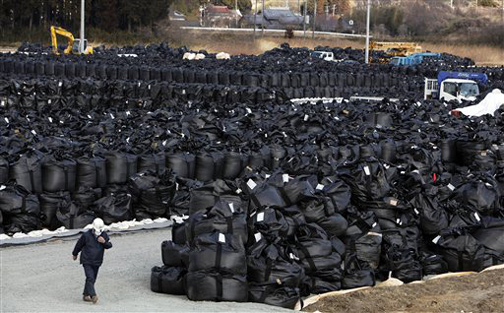
Fukushima: Lessons learned from an extraordinary case of soil decontamination https://www.sciencedaily.com/releases/2019/12/191212081926.htm
- Source:
- European Geosciences Union
- Summary:
- Following the accident at the Fukushima nuclear power plant in March 2011, the Japanese authorities decided to carry out major decontamination works in the affected area, which covers more than 9,000 km2. On Dec. 12, 2019, with most of this work having been completed, researchers provided an overview of the decontamination strategies used and their effectiveness.
- On December 12, 2019, with most of this work having been completed, the scientific journal SOIL of the European Geosciences Union (EGU) is publishing a synthesis of approximately sixty scientific publications that together provide an overview of the decontamination strategies used and their effectiveness, with a focus on radiocesium. This work is the result of an international collaboration led by Olivier Evrard, researcher at the Laboratoire des Sciences du Climat et de l’Environnement [Laboratory of Climate and Environmental Sciences] (LSCE — CEA/CNRS/UVSQ, Université Paris Saclay).
Soil decontamination, which began in 2013 following the accident at the Fukushima Dai-ichi nuclear power plant, has now been nearly completed in the priority areas identified1. Indeed, areas that are difficult to access have not yet been decontaminated, such as the municipalities located in the immediate vicinity of the nuclear power plant. Olivier Evrard, a researcher at the Laboratory of Climate and Environmental Sciences and coordinator of the study (CEA/CNRS/UVSQ), in collaboration with Patrick Laceby of Alberta Environment and Parks (Canada) and Atsushi Nakao of Kyoto Prefecture University (Japan), compiled the results of approximately sixty scientific studies published on the topic.
This synthesis focuses mainly on the fate of radioactive cesium in the environment because this radioisotope was emitted in large quantities during the accident, contaminating an area of more than 9,000 km2. In addition, since one of the cesium isotopes (137Cs) has a half-life of 30 years, it constitutes the highest risk to the local population in the medium and long term, as it can be estimated that in the absence of decontamination it will remain in the environment for around three centuries.
“The feedback on decontamination processes following the Fukushima nuclear accident is unprecedented,” according to Olivier Evrard, “because it is the first time that such a major clean-up effort has been made following a nuclear accident. The Fukushima accident gives us valuable insights into the effectiveness of decontamination techniques, particularly for removing cesium from the environment.”
- This analysis provides new scientific lessons on decontamination strategies and techniques implemented in the municipalities affected by the radioactive fallout from the Fukushima accident. This synthesis indicates that removing the surface layer of the soil to a thickness of 5 cm, the main method used by the Japanese authorities to clean up cultivated land, has reduced cesium concentrations by about 80% in treated areas. Nevertheless, the removal of the uppermost part of the topsoil, which has proved effective in treating cultivated land, has cost the Japanese state about €24 billion. This technique generates a significant amount of waste, which is difficult to treat, to transport and to store for several decades in the vicinity of the power plant, a step that is necessary before it is shipped to final disposal sites located outside Fukushima prefecture by 2050. By early 2019, Fukushima’s decontamination efforts had generated about 20 million cubic metres of waste.
Decontamination activities have mainly targeted agricultural landscapes and residential areas. The review points out that the forests have not been cleaned up — because of the difficulty and very high costs that these operations2 would represent — as they cover 75% of the surface area located within the radioactive fallout zone. These forests constitute a potential long-term reservoir of radiocesium, which can be redistributed across landscapes as a result of soil erosion, landslides and floods, particularly during typhoons that can affect the region between July and October. Atsushi Nakao, co-author of the publication, stresses the importance of continuing to monitor the transfer of radioactive contamination at the scale of coastal watersheds that drain the most contaminated part of the radioactive fallout zone. This monitoring will help scientists understand the fate of residual radiocesium in the environment in order to detect possible recontamination of the remediated areas due to flooding or intense erosion events in the forests.
The analysis recommends further research on:
- the issues associated with the recultivation of decontaminated agricultural land3,
- the monitoring of the contribution of radioactive contamination from forests to the rivers that flow across the region,
- and the return of inhabitants and their reappropriation of the territory after evacuation and decontamination.
This research will be the subject of a Franco-Japanese and multidisciplinary international research project, MITATE (Irradiation Measurement Human Tolerance viA Environmental Tolerance), led by the CNRS in collaboration with various French (including the CEA) and Japanese organizations, which will start on January 1, 2020 for an initial period of 5 years.
Complementary approaches
This research is complementary to the project to develop bio- and eco-technological methods for the rational remediation of effluents and soils, in support of a post-accident agricultural rehabilitation strategy (DEMETERRES), led by the CEA, and conducted in partnership with INRA and CIRAD Montpellier.
Decontamination techniques
- In cultivated areas within the special decontamination zone, the surface layer of the soil was removed to a depth of 5 cm and replaced with a new “soil” made of crushed granite available locally. In areas further from the plant, substances known to fix or substitute for radiocesium (potassium fertilizers, zeolite powders) have been applied to the soil.
- As far as woodland areas are concerned, only those that were within 20 metres of the houses were treated (cutting branches and collecting litter).
- Residential areas were also cleaned (ditch cleaning, roof and gutter cleaning, etc.), and (vegetable) gardens were treated as cultivated areas.
1 In Fukushima prefecture and the surrounding prefectures, the decision to decontaminate the landscapes affected by the radioactive fallout was made in November 2011 for 11 districts that were evacuated after the accident (special decontamination zone — SDZ — 1,117 km2) and for 40 districts affected by lower, but still significant levels of radioactivity and that had not been evacuated in 2011 (areas of intensive monitoring of the contamination — ICA, 7836 km2). 2 128 billion euros according to one of the studies appearing in the review to be published on 12 December 2019 in SOIL. 3 Relating to soil fertility and the transfer of radiocesium from the soil to plants, for example.
The study was conducted by Olivier Evrard (Laboratoire des Sciences du Climat et de l’Environnement (LSCE/IPSL), Unité Mixte de Recherche 8212 (CEA/CNRS/UVSQ), Université Paris-Saclay), J. Patrick Laceby (Environmental Monitoring and Science Division (EMSD), Alberta Environment and Parks (AEP)), and Atsushi Nakao (Graduate School of Life and Environmental Sciences, Kyoto Prefectural University).
How India’s Kudankulam Nuclear Power Plant (KNPP) got hacked
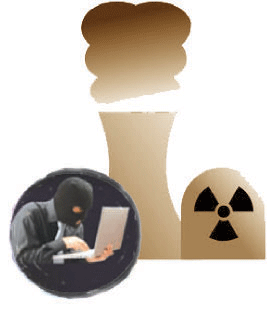 How a nuclear plant got hacked, Plugging nuclear plants into the internet makes them vulnerable targets for nation-state attack. By J.M. Porup, Senior Writer, CSO December 9, 2019 If you think attacking civilian infrastructure is a war crime, you’d be right, but spies from countries around the world are fighting a silent, dirty war to pre-position themselves on civilian infrastructure — like energy-producing civilian nuclear plants — to be able to commit sabotage during a moment of geopolitical tension.
What follows is an explanation of how India’s Kudankulam Nuclear Power Plant (KNPP) got hacked — and how it could have been easily avoided.
The KNPP hack The news came to light, as it so often does these days, on Twitter. Pukhraj Singh (@RungRage), a “noted cyber intelligence specialist” who was “instrumental in setting up of the cyber-warfare operations centre of the National Technical Research Organisation (NTRO),” according to The New Indian Express, tweeted: “So, it’s public now. Domain controller-level access Kudankulam Nuclear Power Plant. The government was notified way back. Extremely mission-critical targets were hit,” noting in a quote tweet that he was aware of the attack as early as September 7, 2019, calling it a “causus belli” (an attack sufficiently grave to provoke a war).
In a later tweet, Singh clarified that he did not discover the malware himself. A third party “contacted me & I notified National Cyber Security Coordinator on Sep 4 (date is crucial). The 3rd party then shared the IoCs with the NCSC’s office over the proceeding days. Kaspersky reported it later, called it DTrack.”
At first the Nuclear Power Plant Corporation of India (NPCI) denied it. In a press release they decried “false information” on social media and insisted the KNPP nuclear power plant is “stand alone and not connected to outside cyber network and internet” and that “any cyber attack on the Nuclear
Power Plant Control System is not possible.”
Then they backtracked. On October 30, the NPCI confirmed that malware was in fact discovered on their systems, and that CERT-India first noticed the attack on September 4, 2019. In their statement, they claimed the infected PC was connected to the administrative network, which they say is “isolated from the critical internal network.”
“Investigation also confirms that the plant systems are not affected,” their statement concludes.
Power Plant Control System is not possible.”
Then they backtracked. On October 30, the NPCI confirmed that malware was in fact discovered on their systems, and that CERT-India first noticed the attack on September 4, 2019. In their statement, they claimed the infected PC was connected to the administrative network, which they say is “isolated from the critical internal network.”
“Investigation also confirms that the plant systems are not affected,” their statement concludes.
A targeted attack
Contrary to some initial reporting, the malware appears to have been targeted specifically at the KNPP facility, according to researchers at CyberBit. Reverse-engineering of the malware sample revealed hard-coded administrator credentials for KNPP’s networks (username: /user:KKNPP\\administrator password: su.controller5kk) as well as RFC 1918 IP addresses (172.22.22.156, 10.2.114.1, 172.22.22.5, 10.2.4.1, 10.38.1.35), which are by definition not internet-routable.
That means it is highly likely the attacker previously broke into KNPP networks, scanned for NAT’ed devices, stole admin credentials, and then incorporated those details into this new malware, a second-stage payload designed for deeper and more thorough reconnaissance of KNPP’s networks.
“This was a very targeted attack on just this plant,” Hod Gavriel, a malware analyst at CyberBit, tells CSO. “Probably this was the second stage of an attack.”
The malware discovered, however, did not include Stuxnet-like functionality to destroy any of KNPP’s systems. “This phase was only for collection of information, it wasn’t sabotageware,” Gavriel says. ….. https://www.csoonline.com/article/3488816/how-a-nuclear-plant-got-hacked.html
North Korea conducts second test at satellite site, to ‘bolster nuclear deterrent’
San Francisco Chronicle, Simon Denyer, The Washington Post Dec. 14, 2019 TOKYO – North Korea announced on Saturday it had conducted another test at a satellite launch station near the Chinese border, saying the unspecified test would help bolster the country’s nuclear deterrent.The test was conducted Friday evening, and was the second in less than a week at the Sohae Satellite Launching Station in Tongchang-ri, a site near the Chinese border that has been used to test rocket engines and launch satellites into space in the past…… (subscribers only) https://www.sfchronicle.com/news/article/North-Korea-conducts-second-test-at-satellite-14906516.php
Spent mixed-oxide (MOX) fuel to be removed from Ikata nuclear reactor
 Shikoku Electric to remove fuel from Ikata nuclear reactor, a first since MOX work began in 1997, HTTPS://WWW.JAPANTIMES.CO.JP/NEWS/2019/12/13/NATIONAL/SHIKOKU-ELECTRIC-REMOVE-MOX-FUEL-FROM-IKATA-REACTOR/#.XFPOTUGZBIU , EHIME PREF. – Shikoku Electric Power Co. said Thursday that it will suspend operations of the No. 3 reactor at its Ikata nuclear power plant on Dec. 26 for routine checkups and remove spent mixed-oxide (MOX) fuel from the reactor.This will mark the first removal of used MOX fuel, a blend of plutonium extracted from spent nuclear fuel and uranium, from any commercial nuclear power plant in Japan since an initiative on plu-thermal power generation using the mixed fuel was announced in 1997, according to the Shikoku utility. Shikoku Electric to remove fuel from Ikata nuclear reactor, a first since MOX work began in 1997, HTTPS://WWW.JAPANTIMES.CO.JP/NEWS/2019/12/13/NATIONAL/SHIKOKU-ELECTRIC-REMOVE-MOX-FUEL-FROM-IKATA-REACTOR/#.XFPOTUGZBIU , EHIME PREF. – Shikoku Electric Power Co. said Thursday that it will suspend operations of the No. 3 reactor at its Ikata nuclear power plant on Dec. 26 for routine checkups and remove spent mixed-oxide (MOX) fuel from the reactor.This will mark the first removal of used MOX fuel, a blend of plutonium extracted from spent nuclear fuel and uranium, from any commercial nuclear power plant in Japan since an initiative on plu-thermal power generation using the mixed fuel was announced in 1997, according to the Shikoku utility.
The government and power firms are promoting plu-thermal power generation as part of the nuclear fuel cycle featuring the extraction of plutonium from spent nuclear fuel for reuse. In 2010, Shikoku Electric started plu-thermal power generation using 16 MOX fuel assemblies at the No. 3 reactor at the Ikata plant in Ehime Prefecture. The company plans to remove all of them during the reactor checkups through April 27 and will consider reusing the spent MOX fuel, which will likely be stored at the power plant for a while due to the lack of reprocessing facilities. |
|
|
Fukushima Prefecture has over 9 million bags of nuclear waste
|
Over 9 million bags of nuclear cleanup waste piled up across Fukushima Pref. https://mainichi.jp/english/articles/20151210/p2a/00m/0na/020000c?fbclid=IwAR0UFZrUByjuHKdFb8dE7o4p_WjADFuYZBGw-5NUrbUklXe_8buwbOifmaA The number of bags of waste from decontamination efforts around the stricken Fukushima No. 1 nuclear plant reached a little under 9.16 million as of the end of September according to Fukushima Prefecture and the Environment Ministry. The 1-cubic-meter bags are found at some 114,700 interim storage or decontamination sites across the prefecture. In the town of Tomioka — covered by a nuclear disaster evacuation order — mounds of bags have grown so tall that they obscure the power shovels used to move and stack the waste, the black balls covering every sliver of landscape. The bags of waste are typically stacked four layer high, with a fifth layer of uncontaminated soil laid on top to block radiation. Waterproof sheets are also used to stop rainwater from getting into the bags and becoming contaminated. Negotiations with the towns of Okuma and Futaba — both under evacuation orders — to establish mid-term waste storage facilities there have been hard-going, and the start of construction is nowhere in sight.December 10, 2015 (Mainichi Japan) |
2 nuclear reactors in Fukui Prefecture to be shut down
Kansai Electric Power Co. will spend ¥118.7 billion to dismantle the Nos. 1 and 2 units at the Oi nuclear power plant, with work expected to wrap up in the fiscal year ending March 2049.
The units, which each have an output capacity of more than 1 million kilowatts, are the most powerful reactors to be approved for decommissioning by the Nuclear Regulation Authority since a magnitude 9.0 earthquake and subsequent tsunami caused a meltdown at the Fukushima No. 1 plant in March 2011.
Following the disaster, the government placed a 40-year limit on the lifespan of reactors in the country, with a possible 20-year extension if strict safety standards are met.
As both units came online in 1979 and were approaching the 40-year limit, Kansai Electric had a choice of applying for the extension or scrapping them.
In December 2017, the utility announced it would scrap the aging reactors, citing the high cost of implementing additional safety measures. Kansai Electric submitted the decommissioning plan to the authority in November 2018.
The plant’s Nos. 3 and 4 units came online in 1991 and 1993, respectively, and are currently active.
Around 23,000 tons of low-level radioactive waste will be remain following the dismantling process, according to the plan, along with another 13,200 tons of nonradioactive waste.
The plan does not state where the waste will be stored.
Water shortages to hit 1.9 billion people as glaciers melt
1.9 billion people at risk from mountain water shortages, study shows https://www.theguardian.com/environment/2019/dec/09/billion-people-risk-water-supply-rising-demand-global-heating-mountain-ecosystem
Rising demand and climate crisis threaten entire mountain ecosystem, say scientists, Jonathan Watts Global environment editor, @jonathanwatts, Tue 10 Dec 2019 A quarter of the world’s population are at risk of water supply problems as mountain glaciers, snow-packs and alpine lakes are run down by global heating and rising demand, according to an international study.
The first inventory of high-altitude sources finds the Indus is the most important and vulnerable “water tower” due to run-off from the Karakoram, Hindu Kush, Ladakh, and Himalayan mountain ranges, which flow downstream to a densely populated and intensively irrigated basin in Pakistan, India, China and Afghanistan.
The authors warn this vast water tower – a term they use to describe the role of water storage and supply that mountain ranges play to sustain environmental and human water demands downstream – is unlikely to sustain growing pressure by the middle of the century when temperatures are projected to rise by 1.9C (35.4F), rainfall to increase by less than 2%, but the population to grow by 50% and generate eight times more GDP.
Strains are apparent elsewhere in the water tower index, which quantifies the volume of water in 78 mountain ranges based on precipitation, snow cover, glacier ice storage, lakes and rivers. This was then compared with the drawdown by communities, industries and farms in the lower reaches of the main river basins.
The study by 32 scientists, which was published in the Nature journal on Monday, confirms Asian river basins face the greatest demands but shows pressures are also rising on other continents.
“It’s not just happening far away in the Himalayas but in Europe and the United States, places not usually thought to be reliant on mountains for people or the economy,” said one of the authors, Bethan Davies, of Royal Holloway University.
“We always knew the Indus was important, but it was surprising how the Rhône and Rhine have risen in importance, along with the Fraser and Columbia.”
The study says 1.9 billion people and half of the world’s biodiversity hotspots could be negatively affected by the decline of natural water towers, which store water in winter and release it slowly over the summer.
This buffering capacity is weakening as glaciers lose mass and snow-melt dynamics are disrupted by temperatures that are rising faster at high altitude than the global average.
“Climate change threatens the entire mountain ecosystem,” the report concludes. “Immediate action is required to safeguard the future of the world’s most important and vulnerable water towers.”
As well as local conservation efforts, the authors say international action to reduce carbon emissions is the best way to safeguard water towers.
Citing recent research by the UN Intergovernmental Panel on Climate Change, Davies said 75% of high-altitude snow and ice would be retained if global warming could be kept within 1.5C. However, 80% would be lost by 2100 if the world continued on a path of business as usual.
The status of Japan’s nuclear policy and future prospects
|
Tohoku reactor restart: What is the state of Japan’s nuclear policy? Japan Times, BY ERIC JOHNSTON 9 Dec 19, OSAKA – In late November, the Nuclear Regulation Authority (NRA) gave the green light for restarting the No. 2 reactor at Tohoku Electric Power Co.’s Onagawa plant in Miyagi Prefecture, which had been damaged in the March 11, 2011, earthquake and tsunami. The announcement once again put the spotlight on the country’s nuclear power policy, not only in Tohoku but nationwide.
Why did the Onagawa restart attract so much attention?
While the Onagawa plant is actually the second damaged on 3/11, after the Tokai No. 2 power station in Ibaraki Prefecture, to pass the NRA’s new safety regulations for nuclear power plants prepared after the disaster, it happens to be the nuclear plant closest to the epicenter of the magnitude 9 quake that struck off the Tohoku coast that day. The Onagawa facility is located near Ishinomaki, which received extensive damage and much domestic and international media attention after the tsunami claimed the lives of 74 Okawa Elementary School students. In addition, the Onagawa reactor, which was flooded on 3/11, is the first boiling water reactor to have its restart application approved by the NRA. There are three kinds of nuclear reactors in operation in Japan: 14 pressured water reactors (PWRs), four advanced boiling water reactors (ABWRs) and 13 boiling water reactors (BWRs), which are the same kind as those at the Fukushima No. 1 plant destroyed by the 3/11 quake and tsunami. The PWRs are considered more technologically stable than the other kinds, and have a better ability to contain radiation. Now that the NRA has greenlighted Onagawa’s restart, does that mean it will happen anytime soon? That depends on a number of factors. The Onagawa plant is not ready to be fired up tomorrow. It must first complete the installation of various anti-disaster measures, including a 29-meter-high, 800-meter-long seawall along the Pacific coast to guard against tsunami as high as 23.1 meters. That will not be completed until sometime in fiscal 2020, which begins April 1. Furthermore, various local governments, including Ishinomaki and Miyagi Prefecture, will have to give their consent to the restart. That could involve long, drawn out negotiations between the utility and local residents and politicians. It’s also probable that lawyers and local citizens opposed to a restart will seek a court injunction to halt the move based on safety concerns. If a court approves an injunction, that will create further delays. How many other nuclear power plants are there and what are their statuses? As of this month, there are nine reactors officially in operation. Four belong to Kansai Electric Power Co. (Kepco), which provides electricity mainly to Kyoto, Osaka, Nara, Hyogo, Shiga and Wakayama prefectures. Another four belong to Kyushu Electric Power Co. One of Shikoku Electric Power Co.’s reactors at its Ikata plant is also operating……. What about the future for nuclear power in Japan? The government’s long-term energy policy for 2030 calls for nuclear power to make up around 20 to 22 percent of the nation’s energy mix, and it is pushing hard for the restart of as many idled reactors as possible. By then, the plan calls for renewable energy to account for 22 to 24 percent of the mix, LNG to make up 27 percent, coal 26 percent and oil 3 percent. But the obstacles to restarting, or continuing to operate, nuclear plants in the coming years are vast. In addition to local opposition that could delay restarts for months or years, costing the utilities money, they include such issues as the economics of running reactors past 40 years, for which the utilities must first spend money to upgrade their facilities in order to meet new NRA standards regarding reactors older than four decades. While Kepco has secured permission to operate three reactors already over 40 years old for another two decades at the most, other utilities with reactors currently more than 30 years old — such as Tepco’s Kashiwazaki-Kariwa No. 1 reactor (34 years old) — will have to decide within a few years whether it’s worth the investment of money and time to apply for a two-decade extension or whether it’s cheaper to decommission. A second problem has to do with spent nuclear fuel generated by the restarted reactors. Tokyo is making efforts to find local governments able and willing to have a midterm spent fuel storage facility built in their backyard, and has agreed to offer financial incentives for anyone willing to accept a facility. No luck so far. Meanwhile, in Fukui Prefecture, which has the largest concentration of reactors (13 commercial reactors plus the Monju experimental fast-breeder reactor) in the nation, Gov. Tatsuji Sugimoto is insisting that such storage facilities be built outside the prefecture. His position could lead to other prefectures hosting nuclear power plants to take a firmer stance with utilities and the central government over what to do with spent nuclear fuel when they come seeking local consent for their own restart plans. https://www.japantimes.co.jp/news/2019/12/09/reference/japan-nuclear-power-onagawa-reactor-restart/#.Xe6m4egzbIU |
|
Radiation- high levels near start of Japan’s 2020 Olympic Torch Relay
 Nuclear Radiation Hot Spots Found At Starting Point Of Japan’s 2020 Olympic Torch Relay https://www.gizmodo.com.au/2019/12/nuclear-radiation-hot-spots-found-at-starting-point-of-japans-2020-olympic-torch-relay/, George Dvorsky, Dec 5, 2019, High levels of radiation have been detected near Japan’s J-Village, a sports facility and the starting point of the upcoming Olympic torch relay, according to Greenpeace. The discovery was made by surveyors with Greenpeace Japan, which warns that monitoring and decontamination efforts in Fukushima are inadequate.
Radiation levels as high as 71 microsieverts per hour were found on the surface near J-Village in northeastern Japan, according to a Greenpeace press release issued Wednesday. This level of radiation is hundreds of times greater than what’s stipulated in Japan’s decontamination guidelines, prompting Greenpeace Japan to demand that the Japanese government conduct regular radiation monitoring and decontamination of regions affected by the 2011 Fukushima nuclear disaster.
J-Village National Training Centre is in Fukushima prefecture, which is located 20 kilometres from the damaged nuclear power plant. This sports facility will be the starting point of the Tokyo 2020 Olympic Torch Relay, which is scheduled to begin on March 26, 2020. That J-Village was chosen as the starting point for the relay is by design, as the Japanese government is promoting the games as the “reconstruction Olympics.” The Olympics will begin on July 24, 2020 in Tokyo, some 239 kilometres from the damaged reactors.
|
J-Village recently underwent renovations, and the facility was used to host the Argentina team during the Rugby World Cup held just a few weeks ago, according to Reuters. And as the Guardian reports, the facility served as a “logistics hub” for crews working to manage and decommission the damaged reactors. The readings were made over a two-hour period on October 26 by Greenpeace’s Nuclear Monitoring & Radiation Protection Advisors. High levels of radiation were detected along the boundary of the parking lot and a forest next to J-Village, reports Sankei Shimbun. Readings at ground level were as high as 71 microsieverts, which is 308.7 times more than the nationally accepted 0.23 microsieverts per hour—the standard for decontamination—and 1,775 times the level prior to the Fukushima disaster, according to Greenpeace. Continue reading |
South Korea taking measures to ensure that its Olympic team gets radiation-free food
 South Korea team to bring radiation detectors to Tokyo Olympics over ‘contamination fears’, Independent 4 Dec 19,
Committee claim food may be compromised despite lifting of Fukushima-related restrictions, Ju-min Park,
Japan has posted data to show the country is safe from Fukushima radiation and many countries have lifted Fukushima-related food restrictions.
The Korea Sports & Olympic Committee (Ksoc) plans to ship red pepper paste, a key ingredient in Korean dishes, and other foods, and check for radiation in meat and vegetables that can only be sourced locally due to stringent quarantine rules, a Ksoc meals plan report shows.
Apparently, ingredients and food will be transported from South Korea as much as possible, possibly including canned food,” Shin Dong-keun, a ruling Democratic Party member of the parliamentary sports committee who was recently briefed by Ksoc, told Reuters in an interview.
“For this Olympic games, food is our team’s main focus so they can provide safe meals for the athletes to erase radiation worries, as opposed to in the past, food was meant to play the supplementary role of helping with their morale.”
Ksoc plans to arrange local Korean restaurants to prepare meals for baseball and softball players competing in Fukushima, as shipping boxed lunches from Tokyo is not feasible, it said in the “2020 Tokyo Summer Olympics Meals Support Centre Plan”.
“These Korean restaurants should only handle food confirmed as radiation free.”…….
Radiation Hot Spots
Greenpeace said on Wednesday that radiation hot spots have been found at the J-Village sports facility in Fukushima where the Tokyo 2020 Olympic torch relay will begin.
South Korea has stepped up demands for a Japanese response to concerns food produced in the Fukushima area and nearby sea could be contaminated by radiation from the Fukushima plant…….
The official said South Korea was preparing a separate meals plan due to concerns from the public and politicians over food safety, unlike the United States and Australia whose athletes will mainly eat food provided by the host country, Japan. ……
The South Korean Olympic committee plan to purchase radiation detecting equipment by February and station an inspector at its own cafeteria in Tokyo during the games to check contamination levels, according to the Ksoc report.
The budget for the Tokyo Olympics meals service is earmarked at 1.7 billion won (£1.2bn), which includes twice the amount of money for buying and shipping ingredients than previous games, according to the committee. https://www.independent.co.uk/news/world/asia/tokyo-2020-olympics-south-korea-radiation-fukushima-nuclear-disaster-a9232291.html
Safety concerns linger although Onagawa reactor cleared to restart

Nuclear watchdog approves restart of Onagawa reactor in Miyagi hit by 3/11 tsunami

1 This Month

Protect Sazan Island from the Trump family! https://secure.avaaz.org/campaign/en/protect_sazan_island_from_the_trump_family_loc/?bqFCVab&v=174511&cl=22707147157&_checksum=5e9dde668860e8231c33699735e16a1fbf22ab2cb01da50c999fe8732b9775ef&utm_source=email&utm_medium=blast_email&utm_campaign=174511
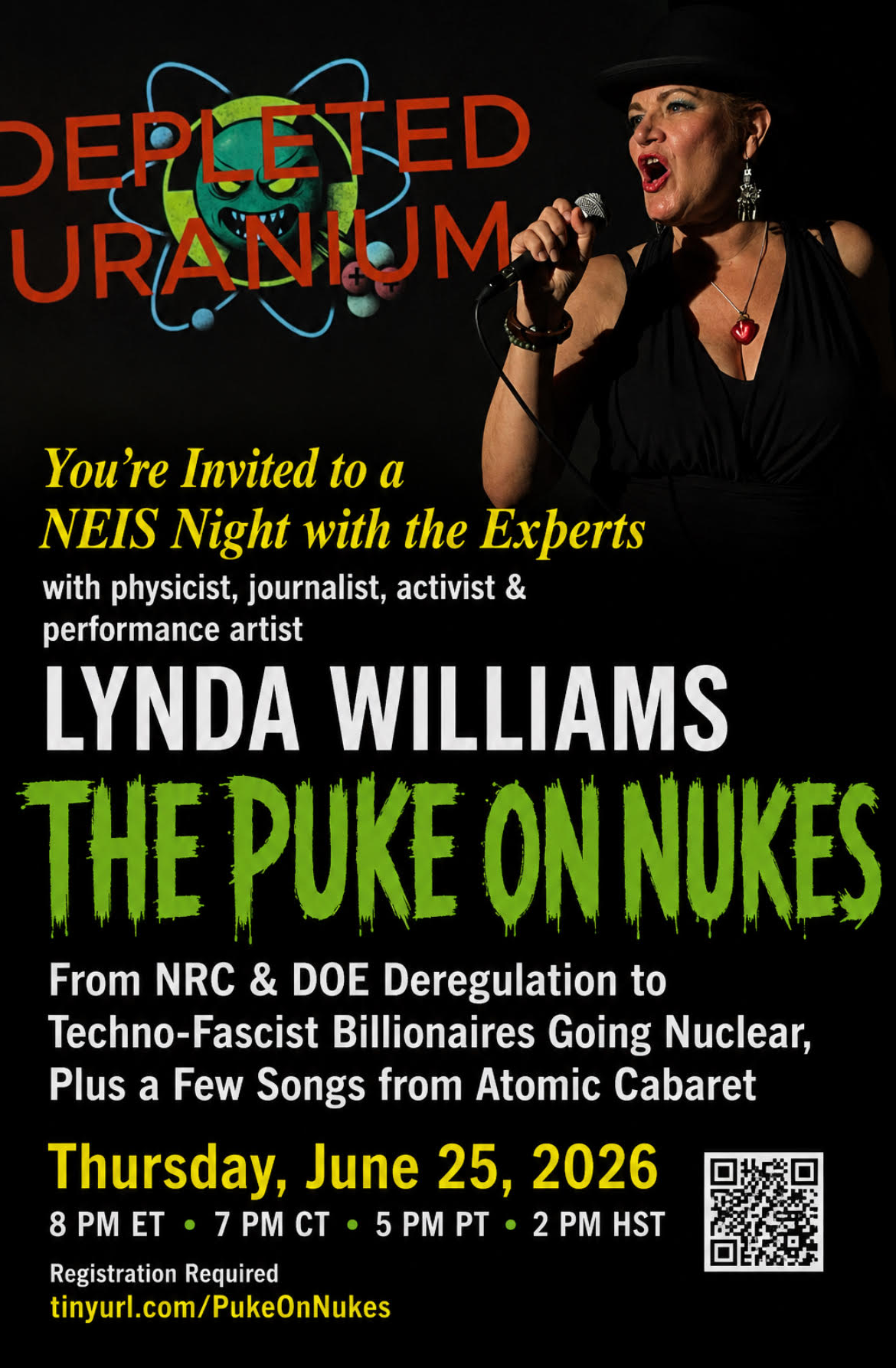
25 June- THE PUKE ON NUKES
Thursday, June 25, 2026
7pm Central Time (8pm ET, 6pm MT, 5pm PT) UTC – 5
From NRC & DOE Deregulation to Techno-Fascist Billionaires Going Nuclear, Plus a Few Songs from Atomic Cabaret REGISTER
26 June – Radiation Trainwreck at the NRC / Join the Protect Better Campaign – https://us02web.zoom.us/meeting/register/4ZlZ5_qLSHGiLSCg8FF6Bg#/registration


Cuba Is Not a Failed State – It Is a Besieged State
PETITION: “Global Appeal to Endorse Palestinian Right of Return of Refugees”
To see nuclear-related stories in greater depth and intensity – go to https://nuclearinformation.wordpress.com
-
Archives
- June 2026 (129)
- May 2026 (306)
- April 2026 (356)
- March 2026 (251)
- February 2026 (268)
- January 2026 (308)
- December 2025 (358)
- November 2025 (359)
- October 2025 (376)
- September 2025 (257)
- August 2025 (319)
- July 2025 (230)
-
Categories
- 1
- 1 NUCLEAR ISSUES
- business and costs
- climate change
- culture and arts
- ENERGY
- environment
- health
- history
- indigenous issues
- Legal
- marketing of nuclear
- media
- opposition to nuclear
- PERSONAL STORIES
- politics
- politics international
- Religion and ethics
- safety
- secrets,lies and civil liberties
- spinbuster
- technology
- Uranium
- wastes
- weapons and war
- Women
- 2 WORLD
- ACTION
- AFRICA
- Atrocities
- AUSTRALIA
- Christina's notes
- Christina's themes
- culture and arts
- Events
- Fuk 2022
- Fuk 2023
- Fukushima 2017
- Fukushima 2018
- fukushima 2019
- Fukushima 2020
- Fukushima 2021
- general
- global warming
- Humour (God we need it)
- Nuclear
- RARE EARTHS
- Reference
- resources – print
- Resources -audiovicual
- Weekly Newsletter
- World
- World Nuclear
- YouTube
-
RSS
Entries RSS
Comments RSS
 nuclear-news