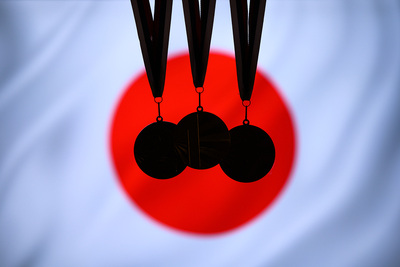
Coronavirus poses a risk to 2020 Olympics, Tokyo City Governor says

Kepco to halt two nuclear reactors after missing counterterrorism deadline

Could the Coronavirus Mean that the Tokyo 2020 Olympic Games are Cancelled?
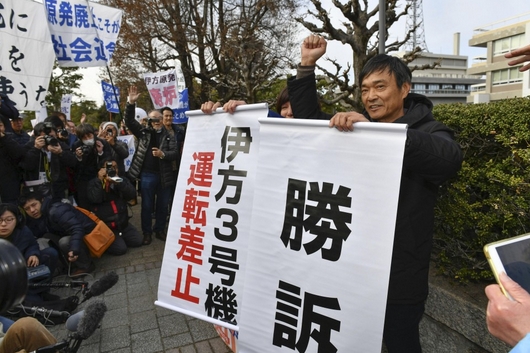
Shikoku Electric not to appeal injunction over Ikata nuclear plant
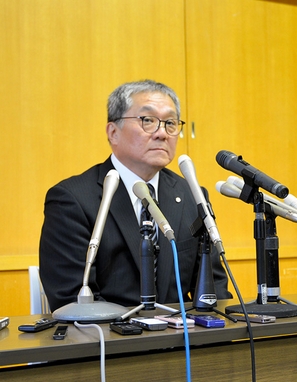
Mayor in Kyushu admits to ‘bribe’ from company in nuclear business
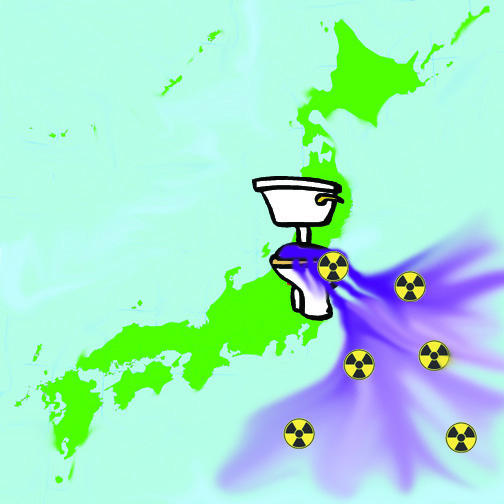
Japan to release over a million tonnes of radioactive water into sea from Fukushima power plant
|
Tokyo Electric has collected nearly 1.2 million tonnes of contaminated water from cooling pipes used to keep fuel cores from melting since the plant was devastated by the earthquake and tsunami which hit eastern Japan in 2011. The water, containing 62 radioactive elements, is stored in huge tanks on the site of the now disabled power plant, but Tokyo Electric has said it will run out of room to store the water by 2022. The water has been treated and Tokyo Electric said it is able to remove all radioactive particles from the water to levels not harmful to humans, except tritium, an isotope of hydrogen which is more difficult to separate from water. A panel of experts working for Japan’s economy and industry ministry concluded that letting the water run into the sea was the best option after looking at other proposals. The only other viable option considered was to let the water evaporate. In Friday’s proposal, the ministry said the controlled release to the sea is superior because its route is predictable and easier to sample and monitor. “Compared to evaporation, ocean release can be done more securely,” the committee said, pointing to common practice around the world where nuclear power stations operating under normal conditions routinely release water containing tritium into the sea. But the decision will alarm neighbouring countries and comes ahead of Japan’s hosting of the 2020 Olympic Games, with some events due to be held less than 60km away from the Fukushima site. Fishermen and residents also fear health effects from releasing the radioactive water as well as harm to the region’s image and farm industries. Neighbouring South Korea has retained a ban on imports of seafood from Japan’s Fukushima region imposed after the nuclear disaster and summoned a senior Japanese embassy official last year to explain how the Fukushima water would be dealt with, Reuters reported. South Korean athletes are planning to bring their own radiation detectors and food to the Games. Experts say there is no established method to fully separate tritium from water, but it is not a problem in small amounts. Government officials also say tritium is routinely released from existing nuclear power plants around the world. The report acknowledges the water releases would harm industries that still face reluctant consumers despite safety checks. It promised to reinforce monitoring of tritium levels and food safety checks to address safety concerns. |
|
|
North Korea’s nuclear tests have made Hamgyong Province area unstable

“It was a natural earthquake, presumably caused by the sixth nuclear test,” the administration said in a statement on its website. “The area is about 3km southeast of the sixth nuclear test site.”
Punggye-ri is the only known site in North Korea used to test nuclear weapons. At least six tests were conducted there between October 2006 and September 2017.
In early 2018, North Korea said it would close the site, saying its nuclear force was complete.
The entrances to tunnels at the site were blown up in front of a small group of foreign media invited to view the demolition, but North Korea rejected calls for international experts to inspect the closure.
Frustrated at what it sees as a lack of reciprocal concessions by the United States in denuclearisation talks, North Korea now says it is no longer bound by its self-imposed moratorium on test firing nuclear weapons and long-range ballistic missiles, though it has not conducted new tests.
The 2017 nuclear test, which North Korea said was a thermonuclear weapon, appeared to be several times larger than previous blasts, according to monitoring organisations at the time.
In the weeks after the sixth explosion, experts pointed to a series of tremors and landslides near the nuclear test base as a sign the large blast had destabilised the region.
Wednesday’s quake is the latest confirmation that the nuclear explosion had permanently changed the geology of the area, said Woo Nam-chul, an earthquake analyst at KMA.
“The terrain of the area was solid enough to have no natural earthquakes before the sixth nuclear test in September 2017.”
Japan could decide on fate of radioactive waste water before the Olympics in July

|
Fukushima Water Waste Decision Could Come Before Tokyo Olympics, VOA, 26 Jan 2020, Japanese officials say a decision on how to deal with radioactive water from the Fukushima nuclear plant could come before the Tokyo Olympics begin in July……
TEPCO officials recently guided a Reuters reporter around the plant, which covers about 3.5 million square meters in northeast Japan. The reporter described large cranes being used to break up major parts of the plant’s structure. The reporter also described operations aimed at removing spent fuel from a reactor. Overall, about 4,000 people are taking part in the cleanup effort, Reuters reported. Some Olympic events are set to take place within 60 kilometers of the destroyed plant, Reuters said. One major part of the cleanup has involved treating and storing contaminated water from the area. TEPCO has predicted that Fukushima will run out of all its storage space for water by 2022. A government group studying future storage solutions said last month that it had decided on two main possible solutions. One solution is to treat the water and then control its release into the Pacific Ocean. The other would be to let the water evaporate. Japanese experts say the government may decide on a solution within the next few months. Either process is expected to take years to complete. Joji Hara is a Tokyo-based spokesman for the power company. He told Reuters that TEPCO has already been making preparations to inform the public about any developments related to Fukushima. “The Olympics are coming, so we have to prepare for that, and TEPCO has to disclose all the information – not only to local communities but also to foreign countries and especially to those people coming from abroad,” Hara said….. oji Hara is a Tokyo-based spokesman for the power company. He told Reuters that TEPCO has already been making preparations to inform the public about any developments related to Fukushima. “The Olympics are coming, so we have to prepare for that, and TEPCO has to disclose all the information – not only to local communities but also to foreign countries and especially to those people coming from abroad,” Hara said. The Olympic torch will be carried through a sports center called J-Village. The center served as an operations base for the Fukushima nuclear plant during the first years after the disaster. The torch will then pass through areas near the destroyed power station on its way to Tokyo. Last month, the environmental group Greenpeace said it found radiation “hotspots” at J-Village, about 18 kilometers south of the plant. When Tokyo was chosen for the 2020 Summer Olympics, Prime Minister Shinzo Abe declared that Fukushima was “under control” and would not affect activities related to the Games. https://learningenglish.voanews.com/a/fukushima-water-waste-decision-could-come-before-tokyo-olympics/5254594.html |
|
Tepco estimates 44 years to decommission its Fukushima No. 2 nuclear plant.
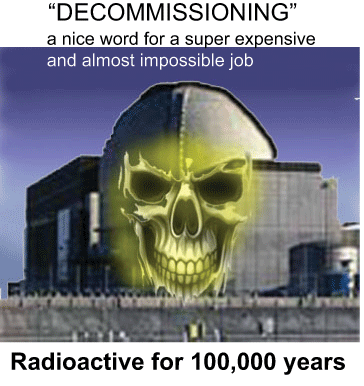 Japan Times 23rd Jan 2020, Tokyo Electric Power Company Holdings Inc. has estimated that it will take 44 years to decommission its Fukushima No. 2 nuclear plant. Tepco presented the outline of decommissioning plans to the municipal assembly of Tomioka, one of the two host towns of the nuclear plant, on Wednesday.
The Fukushima No. 2 plant is located south of the No. 1 plant, which suffered a triple meltdown accident in the wake of the March 2011 massive earthquake and tsunami.
According to the outline, the decommissioning process for the No.
2 plant will have four stages, taking 10 years for the first stage, 12
years for the second stage and 11 years each for the third and fourth
stages.
Tepco will survey radioactive contamination at the nuclear plant in
the first stage, clear equipment around nuclear reactors in the second,
remove the reactors in the third and demolish the reactor buildings in the
fourth. Meanwhile, the plant operator will transfer a total of 9,532 spent
nuclear fuel units at the plant to a fuel reprocessing company by the end
of the decommissioning process, and 544 unused fuel units to a processing
firm by the start of the third stage.
https://www.japantimes.co.jp/news/2020/01/23/national/tepco-fukushima-decommissioning/#.Xi1KBmj7RPb
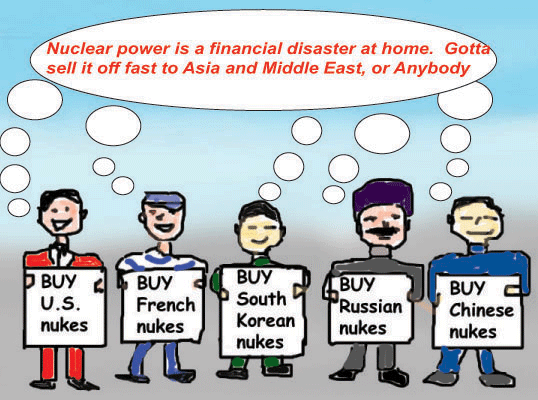
India joins the panic to sell costly, impractical, nuclear power to Africa and Middle East
|
Indian Envoy To Russia Says Countries Could Build Nuclear Power Plants In Africa & Middle East Caspian Newa By Vusala Abbasova January 26, 2020 Russia and India may team up to construct nuclear power plants in Africa and the Middle East, according to India’s ambassador to Russia, building on their current experiences in Bangladesh.
“We are already working under the scheme in Bangladesh,” Varna added, referring to the current construction of the country’s first nuclear power plant, called Rooppur. “Now Russia is also pretty active in the construction of nuclear power plants in the Middle East and Africa. That opens a new pathway of cooperation for us.” Varma believes the two sides could also launch projects in Africa using the experience they gained from joint work on Rooppur, which is being built by Russia’s Rosatom State Atomic Energy Corporation and costing over $13 billion. “Russia already has agreements in this field with a number of African countries,” Varma said. “Ethiopia is one of them, and there are some countries in the Middle East.”
|
|
2020 Olympic events worryingly close to radioactive areas
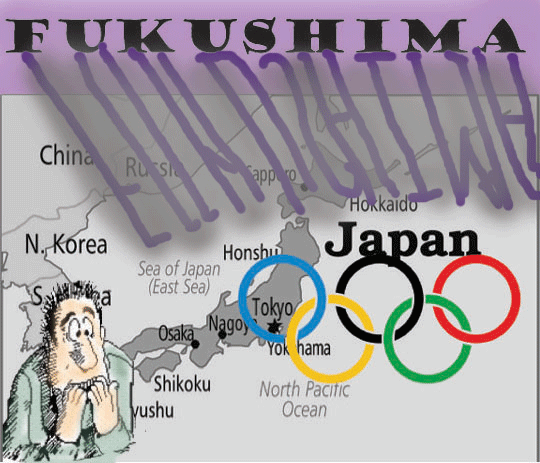
In an Olympic year, Japan faces decision over contaminated Fukushima water Aaron Sheldrick OKUMA, Japan (Reuters)24 Jan 2020, – At the wrecked Fukushima nuclear plant north of Tokyo, workers in protective suits are still removing radioactive material from reactors that melted down after an earthquake and tsunami knocked out its power and cooling nearly nine years ago.
On an exclusive tour of the plant, spread over 3.5 million square meters (865 acres), Reuters witnessed giant remote-controlled cranes dismantling an exhaust tower and other structures in a highly radioactive zone while spent fuel was removed from a reactor.
Officials from Tokyo Electric, which owns the plant, also showed new tanks to hold increasing amounts of contaminated water.
About 4,000 workers are tackling the cleanup, many wearing protective gear, although more than 90% of the plant is deemed to have so little radioactivity that no extra precautions are needed. Photography was highly restricted and no conversations were allowed with the workers.
Work to dismantle the plant has taken nearly a decade so far, but with Tokyo due to host the Olympics this summer – including some events less than 60 km (38 miles) from the power station – there has been renewed focus on safeguarding the venues…….
The buildup of contaminated water has been a sticking point in the cleanup, which is likely to last decades, and has alarmed neighboring countries. In 2018, Tepco said it had not been able to remove all dangerous material from the water – and the site is running out of room for storage tanks.
Officials overseeing a panel of experts looking into the contaminated water issue said in December choices on disposal should be narrowed to two: either dilute the water and dump it in the Pacific Ocean, or allow it to evaporate. The Japanese government may decide within months, and either process would take years to complete, experts say……..
Athletes from at least one country, South Korea, are planning to bring their own radiation detectors and food this summer.
Baseball and softball will be played in Fukushima City, about 60 km (38 miles) from the destroyed nuclear plant. The torch relay will begin at a sports facility called J-Village, an operations base for Fukushima Daiichi in the first few years of the disaster, then pass through areas near the damaged station on its way to Tokyo.
In December, Greenpeace said it found radiation “hotspots” at J-Village, about 18km south of the plant.
When Tokyo won the bid to host the 2020 Summer Olympics Prime Minister Shinzo Abe declared that Fukushima was “under control” in his final pitch to the International Olympic Committee.
In 2016, the Japanese government estimated that the total cost of plant dismantlement, decontamination of affected areas, and compensation would be 21.5 trillion yen ($195 billion) – roughly a fifth of the country’s annual budget at the time.
(Reporting by Aaron Sheldrick: Editing by Gerry Doyle) https://mobile.reuters.com/article/amp/idUSKBN1ZK0CV?__twitter_impression=true
Mayor in Kyushu admits to ‘bribe’ from company in nuclear business
 Mayor in Kyushu admits to ‘bribe’ from company in nuclear business, THE ASAHI SHIMBUN, January 24, 2020 GENKAI, Saga Prefecture–The mayor here said Jan. 23 that he received–but returned–what he suspected was a bribe from a contractor tied to an individual known to have lavished gifts on nuclear power company executives.Shintaro Wakiyama, 63, said at a news conference at the Genkai town office that he received “about 1 million yen ($9,140)” from Shiohama Industry Corp. in July 2018, immediately after he was elected mayor for the first time. Mayor in Kyushu admits to ‘bribe’ from company in nuclear business, THE ASAHI SHIMBUN, January 24, 2020 GENKAI, Saga Prefecture–The mayor here said Jan. 23 that he received–but returned–what he suspected was a bribe from a contractor tied to an individual known to have lavished gifts on nuclear power company executives.Shintaro Wakiyama, 63, said at a news conference at the Genkai town office that he received “about 1 million yen ($9,140)” from Shiohama Industry Corp. in July 2018, immediately after he was elected mayor for the first time.
He said he returned the money to the company, which is based in Tsuruga, Fukui Prefecture, through an acquaintance in December 2019. Wakiyama also said he recently learned that the acquaintance had died soon after the money was returned, but he did not provide any details about the intermediary……… Several executives related to nuclear power operations at Kansai Electric Power Co. have resigned for receiving cash and other presents from Moriyama. They said he had demanded contracts from the utility for his company…… http://www.asahi.com/ajw/articles/AJ202001240040.html |
|
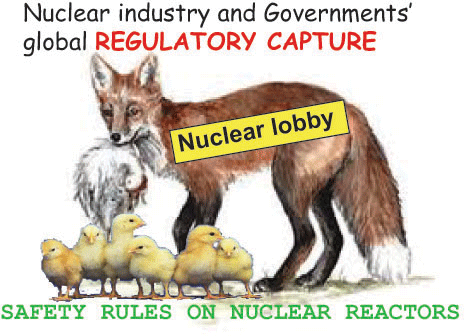
India – a case study in regulatory capture by the nuclear industry
 Leaflet SONALI HURIA, January 22,2020
 In this piece, the author while discussing the issues around nuclear safety, debates on why it is important to re-examine the proposed Nuclear Safety Regulatory Authority Bill for better regulation, transparency, and liability. SINCE returning to power last year with an overwhelming majority in the 2019 general elections, the Modi-led government has passed a series of legislations in rapid succession without any credible dialogue both within and outside Parliament – …………even as there has been exceptional eagerness to push these amendments and pass new legislation, including notifying the Citizenship (Amendment) Act, 2019 despite intense country-wide protests and a raging debate on its underlying intent, there are urgent issues, such as, nuclear safety, which remain in indefinite suspension.
The UPA-II government, under Dr Manmohan Singh, had introduced the Nuclear Safety Regulatory Authority (NSRA) Bill in the Lok Sabha on 07 September 2011, aimed at replacing India’s existing nuclear regulator, the Atomic Energy Regulatory Board (AERB) with a purportedly improved and more autonomous Nuclear Safety Regulatory Authority (NSRA) which would have the mandate to ‘regulate nuclear safety and activities related to nuclear material and facilities’.
The Bill, however, which had been referred to the Department-related Parliamentary Standing Committee on Science and Technology, Environment and Forests, did not come up for discussion before the dissolution of the 15th Lok Sabha, and subsequently, lapsed. The Standing Committee had reportedly endorsed the Bill with only minor suggestions for changes, while two members of the Committee from the CPI(M), gave dissent notes, arguing that the Bill provided ‘no substantive autonomy’ to the proposed NSRA. According to available information, in April 2017, the Union Minister of State (Independent Charge) Atomic Energy and Space, Dr Jitendra Singh, in a written response to a question in the Lok Sabha had stated that a ‘fresh Bill’ similar to the earlier NSRA Bill, was ‘under examination’……….India’s nuclear regulatory framework has long been criticized for being so thoroughly enmeshed within the government structure so as to render its requisite independence, practically meaningless. Nuclear safety in India has been the remit of the AERB, which was set up in November of 1983 by an executive order of the Secretary of the DAE under Section 27 of the Atomic Energy Act, 1962, with modifications made in April 2000 to “exclude all BARC facilities from (its) oversight, (following) the declaration of BARC as a nuclear weapons laboratory”.
The AERB has had the dishonourable reputation of being subservient to India’s exclusively public sector operators, which it is required to monitor, and is also acknowledged as suffering from an acute lack of independence from industry and government.
As things stand, the AERB is responsible for monitoring the safety of the various nuclear facilities operated by agencies such as, the Nuclear Power Corporation of India Limited (NPCIL) and the Uranium Corporation of India Limited (UCIL), which fall under the purview of the Department of Atomic Energy (DAE). However, the Board is required to report to the Atomic Energy Commission (AEC), whose chairman is the Secretary of the DAE and one of whose members is the Chair of the NPCIL, and which overall, comes under the direct control of the Prime Minister of India. Thus, the regulatory board reports to the very agency it is required to assess and monitor in the interest of public safety.
Moreover, the AERB frequently draws upon the ‘expertise’ of scientists and engineers provided by the DAE – “almost 95% of the members in AERB’s review and advisory committees are drawn from among retired employees of the DAE, either from one of their research institutes like the Bhabha Atomic Research Center or a power generation company like the Nuclear Power Corporation of India Ltd.” – thus, calling into question the AERB’s functional autonomy.
Dr A Gopalakrishnan, the former Chairman of the AERB has been at pains to explain how the present institutional setup makes nuclear safety regulation in India a ‘mere sham’ and that for the AERB to function effectively, the DAE’s hold on the Board needs to be urgently done away with. In 1995, during Dr Gopalakrishnan’s tenure as the nuclear regulator, the AERB had prepared a comprehensive ‘Document on Safety Issues in DAE Installations’ – a report detailing nearly 130 safety issues across India’s nuclear installations with 95 of them having been designated ‘top priority’, to which the first reactions from the NPCIL and BARC according to Dr Gopalakrishnan, were of denial and questioning AERB’s own technical expertise to review safety matters.
A 2012 Performance Audit Report on the AERB prepared by the Comptroller and Auditor General of India (CAG) and submitted to the Indian Parliament labelled the AERB a ‘subordinate office, exercising delegated functions of Central government and not that of the regulator’.
The Public Accounts Committee (PAC) scrutinizing the CAG report in 2013 castigated the Regulatory Board for failing to prepare a ‘comprehensive nuclear radiation safety policy despite a specific mandate in its constitution order of 1983’. The International Atomic Energy Agency’s (IAEA) Peer Review of India’s Nuclear Regulatory Framework in 2015 was also categorical in asserting that the AERB was in need of being separated from ‘other entities having responsibilities or interests that could unduly influence its decision making’.
As has been pointed out by MV Ramana, physicist and author of The Power of Promise, there have been accidents of ‘varying severity’ at several of the nuclear facilities being operated by the DAE, yet the regulatory board has frequently been seen downplaying the seriousness of such incidents, “postponing essential repairs to suit the DAE’s time schedules, and allowing continued operation of installations when public safety considerations would warrant their immediate shutdown and repair”. The charade of the AERB’s professed independence is further underscored by its conspicuous silence on the recent cybersecurity breach at the Koodankulam Nuclear Power Plant in Tirunelveli District in Tamil Nadu in October 2019.
It is these glaring frailties of the nuclear regulatory framework coupled with the obdurate insistence of the Central government to massively expand its activities along the entire nuclear fuel cycle, despite unsettled safety concerns, a long-standing and vociferous people’s resistance against uranium mining and nuclear energy projects, and concerns surrounding the health, environmental, economic, and democratic costs of this expansion, that make imperative, the need for a fiercely independent and non-partisan nuclear regulator.
Does the proposed NSRA fit the bill?
The NSRA Bill, 2011 upon its introduction, had failed to invoke any enthusiasm among independent experts, nuclear sector watchers, and civil society actors, and instead, was met with grim scepticism given that among other things, it made light of the principle of ‘separation’ as required under Article 8 of the IAEA Convention on Nuclear Safety to which India is a State Party.
The NSRA Bill provides for the establishment of a ‘Council of Nuclear Safety’, headed by the Prime Minister and comprised of five or more Union Ministers, the Cabinet Secretary, Chairman of the AEC, and other ‘eminent experts’ nominated by the Central government, which in turn, will constitute ‘search committees’ to select the Chair and Members of the proposed Regulatory Authority. Moreover, under Article 14 of the Bill, the Chairperson and Members of the NSRA can be removed by an order of the Central government.
Dr Gopalakrishnan argues that the Bill makes only an ornamental show of granting independence to the NSRA by requiring the Authority to report to the Parliament instead of a government department, ministry or official. Concomitantly, however, the Bill also unambiguously provides for the supersession of and the assumption of ‘all the powers, functions and duties’ of the Authority by the Central Government, if in its ‘opinion’ the Authority fails to function in concert with the provisions of the proposed Act, and, requires the Authority to seek approval of the central government prior to initiating any interaction with nuclear regulators of other countries and/or international organizations ‘engaged in activities relevant to…nuclear/radiation safety, physical security of nuclear material and facilities, transportation of nuclear and radioactive materials and nuclear and radiation safety and regulation’.
Article 20 (q) of the Bill mandates the NSRA to ‘discharge its functions and powers in a manner consistent with the international obligations of India’. This provision, argues Dr Gopalakrishnan is deeply worrisome for it “could mean, that if the Prime Minister has promised the French President in 2008 that India would buy six European Pressurised Reactors (EPRs)…(this) unilateral and personal commitment…will now (be) labelled ‘India’s international obligation’, and the NSRA cannot question, even on strong safety grounds, the setting up of those six EPR units, since that will violate the said clause of the Bill” – this might prove disastrous for both, public and environmental safety in the long term.
Experts argue that far from separating the regulator from the government, these provisions contained in the NSRA Bill will only mean absolute government control over nuclear regulation, including over appointment and dismissal procedures, thus, opening the way for ‘pliant technocrats’ to occupy prominent positions within the Authority.
The proposed Bill is also fuzzy on the question of which nuclear facilities will fall under the purview of the NSRA – it empowers, for instance, the central government to exempt “any nuclear material, radioactive material, facilities, premises and activities” from the jurisdiction of the Authority, on grounds of ‘national defence and security’. ……….
These and other provisions of the Bill are a stark reminder that the DAE has no love lost for transparency and public oversight – take, for instance, Article 45 which requires the Chairperson, Members, and other employees of the Authority to sign a ‘declaration of fidelity and secrecy’ “to not communicate or allow to be communicated to any person not legally entitled to any information relating to the affairs of the Authority”. It is for these reasons that the former nuclear regulator, Dr Gopalakrishnan has described the proposed NSRA Bill as an exercise in ‘boxing in’ nuclear regulation “from all sides by government controls, diktats, and threats of retaliation”, thus making it even more emaciated than the existing nuclear regulator – the AERB. …..https://theleaflet.in/in-a-season-of-impetuous-lawmaking-whither-nuclear-safety/
$123 billion the cost of safety measures for Japan’s nuclear stations
 Costs for managing Japan’s nuclear plants to total 13 trillion yen, https://english.kyodonews.net/news/2020/01/8722fafaff9b-costs-for-managing-japans-nuclear-plants-to-total-13-trillion-yen.html
KYODO NEWS – Jan 15, 2020 The total costs to implement government-mandated safety measures, maintain facilities and decommission commercially operated nuclear power plants in Japan will reach around 13.46 trillion yen ($123 billion), a Kyodo News tally showed Wednesday.
The amount, which could balloon further and eventually lead to higher electricity fees, was calculated based on financial documents from 11 power companies that own 57 nuclear reactors at 19 plants, as well as interviews with the utilities.
Two years after the 2011 Fukushima nuclear crisis, the Japanese government introduced new safety standards which made measures against natural disasters and major accidents mandatory for restarting reactors.
The power companies have been given the option of either maintaining their idled nuclear power plants and restarting them once they had implemented the required safety measures, or decommissioning their plants. But it has become clear either choice required massive costs.
Of the total costs, 5.4 trillion yen was for safety measures implemented as of last month at 15 power plants they are trying to restart.
Decommissioning costs for 17 reactors belonging to nine nuclear power plants, which were deemed too expensive to implement safety measures for, totaled around 849.2 billion yen.
As the estimated costs for decommissioning the No. 1 to No. 4 reactors at the Fukushima Daiichi nuclear power plant run by Tokyo Electric Power Company Holdings Inc. differ, they were not included in the figure.
Maintenance costs, which will not only apply to restarted plants in operation but also to idled ones and those in the process of being decommissioned, are required for 54 reactors at 17 plants.
Those under construction were excluded. In the six years from fiscal 2013, when the new regulations were introduced, they totaled around 7.2 trillion yen.
The costs include labor, repairs and others considered nuclear power plant expenses as shown in each company’s annual securities report. But plant depreciation costs and a reserve for dismantling facilities were subtracted as they overlapped with some expenses for safety measures and decommissioning.
Maintenance fees will be required every year moving forward and are expected to continue to grow from the annual costs of around 1 trillion yen across the 11 utilities.
The total costs could further rise by several hundred billion yen as money needed to construct anti-terrorist facilities, also required under the new safety standards, was not included in the figures of some of the companies.
The majority of the 17 reactors at nine power plants slated for decommissioning are aging and they also include four at the Fukushima Daini complex, which local officials requested to be scrapped.
North Korea abandoning talks with “hostile” USA
|
North Korea walks away from nuclear talks with United States, blaming ‘brutal and inhumane’ sanctions,ABC News, 22 Jan 2020, North Korea has walked away from nuclear talks with the United States, saying a 2019 year-end deadline for the talks had been ignored so it no longer felt bound by commitments, which included a halt to its nuclear testing and the firing of inter-continental ballistic missiles.
Key points:
North Korean leader Kim Jong-un had earlier set a December 31 deadline for denuclearisation talks with the US and White House national security adviser Robert O’Brien said at the time the US had opened channels of communication. Mr O’Brien said he hoped Kim would follow through on denuclearisation commitments he made at summits with US President Donald Trump. However, that now would appear to be off the table with North Korea announcing at the United Nations-backed Conference on Disarmament that it was no longer interested in talks. “We found no reason to be unilaterally bound any longer by the commitment that the other party fails to honour,” Ju Yong Chol said while in Geneva. Speaking as the envoy from the People’s Democratic Republic of Korea (DPRK), he accused the US of applying “the most brutal and inhuman sanctions”.
“If the United States tries to enforce unilateral demands and persists in imposing sanctions, North Korea may be compelled to seek a new path.”……https://www.abc.net.au/news/2020-01-22/north-korea-ends-nuclear-talks-with-us/11887832 |
|
1 This Month

Protect Sazan Island from the Trump family! https://secure.avaaz.org/campaign/en/protect_sazan_island_from_the_trump_family_loc/?bqFCVab&v=174511&cl=22707147157&_checksum=5e9dde668860e8231c33699735e16a1fbf22ab2cb01da50c999fe8732b9775ef&utm_source=email&utm_medium=blast_email&utm_campaign=174511


Cuba Is Not a Failed State – It Is a Besieged State
PETITION: “Global Appeal to Endorse Palestinian Right of Return of Refugees”
To see nuclear-related stories in greater depth and intensity – go to https://nuclearinformation.wordpress.com
-
Archives
- June 2026 (129)
- May 2026 (306)
- April 2026 (356)
- March 2026 (251)
- February 2026 (268)
- January 2026 (308)
- December 2025 (358)
- November 2025 (359)
- October 2025 (376)
- September 2025 (257)
- August 2025 (319)
- July 2025 (230)
-
Categories
- 1
- 1 NUCLEAR ISSUES
- business and costs
- climate change
- culture and arts
- ENERGY
- environment
- health
- history
- indigenous issues
- Legal
- marketing of nuclear
- media
- opposition to nuclear
- PERSONAL STORIES
- politics
- politics international
- Religion and ethics
- safety
- secrets,lies and civil liberties
- spinbuster
- technology
- Uranium
- wastes
- weapons and war
- Women
- 2 WORLD
- ACTION
- AFRICA
- Atrocities
- AUSTRALIA
- Christina's notes
- Christina's themes
- culture and arts
- Events
- Fuk 2022
- Fuk 2023
- Fukushima 2017
- Fukushima 2018
- fukushima 2019
- Fukushima 2020
- Fukushima 2021
- general
- global warming
- Humour (God we need it)
- Nuclear
- RARE EARTHS
- Reference
- resources – print
- Resources -audiovicual
- Weekly Newsletter
- World
- World Nuclear
- YouTube
-
RSS
Entries RSS
Comments RSS
 nuclear-news