Tepco has drafted a plan for disposing of Fukushima’s accumulation of waste water
 Plan to dispose of Fukushima wastewater drafted https://www3.nhk.or.jp/nhkworld/en/news/20200324_42/ , March 24, 20 NHK has learned that Tokyo Electric Power Company, or TEPCO, has drafted a plan for disposing of radioactive wastewater stored at the troubled Fukushima Daiichi nuclear power plant.Water used to cool molten nuclear fuel from the 2011 accident is treated to remove most radioactive material. But tritium and other substances remain in the water, a huge amount of which is stored in about 1,000 large tanks. Plan to dispose of Fukushima wastewater drafted https://www3.nhk.or.jp/nhkworld/en/news/20200324_42/ , March 24, 20 NHK has learned that Tokyo Electric Power Company, or TEPCO, has drafted a plan for disposing of radioactive wastewater stored at the troubled Fukushima Daiichi nuclear power plant.Water used to cool molten nuclear fuel from the 2011 accident is treated to remove most radioactive material. But tritium and other substances remain in the water, a huge amount of which is stored in about 1,000 large tanks.
A government panel last month compiled a report that says releasing diluted radioactive wastewater into the sea or air are realistic options. TEPCO’s plan for doing so would involve diluting the wastewater with seawater, aiming for a tritium level of one-fortieth that allowed by national regulation. The firm would gradually release the diluted water over about 30 years, taking into consideration the amount of similar water released at other nuclear plants. TEPCO would also test treating the wastewater again to further remove other radioactive materials. The utility is to explain the plan to local officials and residents in Fukushima Prefecture. People in the local fishery and tourism industries oppose releasing the water into the ocean. |
|
|
Release of Fukushima No 1 reactor’s radioactive water may take 30 years
 Tepco may take 30 years to release Fukushima No. 1 radioactive water, https://www.japantimes.co.jp/news/2020/03/25/national/tepco-fukushima-nuclear-plant-water/#.Xnvw-4gzbIU Tokyo Electric Power Company Holdings Inc. said Tuesday it may spend up to 20 to 30 years releasing contaminated water into the surrounding environment from its disaster-crippled Fukushima No. 1 nuclear power plant.
The possible time span was mentioned in draft plans Tepco drew up in line with a government panel’s report in February, calling the release of the water into the ocean or the air in the form of vapor a “realistic option.”
The company currently stores roughly 119 tons of water that still contains tritium and other radioactive substances after passing through a treatment process at the nuclear plant, which suffered a triple meltdown in March 2011 caused by a magnitude 9.0 earthquake and tsunami. The amount of contaminated water stored at the facility is still increasing.
According to the draft plans, Tepco will first conduct secondary treatment work to reduce the amount of radioactive substances in the water other than tritium — which cannot be removed by existing systems — to levels below national standards.
Following the treatment, the water will be released into the ocean, after being diluted with seawater to lower the radiation level to 1,500 becquerels per liter, or emitted into the air from a tall exhaust stack after being vaporized.
Tepco also plans to use social media to counter rumors that exposure to radiation from the released water is harmful.
Tokyo Olympic Games’ costly chaos: they can’t be held in 2020
|
“It’s important that not only our country but also all the other participating countries can take part in the games fully prepared,” Abe said. The premier’s comments came a day after the IOC said it will study alternative plans for the Tokyo Olympics, scheduled to open on July 24, amid the global outbreak, and make an assessment within the next four weeks. The Japanese government will soon tell the IOC it will accept a postponement if the organization decides on it as a precaution against the coronavirus, a source familiar with the plan said. Tokyo Olympic organizing committee President Yoshiro Mori said he supports the IOC’s decision to review existing plans, adding representatives from Japan and the IOC will hold discussions to examine possible scenarios closely. “Japan is in a critical state, and the situations in the United States and Europe have been abnormal,” Mori said. “We are not so foolish as to say we will do it under our first (plan).” Abe, who has previously said he aims to hold the major sporting event in its “complete form,” told the parliamentary session, “If it is difficult to hold the games in such a way, we have to decide to postpone it, giving top priority to (the health of the) athletes.” “Although the IOC will make the final decision (on the matter), we are of the same view that cancellation is not an option,” Abe said while vowing to work closely with the IOC and the Tokyo metropolitan government. The IOC on Sunday officially admitted the possibility of pushing back the quadrennial event, saying it will examine various scenarios, adding that it will finalize discussions “within the next four weeks.” “These scenarios relate to modifying existing operational plans for the games to go ahead on 24 July 2020, and also for changes to the start date of the games,” the IOC said in a statement. Speaking at a press conference, organizing committee CEO Toshiro Muto said reviewing the possibilities, including postponement, is “not easy” and the organizers are open to “all options.” Mori said some of the challenges organizers will face in terms of postponement include handling the costs of delaying and the availability of venues. Meanwhile, Tokyo Gov. Yuriko Koike told reporters, “(The IOC) clearly stated that cancellation will not happen, and I am glad to share that view.” “There are lots of issues, but I would like to discuss possible scenarios over the next four weeks with the IOC and the organizing committee,” she said. “The Tokyo Games now have another goal, to defeat the novel coronavirus.” Mori said local organizers will decide in the coming days whether to go ahead with the opening of the domestic leg of the torch relay in Fukushima Prefecture on Thursday, as developments surrounding the pandemic have been changing rapidly. Mori added that Bach told him that the Japanese organizers have the authority to make decisions about the domestic leg of the torch relay. Members of the organizing committee revealed Monday they may drastically reduce the scale of the torch relay, including canceling the participation of members of the public. Under modified plans, the Olympic flame may be carried by car in the initial stages of the relay. Muto and Olympics minister Seiko Hashimoto each said Monday the relay will proceed as planned for the moment. Mori also revealed that Abe is now reluctant to attend the kick-off ceremony since the Japanese government has been requesting people refrain from holding large events to prevent the spread of the virus. Olympic torchbearers in Japan expressed concerns over the IOC’s new direction. Both runners and spectators of the relay would be half-hearted. I wonder whether they will let us run again if (the sporting event) is postponed,” said 66-year-old Yumiko Nishimoto, who is scheduled to run in Fukushima on Thursday as one of the 10,000 torchbearers in Japan. The 121-day Japanese leg is scheduled to kick off at the J-Village soccer training center, which served as a frontline base of operations to battle the 2011 nuclear crisis caused by the March 11 quake-tsunami disaster that year. A decision on postponement “should be made before the torch relay starts,” Nishimoto said. “I have mixed feelings as I feel that we are being messed around.” The global coronavirus pandemic has cast a cloud over the hosting of the Tokyo Olympics from July 24 to Aug. 9 and the Paralympics from Aug. 25 to Sep. 6. In recent days, national Olympic committees in Brazil, Norway and the Netherlands have called for postponements. Japanese government officials have repeatedly said preparations are under way for the games to go ahead as scheduled, and the flame for the Olympics arrived on Friday in Japan. During a videoconference with other leaders from the Group of Seven industrialized nations earlier in the month, Abe secured support for holding “complete” games, meaning they should be held with spectators and without any downsizing. “I think U.S. President (Donald) Trump and other G-7 leaders will support my decision,” Abe said in the parliamentary session. |
|
|

‘Fukushima 50 ‘ – a new film about the nuclear meltdown
 Dramatizing the reality of a nuclear meltdown https://www.japantimes.co.jp/news/2020/03/21/national/media-national/nuclear-meltdown-movies/#.XnfM5YgzbIU BY PHILIP BRASOR As with many feature films based on real-life incidents, “Fukushima 50,” which opened nationwide March 6 and depicts the actions of the men who struggled to contain the disaster at the Fukushima No. 1 nuclear power plant following the Great East Japan Earthquake of March 2011, is a blend of factual exposition and dramatic enhancement. Stories require conflict to keep them interesting, usually with a hero fighting an adversary. In “Fukushima 50,” the hero is plant manager Masao Yoshida (Ken Watanabe), who makes life-and-death decisions in resistance against higher-ups rendered as incompetents. Dramatizing the reality of a nuclear meltdown https://www.japantimes.co.jp/news/2020/03/21/national/media-national/nuclear-meltdown-movies/#.XnfM5YgzbIU BY PHILIP BRASOR As with many feature films based on real-life incidents, “Fukushima 50,” which opened nationwide March 6 and depicts the actions of the men who struggled to contain the disaster at the Fukushima No. 1 nuclear power plant following the Great East Japan Earthquake of March 2011, is a blend of factual exposition and dramatic enhancement. Stories require conflict to keep them interesting, usually with a hero fighting an adversary. In “Fukushima 50,” the hero is plant manager Masao Yoshida (Ken Watanabe), who makes life-and-death decisions in resistance against higher-ups rendered as incompetents.
One of these “villains,” as pointed out by writer and editor Yusuke Nakagawa in the March 6 online edition of Gendai Business, is Naoto Kan, who was the prime minister at the time of the disaster. In the movie, Kan’s name is never uttered and, as Nakagawa points out, the actor who plays him, Shiro Sano, doesn’t look like him, but that’s not what concerns Nakagawa. Sano portrays Kan as a puddle of hysteria whose decisions threaten lives because they make Yoshida’s job more difficult. Kan has an infamous temper and Nakagawa acknowledges that he made mistakes during the course of the emergency, but the movie fails to detail the reasons for his actions. Turning him into a babbling fool makes the filmmakers’ job easier, which is to show Yoshida as a towering figure of courage and resourcefulness in the face of a crisis that could have ended in the destruction of eastern Japan. Continue reading |
What effect will pandemic have on tensions with North Korea?
Breakthrough or Crisis? How Will Coronavirus Impact Tensions with North Korea?
Is a breakthrough possible?: “As it continues to call on Pyongyang to resume negotiations, Washington could consider gathering support for an interim agreement from Seoul, Tokyo, Beijing, and Moscow. If successful, perhaps North Korea will feel pressured to return to dialogue or risk being blamed for breaking the diplomatic process. If a deal cannot be reached before November, the elements of such an interim agreement could be the starting point of discussions with the US administration after the elections.” National Interest, by Duyeon Kim, 22 Mar 20 The novel coronavirus pandemic has accelerated geopolitical tensions first in Northeast Asia, with the original outbreak in China, and now around the world as the United States, Europe and many others battle their own epidemics and global markets spiral downward. Leaders among the big powers—particularly the US, China, and Russia—already trying to exploit this global crisis to gain advantage and exert power instead of coming together to fight a common threat. This climate adds another layer of uncertainty over the Korean Peninsula where an authoritarian leader is trying to exert his power at a time when every world leader is preoccupied with the viral disease that is simultaneously testing their leadership and competence.
Japanese govt moving to transfer renewable energy funds to Fukushima nuclear clean-up.
 State funds to be juggled to cover cleanup costs from Fukushima http://www.asahi.com/ajw/articles/13225190, THE ASAHI SHIMBUN, March 18, 2020 The government has moved to revise a law to allow for the diversion of budgetary funds set aside for the promotion of renewable energy to help cover ballooning costs related to the storage of radioactive waste produced during cleanup work after the Fukushima nuclear disaster.
Tax revenues appropriated for renewable-related projects are not permitted to be used for nuclear power programs under the special account law, which governs budgets allocated for specific purposes.
Earlier this month, however, the government submitted a bill to the Diet to revise the law to make the diversion of funds legal. It plans to enact the legislation during the current Diet session and put the revised law into force in April 2021.
This would be the first time for a revenue source earmarked for a specific expenditure to be diverted to a different purpose.
But the revision bill is likely to draw criticism from the public as it concerns the divisive issue of nuclear power and raises further questions about the government’ longstanding insistence that nuclear power is an inexpensive energy source.
Energy-related expenditures are booked under the government’s special account, separately from the general account.
These expenditures are grouped into more categories, such as one for nuclear energy and another for renewable energy sources.
About 300 billion yen ($2.78 billion) a year is allocated for programs associated with nuclear energy, including grants to local governments hosting nuclear power plants, while 800 billion yen or so is set aside to promote renewable energy, energy saving efforts and ensuring a stable energy supply.
Revenues for nuclear energy-related programs are collected under the promotion of power resources development tax, which are levied on electricity rates. Those for renewables are collected from businesses importing petroleum and coal under the petroleum and coal tax.
They are project-specific tax revenues, meaning they cannot be used for other purposes. The amount of those budgets remains at similar levels each year.
The government’s move was prompted by runaway costs to process a vast volume of contaminated waste due to the 2011 disaster at the Fukushima No. 1 nuclear plant and maintain them in interim storage facilities in Fukushima Prefecture.
The government decided to shoulder some of the costs to help Tokyo Electric Power Co, operator of the stricken plant, and gained Cabinet approval to do so in December 2013.
Since fiscal 2014, it has set aside about 35 billion yen annually for the interim storage facilities. The funds come from revenues earmarked for nuclear energy-related projects in the special account.
But expenditures concerning the storage facilities are running a lot higher than initially envisaged.
An estimate released in late 2016 by the Ministry of Trade, Economy and Industry showed that the project will eventually cost 1.6 trillion yen, compared with an initial projection of 1.1 trillion yen.
The government has allocated an additional 12 billion yen annually for the storage facility project since fiscal 2017.
Government officials say the price tag could further increase in coming years, likely leaving the government with scant financial resources to cover the project.
The revision bill has a clause stipulating that funds diverted to nuclear energy-related programs must eventually be returned to renewable energy project-specific tax revenues.
But it remains unclear if the clause will ease objections from opponents of nuclear energy, even if the fund diversion is a temporary measure.
Yoshikazu Miki, former president of Aoyama Gakuin University and a specialist of the tax system in Japan, called on the government to justify its proposed fund diversion by providing a full explanation of the issue.
“A special account budget has rarely been scrutinized during Diet debate, unlike the general account,” Miki said. “The revision bill requires special attention as it is related to a nuclear power plant. Some members of the public may raise objections to the revision. The government needs to explain the matter to taxpayers to defend its need to act in this way.”
(This article was written by Tsuneo Sasaki and Hiroki Ito.)
Terrorism fears for Japan’s nuclear reactors – safety measures still not implemented
|
The threats to nuclear power plants are not restricted to earthquakes and tsunamis. The United States’ Nuclear Regulatory Commission compiled anti-terrorism measures in the wake of the 9/11 terrorist attacks. Japan similarly compiled new safety standards that went into effect in 2013. The new standards in Japan envisage such threats as an airliner crashing into a nuclear reactor building. They require plants to have an emergency control room at least 100 meters away from the nuclear reactor building, along with cooling pumps, so that the operator can continue to cool the nuclear reactor even if the adjacent control room is damaged…….. Terrorist acts that could result in major nuclear disasters are risks that must be taken into consideration at nuclear plants. Under ordinary circumstances, response facilities should be ready to operate at the time the nuclear reactor is restarted. Originally the deadline for completing the construction of response facilities was “within five years of the enforcement of new regulatory standards.” However, this deadline was extended due to delays in the screening of nuclear reactors that was required before they could be restarted. The revised deadline was within five years of the authorization of construction plans, including safety and other measures, after each nuclear power plant was judged to comply with new safety standards introduced after the Fukushima nuclear disaster. The first reactor to be restarted after the Fukushima nuclear disaster was the No. 1 reactor at the Sendai plant, and now it has reached that five-year deadline. Yet in spite of being granted a five-year period of grace, it failed to meet the requirements. It can’t be helped if the operator is seen as having made light of safety. So far nine nuclear reactors operated by the Kansai, Shikoku and Kyushu power companies have been restarted — and all of them are facing delays in the construction of response facilities. Kansai Electric Power Co. is due to halt the No. 3 and No. 4 reactors at its Takahama nuclear power plant this year. Power companies will not be able to avoid a loss of revenue from taking their reactors offline, and if they have to supplement power shortages with thermal power generation, then it will incur additional fuel costs. Furthermore, the costs for safety measures besides those to counter terrorism are only increasing. The former catchphrase that “nuclear energy is a cheap and stable source of power” is no longer applicable. There is no “finish line” when it comes to safety. The latest nuclear reactor suspension is surely the result of officials making light of this fundamental principle. https://mainichi.jp/english/articles/20200319/p2a/00m/0na/009000c |
|

Japan Olympics Official Tests Positive For COVID-19 As Training Camps Canceled Across Country
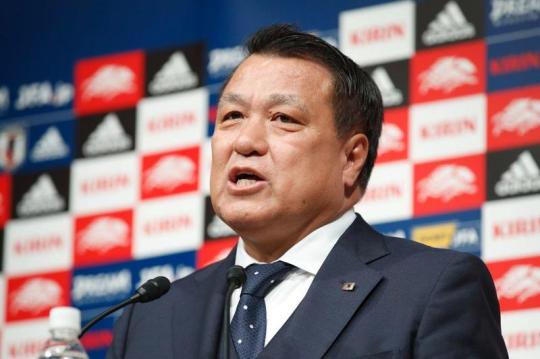 The deputy head of Japan’s Olympics Committee has coronavirus after reportedly experiencing a mild fever on Sunday after returning from a trip to Europe and the United States, according to the Wall Street Journal.
March 17, 2020
Kozo Tashima, who is also the president of Japan’s Football Association, was in Orlando, Florida on March 5 where he watched the Japanese women’s soccer national team play against Spain. While in the US he lobbied for Japan to host the women’s soccer World Cup during meetings held in New York – before returning to Japan on March 8.
“My symptoms didn’t start until March 14, so I wasn’t a major infection risk to others, but I apologize to those who were in meetings with me, JFA executives, the media and others I may have been in close contact with,” said Tashima in a statement, adding that his condition isn’t serious.
Mr. Tashima is almost certain to be unable to attend the next executive board meeting for the Olympic organizing committee at the end of this month, at which the impact of the coronavirus pandemic is likely to be on the agenda. Mr. Tashima is one of 25 executive board members who attend meetings every few months to review Olympic planning. –Wall Street Journal
While government officials said on Tuesday that they intend to hold the Olympics during the pandemic, with spectators and without changes to the scale of the event scheduled to begin July 24, Prime Minister Shinzo Abe has begun to change his tone, according to TIME.
Abe and his cabinet, as well as the organizers and Tokyo Governor Yuriko Koike, had until days ago been unanimous in insisting the Games would be staged as scheduled. But, following a G-7 leaders’ video conference on the coronavirus Monday, Abe avoided comment on the timing of the event.
“I want to hold the Olympics and Paralympics perfectly, as proof that the human race will conquer the new coronavirus, and I gained support for that from the G-7 leaders,” he told reporters after the event.
…
Asked whether the timing of the event was discussed, Abe repeated the same phrases without answering directly. He also used similar words when asked about the issue in parliament Monday. –TIME
Meanwhile, NHK reports that foreign countries’ national team training camps for the Olympic and Paralympic games have been canceled or postponed in 16 cities across Japan.
Cancellations include the table tennis and gymnastics team from Colombia, which planned on training in the western city of Kitakyushu, as well as Britain’s wheelchair basketball team which had scheduled practice in Urayasu City near Tokyo.
NHK also reports that events or projects to promote exchanges between foreign athletes and local residents have been canceled or postponed in approximately 60 municipalities throughout Japan – including a project by Matsukawa Town in Nagano Prefecture which planned to send high school students to Costa Rica.
Japanese Prime Minister Gives First Hints Tokyo Olympics Could Be Postponed

March 17, 2020
Japanese Prime Minister Shinzo Abe has begun to shift his messaging on the Tokyo Olympics, in a sign he may have accepted that the deadly coronavirus will make it necessary to postpone the event planned to start in July.
Abe and his cabinet, as well as the organizers and Tokyo Governor Yuriko Koike, had until days ago been unanimous in insisting the Games would be staged as scheduled. But, following a G-7 leaders’ video conference on the coronavirus Monday, Abe avoided comment on the timing of the event.
“I want to hold the Olympics and Paralympics perfectly, as proof that the human race will conquer the new coronavirus, and I gained support for that from the G-7 leaders,” he told reporters after the event.
Sporting events around the globe have been called off, delayed or held without spectators because of the virus, raising questions on whether it would be safe to bring hundreds of thousands of athletes, officials and spectators together in Tokyo. Last week, U.S. President Donald Trump suggested the Tokyo Olympics should be pushed back a year.
Asked whether the timing of the event was discussed, Abe repeated the same phrases without answering directly. He also used similar words when asked about the issue in parliament Monday.
Abe’s comments come after a poll showed almost two thirds of Japanese voters thought the Olympics should be postponed due to the pandemic. Japan’s prime minister had been closely associated with Tokyo hosting the games — flying to Buenos Aires in 2013 to make a bid for Japan’s case in person and appearing at the closing ceremonies for the Rio Games four years ago dressed as the Super Mario video game character to promote Tokyo 2020.
“The politics of delaying the games have shifted. In the early days of the crisis, delaying would have been an admission that Abe had failed to manage it. Now that it’s a global crisis, delaying may be what’s necessary to defend the Japanese people,” Tobias Harris, a Japan analyst for Teneo Intelligence in Washington, wrote on Twitter.
Proceed As Planned?
With a growing number of qualifying events already canceled, the summer start date is looking increasingly impracticable. The Tokyo Organizing Committee is asking that spectators stay away from Japan’s torch relay beginning at the end of the month, Kyodo News reported, an event usually expected to drum up excitement for the games.
Olympics Minister Seiko Hashimoto later denied that Abe’s comments meant any delay to the event.
“Holding it perfectly means preparing properly to hold it as planned, and working together to that end,” she said Tuesday. Chief Cabinet Secretary Yoshihide Suga also said there was no change to Japan’s preparations.
The French Olympic committee chief was reported as saying earlier that the virus must be on the wane by late May to allow the Tokyo Games to take place in July.
In response, Hashimoto reiterated that the International Olympic Committee had the authority to make the decision.
“I am aware of various individual opinions, but the government’s position is to provide support in close cooperation with the IOC, the organizing committee and the Tokyo metropolitan government,” she said.
The Olympic Games haven’t been canceled since the summer of 1944, when they were called off due to World War Two.
Japan’s Sendai nuclear reactor 1 offline because not meeting safety requirements
March 16, 2020
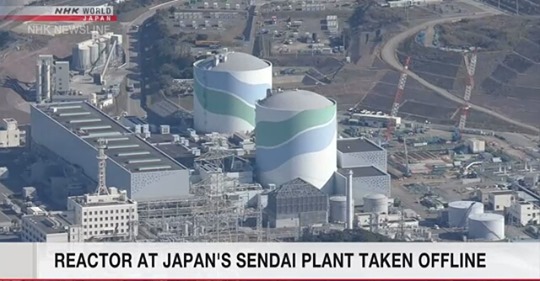
The operator of a nuclear power plant in southwestern Japan has suspended one of its reactors as it cannot meet the deadline for building mandatory facilities to deal with emergencies.
Kyushu Electric Power Company began work to reduce output at the No.1 reactor at the Sendai plant in Kagoshima Prefecture at 2:30 a.m. on Monday. The reactor went offline at 1:01 p.m.
Kyushu Electric will start regular inspections on the reactor earlier than scheduled.
This is the first time for a reactor to go offline because of its failure to meet the government’s new regulations.
The regulations were drawn up in 2013 after the nuclear accident at the Fukushima Daiichi plant two years earlier.
They require nuclear plant operators to construct facilities to ensure the safety of reactors in the event of emergencies such as acts of terror and aircraft crashes.
The Nuclear Regulation Authority, or NRA, obliges the operators to erect such facilities within five years of construction plans being approved.
Kyushu Electric says it aims to put the reactor back online after completing the necessary facilities by December and gaining approval from the NRA.
The utility also plans to shut down the No.2 reactor at the Sendai plant in May for failing to meet the deadline.
Kansai Electric Power Company is also expected to suspend the No.3 and No.4 reactors at the Takahama nuclear plant in Fukui Prefecture in August and October respectively for the same reason.
Tokyo High Court slashes damages to Fukushima nuclear disaster evacuees
|
Tokyo High Court slashes damages to Fukushima nuclear disaster evacuees, Japan Times, 18 Mar 20, The Tokyo High Court on Tuesday ordered ¥1 million in additional damages be paid each to some 300 evacuees from the 2011 Fukushima nuclear disaster, down by two-thirds from the amount awarded by a lower court ruling.The total amount of additional compensation Tokyo Electric Power Company Holdings Inc. must pay was reduced to about ¥360 million from the ¥1.1 billion awarded by the Tokyo District Court in 2018…….
In their petition, the plaintiffs, including former residents of the Odaka district in Minamisoma, Fukushima Prefecture, sought additional damages of ¥10.9 billion in total. The ruling was the second by a high court on a collective damages lawsuit filed by those displaced by the nuclear accident, following one issued by Sendai High Court last week. On Tuesday, presiding Judge Wataru Murata said Tepco must pay additional damages on top of the ¥8.5 million it paid per person based on estimates calculated under government-set interim standards. The additional damages have to be paid to compensate for the loss of hometowns, as “the foundations of residents’ lives have changed greatly and have yet to be restored,” Murata said. But the amount of the additional damages should be reduced because individual circumstances of the evacuees should not be taken into account, Murata said, denying the need for such consideration as had been recognized by the lower court…….https://www.japantimes.co.jp/news/2020/03/18/national/crime-legal/tokyo-high-court-slashes-damages-fukushima-nuclear-disaster-evacuees/#.XnJ94IgzbIU |
|
The clean-up of the Fukushima nuclear mess is not going to schedule – continual decommissioning delays
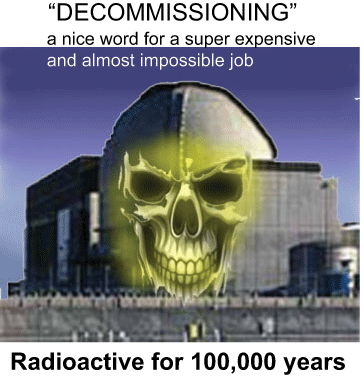 Japan’s 3/11 Recovery Stalled by Fukushima Japan’s 3/11 Recovery Stalled by Fukushima  Decommissioning Delays Decommissioning DelaysDelays in dismantling the disaster-stricken nuclear power complex cast doubt on whether recovery goals will move forward according to schedule. The Diplomat By Thisanka Siripala, March 13, 2020 Nine years after a quake-triggered tsunami sparked a triple meltdown at Fukushima Daiichi nuclear power plant, decontamination and decommissioning continues in northeastern Japan. The ultimate goal of removing all debris is expected to take anywhere between 30 to 40 years, but progress has been slower than originally planned. So far just one-fourth of decommission work has been completed, drawing attention to work that has not yet begun. The Fukushima decommissioning and decontamination draft has been amended five times. While changes published in December offered a specific time frame for the first time, the latest timetable for debris removal has been pushed back five years, citing the need for additional safety precautions. Previously, the process of removing spent fuel was scheduled from 2021 to 2024. But work on reactor two looks more likely to start in 2025 and last until 2027, followed by reactor one work commencing sometime between March 2028 and March 2029. ……..
The next decommissioning stage sets out the removal of 4,471 spent fuel rods inside the cooling pools of reactors one to six. But the biggest obstacle is finding a way to locate and remove the molten nuclear fuel. With frequent delays, evacuees face a constant sense of uncertainty,
tangled in a waiting game to see whether decommissioning work can be completed in 30 years.
Reactor two is seen as the safest and easiest option to start full-scale debris removal since it suffered the least structural damage with only “some fuel” melting through the pressure vessel and accumulating at the bottom of the containment vessel. But with no established method for debris retrieval, attempts to survey the location and distribution of molten nuclear fuel among the rubble requires a lengthy trial and error process. In mid-February 2019 an attempt to probe and collect samples from reactor two failed to find and lift the main nuclear fuel debris, instead lifting portions of pebble-like sediment with the lowest radiation readings from the surface. At this stage there is no way for TEPCO, the company that owns the Fukushima Daiichi plant, to determine where fuel debris lies among the rest of the metal debris. It’s estimated that reactor two alone contains 237 metric tons of debris while reactors one and three contain a combined 880 tons. The complexity of debris removal requires developing specialized technology that does not yet exist.
Also plaguing decommissioning efforts is the battle over how to safely dispose of 1 million tons of contaminated water that were used to cool nuclear fuel. Currently, huge tanks on the premises store the polluted runoff, which could fill 400 Olympic swimming pools, but space is expected to run out by mid-2022. On average 170 tons of contaminated water is produced to cool fuel in nuclear reactors. Without constant cooling, nuclear fuel risks melting from its own heat in a process called decay heat. With two years needed to prepare a disposal method, time is running out for a final decision. Government proposals to slowly release contaminated water into the ocean has sparked fierce backlash from locals and the agriculture and fishing industries, who argue traces of radioactive materials such as tritium still found in “treated” water could further harm a region still struggling to restore its international reputation……..
To make matters worse, decommissioning operations have been temporarily suspended due to the spread of coronavirus. Tepco was forced to cancel on-site inspections of reactor one scheduled during March, which would have brought together some 1,800 experts and members of parliament, as well as local residents and student groups. https://thediplomat.com/2020/03/japans-3-11-recovery-stalled-by-fukushima-decommissioning-delays/
|
|
|
Japan’s Sendai nuclear reactor 1 offline because not meeting safety requirements
|
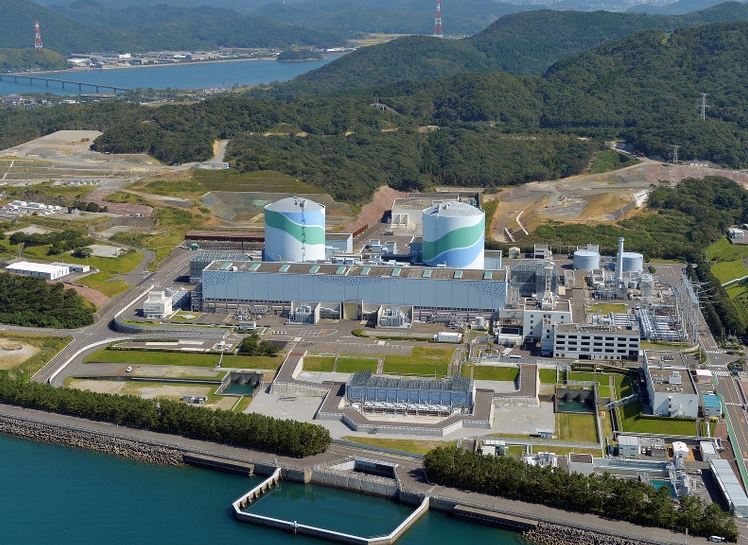
Nuclear reactor in southwestern Japan goes offline, https://www3.nhk.or.jp/nhkworld/en/news/20200316_35/ The operator of a nuclear power plant in southwestern Japan has suspended one of its reactors as it cannot meet the deadline for building mandatory facilities to deal with emergencies.Kyushu Electric Power Company began work to reduce output at the No.1 reactor at the Sendai plant in Kagoshima Prefecture at 2:30 a.m. on Monday. The reactor went offline at 1:01 p.m.
Kyushu Electric will start regular inspections on the reactor earlier than scheduled. This is the first time for a reactor to go offline because of its failure to meet the government’s new regulations. The regulations were drawn up in 2013 after the nuclear accident at the Fukushima Daiichi plant two years earlier. They require nuclear plant operators to construct facilities to ensure the safety of reactors in the event of emergencies such as acts of terror and aircraft crashes. The Nuclear Regulation Authority, or NRA, obliges the operators to erect such facilities within five years of construction plans being approved. Kyushu Electric says it aims to put the reactor back online after completing the necessary facilities by December and gaining approval from the NRA. The utility also plans to shut down the No.2 reactor at the Sendai plant in May for failing to meet the deadline. Kansai Electric Power Company is also expected to suspend the No.3 and No.4 reactors at the Takahama nuclear plant in Fukui Prefecture in August and October respectively for the same reason. |
|
Nuclear Agency employee accused of illegally storing radioactive waste at his home
Jakarta. An employee of the National Nuclear Energy Agency, or Batan, was named suspect for illegally storing radioactive waste at his home in Batan Indah housing complex in South Tangerang, Banten, police have said.
The news came a month after nuclear authorities launched decontamination operation at the housing complex, followed by criminal investigation by the National Police.
The cleanup, that took weeks to complete, was called after the Batan and the Nuclear Energy Regulatory Agency (Bapeten) detected radiation in the area. Around 100 drums of soil and grass containing radioactive substance have been removed from the area.
The suspect, identified by initials S.M., is accused of storing radioactive substance called Cesium-137 and dumping toxic waste at the housing complex, National Police’s special crimes director Brig. Gen. Agung Budijono said on Friday.
“We named S.M. as suspect after we conducted the crime scene investigation,” Agung told Jakarta Globe’s sister publication Beritasatu.com.
“At least 26 witnesses, including Batan and Bapeten officials, have been questioned by the police and it was learned that S.M. has no license for storing and processing radioactive waste,” he said.
The suspect is alleged to have run illegal decontamination services for money at his home. He is charged under the 1997 law on nuclear energy, which carries a sentence of up to two years’ imprisonment.
His position at Batan was not disclosed.
A joint investigation involving Batan, Bapeten and police was formed last month after radiation was detected and nine resident had to undergo medical examination for fear of exposure to Cesium-137, which may pose serious risks to human health including cancer and death.
Nuclear agencies ban companies who hold license to use Cesium-137 from storing or managing radioactive waste themselves. They must send it to Batan’s Center for Radioactive Waste Technology in South Tangerang.
The Batan facility is located around 45 kilometers from the housing complex.
Starting the Olympic torch relay in Fukushima should remind us of the dangers of nuclear power
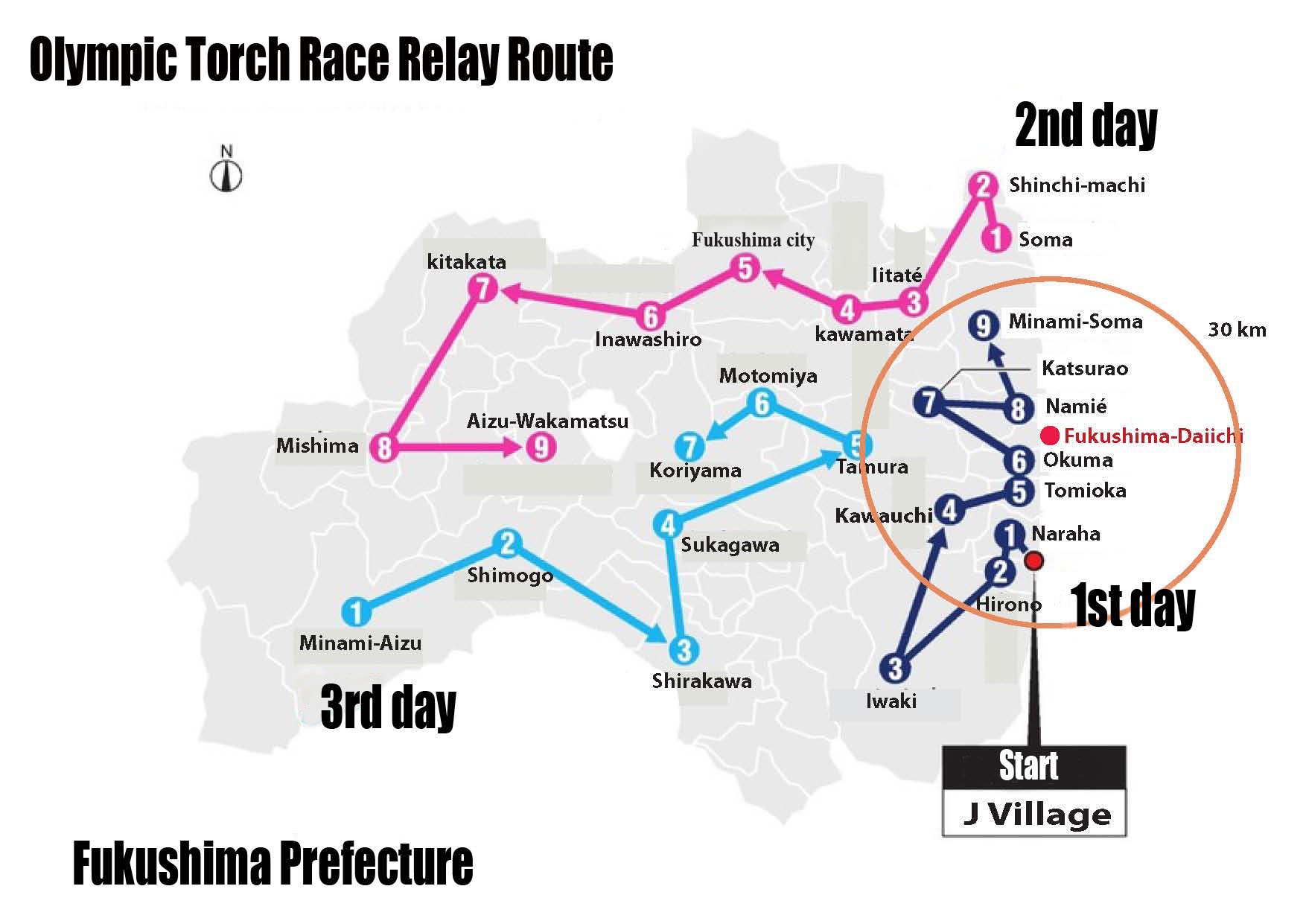 Starting the Olympic torch relay in Fukushima should remind us of the dangers of nuclear power https://www.japantimes.co.jp/opinion/2020/03/13/commentary/japan-commentary/starting-olympic-torch-relay-fukushima-remind-us-dangers-nuclear-power/#.XmvxdqgzbIU
BY CASSANDRA JEFFERY AND M. V. RAMANA 13 Mar 20, If the Tokyo Olympics are held on schedule, thousands of athletes will soon come to Japan. Considering the multiple reactors that melted down there nine years ago, in March 2011, the government’s decision to start the ceremonial torch relay in Fukushima Prefecture seems a bit odd, to say the least.
While radiation levels may have declined since 2011, there are still hot spots in the prefecture, including near the sports complex where the torch relay will begin and along the relay route. The persistence of this contamination, and the economic fallout of the reactor accidents, should remind us of the hazardous nature of nuclear power.
Simultaneously, changes in the economics of alternative sources of energy in the last decade invite us to reconsider how countries, including Japan, should generate electricity in the future.
Japan is not alone in having experienced severe nuclear accidents. The 1986 Chernobyl accident also contaminated very large areas in Ukraine and Belarus. As in Japan, many people had to be evacuated; about 116,000, according to the 2000 report of the U.N. Scientific Committee on the Effects of Atomic Radiation. Many of them never did return; 34 years after the accident, thousands of square kilometers remain closed off to human inhabitation.
Events such as these are, naturally, traumatic and result in people viewing nuclear power as a risky technology. In turn, that view has led to persistent and widespread public opposition around the world.
This is evident in Japan too, where opinion polls show overwhelming opposition to the government’s plans to restart nuclear plants that have been shut down. One poll from February 2019 found 56 percent of respondents were opposed to, with only 32 percent in favor of, resuming nuclear operations. Other polls show significant local opposition, one example coming out of Miyagi Prefecture. Even the Japan Atomic Energy Relations Organization, which aims to promote nuclear power, finds that only 17.3 percent prefer nuclear energy, with much larger majorities preferring solar, wind and hydro power.
There is also the immense cost of cleaning up after such accidents. Estimates for the Fukushima disaster range from nearly $200 billion to over $600 billion. In 2013, France’s nuclear safety institute estimated that a similar accident in France could end up costing $580 billion. In Japan, just the cost of bringing old nuclear power plants into compliance with post-Fukushima safety regulations has been estimated at $44.2 billion.
Even in the absence of accidents and additional safety features, nuclear power is already very expensive. For the United States, the Wall Street firm Lazard estimates an average cost of $155 per megawatt-hour of nuclear electricity, more than three times the corresponding estimates of around $40 per MWh each for wind and solar energy. The latter costs have declined by around 70 to 90 percent in the last 10 years. In the face of the high costs of nuclear power — economic, environmental and public health — and overwhelming public opposition, it is puzzling that the government would persist in trying to restart nuclear power plants.
To explain his support for the technology, Prime Minister Shinzo Abe claims that the country cannot do without nuclear power, especially in view of climate change concerns. The claim about the necessity of nuclear power makes little sense. Since 2011, the country has been generating only a fraction of the nuclear electricity it used to generate, and yet the lights have not gone off. Further, starting in 2015, Japan’s total greenhouse gas emissions have fallen below the levels in 2011, because of “reduced energy consumption” and the increase in “low-carbon electricity.” The latter, in turn, is because of an increasing fraction of renewable energy in electricity generation, a factor that could play an important role in the future.
Some, including the Global Energy Network Institute and a group of analysts led by Stanford University’s Mark Jacobson, argue that Japan could be 100 percent powered by renewable energy. Regardless of whether Japan reaches that goal, there is little doubt that Japan could be expanding renewable energy, and that increased reliance on renewables makes economic and environmental sense.
Instead, the Abe government seems to be involved in lowering incentives for the development of solar energy, and promoting nuclear power. Efforts by Abe to support the failing and flailing nuclear sector in Japan are indicative of the significant political power wielded by the “nuclear village,” the network of power companies, regulators, bureaucrats and researchers that controls nuclear and energy policy.
Moreover, Abenomics involves exports of nuclear components and technology, as well as conventional arms, as an important component. So far, despite many trips by Abe to various countries, Japan has yet to export any reactors in the last decade; a project with the most likely client, Turkey, collapsed because of high costs.
This suggests one possible explanation: Perhaps Abe realizes that before exporting nuclear reactors, he first has to shore up the domestic nuclear industry and prove that Japan has fully recovered from the 2011 nuclear disaster. But is that worth the risk?
Restarting nuclear reactors or constructing new ones, should that ever happen, only increases the likelihood of more nuclear accidents in the future and raises the costs of electricity. Regardless of who we cheer for at the Olympic Games, nuclear power does not deserve our applause.
1 This Month
26 September – International Day for the Total Elimination of Nuclear Weapons





PLEASE OPPOSE HR 8255 AND S.3639 – bills would accelerate satellite deployment, with no environmental review or safeguards – https://ncstd5li.quorum.us/campaign/169331/
To see nuclear-related stories in greater depth and intensity – go to https://nuclearinformation.wordpress.com
-
Archives
- September 2026 (281)
- August 2026 (330)
- July 2026 (355)
- June 2026 (287)
- May 2026 (306)
- April 2026 (356)
- March 2026 (251)
- February 2026 (267)
- January 2026 (308)
- December 2025 (358)
- November 2025 (359)
- October 2025 (375)
-
Categories
- 1
- 1 NUCLEAR ISSUES
- business and costs
- climate change
- culture and arts
- ENERGY
- environment
- health
- history
- indigenous issues
- Legal
- marketing of nuclear
- media
- opposition to nuclear
- PERSONAL STORIES
- politics
- politics international
- Religion and ethics
- safety
- secrets,lies and civil liberties
- spinbuster
- technology
- Uranium
- wastes
- weapons and war
- Women
- 2 WORLD
- ACTION
- AFRICA
- Atrocities
- AUSTRALIA
- Christina's notes
- Christina's themes
- culture and arts
- Events
- Fuk 2022
- Fuk 2023
- Fukushima 2017
- Fukushima 2018
- fukushima 2019
- Fukushima 2020
- Fukushima 2021
- general
- global warming
- Humour (God we need it)
- Nuclear
- RARE EARTHS
- Reference
- resources – print
- Resources -audiovicual
- Weekly Newsletter
- World
- World Nuclear
- YouTube
-
RSS
Entries RSS
Comments RSS

