nuclear-news

The News That Matters about the Nuclear Industry Fukushima Chernobyl Mayak Three Mile Island Atomic Testing Radiation Isotope

  • Home
  • 1 This Month
  • ACTION !
  • Disclaimer
  • Links
  • PAGES on NUCLEAR ISSUES

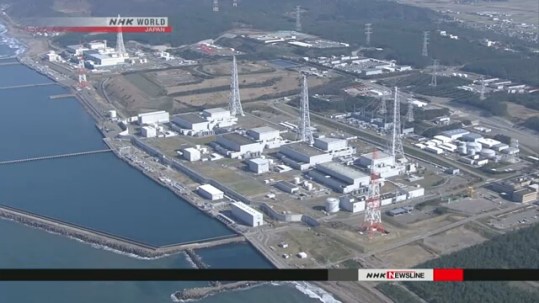
Tsunami could overtake Fukushima Daiichi’s seawall

Tsunami could overtake Fukushima Daiichi’s seawall,  https://www3.nhk.or.jp/nhkworld/en/news/20200422_03/

An estimate by a Japanese government panel suggests that tsunami could overwhelm a new seawall at the Fukushima Daiichi nuclear power plant, if a mega-quake occurs in a deep-sea trench off northeastern Japan.

The panel of experts on Tuesday released its projection of the scale of tsunami that could be triggered by a massive quake along the Japan Trench.

The panel expects that waves as high as 13.7 meters could hit Futaba Town, Fukushima Prefecture, where the plant is located.

That is higher than the 11-meter-high seawall being built on the ocean side of the compound. The wall is one of the anti-tsunami measures taken by Tokyo Electric Power Company as it decommissions the plant.

Other measures include blocking the openings of the reactor buildings and deploying power supply vehicles on higher ground to continue cooling spent nuclear fuel.

TEPCO says it will examine the estimate and consider what measures to take.

    Nearly 1,000 tanks of radioactive wastewater are stored in the compound. The operator says the projected tsunami won’t reach the higher ground where they are located


April 23, 2020 Posted by Christina Macpherson | Japan, safety | Leave a comment

North Korean leader Kim Jong-Un’s health speculation raises question over nuclear weapons future

North Korean leader Kim Jong-Un’s health speculation raises question over nuclear weapons future, 9 news, By CNN, Apr 22, 2020  Confusing and sometimes conflicting reports have emerged about the health of North Korean leader Kim Jong Un.

Those were followed by intense speculation on his whereabouts, his medical condition and the future of the world’s only hereditary communist state.
Initial rumblings began after North Korea’s most important holiday came and went on April 15 without an appearance by Kim, which was unusual.
Then Daily NK, an online publication based in South Korea that focuses on the north, reported that Kim had received a cardiovascular system procedure on April 12 and was being treated in a villa in Hyangsan County.
The reports have also sparked speculation over the security and question of what happens to North Korea’s nuclear weapons in the event of some sort of leadership transition, which is likely of concern in Washington, Seoul and Beijing……..
North Korea’s nuclear weapons are another closely guarded secret inside the country.
Little is known about how many Pyongyang has, how reliable they are, if its missiles and submarines could successfully fire them or even how Kim oversees their command and control apparatus…….
Though North Korea is still technically at war with the South and the United States, many of Pyongyang’s nuclear weapons may be sitting disassembled and “there are probably very few ready systems,” Narang said.
But Narang said he wouldn’t be terribly concerned about the security of North Korea’s nuclear weapons in the event Kim died of natural causes…….  https://www.9news.com.au/world/north-korea-kim-jong-un-health-status-confusion-nuclear-weapons-future-usa-south-korea-world-news/6c8663e8-9416-4635-ab90-9036d3e63246

April 23, 2020 Posted by Christina Macpherson | North Korea, politics, weapons and war | Leave a comment

Japanese government panel warns on risk that tsunami could overwhelm Fukushima nuclear plant in future Japan earthquake

Tsunami could overwhelm Fukushima nuclear plant in future Japan earthquake, government panel says,  By Travis Fedschun | Fox News 22  Apr 20, Towering waves could overwhelm the wrecked Fukushima nuclear plant in Japan if another mega-earthquake struck the deep-sea trenches off the country’s Pacific coast, a government panel said Tuesday.The Japanese panel said in a report that if an earthquake of magnitude 9.0 or greater struck in the deep-sea trenches, tsunami waves as high as 44 feet could hit the area around the Fukushima plant.

“A massive earthquake of this class (shown in the simulation) would be difficult to deal with by developing hard infrastructure (such as coast levees),” seismologist Kenji Satake, a University of Tokyo professor and head of the panel said Tuesday. “To save people’s lives, the basic policy would be evacuation.”A future mega-quake in the Japan Trench, which extends off Hokkaido, the northernmost of Japan’s main islands, to Boso Peninsula east of Tokyo, or in the Kuril Trench, which goes from Hokkaido to Russia’s Kuri Island, could yield disastrous results.

Waves as high as 98 feet could strike thThe latest government projection suggests a 36-foot seawall planned by the owner of the wrecked nuclear plant, Tokyo Electric Power Co. (TEPCO) would also be overwhelmed if tsunami waves are unleashed, according to Japanese broadcaster NHK. The panel expected waves of at least 44-feet could strike Futaba Town, where the plant is located.
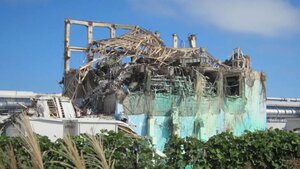
A magnitude 9.0 earthquake that struck off Japan’s east coast in March 2011 spawned a devastating tsunami that struck the nuclear facility. Three reactors at the Fukushima Dai-ichi plant then had meltdowns, causing radioactive water to leak from the reactors and mix with the groundwater and rainwater at the plant. The water is being treated but is still slightly radioactive and is stored in 1,000 large tanks, which hold 1 million tons of water.e northernmost island of Hokkaido, while other tsunamis may strike in areas along the Sea of Japan, according to Kyodo News.

TEPCO currently stores about 1.2 million tons of radioactive water and only has space to hold up to 1.37 million tons, or until the summer of 2022. The water — leakage of contaminated cooling water from damaged reactors mixed with groundwater — has accumulated since the accident. It is constantly pumped up, treated and stored in tanks, while part of it is recycled as coolant.

The company said Wednesday it’s assessing the new government report……..  https://www.foxnews.com/world/tsunami-fukushina-nuclear-plant-japan-wrecked-future-earthquake-government-report-disaster

April 23, 2020 Posted by Christina Macpherson | Japan, safety | Leave a comment

Increased tensions between USA and China, as U.S. accuses China of secret nuclear tests

Times 17th April 2020, Relations between China and the United States have plunged to a new low
after the release of a report that suggests Beijing may have conducted
secret nuclear tests, in contravention of arms treaties. Compiled by the US
state department, it says that extensive excavations have been carried out
in the desert of Lop Nur, northwest China, along with the construction of
“explosive containment” chambers. The work coincided with the blocking
of transmissions from sites that monitor levels of radiation and seismic
activity, it added.

https://www.thetimes.co.uk/edition/world/china-denies-groundless-reports-it-carried-out-nuclear-tests-vd5hqppsw

Daily Mail 16th April 2020, China accuses the U.S. of ‘confounding black and white’ with a ‘fabricated’
report after State Department warned Beijing might be conducting small
nuclear bomb tests.
https://www.dailymail.co.uk/news/article-8224941/China-accuses-U-S-confounding-black-white-fabricated-nuclear-test-claims.html

April 18, 2020 Posted by Christina Macpherson | China, politics international, USA, weapons and war | Leave a comment

A win-win for USA and North Korea? Helping to fight coronavirus

Why Helping North Korea Fight Coronavirus Could Lessen the Chance of a Nuclear War  https://nationalinterest.org/blog/korea-watch/why-helping-north-korea-fight-coronavirus-could-lessen-chance-nuclear-war-143697
A necessary win-win for Washington and Pyongyang?

by Cynthia Lazaroff Follow @CynthiaLazaroff on Twitter 13 Apr 20,   Amidst the existential nightmare unfolding with the coronavirus, comes the news that North Korea has ramped up its missile testing and lost all interest in a dialogue with the United States. At a March meeting with G-7 Foreign Ministers, Secretary of State Pompeo called on all nations to maintain diplomatic and economic pressure on North Korea over its nuclear and ballistic missile programs. Pompeo’s ill-timed call to uphold sanctions even during the global pandemic escalated tensions and triggered Pyongyang’s chilling response: North Korea has become “more zealous for our important planned projects aimed to repay the U.S. with actual horror and unrest for the sufferings it has inflicted upon our people.”
While some may call this mere bluster, Pyongyang’s warning serves as a grim reminder that the existential nuclear threat is not going on lockdown during this pandemic. It is a clear and present danger like COVID-19, invisible but very much alive. And like the virus, it has been ignored for perilously too long. Former U.S. Secretary of Defense William J. Perry has sounded the alarm: “Today, the danger of some sort of a nuclear catastrophe is greater than it was during the Cold War and most people are blissfully unaware of this danger.”
We are now awake to the COVID-19 catastrophe, the enormity of the pain and suffering, the staggering human and economic costs. Worst case projections estimate that COVID-19 deaths could be in the millions globally, with variable forecasts over the past month for America. Estimates show Americans could lose anywhere from 60,000 to 2.2 million or more of their loved ones to the virus because Washington ignored repeated warnings and failed to act before it was too late. This is the price of sleepwalking in the face of this existential threat, which is horrific, but these numbers nonetheless pale in comparison to the estimated tens of millions in North and South Korea, Japan, Guam, Hawaii and beyond who could die in the mass carnage if nuclear weapons were to be launched by Kim or Trump in a moment of anger, accident, miscalculation or mistake.
Existential threats by nature do not discriminate. Like nuclear weapons, COVID-19 attacks human beings indiscriminately, oblivious to race, religion, gender, ideology or country of origin. Like radioactive fallout, the virus does not recognize borders, and like nuclear war, it spares no one—whether rich, poor, Korean, American, sanctioned or unsanctioned.
If Washington doesn’t take emergency measures to stop the spread of COVID-19 in the human population as a whole, America fails to do so at its own peril. Outbreaks in other countries increase the risk of outbreaks around the world. This is why it makes no sense to uphold sanctions that in any way hinder a country’s capacity to combat the virus. U.N. High Commissioner for Human Rights Michelle Bachelet has called for humanitarian exemptions to sanctions because “in a context of global pandemic, impeding medical efforts in one country heightens the risk for all of us.” In other words, what America does to the people of North Korea, Iran, Venezuela, Russia, Cuba and other sanctioned countries, America does to itself.
Guterres calls on Americans further to unite now in solidarity to protect the most vulnerable and susceptible to COVID-19 everywhere—those ravaged by war, women, children, the elderly, homeless and displaced populations, along with those living in the poorest countries with weak health care infrastructures like North Korea. During this global existential crisis, Bachelet and Guterres are inviting Americans to rise to the better angels of our nature, transcend our differences and get our priorities straight: to stop wasting precious time and resources on conflict and war and mobilize as a “human family” to give it everything we’ve got to save lives.
If the United States applies Bachelet and Guterres’ recommendations to North Korea, Washington can make progress on the existential threat of COVID-19 and the existential threat of a nuclear exchange with Pyongyang. America and North Korea can work together to halt the spread of COVID-19, thereby create goodwill and de-escalate tensions. Washington can and should take further steps to reduce tensions and the risk of a nuclear missile launch due to anger, accident, miscalculation or mistake.

Here are five steps the United States should take right now:

  1. Provide broad exemptions for sanctions to make possible the immediate and widespread distribution of critical medical aid, testing equipment and supplies. While North Korea has not admitted to a single case of COVID-19, this is disputed and considered highly unlikely. Whatever the case may be, it is critical to provide exemptions for North Korea and all sanctioned countries to contain the spread of the virus.

  2. Take the lead by providing direct cooperation and medical aid to North Korea to contain the spread of COVID-19 as offered by President Trump in his recent letter to Kim Jong-un.

  3. Fund and cooperate fully with the international initiatives underway at the United Nations and World Health Organization to stop the transmission of COVID-19 in North Korea and all countries. COVID-19 is a global challenge requiring global solutions implemented both locally and globally. The UN and WHO are best positioned to coordinate efforts on a global scale fairly and effectively. 

  4. Sign a Peace Agreement to end the Korean War. This will immediately reduce tensions and rebuild trust, reunite families and directly impact the lives of seventy million Koreans living in the world today.

  5. Adopt a no-first-use policy for nuclear weapons. A no-first use pledge would send an important signal to Kim Jong-un and America’s other adversaries. It would eliminate the threat of a U.S. preemptive first strike and demonstrate that the United States views its weapons as deterrents to nuclear warfare, not as tools of aggression. It would further reduce the risk of a nuclear exchange and help create the conditions to make it possible for North Korea to denuclearize.

Americans wake up every morning to soaring death tolls, the tragic cost of waiting too long to act to contain COVID-19. It is already late—for the United States, for North Korea, for the world. Millions of lives are at stake. The time to act on these existential threats is now.

Cynthia Lazaroff is an expert on U.S.-Russia relations, a documentary film producer, and environmental activist. She has been engaged in Track II and 1.5 dialogue for the past forty years and has directed several films on the Soviet Union and nuclear proliferation. You can follow her on Twitter @CynthiaLazaroff.

April 14, 2020 Posted by Christina Macpherson | North Korea, politics international, USA | Leave a comment

To help future generations, Fukushima mothers have become radiation scientists

Fukushima mothers record radiation for future generations, Japan Times ,BY YUKA NAKAO, KYODO   IWAKI, FUKUSHIMA PREF 10 Apr 20, . – A group of more than 10 mothers set up a citizen-led laboratory to monitor radiation levels in Fukushima communities only months after a massive earthquake and tsunami caused meltdowns at a nuclear power plant in the prefecture nine years ago.Since the foundation of the institute on Nov. 13, 2011, it has been recording and disclosing radiation data on foodstuffs and soil it collected or were brought in by people from different parts of the prefecture, as well as seawater off the Fukushima No. 1 nuclear power plant.

“If the risks of nuclear power had been thoroughly verified by the previous generations, I think the disaster would not have happened,” Kaori Suzuki, 54, an executive of Mothers’ Radiation Lab Fukushima, based in Iwaki, said in a recent interview.

“But since it did occur, what we must do now is record our measurements and changes in the environment so we won’t make the same mistake,” said Suzuki, one of the founding members. “Passing down something that will be useful when major decisions must be made is the only thing we can do.”

The laboratory of 18 staff members, many of them mothers who mostly had no prior experience in measuring radiation, have trained themselves with support from scientists, and they now gauge levels of cesium 134, cesium 137, tritium and strontium 90 with five types of machines.

Samples they have measured include dust in vacuum cleaners, vegetables grown in home gardens, seasonal mushrooms picked in mountains and soil gathered in parks.

They have occasionally detected radiation above safety levels, and reports the lab releases every month on its website have specified which machine is used and other details for each outcome to make their activities as transparent as possible.

Their efforts have made academic contributions as well, with their measuring methods and results published in scientific journals such as Applied Radiation and Isotopes in 2016.

Suzuki said they started the initiative out of desperation to protect their children.

“We had to measure and eat. It was a matter of life and death,” the mother of two said. ….

As time goes by, Tanaka has found that fewer people are discussing radiation effects.

The number of samples brought in by citizens last year was 1,573, up 131 from the year before, but it is showing a decreasing trend overall compared to years before, according to the lab.

“The Olympic Games are coming, and there are fewer media reports on radiation levels than before,” she said.

Officials have dubbed the Tokyo Summer Games the “Reconstruction Olympics,” with the hope of showcasing the country’s recovery from the 2011 catastrophe.

Because of that concept, the starting point of the Japan leg of the torch relay for the Olympics, which were recently put off for a year to the summer of 2021 due to the global coronavirus pandemic, was a soccer training center in Fukushima Prefecture that served as a front-line base in the battle against the nuclear disaster.

Tanaka said logging accurate data and keeping them publicly available are all the more important. “To protect children, having information is essential in deciding what to eat or where to go,” she said, adding that judgments based on correct data will also prevent any discrimination…….

Kimura said she feels that the fears people have toward the new coronavirus are similar to those toward radiation, as they are both invisible.

“Everyone forgets about (radiation) because its effects in 10 or 20 years are uncertain, unlike the new coronavirus that shows pneumonia-like symptoms in a couple of weeks,” she said. “I realized again that people in affected areas like us have been living every day with the same feelings toward the coronavirus pandemic.”

“It’s exhausting,” she said, adding her daughters must have had a hard time as she made them do things differently from their friends, such as wearing masks. “But I felt I was not wrong when my daughter said to me recently, ‘I was being protected by you, mom.’”

In addition to conducting surveys on radiation readings in the environment and food items, the lab in May 2017 opened a clinic with a full-time doctor to provide free medical checkups on internal exposure.

“I think it’s necessary to keep checking children’s health as they grow up, rather than drawing a conclusion saying there won’t be any problem with this level of radiation exposure,” said Misao Fujita, 58, a doctor who is a native of Tochigi Prefecture.

Fujita said the amount of radiation exposure dosage and risks of health damage differ among children even if they live in the same area, depending on such factors as their location and behavior in the days after the nuclear disaster, whether they evacuated and what they eat now.

Those who underwent Fujita’s medical checkups when they were children include a woman who now takes her own child to the clinic, in addition to a number of young decontamination workers.

“The nuclear disaster is something that’s carried on to coming generations. That’s what we have left,” Fujita said. “We must also not forget that about 30,000 people are still unable to return to their hometowns in the prefecture. The disaster isn’t over yet.” https://www.japantimes.co.jp/news/2020/04/10/national/social-issues/fukushima-mothers-record-radiation/#.XpESi_gzbIU

April 11, 2020 Posted by Christina Macpherson | health, Japan | Leave a comment

India’s dangerous nuclear triad

Why India’s Nuclear Triad Is Such a Dangerous Weapon  No joke.  National Interest
by Caleb Larson, 10 Apr 20,  India’s indigenously developed technology—and a lot of Russian hardware and help—all keep Pakistan and China at bay.

No-First-Use

“An NFU policy essentially constitutes a promise, backed by a survivable nuclear arsenal, to only use nuclear weapons in response to a nuclear attack,” explained a Carnegie publication. “The logic is simple and effective: you don’t nuke me, and I won’t nuke you. India and China both have declared no-first-use policies, whereas Pakistan and the United States, among others, do not rule out the first use of nuclear weapons in a conflict.”

Despite India’s formidable nuclear arsenal, India had since 2003 maintained it will not use said weapons of mass destruction first, but strictly in a retaliatory manner for deterrence.
However, 2019, India called their no first use policy into question when Indian Defense Minister Rajnath Singh said that “Till today, our nuclear policy is ‘no first use’. What happens in future depends on the circumstances.” This curious statement is perhaps an example of deliberate strategic ambiguity.

Triad

India maintains a nuclear triad—that is a three-pronged nuclear weapon delivery system that utilizes a diverse array of means for delivering nuclear payload on target. New Delhi has air-launched nuclear missiles, land-based nuclear missiles, and most recently submarine-launched missiles. …….

Armed and Dangerous

Over all, India’s nuclear triad is a mix of capabilities—free-falling bombs, long-range and quite sophisticated missiles, and sub-launched missiles of unclear capabilities and likely limited range. Still, India is one of the preeminent nuclear powers in the region, behind China. Look to Russia for more developmental help in the future. https://nationalinterest.org/blog/buzz/why-india%E2%80%99s-nuclear-triad-such-dangerous-weapon-142272

April 11, 2020 Posted by Christina Macpherson | India, weapons and war | Leave a comment

Pakistan’s tactical nuclear weapons, even defensively used, could usher in a larger nuclear war

Pakistan’s Tactical Nuclear Weapons Should Terrify You, National Interest, by Kyle Mizokami  10 Apr 20, “……  Unusually among the smaller powers, Islamabad has developed an arsenal of tactical nuclear weapons designed to destroy enemy forces on the battlefield……


Experts believe
 that Pakistan has between 150 and 180 nuclear bombs. It’s not clear when the country first had an operational, deployable weapon, but by the mid-1990s it had weapons to spare.  …..
Tactical nuclear weapons, also called nonstrategic nuclear weapons, are low-yield (ten kilotons or less) nuclear weapons designed for use on the battlefield. Unlike larger, more powerful strategic nuclear weapons, tactical nuclear weapons are meant to destroy military targets on the battlefield. Tactical nuclear weapons are meant to be used against troop formations, headquarters units, supply dumps, and other high-value targets……


Pakistan’s nuclear weapons, particularly tactical nuclear weapons, are seen as an asymmetric means of offsetting India’s advantage in conventional forces. Even if a Pakistani Army offensive into India fails and the Strike Corps counterattacked, tactical nuclear weapons could blunt their spearheads, ideally halting them in their tracks. …..
Pakistan’s tactical nuclear weapons, while intrinsically unsavory, are at least defensive in nature. Unfortunately, given the number of times India and Pakistan have gone to war over the last eighty years, their use is theoretical than those of most countries. The use of nuclear weapons by one side could rapidly escalate to the use of larger, strategic weapons against populated areas by both sides. …… https://nationalinterest.org/blog/buzz/pakistan%E2%80%99s-tactical-nuclear-weapons-should-terrify-you-142937

April 11, 2020 Posted by Christina Macpherson | Pakistan, weapons and war | Leave a comment

277,700 Vietnamese support “Appeal of the Hibakusha ” – call to eliminate nuclear weapons

Over 277,700 signatures collected in Hanoi supporting elimination of nuclear weapons  https://en.vietnamplus.vn/over-277700-signatures-collected-in-hanoi-supporting-elimination-of-nuclear-weapons/171278.vnp  

 Hanoi (VNA) – Over 277,700 signatures have been collected in Hanoi in the first phase of a campaign called “Appeal of the Hibakusha (atomic bomb survivors)”, which calls for the elimination of nuclear weapons.  VNA Monday, April 06, 2020

Collected by the Hanoi Union of Friendship Organisations (HUFO), the signatures have been handed over to the Vietnam Peace Committee (VPC), HUFO said on April 6.

According to HUFO Vice President Tran Thi Phuong and Hanoi Peace Committee President Tran Thi Ngoc Thanh, the signatures were collected from people at government offices and residential zones as well as at bus stations and public spaces around Hanoi.

They expect to gain more signatures from students in the capital during subsequent phases, when local schools and universities re-open after the COVID-19 pandemic ends. VPC Secretary General Dong Huy Vuong spoke highly of HUFO and the Hanoi Peace Committee’s contributions to the campaign./.

April 7, 2020 Posted by Christina Macpherson | opposition to nuclear, Vietnam, weapons and war | Leave a comment

The Carbon Brief Profile: South Korea

COUNTRY PROFILES 6 April 2020   The Carbon Brief Profile: South Korea, 6 Apr 20, 

As part of its series on how key emitters are responding to climate change, Carbon Brief looks at South Korea’s attempts to balance its high-emitting industries with its “green”aspirations.

Though still dwarfed by those of its neighbours China and Japan, South Korea’s rapid economic expansion over the past few decades has left it with a significant carbon footprint. It was the world’s 13th largest greenhouse gas emitter in 2015…….

 the nation has drawn criticism for not always matching its green-growth rhetoric with action. Proposed phaseouts of coal and nuclear have been prompted primarily by concerns about air pollution and safety,as opposed to climate.

With an election approaching, many environmental groups joined together to call for more action from the major parties, which they claimed have prepared virtually “no countermeasures” against climate change.

In March, a group of Korean youth activists sued the government over its climate framework, which they deemed insufficient to meet the nation’s Paris Agreement targets.

According to a 2019 study by the Pew Research Centre, South Koreans place climate change highest in their list of potential national threats…….. Recent polling suggests 77% of voters would vote for political parties promising to respond to the threat of climate change in the general election……

This year, nations are expected – though not strictly required – under the Paris Agreement to come forward with updated plans that scale up the ambition of their original target. South Korea has yet to indicate whether it intends to meet this expectation. …….

Finally, South Korea is home to the Green Climate Fund (GCF), a UN body based in the “international business district” of Songdo, near the north-western city of Incheon. The fund is the main mechanism set up for mobilising $100bn every year “by 2020” from richer countries to finance climate mitigation and adaptation in the developing world…….

‘Green growth’ policies

In keeping with South Korea’s rapid industrialisation over the past few decades, the nation’s approach to climate and energy is best summarised by the principle of “green growth”.

Upon the inauguration of President Lee Myung-bak in 2008, he made it clear his overarching philosophy would be based on clean-energy technologies and environmentally friendly development in order to fuel long-term economic growth. In a speech at the time, he said:

“If we make up our minds before others and take action, we will be able to lead green growth and take the initiative in creating a new civilisation.”

This was reflected in the flagship Framework Act on Low Carbon, Green Growth (pdf), which was passed in 2009 and provided the legislative framework for emissions targets and renewable energy expansion, as well as the basis for a carbon trading system.

A five-year plan implemented the same year saw South Korea commit 2% of its GDP through to 2013 to invest in the green economy, which included investing in renewable energy, smart grids and green homes.

According to the World Bank, this focus on green investment is partly credited with the nation’s early recovery from the global financial crisis…….

there are concerns that this system still does not make it attractive enough for private entities to invest in renewables, with insufficient subsidies for solar and wind while coal is still being incentivised .

Another issue with the current Korean system concerns the electricity grid, with renewable energy facilities facing delays in being connected due to inadequate substations.

The government-owned KEPCO controls the grid and has a monopoly on electricity generation. The International Energy Agency (IEA) has identified restructuring of KEPCO as a key recommendation for energy reform.

There are also concerns in South Korea that expanding renewable capacity only benefits foreign companies that already dominate these markets. Earlier this year, the Ministry of Trade, Industry and Energy issued a press release reassuring people that reports of Chinese companies dominating the Korean solar market were “not true”.

Despite all these issues, the SFOC has identified the “biggest problem” facing renewable expansion as conflicts arising with local communities, when trying to construct new renewable facilities in their vicinity.

Conservatives politicians and news outlets, often with a pro-nuclear slant, have been blamed for “tarnishing” the reputation of renewables by stating that solar projects in particular are the cause of “environmental destruction”. According to SFOC:

“As a result, there is an increasing number of local governments autonomously establishing ordinances and rules restricting the sites for solar PV and wind power.”

Nuclear

Around a quarter of South Korea’s electricity comes from its 24 nuclear reactors, placing it “among the world’s most prominent nuclear energy countries”, according to the World Nuclear Association. Its nuclear power output is the fifth largest in the world…….

However, the nation has been shaken by two events that have, ultimately, left the future of South Korea’s

First came the Fukushima nuclear disaster in 2011. Most reactors in South Korea are located close nuclear energy looking highly uncertain.together, often near major population centres, and the accident in neighbouring Japan galvanised anti-nuclear movements across the country who feared a similar event closer to home.

The impact of the disaster on South Korea is reflected in the country’s NDC, which states:

“Given the decreased level of public acceptance following the Fukushima accident, there are now limits to the extent that Korea can make use of nuclear energy, one of the major mitigation measures available to it.”

Next, the industry was hit by a major scandal in which 100 people were indicted for corruption after fake safety certificates were issued at nuclear facilities.

This “mafia-style behaviour”, as one government official put it, led to several reactors being shut down so that cabling could be replaced after it emerged it had received certification through the corrupt operation.

The culmination of this was President Moon and his Democratic Party coming to power in 2017 with a pledge to phase out nuclear energy in South Korea.

While new reactors are still being constructed, Moon said they would not extend the operation of ageing reactors which will be decommissioned in the 2020s and 2030s. This is in line with “deliberative polling” conducted by the government to give a sense of the Korean population’s views on nuclear energy.


Analysis by SFOC
 found that South Korean public financial institutions have provided around $17bn (£13.7bn) of financial support for coal-power projects since 2008, around half of which was for schemes overseas.

The group concludes that without this “easily available financing…such proliferation of coal-fired power plants would not have been possible”.

Another report by Carbon Tracker questions the economic viability of South Korean coal power, identifying the country as having “the highest stranded asset risk in the world” due to market structures which effectively guarantee high returns for coal.

It concludes that South Korea “risks losing the low-carbon technology race” by remaining committed to coal. A newer report from the thinktank says it is already cheaper to invest in new renewables than build new coal in South Korea and it will be cheaper to invest in new renewables than to operate existing coal in 2022. ………

https://www.carbonbrief.org/the-carbon-brief-profile-south-korea

April 7, 2020 Posted by Christina Macpherson | climate change, South Korea | Leave a comment

Coronavirus question mark still hangs over Tokyo Olympics in 2021

V‚½‚ȃJƒEƒ“ƒgƒ_ƒEƒ“A passerby takes photos of a countdown clock in front of Tokyo Station on Monday showing the adjusted days and time for the start of the postponed Tokyo Olympic Games, which are now set to begin on July 23, 2021.


March 31, 2020

Although this summer’s Tokyo Olympics and Paralympics were postponed by about a year due to the new coronavirus pandemic, the lingering question is whether the global health crisis will be under control by then.

The capital is facing a mounting challenge following the first Olympic postponement in history, with local organizers confronted with the task of reworking the preparations of the last six years.

The International Olympic Committee and the local organizers agreed Monday that the Tokyo Olympics, originally set to open on July 24 this year, will run between July 23 and Aug. 8, 2021, followed by the Paralympics from Aug. 24 to Sept. 5.

The IOC has stressed the importance of holding the Tokyo Games in 2021, with President Thomas Bach saying the sporting event can be a “celebration of humankind after having overcome the unprecedented challenge of the coronavirus.”

However, even as the organizers try to settle one problem after another, ranging from securing venues and lodging for athletes and officials, gathering volunteers and figuring out how to shoulder the additional costs, the key to hosting a successful Tokyo Games is something they cannot control by themselves.

On March 24, Prime Minister Shinzo Abe and Bach agreed to hold the Tokyo Olympics in the summer of 2021 at the latest after they were pressured by athletes to make changes to the schedule to prevent a further spread of the coronavirus and to provide them a chance to prepare fully.

Yoshiro Mori, president of the Tokyo Organising Committee, said at a press conference shortly after the agreement was reached that the virus is their “top concern” but that he expects the situation will change due to medical advancements.

Kazuhiro Tateda, who heads the Japanese Association for Infectious Diseases, says whether infections of COVID-19, the respiratory disease caused by the new coronavirus, could be drastically curtailed by next summer is still unknown, but predicts the pace of the spread will decelerate.

“The new coronavirus has been spreading at a very rapid pace,” Tateda said. “In the next few months, the virus will spread in both the northern and southern hemispheres. If those people who recovered become immune to the virus, we can say that the outbreak will settle down.”

“But we can’t tell what the situation is like in a year,” he said.

Speaking at the press conference with Mori, the organizing committee’s CEO, Toshiro Muto, said a one-year postponement was a “reasonable” decision at a time when no health experts can say for sure when the pandemic will end.

The March 24 decision came just two days before the initial start of the 121-day torch relay in Japan and exactly four months ahead of the opening of the Olympics.

It was also made on the day Tokyo overtook Hokkaido as the region with the most infections.

“If I’m asked whether the coronavirus (situation) settles in the summer of next year, I can’t say that it will be absolutely fine,” Muto said. “But if something like that happens, not only Japan but also the rest of the world will be in a devastating situation. I predict people to come up with new drugs if that’s the case.”

Tateda, a member of the government’s panel of experts, said the organizers made a “rational” choice, but they need to monitor the situation throughout their preparation period and make changes to the schedule if necessary.

Meanwhile, Koji Wada, a professor at the International University of Health and Welfare, says staging the Olympics next summer could be “difficult,” given that the pneumonia-causing virus has spread to all of the world’s seven continents except Antarctica since it broke out in China late last year.

“I think it’s a little too optimistic to assume that many people will become immune to the virus in one year and three months and be able to travel back and forth,” he said in a recent interview.

“Two years might have been better, but barely possible. Even then, there will be cases of infections around the world, and the games will have to go ahead under tough circumstances,” he said.

Wada said staging the Olympics and Paralympics will be different from any other event because a huge number of athletes and spectators from all over the world will gather, and the development of vaccinations and medications will be unlikely in a year.

“It is difficult to place countermeasures against infections to athletes,” he said. “What are they going to do with athletes who come from countries that still have cases of infection? People will suggest putting them under quarantine for about two weeks, but what would happen if that athlete tests positive?”

The European Union’s disease control body released a report on March 25 saying that the summer heat and humidity will be unlikely to prevent the virus from spreading, adding there is no evidence that COVID-19 displays a marked seasonality.

“Based on preliminary analyses of the COVID-19 outbreak in China and other countries, high reproductive numbers were observed not only in dry and cold districts but also in tropical districts with high absolute humidity, such as Guangxi (China) and Singapore,” the European Centre for Disease Prevention and Control said in the report.

Wada warns that holding the Summer Games when the virus situation is not under control will take away from the fairness of the sporting extravaganza.

In particular, it would be difficult for athletes competing in contact sports, such as wrestling and judo.

The Tokyo Games are not the first games to be threatened by global health issues.

The 2010 Vancouver Winter Games were held following the outbreak of swine flu the previous year, while the previous Summer Games in Rio de Janeiro were held amid fears over the mosquito-transmitted Zika virus.

However, Wada said the new virus is not like any other, characterizing it as “nothing we have experienced in recent history.”

“The coronavirus is very difficult compared to other viruses because it spreads through people who do not show symptoms. And since none of us are immune to it, it can spread all over the world,” he said.

https://www.japantimes.co.jp/news/2020/03/31/general/coronavirus-question-mark-tokyo-olympics/?fbclid=IwAR3fDDJoy-D8vX_G2NqF6LQ5VpS9XqBbrXp1rYj4_3n5dCwo5LXhqTceD44#.XoPgzXLgqUk

April 6, 2020 Posted by dunrenard | Japan | 2021 Olympics, Coronavirus | Leave a comment

Tokyo Olympics and Paralympics: New dates confirmed for 2021

_111474685_gettyimages-1208605047Tokyo 2020 president Yoshiro Mori (centre, at table) made the announcement at a news conference on Monday


30 March 2020

The Tokyo Olympic Games will start on 23 July, 2021 and run to 8 August after being postponed for a year because of the coronavirus pandemic.

The International Olympic Committee’s (IOC) executive board met on Monday to make the decision.

The Olympics will still be called Tokyo 2020 despite taking place in 2021.

The Paralympic Games, originally due to start on 24 August, 2020, will now take place between 24 August and 5 September, 2021.

IOC president Thomas Bach said: “I am confident that, working together with the Tokyo 2020 Organising Committee, the Tokyo Metropolitan Government, the Japanese Government and all our stakeholders, we can master this unprecedented challenge.

“Humankind currently finds itself in a dark tunnel. These Olympic Games Tokyo 2020 can be a light at the end of this tunnel.”

International Paralympic Committee president Andrew Parsons added: “When the Paralympic Games do take place in Tokyo next year, they will be an extra-special display of humanity uniting as one, a global celebration of human resilience and a sensational showcase of sport.

“With the Tokyo 2020 Paralympic Games 512 days away, the priority for all those involved in the Paralympic movement must be to focus on staying safe with their friends and family during this unprecedented and difficult time.”

If that is moved back exactly a year it would clash with the Commonwealth Games in Birmingham which is set to take place between 27 July and 7 August.

“We support the new 2021 dates for the Tokyo 2020 Olympic Games. This gives our athletes the time they need to get back into training and competition,” World Athletics said in a statement.

“Everyone needs to be flexible and compromise and to that end we are now working with the organisers of the World Athletics Championships in Oregon on new dates in 2022.

“We are also in discussions with the Commonwealth Games Federation (CGF) and the European Championships.”

Chief executive of the CGC David Grevemberg said his organisation is “fully committed to hosting a successful Commonwealth Games in Birmingham, England, during 2022”.

He added: “Over the coming days, we will continue to work collaboratively with our international federation partners to ensure the XXII Commonwealth Games maintains its position and stature on the global sporting calendar.”

Olympic organisers hope the delay will allow sufficient time to finish the qualification process which will follow the same mitigation measures planned for 2020.

It has previously been confirmed that all athletes already qualified and quota places already assigned will remain unchanged.

Purchased tickets would be valid for rescheduled events or a refund could be requested when the new dates were set, organisers previously confirmed.

On 24 March, Japan’s Prime Minister Abe Shinzo said the Games would be held in their “complete form” and no later than summer 2021.

Tokyo 2020 organising committee president Yoshiro Mori said he had proposed the 23 July to 8 August timeframe to the IOC, and that Bach had agreed, following consultations with the international sports federations.

“A certain amount of time is required for the selection and qualification of athletes and for their training and preparation, and the consensus was that staging the rescheduled Games during the summer vacation in Japan would be preferable,” Mori said.

“In terms of transport, arranging volunteers and the provision of tickets for those in Japan and overseas, as well as allowing for the Covid-19 situation, we think that it would be better to reschedule the Games to one year later than planned, in the summer of 2021.”

It is the first time in the Olympic Games’ 124-year modern history that they have been delayed, though they were cancelled altogether in 1916 because of World War One and again in 1940 and 1944 for World War Two. Cold War boycotts affected the summer Games in Moscow and Los Angeles in 1980 and 1984 respectively.

BPA “praises speed” of decision

The British Paralympic Association (BPA) has “praised the speed” with which the Tokyo 2020 Games have been rescheduled and hopes it will give athletes the “certainty they need to refocus on achieving their goals”.

Mike Sharrock, chief executive of the BPA, said: “”We recognise many challenges still lie ahead in the battle with the global Covid-19 pandemic and athletes will not be able to return to their training schedules for some time yet.

“The clear priority now is stemming this public health crisis and ensuring people follow the Government advice to stay safe and well.”

Sharrock added he believes Tokyo 2020 “has the potential to be the biggest and best Paralympics in history”.

https://www.bbc.co.uk/sport/amp/olympics/52091224?__twitter_impression=true&fbclid=IwAR3S3H025anfAA1-br0-j33e3w8kmdSWEJP8hOjGDDtQ3s8yckRjM7EFZK8


April 6, 2020 Posted by dunrenard | Japan | 2021 Olympics, Coronavirus, radiation | Leave a comment

Nuclear power plant shut down by host of tiny shrimp clogging filters

Masses of tiny shrimp shut down nuclear power plant in southern China twice in one week, 1 Apr 2020,The Star, By Holly Chik  The Power-Generating Units Of A Nuclear Plant In Southern China Were Shut Down Twice Last Week After Its Water Filters Were Blocked By Masses Of Small Shrimp, The Safety Regulator Said.

Big shoals of the tiny acetes – krill-like shrimp that are just a few centimetres long – flooded the seawater diversion channel and circulating water pumping stations of the Yangjiang Nuclear Power Station in Guangdong on March 24, the National Nuclear Safety Administration said in a statement.

They crippled the water pumping stations and caused one of the nuclear plant’s six power-generating units to go into automatic safe shutdown, while the other five units ran at 80 per cent of capacity.  The unit that shut down was powered up again the next day after station staff cleared the acetes and cleaned the filters.

But soon after on March 25, the same thing happened, with large shoals of acetes again finding their way into the pumping stations and causing four power-generating units to shut down automatically. The station shut off the other two units for safety reasons. …….

The Hong Kong Nuclear Society also noted that similar incidents had happened before.

“Similar events have occurred at nuclear power plants using seawater as a coolant for their power-generating units [including non-nuclear ones] throughout the world, including China,” said Luk Bing-lam, chairman of the society.

In 2016, a generating unit at the Lingao Nuclear Power Plant in Shenzhen was guided to a safe shutdown by an automatic reactor protection signal after its seawater intake was inundated with tiny marine crustaceans, according to Hong Kong’s Security Bureau. They blocked the filtering screen drum at the intake and tripped two seawater intake pumps. ……. https://www.thestar.com.my/news/regional/2020/04/01/masses-of-tiny-shrimp-shut-down-nuclear-power-plant-in-southern-china-twice-in-one-week


April 4, 2020 Posted by Christina Macpherson | China, environment | Leave a comment

Fukushima Daiichi nuclear power plant’s deadly hazard – highly radioactive sandbags

Nuclear sandbags too hot to handle,  https://www.theaustralian.com.au/world/the-times/nuclear-sandbags-too-hot-to-handle/news-story/87b811443cb8e2881f55e17108872880 By RICHARD LLOYD PARRY, THE TIMES. APRIL 1, 2020  

    Japanese engineers trying to dismantle the melted reactors at the Fukushima Daiichi nuclear power plant face a new hazard — radioactive sandbags so deadly that standing next to them for a few minutes could be fatal.

The sandbags were intended to make life easier for the teams dealing with the aftermath of the nuclear disaster in 2011 when three reactors melted after a tsunami destroyed their cooling systems. Twenty-six tonnes of the bags were placed in basements beneath two of the reactors to ­absorb radioactivity from waste water.

They were stuffed with zeolite, minerals that can absorb caesium. Nine years after the disaster, the submerged sandbags have sucked up so much radiation that they now represent a deadly danger themselves.

Samples of zeolite removed from the bags contain caesium, producing huge amounts of radiation, while the sandbags are giving off up to four sieverts of radiation an hour. Fifteen minutes of exposure to this could cause haemorrhaging. After an hour, half of those exposed would eventually die as a result. The maximum lifetime recommended dose of radiation for humans is less than half a sievert.

Tokyo Electric Power Co (Tepco), which operates the plant, had intended to remove the contaminated water by the end of 2020. The complication caused by the sand means it will take three years longer, the latest delay to the decommissioning.

Tepco managers have admitted that the technology needed to finish the job does not exist and they do not have a full idea of how it will be achieved. Their stated goal of decommissioning by 2051 may be impossible, they said.

One of the biggest problems is the 170 tonnes of irradiated water coming out of the plant every day, much of it natural ground water that flows through the earth ­towards the sea, picking up radiation on the way. Tepco pumps it out and stores it in huge storage tanks, filtered of some, but not all, of its contaminants — 1.17 million tonnes so far. In two years, the storage space will run out.

The government wants to pour the water away, insisting that the diluting effect of the ­Pacific will render the radiation harmless, but it is opposed by North and South Korea and the local fishing industry, whose reputation has been ruined by the disaster.

April 2, 2020 Posted by Christina Macpherson | Fukushima continuing, radiation, Reference | Leave a comment

TEPCO’s staggering costs to remove melted nuclear fuel from Fukushima’s crippled reactors

TEPCO puts cost to remove melted nuclear fuel at over 1 trillion yen, http://www.asahi.com/ajw/articles/13259804, By RINTARO SAKURAI/ Staff Writer, March 31, 2020  Tokyo Electric Power Co. estimates that 1.37 trillion yen ($12.6 billion) will be needed over 12 years to remove melted nuclear fuel from reactors at the crippled Fukushima No. 1 nuclear power plant.TEPCO’s announcement on March 30 covers only two of the three reactors that suffered meltdowns triggered by the 2011 Great East Japan Earthquake and tsunami.

No estimate was attempted for the cost to prepare for the removal of melted nuclear fuel from the No. 1 reactor. The situation at that reactor is the most difficult among the three reactors, and TEPCO officials are still struggling to come up with a plan for removing the debris from within.

The estimate covers the period between fiscal 2020 and fiscal 2031. Of that amount, 350 billion yen will be applied as a special loss to the company’s balance statement for the fiscal year ending March 31, 2020.

The utility had already released its plan for decommissioning the three reactors, which foresaw a start to removing melted nuclear fuel from the No. 2 reactor before the end of 2021, while removal would begin for the No. 3 reactor by 2031.

In announcing its expected profits for the current fiscal year, TEPCO also outlined its estimated expenses for melted fuel removal over the next 12 years.

A total of 330 billion would be needed as preparatory measures, such as further examining the interior of the No. 2 reactor and decontaminating radiation from the area around the three reactors.

Another 20 billion yen is expected to be spent for trial removal of melted nuclear fuel from the No. 2 reactor, while 1.02 trillion yen would be required to construct the facilities needed to remove the melted fuel from the No. 2 and No. 3 reactors.

The construction cost would be written off as a special loss from TEPCO’s balance statement in the fiscal year when the work takes place.

TEPCO forecasts a net profit of 79 billion yen for the current fiscal year, a decrease of 66 percent from fiscal 2019. Sales are expected to decrease by 2.2 percent to 6.199 trillion yen.

April 2, 2020 Posted by Christina Macpherson | Fukushima continuing | Leave a comment

« Previous Entries     Next Entries »

1 This Month

Chernobyl: The Lost Tapes – A good documentary on Chernobyl on SBS available On Demand for the next 3 weeks– https://www.sbs.com.au/ondemand/tv-program/chernobyl-the-lost-tapes/2352741955560

of the week–London Campaign for Nuclear Disarmament

Tell the Ukrainian Government to Drop Prosecution of Peace Activist Yurii Sheliazhenko

​https://actionnetwork.org/petitions/tell-the-ukrainian-government-to-drop-prosecution-of-peace-activist-yurii-sheliazhenko/?clear_id=true&link_id=4&can_id=f0940af377595273328101dea28c2309&source=email-yurii-has-been-abducted&email_referrer=email_3153752&email_subject=yurii-has-been-abducted&&

​To see nuclear-related stories in greater depth and intensity – go to https://nuclearinformation.wordpress.com

  • Categories

    • 1
      • Arclight's Vision
    • 1 NUCLEAR ISSUES
      • business and costs
        • employment
        • marketing
      • climate change
      • culture and arts
      • ENERGY
        • renewable
          • decentralised
          • energy storage
      • environment
        • oceans
        • water
      • health
        • children
        • psychology – mental health
        • radiation
        • social effects
        • women
      • history
      • indigenous issues
      • Legal
        • deaths by radiation
        • legal
      • marketing of nuclear
      • media
        • investigative journalism
        • Wikileaks
      • opposition to nuclear
      • PERSONAL STORIES
      • politics
        • psychology and culture
          • Trump – personality
        • public opinion
        • USA election 2024
        • USA elections 2016
      • politics international
      • Religion and ethics
      • safety
        • incidents
      • secrets,lies and civil liberties
        • civil liberties
      • spinbuster
        • Education
      • technology
        • reprocessing
        • Small Modular Nuclear Reactors
        • space travel
      • Uranium
      • wastes
        • – plutonium
        • decommission reactor
      • weapons and war
        • Atrocities
        • depleted uranium
      • Women
    • 2 WORLD
      • ANTARCTICA
      • ARCTIC
      • ASIA
        • Burma
        • China
        • India
        • Indonesia
        • Japan
          • – Fukushima 2011
          • Fukushima 2012
          • Fukushima 2013
          • Fukushima 2014
          • Fukushima 2015
          • Fukushima 2016
          • Fukushima continuing
        • Malaysia
        • Mongolia
        • North Korea
        • Pakistan
        • South Korea
        • Taiwan
        • Turkey
        • Vietnam
      • EUROPE
        • Belarus
        • Bulgaria
        • Denmark
        • Finland
        • France
        • Germany
        • Greece
        • Ireland
        • Italy
        • Kazakhstan
        • Kyrgyzstan
        • Russia
        • Spain
        • Sweden
        • Switzerland
        • UK
        • Ukraine
      • MIDDLE EAST
        • Afghanistan
        • Egypt
        • Gaza
        • Iran
        • Iraq
        • Israel
        • Jordan
        • Libya
        • Saudi Arabia
        • Syria
        • Turkey
        • United Arab Emirates
      • NORTH AMERICA
        • Canada
        • USA
          • election USA 2020
      • OCEANIA
        • New Zealand
        • Philippines
      • SOUTH AMERICA
        • Brazil
    • ACTION
    • AFRICA
      • Kenya
      • Malawi
      • Mali
      • Namibia
      • Niger
      • Nigeria
      • Somalia
      • South Africa
    • Atrocities
    • AUSTRALIA
    • Christina's notes
    • Christina's themes
    • culture and arts
    • Events
    • Fuk 2022
    • Fuk 2023
    • Fukushima 2017
    • Fukushima 2018
    • fukushima 2019
    • Fukushima 2020
    • Fukushima 2021
    • general
    • global warming
    • Humour (God we need it)
    • Nuclear
    • RARE EARTHS
      • thorium
    • Reference
      • Reference archives
    • resources – print
    • Resources -audiovicual
    • Weekly Newsletter
    • World
    • World Nuclear
    • YouTube
  • Pages

    • 1 This Month
    • ACTION !
    • Disclaimer
    • Links
    • PAGES on NUCLEAR ISSUES
      • audio-visual news
      • Anti Nuclear, Clean Energy Movement
        • Anti Nuclear movement – a success story
          • – 2013 – the struggle for a nuclear-free, liveable world
          • – 2013: the battle to expose nuclear lies about ionising radiation
            • Speakers at Fukushima Symposium March 2013
            • Symposium 2013 Ian Fairlie
      • Civil Liberties
        • – Civil liberties – China and USA
      • Climate change
      • Climate Change
      • Economics
        • – Employment
        • – Marketing nuclear power
        • – Marketing Nuclear Power Internationally
        • nuclear ‘renaissance’?
        • Nuclear energy – the sick man of the corporate world
      • Energy
        • – Solar energy
      • Environment
        • – Nuclear Power and the Tragedy of the Commons
        • – Water
      • Health
        • Birth Defects in the Chernobyl Radiation Affected Region.
      • History
        • Nuclear History – the forgotten disasters
      • Indigenous issues
      • Ionising radiation
        • – Ionising radiation – medical
        • Fukushima FACT SHEET
      • Media
        • Nuclear Power and Media 2012
      • Nuclear Power and the Consumer Society – theme for December 2012
      • Peace and nuclear disarmament
        • Peace on a Nuclear Free Earth
      • Politics
        • – Politics USA
      • Public opinion
      • Religion and ethics
        • -Ethics of nuclear power
      • Resources – print
      • Safety
      • Secrets and lies
        • – NUCLEAR LIES – theme for January 2012
        • – Nuclear Secrets and Lies
      • Spinbuster
        • 2013 nuclear spin – all about FEAR -theme for June
        • Spinbuster 1
      • Technology
        • TECHNOLOGY Challenges
      • Wastes
        • NUCLEAR WASTES – theme for October 2012
        • – Plutonium
      • Weapons and war
      • Women
  • Archives

    • April 2026 (189)
    • March 2026 (251)
    • February 2026 (268)
    • January 2026 (308)
    • December 2025 (358)
    • November 2025 (359)
    • October 2025 (376)
    • September 2025 (257)
    • August 2025 (319)
    • July 2025 (230)
    • June 2025 (348)
    • May 2025 (261)
  • Categories

    • 1
      • Arclight's Vision
    • 1 NUCLEAR ISSUES
      • business and costs
        • employment
        • marketing
      • climate change
      • culture and arts
      • ENERGY
        • renewable
          • decentralised
          • energy storage
      • environment
        • oceans
        • water
      • health
        • children
        • psychology – mental health
        • radiation
        • social effects
        • women
      • history
      • indigenous issues
      • Legal
        • deaths by radiation
        • legal
      • marketing of nuclear
      • media
        • investigative journalism
        • Wikileaks
      • opposition to nuclear
      • PERSONAL STORIES
      • politics
        • psychology and culture
          • Trump – personality
        • public opinion
        • USA election 2024
        • USA elections 2016
      • politics international
      • Religion and ethics
      • safety
        • incidents
      • secrets,lies and civil liberties
        • civil liberties
      • spinbuster
        • Education
      • technology
        • reprocessing
        • Small Modular Nuclear Reactors
        • space travel
      • Uranium
      • wastes
        • – plutonium
        • decommission reactor
      • weapons and war
        • Atrocities
        • depleted uranium
      • Women
    • 2 WORLD
      • ANTARCTICA
      • ARCTIC
      • ASIA
        • Burma
        • China
        • India
        • Indonesia
        • Japan
          • – Fukushima 2011
          • Fukushima 2012
          • Fukushima 2013
          • Fukushima 2014
          • Fukushima 2015
          • Fukushima 2016
          • Fukushima continuing
        • Malaysia
        • Mongolia
        • North Korea
        • Pakistan
        • South Korea
        • Taiwan
        • Turkey
        • Vietnam
      • EUROPE
        • Belarus
        • Bulgaria
        • Denmark
        • Finland
        • France
        • Germany
        • Greece
        • Ireland
        • Italy
        • Kazakhstan
        • Kyrgyzstan
        • Russia
        • Spain
        • Sweden
        • Switzerland
        • UK
        • Ukraine
      • MIDDLE EAST
        • Afghanistan
        • Egypt
        • Gaza
        • Iran
        • Iraq
        • Israel
        • Jordan
        • Libya
        • Saudi Arabia
        • Syria
        • Turkey
        • United Arab Emirates
      • NORTH AMERICA
        • Canada
        • USA
          • election USA 2020
      • OCEANIA
        • New Zealand
        • Philippines
      • SOUTH AMERICA
        • Brazil
    • ACTION
    • AFRICA
      • Kenya
      • Malawi
      • Mali
      • Namibia
      • Niger
      • Nigeria
      • Somalia
      • South Africa
    • Atrocities
    • AUSTRALIA
    • Christina's notes
    • Christina's themes
    • culture and arts
    • Events
    • Fuk 2022
    • Fuk 2023
    • Fukushima 2017
    • Fukushima 2018
    • fukushima 2019
    • Fukushima 2020
    • Fukushima 2021
    • general
    • global warming
    • Humour (God we need it)
    • Nuclear
    • RARE EARTHS
      • thorium
    • Reference
      • Reference archives
    • resources – print
    • Resources -audiovicual
    • Weekly Newsletter
    • World
    • World Nuclear
    • YouTube
  • RSS

    Entries RSS
    Comments RSS

Site info

nuclear-news
Blog at WordPress.com.
Privacy & Cookies: This site uses cookies. By continuing to use this website, you agree to their use.
To find out more, including how to control cookies, see here: Cookie Policy
  • Subscribe Subscribed
    • nuclear-news
    • Join 2,102 other subscribers
    • Already have a WordPress.com account? Log in now.
    • nuclear-news
    • Subscribe Subscribed
    • Sign up
    • Log in
    • Report this content
    • View site in Reader
    • Manage subscriptions
    • Collapse this bar
 

Loading Comments...