Japan left with only one nuclear reactor working due to shutdown
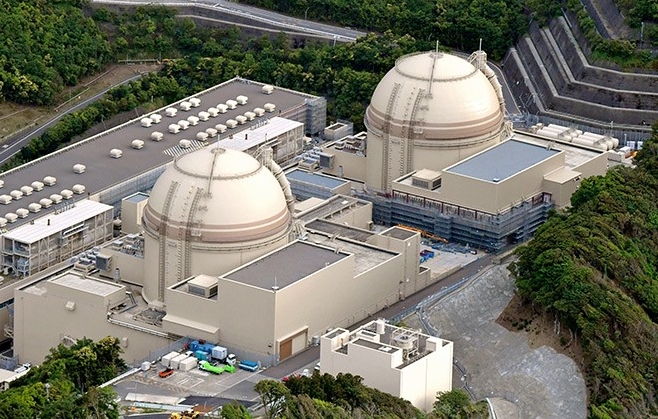
Kansai Electric Power Co.’s Oi nuclear power plant No. 3 reactor, left, and the No. 4 reactor in Oi, Fukui Prefecture, in 2017
November 4, 2020
Japan will have to limp by on just one nuclear reactor for the next six weeks after Kansai Electric Power Co. shut down the No. 4 reactor at its Oi nuclear plant in Fukui Prefecture, western Japan, for regular maintenance on Nov. 3.
That task will fall to the No. 4 reactor of Kyushu Electric Power Co.’s Genkai nuclear power plant in Genkai, Saga Prefecture.
All nuclear power plants shut down in Japan in the aftermath of the 2011 earthquake and tsunami disaster that crippled the Fukushima No. 1 nuclear power plant in Fukushima Prefecture.
Since then, the Kansai, Shikoku and Kyushu electric power utilities restarted operations of nine reactors at five nuclear power plants.
This is the first time since May 2017 that all nuclear reactors operated by Kansai Electric remain suspended.
Electric power companies are required to construct an anti-terrorism facility at their nuclear power plants under stringent new safety regulations imposed after the triple meltdown at the Fukushima plant.
But Kansai Electric failed to meet the deadline at the Takahama nuclear power plant in Takahama, Fukui Prefecture, forcing it to take its No. 3 and No. 4 reactors offline.
In addition, pipes need to be replaced at its Oi nuclear power plant’s No. 3 reactor.
Kansai Electric submitted repair plans to the government and expects to finish the work in January so it can restart the reactor in February at the earliest.
In January this year, the Hiroshima High Court granted a provisional disposition order to stop Shikoku Electric’s Ikata nuclear power plant’s No. 3 reactor in Ikata, Ehime Prefecture, which means it is unlikely to come back online until next March at the earliest.
Kyushu Electric’s Sendai nuclear power plant’s No. 1 and No. 2 reactors in Satsuma-Sendai, Kagoshima Prefecture, were also suspended after construction of an anti-terrorism facility fell behind schedule.
The Genkai nuclear power plant’s No. 3 reactor is undergoing regular inspections, so only the No. 4 reactor is still operating.
This situation is expected to continue until Dec. 22 when Kansai Electric plans to restart the No. 3 reactor at its Takahama nuclear power plant.
Hibakusha renew their push for the abolition of nuclear weapons
Hiroshima atomic bomb survivor Abe Shizuko was reacting to the October 24 ratification of the United Nations Treaty on the Prohibition of Nuclear Weapons. The accord will take effect in January – although none of the world’s nuclear powers are members.
Nevertheless, hibakusha, which is what the atomic bomb survivors are called in Japan, see the treaty as a victory for their cause. “I take pride in the fact that the decision is a result of the united little voices of individual hibakusha,” says 93-year-old Abe.
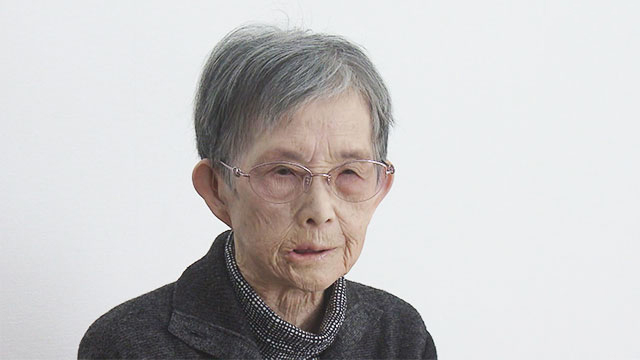
On August 6th, 1945, the United States dropped an atomic bomb for the first time in human history. Its target was Hiroshima, where 18-year-old Abe was helping to dismantle buildings to prevent the spread of fires caused by air raids during World War Two. Abe was working just 1.5 kilometers away from ground zero. She suffered severe burns on the right side of her body and face, and has been through 18 surgeries.
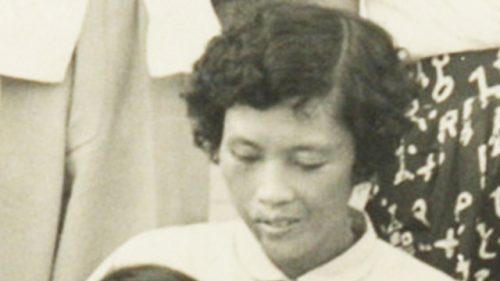
“The operations were very painful and difficult. There wasn’t enough anesthetic back in those days, so doctors could not give me supplemental relief even if I started feeling pain. I tolerated the pain through a strong hope to restore my body,” Abe recalls.
The bomb left keloid scars on her face and the right side of her body. In photographs from when she was younger, Abe always looks down, or shows only her left side.
A-bomb survivors call the 10-year period following the world’s first atomic bombing “the blank decade.” That is because people who were injured had little to no medical or financial support. At the same time, they were exposed to severe prejudice and discrimination.
Abe says she was once nicknamed “Red Ogre” because of her scars. “My wound did not heal. My body weakened. I was in poverty. Many people stared at me only just to satisfy their curiosity, because they wanted to know what a hibakusha looked like. They did not feel sympathy for me. They bullied me. The suffering that I went through, and the emotional wound, will never go away.”
In 1956, Abe joined other atomic bomb survivors to form a delegation. They traveled to Tokyo to appeal to the then prime minister and government officials to offer relief for victims, and support their call for the abolition of nuclear weapons. Those efforts led to the establishment of the Japan Confederation of A- and H-Bomb Sufferers Organization.
As the Cold War progressed, the hibakusha became disheartened. Even though they were speaking out about the need to eliminate nuclear weapons, the world was not listening. Nuclear experiments were being carried out repeatedly, and the arms race took off.
“It was really a difficult time for our campaign,” Abe remembers. “We felt as if we were yelling out while trying to survive in rough waves on a dark night.”
Abe carried a grudge against the US, but started to feel a change of heart almost 20 years after the bombing. In 1964, she went to the US and Europe for what was known as the Peace Pilgrimage. It was an opportunity for A-bomb survivors to speak about their personal experiences in front of audiences. Abe stayed at a private home with local hosts in the US, and she was deeply touched by their tender-heartedness.
“They listened attentively to my stories and said to me, ‘It must have been very hard for you. You’ve been through a lot. We’re so sorry for you,'” Abe recalls. “I realized we should never let anyone fall victim to nuclear weapons, regardless of what nationality you are. Americans or anybody.”
The voices of the hibakusha spread to all corners of the world, slowly but steadily.
These days, the average age of hibakusha is more than 83 years old, and there are fewer chances to hear their direct accounts. Some of them, like Taniguchi Sumiteru, played a direct role in the recent ratification of the UN treaty that bans nuclear weapons.
Taniguchi died three years ago, but he put the wheels in motion with a campaign that collected signatures to demand an international convention to ban nuclear weapons. He worked on that until the last moment of his life.
Taniguchi was 16 when he was exposed to the second atomic bomb that the US dropped on Japan. He was working as a postman in Nagasaki. A picture that shows the red burned flesh on his back shocked the world.
He delivered an impassioned speech at the 2010 Nuclear Non-Proliferation Treaty Review Conference at the UN’s New York headquarters: “Please don’t turn your eyes away from me. Please look at me again. I have survived miraculously, but for me, to ‘live’ was to ‘endure the agony’. Bearing the cursed scars of the atomic bomb all over our bodies, we the hibakusha continue to live in pain.”
“For humans to live as humans, not even one nuclear weapon should be allowed to exist on earth. I cannot die in peace until I witness the last nuclear warhead eliminated from this world,” said Taniguchi.
Hibakusha and their supporters gathered at Nagasaki Peace Park shortly after last month’s treaty ratification to share their joy. Among them was Okuma Yuka, a member of an activist group that calls itself “Hiroshima and Nagasaki Peace Messengers”.
Okuma took part in the signature-collecting campaign for the abolition of nuclear weapons after being deeply shocked by the image of a young Taniguchi in the aftermath of the atomic bombing. Her great-grandmother was a hibakusha but didn’t talk much about her experience. The photograph of Taniguchi brought it home to Okuma that suffering had occurred in her own family.

“I believe the Treaty on the Prohibition of Nuclear Weapons is definitely an important step forward,” Okuma says. “I expect that this will become a good opportunity for us to move toward a world that is completely free of nuclear weapons.”
Japanese govt rules out new nuclear reactors for 10 years
Here the Asahi Shimbun, generally a neutral and independent news source, appears to buy the myth of nuclear as a climate change cure, and of small nuclear reactors
|
Cabinet minister rules out new nuclear reactors for 10 years, THE ASAHI SHIMBUN, November 12, 2020 Industry minister Hiroshi Kajiyama is signaling that the government will not allow for the construction of new nuclear reactors to replace aging ones or to be installed additionally at nuclear plants for the next decade.His position suggests the Ministry of Economy, Trade and Industry, which oversees the nuclear industry, is unlikely to discuss the option of building new reactors in the new Basic Energy Plan it has been developing.
The plan has been revised twice since the 2011 Fukushima nuclear disaster. Heeding a national sentiment exceedingly anxious of nuclear energy, the government has passed up discussing building new reactors in past revisions of the plan. In an interview with The Asahi Shimbun on Nov. 10, Kajiyama acknowledged it is still premature to discuss the issue now. “Public faith has yet to be restored,” he said of public sentiment toward nuclear energy after the triple meltdown at the Fukushima plant. “How can we proceed (without it) in constructing new reactors to replace aging ones or to make additions? We are simply not at the stage where we can talk about the next move.” Kajiyama said the government’s priority over the next 10 years will be regaining public faith in the nuclear industry, rather than pushing for the construction of new reactors…….. The minister said the number of nuclear reactors that will be reactivated over the coming decade will be a point that the government will take into account as an indication of the public’s acceptance of nuclear energy when it comes to mulling over constructing new reactors. “It is also related to the government’s goal of achieving carbon neutrality in 2050,” he said. His comments suggest the government may begin considering constructing new reactors if more local governments approve restarting nuclear plants that were idled after the Fukushima accident. Currently, only one reactor at the Genkai nuclear plant in Saga Prefecture is operating in Japan after a reactor at the Oi nuclear plant in Fukui Prefecture was shut down for maintenance earlier this month. Kajiyama underlined the need to develop small modular reactors, which are smaller than conventional reactors. He said engaging in a modular reactor project would be meaningful when it comes to maintaining the nation’s technology for safeguarding nuclear power and nurturing scientists in the field–not to mention the potential for spinoffs. “It could lead to the development of new materials and other technologies,” he said. Last month, Prime Minster Yoshihide Suga laid out Japan’s plan to achieve net zero greenhouse gas emissions by 2050.,,,,,,, http://www.asahi.com/ajw/articles/13924315 |
|
Over one million tons of radioactive water will be discharged into the sea from the Fukushima nuclear power plant
|
Almost Unnoticed Nuclear Pandemic Is Spreading in Japan, https://www.indepthnews.net/index.php/the-world/asia-pacific/3967-almost-unnoticed-nuclear-pandemic-is-spreading-in-japan By Manlio Dinucci, 13 Nov 20,This article was originally published in Italian on Il Manifesto. It is being republished from Global Research. Manlio Dinucci is a Research Associate of the Centre for Research on Globalization (CRG).
MONTREAL (IDN) – It was not Covid-19, therefore the news went almost unnoticed: Japan will release over a million tons of radioactive water from the Fukushima nuclear power plant into the sea. The catastrophic incident in Fukushima was triggered by the Tsunami that struck the north-eastern coast of Japan on March 11, 2011, submerging the power plant and causing the core of three nuclear reactors to melt. [The links between nuclear power and nuclear weapons: Nuclear weapons and nuclear power share several common features. The long list of links includes their histories, similar technologies, skills, health and safety aspects, regulatory issues and radiological research and development The power plant was built on the coast just 4 meters above sea level with five-meter-high breakwater dams, in a tsunami-prone area with waves 10-15 meters high. Furthermore, there had been serious failures by the private company TEPCO (the Tokyo Electric Power Company) managing the plant, in the control of the nuclear plant: the safety devices did not come into operation at the time of the Tsunami. Water has been pumped through the reactors for years to cool the molten fuel. The water became radioactive and was stored inside the plant in over a thousand large tanks, accumulating 1.23 million tons of radioactive water. TEPCO is building other tanks, but they will also be full by mid-2022. TEPCO must continue pumping water into the melted reactors and has decided to discharge, in agreement with the government, the water accumulated so far into the sea after filtering it to make it less radioactive (however, to what extent it is not known) with a process which will last 30 years. There is also radioactive sludge accumulated in the decontamination filters of the plant, stored in thousands of containers, and huge quantities of soil and other radioactive materials. As TEPCO admitted, the melting in reactor 3 is particularly serious because the reactor was loaded with Mox, a much more unstable and radioactive mix of uranium oxides and plutonium. The Mox for this reactor and other Japanese ones was produced in France, using nuclear waste sent from Japan. Greenpeace has denounced the danger deriving from the transport of this plutonium fuel for ten thousand kilometres. Greenpeace also denounced that Mox favours the proliferation of nuclear weapons, since plutonium can be extracted more easily and, in the cycle of uranium exploitation, there is no clear dividing line between civilian and military use of fissile material. Up to now, around 240 tons of plutonium for direct military use and 2,400 tons for civil use (nuclear weapons can however be produced with them), were accumulated in the world (according to 2015 estimates), plus about 1,400 tons of highly enriched uranium for military use. A few hundred kilograms of plutonium would be enough to cause lung cancer to 7.7 billion inhabitants of the planet, and plutonium remains lethal for a period corresponding to almost ten-thousand human generations. A destructive potential has thus accumulated, for the first time in history, capable of making the human species disappear from the face of Earth. The nuclear bombings of Hiroshima and Nagasaki; the more than 2,000 experimental nuclear explosions in the atmosphere, at sea and underground; the manufacture of nuclear warheads with a power equivalent to over one million Hiroshima bombs; the numerous accidents involving nuclear weapons and those involving civilian and military nuclear plants, all this has caused radioactive contamination that has affected hundreds of millions of people. A portion of approximately 10 million annual cancer deaths worldwide – documented by WHO – is attributable to the long-term effects of radiation. In ten months, again according to the World Health Organization data, Covid-19 caused about 1.2 million deaths worldwide. This danger should not be underestimated, but it does not justify the fact that mass media, especially television, did not inform that over one million tons of radioactive water will be discharged into the sea from the Fukushima nuclear power plant, with the result that it will further increase cancer deaths upon entering in the food chain. [IDN-InDepthNews – 04 November 2020] |
|
Governor of Miyagi Prefecture approves plan to restart Onagawa nuclear reactor.
Here’s another article that quietly accepts the myth that nuclear power combats climate change.
Japan Could Restart Nuclear Reactor Damaged In 2011 Disaster, Oil Price By Tsvetana Paraskova – Nov 12, 2020, A local governor in Japan has approved plans from utility Tohoku Electric Power to restart one of its nuclear reactors that was damaged in the 2011 earthquake and the following tsunami, the same that caused the reactor meltdown at Fukushima.
Tohoku Electric Power received approval from the governor of Miyagi Prefecture, Yoshihiro Murai, to restart unit 2 at the Onagawa nuclear power plant, a spokesman for the company told Reuters.
In its strategy for the medium and long term, the company said in February this year that “On the premise of secured safety, we will aim for the prompt restart of Onagawa Nuclear Power Unit 2 with the local community’s understanding.”
Last month, Japan pledged to become a net-zero emissions economy by 2050, joining the UK and the European Union (EU) in those commitments. Due to the closure of nuclear reactors after Fukushima, Japan relies on coal for around a third of its electricity generation.
Nuclear lobby gets its tentacles into education in India

By India Education Diary Bureau Admin -November 11, 2020, Noida: Shiv Nadar School, Noida, (a not-for-profit initiative of the Shiv Nadar Foundation in K12 education) organized the first-of-its-kind Energy Boot Camp as part of its STEAM (Science, Technology, Engineering, Art, and Math) program to bring awareness about clean energy, climate change and sustainability.The Boot Camp was organized virtually in association with the Indian Youth Nuclear Society (IYNS), from November 6 to 8, 2020 and witnessed participation from around 2000 students (Grade 6 to 12)…….. https://indiaeducationdiary.in/shiv-nadar-school-hosts-virtual-boot-camp-on-nuclear-energy-climate-change-and-sustainability/
In desperate search of disposal sites for its nuclear waste, Japan offers poisonous grants to two small villages

|
In desperate search of disposal sites for its nuclear waste, Japan offers poisonous grants to two small villages, https://www.equaltimes.org/in-desperate-search-of-disposal#.X6mapGgzbIU By Carmen Grau, 9 November 2020, One morning in September, 87-year-old retiree Masao Takimoto was reading the newspaper in his house in Kamoenai when a news story captured his attention, ruined his day and changed the course of this quiet fishing village on the island of Hokkaido, in northern Japan: the mayor of the village of 822 had agreed to a preliminary study to host a disposal site for highly radioactive nuclear waste, for which the Japanese government would award 2 billion yen (€16 million, US$19 million) in subsidies.Mr Takimoto didn’t waste a single minute. He wrote a letter of protest and delivered it by hand to the mayor’s house. Over the following days, he produced and distributed leaflets alerting others to the dangers of the nuclear disposal site and tried to gain access to the meetings that were being hastily held. His journey to activism resulted in tensions and anonymous threats. Ultimately he was unable to stop the mayor from signing on 9 October an application with the Nuclear Waste Management Organisation (NUMO), a quasi-governmental body charged with managing Japan’s radioactive waste.
Meanwhile, just 40 km away, another fishing village of 2,900 inhabitants quickly mobilised to prevent their mayor from volunteering for the same study. Suttsu, 40 per cent of whose inhabitants are over 65 years old, announced in August its interest in applying for the large subsidy to combat depopulation. Haruo Kataoka, 71, the town’s mayor since 2001, has been accused of ignoring civil society groups, national anti-nuclear organisations, fishers’ associations, leaders of neighbouring municipalities, the think tank CEMIPOS and even the governor of Hokkaido. The region, a major source of fishing and agricultural resources, has an ordinance opposing nuclear waste in its territory. “We want to vote on the proposal. We’re worried about our fishing industry. If nuclear waste is stored here and there are problems in the future, we won’t be able to protect the environment or our jobs,” says Toshihiko Yoshino, a fishing entrepreneur in Suttsu. Yoshino processes and sells the local specialty, oysters, young sardines and anchovies. On 10 September, with a group of residents both young and old, he founded the organisation ‘No to Nuclear Waste for the Children of Suttsu.’ They collected signatures to request a referendum. On the eight day they launched a campaign to implement it, in collaboration with civil groups in the region. Their efforts were in vain: the mayor signed the application in Tokyo the following day. The previous morning, a Molotov cocktail exploded at the mayor’s house, an incident that left no one injured. Someone broke the bicycle that Junko Kosaka, 71, was using to hand out leaflets against the nuclear disposal site. She has been a member of the opposition in the Suttsu council for nine years and laments the tension and discord between neighbours. “The village has no financial problems. There are fishing companies and profitable sales of fish. We receive a large budget from Japanese citizens who support rural areas through the Hometown Tax scheme.” She was surprised by the age of NUMO’s managers, all of whom are elderly, and believes that young people should decide their own future. “I would like the managers to reflect, to rethink nuclear energy. We are a country of disasters.” Emptying villages and poor employment prospectsJapan is the world’s fourth largest producer of nuclear power after the United States, France and China. Distributed across the archipelago, 54 reactors generated 30 per cent of electricity until 2011. Despite having shut down the majority of reactors following the fatal accident of Fukushima, Japan’s commitment to nuclear energy remains firm, though not without controversy. Nine reactors are still in operation and 18 are waiting to be reactivated to generate 20 per cent of the country’s electricity in 2030. Since 2002, the government has been looking for a location for a permanent geological repository, concrete structures at least 300 metres below ground that will store radioactive waste for millennia so as not to affect life and the environment. Desperate to solve a global and irreversible problem of the nuclear age, Japan is offering subsidies to encourage localities to host the repository. Small villages with declining populations and uncertain futures are attracted by the promise of money and jobs. The first phase will consist of two years of feasibility research. For the following phase, a four-year preliminary geological investigation, villages will receive an additional 7 billion. The final phase will consist of digging and the construction of the underground facility, a process that will last 14 years. But where is the waste? “It cools off in overflowing pools while time runs out,” say many frustrated opponents of nuclear energy in Japan. For decades Japan has been shipping tons of spent fuel to France and England for reprocessing, but the resulting radioactive waste must be returned to the country of origin for disposal by the IAEA. Japan only has a temporary repository (between 30 and 50 years – and half of that time is already up) in the village of Rokkasho, but 40,000 highly polluting cylinders are waiting for a permanent storage (the construction of which could take at least 20 years). The central government must also find storage for low-intensity waste occupying the equivalent of eight Olympic-size swimming pools. Every time a power plant operator uses gloves, a suit or tools, the earth fills with rubbish that contaminates for generations. France, Belgium, Sweden and Spain already have disposal sites for several centuries and Finland has just opened a permanent site in one of the oldest rock formations in Europe. In 2007, the city of Toyo asked to enter the preliminary study but soon backed out after facing strong local opposition. In 2017, the central government released a map of potentially suitable sites. It ruled out sites near active volcanoes and fault lines, as well as areas with recent seismic activity. A wide area of Suttsu and a small portion of Kamoenai are seen to be favourable. Both locations are very close to the Tomari nuclear power plant, which is currently inactive. The residents of Suttsu turned to experts for help. On 2 October, Hideyuki Ban, co-director of the Citizens’ Nuclear Information Centre came to the town with a renowned geologist to provide information to residents. According to the nuclear expert: “There is no space for the nuclear repository in Suttsu. We have to reclaim land from the sea and there hasn’t been enough research. Our country is not a geologically stable territory.” He says that 200 people attended the seminar, including the mayor “who must have already made the decision.” Is it safe? “It is not safe, there could be leaks. Currently there is no appropriate technology in the world for handling radioactive waste. The only way to reduce it is to shut down the plants.” So what should be done with the waste? “More research should be done and it should be buried using deep borehole disposal at more than 3,000 metres below the earth’s surface.” A debated that is not promotedNobody in Kamoenai wants to talk to the press. By mid-morning, the boats have returned and the women are cleaning the salmon for sale. There are empty houses and closed businesses which have seen better days. In the main street, an imposing building is under construction: the new town hall, just opposite the old one. “I’m an employee of the town hall and I’m not authorised to respond,” says one young woman. “I’m not an expert, I can’t give an opinion,” says a young man. “I don’t want to talk, I could lose my job,” says a worried woman. “We have the power plant nearby and nothing bad has ever happened,” says another evasively. Takimoto is the only person willing to speak out without fear: “It’s an obscure and cowardly process, nothing is transparent. The political administration is stifling the voices of the people. It’s strange that the most important thing, safety, isn’t being mentioned. We have to think about future dangers.” “The government claims that it will be safe for years to come, that’s their argument. But should we believe it? The experts say the opposite. Just this year, on the 75th anniversary of the bombings of Hiroshima and Nagasaki, I was reading testimonies that made me cry. I have seen the effects of radiation on patients. I don’t want the children of Fukushima or of my village to suffer from it. We have to imagine a village without a nuclear power station or nuclear waste and that’s what I’m going to dedicate myself to,” he adds. “I’ve been booed at local meetings, but there are people who support me in secret. Many of them pretend to be in favour but deep down they’re not. They don’t speak out for fear of losing their jobs, like the relatives of plant employees.” Takimoto refuses to give up. He has offered his experience in the health sector as a resource to help revitalise the town through projects such as medical tourism, but he has been unable to prevent the application from going through. The Japanese government has welcomed the two locations (Kamoenai and Suttsu) and NUMO’s president expressed gratitude “for the courageous step”. The Minister of Industry said that they “will do their best to win the support of the people.” But the governor of Hokkaido has firmly stated that he will oppose the second phase. Those who oppose the disposal site fear that receiving the subsidies will make it difficult to back out due to government pressure. According to local journalists Chie Yamashita and Yui Takahashi of the Mainichi Shinbun: “Without going into whether or not applying is the right thing to do, there needs to be a debate about the management of radioactive waste and the process of selecting a location.” Everyone consulted for this article is calling for a national debate, which the government has not yet set in motion. Some residents, like Takimoto, continue to protest: “No to nuclear waste. Life is more important than money.” On the poster, a baby dreams of a world and an ocean without pollution. This article has been translated from Spanish. |
|
The accumulating radioactive water is another Fukushima disaster crisis
|
Japan faces another Fukushima disaster crisis https://www.eco-business.com/news/japan-faces-another-fukushima-disaster-crisis/ – 6 Nov 20, A plan to dump a million tonnes of radioactive water from the Fukushima disaster off Japan is alarming local people. Paul Brown, Climate News Network. The Japanese government has an unsolvable problem: what to do with more than a million tonnes of water contaminated with radioactive tritium, in store since the Fukushima disaster and growing at more than 150 tonnes a day.
The water, contained in a thousand giant tanks, has been steadily accumulating since the nuclear accident in 2011. It has been used to cool the three reactors that suffered a meltdown as a result of the tsunami that hit the coast. Tritium is a radioactive element produced as a by-product by nuclear reactors under normal operation, and is present everywhere in the fabric of the reactor buildings, so water used for cooling them is bound to be contaminated by it. To avoid another potentially catastrophic meltdown in the remaining fuel the cooling has to continue indefinitely, so the problem continues to worsen. The government has been told that Japan will run out of storage tanks by 2022. Announcement delayedAs often happens when governments are faced with difficult problems, the unpalatable decision to release the contaminated water into the sea has not been formally announced, but the intention of the government to take this course has been leaked and so widely reported. Immediately both local and worldwide adverse reaction has resulted. There are the direct effects on the local fishermen who fear that no one will want to buy their catch, but over a wider area the health effects are the main concern. As ever with the nuclear industry, there are two widely different views on tritium. The Health Physics Society says it is a mildly radioactive element that is present everywhere, and doubts that people will be affected by it. But the Nuclear Information and Resource Service believes tritium is far more dangerous and increases the likelihood of cancers, birth defects and genetic disorders. The issue is further complicated because the Fukushima wastewater contains a number of other radionuclides, not in such high quantities, but sufficient to cause damage. Ian Fairlie, an independent consultant on radioactivity in the environment, is extremely concerned about Japan’s plans and the health of the local people. In a detailed assessment of the situation he says other highly dangerous radioactive substances, including caesium-137 and strontium-90, are also in the water stored at Fukushima. They are in lower quantities than the tritium, he says, but still unacceptably high – up to 100 times above the legally permitted limit. All these radionuclides decay over time − some take thousands of years − but tritium decays faster, the danger from it halving every 12.3 years. In a briefing for the Nuclear Free Local Authorities (NFLA), a UK based organisation, another independent analyst, Tim Deere-Jones, discusses research that shows that tritium binds with organic material in plants and animals. This is potentially highly damaging to human health because it travels up the food chain in the marine environment, specifically accumulating in fish. This means fish-eating communities on the Japanese coast could ingest much larger quantities of tritium than some physicists think likely. Relying on dilutionTim Deere-Jones is also concerned that the tritium will be blown inshore on the prevailing wind in sea spray and will bio-accumulate in food plants, making it risky to eat crops as far as ten miles inland. Because of the potential dangers of releasing the water the NFLA has asked the Japanese government to reconsider its decision. The government has not yet responded though, because officially it is still considering what to do. However, it is likely to argue that pumping the contaminated water into the sea is acceptable because it will be diluted millions of times, and anyway seawater does already contain minute quantities of tritium. Dr Fairlie is among many who think this is too dangerous, but he admits there are no easy solutions. He says: “Barring a miraculous technical discovery which is unlikely, I think TEPCO/Japanese Gov’t [TEPCO is the Tokyo Electric Power Company, owner of the Fukushima Daiichi plant] will have to buy more land and keep on building more holding tanks to allow for tritium decay to take place. Ten half-lives for tritium is 123 years: that’s how long these tanks will have to last – at least. “This will allow time not only for tritium to decay, but also for politicians to reflect on the wisdom of their support for nuclear power.” |
|
Japan: the next generation of LDP leaders embrace both carbon neutrality and the elimination of nuclear energy.
Nuclear Power and Japan’s 2050 Climate Pledge
Japan’s latest carbon-neutrality pledge puts the spotlight on the challenges facing the country’s nuclear power industry. The Diplomat , By Tom Corben,, November 05, 2020 In his inaugural address to the Diet last month, Japan’s Prime Minister Suga Yoshihide officially announced that his government would revise the country’s carbon-neutrality commitments, aiming for zero emissions by 2050. Suga expressed his intent to “put maximum effort into achieving a green society…..
Of course, the nuclear lobby’s entrenched interests at the highest levels of the government and within the LDP itself will likely continue to frustrate efforts to comprehensively revise Japan’s nuclear energy policies. Indeed, there is every chance that the revised Basic Energy Plan due next year will maintain, if not expand, the share of Japan’s energy mix allocated to nuclear power. Still, without significant changes to the regulatory environment, a more favorable business environment, or a major shift in public opinion or political support, at present it is difficult to see Japan’s nuclear power industry making a major contribution to Japan’s carbon-neutrality goals in the coming decades.
Japanese nuclear regulator’s website hit by possible cyberattack
Japanese nuclear regulator’s website hit by possible cyberattack, Japan Times, https://www.japantimes.co.jp/news/2020/11/04/national/nuclear-regulator-website-cyberattack, KYODO, Nov 4, 2020
The Nuclear Regulation Authority said Tuesday its official website became inaccessible possibly due to cyberattacks.
The incident comes a week after the regulatory body’s intranet had an unauthorized access from outside.
According to the NRA, the government’s cybersecurity institute notified it of the website disruption on Tuesday afternoon. There was no abnormality when the NRA updated the website Monday evening, it said.
The website remained inaccessible for hours, but the problem was resolved by around 8:30 p.m., the NRA said.
In August, a fake website resembling that of the NRA was discovered by an official of the regulator.
Due to shutdowns, Japan has only one nuclear reactor working
Japan left with only one nuclear reactor working due to shutdown, Asahi Shimbun, By HIROKI HASHIMOTO/ Staff Writer, November 4, 2020
Electric power companies are required to construct an anti-terrorism facility at their nuclear power plants under stringent new safety regulations imposed after the triple meltdown at the Fukushima plant.
But Kansai Electric failed to meet the deadline at the Takahama nuclear power plant in Takahama, Fukui Prefecture, forcing it to take its No. 3 and No. 4 reactors offline.
In addition, pipes need to be replaced at its Oi nuclear power plant’s No. 3 reactor.
Kansai Electric submitted repair plans to the government and expects to finish the work in January so it can restart the reactor in February at the earliest.
In January this year, the Hiroshima High Court granted a provisional disposition order to stop Shikoku Electric’s Ikata nuclear power plant’s No. 3 reactor in Ikata, Ehime Prefecture, which means it is unlikely to come back online until next March at the earliest.
Kyushu Electric’s Sendai nuclear power plant’s No. 1 and No. 2 reactors in Satsuma-Sendai, Kagoshima Prefecture, were also suspended after construction of an anti-terrorism facility fell behind schedule.
The Genkai nuclear power plant’s No. 3 reactor is undergoing regular inspections, so only the No. 4 reactor is still operating.
This situation is expected to continue until Dec. 22 when Kansai Electric plans to restart the No. 3 reactor at its Takahama nuclear power plant. http://www.asahi.com/ajw/articles/13900336
Compensation claims recognised – workers made ill by working at Fukushima’s wrecked nuclear plant
 Compensation claims related to Fukushima nuclear plant work total 269, https://japantoday.com/category/national/compensation-claims-related-to-fukushima-plant-work-total-269
The workers’ compensation claims that have been recognized by labor authorities include six cases of workers who developed cancer or leukemia due to radiation exposure, and four others who suffered from overwork-related illnesses, according to the Ministry of Health, Labor and Welfare officials.
Decommissioning of the Fukushima plant is still under way nearly 10 years after the massive earthquake and tsunami that devastated northeastern Japan triggered meltdowns at the Fukushima Daiichi nuclear plant. To this day, about 4,000 people still work on site every day, with many at risk of radiation exposure.
The compensation claims that have been approved refer to the period since the March 2011 nuclear accident through Oct 1 this year.
According to the plant operator, Tokyo Electric Power Company Holdings Inc, three people died between fiscal 2011 and 2019.
One worker, who wished to remain anonymous, told Kyodo News the pressure of working at a nuclear power plant as opposed to a normal working site is “incomparable.”
“I have to deal with so much anxiety and stress as I could never know what may happen inside a nuclear power plant,” said the man from Iwaki, Fukushima Prefecture.
According to the worker, he wears two protective layers of clothing and tapes them together so there is no space between them, and also puts on a raincoat.
“I sweat a lot even in winter and I drink a lot of water,” he said, adding that several of his colleagues suffered from heat stroke or heat exhaustion while working at the plant.
TEPCO said a total of 98 people suffered from heat-related illnesses between fiscal 2011 and 2019, having had to wear masks and protective gear made of less permeable materials under the sweltering summer heat.
At the site of the Fukushima Daiichi plant, 313 accidents have occurred in the same period of time, including several fatal cases between 2014 and 2015 in which workers fell into a tank, TEPCO said.
Acknowledging that many accidents had occurred, a TEPCO official said, “We will continue to work with our contractors to prevent such incidents from happening.”
China-India competition is not likely to lead to a nuclear weapons exchange
|
After the Border Clash, Will China-India Competition Go Nuclear?,
WHAT DO CHINA AND INDIA THINK ABOUT EACH OTHER’S NUCLEAR WEAPONS? Carnegie Endowment for International Peace TOBY DALTON, TONG ZHAO, RUKMANI GUPTA, OCTOBER 29, 2020
|
|
Tritium is what makes nuclear reactors so dangerous, not only in Fukushima but also in S. Korea
 http://english.hani.co.kr/arti/english_edition/e_editorial/967441.html By Kim Eun-hyoung, editorial writer, Oct.27,2020
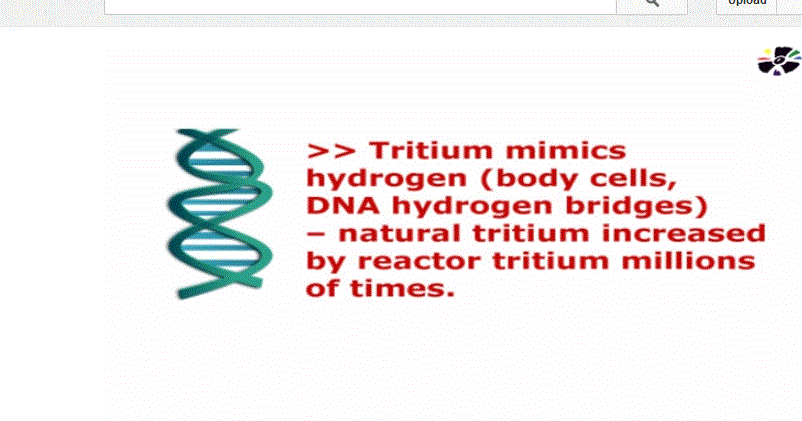
Tritium exists in the natural world, but only in negligible amounts. It’s typically produced during the fission process inside nuclear reactors. Tritium is part of the coolant that lowers the temperature in the reactor core, which is heated by fission.
The contaminated water at the Fukushima reactor that the Japanese government seeks to release into the ocean contains tritium at levels that are 10 times higher than levels permitted by the South Korean government. That has terrified people not only in Japan but also in Korea.
The Japanese government says that the contaminated water doesn’t present a problem because it will be decontaminated through Tokyo Electric Power Company’s advanced liquid processing system (ALPS), before release. But the tricky part about releasing the contaminated water is tritium, which can’t be removed by ALPS because of the strong chemical bond it forms with water.
But Fukushima isn’t the only place affected by the risk of tritium. Heavy-water reactors are cooled with heavy water (deuterium oxide, 2H2O) instead of ordinary drinking water, producing a greater amount of tritium. There are four heavy-water reactors at Korea’s Wolsong plant, including Wolsong-1, which has been in the news recently after government auditors questioned a report about its economic viability, the justification given for shutting the reactor down earlier than planned.
Tritium is regarded as a low-risk radioactive substance, causing less harm than other types of radiation. For one thing, the radiation emitted by tritium is so weak that it can’t penetrate the outer layer of the skin. And even when it is absorbed by the body, its biological half-life — the time required for half the substance to leave the body — is only 12 days.
Even now, Wolsong-2, Wolsong-3, and Wolsong-4 account for 40% of the tritium released by all of Korea’s nuclear stations. Rates of thyroid cancer among women who live near the Wolsong nuclear plant are 2.5 times higher than in other areas, which some think is linked to tritium contamination. The question of nuclear power safety affects Korea in the same way as it affects Japan. It would be foolish and contradictory to view Japanese nuclear plants through the lens of safety and Korean nuclear plants through the lens of economic viability.
But such safety observations only apply to a single dose of radiation, such as an X-ray, and the actual risk depends on the intensity of exposure. That has led various countries to develop strict safety standards for the substance. The European Committee on Radiation Risk warns that internal radiation exposure can cause mutations that could lead to cancer.
Japan’s net zero emissions target should be combined with zero nuclear power
Japan’s net zero emissions target should be combined with zero nuclear power, October 28, 2020 (Mainichi Japan) ”…………… Under Japan’s basic energy plan, the country aims to raise the ratio of renewables to 22 to 24% by fiscal 2030. But this target is far from sufficient. As the government is currently working on a revision to the plan, it should drastically review the energy mix.
It is imperative to reconsider the nuclear power ratio said to account for 20-22% of Japan’s power mix. The government is aspiring to secure constant nuclear power output by replacing aging nuclear power stations and through other measures while moving ahead with reactivation of idled nuclear plants.
However, nuclear power complexes carry the risk of severe accidents. As it costs enormous money to secure safety at those facilities, the idea of labeling nuclear power as cheap energy is not globally accepted. The government has a responsibility to provide a road map for breaking Japan’s dependence on nuclear power.
In European countries, efforts to revive their economies severely hit by the novel coronavirus pandemic through environmental investment are underway. This initiative, called “green recovery,” can come into line with the principle of a “virtuous cycle of environment and economic growth” emphasized by Prime Minister Suga.
It is hoped that Japan will achieve a decarbonized society through improvement of renewable energy technologies and active investments in research and development of hydrogen energy and retrieval and storage of carbon dioxide.
It is also necessary to build a mechanism to guarantee the realization of the promise of net zero greenhouse gas emissions. In addition to discussions on a carbon tax, levied in accordance with the volumes of greenhouse gas emissions, the government is urged to consider specifying this goal in Japan’s Act on Promotion of Global Warming Countermeasures.
Hurdles for attaining the goal remain high and we have a limited time frame. It is urgently needed to craft a strategy to prevent the net zero target from ending up as a mere empty promise. https://mainichi.jp/english/articles/20201028/p2a/00m/0na/017000c
1 This Month
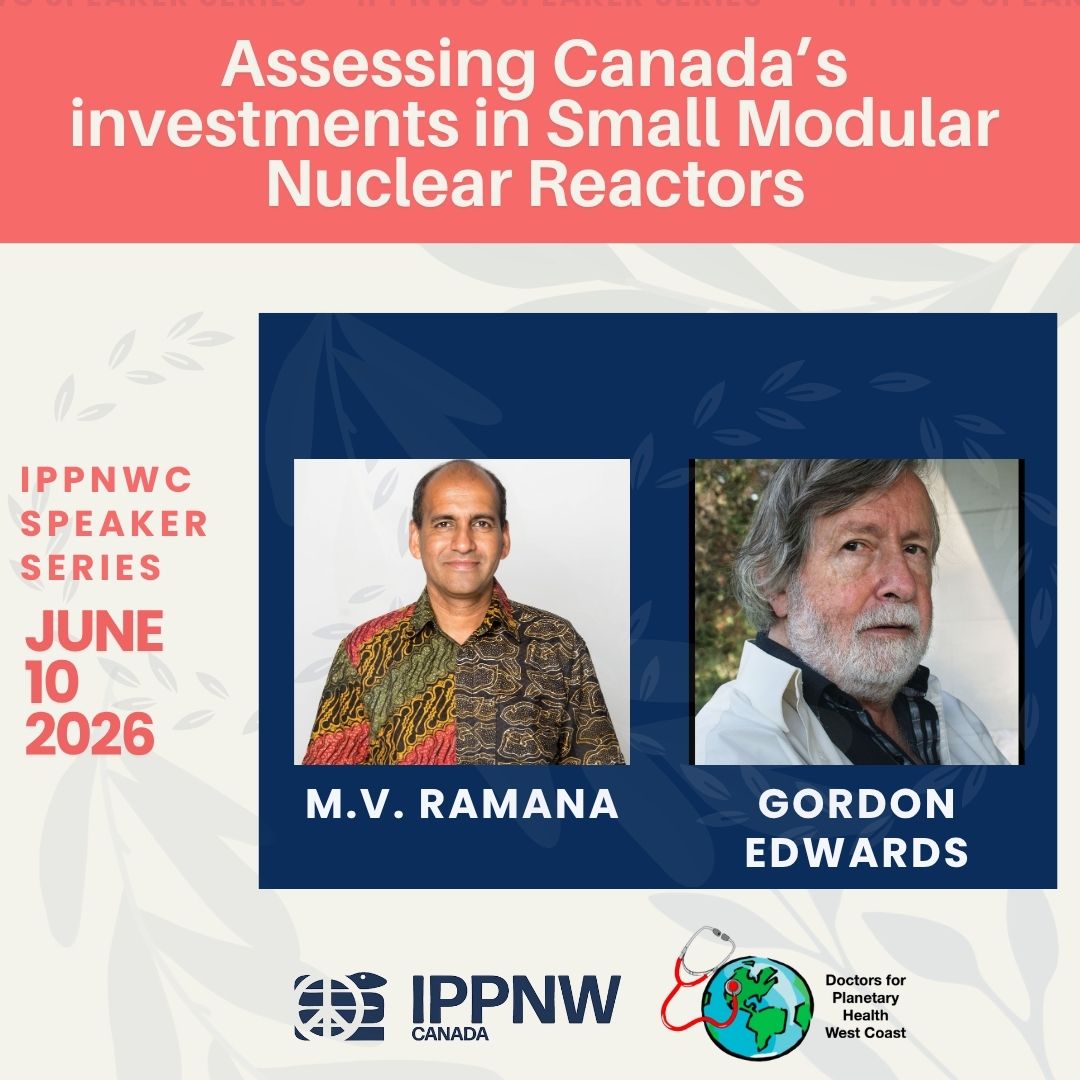
10 June – Assessing Canada’s Investments in Small Modular Nuclear Reactors – https://zoom.us/meeting/register/IiqHA5feRhaEBycOLNTJlA#/registration


Cuba Is Not a Failed State – It Is a Besieged State
PETITION: “Global Appeal to Endorse Palestinian Right of Return of Refugees”
To see nuclear-related stories in greater depth and intensity – go to https://nuclearinformation.wordpress.com
-
Archives
- June 2026 (79)
- May 2026 (306)
- April 2026 (356)
- March 2026 (251)
- February 2026 (268)
- January 2026 (308)
- December 2025 (358)
- November 2025 (359)
- October 2025 (376)
- September 2025 (257)
- August 2025 (319)
- July 2025 (230)
-
Categories
- 1
- 1 NUCLEAR ISSUES
- business and costs
- climate change
- culture and arts
- ENERGY
- environment
- health
- history
- indigenous issues
- Legal
- marketing of nuclear
- media
- opposition to nuclear
- PERSONAL STORIES
- politics
- politics international
- Religion and ethics
- safety
- secrets,lies and civil liberties
- spinbuster
- technology
- Uranium
- wastes
- weapons and war
- Women
- 2 WORLD
- ACTION
- AFRICA
- Atrocities
- AUSTRALIA
- Christina's notes
- Christina's themes
- culture and arts
- Events
- Fuk 2022
- Fuk 2023
- Fukushima 2017
- Fukushima 2018
- fukushima 2019
- Fukushima 2020
- Fukushima 2021
- general
- global warming
- Humour (God we need it)
- Nuclear
- RARE EARTHS
- Reference
- resources – print
- Resources -audiovicual
- Weekly Newsletter
- World
- World Nuclear
- YouTube
-
RSS
Entries RSS
Comments RSS
 nuclear-news