Japan’s emergency drill envisages nuclear accidents at multiple locations

 NHK 25th Aug 2018 , Emergency crews and residents in central Japan began a major disaster drill
on Saturday that is the first exercise of its kind. The 2-day drill is
being held at 2 nuclear power plants in Fukui Prefecture. The Cabinet
Office planned the exercise to prepare for accidents striking multiple
locations at the same time. The drill is based on a scenario of an
earthquake causing the Ohi and Takahama Plants to lose power, stopping the
plant cooling systems and releasing nuclear substances. The 2 plants are
located 13 kilometers from each other.
https://www3.nhk.or.jp/nhkworld/en/news/20180825_15/
Mainichi 25th Aug 2018
http://mainichi.jp/english/articles/20180825/p2g/00m/0dm/077000c
Risk of terrorist attacks in Japan Olympics: Japan strengthening waterfront security
Tokyo tightening waterfront security ahead of Olympics, Japan Times 7 Aug 18 , JIJI, AUG 7, 2018
“…….Tokyo police will restrict ship operations near the competition venues and other facilities on the waterfront during the Olympics, while considering introducing state-of-the-art security equipment
…..The Japan Coast Guard is enhancing its security activities using patrol ships and aircraft.
……The Tokyo police are also beefing up their presence at Haneda airport.
A new facility adjacent to the airport is to be built by 2020. Anti-terrorist officers and explosive sniffer dogs will be stationed there at all times.
The police will have to guard a wide range of waterfront facilities, including “hotel ships,” during the games……https://www.japantimes.co.jp/news/2018/08/07/national/tokyo-tightening-waterfront-security-ahead-olympics/#.W4MdgiQzbGg
Fukushima prefecture to start 2020 Olympic Games Torch Relay


Fukushima, one of the three prefectures hit hardest by the March 11, 2011, powerful earthquake and tsunami, has been picked as the starting point for the relay to highlight progress in the reconstruction of affected areas.
“We’ll proceed with preparations for realizing a torch relay that is suited for the start of the Olympics symbolizing postdisaster reconstruction,” Fukushima Gov. Masao Uchibori said at the meeting.
Torch-bearers are scheduled to run through Fukushima for three days starting on March 26, 2020, as part of the 121-day relay across the nation’s 47 prefectures.
The Fukushima officials will also discuss ways to select torch-bearers and ensure the safety of the relay route.
Big safety costs for Japan’s nuclear power stations- and costs will grow yearly
measures will cost 11 nuclear plant operators at least a combined 4.41
trillion yen ($40 billion), according to this year’s estimate, an Asahi
Shimbun study found. The soaring outlays undermine a government claim that
nuclear energy will be the cheapest source of power in 2030.
strengthen their facilities to withstand a terrorist attack within five
years of clearing more stringent regulations on reactor restarts imposed by
the Nuclear Regulation Authority.
http://www.asahi.com/ajw/articles/AJ201808230044.html
Japan plans to reduce its 47.3 tons of stockpiled plutonium
 IPFM 20th Aug 2018 , On 31 July 2018, Japan’s Atomic Energy Commission (JAEC) issued a new
policy paper, The Basic Principles on Japan’s Utilization of Plutonium,
which for the first time, stated that “Japan will reduce the size of its
plutonium stockpile.”
Energy Plan (in Japanese) by the Ministry of Economy, Trade and Industry
(METI) that was adopted on 3 July by the Cabinet of the Japanese
government. Japan’s plutonium stockpile, according to the data released by
the JAEC at the same time as the new policy, is about 47.3 tons of
plutonium (as of the end of 2017), of which 36.7 tons is overseas (21.2
tons in UK and 15.5 tons in France) and 10.5 tons in Japan. The Rokkasho
reprocessing plant, with a design separation capacity of 8 tons of
plutonium per year, on which stated construction in 1993, is currently
planned to be completed in 2021. Plans call for the J-MOX plant to be
completed in 2022 to turn this plutonium into MOX fuel for light water
(LWR) nuclear power reactors.
http://fissilematerials.org/blog/2018/08/japans_new_policy_on_its_.html
Japan’s 2020 Olympic Games a public relations cover-up of the Fukushima fiasco, for the nuclear industry
 Pay no attention to that radiological disaster behind the curtains https://globalhibakusha.com/page-2/?permalink=hiding-fukushima-behind-the-curtains-in-official-japan by Bo,
The government of Japan is clearly intending that the 2020 Olympics will function as a public relations win in which the image of Japan, and especially of Northern Japan and Fukushima are cleansed of images of radiological contamination. Even as the Fukushima Daiichi site itself, and the traces where the plumes of its explosions deposited fallout throughout the area remain un-remediated, the public perceptions will be remediated. This is typical of the behavior of governments in the developed world that suffer radiological disasters. The disasters themselves are so difficult to clean up, and take decades to even begin the clean up, that money is allocated for extensive public relations efforts. These become tasks that CAN be completed and CAN be considered successful. They function both to advance the public image agenda of the governments, and also deliver a sense of agency when the overall tone of nuclear disaster remediation is one of lacking effective agency.
Towards that end, the Japanese government is planning to integrate Fukushima sites and perceptions into the upcoming Olympics media fest. The journey of the Olympic torch through every prefecture of Japan will begin in Fukushima, a symbolic rebirth intended to facilitate the repopulating of the local communities that were evacuated, many of which have had few returnees since the government has declared them “safe” and cut public funds to those forcibly evacuated.

The government is also planning to hold multiple Olympic events in Fukushima prefecture including baseball and softball events. “Tokyo 2020 is a showcase for the recovery and reconstruction of Japan from the disaster of March 2011, so in many ways we would like to give encouragement to the people, especially in the affected area,”said Tokyo 2020 president Yoshiro Mori last March.
This active rebranding of Fukushima as safe involves removing physical reminders of ongoing risk. The central government has recently announced that it will be removing 80% of public radiation monitors from the region. An argument can be made that the presence of these monitors is theatrical in that they only measure external gamma radiation levels, which are not the primary risk to residents (this comes from internalizing radioactive particles that blanketed the region in the fallout of the plumes of the explosions of March 2011), and that positioning these gamma detectors in midair produces low readings since the particles are primarily on the ground. However, they are a tangible, embodied reminder that risk remains.
While there is a clearly an active campaign to rehabilitate the image of the region leading up to the 2020 Olympics, an effort that will no doubt intensify as the event draws near, there is also pushback and resistance in the local and national communities. A recent sculpture unveiled at the JR train station in prefectural capital Fukushima City (about 80km from the Daiichi nuclear site) has been stirring up controversy. A Guardian article explained:
“The statue, by Kenji Yanobe, depicts a child dressed in a yellow Hazmat-style suit, with a helmet in one hand and an artistic  representation of the sun in the other.
Yanobe said his Sun Child, which was installed by the municipal government after appearing at art exhibitions in Japan and overseas, was intended to express his desire for a nuclear-free world.
The artist said he did not mean to give the impression that local children needed to protect themselves from radiation more than seven years after the Fukushima Daiichi plant became the scene of the world’s worst nuclear disaster since Chernobyl.
He pointed out that the child was not wearing the helmet and that a monitor on its chest showed radiation levels at ‘000’.”
While some, including the mayor of Fukushima City, have praised the statue for emphasizing a hopeful future for local children, others have criticized the statue for suggesting that there is any danger to local children.
Regardless of how one interprets the sculpture, it does confront people with the fact that things are far from normal in the region. This, in spite of the central government’s strong efforts to implore people not to pay any attention to what is happening behind the curtains it has been raising.
The heat stroke threat affecting Fukushima nuclear clean-up workers

Leaving no stone unturned in heatstroke battle at nuclear plant http://www.asahi.com/ajw/articles/AJ201808180033.htmlBy  HIROSHI ISHIZUKA/ Staff Writer , 18 Aug 18 OKUMA, Fukushima Prefecture–How to avert a heatstroke is more pressing than usual in Japan this summer as the archipelago bakes in a record heat wave.
It’s not just sun-worshipers, children, the elderly and the infirm who should worry.
Spare a thought for the 5,000 or so workers who toil at the crippled Fukushima No. 1 nuclear power plant to get it ready for decommissioning.
They have to work outside in protective gear, with limited access to water and other resources.
At 5 a.m. on Aug. 6, a manager reminded a 20-strong group from IHI Plant Construction Co., which was contracted by Tokyo Electric Power Co., of the importance of adhering strictly to work rules.
“Please limit your efforts to shifts of less than 90 minutes,” the manager told the assembled workers in a lounge at the plant as he checked the complexion of each individual to gauge their health condition.
The workers are installing storage tanks for radioactive water that is accumulating at the plant.
They are not permitted to take food and beverages with them because of the risk of internal radiation exposure if the perishables are contaminated while they are working.
Water stations have been set up, but workers generally don’t bother to quench their thirst as it means they have to change out of their work gear to reach the sites.
During the morning meeting, the manager also checked each worker’s alcohol level and made sure that everybody had water from oral rehydration solution. After that, workers put a cold insulator in their vests and headed to the work site.
The Fukushima plant complex has about 900 tanks set up. IHI Plant Construction installed about 20 percent of them.
The workers’ primary responsibility in recent weeks is to inspect the condition of covers put in place to stop rainwater from accumulating around the tanks.
The workers are spared from the scorching sun as they work under cover, but coping with 90 to 95 percent humidity is a formidable challenge.
Junichi Ono, the head of the IHI Plant Construction’s task force assigned to the plant, said his company has tried to take every precaution against heatstroke.
“We need to pay attention because we work in a humid environment,” he said. “If a worker falls sick, we will lose valuable time taking that person to the doctor.”
According to TEPCO, 23 workers suffered heatstroke in the summer of 2011, shortly after the nuclear crisis unfolded at the plant.
Learning a lesson from that, workers were later instructed to start their tasks early in the morning and not work outdoors in principle between 2 p.m. and 5 p.m. in July and August, the hottest part of the day.
The “summer time” schedule appears to be paying off.
In fiscal 2014, the number of workers afflicted with heatstroke at the plant stood at 15.
It dropped to four in fiscal 2016, but went back up to six in fiscal 2017 despite it being a relatively cool summer that year.
Although this year’s heat wave is unprecedented, only four workers have suffered heatstroke at the plant this summer.
The Japan Meteorological Agency forecast blistering summer heat in the coming week after a respite this weekend.
Crippled Fukushima nuclear power station to get increased protection against tsunamis

Fukushima tsunami plans to be expedited at stricken N-plant http://the-japan-news.com/news/article/0004670847 August 19, 2018
The Yomiuri Shimbun Tokyo Electric Power Company Holdings Inc. will strengthen its protections against tsunami at its Fukushima No. 1 nuclear power plant to prevent water contaminated with high levels of radiation from spilling outside the plant, The Yomiuri Shimbun has learned.
During the decommissioning work, contaminated water has accumulated in the basements of the buildings that house the nuclear reactors. If a tsunami were to hit, this water could flow into the sea.
To prevent water from entering the basements, TEPCO will move up the schedule for work to block openings on the surface and the buildings’ ground floors, as well as add more spots to be blocked.
Mega-quake seen as ‘imminent’
The decision to step up tsunami protections was made after the government’s Headquarters for Earthquake Research Promotion released a long-term assessment in December on the possibility of a gigantic earthquake along the Chishima Trench on the Pacific Ocean side of Hokkaido.
The assessment warned that a huge earthquake of magnitude 8.8 or greater was “imminent.”
TEPCO calculated that a tsunami striking the Fukushima plant could be as high as 10.3 meters — which is 1.8 meters higher than the elevation of the site where the reactor buildings and other facilities are located — possibly flooding the site.
About 50,000 tons of water contaminated with high concentrations of radioactive substances have accumulated in the basements of the reactor buildings, turbine buildings and other facilities of reactors Nos. 1-4.
Reactors Nos. 1-3 experienced meltdowns after the 2011 Great East Japan Earthquake. Reactor No. 4 is adjacent to reactor No. 3.
Water could enter the basements of these buildings through stairways, air vents, perforated pipes and other openings. This would cause the level of contaminated water to rise, which could be taken out to sea by a tsunami’s backwash or other means.
To prepare for another tsunami, TEPCO has already closed several openings by blocking them, welding them shut and other measures. In addition, it has built temporary seawalls, moved emergency power sources to higher ground and taken other actions.
However, it has prioritized preparatory works to begin removing nuclear fuel debris — a mixture of melted fuel and parts of the reactors — and measures to deal with the ever-increasing amount of contaminated water and other issues. Of the 122 openings to reactors Nos. 1-4, only 60 have been blocked.
TEPCO is currently working on blocking seven openings. In response to the headquarters’ assessment, it plans to move up work on 11 openings by about six months and add an extra nine openings to be blocked.
“We decided to speed up our measures based on the assessment that a gigantic earthquake is imminent,” said a TEPCO employee in charge of the matter.Speech
Mega earthquake likely to strike Fukushima area within next few decades
What Is the Probability of a Mega-quake Striking Japan in the Future?, NHK News, 2 July 18, “…….. A government panel has released its latest earthquake probability map, which indicates the likelihood of each area being hit in the coming 3 decades by tremors of 6-minus or above on the Japanese intensity scale of zero to 7 — about the same level as the one that hit Osaka. A member of the panel says an earthquake of 6-minus could strike anywhere in Japan, and urges people to be prepared.
High probability in the Kanto region and along the Pacific coast………. In the Kanto region, the probability of a major quake is highest in Chiba City, at 85 percent. The figure is 82 percent for Yokohama and 81 percent for Mito. Tokyo’s Shinjuku Ward is located in an area with 48 percent probability.
In the Tokai region, the probability for Shizuoka is 70 percent and Nagoya is 46 percent.
Beware of massive earthquakes that occur in ocean trenches The panel explains that these areas have high probabilities because massive earthquakes centering in the Chishima Trench, Japan Trench and the Nankai Trough have been occurring at intervals of a few decades to a century.
These earthquakes occur around ocean trenches where the oceanic plate is forced underneath the continental plate.
Huge earthquakes have been occurring especially around the Nankai Trough roughly every 100 years. As the last one took place more than 70 years ago, there is a growing probability the next one will happen soon around the Pacific coast of western Japan……….https://www3.nhk.or.jp/nhkworld/nhknewsline/backstories/megaquakestriking/
Radioactive tritium in Fukushima nuclear plant water, despite water treatment
 Water at Fukushima nuclear plant still radioactive even after treatment, Government wants to dump the contaminated water into the sea, but locals and fishermen oppose the idea https://www.scmp.com/news/asia/east-asia/article/2160382/water-fukushima-nuclear-plant-still-radioactive-even-after 19 August, 2018
Radioactive substances have not been removed from treated but still tritium-containing water at the crippled Fukushima Daiichi nuclear power plant. The government and Tokyo Electric Power Company have faced the pressing need to dispose of such treated water now kept in tanks. One option is to dump it into the sea, as tritium is said to pose little risk to human health.
If the plan goes ahead, tritium-tainted water from the nuclear plant is expected to be diluted so it is likely to lower the levels of other radioactive materials as well before being discharged.
But locals and fishermen are worried about the water discharge and a government panel debating how to deal with it has mainly focused on tritium, not other radioactive substances.
According to Tepco, a maximum 62.2 becquerels per litre of lodine 129, far higher than the 9 becquerel legal limit, was found in the water filtered by the Advanced Liquid Processing System used to remove various types of radioactive materials
Iodine 129 has a half-life of 15.7 million years.
Tepco, which gathered data in fiscal 2017 through March, also detected a maximum 92.5 becquerels of Ruthenium 106 – more than the 100 becquerel legal limit – and 59 becquerels of technetium 99 against the limit of 1,000 becquerels.
The Fukushima Daiichi nuclear complex was damaged by the 2011 earthquake and tsunami. Reactors 1 and 3 suffered fuel meltdowns as their cooling systems were crippled.
Water was injected to keep the fuel cold but it is extremely toxic. The water is filtered but it is hard for tritium to be separated.
In August, there were around 920,000 tonnes of tritium-containing water stored in some 680 tanks at the plant. But Tepco said it has not checked the concentration of radioactive materials in each tank.
The government has examined several ways to dispose of tritium-containing water, including the release of it into the sea or atmosphere.
Toyoshi Fuketa, who heads the Nuclear Regulation Authority, said pumping the water into the sea is the only solution.
Fukushima evacuees’ friend arrested, jailed at Hiroshima memorial
 The Nuclear Resister, August 13, 2018 UPDATE: August 17 – the jailed activist was released from custody today.
NO, Virginia – Fukushima is NOT OK
The Nuclear Resister, August 13, 2018 Text of the flyer distributed at the Go West Come West memorial for nuclear victims in Hiroshima, August 6, 2018.
Tokyo as well as Fukushima Is NOT Radiologically Safe. The Government of Japan Is Making Tokyo Olympics “Radiating Fields” of Athletes and Visitors .
We are “Go West Come West,” an organization of evacuees from the Fukushima nuclear disaster and their supporters. On the 73rd anniversary of the United States atomic bombing, we would like to send greetings of solidarity to all visitors to Hiroshima:
Hiroshima is NOT a story of the past
Even the Japanese government’s underestimated data shows that the Fukushima Dai-ichi nuclear power plant disaster released 168 times the cesium 137 discharged by the atomic bomb dropped on Hiroshima, which entailed about 168 times the fallout at Hiroshima. Prime-minister Shinzo Abe declared that “with regard to health-related problems (of the Fukushima accident), I (Abe) will state in the most emphatic and unequivocal terms that there have been no problems until now, nor are there any at present, nor will there be in the future.” This claim is tantamount to saying that Hiroshima atomic bombing caused no human health problems. It is totally groundless and false!
Fukushima nuclear disaster is NOT over
The disaster is still unfolding. High doses of radioactive materials are still leaking from the tops and the bottoms of the reactor buildings every moment of every day. Air, water, soil, ocean and food, all essentials for human life, are still severely contaminated by radiation due to this disaster. It is not only Fukushima that is contaminated but also the eastern part of Japan as a whole, including Tokyo.Recently four key figures among the authorities in charge of Fukushima’s reconstruction died relatively young: a former Reconstruction minister, a former Reconstruction Vice-Minister and a former Environment Parliamentary Secretary, and the incumbent Mayor of Namie, Fukushima prefecture. Now it is time that we faced the truth.
What is the Japanese government doing – Cover-up.
The Japanese government, the plant operator (TEPCO) and the mainstream mass-media are using all their power to cover up the true picture of the disaster. They do not want to take any responsibility for it, or to pay any compensation regarding the huge health damage that has been done to the residents.
Gov. returning evacuees to areas with four times the contamination level of the ‘radiological control area’
Any area in nuclear facilities or hospitals etc.where radiation levels can exceed 1.3 milli-sieverts(mSv) in 3 month period (5.2 mSv/year) or 40,000bq/m2 is designated as a ‘radiological control area.’ Access to those areas is strictly controlled. Children are banned from entering and eating or drinking there are prohibited. But the Japanese government is now spurring people to return and live in areas with levels as high as 20mSv/y!
Gov. denying any real health damage induced by the Fukushima disaster
According to the Fukushima Prefectural government, 209 children have been diagnosed with child thyroid cancer.Normally, without irradiation, the incidence is about one in a million per year.But the Japanese government has denied the relationship with irradiation. Radiological exposure, especially internal irradiation, can cause not only cancer or leukemia but also many forms of cell deaths or cell damage in important human organs including blood vessels, heart muscles and brain nerve cells. A sharp increase in cardiac infarctions, heart failures, sudden deaths, strokes, and Alzheimer diseases have been reported since the Fukushima nuclear disaster. Many evacuees have seen some of their family members, friends, relatives, acquaintances falling victim to these catastrophic failures and the number of reported cases is still increasing.
Gov. showcasing Tokyo Olympics 2020 to build up a safe image of Fukushima
The Japanese government is trying to cover up by using the “Olympics”.Tokyo is spending a large amount of money to propagate a new “radiation-safety” myth both domestically and internationally in order to make people believe that Fukushima is now totally safe.
Gov. planning to make athletes and visitors eat Fukushima produce
The government is also setting up the Olympics catering program based on the wide use of Fukushima produce for both athletes and visitors from abroad (Yomiuri Shimbun, July 24.2018).Some games are planned to be held at grounds or facilities located in highly contaminated areas of Fukushima and other prefectures (especially baseball and softball).This will also pose a severe risk to athletes and spectators through inhaling insoluble radioactive particles floating in the air.
Gov. reusing decontamination waste in public works all over Japan
The government’s decontamination efforts have accumulated 22 million tons of heavily radio-contaminated ‘decontamination waste’ in mountains of flexible container bags. The government is now trying to reuse this contaminated soil in public works and spread the radio-contamination all over the country.
Gov. planning to dump tritium-contaminated water to the ocean
TEPCO is about to release more than one million tons of the radioactive-tritium-contaminated water stored in the tanks on the premises of the defunct plant into the ocean. Tritium, radioisotope of hydrogen, is very hazardous to human health because it behaves as hydrogen and can invades any part of the body, affecting DNAs, genomes, proteins, enzymes, fat, and brain tissues. The amount of tritium to be disposed is estimated to be about 1~3 peta becquerels (1015Bq), almost 3~8 times what all the Japanese nuclear power plants released every year before the Fukushima disaster (0.38PBq).If this plan is implemented, serious radioactive contamination of the Pacific Ocean, fish and marine ecosystems, eventually air and rain, is inevitable.
We must stand up against these dangerous Japanese government policies. Let’s fight back together!
Contact us: Website: https://www.gowest-comewest.net
E-mail: gowest.comewest@gmail.com http://www.nukeresister.org/2018/08/13/fukushima-evacuee-arrested-jailed-at-hiroshima-memorial/
USA’s Pentagon anxious about China’s planned nuclear activities in South China Sea
China has nuclear plans in South China Sea: US , Straits Times, AUG 18, 2018, Chinese bombers also likely training for strikes against US, allied targets in Pacific: Pentagon
WASHINGTON • The Pentagon has sounded a warning over China’s plans to introduce floating nuclear power plants on disputed islands and reefs in the South China Sea.
In a new annual report assessing the nation’s military strength released on Thursday, it said Chinese bombers are also likely training for strikes against US and allied targets in the Pacific.
“China’s plans to power these islands may add a nuclear element to the territorial dispute,” the Pentagon said in its 2018 report to Congress titled “Military and Security Developments Involving the People’s Republic of China”.
“China indicated development plans may be under way to power islands and reefs in the typhoon-prone South China Sea with floating nuclear power stations; development reportedly is to begin prior to 2020.”
China Securities Journal – a Chinese state-run financial newspaper – said in 2016 that China could build up to 20 floating nuclear plants to “speed up the commercial development” of the South China Sea, according to a report in the South China Morning Post.
Beijing claims more than 80 per cent of the South China Sea, which carries around US$3.4 trillion (S$4.7 trillion) worth of global trade each year. Five other countries – including the Philippines and Vietnam – also have claims in the waters……..https://www.straitstimes.com/asia/east-asia/china-has-nuclear-plans-in-s-china-sea-us
Japan’s failed Monju reprocessing reactor- at last the shutdown begins
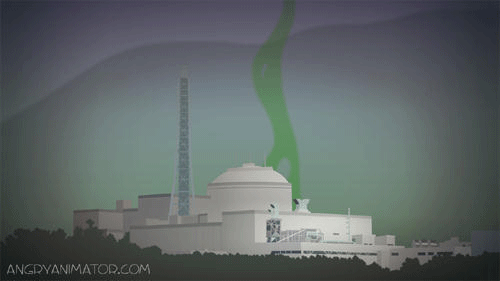 Final fuel-removal exercise starts for problem-plagued Monju reactor https://www.japantimes.co.jp/news/2018/08/19/national/final-fuel-removal-exercise-starts-problem-plagued-monju-reactor/#.W3ndHCQzbGg, AUG 19, 2018
The JAEA will launch actual fuel removal operations this month if it finds the work can be conducted safely. It was initially planned to begin late last month but was postponed after problems plagued the equipment test.
In the final exercise, control rods instead of real fuel assemblies will be removed from a container filled with sodium coolant by using the aforementioned equipment. The rods will be then packed in cans after the sodium is rinsed off and transported to a water-filled pool.
It has not been decided when the exercise will end, the agency said.
The decommissioning process for the glitch-riddled Monju is slated to take 30 years.
In the first phase, 530 assemblies in the reactor and a storage container outside the reactor will be moved to the water pool by December 2022. The JAEA has so far transferred only two fuel assemblies to the pool — one in 2008 and the other in 2009.
Japan: Fukushima clean-up workers, including homeless, at grave risk of exploitation, say UN experts

GENEVA (16 August 2018) – Japan must act urgently to protect tens of thousands of workers who are reportedly being exploited and exposed to toxic nuclear radiation in efforts to clean up the damaged Fukushima Daichi Nuclear Power Station, say three UN human rights experts*.
“Workers hired to decontaminate Fukushima reportedly include migrant workers, asylum seekers and people who are homeless,” said the experts.
“We are deeply concerned about possible exploitation by deception regarding the risks of exposure to radiation, possible coercion into accepting hazardous working conditions because of economic hardships, and the adequacy of training and protective measures.
“We are equally concerned about the impact that exposure to radiation may have on their physical and mental health,” they added.
Contamination of the area and exposure to radiation remains a major hazard for workers trying to make the area safe seven years after the catastrophic nuclear meltdown which followed damage to the power plant from an earthquake and subsequent tsunami.
Tens of thousands of workers have been recruited over the past seven years under the decontamination programme. Japan’s Ministry of Health, Labour and Welfare indicates on its website that 46,386 workers were employed in 2016; and the Radiation Worker Central Registration Centre of Japan has indicated that as many as 76,951 decontamination workers were hired in the five-year period up to 2016.
“The people most at risk of exposure to toxic substances are those most vulnerable to exploitation: the poor, children and women, migrant workers, people with disabilities and older workers. They are often exposed to a myriad of human rights abuses, forced to make the abhorrent choice between their health and income, and their plight is invisible to most consumers and policymakers with the power to change it,” said the experts.
“Detailed reports that the decontamination contracts were granted to several large contractors, and that hundreds of small companies, without relevant experience, were subcontracted, are of concern. These arrangements, together with the use of brokers to recruit a considerable number of the workers, may have created favourable conditions for the abuse and violation of workers’ rights.”
The UN rights experts have engaged in a dialogue with the Government since last year and have taken into account a recent reply to their most recent concerns.
As part of its Universal Periodic Review, Japan recently ”accepted to follow up” on a recommendation from other States to restore radiation levels to those before the disaster to protect the human right to health of pregnant women and children, among several other recommendations. The experts strongly urge the Government to lower the allowable dose of radiation to 1 mSv/year to protect children and women who may become pregnant.
The UN experts remain available to advise on how best to address the ongoing issue of exposure of workers to toxic radiation following a previous response by the Japanese Government, and on the need to strengthen protection for workers.
In September, one of the UN experts, Baskut Tuncak, will present a report to the UN Human Rights Council, calling on States and employers to strengthen protection for workers from exposure to toxic substances, and proposing principles in that regard.
ENDS
(*) The UN experts: Mr. Baskut Tuncak, Special Rapporteur on the implications for human rights of the environmentally sound management and disposal of hazardous substances and wastes, Ms. Urmila Bhoola, Special Rapporteur on contemporary forms of slavery, including its causes and consequences,and Mr. Dainius Puras, Special Rapporteur on the right of everyone to the enjoyment of the highest attainable standard of physical and mental health
Special Rapporteurs are part of what is known as the Special Procedures of the Human Rights Council. Special Procedures, the largest body of independent experts in the UN Human Rights system, is the general name of the Council’s independent fact-finding and monitoring mechanisms that address either specific country situations or thematic issues in all parts of the world. Special Procedures experts work on a voluntary basis; they are not UN staff and do not receive a salary for their work. They are independent from any government or organization and serve in their individual capacity.
UN Human Rights, country page – Japan
For further information and media requests, please contact:
Ms Lilit Nikoghosyan (+41 22 917 9936 / lnikoghosyan@ohchr.org ) or
Mr. Alvin Gachie ( +41 22 917 9971 / agachie@ohchr.org ) or srtoxicwaste@ohchr.org
For media inquiries related to other UN independent experts please contact Mr. Jeremy Laurence, UN Human Rights – Media Unit (+41 22 917 9383 / jlaurence@ohchr.org)
This year is the 70th anniversary of the Universal Declaration of Human Rights, adopted by the UN on 10 December 1948. The Universal Declaration – translated into a world record 500 languages – is rooted in the principle that “all human beings are born free and equal in dignity and rights.” It remains relevant to everyone, every day. In honour of the 70th anniversary of this extraordinarily influential document, and to prevent its vital principles from being eroded, we are urging people everywhere to Stand Up for Human Rights: www.standup4humanrights.org
https://www.ohchr.org/en/NewsEvents/Pages/DisplayNews.aspx?NewsID=23458&LangID=E
1 This Month
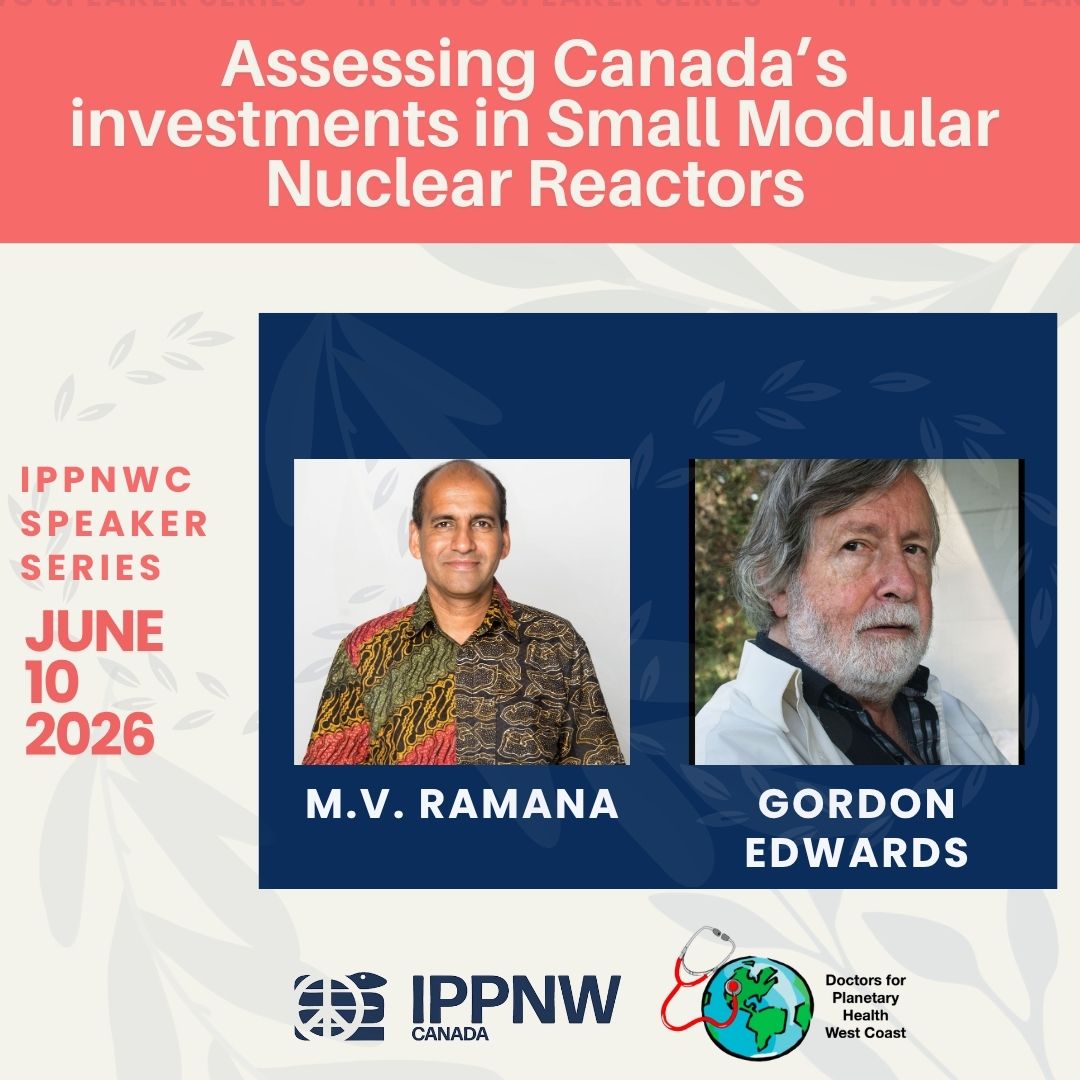
10 June – Assessing Canada’s Investments in Small Modular Nuclear Reactors – https://zoom.us/meeting/register/IiqHA5feRhaEBycOLNTJlA#/registration


Cuba Is Not a Failed State – It Is a Besieged State
PETITION: “Global Appeal to Endorse Palestinian Right of Return of Refugees”
To see nuclear-related stories in greater depth and intensity – go to https://nuclearinformation.wordpress.com
-
Archives
- June 2026 (79)
- May 2026 (306)
- April 2026 (356)
- March 2026 (251)
- February 2026 (268)
- January 2026 (308)
- December 2025 (358)
- November 2025 (359)
- October 2025 (376)
- September 2025 (257)
- August 2025 (319)
- July 2025 (230)
-
Categories
- 1
- 1 NUCLEAR ISSUES
- business and costs
- climate change
- culture and arts
- ENERGY
- environment
- health
- history
- indigenous issues
- Legal
- marketing of nuclear
- media
- opposition to nuclear
- PERSONAL STORIES
- politics
- politics international
- Religion and ethics
- safety
- secrets,lies and civil liberties
- spinbuster
- technology
- Uranium
- wastes
- weapons and war
- Women
- 2 WORLD
- ACTION
- AFRICA
- Atrocities
- AUSTRALIA
- Christina's notes
- Christina's themes
- culture and arts
- Events
- Fuk 2022
- Fuk 2023
- Fukushima 2017
- Fukushima 2018
- fukushima 2019
- Fukushima 2020
- Fukushima 2021
- general
- global warming
- Humour (God we need it)
- Nuclear
- RARE EARTHS
- Reference
- resources – print
- Resources -audiovicual
- Weekly Newsletter
- World
- World Nuclear
- YouTube
-
RSS
Entries RSS
Comments RSS
 nuclear-news