G20: Japan proposes framework for nuclear waste,
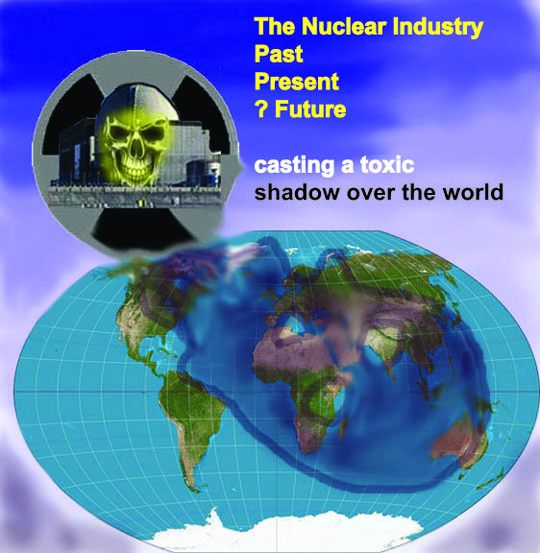 G20: Japan proposes framework for nuclear waste, https://www3.nhk.or.jp/nhkworld/en/news/20190616_14/ Japan has used the G20 meeting to propose setting up an international framework for cooperative research into how to dispose of high-level radioactive waste from nuclear power plants.
The Group of 20 energy and environment ministers are in the town of Karuizawa, Nagano Prefecture, for the second and final day of their meeting.
Japan’s industry minister, Hiroshige Seko, chaired a session on energy in the morning. He brought up the idea of the international framework.
He said it is important to share experience and knowhow to accelerate efforts to solve a common issue for countries that use nuclear energy.
Many countries have found it difficult to draw up concrete plans for final waste disposal. Only Sweden and Finland have decided on disposal sites.
Many nations, including Japan, have not even begun studying potential sites.
The proposal calls for countries to share what they are doing regarding the selection of disposal sites and to promote cooperation and the exchange of human resources.
The first meeting on the framework is planned for October in France.
Ministers are expected to issue a joint statement on Sunday after the conclusion of the G20 meeting.
Japan’s restarted nuclear reactors could be forced to shut down for safety measures to be implemented
World Nuclear News 13th June 2019 Nuclear power reactors in Japan that have resumed operation could be forced
to temporarily shut down again if back-up safety measures are not in place
by specified deadlines under new rules approved by the country’s Nuclear
Regulation Authority (NRA). Operators of restarted units have already said
they expect delays in the completion of such facilities.
http://www.world-nuclear-news.org/Articles/Safety-upgrade-delays-could-take-Japanese-units-of
Prime Minister Shinzo Abe pretending that all is well at Fukushima, using this lie to promote Olympics.
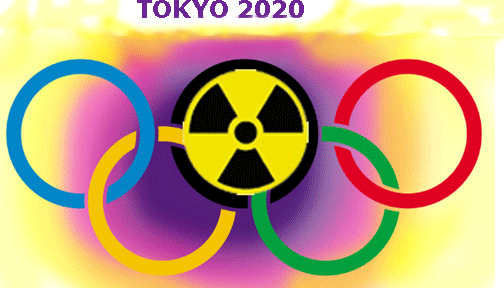
Abe pushing idea that Fukushima nuclear disaster is ‘under control’, http://www.asahi.com/ajw/articles/AJ201906110001.html THE ASAHI SHIMBUN, 10 June 19 Without special protection against radiation, Prime Minister Shinzo Abe stood on elevated ground about 100 meters from the three melted-down reactors at the Fukushima No. 1 nuclear power plant.
“I was finally able to see the view just wearing a normal suit without having to wear protective clothing and a mask (for radiation),” he said on April 14 after hearing explanations from Tokyo Electric Power Co. officials. “The decommissioning work has been making progress in earnest.”
An act of bravado, perhaps. But it was more likely one of the ways Abe and his government want to show that the Fukushima disaster is, as he famously said, “under control.”
Progress has been made, albeit slowly, for the monumental task of decommissioning TEPCO’s crippled nuclear plant.
But radiation levels in certain areas of the plant are still lethal with extended exposure. The problem of storing water contaminated in the reactors continues.
And only recently was TEPCO able to make contact with melted nuclear fuel in the reactors through a robot. The means to extract the fuel has yet to be decided.
However, the government keeps touting progress in the reconstruction effort, using evacuee statistics, which critics say are misleading, to underscore its message.
Abe’s previous visit to the nuclear plant was in September 2013.
“When I conducted an inspection five years ago, I was completely covered in protective gear,” he said at a meeting with decommissioning workers in April. “This time I was able to inspect wearing a normal suit.”
Officials in Abe’s circle acknowledged that they wanted to “appeal the progress of reconstruction” by letting the media cover the prime minister’s “unprotected” visit to the site.
His visit in a business suit was possible largely because the ground was covered in mortar and other materials that prevent the spread of radioactive substances, not because decommissioning work has lowered radiation levels as a whole.
The radiation level at the elevated inspection ground still exceeds 100 microsieverts per hour, making it dangerous for people who remain there for extended periods.
Abe’s inspection ended in six minutes.
The prime minister raised eyebrows, particularly in Fukushima Prefecture, in 2013 when he gave a speech to promote Tokyo’s bid to host the 2020 Summer Olympics.
Concerning the Fukushima nuclear plant, he told International Olympic Committee members, “Let me assure you, the situation is under control.”
An hour before he inspected the plant in April, Abe attended the opening ceremony of the new government building of Okuma, one of the two towns that host the nuclear plant.
The ceremony followed the lifting of an evacuation order for part of the town on April 10.
“We were able to take a step forward in reconstruction,” Abe said.
The central government uses the number of evacuees to show the degree of progress in reconstruction work.
In April 2018, Abe said in the Diet that the lifting of evacuation orders has reduced the number of evacuees to one-third of the peak.
According to the Reconstruction Agency, the number of people who evacuated in and outside of Fukushima Prefecture, including those who were under no orders to leave, peaked at about 160,000. But the initial evacuation orders for 11 municipalities in Fukushima Prefecture have been gradually lifted, and the agency now puts the total number at about 40,000.
About 71,000 people were officially registered as residents of areas that were ordered to evacuate. Now, only about 11,000 people live in those zones.
This means that about 60,000 people have not returned to the homes where they were living before the nuclear accident unfolded in March 2011.
The gap of 20,000 can be attributed to how the agency classifies or declassifies evacuees.
NOT COUNTED AS EVACUEES
The Reconstruction Agency sent a notice in August 2014 to all prefectures that have counted the number of evacuees.
It defined “evacuees” as people who moved to different places because of the nuclear disaster and have the “will” to return to their original homes.
The notice also said that if it is difficult to perceive their “will,” they can be regarded as people who have ended their evacuation if they bought new homes or made arrangements for new accommodations.
Based on the notice, people in Fukushima Prefecture who have bought new homes during their evacuation or settled down in public restoration housing or disaster public housing are regarded as living “stable” lives and are not counted as evacuees.
“It is not a problem because we continue supporting them even if they are removed from the evacuee statistics,” a prefectural government official said.
An official of the Reconstruction Agency said, “The judgment is made by each prefecture, so we are not in a position to say much.”
However, the prefecture has not confirmed all evacuees’ will to return to their homes. In addition, those who are removed from the list of evacuees are not informed of their new status.
Many people bought homes in new locations during their prolonged evacuations although they still hope to return to their hometowns in the disaster area.
Yumiko Yamazaki, 52, has a house in Okuma in a “difficult-to-return” zone.
But because she moved to public restoration housing outside of the town, she is not considered an evacuee by the agency and the prefecture.
“I had to leave my town although I didn’t want to,” Yamazaki said. “It is so obvious that the government wants to make the surface appearance look good by reducing the number of evacuees.”
“I can’t allow them to try to pretend the evacuation never happened,” Yamazaki said.
Critics say the central government’s emphasis of positive aspects and the downplaying of inconvenient truths in the evacuee statistics have much in common with its response to the suspected nepotism scandals involving school operator Moritomo Gakuen and the Kake Educational Institution.
Japan’s government plans more nuclear energy, and of course increased pile of plutonium wastes
|
Japan plans carbon emission cuts, more nuclear energy http://www.asahi.com/ajw/articles/AJ201906100044.html
THE ASSOCIATED PRESS, June 10, 2019 Japan is calling for further efforts to cut its carbon emissions by promoting renewable energy while also pushing nuclear power despite its 2011 Fukushima nuclear plant disaster. An energy policy paper, adopted by the Cabinet on Friday, said Japan faces the urgent task of reducing carbon emissions by utilities that rely heavily on fossil fuel plants to make up for shortages of cleaner nuclear energy. The call comes as nuclear reactors around Japan are slowly being restarted–despite lingering anti-nuclear sentiment since the Fukushima crisis–after being shut down to meet tougher safety standards. Japan wants renewable energy’s share in 2030 to grow to 22-24 percent of the country’s power supply from 16 percent, while pushing nuclear energy to 20-22 percent from just 3 percent in 2017. The report said the cost of renewables also needs to be reduced. Japanese utilities rely more heavily on fossil fuel plants than those in the United States and Europe, the paper said. Coal and natural gas accounted for 74 percent of Japan’s energy supply. Nuclear energy made up about one-third of Japan’s energy supply before 2011, when a massive earthquake and tsunami destroyed the Fukushima No. 1 nuclear power plant’s cooling systems, sending three of its reactors into meltdowns. Despite the government’s renewed ambitions for nuclear power, reactor restarts are proceeding slowly as nuclear regulators spend more time on inspections under the stricter post-Fukushima standards, while utility companies have opted to scrap aged reactors instead of investing in additional safety measures. Nearly half of the 54 reactors in Japan have been designated for decommissioning, and only nine have resumed operation since the accident. The slow reactor restarts have added to Japan’s large plutonium stockpile from spent fuel. Japan has resorted to reducing the 47-ton stockpile by burning plutonium in conventional reactors after the country’s fuel recycling program stalled. The plutonium is currently enough to produce about 6,000 atomic bombs. But the amount is not decreasing, and experts are now calling for more drastic steps to reduce the stockpile amid criticism that it makes Tokyo’s calls for nuclear non-proliferation less credible. About 37 tons of spent Japanese fuel is being stored in France and Britain where it has been reprocessed since Japan lacks the capability to do it at home. Japan’s main reprocessing plant at Rokkasho, where plutonium and spent fuel are stored but reprocessing has not started, says the 10 tons stored in Japan is under close monitoring by the International Atomic Energy Agency and there is no risk of proliferation. In a recommendation to the government this week, the Sasakawa Peace Foundation, a Japanese policy research group, said Japan should drastically reduce the stockpile to the amount just enough for 2-3 years and keep it under IAEA oversight to ensure the international community of Tokyo’s commitment to peaceful atomic use. The recommendation by a foundation panel goes far beyond government guidelines last year that put the cap at 47 tons, with a pledge to eventually reduce it at an unspecified rate. |
Pro-nuclear incumbent Shingo Mimura wins fifth term in Aomori gubernatorial election

Japan to toughen screenings of seafood imports from S. Korea

Not a single watt of electricity, but still 1 trillion yen in basic revenue
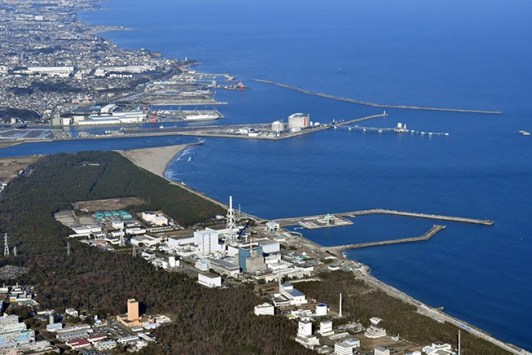
Japanese parish priests shared stories of suffering from victims of the Fukushima nuclear disaster
The forum, organised by the Nippon Sei Ko Kai (NSKK) – the Anglican Communion in Japan – follows the NSKKs General Synod resolution in 2012 calling for an end to nuclear power plants and activities to help the world go nuclear free.
The disaster in 2011 followed a massive earthquake and tsunami which caused a number of explosions in the town’s coastal nuclear power station and led to widespread radioactive contamination and serious health and environmental effects. The Chair of the forum’s organising committee, Kiyosumi Hasegawa, said: “We have yet to see an end to the damage done to the people and natural environment by the meltdown of TEPCO’s Fukushima Daiichi Nuclear Power Plant. I do think this man-made disaster will haunt countless people for years to come. We still see numerous people who wish to go back to their hometowns but are unable to. We also have people who have given up on ever going home.”
One pastor, Dr Naoya Kawakami, whose church was affected by the tsunami and is the General Secretary of the Sendai Christian Alliance Disaster Relief Network, Touhoku HELP, explained how he had supported sufferers in the aftermath and heard from priests supporting the survivors. He said: “I have been more than 700 times to meet with more than 180 mothers and about 20 fathers, all of whom have seen abnormalities in their children since 2011. . . Thyroid cancer has been found in more than 273 children and many mothers are in deep anxiety.
“The more the situation worsens, the more pastors become aware of their important role. The role is to witness . . . pastors who have stayed in Fukushima with the ‘voiceless survivors’ are showing us the church as the body of Jesus’s resurrection, with wounds and weakness . . . sufferers are usually in voiceless agony and most people never hear them.”
The forum was attended by bishops, clergy and lay representatives from each diocese, together with representatives from the US-based Episcopal Church, USPG, the Episcopal Church of the Philippines, the Diocese of Taiwan, the Anglican Church of Korea, and also ecumenical guests. International experts took part, along with local clergy who shared individual stories from those directly affected by the disaster……….https://www.anglicannews.org/news/2019/06/voices-of-fukushima-power-plant-explosion-victims-strengthens-call-to-ban-nuclear-energy.aspx
Japan’s Olympic torch relay to start in Fukushima – even children are invited to carry it
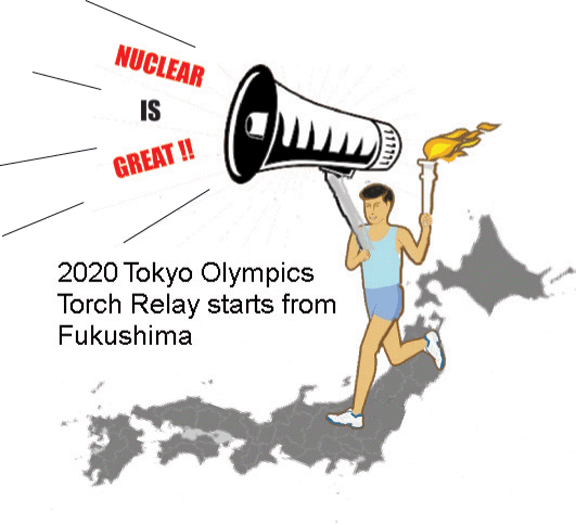
Tokyo 2020 reveals Olympic Torch route will begin in Fukushima, Inside the Games, By Matthew Smith, 1 June 2019
The Tokyo 2020 Organising Committee has revealed the Olympic Torch Relay route, which will take in many of Japan’s most historic and famous sites – and also areas touched by tragedy.
The Flame will be taken all over Japan inside 121 days, culminating in the Olympic Games next summer.
It will begin the final leg of its journey on March 26, 2020 from the J-Village National Training Centre in Fukushima, the training facility of the Japan football team.
The Flame will travel to all 47 prefectures of Japan, with the Organising Committee claiming around 98 per cent of Japan’s population live within one hour’s travel of the proposed route.
The route will take in World Heritage Sites such as Mount Fuji and Itsukushima Shrine, but will also visit areas affected by recent disasters.
Fukushima has been chosen as a start point after the Tohoku region was struck by an earthquake and tsunami in 2011, which also caused a nuclear incident at the Fukushima Daiichi Nuclear Power Plant.
As well as revealing the route, Tokyo 2020 also unveiled the Torchbearer uniforms and how members of the public could apply to take part in the Relay.
The uniform features the Relay emblem on the front and the Olympic symbol on the back.
The most notable design feature is a diagonal red stripe, echoing the sash used in place of batons in Ekiden, Japan’s historic long-distance relays…….
“In Japan, these Games are being referred to as ‘the Recovery Games’ and so the Olympic Flame will start its journey from an area affected by recent natural disasters……
Games organisers say the Olympic Torch Relay will feature around 10,000 Torchbearers including men, women and children of a wide range of nationalities and ages. People from all over the world are encouraged to apply and can do so here……..https://www.insidethegames.biz/articles/1079973/tokyo-2020-reveals-olympic-torch-route-will-begin-in-fukushima
Hiroshima and Nagasaki protest U.S. subcritical nuclear test
The United States conducted a subcritical nuclear test in Nevada on Feb. 13, according to a May 24 announcement by the U.S. Lawrence Livermore National Laboratory.
Yuzaki called the test “extremely regrettable.”
He said, “It destroys the hopes of Hiroshima residents who strongly wish the abolition of nuclear weapons.”
Trump arrived in Japan as state guest on May 25. He will wind up his visit on May 28.
Nagasaki Governor Hodo Nakamura, along with prefectural assembly chairman Mitsuyuki Segawa, also denounced the subcritical nuclear test.
They sent protest letters to U.S. Ambassador William Hagerty on May 26.
Tokyo 2020 Olympic Torch Relay set to visit Fukushima nuclear complex
Tokyo 2020 Olympic Torch Relay set to visit Fukushima nuclear complex, PACNEWS, 1 June, 2019,
A staff takes out a banner featuring Tokyo 2020 Olympics emblem from the wall after a news conference in Tokyo, Japan June 30, 2017. REUTERS/Kim Kyung-Hoon
TOKYO, 01 JUNE 2019 (INSIDE THE GAMES) – A town devastated by the nuclear meltdowns in the Fukushima Prefecture in the wake of the 2011 earthquake and tsunami in Japan is set to feature on the route of the Olympic Torch Relay for Tokyo 2020. The relay course will pass through the Fukushima Daiichi Nuclear…. (subscribers only ) https://www.fijitimes.com/tokyo-2020-olympic-torch-relay-set-to-visit-fukushima-nuclear-complex/
At June G20 meeting, Japan to push for international conference on nuclear waste disposal (but no talk on stopping making radioactive trash)
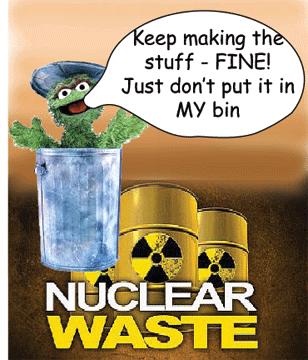 Japan to push for int’l conference on nuclear waste disposal at June G-20 meet https://mainichi.jp/english/articles/20190525/p2a/00m/0in/006000c TOKYO — The Japanese government announced May 24 that it plans to arrange an international meeting to consider how to dispose of highly radioactive nuclear waste.
Tokyo is set to get approval for the plan at the Group of 20 Ministerial Meeting on Energy Transitions and Global Environment for Sustainable Growth scheduled for mid-June in Karuizawa, Nagano Prefecture, and aims to launch the first roundtable this autumn.
High-level nuclear refuse is usually “vitrified” — mixed with melted glass and solidified — before being deposited in an underground storage facility. Japan’s own disposal plans call for holding the waste for 30 to 50 years to cool it before burying it in stable rock formations at least 300 meters below ground. Finland is already building a major underground disposal site, while its neighbor Sweden is conducting a safety evaluation at the location of its own planned facility. However, there is no precedent for actually operating such an installation, and Japan has not yet even begun the survey process to choose a site.
The Japanese government will thus use the June 15-16 G-20 environment and energy summit meeting to urge member nations to cooperate on realistic solutions. Specifically, Japan will press nations with advanced nuclear disposal technology including those in Europe to share their know-how, and also promote international collaboration among research facilities and staff exchanges. The international roundtable will put together a collection of proposals on a basic nuclear waste disposal cooperation strategy and how to explain the issue to the citizens of member nations.
240 shrines within 20 K of Fukushima reactor 1, so a move to build a new shrine
|
Damaged or inaccessible Fukushima shrines consider consolidation as way forward, Japan Times, KYODO, MAY 26, 2019, FUKUSHIMA – A plan has been forged to establish a new shrine in Fukushima Prefecture as a substitute for the many others that were damaged or made inaccessible by the 2011 quake-tsunami disaster and nuclear crisis, local authorities have said.
The local branch of the Association of Shinto Shrines said earlier this month they plan to build the new place of worship on the grounds of the tsunami-hit Hachiman Shrine by the end of March 2021. The shrine is located in the town of Futaba, one of the host communities of the crippled Fukushima No. 1 nuclear plant, but it is in an area where radiation levels are relatively low. At least 30 shrines in the prefecture remain badly damaged after the disasters and 44 are in areas where access is restricted due to high radiation levels. Representatives of each of the 74 affected shrines will decide whether to join the project or not……. All of Futaba’s residents continue to live outside the town following the nuclear crisis, one of the world’s worst ever, that resulted in three reactor core meltdowns. But the Hachiman Shrine, located in a coastal district of Nakano, was selected as a candidate site for the project because it experiences lower radiation levels and is located near the site of an envisioned memorial park Fukushima Prefecture is planning to build…… There are a total of 240 shrines within a 20-kilometer radius of the Fukushima No. 1 plant, which was designated as a no-go zone soon after the nuclear crisis began. Of the 74 struggling shrines, not all are within a radius of 20 kilometers. …… https://www.japantimes.co.jp/news/2019/05/26/national/damaged-inaccessible-fukushima-shrines-consider-consolidation-way-forward/#.XOsKOhYzbGg |
|
Comparing the radioactive pollution from Fukushima and Chernobyl nuclear accidents
|
Chernobyl vs. Fukushima: Which Nuclear Meltdown Was the Bigger Disaster? Live Science By | May 24, 2019 The new HBO series “Chernobyl” dramatizes the accident and horrific aftermath of a nuclear meltdown that rocked the Ukraine in 1986. Twenty-five years later, another nuclear catastrophe would unfold in Japan, after the magnitude 9.0 Tohoku earthquake and subsequent tsunami triggered a disastrous system failure at Fukushima Daiichi Nuclear Power Plant.Both of these accidents released radiation; their impacts were far-reaching and long-lasting. But how do the circumstances of Chernobyl and Fukushima compare to each other, and which event caused more damage? [5 Weird Things You Didn’t Know About Chernobyl] Only one reactor exploded at Chernobyl, while three reactors experienced meltdowns at Fukushima. Yet the accident at Chernobyl was far more dangerous, as damage to the reactor core unspooled very rapidly and violently, said Edwin Lyman, a senior scientist and acting director for the Union of Concerned Scientists Nuclear Safety Project. “As a result, more fission products were released from the single Chernobyl core,” Lyman told Live Science. “At Fukushima the cores overheated and melted but did not experience violent dispersal, so a much smaller amount of plutonium was released.” In both accidents, radioactive iodine-131 posed the most immediate threat, but with a half-life of eight days, meaning half of the radioactive material decayed within that time, its effects soon dissipated. In both meltdowns, the long-term hazards arose primarily from strontium-90 and cesium-137, radioactive isotopes with half-lives of 30 years. And Chernobyl released far more cesium-137 than Fukushima did, according to Lyman. “About 25 petabecquerels (PBq) of cesium-137 was released to the environment from the three damaged Fukushima reactors, compared to an estimate of 85 PBq for Chernobyl,” he said (PBq is a unit for measuring radioactivity that shows the decay of nuclei per second). What’s more, Chernobyl’s raging inferno created a towering plume of radioactivity that dispersed more widely than the radioactivity released by Fukushima, Lyman added. Sickness, cancer and deathAt Chernobyl, two plant workers were killed by the initial explosion and 29 more workers died from radiation poisoning over the next three months, Time reported in 2018. Many of those who died had knowingly exposed themselves to deadly radiation as they worked to secure the plant and prevent further leaks. Government officials relocated an estimated 200,000 people from the region, according to the International Atomic Energy Agency. In the years that followed, cancers in children skyrocketed in the Ukraine, up by more than 90%, according to Time. A report issued by United Nations agencies in 2005 approximated that 4,000 people could eventually die of radiation exposure from Chernobyl. Greenpeace International estimated, in 2006, that the number of fatalities in the Ukraine, Russia and Belarus could be as high as 93,000 people, with 270,000 people in those countries developing cancers who otherwise would not have done so…….. The extent of Fukushima’s environmental impact is still unknown, though there is already some evidence that genetic mutations are on the rise in butterflies from the Fukushima area, producing deformations in their wings, legs and eyes. [See Photos of Fukushima’s Deformed Butterflies] ……. radiation levels around Chernobyl can vary widely. Aerial drone surveys revealed in May that radiation in Ukraine’s Red Forest was concentrated in previously unknown “hotspots,” which scientists outlined in the region’s most accurate radiation maps to date. The Fukushima nuclear power plant is still open and active (though the reactors that exploded remain closed); nonetheless, ongoing concerns about safety linger. The Tokyo Electric Power Company (TEPCO) recently announced that it would not hire foreign workers coming to Japan under newly relaxed immigration rules……. https://www.livescience.com/65554-chernobyl-vs-fukushima.html |
|
|
Danger in foreign workers at Fukushim nuclear clean-up – Tepco abandons plans for them
|
The company noted that hiring foreign workers at the nuclear plant under a new specified skills visa category that took effect in April could result in work-related accidents and long-term health problems due to their lack of Japanese language skills and understanding of Japanese labor practices. The announcement followed a health ministry caution May 21 for TEPCO to carefully reconsider its policy of using foreign workers at the complex…….. The ministry had said that if TEPCO went ahead with hiring foreign workers, the company and its contractors involved in decommissioning had to take at least the same level of protective measures that apply to Japanese workers to ensure that they fully understand safety sanitation and avoid the health risk of excessive radiation exposure. Even though eight years have passed since the triple meltdown, radiation levels remain high in many areas of the Fukushima plant, especially around the reactor buildings. The decommissioning process that is expected to take years will involve a range of gargantuan tasks, one being the removal of melted nuclear fuel debris from the reactors. Under the recently revised immigration control law, foreign workers with specified skills are permitted to work at nuclear power plants. The ministry acknowledges that it is ultimately up to individual employers to decide whether or not to accept foreign workers on their payrolls. But experts in Japan and overseas who are keen for the new visa program to be a success have also voiced concerns about foreign workers at the Fukushima plant developing radiation-related health issues and being able to manage them after they return to their home countries….. Chief Cabinet Secretary Yoshihide Suga referred to the ministry’s caution at a May 21 news conference, saying that TEPCO should be prepared to fully address a range of health-related problems that may arise in the future. The utility notified dozens of its contractors at a meeting in late March that it will accept foreign workers at the Fukushima plant. Currently, about 4,000 people toil at the plant each day. Most areas of the complex are categorized as controlled areas to guard against radiation exposure. Under the law, workers at a nuclear facility must not be exposed to more than 100 millisieverts of radiation over five years and 50 millisieverts a year. http://www.asahi.com/ajw/articles/AJ201905220067.html |
|

1 This Month
Chernobyl: The Lost Tapes – A good documentary on Chernobyl on SBS available On Demand for the next 3 weeks– https://www.sbs.com.au/ondemand/tv-program/chernobyl-the-lost-tapes/2352741955560

of the week–London Campaign for Nuclear Disarmament

Tell the Ukrainian Government to Drop Prosecution of Peace Activist Yurii Sheliazhenko
To see nuclear-related stories in greater depth and intensity – go to https://nuclearinformation.wordpress.com
-
Archives
- April 2026 (139)
- March 2026 (251)
- February 2026 (268)
- January 2026 (308)
- December 2025 (358)
- November 2025 (359)
- October 2025 (376)
- September 2025 (257)
- August 2025 (319)
- July 2025 (230)
- June 2025 (348)
- May 2025 (261)
-
Categories
- 1
- 1 NUCLEAR ISSUES
- business and costs
- climate change
- culture and arts
- ENERGY
- environment
- health
- history
- indigenous issues
- Legal
- marketing of nuclear
- media
- opposition to nuclear
- PERSONAL STORIES
- politics
- politics international
- Religion and ethics
- safety
- secrets,lies and civil liberties
- spinbuster
- technology
- Uranium
- wastes
- weapons and war
- Women
- 2 WORLD
- ACTION
- AFRICA
- Atrocities
- AUSTRALIA
- Christina's notes
- Christina's themes
- culture and arts
- Events
- Fuk 2022
- Fuk 2023
- Fukushima 2017
- Fukushima 2018
- fukushima 2019
- Fukushima 2020
- Fukushima 2021
- general
- global warming
- Humour (God we need it)
- Nuclear
- RARE EARTHS
- Reference
- resources – print
- Resources -audiovicual
- Weekly Newsletter
- World
- World Nuclear
- YouTube
-
RSS
Entries RSS
Comments RSS
 nuclear-news