The danger of sourcing food and material from the Fukushima region Ground-level nuclear disasters leave much more radioactive fallout than Tokyo is willing to admit Hankyoreh By Seok Kwang-hoon, energy policy consultant of Green Korea Aug.25,2019 International concerns are growing over the Japanese government’s plans to provide meals from the Fukushima area to squads participating in the 2020 Tokyo Olympics. The starting point for the Olympic torch relay, and even the baseball stadium, were placed near the site of the Fukushima Nuclear Power Plant. It seems to be following the model of the Tokyo Olympics in 1964, where Japan’s rise from the ashes of the atomic bombs was underscored by having a young man born the day of the Hiroshima bombing act serve as the relay’s last runner. Here we can see the Shinzo Abe administration’s fixation on staging a strained Olympic reenactment of the stirring Hiroshima comeback – only this time from Fukushima.
But in terms of radiation damages, there is a world of difference between Hiroshima and Fukushima. Beyond the initial mass casualties and the aftereffects suffered by the survivors, the atomic bombing of Hiroshima resulted in little additional radiation exposure. Nuclear technology being as crude as it was back then, only around one kilogram of the Hiroshima bomb’s 64kg of highly enriched uranium actually underwent any reaction, resulting in a relatively small generation of nuclear fission material.
Whereas ground-based nuclear testing results in large quantities of radioactive fallout through combining with surface-level soil, the Hiroshima bomb exploded at an altitude of 580m, and the superheated nuclear fission material rose up toward the stratosphere to spread out around the planet, so that the amount of fallout over Japan was minimal. Even there, most of the nuclides had a short half-life (the amount of time it takes for half the total atoms in radioactive material to decay); manganese-56, which has a half-life of three hours, was the main cause of the additional radiation damages, which were concentrated during the day or so just after the bomb was dropped. The experience of Nagasaki was similar. As a result, both Hiroshima and Nagasaki were able to fully resume as functioning cities by the mid-1950s without additional decontamination efforts.
Ground-level nuclear disasters leave much more radioactive fallout than Tokyo is willing to admit
nternational concerns are growing over the Japanese government’s plans to provide meals from the Fukushima area to squads participating in the 2020 Tokyo Olympics. The starting point for the Olympic torch relay, and even the baseball stadium, were placed near the site of the Fukushima Nuclear Power Plant. It seems to be following the model of the Tokyo Olympics in 1964, where Japan’s rise from the ashes of the atomic bombs was underscored by having a young man born the day of the Hiroshima bombing act serve as the relay’s last runner. Here we can see the Shinzo Abe administration’s fixation on staging a strained Olympic reenactment of the stirring Hiroshima comeback – only this time from Fukushima.But in terms of radiation damages, there is a world of difference between Hiroshima and Fukushima.
Beyond the initial mass casualties and the aftereffects suffered by the survivors, the atomic bombing of Hiroshima resulted in little additional radiation exposure. Nuclear technology being as crude as it was back then, only around one kilogram of the Hiroshima bomb’s 64kg of highly enriched uranium actually underwent any reaction, resulting in a relatively small generation of nuclear fission material. Whereas ground-based nuclear testing results in large quantities of radioactive fallout through combining with surface-level soil, the Hiroshima bomb exploded at an altitude of 580m, and the superheated nuclear fission material rose up toward the stratosphere to spread out around the planet, so that the amount of fallout over Japan was minimal. Even there, most of the nuclides had a short half-life (the amount of time it takes for half the total atoms in radioactive material to decay); manganese-56, which has a half-life of three hours, was the main cause of the additional radiation damages, which were concentrated during the day or so just after the bomb was dropped. The experience of Nagasaki was similar. As a result, both Hiroshima and Nagasaki were able to fully resume as functioning cities by the mid-1950s without additional decontamination efforts…… http://www.hani.co.kr/arti/english_edition/e_editorial/907055.html
The danger of sourcing food and material from the Fukushima region Ground-level nuclear disasters leave much more radioactive fallout than Tokyo is willing to admit Hankyoreh By Seok Kwang-hoon, energy policy consultant of Green Korea Aug.25,2019 “…………..Fukushima’s radiation increases over time. The Fukushima disaster did not result in mass casualties, but the damages from radiation have only increased over time. The nuclear power plants experiencing core meltdowns had the equivalent of around 12 tons of highly enriched uranium in nuclear fuel – roughly 12,000 times more than the amount of uranium that underwent nuclear fission in the Hiroshima bomb. At one point, the Japanese government announced that Fukushima released 168 times more cesium than the Hiroshima bomb. But even that was merely a difference in emissions; there’s an immeasurable difference between the amount of fallout from Hiroshima, which was left over from a total spread out over the planet at a high altitude, and the amount from Fukushima, which was emitted at ground level.
Hiroshima also experienced little to no exposure to cesium-137 and strontium-90 – nuclides with half-lives of around 30 years that will continue to afflict Japan for decades to come. Due to accessibility issues, most of the forests that make up around 70% of Fukushima’s area have been left unaddressed. According to Japanese scholars, around 430 square kilometers of forest was contaminated with high concentrations of cesium-137. The danger of this forest cesium is that it will be carried toward residential or farm land by wind and rain, or that contaminated flora and fauna will be used in processing and distribution. Indeed, cedar wood from Fukushima remains in distribution in the region, and was even shipped off recently to serve as construction material for the Tokyo Olympics. Meanwhile, the incidence of thyroid cancer in children – a rare condition – has risen all the way from one to two cases before the incident to 217 in its wake. Yet the Abe administration has only impeded a study by physicians, using various government-controlled Fukushima-related investigation committees as vehicles for sophistry and controlling media reporting on the issue. http://www.hani.co.kr/arti/english_edition/e_editorial/907055.html
Abe administration hoping to cut costs in nuclear waste disposal The economic consequences have been astronomical as well. From an expert group’s analysis, the Japan Center for Economic Research estimated that the 14 million tons of radioactive waste from collecting Fukushima’s cesium-contaminated soil would result in a financial burden of 20 trillion yen (US$187.98 billion) based on the acceptance costs at the Rokkasho-mura radioactive waste disposal center. Contaminated water from the Fukushima Nuclear Power Plant – which already amounts to 1.2 million tons and is expected to increase to 2 million – was predicted to cost fully 51 trillion yen (US$479.35 billion) in tritium and strontium removal costs alone. Factor in the 10 trillion yen (around US$94 billion) in resident compensation, and the amount is close to the Japanese government’s total annual budget. Hoping to cut costs, the Abe administration announced plans to reuse soil waste in civil engineering, while the contaminated water is expected to be dumped into the Pacific after the formalities of a discussion. But few if any Japanese news outlets have been doing any investigative reporting on the issue.
When Abe declared the situation “under control” during the Olympic bidding campaign in 2013, this truthfully amounted to a gag order on the press and civil society. Having the world’s sole experience of filing and winning a World Trade Organization (WTO) case on Fukushima seafood, South Korea may be in the best position to alert the world to the issue of radioactivity and the Tokyo Olympics. I look forward to seeing efforts from the administration.By Seok Kwang-hoon, energy policy consultant of Green Korea
South Korea concerned over food safety at Olympics with events slated for Fukushima
Talks to take place over food provision at Tokyo Games
Fukushima to host baseball and softball games next year, Guardian Justin McCurry in Tokyo, Thu 22 Aug 2019South Korea is considering making its own arrangements to feed its athletes at next year’s Tokyo Olympics, citing concerns over the safety of food from Fukushima, media reports said.
In addition, South Korean sports authorities have requested that international groups be permitted to monitor radiation levels during the 2020 Games.
Food safety concerns in South Korea have grown since Fukushima city was chosen to host six softball games and one baseball game next summer. Fukushima prefecture will also be the location for the start of the domestic leg of the Olympic torch relay, beginning next March.
Tokyo Olympics organisers said South Korea’s National Olympic Committee had sent a letter expressing concern at the possibility of produce grown in Fukushima prefecture being served to athletes in the Olympic village. ……
[Herald Interview] Sports bodies need to make own assessments of Fukushima: Greenpeace nuclear specialist, http://www.koreaherald.com/view.php?ud=20190821000749By Kim Bo-gyung (lisakim425@heraldcorp.com) Nuclear specialist warns of unknown long-term health, environmental risks from Japan’s radioactive water disposal plan Aug 21, 2019 With less than a year to go until the Tokyo 2020 Summer Olympics, concerns are growing over the safety of the baseball and softball venues in disaster-hit Fukushima.
Seeking to break away from Japan’s association with high levels of radioactivity, the Abe government has branded the 2020 Olympics the “Recovery Games.”
But health and environmental risks from high levels of radiation persist in parts of Fukushima after the 2011 nuclear meltdown.
According to Shaun Burnie, a senior nuclear specialist with Greenpeace Germany, those visiting Fukushima for the Summer Games next year should take a proactive approach to educating themselves on which areas of Fukushima are affected by radiation and on the impact of exposure to radiation.
“In terms of safety, there are certain areas of Fukushima where we would certainly not advise athletes or spectators to spend any time. Those are areas particularly close to the Fukushima Dai-ichi plant, including where the torch processions will be taking place,” Burnie said in an interview with The Korea Herald at Greenpeace Korea’s office in central Seoul last week.
“They are areas that are not safe for people to live. If you visit, you need to follow a radiation protocol. It is a bizarre situation that you are having Olympic events where people are concerned about radiation,” he added.
While noting that not all parts of Fukushima should be off limits, Burnie said athletes and sports bodies need to seek independent assessments on Fukushima, rather than relying on information provided by the Japanese government.
“It’s dangerous to just dismiss the whole of Fukushima as a radioactive disaster zone. It’s much more complex than that. The first thing is … don’t trust the Japanese government, educate yourself. If you’re an organizing body, get independent verification and independent information about what the relative radiation levels are, what the risks are,” Burnie said.
As the senior nuclear specialist with Greenpeace Germany, Burnie has followed the Japanese government’s handling of the tsunami and earthquake in March 2011 that resulted in the meltdown of three nuclear reactors at the Fukushima Dai-ichi power plant.
In a report published in January, Burnie alleged that Tokyo plans to dispose of some 1 million metric tons of contaminated water by discharging it into the Pacific Ocean after the Summer Olympics.
If Japan follows through with the move, radioactive water is expected to be present in Korea’s East Sea a year later.
“For the past five years we’ve been accessing the process, the discussions, the documents submitted by Tepco (Tokyo Electric Power Company) … we were reviewing some of Tepco’s data (last year) and we looked at it and went ‘there is something wrong here with Tepco’s processing,’” Burnie said.
“It became very clear there has been bad decisions made, not really surprising, by Tepco, by the (Japanese) government over the last five or six years and how to manage the water crisis.”
Last year Tepco acknowledged its Advanced Liquid Processing System, or ALPS, had failed to purify contaminated water stored in tanks at the Dai-ichi power plant.
A committee under Japan’s Ministry of Economy in 2016 put together five scenarios for the Japanese government to deal with the massive volume of pollutants stored at the Fukushima No. 1 plant.
The amount of water stored at the plant is to reach its full capacity of 1.3 million tons by the end of 2020, with about 170 tons accumulating daily.
According to Burnie, Tokyo has chosen to discharge the radioactive water instead of acting on any of the other four suggestions because “it is the most cheap and fast.”
Besides increased levels of radioactive cesium found in Fukushima and in the East Sea, Burnie warned of “cesium-rich micro particles” extremely small in size and inhaled through breathing.
Cesium is one of the largest sources of radioactivity from the 2011 disaster and has a half-life of 30 years.
“There is evidence from samples … some scientific literature has published the results and they found concentrations of these particles in areas 20-30 kilometers from the plant. … The problem is these particles can be inhaled. Then some of them lodge inside your lung at which point you are getting an internal dose, a very focused, very localized, relatively high-exposure dose to individual cells,” Burnie said.
“That’s a real problem because there is very little known about how cesium in that form will affect your long-term health. … Again, the people most at risk are those returning to live in areas of Fukushima affected by these particles. But the Japanese government has not taken into account in any of its assessments what those risks are,” he added.
Stressing that the risks of exposure to radiation should not be exaggerated, Burnie noted there is no safe level of radiation exposure and the long-term effects are unknown.
“The effects you will only see over decades. It won’t be instant, it’s not an acute radiation exposure, it’s low-level radiation,” Burnie said.
“The country that will be next impacted will be Korea, because it’s the geographically closest. … There is no safe threshold for radiation exposure. … Why should you be exposed when there is a clear alternative, which is you store?”
North Korea now able to miniaturise nuclear warheads – Japan defence report
Upcoming review out of Tokyo will reportedly say missile programme poses ‘serious and imminent threat’ Guardian Justin McCurry in Tokyo 21 Aug 19, Japan’s government will reportedly state that North Korea is capable of miniaturising nuclear warheads in a forthcoming defence report, it has emerged.
Tokyo will upgrade its estimate of the regime’s nuclear capability, having said last year only that the technical feat was a possibility, the conservative Yomiuri Shimbun newspaper said on Wednesday, without citing sources.
The defence report will maintain Japan’s contention that North Korea’s nuclear and ballistic missile programmes pose a “serious and imminent threat” to its security after recent meetings between Donald Trump and the North’s leader, Kim Jong-un, failed to make progress on denuclearisation. The report is expected to receive cabinet approval in mid-September, the Yomiuri said…….
In 2017, a leaked US intelligence assessment concluded that North Korea had developed the technology to produce nuclear warheads small enough to fit inside missiles, theoretically giving it the ability to send nuclear-armed intercontinental ballistic missiles [ICBMs] to distant targets, including the US mainland.
Controversy over radiation and heat surrounding Tokyo Olympics, HANKYOREH By Kim Chang-geum, staff reporter : Aug.14,2019
“…… Safety from radiation and heat at the Tokyo Olympics
Most of the issues related to the upcoming Tokyo Olympics, which are now only a year away, boil down to safety concerns over radiation and extreme heat. Some baseball and softball matches are scheduled to be held in a stadium located close to the Fukushima nuclear reactor that took direct damage during the 2011 earthquake. Korean civic groups have also pointed out that the Japanese government has failed to properly control water contaminated by radiation from the reactor. Plans to source some of the rice and ingredients for the Tokyo Olympics Athletes Village from Fukushima are adding to these concerns. Although the level of radiation measured in such rice is within the acceptable standards in Japan, it is believed to exceed Korean standards.
Extreme heat is another potential issue. After an open water test competition in Odaiba Seaside Park, Tokyo, on Aug. 11, Sports Nippon reported, “Many athletes complained about a foul odor and the high water temperature, and one male athlete made the shocking claim that it ‘smelled like a toilet.’” Although the Olympic Committee did not reveal the water temperature on that day, it has been reported that the temperature was 29.9 degrees Celsius at 5am. The International Swimming Federation (FINA) cancels events if the water temperature reaches 31 degrees Celsius. There have also been warnings about road races. On August 8, Yusuke Suzuki, Japan’s star race-walker and world record holder in the men’s 20km, stated, “I tried training on the Tokyo Olympics race-walking course. There was no shade, so it could cause dehydration.”
Tokyo Olympics delegation heads meeting from Aug. 20-22It appears that the issue of safety from radiation and concerns about food ingredients will be conveyed during the upcoming three-day meeting with the leaders of each country’s delegation in Tokyo on Aug. 20-22, and a request will be made to the Japanese Olympic Committee to change the name of Dokdo used on maps. If the representatives from each country do raise the radiation issue, the IOC will have no choice but to intervene. The Korean Sport & Olympic Committee is also considering providing separate Korean food to Korean athletes through specially prepared meals or lunchboxes. …. http://english.hani.co.kr/arti/english_edition/e_international/905758.html
“Remote-controlled robots that can withstand high radiation exposure are ‘expected in the near future’ to help remove melted nuclear fuel debris out of the reactors”
Uncapable at home to really handle a triple meldown while sacrificing its own population with an intensive denial and cover-up campaign, Japan is now proposing to the U.S. to help denuclearizing North Korea. Isn’t that the ultimate height of hypocrisy and arrogance?
(File photo taken from a Kyodo News helicopter on April 23, 2019, shows the crippled Fukushima Daiichi nuclear power plant in northeastern Japan, where decommissioning work is under way.)
Japan tells U.S. of plan to offer robots for denuclearizing N. Korea
August 16, 2019
Japan has told the United States that it is ready to provide its robot technology for use in dismantling nuclear and uranium enrichment facilities in North Korea as Washington and Pyongyang pursue further denuclearization talks, Japanese government sources said Friday.
As Japan turns to remote-controlled robots it has developed to decommission reactors that suffered meltdowns in 2011 at the Fukushima Daiichi nuclear power plant, it believes the same technology can be used in North Korea, according to the sources.
The offer is part of Japan’s efforts to make its own contribution to the denuclearization talks amid concern that Tokyo could be left out of the loop as the United States and North Korea are stepping up diplomacy.
Tokyo has already told Washington it would shoulder part of the costs of any International Atomic Energy Agency inspections of North Korean facilities and dispatch Japanese nuclear experts.
The scrapping of nuclear facilities such as the Yongbyon complex that has a graphite-moderated reactor will come into focus in forthcoming working-level talks between Washington and Pyongyang.
North Korean leader Kim Jong Un offered to close the complex — seen as the center of the country’s nuclear material production activities — during his meeting with U.S. President Donald Trump in Hanoi in February.
But the Trump-Kim talks broke down after the two leaders failed to reconcile Washington’s demand for denuclearization and Pyongyang’s call for sanctions relief.
Earlier this year, Japan and the United States held a working-level meeting before the Hanoi summit, in which Washington pointed to the possibility of radioactive contamination near North Korea’s facilities due to its lax management of nuclear materials, the sources said.
Japan then offered “any support,” including technological assistance, according to the sources.
Remote-controlled robots that can withstand high radiation exposure are ‘expected in the near future’ to help remove melted nuclear fuel debris out of the reactors at the Fukushima Daiichi plant, crippled since the March 2011 earthquake and tsunami in northeastern Japan.
For such technology to be used in the decommissioning of a nuclear facility, experts need to inspect its internal structure and check radiation levels. Therefore, Pyongyang’s acceptance of such on-site inspections would be essential.
Trump has said on Twitter that he received a letter from Kim stating that the North Korean leader is willing to meet again after joint U.S.-South Korea military exercises end next Tuesday.
North Korea, which sees the joint drills as rehearsals for invasion, has fired a series of short-range missiles in apparent protest, most recently on Friday, but Trump has played down the significance of such launches.
While Prime Minister Shinzo Abe, who places priority on resolving the issue of Japanese nationals abducted by Pyongyang in the 1970s and 1980s, has expressed his hope to meet Kim “without preconditions,” such a summit appears unlikely.
Abe is the only leader yet to meet face-to-face with Kim among the countries involved in the long-stalled six-party talks on Pyongyang’s nuclear program — the two Koreas, China, Japan, Russia and the United States.
Trump has delivered on his promise to Abe to raise the abduction issue during his meetings with Kim. The U.S. president takes the view that neighboring countries such as Japan need to pay for North Korea’s denuclearization and extend economic assistance in return for Pyongyang scrapping its nuclear facilities.
“Japan’s security will be left out if we fail to be part of the U.S.-North Korea negotiations,” a Japanese Foreign Ministry source said.
From left: The No. 5, No. 6 and No. 7 reactors at Tokyo Electric Power Co.’s Kashiwazaki-Kariwa nuclear plant in Niigata Prefecture
August 12, 2019
Soaring costs borne by operators of nuclear power plants to safeguard their facilities against natural disasters and terrorist attacks suggest the government is wrong in its longstanding contention that nuclear power is the nation’s cheapest energy source.
A study by The Asahi Shimbun found that the overall estimate for the cost of safety measures by 11 operators stood at 5.074 trillion yen ($48.32 billion) as of July. The operators include those whose nuclear facilities are still under construction.
The combined figure for the 11 companies represents an increase of about 660 billion yen from a year earlier.
The Asahi Shimbun has tallied total estimated safety costs by nuclear plant operators since 2013.
As of January 2013, the combined total was 998.2 billion yen.
New safety regulations implemented after the 2011 Fukushima nuclear disaster obliged power companies to equip their facilities with additional safeguard measures to prevent a severe accident triggered by a powerful earthquake, tsunami, fire, terrorist attack and other emergencies.
The Fukushima disaster was triggered by the Great East Japan Earthquake, which generated towering tsunami that knocked out cooling systems at the Fukushima No. 1 nuclear power plant operated by Tokyo Electric Power Co., setting off a triple meltdown.
The new regulations went into effect in 2013.
TEPCO’s estimated cost to implement safeguard measures doubled to 969 billion yen in the latest study due to steps to counter liquefaction and terrorist strikes at its Kashiwazaki-Kariwa plant’s No. 6 and No. 7 reactors in Niigata Prefecture.
Kansai Electric Power Co. reported an additional 130.8 billion yen as the cost of building an emergency facility to respond to a terrorist attack on its Oi nuclear plant’s No. 3 and No. 4 reactors in Fukui Prefecture.
In the survey, The Asahi Shimbun for the first time asked power companies about their most recent estimates for countermeasures against terrorism and the previous estimate when they applied for certification of their anti-terror facilities by the government’s Nuclear Regulation Authority.
The responses showed that anti-terror measures are proving to be two times to five times more expensive than the companies initially envisaged.
Kyushu Electric Power Co. replied that such steps for the No. 1 and No. 2 reactors at its Sendai nuclear plant in Kagoshima Prefecture grew five-fold from 43 billion yen to 220 billion yen.
Kansai Electric Power Co. said it plans to spend 125.7 billion yen on anti-terror measures for the No. 3 and No. 4 reactors at its Takahama plant in Fukui Prefecture, up from 69.1 billion yen.
In the case of Shikoku Electric Power Co., the utility said measures to safeguard the No. 3 reactor at its Ikata nuclear plant in Ehime Prefecture from a terror attack surged from 32 billion yen to 55 billion yen.
Shikoku Electric said the increase is due to a change in the design and construction method following the NRA’s safety examination.
Of the 11 companies surveyed, six did not include costs for terrorism countermeasures in their estimates for safeguard mechanisms, which means that overall costs for safety measures, including those against terrorism, can only grow.
Nine reactors at five nuclear facilities are now back online after clearing the more stringent standards set by the NRA.
The safety cost for each of those reactors ranged from 130 billion yen to 230 billion yen.
It appears likely that plans by Chugoku Electric Power Co., Tohoku Electric Power Co. and Japan Atomic Power Co. to restart reactors will cost each of the operators more than 300 billion yen per reactor in safety measures, if the cost of implementing terrorism countermeasures is added.
With the ballooning safety costs, the government’s argument that nuclear energy is cheaper than hydro power and coal is increasingly in doubt.
In 2015, a government study put the cost to generate 1 kilowatt-hour of energy for hydro power at 11 yen, coal-fired thermal power at 12.9 yen and nuclear power at 10.3 yen or more.
The government study estimated the cost for safety measures per nuclear reactor at about 100 billion yen.
The power generation cost for a reactor will rise 0.6 yen for an increase of every 100 billion yen that will be set aside for safeguard measures.
Fukushima: Nuclear-contaminated water raises 2020 Games site fears,The Weather Network, Caroline Floyd , Meteorologist 14 Aug 19, Beginning late next July, Tokyo and several other sites around Japan will welcome elite athletes from around the world for the 2020 Summer Games. One of the sites carries with it a stigma that organizers are hoping to help heal — Fukushima.
Some scheduled baseball and softball events will take place at Fukushima Azuma Baseball Stadium, located about 70 km northwest of the Fukushima Daiichi nuclear power plant.
There may be another hitch in the road to recovery, however, and it’s looming on the horizon for next year.
Tremendous amounts of water flooded the reactors in the wake of the disaster, both from the tsunami itself and from water added to cover the melted reactors and allow them to cool as part of the efforts to clean up the site and decommission the plant. Since then, groundwater has also infiltrated the site. All of this water has been contaminated by radioactive substances, like cesium and tritium. While the cesium can be removed via processing, tritium generally remains, meaning the still-contaminated water must be stored.
TEPCO, the utility which operated the reactor, has installed about 1,000 large storage tanks at the site to hold the contaminated water; currently, more than 1.05 million tons of radioactive water are being stored in the tanks, and roughly 150 tons are added every day.
TEPCO continues to install new tanks, but according to the Japanese newspaper Asahi Shimbun, “space limitations mean that by the end of 2020, a maximum storage capacity of about 1.34 million tons will be reached.” Officials have added that if the groundwater infiltration was decreased, it will be possible to stretch that date until summer 2022.
Some scheduled baseball and softball events will take place at Fukushima Azuma Baseball Stadium, located about 70 km northwest of the Fukushima Daiichi nuclear power plant.
There may be another hitch in the road to recovery, however, and it’s looming on the horizon for next year.
Tremendous amounts of water flooded the reactors in the wake of the disaster, both from the tsunami itself and from water added to cover the melted reactors and allow them to cool as part of the efforts to clean up the site and decommission the plant. Since then, groundwater has also infiltrated the site. All of this water has been contaminated by radioactive substances, like cesium and tritium. While the cesium can be removed via processing, tritium generally remains, meaning the still-contaminated water must be stored.
TEPCO, the utility which operated the reactor, has installed about 1,000 large storage tanks at the site to hold the contaminated water; currently, more than 1.05 million tons of radioactive water are being stored in the tanks, and roughly 150 tons are added every day.
TEPCO continues to install new tanks, but according to the Japanese newspaper Asahi Shimbun, “space limitations mean that by the end of 2020, a maximum storage capacity of about 1.34 million tons will be reached.” Officials have added that if the groundwater infiltration was decreased, it will be possible to stretch that date until summer 2022.
While more tanks can be installed, a long-term solution is still being sought and, so far, most of them aren’t going over well with the locals.
One suggestion before the central government is to dilute the water after processing and gradually release it into the Pacific. Another is to build a long-term storage facility near the plant site. Fukushima residents, and fishermen in particular, have expressed strong opposition to both ideas, not over fears of the wastewater itself but because of the negative publicity and continuing stigma that would damage their livelihoods……
Setting a deadline on the current storage situation puts additional pressure on Japanese authorities and the public to reach a consensus.
Under the moniker of the “Reconstruction Olympics,” they have plotted a torch relay course that begins near the crippled Fukushima Daiichi plant and continues through adjacent prefectures — Miyagi and Iwate — impacted by the disaster. The region will host games in baseball, softball and soccer next summer.
“We are hoping that, through sports, we can give the residents new dreams,” said Takahiro Sato, director of Fukushima’s office of Olympic and Paralympic promotions. “We also want to show how far we’ve come.”
The effort has drawn mixed reactions, if only because the so-called “affected areas” are a sensitive topic in Japan.
Some people worry about exposure to lingering radiation; they accuse officials of whitewashing health risks. Critics question spending millions on sports while communities are still rebuilding.
“The people from that area have dealt with these issues for so long and so deeply, the Olympics are kind of a transient event,” said Kyle Cleveland, an associate professor of sociology at Temple University’s campus in Japan. “They’re going to see this as a public relations ploy.”……
The populace began to question announcements from the Tokyo Electric Power Co. (Tepco) about the scope of the contamination, said Cleveland, who is writing a book on the catastrophe and its aftermath.
“In the first 10 weeks, Tepco was downplaying the risk,” he said. “Eventually, they were dissembling and lying.”……..
Reliable data on radiation risks is difficult to obtain, said Jonathan Links, a public health professor at Johns Hopkins University. …….
In terms of athletes and coaches visiting the impacted prefectures for a week or two during the Olympics, Links said the cancer risk is proportional, growing incrementally each day.
The Japanese government has raised what it considers to be the acceptable exposure from 1 millisievert to 20 millisieverts per year. Along with this adjustment, officials have declared much of the region suitable for habitation, lifting evacuation orders in numerous municipalities. Housing subsidies that allowed evacuees to live elsewhere have been discontinued.
But some towns remain nearly empty.
“People are refusing to go back,” said Katsuya Hirano, a UCLA associate professor of history who has who has spent years collecting interviews for an oral history. “Especially families with children.”……..
With infrastructure repairs continuing throughout the region, evacuee Akiko Morimatsu has a skeptical view of the Tokyo 2020 campaign.
“They have called these the ‘Reconstruction Games,’ but just because you call it that doesn’t mean the region will be recovered,” Morimatsu said.
Concerns about radiation prompted her to leave the Fukushima town of Koriyama, outside the mandatory evacuation zone, moving with her two young children to Osaka. Her husband, a doctor, remained; he visits the family once a month.
The effort to safely decommission Japan’s Fukushima Daiichi nuclear power plant just got hit by a looming deadline.
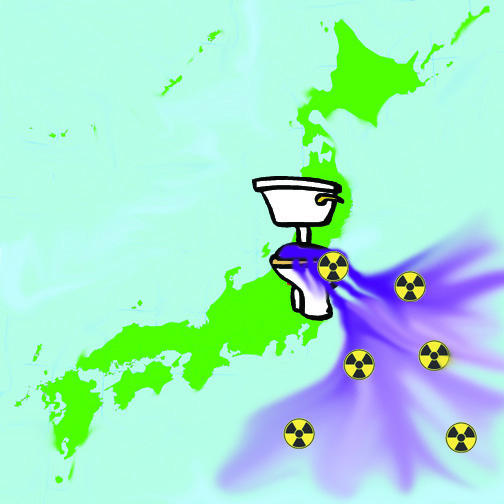
In about three years, the plant will run out of space for the massive quantities of treated but still-radioactive water that officials have been storing there, according to The Associated Press. While a government panel came up with a few possible courses of action, the most feasible one at the moment is to simply dump the water into the Pacific — a bleak sign for nuclear disasters in the future.
Maximum Capacity
At the moment, Fukushima has over 1 million tons of water stored in almost 1,000 on-site tanks, the AP reports. Plans are in place to build enough to store nearly 1.4 million more tons, but that even those will reach capacity by mid-2022.
Local fishers and residents of the area say that dumping the water would devastate the area’s fishing and agriculture industry, per the AP. Other options considered by the panel include vaporizing the radioactive water or injecting it deep underground.
“When we talk about Fukushima’s reconstruction, the question is if we should prioritize the decommissioning at the expense of Fukushima people’s lives,” University of Tokyo professor of disaster social science Naoya Sekiya told the AP. “The issue is not just about science.”
In reality, these Games are about forgetting the nuclear accident itself and with it “the victims of the nuclear accident”
Refugees are currently to be forced by financial pressure to return to areas that have been evacuated after the 2011 triple disaster, despite still significantly increased levels of radiation, as retired nuclear physicist Hiroaki Koide is pointing out. According to him, the fact that even children or pregnant women have to live with a twenty-fold increased limit for annual radiation exposure (from 1 millisievert per year before and up to 20 mSv after the incident), “is something that cannot be accepted at all”.
The Olympics are being organised “so that people in Japan forget the responsibility of the state for the nuclear accident,”
“What’s really dangerous, is that “the athletes will tell the world that Fukushima is safe”
‘Bad for Fukushima, bad for democracy’, Play the Game, By Andreas Singler, 7 Aug 19
One year before the opening of the Summer Olympics in Tokyo there is considerable resistance to the so-called ‘Reconstruction Games’ in Japan that critics fear will remove focus from the Fukushima disaster and undermine democratic values.
July 24 – one year to go until the opening of the Summer Olympics in Tokyo – may have been a day of joyful anticipation for many who embrace the Olympic Movement. But not all people anticipate this event as cheerfully as the organisers in Japan, a large part of the media and the Government of Prime Minister Shinzo Abe would appreciate. There was and still is much opposition against the hosting of the Olympic and Paralympic Games 2020 in Tokyo. Opponents call it both “bad for democracy” and “bad for Fukushima” – the area hit by a nuclear power plant disaster on 11 March 2011 and a devastating earthquake and tsunami.
For those critics, July 24 was a reason to take to the streets against Tokyo 2020. They had announced a rally for this memorable day followed by a demonstration in Shinjuku, one of the most crowded hubs in Tokyo. A leaflet even suggested that the Olympics could be “given back even a year before”. The protest in Tokyo was part of a so-far unique international gathering of ‘NOlympics’ activists from several countries. For eight days, opponents from Tokyo, Pyeongchang, Rio de Janeiro, Paris and Los Angeles discussed the dark sides of the Olympics with critical scholars and alternative media. A press conference was held at the Foreign Correspondents’ Club of Japan.
The motto ‘the Reconstruction Games’, that the organisers and the Government chose after the 2011 East Japan triple disaster, sounds like sheer mockery, opponents say. Organisers as well as the International Olympic Committee (IOC), including President Thomas Bach, often talk about reconstruction, but hardly ever mention the Fukushima Daiichi nuclear power plant disaster as one of the main reason for the need of such rebuilding. Continue reading →
Bad for Fukushima, bad for democracy’, Play the Game, By Andreas Singler, 7 Aug 19″…….Undermining democratic values
Japanologist and literary scholar Donald Keene, who passed away earlier this year aged 96 and who became a Japanese citizen after ‘March 11’ in solidarity with the suffering country, sharply criticised the media for their Olympic coverage of Rio de Janeiro in his Tokyo Shimbun column. Keene mentioned – “as if living in a totalitarian state” – mass media’s nationalistic approach and lack of journalistic distance. “From the very beginning, I was opposed to Tokyo Olympics,” Keene wrote. He was, according to Satoshi Ukai, one of the few public figures in Japan who could still be allowed such a clear-cut opinion. Keene, by birth a US citizen, was a legend among international Japanologists as an annalist, translator and intimate connoisseur of Japan’s golden generation of post-war writers.
“The longer one reflects about Olympics, the bigger the problems appear,” says Ukai. The fact that big celebrations and major disasters both can fuel nationalism and undermine the democratic culture of a country is one of the issues touched upon by US political scientist Jules Boykoff in his lecture on ‘Celebration Capitalism’ during a symposium at Waseda University in Tokyo on 21 July. His theoretical approach that refers on Naomi Klein’s term ‘disaster capitalism’ and covers Olympics in general appears like a blueprint on the conditions in ‘post-Fukushima’ Japan, where there are only a few years between catastrophe and festival event.
A larger number of laws have been adopted in recent years, partly as so-called anti-terrorism measures in the name of Olympic security. Critics call it an attack on the freedom of press, of expression, and of assembly. Those laws, one by one, caused mass protests driven by various social movements. The United Nations Special Rapporteur on Human Rights, Joseph Cannataci, criticised an Anti-Conspiracy Act of 2017 in an open letter to Prime Minister Abe. And in a report to the UN Human Rights Committee, Special Rapporteur David Kaye sounded the alarm over the country’s eroding freedom of the press. It is hardly possible to report freely about sensitive issues of Japanese history such as Japan’s role in World War II, the ‘comfort women’ issue or, yet, about the real situation in Fukushima, Kaye reported. In just a few years, Japan dropped from number 11 in 2010 to 72 in 2018 and 67 in the current ranking of ‘Reporters Without Borders’.
Tepco and three other companies considering joint firm to build nuclear power plant in Aomori, Japan Times, 9 Aug 19,
JIJI Tokyo Electric Power Company Holdings Inc. and three other companies are considering jointly setting up a new firm to construct and manage a planned nuclear power plant in Aomori Prefecture, informed sources said Thursday.
The three partners are Chubu Electric Power Co., Hitachi Ltd. and Toshiba Corp., the sources said.
Under the plan, the new company will build and run a new nuclear plant next to Tohoku Electric Power Co.’s Higashidori nuclear facility, which has been idle since the triple core meltdown at Tepco’s Fukushima No. 1 plant…….
Nobu Hanaoka was only 8-months-old when the US dropped Fat Man — a Plutonium bomb — on the Japanese city of Nagasaki on August 9, 1945. Sep 25, 2017 HT Correspondent Hindustan Times, New Delhi
“Does he have all five fingers?” This was a Nagasaki atomic bomb survivor’s first question to the doctor when his son was born.Nobu Hanaoka, 73, says he was relieved when the doctor replied that his son was in perfect health. “I had hoped that the radiation did not affect the child,” Hanaoka told Al Jazeera.
Hanaoka was only eight months old when the US dropped ‘Fat Man’ — a Plutonium bomb — on the Japanese city of Nagasaki on August 9, 1945, killing about 74,000 people. Three days before, ‘Little Boy’ — the first-ever atomic bomb, dropped on Hiroshima — had claimed 140,000 lives.
Hanaoka — clad in a simple, grey coat, has a message for the United States and North Korea as tensions escalate between the two countries over the possibility of a nuclear war.
“This is the kind of weapon that doesn’t just kill. It kills indiscriminately. It kills slowly and painfully.”
“And it shouldn’t be allowed on the surface of the Earth,” the survivor says after a pause.
“We were not even in the city of Nagasaki. We were outside. And yet the radiation that came from the bombing went far beyond the city limits,” Hanaoka said, before explaining the three ways an atomic bomb can kill.
Hanaoka’s mother and sister died due to radiation when he was six, he says, adding that he overheard the doctor telling his father the boy wouldn’t live to see his 10th birthday. “So I knew that I was not going to live long,” Hanaoka says in the video.
The atomic bomb survivor says he was always concerned for his health and feared he was dying when he got a simple cold. He also had survivor’s guilt, a mental condition in which a person feels remorse for surviving a traumatic event when others did not. “Why did my sister and mother, who were wonderful people… beautiful and smart and gentle, and they had to die.”
“And yet, I, who am not unworthy, am still alive?”
“I want all nations to come together and start finding a way of eliminating nuclear weapons altogether,” Hanaoka tells Al Jazeera after warning that there will be millions of casualties if either the US or North Korea is attacked with radioactive weapons.
North Korea’s foreign minister Ri Yong Ho told the United Nations General Assembly last week that targeting the US mainland with its rockets was inevitable after “Mr Evil President” Donald Trump called Pyongyang’s leader a “rocket man” on a suicide mission.
Trump, too, dialled up the rhetoric against North Korea over the weekend, warning Ho that he and its leader Kim Jong Un “won’t be around much longer” as Pyongyang staged a major anti-US rally.
The North had threatened to “sink” Japan into the sea and fired two missiles over the northern island of Hokkaido in the space of less than a month. Pyongyang said this month it had carried out an underground test on a hydrogen bomb estimated to be 16 times the size of the US bomb that destroyed Hiroshima in 1945. It was its sixth and largest nuclear test.
Survivors of Hiroshima-Nagasaki — the only two nuclear attacks in the history of mankind — warned of the threat of atomic weapons in a photo essay by the Time magazine last month. It quoted another survivor Fujio Torikoshi (86) as saying all he wanted was to forget the bombing. “We cannot continue to sacrifice precious lives to warfare. All I can do is pray – earnestly, relentlessly – for world peace.”


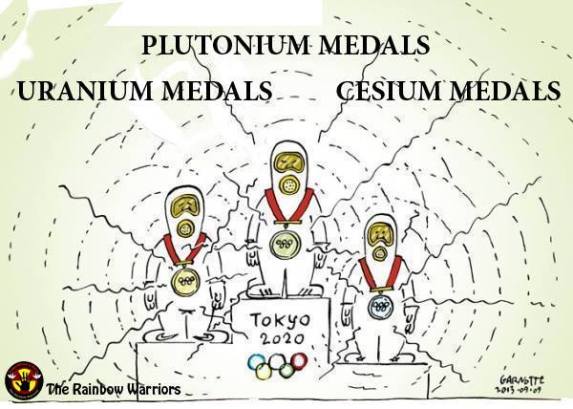

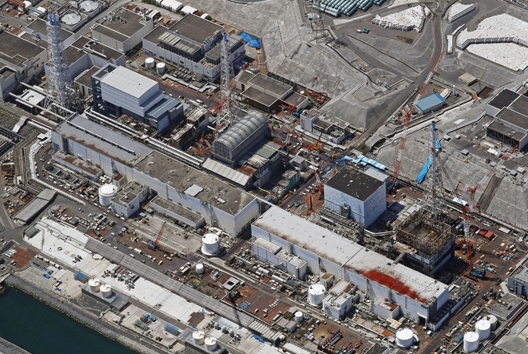 (File photo taken from a Kyodo News helicopter on April 23, 2019, shows the crippled Fukushima Daiichi nuclear power plant in northeastern Japan, where decommissioning work is under way.)




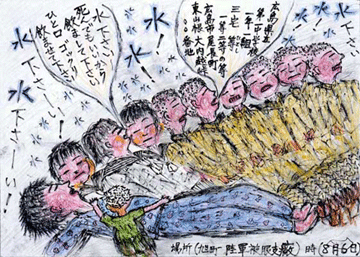 It kills slowly, painfully’: Nagasaki atomic explosion survivor has a message for US, North Korea http://www.hindustantimes.com/world-news/it-kills-slowly-painfully-nagasaki-atomic-explosion-survivor-has-a-message-for-us-north-korea/story-BB2nANm1xGmNZ4x73Gx32K.html





