The Japanese city of Nagasaki has marked its 75th anniversary of the US atomic bombing, with the mayor and dwindling survivors urging world leaders including their own to do more for a nuclear weapons ban.
At 11.02am, the moment the B-29 bomber Bockscar dropped a 4.5-ton plutonium bomb dubbed “Fat Man”, Nagasaki survivors and other participants stood in a minute of silence to honour more than 70,000 dead.
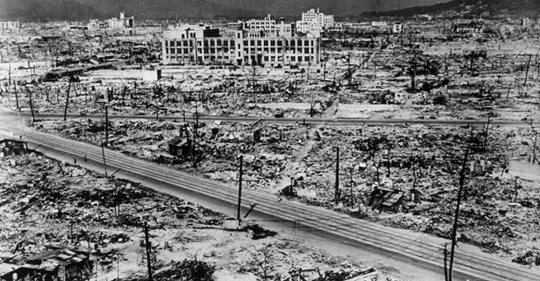
The 9 August 1945 bombing came three days after the United States dropped its first atomic bomb on Hiroshima, the world’s first ever nuclear attack that killed 140,000.
BY ARISTOS GEORGIOU ON 8/6/20“.. The nuclear bomb dropped by the United States devastated the Japanese city, destroying and burning around 70 percent of all buildings while also killing around 80,000 people immediately, with an estimated 60,000 more dying by the end of the year due to the effects of radiation and other injuries.
The horrific impact of the bomb was exacerbated by the fact that more than 90 percent of Hiroshima’s doctors and nurses were killed or injured by the bomb, while the blast left 42 out of 45 of the city’s civilian hospitals and two large army hospitals non-functional, according to the The International Campaign to Abolish Nuclear Weapons (ICAN).
This meant it was nearly impossible for the scores of injured to access aid, and most died without any care to ease their suffering from severe burns and radiation poisoning.
Before the attack Hiroshima had around 200 doctors, but the vast majority perished leaving only about 30 physicians who were able to perform their normal duties, according to a report created by the United States Strategic Bombing Survey.
Furthermore, more than 1,600 nurses out of nearly 1,800 were also killed, while medical stocks and supplies were also mostly destroyed.
Any hospitals within around 3,000 feet of ground zero were completely destroyed with almost everyone in them dying.
Two other large hospitals made from reinforced concrete that were located nearly 5,000 feet from the blast’s epicenter remained standing. However, the interiors suffered severe damage and around 90 percent of the occupants died, with many killed due to falling plaster, flying glass and fire.
Several medical centers that were located more than 7,000 feet away from ground zero also remained standing, although many were so badly damaged that they were not able to function.
The lack of medical facilities and staff only served to exacerbate the situation, as one eyewitness to the aftermath, Father Siemes, a German-born Jesuit professor who was in Hiroshima when the bomb fell, described, recounting the scene at an improvised first aid station.
“Iodine is applied to the wounds but they are left uncleansed. Neither ointment nor therapeutic agents are available. Those that have been brought in are laid on the floor and no one can give them any further care. What could one do when all means are lacking? Among the passersby, there are many who are uninjured,” he wrote.
“In the official aid stations and hospitals, a good third or half of those that had been brought in died. Everything was lacking, doctors, assistants, dressings, drugs, etcetera.”
Medical help had to be sent into the city from the outside, however, this took some time to arrive and several individuals who came to assist also ended up dying due to the high levels of lingering radiation.
On the 75th anniversary of the bombing, the International Physicians for the Prevention of Nuclear War (IPPNW), the only international medical organization dedicated to the abolition of nuclear weapons, told Newsweek that there can be “no useful medical response” to even a single nuclear attack on one city in their view.
“The infrastructure necessary would be destroyed and the personnel needed would be killed or badly wounded,” Chuck Johnson, IPPNW Director of Nuclear Programs, said. “Even a relatively small nuclear war would have atmospheric effects beyond the immediate blast, fire, and radiation, which could threaten billions of people with starvation due to crop failure. An all out nuclear war between the U.S. and Russia would end civilization and threaten to extinguish all human life.”
“We agree with President Reagan’s statement that ‘nuclear war can never be won and must never be fought,’ and are greatly concerned by the growing development of a new nuclear arms race among the nine nuclear weapons states.”
However, Johnson said the organization was “greatly encouraged” on the 75th anniversary of the first nuclear weapons attack on a human population, that three more nations—Nigeria, Ireland, and Niue—have become states parties to the UN Treaty on the Prohibition of Nuclear Weapons. This leaves only seven more states to submit ratification papers for the nuclear ban treaty to enter into force.”
“We look forward to the day when the UN declares that rogue nations which persist in developing and possessing nuclear weapons must listen to the world community and cease their activities which threaten all of us.”
Science 07 Aug 2020:
Vol. 369, Issue 6504, pp. 621-622
DOI: 10.1126/science.abc1507
Summary
Summary
In the time since Japan’s triple earthquake, tsunami, and nuclear disaster in 2011, much has improved in the ocean offshore from the Fukushima Daiichi Nuclear Power Plant (FDNPP). Concentrations of cesium isotopes, some of the most abundant and long-lived contaminants released, are hundreds of thousands of times lower than at their peak in April 2011. Since mid-2015, none of the fish caught nearby exceed Japan’s strict limit for cesium of 100 Bq/kg (1, 2). Yet, enormous challenges remain in decommissioning the reactors and clean-up on land. Small, and sometimes unexpected, sources of contaminants still continue to enter the ocean to this day (3). Two of the biggest unresolved issues are what to do with the more than 1000 tanks at the site that contain contaminated water and the impact of releasing more than 1 million tons of this water into the ocean.
Japan Nuclear Fuel Ltd.’s Rokkasho nuclear fuel reprocessing plant in Rokkasho, Aomori Prefecture, in 2018
July 31, 2020
Japan’s nuclear watchdog has effectively endorsed the safety of a controversial nuclear reprocessing plant being built in a village along the Pacific coast in northern Japan.
The Nuclear Regulation Authority on July 29 approved an outline of safety measures for the trouble-plagued nuclear fuel reprocessing plant Japan Nuclear Fuel Ltd. is building in Rokkasho, Aomori Prefecture.
The NRA said the outline meets the new safety standards introduced after the 2011 Fukushima nuclear disaster.
The NRA’s decision marks a major step forward in constructing the plant for recovering plutonium from spent nuclear reactor fuel, the core facility for the government’s program to establish a nuclear fuel recycling system.
NRA Chairman Toyoshi Fuketa, however, stressed that the body’s decision does not mean an endorsement of the nuclear fuel recycling policy per se, saying in a news conference that it is a “policy issue” whether there is enough of a rationale for pursuing the policy.
Prime Minister Shinzo Abe’s administration should confront the reality that the catastrophic accident at the Fukushima No. 1 nuclear power plant has completely changed the environment surrounding nuclear power generation and make a fundamental review of the government’s nuclear energy policy.
Nuclear fuel recycling involves recovering plutonium from spent nuclear fuel to be reused in reactors. The government has been promoting recycling separated plutonium back into the fuel of reactors since the 1950s under the rationale that Japan, a nation poor in natural resources, needs to make more efficient use of nuclear fuel.
More than half a century on, the share of nuclear power generation in Japan’s overall electricity production is now very small as most of the reactors that were shut down in the wake of the Fukushima meltdowns have yet to be restarted.
It is also nearly impossible to find a site for building a new nuclear plant. As aged reactors will be decommissioned one after another in the coming years, the importance of nuclear power generation for Japan’s energy supply will steadily diminish.
Over the long term, Japan needs to phase out nuclear power generation to remove public anxiety about a large-scale accident.
Nuclear fuel recycling can have no great significance in this new era when Japan has to start shifting away from atomic energy. Many industrial nations have long given up nuclear reprocessing as economically unviable.
Another big problem with reprocessing the spent fuel is that it produces plutonium, a material that can also be used to make nuclear weapons.
Japan has a stockpile of some 46 tons of plutonium, stored both at home and abroad, an amount enough to make 6,000 atomic bombs. It is fueling fears and drawing criticism internationally.
Japan Nuclear Fuel’s plant in Rokkasho is designed to have the capacity of reprocessing 800 tons of spent nuclear fuel annually to recover 7 tons of plutonium.
But the plan to develop a fast neutron reactor that can “consume” plutonium by transforming it into other forms of nuclear waste, the key technology for plutonium consumption, has gone awry with the decision to decommission Japan’s “Monju” prototype sodium-cooled fast-breeder reactor.
There are clearly also limitations to the plan to burn so-called MOX (mixed oxide) fuel, which is usually plutonium blended with natural uranium, in existing nuclear reactors.
The government has promised the international community to reduce the nation’s surplus plutonium. That means the reprocessing operation at the Rokkasho plant will have to be restricted so that the amount of plutonium recovered will not exceed consumption.
It simply does not make sense to spend as much as 14 trillion yen ($134.33 billion) on building the plant to recover a small amount of plutonium.
Given that this huge cost will be passed onto consumers through higher electricity bills, it is impossible to win broad public support for the project.
If the government decides to pull the plug on the fuel recycling program, it will have to face tough policy challenges it has long avoided tackling, such as how to dispose of spent fuel. But the nation cannot make the inevitable leap into the new age of energy if it continues spending huge amounts on nuclear power generation, which is beset by so many problems.
There is a growing global trend toward renewable energy sources such as solar and wind power. This is the time for the government to make a radical shift in its energy policy.
How long will it take for the Fukushima victims outside the evacuation zone to be finally all recognized?
In this October 2019 file photo, the cenotaph for the 1945 atomic bombing victims is seen at the Hiroshima Peace Memorial Park. The Atomic Bomb Dome is seen in the background.
Japan court recognizes Hiroshima ‘black rain’ victims outside designated area as hibakusha
July 29, 2020
HIROSHIMA (Kyodo) — A Japanese court ruled Wednesday that state health care benefits should be extended to people who were exposed to radioactive “black rain” after the 1945 U.S. atomic bombing of Hiroshima outside a zone currently recognized by the government.
The Hiroshima District Court ruled in favor of a suit filed by 84 plaintiffs in their 70s to 90s. It said they should receive the same health care benefits as provided for atomic bomb survivors who were in the zone where the state has recognized black rain fell.
It is the first court decision regarding the boundary of the area affected by radioactive rain and subsequent health problems among survivors.
Presiding Judge Yoshiyuki Takashima said, “It is possible black rain fell outside the designated zone and reasonable to conclude that they were affected by radiation if they were exposed (to such rain.)”
The court then determined that the plaintiffs developed diseases specific to atomic bomb survivors due to the effect of black rain.
Following the ruling, Chief Cabinet Secretary Yoshihide Suga said in a press conference the government has not decided whether to appeal the ruling.
The designated area lies northwest of the hypocenter of the atomic bombing on Aug. 6, 1945 and measures about 19 kilometers in length and 11 km in width.
People who were recognized as being in the affected area at the time of the bombing are eligible to receive periodic health checkups free of charge. Among them, those who developed illnesses believed to be caused by radiation effects can receive free health care services in principle.
The 84 plaintiffs including deceased individuals represented by family members developed such illnesses as cancer and cataracts after they were exposed to black rain containing radioactive materials outside the designated area and consumed contaminated food and water.
They had applied to the city and prefectural governments of Hiroshima for health care benefits for atomic bomb survivors between 2015 and 2018, but their applications for atomic bomb survivors’ certificates were turned down.
The plaintiffs sued the Hiroshima city and prefectural governments from 2015, seeking the nullification of their decisions.
The local governments insisted there was no scientific evidence that radioactive rain fell on areas outside the designated zone and the plaintiffs’ health problems were caused by their exposure to radiation.
The ruling was also welcomed by people in Nagasaki Prefecture, where an atomic bomb was also dropped three days after Hiroshima and there are survivors who claim to have been exposed to radioactive rain but have not been eligible for the state’s healthcare aid.
“(The ruling) departed from the unscientific ways of judging whether plaintiffs are ‘hibakusha’ (A-bomb survivors) simply based on distances (from the hypocenter) and administrative jurisdictions,” said Koichi Kawano, an 80-year-old resident of the town of Nagayo in Nagasaki, who survived the bombing.
Japan’s law on supporting atomic bomb survivors defines victims eligible for state aid in the following four categories.
They are those who were directly exposed to the bombing, people who entered within 2 km from the hypocenters of Hiroshima or Nagasaki in the period of two weeks from the attacks, those who were affected by radiation while rescuing survivors or other reasons and fetuses exposed to radiation in the womb.
The plaintiffs claimed they fit into the third category.
TOKYO — A Japanese court on Wednesday for the first time recognized people exposed to radioactive “black rain” that fell after the 1945 U.S. atomic attack on Hiroshima as atomic bomb survivors, ordering the city and the prefecture to provide the same government medical benefits as given to other survivors.
The Hiroshima District Court said all 84 plaintiffs who were outside of a zone previously set by the government as where radioactive rain fell also developed radiation-induced illnesses and should be certified as atomic bomb victims. All of the plaintiffs are older than their late 70s, with some in their 90s.
The landmark ruling comes a week before the city marks the 75th anniversary of the U.S. bombing.
The U.S. dropped the world’s first atomic bomb on Hiroshima on Aug. 6, 1945, killing 140,000 people and almost destroying the entire city. The plaintiffs were in areas northwest of the ground zero where radioactive black rain fell hours after the bomb was dropped.
The plaintiffs have developed illnesses such as cancer and cataracts linked to radiation after they were exposed to black rain, not only that which fell but also by taking water and food in the area contaminated with radiation.
They filed the lawsuit after Hiroshima city and prefectural officials rejected their request to expand the zone to cover their areas where black rain also fell.
In Wednesday’s ruling, the court said the plaintiffs’ argument about their black rain exposure was reasonable and that their medical records showed they have health problems linked to radiation exposure.
One of the plaintiffs, Minoru Honke, who was exposed to black rain at age 4, said more than a dozen people died during the trial. “I want to tell them that we won,” he said.
Osamu Saito, a doctor who has examined atomic bomb survivors in Hiroshima, welcomed the ruling for considering the survivors’ welfare based on an assumption that anyone who was in these areas and hit by the rain could have been affected by radiation.
Earlier in the day, dozens of plaintiffs walked into the Hiroshima court in the rain, showing a banner saying “Certificates to all ‘black rain’ victims.” As soon as the ruling was issued, lawyers for the plaintiffs ran out of the court, showing a banner saying “Full victory,” and their supporters applauded and cheered.
Chief Cabinet Secretary Yoshihide Suga told reporters that the government will closely examine the ruling and respond after consulting with related government agencies and Hiroshima officials.
“The majority of the world really doesn’t wish to hear our voices, and they haven’t heard us,” Thurlow said. “They choose not to hear us. That’s disappointing. They are just allowing these leaders to pile up the money, invest the money in armaments, to massacre human beings — mass killing. That’s a crime.”
Haunted by bombing, Hiroshima survivor continues fight against nuclear weapons, GRANDIN Media, By Michael Swan, Canadian Catholic News, July 31, 2020 Setsuko Thurlow, 88, isn’t just disappointed. She’s choking back tears of frustration and grief as she describes the response she’s had from Prime Minister Justin Trudeau on nuclear disarmament over the last four years.
“That’s extremely, extremely disappointing — so disturbing,” said the Hiroshima survivor who has been actively campaigning against nuclear weapons for more than 60 years.
“It’s not just me. There’s a lot of people disappointed. And that’s not the way the prime minister should be behaving. If this is a democracy, he (Trudeau) should be sharing his ideas and encouraging debate.”
The world is marking the 75th anniversary this month of the atomic bombings of Hiroshima and Nagasaki, events that still haunt and propel Thurlow in her passion for the disarmament cause.
On June 22 she sent a letter to Trudeau asking that he acknowledge that Canada helped to produce the first atomic weapons and has copied the letter to all 338 parliamentarians in Ottawa. She is still waiting for a reply.
So far the only time Trudeau has ever spoken about nuclear weapons policy was to mock efforts to declare the weapons illegal, Thurlow said…..
Trudeau was not in attendance later that year when Thurlow accepted the Nobel Peace Prize on behalf of the International Campaign to Abolish Nuclear Weapons. Nor did anyone in his government congratulate her.
The Trudeau government fell in line with U.S.-dictated NATO policy and refused to participate in United Nations negotiations leading to the Treaty to Prohibit Nuclear Weapons in 2017.
Canada voted against the treaty while 122 nations voted it in. Since then 40 states, including the Vatican, have ratified the treaty. Once 50 countries have ratified it, the treaty comes into legal force.
As one of a dwindling number of hibakusha, or survivors of the first two nuclear weapons, Thurlow has become an important face of the treaty and the campaign that brought it to the UN.
Her drive for a nuclear-free world began almost from the moment she woke up amidst the rubble left by the bomb that killed at least 70,000 people in a flash of heat and blinding light in Hiroshima.
She was then a 13-year-old school girl, bused downtown with 30 classmates to help crack coded messages for the Japanese military. She woke up to a world of pain under a pile of debris that morning of Aug. 6, 1945. Continue reading →
Rokkasho plant should be shut down in energy policy shift, Asahi Shimbun, July 31, 2020 “…….. The Nuclear Regulation Authority on July 29 approved an outline of safety measures for the trouble-plagued nuclear fuel reprocessing plant Japan Nuclear Fuel Ltd. is building in Rokkasho, Aomori Prefecture…..
The Nuclear Regulation Authority on July 29 approved an outline of safety measures for the trouble-plagued nuclear fuel reprocessing plant Japan Nuclear Fuel Ltd. is building in Rokkasho, Aomori Prefecture
It is also nearly impossible to find a site for building a new nuclear plant. As aged reactors will be decommissioned one after another in the coming years, the importance of nuclear power generation for Japan’s energy supply will steadily diminish.
Over the long term, Japan needs to phase out nuclear power generation to remove public anxiety about a large-scale accident.
Nuclear fuel recycling can have no great significance in this new era when Japan has to start shifting away from atomic energy. Many industrial nations have long given up nuclear reprocessing as economically unviable.
Another big problem with reprocessing the spent fuel is that it produces plutonium, a material that can also be used to make nuclear weapons.
Japan has a stockpile of some 46 tons of plutonium, stored both at home and abroad, an amount enough to make 6,000 atomic bombs. It is fueling fears and drawing criticism internationally.
Japan Nuclear Fuel’s plant in Rokkasho is designed to have the capacity of reprocessing 800 tons of spent nuclear fuel annually to recover 7 tons of plutonium.
But the plan to develop a fast neutron reactor that can “consume” plutonium by transforming it into other forms of nuclear waste, the key technology for plutonium consumption, has gone awry with the decision to decommission Japan’s “Monju” prototype sodium-cooled fast-breeder reactor.
There are clearly also limitations to the plan to burn so-called MOX (mixed oxide) fuel, which is usually plutonium blended with natural uranium, in existing nuclear reactors.
The government has promised the international community to reduce the nation’s surplus plutonium. That means the reprocessing operation at the Rokkasho plant will have to be restricted so that the amount of plutonium recovered will not exceed consumption.
It simply does not make sense to spend as much as 14 trillion yen ($134.33 billion) on building the plant to recover a small amount of plutonium.
Given that this huge cost will be passed onto consumers through higher electricity bills, it is impossible to win broad public support for the project.
If the government decides to pull the plug on the fuel recycling program, it will have to face tough policy challenges it has long avoided tackling, such as how to dispose of spent fuel. But the nation cannot make the inevitable leap into the new age of energy if it continues spending huge amounts on nuclear power generation, which is beset by so many problems.
There is a growing global trend toward renewable energy sources such as solar and wind power. This is the time for the government to make a radical shift in its energy policy. http://www.asahi.com/ajw/articles/13594167
Nuclear regulators OK fuel reprocessing plant, NHK, 29 Jul 20, Japan’s nuclear regulators have given a firm the green light to complete the construction of a fuel reprocessing plant, which is the centerpiece of the government’s nuclear fuel recycling policy.The plant in Aomori Prefecture, northeastern Japan, is operated by Japan Nuclear Fuel Limited. The facility is designed to extract plutonium for recycling from spent nuclear fuel generated by power plants…….
The regulators said on Wednesday that they had received about 760 opinions, and that many of them were about safety. The risk of radioactive materials leaking out was among the concerns.
The regulators concluded that the operator had measures in place to deal with the concerns, and said the firm’s application had been approved.
Japan Nuclear Fuel Limited wants to complete construction by September 2021, and launch operations in 2022. But the construction work, which began 27 years ago, has been delayed by problems. That has caused the cost to balloon to more than 130 billion dollars.
Plans to use the reprocessed plutonium are not moving forward as initially outlined.
Robot to use brush to retrieve melted fuel at Fukushima plant, Asahi Shimbun, By KEITARO FUKUCHI/ Staff Writer, July 27, 2020 FUKUSHIMA--A robotic arm under development in Britain will use a brush and vacuum vessel on its end to collect melted fuel in a step toward retrieving debris at the crippled Fukushima No. 1 nuclear power plant.
Details of the device, which will start collecting debris inside the No. 2 reactor on a trial basis next year, were announced on July 2.
The government and plant operator Tokyo Electric Power Co. plan to retrieve melted fuel at the No. 2 reactor ahead of two other reactors because radiation levels are relatively low……..
Training is expected to reduce the time required for workers to put debris into the transfer vessel near the fuel.
How atomic bomb survivors have transformed our understanding of radiation’s impacts, Science. By Dennis Normile, Jul. 23, 2020 , HIROSHIMA—Kunihiko Iida wants the world to know that the atomic bombs the United States dropped on Hiroshima and Nagasaki 75 years ago next month are still claiming lives and causing suffering.Iida was 3 years old in August 1945. His father had died in battle; he was living with his mother and her parents in a house 900 meters from Hiroshima’s hypocenter, the spot right beneath the detonation. The blast crumpled the house. The family fled the city, but Iida’s mother and older sister soon died from their injuries, a fact the little boy didn’t grasp. “Until I entered elementary school, I thought they were living and that we would meet someday,” he says.
His injuries left him bedridden for years, and he has suffered debilitating illnesses ever since. Childhood anemia caused him to collapse at school. He’s had ulcers and asthma, underwent two surgeries to remove brain tumors, and now has thyroid growths. “There has never been a break in these illnesses,” he says.
Yet Iida has survived. Thousands of others died prematurely over the years because of radiation-induced cancer, a tally that is still growing. Collectively, they have left an important legacy. Most of what is known today about the long-term health effects of radiation has come out of research with those survivors. The work, now run by the Radiation Effects Research Foundation (RERF), is making “major contributions to our understanding of radiation effects,” even today, says Richard Wakeford, a radiation epidemiologist at the University of Manchester. RERF studies also underpin the limits that countries have set for occupational and medical exposure to radiation.
Iida has participated in the studies since the late 1950s, because, he says, “They are trying to accurately grasp the misery of the atomic bomb,” something he hopes will promote peace. People don’t understand the unique impacts of nuclear weapons, Iida says. He and other participants “have helped the entire world,” says Ohtsura Niwa, chairman of RERF.
The survivors’ ranks are now rapidly thinning. About 70% of the original 120,000 participants enrolled in RERF’s Life Span Study (LSS) have died; most of those remaining are in their 80s and 90s. “We have an ethical obligation” to follow the cohort through the last surviving member, Niwa says—but at the same time, “We have to expand our mission.”
RERF researchers believe they can continue to gather epidemiological findings from existing life and health histories of the LSS participants, but they are also starting entirely new studies, for example of the molecular mechanisms by which radiation exposure leads to cancer. And biological samples from 30,000 study participants collected over 7 decades await genomic analysis………
One of Atomic Bomb Casualty Commission (ABCC) ‘s most immediate concerns was the possible impact of radiation on survivors’ children. It was clear that the bombings affected children already conceived in August 1945, resulting in an increased number of babies born with a small head size. And fruit fly studies showing that irradiation of adults causes heritable genetic changes and birth defects in offspring suggested there might be longer term effects………..
“Leukemia is a very rare disease, but clinicians became aware that it was appearing a lot among the survivors,” says Kotaro Ozasa, an RERF epidemiologist. ABCC showed the disease was especially prevalent among those closest to the hypocenter. Previous studies among people exposed to radiation in a medical context had hinted at the link, Wakeford says, but “the findings from Japan provided convincing evidence.”……..
How radiation exposure affected health
Studies in Hiroshima [shown on map below on original ] and Nagasaki conducted over the past 75 years have yielded important insights into the health effects of radiation. Researchers went to great lengths to determine survivors’ exposure, which depended partly on their distance from the hypocenter of the bombings………..
Year after year, the researchers have tracked the incidence of more than a dozen different types of cancers in the survivors, along with mortality. “Radiation risk is very complex,” says RERF epidemiologist Alina Brenner. It depends on sex and age at exposure and can be influenced by genetic susceptibility and lifestyle factors such as smoking. And risks “change over time as a population ages,” she says. But the sheer size and duration of the LSS, along with its detailed data on exposure, age, and sex, allowed researchers to draw many conclusions as the decades passed.
Dose was clearly very important. Among those who were within about 900 meters of the hypocenter and received more than 2 grays of radiation, 124 have died of cancer. (That dose is about 1000 times the average annual radiation dose from natural, medical, and occupational sources combined.) In its latest LSS update, RERF scientists conclude—based on comparisons of cancer deaths between the exposed group and unexposed controls—that radiation was responsible for 70 of those deaths (see graphic, above). Scientists call this number, 56.5%, the attributable fraction. The numbers of deaths are low because few who were close to ground zero survived the blast, explains Dale Preston, a biostatistician at Hirosoft International who previously worked at RERF. But among these people, “Most of the cancers are due to the radiation,” Preston says
At 1 gray of exposure, the dose roughly 1100 meters from the hypocenter, the attributable fraction is 34.8%, and it decreases linearly for lower doses. Women suffered more radiation-associated cancers than men, largely because of cases of breast cancer. Both men and women exposed at a younger age were more at risk as they aged: “It’s thought that actively dividing cells are more susceptible to radiation effects, so younger people are more sensitive,” Ozasa says. Radiation most increased the risk of leukemia among survivors, followed by cancer of the stomach, lung, liver, and breast. There was little impact on cancers of the rectum, prostate, and kidney. Exposure also heightened the risk of heart failure and stroke, asthma, bronchitis, and gastrointestinal conditions, but less so; for those with a 2-gray exposure, 16% of noncancer deaths were deemed attributable to radiation………..
New data are still coming in. In papers published in 2018 and 2019, for example, RERF scientists reported that women exposed to bomb radiation at the age of menarche, the first occurrence of menstruation, were at a higher risk of developing breast or uterine cancer later in life than those exposed before or after puberty. The proliferation of breast and uterine tissue during puberty provides “a lot of potential for DNA damage induced by radiation,” Brenner says.
The breast cancer study also gives a glimpse of RERF’s future agenda. The first analysis did not try to distinguish among the several major breast cancer subtypes, which vary in their biological mechanisms and prognoses, Brenner says. RERF is now analyzing cancerous tissue collected from patients to determine whether any of those subtypes occur more frequently in radiation victims. If so, that could provide hints about just how radiation damages tissue and raises cancer risk.
SAMPLES ARE ONE RESOURCE RERF has in abundance. During detailed biennial health examinations of more than 23,000 of the survivors (including some exposed in utero), researchers have collected and preserved blood and urine samples, some dating back to the late 1950s. RERF has also amassed frozen cell lines from parents and children in 500 families in which at least one parent was exposed to radiation, plus an equal number of control families.
DNA in those samples—which so far has not been sequenced—could provide a check on the early data about the health of survivors’ offspring. Despite the reassuring findings about birth defects, some researchers worry radiation may have caused mutations in testes and ovaries that children born years later might have inherited. Researchers plan to compare the number and types of mutations found in the families to see whether any are more common in children of radiation-exposed parents, Ullrich says. https://www.sciencemag.org/news/2020/07/how-atomic-bomb-survivors-have-transformed-our-understanding-radiation-s-impacts
Virtual tours planned at atomic bomb museums, https://www3.nhk.or.jp/nhkworld/en/news/20200721_43/?fbclid=IwAR2KZ-D8gWm-K1Yl8WVBDpUyobELxvI6Hm-DiWxtZYPBmyS8mo9BOneLd2E 21 Jul 20, Two Japanese museums dedicated to documenting the 1945 atomic bombings of Hiroshima and Nagasaki plan to offer virtual tours online in cooperation with an international NGO devoted to the elimination of nuclear weapons.They are planning the events as the number of international visitors to these museums has dropped sharply due to the coronavirus pandemic.
Kawasaki Akira, a member from the International Campaign to Abolish Nuclear Weapons, or ICAN, unveiled the plan online on Monday.
The exhibits at the Hiroshima Peace Memorial Museum and the Nagasaki Atomic Bomb Museum will be shown live on Instagram. Volunteers and researchers from universities will explain the displays in English.
The Hiroshima museum will hold the virtual tour on Wednesday for about 30 minutes after closing time, between 6:30 p.m. and 7p.m. Japan time.
The Nagasaki museum will hold it on Friday for about 30 minutes before opening time, between 8:00 a.m. and 8:30 a.m. Japan time.
Kawasaki said his group and the museums want to do everything possible online as various activities have been canceled due to the coronavirus pandemic.
He said he wants to offer young people abroad an opportunity to find out about the damage and aftereffects of the atomic bombings of the two cities.
Freeing the World of Nuclear Weapons: Arms Control Today interviews Hiroshima Mayor Kazumi Matsui https://www.armscontrol.org/act/2020-07/features/freeing-world-nuclear-weapons-arms-control-today-interviews-hiroshima-mayor July/August 2020As the site of the first atomic bomb attack, Hiroshima has served as a vital center for education about nuclear weapons and their effects. The people of the city, along with those of Nagasaki, have been steadfast in their advocacy for abolishing nuclear weapons. The survivors of the U.S. atomic bombings on Japan, the hibakusha, have worked to communicate their experience to global citizens and leaders. Kazumi Matsui, Hiroshima’s mayor since 2011, has played a major role in that effort. He serves as president of Mayors for Peace, an assembly of thousands of cities worldwide devoted to protecting cities from the scourge of war and mass destruction.
In response to the coronavirus pandemic, Hiroshima is planning to scale back large gatherings and instead hold virtual events marking 75 years since the August 6, 1945, bombing. Matsui spoke with Arms Control Today on June 23.
Arms Control Today: Seventy-five years after the first nuclear test explosion and the atomic bombings that destroyed your city and Nagasaki, what message do you, as the president of Mayors for Peace, and the people of Hiroshima, including the hibakusha, have for others around the world about living under the dark shadow of nuclear weapons?
Mayor Kazumi Matsui: In August 1945, two single atomic bombs dropped on the cities of Hiroshima and Nagasaki instantly reduced them to rubble, taking more than 210,000 precious lives. With almost 75 years since the bombings, the hibakusha, those who barely survived, still suffer from the harmful aftereffects of radiation. While their minds and bodies are in pain, they, together with other members of the public, continue to make their appeal that “no one else should suffer as we have.”
However, today, the nuclear-armed states possess about 13,000 nuclear warheads. The destructive power of every one of them is far above the atomic bombs dropped on Hiroshima and Nagasaki. These weapons could be used by accident or for terrorism. The current situation is far from what the citizens of Hiroshima, including the hibakusha, have been seeking for so long.
This is because the nuclear-armed states and their allies consider nuclear deterrence as essential for their security assurance, prioritizing the pursuit of only their own misguided national interest. However, this poses a grave threat to the survival of us all, the whole of humanity.
The current global coronavirus pandemic is a transboundary crisis that touches us all. We are experiencing firsthand that we can confront and defeat common threats through solidarity and cooperation. Based on what we have learned from this experience, we must build a robust global coalition of citizens everywhere to address and solve global security challenges, especially nuclear weapons. We must not take action based on self-centered nationalism.
I sincerely hope that everyone in the world will share in the hibakusha’s message and join us in realizing a peaceful world free of nuclear weapons.
ACT: There are now fewer and fewer hibakusha and fewer people who have witnessed the devastation of the atomic bombings. What can be done over the next 75 years to remind current and future generations of the experiences and the messages of the survivors of the Hiroshima and Nagasaki bombings and the health impacts of the use of nuclear weapons? Are we at risk of forgetting?
Matsui: The average age of the hibakusha has exceeded 82. With their unshakable conviction that “no one else should suffer as we have,” they have conveyed their experiences and their desire for peace to younger generations. However, if we leave this important task of passing down to the future generations to the hibakusha alone, then unfortunately, sooner or later, there will no longer be anyone able to do so.
In order to ensure that the hibakusha’s messages will be faithfully inherited and shared with future generations, the City of Hiroshima conducts various initiatives. The Hiroshima Peace Memorial Museum exhibits belongings and photos of victims along with the words of their bereaved family members. Each item conveys to visitors the memories, sentiments, and the pain and sorrow of the victims and the bereaved. In addition, displays on the harm caused by the radiation tell the world of the inhumane nature of nuclear weapons. We encourage all world leaders and their fellow citizens to visit this museum to see the long-term catastrophic effects of the atomic bombings for themselves.
We also have a project to train A-bomb Legacy Successors, volunteers who pass down hibakusha experiences and their desire for peace on their behalf. Today, 131 successors are engaged in such activities.
We also make videos of hibakusha testimonies and collect memoirs in collaboration with the government. We are translating these into many languages so that all can understand their tragic experiences. We intend to continue our efforts to enrich and expand these and make them available physically and online to share the messages of the hibakusha with the younger generation, who are the future of our society.
ACT: You and others have noted that “vital nuclear arms control agreements are being abandoned, budgets for development and production of new nuclear weapons are growing, and the potential for nuclear weapons use is too dangerous to tolerate. We are badly off course in efforts to honor the plea of the hibakusha and end the nuclear threat.” On an international level, how can and should the world get back on track toward nuclear disarmament?
Matsui: We see unilateralism is rising in the international community, and exclusivity and confrontational approaches have increased tensions between nations. Now, the international situation surrounding nuclear weapons is very unstable and uncertain. But why is that? Fundamentally, policymakers should tackle issues, even if they are rooted in local contexts, from a global perspective. However, they are more likely to jump to a short-term compromise, which results in the current international situation.
In order to break the status quo of dependence on nuclear deterrence and get back on track toward nuclear disarmament, it is essential to mobilize civil society’s shared values and create a supportive environment to give world leaders the courage to shift their policies.
Those shared values and desires of civil society aim at securing every citizen’s safety and welfare. As a nonpartisan organization made up of the very heads of local governments responsible for realizing that goal, Mayors for Peace implements a number of relevant initiatives.
Specifically, by utilizing its network of more than 7,900 member cities in 164 countries and regions, Mayors for Peace conveys the realities of the atomic bombings and works to increase the number of people who share in the hibakusha’s message. In this way, we can build a consensus among global civil society that the elimination of nuclear weapons is key to the peaceful future we need. This consensus will serve as the foundation for a collaborative international environment in which policymakers around the world can take decisive steps forward toward the total elimination of nuclear weapons.
I sincerely hope that all states, including the nuclear-armed ones, will engage in good-faith dialogue led by world leaders who wholeheartedly accept the earnest wish of the hibakusha, that is, the realization of nuclear weapons abolition as soon as possible. Through this, they will surely share wisdom and come up with an approach to make substantial progress in nuclear disarmament and nonproliferation.
ACT: What more can be done at the local level, especially by the younger generations, wherever they may live, to support global efforts for nuclear nonproliferation and disarmament?
Matsui: As I understand it, what civil society is sincerely seeking is to secure the public’s safety and welfare. But when it comes to big global challenges to the peaceful existence of humanity as a whole, such as the abolition of nuclear weapons, we should not limit our solutions to the framework of nation-states. Solutions should also be based on that sincere desire of civil society at the grass-roots level across the world. I believe that we should spread awareness of this throughout civil society.
My hope for younger generations, the future of our society, is that they will start thinking about the preciousness of their daily lives, which are supported by rules based on mutual trust. Hopefully, they will then understand that this is exactly what peace is and think what they can do to preserve it and take action.
In civil society, which is based on democracy, if every person develops such concepts of peace and takes action accordingly, it follows that policymakers will be elected who can realize our common wish. It is also not a dream for them to become policymakers themselves.
If more people come to envisage a future different from the past and work to realize it, they will become the drive to change the world.
Mayors for Peace puts emphasis on peace education aimed at raising awareness among younger generations as part of its intensified efforts. Through our various programs, we nurture young leaders who engage in peace activities proactively.
ACT: What more can Japan’s national leadership do to move us closer to the peace and security of a world without nuclear weapons?
Matsui: As the only country to have experienced the devastation caused by nuclear attacks, Japan has a responsibility to share the hibakusha’s sincere desire to abolish nuclear weapons with the world and take the lead on various initiatives to make that a reality.
Japan has a role in international society as a “bridge” between the nuclear-armed states and the states-parties of the Treaty on the Prohibition of Nuclear Weapons to foster and promote dialogue and cooperation. To realize abolition as soon as possible, Japan can and should do even more to fulfil this role. I hope this will happen from the bottom of my heart.
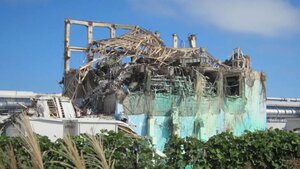
The Fukushima Nuclear disaster occurred when a massive tsunami crashed over the plant’s walls, causing three operating nuclear reactors to overheat and melt down. Simultaneously, reactions within the plant generated hydrogen gas that exploded as soon as it escaped from containment. During the disaster, caesium — a volatile fission product created in nuclear fuel — combined with other reactor materials to create caesium-rich microparticles (CsMPs) that were ejected from the plant.
CsMPs are incredibly radioactive, and scientists study them in an attempt to both measure their environmental impact and to gain insight into the nature and extent of the Fukushima disaster. In one such research process, scientists discovered tiny uranium and plutonium fragments within these micro-particles. The range of plutonium particle spread was previously estimated at 50km, and this research changes that number to 230km. This discovery is vital as it provides a reason to extend testing for plutonium poisoning in human-inhabited regions further than before, and helps scientists understand how to decommission the nuclear reactors in the plant. Decommissioning nuclear plants is extremely important after they cease to function, in order to reduce residual radioactivity in the region to safe levels.
With respect to immediate implications for health, scientists note that radioactivity levels of the plutonium are similar to global counts from nuclear weapons tests. While this means that radioactivity levels may not pose an urgent, critical danger, scientists also note that plutonium poisoning in food items remains a threat. If plutonium were ingested — a possibility in this region — it could create isotopes that significantly increase radioactivity doses, and poison the body.
Due to high radioactivity levels, humans are still unable to enter the Fukushima plant nine years after the disaster. Yet, scientists continue to work towards safely decommissioning the reactors within the plant from the outskirts.
The Fukushima Diiachi Accident Chain, Part 6, Nuclear Exhaust, 22 July 20
A Discussion of Official Reports Describing the Fukushma Diiachi Nuclear Disaster
The references used for this discussion are:
“The Official report of the Fukushima Nuclear Accident Independent Investigation Commission Executive Summary”, The National Diet of Japan, 2012.
“FUKUSHIMA DAIICHI: ANS Committee Report”, A Report by The American Nuclear Society Special Committee on Fukushima, March 2012.
“The Fukushima Daiichi Accident, Technical Volume 1/5 Description and Context of the Accident, IAEA, Vienna, 2015.
“FACT AND CAUSE OF FUKUSHIMA NUCLEAR POWER PLANTS ACCIDENT”, Hideki NARIAI, Proceedings of the International Symposium on Engineering Lessons Learned from the 2011 Great East Japan Earthquake, March 1-4, 2012, Tokyo, Japan.
Other sources, such as press reports, industry and authority regulations and technical bulletins will also be used.
The very great complexity of the disaster and of the human and systems responses to the challenges which confronted, and confront, the Fukushima Diiachi nuclear plant and the people operating and tending to the plant is obvious. The aim of this discussion is to attempt to produce, in review, a coherent picture of the events as reported by the authorities given above.
While the nuclear industry and permanent nuclear authorities – the IAEA – tend to agree closely in their reports of the events, the Fukushima Nuclear Accident Independent Investigation Commission, appointed by the Japanese national Parliament (Diet) reports various aspects of the disaster with pointedly local questioning of events based upon witness accounts and the Committee’s own findings. And these perceptions, based on local knowledge of both the plant and witness statements actually challenge, in aspects, the findings of the other authorities.
As a preamble to the discussion of the disaster, a central consideration to all nuclear power plants in use today has to be included. The long term, intermediate term and short term safety of nuclear power plants depends upon the availability of electrical grid connection and power to the reactors and the entire plant. This is not an opinion, it is a technical fact which nuclear authorities have repeatedly reported upon.
The surprising fact is, that although nuclear reactors can supply electrical power to the world’s largest cities and nations, when the grid goes down, there is no ability for any nuclear reactor to power itself and its systems on any long term basis. There is nothing integral to the reactors which allows the energy resident in the reactors’ cores and pressure vessels to be controlled and managed so as to manage the cooling of the reactors.
While the nuclear industry and nuclear authorities have touted the virtues of nuclear power plant emergency cooling systems for over 50 years. However:
“The emergency cooling systems started. However, they did not work for so long time, and the fuels became to heat up and melt down, resulting the severe accident. “ Source: English translation of “FACT AND CAUSE OF FUKUSHIMA NUCLEAR POWER PLANTS ACCIDENT , Hideki NARIAI, Proceedings of the International Symposium on Engineering Lessons Learned from the 2011 Great East Japan Earthquake, March 1-4, 2012, Tokyo, Japan.
As we shall see later, the workers at the Fukushima Diiachi site during the early stages kept the emergency cooling systems going for many hours longer than the systems were designed to last. And these systems are designed to work for 8 hours only. (See the ANS report)..……….
It is beyond me why the nuclear industry, for more then 50 years, has been so wilfully dumb, ignorant and arrogant in the design of its emergency systems. And everything else. It seems to me the main aim of the industry is to sell reactors by any means. Whereas the industry should have the main aim of assuring safety in the context of the modern world and the modern world energy market. The problem is, though solar panels mounted on the Fukushima Shima Diiachi reactor building roofs could have save the day by keeping cooling pumps going, the obvious thought is this: why not just replace the Fukushima Diiachi with a solar and wind farm?
No danger of meltdown at all. As soon the 2009 scientific assessment came in demonstrating that an earthquake and tsunami was due “within the next 30 years”. that is precisely what should have been down. Perhaps Barry Brook and Pam Sykes, two academic non nuclear experts in Australia, were right. No human skill could have saved Fukushima Diiachi. So why leave it there? Pity the authorities in the nuclear industry hid and suppressed the scientific warnings of 2009, including TEPCOs own confirmation of the growing threat. This is standard procedure for the nuclear industry. It is not a particularly Japanese culture. It is nuclear norm.
The IAEA requirements for electricity grids which supply Nuclear Power Plants.
The following text is a straight quote from : ” “ELECTRIC GRID RELIABILITY AND INTERFACE WITH NUCLEAR POWER PLANTS” IAEA NUCLEAR ENERGY SERIES No. NG-T-3.8, IAEA, ….
Quote: ““The safe and economic operation of a nuclear power plant (NPP) requires the plant to be connected to an electrical grid system that has adequate capacity for exporting the power from the NPP, and for providing a reliable electrical supply to the NPP for safe startup, operation and normal or emergency shutdown of the plant.
“Connection of any large new power plant to the electrical grid system in a country may require significant modification and strengthening of the grid system, but for NPPs there may be added requirements to the structure of the grid system and the way it is controlled and maintained to ensure adequate reliability.
“The organization responsible for the NPP and the organization responsible for the grid system will need to establish and agree the necessary characteristics of the grid and of the NPP, well before the NPP is built, so that they are compatible with each other. They will also need to agree the necessary modifications to the grid system, and how they are to be financed.
“For a Member State that does not yet use nuclear power, the introduction and development of nuclear power is a major undertaking. It requires the country to build physical infrastructure and develop human resources so it can
construct and operate a nuclear power plant (NPP) in a safe, secure and technically sound manner. ” end quote. Source: “ELECTRIC GRID RELIABILITY AND INTERFACE WITH NUCLEAR POWER PLANTS” IAEA NUCLEAR ENERGY SERIES No. NG-T-3.8, IAEA,
Hmm. very interesting. NPPs require a specifically designed and modified baseload capable grid network before they can be expected to safely start up, operation and shut down. Further the grid is needed, according to the world nuclear authority, for SAFE EMERGENCY SHUTDOWN.
The Earthquake and the Grid in Japan on the day of the disaster
One would have thought the following information would have been clearly discussed by the nuclear authorities from the day of the disaster. It’s nearly 10 years and still no word from them:
““Vibrations from the magnitude 9.0 earthquake triggered an immediate shut down of 15 of Japan’s nuclear power stations. Seismic sensors picked up the earthquake and control rods were automatically inserted into the reactors, halting the fission reaction that is used to produce electricity. This sudden loss of power across Japan’s national power grid caused widespread power failures, cutting vital electricity supplies to Fukushima Daiichi. There were three reactors, one, two and three, operating at the time when the earthquake hit while reactors four, five and six had already been shutdown as part of routine maintenance work.” “Japan earthquake: how the nuclear crisis unfolded”. Richard Gray, Science Correspondent, The Telegraph, 20 March 2011. end quote.
The first thing the earthquake did was to cause the shutdown of nuclear power feed into the grid. 15 Nuclear Power Plants threw in the towel because they cannot safely operate during an earthquake. Apparently. Nuclear power guarantees black out in an earthquake.
Fukushima may have scattered plutonium widely, Physics World 20 Jul 2020 Tiny fragments of plutonium may have been carried more than 200 km by caesium particles released following the meltdown at the Fukushima Daiichi nuclear power plant in Japan in 2011. So says an international group of scientists that has made detailed studies of soil samples at sites close to the damaged reactors. The researchers say the findings shed new light on conditions inside the sealed-off reactors and should aid the plant’s decommissioning……..
Mapping plutonium spread
To date, plutonium from the accident has been detected as far as 50 km from the damaged reactors. Researchers had previously thought that this plutonium, like the caesium, was released after evaporating from the fuel. But the new analysis instead points to some of it having escaped from the stricken plant in particulate form within fragments of fuel “captured” by the CsMPs…….
Implications for decommissioning
The researchers note that previous studies have shown that plutonium and caesium are distributed differently in the extended area around Fukushima, which suggests that not all CsMPs contain plutonium. However, they say that the fact plutonium is found in some of these particles implies that it could have been transported as far afield as the caesium – up to 230 km from the Fukushima plant.
As regards any threat to health, they note that radioactivity levels of the emitted plutonium are comparable with global counts from nuclear weapons tests. Such low concentrations, they say, “may not have significant health effects”, but they add that if the plutonium were ingested, the isotopes that make it up could yield quite high effective doses.
With radiation levels still too high for humans to enter the damaged reactors, the researchers argue that the fuel fragments they have uncovered provide precious direct information on what happened during the meltdown and the current state of the fuel debris. In particular, Utsunomiya points out that the composition of the debris, just like that of normal nuclear fuel, varies on the very smallest scales. This information, he says, will be vital when it comes to decommissioning the reactors safely, given the potential risk of inhaling dust particles containing uranium or plutonium.


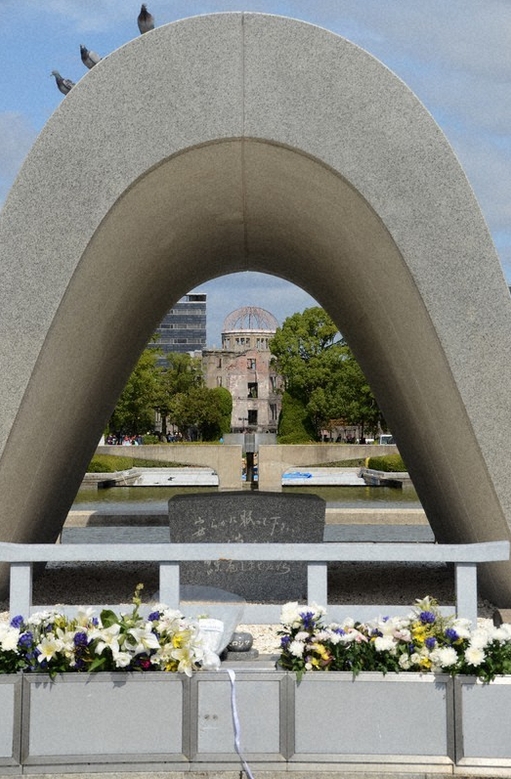 In this October 2019 file photo, the cenotaph for the 1945 atomic bombing victims is seen at the Hiroshima Peace Memorial Park. The Atomic Bomb Dome is seen in the background.




 nuclear-news