Hamaoka nuclear plant – seawater in reactor core, radiation in farmland
Seawater enters reactor core at nuclear plant, Oman Observer, Sat, 21 May 2011 TOKYO — Some five tons of seawater is estimated to have entered a reactor core at the Hamaoka nuclear power station in central Japan, the operator said on Thursday. That followed the discovery of an estimated 400 tons of seawater that has inundated the main steam condenser at reactor 5 of the Hamaoka nuclear plant in Shizuoka prefecture, south-west of Tokyo.
Chubu Electric Power Co, which runs the plant, found the 400 tons of seawater while shutting down the reactor as requested by the government. Chubu Electric officials said their assessment of the purity of water inside the pressure vessel showed some 5 tons of seawater came from the condenser. The utility will not decommission the reactor. Instead, it will dilute and desalinate the seawater to prevent any corrosion inside the reactor as salt causes corrosion…….
The plant is run by Tokyo Electric Power Co (TEPCO). On Saturday, after Chubu Electric started to put the Hamaoka plant in a stable state known as cold shutdown, it discovered seawater in the reactor core, Jiji said. Meanwhile, local officials in the prefecture of Miyagi said on Thursday they had found high levels of radioactive substances in a sample of pasture grass.
Local government officials detected 1,530 becquerels of radioactive caesium per kilogram in a sample collected a week ago from a farm run by the town of Marumori, some 60 kilometres north of the Fukushima plant. — DPA… Seawater enters reactor core at nuclear plant | Oman Observer
Agonising decisions over animals left in Fukushima prefecture
 As the no-go zone spreads, ever more farmers are being forced to make agonising decisions over whether to move their livestock to safe areas and incur huge costs, slaughter their animals or — perhaps the most unacceptable option — leave them to their fate.
 Agony for Japan livestock farmers in nuclear crisis, By Shingo Ito (AFP) – GoogleNews, 20 May 11, FUKUSHIMA CITY, Japan — As more people are forced to leave their homes around the stricken Fukushima nuclear plant, anger is growing in a farming community forced to make the agonising decision whether to slaughter livestock or face ruin. Continue reading
Why Japan’s nuclear hierarchy cannot be trusted about Fukushima disaster
 Virtually any nuclear engineer connected with the industry he or she supports cannot be fully trusted right now to give us the full truth about Fukushima because the truth is simply too damaging to the nuclear industry and they know it. The attitude that the industry has, as well as the ugly reality that this same energy is tied to the economy which supports full on capitalism, must be scaled back Tokuhiro advised.
 Interview with Akira Tokuhiro, Nuclear Engineer: Fukushima and the Mass Media HUFFINGTON POST, Vivian Norris, 19 May, “Only the mass media can put the kind of pressure on TEPCO and the Japanese government to bring about major change. This will cost at least 10 billion dollars if not 20-30 billion to clean up. It will take at least 10 years if not 20 and roughly 10,000 people working on the cleanup. The nuclear business is global. This needs an international effort to clean up Fukushima.”
— Nuclear Engineer Akira Tokuhiro
In an email today, Japanese born, U.S.-educated nuclear engineering professor Tokuhiro wrote the following: Continue reading
Inadequate radiation testing of Fukushima nuclear workers
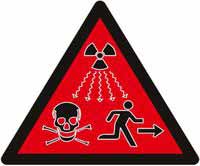 Radiation tests lacking / Nuclear plant workers unsure of internal exposure levels, The Yomiuri Shimbun, 19 may 11, Nearly two months after the start of the crisis at the Fukushima No. 1 nuclear power plant, only 10 percent of workers there had been tested for internal radiation exposure caused by inhalation or ingestion of radioactive substances, due to a shortage of testing equipment available for them.
Tokyo Electric Power Co., operator of the crippled nuclear compound, is finding it impossible to use testing apparatus set up inside the facility because of high radiation levels recorded near the equipment.
A number of personnel working to overcome the nuclear crisis at the facility are increasingly alarmed by their lack of internal exposure testing. Some have said they may have to continue to work at the facility without knowing whether their radiation exposure levels have exceeded the upper limit set by the government……Radiation tests lacking / Nuclear plant workers unsure of internal exposure levels : National : DAILY YOMIURI ONLINE (The Daily Yomiuri)
A good business move for Japan – from nuclear to solar?
 new solutions for solar power installation in Japan’s relatively small geographic areas. “The [irradiated] agricultural land near the Fukushima power plant is no longer usable, so why don’t we convert that into solar plants?” …alculation from Japan’s National Institute of Advanced Industrial Science and Technology: “Rice produced on one hectare of land yields a yearly revenue of 1.58 million yen, while a solar plant on the same surface would generate a revenue of 7.5 million yen.”
Why Japan’s Shift Away from Nuclear Is Good for Business, TIME, By Lucy Birmingham / Tokyo Wednesday, May 18, 2011 “…….New legislation is expected to help diversify the nation’s energy portfolio. A new feed-in tariff (FIT) will oblige utility companies to buy all the power generated through renewable sources connected to a grid, at fixed, premium rates. Continue reading
False sense of security as Tepco misleads public on Fukushima nulclear cleanup
 Tepco Misleading Public Over Nuclear Crisis, Bloomberg, By Tsuyoshi Inajima and Yuji Okada – May 17, 2011 Tokyo Electric Power Co. has made misleading statements about when it will stabilize its nuclear reactors crippled by the March 11 earthquake and tsunami, said Tetsuo Ito, head of the Atomic Energy Research Institute at Kinki University in western Japan.
The company, known as Tepco, yesterday reiterated the schedule on its so-called road map announced a month ago to achieve cold shutdown of the three radiation-leaking reactors as early as October. Setting a timetable without knowing the condition of the reactor cores doesn’t make sense, Ito said in a phone interview from Osaka.
“Only after understanding what’s going on inside the buildings and reactors, will it be clear what parts of the timetable are achievable,” Ito said. “Devising a road map without that will give the public a false sense of security.”…..Tepco Misleading Public Over Nuclear Crisis – Bloomberg
Japan: collusion of govt, nuclear regulators, plant operators, courts

 The lawsuits reveal a disturbing pattern in which operators underestimated or hid seismic dangers to avoid costly upgrades and keep operating. And the fact that virtually all these suits were unsuccessful reinforces the widespread belief in Japan that a culture of collusion supporting nuclear power, including the government, nuclear regulators and plant operators, extends to the courts as well.
Japanese Officials Ignored or Concealed Dangers, New York Times, By NORIMITSU ONISHI and MARTIN FACKLER, May 16, 2011 OMAEZAKI, Japan — The nuclear power plant, lawyers argued, could not withstand the kind of major earthquake that new seismic research now suggested was likely.
If such a quake struck, electrical power could fail, along with backup generators, crippling the cooling system, the lawyers predicted. The reactors would then suffer a meltdown and start spewing radiation into the air and sea. Tens of thousands in the area would be forced to flee.
Although the predictions sound eerily like the sequence of events at the Fukushima Daiichi plant following the March 11 earthquake and tsunami, the lawsuit was filed nearly a decade ago to shut down another plant, long considered the most dangerous in Japan — the Hamaoka station. Continue reading
Draining 4,000 tonnes of highly radioactive water from Fukushima reactor
 Radioactive water to be drained from Fukushima reactor, ABC News (Australian Broadcasting Corporation), By North Asia correspondent Mark Willacy, 17 May 11, he operator of the crippled Fukushima nuclear plant will today begin pumping out thousands of tonnes of highly radioactive water from one of the reactors.
The Tokyo Electric Power company will use hoses to pump 4,000 tonnes of highly contaminated water from No. 3 reactor.
The radioactive water will then be shifted to a waste disposal facility to stop it from leaking into the environment….Radioactive water to be drained from Fukushima reactor – ABC News (Australian Broadcasting Corporation)
Courage of doctors in Fukushima nuclear zone
“Doctors are there to work in this kind of adversity,” he said. “This is my mission — maybe it’s the last chapter of my medical career.”……
Doctors defy radiation woes in Japan’s Fukushima – Channel NewsAsia, 17 May, 11, FUKUSHIMA CITY, Japan: When other doctors fled, 72-year old Kyohei Takahashi stayed, and hundreds of patients in the tsunami-hit Japanese town of Minamisoma near a crippled nuclear plant will never forget.Dr. Takahashi has defied radiation fears and worked gruelling hours for the past nine weeks to do what he considers his duty.”As a doctor, I thought, I shouldn’t retreat,” he said. “I told myself: who will do it if I don’t?” Continue reading
Perspective on Chernobyl and Fukushima nuclear catastrophes
 The Fukushima Nuclear Disaster in Perspective, Global Research ca by Dr. Helen Caldicott 15 may 11, First I want to present this report, produced by the New York Academy of Sciences, a report on Chernobyl. It can be downloaded.(2) They translated 5,000 articles from Russian for the first time into English. It seems that nearly a million people have already died as a result of Chernobyl, despite what the WH0(3) says and the IAEA.(4) This is one of the most monstrous cover-ups in the history of medicine. Because everybody should know about this. Continue reading
Earthquake, not tsunami, damaged Fukushima nuclear plant
 Quake ‘hurt reactors before tsunami’ | The Japan Times Online, May 16, 2011Tepco detected sharp rise in radiation in reactor 1 immediately after temblor struck High radiation readings taken in the No. 1 reactor building the night of March 11 suggest it was the quake rather than the loss of cooling that critically damaged the Fukushima No. 1 power plant, a utility source said Saturday.
The belated disclosure could trigger a review of quake-preparedness at nuclear facilities across the country. Many have been focusing on increasing defenses against tsunami, which knocked out the plant’s poorly placed emergency power generators…..Quake ‘hurt reactors before tsunami’ | The Japan Times Online
Fukushima nuclear plant – cooling process now abandoned
 Japan nuclear: Tepco halts Fukushima cooling plan, BBC New15 May 2011 Japanese engineers have abandoned their latest attempt to stabilise a stricken reactor at the Fukushima nuclear plant.The plant’s operator, Tepco, had intended to cool reactor 1 by filling the containment chamber with water.
But Tepco said melting fuel rods had created a hole in the chamber, allowing 3,000 tonnes of contaminated water to leak into the basement of the reactor building……The government and Tepco (Tokyo Electric Power Company) said it would take until next January to achieve a cold shut-down at the plant……Tepco says it will come up with a new plan to stabilise the reactor by Tuesday.Japanese broadcaster NHK said Tepco was now studying a plan to circulate water from the basement through a decontamination filter and back into the reactor.BBC News – Japan nuclear: Tepco halts Fukushima cooling plan
Olympic swimming pool-sized pond of radioactive water at Fukushima
Radioactive ‘pond’ found at Fukushima, The Independent 16 May 11, Japanese officials have found an Olympic swimming pool-sized pond of radioactive water in the basement of a unit at the Fukushima nuclear plant crippled by the March earthquake and tsunami.The discovery has forced officials to abandon their original plan to bring the No 1 reactor under control. Now they will focus on how to deal with the rising pool that some experts see as a threat to groundwater and the Pacific coast……Radioactive ‘pond’ found at Fukushima – Asia, World – The Independent
Children, pregnant women, first in new evacuation outside Fukushima zone
Japan evacuates villages outside nuclear zone By Mark Willacy ABC News (Australian Broadcasting Corporation), 16 May 11, Japan began evacuating people from outside the official exclusion zone around the crippled Fukushima nuclear plant after it was revealed fuel rods there probably melted hours after March’s devastating earthquake.
With radiation levels remaining high, small children and pregnant women were the first to be moved, with thousands more to be shifted into shelters and temporary housing. More details have emerged about the meltdown in Fukushima’s No. 1 reactor, with revelations the fuel rods were likely exposed to the air for as long as 14 hours – a fact not discovered until last week.
It appears the rods melted just hours after the earthquake and tsunami struck, dropping to the bottom of the pressure vessel at the core.It was the news the people of Litate village had been dreading…..After the plant’s operator, TEPCO, told the Japanese people that things were stabilising at Fukushima, it is now clear they knew far less about the situation than they were willing to admit.
About 8,000 Litate residents and those in the nearby village of Kawamata are being asked to move, joining the tens of thousands who have already been forced out of their homes by the nuclear crisis…..Japan evacuates villages outside nuclear zone – ABC News (Australian Broadcasting Corporation)
Now damage likely to nuclear fuel cores in 3 Fukushima reactors
Damage suspected at other reactors Herald Sun May 16, 2011 SUBSTANTIAL damage has occurred in fuel cores at two other reactors of Japan’s Fukushima nuclear complex.The announcement by operator Tokyo Electric Power Co., further complicates the already daunting task of bringing the reactors to a safe shutdown while avoiding the release of high levels of radioactivity.
The revelation followed an acknowledgment on Thursday that a similar meltdown of the core took place at Unit Number One. The operator, known also as Tepco, said that the unit lost its reactor core 16 hours after the plant was struck by a magnitude-9 earthquake and a giant tsunami on the afternoon of March 11.
Workers also found that No. 1 Unit’s reactor building is flooded in the basement, reinforcing the suspicion that the containment vessel is damaged and leaking highly radioactive water…..Damage suspected at other reactors | Herald Sun
1 This Month



Read the Public Inquiry Report, the Commissioners’ report, Surrendering Australia: The AUKUS Deception is available to download for free at aukuspublicinquiry.com. Or just watch the replay of the National Press Club Luncheon.

19 November – Webinar – The Reality of Reprocessing
Time: 11:00 AM Pacific Time (US & Canada) / 2:00 PM Eastern / 7:00 PM UK / 8:00 PM CET
Register for the Zoom Event Here


Shut down the radiation-damaged Heysham nuclear reactors now
To see nuclear-related stories in greater depth and intensity – go to https://nuclearinformation.wordpress.com

Say No to NASA’s Reckless Nuclear Reactor on the Moon
Say No to NASA’s Reckless Nuclear Reactor on the Moon
-
Archives
- November 2026 (128)
- October 2026 (302)
- September 2026 (339)
- August 2026 (330)
- July 2026 (355)
- June 2026 (287)
- May 2026 (306)
- April 2026 (356)
- March 2026 (251)
- February 2026 (267)
- January 2026 (308)
- December 2025 (358)
-
Categories
- 1
- 1 NUCLEAR ISSUES
- business and costs
- climate change
- culture and arts
- ENERGY
- environment
- health
- history
- indigenous issues
- Legal
- marketing of nuclear
- media
- opposition to nuclear
- PERSONAL STORIES
- politics
- politics international
- Religion and ethics
- safety
- secrets,lies and civil liberties
- spinbuster
- technology
- Uranium
- wastes
- weapons and war
- Women
- 2 WORLD
- ACTION
- AFRICA
- Atrocities
- AUSTRALIA
- Christina's notes
- Christina's themes
- culture and arts
- Events
- Fuk 2022
- Fuk 2023
- Fukushima 2017
- Fukushima 2018
- fukushima 2019
- Fukushima 2020
- Fukushima 2021
- general
- global warming
- Humour (God we need it)
- Nuclear
- RARE EARTHS
- Reference
- resources – print
- Resources -audiovicual
- Weekly Newsletter
- World
- World Nuclear
- YouTube
-
RSS
Entries RSS
Comments RSS

