Yet another Fukushima cleanup strategy – giant polyester coverings
Giant Polyester Sheets To Cover Nuclear Reactor Buildings Wall Street Journal TOKYO (Dow Jones), 14 May 11, –Giant polyester covers will soon be placed around the damaged reactor buildings at Japan’s Fukushima Daiichi nuclear complex to help contain the release of radioactive substances into the atmosphere, the plant operator said Friday.
Tokyo Electric Power Co. (9501.TO) will install the first cover at the No. 1 reactor, the focus of recent stabilization efforts.Workers will erect a steel framework and place a giant polyester tent-like cover around the reactor building. The cover will be 55 meters high, 47 meters long and 42 meters wide.
The operation to fit the cover will begin next month. Similar covers will be placed around units Nos. 3 and 4. The work is expected to be completed by the end of the year…..The damaged buildings have come to symbolize the severity of the nuclear crisis at the plant, the worst nuclear accident since Chernobyl in 1986. The loss of the roofs and filters above the reactors has led to the steady release of radioactive substances from the complex, prompting calls for measures to contain contamination in the surrounding areas.-By Mitsuru Obe, Dow Jones Newswires http://online.wsj.com/article/BT-CO-20110513-705098.html
Oh dear, Fukushima nuclear cleanup not really going so well
 The new information about water levels in Unit 1, obtained after workers were able to enter the Unit 1 reactor building and adjust water gauges, now has officials worried that water level readings at Units 2 and 3 may also be wrong. It also throws a wrench in TEPCO’s sunny plan of having the crisis at the plant sewn up before the end of the year. And once the utility does achieve cold shutdown in all six reactors, it will face the problem of what to do with the damaged and unstable fuel rods.
Fukushima: Er, Sorry…Worse Than We Thought.TIME by Krista Mahr , May 13, 2011 n the two months since Japan’s Fukushima Daiichi nuclear power plant was pummeled by a quake and tsunami, no news has generally been good news.
Unfortunately, today, there’s some news.
Tokyo Electric Power Company (TEPCO) announced on Thursday that the damage to fuel rods inside Unit 1’s reactor core is worse than the utility previously thought. Continue reading
Fukushima reactor No 3 building – highly dangerous radiation level
Robot finds high radiation at No. 3 reactor bldg, The Yomiuri Shimbun, 14 May 11, A robot has detected highly dangerous levels of radiation in the Fukushima No. 1 nuclear power plant’s No. 3 reactor building, it has been learned, indicating further safety measures will be needed before workers can enter the structure.
According to plant operator Tokyo Electric Power Co., the remote-controlled PackBot robot on Tuesday found radiation levels in the northwestern section of the building of 49 to 120 millisieverts per hour, which would pose a threat to human workers.Time must be spent, therefore, removing or sealing up the radiation-contaminated debris in the building, before TEPCO starts work to stabilize the damaged reactors……http://www.yomiuri.co.jp/dy/national/T110513005828.htm
Like Ukraine’s Pripyat Iitate becomes Japan’s nuclear ghost town
Fukushima village on way to becoming ghost town. By DAVID MCNEILL. The Japan Times, 14 May 11, IITATE, Fukushima Pref. — Sleepy, idyllic and dangerously irradiated, the village of Iitate is preparing to evacuate. The junior high school is closed, its children bused every day to nearby towns. Tractors sit idle, and weeds poke through rice and cabbage in the fields. Half-empty shelves greet customers at the A-Coop supermarket.
By the end of the month, this mountainous farming village of 7,000 people in Fukushima Prefecture, recently voted one of Japan’s most beautiful places, will join the Ukrainian ghost town of Pripyat on the planet’s short list of nuclear casualties….. Continue reading
Japan could, and should, move from nuclear power to renewables
Iida and ISEP researchers estimate that Chubu Electric can provide 30.59 million kilowatts without nuclear power, enough to cover this summer’s projected demand of 26.37 million kilowatts.
This can be done by operating all of its thermal power plants and buying surplus electricity from large manufacturers in the Chubu region, who run their own power stations, they say.
Yes, Fukushima nuclear plant DID have a full nuclear meltdown
It’s Official: Fukushima Hit With Full-Blown Nuclear Meltdown Gizmodo Australia, By Sam Biddle on May 13, 2011 The flow of bad news (and radiation) out of Fukushima’s reactors has diminished to a trickle over the past several weeks, as rescue work has proceeded. Not today. TEPCO’s admitted for the first time that Fukushima experienced a full meltdown.
The possibility of a meltdown has been floating in the air since the earthquake and subsequent explosions first rocked the roof off of Fukushima, spreading radiation, confusion and displacement across the local populace (and beyond). Since then, TEPCO workers and the Japanese government have desperately struggled to keep the nuclear fuel rods inside the reactors cool – if they don’t, the scorching material will melt into a pool of radioactive lava. That’s the scenario everyone’s been aiming to avoid – and that’s the scenario we now know had actually occurred all along. Underneath all that dumped seawater has been lying a blob of melted fuel. And it could be melting its way out.
This admittance goes against every assurance TEPCO has handed the world in the midst of Japan’s nuclear crisis – that the situation was bad, but that with emergency work, the plant would be mostly stable, and could be safely shutdown within the year. The worry now, beyond the fact that the damage to the reactor is far worse than imagined, is that a hole in the facility will lead incredibly contaminated water leak out like a faucet. A scalding, radioactive faucet.
So now what? “We will have to revise our plans,” Junichi Matsumoto, a TEPCO rep, told The Guardian. To say the least. [The Guardian and Kyodo News]
It’s Official: Fukushima Hit With Full-Blown Nuclear Meltdown | Gizmodo Australia
Thousands of animals to be culled in Fukushima area
Japan to cull nuclear-affected livestock, ABC News (Australian Broadcasting Corporation)By North Asia correspondent Mark Willacy, wires 13 May 11 Japan will start culling thousands of livestock abandoned inside the 20-kilometre evacuation zone around the earthquake and tsunami-damaged Fukushima nuclear plant.Farmers living inside the evacuation zone had no choice but to abandon their pigs, chickens, beef cattle and dairy cows when they were ordered out by the government…..
The news comes after the Tokyo Electric Power Company (TEPCO) yesterday reported a leak from the reactor vessel and another spill of contaminated water into the ocean.
TEPCO says rods inside one of the reactors have most likely melted after being fully exposed. The company says the water level inside reactor No. 1 was much lower than it thought, exposing about 1.5 metres of the fuel rods. It says the rods have likely melted and workers are still trying to cool them in water at the bottom of the pressure vessel.
According to TEPCO, seawater samples taken near the plant contained 18,000 times the permitted level of caesium-134….Japan to cull nuclear-affected livestock – ABC News (Australian Broadcasting Corporation)
Greenpeace reports high marine radiation off Fukushima
Greenpeace says high radiation in Japan seaweed Google News – 12 may, 11 TOKYO — Environmental activist group Greenpeace said Thursday it had detected radiation far above legal limits in seaweed samples taken from the ocean off Japan’s stricken Fukushima nuclear plant.Greenpeace, which sent its Rainbow Warrior flagship to take samples of marine life and water, called on Japan’s government to undertake comprehensive radiation testing of seaweed along the Fukushima coast.Initial tests of 22 seaweed samples collected at distances up to 65 kilometres (40 miles) out to sea from the plant “registered significantly high levels of radioactive contamination,” the group said.Ten seaweed samples showed levels of over 10,000 Bequerel per kilogramme, the group said……AFP: Greenpeace says high radiation in Japan seaweed
Radiation levels in tea – Japanese tea recalled
Japan recalls tea over radiation fears| Herald Sun 13 May 11, JAPAN has detected radiation above the legal limit in tea grown southwest of Tokyo and blamed it on the stricken Fukushima nuclear plant northeast of the capital, officials said.Kanagawa prefecture has started a recall of the tea after measuring about 570 becquerel of caesium per kilogram in leaves grown in the city of Minamiashigara, prefectural officials said. The legal limit is 500 Bq/kg……The central government has imposed a ban on a range of vegetables and dairy produce from parts of Fukushima prefecture and several neighbouring regions and banned fishing in the vicinity of the plant……Japan recalls tea over radiation fears | Herald Sun
Fuel rods melted in Fukushima nuclear reactor no. 1
 The company says the water level inside reactor No. 1 was much lower than it thought, exposing about 1.5 metres of the fuel rods.
It says the rods have likely melted and workers are still trying to cool them in water at the bottom of the pressure vessel.
Japan’s stricken nuclear plant has new leak ABC News (Australian Broadcasting Corporation), By North Asia correspondent Mark Willacy and wires, 12 May, 11 The operator of Japan’s crippled Fukushima nuclear plant says rods inside one of the reactors have most likely melted after being fully exposed.
Fukushima reactor no. 3 is leaking radiation
“Reactor 3 at the damaged Fukushima nuclear power station is leaking” — TEPCO says Cesium at 620,000 times above limit, ENE NEWS, May 11th, 2011“Reactor 3 at the damaged Fukushima nuclear power station is leaking” — TEPCO says Cesium at 620,000 times above limit « Energy News
Daily radiation exposure of Fukushima’s schoolchildren
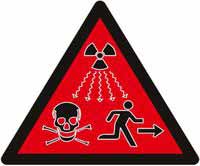 Children and teachers at a fifth of the 1,600 schools in Fukushima are receiving at least 20 millisieverts of radiation per year, said Nakate, according to readings from the government. That’s the limit for a nuclear power plant worker, according to Japan’s nuclear safety commission.
Children Don Masks, Hats in Fukushima as Radiation Looms, Bloomberg, By Takahiko Hyuga and Shigeru Sato – May 11, 2011 Students at theShoyo Junior High School in Fukushima are wearing masks, caps and long-sleeved jerseys to attend classes as their exposure to radiation is on pace to equal annual limits for nuclear industry workers. Continue reading
Northern Japan: bank problems as business clients fear radiation
“This is such a tragedy for the people of Fukushima, particularly our youth,” said Toyo System’s Shoji, who has two children. “Radioactive contamination has literally jeopardized the seeds and soil of our future growth.”
Nuclear Fear Snags Loan Push by Fukushima Banks as Clients Flee Radiation, Bloomberg, By Shigeru Sato and Shingo Kawamoto – May 11, 2011 “……Daito and larger rivals in the prefecture, Toho Bank Ltd. (8346) and Fukushima Bank Ltd., are three of the worst five performers on Japan’s 83-member Topix Banks Index (TPNBNK) since the March 11 quake and tsunami. They are struggling to keep customers and prevent loans from souring…… Continue reading
Secret plan for dumping nuclear waste in Mongolia

 Japan, U.S. negotiating construction of nuclear waste facility in Mongolia, Mainichi Daily News 10 May 11 ULAN BATOR, Mongolia — Japan’s Ministry of Economy, Trade and Industry and the U.S. Department of Energy have secretly been advancing plans to construct the world’s first international storage and disposal facility for spent nuclear fuel in Mongolia, it has been learned. Continue reading
Fukushima nuclear reactor No1 has dangerous radiation level
| Dangerous Radiation Level at Fukushima No 1 Reactor Detected |
| Moscow, May 10 (IANS/RIA Novosti) Tokyo Electric Power Co. (TEPCO), detected a potentially dangerous radiation level at the damaged No.1 reactor of crippled Fukushima nuclear power plant, Kyodo news agency said Monday.
The recent 9.0-magnitude quake and tsunami in Japan triggered a number of explosions at the Fukushima No. 1 nuclear power plant, which caused the worst nuclear crisis since Chernobyl in 1986. The radiation levels in the building exceed expected levels reaching as high as 700 millisieverts per hour. A level of radiation at 500 millisieverts per hour may cause cancer, while an acute radiation sickness begins with a dose of 1 sievert and chronic radiation sickness – from 1.5 sievert. A group of nine specialists from the plant’s operator, TEPCO, entered the No. 1 reactor building at the Fukushima nuclear power plant early in the morning on Monday and spent 30 minutes there, measuring radiation levels. Japanese officials earlier reported that radiation levels had dropped inside the building after ventilators were installed last week to filter out radioactive substances…… http://www.daijiworld.com/news/news_disp.asp?n_id=101529&n_tit=Dangerous+Radiation+Level+at+Fukushima+No+1+Reactor+Detected |
1 This Month



Read the Public Inquiry Report, the Commissioners’ report, Surrendering Australia: The AUKUS Deception is available to download for free at aukuspublicinquiry.com. Or just watch the replay of the National Press Club Luncheon.

19 November – Webinar – The Reality of Reprocessing
Time: 11:00 AM Pacific Time (US & Canada) / 2:00 PM Eastern / 7:00 PM UK / 8:00 PM CET
Register for the Zoom Event Here


Shut down the radiation-damaged Heysham nuclear reactors now
To see nuclear-related stories in greater depth and intensity – go to https://nuclearinformation.wordpress.com

Say No to NASA’s Reckless Nuclear Reactor on the Moon
Say No to NASA’s Reckless Nuclear Reactor on the Moon
-
Archives
- November 2026 (128)
- October 2026 (302)
- September 2026 (339)
- August 2026 (330)
- July 2026 (355)
- June 2026 (287)
- May 2026 (306)
- April 2026 (356)
- March 2026 (251)
- February 2026 (267)
- January 2026 (308)
- December 2025 (358)
-
Categories
- 1
- 1 NUCLEAR ISSUES
- business and costs
- climate change
- culture and arts
- ENERGY
- environment
- health
- history
- indigenous issues
- Legal
- marketing of nuclear
- media
- opposition to nuclear
- PERSONAL STORIES
- politics
- politics international
- Religion and ethics
- safety
- secrets,lies and civil liberties
- spinbuster
- technology
- Uranium
- wastes
- weapons and war
- Women
- 2 WORLD
- ACTION
- AFRICA
- Atrocities
- AUSTRALIA
- Christina's notes
- Christina's themes
- culture and arts
- Events
- Fuk 2022
- Fuk 2023
- Fukushima 2017
- Fukushima 2018
- fukushima 2019
- Fukushima 2020
- Fukushima 2021
- general
- global warming
- Humour (God we need it)
- Nuclear
- RARE EARTHS
- Reference
- resources – print
- Resources -audiovicual
- Weekly Newsletter
- World
- World Nuclear
- YouTube
-
RSS
Entries RSS
Comments RSS

