Japan will no longer measure plutonium
 Japan ceases measuring the plutonium, Paul Langley’s Nuclear History Blog, 4 Oct 11, At the press conference of TEPCO and related ministries of Japanese government, Ministry of Education, Culture, Sports, Science and Technology stated they will not measure plutonium anymore.
The measurement of plutonium was abandoned in Japan.It was announced on 10/3/2011 by staff from Ministry of Education, Culture, Sports, Science and Technology.
Now Japanese people are allowed to take 1~10 Bq/kg of plutonium. However, 1 in a million gram of plutonium causes cancer.
They announced that plutonium and strontium were detected in 45km / 79km area on 9/30.They seem afraid of having the contamination situation known by more people. http://fukushima-diary.com/2011/10/breaking-news-the-measurement-of-plutonium-was-abandoned-in-japan/#.Tomr6dmxwk4.facebook
JGov and TEPCO are disgusting.
http://nuclearhistory.wordpress.com/2011/10/03/japan-ceases-measuring-the-plutonium/
Irradiated area land in Japan larger than greater Tokyo
 Japan reveals huge size of Fukushima clean-up area, Irish Times, 29 Sept 11DAVID McNEILL in Tokyo JAPAN HAS revealed that the clean-up of land irradiated by the Fukushima nuclear disaster could stretch to an area larger than greater Tokyo. Continue reading
Plutonium in soil 40 Km from Fukushima nuclear plant
 Plutonium 40km from Fukushima plant, FT.com Asia Pacific By Mure Dickie in Tokyo, 3 Oct 11 Small amounts of plutonium believed to have escaped from Japan’s tsunami-crippled nuclear plant have been detected in soil more than 40km away, say government researchers, a finding that will fuel already widespread fears about radiation risk……
The plutonium was found at six sites – including one in Iitate around 40km from the plant – all of which are subject to evacuation orders. However, plutonium’s long half-life and the potential for even small amounts to pose a health hazard if ingested is likely to make it a focus of popular concern.
Japanese authorities, who significantly underestimated radiation releases from the plant in the early days of the crisis, have since struggled to convince the public that they are able effectively to guard against radiation health threats…. http://www.ft.com/intl/cms/s/0/7e3af460-ece6-11e0-be97-00144feab49a.html#axzz1Zkkm68Sy
Japan’s nuclear conspiracies to manipulate public opinion
 Japan nuke companies stacked public meetings, ABC Radio 774 North Asia correspondent Mark Willacy, October 03, 2011 An independent investigation in Japan has revealed a long history of nuclear power companies conspiring with governments to manipulate public opinion in favour of nuclear energy. Continue reading
Move for nuclear referendums in Japan
Japanese activists pushing for nuclear referendums, Australia Network News, 3 Oct 11, A civic group formed in the wake of the Fukushima nuclear plant crisis in Japan is collecting signatures in Tokyo, Osaka and Shizuoka Prefecture with an eye to filing direct petitions with local assemblies to hold referendums on nuclear power. Continue reading
Radioactive contamination of ocean continues from Fukushima
 the Fukushima disaster appeared to be by far the largest accidental release of radioactive material into the sea…..
The working hypothesis is that contaminated sediments and groundwater near the coast are continuing to contaminate the seas, …
fuller understanding of the effect on fish that are commercially harvested will probably take several years of data following several feeding cycles,

 Fukushima’s Contamination Produces Some Surprises at Sea, NYT, By DAVID JOLLY, September 28, 2011, Six months after the accident at Fukushima Daiichi, the news flow from the stricken nuclear power plant has slowed, but scientific studies of radioactive material in the ocean are just beginning to bear fruit.
The word from the land is bad enough. ….
Off the coast, the early results indicate that very large amounts of radioactive materials were released, and may still be leaking, and that rather than being spread through the whole ocean, currents are keeping a lot of the material concentrated. Continue reading
Japan’s Nuclear Agency manipulated public opinion forums
 Japan Panel Says Nuclear Agency Manipulated Forums, WSJ, By MITSURU OBE, 30Sept 11 TOKYO—An independent panel advising Japan’s Ministry of Economy, Trade and Industry confirmed Friday that the ministry’s nuclear watchdog was involved in attempts by utilities to manipulate public opinion in favor of nuclear power, a conclusion likely to reinforce public mistrust in the nuclear industry and to raise further hurdles for the restart of idled reactors. Continue reading
 Radiation lingering in sea near Fukushima
much of the radioactive material will still be sinking down to the seabed and being absorbed by marine life
Fukushima’s radioactive sea contamination lingers, New Scientist September 2011 by Andy Coghlan Levels of radiation in the sea off the Fukushima-Daiichi nuclear plant remain stubbornly high six months after the earthquake and tsunami struck Japan on 11 March.
After levels peaked at around 100,000 becquerels per cubic metre of seawater in early April, much of the radioactive iodine, caesium and plutonium from Fukushima was expected to rapidly disperse in the Pacific Ocean. Continue reading
Radiation standards for children should be lower than for adults
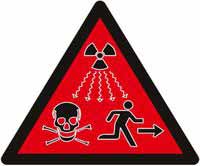 “Safety standards established in nuclear power countries are currently set for adults,” .. “It is a given fact that children are far more vulnerable to exposure.”
New Radiation Limits Demanded for Children, By Suvendrini Kakuchi TOKYO, Sep 29, 2011 (IPS) – The threat of radioactive contamination faced particularly by children after the Mar. 11 nuclear disaster in Japan has touched the heart of the Japanese public, and become a major political and social issue.
Mothers are inevitably in the forefront of citizen groups working to protect children. At a meeting this week at the Ministry of Welfare, they presented an appeal that included a demand for the world’s first radiation safety standards for minors. Continue reading
The catastrophic level of radiation to Japanese from Fukushima nuclear disaster
In March, 2006, 20 years after the accident, the people whose health had been damaged in Russia, the Ukraine and Belarus numbered 7,000,000.
 excerpt from: Fukushima Meltdown: The World’s First Earthquake-Tsunami-Nuclear Disaster[Kindle Edition] Takashi Hirose http://www.amazon.com/dp/B005OD75J2/?tag=theasipacjo0b-20
Collusion still, between Japanese government and nuclear industry
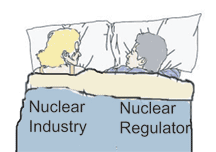 The collusive ties between government and industry were what undermined nuclear safety regulations. One would think that given the nuclear disaster, the practice of “amakudari” (literally “coming down from the heavens”), in which retiring bureaucrats acquire jobs in the industries that they formerly regulated, would have diminished, but that hasn’t been the case…..
Noda must make promoters of nuclear power take responsibility for disaster, Mainichi Daily News, By Takao Yamada, 26 Sept 11, “……..there’s something I want to ask Noda, and that is this: Haven’t you forgotten one very crucial issue? The big question that was on everyone’s minds just six months ago? That is, to clarify what responsibility the main promoters of nuclear power — also known as Japan’s “nuclear village” spanning industry, government and academia — have over the still ongoing disaster? Continue reading
Put nuclear plant in Tokyo – say protestors

About 50 anti-nuclear power demonstrators shouted: “Let’s build a nuclear power plant in Tokyo!”
“If they are not lying about nuclear safety, they might as well bring a nuclear power plant to Tokyo, right?” said organiser Angelo De Rosa, a 45-year-old Italian language teacher based in Tokyo. “In this rally, I also want to question if the government has provided people correct information on nuclear safety.”
The rally came a week after tens of thousands held one of the biggest anti-nuclear demonstrations in Tokyo, calling for an end to nuclear energy after the March 11 disaster sparked the worst atomic crisis since Chernobyl.
Demonstrators at Sunday’s rally carried banners showing remarks of authorities, politicians and professors that organisers said promoted nuclear power.
The crowds also mocked several politicians and scientists, including a Fukushima Medical University professor who reportedly said that radiation does not affect people who smile.With widespread public distrust of nuclear technology, Prime Minister Yoshihiko Noda has pledged a shift away from atomic power, which accounted for a third of Japan’s energy supply before the disaster. http://www.google.com/hostednews/afp/article/ALeqM5gSEdloFcehuqDDOaf2HPlJCeH1fQ?docId=CNG.b1c65bdc1e0bef497e1f81f732897709.ce1
Fukushima radiation levels – danger to children
Global resources needed to combat radiation levels, Statesman.journal.com by Warren Binford, Sep. 25, 2011 This month marked the half-year anniversary of the Fukushima earthquake and tsunami, and TEPCO and the Japanese government remain unable to control the nuclear emergency that continues to unfold.
Radiation levels exceed the Chernobyl disaster and now reach a level that is unknown to humans or machines. Radiation leakage from the Fukushima Daiichi Nuclear Power Plant was so high in August it exceeded the monitoring equipment’s maximum measuring capacity. Continue reading
Fukushima: five local governments anxious about radiation to residents
Fukushima municipality heads concerned over lifting of evacuation advisory, Mainichi Daily News, 26 Sept, FUKUSHIMA (Kyodo) — Heads of five municipalities in Fukushima Prefecture affected by the ongoing nuclear crisis have aired concerns over the government’s plan to lift its evacuation advisory in the event of an emergency, saying not enough has been done to ensure the safety of residents. Continue reading
Fukushima area: ionising radiation in rice
High Radiation Found in Japanese Rice, WSJ, By YOSHIO TAKAHASHI, 26 Sept, TOKYO—Japan has detected high levels of radiation in rice growing near the damaged Fukushima nuclear power plant, a government official said Saturday.
A preparatory test ahead of the official examination of the safety of rice in Nihonmatsu, a city about 30 miles west of the stricken power plant, found that a sample of unharvested rice contained 500 becquerels of cesium per kilogram, the maximum permissible level, the Fukushima Prefecture official said. Rice with up to 500 becquerels of cesium per kilogram is considered safe for consumption, but shipments of rice exceeding that level are banned in Japan.
The cesium level found in the rice sample in Nihonmatsu is the highest discovered since the regulations were set in April, and no rice shipments have been banned, an official at Japan’s Ministry of Agriculture, Forestry and Fisheries said. Rice with 500 becquerels of cesium per kilogram still can be shipped.
Fukushima Prefecture will conduct the official tests of rice for radiation in Nihonmatsu as soon as possible at 300 spots—many more than the initially planned 38 spots—as a a result of the latest discovery. Preparatory tests are aimed at determining how many spots rice should be tested in each area……http://online.wsj.com/article/SB10001424053111903791504576590724000963708.html
-
Archives
- October 2026 (104)
- September 2026 (339)
- August 2026 (330)
- July 2026 (355)
- June 2026 (287)
- May 2026 (306)
- April 2026 (356)
- March 2026 (251)
- February 2026 (267)
- January 2026 (308)
- December 2025 (358)
- November 2025 (359)
-
Categories
- 1
- 1 NUCLEAR ISSUES
- business and costs
- climate change
- culture and arts
- ENERGY
- environment
- health
- history
- indigenous issues
- Legal
- marketing of nuclear
- media
- opposition to nuclear
- PERSONAL STORIES
- politics
- politics international
- Religion and ethics
- safety
- secrets,lies and civil liberties
- spinbuster
- technology
- Uranium
- wastes
- weapons and war
- Women
- 2 WORLD
- ACTION
- AFRICA
- Atrocities
- AUSTRALIA
- Christina's notes
- Christina's themes
- culture and arts
- Events
- Fuk 2022
- Fuk 2023
- Fukushima 2017
- Fukushima 2018
- fukushima 2019
- Fukushima 2020
- Fukushima 2021
- general
- global warming
- Humour (God we need it)
- Nuclear
- RARE EARTHS
- Reference
- resources – print
- Resources -audiovicual
- Weekly Newsletter
- World
- World Nuclear
- YouTube
-
RSS
Entries RSS
Comments RSS

