Research report – low level radiation IS a cancer causer

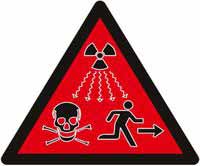 Studies of the Mortality of Atomic Bomb Survivors, Report 14, 1950–2003: http://www rrjournal.org/doi/pdf/10.1667/RR2629.1 An Overview of Cancer and Noncancer Diseases
The long struggle against nuclear power in Japan
Environmentalists, meanwhile, say they remain undaunted by the Oi decision, which has become a watershed moment in their activism.
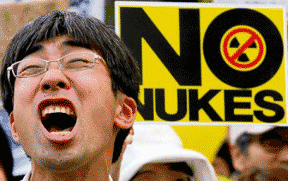 Activists Brace for Long War Against Nuclear Power, By Suvendrini Kakuchi TOKYO, May 17, 2012 (IPS) – For the past two decades Masao Ishiji (59), has been fighting tooth and nail to ban the operation of four nuclear reactors that dot the western coastline of Oi in the Fukui prefecture facing the Japan Sea.
Earlier this week, that desperate battle reached a critical front. When the Oi municipal assembly passed a new resolution Monday to restart Unit 3 and 4 reactors that had been closed for a year for stress tests, anti-nuclear activists knew they had reached a crucial juncture in their fight to eradicate nuclear power from the country. Continue reading
Increased radiation in Tokyo Bay
Radiation increasing in Tokyo Bay May 18, 2012 “If the contamination were to spread to fish, it is possible that radioactive isotopes could accumulate when bigger fish feed on smaller ones.” — Hideo Yamazaki
Radioactive contamination from Japan’s Fukushima nuclear disaster has risen sharply in Tokyo Bay over the past several months rather than decline, according to a new study.
Researcher Hideo Yamazaki from Osaka’s Kinki University found that contaminated sludge has accumulated due to runoff into the bay from rivers flowing from highly contaminated regions. This has caused radioactive cesium levels to rise by 1.5 to 13 times since August, Yamazaki says.
New devices to detect ionising radiation
Firms say new gear visually detects radiation hot spots, Japan Times, 18 May 12, A number of companies have started marketing equipment and devices that enable inspectors to visually detect radiation hot spots.
The devices are expected to be a great help to municipalities and construction companies engaged in decontamination work in areas affected by the nuclear crisis at Tokyo Electric Power Co.’s Fukushima No. 1 power plant.
Hitachi Consumer Electronics Co. has developed a camera that can detect gamma rays emitted by radioactive substances 10 or more meters away. The box-shaped device, which weighs 16.8 kg and measures 34 cm in all dimensions, is highly portable, the company says.
It detects three kinds of radioactive material — cesium-134, cesium-137 and iodine-131…..
http://www.japantimes.co.jp/text/nn20120518b1.html
In 2006 TEPCO knew of the tsunami danger to Fukushima
TEPCO knew 6 years ago about tsunami risk to Fukushima, Japan Daily Press, By Adam Westlake / May 16, 2012 Officials from the Nuclear and Industrial Safety Agency (NISA) said on Tuesday that they, and Tokyo Electric Power Co. (TEPCO), were notified in 2006 of the risks a tsunami posed to the utility’s Fukushima Daiichi nuclear plant.
After the 2004 tsunami that devastated Indonesia, a session was held by NISA and several of Japan’s utility companies to look at the state of the country’s nuclear reactors and
how prepared they were for earthquakes or tsunamis…
.. In August of 2006, their research culminated in a report that showed the utility companies in attendance, which included TEPCO, that the Fukushima facility had a high risk of losing power, and taking on sea water, in the event of a 14 meter (45.9 feet) tsunami. …. http://japandailypress.com/tepco-knew-6-years-ago-about-tsunami-risk-to-fukushima-162237
Japanese govt’s nuclear push with Kazakhstan, and the global nuclear industry web
A complex web of agreements across national borders links many of the biggest players in the nuclear industry.
“Japan hasn’t used the Fukushima disaster as an opportunity to push for renewable energy or energy efficiency,” “Instead, it has used the time since the disaster to push for the restart of nuclear reactors.”
How Long Will Japan’s Nuclear Recess Be? Enter KazakhstanTruth Out , 15 May 2012 By Steve Horn, “……Japan Announces Big Nuclear Deal with Kazakhstan Unmentioned by all but two news outlets was the fact that a day before the announcement, the Japanese government signed a deal with Kazakhstan’s state-owned nuclear giant, KazAtomProm, to begin supplying Japan with more nuclear fuel starting in 2013. Continue reading
Radiation to be measured in monkeys in Fukushima forests
The group plans to target monkeys in southern Minami-Soma in the prefecture, an area that was inside the no-entry zone around the crippled nuclear plant until mid-April. Relatively high radiation levels have been recorded in the area.
“It’s difficult to accurately gauge how much radioactive cesium has
contaminated mountain forests because the substance is easily moved by
rainwater and by other natural conditions,”
 Wild monkeys to help gauge Fukushima radiation http://www.yomiuri.co.jp/dy/national/T120511004760.htm The Yomiuri Shimbun, 11 May 12, FUKUSHIMA–Wild Japanese monkeys wearing special collars fitted with dosimeters and Global Positioning System devices will be used to measure radiation levels in the mountain forests of Fukushima Prefecture in an experiment due to start this month.
A group of researchers at Fukushima University plans to start the experiment to determine the dispersal of radiation due to the crisis at the Fukushima No. 1 nuclear power plant and support decontamination work. Continue reading
Lawsuit against TEPCO, over suicide in Fukushima
 Japan grapples with post-tsunami suicides Daily Mail, By Arata Yamamoto, NBC News , 12 May 12 TOKYO, Japan – More than 60 people have committed suicides related to last year’s 9.0 quake and tsunami, which triggered meltdowns at a nuclear plant in Fukushima, the Japanese government says.
The data comes as a family prepares to file the first lawsuit against the Tokyo Electric Power Co. over the suicide of Hamako Watanabe, a 58-year-old woman who set herself on fire in wake of the disaster.
In 2011, 55 people committed suicide, with another six cases reported since the beginning of 2012. Suicides linked to the Fukushima nuclear accident are included in the numbers, but attribution to the nuclear crisis has been omitted due to privacy concerns. The data was collected using local police reports since last June…..
Watanabe’s family will seek $910,000 in damages in the death of Hamako Watanabe from TEPCO, the operator of the Fukushima nuclear plant, according to The Japan Times and The Mainichi . They plan to file the lawsuit – which would be the first over a suicide linked to the nuclear crisis – on May 18 in Fukushima District Court….
Hamako Watanabe had been a poultry worker until her workplace was shuttered after the tsunami, and she began to show signs of insomnia and had a poor appetite. A group of lawyers representing victims of the nuclear crisis said her depression and suicide were due to the nuclear disaster, The Mainichi reported. http://www.dailymail.co.uk/news/article-2142849/Haunting-shots-Chernobyl-nuclear-disaster-revealed-true-scale-catastrophe–cost-photographers-lives.html?ito=feeds-newsxml
Japan’s government to nationalise Tepco nuclear company, to save it from bankruptcy
Japan to nationalise nuclear plant operator http://www.abc.net.au/news/2012-05-10/japan-nuclear-plan-to-save-tepco/4002972 By North Asia correspondent Mark Willacy May 10, 2012 Japan’s government will effectively nationalise TEPCO, the operator of the crippled Fukushima nuclear plant, as part of a $12 billion restructuring plan.
TEPCO is facing massive clean-up bills and compensation claims. By injecting the funds into TEPCO to save it from bankruptcy, the Japanese government will also take a controlling stake in the operator of the Fukushima plant.
Announcing the plan, Japan’s industry minister, Yukio Edano, demanded that TEPCO rid itself of its secretive and complacent corporate culture.
The deal will also see TEPCO’s creditor banks extend fresh loans to the company and, effectively, the nationalisation one of the world’s largest utilities companies.
Offline nuclear reactors still dangerous, need constant cooling
 News Navigator: What danger is still posed by offline nuclear reactors? Answers by Taku Nishikawa, Science & Environment News Department The Mainichi, 8 May 12, As of May 5, all nuclear reactors in Japan were offline. The Mainichi answers common questions readers may have about the safety and dangers of offline nuclear plants.
Question: With the reactors offline, has the danger of nuclear accidents disappeared?
Answer: The danger is likely less than while the reactors are running, but it still exists. Nuclear plants make power by turning turbines with the heat from the chained fission of Uranium-235 in nuclear fuel.
This chained fission is stopped in an offline reactor, but fuel rods continue to release “decay heat” as various unstable nuclei created during the reactors’ operation until now naturally break down. This decay heat has to continually be removed.
Q: What will happen if it is not removed? Continue reading
Japan’s idle nuclear reactors still need huge electricity to keep them safe
The end of nuclear, CLIMATE SPECTATOR, Matthew Wright , 8 May 2012 “………When they get too old to operate safely or get shut early due to disaster they still need to be propped up on life support, to manage the site cleanup, to manage their waste and to cool that waste.
In fact right now, Japan’s 54 idled reactors are using the electricity equivalent to the output of three entire reactors, just to provide cooling and other critical services. These will need to go on being delivered to the sites for years even if the reactors are to be completely decommissioned.
That means that nuclear reactors are competing with hospitals, schools and factories for scarce electricity supplies. Due to inherent safety risks, the reactors get power ahead of everyone else in the country. It doesn’t matter if you’re in an emergency ward needing urgent medical attention to save your life, the reactors’ safety comes first……
http://www.businessspectator.com.au/bs.nsf/Article/nuclear-power-and-Japan-end-of-nuclear-Fukushima-d-pd20120508-U3UUW?opendocument&src=rss
Japan’s nuclear shutdown and political uncertainty
Japan plays nuclear power politics, Star Tribune, by: THE ECONOMIST May 7, 2012
“…….So powerful is the symbolism of having no nuclear plants in operation that Prime Minister Yoshihiko Noda has tried to get at least two reactors back up and running. He has failed, and now his political opponents may try to make capital out of this
…….What both main parties fear is that the nuclear debate could become an electoral issue in what promises to be a stormy summer……
The government’s attempt to restart the reactors comes even before a new regulatory body has been established with the transparency, independence and technical ability that its predecessors lacked. It comes before any attempt has been made to clarify the chain of command for handling such accidents Continue reading
Majority of Japanese would choose energy restrictions rather than restart nuclear power
the survey shows 61 percent of people in the Kinki region, which is expected to face the most serious power shortage, say they “can endure” such restrictions. Seventy-ninepercent of people in the Kanto region, which took sweeping energy-saving measures last summer, also say they can put up with restricted use of power. Meanwhile, more than 70 percent of peoplepolled elsewhere in the country say they can live with such restrictions…..
63% of Japanese citizens say ‘no’ to restarting of Oi nuclear reactors: Mainichi poll. 8 May 12, Sixty-three percent of Japanese people stand against reactivating two idled reactors at the Oi Nuclear Power Plant in Fukui Prefecture, and 74 percent say they “can endure” restricted use of electricity in the summer, a nationwide survey conducted by the Mainichi shows, suggesting that the general public is becoming increasingly in favor of breaking away from nuclear power generation. Continue reading
Cheering Japanese in their thousands greet nuclear power shutdown
Electricity shortages are expected only at peak periods, such as the middle of the day in hot weather, and critics of nuclear power say proponents are exaggerating the consequences to win public approval to restart reactors.

Japanese cheer as nuclear reactor shut for checkup SF Gate, Associated Press, May 6, 2012 Thousands of Japanese celebrated the switching off of the last of their nation’s 50 nuclear reactors Saturday, waving banners shaped like giant fish that have become a potent antinuclear symbol. Continue reading
Japan’s nuclear corruption
All 50 reactors have been suspended, but the nation still has power to heat toilet seats, light garish neon signs and run the ubiquitous vending machines despite the government’s repeated warnings of a possible power crunch.
the nation’s long-standing problem – excessively cozy ties between government officials and private enterprise.
the tip of the iceberg in Japan’s corrupt power structure. Behind collusive ties between bureaucrats and power companies, “the public has been little short of becoming the guinea pig of radiation contamination,”
The media also have collusive ties with the power company as is often the case with Japanese newspapers and broadcasters.

Japan’s nuclear reactors run on corrupt structure, critics say http://www.brecorder.com/articles-a-letters/187/1186708/ MAY 07, 2012 TAKEHIKO KAMBAYASHI None of Japan’s 50 nuclear reactors is in operation after the last running unit was shut down Saturday.
With no power outages reported, some wonder why so much atomic power was needed in the earthquake-prone country to begin with. Continue reading
1 This Month





PLEASE OPPOSE HR 8255 AND S.3639 – bills would accelerate satellite deployment, with no environmental review or safeguards – https://ncstd5li.quorum.us/campaign/169331/
To see nuclear-related stories in greater depth and intensity – go to https://nuclearinformation.wordpress.com
-
Archives
- October 2026 (88)
- September 2026 (339)
- August 2026 (330)
- July 2026 (355)
- June 2026 (287)
- May 2026 (306)
- April 2026 (356)
- March 2026 (251)
- February 2026 (267)
- January 2026 (308)
- December 2025 (358)
- November 2025 (359)
-
Categories
- 1
- 1 NUCLEAR ISSUES
- business and costs
- climate change
- culture and arts
- ENERGY
- environment
- health
- history
- indigenous issues
- Legal
- marketing of nuclear
- media
- opposition to nuclear
- PERSONAL STORIES
- politics
- politics international
- Religion and ethics
- safety
- secrets,lies and civil liberties
- spinbuster
- technology
- Uranium
- wastes
- weapons and war
- Women
- 2 WORLD
- ACTION
- AFRICA
- Atrocities
- AUSTRALIA
- Christina's notes
- Christina's themes
- culture and arts
- Events
- Fuk 2022
- Fuk 2023
- Fukushima 2017
- Fukushima 2018
- fukushima 2019
- Fukushima 2020
- Fukushima 2021
- general
- global warming
- Humour (God we need it)
- Nuclear
- RARE EARTHS
- Reference
- resources – print
- Resources -audiovicual
- Weekly Newsletter
- World
- World Nuclear
- YouTube
-
RSS
Entries RSS
Comments RSS

