Fukushima workers with high internal radiation doses
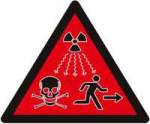 High thyroid radiation doses in 178 Fukushima workers Asahi Shimbun, December 01, 2012
By YURI OIWA Dozens of workers received potentially cancerous doses of radiation to
their thyroid glands during recovery work at the Fukushima No. 1 nuclear power plant, according to data submitted to the World Health
Organization.
Tests on workers suspected of having high whole-body internal doses
found 178 individuals whose thyroid glands displayed doses greater
than 100 millisieverts, the generally accepted threshold for a raised
risk of thyroid cancer.
The highest recorded dose was 11,800 millisieverts, a level that would
give a correspondingly high probability of thyroid cancer.
Plant operator Tokyo Electric Power Co. submitted the data on thyroid
tests for 522 workers—both its own staff and contractors—to the WHO
upon request. ….
The WHO assessed the probability of these people developing thyroid
cancer by reviewing medical records from the Hiroshima and Nagasaki
atomic blasts. It calculated the risk for people in three separate age
categories—aged 20, 40 or 60 at the time of exposure.
It said a 20-year-old who receives a dose of 11,800 millisieverts will
be 34 times more likely to develop thyroid cancer within 15 years.
…..
“Some epidemiological studies suggest that radiation exposure can
increase the risk of thyroid cancer for people aged 40 or older, too,”
said Yoshio Hosoi, a professor at Hiroshima University’s Research
Institute for Radiation Biology and Medicine. “In addition tochildren, adults need to receive continued tests if their thyroid
gland radiation doses are 100 millisieverts or higher.”
TEPCO said it plans to offer workers thyroid gland ultrasound
examinations free of charge if their whole-body radiation doses are 50
millisieverts or higher.
However, at least one expert said that may not include all people at risk.
“There is a possibility that the thyroid gland radiation dose is 100
millisieverts even if the whole-body dose is only 5 millisieverts,”
said Saburo Murata, deputy director of Hannan Chuo Hospital.
Murata called on TEPCO to release all past test results—and those of
tests in the future.
http://ajw.asahi.com/article/0311disaster/life_and_death/AJ201212010050
Confusion in Japan over nuclear policies
Japan grapples with nuclear question, Ft.com 2 Dec 12 By Jonathan Soble in Tokyo Japanese voters hoping to use December’s election to cast a ballot for or against nuclear power – the most emotionally charged issue in the
country since the Fukushima disaster – are getting little help from mainstream politicians.
Over the weekend, Japanese lawmakers across the political spectrum suggested in televised debates that the leading parties had converged on something close to a consensus – but their comments left plenty of room for confusion.
“Saying you can achieve zero nuclear in ten years or something is like
selling bananas in the street,” said Toru Hashimoto, the mayor
governor and founder of the upstart Restoration party, referring to
the way Japanese supermarkets used to sell cheap bananas in front of
their stores to draw in customers.
In September, the Democratic Party of Japan – which polls suggest will
be ousted on December 16 – unveiled a plan to abandon nuclear power by
2040. But it contained big loopholes and Prime Minister Yoshihiko
Noda’s administration watered it down days later by promising
“flexible” implementation.
Since Fukushima, Japan has grappled with whether to abandon nuclear
power, which previously provided 30 per cent of its electricity.Politicians have been seeking to balance unresolved safety concerns
with warnings from business about the high cost of abandoning atomic
energy.
Mr Hashimoto’s comments illustrate how far some parties have travelled
to join the emerging consensus. The former Osaka governor gained
attention after Fukushima as one of the most vocal critics of the
nuclear industry, accusing power companies of “lying” about the need
to keep atomic plants running to avoid electricity shortages.
His Restoration party is polling in second place, slightly ahead of
the DPJ with about 15 per cent support. Its campaign platform promises
to uphold the target for eliminating nuclear power by 2040. But Mr
Hashimoto said at the weekend that the timeline was a “starting point”
for policy rather than a hard-and-fast promise…..
http://www.ft.com/cms/s/0/75d1540c-3c60-11e2-a6b2-00144feabdc0.html#axzz2E1TCQFJH.
Harm of Fukushima’s nuclear radiation is being underestimated
Underestimating Japan’s Nuclear Disaster By Richard Wilcox theintelhub.com November 30, 2012 Every day, very sad and disturbing news about the Fukushima nuclear disaster reveals itself. People in Fukushima are suffering the brunt of this nightmare. But it is also a fact of life that Tokyo drinking water is irradiated. It is not by much, but as we will see even a little bit of radiation can cause harm.
The Japanese government has measured cesium in much of the public water supply in the northeastern and Tokyo regions. From January to March 2012, 0.0071 becquerels per kilogram of cesium 134 and 137 was measured in Tokyo; April to June, 0.0049; and from July to September 0.0053 (4; 5; 6). This indicates that although the amount is small, the problem is not improving. There may be ecological and seasonal reasons, along with levels of ongoing emissions from the Fukushima nuclear power plant (FNPP), as to why the level is not steadily decreasing.
It is worth perusing the research results of ACRO, the French radiation monitoring group, which has posted comparative radiation contamination data from Fukushima and other prefectures measured from water, soil, house dust and human urine (7).
Fukushima patients in worse condition than expected
Foreign doctors on Fukushima trip “very surprised” at condition of patients: “Symptoms are always the same” — Pains at rear of ears, stomatitis, skin disease… more (VIDEO) http://enenews.com/foreign-doctors-very-surprised-find-patients-worse-condition-anticipated-symptoms-always-same-pains-rear-ears-video
November 28th, 2012
Title: Report on the “Learn from Chernobyl” tour in Japan
Source ERF2012 (Cinema Forum Fukushima)
Date: Nov 25, 2012
Ms. Kazuko Kawai, Founder of Voices for Lively Spring (a Japan-based human rights organization and a grass-root organization): The radiation problem, health problem is spreading all over Japan now through burning debris Iwate and Miyagi, and also contaminated food.
Both foreign doctors participated in the IPPW World Conference and the field trip in Fukushima, which was organized by Peace Boat and Green Action and other organizations.
And they thought that they had sufficient information, but then they observed the health consultations on the tour and were very surprised to find out that actual patients were in even worse condition than they had anticipated.
The symptoms are always the same as Dr. [inaudible] said. […] Nose bleeds, skin disease, diarrhea, respiratory diseases, pains at the rear of the ears, stomatitis, and so on, and so on – as well as thyroid disorders.
Dysfunctional science has led to complacency about how bad Fukushima really is
the international scientific community has failed us and become the promoter of “Dysfunctional Science.”
“Science is at a tipping point because, having fragmented into specialties and sub-specialties, it is no longer equipped to deal with falsifying data. The barricades of technical jargon and self-serving politics prevent the specialists from seeing what would be all too obvious from a higher vantage point. Such a system is averse to outside challenges by ‘those who transcend the conventional,’ and leading authorities feel free to ignore them….

Few universities have shown the courage to insist on a broad and balanced picture of present knowledge or an even-handed comparison of theoretical assumptions and available alternatives. To apply such basic standards today would risk discrediting entire departments” (30).
Nuclear energy, which provides only 2.5 percent of global primary energy needs, is the most dangerous experiment humanity has ever undertaken. The time to end the insanity is now (31). Between reducing consumption, rearranging society in a less consumer intensive form, and implementing an array of alternative energy schemes, our problems could be solved
 Underestimating Japan’s Nuclear Disaster By Richard Wilcox theintelhub.com November 30, 2012 “………Postmodern Postmortem Denial Syndrome The college aged students I teach in Japan are in denial and do not want to talk about Fukushima. Some have even give pro-nuclear presentations in class! Indeed, many are keenly aware of the nuclear dangers and are critical of nuclear power, but others have fatalistic attitudes. Some students told me their parents who live in Fukushima or near there are worried and angry about the situation, but if you ask the average person in Tokyo about the issue, they would probably just shrug their shoulders. People do not like having bad news pointed out to them or having their noses rubbed in radioactive debris. If they feel, or the mass media helps them to believe, that they are far enough away from the problem, they can convince themselves that it is not worth worrying about.
Escapism and distraction is the name of the game. Japanese TV variety shows can only be described as narcissistic, self-absorbed, childish, silly and often substance-less nonsense. This is great for creating a dumbed-down and subservient society but not good for long term sustainability. A thriving democracy depends upon a well informed public. The situation is similar in many countries.
What is the psychological dimension for understanding how a society can become so complacent while life-threatening dangers stare us in the face? Like a beautiful but beguiling snake that has been trampled upon, the venom released from the bite of its fangs can be deadly to the victim.
An apt illustration of our cognitive dissonance comes from journalist David McNeil, who endured the 311 nuclear crisis in Tokyo and notes with irony, “[t]hroughout the worst week of the crisis, a diligent clerk at my local video store phoned daily to remind me that I had failed to return a DVD” (27). Even though the country had been nearly brought to its knees, it was business as usual. Political analyst, Dean Hendersen, notes an historical aspect of this behavior:
“By indoctrinating people as to the omnipotence of the Emperor and of the need to make sacrifices in his name, the Japanese become in many ways the most exploited people on the planet- working long hours, never questioning their supervisors, singing company songs and drinking only with company cohorts after hours. Any resistance to this fascism is instantly branded anti-Japanese behavior. The perpetrator is considered mentally disturbed. Rather than challenge this state terror regime, most Japanese have learned to suppress their feelings…” (28).
The cultural underpinnings that led to the nuclear disaster are explained by Professor Shaun O’Dwyer, who studies modern Confucianism.
“There are two important habitual attitudes in postwar Japanese and East Asian governance that are arguably Confucian. There is paternalism on the part of governments, legitimized by the efficiency of a highly educated, meritocratic bureaucracy; and (until recently) reciprocating loyalty from citizens, grounded in a faith in the moral and intellectual ability of their leaders to work for their good.
Coverup of health problems post Fukushima
People from Tokyo area report thyroid cysts and nodules — Japanese doctors laughing at patients (VIDEO) http://enenews.com/watch-people-tokyo-area-report-thyroid-cysts-nodules-japanese-doctors-laughing-patients-video
November 30th, 2012
Follow-up to: Fukushima Woman Warns of Cover-up — Nurses tell patients: Stay quiet, don’t mention radiation to doctor (VIDEO)
Title: Report on the “Learn from Chernobyl” tour in Japan
Source: ERF2012 (Cinema Forum Fukushima)
Date: Nov 25, 2012
Ms. Kazuko Kawai, Founder of Voices for Lively Spring: Although thyroid disorders in Fukushima had been much reported by the media, we found that evacuees from the Tokyo area also complained about thyroid cysts and nodules.
Both doctors [who traveled to the area] are very angry about the Fukushima Prefecture government’s handling of Patients with thyroid disorder. That is, no secondary testing in two years. It is internationally agreed upon within the medical community to control such patients by repeated testing at least once in 6 months, and every two months in more serious cases.
Further more it is widely thought that thyroid cancer started surfacing in Chernobyl 4 years after the nuclear disaster and it is based on the data in Chernobyl. But according to Dr. [inaudible], Chernobyl did not used to have such precision devices for thyroid testing as we have in Japan right now. And the doctors in Chernobyl manually diagnosed thyroid cancer. Without out any precision exam devices. The ultrasound devices were introduced in big cities in Chernobyl about 4 years after the disaster […]
At health consultations on the tour, we kept hearing about Japanese doctors who laughed at patients or did not listen to patients at all.
More Fukushima video footage released – high radiation to sea
More Fukushima Footage Released: “We have confirmed a worst situation — Water containing extremely high levels of radiation flowing into sea” (VIDEO) http://enenews.com/more-311-footage-released-we-have-confirmed-a-worst-situation-water-containing-extremely-high-levels-of-radiation-are-flowing-into-the-sea-video November 30th, 2012 \
(Subscription Only)Title: TEPCO shows Fukushima footage leading to tainted water release
Source: Kyodo News
Date: Dec. 1, 2012
TEPCO shows Fukushima footage leading to tainted water release
Tokyo Electric Power Co., the operator of the crisis-hit Fukushima nuclear power plant, disclosed Friday additional video recordings of its in-house teleconferences in the early phase of the 2011 disaster, showing tense exchanges between its employees prior to the controversial release of radioactive water into the sea.
A part of about 336 hours of the footage, recorded between March 16 and 23 and March 30 and April 6, 2011, uncovered the difficulties faced by TEPCO to deal with tainted water building up in the basements of the No. 5 and No. 6 reactors.
Former chief of the plant Masao Yoshida told the head office in Tokyo on April 4 that there would not be enough time to make tanks to store radioactive water. […]
Enformable:
Among the 336 hours of new footage include scenes from the morning of April 2, 2011, in which TEPCO confirmed leaks of high-level radioactive waters into the sea from Unit 2 after it had experienced a core meltdown. “We have confirmed a worst situation. Water containing extremely high levels of radiation are flowing into the sea,” Masao Yoshida, then manager of the plant, says in the footage. Via Jiji, Tepco
Japan’s Prime Minister Yoshihiko Noda strengthens pledge to phase out nuclear power

The pledge amounted to a slight hardening of announcements made earlier this year when his cabinet said it would work towards scrapping nuclear power by the end of the 2030s
Japan goes to the polls on December 16, with most commentators expecting no party to gain overall control of the powerful lower house. A possibly shaky coalition government is seen as the likeliest outcome.
 Japan’s ruling party to phase out nuclear power Radio Australia, 28
 November 2012, Japan’s Prime Minister Yoshihiko Noda has promised to rid Japan of nuclear energy in coming decades as he set out his party’s platform before next month’s general election. Continue reading
Japan might get a new no-nuclear party, led by Shiga governor
Shiga governor mulls new no-nuclear party, Japan Times, 27 Nov 12 Move might rally others unwilling to bend on ‘third force’ objectives Kyodo OTSU, Shiga Pref. — Shiga Gov. Yukiko Kada is considering founding a new political party with the key goal of phasing out nuclear power, sources said Monday.
Although Kada didn’t make it official when she met the press in Otsu in the afternoon, her reported move to create a new party ahead of the Dec. 16 Lower House poll quickly drew attention from other small parties that aren’t fitting into the major “third
force” that has been evolving around Nippon Ishin no Kai (Japan Restoration Party) led by ex-Tokyo Gov. Shintaro Ishihara and Osaka Mayor Toru Hashimoto. Continue reading
Brave older Japanese work at Fukushima, and tell the truth
 In Post-Fukushima Japan, Civil Society Turns up Heat on Officials Global Issues, by Kim-Jenna Jurriaans (United Nations), November 27, 2012
Inter Press Service
– For the former industrial engineer Yastel Yamada, retirement has not meant he can finally stop working. Instead, the 73-year-old and about 700 other skilled seniors across Japan have volunteered to tackle the most dangerous part of the Fukushima Dai-ichi nuclear plant cleanup and spare a younger generation from the effects of extreme radiation.
Yamada and his army of radiation Samaritans are among a growing number of civil society groups across Japan that are taking measures to inform the public about the lingering dangers of radiation and advocate for a stronger government response to the biggest nuclear disaster since Chernobyl in 1986. Continue reading
Fukushima radiation health effects: officials are lying
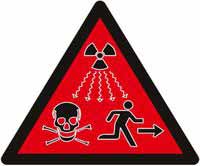 In Post-Fukushima Japan, Civil Society Turns up Heat on Officials Global Issues, by Kim-Jenna Jurriaans (United Nations), November 27, 2012 Inter Press Service“……..when asked about a link to radiation exposure, Dr. Shinichi Suzuki, a researcher at Fukushima Medical University and who headed the survey, suggested to German TV channel ZDF that the findings may instead reflect Japanese children’s seafood-rich diet.
“Suzuki is lying to the Japanese people,” Dr. Yurika Hashimoto, a pediatrician with 15 years’ experience, told IPS. “People are not believing them anymore.”.
Hashimoto made no secret of her distrust in much of the information issued by government and the highest ranks of themedical establishment. Recently, to limit her own exposure to radiation, she relocated to Osaka from Tokyo, where she was trained and once ran her clinic.
Diarrhea, nose bleeds, skin infections and conjunctivitis are among a plethora of symptoms she has increasingly seen in her patients, both in and outside of the Fukushima prefecture, since the March 2011 disaster.
When she brings these symptoms to other doctors, however, patients are frequently ridiculed or ignored, according to Hashimoto. ……. http://www.globalissues.org/news/2012/11/27/15359
Human rights in Fukushima’s ongoing radiation crisis
Watch: Immediate attention from medical experts is needed for people in contaminated areas — Fukushima is ongoing crisis (VIDEO) http://enenews.com/watch-immediate-attention-medical-experts-needed-people-contaminated-areas-fukushima-ongoing-crisis-video
November 27th, 2012
Title: How to protect the right to health and life of citizens from radiological contamination? – Ms. Mari INOUE, Esq., Human Rights Now New York
Source: ERF2012
Date: Nov 25, 2012
Ms. Mari INOUE, Esq., Human Rights Now New York: Recommendation by [the United Nation’s investigator] Mr. Grover will not be published until next summer. So it’s a long process and both of those processes are legally non-binding.
So how are we going to protect the rights of people, especially the right to health and life of people in contaminated area, because they need immediate assistance. They need immediate attention from medical communities and civil societies, because what’s going on in Fukushima is ongoing crisis.
Powerful nuclear interests likely to prevail in Japanese elections
An LDP win would also signal successful lobbying by Japan’s “nuclear village”, a web of vested interests including utilities, bureaucrats and lawmakers that remains powerful despite the world’s worst radiation crisis in a quarter century.

Pro-nuclear party could win power in Japan TVNZ November 27, 2012, Japanese voters look likely to hand victory to a party that favours nuclear power in the first election since the March 2011 Fukushima radiation disaster.
But even if the main opposition Liberal Democratic Party (LDP) wins the December 16 election, it will not reflect any groundswell of popular support for nuclear power.
Instead, it would underline a lack of credible anti-nuclear political standard-bearers in Japan and the ability of the LDP to focus the debate on security matters and the stalled economy. Continue reading
Political turmoil in Japan as election date approaches
Asahi’s public opinion survey of major domestic economic issues showed that 50 percent of interviewees oppose the utilization of nuclear power, which has been a hot-button issue since the nuclear meltdowns
Japanese voters frustrated over political turmoil 2012-11-27 ByZHANG YUNBI (China Daily) Japanese dismay at domestic political turmoil and gloomy economic prospects were two of the top issues in the country’s latest public opinion polls, which outline the landscape leading up to Japan’s election next month.
Experts said the winner of the election will face key economic issues including tax hike bills and a ban on nuclear power. Continue reading
Nuclear free goal brings Japan’s small political parties together
Small parties join push for nuclear-free society The Yomiuri Shimbun, 27 Nov 12 Ichiro Ozawa’s People’s Life First party and a party jointly led by former farm minister Masahiko Yamada and Nagoya Mayor Takashi Kawamura have begun coordinating views to create a new party aimed at uniting smaller political forces advocating a nuclear-free society.
They want the new party to include Kuniko Tanioka, a House of Councillors member and coleader of Midori no Kaze, who supports the zero nuclear option.
The parties also have floated the idea of having Shiga Gov. Yukiko Kada, who has taken a cautious stance on restarting nuclear reactors, become leader of the new party, which according to Kawamura and other officials could be named “Nippon Mirai no To” (Japan Future Party).
Kada is expected to make her position clear on Tuesday….. http://www.yomiuri.co.jp/dy/national/T121126004153.htm
1 This Month





PLEASE OPPOSE HR 8255 AND S.3639 – bills would accelerate satellite deployment, with no environmental review or safeguards – https://ncstd5li.quorum.us/campaign/169331/
To see nuclear-related stories in greater depth and intensity – go to https://nuclearinformation.wordpress.com
-
Archives
- October 2026 (74)
- September 2026 (339)
- August 2026 (330)
- July 2026 (355)
- June 2026 (287)
- May 2026 (306)
- April 2026 (356)
- March 2026 (251)
- February 2026 (267)
- January 2026 (308)
- December 2025 (358)
- November 2025 (359)
-
Categories
- 1
- 1 NUCLEAR ISSUES
- business and costs
- climate change
- culture and arts
- ENERGY
- environment
- health
- history
- indigenous issues
- Legal
- marketing of nuclear
- media
- opposition to nuclear
- PERSONAL STORIES
- politics
- politics international
- Religion and ethics
- safety
- secrets,lies and civil liberties
- spinbuster
- technology
- Uranium
- wastes
- weapons and war
- Women
- 2 WORLD
- ACTION
- AFRICA
- Atrocities
- AUSTRALIA
- Christina's notes
- Christina's themes
- culture and arts
- Events
- Fuk 2022
- Fuk 2023
- Fukushima 2017
- Fukushima 2018
- fukushima 2019
- Fukushima 2020
- Fukushima 2021
- general
- global warming
- Humour (God we need it)
- Nuclear
- RARE EARTHS
- Reference
- resources – print
- Resources -audiovicual
- Weekly Newsletter
- World
- World Nuclear
- YouTube
-
RSS
Entries RSS
Comments RSS

