What’s dumped is not just Fukushima nuclear water
In January, the Japanese government announced that it would begin to release into the Pacific Ocean more than 1.37 million tons of water from the wrecked Fukushima Daiichi nuclear plant sometime this spring or summer. A shadow of nuclear contamination is looming larger.
Although the Tokyo Electric Power Company (TEPCO) insists that the contaminated water has been filtered and diluted and meets the criterion for a safe discharge, a report has shown that 73 percent of the treated water still exceeds the discharge standard.
Unlike normal wastewater from nuclear power plants, Fukushima nuclear-contaminated water contains over 60 kinds of radioactive substances. Besides tritium, which is difficult to remove, the treated water also contains strontium-90 and carbon-14, whose half-lives are 29 years and 5,730 years, respectively.
For those who can’t grasp its meaning, tritium can replace stable hydrogen atoms in the human body and cause chronic radiation syndrome and cancer. Strontium-90 is highly toxic and may induce bone tumors.
Experts have pointed out that once released into the ocean, the contaminated water would rapidly spread to most parts of the Pacific. Radiation would be absorbed by marine life and enters the human body.
In 2022, it was detected that radiation in black rockfish caught off Fukushima prefecture was 14 times higher than the safe level for humans, even after 11 years have passed since the Fukushima nuclear disaster. The South China Morning Post reported that caesium, one of the most dangerous radionuclides that “can build up in muscle, fat and bone and cause malignant tumors,” was detected in “fish caught at a depth of 24 meters about 9 km off Fukushima prefecture’s town of Shinchi.”
After more than 10 years, the local fishery industry has not fully recovered. In 2012, Japan banned the sale of 36 species of fish caught off Fukushima, and Tokyo’s decision crushed their hopes. Voices of opposition have been ongoing. In Japan, fishery organizations have expressed their concerns. Citizens in Tokyo, Osaka and Shizuoka protested on the streets to demand the government rescind its decision.
On the world stage, Japan’s neighbors including China, Russia and South Korea have asked Tokyo to provide useful information, engage in full consultation, and take responsible measures. The Pacific Island countries urged Japan not to release the contaminated water before there is enough scientific evidence proving that it’s safe. And independent UN human rights experts issued a joint statement calling Japan’s decision “very concerning” and “deeply disappointing.”
To make a clear evaluation of the safety of Japan’s plan, an International Atomic Energy Agency task force was set up to conduct a safety review. Days ago, it completed its second regulatory review and “will release a report on its findings in about three months, as well as a comprehensive report before the discharge.” Nonetheless, even before the task force set out, Tokyo unilaterally announced the planned discharge. The Japanese government has set its mind on the discharge regardless of the review outcome.
When Tokyo decides to discharge the contaminated water without ensuring safety, does it even consider people’s right to life and health? As a party to the UN Convention on the Law of the Sea, the Convention on Early Notification of a Nuclear Accident, and the Convention on Nuclear Safety, does the Japanese government recognize its international obligations? When it puts the whole Pacific and Pacific Rim countries at the risk of environmental disaster, how does it uphold the principle of “environment first”?
When it comes to nuclear contamination, it’s better to err on the side of caution. There could be better alternatives than dumping the contaminated water into the sea. Evaporating, storing underground the tritium-laced water from the plant, or storing and processing the water over the long term, these are all technically reasonable options that are safer than a direct discharge. Unfortunately, Tokyo has chosen to go for the cheapest “quick fix.”
When the earthquake and tsunami struck Fukushima, neighboring countries reached out their helping hands to Japan. Today, the nation is repaying them with tons of nuclear contaminated water.
The Pacific Ocean is home to billions of people, but Japan takes it as its own sewer. Along with contaminated water, Japan’s reputation, conscience and international obligations will be dumped as well.
Sociologist urges Japan to stop perpetuating nuclear colonialism
Japan should stop perpetuating nuclear colonialism, and instead respect the
sovereignty and self-determination of Pacific nations regarding the planned
discharge of radioactive wastewater from the Fukushima Daiichi Nuclear
Power Plant, a New Zealand sociologist has said.
The social aspects and major country relations around Japan’s decision to release the radioactive
wastewater from the defunct plant must be questioned, Karly Burch from the University of Auckland told Xinhua in a recent interview.
CGTN 11th March 2023
Grief – Japan marks 12 years since Fukushima nuclear disaster as concerns grow over treated radioactive water release

9 News By Associated Press, Mar 12, 2023
Japan on Saturday marked the 12th anniversary of the massive earthquake, tsunami and nuclear disaster with a minute of silence, as concerns grew ahead of the planned release of the treated radioactive water from the wrecked Fukushima nuclear plant and the government’s return to nuclear energy.
The 9.0 magnitude earthquake and tsunami that ravaged large parts of Japan’s northeastern coast on March 11, 2011, left more than 22,000 people dead, including about 3,700 whose subsequent deaths were linked to the disaster.
A moment of silence was observed nationwide at 2.46pm, the moment the earthquake struck.
Some residents in the tsunami-hit northern prefectures of Iwate and Miyagi walked down to the coast to pray for their loved ones and the 2,519 whose remains were never found.
In Tomioka, one of the Fukushima towns where initial searches had to be abandoned due to radiation, firefighters and police use sticks and a hoe to rake through the coastline looking for the possible remains of the victims or their belongings.
At an elementary school in Sendai, in Miyagi prefecture north of Fukushima, participants released hundreds of colorful balloons in memory of the lives lost.
In Tokyo, dozens of people gathered at an anniversary event in a downtown park, and anti-nuclear activists staged a rally.
The earthquake and tsunami that slammed into the coastal Fukushima Daiichi nuclear plant destroyed its power and cooling functions, triggering meltdowns in three of its six reactors.
They spewed massive amounts of radiation that caused tens of thousands of residents to evacuate.
Over 160,000 people had left at one point, and about 30,000 are still unable to return due to long-term radiation effects or health concerns.
Many of the evacuees have already resettled elsewhere, and most affected towns have seen significant population declines over the past decade.
At a ceremony, Fukushima Gov. Masao Uchibori said decontamination and reconstruction had made progress, but “we still face many difficult problems.”
He said many people were still leaving and the prefecture was burdened with the plant cleanup and rumors about the effects of the upcoming release of the treated water.
The plant’s operator, Tokyo Electric Power Company Holdings, and the government are making final preparations to release into the sea more than 1.3 million tons of treated radioactive water, beginning in coming months.
The government says the controlled release of the water after treatment to safe levels over several decades is safe, but many residents as well as neighbours China and South Korea and Pacific island nations are opposed to it.
Fishing communities are particularly concerned about the reputation of local fish and their still recovering business.
In his speech last week, Uchibori urged the government to do utmost to prevent negative rumors about the water release from further damaging Fukushima’s image.
……….. Kishida’s government has reversed a nuclear phase-out policy that was adopted following the 2011 disaster, and instead is pushing a plan to maximise the use of nuclear energy to address energy supply concerns triggered by Russia’s war on Ukraine while meeting decarbonisation requirements.
He said last week that while the energy policy is the central government’s mandate, he wants it to remember that Fukushima continues to suffer from the nuclear disaster. https://www.9news.com.au/world/japan-fukushima-nuclear-disaster-anniversary-concerns-treated-radioactive-water-release/ccd3dc02-52ae-449f-98a8-0475fbdb85ed
12 yrs after Fukushima nuclear disaster, gov’t not facing evacuees’ hardship

March 11, 2023 (Mainichi Japan) Editorial:
https://mainichi.jp/english/articles/20230311/p2a/00m/0op/006000c
Today marks 12 years since the Great East Japan Earthquake of March 11, 2011. Over 22,000 lives were lost due to the cataclysm, including a massive tsunami that struck coastal regions and the disaster at the Fukushima Daiichi Nuclear Power Station.
Today, some 31,000 people are still living as evacuees. Around 90% of them are residents of Fukushima Prefecture. In municipalities mostly within so-called “difficult-to-return zones” where radiation levels are high, many residents have been barred from coming back, and reconstruction has been delayed.
The government is proceeding with decontamination of the areas it has designated as bases for reconstruction within these zones. However, they account for less than 10% of the zones’ total area. It also plans to prepare places outside these reconstruction bases so that people who want to return to those areas can do so, but it is expected that decontamination will be limited to the homes to which people want to return and the surrounding roads. This has left residents who want the whole area decontaminated at a loss.
Local ties lost
The town of Namie in Fukushima Prefecture is a prime example of the difficult circumstances. The current population stands below 2,000 — less than a tenth of what it was before the 2011 disaster. The fact that it has the largest area of difficult-to-return zones, accounting for 80% of the entire town, has put it at a significant disadvantage.
“Even if just one part is decontaminated and a person comes back alone, they can’t live in a mountain village. The government first needs to prepare an environment in which the local community can maintain itself,” stressed Shigeru Sasaki, 68, who has evacuated within Fukushima Prefecture.
Before the disaster, Sasaki lived in the eastern part of the Tsushima district, located in a gorge in Namie. When the Obon season arrived, residents in the settlement would go out together and cut the grass along roads and work together to protect the community.
Since the nuclear disaster, however, the entire Tsushima district has been off-limits as a place to dwell. Sasaki is the deputy leader of a group of 650 plaintiffs in a class action against the government and Fukushima Daiichi operator Tokyo Electric Power Company (TEPCO) Holdings Inc. They are calling for the town to be restored to its original state, bringing radiation levels down to what they were before the disaster, but their claims were rejected by a district court. They are now appealing.
Last year, there was a change in government policy that struck a nerve with those whose lives were turned upside down by the nuclear disaster. The administration of Prime Minister Fumio Kishida effectively extended the operating life of existing nuclear reactors, which had been set at a maximum of 60 years, and also set out to promote replacing them with next-generation nuclear power plants. It is thus lowering the banner of “freedom from reliance on nuclear power” that had been held up from the time of the meltdown.
Sasaki was unable to hide his anger. “We see Tsushima in such a state, yet the government is acting as if the problems in Fukushima are over,” he said.
Meanwhile, some residents have voiced concerns that moves to go back to nuclear power will cause memories of the disaster to fade.
Since 2012, the year after the Fukushima disaster, the Namie Machi Monogatari Tsutae-tai, a town storytellers’ group, has performed picture story shows inside and outside Fukushima Prefecture, conveying the confusion immediately after the disaster and the hardship of life as evacuees. Group founder Yoshihiro Ozawa, 77, lamented, “What was the point of all our activities to date to make sure that people don’t forget the accident?”
Ozawa’s health has deteriorated and so he has given up on returning to Namie, where medical infrastructure remains inadequate. He and his wife still live in the place where they evacuated, and they have little contact with neighbors. He worries about what will happen when one of them ends up alone there.
“My friends and relatives are all scattered. I want people to know that Fukushima still has many issues,” Ozawa said.
Anger at the government for forgetting the lessons of 3.11
While the Japanese government wants to quickly close the book on the nuclear disaster, the locals cannot escape from the disaster’s prolonged effects. There is a wide gap between the perceptions of the two sides.
It is said that it will take several decades to decommission the Fukushima Daiichi reactors. In a survey asking residents why they were hesitant to return, quite a few people cited concerns about nuclear power plant safety, in addition to a lack of hospitals and commercial facilities.
Treated wastewater that continues to accumulate at the Fukushima Daiichi is set to be released into the ocean sometime from this spring onward. However, those in the fishery and others harbor strong concerns about reputational damage. At the end of last year, TEPCO announced compensation standards in the event of such damage, but there are no signs it will be able to gain people’s understanding.
Contaminated soil and other items collected during clean-up efforts across the prefecture remain in interim storage facilities in the local towns of Okuma and Futaba. They are supposed to be moved outside the prefecture for final disposal by 2045, but a destination for the material remains undecided.
Such problems, which are difficult to solve, weigh heavily on the future of the region.
Residents have not only lost their hometowns and a place to live; they have lost the happiness and security of living in close contact with those familiar to them. Twelve years after the outbreak of the nuclear disaster, this sense of profound loss has yet to heal.
The nuclear disaster is not over.
Rather than hurrying to retreat to nuclear power, the government should look squarely at the hardship of each and every resident. It has a responsibility to put effort into supporting them so that wherever they find shelter, they can make connections with people and find a purpose in life.
The voices of the victims

The right to avoid exposure is “a fundamental right to protect human life”
The voices of the victims — Beyond Nuclear International
Firsthand accounts from Fukushima survivors and others afflicted by the nuclear sector
From Nos Voisins Lontains 3.11 (Our Faraway Neighbors 3.11)
Where are the voices of nuclear victims? It is becoming increasingly difficult to hear them. In denial of the harmful consequences of atomic plants, there is an attempt, for example, to downplay and minimize the damage caused by nuclear accidents and more generally the nuclear risk, limiting it merely to the number of deaths.
But there is a far wider web of suffering, especially because nuclear power accidents often do not cause instant, headline-grabbing deaths, but later ones, after a long latency period. This makes them harder to quantify and more easily dismissed.
In the context of the revival of nuclear power in France and Japan, it seems important to return to the field and listen to the voices of the victims. To that end, Nos Voisins Lontains 3.11 has created a new YouTube Channel — Voix des victimes du nucléaire (Voices of the nuclear victims).
In this series, the NGO Nos Voisins Lointains 3.11 (Our Faraway Neighbours 3.11) proposes to broadcast their voices with English subtitles. We are not presenting only the voices of the Fukushima nuclear accident victims, but also more widely the words of the victims of all nuclear uses, military or civil.
We hope that the courage and perseverance of these people will allow the warning voices of so many Cassandras to be heard far and wide, piercing the curse of the powerful nuclear industry and the political powers that support it.
The first video message is from Akiko Morimatsu. You can watch her testimony below. The transcript of her remarks follows.
My name is Akiko MORIMATSU.
The Great East Japan Earthquake of March 11, 2011 was followed by the TEPCO Fukushima Daiichi nuclear accident. What happened to us, the residents of Fukushima? What damage did the people living near the plant suffer? I would like to tell you about it in a concrete way.
On March 11, 2011, I was living in Koriyama, a town in Fukushima Prefecture, located about 60 km from the Fukushima Daiichi plant. There were four of us. Me, my husband and two children. A 5-month-old girl and a 3-year-old boy.
First of all, I would like to tell you that when a nuclear accident occurs, regardless of our age or sex, whether we are for or against nuclear power, we are all confronted with the problem of exposure to radioactivity. Radiation is invisible and colourless. There is no pain or tingling on the skin. And there is the issue of low-dose radiation exposure. At a great distance, you are exposed to low doses of radiation. Besides the fact that radiation cannot be perceived by the senses, people do not die instantly.
In this context, we, living 60km from the plant, lost our home in the Great Earthquake, and then after this natural disaster, we suffered a man-made disaster: the nuclear accident.
Of course, we did not hear the explosions at the nuclear power plant, nor did we see the damaged plant buildings directly. We only learned about the accident through the news on TV. Apart from that, there was no way to know that an accident with explosions took place. There was no way of knowing the exact situation of the Fukushima Daiichi plant, nor how much radiation we would be exposed to.
First of all, I would like to tell you that when a nuclear accident occurs, regardless of our age or sex, whether we are for or against nuclear power, we are all confronted with the problem of exposure to radioactivity. Radiation is invisible and colourless. There is no pain or tingling on the skin. And there is the issue of low-dose radiation exposure. At a great distance, you are exposed to low doses of radiation. Besides the fact that radiation cannot be perceived by the senses, people do not die instantly.
In this context, we, living 60km from the plant, lost our home in the Great Earthquake, and then after this natural disaster, we suffered a man-made disaster: the nuclear accident.
Of course, we did not hear the explosions at the nuclear power plant, nor did we see the damaged plant buildings directly. We only learned about the accident through the news on TV. Apart from that, there was no way to know that an accident with explosions took place. There was no way of knowing the exact situation of the Fukushima Daiichi plant, nor how much radiation we would be exposed to. . We didn’t know how much radiation we had to endure, because neither the state authorities nor the operator TEPCO provided accurate information. We, the people living near the plant, had to make many decisions in this ignorance.
I’m going to tell you about the most difficult thing I have had to do in the last 12 years since the accident. After the explosions at the nuclear power plant, we were well aware of the explosions… But we, who were 60 km away from the plant, were not evacuated by force. Apart from the evacuation order, there was also a confinement order. Gradually, within a radius of 2 km, then 3 km around the nuclear power plant, the population was forcibly evacuated. The circular mandatory evacuation zone gradually expanded. And from 20 to 30 km from the power plant, there was the order to stay indoors. That was the order given by the government. But we, 60 km away, did not receive the confinement order. We were not evacuated either. We were left on our own without any protection.
In this situation, I learned from the TV that the tap water, the drinking water, was contaminated. The first information I got was about the tap water in Kanamachi in Tokyo. They had found radioactive substances in the water. It was on a television program.
The Kanamachi water treatment plant was 200 km from the Fukushima Daiichi plant. We were only 60 km from the plant. Within the 200 km radius, the radioactivity increased, and with the rain radioactive substances contaminated the drinking water. Since the tap water at 200 km from the plant was contaminated, the water at 60 km had to be contaminated without any doubt. So, we learned about the radioactive contamination of our drinking water from the TV news.
Up to that point, it was known that radioactive material had been dispersed, but at 60km, there were no orders to evacuate or to stay indoors. There were repeated statements from the Prime Minister’s Office that there would be no immediate impact on health. The issue of exposure was indeed on our minds. But when I found out that the water in Tokyo was contaminated, and that the water in Fukushima was also contaminated, I realised that I was unknowingly drinking radioactive water. But even after learning this fact, I had to continue drinking the water. And so did my two children, aged 5 months and 3 years. My 5-month-old daughter was clinging to life through breast milk from a mother who was drinking contaminated water.
We also heard on the news that there had been a huge radioactive fallout in and around Fukushima, that shipments of leafy vegetables had been suspended, that farmers were going to lose their livelihoods, and that there had been suicides of desperate farmers. They had lost all hope in the future of their profession. All this we heard on TV.
So, we learned that there really was radioactive contamination. I learned that the farmers had milked the cows, but since shipping was no longer possible, they had to dump the milk in the fields.
As a nursing mother in Fukushima, I thought that we were also mammals like the cows. We humans were also exposed to high doses of radioactivity in the air, and we had to drink tap water, knowing that it was polluted.
I heard about the biological concentration. Milk was even more radioactive than water. That’s why the milk had to be thrown away. Yet I was drinking radioactive water, I was breastfeeding my 5-month-old daughter, and my milk concentrated the radioactivity.
didn’t want to be exposed to radiation myself, and of course I didn’t want my five-month-old child to be exposed to radiation. But we were totally denied the right to choose to refuse exposure. Above all, a baby can’t say she doesn’t want to drink breast milk because it is contaminated. My three-year-old son brought me a glass when he was thirsty, saying “mummy, give me a glass of water”. Knowing that the tap water was contaminated, I was obliged to give him this water.
This is my experience.
The will to avoid exposure, the right to avoid exposure, are fundamental rights to protect life. Their violation is the most serious of all the damages caused by the nuclear accident. I think this issue should be at the heart of the nuclear debate.
I am not the only one who gave poisoned water to our children. Many people living in the area affected by the nuclear disaster had the same experience.
In order to avoid repeating these experiences and to improve the radioprotection policy, I would like you all to think together about the real damage caused by a nuclear accident, starting with whether you can drink radio-contaminated water. I think that this would naturally lead to a certain conclusion.
The most serious damage I suffered from the nuclear accident was that I was subjected to radiation exposure that was not chosen and was avoidable.
This is the most serious damage to which I would strongly like to draw your attention.
Headline photo of Akiko Morimatsu and her son in Geneva at the UN courtesy of Nos Voisins Lontains 3.11.
Fukushima nuclear water plan is a new blow to fishermen
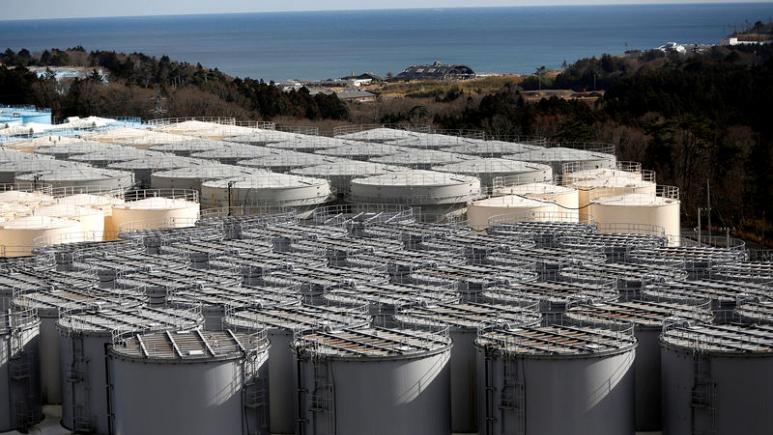
Locals believe livelihoods are at risk as authorities attempt to tackle
contamination 12 years on from the disaster. The authorities are about to
begin pumping contaminated water from the Fukushima nuclear power plant
into the Pacific Ocean.
More than a million tons of water will be released
into the sea over the next thirty years. The waste water will be treated
and diluted to remove most radioactive contaminants, but will still contain
traces of the isotopes, tritium and carbon-14.
The governments of China,
South Korea and Pacific island nations have protested against the decision.
But none are affected more directly than the fishermen of Fukushima. Twelve
years after the catastrophe, there is no clear timeline for the
decommissioning of Fukushima Daiichi, which is decades away from being
safely dismantled.
In the meantime, 130 tons of water is contaminated by it
every day. Some of this is poured directly onto the broken reactors to cool
them. Much is natural ground water which flows through the earth towards
the sea, picking up radiation from the exposed reactors on the way.
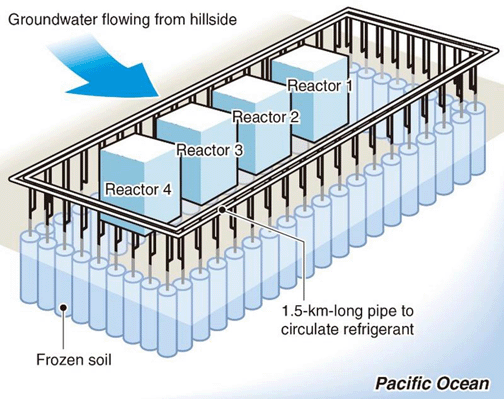
To prevent the groundwater reaching the plant in the first place, the
authorities built an underground “ice wall” of frozen earth, but this
has been only partly effective. Filtering is supposed to remove all the
radioactive elements except for tritium, which is routinely released into
the sea in diluted form from nuclear plants around the world
. But carbon-14
and trace elements of more dangerous radioactive substances, including
strontium-90 and iodine-129, have also been detected in the water. The
Japanese government says that tritium will be diluted to less than one-40th
of the concentration permitted under Japanese safety standards and
one-seventh of the World Health Organisation’s permitted level for safe
drinking water.
According to Tepco, the radiation in the tritium in the
water amounts to some 860 trillion becquerels — less than half the 1,620
trillion becquerels released from Britain’s Sellafield plant in 2015. The
theory is that the water will quickly and harmlessly dissipate into the
vastness of the Pacific Ocean.
But environmentalists and some scientists
disagree. The US National Association of Marine Laboratories claims that
the statistics, assumptions and models used in the Tepco projections are
flawed. It points to the danger of concentrated clusters of radiation
accumulating on the ocean floor.
Shaun Burnie, a nuclear expert at
Greenpeace, says that the water should be stored longer in tanks, allowing
time for the tritium to reduce, and that the decision to release into the
ocean is as much as about saving money as science. It also gives an
illusion of concrete progress.
Even if it is safe, it makes little
difference to the fishermen of Soma, for whom even just the perception of a
danger is enough to harm their business. Among them opinion is divided.
Some oppose the release under any circumstances; others, including Konno,
reluctantly accept it as the least worst option given that only complete
decommissioning, decades in the future, will solve the problem.
Times 10th March 2023
Costs for safety measures necessary to restart Japan’s idle nuclear reactors keep ballooning

Costs for safety measures necessary to restart Japan’s idle nuclear
reactors following the 2011 Fukushima nuclear disaster ballooned to over
6.09 trillion yen in January, according to 11 major power companies in the
country. As some companies have not yet included costs related to
implementing anti-terrorism measures in their calculations, required under
stricter regulations introduced in 2013 following the nuclear accident that
occurred on March 11, 2011, the total amount is expected to increase
further.
The costs involve safety measures for 15 nuclear power stations
and consist of both expenses already used and those expected in the future.
As of January 2022, they totaled 5.78 trillion yen. Over a one-year period
through January this year, safety costs increased by 230 billion yen at the
No. 2 unit in Tohoku Electric Power Co’s Onagawa plant in Miyagi
Prefecture, northeastern Japan, and by 80 billion yen at Chugoku Electric
Power Co’s Shimane nuclear plant in western Japan. The Onagawa No. 2 unit
and the Shimane No. 2 unit have already cleared safety screenings by the
country’s nuclear regulator, the Nuclear Regulation Authority, with
construction work necessary to restart them under way after gaining local
consent. The cost of safety measures for the Onagawa No. 2 unit totals 710
billion yen, more than double the roughly 300 billion yen spent to build
it.
Japan Today 12th March 2023
https://japantoday.com/category/national/safety-costs-at-nuclear-plants-in-japan-exceed-6-tril.-yen
National remembrance day , and huge civil case penalty for Tepco executives, but memory of Fukushima now fading in Japan
Japanese offered tearful prayers Saturday on the anniversary of the deadly
tsunami that triggered the Fukushima disaster, but public support for
nuclear power is growing as memories of the 2011 meltdown fade. A minute’s
silence was observed nationwide at 2:46 pm (0546 GMT), the precise moment
when a 9.0-magnitude quake – the fourth strongest in Earth’s recorded
history – devastated northeastern Japan 12 years ago.
In January, Tokyo’s,High Court upheld the acquittal of three former TEPCO executives, again
clearing them of professional negligence over the disaster. But in a
separate civil verdict last year, the trio – plus one other ex-official –
were ordered to pay a whopping 13.3 trillion yen ($97 billion) for failing
to prevent the accident. The enormous compensation sum is believed to be
the largest ever for a Japanese civil case, although lawyers acknowledge it
is well beyond the defendants’ capacity to pay.
The government also plans
to start releasing more than a million tonnes of treated water from the
stricken Fukushima plant into the sea this year. A combination of
groundwater, rainwater that seeps into the area, and water used for
cooling, it has been filtered to remove various radionuclides and kept in
storage tanks on site, but space is running out. The water release plan has
been endorsed by the International Atomic Energy Agency but faces staunch
resistance from local fishing communities and neighbouring countries.
France24 11th March 2023
Twelve years after 3/11, dispute grows over Fukushima’s radioactive soil

BY TOMOKO OTAKE, STAFF WRITER, https://www.japantimes.co.jp/news/2023/03/10/national/dispute-fukushima-radioactive-soil/
OKUMA, FUKUSHIMA PREF. – On the surface, everything seems to be under control at the expansive site storing radioactive soil collected from across Fukushima Prefecture in the aftermath of the 2011 core meltdowns at the Fukushima No. 1 nuclear power plant.
Since 2015, the Interim Storage Facility, which straddles the towns of Okuma and Futaba and overlooks the crippled plant, has safely processed massive amounts of radioactive soil — enough to fill 11 Tokyo Domes — in an area nearly five times the size of New York’s Central Park. The soil was collected during decontamination procedures in Fukushima’s cities, towns and villages that were polluted by the disaster.
Here, black plastic bags full of contaminated soil are put on conveyor belts and unpacked. The contents are sifted through to remove plastic, leaves, twigs and other nonsoil waste. Then the soil is taken to dump zones, where it’s buried in 15-meter-deep pits with protective sheeting and a drainage pipe at the bottom so that radioactive cesium won’t leak into the ground. Finally, the soil is covered with noncontaminated soil and topped with a lawn. Areas where the work has been completed look like soccer fields.
The level of radiation here is about 0.2 microsieverts per hour (uSv/h), explained Hiroshi Hattori, an official at the Environment Ministry’s local office, during a recent tour of the areas where the polluted soil is buried. The radiation level there is harmless to humans, though higher than an average of 0.04 uSv/h elsewhere in Japan.
“It’s higher not because of the soil, but because of surrounding forests (which have not been decontaminated).”
The problem is that, as smooth and orderly as its operations are, the site is only a temporary home for the radioactive soil. Nobody knows where this massive pile of dirt will eventually end up. All that is certain is that the central government has pledged to — and is legally obliged to — move all of the soil out of Fukushima Prefecture by 2045.
This unresolved soil issue — along with the lingering dispute over the planned ocean release of tritium-laced wastewater from Fukushima No. 1 — is a sour reminder of the enormous toll the nuclear disaster in Fukushima has inflicted on the country and beyond.
Opposition from residents
The soil is a product of years of state-funded measures to bring radiation levels down in communities affected by the disaster. The government drew up a “decontamination road map” soon after the accident, in the hopes of a speedy return of residents to their hometowns.
The desire to avoid moving the massive amount of soil again — and to make it easier to find a final destination for it — has also led the Environment Ministry to try to reduce its volume first by reusing some of the less contaminated mud for public works projects across the nation. That way, only a quarter of the total amount that contains over 8,000 becquerel per kilogram of cesium will be subject to final disposal, the ministry says.
But it’s a tough sell. In December, the ministry held its first round of meetings with residents in areas of greater Tokyo where pilot projects to utilize the soil under the 8,000 Bq/kg threshold are planned: the Shinjuku Gyoen National Garden in Tokyo, the National Environmental Research and Training Institute in Tokorozawa, Saitama Prefecture, and the National Institute for Environmental studies in Tsukuba, Ibaraki Prefecture.
Nearby residents vehemently opposed the plan. Last month, they formally demanded that the ministry cancel the pilot projects, under which the ministry plans to bury radioactive soil underneath a 50 cm layer of cover soil, for flower beds and parking lots.
Roads, tidal walls and dams
Though little known until recently, the ministry released a policy document in 2016 that outlined the “safe use” of radioactive soil with radiation levels of 8,000 Bq/kg or less. According to the document, the government will divert such soil to embankments in public works projects “whose management entities and responsibilities are clearly defined.”
Roads, tidal walls, seaside protection forest and earthfill dams are some of the projects where use of the soil is envisioned, the document says.
The plan has raised the eyebrows of not just residents but also experts.
“Japan is very seismic and we have (harsh) weather and typhoons,” said Azby Brown, architect and lead researcher for Safecast, a citizen science group that has independently measured and publicized radiation levels in Fukushima and elsewhere.
“The half-life of cesium-137 is 30 years. It’s going to stay radioactive for a long time. What happens when these embankments get old?… It is not a very rational or sound decision, from the sense of certainly the perception of safety.”
Kenichi Oshima, professor of energy policy at Ryukoku University in Kyoto, questions the rationale of treating the soil of 8,000 Bq/kg or less as safe, pointing to a “double standard” between the ministry’s policy and the rigorous control of waste required for other nuclear power plants under the Nuclear Reactor Regulation Law. That law states only waste with radiation levels under 100 Bq/kg is considered safe enough to be reused.
All of the radioactive waste produced by the Fukushima disaster is covered by a separate “special law” that went into force in 2012. This says that Tokyo Electric Power Co. Holdings (Tepco), the operator of Fukushima No. 1, is responsible for the handling of the radioactive waste and soil within its property, while the Environment Ministry is responsible for the disposal of the 3/11-borne radioactive waste outside the plant, though the law itself does not mention the reuse of soil that has been decontaminated.
The ministry has explained that the 8,000 Bq/kg threshold keeps it consistent with the level of “designated waste materials” stipulated in that special legislation. When people are exposed to waste below 8,000 Bq/kg, the additional radiation exposure is limited to less than 1 millisievert per year, not a level that causes health concerns, according to the ministry.
“Granted, soil with 8,000 Bq/kg of radioactive materials is not one that immediately kills people who touch it,” Oshima said. “But it is low-level radioactive waste nonetheless, and so should be managed properly as such, just like low-level radioactive waste from other nuclear power plants is. It’s just inconceivable that it would be utilized as materials for infrastructure that people will be using often.”
Public support elusive
On Feb. 24, Environment Minister Akihiro Nishimura reiterated the ministry’s stance, telling a news conference that utilization of soil outside the prefecture is “important to realize its final disposal outside the prefecture (of Fukushima).”
“We would like to continue explaining our stance in detail so as to nurture public understanding,” he said.
But to nurture this understanding about an issue as serious as radioactive waste, everyone who has a stake should be involved in the decision-making process, Brown says.
“The strong consensus internationally regarding where to put things like radioactive waste requires full agreement and participation by all of the stakeholders, all of the citizens, everyone who’s involved,” Brown said. “What we usually see often in Japan in general, and certainly regarding the Fukushima issues, is that a decision is made at the top. It’s decided, it’s announced and then they try to persuade people to go along with it. This is the case with the water release issue (as well as) the soil issue.”
Around this spring or summer, the government and Tepco hope to begin discharging water that has all the radioactive nuclides except tritium removed. Construction work is already under way at the seaside plant to install an undersea tunnel, through which the water will be released 1 kilometer offshore.
The so-called JESCO law, which went into effect in 2014, gives legal grounds for the creation of the government-funded entity that runs the interim storage site, as well as the obligation for the central government to move the soil out of Fukushima by 2045. The obligation was written into law following a political compromise with the Fukushima Prefectural Government, with officials from the national government saying they “considered the excessive burden” being shouldered by the people of Fukushima.
Both Oshima and Brown, however, say they find the government’s plan to recycle the dirt out of line.
In fact, Oshima says the best solution would be to set aside an area and make it a controlled zone for all the polluted soil for 50 years until the radioactive cesium decays, which is how waste from other nuclear plants is handled, and is what the final disposal site is going to look like.
He cites a 2017 report by the Japan Atomic Energy Agency that estimated the size of the area needed for final disposal, which should be ready by 2045. If the volume of the soil is estimated at 20 million cubic meters, a subsurface ground facility for its final disposal will need to measure about 1.3 km by 1.3 km, the report concluded.
“It may sound like a huge space, but both the national government and Tepco have vacant land plots of that size,” Oshima said. Once the soil’s use as construction materials is greenlighted, however, it would be transported nationwide, and it would be impossible to track and measure its radiation doses, he argued.
“If the soil is properly stored in a controlled area, it would make the public feel so much more at ease.”
What´s happening at Fukushima plant 12 years after meltdown? Massive amounts of fatally radioactive melted nuclear fuel remain inside the reactors.

Japan is preparing to release a massive amount of treated radioactive wastewater
into the sea. Japanese officials say the release is unavoidable and should
start soon.
Dealing with the wastewater is less of a challenge than the
daunting task of decommissioning the plant. That process has barely
progressed, and the removal of melted nuclear fuel hasn´t even started.
TEPCO needs a safety approval from the Nuclear Regulation Authority.
The International Atomic Energy Agency, collaborating with Japan to ensure the
project meets international standards, will send a mission to Japan and
issue a report before the discharge begins………………………..
Massive amounts of fatally radioactive melted nuclear
fuel remain inside the reactors. Robotic probes have provided some
information but the status of the melted debris is largely unknown. Akira
Ono, who heads the cleanup as president of TEPCO´s decommissioning unit,
says the work is “unconceivably difficult.” Earlier this year, a
remote-controlled underwater vehicle successfully collected a tiny sample
from inside Unit 1’s reactor – only a spoonful of about 880 tons of melted
fuel debris in the three reactors.
That’s 10 times the amount of damaged
fuel removed at the Three Mile Island cleanup following its 1979 partial
core melt. Trial removal of melted debris will begin in Unit 2 later this
year after a nearly two-year delay. Spent fuel removal from Unit 1
reactor´s cooling pool is to start in 2027 after a 10-year delay. Once all
the spent fuel is removed the focus will turn in 2031 to taking melted
debris out of the reactors.
Daily Mail 9th March 2023
Little progress seen in removing fuel debris at Fukushima plant
By RYO SASAKI/ Staff Writer, https://www.asahi.com/ajw/articles/14854929, March 6, 2023
Tokyo Electric Power Co. has little to show in removing fuel debris at its Fukushima No. 1 nuclear power plant in the 12 years since the nuclear disaster started.
The company, in fact, has postponed the work.
An estimated 880 tons of fuel debris remain in the No. 1, 2 and 3 nuclear reactors at the plant.
Remote-control operations must be used to remove the fuel debris because radiation levels in the reactor buildings could kill a person within one hour.
TEPCO had initially planned to start removing fuel debris at the No. 2 reactor, where the level of radiation is comparatively low, by the end of 2022.
However, the company announced in August 2022 that it had abandoned this target, citing delays in developing a robotic arm that could be used to remove the debris.
The company set a new target to start the removal work in the second half of fiscal 2023.
The government and TEPCO aim to complete the decommissioning of the stricken plant between 2041 and 2051.
However, the company’s first goal is to test the retrieval of only several grams of fuel debris. It still hasn’t decided how it will conduct larger-scale removal.
TEPCO has also not explained when it will start removing fuel debris at the No. 1 and No. 3 reactors.
A “submergence method” is under consideration to remove fuel debris from the No. 3 nuclear reactor, but it’s still unclear whether it will be implemented.
With the submergence method, workers would cover the building that houses the No. 3 reactor with a metal structure, fill the inside of the structure with water to submerge the reactor, and then remove fuel debris from the upper part of the building.
Another worrying factor about the Fukushima nuclear power plant is that the foundation, or “pedestal,” supporting the No. 1 reactor’s pressure vessel has deteriorated so much that the reinforcing bars are now exposed.
Concerns have been expressed about the earthquake resistance of the pedestal.
Evacuation plans still missing around 6 nuclear power plants

THE ASAHI SHIMBUN, March 6, 2023 https://www.asahi.com/ajw/articles/14854836
Six of 15 locations with nuclear power plants, excluding those in Fukushima Prefecture, have not compiled sufficient emergency plans, including wide-area evacuations, in the event of a serious accident.
Prime Minister Fumio Kishida has pushed a policy to “return to nuclear power,” but disaster prevention challenges remained unresolved, and local people have expressed concerns.
The emergency plans were deemed necessary after the March 2011 nuclear disaster at Tokyo Electric Power Co.’s Fukushima No.1 nuclear power plant.
Niigata Prefecture hosts TEPCO’s Kashiwazaki-Kariwa nuclear plant, one of the largest in the world.
On Feb. 7, disaster prevention officials of municipal governments in the prefecture held an annual meeting online in Niigata with staff of TEPCO and members of the Cabinet Office in charge of nuclear emergency preparations.
One theme at the meeting was whether people could safely flee if a severe accident were to occur at the plant on a day with heavy snow.
“For our residents, heavy snow is a threat much closer than terrorism, and it could cause tremendous anxiety and risk,” said a Nagaoka city government official, urging the prefectural government to examine evacuation plans in heavy snow.
Municipal governments within a radius of 30 kilometers of a nuclear power plant are required to draw up evacuation plans for severe nuclear accidents and discuss emergency procedures with the central government.
These plans are then supposed to receive approval at a nuclear emergency preparedness meeting chaired by the prime minister.
But there are no such plans in place in the Kashiwazaki-Kariwa area, where 437,000 people live.
Local officials said they are stumped over how to plan an evacuation in heavy snow.
On Dec. 18, snow started falling in the city of Kashiwazaki, where the nuclear power plant is located.
The Hokuriku Expressway that runs through the city was closed for up to 52 hours. National road No. 8, which runs parallel to the expressway, was shut down for 38 hours, and stranded vehicles formed a 22-km line in the snow.
The Kashiwazaki city government estimates that about 60,000 of the 79,000 or so residents would evacuate westward in the event of a nuclear power plant accident.
Any evacuation plan in the city would be severely hampered if the Hokuriku Expressway and national road No. 8 were unusable.
On Feb. 10, the Cabinet approved Kishida’s green transformation policy, marking a dramatic shift in the government’s post-3/11 stance on nuclear power.
The new policy allows the construction of new nuclear reactors and extending the maximum life of existing units beyond 60 years.
Operations of 10 reactors have already resumed.
Seven other reactors, including the No. 6 and No. 7 reactors at the Kashiwazaki-Kariwa plant, are scheduled to restart in or after this summer.
Kishida said the central government “will be out in front and take any and every step” to push the policy, an unprecedented remark for a prime minister concerning nuclear energy.
TEPCO is seeking to resume operations of the No. 7 reactor at Kashiwazaki-Kariwa plant in October.
The Nuclear Regulation Authority has issued a de facto ban on operations of the No. 7 reactor because of the utility’s blunders related to anti-terrorism measures, but the ban may be lifted in spring.
Once the ban is lifted, the remaining conditions for the reactor restart will be obtaining consent from local people and setting up a wide-area evacuation plan.
As of Feb. 11, TEPCO had held explanatory meetings on its reactor resumption plans to local residents at five locations in the prefecture.
A total of 71 people asked questions during the process.
A woman who made the last comment to TEPCO at the meetings said, “If you can’t protect people who can’t evacuate because of heavy snow, I don’t want you to resume the operation.”
Masaya Kitta, who heads TEPCO’s Niigata headquarters, replied: “An evacuation plan is not something we make. It may appear that we are leaving it to someone else, but we, as a plant operator, are doing our best to increase the evacuation plan’s effectiveness as much as possible.”
Of the seven reactors that the Kishida administration plans to restart in or after this summer, two are located in plants lacking local government evacuation plans: the Kashiwazaki-Kariwa plant and Japan Atomic Power Co.’s Tokai No. 2 nuclear power plant in Tokai, Ibaraki Prefecture.
In August 2022, Ibaraki Governor Kazuhiko Oigawa said the Tokai No. 2 plant “is located in an extremely densely populated area,” and the prefectural government “has been in an extremely difficult situation and faced enormous problems in making an effective and sensible evacuation plan.”
Around 940,000 residents live within 30 km of the Tokai No. 2 plant and would be subject to an evacuation in a nuclear disaster. That is the largest such figure in Japan.
Disaster prevention officials have had difficulties securing routes and transportation means for many people to evacuate all at once.
In a wide-area evacuation plan designed by the Ibaraki prefectural government, residents are supposed to leave in their own cars.
The prefecture will ask bus companies for cooperation to evacuate senior residents and disabled people.
The prefectural government estimates that more than 400 buses will be needed for the task, and it does not know how it can secure that many buses.
One guiding principle of the nuclear emergency preparedness was created in response to the 2011 Fukushima disaster.
Until then, the areas required to have an evacuation plan in place were located within 8 to 10 km of nuclear plants.
But the Fukushima accident showed how radioactive materials could spread to wider areas.
The central government expanded the radius to 30 km and required municipal governments within the areas to compile evacuation plans.
The central government also set up a group to discuss nuclear-related disaster-prevention measures in normal times.
But more than 10 years have passed since then. And many of the populated areas still do not have evacuation plans.
(This article was written by Yasuo Tomatsu and Shiki Iwasawa.)
G7 should declare ‘no first use’ of nuclear weapons: ex-Hiroshima mayor
Mar. 5 Japan Today, LONDON
The Group of Seven industrialized nations should declare a nuclear weapon “no first use” policy during a summit in May in Hiroshima, the former mayor of the atomic-bombed Japanese city said in a speech on Saturday in London.
Japan, as host of the summit, can lead efforts to pressure Russian President Vladimir Putin to not use nuclear weapons in his war on Ukraine, but G7 members should “aim higher,” said Tadatoshi Akiba during a ceremony where he received a peace award from a British Islamic group.
“The G7 Hiroshima declaration should be the starting point for the universal ‘no first use’ of nuclear weapons,” the 80-year-old added.
Japanese Prime Minister Fumio Kishida, a lawmaker representing a constituency in Hiroshima, has vowed to pitch his vision of a world without nuclear weapons at the summit, which will be joined by leaders from other G7 members — Britain, Canada, France, Germany, Italy and the United States, plus the European Union.
However, Japan remains in a policy dilemma when it calls for the abolition of nuclear weapons while at the same time relying on U.S. weapons for protection.
Akiba, who served as Hiroshima mayor for 12 years through 2011, slammed as “a fantasy” the belief that “the possession of and threat of use of nuclear weapons guarantee that no nuclear powers will use such weapons.”
Holding up a graphic photo of a young victim in Nagasaki, the second Japanese city to suffer a U.S. atomic bombing in 1945, Akiba said the boy was “thrown into a living hell.”……………………………………. more https://japantoday.com/category/politics/g-7-should-vow-no-first-use-of-nukes-at-hiroshima-summit-ex-mayor
CNIC Statement: We Protest the Cabinet Decision on the Nuclear Power Promotion Bundle Bill
by Citizens’ Nuclear Information Center · February 28, 2023

Today the Kishida Cabinet made a cabinet decision to proceed with a bundle of bills (the GX Decarbonization Power Supply Bill), including legislation to extend the operational periods of nuclear power plants and to promote the use of nuclear power. We firmly protest this decision, which totally disregards the lessons of Fukushima.
What “careful explanation”?
The Government has repeatedly stated that it will make “careful explanations” to address the public’s concerns regarding the utilization of nuclear power plants since the GX policies were announced. However, this bill seeks to amend the Atomic Energy Basic Law, the Electricity Utilities Industry Law, the Nuclear Reactor Regulation Law, the Reprocessing Law and the Renewable Energy Special Measures Law all at once. How can so many revisions with so many points of contention possibly be “carefully explained”? Even at the stage of deliberations leading up to the drafting of the bill, discussions were hasty to say the least. Why must nuclear policy be changed immediately? The situation in Ukraine and resource prices are cited as reasons, but these have nothing to do with extending the operational period or building new nuclear power stations, let alone restarting them. We can only assume that the government are trying to take advantage of the crisis to promote their nuclear policy.
Safety in the back seat
There are a number of problems with each of the bills. For example, the revision bill for the Atomic Energy Basic Act states that “safety first “ should be the approach for the use of nuclear energy and that the value of nuclear energy use, such as its contribution to stable supply and green transformation, will be clarified. We disagree that nuclear power is useful for stable supply and decarbonisation, but before that, there is a serious problem. The proposed revisions transfer the regulation of the operation period of nuclear power plants from the Reactor Regulation Act to the Electricity Business Act, and also changes the operation period from 40 years in principle, allowing a maximum of 20 years extension on a one-time basis of the operation period, which is supposed to adjust for shutdown periods.
While assuring “safety first”, the government is trying to transfer the operation period regulation, a safety regulation introduced based on the lessons learnt from the Fukushima Daiichi nuclear accident, from the Nuclear Reactor Regulation Law, which is under the jurisdiction of the regulatory authority (the Nuclear Regulation Authority-NRA), to the Electricity Utilities Industry Law, which is under the jurisdiction of the utilizing authority (the Ministry of Economy, Trade and Industry-METI). This in itself can only be described as a setback for nuclear safety regulation. Furthermore, METI’s Nuclear Energy Subcommittee’s summary also contemplates allowing further extensions in the future. Such discussions would not be possible if utilization did not take precedence over regulation.
The proposed revision to the Nuclear Reactor Regulation Law will also legislate on the assessment of ageing nuclear power plants, which was previously a rule of the NRA. The Government and the NRA state that this will lead to stricter regulations, but that the substance of these stricter regulations will be discussed in the future. This in itself is a clear indication of the government’s attitude that nuclear power must be promoted according to their timetable and compared to this, nuclear safety is of secondary importance.
The NRA explains that the degradation status of a reactor can be assessed at any point in time. However, there are no nuclear power plants in the world that have been in operation for more than 60 years to begin with, and the older a reactor gets, the more its operating history will differ from the deterioration state of the reactor due to the characteristics of the materials. Even if an inspection is carried out, it is only an inspection at that point in time and cannot be said to prove safety in the future. In fact, on 30 January this year, Takahama Unit 4 automatically shut down due to a problem, but on 25 November last year, Kansai Electric Power Company had just announced that it had carried out an equipment integrity assessment (number of devices covered: approximately 4,200 devices/units) based on the assumption of a 20-year extension and ‘confirmed that there were no problems’.
Blurring the lines between operators and regulators
A major lesson of the Fukushima Daiichi nuclear disaster was that the operators of nuclear power plants must be separated from those who regulate them. Twelve years after the accident, this separation is now in great danger. We believe that the right option is to move away from nuclear power, but strict regulation is a minimum requirement for both the operation and the decommissioning of nuclear power plants. However, the regulations which are supposed to be enforced by the NRA, are limited by the framework of promoting the use of nuclear energy. In recent times, very few suspension orders have been issued and no reactor licenses have ever been revoked. Remedies are also sought through “guidance and suggestions” from the reviewing authority. With such a form of regulation and the integration of regulation and promotion, is there any hope for strict regulation? Although it is said that deterioration can be assessed at any point in time, there are no clear boundaries in the deterioration of nuclear power plants. We can only make engineering decisions under great uncertainty. Under these conditions, can the regulations be trusted to always side with the safer option?
In the current nuclear policy changes, regulation and promotion have been shown to be one and the same. Several members of the NRA have expressed their discomfort that the discussions had to conform to a fixed schedule.
Before discussing the issue of extension of the operating period, it is the state of nuclear regulation that must be questioned. If the Fukushima Daiichi nuclear accident is the starting point for nuclear policy, the GX Decarbonisation Power Supply Bill must be scrapped, and we must consider how to ensure that nuclear regulation and promotion are kept totally separate, and how strict regulation can be achieved. Without this, we can never put an end to the “safety myth” and it will be impossible to realize the most basic condition for the use of nuclear power.
Source: https://cnic.jp/english/?p=6521
1 This Month



26 September – International Day for the Total Elimination of Nuclear Weapons


PLEASE OPPOSE HR 8255 AND S.3639 – bills would accelerate satellite deployment, with no environmental review or safeguards – https://ncstd5li.quorum.us/campaign/169331/
To see nuclear-related stories in greater depth and intensity – go to https://nuclearinformation.wordpress.com
-
Archives
- September 2026 (233)
- August 2026 (330)
- July 2026 (355)
- June 2026 (287)
- May 2026 (306)
- April 2026 (356)
- March 2026 (251)
- February 2026 (267)
- January 2026 (308)
- December 2025 (358)
- November 2025 (359)
- October 2025 (375)
-
Categories
- 1
- 1 NUCLEAR ISSUES
- business and costs
- climate change
- culture and arts
- ENERGY
- environment
- health
- history
- indigenous issues
- Legal
- marketing of nuclear
- media
- opposition to nuclear
- PERSONAL STORIES
- politics
- politics international
- Religion and ethics
- safety
- secrets,lies and civil liberties
- spinbuster
- technology
- Uranium
- wastes
- weapons and war
- Women
- 2 WORLD
- ACTION
- AFRICA
- Atrocities
- AUSTRALIA
- Christina's notes
- Christina's themes
- culture and arts
- Events
- Fuk 2022
- Fuk 2023
- Fukushima 2017
- Fukushima 2018
- fukushima 2019
- Fukushima 2020
- Fukushima 2021
- general
- global warming
- Humour (God we need it)
- Nuclear
- RARE EARTHS
- Reference
- resources – print
- Resources -audiovicual
- Weekly Newsletter
- World
- World Nuclear
- YouTube
-
RSS
Entries RSS
Comments RSS
 nuclear-news