How Fukushima wastewater into Pacific will disrupt seafood trade
By Ming Wang, Dalian Maritime University, China
Public opinion will dictate how Japanese seafood is received after the wastewater is disposed of into the Pacific Ocean.
The global seafood market faces turmoil with the release of the Fukushima nuclear wastewater from Japan into the Pacific Ocean, computer modelling predicts.
Japan announced in 2021 it would release over 1.25 million tonnes of treated Fukushima radioactive wastewater into the sea as part of its plan to decommission the power station when its storage capacity reaches its limit this year.
Seafood is one of the most important food commodities in international trade, far exceeding meat and milk products. According to the United Nations Comtrade database, global seafood trade has grown from $US7.6 billion in 2009 to $US12.4 billion in 2019, an increase of 63 percent.
The Japanese nuclear wastewater discharge raises global worries about the safety of Japanese seafood as public opinion influences consumers’ preference for seafood.
In this empirical study involving American consumers, 30 percent of respondents said they reduced their seafood consumption following the Fukushima nuclear plant accident and more than half believe Asian seafood poses a risk to consumer health due to the disaster.
Most of Japan’s seafood trading partners, such as China, Russia, India and South Korea, imposed temporary bans on food from several districts around Fukushima in the wake of the accident in 2011.
This paper models the potential impact of the Fukushima nuclear wastewater disposal on the global seafood trade using the import and export data for 26 countries which make up more than 92 percent of the world’s trade in marine products………………..
China, South Korea and the US are expected to increase their seafood imports from Denmark, France, Norway and other community group two countries while reducing seafood exports to them. This is because these three countries have already reduced their seafood trade with Japan.
The increase in exports from community group three to community group two nations leads to a decrease in imports and exports between countries within community group two. For example, the study notes that Denmark, Norway and France are all experiencing a decrease in seafood exports and imports between each other……………………………………..
The model also divided the global seafood market into two segments – the first being the Japanese market and the second comprising 25 other countries. It calculated that Japan’s seafood exports fell by 19 percent in 2021, or $US259 million.
Public opinion after the Fukushima wastewater is discharged will have different impacts on the import and export trade of seafood for each country, especially for countries which trade with Japan.
What people think about the discharge is closely related to the amount of Japanese seafood imported by each country. The higher the amount of Japanese seafood imported by a particular country, the more negative public opinion is likely to be, according to computer modelling…………………………………………………………… more https://www.rnz.co.nz/international/pacific-news/487942/how-fukushima-wastewater-into-pacific-will-disrupt-seafood-trade
Ignoring science, environmental protection and international law – G7 endorses Japan’s Fukushima water discharge plans

Greenpeace International, 16 April 2023 https://www.greenpeace.org/international/press-release/59193/science-environmental-protection-international-law-g7-japans-fukushima-water-discharge/
Legacy of Fukushima disaster shows nuclear energy is no solution to energy and climate crisis.
Sapporo, Japan – The nations of the G7 have chosen politics over science and the protection of the marine environment with their decision today to support the Japanese government’s plans to discharge Fukushima radioactive waste water into the Pacific Ocean.
The 1.3 million cubic meters/tons of radioactive waste water at the Fukushima Daiichi plant, currently in tanks, is scheduled to be discharged into the Pacific Ocean this year. Nations in the Asia Pacific region, led by the Pacific Island Forum, have strongly voiced their opposition to the plans.[1] Some of the world’s leading oceanographic institutes and marine scientists have criticised the weakness of the scientific justification applied by TEPCO, the owner of the nuclear plant, warned against using the Pacific Ocean as a dumping ground for radioactive contaminated water, and called for alternatives to discharge to be applied.[2]
“The Japanese government is desperate for international endorsement for its Pacific Ocean radioactive water dump plans. It has failed to protect its own citizens, including the vulnerable fishing communities of Fukushima, as well as nations across the wider Asia Pacific region. The aftermath of the nuclear disaster at Fukushima is still strongly felt, and the Japanese government has failed to fully investigate the effects of discharging multiple radionuclides on marine life. The government is obligated under international law to conduct a comprehensive environmental impact assessment, including the impact of transboundary marine pollution, but has failed to do so. Its plans are a violation of the UN Convention Law of the Sea.
The marine environment is under extreme pressure from climate change, overfishing and resource extraction. Yet, the G7 thinks it’s acceptable to endorse plans to deliberately dump nuclear waste into the ocean. Politics inside the G7 at Sapporo just trumped science, environmental protection, and international law,” said Shaun Burnie, Senior Nuclear Specialist at Greenpeace East Asia.
Greenpeace East Asia analysis has detailed the failures of liquid waste processing technology at the Fukushima Daiichi plant and the environmental threats posed by the releases.[3] There is no prospect of an end to the nuclear crisis at the plant as current decommissioning plans are not feasible. Furthermore, the report finds the nuclear fuel debris in the reactors cannot be completely removed and will continue to contaminate the ground water over many decades.[4] Claims that the discharges will take 30 years is inaccurate as in reality, it will continue into the next century. Viable alternatives to discharge, specifically long term storage and processing, have been ignored by the Japanese government.[3]
The Japanese government’s attempt to normalise the Fukushima nuclear disaster is directly linked to its overall energy policy objective of increasing the operation of nuclear reactors again after the 2011 disaster. 54 reactors were available in 2011 compared to only ten reactors in 2022, generating 7.9% of the nation’s electricity in FY21 compared to 29% in 2010.[5] Meanwhile, five of the other six G7 governments led by France, the US and the UK are also aggressively promoting nuclear power development.
The idea that the nuclear industry is capable of delivering a safe and sustainable energy future is delusional and a dangerous distraction from the only viable energy solution to the climate emergency which is 100% renewable energy. The global growth of low cost renewable energy has been phenomenal – but it has to be much faster and at an even greater scale if carbon emissions are to be reduced by 2030. Approval for nuclear waste dumping and nuclear energy expansion sound like the 1970’s but we have no time for such distractions. We are in a race to save the climate in the 21st century, and only renewables can deliver this,” said Shaun Burnie.
34,200 tons of radioactive sewage sludge kept in Kanto area 12 yrs after Fukushima disaster.
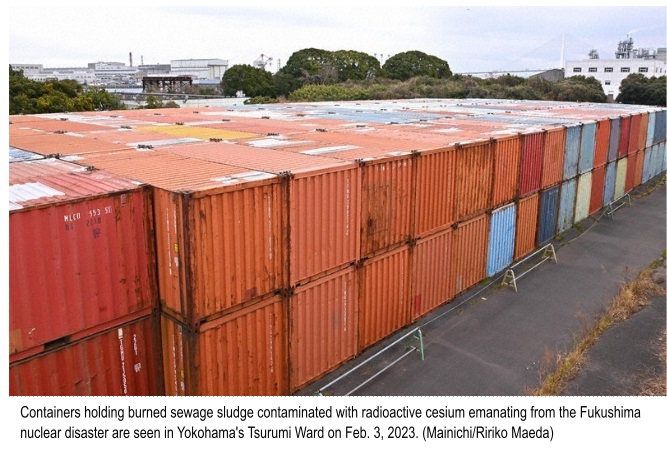
April 10, 2023 (Mainichi Japan)
TOKYO — A total of some 34,200 metric tons of sewage sludge contaminated with radioactive substances emanating from the Fukushima nuclear disaster is still kept in temporary storage by major local bodies in the Kanto region, the Mainichi Shimbun has learned.
The massive tainted waste — a year’s worth of ordinary burned sludge ash generated in Tokyo’s 23 wards — has partially been kept as incinerated ash. Due to difficulties in obtaining local understanding for landfill disposal of radioactive waste in harbors, forests and mountains, some of the waste has nowhere to go even 12 years on since the onset of the disaster.
The finding came after the Mainichi queried major local governments in five prefectures in the Kanto region and other sources about radioactively contaminated sewage sludge accumulated in the wake of the March 2011 Fukushima Daiichi Nuclear Power Station meltdown.
In May 2011, two months after the disaster, radioactive cesium was detected in the sewage sludge in Fukushima Prefecture. This prompted inspections of sewage in other local bodies in the Kanto region, and authorities took measures, such as keeping highly contaminated sludge within their local sewage facilities.
Of these, the Mainichi Shimbun interviewed 15 local bodies — Tokyo and six other Kanto region prefectures, their capital cities, and government-designated major cities in the region — between December 2022 and March 2023, regarding the status of their treatment of sewage sludge in which radioactive substances were detected.
It emerged that the Yokohama Municipal Government, south of Tokyo, had kept approximately 26,600 tons of radioactively contaminated waste within its sewage facilities as incinerated sludge ash as of the end of February 2023, while the Kawasaki Municipal Government, also in Kanagawa Prefecture, had kept 3,435 tons of such waste inside its port areas in the same form…………………………………………..
In the Kanto region alone, a total of some 4,180 tons of radioactive sewage requiring the central government’s treatment remains in Ibaraki, Tochigi, Gunma and Chiba prefectures, according to the Ministry of the Environment and other sources. The national government plans to place this waste under long-term management by setting up treatment facilities in state-owned forests and other sites in accordance with the special measures law on radioactive contamination response. However, the plan remains up in the air as the candidate sites have not been finalized due to protests from local residents and other factors.
Meanwhile, Tokyo, Saitama and Kanagawa prefectures responded to the survey that they have finished disposing of all radioactive sewage sludge under their control. The cities of Mito, Saitama and Chiba also answered the same. Based on the peak amount of radioactive sludge kept by these local bodies, it is estimated that they had disposed of at least some 120,000 tons of such waste.
(Japanese original by Kazuhiro Igarashi and Kaoru Watanabe, Tokyo Regional News Department)https://mainichi.jp/english/articles/20230408/p2a/00m/0na/013000c
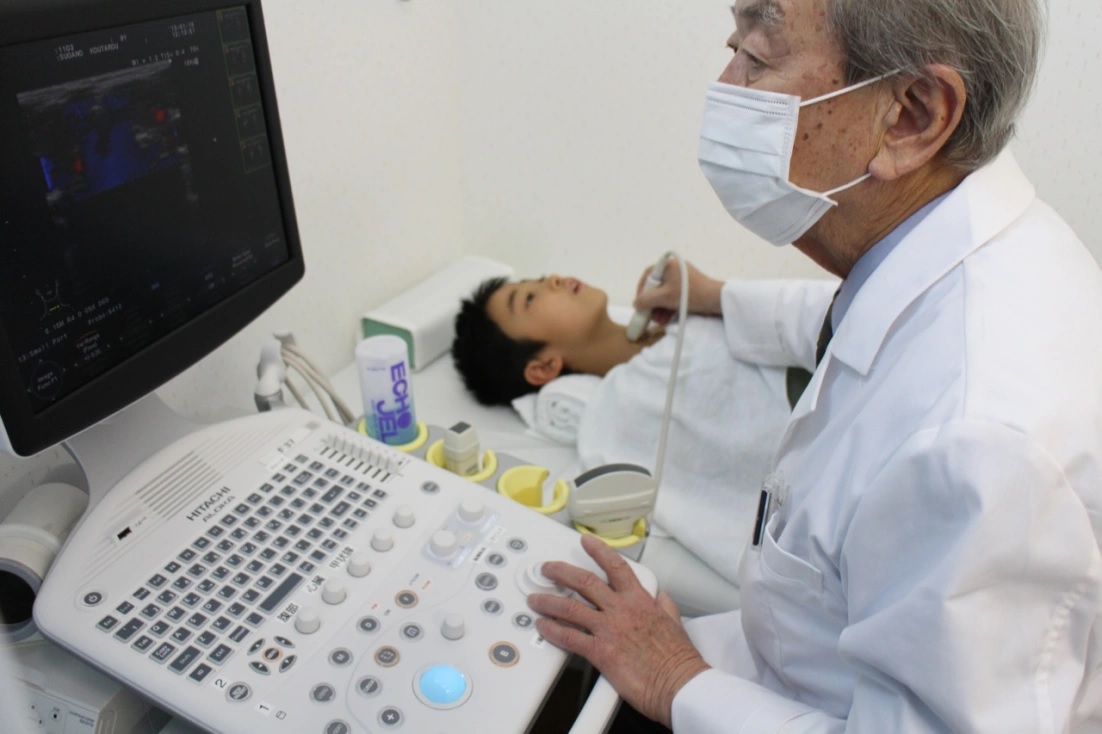
Childhood thyroid cancer cases confirmed in the Fukushima Health Management Survey and others
BY CITIZENS’ NUCLEAR INFORMATION CENTER · APRIL 5, 2023 https://cnic.jp/english/?p=6551
Fukushima Prefecture has been implementing thyroid gland examinations for children (born between April 2, 1992 and April 1, 2012) who were living in the prefecture at the time of the earthquake and nuclear disaster. The results are summarized in the table below: [on original]
In addition to the 295 children with thyroid cancer confirmed in the survey (excluding one with benign nodules), 43 other patients were identified outside of the tally in the cancer registry, bringing the total number of children aged 18 or younger with malignant or suspected malignant thyroid cancer who were living in Fukushima Prefecture at the time of the accident to 338. Note that the screening uptake rate at the age of 25 is low.
Surveys have found thyroid cancer in children at a rate dozens of times higher than normal.
Current State of Post-Accident Operations at Fukushima Daiichi Nuclear Power Station (Jun. to Dec. 2022)

State of the Plant Fukushima Now – Part 2, BY CITIZENS’ NUCLEAR INFORMATION CENTER APRIL 5, 2023 · By Matsukubo Hajime (CNIC)
The water temperature in the containment vessels and the spent fuel pools (SFPs) shows no great variation despite seasonal temperature changes. The state of releases of Xenon-135 (half-life roughly nine hours), released when uranium fuel undergoes fission, is also unchanged and it can therefore be estimated that the state of the reactors is stable. Further, according to an assessment by TEPCO in December 2022, around 10,000 becquerels per hour (Bq/h) of radioactive materials were being released to the atmosphere from the buildings (Fig.1 on original).
At the same time, decay heat has fallen greatly with the passage of time, and thus the volume of cooling water injected into the reactors has been reduced (falling from 7-10m3 per hour in May 2011 to 1.6-4m3 per hour as of December 2022).
The state of removal of spent nuclear fuel from the SFPs is summarized in Table 1 [0n original]. Spent nuclear fuel removal from Units 3 and 4 has been completed. However, as it has not been possible to remove control rods and other high-dose equipment stored in the SFPs, preparatory work has been underway for removal of this equipment from Unit 3 in the second half of FY2022 and removal from Unit 4 will commence in the second half of FY2024. Further, the removal of this equipment from Unit 3 was due to start from late October 2022, but this has now been rescheduled for early March 2023.
Preparations for the removal of fuel debris are also under way…………………………………..
The Unit 2 reactor core isolation cooling (RCIC) system was operating after the accident and for a further three days, including the time when the tsunami arrived at the plant. Uncovering the reason why it ceased functioning has been an issue, but it is inaccessible even now, after approximately 12 years underground………………………………………..
The changes in the average number of workers onsite per day is shown in Fig. 2 [on original] . As of December 2022, the number of workers was 4,410, about half the number it was at its peak. …………………………………
Contaminated water countermeasures at Fukushima Daiichi Nuclear Power Station (FDNPS) can be broadly divided into three areas: 1) Reduction of groundwater flowing into buildings, 2) Reduction of contaminated water flowing into the sea, and 3) Reduction of the toxicity of contaminated water. The main countermeasures to reduce water inflow into the buildings are, from higher elevations downward, ………………………………………………………
In the reduction of the toxicity of contaminated water, cesium and strontium are removed, and after the removal of impurities using a reverse osmosis (RO) membrane, radionuclides other than tritium are removed by the multi-radionuclide removal equipment…………………………………………
The frozen earth barrier consists of about 1600 30-meter freeze pipes buried in the ground, through which coolant at -30°C is circulated to freeze the surrounding soil. The effectiveness of the frozen earth barrier has been questioned since it was first installed, but since 2019 there have been several coolant leakage incidents.
Concerning the issue of releasing contaminated water into the ocean after ALPS treatment, TEPCO’s policy to release the water was authorized at the 25th Meeting of the Nuclear Regulatory Authority on July 22, and the construction was approved by the governor or Fukushima Prefecture and the mayors of both Okuma Town and Futaba Town in August. At present, construction of the release tunnel is ongoing, and the plan is to complete the construction during the first quarter of 2023. ………………………….. A fund of 30 billion yen has already been established as a measure against “adverse publicity.” Additionally, TV commercials, etc. are also being employed as “actions to foster understanding.” On the same day Chairman Masanobu Sakamoto of the National Federation of Fisheries Cooperative Associations released a statement saying, “We have not altered one little bit our opposition to the oceanic release.”
Meanwhile, Secretary General Henry Puna of the Pacific Islands Forum (PIF), an inter-governmental organization that aims to enhance cooperation among 15 countries and two regions of Oceania, announced in a statement on January 18 that PIF will demand a postponement of releases until it has become possible to confirm the safety of all involved [timetable of events shown on original] more https://cnic.jp/english/?p=6553
Fukushima Now Part 1: Railroading the Contaminated Water Release is Unacceptable!
BY CITIZENS’ NUCLEAR INFORMATION CENTER · APRIL 5, 2023, By Ban Hideyuki (CNIC Co-Director)
The Ministry of Economy, Trade and Industry (METI) and Tokyo Electric Power Holdings (TEPH) had decided on a policy of oceanic release of the contaminated water, which continues to build up at Fukushima Daiichi NPS, from an early stage and have been steadily proceeding with preparatory construction work for the release. This work has been proceeding despite written commitments to the National Federation of Fisheries Cooperative Associations and Fukushima Prefecture Federation of Fisheries Cooperative Associations in August 2015 that “(contaminated water) would not be released into the ocean without their agreement.”
This is the plan for how the release work will proceed. …………………………………………………………………..
This resulted in construction costs of 43 billion yen for the first four years and a release period of 30 years or more, a significant increase from the initial estimate of 3.4 billion yen and 88 months. However, the cost is based on an assessment of 800,000 tons, which differs from the current volume, but nevertheless the assessment that the oceanic release method is “cheap and fast” has been destroyed. Fishermen’s groups passed a special resolution at their general meeting in FY2022 to oppose oceanic releases, and their opposition remains unchanged.
………………………………………………………………….. Securing storage space for high integrity containers is a challenge
Wastewater collected during the ALPS treatment and its pre-treatment stage is stored in polyethylene high integrity containers (HICs). As of December 2022, there were 4,192 containers in storage. To prepare for an increase in wastewater, TEPH plans to expand the storage space by 192 units by June 2025 and a further 192 units by about the middle of 2026………………………………………………
As of June 2021, the Nuclear Regulation Authority had pointed out that there were 31 HICs with absorbed doses that had reached the limit of five mega-grays. That means the limit has been reached sooner than TEPCO had predicted, because, unlike TEPH, TEPCO evaluated absorbed doses from the sludge accumulated at the bottom of the waste effluent HIC. ………………………. Given that contaminated water will continue to be generated in the future, it is likely that securing storage space will become even more difficult. https://cnic.jp/english/?p=6562
Nuclear fusion is a never-ending dream

. “The development of the toroidal [magnetic confinement] nuclear fusion reactor is totally blocked by three challenges:
One, abysmally high cost (trillions of yen more in the future?) and a mind-boggling long time (more than 50 years); two, gigantic and complicated systems (a mega-sized system cannot be handled unless simple); and three, the heat-resistant material and radiation-proof material for the reactor walls are not available on earth.”
BY CITIZENS’ NUCLEAR INFORMATION CENTER · APRIL 5, 2023, By Nishio Baku (CNIC Co-Director)
Green Transformation (GX) Basic Policy proposed by the Japanese government mentions nuclear fusion as one of the next-generation innovative nuclear technologies in its reference information. I doubted my ears when I learned that the Nuclear Energy Subcommittee of the ministerial Advisory Committee for Natural Resources and Energy, which drafted the policy, brought up nuclear fusion as one of the “innovative technologies” to be pursued.
It was a big surprise. That is the very nuclear fusion that, at the Second International Conference for the Peaceful Uses of Atomic Energy of September 1 through 13, 1958 in Geneva, Dr. H. J. Bhabha from India, who chaired the conference, flamboyantly predicted would take shape in 20 years. It has been 64 years since then. The government refers to this vintage technology as “innovative”.
During the decade of the 1980s, various Japanese universities received more budget than previously from the government for nuclear fusion research. The website of professor Takabe Hideaki, Institute of Laser Fusion, Osaka University, notes on September 10, 2014 that, during the days of the Second Oil Crisis, when Gekko XII [the experimental laser fusion apparatus at Osaka University] was completed, the government’s top-down initiative provided the university with a budget of 30 billion yen (in the value of the yen at the time), to build the laser system and a robust building for it.
I find this maybe a special case (another document I have with me says, of the fiscal 1984 national budget, 35 billion yen was given to the then Power Reactor and Nuclear Fuel Development Corporation and a total of 7 billion yen to universities). Uramoto Joshin, a former associate professor at the National Institute for Fusion Science, wrote in his retirement memoir “My Final Words as a NIFS Staff” (NIFS News, May 1998), that he was in a festive mood around the time when he joined the former Plasma Research Institute of Nagoya University, which was one of the founding bodies of the NIFS.
The boom faded, and in 1989, the Plasma Research Institute was reorganized as the National Institute for Fusion Science, an inter-university research institute, into which a part of the Heliotron Plasma Physics Laboratory at Kyoto University and a part of the Institute for Fusion Theory at Hiroshima University were incorporated. The technology that the government refers to is the same nuclear fusion.
In what respect can the nuclear fusion reactor be a “next-generation innovative reactor”? While there is no full-size nuclear fusion reactor, what would a “compact nuclear fusion reactor” look like?
Today, “private-sector nuclear fusion” by venture companies seems to be enjoying a global boom………………………………………………. the project did not seem very practical.
……………………………………………………………. Whatever the case, the ignition lasts only one instant.
How far will the muddy road continue?
This nuclear fusion was mentioned by Prime Minister Kishida in his administrative policy speech on January 17, 2022 with the cryptic reasoning that it would help achieve the 2050 goal of carbon neutrality. Using this as the basis, the government set up the Nuclear Fusion Strategy Expert Panel under the Integrated Innovation Strategy Promotion Council of the Cabinet Office.
The panel had its first meeting on September 30, where Takaichi Sanae, Minister of State for Science and Technology Policy, said: “I have a strong will to accelerate the efforts to commercialize nuclear fusion technology as far as possible.” However, the Innovative Reactor Working Group placed under the Nuclear Energy Subcommittee, states in its “Roadmap for Introduction” (August 9, 2022) that whether the construction of a prototype nuclear fusion reactor should start or not will be determined in the mid-2030s. What would “commercializing nuclear fusion” mean at this point?
I wonder how much longer this fusion boom will continue. “As I am leaving this institute, I breathe a sigh,” Associate Professor Uramoto said in his NIFS retirement memoir. “The development of the toroidal [magnetic confinement] nuclear fusion reactor is totally blocked by three challenges: One, abysmally high cost (trillions of yen more in the future?) and a mind-boggling long time (more than 50 years); two, gigantic and complicated systems (a mega-sized system cannot be handled unless simple); and three, the heat-resistant material and radiation-proof material for the reactor walls are not available on earth.”
For the cost, the Special Committee on the ITER Project of the Japan Atomic Energy Commission bragged about ITER in its report, “International Thermonuclear Experimental Reactor (ITER) Project Forecast” (May 18, 2001): “It is difficult to correctly estimate the cost required to realize a nuclear fusion reactor, …………………………………………………
Of the challenges Uramoto pointed out, the second one, “gigantic and complicated systems (a mega-sized system cannot be handled unless simple)” and the third one, “the heat-resistant material and radiation-proof material for the reactor walls are not available on earth” remain unsolved, despite the passage of so many years.
The pot is calling the kettle black
It is meaningless to compare nuclear fusion with nuclear power generation, but some say: “Nuclear fusion is clean.” In terms of the radioactivity released when a large accident occurs, nuclear fusion technology would emit less radioactivity than a conventional nuclear plant.
However, the daily releases of radioactive materials from nuclear fusion would be greater than those from a conventional nuclear power plant. Nuclear fusion is also more likely to leak tritium and radioactive gas. It will produce four times as much energy as nuclear fission while producing seven times as many neutrons. Workers in the fusion plant would be exposed to radiation, and people in the neighborhood would also be exposed due to sky shine. Plant equipment would be strongly radiated and easily embrittled, requiring frequent replacement, producing a huge amount of highly contaminated wastes……………………………………………. more https://cnic.jp/english/?p=6549
Foundation in Fukushima nuclear plant reactor likely badly damaged
The internal wall of a cylindrical foundation supporting the reactor
pressure vessel of the No. 1 unit of the crippled Fukushima Daiichi nuclear
power plant may be badly damaged across its entire circumference, its
operator said Tuesday. Some of the damage was revealed in videos taken
during a survey of the No. 1 unit’s containment vessel by operator Tokyo
Electric Power Company Holdings Inc., which said it would further analyze
the footage and assess the seismic resistance of the pedestal. The survey,
conducted from March 28 through March 31 using an underwater robot, found
the concrete wall missing in over half of the pedestal measuring 5 meters
in internal diameter, leaving the reinforcing bar exposed.
Mainichi 4th April 2023
https://mainichi.jp/english/articles/20230404/p2g/00m/0bu/040000c
Citizens’ Nuclear Information Center news roundup April/May 2023
Nuke Info Tokyo April/May Newsletter includes: Fukushima Now – Part 1:
Railroading the Contaminated Water Release is Unacceptable! by Ban
Hideyuki; Fukushima Now – Part 2: Current State of Post-Accident
Operations at Fukushima Daiichi Nuclear Power Station (Jun. to Dec. 2022)
By Matsukubo Hajime; Childhood thyroid cancer cases confirmed in the
Fukushima Health Management Survey and others; Nuclear fusion is a
never-ending dream By Nishio Baku; News Watch Revisions to Basic Policy on
High-level Radioactive Waste Disposal / Surveillance Camera Monitoring
Interrupted at Rokkasho Recycling Plant / Takahama Unit 4 Automatically
Shut Down / Unjust Verdict in Lawsuit for National Compensation for
Second-Generation Hibakusha.
CNIC 5th April 2023
Japan’s nuclear regulators find errors in Japan Atomic Power’s safety documents for the Tsuruga plant.
Nuclear regulators said Wednesday they will again halt a safety assessment
of an offline central Japan reactor after its operator repeatedly submitted
documents containing errors, further prolonging a process toward resumption
that has already taken years. Japan Atomic Power has been seeking approval
to reboot the No. 2 unit at the Tsuruga plant in Fukui Prefecture under
stricter regulations imposed following the 2011 Fukushima nuclear power
plant disaster, but its application has been fraught with mistakes and data
tampering.
Japan Times 5th April 2023
https://www.japantimes.co.jp/news/2023/04/05/national/tsuruga-reactor-safety-assessment-halt/
Mainichi 5th April 2023
https://mainichi.jp/english/articles/20230405/p2g/00m/0na/027000c
New images from inside Fukushima reactor spark safety worry
Images captured by a robotic probe inside one of the three melted reactors
at Japan’s wrecked Fukushima nuclear power plant showed exposed steel bars
in the main supporting structure and parts of its thick external concrete
wall missing, triggering concerns about its earthquake resistance in case
of another major disaster.
The plant’s operator, Tokyo Electric Power
Company Holdings, has been sending robotic probes inside the Unit 1 primary
containment chamber since last year. The new findings released Tuesday were
from the latest probe conducted at the end of March. An underwater remotely
operated vehicle named ROV-A2 was sent inside the Unit 1 pedestal, a
supporting structure right under the core.
It came back with images seen
for the first time since an earthquake and tsunami crippled the plant 12
years ago. The area inside the pedestal is where traces of the melted fuel
can most likely be found. An approximately five-minute video – part of
39-hour-long images captured by the robot – showed that the 120-centimeter
(3.9-foot) -thick concrete exterior of the pedestal was significantly
damaged near its bottom, exposing the steel reinforcement inside. TEPCO
spokesperson Keisuke Matsuo told reporters Tuesday that the steel
reinforcement is largely intact but the company plans to further analyze
data and images over the next couple of months to find out if and how the
reactor’s earthquake resistance can be improved.
The images of the exposed
steel reinforcement have triggered concerns about the reactor’s safety.
Daily Mail 4th April 2023
Mental illness plagues Japan’s nuclear disaster survivors
Some 37 percent of the survivors of Japan’s Fukushima Daiichi nuclear
power plant disaster of 2011 still suffer from mental illness due to
financial crisis, isolation, and drastic changes in living conditions, says
a survey.
The survey results indicated that the victims suffer from
post-traumatic stress disorder or PTSD due to “anxieties about
compensation and indemnification,” “unemployment” and “nuisances
just by being an evacuee.” The survey was conducted by the Waseda
Institute of Medical Anthropology on Disaster Reconstruction and the
Disaster Relief Assistance Network Saitama, a citizens group, between
January to April 2022 among 5,350 households, the Asahi Shimbun reported on
April 3.
Union of Catholic Asian News 4th April 2023
https://www.ucanews.com/news/mental-illness-plagues-japans-nuclear-disaster-survivors/100894
TEPCO visually confirms melted nuclear fuel at Fukushima plant
THE ASAHI SHIMBUN, March 31, 2023 , This article was written by Keitaro Fukuchi, Ryo Sasaki and Takuro Yamano.
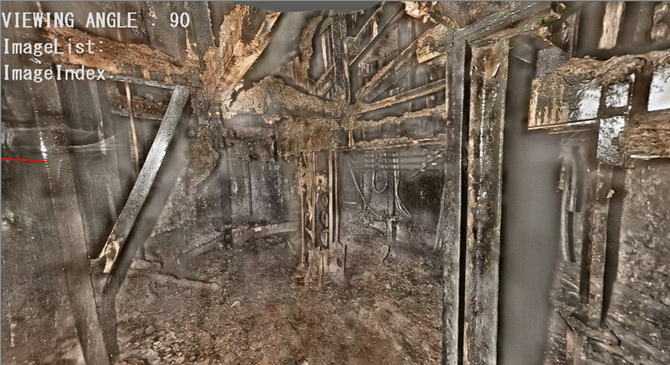
A robotic study provided the first visual confirmation that melted nuclear fuel broke through a pressure vessel at the Fukushima No. 1 nuclear power plant, the government and Tokyo Electric Power Co. said March 30.
Images taken by the robot under the No. 1 reactor at the plant also confirmed heavy damage to a concrete “pedestal” under the pressure vessel.
The inspection by the robot started on March 29. It was the first such study at the No. 1 reactor, one of the three reactors that melted down at the plant following the Great East Japan Earthquake and tsunami in 2011.
More than 90 percent of the nuclear fuel at the No. 1 reactor is believed to have fallen from the pressure vessel.
The robot found a large amount of melted fuel debris under the pressure vessel.
……………. TEPCO still faces the difficult challenge of how to remove the fuel debris and how to protect the damaged pedestal from future earthquakes.
The meltdown at the No. 1 reactor is believed to be worse than those at the No. 2 and No. 3 reactors at the plant.
The International Research Institute for Nuclear Decommissioning estimates the No. 1 reactor building contains 279 tons of melted fuel debris.
Naoyuki Takaki, a professor of nuclear safety engineering at Tokyo City University, said the fuel debris “cannot be taken out unless it is broken down into small pieces.”
Takaki said the method for cutting up such chunks will depend on the ratio and hardness of metal mixed in with the melted fuel.
But the information on objects within the fuel debris is limited so far.
“To put it briefly, it is unknown,” Takaki said.
The No. 1, No. 2 and No. 3 reactors at the Fukushima plant contain an estimated total of 880 tons of melted fuel debris.
TEPCO officials aim to start removal work of the fuel debris at the No. 2 reactor in the latter half of fiscal 2023. The initial plan is to take out a few grams, analyze their elements and hardness, and then increase the amount to be removed.
No timetable is set for such work at the No. 1 and No. 3 reactors.
The damaged pedestal has raised concerns that an earthquake could knock down the structure…………………………….more https://www.asahi.com/ajw/articles/14874722
12 years later, evacuation orders lifted in parts of two towns near the crippled Fukushima nuclear power station
The government said Wednesday it will lift evacuation orders for parts of
two towns near the crippled Fukushima nuclear power plant next week, 12
years after their residents were forced to leave due to a nuclear disaster
following the massive earthquake and tsunami in March 2011. Evacuation
orders will be lifted in parts of Namie at 10 a.m. on March 31 and
neighboring Tomioka at 9 a.m. on April 1, the government said, while aiming
for a similar order to be lifted in the remaining village, Iitate, this
spring.
Japan Times 22nd March 2023
https://www.japantimes.co.jp/news/2023/03/22/national/fukushima-evacuation-orders-lifted/
Rebooting memories of life before the nuclear devastation of Hiroshima
20 March 2023Peace and Security https://news.un.org/en/story/2023/03/1134662
A Japanese initiative to colourize photos of Hiroshima survivors, taken before the war, has been hailed by the UN as a way to breathe new life into conversations about peace, and a world without nuclear weapons.
Only a few survivors of the World War Two Hiroshima and Nagasaki nuclear bombings are still alive to share their memories. Acutely aware that she is part of the last generation to be able to talk directly to the hibakusha – those who survived the Hiroshima nuclear bomb – Anju Niwata, a young Japanese peace activist born and raised in Hiroshima, launched a project called “Rebooting Memories”, which involves colourizing photos taken in the city before the war, featuring survivors, and the families and places lost in the bombing.
Ms. Niwata uses a combination of software and interviews with survivors to accurately bring colour to the black and white photos she borrows from the survivors. “The black and white photos may appear lifeless, static, and frozen to us”, she says.
“By colourizing the photos, however, the frozen time and memories of the peaceful lives before the bombing gradually advance and start breathing. It takes a long time, but I am always encouraged by the hibakusha’s joy at seeing the colour photos.
Her efforts have been warmly welcomed by the hibakusha, who played a big part in helping people around the world to understand the devastating impact of nuclear weapons, in the years following the Second World War.
Tokuso Hamai was evacuated from Hiroshima when he was two-years-old, before the bombing. All of his family members were killed. As part of Ms. Niwata’s project, he went with her to the site of the barber shop that his father used to run, in Hiroshima’s Nakajima district.
Today, any remains of the shop, and the buildings around it, have disappeared, buried under the Peace Park built to commemorate the tragic event, and remember the victims.
Standing at the site, and looking at the colour photographs, sparked Mr. Hamai’s memories of pre-War Hiroshima. “I recalled what I had forgotten”, he says. “If the photos were black and white, this would not have happened. What I recalled first was a green avenue of cedars. I remember picking cedar buds as bullets for a toy gun.”
Ms. Niwata’s aim of reviving awareness of the consequences of nuclear war is wholeheartedly supported by Izumi Nakamitsu, the UN Under-Secretary-General of Disarmament Affairs, who is herself Japanese.
“Disarmament is part of the DNA of the United Nations. The first General Assembly session took place in London, just a few months after Hiroshima and Nagasaki. The shock of the nuclear bombings made a huge impact on everyone in the world at the time.
“Since then, it’s been part of a priority agenda of the United Nations and it is even more important today because we are again in a dangerous world where conflicts and tensions are on the rise. There are some 13,000 nuclear weapons in the world’s arsenals, relations between nuclear weapons states are tense. This poses existential threats, and I think it’s important that people start to imagine the impact if they are ever used.
I think Ms. Niwata’s project will have an enormous impact. if you can visualize how things were, it enters your imagination more vividly, and will do something to your mind and then your heart.”
When she took part in the SDG Global Festival of Action, a UN event filled with dozens of inspiring speakers from around the world, Ms. Niwata was encouraged to see that she was far from the only young activist working towards peace, each using different methods to achieve the same goal. “It is my mission to continue spreading the thoughts and memories of the atomic bomb survivors into the future and realize a world free from nuclear weapons”.
- In 2019, a General Assembly resolution, “Youth, Disarmament, and Non-proliferation”, reaffirmed the important and positive contribution that young people can make in sustaining peace and security.
- That same year, the UN Office for Disarmament Affairs (UNODA) launched the #Youth4Disarmament outreach initiative, recognizing that young people like Ms. Niwata play a critical role in raising awareness and developing new ways to reduce threats from weapons of mass destruction and conventional arms.
- The initiative connects geographically diverse young people with experts to learn about current international security challenges, the work of the United Nations, and how to actively participate.
1 This Month



26 September – International Day for the Total Elimination of Nuclear Weapons


PLEASE OPPOSE HR 8255 AND S.3639 – bills would accelerate satellite deployment, with no environmental review or safeguards – https://ncstd5li.quorum.us/campaign/169331/
To see nuclear-related stories in greater depth and intensity – go to https://nuclearinformation.wordpress.com
-
Archives
- September 2026 (233)
- August 2026 (330)
- July 2026 (355)
- June 2026 (287)
- May 2026 (306)
- April 2026 (356)
- March 2026 (251)
- February 2026 (267)
- January 2026 (308)
- December 2025 (358)
- November 2025 (359)
- October 2025 (375)
-
Categories
- 1
- 1 NUCLEAR ISSUES
- business and costs
- climate change
- culture and arts
- ENERGY
- environment
- health
- history
- indigenous issues
- Legal
- marketing of nuclear
- media
- opposition to nuclear
- PERSONAL STORIES
- politics
- politics international
- Religion and ethics
- safety
- secrets,lies and civil liberties
- spinbuster
- technology
- Uranium
- wastes
- weapons and war
- Women
- 2 WORLD
- ACTION
- AFRICA
- Atrocities
- AUSTRALIA
- Christina's notes
- Christina's themes
- culture and arts
- Events
- Fuk 2022
- Fuk 2023
- Fukushima 2017
- Fukushima 2018
- fukushima 2019
- Fukushima 2020
- Fukushima 2021
- general
- global warming
- Humour (God we need it)
- Nuclear
- RARE EARTHS
- Reference
- resources – print
- Resources -audiovicual
- Weekly Newsletter
- World
- World Nuclear
- YouTube
-
RSS
Entries RSS
Comments RSS
 nuclear-news