The Fukushima Fix
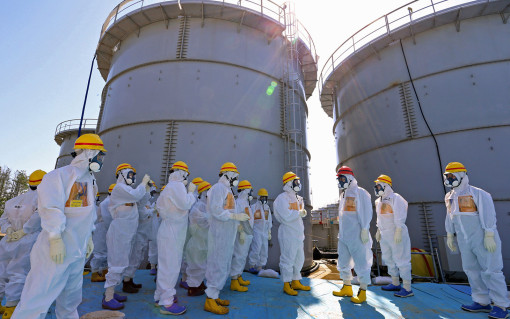
Japanese Prime Minister Shinzo Abe was briefed on the situation at the Fukushima Dai-ichi nuclear power plant as he toured the facility back on Sept. 19, 2013. chief Akira Ono (4th L) in front of two tanks (back) which are being dismantled after leaking contaminated water, during his tour to the tsunami-crippled plant in Okuma, Fukushima Prefecture, northeastern Japan on September 19, 2013. Abe told Fukushima’s operator to fix radioactive water leaks as he toured the crippled nuclear plant on September 19, less than two weeks after assuring the world the situation was under control.
Japan’s Abe government claims portions of Fukushima Prefecture (original population 2 million) are safe for habitation, radioactivity is acceptable; whereas scientific data by third-party NGOs indicates otherwise, stay away!
PM Abe’s specific maneuvers towards rehabilitation give the appearance that the Fukushima full-blown nuclear meltdown is relatively minimal in comparison to Chernobyl’s disastrous explosion of 1986. After all, to this day, Chernobyl after 30 years is still a 30km “exclusion zone” where nobody is allowed due to excessive levels of radiation.
Meanwhile, back in Japan, PM Abe is moving people back into former restricted zones four years after the fact.
It remains an open question as to whether the Fukushima aftermath will be worse than Chernobyl. After all, the China Syndrome may be actively at work at Fukushima and as such could last over many lifetimes.
Still, the immediate direct exposure of radiation over population centers at Chernobyl was significantly more than Fukushima of which 80% drifted out into the Pacific Ocean.
But, that may be slight solace because, horrifyingly, nobody knows where the Fukushima melted cores are located, nobody knows; it’s absolutely true, nobody knows whether the molten cores are within the containment vessels, outside of the vessels, deep in the ground, or cataclysmically traversing towards the water table.
Regardless, PM Abe’s directive appears to be: “No problem, we’ve cleaned up a whole lot of the mess outside of the immediate meltdown… so, move back into former restricted areas.”
Still, it’s nearly impossible to give an all-clear signal at this stage, especially with the Fukushima Daiichi Nuclear Power Station containment vessels completely out of control with wild atom-splitting rogue radionuclides spewing into the Pacific Ocean, and who knows where else (Einstein must be spinning in his grave).
The China Syndrome Worry
“While a molten reactor core wouldn’t burn ‘all the way through to China’ it could enter the soil and water table and cause huge contamination in the crops and drinking water around the power plant. It’s a nightmare scenario, the stuff of movies. And it might just have happened at Fukushima,” Eben Harrell, Was Fukushima a China Syndrome? Time Magazine, May 16, 2011.
If Chernobyl is a leading indicator of Fukushima’s future, “Chernobyl offers many lessons about what Princeton University engineering professor Robert Socolow calls the ‘afterheat’ of a nuclear disaster, but it’s the generational lesson that’s most important. Because some of the isotopes released during a nuclear accident remain radioactive for tens of thousands of years, cleanup is the work not just of first responders but also of their descendants and their descendants’ descendants. Asked when the reactor site would again become inhabitable, Ihor Gramotkin, director of the Chernobyl power plant, replies, ‘At least 20,000 years,” Eben Harrell, Apocalypse Today: Visiting Chernobyl, 25 Years Later, Time Magazine, April 26, 2011.
As of June 12th, 2015, the Abe government is returning residents to the Iitate village in Fukushima’s Prefecture four short years post the nuclear plant meltdowns, and by the upcoming 2018 year, the prime minister is eliminating state compensation to victims.
Not only that, but since August 2015, PM Abe is reopening nuclear facilities, the Sendai No. 1 reactor has already resumed full-scale commercial operations.
Contrariwise, according to former PM Naoto Kan, who was prime minister during the Fukushima disaster: “I now consider nuclear energy to be the most dangerous form of energy, and the risks associated with it are too great for us to continue generating atomic power,” Former Japanese PM Naoto Kan: Fukushima Radically Changed my Perspective, Deutsche Welle, Feb. 25, 2015.
One of the issues in trying to assess the dangers, as well as timing of recovery, for Fukushima is believability. Who can be trusted? In that regard, the Abe government’s enactment of strict extraordinarily broad secrecy laws, similar to WWII, with the threat of prison sentences up to 10 years for any violators of indeterminately wide-open secrecy laws undermines confidence in believability of the Japanese government, by definition.
On the other hand, respected third-party NGOs seem more reliable, if only because they do not have an axe to grind, no broad open-ended secrecy laws, no threats of prison sentences, no scare tactics, no public demonstrations in opposition, no lost revenues, no cleanup costs, no threats to human health, no threats to marine life, and no connections to the upcoming 2020 Tokyo Olympics.
Greenpeace/Japan Exposes Failure of Fukushima Decontamination (July 21, 2015)
Greenpeace Japan presumably takes issue with Prime Minister Abe’s declaration that people can safely move back to parts of Fukushima Prefecture.
Greenpeace Japan conducted a radiation survey and sampling program in Iitate, a village in Fukushima Prefecture. Even after decontamination, radiation dose rates measured ten times (10xs) the maximum allowed to the general public.
According to Greenpeace Japan: “The Japanese government plans to lift restrictions in all of Area 2 [2], including Iitate, where people could receive radiation doses of up to 20mSV each year and in subsequent years. International radiation protection standards recommend public exposure should be 1mSv/year or less in non-post accident situations. The radiation limit that excluded people from living in the 30km zone around the Chernobyl nuclear plant exclusion zone was set at 5mSV/year, five years after the nuclear accident. Over 100,000 people were evacuated from within the zone and will never return.” (Greenpeace Press Release, July 21, 2015).
So, Chernobyl’s 5mSV/year radiation limit morphs into the possibility of 20mSV radiation each year for some areas of Fukushima, subjecting residents to what?
According to Green Cross International, founded in 1993 by Mikhail Gorbachev, who was president of the Soviet Union when Chernobyl exploded: Both Chernobyl and the Fukushima Daiichi nuclear power plant disasters are categorized as Level 7 events defined as a major release of radioactive material.
“However, the number of people affected by radiation in Japan has tripled when compared to Chernobyl, says Nathalie Gysi of Green Cross Switzerland… water leakage at the Fukushima Daiichi power plant remains a problem four years after… There continue to be rising doubts over the safety of seafood, such as radioactivity levels in tuna and other fish.” (Green Cross Int’l March 11, 2015).
The Green Cross International 2015 Fukushima Report was prepared under direction of Jonathan M. Samet, MD, University of Southern California professor Keck School of Medicine and chair Department of Preventive Medicine, using the same standards as a similar 2012 study of Chernobyl.
According to the report: “Continued exposure to low-level radiation, entering the human body on a daily basis through food intake, is of particular consequence.”
Morphologically Defective Fir Trees
According to the National Institute of Radiological Science/Japan (“NIRS” est. 1957 as Japan’s only institute of radiology science) fir trees in Fukushima are exhibiting “strange growth patterns,” meaning the trees are stunted and showing morphological defects, in particular bifurcation or the splitting of a tree body into two parts at the tip. Thus, further normal tree growth is stopped dead.
Fir trees normally extend upward in growth patterns with two or more branches each year. However, 98% of inspected fir trees within a 3.5km area of the Fukushima damaged nuclear plants have severe defects. NIRS believes radiation causes abnormalities of fir trees “without a top bud,” hence no more normalized growth. Results of inspected trees found 125 out of 128 abnormal.
Thus, begging the question: If tree growth is stunted/deformed within 3.5km of the damaged nuclear plants, what’s the analogous impact on people?
Missing Birds
According to CBS News (April 16, 2015): “Birds are becoming a rarity around the damaged nuclear site… dramatic reductions… in terms of swallows in Fukushima, there had been hundreds if not thousands in many of these towns where we were working. Now we are seeing a few dozen… It’s just an enormous decline,” (Dr. Tim Mousseau, biologist, University of South Carolina, Dwindling Bird Populations in Fukushima, sc.edu, 4/14/15).
Fukushima Myths
Chris Harris, a former senior nuclear reactor operator for over three decades and currently a nuclear consultant, claims Fukushima is an extinction level event: Containment is a myth, there isn’t any; cold shutdown is a myth; cooling is a myth because there is no way to measure cooling when nobody knows where the nuclear fuel is located; waste processing is a myth; cleanup is a myth because it’s a “waste generation facility” that won’t stop.
Voices Within Japan
According to Yauemon Sato, the ninth-generation head of a sake brewery, since 1790, and the president of Aizu Denryok, an electric utility: “You know the caldron of hell? You will be sent to hell and will be boiled in that caldron if you do evil. And there are four such caldrons in Fukushima… And the disaster has yet to end. It continues to recur every day. More than 300 tons of water, contaminated with intense levels of radioactive substances, are being generated every day,” The Asahi Shimbun, May 1, 2015.
Hiroaki Koide, professor (retired) at Kyoto University Research Reactor Institute reacts to PM Abe, as of April 24, 2015:
“The Prime Minister [said Fukushima] had been brought to a close. My reaction on hearing his words was, ‘Stop kidding.’ Reality is, though 4 years have passed, the accident has not yet been brought to a close at all… The Japanese government has issued a declaration that this is an emergency situation. As a result, normal laws do not have to be followed. What they are saying is that, in these very high radiation exposure level areas, they have basically abandoned people to live there. They’ve actually thrown them away to live there… The Cs-137 that’s fallen onto Japanese land in the Tohoku and Kanto regions, so much so that this area should all be put under the radiation control area designation [the Kanto region includes Tokyo and is home to over 40 million people].”
Footnote on Cs-137: Cesium-137 is one of the most problematic fission isotopes as it easily moves and spreads in nature and has a half-life of 30 years. It is deadly dangerous, for example: The Kramatorsk Radiological Incident of 1989 in Ukraine a small capsule of Cs-137 was discovered inside concrete walls of an apartment building, probably part of a measurement device, lost and accidentally mixed with gravel used to make concrete. For over 9 years two families lived in the apartment. By the time the capsule was discovered, 6 residents had already died from leukemia.
Fortunately for PM Abe, unfortunately for radiation victims, radiation is a silent destroyer that slowly progresses over time. In fact, it takes 5-40 years for the incubation period to take hold. Next year is the 5th year.
Nevertheless, when hit by powerful rapid radiation exposure, too much too soon, physical damage occurs relatively quickly, now experienced by sailors of the USS Reagan that served in Japan in 2011.
U.S. Sailors File Lawsuit
Two hundred U.S. sailors of the USS Reagan have a pending lawsuit filed in San Diego against TEPCO, General Electric, EBASCO, Toshiba and Hitachi through the law offices of Bonner & Bonner, Sausalito, CA. The plaintiffs won a crucial battle in the U.S. District Court/San Diego last year, allowing the case to move forward.
“The lawsuit is based on the sailors’ participation in Operation Tomodachi (meaning “Friends”), providing humanitarian relief after the March 11, 2011 devastation caused by the Earthquake and Tsunami. The lawsuit includes claims for illnesses such as leukemia, ulcers, gall bladder removals, brain cancer, brain tumors, testicular cancer, dysfunctional uterine bleeding, thyroid illnesses, stomach ailments and a host of other complaints unusual in such young adults. The injured servicemen and women will require treatment for their deteriorating health, medical monitoring, payment of their medical bills, appropriate health monitoring for their children, and monitoring for possible radiation-induced genetic mutations,” Press Release, The Law Offices of Bonner & Bonner, Sausalito, CA.
According to the press release, up to 70,000 U.S. citizens were potentially affected by the radiation and will be able to join the class action suit, which alleges that TEPCO deliberately lied to the public and the U.S. Navy about radiation levels at the time the Japanese government was requesting help.
Therein lies a prime example, although only alleged, of why official sources in Japan cannot be trusted. Moreover, as far as convincing evidence goes: How is it that a disproportionately high number of very young naval personnel, all from the same ship, have severe medical problems like leukemia and brain cancer?
Furthermore, according to Charles Bonner, Esq.: Additional plaintiffs with serious aliments from radiation are continuing to come forward.
The Fukushima nuclear disaster is a grim tragedy that is extremely difficult to fully understand or gain trustworthy information, in large measure because the Japanese government instituted a new secrecy law, Act on the Protection of Specially Designated Secrets, Act No. 108 that is extraordinarily broad and provides up to 10 years in prison for release of “state secrets,” which may be subjectively, not objectively, defined by government bureaucrats… oh, isn’t that just grand!
Essentially, Japan surreptitiously institutes news blackouts of any information that government employees don’t like, carte blanche.
“On Dec. 10, Prime Minister Shinzo Abe’s new special secrets law took effect despite overwhelming public opposition. The new law gives bureaucrats enormous powers to withhold information produced in the course of their public duties that they deem a secret — entirely at their own discretion — and with no effective oversight mechanism to question or overturn such designations. The law also grants the government powers to imprison whistle-blowers, and prohibits disclosure of classified material even if its intention is to protect the public interest. This Draconian law also gives the government power to imprison journalists merely for soliciting information that is classified a secret,” Abe’s Secrets Law Undermines Japan’s Democracy, The Japan Times, Dec. 13, 2014.
Once again: “This Draconian law gives the government power to imprison journalists merely for soliciting information.” For merely soliciting information, for merely soliciting information, gives the government power to imprison journalists for merely soliciting info…. some footprints should never stop.
“Susumu Murakoshi, president of the Japan Federation of Bar Associations, says the law should be abolished because it jeopardizes democracy and the people’s right to know. Meiji University legal scholar Lawrence Repeta agrees with Murakoshi,” Ibid.
What democracy?
Thus, on the surface, by all appearances, the government of Japan has something to hide. It must be really big. Why else adopt a hard-hitting secrecy law on the heels of the worst disaster to hit Japan since America dropped A-bombs on Hiroshima and Nagasaki in 1945. Japan’s citizenry really should expect consolation rather than aggravation, intimidation, and terrorizing by their own government.
At the end of the day, George Orwell’s 1984 has captivated a radiantly glowing ancient country.
Source: Counterpunch
Radioactive rain releases can’t be curbed due to lack of laws: NRA
Tokyo Electric Power Co.’s stricken Fukushima No. 1 power plant has released rainwater tainted with radioactive substances into the Pacific Ocean at least seven times since April.
The Fukushima Prefectural Government, pressured by worried residents and fishermen, has pressed the Nuclear Regulation Authority to set maximum radiation limits for rainwater releases, but the regulator hasn’t acted yet, citing the lack of specific laws on radioactive rainwater.
The plant’s K channel, a gutter that was built to drain rainwater accumulated around the six reactors, leads directly to the sea. After rainwater was found tainted with radiation in April, Tepco, as a temporary fix, installed eight pumps and a special underwater curtain in its artificial bay to segregate the water from the open ocean.
With the pumps and the curtain, Tepco claims it can keep radioactive runoff within the bay as long as the rainfall stays at 14 mm per hour or less. But on Aug. 17, rainfall at the plant exceeded 18 mm per hour, and some untreated rainwater overflowed the K channel and got into the ocean. The same thing happened again on Sept. 9 and 11, amid flooding in the Kanto and Tohoku regions triggered by Typhoon Etau.
When the drainage system is overwhelmed by heavy rain, it is difficult to measure the tainted water and its radiation level, the utility said.
In May 2014, when Tepco succeeded in measuring rainwater on the premises, the cesium-137 level was gauged at 770 becquerels per liter, or over eight times the 90-becquerel limit for water the plant can release into the sea.
To rectify the situation, Tepco has been trying to change the K gutter’s path so it will flow into the artificial bay instead. But the rerouting work will take until March 2016.
While Tepco says the problem will be solved in six months, prefectural officials are demanding Tepco resolve the problem as soon as possible, because if the leaks are allowed to continue throughout the typhoon season, public distrust in the government will deepen, making the decommissioning process even more difficult.
Fishery officials are meanwhile worried that their industry could be damaged further if the unregulated rainwater releases continue.
The prefecture is specifically asking that a new pump be installed close to the source of the tainted rainwater, but Tepco has been reluctant, saying such a pump is structurally impossible to install because the part of the drainage system where tainted water is leaking from is underground.
Tepco has been cleaning the drainage gutters on a regular basis to reduce the radiation levels, but to no avail.
Kiyoshi Takasaka, a prefectural expert on atomic power, wants the NRA to place radiation limits on rainwater immediately.
However, the NRA’s position is that there are no laws that regulate radiation-tainted rainwater and therefore it cannot set numerical limits. One industry source said doing so would require revisions to existing laws, which will take a lot of time.
“I’m worried because we don’t know how much radiation-tainted rainwater has leaked out,” said Tomomitsu Konno, a 56-year-old fisherman in Soma, Fukushima Prefecture. “Tepco should fully investigate the problem and show the results to the fishermen.”
Source: Japan Times
The highest I-131 density of this year detected in 2 Fukushima sewage plants
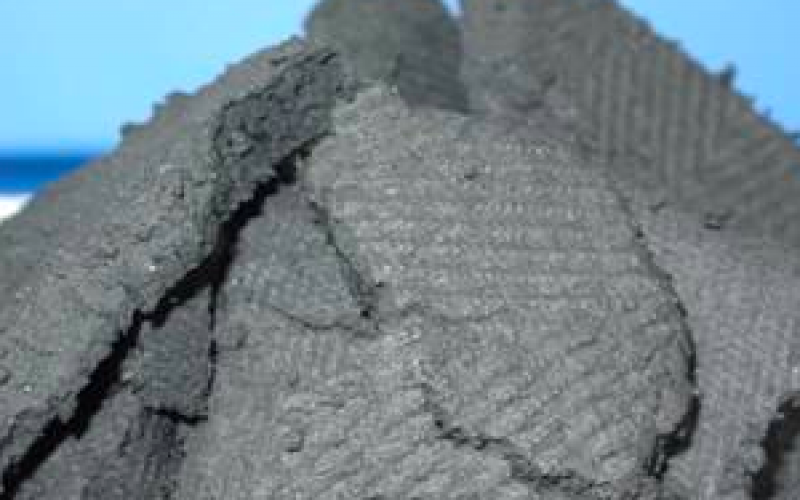
According to Fukushima sewage public corporation, this July over 1,000 Bq/Kg of Iodine-131 was detected in dry sewage sludge. The sewage plant is located in Da-te District of Fukushima prefecture.
High level of I-131 was measured this May, however this reading of July is the highest density of this year. (cf, Significant level of I-131 detected from dry sludge of Fukushima sewage plant after rain in May [URL])
I-131 was detected from the samples collected from 7/9/2015 to 7/29/2015.
The highest reading was 1,038.4 Bq/Kg of 7/11/2015. The highest density of Cs-134 was also detected, which was 44 Bq/Kg the same day. It rained on 7/8/2015 but the precipitation was only 10.5 mm.
Also in another sewage plant in Koriyama city, 889 Bq/Kg of I-131 was detected from dry sewage sludge. This is also the highest reading of this plant. I-131 kept on being detected for 15 days of this July.
http://www.pref.fukushima.lg.jp/uploaded/attachment/129631.pdf
http://www.pref.fukushima.lg.jp/uploaded/attachment/129632.pdf
Source: Fukushima Diary
The highest I-131 density of this year detected in 2 Fukushima sewage plants
Fisherman debunks radiation as cause of giant woffish
 The Guy Who Caught the Internet’s Favorite Giant Fish Is Bummed No One Gets It, Motherboard by EMIKO JOZUKA September 18, 2015 Earlier this week, an odd-looking gargantuan fish from Japan became a minor celebrity on Twitter. But the tide soon turned as curious reactions gave way to harmful rumors that its strange appearance is the result of the effects of radiationfrom the Fukushima disaster.
The fish, however, was no radioactive specimen. It was a Bering wolffish (Anarhichas orientalis)—a species found off the coast of Hokkaido, the northernmost island of Japan. It also just happens to look like a cross between a grumpy grandpa and a monster.
When rumors broke of the fish’s supposed contamination, no one was more disappointed than the man who captured the creature: Hiroshi Hirasaka, a reporter and researcher who “lives life in pursuit of odd-looking creatures.”
“The wolffish I caught was given write-ups on the internet as ‘monster as a result of nuclear accident,’” Hiroshi Hirasaka, the man who caught the fish, told me. Hirasaka initially tweeted the photo because he was proud of his catch, but he soon became devastated by the rapid-fire spread of false internet buzz around the fish.
“That fish has been in [Hokkaido] for a long time, so it’s not feasible for it to be affected by radiation. It’s rude to the fish to say that, and it’s not cool to blame everything on radiation,” Hirasaka said. “Creatures only become big in the world of science fiction, and we’re not living in the world of Hulk or Godzilla.”………
“I find slightly odd, grotesque or scary fish interesting,” Hirasaka told me. “There will always be other writers who report on the beautiful creatures of this world, but I want other people to understand the allure of more ugly specimens.”
As for the internet rumour—he tried debunking it on Twitter, but admitted that the misunderstanding was probably still developing out of his sight and control.
“People in Japan are used to seeing that fish in aquariums, but I guess other people don’t know it. I’m not sure if it was a joke or not, but I was sad to think that they thought it was like that because of nuclear radiation,” said Hirasaka. “I just want them to have the correct information.” http://motherboard.vice.com/read/the-fish-that-was-wrongly-accused-of-being-affected-by-radiation
Fukushima’s radioactive overflowing toilet
As the government of Japan continues to declare that the ocean impact from contaminated storm runoff from the Daiichi site is minimal, attention has been completely diverted from the more serious questions concerning the redistribution of toxic radiation and contaminated groundwater through massive rainfall and flooding into previously pristine locations inhabited by innocent people.
Inland impacts are considerable. Typhoon Etau likely washed more radiation from the mountains surrounding the Daiichi disaster than from the nuclear site itself, yet TEPCO and the Japanese government ignore the health impact of these huge, unmonitored releases. Without the government of Japan accepting responsibility for all the contamination caused by the nuclear disaster, the health of the public on both sides of the Pacific Ocean will continue to be jeopardized.
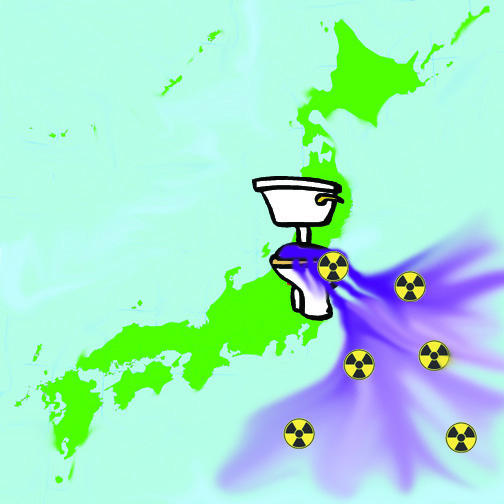
Demystifying Nuclear Power: The Fukushima Toilet Overflows http://www.fairewinds.org/nuclear-energy-education/demystifying-nuclear-power-the-fukushima-toilet-overflows by Sue Prent
Japan just can’t seem to catch a break as extreme forces in nature repeatedly buffet the island.
Efforts are currently underway to coax former Nahara residents, evacuated during the wake of the Fukushima Daiichi triple meltdown, to return to their abandoned homes in the desolated city. Despite assurance that radiation levels in Nahara are now within a ‘safe’ margin, the relatively few who chose immediate return when it officially reopened on September 11, are being issued dosimeters; a reminder that life in this city can never hope to be the same. Continue reading
International Atomic Energy’s sobering Report on Fukushima nuclear accident
Japan is not the only nation “rearranging the nuclear deck chairs”
The Titanic was also ill-prepared to evacuate its passengers because it failed to consider the unimaginable and thus mismanaged the risk. It seems the lessons of Fukushima are also being ignored in favor of wishing away risk, and hoping for inspired improvisation. There is thus good reason why citizens across Japan are filing lawsuits to block reactor restarts and some gutsy judges are resisting pressure from the nuclear village and siding with common sense.
Rearranging the deck chairs on the nuclear Titanic BY JEFF KINGSTON JAPAN TIMES 20 Sep 15 The International Atomic Energy Agency’s recently released postmortem on the Fukushima nuclear accident of 2011 makes for grim reading and serves as a timely reminder of why the restart of the Sendai nuclear plant in Kyushu is a bad idea.
When an atomic energy advocacy organization delivers multiple harsh assessments of Japan’s woeful nuclear safety culture and inadequate emergency countermeasures and disaster management protocols, it’s time to wonder how much has really changed in the past five years — and whether restarting any of the nation’s nuclear reactors is a good idea.
In 2012, the government established a new nuclear safety watchdog agency called the Nuclear Regulation Authority (NRA) and it now contends that Japan has the strictest nuclear safety regulations in the world. But is that true? And does it
matter?
David Lochbaum, co-author of last year’s “Fukushima: The Story of a Nuclear Disaster,” the best book on the meltdowns that I’ve read, likens recent reforms to “rearranging the deck chairs on the nuclear Titanic” He’s not buying Japan’s claim of having the world’s strictest guidelines. Continue reading
Timothy Mousseau dismisses radiation as cause of giant wolffish
NO, THIS WOLFFISH IS NOT A FUKUSHIMA RADIATION MUTANT,As for the idea of giant, mutant Fukushima fish … there is no scientific evidence to support claims that fallout from the Fukushima disaster has, or will, cause this to happen. Even right after the disaster, a swim in nearby waters would have dosed you with just 0.03% of the daily radiation an average Japanese resident receives. And much of that fallout has disappeared because of natural decomposition and decay.
Besides, even in the extremely unlikely event that radiation was the culprit here, we would actually expect to see smaller, not larger, fish. “Very, very few mutations lead to extra-large size,” explains University of South Carolina radiation specialist Dr Timothy Mousseau. “[Instead], they grow less efficiently, they’re less capable of catching food and they tend to not live as long.
All that said, this catch is still an impressive one. Wolffish (family Anarhichadidae) average about three feet in length (110 cm), but can get bigger. What Hirasaka has landed is a very old and very healthy specimen. “If you look hard and long enough there’s always a few that manage to survive long enough to achieve these large sizes,” says Mousseau. http://www.earthtouchnews.com/wtf/mutants-and-freaks/no-this-wolffish-is-not-a-fukushima-radiation-mutant
Fukushima: Nuclear Disaster Killing Japanese Slowly

 Unspoken Death Toll of Fukushima: Nuclear Disaster Killing Japanese Slowly http://sputniknews.com/analysis/20150820/1025992771.html The Japanese government is still in denial and refuses to recognize the disastrous consequences of the Fukushima nuclear catastrophe, London-based independent consultant on radioactivity Dr. Ian Fairlie states, adding that while thousands of victims have already died, thousands more will soon pass away.
What makes matters even worse, the nuclear disaster and subsequent radiation exposure lies at the root of the longer term health effects, such as cancers, strokes, CVS (cyclic vomiting syndrome) diseases, hereditary effects and many more.
Embarrassingly, “[t]he Japanese Government, its advisors, and most radiation scientists in Japan (with some honorable exceptions) minimize the risks of radiation. The official widely-observed policy is that small amounts of radiation are harmless: scientifically speaking this is untenable,” Dr. Fairlie pointed out.
The Japanese government even goes so far as to increase the public limit for radiation in Japan from 1 mSv to 20 mSv per year, while its scientists are making efforts to convince the International Commission on Radiological Protection (ICRP) to accept this enormous increase.
“This is not only unscientific, it is also unconscionable,” Dr. Fairlie stressed, adding that “there is never a safe dose, except zero dose.”
However, while the Japanese government is turning a blind eye to radiogenic late effects, the evidence “is solid”: the RERF Foundation which is based in Hiroshima and Nagasaki is observing the Japanese atomic bomb survivors and still registering nuclear radiation’s long-term effects.
“From the UNSCEAR estimate of 48,000 person Sv [the collective dose to the Japanese population from Fukushima], it can be reliably estimated (using a fatal cancer risk factor of 10% per Sv) that about 5,000 fatal cancers will occur in Japan in the future from Fukushima’s fallout,” he noted.
Dr. Fairlie added that in addition to radiation-related problems, former inhabitants of Fukushima Prefecture suffer Post-Trauma Stress Disorder (PTSD), depression, anxiety disorders that apparently cause increased suicide.
The expert also pointed to the 15 percent drop in the number of live births in the prefecture in 2011, as well as higher rates of early spontaneous abortions and a 20 percent rise in the infant mortality rate in 2012.
“It is impossible not to be moved by the scale of Fukushima’s toll in terms of deaths, suicides, mental ill-health and human suffering,” the expert said.
Despite widespread protests, Japan set to pass new laws on defense policy
Japan set to pass security bills despite widespread protests, Japan Times , 18 Sept 15
Critics say the bills could herald the biggest shift in Japan’s defence policy in half a century, and tens of thousands have taken to the streets in anger Japan is expected to pass controversial security bills on Friday that critics say could herald the biggest shift in its defence policy for half a century, despite public anger that has seen tens of thousands protest.
The bills are expected to be passed in the upper house controlled by prime minister Shinzo Abe’s ruling coalition after days of fraught debates that at times descended into scuffles, tears and tantrums.
Opposition lawmakers tried every delaying tactic at their disposal, even resorting to physically blocking a vote in a special committee, but it now looks like all of their options have been exhausted.
The controversial laws have seen tens of thousands take to the streets in almost daily rallies for the past few weeks, in a show of public anger on a scale rarely seen in Japan.
Opponents argue the new laws – which would allow the tightly restricted military to intervene overseas to defend its allies – violate Japan’s pacifist constitution and could see the country dragged into American wars in far-flung parts of the globe…….
there are growing signs the campaign has taken a political toll – opinion polls show the vast majority of the public is against the bills, and Abe’s once sky-high approval rating is dropping.
Protesters, including a Nobel-Prize winner, popular musicians and other prominent figures, fear the changes could fundamentally alter Japan’s character as a pacifist nation.
“Japanese are often seen as modest and humble, but it’s not the case this time,” said Ryoko Ikeda, a 36-year-old mother at one of the daily rallies against the bills held near parliament for the past weeks.
“It is our children and future generations who pay the price.”
Keiko Nagao, in her 40s, added: “A pacifist image is Japan’s treasure and if we lose it, it will be a big loss for our country.”
Security experts said the bills would also force a reevaluation of Japan’s place on the world stage.
“The bills are a psychological message to the world that an era in which Japan should not be involved in conflicts because of its exclusively defence-oriented policy is over,” said Hideshi Takesada, a professor at Takushoku University in Tokyo. http://www.theguardian.com/world/2015/sep/17/japan-to-pass-security-bills-despite-protests?CMP=twt_gu
Why we must expose the true ugly nature of the nuclear industry

As I stood against sensationalists and repeated hoaxers, mostly Youtubers, who are only harming the antinuclear cause and the Fukushima victims cause, lately those people have sent me insults and threats of violence, calling me a pro-nuke shill hiding behind my D’un Renard alias,, and not showing my face etc. I presently became the focus of those people hate and slurs for calling their repeated hoaxes what it is: B.S., mental pollution, sensationalism and disinformation. I did it not to look for trouble, but because I believe truth is important, primordial, crucial.
Only by sharing the true facts, we will win, as true facts stand, stay.
B.S. flies high first but stinks later when it is quickly debunked
Consequently, for the first time, i will share publicly my personal story, why and how I awoke and became antinuclear.
A little about myself, I am Hervé Courtois, 60 years old, Picardie, France.
For 4 years and half I used a nom de plume “D’un Renard”, which in french means “from a fox”, because around my place there are many forests and many foxes which I could hear at night while blogging. I did not want to used my true identity because I wanted to protect the identity of my daughter in Japan when I started to blog on internet about the Fukushima catastrophe by fear of getting her in troubles with the Japanese government, and also by fear that Japanese government could bar me to enter Japan to visit my daughter. Few months ago I decided finally to use my real name.
I lived very long time in Asia, 37 years, in Japan, Korea, Hong-Kong and the Philippines, I came back home to France 6 years ago.
My 33 years old daughter, French-Japanese, lives in Iwaki city, Fukushima prefecture, 50 kms South from the nuclear plant of Fukushima Daiichi. She was born in Paris in 1982, but grown up in Fukushima, she is 33 years old, unmarried, no children, does not want to give birth anymore by fear of possible tetragenic birth due to radioactive contamination thru her living environment and the contaminated food.
Three months after the start of the Fukushima catastrophe, I went to visit her there in Iwaki city, Fukushima for the full month of June 2011, to check how she was and how was the real situation there.
On location I was surprised how to find that the people on location who should be the most at risk were kept uninformed of the real situation and of the dangers for their health, for their life, by the Japanese government.
I became aware that there was then an imposed omerta on the media by the Japanese government. All media repeating the same tune, don’t worry be happy, there is no danger, the situation is under control. The reactors are now in cold shutdown.
I keep wondering how reactors having exploded could be in cold shutdown. Smelling a rat.
Most people I met were kept in dark of the real situation, informations were totally controlled, filtered, censored, twisted, the people lied to. Just as the french people in 1986 were lied to by their own government telling them that the Chernobyl plume was not coming towards France, that it would not reach France, that they were safe, most of the people not taking protection measures to regret it later with rampant thyroid cancer allover Eastern France.
When I came back from Japan to France, the most nuclearized nation in the world per square kilometer and per inhabitant, the nuclear industry Areva being owned by the State, the French government, of course the french media were also censored about Fukushima by the French government, telling to French people that the Fukushima disaster was over, that it had ended in March 2011, that it was nowall under control. I found at home the same omerta, that I had met in Japan.
I decided to search for informations on internet, search for knowledge, to learn about nuclear, so that I could better understand what was truly happening, what was hidden, unsaid, covered up, so that I could then inform my daughter and help her to know the facts, the dangers and how to protect herself.
My life changed and was never the same again, it became almost a full time occupation, many hours days and nights on internet to find informations and to share them to other people, discovering gradually the lies, what had been hidden about Fukushima, Chernobyl, Three Mile islands and other hidden nuclear catastrophes, so many. I lost my innocence about nuclear.
I became angry and quite involved as an activist both on the net but also in real life. I became a a member of Sortir du Nucléaire France and of Greenpeace France,
On March 2012 I was the one to organize in Paris the 1rst year Fukushima Anniversary, a rally in front of the Paris main cityhall, with french antinuclear activists combined to some Japanese members of the Paris Japanese community, a Japanese TV crew coming to film our event.
Since the end of June 2011 up to now I continue to blog on the net on various blogs and on some Facebook antinuclear groups and pages that I founded.
I have therefore been following the Fukushima catastrophe day and night from the right beginning, and I am very well aware of the real dangers of Fukushima and of nuclear, my own blood and flesh French-Japanese daughter being one of the victims of nuclear in Fukushima, l will therefore continue to fight nuclear until it ends or until my last breath.
I am opposed to all pro-nuclear and their paid shills, but I am also oppose to those irresponsable people who produce hoax after hoax about Fukushima to satisfy their attention-glory-narcissist craving and their donations milking. All those people in different ways are harming the truth, harming our antinuclear cause.
I never asked donations not wishing to become an activist for sale, I do it for the love of my daughter, and because it is right to do it, not for money nor glory.
Nuclear is more than bad, we will only win by exposing its its ugly real nature, the true real solid facts. We won’t win by spinning sensationalism or hoaxes, which only become ammunitions for the pro-nuke shills to discredit us and the true dangers of nuclear in the mind of the general public.
We need everybody to wake up and to get their hands on deck, to ban all kinds of nuclear, civil and military, allover the world, to free our planet from this evil criminal industry.
Say no to nuclear, say yes to renewable, clean, safe and getting cheaper everyday.
Best wishes to everyone.
Hervé Courtois, “D’un Renard”, from France
Source: Nuclear News
Why we must expose the true ugly nature of the nuclear industry
 In front of the gates of Fessenheim Nuclear plant at the end of the day, Naoto is standing at the center, all the others are solid Fukushima Watchers and Antinuclear activists, friends.
European No to Nuclear Rally at Fessenheim Nuclear plant on March 9, 2014
At Fessenheim, Alsace, France
First 9 bridges upon the Rhine River, between France and Germany, were occupied, then all the people from the bridges regrouped to the Fessenheim Nuclear Plant, 9500 people participating.
The largest groundwater in Europe is located right under the Fessenheim Nuclear plant: the Rhine aquifer, nearly 80 billion cubic meter of water between Basel and Mainz, which provides 80% of the drinking water and more than half of the industry in that area. What would happen in the event of a serious accident?
The Honored guest of that day was Naoto Matsumura, for his heart and spirit in caring for the abandoned animals within the 20kms radius No Man’s Zone of Fukushima. The next day Naoto was delivering his Fukushima testimony at the Europen Parliament in Strasbourg city in front of all the European MPs.
It was a terrific feeling, meet again some old friends and making some new friends.
 With Christian Roy, an antinuclear activist and my closest friend
that day occupying one of those night bridges on the Rhine river.

Former PM Naoto Kan says nuclear power makes little economic sense, must end

Although the first reactor in Japan to be fired up in two years went online last month, former Prime Minister Naoto Kan said Wednesday that Japan needs to seek a nuclear-free path.
This is a lesson the country has learned from the Fukushima nuclear disaster, said Kan, who was prime minister when the Fukushima No. 1 plant was hit by a huge quake and tsunami on March 11, 2011.
“I’m absolutely sure that there will no longer be nuclear power by the end of this century. This is because it doesn’t make sense economically, and enough energy can be provided without it,” Kan said in a lecture to foreign residents in Tokyo.
While reactor 1 at the Sendai plant in Kagoshima Prefecture was restarted in August, Japan has survived the past few summers without nuclear power, Kan said.
He added that although the current government is still promoting nuclear power, Japan has seen an increase of renewable energy since the Fukushima accident, especially from solar panels.
He said nuclear power was believed to be a cheap source of energy, but it is actually expensive, considering the cost of decommissioning and managing nuclear waste.
Kan also shared his experience of visiting Olkiluoto Nuclear Power Plant in Finland, where a final nuclear waste repository is being constructed. There, he was told it would take 100,000 years for the radiation of nuclear waste to descend to the same level of the uranium that exists in the natural environment.
Using nuclear power, Kan said, means increasing the amount of dangerous waste that will trouble future generations, adding that this is why other former prime ministers such as Junichiro Koizumi and Morihiro Hosokawa are also voicing their wish to end Japan’s dependence on it.
Source: Japan Times
Japan lifts evacuation orders on irradiated towns in preparation for 2020 Summer Olympics

The Japanese government recently announced they are lifting a four-year evacuation order on a town located 10 miles from the Fukushima disaster site, allowing residents to return full-time if they so desire, according to reports.
The evacuation order was issued in 2011 for the town of Naraha, which was among seven municipalities that were forced to vacate following a 15-meter tsunami triggered by an earthquake, subsequently resulting in the meltdown of three of Fukushima’s Daiichi reactors.
The Daily News reports:
Officials have said radiation levels in Naraha have fallen to levels deemed safe following decontamination efforts.
But according to a government survey, 53% of evacuees from Naraha, which is 12 miles south of the plant, say they’re either not ready to return home or are undecided. Some say they have found jobs elsewhere over the past few years, while others cite radiation concerns. Some houses are falling down, and wild boars roam at night.
About 100,000 people from about 10 municipalities around the wrecked plant still cannot go home. The government hopes to lift all evacuation orders except for the most contaminated areas closest to the plant by March 2017 — a plan many evacuees criticize as an attempt to showcase recovery ahead of the 2020 Tokyo Summer Olympics.
Other reports have raised concerns over dangerous radiation levels recorded in the area, as well as the town’s lack of infrastructure.
U.S. News and World Report states:
In the once-abandoned town, a segment of a national railway is still out of service, with the tracks covered with grass. Some houses are falling down and wild boars roam around at night.
Only about 100 of the nearly 2,600 households have returned since a trial period began in April. Last year, the government lifted evacuation orders for parts of two nearby towns, but only about half of their former residents have returned.
Source: Fukushimaz Watch
Sr-90 density rose up 155 percent of the previous highest reading in the seaside of Reactor 2

From Tepco’s report released on 9/4/2015, the density of Strontium-90 increased to 155% of the previous highest reading in the seaside of Reactor 2.
It was measured in groundwater gathered to pump up. The sampling date was 8/3/2015, Sr-90 density was 2,800,000 Bq/m3. The previous highest reading was 1,800,000 Bq/m3, which was analyzed on 7/2/2015.
From the report of 9/15/2015 about the same area, the density of Mn-54, which has 310 days of a half-life, reached the highest reading of 680 Bq/m3 on 9/10/2015. 4 days later, it rose up to 970 Bq/m3 again.
http://www.tepco.co.jp/nu/fukushima-np/f1/smp/2015/images/2tb-east_15090401-j.pdf
http://www.tepco.co.jp/nu/fukushima-np/f1/smp/2015/images/2tb-east_15091501-j.pdf
Source: Fukushima Diary
Sr-90 density rose up 155 percent of the previous highest reading in the seaside of Reactor 2
End the nuclear ‘safety myth’
The International Atomic Energy Agency’s final report on the March 2011 triple meltdowns at Tokyo Electric Power Co.’s Fukushima No. 1 nuclear power plant puts the main blame on the then prevailing assumption that Japan’s “nuclear power plants were so safe that an accident of this magnitude was simply unthinkable.” Constant monitoring is needed to make sure the government, power companies and nuclear regulatory authorities aren’t falling into the same “safety myth” as they push to reactivate idled reactors that meet what is now touted as the “world’s most stringent” nuclear safety standards.
Last week, Kyushu Electric Power Co. began commercial operation of the No. 1 reactor of its Sendai nuclear power plant in Satsumasendai, Kagoshima Prefecture — a little over a month after it became the first reactor idled since 2011 to be reactivated on the basis of the safety standards that were tightened in response to the Fukushima disaster. The utility plans to restart the plant’s No. 2 reactor as early as next month, and the Abe administration and the power industry are pushing to bring more idled plants back online once they have cleared the Nuclear Regulation Authority’s screening.
The regulatory system for nuclear power generation has been reformed since the 2011 crisis. The old Nuclear and Industrial Safety Agency, which came under fire for the Fukushima debacle, has been replaced by the NRA, and new regulations introduced in 2013 require operators of nuclear power plants to beef up their defense against natural disasters such as major earthquakes and tsunamis. But while the NRA itself states that compliance with the new standards does not guarantee the plants’ safety, the government says the plants are ready for restart because they meet the NRA criteria. No one appears ready to take final responsibility for the plants’ safety.
The IAEA report, compiled by around 180 experts from 42 countries and submitted to an annual general conference of the United Nations nuclear watchdog this week, highlights the “assumption” held by Japan’s nuclear plant operators prior to 2011 that a crisis of that magnitude would not happen, which was never challenged by the government or regulatory authorities, leaving the nation unprepared for a severe accident.
The Fukushima power plant lost its emergency power supply after it was flooded by a 15-meter tsunami triggered by the magnitude-9 quake on March 11, 2011. The loss of power crippled its crucial core-cooling functions and led to the meltdowns in its three operating reactors. Citing Tepco’s failure to take precautionary action against such external hazards despite an estimate prior to the disaster that a powerful quake off Fukushima could cause a tsunami of roughly the same scale that hit the plant site, the report said “there was not sufficient consideration of low probability, high consequence external events,” partly because “of the basic assumption in Japan, reinforced over many decades, that the robustness of the technical design of the nuclear plants would provide sufficient protection against postulated risks.” This assumption led to “a tendency for organizations and their staff not to challenge the level of safety” and “resulted in a situation where safety improvements were not introduced promptly.”
The report also pointed to the deficiencies in Japan’s nuclear regulatory system behind the Fukushima disaster. “The regulation of nuclear safety in Japan at the time of the accident was performed by a number of organizations with different roles and responsibilities and complex interrelationships. It was not fully clear which organizations had the responsibility and authority to issue binding instructions on how to respond to safety issues without delay,” it said. “The regulations, guidelines and procedures in place at the time of the accident were not fully in line with international practice in some key areas, most notably in relation to periodic safety reviews, re-evaluation of hazards, severe accident management and safety culture.”
IAEA Director General Yukiya Amano, in his foreword to the report, says Japan’s regulatory system has since been reformed to meet international standards, with regulators given clearer responsibilities and greater authority. Whether the new plant safety standards are the world’s most stringent or not, plants that meet the standards are supposed to withstand much greater levels of external hazards and be better able to respond to emergencies than before.
Still, complacency under the new standards would risk reviving the same safety myth rebuked in the report. Questioning whether the tightened standards are sufficient could be branded as demanding zero tolerance of risks and thereby unrealistic. However, as the IAEA report points out, it was an “unlikely combination of events” that hit the Tepco plant, and the utility’s unpreparedness for such a situation that resulted in the 2011 disaster.
We need to consider whether the tendency to dismiss low-probability risks as “small enough” — as was, for example, the risk of Kyushu Electric’s Sendai plant being hit by a volcanic eruption when the go-ahead was given for its restart — is acceptable from the viewpoint of preventing severe accidents at nuclear plants in the future.
Source: Japan Times
http://www.japantimes.co.jp/opinion/2015/09/14/editorials/end-nuclear-safety-myth/#.Vfjrx5eFSM9
TODAY SEPT. 17, 2015 ABE’S LAW WAS DICTATED BYPASSING THE DUE DEMOCRATIC PROCESS

Remarkable report from our friend Laurent Mabesoone (青眼 マブソン) in Japan explaining to us what took place today at the Diet (Parlement) of Japan.
Translated by Hervé Courtois (D’un Renard)
Abe’s law, which should allow Japan to conduct an offensive war abroad at the side of an allied country – in fact, the USA (a law judged unconstitutional by all serious experts) would pass in front of the Senate, after being passed thanks to an expeditious procedure last July 15th before the Diet.
On this occasion, the senators of the opposition parties (Fukuyama for the Democratic Party Minshuto, Koike for the CCP, Taro Yamamoto, etc …) wanted to do everything possible to make the debates last long. This is because the character very confused and very risk of this law (which challenges the constitutional basis of the country since World War II).
But also because the Abe government would be required to revote the law in plenary session of the Diet, if the ratification by the Senate would take place 60 days after July 15th. In this case, as Abe would not get 2/3 of the votes in plenary session in the Diet, the law could fall in the water …
The limit for the vote in the Senate was this week. So the opposition parties have done everything to delay, with an unpublished heroism – they felt lifted by the huge crowd that rallies everyday and night in front of the Diet and elsewhere in Japan (youth movement “SEALDs”, among others, who have finally expanded our movement, which was antinuclear at its foundation …).
Yesterday evening, the few women senators from the opposition parties have worn pink headbands and form a women’s wall (a “no kabe onna”, to prevent the President of the Special Committee of the Senate to go to the hall of parliament. They had the clever idea to shout “Sekku hara” (sexual harrassment) every time the police touched them to clear the way. This held until 0:30, and the session had to be postponed to this morning 9:00.
This morning, surprise: the government announces that the law will not be voted in plenary session of the Senate, but in a special commission expeditious manner (as it was done in the Diet in July, that is by just asking members of that commission sho support the law to stand up … an incredibly expeditious procedure for a law of this importance, and an unreliable procedure).
So the opposition had the idea to file a censure motion against the President of the Committee (Mr. Konoike), which would delay one day. They intended afterwards to file a motion against the government, which would help to exceed this week time limit, and to maybe drop the law.
Each opposition MP was brilliant, taking his/her time (since this morning until 5:00 p.m. It was broadcasted live on NHK). Taro passing last (15: 30-17: 00: a full speech, taking the whole American policy since the Pacific War until the Iraq war and the problems with China, etc …).
All speeches were broadcasted live (well, NHK is trying to show that it was doing its job for a change!), It was watched live throughout Japan.
Yamamoto Taro was particularly appreciated on all social networks – having his way to “buy time” while marking strong points…. As examples:
“the Iraq war was declared illegal by the International Court of The Hague, at that time, Japan was on the side of the US, in a passive way – for constitutional reasons, but the Iraqis have already been disappointed by Japan during that time”
or” To follow a country that sustains its economy with illegal wars, is to also transform Japan in an economy that depends only of war ”
or” the Japanese military are not things that one moves for the economic interests of the US or Japan. They are human beings. If you want to participate in an offensive war with the US, Abe, go yourself to the front line, please. It is you who has promised this Constitutional reform to the American military last year! ”
(Abe was away until the last moment …).
At 17:00 the Vice President of the Committee (Mr. Sato, former commander of PKO troops in Iraq in 2003! …) forced Yamamoto Taro to end his speech. And immediately, the sameVice-President requested the vote on the censure motion against the President of the Commission.
Without surprise, the motion was rejected, but all of a sudden, the NHK mutes the sound ( 5:50 in the video), posting subtitles claiming that “the exchanges that follow are not transcribed” (???).
We saw then the president of the commission, the PM Abe and his Minister of Defence finally entering into the room, escorted by policemen, the President announcing that the vote on the law would take place immediately in reduced session!
Opposition senators, revolted (they counted immediately file a further motion against the government) have rushed to the desk of the president. YamamotoTaro was the first in line, naturally, asking for time to file another motion. They were ignored,
In an incredible noise and turmoil, the president of the commission, invisible and inaudible, probably stammered that the law was passed! Indeed, the LPD senators stood up more or less two or three times. Just after they are already stood up a first time, Abe came out !! (He fled?) …
There it is, it has been done … Japan is not a pacifist country anymore. It can make war again!
The trial record of the meeting (published on twitter by Koike of the PCF) specifies that the law was fully read, there was 5 questions and a regulatory vote: gross lie perfectly verifiable on the video).
In short, Taro has been the last Japanese MP (Senator) to express himself in a democratic framework. Now we know that Abe is ready to to do ANYTHING!
1 This Month




PLEASE OPPOSE HR 8255 AND S.3639 – bills would accelerate satellite deployment, with no environmental review or safeguards – https://ncstd5li.quorum.us/campaign/169331/
To see nuclear-related stories in greater depth and intensity – go to https://nuclearinformation.wordpress.com
-
Archives
- September 2026 (339)
- August 2026 (330)
- July 2026 (355)
- June 2026 (287)
- May 2026 (306)
- April 2026 (356)
- March 2026 (251)
- February 2026 (267)
- January 2026 (308)
- December 2025 (358)
- November 2025 (359)
- October 2025 (375)
-
Categories
- 1
- 1 NUCLEAR ISSUES
- business and costs
- climate change
- culture and arts
- ENERGY
- environment
- health
- history
- indigenous issues
- Legal
- marketing of nuclear
- media
- opposition to nuclear
- PERSONAL STORIES
- politics
- politics international
- Religion and ethics
- safety
- secrets,lies and civil liberties
- spinbuster
- technology
- Uranium
- wastes
- weapons and war
- Women
- 2 WORLD
- ACTION
- AFRICA
- Atrocities
- AUSTRALIA
- Christina's notes
- Christina's themes
- culture and arts
- Events
- Fuk 2022
- Fuk 2023
- Fukushima 2017
- Fukushima 2018
- fukushima 2019
- Fukushima 2020
- Fukushima 2021
- general
- global warming
- Humour (God we need it)
- Nuclear
- RARE EARTHS
- Reference
- resources – print
- Resources -audiovicual
- Weekly Newsletter
- World
- World Nuclear
- YouTube
-
RSS
Entries RSS
Comments RSS

