Renewable energy development hindered in Japn
The powerful nuclear industry, frozen in the immediate aftermath of the disaster, has since reasserted itself.
the so-called “nuclear village” — a term applied to the various intersecting groups with an interest in the industry — has deliberately thwarted renewables progress, through things like grid access refusal and misrepresenting costs.

Despite nuclear fears, Japan solar energy sector slow to catch on, Aljazeera America January 23, 2016by Joe Jackson FUKUSHIMA, Japan — Morihiko Shimamura has a vision for the future, depicted in a cartoonish community map on his partially biomass-powered truck. In the drawing, solar panels sit atop self-sufficient buildings, as waterways generate hydropower alongside wind turbines, and transmission cables are buried underground.
As he drives around this large prefecture, teaching schoolchildren how to make rudimentary photovoltaic cells, the 57-year-old cofounder of an umbrella of not-for-profit sustainability organizations advertises his optimistic vision.
But current reality is very different. The landscape here still bears the scars of a 2011 earthquake, tsunami, and subsequent nuclear reactor meltdown. Piles of black bags containing contaminated topsoil litter hillsides; display panels along an expressway show high radioactivity readings; and some villages remain ghost towns, largely off-limits to residents.
“I want people to know that the technology, we can make it, and then also we can make by ourselves the energy … [and] create the society without nuclear plants,” Shimamura explained through a translator.
Local officials endorse his plan, in theory. They too want Fukushima to get all its energy from renewables by 2040. Solar panels are already visible on rooftops, in backyards and open spaces, while green enterprises and research institutes are encouraged to locate there. Nor is the prefecture is alone in its hope to use the tragedy as the catalyst for change. In opinion polls, a majority of Japanese citizens consistently support the goal of abandoning nuclear power while harnessing more renewable energy. Former prime ministers, leading businessmen and a one-time nuclear industry executive are among those urging rapid transformation. Continue reading
Kansai Electric plans to restart another nuclear reactor
Japan to restart another nuclear reactor Jan. 29, 1st on MOX fuel, Kyodo News, TOKYO, Jan. 21, Kyodo A nuclear plant in Fukui Prefecture is expected to restart operations on Jan. 29, the first that will run on uranium-plutonium mixed oxide fuel under new safety regulations, sources close to the matter said Thursday.
Final arrangements are under way to restart the No. 3 reactor of Kansai Electric Power Co.’s Takahama plant, the third such case after Japan returned to nuclear power generation last summer following the loss of nuclear energy amid safety concerns in the wake of the 2011 Fukushima disaster.
Last April, a district court banned Kansai Electric from restarting the Nos. 3 and 4 reactors of the Takahama plant citing safety concerns. But since the court lifted the injunction last month, the utility is now making preparations to reactivate the two reactors on the Sea of Japan coast, with the restart of the No. 4 unit planned for late February…..http://english.kyodonews.jp/news/2016/01/393890.html
Nothing Resolved at Fukushima, Japan Must Not Sponsor the Olympic Games

I strongly support “an honorable retreat from the 2020 Olympic Games” which is called for by former PM Hatoyama and a former Japanese Ambassador to Switzerland Mitsuhei Murata.
Hatoyama says, in an interview with the Japan Times, “In a situation in which nothing has been resolved at #Fukushima, Japan must not sponsor something like the Olympic Games.”
Hatoyama also said “There are still many inhabitants of the Tohoku region living in temporary housing. Moreover, the government has yet to admit the truth about the accident despite its having been more severe than Chernobyl. It is regrettable that the government has failed in its duty to inform both the people of Japan and the world about the true situation. The government even goes so far as to deny the increased incidents of thyroid cancer in the Fukushima region are connected to radiation releases from the multiple meltdowns.”
Hatoyama believes the government claimed the situation at nuclear plant was “under control” in order to lure the 2020 Olympic Games to Tokyo. “The government was successful in this ploy,” he says, “but this was a complete lie. Far from having been under control then, it is still not under control even now. This is a grave situation.”
He also shared interesting comments about Okinawa and the US base issues in the following exclusive interview with the Japan Times.
Hatoyama dreams of a Japan anchored within a united Asia
“I wish to apologize to the Japanese people for having betrayed their expectations,” says Yukio Hatoyama halfway through our interview, lowering his head and bowing deeply.
Hatoyama, prime minister for nine months of the Democratic Party of Japan’s three years in power between 2009 and 2012, is discussing the reasons behind his resignation in June 2010 — specifically, his failure to live up to his party’s promise to block the contentious U.S. Marine Corps base construction now underway at Henoko in Okinawa.
Recently, the former DPJ leader has been in the news for other mea culpas in Nanjing and Seoul — apologies made, he says, on behalf of Japanese for colonial-era crimes in Asia. These unsanctioned trips have incensed the ruling Liberal Democratic Party, which has painted Hatoyama as a charlatan and even a traitor for his foreign escapades.
For those having trouble placing Hatoyama among the three DPJ figures who served as prime minister in that brief, heady period when power in postwar Japan changed hands, he is the one who led the DPJ to that historic victory. You know — the “alien.”
Hatoyama, now 68 and retired from politics, has never been able to shake that nickname. Coined by the domestic media in 2001 during his first stint as DPJ leader, the foreign press had a field day with Hatoyama’s extraterrestrial appellation, rejoicing in the fact that they finally had a Japanese leader who stood out from the crowd.
But what was it that made Hatoyama appear so otherworldly? True, his saucer-like eyes did give him a vague resemblance to E.T., but his nickname was not just the product of his looks and his manner; it also owed much to his proposals — proposals that were and remain anathema to Japan’s conservative establishment.
But how did Hatoyama, who came from a well-known, politically conservative family, become a maverick? In an exclusive interview with The Japan Times, Hatoyama discussed a range of issues, including Okinawa, the relationship between the Fukushima No. 1 disaster and the 2020 Tokyo Olympic Games, and his proposal for the creation of an “East Asian EU.” He began by explaining the circumstances that led him to resign the prime minister’s post in 2010 after only nine months in office.
“The DPJ, of which I was leader, proposed a revision of the Japan-U.S. Status of Forces Agreement in our manifesto for the 2009 House of Representatives election. We also proposed the realignment of the U.S. military in Japan, including a review of the state of U.S. bases,” he explains. “As for the relocation of the U.S. Marine base to Henoko, I personally said that at the very least, it should be moved outside (Okinawa) Prefecture. However, as soon as the DPJ took power, bureaucrats close to the U.S. in the Foreign Ministry and Defense Ministry moved to crush my proposal.”
In the end, Hatoyama’s idea went nowhere, and Henoko was confirmed as the proposed site for the new base. Many Okinawans — and DPJ voters — felt betrayed, and the party began to fear defeat in the Upper House elections of July 2010. “So I decided to resign,” Hatoyama confesses. “There was no excuse.”
During his time in office, Hatoyama also emphasized the need for a less lopsided Japan-U.S. relationship.
“I thought that as prime minister, it was only natural for me to seek an equal relationship with the United States. However, there are many (Japanese) politicians and bureaucrats who believe that because Japan is dependent on the U.S. in so many ways, it isn’t appropriate to seek an equal relationship. Once again, my proposal ended in failure.”
This was the first time in the postwar period that a Japanese prime minister had made such a demand. Hatoyama even dared suggest that Japan’s security could be achieved without a permanent U.S. troop presence. None of this was welcomed by those, on both sides of the Pacific, long accustomed to Japan’s subservience to U.S. interests.
Hatoyama was born in 1947 and graduated from the University of Tokyo before going to earn a Ph.D. in industrial engineering at Stanford. Upon graduation, he initially pursued an academic career, but later decided to run for the House of Representatives in 1986.
His lofty aim was to “restore sovereign power to the people, breaking from a system dependent on the bureaucracy,” he says, and to “transform Japan from a centralized state to one of regional and local sovereignty, and from an insular island to an open maritime state.”
During his campaign, Hatoyama took advantage of his experience as a researcher and garnered public attention with his unique appeal for “a scientific approach to politics.” Following his election, he quickly became a controversial figure for, among other things, revealing the huge scale of political campaign funding the LDP was receiving from business interests — even though he was a member of the party at the time.
“I eventually left the Liberal Democratic Party because of repeated incidents involving money and politics, such as the Recruit insider-trading and corruption scandal of 1988 and Shin Kanemaru’s huge tax evasion affair of 1992,” Hatoyama says. “Political reform was urgently called for, but the LDP was unwilling to act.”
A messy political realignment soon followed, eventually leading to the creation of the current iteration of the Democratic Party of Japan in 1998. Hatoyama went on to lead the party between 1999 and 2002, and again from May 2009. The DPJ grew steadily until finally, in September 2009, it succeeded in ousting the scandal-tainted LDP.
Hatoyama became Japan’s 93rd prime minister, though he would not remain so for long. Government bureaucrats, long accustomed to running the country behind the scenes, acted quickly to undermine his administration and hasten its demise.
Hatoyama says that Defense Ministry officials attempted to scuttle his plan to relocate the U.S. Marine Corps’ Futenma air base outside of Okinawa by claiming that any replacement facility must be located within 65 miles (105 km) of the marines’ Northern Okinawa Training Area. “The bureaucrats and ministers who should have been doing their best to support me were in fact attempting to resolve the matter by supporting the U.S.,” Hatoyama says.
The 65-mile requirement effectively precluded moving the base off the main island of Okinawa, which is a convenient 70 miles long. Yet the source of this apparent requirement remains elusive. Hatoyama says the Defense Ministry simply claimed that this figure was included in a U.S. military document. “Whether or not this requirement was expressly stated in the document remains unclear even now,” he notes.
But what about the U.S.? Were American officials also involved in the attempt to derail Hatoyama’s base relocation plans? Apparently not, Hatoyama says.
“No documents on the U.S. side support the claim of Defense Ministry officials. Thus, it can be said their claim was groundless,” he explains. “It’s possible it was just their way of forcing me to abandon my proposal. However, when we consider the feelings of the Okinawan people, there’s no way they would grant permission for the base to be relocated within Okinawa.”
At this point in the interview, Hatoyama bowed and offered his apology.
Another blow to the fledgling DPJ administration came in December 2009, when it was revealed that Hatoyama had received some ¥1.2 billion in political donations that had been improperly reported. Most of the money came from his mother, the wealthy heiress to the Bridgestone empire, though ¥400 million of this was listed as coming from fictitious donors — including some who were deceased.
While Hatoyama denied personal knowledge of the donations, he later apologized to the nation for the scandal and promised to pay more than ¥600 million in gift taxes on donations made to him by his mother that were first deemed as “loans.” Hatoyama recognizes the major impact this issue had on his tenure as prime minister, admitting, “The political donations I received from my mother were the second major reason I had to resign.”
Prosecutors declined to bring charges against Hatoyama, citing insufficient evidence of criminal activity. They did, however, indict two of his former secretaries, resulting in a ¥300,000 fine for one and a suspended sentence for the other. While no question of corporate bribery or political favors was involved, the incident nevertheless served to raise questions in the public’s mind about just how different the DPJ was from the money-tainted politics of the long-ruling LDP.
The media was unforgiving. After all, Hatoyama had already managed to upset both the establishment media and their new-media competitors. The former fought against his proposal to open up the prime minister’s news conferences to journalists from outside the cozy “press club,” and the latter were angry after he failed to follow through on that pledge.
“When I became prime minister, I tried to abolish the press-club system, which had become a vested interest for its members,” Hatoyama explains. “However, I was subject to a fierce counterattack.”
One club-affiliated reporter told Hatoyama that the prime minister’s press conferences were not something he was in charge of but, rather, something the press club sponsored.
Although by March 11, 2011, Naoto Kan was prime minister, Hatoyama was still a member of the House of Representatives, and the multiple disasters — especially the nuclear meltdowns at Fukushima No. 1 plant — affected him deeply. In the December 2011 issue of the magazine Nature, Hatoyama co-authored an article expressing his concerns about both the radioactive and political fallout from the accident.
Titled “Nationalize the Fukushima Daiichi atomic plant,” Hatoyama first pointed out the need “to know precisely what happened (on March 11, 2011) and what is continuing to happen now.” He further argued that only when all the evidence relating to the accident had been gathered and made public “will the world be able to have faith in the containment plan developed by Tepco or be able to judge how it should be modified.”
Hatoyama and two fellow Diet members formed a committee to conduct an independent investigation of the accident. The group reached two major conclusions, outlined in the Nature article. First: “The Fukushima Daiichi nuclear power plant must be nationalized so that information can be gathered openly. Even the most troubling facts should be released to the public.” Second: “A special science council should be created to help scientists from various disciplines work together on the analyses. That should help to overcome the dangerous optimism of some of the engineers who work within the nuclear industry.”
Although Hatoyama is no longer a Diet member, he has not lost interest in this issue. Recently, he joined former Japanese Ambassador to Switzerland Mitsuhei Murata in calling for “an honorable retreat from the 2020 Olympic Games.” Echoing Murata, who was also present at the interview, Hatoyama says, “In a situation in which nothing has been resolved at Fukushima, Japan must not sponsor something like the Olympic Games.”
Hatoyama elaborates: “There are still many inhabitants of the Tohoku region living in temporary housing. Moreover, the government has yet to admit the truth about the accident despite its having been more severe than Chernobyl. It is regrettable that the government has failed in its duty to inform both the people of Japan and the world about the true situation. The government even goes so far as to deny the increased incidents of thyroid cancer in the Fukushima region are connected to radiation releases from the multiple meltdowns.”
Hatoyama believes the government claimed the situation at nuclear plant was “under control” in order to lure the 2020 Olympic Games to Tokyo. “The government was successful in this ploy,” he says, “but this was a complete lie. Far from having been under control then, it is still not under control even now. This is a grave situation.”
Hatoyama’s change of mind is significant because as prime minister in October 2009 he had given a speech in Copenhagen in support of Tokyo’s failed bid for the 2016 Games. At the time, he sought to promote a new image of the Olympics centered on environmental protection, held in harmony with nature and celebrating simplicity.
March 11, 2011, however, changed everything. Again, like Murata, Hatoyama stresses that he is not opposed to the Olympics per se, but asks: Why now, and why Tokyo — especially in the absence of any pressing need to do so? Hatoyama nods in assent when Murata states: “At this point there is no other solution than to stage an honorable retreat from the games. Failure to do so will ultimately lead to a disgraceful retreat, dishonoring our country. The time to act is now!”
Hatoyama’s reservations about Japan’s future are not limited to either Fukushima or the Olympics. Politically and militarily, Hatoyama believes Japan is moving in an ever more dangerous direction.
“Prime Minister (Shinzo) Abe’s recent passage of the collective security bills has made it possible for America to call upon Japan to participate in its wars,” he says. “However, the Constitution states that Japan will never again wage war and, accordingly, rejects the threat or use of force as means of settling international disputes.”
He continues: “Given this, I deeply regret that the road to our participation in war has been opened once again. It may be presumptuous of me to say this now that I am no longer a politician, but in light of the wrong direction our country is currently heading in, I earnestly hope for an end to the Abe regime.”
Just as relations between Tokyo and Beijing were sinking to new lows over historical and territorial issues, Hatoyama infuriated the Abe government with his decision to visit Nanjing in January 2013. At the Nanjing Massacre Memorial Hall, he bowed and offered a silent prayer, later explaining, “As a Japanese, I feel responsible for the tragedy, and I am here expressing my sincere apology.”
While in Nanjing, Hatoyama also urged the Japanese government to acknowledge the dispute between the two countries concerning sovereignty of the islands known the Senkakus in Japanese and Diaoyu in China. “The Japanese government says there are no territorial disputes, but if you look at history, there is a dispute,” he says.
Hatoyama’s comments led Japanese government officials to criticize him for admitting the existence of a territorial dispute with China, something they adamantly deny. The defense minister at the time went so far as to use the word “traitor.”
“If his remarks have been politically used by China, I’m unhappy,” said Itsunori Onodera. “At that moment, the word ‘traitor’ arose in my mind.”
In March 2015, Hatoyama made another controversial trip, this time to Crimea, where he expressed his belief that Japan should “normalize” relations with Russia by lifting sanctions imposed after Moscow’s annexation of the Ukrainian territory. Hatoyama defended the referendum in the region as constitutional, stating, “Crimea wasn’t annexed unilaterally under pressure from Russia. In fact, people reached a conclusion based on their own strong will.”
Once again, Hatoyama’s remarks earned him the condemnation of the Japanese government. “It’s unthinkable that such action and comments came from a person who was once prime minister,” said Chief Cabinet Secretary Yoshihide Suga. Suga also described Hatoyama’s behavior as “extremely imprudent.”
In August 2015, just prior to Prime Minister Abe’s statement commemorating the 70th anniversary of the end of World War II, Hatoyama visited the Seodaemun Prison History Hall in Seoul. He knelt down in front of a memorial stone to apologize to Korean independence activists jailed, tortured and executed during Japan’s colonial control of Korea from 1910 to 1945.
“In the hope that no such mistake is made in the future, I regard, in a spirit of humility, these irrefutable facts of history, and express here once again my feelings of deep remorse and state my heartfelt apology,” he said.
Though Hatoyama’s actions may seem quixotic or even deliberately provocative to some, they are best understood through the prism of his world view, which stands in stark contrast to one of the guiding principles of modern Japan in the years following the Meiji Restoration. Promoted by the famous Meiji educator Yukichi Fukuzawa, this principle is known as Datsu-A Ron or the “Goodbye Asia doctrine.” Fukuzawa maintained, “It is better for us to leave the ranks of Asian nations and cast our lot with the civilized nations of the West.”
While not turning his back on the West, Hatoyama nevertheless seeks to redirect Japan’s focus away from the U.S. and back to its geographical location in Asia. He imagines a Japan at peace with its neighbors — from Russia in the north to China and South Korea — and at ease with its position on the edge of the continent.
With this dream in mind, Hatoyama created the East Asian Community Research Institute in March 2013, with the ultimate goal of creating something resembling an East Asian EU. With membership open to the general public, the institute, through its educational arm, Sekai Yuai Forum, holds lectures and other events to promote Hatoyama’s vision.
All of which brings us back to the issue of the U.S. military presence on Okinawa. Hatoyama continues to be concerned about the struggle of the Okinawan people against the construction of the new U.S. base at Henoko. This led to a series of trips to Okinawa seeking a solution to this intractable problem. As recently as November, Hatoyama visited the island to encourage the anti-base demonstrators at Henoko.
Hatoyama envisions a future for Okinawa not as a “keystone of the Pacific” for the U.S. military but as a “keystone of peace” for the countries of Asia. He has called for the creation of an “East Asian Community” headquartered in Okinawa and composed of the 10 members of the Association of Southeast Asian Nations plus Japan, China and South Korea.
“It is important for the countries of East Asia to become self-reliant, helping one another by developing win-win relationships,” he explains. “Should, however, they engage in a military arms race, it would only lead to a decline in deterrent power.”
“If Europe can do it,” says Hatoyama, pointing to the continent’s postwar integration, “there is no reason East Asia can’t.”
Source : Japan Times
http://www.japantimes.co.jp/community/2016/01/20/our-lives/hatoyama-dreams-japan-anchored-within-united-asia/#.VqFRnFLzN_k
Special credits to Mari Inoue & Libbe Halevy
Fukushima cleanup will need underwater robots
Underwater robots to assist with Fukushima clean-up http://eandt.theiet.org/news/2016/jan/underwater-robots-fukushima.cfm 15 January 2016 By Tereza Pultarova Radiation-sensing amphibious robots will help speed up decommissioning of the damaged Fukushima nuclear power plant.
Currently under development by an international research team, the technology will finally provide means for assessing radiation in the submerged parts of the reactor.
“Our research will focus on developing a remote-operated submersible vehicle with detection instruments that will be able to identify the radioactive sources,” said Malcolm Joyce, Professor of Nuclear Engineering at Lancaster University, who leads the team.
“This capability does not currently exist and it would enable clean-up of the stricken Fukushima reactors to continue.”
Focusing particularly on dangerous neutron and gamma radiation, the robots will be able to assess how stable the situation is in the submerged parts of the nuclear power plant. For safe decommissioning, debris as well as fuel needs to be removed from the reactor, but the high risk is that some accidental reaction could be triggered by the manipulation.
“A key challenge with the remote-operated vehicle will be to design it so that it can fit through the small access ports typically available in nuclear facilities,” explained Barry Lennox, Professor of Applied Control at the University of Manchester. “These ports can be less than 100 mm in diameter, which will create significant challenges.”
Scientists from universities in Lancaster and Manchester are working on the project, which is funded by the Engineering and Physical Sciences Research Council, together with partners from Japan and private company Hybrid Instruments.
The remotely controlled vehicle that will come out of the project could also be used in decommissioning of undamaged nuclear sites, such as the Sellafield Reprocessing facility in Cumbria, or it could serve the oil and gas industry in assessing natural deposits of radioactive materials.
The reactors of the Fukushima Daiichi nuclear power plant, damaged during the 9.0-magnitude earthquake in 2011, had to be flooded with sea water to cool them down.
“A key task is the removal of the nuclear fuel from the reactors,” Joyce said. “Once this is removed and stored safely elsewhere, radiation levels fall significantly making the plant much more safer, and cheaper, to decommission.”
Impact of Radiation on Wildlife of Fukushima
Biologist Timothy Mousseau’s Lecture at Fukushima on Jan 11, 2016
” Impact of Radiation on Wildlife of Fukushima”
中継の視聴をのがしてしまったので、のちほど視聴してみます。
生物学の視点から。
Japanese Govt. To Reuse Fukushima Contaminated Soil
Japanese Govt. To Reuse Fukushima Contaminated Soil, Simply Info, December 22nd, 2015 |
The Environment Ministry has announced they plan to “reuse” contaminated soil in public construction projects. Last week they announced that some contaminated materials and soil below 8000 bq/kg of contamination would be released from government oversight.……..http://www.fukuleaks.org/web/?p=15244
Virtual reality to be used to help decommission Fukushima
Virtual reality to be used to help decommission Fukushima plant http://ajw.asahi.com/article/0311disaster/fukushima/AJ201601080058 By TAKUYA ISAYAMA/ Staff Writer, 8 Jan 16 NARAHA, Fukushima Prefecture–A virtual reality system here that will assist in the decommissioning of the crippled Fukushima No. 1 nuclear power plant is preparing for full-scale operations this spring.
Located at the Naraha Remote Technology Development Center, the system features a 3.6-meter-high display that simulates 3-D images of the interiors of the reactor buildings at the Fukushima plant.
The research and training center was developed by the Japan Atomic Energy Agency as part of efforts for the lengthy decommissioning process, which is expected to take 30 to 40 years.
By using dedicated virtual reality goggles, researchers can view simulated 3-D images of the interiors of reactor buildings that are currently inaccessible to humans because of dangerous levels of radiation. The display shows estimated dose of radiation levels in millisieverts during planned work at the site in the upper part of the image.
The center also features a model of a reactor containment vessel to be used for training in decommissioning methods.
Young Japanese activist takes up the torch for nuclear disarmament
Japanese student activist to keep up lifelong fight against nuclear arms, Japan Times, BY MIYA TANAKA
KYODO JAN 11, 2016 YOKOHAMA – For aging atomic bomb survivors, it is a matter of grave concern whether their long-running campaign to see the abolition of nuclear weapons will be continued by the next generation, and just as important to them as passing on their memories of the 1945 bombings.
They may have a ray of hope in a 23-year-old descendant of an atomic bomb survivor who is working for a better future through a range of activities, most recently as a member of the student group that spearheaded last year’s protests against the security laws.
Mitsuhiro Hayashida is one of the founding members of SEALDs (Students Emergency Action for Liberal Democracy-s), which was launched in May, and has also been deeply committed since his teenage days to the effort to ban nuclear weapons.
“What drives me in my current actions are the words of the hibakusha I have heard all my life,” the senior student at Meiji Gakuin University in Tokyo told the audience at an event in October to oppose the security laws and nuclear arms.
Born in Nagasaki, Hayashida has been immersed in local peace education since his childhood and grew up listening to the accounts of people who survived the city’s bombing, including his grandfather, who entered the city shortly after the blast and handled dead bodies…….
Realizing that civilian use of nuclear power can expose people to radiation just like atomic bombs, Hayashida was drawn to protests in front of the prime minister’s office in 2012. These demonstrations also drew the other youths who would go on to form SEALDs, such as the group’s leading figure, Aki Okuda, who was also attending Meiji Gakuin University.
While Hayashida’s current focus is on repealing the security laws that passed the Diet in September, expanding the role of the Self-Defense Forces overseas, he believes the activities of SEALDs are also connected to his mission to abolish nuclear weapons.
“I think debating national security issues will eventually lead to (the question of whether we need) atomic bombs, so in my mind these two issues are linked,” he said……..http://www.japantimes.co.jp/news/2016/01/11/national/japanese-student-activist-keep-lifelong-fight-nuclear-arms/#.VpN_ybZ97Gj
Food Contamination: When Political Interests Take Precedence Over People Interests
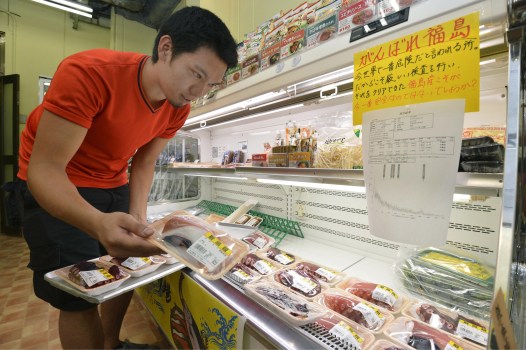
In recent years the Japanese Government has been heavily lobbying other nations to lift the radiation controls and security measures which those nations have been taken on the Fukushima and nearby prefectures food products imports since the March 2011 Fukushima disaster. Disaster which is still ongoing up to the present day, with its contamination omnipresent all over Eastern Japan.
There are two reasons behind such intense forceful lobbying. The first one of course is economic, to maintain the income generated by those exports. The second one is plainly political, to indirectly soothe the fears of the Japanese people themselves about the radiation contaminated food.
It seems that this lobbying is now making headways, as the European Commission finally decided to relax restrictions on some food imports from Fukushima. Such decision prioritizes political and economic considerations over the health of the European people, and dismisses as if they were non-existing all the available gathered scientific data about the devastating health effects of the Chernobyl radiation contaminated food on the Ukrainian and Belarussian populations during the past 30 years.
From the Japan Times:
EU due to start easing restrictions on food imports from Fukushima
The European Union will start easing restrictions Saturday imposed on Japanese food imports over the Fukushima nuclear disaster, including vegetables and beef produced in the prefecture, the farm ministry said.
Tsuyoshi Takagi, Cabinet minister in charge of rebuilding from the March 2011 quake, tsunami and nuclear crisis, on Friday welcomed the bloc’s decision. At present, all food items from Fukushima except alcoholic beverages must be shipped with radiation inspection certificates.
That requirement will be removed for vegetables, fruit excluding persimmons, livestock products, tea and soba, because the radiation levels of these items never exceeded permissible levels in 2013 and 2014, according to the farm ministry.
Other food from the prefecture such as rice, mushrooms, soybeans and some fishery products — excluding scallops, seaweed and live fish — will remain subject to the requirement.
The allowable limits are set at 100 becquerels per kilogram for vegetables and fruit, 50 Bq/kg for milk beverages and infant food, and 10 Bq/kg for drinking water, in accordance to Japanese standards.
The EU move follows the Agriculture, Forestry and Fisheries Ministry’s announcement in November that the bloc would ease the restrictions after gaining approval from the European Commission.
The decision also comes as the European Union and Japan are in the midst of negotiations for a free trade agreement. In the talks, Tokyo is seeking the elimination of duties on Japanese vehicles, while Brussels is looking to expand exports through the reduction of tariffs on pork, cheese, wine and other agricultural products.
“We will make persistent efforts so (restrictions) on all items (from Fukushima) will be eliminated,” Takagi said at a press conference Friday.
The minister added that he will continue to work with other countries to lift similar restrictions imposed after the triple meltdown at the Fukushima No. 1 nuclear power plant raised concerns over the safety of food produced in Japan.
The European Union will also remove restrictions on all food imports from Aomori and Saitama prefectures.
Aside from Fukushima, restrictions will remain in place for some items produced in 12 prefectures in northeastern, eastern and central Japan.
At least 14 countries, including Australia and Thailand, have abolished restrictions on Japanese food imports, while dozens of countries like South Korea maintain special rules.
This European decision can now be used by the Japanese Government as a leverage to immediately try to force its Asian neighbors to also lift their restrictive measures.
From the Free Malaysia Today:
Japan presses Singapore to ease restrictions on Fukushima imports
TOKYO: Japan pressed Singapore to ease its ban on Fukushima food imports, following the European Union’s move to relax restrictions on imports from the area, according to media reports on Sunday.
Japanese agriculture minister Hiroshi Moriyama said the Asian financial hub would take “proactive” steps to meet Tokyo’s request, after holding talks with Singapore’s minister for national development, reported Jiji Press.
On Saturday the EU began easing restrictions on Japanese food imports imposed after the 2011 Fukushima nuclear disaster.
Under the previous rule, the EU required all food products, excluding alcohol, from Fukushima prefecture to come with radiation inspection certification.
The EU continues to restrict the importation of items such as rice, mushrooms and some fishery products, however.
Singapore has banned imports of certain Fukushima products since 2011.
“I explained the EU’s step to ease” its restriction, Moriyama told Japanese journalists in Singapore.
“I asked for easing of the restriction based on scientific evidence,” Moriyama said, according to Jiji.
During the talks, Wong said Singapore “would take proactive steps by studying cases such as the EU’s latest step,” Moriyama told reporters.
Fukushima was a key agricultural area before the 2011 disaster, when a huge tsunami swamped reactors and sparked meltdowns, sending out plumes of radioactive material.
Thousands of people were evacuated and huge tracts of land were rendered unfarmable. The accident has left the Fukushima brand contaminated both domestically and internationally.
Tokyo has been encouraging countries across the globe to ease trade restriction on Japanese food products established after the Fukushima crisis.
At least 14 countries such as Australia and Thailand have abolished their restrictions on Japanese food imports, while dozens of nations continue to maintain select regulations, according to Kyodo News.
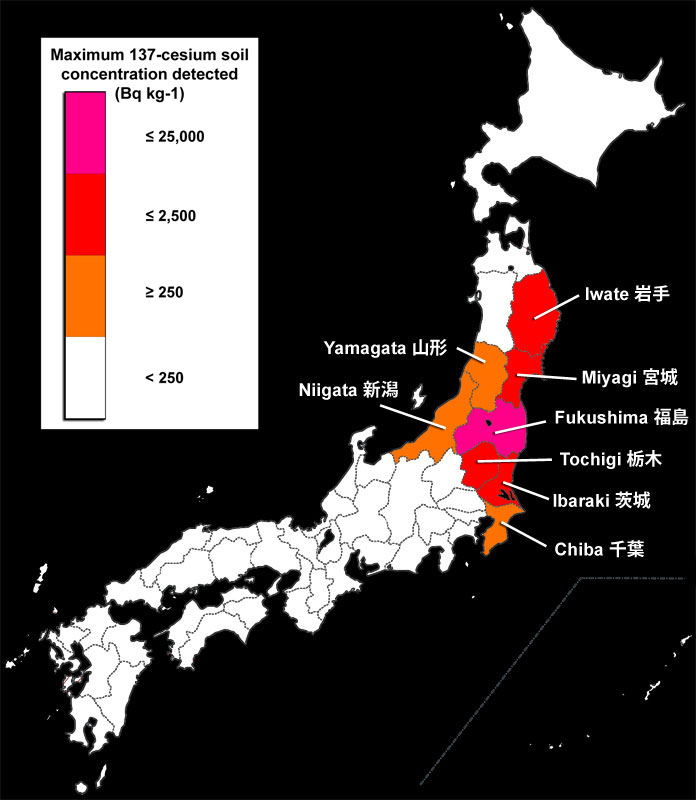
Today’s Fukushima Nuclear Evacuees Real Situation

For your information, as Abe’s government has tightened its grip on most of Japanese the media, the Fukushima nuclear evacuees situation is presented quite differently in the various Japanese media.
Abe’s regime has more or less gagged Asahi, has put more control on Japan Times, while Yomiuri is the Japanese equivalent of the Soviet era Pravda. The only major media who has managed somehow to keep some degree of independance and impartiality is the Mainichi.
As you may see the Japan Times article while having an added positive spin, leaves out many things untold:
Fukushima nuclear evacuees fall below 100,000. As the fifth anniversary of the March 2011 Fukushima nuclear crisis approaches, the number of residents of the northeastern prefecture who are still living as evacuees has fallen below 100,000, a survey by the prefectural government revealed Friday.
According to the survey, 56,463 evacuees were staying within Fukushima Prefecture as of the end of December, while 43,497 were outside the prefecture as of Dec. 10. The whereabouts of 31 were unknown.
The total came to 99,991 in the December survey, down from 121,585 last January.
The total peaked at 164,865 in May 2011, two months after Japan’s worst nuclear accident occurred at Tokyo Electric Power Co.’s tsunami-crippled Fukushima No. 1 nuclear power station.
The survey covered those staying in temporary housing facilities or taking shelter at relatives’ houses and other places. It excluded those who have bought houses in the areas they fled to or settled in public housing for disaster victims.
“Many people have started new lives where they were evacuated to, while others have returned to their homes,” a prefectural official said.
Source: Japan Times http://www.japantimes.co.jp/news/2016/01/09/national/fukushima-nuclear-evacuees-fall-100000/#.VpDnE1LzN_l
Whereas the Mainichi’s article has a much better in depth look at the evolving problems for evacuees.
Fukushima evacuees are Denied housing, and pushed back to the Contaminated zone
Nuclear evacuees surveyed about living in public housing later became non-eligible
Fukushima Prefecture included more people in surveys for 2013 estimates on demand for new public housing after the Fukushima No. 1 nuclear plant meltdowns than it ended up allowing into the housing, and the estimates based on those surveys were never publically released, it has been learned.
The estimates were reported in a document obtained by the Mainichi Shimbun. This document was created in May 2013 by a Tokyo consulting company paid around 30 million yen by the Fukushima Prefectural Government for the work. The estimates were based on fiscal 2012 surveys by the Reconstruction Agency and the Fukushima Prefectural Government of evacuees from 11 municipalities near the crippled plant.
The estimates were made based on three types of evacuees seeking a place in the housing: people wanting to live there until evacuation orders for their home municipalities were lifted; people wanting to live there after evacuation orders for their home municipalities were lifted but until a livable environment had been established; and people wanting to live in the housing permanently.
The estimated numbers of residences required for the three types of evacuees were between 3,136 and 5,663 for the first group; between 2,743 and 4,172 for the second group; and between 3,366 and 4,837 for the third group. Only the first category, however, matches up with the standards for “long-term evacuees” — the only type of evacuee allowed to apply for the residences. Additionally, two of the 11 municipalities covered by the estimates, the city of Tamura and the town of Naraha, had their evacuation orders lifted in April 2014 and September 2015, respectively, making their residents ineligible for the housing.
The units were first proposed during the Democratic Party of Japan administration, and in September 2012 the Fukushima Prefectural Government announced preparations to build the first 500 residences. At this point, the project was being funded from reconstruction funds, and which evacuees would be eligible for a place had not yet been decided. At the end of that year, however, the Liberal Democratic Party and Komeito took over the government, and at a January 2013 meeting on disaster recovery, Prime Minister Shinzo Abe ordered the creation of a plan to allow evacuees to return home quickly, and to secure homes for long-term evacuees. The Act on Special Measures for the Reconstruction and Revitalization of Fukushima was revised in April 2013 to allow special government funding for the new housing, and to restrict eligibility to long-term evacuees.
The unreleased documents obtained by the Mainichi state explicitly that “under the current system to restrict entry into publically-managed housing to long-term evacuees,” others hoping to keep living in the units after their evacuation orders have been lifted “may not be included.”
A representative for the Fukushima Prefectural Government said, “It’s not good to say that the national government ‘toyed with us’ by its policy shift, but the survey on evacuees’ wishes and the establishment of the new fund (with its eligibility restrictions) happened in parallel.” The official added that prefectural staff had to start applying the restrictions “in a hurry” to keep in line with national government policy.
The Fukushima Prefectural Government has announced 4,890 planned public housing units for nuclear disaster evacuees, but even when combined with around 2,800 such residences for tsunami survivors, the number of residences covers only 17 percent of the around 43,700 Fukushima households that remained without a permanent home as of the end of last year.
Source: Mainichi http://mainichi.jp/english/articles/20151205/p2a/00m/0na/013000c
While the Yomiuri Shimbun is currently promoting the government plan to use the evacuation zone as a nuclear waste cite as part of “reconstruction”. There is pressure on evacuated communities to accept waste storage and also for communities outside Fukushima to allow radioactive waste to be stored in their communities.
While the government has claimed it would treat all evacuees fairly, the actions behind the scenes show they never intended to do so.
The government collected surveys from evacuees to estimate how many people needed public housing in order to build enough units. Mainichi’s investigation and leaked documents show the government only allowed those from “difficult to return” areas to apply for the public housing. They built the number of units based on this decision. Now anyone from an area that has been reopened or that was a voluntary evacuees has been shut out of the housing availability.
This was the doing of the LDP and Shinzo Abe. When they took power in 2013 they rewrote the current laws dealing with the disaster to bar anyone but long term evacuees from accessing this housing.
“The unreleased documents obtained by the Mainichi state explicitly that “under the current system to restrict entry into publically-managed housing to long-term evacuees,” others hoping to keep living in the units after their evacuation orders have been lifted “may not be included.”
The prefectural government feels duped and there is now a drastic housing shortage five years after the disaster. 2016 also includes looming deadlines for people’s evacuee aid to run out.
Living restrictions for nearly 55,000 mandated evacuees will be lifted by March, 2017. This will affect nearly 75% of those currently subject to the Tokyo evacuation order of 2011. The plan also calls for continuing the ~$1,000 per month (per person) mental anguish stipend until March 2017, regardless of whether or not restrictions are lifted and/or residents return home before that date. In addition, the goverment”s free rent stipend for voluntary evacuees living outside Fukushima Prefecture will end in March 2017. Tokyo and Fukushima Prefecture say there will be some support for the voluntary evacuees living in a state of poverty, to be determined on a case-by-case basis.
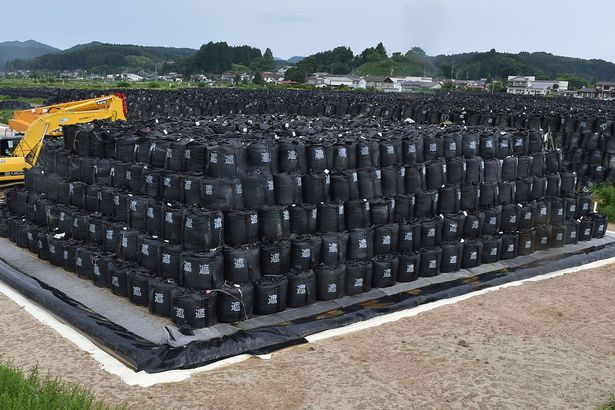
Japan’s nuclear safety watchdog not happy with safety of dry spent fuel casks at Fukushima
 NRA announced the dry cask for spent fuel of Fukushima plant might be overly vulnerable http://fukushima-diary.com/2015/12/nra-announced-the-dry-cask-for-spent-fuel-of-fukushima-plant-might-be-overly-vulnerable/ by Mochizuki , December 8, 2015 On 12/4/2015, NRA (Nuclear Regulation Authority) announced that the dry cask to store the spent fuel assemblies can be excessively vulnerable.
In order to stock the fuel assemblies of SFP 4 (Spent Fuel Pool of Reactor 4) in the common pool, Tepco transferred the fuel assemblies from the common pool to the dry cask.
By the end of October 2014, Tepco had stocked 28 dry casks to contain 1,412 fuel assemblies. They were planning to transfer additional 1,600 fuel assemblies to more 23 dry casks. NRA reports that only 11 casks of this issued type are in actual use in Fukushima plant.
According to NRA, there is a possibility that an internal part of dry cask doesn’t have enough strength. It was designed based on the standard of the Japan Society of Mechanical Engineers, however the standard was abolished this October, just before this scandal became public, because it did not have enough basis and overrated the strength.
https://www.nsr.go.jp/data/000131890.pdf
https://www.nsr.go.jp/disclosure/committee/roanshin_kakunen/00000003.html
Estimating Airborne Radionuclides from the Fukushima Daiichi Nuclear Power Plant Site
Post-Accident Sporadic Releases of Airborne Radionuclides from the Fukushima Daiichi Nuclear Power Plant Site , Environmental Science and Technology
| Steinhauser, G., Niisoe, T., Harada, K. H., Shozugawa, K., Schneider, S., Synal, H. A., Walther, C., Christl, M., Nanba, K.,Ishikawa, H., Koizumi, A. | |||
|
Journal Items, |
Xenon 133 peaks detected in Takasaki Station
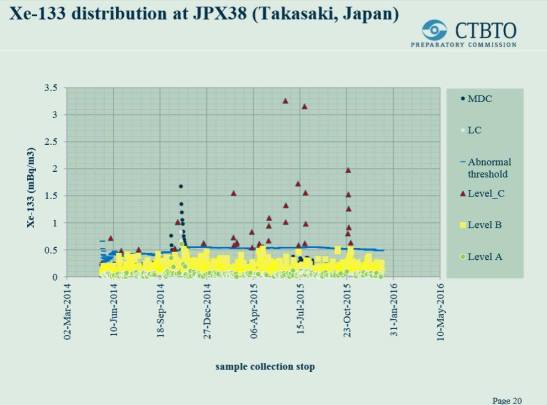
While speaking of the atomic testing in North Korea, CTBTO has inadvertently disclosed information on Fukushima.
One slide shows Xenon 133 peaks in Takasaki Station. Or xenon 133 is a fission product. The corium of Fukushima seems to know criticality phases in 2014 and 2015 (detection beyond normal = red triangles)
Which also explain why traces of Iodine-131 have been repeatedly found at various locations in Japan every year since 2011. Iodine-131 being a very short life radionuclide, it should not be present anymore after March 2011.
The highest peaks of xenon 133 were in May, June July 2015, corresponding to the Iodine-131 detections in sewage sludge in May 2015
Source: Fukushima Diary
Significant level of I-131 detected from dry sludge of Fukushima sewage plant after rain in May
Source : CTBO
Click to access Briefing_PrepCom_7_Jan_2016.pdf
Credits to Pierre Fetet & Paolo Scampa for these informations.
Fire at Japan’s Hamaoka nuclear power plant
Fire at Japan nuclear plant put out; no danger to public – operator http://www.channelnewsasia.com/news/asiapacific/fire-at-japan-nuclear-pla/2406296.html
Posted 07 Jan 2016 TOKYO: A fire broke out at Chubu Electric Power Co’s (9502.T) Hamaoka nuclear power plant in central Japan on Thursday, but was quickly put out and there had been no danger to the public, the company said.
The fire started at about 11 a.m. (0200 GMT) in the exhaust fan of the turbine building of the plant’s No.2 reactor, which is currently under being decommissioned, a company spokesman said.
The fan was shut down and the fire was confirmed as put out an hour later, he said. An investigation into the cause of the fire was under way.
The plant’s No.1 and No.2 reactors are being decommissioned, while its No.3, No.4 and No.5 reactors remain shut pending stringent safety checks imposed following the Fukushima nuclear disaster nearly five years ago.
(Reporting by Osamu Tsukimori; Editing by Richard Pullin) Reuters
28 years later Japan’s costly nuclear recycling complex is still not working
 Japan’s $25 Billion Nuclear Recycling Quest Enters 28th Year, Bloomberg Stephen Stapczynski sstapczynski Emi Urabe January 5, 2016 It’s designed to recycle spent uranium from Japan’s nuclear power plants, consists of more than three dozen buildings spread over 740 hectares (1,829 acres), costs almost $25 billion and has been under construction for nearly three decades. Amount of fuel successfully reprocessed for commercial use: zero.
Under construction since the late 1980s, the complex is designed to turn nuclear waste into fuel by separating out plutonium and usable uranium. The start date of the project has now been pushed back for the 23rd time, with operations set to commence in 2018.
The money continuing to pour into the Rokkasho reprocessing complex in a northeast corner of Japan’s main island of Honshu is raising speculation that attention is being diverted from more-promising avenues of energy development, including renewables.
Construction on Rokkasho, the heart of the endeavor, was supposed to be completed by 1997. Delays due to technical and safety issues have kept it from operating commercially while costs ballooned to an estimated 2.94 trillion yen ($24.6 billion), according to Japan Nuclear Fuel. The Japanese government and the country’s power industry view fuel reprocessing generally, and Rokkasho specifically, as one of the only ways to lower import dependence and find a home for thousands of tons of highly radioactive spent fuel. Japan has about 17,000 metric tons of spent fuel, almost 3,000 tons of which are stored at Rokkasho.
The facility was originally intended to separate plutonium from spent fuel for use in so-called fast-breeder reactors — plants that produce more fuel than they consume.
While the nation’s first prototype fast-breeder reactor has remained closed due to its own technical issues, Rokkasho expanded construction to include a facility that processes plutonium-uranium mixed-oxide fuel, known as MOX, that can be used in some of Japan’s existing reactors…… http://www.bloomberg.com/news/articles/2016-01-04/japan-s-25-billion-nuclear-recycling-quest-enters-28th-year
1 This Month




PLEASE OPPOSE HR 8255 AND S.3639 – bills would accelerate satellite deployment, with no environmental review or safeguards – https://ncstd5li.quorum.us/campaign/169331/
To see nuclear-related stories in greater depth and intensity – go to https://nuclearinformation.wordpress.com
-
Archives
- September 2026 (339)
- August 2026 (330)
- July 2026 (355)
- June 2026 (287)
- May 2026 (306)
- April 2026 (356)
- March 2026 (251)
- February 2026 (267)
- January 2026 (308)
- December 2025 (358)
- November 2025 (359)
- October 2025 (375)
-
Categories
- 1
- 1 NUCLEAR ISSUES
- business and costs
- climate change
- culture and arts
- ENERGY
- environment
- health
- history
- indigenous issues
- Legal
- marketing of nuclear
- media
- opposition to nuclear
- PERSONAL STORIES
- politics
- politics international
- Religion and ethics
- safety
- secrets,lies and civil liberties
- spinbuster
- technology
- Uranium
- wastes
- weapons and war
- Women
- 2 WORLD
- ACTION
- AFRICA
- Atrocities
- AUSTRALIA
- Christina's notes
- Christina's themes
- culture and arts
- Events
- Fuk 2022
- Fuk 2023
- Fukushima 2017
- Fukushima 2018
- fukushima 2019
- Fukushima 2020
- Fukushima 2021
- general
- global warming
- Humour (God we need it)
- Nuclear
- RARE EARTHS
- Reference
- resources – print
- Resources -audiovicual
- Weekly Newsletter
- World
- World Nuclear
- YouTube
-
RSS
Entries RSS
Comments RSS

