NRA decided to reduce 70 percent of radiation monitoring posts in Fukushima

THEY REALLY THINK THAT WE’RE STUPID, EVEN IF IT IS AT THE EXPENSE OF THE JAPANESE PEOPLE
On February 10, 2016 The NRA (Nuclear Regulation Authority) declared that from April 2017 it will discontinue 2500 of its 3600 radioactivity monitoring terminals in the Fukushima Prefecture.
The NRA says it’s due to lack of budget and resources.
The 2500 to be removed terminals are located in public institutions including schools.
The NRA states that there has been no significant change in radioactivity recently detected.
While all radioactivity measurements have been increasing in the Fukushima Daiichi Nuclear plant, how can someone responsible says that there is no significant change?
On 2/10/2016, NRA (Nuclear Regulation Authority) announced they are going to abandon 2,500 of 3,600 radiation monitoring posts in Fukushima prefecture from April of 2017.
NRA states this is due to the limited resource such as budget and equipment.
2,500 posts to be removed are situated in public facility including schools.
NRA comments no significant change has been detected recently. However, the monitoring posts were also observed to become “under maintenance” occasionally.
Sources
https://www.nsr.go.jp/disclosure/committee/kisei/00000110.html
NRA decided to reduce 70 percent of radiation monitoring posts in Fukushima
Little progress made in securing land for interim storage facilities for radioactive soil
 With thousands of bags of radioactive soil piling up, less than 1 percent of the land needed for interim storage facilities in Fukushima Prefecture has been acquired even a year after the project started.
The mountain of paperwork in finalizing the real estate transactions and insufficient manpower are the main factors behind the slow progress.
That, in turn, could affect plans to have Fukushima residents return to their homes after evacuation orders are lifted.
Because the interim storage facilities have not yet been completed, thousands of bags of contaminated soil are stacked up in the open in parts of Fukushima. Until those bags are moved to the interim storage facilities, local residents may not be willing to return because of the high radiation levels being emitted from the contaminated soil.
The Environment Ministry and local governments in Fukushima Prefecture are continuing with work to remove soil contaminated with radioactive materials. As of the end of September 2015, a total of about 9 million cubic meters of such contaminated waste were being temporarily stored in about 115,000 locations around Fukushima. Government officials estimate that a total of 22 million cubic meters of contaminated soil will eventually be collected.
That soil will all be moved to the interim storage facilities to be constructed in the Fukushima towns of Okuma and Futaba where the Fukushima No. 1 nuclear power plant is located. Total land of about 16 square kilometers will be acquired for the interim storage facilities.
Plans call for leaving the contaminated soil at the interim facilities for a maximum of 30 years before processing it somewhere outside of Fukushima Prefecture.
Land registration records contain the names of 2,365 individuals as owners of the land and buildings where the interim storage facilities will be constructed. However, as of the end of January, Environment Ministry officials have signed contracts with 44 landowners, or just 2 percent of the total. In terms of land, those contracts only covered about 0.15 square kilometer, which does not even total 1 percent of the total land that needs to be acquired.
Environment Ministry officials are trying to push ahead with appraising the land, but they face a mountain of problems as well as other issues unique to the Fukushima situation. In terms of land, about 10 percent is owned by individuals whom ministry officials have been unable to contact.
But in terms of the names on the land records, ministry officials have been unable to contact about 990 individuals, or about 40 percent of the total. Some of the people on the land records may be deceased, meaning that those with inheritance claims could run into the thousands.
Moreover, the lack of land appraisers with background about the Fukushima situation has meant that negotiations often have taken longer than expected. Some landowners also are hesitant about selling off land that has been in the family for generations, even if there are no prospects of returning to the family plot anytime soon because of the high radiation levels in the community.
In March 2015, the Environment Ministry began a trial project by leasing some of the projected land for the interim storage facilities and transporting in contaminated soil. Over 11 months, about 36,000 cubic meters of soil were hauled there, but that only represents about 0.2 percent of the expected total.
Environment Ministry officials are unable to put together a specific plan for full-scale transporting of the contaminated soil to the interim storage facilities because in fiscal 2016 only about 1 percent of the total land needed for the interim storage facilities will likely be acquired.
http://ajw.asahi.com/article/0311disaster/fukushima/AJ201602140022
Radioactive Cs in the estuary sediments near Fukushima Daiichi Nuclear Power Plant
Cs-137 of estuary sediment impacted by the FDNPP was measured.
Physical and chemical properties were measured also.
Increasing radioactivity was observed from surface to bottom.
90% of the Cs-137 was strongly bound to clay minerals in the estuary sediments.
Cesium-137 is being transported from contaminated paddy fields to the estuary.
The migration and dispersion of radioactive Cs (mainly 134Cs and 137Cs) are of critical concern in the area surrounding the Fukushima Daiichi Nuclear Power Plant (FDNPP). Considerable uncertainty remains in understanding the properties and dynamics of radioactive Cs transport by surface water, particularly during rainfall-induced flood events to the ocean. Physical and chemical properties of unique estuary sediments, collected from the Kuma River, 4.0 km south of the FDNPP, were quantified in this study. These were deposited after storm events and now occur as dried platy sediments on beach sand. The platy sediments exhibit median particle sizes ranging from 28 to 32 μm. There is increasing radioactivity towards the bottom of the layers deposited; approximately 28 and 38 Bq g− 1 in the upper and lower layers, respectively. The difference in the radioactivity is attributed to a larger number of particles associated with radioactive Cs in the lower part of the section, suggesting that radioactive Cs in the suspended soils transported by surface water has decreased over time.
Sequential chemical extractions showed that ~ 90% of 137Cs was strongly bound to the residual fraction in the estuary samples, whereas 60 ~ 80% of 137Cs was bound to clays in the six paddy soils. This high concentration in the residual fraction facilitates ease of transport of clay and silt size particles through the river system. Estuary sediments consist of particles < 100 μm. Radioactive Cs desorption experiments using the estuary samples in artificial seawater revealed that 3.4 ± 0.6% of 137Cs was desorbed within 8 h. More than 96% of 137Cs remained strongly bound to clays. Hence, particle size is a key factor that determines the travel time and distance during the dispersion of 137Cs in the ocean.
http://www.sciencedirect.com/science/article/pii/S0048969716301541
Arnie Gundersen Speaking Tour in Japan N°1
On The Road Again…Japan Speaking Tour Series No. 1
Fairewinds’ Chief Engineer Arnie Gundersen is hitting the road yet again for his third speaking tour of Japan! It will be five years in March since the triple meltdown at Fukushima Daiichi began and the Japanese public continues to search for the truth about nuclear risk and honest answers to their energy future as they face their current government’s push to restart Japan’s atomic reactors. By invitation from various organizations and public interest groups, Arnie will be presenting to communities throughout Japan including those who live in the shadow of atomic reactors, plutonium reprocessing plants, and proposed atomic waste dumps. Join the Fairewinds Crew as we explore some of the key issues that will be discussed during the tour.
http://www.fairewinds.org/podcast//on-the-road-againjapan-speaking-tour-series-no-1
More than 1,100 water storage tanks at Fukushima plant … and counting

OKUMA, Fukushima Prefecture–From the air, the rows of different colored water storage tanks at the crippled Fukushima No. 1 nuclear power plant resemble a giant integrated circuit board.
As the fifth anniversary approaches of the earthquake and tsunami disaster that unleashed the nuclear catastrophe, the stricken facility is fast running out of space to position the tanks holding highly contaminated radioactive water.
As of Feb. 12, there were 1,106 massive water tanks on the premises.
Tokyo Electric Power Co., operator of the plant, constructed the tanks to store radiation-contaminated water that has been accumulating at the plant since the disaster unfolded in March 2011.
The utility plans to construct 20 more water storage tanks to accommodate 30,000 tons of water that is expected to be generated in the remaining months of 2016.
As the tanks occupy much of the parking lots, green spaces and vacant areas, TEPCO has no choice but to build new tanks in the narrow alleys between the huge containers.
The accumulation of contaminated water has been a persistent problem at the plant, which is only in the very early stages of decommissioning, a process that will take 30 to 40 years.
http://ajw.asahi.com/article/0311disaster/fukushima/AJ201602130025
Environment minister withdraws radiation remark, apologizes to Fukushima residents

Environment Minister Tamayo Marukawa retracted her remark about the government having “no scientific grounds” for its radiation decontamination target in the Fukushima nuclear disaster, saying she wanted to rebuild trust with local residents.
As the minister in charge of overseeing the decontamination efforts in Fukushima Prefecture, Marukawa, 45, said Feb. 12 she wants to “sincerely apologize to residents in Fukushima.”
During a speech in Matsumoto, Nagano Prefecture, on Feb. 7, she labeled the government’s long-term goal of reducing radiation levels near the crippled Fukushima No. 1 nuclear plant to an annual dose of 1 millisievert or less as having “absolutely no scientific grounds.”
A local newspaper, The Shinano Mainichi Shimbun, picked up the story and reported her comments on Feb. 8, which she promptly denied having made.
At Diet sessions on Feb. 9 and 10, Marukawa stated that she had “no recollection of using such wording” in the speech.
Nevertheless, she told the news conference on the evening of Feb. 12 that she had decided of her own volition to “retract the remark in order to maintain a relationship of trust with residents in Fukushima.”
Marukawa went on to say that the government’s decontamination target is “indeed scientific in the sense that it was set as a result of thorough discussions by scientists.”
Her acknowledgment of making the faux pas will likely prompt the opposition camp to go on the offensive during Diet sessions in the coming week. For the time being, at least, Marukawa is standing firm. She said she has no intention of stepping down and wants to continue fulfilling her duties.
The decontamination goal was set by the Democratic Party of Japan-led government of the time on the basis of recommendations by the International Commission on Radiological Protection in the aftermath of the triple meltdown at the Fukushima plant triggered by the 2011 earthquake and tsunami disaster.
After the newspaper covered her remarks, Marukawa told reporters on Feb. 8 that she did not remember using such wording as “scientifically ungrounded.” She repeated the plea at Lower House Budget Committee sessions on Feb. 9 and 10.
During a regular news conference after the Feb. 12 morning Cabinet meeting, the minister finally acknowledged the possibility of making the remark.
She eventually retracted the comment later the day after obtaining a memorandum of her speech and confirming the content with attendants.
http://ajw.asahi.com/article/behind_news/politics/AJ201602130023
Fukushima nuclear station area has drastic mass death of species
 “Mass death” of species found around Fukushima nuclear plant — Gov’t: They “seem to have disappeared… Little or no reproductive success… It is evident biota around the power plant has been affected since the nuclear accident”http://enenews.com/mass-death-species-found-around-fukushima-nuclear-plant-govt-disappeared-little-reproductive-success-evident-biota-around-power-plant-affected-nuclear-accident?utm_source=feedburner&utm_medium=email&utm_campaign=Feed%3A+ENENews+%28Energy+News%29
Yomiuri Shimbun, Feb 7, 2016 (emphasis added): The National Institute for Environmental Studies (NIES) revealed that the total number of sessile species, such as barnacles and snails, has been decreasing significantly along the coast within 10 kilometers south of the Fukushima No. 1 nuclear power plant… [T]here is the possibility that the mass death of sessile specieswas influenced by radioactive materials released into the sea…
National Institute for Environmental Studies, Feb 2016 (underlining by NIES): NIES has conducted field surveys in the intertidal zones of eastern Japan to investigate the ecological effects of the serious accident at the Fukushima Daiichi Nuclear Power Plant… The number of intertidal species decreased significantly with decreasing distance from the power plant… no rock shell (Thais clavigera) specimens were collected near the plant, from Hirono to Futaba Beach (a distance of approximately 30 km) in 2012. The collection of rock shell specimens at many other sites hit by the tsunami suggests that the absence of rock shells around the plant in 2012 might have been caused by the nuclear accident in 2011. Quantitative surveys in 2013 showed that the number of species and population densities in the intertidal zones were much lower at sites near, or within several kilometers south of, the plant than at other sites… especially in the case of Arthropoda (e.g., barnacles). There is no clear explanation for these findings, butit is evident that the intertidal biota around the power plant has been affected since the nuclear accident…
Study funded by the Government of Japan, Feb 2016: Surveys in 2012… The number of intertidal species decreased significantly with decreasing distance from the power plant… The three animal species… 1 km south of FDNPP, were a barnacle… and two herbivorous snails… The sizes… were very small [and] densities were very low… No rock shell (Thais clavigera) specimens were found at 8 of the 10 sites in Fukushima Prefecture within a radius of 20 km of FDNPP… the area without rock shells extended… approximately 30 km… Surveys in 2013… Population densities of sessile organisms at Tomioka fishing port and Okuma were less than one-tenth to about one-fourth those at other sites… The total wet-weights in each intertidal zone at Okuma were much lower than those at other sites… it is unlikely that the absence of rock shells around FDNPP was caused only by the tsunami. The absence of rock shells at sites close to FDNPP… suggests that reproduction and recruitment did not occur there, or were less successful… [I]t is still unknown why adult rock shells living there disappeared or why rock shells had little or no reproductive success there… [I]t is also notable that barnacles seem to have disappeared from Kuboyaji, north of FDNPP…
What is to be done with all Fukushima’s radioactive trash?
 Five years after nuclear meltdown, no one knows what to do with Fukushima, SMH, Anna Fifield February 11, 2016 Futaba: Seen from the road below, the Fukushima Dai-ichi nuclear power station looks much as it may have right after the catastrophic earthquake and tsunami that caused a triple meltdown here almost five years ago.
The No. 3 reactor building, which exploded in a hydrogen fireball during the disaster, remains a tangle of broken concrete and twisted metal. A smashed crane sits exactly where it was on March 11, 2011. To the side of the reactor units, a building that once housed boilers stands open to the shore, its rusted, warped tanks exposed.
The scene is a testament to the chaos that was unleashed when the tsunami engulfed these buildings, triggering the world’s worst nuclear disaster since the one in Chernobyl, in Ukraine, in 1986. Almost 16,000 people were killed along Japan’s northeastern coast in the tsunami, and 160,000 more lost their homes and livelihoods……..
What is to be done with all the radioactive material?
There’s the groundwater that is flowing into the reactor buildings, where it becomes contaminated. It has been treated – Tepco says it can remove 62 nuclides from the water, including strontium, which can burrow into bones and irradiate tissue. It cannot filter out tritium, a radioactive isotope of hydrogen that can be used to make nuclear bombs but is not considered especially harmful to humans.
The water initially was stored in huge bolted tanks in the aftermath of the disaster, but the tanks have leaked highly contaminated radioactive water into the sea on an alarming number of occasions.
Now Tepco is building more secure welded tanks to hold the water, theoretically for up to 20 years. There are now about 1000 tanks holding 750,000 tons of contaminated water, with space for 100,000 tons more. The company says it hopes to increase capacity to 950,000 tons within a year or two, as well as halve the amount of water that needs to be stored from the current 300 tons per day.
As part of those efforts, Tepco has built a 1500-metre-long “ice wall” around the four reactor buildings to freeze the soil and keep groundwater from getting in and becoming radioactive. Company officials hoped to have the just-completed wall working next month; on Wednesday, though, Japan’s nuclear watchdog blocked the plan, saying the risk of leakage was still too high.
The options for getting rid of the contaminated water include trying to remove the tritium from it before letting it run into the sea; evaporating it, as was done at Three Mile Island, the Pennsylvania plant that melted down in 1979; and injecting it deep into the ground, using technology similar to that used to extract shale gas. A government task force is considering which option to choose.
“These all have different advantages and disadvantages; they have different costs and different social acceptance,” said Seiichi Suzuki, manager of tank construction at the plant.
Then there’s the radioactive soil that has been collected from areas around the Fukushima Dai-ichi plant during clean-up efforts. Nearly 20 million cubic metres of soil — enough to fill 8000 Olympic-size swimming pools — has been packed into large black plastic bags and is being stored, row upon row, in local fields.
More than 700 of the bags, which contain radioactive cesium isotopes, were swept away during floods last year, some ending up in rivers 160 kilometres away. The government has said that 99.8 percent of the soil can be recycled.
Finally, and most problematically, there’s the nuclear fuel from the plant itself.
The fuel that melted down remains in containment vessels in its reactors, and this part of the plant is so dangerous to humans that robots are used to work there. Getting to this fuel and removing it safely is a task that will take decades.
Asked about the decommissioning process, Ono of Tepco said the work was about 10 per cent done.
“The biggest challenge is going to be the removal of the nuclear fuel debris,” he said. “We don’t even know what state the debris is in at the moment.”
Japan does not have a nuclear waste dump, and there is vehement resistance to disposing of contaminated material on land.
As a result, one of the options the government is considering is building a nuclear waste dump under the seabed, about 13 kilometres off the Fukushima coast. It would be connected to the land by a tunnel so it would not contravene international regulations on disposing of nuclear waste into the sea. A government study group is set to report on that proposal by the end of the summer.
Many groups, from fishermen to anti-nuclear activists, staunchly oppose the idea of burying the radioactive material at sea in such a seismically active area.
“At some point it would leak and affect the environment,” said Hideyuki Ban, co-director of the Citizens’ Nuclear Information Centre. “Some say it’ll be fine, as it will be diluted in the ocean, but it’s unclear whether it will be diluted well. If it gets into fish, it could end up on someone’s table.”
Aileen Mioko Smith, executive director of Green Action, a Kyoto-based anti-nuclear group, agreed.
“The seabed is just like land. It’s not flat, but has mountains and valleys,” she said. “Japan sits on multiple tectonic plates and is earthquake-prone. It’s too easy to think, ‘If not on land, how about the seabed?’ “http://www.smh.com.au/world/five-years-after-nuclear-meltdown-no-one-knows-what-to-do-with-fukushima-20160211-gmr5sv.html#ixzz3ztnYcrCY
Japan Nuclear Regulation Authority Halts Fukushima Daiichi’s Ice Wall

Japanese Nuclear Regulation Authority, the NRA, has put the kibosh on plans by Tokyo Electric Power Co. to start freezing underground soil at the crippled Fukushima No. 1 nuclear power plant–a stunningly expensive project intended to solve the crisis of accumulating radioactive groundwater at the site.
The installation of the equipment required for forming a wall of frozen soil at the Fukushima Daiichi nuclear power plant to prevent groundwater entering the reactor buildings has been completed. Approval from the Japanese regulator must be sought before the creation of the wall itself can begin.
Ice wall technology is already widely used in civil engineering projects, such as the construction of tunnels near waterways. Small-scale tests using the technology have already been completed at the Fukushima Daiichi site. However, the full-scale use of the technology at Fukushima will see the largest ground freezing operation in the world.
Installation of the equipment for forming the ice wall began in June 2014 and a test that has circulated the chilling liquid to specific parts of the wall has been under way since April 2015. The north, south and west sides of the facility were completed last September, while the remaining pipes on the east side facing the sea were placed within the ground in November.
Tokyo Electric Power Company (Tepco) announced yesterday that all the necessary equipment is now in place for the creation of the ice wall. However, the company noted that it must get approval from the Nuclear Regulation Authority before the equipment can be put into operation. The regulator’s approval, Tepco said, would partly depend on the company “showing a method to ensure that the wall (and other groundwater pumping operations) do not invert the water level difference in any way that would cause contaminated water to flow out of the building’s basements”.
Kajima Corporation, the main contractor for the facility, has drilled holes some 30-35 metres into the ground and inserted pipes through which refrigerant will be then be pumped. This cooling will freeze the soil surrounding the pumps creating an impenetrable barrier around the reactor buildings. In total, some 1550 pipes have been placed in the ground to create a 1.5km-long ice wall around units 1 to 4. The wall is designed to remain effective for up to two months in the event of a loss of power. The Japanese government agreed to pay for construction of the ice wall, estimated to cost some JPY32 billion ($278 million).
Reducing the amount of contaminated water that it must deal with is a priority for Tepco. Groundwater naturally seeps from land to sea, but at the Fukushima Daiichi site it must negotiate the basements of reactors buildings. It is thought that more than 400 tonnes of groundwater enters the basements each day through cable and pipe penetrations as well as small cracks, mixing with the heavily contaminated water previously used to cool the damaged reactor cores.
The ice wall is only one part of a multi-layered strategy being employed to manage the flow of groundwater and rainwater at Fukushima Daiichi, Tepco said. Tepco is saying that its strategy to prevent water becoming contaminated has reduced the daily inflow of groundwater into the buildings to 150 tonnes per day. “Successful implementation of the frozen soil water is designed to reduce that inflow further, by keeping water out of the reactor buildings,” the company contends.
TEPCO has maintained that once the soil is frozen, it will form a circular barrier and reduce the flow of groundwater into the reactor buildings; and that, in turn, will prevent water contaminated with radioactive substances from accumulating.
But the Nuclear Regulation Authority contends that contaminated water accumulated in the reactor buildings could leak into the groundwater if the level inside the frozen soil wall drops too much.
TEPCO planned to construct a 1,500-meter-long frozen soil wall around the four reactor buildings by inserting 1,568 pipes to a depth of 30 meters at 1-meter intervals. Each pipe will freeze the soil around it once liquid of minus 30 degrees circulates inside the cylinder.
On Feb. 9, TEPCO completed the last part of the project to install temperature indicators, allowing it to start freezing the soil at a moment’s notice.
Groundwater is continuing to flow into basements of reactor buildings with melted nuclear fuel, adding to the amount of highly contaminated water being produced.
In May 2013, a committee of the Ministry of Economy, Trade and Industry drew up a report on the merits of constructing a frozen soil wall to reduce the volume of contaminated water.
Based on the report, TEPCO started the construction work in June 2014. The government has already spent about 34.5 billion yen ($300 million) on the project.
TEPCO maintained that once the frozen soil wall is completed, it should reduce the flow of groundwater into the reactor buildings from about 400 tons a day to 100 tons in tandem with other measures, including work to pump out groundwater from wells dug around the reactor buildings.
From the outset, the NRA cast doubt on the effectiveness of the frozen soil wall, saying that highly contaminated water accumulated in reactor buildings could leak into the ground if the groundwater level inside the wall drops too much.
The NRA repeatedly asked TEPCO whether the frozen soil wall would prove truly effective in reducing the amount of contaminated water.
“TEPCO is scattering a strange illusion that the problem of contaminated water can be solved completely if a frozen soil wall is constructed,” NRA chairman Shunichi Tanaka said in spring 2015.
In a test operation which started that spring, the reduction of groundwater levels was larger than expected in some places. The speed and direction of the groundwater flow could not be clarified in some locations.
Because it takes two months or so for the soil to thaw out, countermeasures cannot be taken immediately if problems crop up.
TEPCO acknowledges that there are limits to its crystal ball-gazing with regard to the problem of groundwater. However, it contends that it can prevent contaminated water from leaking into the ground by pouring water into the ground through wells if the level drops too much.
In December, the NRA took the rare move of proposing to TEPCO in a written document that the utility operate the frozen soil wall only in places where contaminated water is unlikely to leak into the ground.
However, TEPCO dug in its heels and said it intended to operate the frozen soil wall as a whole. But it also plans to consider the NRA’s proposal.
On Feb. 9, TEPCO President Naomi Hirose visited the NRA office and told Tanaka, “We will consider your proposal and get back to you in a most sincere manner.”


Sources :
http://www.tepco.co.jp/en/press/corp-com/release/2016/1267045_7763.html
http://www.world-nuclear-news.org/RS-Fukushima-Daiichi-ice-wall-equipment-in-place-1002165.html
http://www.japantimes.co.jp/news/2016/02/10/national/tepco-finishes-installing-fukushima-ice-shield-equipment/#.VrvH1lLzN_k
http://ajw.asahi.com/article/0311disaster/fukushima/AJ201602100079
Armed transport ships spotted in Panama Canal, headed for secret mission to later transport plutonium
 UK-Flagged Ships Set to Transport Plutonium from Japan to US Located in Panama Canal http://www.srswatch.org/uploads/2/7/5/8/27584045/srsw_news_on_plutonim_ships_in_canal_feb_6_2016.pdf Ships on Secret Mission to Carry 331 Kilograms of Plutonium to US DOE’s Savannah River Site in South Carolina as Part of Nuclear Security Summit Preparation; Plutonium to be Stranded at SRS
5,300 tons of Fukushima radioactive trash dumped in 5 prefectures
 5,300 tons of radioactive wood waste taken into 5 prefectures besides Shiga http://mainichi.jp/english/articles/20160208/p2a/00m/0na/004000c February 8, 2016 (Mainichi Japan) OTSU — Some 5,300 metric tons of wood chips contaminated with radioactive cesium from the Fukushima nuclear disaster was transported into Tochigi, Ibaraki, Chiba, Yamanashi and Kagoshima prefectures, documents from the Otsu District Public Prosecutors Office in Shiga Prefecture have shown.
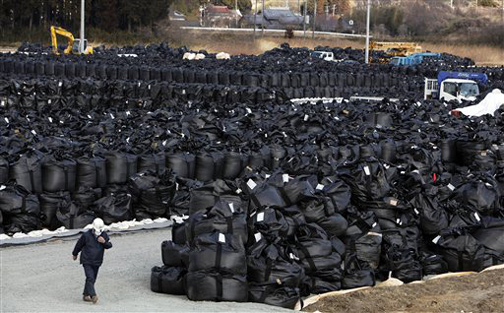
The waste had been held by a lumber company in the Fukushima Prefecture city of Motomiya. The president of a consulting firm in Tokyo took on the job of disposing of the waste, but came under suspicion of dumping around 310 cubic meters of it in Takashima. The president was subsequently convicted over violation of a waste disposal law.
According to a lawyer of a citizens group who had access to the information held by the Otsu public prosecutors, two intermediate processing companies in Tokyo and Gunma Prefecture removed the waste from Fukushima between December 2012 and September 2013. Later, other transporters took it into six prefectures including Shiga via 18 different routes. Roughly 3,437 tons was taken into Tochigi Prefecture, 1,214 tons into Yamanashi Prefecture, 344 tons into Kagoshima Prefecture, 280 tons into Chiba Prefecture and 10 tons into Ibaraki Prefecture, the documents reportedly showed.
Japan’s steadfast anti nuclear scientists now at retiring age
 Defiant to the end, last of Group of Six anti-nuclear scientists about to retire, Asahi Shimbun, February 06, 2016 By HISASHI HATTORI/ Senior Staff Writer KUMATORI, Osaka Prefecture–Tetsuji Imanaka is the last of the so-called Kumatori Group of Six, a maverick band of nuclear scientists at an elite university here that spent decades speaking out against nuclear energy.
At 65, Imanaka is now ready to collect his pension and part company with Kyoto University’s Research Reactor Institute–and he remains as steadfast as ever in his beliefs. Imanaka cannot have found it easy to go against the government’s policy of promoting nuclear power, yet that’s what he’s done since he joined the institute in 1976.
He says he never experienced harassment, but then again he never got promoted beyond the post of research associate…..
Imanaka’s other colleagues in the group with the exception of one are all retired. They are: Toru Ebisawa, 77; Keiji Kobayashi, 76; Takeshi Seo, who died in 1994 at the age of 53; Shinji Kawano, 74; and Hiroaki Koide, 66. The group’s moniker came from the name of the town that hosts the research center.
Although all six scientists harbored doubts about promoting nuclear energy, Imanaka said, “We did not set out to become activists or form a clique.” Rather, “We acted according to our own beliefs as individuals.”
The group was relatively unknown before the 2011 Fukushima nuclear disaster. But in the aftermath of the triple meltdown at the Fukushima No. 1 nuclear power plant, the “rebels” increasingly came under the spotlight as civic groups scrambled to seek their expertise to grasp the ramifications of the nuclear accident and the potential dangers of nuclear energy.
Koide, who retired last year, has addressed 300 or so gatherings across the country since the catastrophe. But the group’s efforts to educate the public about the potential danger of, and challenges facing nuclear energy, date back to 1980 when it initiated a series of seminars at the institute. “Experts have a responsibility to explain science and technology in lay language to citizens,” Imanaka said of the endeavor.
With Imanaka’s departure, those seminars are about to end. After more than 35 years, the final 112nd session will be held on Feb. 10. The group’s commitment to continue sounding the warning against nuclear power has been widely appreciated by the public at large.
But the members have all had to pay a price for openly defying the “nuclear village,” as the program involving the government, powerful utilities enjoying regional monopolies and academia is called. None of the six ever got promoted to beyond the level of assistant professor……..
The catalyst for the group’s anti-nuclear activities was a lawsuit filed in 1973 by a citizens group over a license issued to Shikoku Electric Power Co. to build the Ikata nuclear power plant in Ehime Prefecture. In the suit, the plaintiffs demanded nullification of the license on grounds that safety screening of the plant by the government was insufficient. It was the nation’s first lawsuit involving the safety of a nuclear reactor. The researchers stood by the plaintiffs over 19 years of court battles, offering their technical expertise and testimony, right up until the Supreme Court finalized the verdict against them.
Kobayashi, an expert on reactors, also helped residents who sought to shut down the Monju prototype fast-breeder reactor in Fukui Prefecture. The money-guzzling, problem-plagued project is the centerpiece of the government’s vision to recycle spent nuclear fuel. But the reactor has rarely operated since it went online in 1995.
Imanaka specialized in assessing the spread of radioactive contamination. He traveled to Ukraine more than 20 times to examine the 1986 Chernobyl nuclear accident site for contamination.
He, along with Seo, also estimated how much radiation was released in the 1979 accident at the Three Mile Island nuclear power plant in the United States.
After the Fukushima disaster, Imanaka embarked on a project to detect radiation levels in Iitate, a village to the northwest of the plant whose residents are still living as evacuees due to high radiation levels…….http://ajw.asahi.com/article/0311disaster/fukushima/AJ201602060033
Volcano erupts rather close to Sendai nuclear station
Sakurajima Volcano erupts violently just a few miles away from nuclear power plant [good video and pictures] MIRROR UK, 5 FEB 2016 BY ELAINE LINES
Fountains of lava spewed out of the mountain but there were no reports of any immediate damage. A Japanese volcano about 30 miles from a nuclear plant violently erupted last week, shooting ash nearly 2 km into the night sky.
Fountains of lava spewed from the Sakurajima mountain, but there were no immediate report of damage and operations at the power station were not affected.
Following what they termed an “explosive eruption,” Japan’s Meteorological Agency raised the warning level on the peak to grade three, meaning people should not approach the mountain.
- Kazuhiro Ishihara, a professor at Kyoto University, told NHK national television: “It appears that stones have been thrown about 2 km from the crater, but this area is quite far from any communities.”
Television footage showed red streams of lava bursting from the side of the volcano, but Ishihara said he thought the impact of the eruption would not be that serious…….
- Japan lies on the “Ring of Fire” – a seismically active horseshoe-shaped band of fault lines and volcanoes around the edges of the Pacific Ocean – and has more than 100 active volcanoes. http://www.mirror.co.uk/news/world-news/sakurajima-volcano-erupts-violently-just-7315024
Over 0.5 μSv/h detected from mud in Shibuya ward Tokyo

On 2/4/2016, a Japanese citizen posted on Twitter that 0.51 μSv/h was detected on accumulated mud in Shibuya ward of Tokyo.
The location is 2-17-5 Jingu-mae, Shibuya ward. The area is used as a coin-parking lot. The area is not blockaded.
Source : http://fukushima-diary.com/2016/02/photo-over-0-5-%CE%BCsvh-detected-from-mud-in-shibuya-ward-tokyo/
Government OKs multiple-site storage of radioactive waste
MITO, IBARAKI PREF. – The Environment Ministry has allowed Ibaraki Prefecture to continue storing waste contaminated with radioactive substances from the March 2011 nuclear disaster in multiple locations for the time being.
The ministry on Thursday supported ongoing use of the multiple-site storage option at a meeting with officials from Ibaraki Prefecture and 14 municipalities in the prefecture that are currently storing such designated waste on a temporary basis.
This is the first time the ministry, which has upheld a policy to construct one designated waste disposal facility in each of the prefectures of Miyagi, Ibaraki, Tochigi, Gunma and Chiba, to give the green light to multiple-site storage within a prefecture.
On Friday, Environment Minister Tamayo Marukawa said at a news conference the ministry will continue coordinating with local municipalities to deal with the issue.
As part of the process, she said, it would consult with the community to move forward with lifting the designation on waste where radiation levels have lowered and consolidate remaining waste.
Designated waste, including incineration ash, sewage sludge and paddy straw, is contaminated with radioactive substances exceeding 8,000 becquerels per kilogram as a result of the triple meltdown at Tokyo Electric Power Co.’s Fukushima No. 1 nuclear power plant caused by a major earthquake and tsunami.
Although the ministry has been pursuing the policy of concentrating such waste in one location in each of the five prefectures for disposal, the construction of disposal facilities has yet to transpire five years after the nuclear accident amid strong opposition from local residents.
The ministry’s decision to tolerate multiple-site storage is apparently intended to overcome the situation.
The ministry plans to have the municipalities in Ibaraki Prefecture continue safely storing designated waste for now, and have them dispose of the waste as general waste after radiation levels fall below 8,000 becquerels per kilogram.
As a result, the ministry forecasts that the amount of designated waste in the prefecture will drop to about 0.6 ton in about 10 years from 3,643 tons at present.
It will examine whether multiple-site storage can be continued in Gunma and Chiba prefectures, where municipalities are storing designated waste indoors just like those in Ibaraki Prefecture.
At Thursday’s meeting, the ministry proposed rules that would require the central and local governments to hold talks in advance if the radioactive waste designation is to be lifted.
The ministry also indicated a plan to consider providing financial support to municipalities that dispose of the waste after removal of the designation as radioactive waste at their existing facilities.
http://www.japantimes.co.jp/news/2016/02/05/national/government-oks-multiple-site-storage-radioactive-waste/#.VrTSbFLzN_l
1 This Month




PLEASE OPPOSE HR 8255 AND S.3639 – bills would accelerate satellite deployment, with no environmental review or safeguards – https://ncstd5li.quorum.us/campaign/169331/
To see nuclear-related stories in greater depth and intensity – go to https://nuclearinformation.wordpress.com
-
Archives
- September 2026 (339)
- August 2026 (330)
- July 2026 (355)
- June 2026 (287)
- May 2026 (306)
- April 2026 (356)
- March 2026 (251)
- February 2026 (267)
- January 2026 (308)
- December 2025 (358)
- November 2025 (359)
- October 2025 (375)
-
Categories
- 1
- 1 NUCLEAR ISSUES
- business and costs
- climate change
- culture and arts
- ENERGY
- environment
- health
- history
- indigenous issues
- Legal
- marketing of nuclear
- media
- opposition to nuclear
- PERSONAL STORIES
- politics
- politics international
- Religion and ethics
- safety
- secrets,lies and civil liberties
- spinbuster
- technology
- Uranium
- wastes
- weapons and war
- Women
- 2 WORLD
- ACTION
- AFRICA
- Atrocities
- AUSTRALIA
- Christina's notes
- Christina's themes
- culture and arts
- Events
- Fuk 2022
- Fuk 2023
- Fukushima 2017
- Fukushima 2018
- fukushima 2019
- Fukushima 2020
- Fukushima 2021
- general
- global warming
- Humour (God we need it)
- Nuclear
- RARE EARTHS
- Reference
- resources – print
- Resources -audiovicual
- Weekly Newsletter
- World
- World Nuclear
- YouTube
-
RSS
Entries RSS
Comments RSS

