 Quake risk for Japanese-French nuclear plant in Turkey lowered to keep costs down, sources say, Japan Times, 8 Jan 17, Government-commissioned research firms have come up with a questionably low estimate for how badly an earthquake could rattle a nuclear power plant being built in Turkey by a Japanese-French venture, sources say.
The estimated “peak ground acceleration” — the term for ground motion caused by a quake — for the plant in the Black Sea province of Sinop is significantly lower than estimates given for quake-prone Japan’s nuclear power plants, and that means it could be an attempt to reduce construction costs, the sources said Saturday.
Turkey is often struck by earthquakes.
The peak ground acceleration for the Sinop plant was estimated at around 400 gal (or 400 cm per second squared), but some experts said it should be “at least 500 gal, based on Japanese standards” and the topography and geography around Sinop.
For instance, the assumed ground acceleration is 620 gal for Kyushu Electric Power Co.’s Sendai nuclear power plant and 856 gal for Kansai Electric Power Co.’s Oi plant.
The assessment was part of a study commissioned by the Agency for Natural Resources and Energy, which is overseen by the Ministry of Economy, Trade and Industry. The aim of the study was to examine potential nuclear power plant construction deals involving Japanese companies in Turkey and Vietnam……..
According to Japanese researchers, active faults are suspected to be present around the site of the envisioned plant. In 1968, a magnitude-6 temblor struck west of the site, and Turkish researchers have warned of the possibility of a major quake occurring in the region again. Residents are protesting the project. http://www.japantimes.co.jp/news/2017/01/08/business/quake-risk-japanese-french-nuclear-plant-turkey-underestimated-keep-costs-sources-say/#.WHMQs9J97Gg
January 9, 2017
Posted by Christina Macpherson |
Japan, safety, Turkey |
Leave a comment
 Toshiba admits to a ruinous overpayment for an American nuclear firm Its share price plunged by 40% in three days as investors worried about its financial viability, The Economist, Jan 7th 2017 | TOKYO THE probe in 2015 into one of Japan’s largest-ever accounting scandals, at Toshiba, an electronics and nuclear-power conglomerate that has been the epitome of the country’s engineering prowess, concluded that number-fiddling at the firm was “systemic”. It was found to have padded profits by ¥152bn ($1.3bn) between 2008 and 2014. Its boss, and half of the board’s 16 members, resigned; regulators imposed upon it a record fine of $60m.
Now its deal-making nous is in doubt too. In December 2015—the very same month that it forecast hundreds of billions of yen in losses for the financial year then under way, as it struggled to recover from the scandal—Toshiba’s American arm, Westinghouse Electric, bought a nuclear-construction firm, CB&I Stone & Webster. One year on, on December 27th, Toshiba announced that cost overruns at that new unit could lead to several billions of dollars in charges against profits.
Part of the $229m that Westinghouse paid for CB&I Stone & Webster included $87m of goodwill (a premium over the firm’s book value based on its physical assets). It is that initial estimate that is now being recalculated.
Toshiba had looked to be bouncing back from its accounting nightmare………
Toshiba’s central part in a plan by the government of Shinzo Abe, the prime minister, to pep up growth by exporting nuclear-power technology to emerging countries may help. In June Westinghouse clinched a deal in India to build six new-generation AP1000 reactors, Toshiba’s first order since the triple meltdown at the Fukushima Dai-ichi nuclear plant in 2011. Toshiba is also involved in that site’s costly and complex clean-up. Some think that Japanese banks, known for keeping zombie firms on life support, will stand behind it, come what may. Shares in Toshiba’s two main lenders, Sumitomo and Mizuho, slid last week after the profit warning. Investors expect more big bank loans or a debt-for-equity swap, which allows a bank to turn bad loans into shares.
The consensus on Toshiba’s latest screw-up is that a long-standing culture of poor management is to blame…..http://www.economist.com/news/business/21713896-its-share-price-plunged-40-three-days-investors-worried-about-its-financial
January 6, 2017
Posted by Christina Macpherson |
business and costs, Japan, secrets,lies and civil liberties, USA |
Leave a comment
The future of nuclear energy in Japan, nearly six years after the 2011 Fukushima disaster http://www.abc.net.au/news/2017-01-05/the-future-of-nuclear-energy-in-japan-after-fukushima/8162686 By Tokyo correspondent Rachel Mealey Japan has been pursuing a dream of nuclear energy since the 1960s.
The country’s first nuclear reactor was completed in 1965 and between then and 2011, Japan invested hundreds of billions of dollars into the industry.
Money is still being funnelled into the industry, but these days it is mostly just for upkeep of idle reactors.
When disaster struck the Fukushima nuclear plant in Japan in March 2011, there were 54 nuclear reactors operating in the country and generating about one third of Japan’s power.
But with the triple, reactor-core meltdown at Fukushima came concerns about nuclear power in other areas of Japan. The government of the day ordered an immediate review of the safety aspects of the remaining reactors.
Today, there are just four reactors in operation across Japan (although one is “paused” while a legal challenge is heard).
Eleven are in the process of being decommissioned — six of these are at Fukushima — and decisions are yet to be made about 42 other reactors.
Tom O’Sullivan, an energy sector analyst in Japan, said five or six other reactors should come back online in 2017, but there were localised protests to some of those planned restarts.
“Some of the polling that has been done indicates that 60-70 per cent of the Japanese people actually oppose the restarting of the reactors,” Mr O’Sullivan said.
In April 2016, a major earthquake struck Japan’s southern-most island of Kyushu.
An operating nuclear reactor was just 120 kilometres from the epicentre of the quake. Roads and bridges were damaged and landslides cut off access to some areas — aggravating the fears of local people about how they would evacuate if another nuclear disaster was to occur.
Future energy needs questioned
In the years to come, the Japanese Government has major decisions to make about the future of the nuclear industry. Nuclear reactors have a natural operating life of 40 years.
“The average age of the Japanese reactors is now close to 30 years, so most of them have only a remaining operating life of 10 years,” Mr O’Sullivan said.
“Once they start hitting the 40-year time limit, they’re going to have to write off some of the residual costs associated with them. Then of course you have the additional, significant issue of having to decommission them and the costs in that regard are very, very significant.”
The Government has had very little to say in recent months about its energy policy.
The most recent utterings of Prime Minister Abe were back in March — when Japan was marking the five-year anniversary of the nuclear disaster. He said his Government was aiming to achieve 20-22 per cent of energy needs met by nuclear by 2030.
Environmental group Greenpeace said that aim would be close to impossible to achieve.
“The reality is, they will never get to that 20 or 22 per cent. I think inside Government, there are factions that basically believe that maybe we can reach that target, but a more realistic assessment says maybe it will be a lot less,” Greenpeace nuclear spokesman Shaun Burnie said.
“I think the Japanese Government will be forced to change its energy policy. This cannot go on indefinitely. Nuclear utilities are unable to operate their reactors.”
January 6, 2017
Posted by Christina Macpherson |
business and costs, Japan, politics |
Leave a comment
Reuters, By Kentaro Hamada | NIIGATA, JAPAN, Jan 5, 2017
The governor of Japan’s Niigata prefecture reiterated his opposition to the restart of Tokyo Electric Power’s (Tepco) Kashiwazaki-Kariwa nuclear plant, adding it may take a few years to review the pre-conditions for restart.
During a meeting on Thursday with Tepco Chairman Fumio Sudo and President Naomi Hirose, Governor Ryuichi Yoneyama, who was elected in October on his anti-nuclear platform, repeated his pledge to keep the plant shut unless a fuller explanation of the 2011 Fukushima nuclear disaster was provided.
He also said that evacuation plans for people in Niigata in case of a nuclear accident and the health impacts that the Fukushima accident have had would need to be reviewed before discussing the nuclear plant’s restart……..http://www.reuters.com/article/us-japan-tepco-idUSKBN14P0IK
January 6, 2017
Posted by Christina Macpherson |
Japan, politics |
Leave a comment
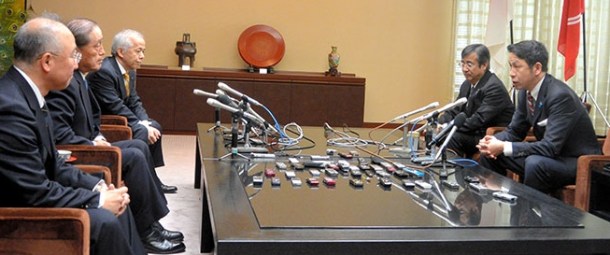
Niigata Governor Ryuichi Yoneyama, far right, holds talks with executives of Tokyo Electric Power Co. in the Niigata prefectural government office on Jan. 5.
Niigata governor rejects restarts in 1st meet with TEPCO execs
NIIGATA–Niigata Governor Ryuichi Yoneyama met Jan. 5 with top executives of Tokyo Electric Power Co. (TEPCO) for the first time, reiterating his opposition to restarting the Kashiwazaki-Kariwa nuclear power plant.
“It will be difficult to approve the restart as long as (the causes of) the accident at the Fukushima No. 1 nuclear power plant are not verified. In the present circumstances, I cannot accept the restart,” Yoneyama told Fumio Sudo, chairman of Tokyo Electric Power Co. Holdings Inc., and Naomi Hirose, president of the company.
It was the first time for Yoneyama to meet with TEPCO executives since he assumed the post of Niigata governor last October. The talks were held in the Niigata prefectural government office.
Yoneyama, noting that it will take several years for the Niigata prefectural government to verify the causes of the 2011 nuclear disaster, asked the TEPCO executives to provide more information and other forms of cooperation.
In response, Sudo said, “The priority is to hear voices of local residents.”
This seemed to suggest that TEPCO will not restart the Kashiwazaki-Kariwa nuclear power plant as long as the Niigata governor continues to resist the move.
A council of experts of the Ministry of Economy, Trade and Industry announced late last year that the costs for dealing with the aftermath of the Fukushima nuclear disaster will almost double to 21.5 trillion yen ($185 billion) from 11 trillion yen initially estimated in 2013.
To help cover the amount, TEPCO planned to restart two reactors at the Kashiwazaki-Kariwa to generate 100 billion yen in annual profits. But that now looks difficult, given Yoneyama’s firm stance on the issue of restarts.
http://www.asahi.com/ajw/articles/AJ201701050067.html
Gov. says restart of nuclear plant in Niigata to take “several years”
The restart of a nuclear power plant operated by Tokyo Electric Power Company Holdings Inc. on the Sea of Japan coast will likely take “several years,” the governor of Niigata Prefecture said Thursday, highlighting the difficulty in concluding post-2011 nuclear disaster reviews.
The utility known as TEPCO has been seeking to reactivate the Kashiwazaki-Kariwa nuclear plant, the world’s largest by generation capacity, as soon as possible to boost revenue, as it grapples with ballooning costs stemming from the 2011 nuclear disaster in Japan’s northeast.
“There can be no discussions about a restart without reviewing” factors including the cause of the Fukushima nuclear accident and evacuation plans for residents, Niigata Gov. Ryuichi Yoneyama said in his first talks with TEPCO executives since assuming office in October.
http://english.kyodonews.jp/news/2017/01/452300.html
Japan governor tells Tepco bosses nuclear plant to stay shut
The governor of Japan’s Niigata prefecture reiterated his opposition to the restart of Tokyo Electric Power’s (Tepco) Kashiwazaki-Kariwa nuclear plant, adding it may take a few years to review the pre-conditions for restart.
During a meeting on Thursday with Tepco Chairman Fumio Sudo and President Naomi Hirose, Governor Ryuichi Yoneyama, who was elected in October on his anti-nuclear platform, repeated his pledge to keep the plant shut unless a fuller explanation of the 2011 Fukushima nuclear disaster was provided.
He also said that evacuation plans for people in Niigata in case of a nuclear accident and the health impacts that the Fukushima accident have had would need to be reviewed before discussing the nuclear plant’s restart.
The restart of the Kashiwazaki-Kariwa plant, the world’s largest, is key to helping Tepco rebound from the aftermath of the 2011 disaster at its Fukushima-Daiichi plant.
The Japanese government last month nearly doubled its projections for costs related to the disaster to 21.5 trillion yen ($185 billion), increasing the pressure on Tepco to step up reform and improve its performance.
Many of Japan’s reactors are still going through a relicensing process by a new regulator set up after the Fukushima disaster, the world’s worst since Chernobyl in 1986.
Shutting the Kashiwazaki-Kariwa plant for additional years would mean that the company would have to continue relying heavily on fossil fuel-fired power generation such as natural gas.
Governors do not have the legal authority to prevent restarts but their agreement is usually required before a plant can resume operations.
Three reactors at Tepco’s Fukushima-Daiichi nuclear plant melted down after a magnitude 9 earthquake struck Japan in March 2011, triggering a tsunami that devastated a swathe of Japan’s northeastern coastline and killed more than 15,000 people.
http://www.reuters.com/article/us-japan-tepco-idUSKBN14P0IK?il=0
January 5, 2017
Posted by dunrenard |
Japan | Kashiwazaki-Kariwa NPP, Niigata Governor, Tepco |
Leave a comment

The Economy, Trade and Industry Ministry is considering holding “roundtable” discussions with top executives of major power companies on measures to restructure their business ties with beleaguered Tokyo Electric Power Co. (TEPCO) and set up operations overseas, it has been learned.
The industry ministry wants to help pave the way for the power industry to restructure and consolidate by setting up a forum in which major utilities can exchange views on the realities of domestic and overseas markets as well as management reforms. The move will effectively have the government play mediator in the reorganization of the power industry.
The move comes after a ministry expert committee on reforming TEPCO and issues related to the tsunami-hit Fukushima No. 1 nuclear plant proposed on Dec. 20 that the government play a “catalytic” role in the realignment of the power industry. In response, TEPCO plans to hash out a new management restructuring plan this month or later. The roundtable is expected to be set up around the time that TEPCO comes up with its new restructuring scheme.
One of the expert panel’s proposals is for TEPCO to establish a “consortium” with other utilities on its power transmission and nuclear power projects at an early date. The proposal is intended to facilitate the realignment and consolidation of the power industry as part of moves to rationalize TEPCO’s measures to cover the costs of dealing with the Fukushima nuclear accident. The expert panel projected that these costs would swell to 21.5 trillion yen from an earlier estimate of 11 trillion yen. The proposal also draws on TEPCO’s plan to move its thermal power business to JERA Co., a joint venture with Chubu Electric Power Co.
The industry ministry is considering plans including publicly soliciting prospective partners for TEPCO. However, major power companies remain cautious, with a senior official at one major utility saying, “Our own company’s profits will be used to deal with the nuclear accident.” The utility roundtable meeting is the industry ministry’s attempt to help resolve this and other issue. The roundtable idea is also in line with the TEPCO’s opinion that “as long as TEPCO is aiming to reorganize at a national level, we want to have an opportunity for all companies to meet and discuss things,” as a TEPCO executive said.
While domestic power demand has stagnated due to energy-saving efforts and the declining birthrate, the industry is faced with a shifting market overseas, where demand continues to rise. According to an International Energy Agency (IEA) forecast, while Japan’s domestic electricity consumption will rise only slightly from 950 billion kilowatt-hours in 2014 to 980 billion kilowatt-hours in 2030, overall global consumption will rise from 19.8 trillion kilowatt-hours to 27.9 trillion kilowatt-hours.
Through the roundtable, the industry ministry is keen to help boost utilities’ entry into overseas markets by facilitating industry rationalization to strengthen their businesses at home. However, as the power industry may not respond well to having reorganization foisted on it by the government, the ministry plans to flesh out the scheme carefully. As a senior utility official said, “It is essential to set up a contact point for private entities first and leave the matter to them thereafter.”
http://mainichi.jp/english/articles/20170103/p2a/00m/0na/012000c

January 3, 2017
Posted by dunrenard |
Japan | Industry Reorganization, Major Utilities, Tepco |
Leave a comment
 Toshiba hit by nuclear plant delays , THE AUSTRALIAN, BRIAN SPEGELE, The Wall Street Journal. January 2, 2017 Toshiba’s ambitions to make nuclear power a centrepiece of its future have instead led to an accounting scandal and billions of dollars in potential losses.
For clues to what happened, the reactor being built by its Westinghouse Electric division in a seaside town south of Shanghai offers an illuminating Exhibit A.
The Sanmen reactor was meant to be the showcase of a new technology that Westinghouse hopes will revolutionise the nuclear industry by making power plants safer, less labour-intensive and quicker to build.
Instead, the first so-called AP1000 reactor has been bedevilled by delays. In one instance, a critical component in its cooling system failed, slowing work by more than two years. Meanwhile, Westinghouse struggled for years to complete its design work for the AP1000, adding to delays and angering its Chinese state-owned customer. The reactor is now at least three years behind schedule.
Westinghouse said it aimed to load enriched uranium fuel in the reactor early next year, pushing back its previous year-end goal.
The troubles in Sanmen mirror those at nuclear projects around the world — including four by Westinghouse in the US — that led to this week’s announcement by Toshiba that it is looking at billions of dollars in potential losses, triggering a massive sell-off by investors……….
State Nuclear Power Technology assistant president Zhang Fubao said the company was committed to working with Westinghouse.
Mr Benjamin said proving that the AP1000 works was vital to the company’s future. “The eyes of the world and the eyes of the industry are watching,” he said. http://www.theaustralian.com.au/toshiba-hit-by-nuclear-plant-delays/news-story/86ebad9b6a7e359f7c8d0a6f38f0eca4
January 2, 2017
Posted by Christina Macpherson |
business and costs, Japan |
Leave a comment
Ex-leader of Japan Turns nuclear foe, calls for shutdown of all 54 Japanese nuclear reactors December 31, 2016 News Santa Fe By Motoko Rich The New York Times TOKYO — William Zeller, a petty officer second class in the U.S. Navy, was one of hundreds of sailors who rushed to provide assistance to Japan after a giant earthquake and tsunami set off a triple meltdown at the Fukushima Daiichi nuclear power plant in 2011. Not long after returning home, he began to feel sick.
Today, he has nerve damage and abnormal bone growths, and blames exposure to radiation during the humanitarian operation conducted by crew members of the aircraft carrier Ronald Reagan. Neither his doctors nor the U.S. government has endorsed his claim or those of about 400 other sailors who attribute ailments including leukemia and thyroid disease to Fukushima and are suing Tokyo Electric, the operator of the plant.
Koizumi, 74, visited a group of the sailors, including Zeller, in San Diego in May, breaking down in tears at a news conference. Over the past several months, he has barnstormed Japan to raise money to help defray some of their medical costs.
The unusual campaign is just the latest example of Koizumi’s transformation in retirement into Japan’s most outspoken opponent of nuclear power. Though he supported nuclear power when he served as prime minister from 2001-06, he is now dead set against it and calling for the permanent shutdown of all 54 of Japan’s nuclear reactors, which were taken offline after the Fukushima disaster.
“I want to work hard toward my goal that there will be zero nuclear power generation,” Koizumi said in an interview in a Tokyo conference room………
Some recent signs suggest the movement has gone local. In October, Ryuichi Yoneyama was elected governor in Niigata, the prefecture in central Japan that is home to the world’s largest nuclear plant, after campaigning on a promise to fight efforts by Tokyo Electric to restart reactors there.
Like Koizumi, he is an example of how the anti-nuclear movement has blurred political allegiances in Japan. Before running for governor, Yoneyama had run as a Liberal Democratic candidate for parliament.
Koizumi, a conservative and former leader of the Liberal Democrats, may have led the way.
“Originally, the nuclear issue was a point of dispute between conservatives and liberals,” said Yuichi Kaido, a lawyer and leading anti-nuclear activist. “But after Mr. Koizumi showed up and said he opposed nuclear power, other conservatives realized they could be against nuclear power.” ……..http://www.santafenewmexican.com/news/ex-leader-of-japan-turns-nuclear-foe-calls-for-shutdown/article_24496c71-527d-560a-9695-898f1f8d9f5a.html
January 2, 2017
Posted by Christina Macpherson |
Japan, politics |
Leave a comment
 Investors wipe $6.6 billion off Toshiba’s market value http://www.wfmz.com/news/investors-wipe-66-billion-off-toshibas-market-value/238091402
Losses over last 3 trading sessions total 42% By: SHERISSE PHAM Dec 30, 2016 HONG KONG (CNNMoney) – Toshiba’s dreams of becoming a nuclear energy leader have turned into a nightmare.
December 30, 2016
Posted by Christina Macpherson |
business and costs, Japan |
Leave a comment
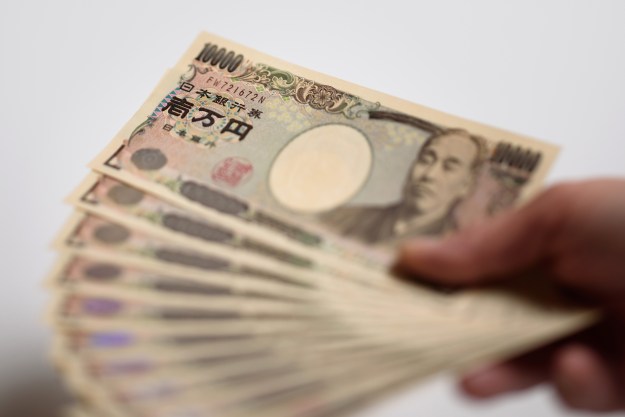
Customers of Tokyo Electric have paid over ¥2.4 trillion to cover nuclear-related costs since the beleaguered utility hiked electricity prices in September 2012, it has been learned.
The amount covers the costs of clerical work for processing applications for compensation related to the Fukushima disaster, totaling ¥25.9 billion, as well as ¥56.7 billion set aside as resources to repay the government for compensation paid on its behalf, and ¥41.4 billion in depreciation costs for two reactors at Fukushima No. 1 that were decommissioned, and for all four reactors at the Fukushima No. 2 plant, which Fukushima Prefecture and others want decommissioned.
The costs also include those to maintain its nuclear plants and to deal with the March 2011 triple meltdown at the Fukushima No. 1 plant.
According to materials held by Tokyo Electric Power Company Holdings Inc., the utility counted ¥601.4 billion in annual nuclear-related expenses as part of its overall costs when it raised electricity prices.
The expenses for nuclear power operations include ¥47.2 billion for measures related to Fukushima No. 1, including outsourcing radiation control-related work and inspecting and maintaining equipment to handle radioactive water.
The nuclear-related costs are expected to keep growing because Tokyo Electric has been unable to restart any reactors. When it raised prices in September 2012, the utility assumed that the ratio of nuclear power to its overall electricity supply would fall to 7 percent from 22 percent.
Tepco plans to restart two reactors at its Kashiwazaki-Kariwa nuclear plant in Niigata Prefecture, but this plan also may fail because Niigata’s new governor, elected in October, opposes restarts.
The Ministry of Economy Trade and Industry plans to have Tepco customers who have since switched to other utilities shoulder part of Tepco’s nuclear-related costs starting as early as fiscal 2020.
http://www.japantimes.co.jp/news/2016/12/30/business/tepco-customers-shelled-%C2%A52-4-trillion-nuke-related-costs-since-2012-rate-hike/#.WGae71zia-c
December 30, 2016
Posted by dunrenard |
Japan | Customers Burden, Nuclear-Related Costs, Tepco |
Leave a comment

Radiation from Fukushima has now officially entered the food chain, can it be fixed?
Fukushima, as you may recall, was an accident at a Japanese nuclear complex back in 2011. A combination of an earthquake and a tsunami damaged the facility, allowing radioactive water to pour into the ocean. In fact, ABC news reported that — “The 2011 quake of magnitude-9 was the strongest quake ever recorded in Japan, and it generated a tsunami that knocked out the Fukushima plant, causing the worst nuclear crisis since Chernobyl a quarter of a century earlier.”
Since then, there have been various plans to stabilize the situation, but all have failed. Robots sent in to find the cores have failed. The National Post wrote that — “It takes two years to build them. Each operator trains for a month before picking up their controls. And they get fried by radiation after working for just 10 hours.” That’s right. In just 10 hours, the robots are so damaged, they don’t work. In fact, the article continued by writing — “The reason the robots need to get inside core is that officials need to locate the plant’s melted (and still very radioactive) fuel rods before they can plan on what to do next”.
Wait, you might be asking yourself, what about the ice wall? Well, RT reported that — “In March, (a Japanese) construction company began building the frozen wall of earth around the four damaged nuclear reactors and had completed most of the 1.5-km (1 mile) barrier. TEPCO hoped that the frozen earth barrier would thwart most of the groundwater from reaching the plant and divert it into the ocean instead.
However, little or no success was recorded in the wall’s ability to block the groundwater during the five-month-period. The amount of groundwater reaching the plant has not changed after the wall was built.” That’s right. This plan has also failed.
And while media has effectively been silent on the issue, it does pop up from time to time, such as this article in Science World Report — “(a) Woods Hole chemical oceanographer, tracked down the radiation plume in the seawater. He proposed that the (contaminated) seawater crossed the Pacific Ocean and reached (America’s) west coast.” In fact, that article revealed that — “the seawater samples collected last winter from the Tillamook Bay and Gold Beach in the west coast indicated the presence of low levels of nuclear radiations. Thankfully, the levels were calculated too low to cause any harmful impact on the human or animal population of the region.” But that is missing the point – radiation has now officially entered the food chain.
Although the article in Science World Report notes that the levels were low, it should also be noted that their samples were all the way across the ocean. What if they took a sample in other places? Surely, logic would dictate that it would become stronger, the closer one gets to Japan.
It should also be noted that radioactive water continues to pour into the ocean on a daily, hourly, and by the minute basis. That hasn’t stopped. It is happening right now. It happens while you sleep. It happens while you are awake. It happens even if no one is talking about it and has been happening for more than 5 years, and there is no plan to stop it.
https://sputniknews.com/radio_connecting_the_pieces/201612301049141973-obama-fukushima-gift-that-keeps-on-giving/
December 30, 2016
Posted by dunrenard |
Fukushima 2016 | Contamination, Food Chain, Fukushima Daiichi, Pacific Ocean, radiation |
Leave a comment
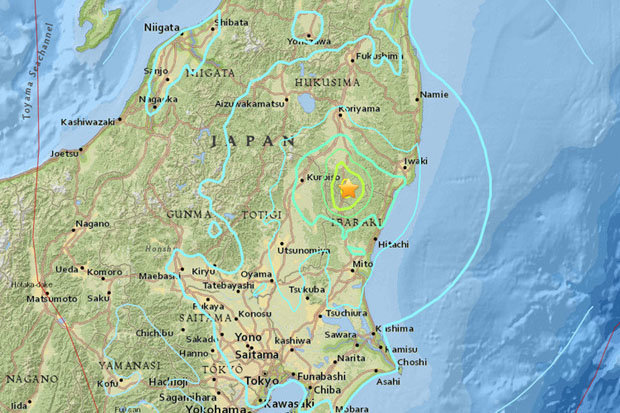
Earthquake rocks Japan near Fukushima nuclear power plant on December 28, 2016.
The 6.3 magnitude quake struck Japan’s Kanto region, the Japanese Meteorological Agency says.
It’s an area that neighbours the Tōhoku region, where Fukushima Power Plant had a disastrous meltdown in 2011.
English language news site The Japan News said the jolt was powerful enough to be felt in the region, part of Honshu Island.
While Japan’s NHK news agency said the tremors were felt throughout “wide areas” of the east coast, though the epicentre was not at sea.
The Tokyo Electric Power Company, which is still decommissioning Fukushima’s ruined reactors, said they were investigating the impact of the quake there.
“At the moment, we have not confirmed the impact of the earthquake on our main power facilities (including nuclear power plants),” the statement read.
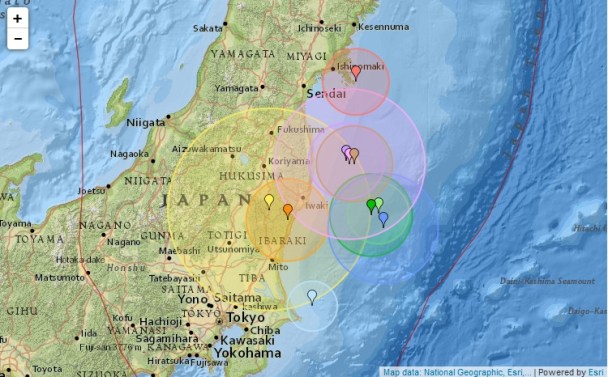
Latest earthquakes in Japan:
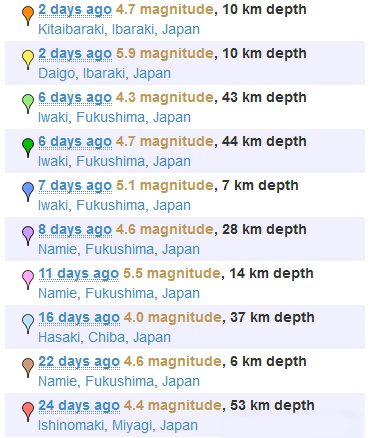
The quake struck Ibaraki Prefecture at 9.38pm local time (12.38pm UK time). There were no immediate reports of damages or injuries. Ibaraki Prefecture has had 176 earthquakes in the past 365 days.
Japan has a long history of powerful earthquakes and sits within the world’s most active volcano and earthquake zone.
The zone, called the Pacific Ring of Fire, is home to 90% of earthquakes and 81% of the most powerful quakes.
Over 6,500 quakes felt across Japan in 2016
The number of earthquakes that hit Japan this year with an intensity of one or higher was 3.5 times the figure for the previous year.
The Japanese seismic scale varies from zero, which is imperceptible to people, to seven, the most strongly felt by humans.
Japan’s Meteorological Agency says that as of 7 PM on Thursday, 6,566 earthquakes of one or higher had shaken the country this year. Last year’s number was 1,842.
In 2011, Japan registered more than 10,000 such quakes that were aftershocks of the Great East Japan Earthquake that triggered tsunami. But the number of quakes had been on a consistent downtrend since then.
The agency cites the Kumamoto earthquakes as a cause for the increase in 2016. The serial tremors in the western prefecture led to more than 3,000 such quakes in April alone.
The agency says 33 quakes registered an intensity of “5 lower” or above. Many people find it hard to move and walking is difficult at the “5 lower” intensity.
In November, a quake off Fukushima Prefecture caused tsunami from Japan’s northern to western Pacific coast, with a maximum 1.4-meter tsunami in a neighboring prefecture.
Agency officials urge people to prepare for quakes and tsunami in their daily life because strong tremors could strike anywhere in Japan.
https://www3.nhk.or.jp/nhkworld/en/news/20161230_05/
December 30, 2016
Posted by dunrenard |
Japan | Earthquakes |
Leave a comment
 Toshiba’s nuclear power hopes in meltdown The Australian, REBECCA SMITH, KOSAKU NARIOKA, The Wall Street Journal, December 30, 2016 Toshiba seemed poised to profit from a global nuclear power revival when it paid $US5.4 billion to win a bidding war for Westinghouse Electric in 2006.
Today, that bet threatens to sink the venerable Japanese conglomerate, as cost overruns and missed deadlines on nuclear-reactor projects around the world have forced it to warn investors that it may soon have to report billions of dollars in losses.
Toshiba lost a fifth of its market value on Wednesday and its stock fell another 15 per cent early yesterday in Tokyo as panicked investors rushed to sell shares. The news of the nuclear writedowns came just as Toshiba was beginning to emerge from an earlier accounting scandal……
Westinghouse’s woes help explain why the nuclear industry has seen its dreams of global growth sputter. Until recently, the company was regarded as the industry’s front-runner, the only nuclear supplier to have landed contracts for its next-generation reactor in both the US and China.
But a series of missteps and unexpected problems have snarled nuclear projects by Westinghouse and rivals including Areva and General Electric.
Fifty-four reactors are under construction in 13 nations, and 33 are badly delayed, according to the World Nuclear Industry Status Report, an independent annual assessment. Blunders have afflicted projects regardless of location, reactor design or construction consortiums.
To lower costs and speed construction times, Westinghouse and its competitors came up with cookie-cutter plant designs in which major sections would be built as modules in factories and then hauled to plant sites for final assembly. Gone was the customisation that added expense.
But the strategy appears to have backfired. “Supply-chain issues just moved from the plant sites to the factories. It didn’t solve the basic issue of quality control,” said Mycle Schneider, a nuclear expert based in Paris. And cookie-cutter designs meant flaws got replicated.
In France, Areva is trying to get to the bottom of a scandal involving falsified records for critical components that have wound up in nuclear plants there and in other countries, including the US. The problems appear to stretch back decades and to have gone unnoticed despite supposedly strict government supervision. Areva has said it is co-operating with investigators from France and other nations.
“There’s a world-wide problem with managing these megaprojects,” said Edwin Lyman, senior scientist for the Union of Concerned Scientists in Washington, DC. “Managers grossly underestimated the time and cost of construction.”………
It isn’t clear if Toshiba’s difficulties would have an impact on the eight reactors it is trying to complete in the US and China, but its disclosure suggests the situation is worse than previously understood.
In the US, Westinghouse was providing reactor components for nuclear plants in Georgia and South Carolina being built by utilities Southern and SCANA.
At the site of Southern’s Vogtle 3&4 reactors going up in rural Georgia, there have been rumours of financial problems for months, said Will Salters, business manager for the union IBEW Local 1579.
He said the site now employs about 500 of his electricians but the union recently received notice that there would be a hiring freeze pending a review.
“We’ve been hearing for months they were broke and had to meet certain milestones by Southern to get paid,” Mr Salters said……
Toshiba is already on a Tokyo Stock Exchange watchlist because of the accounting scandal that forced it to take a $US1.3bn writedown for its nuclear business in November 2015.
At the time, it acknowledged that it had overstated its profit for seven years. http://www.theaustralian.com.au/business/wall-street-journal/toshibas-nuclear-power-hopes-in-meltdown/news-story/1ba4929c61e94f528062d1aa44ab1b30
December 30, 2016
Posted by Christina Macpherson |
business and costs, Japan |
Leave a comment
 Nuclear watchdog approves scrapping Monju reactor https://www3.nhk.or.jp/nhkworld/en/news/20161228_19/ Japan’s Nuclear Regulation Authority has approved the government’s decision to scrap the Monju prototype fast-breeder nuclear reactor. The education, science and technology ministry briefed the NRA on Wednesday about the government’s decision last week about the troubled reactor in Fukui Prefecture on the Sea of Japan coast.
NRA Chairman Shunichi Tanaka said the decision is in line with the recommendation it made in November last year.
In it, the NRA urged an overhaul of a research and development project involving the reactor. It said scrapping the reactor would be an option unless a new operator were found for it.
The ministry also told the NRA on Wednesday that it will draw up a basic plan for decommissioning the reactor by next April.
It added that to eliminate possible safety risks soon, it will instruct reactor operator Japan Atomic Energy Agency to remove nuclear fuel from the reactor in about 5 and half years.
Tanaka asked the ministry to oversee the decommissioning process to ensure safety. He said the NRA will study whether relevant laws should be amended to step up regulation. He added that it may also set up an expert team to monitor the process.
December 30, 2016
Posted by Christina Macpherson |
decommission reactor, Japan, reprocessing |
Leave a comment
 Toshiba Says Nuclear Writedown May Reach Billions of Dollars, Bloomberg, by Pavel Alpeyev, Finbarr Flynn, and Tesun Oh December 27, 2016,
-
Nikkei, NHK report charges related to Westinghouse acquisition
-
Writedowns may be more than company’s projected profit
Toshiba Corp. can’t get past its accounting problems.
The Japanese company, which paid a record fine a year ago for its bookkeeping practices, warned that it may now have to take another charge of several billion dollars related to an acquisition made by U.S. unit Westinghouse Electric.
The company’s shares fell 12 percent to 392 yen at the close in Tokyo on Tuesday, the biggest decline since December 2015, after earlier reports that it may book a loss of as much as 500 billion yen ($4.3 billion). Toshiba issued a statement after the market closed, saying that while the final writedown was yet to be determined, it would affect earnings.
The loss is related to a dispute over the value of an acquisition by Westinghouse of a nuclear construction company called CB&I Stone & Webster Inc. The Nikkei newspaper said the writedown would come to about 100 billion yen, while Japanese broadcaster NHK said the charge may total as much as 500 billion yen. Such a loss would eclipse the 168 billion yen in net income that analysts had been projecting for Toshiba’s current fiscal year through March. The Tokyo-based company booked a loss of 460 billion yen last year.
While the company can probably offset a one-time loss of 100 billion yen, a charge of 500 billion yen would be “severe” given its potential impact on shareholders’ equity, said Takao Matsuzaka, a credit analyst in Tokyo at Daiwa Securities Group Inc.
“It comes down to how much they can counterbalance any loss,” Matsuzaka said by phone. “Improving the financial base of the company is a top priority.”………
Toshiba was fined a record 7.4 billion yen in December last year after Japanese regulators found the manufacturer misled investors by filing false financial statements. The watchdog has also been gathering evidence to determine whether to seek criminal prosecutions of former bosses over the scandal. https://www.bloomberg.com/news/articles/2016-12-27/toshiba-says-nuclear-unit-faces-billions-of-dollars-in-charges
December 30, 2016
Posted by Christina Macpherson |
business and costs, Japan |
Leave a comment