This mother followed a doctor’s advice to evacuate from Tokyo due to the ill health of her daughter following the Fukushima Daiichi nuclear disaster. The doctor told her that 9 out of ten of his child patients in metropolitan Tokyo had reduced white blood cell counts due to exposure to radioactivity and that if they moved away some of them might recover. Many other families have evacuated from Tokyo but this has not been covered by the press. She speaks in English with an English transcription below the Japanese transcription.
“I am standing here to tell you that the Fukushima nuclear catastrophe is not over. I evacuated to Kansai three years after the Fukushima nuclear power plant accident. Where do you think I evacuated from? I evacuated from Tokyo. Do you know that Tokyo has serious radioactive contamination? Tens of millions of people in East Japan live with radioactive contamination now.
My daughter was 5 years old at the time of the accident She was a cheerful and active girl. But after one year since the accident, her health conditions became bad and she was troubled by strange symptoms.
She told me, “Mommy, I feel so bad, I have no power, My hands hurt, my legs hurt, my body hurts!” In fact, my daughter became so sick that she could not live a normal life at all.
At that time I met a doctor who was working with the issue of radiation exposure in the metropolitan area. He said, if sick children are moved to the west away from contaminated eastern Japan, some of them might recover health.
According to his examinations after the accident, the number of white blood cells of children living in the metropolitan area was decreasing. And he added that neutrophils among white blood cells were particularly badly decreasing. And as we found out later, our two children also had the same condition. Today, the doctor is saying that for every ten children in Tokyo, nine of them have below standard numbers of neutrophils.
When I consulted the doctor about my daughter, he clearly stated that she was affected by the radiation exposure.
And he gave me advice to move my daughter
In any case, I tried to move my sick daughter out of Tokyo. Whenever we stayed in a place where there was no radioactive contamination, she became very well. But when we returned to Tokyo, she became sick again. We did not have the option to stay in Tokyo, we just fled from Tokyo and came here.
Living in East Japan means living with many radioactive materials, and it is not a place where people can live in good health.
So, as evacuees from eastern Japan, we are calling for evacuation to West Japan. Our existence here is not broadcasted on the radio nor published in newspapers. So, I am telling you about it now.
After the accident, we were told that radiation was not a problem and health damages would not occur. But it was not true. Many of us have evacuated from East to West due to various health problems. Many people are getting sick today in East Japan. People are dying without noticing that it is due to radiation. Many Japanese can not face this nuclear catastrophe.
Now my daughter is 12 years old. She’s healthy and enjoys everyday life. She has good friends and says she wants to continue living here forever.
My daughter wrote this , It says she wants to stay here with her friends forever.
She is very afraid that nuclear power plants now get restarted and may have another accident. If that happens, she will have to move away from here again. If another nuclear accident happens, she knows that she can not live in this country anymore.
And accidents are not the only ones that threaten her. This is a basic issue but after the accident, our government has not confined radioactive materials to one place.
On the contrary, our government has a policy of diluting toxic radioactive waste by mixing it with water, cement or other materials, and making it look harmless.
And the Japanese government now allows incineration of highly contaminated nuclear waste of up to 8000 Bq/kg, 80 times as high as before the Fukushima accident. It’s all to reduce the enormous amount of nuclear waste. But as conscientious scientists say, we should never burn radioactive materials. It should never have been allowed.
We don’t seem to be able to stop this crazy, irresponsible way of our government.
I hope that my daughter can live in her beloved country where she was born and raised. Please try to know what is going on in Japan now.
We are telling the world that the nuclear disaster is far from being over.”
In addition Dr Shigeru Mita closed his medical practice in Tokyo in 2014 and left the city, declaring it “not fit for human habitation” when he found that all his child patients of 10 years old and under had reduced neutrophils and other illnesses due to “chronic internal exposure to low dose ionising radiation”:
In 1982, Chugoku Electric Power Co. announced a plan to start the construction of a massive nuclear power plant in the small coastal town of Kaminoseki Japan. Kaminoseki boasts some of the best fishing in Japan and it’s the livelihood of the inhabitants of the town, a livelihood locals fear will be taken away from the community if the proposed power plant gets built.
Midori Takashima grew up in Hiroshima until she was 18 and would see the inscription on the Hiroshima Peace Memorial which read “Rest In Peace, we’ll never let this happen again.” She grew up weary of the dangers of nuclear radiation.
Takashima is now a Patagonia grantee and activist founder of the Kaminoseki Nature Conservation Association and physically taking the memorial’s creed into action.
In 2011, Midori and her crew of activists bought a boat for research, and the more they looked into it, the more rare and endangered species they found in the local ecosystem, from the finless porpoise to the Japanese murrelet. In her goal to make sure that ecosystem remains unharmed, Midori teamed with Patagonia to create the short video “Sea of Miracles.”
Is Japan moving to renege on no-nuclear weapon policy? http://www.nationmultimedia.com/detail/opinion/30337363, opinion January 29, 2018 , By Cai Hong ,China Daily , Asia News Network , Tokyo Beatrice Fihn, executive director of the 2017 Nobel Peace Prize-winning International Campaign to Abolish Nuclear Weapons, was denied a meeting with Japanese Prime Minister Shinzo Abe during her recent visit to Japan.
Visiting Hiroshima and Nagasaki, Fihn urged Japan, the only country to have suffered nuclear attacks, to play a leading role in the campaign aimed at abolishing nuclear weapons.
It is not difficult to understand why Abe shunned Fihn. She has appealed to the Japanese government to join the nuclear weapons ban treaty. But on January 17, Japan and the United States allowed their agreement on nuclear cooperation to automatically renew in July, when it is supposed to expire. The agreement, signed in 1988, gives Japan blanket approval to reprocess spent nuclear fuel for weapons-grade plutonium. Japan adopted nuclear power in the 1950s (one of the first countries to do so) at the urging of the US. In fact, the US began engaging with Japan on nuclear energy soon after the end of World War II, as it was eager to promote and sell its nuclear reactor technology around the world.
Japan had to return some 300 kilograms of plutonium, provided by the US, Britain and France decades ago for what was described as research purposes, to the US in 2016. Thanks to the US-Japan cooperation agreement on peaceful uses of nuclear energy, Japan now owns 48 tonnes of separated plutonium, most of which is in Europe, where it was reprocessed. And Japan has no clearly defined use for this huge amount of nuclear material. Japan once hoped fast reactors would help meet its energy security needs, take care of its surplus plutonium and solve its spent fuel problem. But that hope has faded. Commercialising of fast reactors is still decades away. Surplus weapons-grade material have always worried arms control experts. In 1977, believing that nuclear weapons could be made from plutonium extracted from spent nuclear fuel in Japan’s light water reactors, the US conveyed its view to Tokyo, according to Japanese diplomatic documents declassified in 2013.
Now, despite having surplus plutonium, Japan is planning to open a massive spent reactor fuel reprocessing plant at Rokkasho, the country’s large commercial reprocessing facility, in the autumn of 2018. It is designed to produce 8,000kg of weapons-usable plutonium enough to make 1,000 nuclear weapons a year, according to International Atomic Energy Agency standards. The ostensible reason for operating the plant is recycling spent fuel to supply power reactors and a fast reactor.
In their Foreign Policy article on August 17, 2017, Henry Sokolski, executive director of the Nonproliferation Policy Education Centre, and William Tobey, a senior fellow at Harvard Kennedy School, said Japan has five reactors on line and terminated its only fast reactor project. So Japan cannot operate Rokkasho in the northern part of the country without piling up tons of plutonium for years on end. The Rokkasho plant would significantly increase Japan’s existing plutonium surplus. A potential linkage between Rokkasho’s product and nuclear weapons has been hanging over the project from the start. Japan will only be able to burn a fraction of the huge amount of nuclear material extracted there. Japanese reprocessing plants will produce reactor-grade plutonium, but they will have high weapons’ potential.
Japan has a “three Nos” national policy on nuclear weapons: no possession, no manufacture and no allowing nuclear weapons on Japanese territory. But there is no lack of Japanese politicians talking about nuclear weapons. Former Japanese defence minister Shigeru Ishiba, seen as a possible successor to Abe, said in September that Japan should have the technology to build a nuclear weapon if it wants to do so. He added, though, that he is not taking the position that Japan should have nuclear weapons.
Japan’s plutonium surplus goes against its principle of not possessing the material without a specified purpose.
Fukushima heroes on both sides of the Pacific still fighting effects of radiation, stress and guilt, Following the catastrophic earthquake and tsunami of 2011, selfless Japanese workers battled nuclear-reactor meltdown, and thousands of US troops provided disaster relief. Today, many are counting the cost to their mental and physical health, SCMP, BY ROB GILHOOLY, 25 JAN 2018 Christmas Day saw dozens of masked men descend on Futaba, in the northeast of Japan’s main island of Honshu. They moved deliberately along deserted streets, clearing triffid-like undergrowth and preparing to demolish derelict buildings. Their arrival marked the beginning of an estimated four-year government-led project to clean up Futaba, which has succumbed to nature since its residents deserted almost seven years ago.
Futaba is one of two towns (the other being neighbouring Okuma) on which sits the 350-hectare Fukushima Daiichi Nuclear Power Plant, which experienced multiple reactor meltdowns and explosions in March 2011, contaminating huge swathes of land and forcing the evacuation of 160,000 residents – all the result of the magnitude-nine undersea Tohoku earthquake and the devastating mega-tsunami that hit on March 11, claiming up to 21,000 lives.
Despite 96 per cent of Futaba still being officially designated as uninhabitable due to high radiation levels, the government has set spring 2022 as the return date for its 6,000 or so residents. That the government has also built a 1,600-hectare facility to store up to 22 million cubic metres of nuclear waste in the town has led to doubts that many will return.
I find it difficult to believe anyone would want to go back,” says Ryuta Idogawa, 33, a former employee at Fukushima Daiichi operator Tokyo Electric Power Co (Tepco), and one of the so-called “Fukushima 50” – a hardcore of station workers who remained on-site after 750 others had been evacuated, battling to bring the melting reactors under control at great risk to their own safety.
“They say time heals,” Idogawa adds, “but that depends how deep the wounds are.”
On the other side of the world, members of a different and larger group of people than the Fukushima 50 are suffering health problems, ostensibly as a result of the disaster. For more than seven weeks following the catastrophe, the United States mounted a massive disaster relief mission, dubbed Operation Tomodachi (the Japanese word means “friend”). The initiative directly or indirectly involved 24,000 US service personnel, 189 aircraft and 24 naval ships, at a total cost US$90 million.
While the mission was lauded a success by the US and Japanese governments, during Operation Tomodachi, thousands of US sailors were inadvertently exposed to a plume of radiation that passed over their ships, which were anchored off the Pacific coast of Japan. Since then, several hundred have developed life-changing illnesses, such as degenerative diseases, tumours and leukaemia, and defects have been detected in foetuses of some pregnant women. All are a result, they claim, of being irradiated by the plume.
According to one report, 24 sailors, who were in their late teens or 20s at the time, are living with a variety of cancers. At least six have died since 2011, while others suffer post-traumatic stress disorder (PTSD).
“Unlike the nuclear plant workers, these sailors had no protective clothing, in fact some of them literally had no shirts on their backs because they had given all their clothing away to people they saved from the tsunami waves,” says Charles Bonner, a lawyer at one of three law offices representing 402 sailors who have filed a US$5 billion lawsuit against Tepco and General Electric Co, a suit that has been given the go-ahead to be heard in a US federal court. (Fukushima Daiichi’s Reactor No. 1 – the plant’s oldest reactor – was built by American manufacturer General Electric Co.)
“And because they had given away all their bottled water to tsunami survivors, they were drinking desalinated water that also had been contaminated,” Bonner continues. “I do not doubt the psychological impact of the disasters on the plant workers, but at least they had masks and protective clothing, as required by law. The sailors, however, knew nothing of their exposure and were literally marinated in the radiation.”……….
lawyer Bonner says that while his team represents more than 400 sailors, there were a further 69,600 American citizens – military and civilian – potentially affected by the radiation, and who have yet to join the class lawsuit.
He also expresses indignation at the Royal Society study and the viewpoint of cancer expert Thomas, insisting that the health of the young US service men and women aboard the ships was endangered and in many cases compromised by Operation Tomodachi. “[The sailors] were certified by the Navy as healthy and fit, so why are they getting cancer and other illnesses?” he asks. “That can only be because they were exposed to radiation. It can’t just be a coincidence.”…….. http://www.scmp.com/magazines/post-magazine/long-reads/article/2130359/fukushima-heroes-both-sides-pacific-still
The Tokai No. 2 nuclear power plant in Ibaraki Prefecture is seen in March 2017.
For more than 40 years, Japan Atomic Power Co. used erroneous data regarding the location of nuclear fuel rods within the reactor at its Tokai No. 2 power plant in Ibaraki Prefecture, the company has said.
The information — which is used to plan for severe accidents — is necessary for regulatory safety screenings before the reactor’s restart can be approved.
Japan Atomic Power said Monday it will examine whether the data mishap has affected safety screenings.
The company said the data in question pertains to the distance between the top of the fuel rods and the bottom of the reactor. The distance was initially set to be 9,152 millimeters, but it was changed to 9,203 millimeters due to a change to fuel rod specifications during the design and construction process.
But the original figures were used since 1974. The problem was discovered on Jan. 11 by the Nuclear Regulation Authority, a government watchdog.
The plant, which started operations in November 1978, reached the standard operating life of 40 years this year.
Japan Atomic Power has filed for a 20-year extension. The plant must clear safety screening by November to be approved by the NRA for an extension.
Fukui Prefecture’s days as the center of Japan’s nuclear power industry might be fading with five reactors scheduled for decommissioning. These include the No. 1 (front) and No. 2 units at Kansai Electric Power Co.’s Oi plant in Fukui, shown in this January 2017 photo.
OSAKA – With 13 commercial nuclear reactors — more than any other prefecture — Fukui has long been Japan’s nuclear power capital. Prior to the 2011 Great East Japan Earthquake and triple core meltdown at the Fukushima No. 1 plant, Fukui’s plants provided up to half of Kansai’s electricity.
As only two commercial reactors run by Kansai Electric Power Co. are in operation and a total of five Fukui reactors are scheduled to be decommissioned by midcentury, the prefecture’s days as a nuclear power center might appear to be ending. But despite the growing use of renewables, entrenched public opposition to atomic power, and unanswered questions about its future costs and economic competitiveness, Fukui’s nuclear-friendly utility executives and corporate leaders, as well as local politicians, have not given up on the idea of building even more reactors.
Earlier this month, Fukui Gov. Issei Nishikawa met with Kepco President Shigeki Iwane and Mamoru Muramatsu, the president of Japan Atomic Power Co., which runs two reactors at the Tsuruga plant in Fukui — including one scheduled for decommissioning.
They discussed building new reactors at Tsuruga — which have long been planned — and replacing Kepco’s decommissioned reactors with new ones. The meeting took place amid a review of the nation’s energy mix.
“What needs to be done by midcentury? We need to make this clear in the nation’s energy plans as we look to 2050,” Iwane said at a news conference afterward.
A couple of weeks later, Minister of Economy, Trade and Industry Hiroshige Seko told reporters that even without building new reactors or replacing old ones, Japan could meet its national goal of having atomic power provide between 20 and 22 percent of all electricity by 2030.
Nishikawa, traditionally a staunch supporter of nuclear power plants and the subsidies his prefecture receives for hosting them, has so far avoided coming out directly in favor of building new reactors.
He told reporters at the end of 2017 that he wasn’t going to wade into the debate of whether it was a good or bad idea. Instead, he said he was waiting for the central government’s view.
“The government needs to make clear what its stance is on new reactors. The main problem is gaining social trust for the use of nuclear power,” Nishikawa said.
That could be difficult. A survey by the Fukui Shimbun in October showed that 49.8 percent of respondents favored slowly exiting from nuclear power. Gaining national and local approval to build new reactors could take years.
Yet even if construction of new Tsuruga reactors goes ahead, it will likely be years, possibly decades, before they are completed at an unknown cost. In the interim, the use of renewables is expected to expand even more. Furthermore, as Japan’s population declines and uses more innovative energy-efficient products, predicting electricity needs in 10 — let alone 30 or so — years from now is problematic at best.
Adding reactors in Fukui will certainly increase the electricity supply for Kansai. But what pro-nuclear politicians and businesses in Fukui want now is assurances from Tokyo that they will still financially benefit from new reactors even if their output may not be needed or wanted by consumers.
Guardian 21st Jan 2018, Finance aside, renewables will be nuclear’s real foe in the future. The
new chief executive of EDF Energy admitted last week that it had been a
“monstrous job” drumming up the backing for the UK’s first new
nuclear power station in decades.
The next nuclear plants will need to be built for a much cheaper, subsidised price
of power than the generous one awarded to EDF’s Hinkley Point C, Whitehall has warned.
So those who undertake construction will need every possible weapon at their disposal to
defeat their biggest enemy: financing.
Public finance is the magic sword that some think could slay the Godzilla-sized challenge facing Japanese
firm Hitachi, which wants to build a plant on the island of Anglesey.
Japanese press reports recently put the capital cost of the project at
£19.5bn, with more than £14bn to come from loans from the UK and Japanese
governments. The rationale for Tokyo is clear. The big question is why the
UK would want to shoulder the risk of such a huge scheme.
The idea of taxpayers taking on any of the construction risk of building new nuclear
plants has been political anathema for years. It has become a government
mantra that the subsidy cost promised to EDF is justified because the
public is not bearing the risks of building Hinkley.
FT 16th Jan 2018, The British and Japanese governments have agreed to explore options for
joint-financing of a nuclear power station in Wales, a softening of the
UK’s previous refusal to commit public funds to construction of new
reactors.
Letters have been exchanged between London and Tokyo in which the
governments expressed support for the Wylfa nuclear project on Anglesey and
agreed to consider contributing to its financing, according to several
people involved in the process.
Wylfa is being developed by Horizon, a subsidiary of Hitachi, the Japanese conglomerate whose reactor technology
will be used by the plant. Partial public financing for Wylfa would
represent a new approach to nuclear construction in the UK by drawing on
the government’s access to cheap debt to reduce capital costs.
But it would also expose taxpayers to some of the associated heavy expense and
high risk. Ministers have been rethinking policy after heavy criticism of
the £20bn Hinkley Point C plant under construction in Somerset. The full
cost of that project is being met by its French and Chinese investors and
recovered through a levy on consumer bills.
Japan’s Asahi Shimbun newspaper reported last week that the UK and Japanese governments were
willing to work with financial institutions to extend as much as $20bn in
loans to finance Wylfa, and also to acquire a stake in Horizon. Several
people involved in the project said no such details had yet been agreed but
the exchange of letters between the two governments late last month had
“increased confidence on all sides”. https://www.ft.com/content/dd916c18-facd-11e7-9b32-d7d59aace167
KYODO Toshiba Corp. said Thursday it is set to eliminate its negative net worth and improve its finances by some ¥410 billion ($3.68 billion) after agreeing to sell its claims in its now-bankrupt U.S. nuclear unit to a U.S. hedge fund.
The company has agreed to sell claims related to Westinghouse Electric Co. to the Baupost Group LLC for $2.16 billion, with the transaction set to be completed by the end of the month. Westinghouse-related shares will be sold by the end of March to Canada’s Brookfield Business Partners LP, which will acquire the U.S. nuclear unit.
The value of Westinghouse itself is $1 after it filed for Chapter 11 bankruptcy protection in March.
Following the sale of Westinghouse-related claims and shares, Toshiba will likely secure net assets of ¥270 billion.
Toshiba had projected its negative net worth would stand at some ¥750 billion at the end of March, but raised ¥600 billion through a third-party allocation of new shares last month, effectively removing the risk of delisting. But it still needed cash to improve its financial standing.
The Japanese conglomerate is also looking to complete the sale of chip unit Toshiba Memory Corp. by the end of March to further improve its dire financial standing. The sale, announced in September to a consortium led by U.S. fund Bain Capital, has been reported to be worth roughly ¥2.4 trillion.
Toshiba Memory is currently going through antitrust screenings in multiple countries.
Japanese Public Broadcaster NHK Issues False Alarm Over North Korean Missile Launch
It’s deja vu, all over again.
Just four days after residents of Hawaii lived through 38 minutes of doomsday hell, after a false public broadcast alarm announced that a ballistic missile launch was headed for the island, only to reverse and announce later it was a mistake, moments ago Japan’s National broadcaster NHK’s app issued a false J-Alert to phones over a North Korean missile launch at 6:55 p.m. Tuesday evening local time.
The message, received by phone users with the NHK app installed on their devices, read: “NHK news alert. North Korea likely to have launched missile. The government J alert: evacuate inside the building or underground. “
It then promptly corrected the error just 5 minutes later, at around 7 p.m.
After the false alert, NHK issued an on-air apology on Tuesday evening local time, saying “the news alert sent earlier about NK missile was a mistake. No government J alert was issued.”
“Around 6:55pm earlier we reported on the NHK’s news site and NHK’s news disaster prevention application ‘Pattern of North Korean missile launch’ but this was incorrectly issued. J alert has not appeared. I must sincerely apologize,” the news outlet wrote.
The bizarre coincidence of two false alarms announcing the start of nuclear war is certainly suspicious.
The false alert came on the same day as the US and Canada planned to host talks in Vancouver over the crisis on the Korean Peninsula after a year of missile tests and threats from the North.
As a reminder, on Saturday, an emergency alert notification sent out to residents of Hawaii warning of an incoming “ballistic missile threat” turned out to be a false alarm. The error was blamed on an employee who “pushed the wrong button.” “BALLISTIC MISSILE THREAT INBOUND TO HAWAII. SEEK IMMEDIATE SHELTER. THIS IS NOT A DRILL,” the emergency alert read.
The warning went out on television and radio as well as cell phones, according to Hawaii Gov. David Ige, sparking panic amongst some residents. A second emergency alert was sent to phones in Hawaii 38 minutes after the initial message confirming the false alarm.
Japan issues false alarm over missile launch, days after Hawaii alert gaffe
TOKYO (Reuters) – Japanese public broadcaster NHK issued a false alarm on Tuesday saying North Korea appeared to have launched a missile and urging people to take shelter, but it managed to correct the error within minutes.
The mistake took place at a tense time in the region following North Korea’s largest nuclear test to date in September and its claim in November that it had successfully tested a new type of intercontinental ballistic missile that could reach all of the U.S. mainland.
Pyongyang regularly threatens to destroy Japan and the United States.
But there were no immediate reports of panic or other disruptions following the NHK report. A similar gaffe caused panic in the U.S. state of Hawaii at the weekend.
Japan’s public broadcaster NHK’s false alarm about a North Korean missile launch which was received on a smart phone is pictured in Tokyo, Japan January 16, 2018.
NHK’s 6.55 p.m. (0955 GMT) alert on its web site said: “North Korea appears to have launched a missile…The government urges people to take shelter inside buildings or underground.”
The same alert was sent to mobile phone users of NHK’s online news distribution service.
In five minutes, the broadcaster put out another message on the website correcting itself and said no government warning, called “J-alert”, had been issued.
“This happened because equipment to send a news flash onto the Internet had been incorrectly operated. We are deeply sorry,” an NHK announcer said on its 9:00 p.m. news program, bowing deeply in apology.
Last Saturday, a false missile alert during a civil defense drill caused panic across Hawaii. A state emergency management agency spokesman attributed it to human error and a lack of fail-safe measures.
Beatrice Fihn, executive director of the International Campaign to Abolish Nuclear Weapons, and Akira Kawasaki, a member of the group’s international steering committee, place a wreath at the Cenotaph for A-bomb Victims in Hiroshima on Monday.
HIROSHIMA – The leader of the International Campaign to Abolish Nuclear Weapons, which won last year’s Nobel Peace Prize, has been denied a meeting with Prime Minister Shinzo Abe, the nongovernmental organization Peace Boat said Monday.
ICAN has asked the Japanese government twice since late December to arrange a meeting between Abe and Executive Director Beatrice Fihn during her visit to Japan, but the Foreign Ministry declined the requests, citing scheduling conflicts, according to Peace Boat, a major steering group member of the Geneva-based organization.
Expressing disappointment over failing to meet Abe on her first visit to Japan, Fihn said in Hiroshima that she wanted to talk with him about how the world can avoid devastation of the type inflicted on Hiroshima and Nagasaki.
Fihn said she hopes to meet with the prime minister at the next opportunity.
Atomic-bomb survivors also expressed disappointment.
“Does Prime Minister Abe understand the significance of ICAN winning the Noble Peace Prize? It is very regrettable to feel this difference of attitudes between the government and atomic-bomb survivors,” said Hiroko Kishida, a 77-year-old hibakusha in Hiroshima.
Chief Cabinet Secretary Yoshihide Suga told a news conference in Tokyo that ICAN’s requests were declined “due to a conflict of schedule. Nothing more, nothing less.”
Fihn arrived in Japan on Friday. After visiting Nagasaki through Sunday, she moved on to Hiroshima and was scheduled to hold discussions with Diet members in Tokyo on Tuesday before leaving Japan on Thursday.
Abe departed Japan on Friday for a six-nation European tour and is scheduled to return home Wednesday.
ICAN, founded in 2007, is a coalition of NGOs that involves about 470 groups from more than 100 countries.
NAGASAKI (Kyodo) — The leader of the antinuclear group International Campaign to Abolish Nuclear Weapons, which won last year’s Nobel Peace Prize, on Saturday called on Japan to take part in the treaty banning nuclear weapons.
In a keynote speech at a symposium in Nagasaki, one of two atomic-bombed cities, ICAN Executive Director Beatrice Fihn criticized the Japanese government for not joining the treaty banning nuclear weapons, adopted by 122 U.N. members in July.
“The Japanese government should know better than any other nation the consequences of nuclear weapons, yet Tokyo is happy to live under the umbrella of U.S. nuclear protection, and has not joined the treaty to prohibit nuclear weapons,” Fihn said. “Is your government okay with repeating the evil that was done to Nagasaki and Hiroshima to other cities?”
Japan sat out the treaty negotiations, as did the world’s nuclear-armed countries and others relying on the deterrence of the U.S. nuclear umbrella.
Japan remains the only country to have sustained wartime atomic bombings, over 72 years after the U.S. bombing of Hiroshima on Aug. 6, 1945, and of Nagasaki three days later.
Fihn said as long as the Japanese government believes in the effect of deterrence from the U.S. nuclear umbrella, it means encouraging nuclear proliferation and along with other nations living under the protection of nuclear alliances, it is moving the world closer toward the eventual use of nuclear weapons.
“It is unacceptable to be a willing participant in this nuclear umbrella,” she said.
The executive director of the international group campaigning for a total ban on nuclear weapons, meanwhile, applauded atomic bomb survivors, or hibakusha, for their efforts to speak out not to repeat the tragedy.
“The nuclear ban treaty would not exist without the hibakusha,” she said.
At a panel discussion held after the speech, Nobuharu Imanishi, director of the Japanese Foreign Ministry’s Arms Control and Disarmament Division, said Japan is facing a “severe security environment” given North Korea’s nuclear and missile development.
“Joining the treaty would damage the legitimacy of nuclear deterrence provided by the United States,” he said.
In responding to his remarks, Fihn called on symposium visitors to put more pressure on politicians through grassroots activities to have them change the nuclear policy.
She has requested that the Japanese government set up a meeting with Prime Minister Shinzo Abe during her stay in Japan.
Asked at a press conference about what she would like to tell the prime minister if she can meet him, Fihn said she wants to ask Abe to show leadership in the movement for nuclear disarmament as the leader of the only country to have been attacked with nuclear weapons.
Abe is currently on a six-nation European tour through Wednesday.
Asahi Shimbin 11th Jan 2018, Japan and Britain have agreed to provide the lion’s share of financing for
a nuclear power plant project planned by Hitachi Ltd. on the island of
Anglesey off northwest Wales, sources said.
The two governments are set to extend a combined 2.2 trillion yen ($20 billion) in loans with the help of
financial institutions and acquire a stake in Horizon Nuclear Power Ltd., a
British company purchased by Hitachi to operate the plant. The total cost
of the project is estimated at 3 trillion yen.
It is extremely rare forgovernments to shoulder such a huge portion of the overall project cost. By
doing so, they must share the risk if the project suffers a financial loss,
but that tab could eventually be passed on to taxpayers. http://www.asahi.com/ajw/articles/AJ201801110057.html
After the tsunami: how tidal energy could help Japan with its nuclear power problem, The Conversation, Simon Waldman, Most of the new renewable energy available in 2030 is likely to be solar and wind, along with existing hydropower, but some contribution from the tides is possible. To this end, a zone in the Goto Islands of Nagasaki Prefecture has been designated for tidal energy development, and a cluster of companies plans to install the first turbine in 2019. This project will be of the tidal stream type, where underwater turbines are placed in the free flow without any dam or barrage, similar to the MeyGen projectin Scotland……
Former Prime Minister Junichiro Koizumi, far right, speaks at a press conference at the House of Representatives First Members’ Office Building in Tokyo’s Chiyoda Ward on Jan. 10, 2018, to announce the bill for a nuclear free, renewable energy plan. Sitting on the far left is former Prime Minister Morihiro Hosokawa.
Junichiro Koizumi-led group pitches bill calling for ‘immediate halt’ to Japan’s reliance on nuclear power
A group advised by former Prime Minister Junichiro Koizumi on Wednesday unveiled details about a bill calling for an “immediate halt” to Japan’s reliance on nuclear power to prevent a recurrence of the 2011 Fukushima disaster. The group is seeking to submit the bill to an upcoming Diet session in cooperation with opposition parties.
Sporting his signature leonine hairdo, Koizumi, one of Japan’s most popular prime ministers in recent memory, made a rare appearance before reporters with his unabated frankness, lashing out at Prime Minister Shinzo Abe over his persistent pro-nuclear stance.
“You may think the goal of zero nuclear power is hard to achieve, but it’s not,” Koizumi said, adding that he believes many lawmakers of the ruling Liberal Democratic Party support nuclear power passively out of respect for Abe, but that they could be persuaded to embrace a zero-nuclear policy under a different leader.
“Judging from his past remarks, I don’t think we can realize zero nuclear power as long as Abe remains in power. But I do think we can make it happen if he is replaced by a prime minister willing to listen to the public,” Koizumi told a packed news conference organized by Genjiren, an anti-nuclear association for which he serves as an adviser along with Morihiro Hosokawa, another former prime minister.
Claiming that the March 2011 triple meltdown at the Fukushima No. 1 nuclear power plant exposed the “extremely dangerous” and “costly” nature of atomic power — with a means of disposing of spent fuel still not in sight — the bill drafted by Genjiren calls for Japan’s “complete switch” to renewable energy.
Specifically, it demands that all active nuclear reactors be switched offline immediately and that those currently idle never be reactivated. It also defines the government’s responsibility to initiate steps toward a mass decommissioning and to map out “foolproof and safe” plans to dispose of spent fuel rods.
The bill sets forth specific numerical targets, too, saying various sources of natural energy, including solar, wind, water and geothermal heat, should occupy more than 50 percent of the nation’s total power supply by 2030 and 100 percent by 2050.
That Japan has experienced no mass power shortage following the shutdown of all 48 reactors in the wake of the 2011 crisis, except for a handful since reactivated, is in itself a testament to the fact that “we can get by without nuclear power,” Koizumi said.
A 2017 white paper by the Ministry of Economy, Trade and Industry shows Japan’s reliance on nuclear power has plunged to a mere 1 percent after the Fukushima meltdowns. The vast majority of Japan’s power is supplied by sources such as liquefied natural gas, coal and oil.
Although the controversy over nuclear power has rarely emerged as a priority in recent parliamentary debates, the creation of the main opposition Constitutional Democratic Party of Japan may herald a breakthrough.
Later Wednesday, Genjiren pitched the bill to the CDP in a meeting with some of its members, including former Prime Minister Naoto Kan, who was in power when the Fukushima crisis erupted.
The CDP seeks to submit its own “zero nuclear power” bill to a regular Diet session slated to kick off later this month, positioning itself as a clearer anti-nuclear alternative to Abe’s ruling party than its predecessor, the Democratic Party.
The DP, which until recently held the most seats among opposition parties in both houses of the Diet, had failed to go all-out in crusading against nuclear power under the previous leadership of Renho, who goes by only one name.
At a party convention last March, Renho balked at adopting an ambitious target of slashing Japan’s reliance on nuclear power to zero by 2030 after reportedly facing resistance from party members beholden to the support of electricity industry unions.
In a preliminary draft unveiled Wednesday, the CDP’s bill-in-the-making called for ridding Japan of nuclear power “as soon as possible.”
Civic group proposes bill for Japan to exit nuclear power
TOKYO (Kyodo) — A Japanese civic group of activists, scholars and former politicians proposed a bill Wednesday to promote the country’s use of renewable energy and exit nuclear power in the hope of gaining the support of ruling and opposition parties.
“We will definitely realize zero nuclear plants by winning the support of many citizens,” former Prime Minister Junichiro Koizumi, who serves as the group’s adviser, told a press conference.
Koizumi, whose remarks still carry influence among the public, and former Prime Minister Morihiro Hosokawa have been campaigning against the resumption of nuclear reactors taken offline after the 2011 Fukushima disaster. Hosokawa is also an adviser to the group.
The leader of the group, Tsuyoshi Yoshiwara, later exchanged views with officials of the anti-nuclear Constitutional Democratic Party of Japan, the largest opposition force in the House of Representatives. The group is urging lawmakers to submit the bill to the Diet’s ordinary session to be convened on Jan. 22.
The government led by Prime Minister Shinzo Abe, who doubles as the head of the ruling Liberal Democratic Party, is promoting the restart of idle nuclear reactors.
Chief Cabinet Secretary Yoshihide Suga told a separate press conference Wednesday the government’s stance to bring reactors back online once they clear safety reviews of the Nuclear Regulation Authority “will not change.”
“We will also seek to lower the dependence on nuclear power as much as possible by maximizing the use of renewable energy and the thorough implementation of energy-saving measures,” the top government spokesman said.


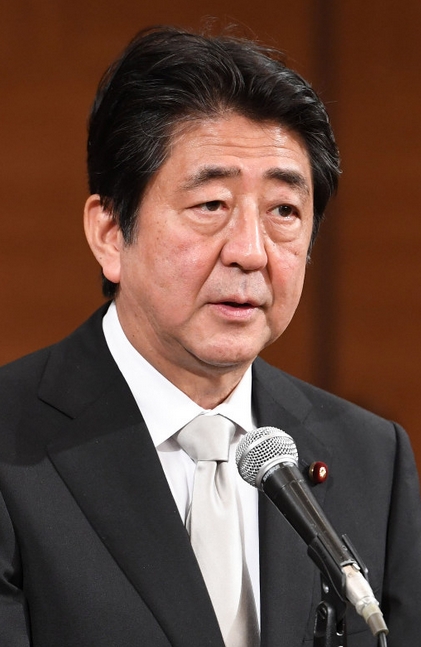 Is Japan moving to renege on no-nuclear weapon policy? http://www.nationmultimedia.com/detail/opinion/30337363, opinion January 29, 2018 , By Cai Hong ,China Daily , Asia News Network , Tokyo Beatrice Fihn, executive director of the 2017 Nobel Peace Prize-winning International Campaign to Abolish Nuclear Weapons, was denied a meeting with Japanese Prime Minister Shinzo Abe during her recent visit to Japan.
 Fukushima heroes on both sides of the Pacific still fighting effects of radiation, stress and guilt, Following the catastrophic earthquake and tsunami of 2011, selfless Japanese workers battled nuclear-reactor meltdown, and thousands of US troops provided disaster relief. Today, many are counting the cost to their mental and physical health, SCMP, BY ROB GILHOOLY, 25 JAN 2018 Christmas Day saw dozens of masked men descend on Futaba, in the northeast of Japan’s main island of Honshu. They moved deliberately along deserted streets, clearing triffid-like undergrowth and preparing to demolish derelict buildings. Their arrival marked the beginning of an estimated four-year government-led project to clean up Futaba, which has succumbed to nature since its residents deserted almost seven years ago.

 FT 16th Jan 2018, The British and Japanese governments have agreed to explore options for








