On 11 March 2011 Fukushima nuclear workers were sure that they would die
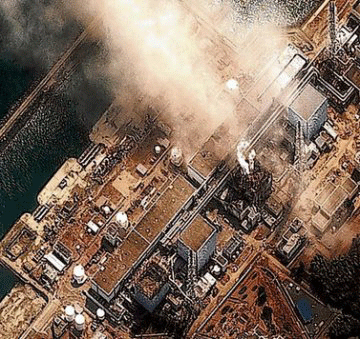 Hydrogen explosion left Fukushima No. 1 workers sure they would die Fukushima Emergency what can we do ? Sep 10, 2014 FUKUSHIMA – This is the fourth in a series on the Fukushima nuclear catastrophe based on the accounts of people who struggled to contain the crisis in its early stages. Job titles and ages are as of March 2011.
Ground Self-Defense Force member Yuichi Sato was on a firetruck heading for the Fukushima No. 1 nuclear plant the day after it had been decimated by the March 11, 2011, tsunami — without being notified what his mission was.
That morning, the truck was in the town of Okuma, Fukushima Prefecture, where the 22-year-old was born.
He was several kilometers from his destination, but the familiar sights were gone — the walls of houses had collapsed, road surfaces were buckled and the town looked deserted.
“It was like a ghost town,” said Sato, who was part of the GSDF’s artillery regiment based in the prefecture. “I thought everyone must have rushed to escape.”
The regiment’s firefighting unit had received orders the night before to go to the nuclear plant. His squad members thought their task was to prepare for the possibility of a fire, but Sato, even though he had been told since childhood that nuclear power is safe, felt something out of the ordinary was happening.
When they arrived at the plant gates at around 7 a.m. on March 12, he was greeted by an acquaintance who works for Tokyo Electric Power Co.
Sato wondered why the Tepco employee was wearing a mask. He didn’t know at the time that the radiation level at the site was rising because a meltdown was occurring in the No. 1 reactor due to the loss of its key cooling functions.
After entering the emergency response office building, the firefighting squad was finally told what to do.
At the time, Tepco was using a single fire engine to inject water into reactor 1, but every time the truck had to return to a storage tank to be refilled, it meant halting the flow of water being sprayed into the unit.
The SDF’s firetrucks were supposed to assist in the operation.
Inside the main control room for reactors 1 and 2, workers were demoralized and exhausted after an attempt to open valves to reduce the pressure in reactor 1 ended in failure because of high radiation levels inside the reactor building.
It was imperative to open the valves to prevent a rupture of the containment vessel……….
“I later found it was a hydrogen explosion at the building, but at the time, I thought the reactor containment vessel itself had exploded,” said Mitsuyuki Ono, 51, who was also in the room. “I thought it was all over.”
There were some 40 reactor operators in the room, but everyone was exhausted after trying to do all they could to prevent the worst.
Izawa decided to stay along with the more experienced workers, and let the others evacuate.
The roughly 10 workers who remained included Izawa, Ono and 48-year-old Kazuhiro Yoshida, whom Ono had once worked with in operating the No. 1 reactor.
Ono was wondering how he could communicate to his family what he thought might be his final moments. If he wrote anything down on paper, it would probably be incinerated if there was an explosion.
“Why don’t we take a photo at the end,” Yoshida proposed cheerfully, as if he had read Ono’s mind. Everyone seemed to liven up.
The room, which was dark due to the loss of power, was lit up with flashing cameras.
Ono, having a picture taken with Yoshida by his side, a junior operator whom he trusted and liked the most, thought: “If the radiation level rises or hot steam comes into the control room, I will probably die. But someone will find the camera some day. Then this picture will be the witness to my life.”
Source: Japan Times
http://www.japantimes.co.jp/news/2014/09/10/national/hydrogen-explosion-left-fukushima-no-1-workers-sure-they-would-die/
At Fukushima nuclear emergency, safety inspectors were the first to flee
Nuclear safety inspectors first to flee stricken Fukushima plant June 03, 2014 Asahi Shimbun, By SHINICHI SEKINE/ Staff Writer Safety inspectors with the government’s nuclear watchdog body were the first to flee when disaster struck the Fukushima No. 1 nuclear power plant in March 2011.
The exodus of Nuclear and Industrial Safety Agency (NISA) officials compromised communications between the government and plant operator Tokyo Electric Power Co. at a critical juncture.
This unexpected turn of events shows that the government itself was not sure what role it should play in the nuclear crisis.
The plant manager, Masao Yoshida, who died last year of esophageal cancer, was questioned by the government’s Investigation Committee on the Accident at the Fukushima Nuclear Power Stations several months after the accident. The Asahi Shimbun obtained a copy of his testimony.
According to his testimony, on March 15, 2011, four days after the Fukushima plant was hit by the magnitude-9.0 Great East Japan Earthquake and tsunami, 90 percent of the workers in the plant withdrew to the Fukushima No. 2 nuclear power plant some 10 kilometers away, ignoring Yoshida’s order to remain in and around the compound of the No. 1 facility.
Before that, however, NISA inspectors fled the site immediately after the accident even though they should have stayed to assess what steps were needed to deal with the accident. They went to makeshift government headquarters set up about five kilometers from the No. 1 plant.
On March 15, the makeshift facility was transferred to Fukushima city, some 50 kilometers away. With all government safety inspectors absent from the No. 1 nuclear power plant, the government had no direct means to grasp what was happening there. As a result, it was forced to depend entirely on TEPCO for information.
But channels of communication between the government and TEPCO did not go smoothly. This chaotic situation prompted the prime minister, Naoto Kan, to go to TEPCO’s head office in Tokyo. That was the catalyst for the government and TEPCO to jointly set up headquarters in Tokyo, 230 kilometers away, to deal with the nuclear accident.
The government’s investigation committee’s reports based on Yoshida’s recall of the events highlight the withdrawal of the No. 1 plant’s workers to the No. 2 plant even though the government’s safety inspectors were the first to flee……..http://ajw.asahi.com/article/0311disaster/fukushima/AJ201406030026
Fukushima radiation release was made worse by operator error
Asahi: Tepco ‘failure’ may have increased Fukushima radiation release — Concern over ‘lethal levels’ escaping from ruptured containment vessel See also: NHK: “The unimaginable was happening” — Workers say part of Reactor 2 containment vessel destroyed — After alarming pressure readings, “we heard a loud bang… pressure is now zero” (VIDEO)
Title: TEPCO’s failure at math may have increased radiation release at Fukushima plant
Source: AJW by The Asahi Shimbun
Author: TOSHIHIRO OKUYAMA
Date: June 05, 2013
Workers miscalculated pressure levels inside a reactor during the early stages of the Fukushima nuclear crisis, leading to a reduction in cooling water and a possible increase in the volume of radioactive materials released.
Tokyo Electric Power Co. estimated the pressure inside the No. 2 reactor containment vessel at 400 kilopascals […]
The actual pressure was 40 kilopascals, far below the 101 kilopascals of the surrounding atmosphere, suggesting that a large amount of radioactive materials escaped from the reactor.
TEPCO later discovered the mistake but did not announce it. […]
“I think the airtightness (of the containment vessel) has not been maintained,” [Tadayuki Yokomura] said, according to a video footage of a TEPCO teleconference. […]
The difficulty in venting fueled concerns that mounting pressure could rupture the containment vessel and release lethal levels of radioactive materials.
Early on March 15, TEPCO temporarily evacuated all but the minimum required 70 or so workers from the plant compound. […]
Human rights in Fukushima’s ongoing radiation crisis
Watch: Immediate attention from medical experts is needed for people in contaminated areas — Fukushima is ongoing crisis (VIDEO) http://enenews.com/watch-immediate-attention-medical-experts-needed-people-contaminated-areas-fukushima-ongoing-crisis-video
November 27th, 2012
Title: How to protect the right to health and life of citizens from radiological contamination? – Ms. Mari INOUE, Esq., Human Rights Now New York
Source: ERF2012
Date: Nov 25, 2012
Ms. Mari INOUE, Esq., Human Rights Now New York: Recommendation by [the United Nation’s investigator] Mr. Grover will not be published until next summer. So it’s a long process and both of those processes are legally non-binding.
So how are we going to protect the rights of people, especially the right to health and life of people in contaminated area, because they need immediate assistance. They need immediate attention from medical communities and civil societies, because what’s going on in Fukushima is ongoing crisis.
Five years or more before Fukushima nuclear plant safe enough to fully investigate
1 This Month



Shut down the radiation-damaged Heysham nuclear reactors now
To see nuclear-related stories in greater depth and intensity – go to https://nuclearinformation.wordpress.com

Say No to NASA’s Reckless Nuclear Reactor on the Moon
Say No to NASA’s Reckless Nuclear Reactor on the Moon
-
Archives
- October 2026 (256)
- September 2026 (339)
- August 2026 (330)
- July 2026 (355)
- June 2026 (287)
- May 2026 (306)
- April 2026 (356)
- March 2026 (251)
- February 2026 (267)
- January 2026 (308)
- December 2025 (358)
- November 2025 (359)
-
Categories
- 1
- 1 NUCLEAR ISSUES
- business and costs
- climate change
- culture and arts
- ENERGY
- environment
- health
- history
- indigenous issues
- Legal
- marketing of nuclear
- media
- opposition to nuclear
- PERSONAL STORIES
- politics
- politics international
- Religion and ethics
- safety
- secrets,lies and civil liberties
- spinbuster
- technology
- Uranium
- wastes
- weapons and war
- Women
- 2 WORLD
- ACTION
- AFRICA
- Atrocities
- AUSTRALIA
- Christina's notes
- Christina's themes
- culture and arts
- Events
- Fuk 2022
- Fuk 2023
- Fukushima 2017
- Fukushima 2018
- fukushima 2019
- Fukushima 2020
- Fukushima 2021
- general
- global warming
- Humour (God we need it)
- Nuclear
- RARE EARTHS
- Reference
- resources – print
- Resources -audiovicual
- Weekly Newsletter
- World
- World Nuclear
- YouTube
-
RSS
Entries RSS
Comments RSS

