About the Incineration of Fukushima Decontaminated Soil and Debris
From 2011 to 2014, decontaminated soil and debris were incinerated all over Japan. Informations about the quantity incinerated nationwide during those years in various locations are hard to get. As of today incineration is still ongoing in Eastern Japan, but we do no know if it is still ongoing or not in other parts of Japan as somehow nothing is being published about it.
Incineration is never a solution for radiation contaminated waste, it reduces the volume of the contaminated waste but at the same time redistributes its contained radionuclides into the nearby environment, thus endangering the health of the people living there.
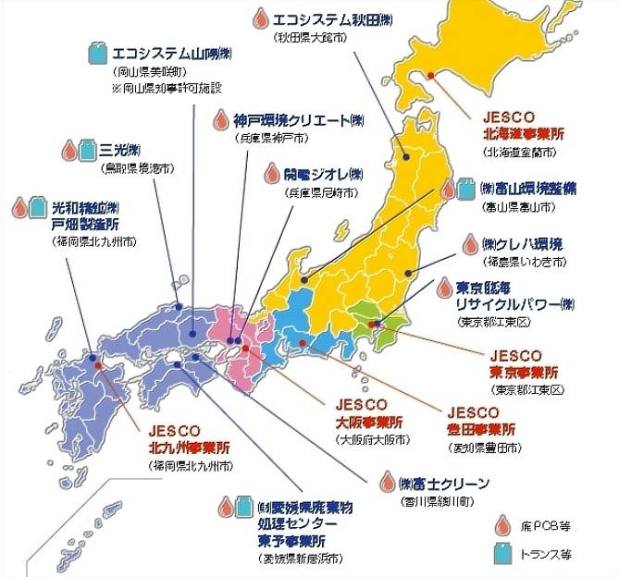
However, this article from September 2014 gives a list of the incineratition locations and of the disposal companies involved, among those Japan Environmental Safety Corporation (JESCO) was the most prominent, as JESCO was the company already handling most of the PCB waste disposal.
JESCO Hokkaido Office (Muroran City) JESCO北海道事業所(室蘭市)
Ecosystem Akita (Odate city) エコシステム秋田(大館市)
Kureha environment (Iwaki City, Fukushima prefecture) クレハ環境(福島県いわき市)
Tokyo Seaside Recycle Power (Koto Ward) 東京臨海リサイクルパワー(江東区)
JESCO Tokyo Office (Koto Ward) JESCO東京事業所(江東区)
Toyama Environment Improvement (Toyama City) 富山環境整備(富山市)
JESCO Toyota Plant (Toyota City, Aichi) JESCO豊田事業所(愛知県豊田市)
JESCO Osaka Plant (Osaka City) JESCO大阪事業所(大阪市)
KEIO GEORE (Amagasaki City, Hyogo) 関電ジオレ(兵庫県尼崎市)
Kobe Environment Creation (Kobe City) 神戸環境クリエート(神戸市)
Ecosystem Sanyo (Misaki Town, Okayama Prefecture) エコシステム山陽(岡山県美咲町)
Sanko (Sakaiminato City, Tottori Prefecture) 三光(鳥取県境港市)
Fuji Clean (Ayagawa Town, Aya Gun, Kagawa Prefecture) 富士クリーン(香川県綾歌群綾川町)
Ehime Prefecture Waste Treatment Center Toyo Works (Niihama City) 愛媛県廃棄物処理センター東予事業所(新居浜市)
Lightwork refining tobata manufacturing plant (Kitakyushu city, Fukuoka prefecture) 光和精鉱戸畑製造所(福岡県北九州市)
JESCO Kitakyushu Office$ JESCO北九州事業所
Taiwan protests at Public Hearings about Japanese food & Citizen Group Radiation Measuring
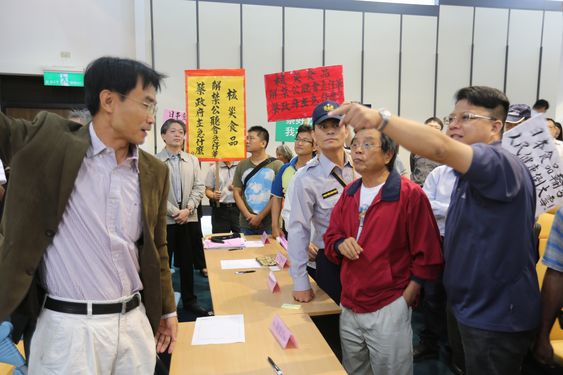
Public hearings on Japanese food in Tainan ends in rowdy protests
Taipei, Nov. 12 (CNA) A melee broke out at a public hearing in Tainan on lifting the ban on imports of currently banned Japanese food from radiation-affected prefectures when protesters clashed with government officials Saturday.
A total of 10 public hearings are scheduled from Nov. 12-14 in the northern, central, southern and eastern parts of Taiwan, as part of a government move widely seen as paving the way for its impending lifting of a five-year ban on Japanese produce from the prefectures affected by radiation following the Fukushima nuclear disaster in 2011.
The public hearing in Tainan was the first of the 10, and was presided over by Chen Chun-yen (陳俊言), head of the department of international cooperation under the Council of Agriculture. Also on hand were Chen Chi-chung (陳吉仲) , deputy director of the Council of Agriculture, and officials from the Office of Food Safety under the Executive Yuan, the Ministry of Health and Welfare and the Atomic Energy Council.
But shortly after the opening of the public hearing, Tsai Yu-hui(蔡育輝), a caucus whip of the opposition Kuomintang at the Tainan City Council, and City councilor Lu Kun-fu (盧崑福), led around two dozen protesters into the venue, demanding that the public hearing be suspended.
They lashed out at the central government for its “sneaky” way of holding the public hearing. Lu said that, as a Tainan city Councilor, he only learned about the public hearing Friday evening.
An agitated Lu later twice pushed and shoved Chen Chun-yen during the protest. Tsai and Lu presented a signature book to show that only one citizen attended the public hearing, shouting “is this the one-man public hearing?”
They questioned if this was really a public hearing with only government officials, protesters and policemen attending. The protesters also dashed to the chairman’s table and hoisting protest cards, with some smashing the papers on the chairman’s table and spilliing his cup of water, shouting angrily that “the food that even Japanese would not eat are going to be exported to Taiwan. Are (our) children worth nothing?”
A larger contingent of police force was sent in to help maintain order, and the public hearing was interrupted for nearly one hour.
When it reopened, the protesters said the procedure was a gross violation of regulations, noting that a public hearing should be announced 10 days before it is held. “This public hearing doesn’t count, as the Executive Yuan has grossly violated the law,” a protester said.
Chen Chun-yen said that the COA will review the procedural issue.
About 10 minutes before the forum ended, the chairman’s table was overturned. Chen Chun-yen then called an end to the forum after the scheduled two-hour period for the forum had expired. Both COA officials left the venue under police escort.
A similar public hearing was held in Chiayi Saturday morning in which participants said the government’s responsibility is to protect the people and ensure food safety.
They asked why the government wants to import risky food from Japan. Chen Chi-chung has said that a partial reopening of currently banned Japanese products could come next year, but would not include items from Fukushima.
In an interview with CNA on Thursday, he said Japan will still be required to produce certificates of radiation inspection and certificates of origin with each shipment, and Taiwan will also inspect imports shipment by shipment at its border.
Food imports from the Japanese prefectures of Fukushima, Ibaraki, Tochigi, Gunma and Chiba have been suspended in Taiwan since March 25, 2011 because of fears of radioactive contamination in those areas from a meltdown at the Fukushima Daiichi Nuclear Power Plant.
The nuclear disaster was triggered by a massive earthquake and tsunamis on March 11, 2011.
Since May 15, 2015, importers of Japanese food products have been required to present certificates of origin to prove that their items do not originate from any of the five prefectures.
For some imports such as tea, baby food, dairy and aquatic products, radiation inspection certificates are also required.
Various Japanese groups have reportedly asked Taiwan to lift the ban since President Tsai Ing-wen (蔡英文) assumed office in May. Her administration is keen to build stronger ties with Japan.
http://focustaiwan.tw/news/asoc/201611120005.aspx
Group to measure Japan radiation
A civic group opposed to the government’s plan to lift a ban on food and agricultural produce from five prefectures in Japan is to travel to Japan later this month to measure radiation levels.
Green Consumers’ Foundation chairman Jay Fang (方儉) said that while a government team went to Japan in August, it did not have its own radiation detection equipment.
The team relied entirely on data provided by Japan, and the report provided was very “rough,” he said.
Fang said he and three others would head to 25 locations in six prefectures — Chiba, Fukushima, Gunma, Tochigi, Ibaraki and Yamanashi — to check radiation levels in the food and the environment for themselves on Nov. 22.
Taiwan suspended food imports from the Japanese prefectures of Fukushima, Ibaraki, Tochigi, Gunma and Chiba following the 2011 Fukushima Dai-ichi nuclear power plant disaster.
The Executive Yuan on Thursday evening announced that 10 public hearings would be held nationwide from yesterday to tomorrow on the issue, amid reports that it will soon lift the ban on imported food items from the prefectures.
Fang said that he has two-and-a-half years of experience working in a laboratory and that his companions also have similar experience.
He said that they are “qualified personnel” and that their equipment meets International Atomic Energy Agency standards.
The inspections will be streamed live on his Facebook page, he said, welcoming the government to follow them online.
http://www.taipeitimes.com/News/taiwan/archives/2016/11/13/2003659171
Project ETHOS: Living in the Nuclear Garden, a Crime Against Humanity(Part I)

In the words of a recent opinion column, * the planners for mutilated life (life also called half-life **) claim that contamination dangerous in principle, would turn into harmless in real life. This is a lie of extreme violence, an insult to the relatives of victims and survivors, in order to restrict evacuations and protection measures, thus exposing people affected with terrible health damage. It’s a crime.
So it is to stem the horror of the effects of contamination by camouflaging it, by pretending that we can escape danger by confronting it, by managing our fear.
Because in effect it is indeed to block any heresy attempt questioning the religion of the atom, and for that to discreetly fill hospital with patients and cemeteries with victims, rather than to evacuate and to treat populations of lands which became uninhabitable. Therefore no question to recognize the inhumanity and the terrible dangers of the atom.
In what follows we will see how and why everything is done to hide an atomic crime and what it costs to the affected populations, with great responsibility of the French nucleocracy and especially of two of its main representatives Jacques Lochard and Gilles Hériard Dubreuil.
*Tribune libre collective de : Cécile Asanuma-Brice, Jean-Jacques Delfour, Kolin Kobayashi, Nadine Ribault et Thierry Ribault.
http://sciences-critiques.fr/tchernobyl-fukushima-les-amenageurs-de-la-vie-mutilee/
**Michael Ferrier, « Fukushima – Récit d’un désastre » 2012.
Children are particularly affected by nuclear disasters, only one treatment is available : pectin.
Growing children are particularly vulnerable facing contamination by radionuclides dispersed in the environment whether by atomic disaster until thousands of kilometers, or by the multiple incidents that dot the operation of nuclear facilities. What to do to protect the multitude of sick or weakened children living in contaminated territories? Principal victims, their situation worsens from year to year, depending on the content of Césium137 and Strontium 90 in their bodies. It is cesium that lodges itself in all organs (a bit like potassium) which is easier to measure in order to assess the need for treatment. Only pectin, known to enable the removal of heavy metals including these radionuclides, can relieve these young people.
Experience in Belarus show that cures of three weeks of vitamin apple pectin can reduce the cesium, therefore reducing the damages. Those cures can be renewed every three months and must be accompanied by safeguards in the selection and preparation of food.

But the nuclear lobby has blocked the spread of pectin cures.
Incredible as it may seem, apple pectin is a true opponent of nuclear lobby. It is the only explanation for the war the nuclear lobby is conducting against apple pectin. In fact those who are responsible for ensuring protection against the effects of nuclear, claim that the patients are only victims of stress and irrational fears which annihilate the immune system. For the ICRP * and the CEPN ** to recognize that pectin cure, known for its ability to remove cesium and strontium, is effective in improving the health of children, is to recognize that they are contaminated. Thus in the name of the nuclear religion hundreds of thousands of young people are condemned to an amputated life .
It is criminal on the part of our state agencies to propose to Belarus and Japan who are only asking for that, the application of Ethos-Core program which role is to stifle the effects of radioactivity, to save the image of the nuclear industry and of the country, and that to the expense of victims abandoned to their fate. And we can be sure, it will be the same in our home country in case of nuclear disaster, everything will be done to downplay the effects, to hide the reality of the risks and human damages, the goal being to save the nuclear industry regardless of the price, in the name of the identity and the “greatness” of France. …
Let us demand that pectin be provided to second generation children of Chernobyl, almost all sick, and to the first generation children of Fukushima. In view of the nuclear catastrophe that threatens us more and more, also demand that pectin be available for distribution in France, such as iodine for the thyroid.
It is through studies conducted within the framework of the Ethos and Core projects that the strategy of the nuclear lobby has been defined, we must explain what it is so as to understand what is happening in Belarus, in Japan and what is planned for us ….
The Franco-European Ethos project : The ETHOS project was implemented by a research team involving four scientific organizations:
CEPN is a a non-profit organisation created in 1976 to establish a research and development centre in the fields of optimisation of radiological protection and comparison of health and environmental risks associated with energy systems. This program was initially strongly focused on the development and application of the principle of optimization of radiological protection. Over the past few years, however, the group’s research programme has also been directed towards the involvement of stakeholders in radiological risk assessment and management, and spreading the radiological protection culture. The studies are undertaken by a group of around fifteen engineers and economists. The research programme is evaluated by a Scientific Council. The association currently has four members: the French public electricity generating utility (EDF), the Institute of Radiological Protection and Nuclear Safety (IRSN), the French Alternatives Energies and Atomic Energy Commission (CEA) and AREVA.
Agro ParisTech (officially French Institut des sciences et industries du vivant et de l’environnement, or Paris Institute of Technology for Life, Food and Environmental Sciences) is a French university-level institution, also known as a “Grande Ecole“. It was founded on January 1, 2007, by the merger of three life sciences grandes écoles. AgroParisTech is the merger of three graduate institutes of science and engineering located around Paris. https://en.wikipedia.org/wiki/Agro_ParisTech
The University of Technology of Compiègne (French: Université de Technologie de Compiègne), or UTC is a public research university located in Compiegne, France. It was founded in 1972 by Guy Deniélou and is described as the first experimental technological university in France. https://en.wikipedia.org/wiki/University_of_Technology_of_Compi%C3%A8gne
Mutadis that coordinates, was founded in 1990, Mutadis is a multidisciplinary research and intervention team specialised in sustainable development issues and governance of high-risk activities to society at territorial, national and international levels. http://www.mutadis.org/en/
Ethos Project was presented as to sustainably improve the living conditions of people affected by the long-term presence of radioactive contamination following the Chernobyl accident. This is actually several successive programs, always financed by Europe and France, Ethos 1 and 2, Core, Sage (hereinafter called the “Ethos Project” or even “Ethos” for short). They have been tested on populations living in contaminated territories in Chernobyl, in villages located southeast of Belarus, about 200 km from Chernobyl.
The official purpose was to study how to help people living in territories contaminated by radioactivity. The real purpose is to pretend that we can live there, when observing basic precautions, especially as everything is done to convince that there is little contamination, and can adapt. These campaigns are supported by french “experts” (Gilles Hériard Dubreuil, Jacques Lochard) and international experts, members of organizations responsible for the safety of nuclear power.
These intervenors deny the reality of dangerous contamination. Their criminal strategy will even announce that the damages suffered by the inhabitants are not due to radioactivity, but to the fear and phobia of nuclear power that make them weak and sick. So any therapy such as distribution of pectin, has no place to be … All suiting well the government of that country eager to get rid of this sordid affair.
And it is the same in Japan where Jacques Lochard prevails there to promote the revival of nuclear power under French tutelage in needs of this valued customer…
It will be the same for us after a disaster, it is planned to evacuate the least possible of inhabitants, and to persuade those who remain that it is without risk… For that even to impose a very large received dose standard: In France, the current standard is 1 mSv / year, but if there is an accident, it will be 20 mSv / year and if you are unfortunate enough to live too close to the disaster, it will be 100 mSv / year. Food contamination threshold is also expected to be multiplied in all European countries so as not to hinder trade and exports (business as usual).
The epidemic of fatal or disabling diseases that develop later with pain does not matter to our leaders, health and genetic damages are deferred in time, the crime of the approach will be diluted, especially as the inhabitants will be held responsible for the effects of the disaster of which they are nevertheless victims…
Does not the Ethos project constitute a crime against humanity, to which the responsible are the International Commission on Radiological Protection (ICRP) and the CEPN?
Some figures to clearly see the issues: (see press release of the Criirad of 10.03.2016). Under normal circumstances, the maximum dose limit applicable to the public is 1 mSv / year and this amount is already at a high level of risk… if 66 million French received a dose of 1 mSv, this exposure would cause indeed ultimately probably more than 22,000 radiation-induced cancers, not counting all non-cancer diseases, malformations and genetic diseases. If we multiply these numbers by 20 or 100, the risk levels identified by the authorities are staggering.
It also underlines the very high number of those who will be exposed to lower doses, but which are nonetheless unacceptable: infants, children, teens could receive quite legally dose of 10 mSv / year, that is to say doses that can only be considered for nuclear workers.
More reference levels are high and more the costs of protective measures for people and compensations for damages are alleviated. The choice of the authorities is quite coherent, indeed the nuclear industry is exempt from the application of the polluter-pays principle: for the most part, the health and economic consequences of the disaster will be borne by the victims and the State. The decision to set such high dose thresholds is the result of 20 years of efforts of the nuclear lobby, and more specifically of the French nuclear lobby (CEPN). Rather than offering compensation to start a new life in a healthy environment, they direct the victims to be resilient and adapt to the new reality: that of a contaminated environment. This is obviously all to benefit the nuclear industry. The major nuclear accidents are not disasters anymore but manageable risks.
To be convinced of the crime of applying the ethos program, see these documents:
– Tribune libre collective de : Cécile Asanuma-Brice, Jean-Jacques Delfour, Kolin Kobayashi, Nadine Ribault et Thierry Ribault http://sciences-critiques.fr/tchernobyl-fukushima-les-amenageurs-de-la-vie-mutilee/
And the video (30 min) ‘Save Japan Kids’, a presentation about Ethos Fukushima subtitled in French by Japanese freelance journalist Mari Takenouchi, struggling with Japan Justice for her questioning of the ETHOS project, aiming to maintain and to bring back the people of Fukushima in contaminated areas.http://www.youtube.com/watch?v=ccYPtQwPx78
Notes:
* -The International Commission on Radiological Protection (ICRP) is an NGO that makes recommendations on the safety measures to be taken on sensitive installations. It bases its recommendations on the basis of the information provided by the United Nations Scientific Committee on the Effects of Atomic Radiation, UNSCEAR. The mandate of UNSCEAR is to report to the Member States of the United Nations on the effects and dangers of radiation in the environment. It is within this body that the official doctrine is developed without any scientific criticism or questioning, the WHO (World Health Organization) having abdicated all competence in the field of radioactivity.
Almost all international regulations, standards and national regulations are based on recommendations aimed above all at not hindering the atomic industry.
* -The CEPN, Center for the Study of the Evaluation of Nuclear Protection, represents the French nuclear lobby. The CEPN is a “false nose” of the CEA where it has its headquarters (in Fontenay aux Roses near Paris), it is an association that brings together: EDF, AREVA, CEA, IRSN!
The members of these structures are all from the same mold, co-opted or appointed out of any democratic process, They are interchangeable. Jacques Lochard is director of the CEPN and vice-president of the ICRP.
Translated from French by Hervé Courtois (Dun Renard)
Vivre dans le jardin nucléaire avec Ethos, un crime contre l’humanité.
The Minamisoma Whistleblowers, Fukushima
A few days ago Pierre Fetet learned of a map which immediately called his attention.
That map displays at the same time precise and unsettling measurements. Not knowing Japanese, Pierre Fetet asked Kurumi Sugita, the president of Nos voisins lointains 3.11 association, to translate for him the text. She immediately accepted and explained to him what it was:
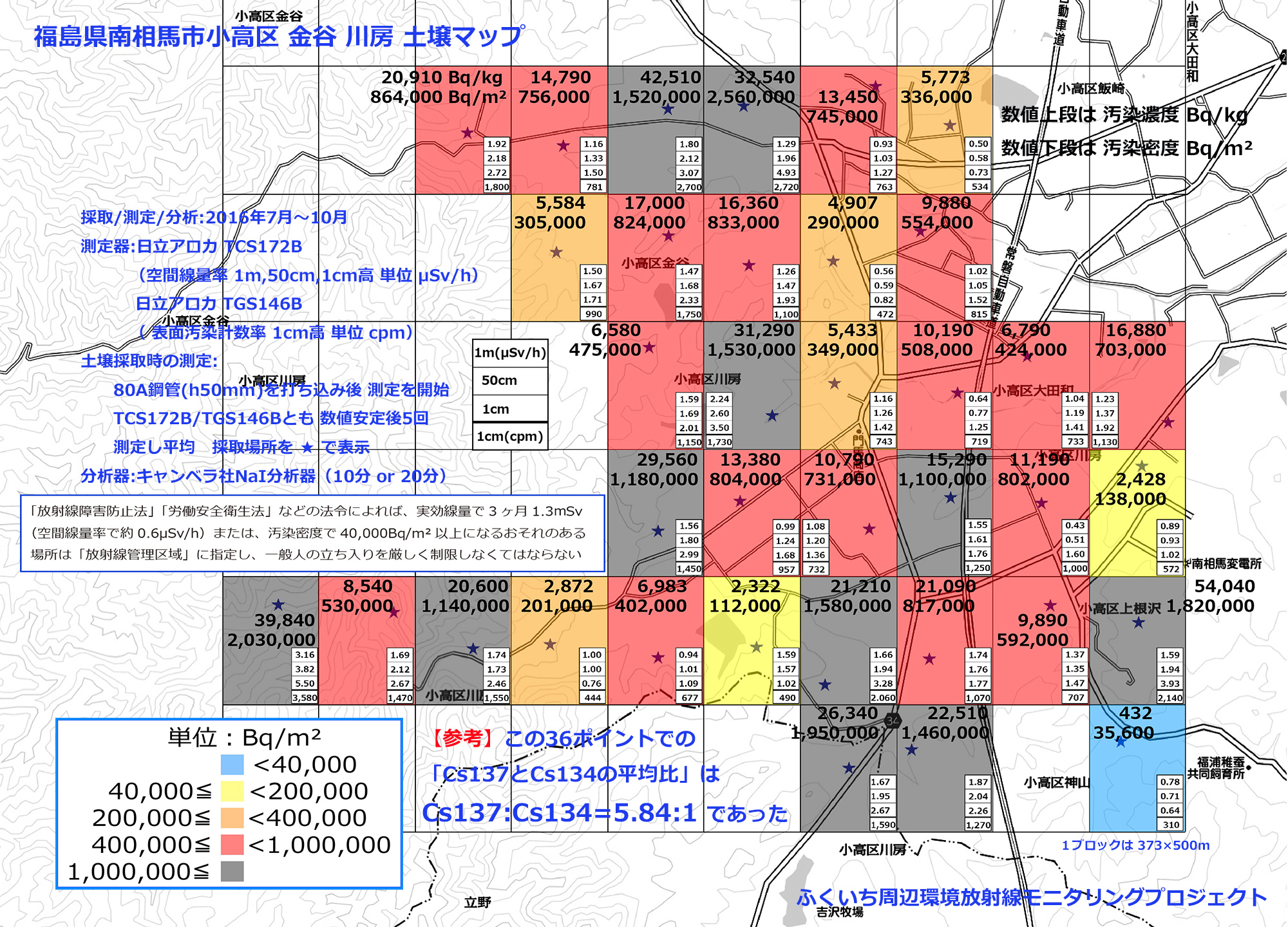
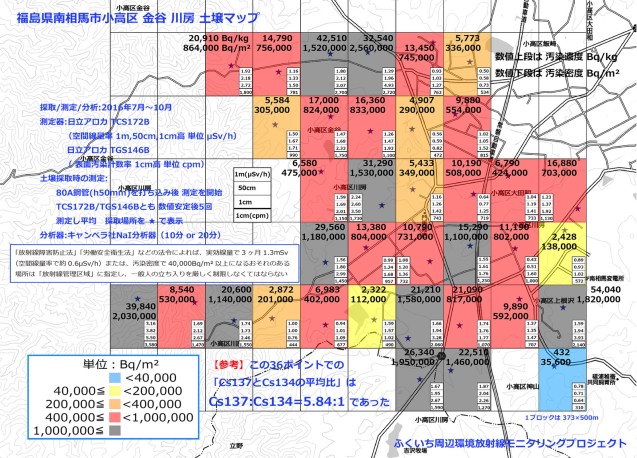
“The project to measure environmental radioactivity around the Fukushima Daiichi nuclear power plant (“Fukuichi Area Environmental Radiation Monitoring Project“) is conducted by a team of relatively old volunteers (who are less radiosensitive than youth) to perform radioactivity measurements with a tight mesh size of 75 x 100 m for radioactivity in air and 375 x 500 m for soil contamination. Measurements of ambient radioactivity and soil radioactivity are carried out mainly in the city of Minamisōma and its surroundings. They try to make detailed measurements so as to show the inhabitants the real conditions of their lives, and also to accumulate data for the analysis of long-term health and environmental damages.”
Thanks to the Kurumi Sugita’s translation and with the agreement of Mr. Ozawa, author of the document, Pierre Fetet was able to make a French version of this map, which I translated into english here below:
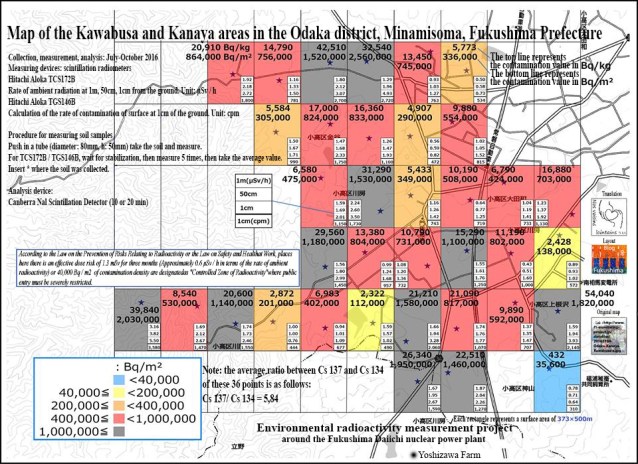
Map of Mr. Ozawa’s team,“Fukuichi Area Environmental Radiation Monitoring Project” (translation first by Kurumi Sugita, then by Hervé Courtois)
In the context of the normalization of contaminated areas into habitable areas, the evacuation order of the Odaka district of the city of Minamisōma was lifted on 12 July 2016, except the area bordering Namie (Hamlet of Ohatake where a single household lives) classified as a “difficult return” area.
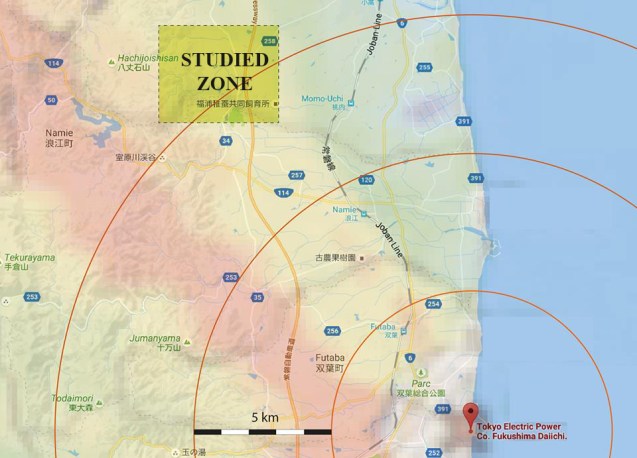
Situation of the study area
The contamination map examines the Kanaya and Kawabusa areas of the Odaka district, about fifteen kilometers from the former Fukushima Daiichi nuclear power plant. Mr. Ozawa, the engineer who launched this investigation, has chosen the precision of the measurements, that is to say laboratory scintillation radiometers are used to measure radioactivity: Hitachi Aloka TCS172B, Hitachi Aloka TGS146B and Canberra NaI Scintillation Detector.
The originality of this map is due as much to the quality of its realization as to the abundance of its informations: it can be read, for each of the 36 samples taken, measurements in Bq / m², in Bq / kg, in μSv / h at three different soil heights (1 m, 50 cm, 1 cm) And in cpm (counts per minute) at the height of 1 cm. For those who know a little about radioactivity, these informations are very valuable informations. Usually, measurements are given in either unit, but never simultaneously with 4 units. Official organizations should learn this way of working.
The measures revealed by the map are very disturbing. They show that the earth has a level of contamination that would make it a radioactive waste in any uncontaminated country. As Mr. Ozawa writes, these lands should be considered a “controlled zone”, that is to say a secure space, as in nuclear power plants, where the doses received must be constantly checked. In fact, it is worse than inside of a nuclear power plant because in Japan the inhabitants evacuated since five and a half years are now asked to return home, whereas it is known that they will be irradiated (Up to 20 mSv / year) and contaminated (by inhalation and ingestion).
This citizen research is remarkable in more ways than one:
- It is independent of any organization. There is no lobby to alter or play down this or that measure. These are just raw data, taken by honest people, in search of truth.
- It respects a scientific protocol, explained on the map. There will always be people to criticize this or that aspect of the process, But this one is rigorous and objective.
- It takes measurements 1 m from the ground but also 1 cm from the ground. This approach is more logical because until now men are walking on the ground no? The contamination maps of Japan often show measurements at 1 m from the ground, Which does not reflect reality and seems to be done to minimize the facts. Indeed, the measurement is often twice as high at 1 cm from the ground as at 1 m.
- It acts as a revealing map. Mr. Ozawa and his team are whistleblowers. Their maps say: Watch out ! Laws contradict each other in Japan. What the government claims, namely that a dose of 20 mSv / year will not produce any health effect, is not necessarily the truth. If you come back, you are going to be irradiated and contaminated.
France is preparing for the same forfeiture, namely that ‘it is transposing into national law the provisions of Directive 2013/59 / Euratom: the French authorities retained the upper limit of the interval: 100 mSv for the emergency phase and 20 mSv for the following 12 months (And for the following years there is no guarantee that this reference level will not be renewed). These values apply to all, including infants, children and pregnant women! ” (source Criirad)
The Japanese government is asking residents to return home and abolishing compensation for evacuees. The Olympics are coming, Fukushima must be perceived as “normal” so that the athletes and supporters of the whole world won’t be afraid, even if it means sacrificing the health of the local population. It is therefore necessary to make known the map of Mr. Ozawa so that future advertising campaigns do not stifle the reality of the facts.
Pierre Fetet
Data on measurements at Minamisōma
http://www.f1-monitoring-project.jp/open_deta.html
Website of the measuring team: “Fukuichi Area Environmental Radiation Monitoring Project“
http://www.f1-monitoring-project.jp/index.html
Address of the original map (HD)
http://www.f1-monitoring-project.jp/dirtsfiles/20161104-Odaka-Kanaya-Kawabusa-s.jpg
Source : Article of Pierre Fetet
http://www.fukushima-blog.com/2016/11/alerte-a-minamisoma.html
(Translation Hervé Courtois)
Fukushima Reactor 1 Now Fully Exposed
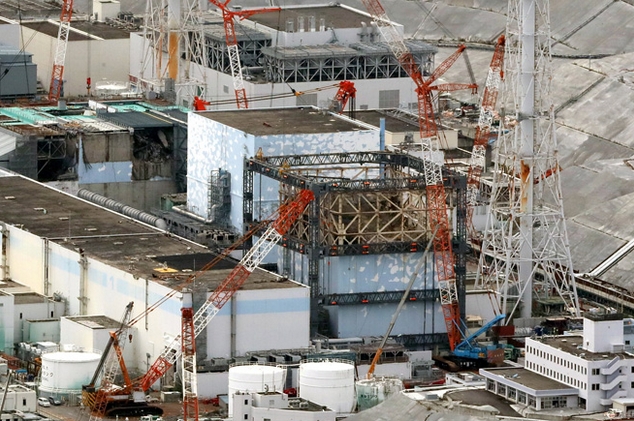
The No. 1 reactor building at the crippled Fukushima No. 1 nuclear power plant is completely exposed after the last of 18 temporary protective covers was removed on Nov. 10.
Crippled Fukushima Reactor Fully Exposed for the First Time Since 2011 Disaster
The last cover was removed from the Fukushima-1 Nuclear Plant reactor No. 1, local media reported on November 10. Now all the temporary protective constructions have been demolished, and the reactor is completely exposed for the first time since 2011’s nuclear catastrophe.
Demolition works conducted by the plant’s operator Tokyo Electric Power Co (TEPCO) have been ongoing for two years. Today a large crane lifted off a 20-ton cover, the last of the 18 panels installed after the event.
The next step is the removal of 392 fuel assemblies from the spent fuel pool and melted nuclear fuel from inside the building, Japanese daily Asahi Shimbun reported
According to Japanese national broadcaster NHK, the fuel extraction will only start in four years. TEPCO is currently installing the necessary equipment and assessing the state of the reactor building’s interior in efforts to remove debris from the collapsed roof over the spent nuclear fuel pool. TEPCO has to be sure to avoid stirring the radioactive dust while shrouding the reactor building with tarpaulins.
The covers were installed in October 2011 as a temporary measure against the spread of radioactive substances after the triple meltdown of the plant.
The tragedy at the Fukushima-1 plant happened on March 11, 2011 after a devastating earthquake and tsunami struck the northeast coast of Japan, leading to the leakage of radioactive material from the plant into the surrounding environment. The nuclear accident is the largest one since the Chernobyl catastrophe in 1986. It is expected to take about 40 years to entirely clean up the area.
https://sputniknews.com/asia/201611101047289568-fukushima-covers-demolition/
Last cover removed from crippled reactor in Fukushima
The No. 1 reactor at the Fukushima No. 1 nuclear power plant is completely exposed for the first time in five years after the last of the temporary protective covers for the crippled structure was removed Nov. 10.
The next step will be to extract nuclear fuel inside the reactor building, which was wrecked by a hydrogen explosion in the early stages of the March 2011 nuclear disaster.
The covers were installed the following October as a temporary measure against the spread of radioactive substances after the triple meltdown triggered by the Great East Japan Earthquake and tsunami.
A large crane lifted off the 20-ton cover, the last of the 18 panels installed, around 6 a.m. on Nov. 10.
Plant operator Tokyo Electric Power Co. began removing the covers one by one in September.
The 392 fuel assemblies are stored in the spent nuclear fuel pool inside the building. Melted fuel also remains inside the reactor.
TEPCO will assess the state of the reactor building’s interior in efforts to remove debris from the collapse of a roof over the spent nuclear fuel pool.
It will take precautions to prevent dust containing radioactive substances from being stirred up by shrouding the reactor building with tarpaulins.
http://www.asahi.com/ajw/articles/AJ201611100041.html
Fukushima Evacuee Student Bullied as School Failed to Act

YOKOHAMA–A junior high school student evacuated from Fukushima Prefecture after the 2011 nuclear disaster is refusing to attend classes due to years of bullying.
At an elementary school, the boy was given a cruel nickname with “germ” added to his name. His tormentors demanded he pay them money from government compensation for disaster victims.
His elementary school failed to take action in the case, which was “tantamount to abandoning the duty of education,” according to a damning report Nov. 9 by an investigative committee of the city’s board of education.
“It’s really disappointing,” said Yokohama Mayor Fumiko Hayashi at a news conference the same day. “Not everybody fully understands what people in the disaster-hit areas went through. It is our job to keep educating them by all means possible.”
The boy entered a public elementary school here, south of Tokyo, in August 2011, five months after the accident at the Fukushima No. 1 nuclear power plant. The disaster prompted his parents to flee Fukushima Prefecture.
The boy was a second-grader at the time and the bullying started soon after his arrival at the school.
When he was a fifth grader, a group of 10 or so bullies forced him to pay 50,000 yen ($480) to 100,000 yen on around 10 occasions. They apparently spent the money in game arcades and for other purposes.
“You are receiving compensation (for the nuclear accident),” one bully was quoted as saying, referring to financial efforts to alleviate the plight of evacuees from Fukushima Prefecture. The boy stole the cash from his parents to meet their demands.
He began refusing to go to the school on occasion, and now, as a student in a public junior high school, has stopped going to school ever.
In May 2014, his parents complained to the elementary school that the bullying was escalating.
The school held two meetings of an investigative committee into school bullying but concluded the situation was not sufficiently “serious” in terms of the antibullying law.
The school said the investigation was abandoned, citing a “lack of communication with the boy’s guardians.”
The parents asked the city’s board of education in December 2015 to do its own investigation.
The school then finally admitted a “serious situation” existed and the board’s third-party investigative committee started its own probe.
Fukushima to host some baseball, softball games at 2020 Olympics
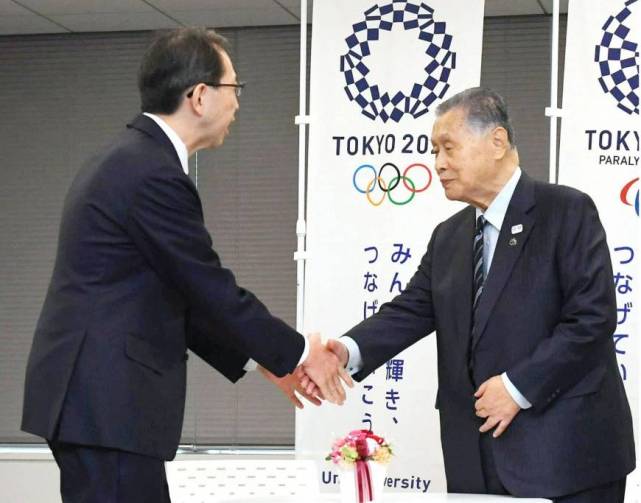
Fukushima Gov. Masao Uchibori (left) shakes hands with Yoshiro Mori, who heads the 2020 Tokyo Olympic organizing committee Wednesday in Tokyo, as the committee approved a plan to host baseball and softball games in the prefecture.
Tokyo 2020 Olympic organizers on Wednesday gave the green light for disaster-affected Fukushima Prefecture to host baseball and softball games.
Three cities — Fukushima, Koriyama and Iwaki — are under consideration to stage part of the competition as the two sports return to the Olympic program after an absence of 12 years.
Riccardo Fraccari, president of the World Baseball Softball Confederation, will visit Japan next week to inspect the venues. The International Olympic Committee will make the final decision when it holds its executive board meeting from Dec. 6 to 8.
“We want to emphasize this as a ‘recovery games’ and we want to work together with everyone to move it forward,” said 2020 executive board member Toshiaki Endo.
“These Olympics and Paralympics are not just for Tokyo but for the whole of Japan. We only have 1,353 days left, so we need everyone to make an effort so we can put on a fantastic event.”
IOC President Thomas Bach floated the idea of hosting baseball and softball games in Fukushima during a visit to Tokyo last month to take part in the World Forum on Sport and Culture.
“I felt that President Bach had a strong feeling toward Fukushima when he came here,” said Fukushima Gov. Masao Uchibori. “The idea of a ‘recovery games’ is once again in the spotlight and people are thinking carefully about how that can be achieved.
“It can show the courage of Fukushima Prefecture and the Tohoku region, and on a wider scale Kumamoto and Tottori — places that are working hard to recover from disaster.”
The Yomiuri Giants professional baseball team occasionally hosts Nippon Professional Baseball games at all three venues. Fukushima Azuma Baseball Stadium and Iwaki Green Stadium both have capacities of 30,000, while the older Koriyama Kaiseizan Baseball Stadium holds 18,200.
Neighboring Miyagi Prefecture is hoping to stage rowing and canoe sprint events as a result of a cost-cutting review currently being undertaken by the IOC, Tokyo Metropolitan Government, Tokyo 2020 organizers and the national government.
“Miyagi Prefecture, Iwate Prefecture and Fukushima Prefecture all suffered a lot of damage from the Great East Japan Earthquake,” said Uchibori.
“These three prefectures have a close bond and always work together. We want to form a movement. We want to show our appreciation to people and get people excited about the Tokyo Olympics. I’d like to consult with my fellow governors.”
Uchibori also said he would like his prefecture to host other Olympic-related events such as training camps and a section of the torch relay.
Baseball and softball were voted back onto the Olympic program as a joint bid at an IOC session in Rio de Janeiro in August ahead of the Summer Games. The format of the competitions has yet to be decided.
Swelling Decommissioning Costs, Who’s Gonna Pay
The 2016 road report points to inflated decommissioning costs.
Three reactor meltdowns to be decommissioned, an unprecedented task in the world.
It’s a long journey, to continue to record the series “The road to decommissioning”.
Five years and half years have passed since the disaster at the Tepco’s Fukushima Daiichi nuclear power plant, among the many technical difficulties, the removal of nuclear fuel remains a challenge.
As the disaster costs keep on rising more than expected, it is becoming extremely difficult to to finance them under the current system.
Not just the increase in labor costs and technology development costs, and the cost of decontamination to enable the residents return, but also the compensation costs, all are significant. Therefore the current « system » to finance those costs has hit a wall.
TEPCO recently complained of the severity of the burden, it seeked from the country a policy to provide additional support. Who is to pay.
God only knows how much those costs will swell, and whose burden will they be.
The overall picture of the disaster costs is already hard to visualize, the sustainable “road to decommissioning” even more.
Foreigners Hired at Fukushima Nuke Plant Under Suspected Illegal Contracts
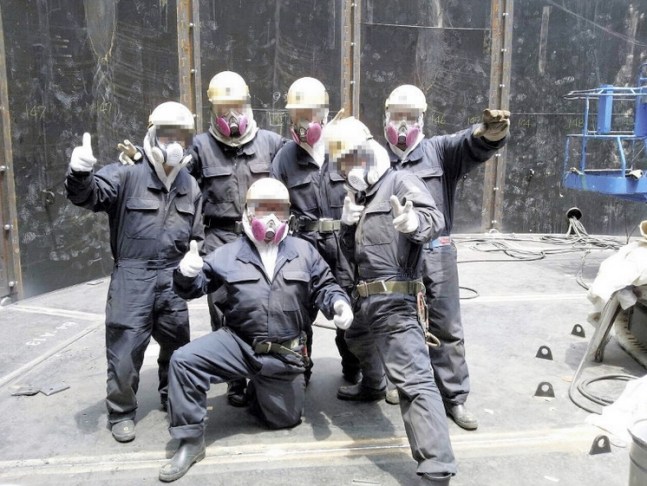
Dressed in protective suits, foreign workers who were engaged in the construction of tanks to hold radioactively contaminated water at the tsunami-hit Fukushima No. 1 Nuclear Power Plant pose in this photo taken sometime around May 2014.
About seven foreign nationals worked at the disaster-stricken Fukushima No. 1 Nuclear Power Plant in 2014 under suspected illegal contracts, sources close to the matter have revealed to the Mainichi Shimbun.
It was reported that the workers — mostly Brazilians — did not receive sufficient guidance on radiation protection as ordered by law before they engaged in work to contain radioactive water at the plant. It is the first time that a post-disaster labor issue involving foreign workers at the plant has come to light.
At the time, plant operator Tokyo Electric Power Co. (TEPCO) was pressed to deal with contaminated water emanating from the 2011 nuclear disaster and put in an order for the construction of welded storage tanks with a major contractor. This work was sub-subcontracted to a Tokyo-based welding company. The welding company’s president explained that it “couldn’t fill the spots with a sufficient number of Japanese workers,” so about seven foreign welders were hastily assembled for the job.
Roney Tsuyoshi Ishikawa, 43, a Japanese-Brazilian welder, and other sources told the Mainichi that Ishikawa received the order to build the tanks from the welding firm for 2 million yen per tank. He made contracts with individual foreign nationals and placed welding orders. Ishikawa left the construction site before the job was finished, and the welding company and other parties thereafter gave instructions to the remaining workers.
The Employment Security Act and other regulations ban “disguised contracts” in which workers are given work without official employment or are made to work under the instruction of parties other than those who place the original orders, thereby obscuring the party responsible for safety management.
The president of the welding company told the Mainichi, “As non-regular employees were prohibited from entering the Fukushima No. 1 nuclear plant, I reported to the (first-tier) contractor that they (the foreign workers) were regular employees. It is more efficient to get the work done under contracts.”
According to Ishikawa and others, the foreigners worked at the plant sometime between March and May 2014. Many of those workers were unable to sufficiently read or write in Japanese.
Workers at nuclear facilities normally receive advance guidance on nuclear fuel and radiation and need to pass relevant exams. The exams and textbooks are written in Japanese, but some of the foreign workers in question passed the tests after Ishikawa, who is fluent in Japanese, gave them the right answers by their side.
“There was a tacit understanding amid the rush to combat the contaminated water,” Ishikawa said.
TEPCO refused to reveal the labor situation involving individual foreign laborers when the Mainichi Shimbun reached out for comment, but said it has given guidance to foreign workers “by using English textbooks and having the employer assign interpreters.”
http://mainichi.jp/english/articles/20161107/p2a/00m/0na/011000c
Fukushima : A Symbol of Hope and Resilience in the Face of Adversity
This photo can be a symbol of hope and resilience in the face of adversity: it’s a Morning Glory, growing along the base of prefab house in a temporary evacuation centre in Miharu, Fukushima.
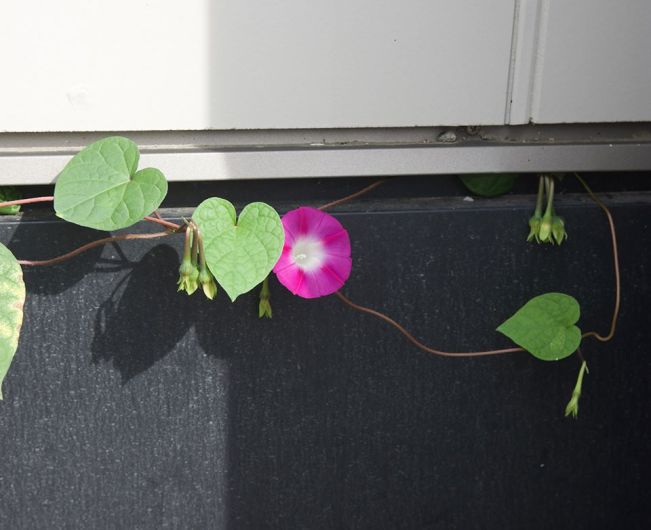
Special credit & thanks to Lis Fields
Fukushima Car Wash Septic Tanks Contain Highly Radioactive Sludge
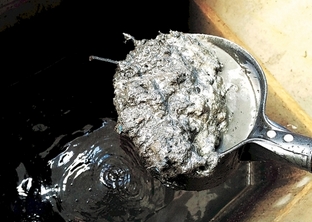
Highly radioactive sludge is turning up in septic tanks at car washes in Fukushima Prefecture, and the readings are as much as seven times higher than the government’s limit, auto industry officials say.
While the government-set limit is 8,000 becquerels per kilogram, some of the sludge is giving off 57,400 becquerels per kg, a document obtained by Kyodo News says.
The source of the radioactivity is believed to be ash and soot that stuck to vehicles shortly after the triple core meltdown at the Fukushima No. 1 nuclear power plant in March 2011, the officials said Saturday.
Fukushima Prefecture has some 1,700 auto maintenance facilities where a growing number of septic tanks are reaching capacity, they said, adding that the amount of tainted sludge accumulated from washing cars likely weighs several thousands of tons.
To the prevent the septic tanks from overflowing, some of the maintenance facilities are manually scooping up the mud, which has prompted industry groups to warn authorities about the health hazards workers face, the officials said.
The Japan Automobile Dealers Association, Japan Automobile Service Promotion Association and Japan Light Motor Vehicle and Motorcycle Association have been urging the central government and Tokyo Electric Power Co., which manages the defunct Fukushima No. 1 plant, to address the issue.
But their calls for action have not been heeded, the Environment Ministry and the utility admitted.
The issue has failed to gain attention until now in part because the decontamination law only requires that companies report on radiation levels in sewage sludge and incinerated ash, not other waste products.
Although the companies that install the septic tanks know about the radiation problem, they couldn’t go public about it for fear of losing customers.
Kunikazu Noguchi, associate professor of radiation protection studies at Nihon University in Tokyo, said all tainted sludge should have been designated as radioactive waste and disposed of by the central government, instead of being kept in septic tanks.
“The fact that the government failed to act on this problem for 5½ years shows its negligence,” Noguchi said. “To remove sludge that contains nearly 60,000 becquerels of radioactive material per kilogram, you need to do so with extra caution, in line with guidelines set by the Environment Ministry.”
Taiwan Minister Says Import Ban not a Bargaining Chip

Minister of Health and Welfare Lin Tzou-yien (林奏延) yesterday told lawmakers that the ministry would not risk the health of Taiwanese by lifting a ban on food imports from five Japanese prefectures near the stricken Fukushima Dai-ichi nuclear power plant.
Lin made the remarks at a meeting of the legislature’s Social Welfare and Environmental Hygiene Committee yesterday morning, which was to review the ministry’s general budget for next year.
Amid reports that Council of Agriculture Deputy Minister Chen Chi-chung (陳吉仲) last week asked the Democratic Progressive Party (DPP) caucus about the possibility of lifting the ban on agricultural products from the five prefectures — just days before the first round of the Taiwan-Japan Maritime Affairs Cooperation Dialogue Mechanism in Tokyo on Monday — Chinese Nationalist Party (KMT) Legislator Chiang Wan-an (蔣萬安) asked the minister if it was true the government planned to lift the ban as part of a trade-off.
Food and Drug Administration Director-General Chiang Yu-mei (姜郁美) said that the council report to the DPP caucus was only to explain risks and that it has implemented strict food import controls at borders to help ensure food safety.
She said all food imports from Japan not from the five prefectures — Fukushima, Ibaraki, Tochigi, Gunma and Chiba — must have a certificate of origin and a certificate proving they are free of radioactive contamination, adding that the agency would publish a products company name, if radiation readings were above legal tolerances.
“At present, we have no plans to lift the ban,” Lin said. “The ministry takes protecting the people’s health as its most important duty.”
After Chiang twice asked Lin to confirm that the government would not use lifting the ban as a negotiation tool in its talks with Japan on maritime affairs, Lin said that it would not.
http://www.taipeitimes.com/News/taiwan/archives/2016/11/03/2003658479
Japan’s New Utilities Object to Footing Part of Fukushima Bill
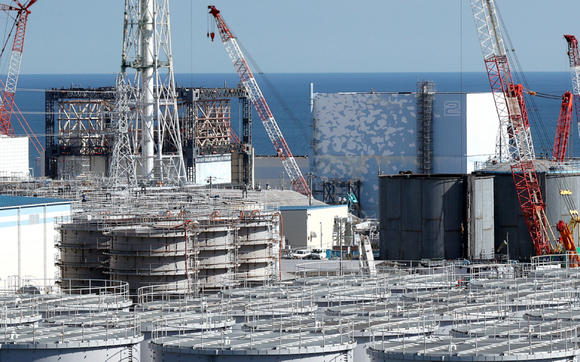
TOKYO — Japanese independent power providers are up in arms over a government proposal to have them shoulder some costs related to the fallout of the 2011 Fukushima Daiichi nuclear disaster, including compensating victims and decommissioning old reactors.
“Why should we have to pick up compensation costs for Tepco’s accident?” fumed a top official at a company selling electricity in the Tokyo area, referring to Fukushima Daiichi operator Tokyo Electric Power Co. Holdings.
Given the narrow profit margins involved in power retailing, new suppliers will likely pass these costs on to customers. More than half a year on from the full liberalization of Japan’s electricity retail market, just 3% or so of households have switched to independent power providers from big regional utilities that had monopolized the market. Some observers worry that forcing newcomers to take on some of the nuclear costs could further slow the glacial pace of the market expansion by taking away their price advantage.
The charges will likely be collected by adding them onto fees for using the regional utilities’ transmission infrastructure. “We won’t have any choice but to raise rates,” sighed an executive at a major independent power supplier.
Many people chose to make the jump from regional utilities as a protest against nuclear power. “It’d be tough to get customers to accept” covering nuclear-related costs, Tokyo Gas President Michiaki Hirose told reporters in October. Tokyo Gas is the largest of the new players with more than 500,000 service contracts.
Sure enough, Tokyo-area suppliers have heard complaints from such customers arguing that having independent providers cover decommissioning expenses would render their decision to switch pointless. “We’ve gotten questions from customers about whether we’re going to pay” these costs, said the head of an independent power company that focuses on renewable energy.
The government aims to scrap aging nuclear reactors while bringing newer facilities back online. One of the major new power providers acknowledges that it would be impossible to maintain nuclear power generation without support from the whole country.
But the new suppliers are demanding to know the details of Tepco’s compensation costs before they pay up. Many also argue that regional utilities should be forced to provide some cheap nuclear power to the electricity wholesale market so they will also feel pain if newcomers are forced to contribute funds.
Destroyed N°1 Nuclear Reactor Building Exposed at Fukushima Daiichi
Video shot from a Kyodo News airplane on Nov. 4, 2016, shows the destroyed No. 1 reactor building at the disaster-hit Fukushima Daiichi nuclear plant, after the removal of 16 of 18 panels covering the building. Tokyo Electric Power Co. plans to dismantle the remaining two panels the following week to complete the panel removal work that started in July 2015 as part of decommissioning the plant.
Fukushima Consequences of Radiation on Wildlife
By Pierre Fetet (translation by Hervé Courtois)
Source : http://www.fukushima-blog.com/2016/09/fukushima-consequences-de-la-radioactivite-sur-la-faune.html
Scientific studies conducted following the Fukushima disaster revealed little by little the consequences of radioactivity on the living and particularly on wildlife. Although published, they are nevertheless rarely circulated. This is why I would like to put a spotlight on some of them and publicize various observations which we do not hear much about, to counter the silly optimism to always relativize the consequences of low doses on life. Any dose of radiation, however small it be, has effects on the living: the ionizing radiation breaks the DNA molecules.
The birds
The feathers of birds take radioactive dust released into the atmosphere continuously by the wind. They therefore suffer permanent external irradiation.
We can see this dust by placing a contaminated bird on a radio-sensitive paper for a month. Here is an example with a bird picked in Iitate in December 2011.
Autoradiography also allows to highlight that the birds also undergo internal contamination.

Autoradiography of a bird revealing radioactive contamination in the plumage and stomach (Source Morizumi)
Yasuo HORI has also reported that some swallows Fukushima undergo depigmentation, as had already been found in Chernobyl. The Wild Bird Society of Japan also noted that the tail feathers of some Japanese swallows were not uniform.
It must be said that nests of swallows up to 1.4 million becquerels of radioactive cesium per kilogram (Bq / kg) have been found in the towns of Okuma and Namie. The nests of chickadees, were not better: 1.3 million Bq / kg.

Left: Swallow from Minamisoma (Fukushima Prefecture) – Right: deformed tail of a swallow from Kakuda (Miyagi Prefecture)
According to studies conducted by Tim Mousseau (University of South Carolina), the population of fifteen bird species living in contaminated areas of Fukushima prefecture decreases with time, with a 30% survival rate.
Another research focused on a falcon species returning in the same nest every year was also conducted by a team of scientists led by Naoki Murase (Nagoya University) at a distance of 100 to 120 km from the Fukushima Daiichi nuclear plant. The interest of this study is that raptors are at the top of a food chain and concentrate radionuclides accumulated by their prey. The authors have shown that the reproductive capacity of the bird was related to radiation measured directly under the nest : radioactivity affects the germline of the bird. The ability of birds to leave the nest fell from 79 to 55% in 2012 and 50% in 2013.
Another study finally published in 2015 by ASN and the Anders Møller laboratory (CNRS), focused on the total dose – internal and external – of birds.
It showed that 90% of the 57 species studied had been chronically exposed to radioactivity dose rate possibly affecting their reproduction.

Simplified representation of the level change of maximum exposure of adult birds (in dose rate) for 57 species of the bird community observed on 300 sites and four years of study. Compared to the range of variation (in blue) ambient dose rate measured on the sites and ranges (red) corresponding to various effects in birds published by the ICRP (2008) (Source IRSN)
So there are three factors that affect living organisms in contaminated areas: the ambient radiation (the dose that is received by being next to a radioactive object), the external contamination (radioactive dust that sticks to the skin, hair, feathers), and internal contamination (radionuclides ingested or trapped in organs).
The butterflies
The first scientific evidence of damage to a living organism by radioactive contamination due to the disaster of Fukushima Daiichi was delivered by the team of researcher Chiyo Nohara (University of Okinawa).
The study highlighted the physiological and genetic damage of a common butterfly of Japan, the maha zizeeria. In May 2011, some show relatively slight abnormalities. But the first female offspring of the first generation showed more serious defects, inherited by the second generation. Adult butterflies collected in September 2011, then showed more severe abnormalities than those collected in May: abortive hatching, infertility, size reduction, slow growth, high mortality and morphological abnormalities (Atrophied wings, curved or in excess number, malformed antennae, bumpy eyes, discolored).
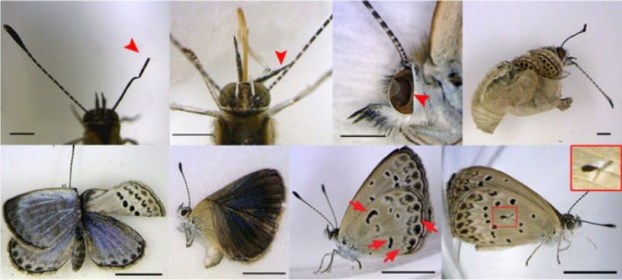
Representative anomalies of butterflies fed contaminated leaves. (Source: Hiyama et al)
Aphids
In 2014, Shin-ichi Akimoto (Hokkaido University) found that about 10% of certain insects, such as aphids, have malformations in Fukushima. But their survival and their reproduction remain possible.
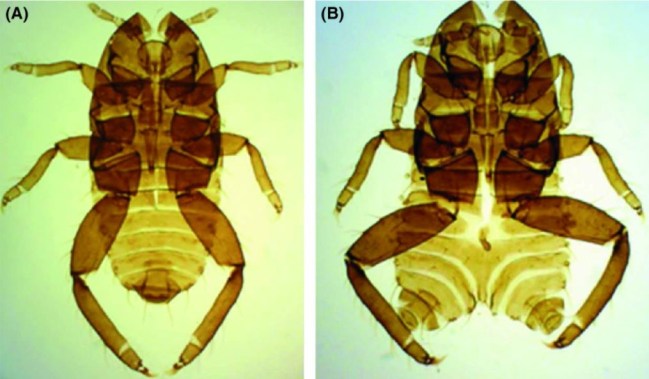
Sorini aphid T. From Fukushima. (A) normal morphology, (B) Level 3 malformation of the abdomen (Source: S. Akimoto)
The cows
The phenomenon of white patches (depigmentation) on the observed swallows in Fukushima and Chernobyl is also found on the cows of Masami Yoshizawa, at the Farm of Hope in Namie, a town located 14 km from the destroyed plant .

A cow of Masami Yoshizawa was brought to Tokyo in 2014 to the government for diagnosis (AFP Photo)
Horses
The biologist Hayato Minamoto reported the carnage suffered by Tokuei Hosokawa, an Iitate farmer who lost a hundred horses in two years. Iitate had suffered the brunt of the radioactive cloud from the Fukushima Daiichi plant in March-April 2011.
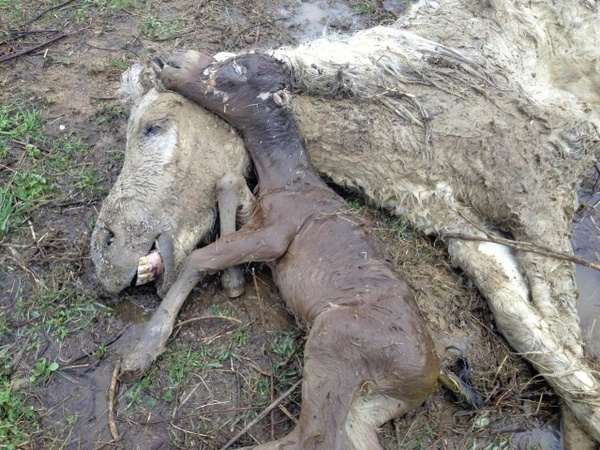
Iitate horses
Monkeys
Between April 2012 and March 2013, researchers led by Shin-ichi Hayama (Japan University of Life Sciences and Veterinary Sciences) analyzed the blood of 61 Japanese monkeys living in a forest 70 km from the Fukushima Daiichi nuclear power plant. The total concentration of cesium in monkeys muscles was between 78 and 1778 Bq / kg. Blood tests in these animals revealed a small quantity of white blood cells and red blood cells, which could make them more vulnerable. The decrease of blood cells was directly proportional to the concentration of cesium in the muscles, which suggests a dose-response correlation. Researchers estimate that exposure to radioactive materials contributed to hematological changes in Fukushima monkeys.

Drawing by Julien Loïs
Provisional Conclusion
The consequences of radioactivity on animals are visible to anyone who will bother to observe what happens. In this article, I focused on some animals only (there would be other cases to develop: the population decline of the cicadas, the increased cataract of rodents, etc.). Scientists could conduct similar studies on this strange animal that is man, but it would not be politically correct.
Yet this has already been done, in Hiroshima and Nagasaki, Chernobyl. For example, studies conducted between 1993 and 1998 on Ukrainian children permitted to observe a drop of blood cells, which was related to the exposure of each child to cesium depending on the place of residence. And yet, in Tokyo, from 2011 to 2014, Dr. Mita observed that white blood cells, especially neutrophils, decreased in children under 10 years old. (Which prompted him to move and to ask his patients to leave Tokyo). But no, do not say anything, and do not look into such matter.
In Japan, the denial of the danger is a must. The only mention of a nosebleed in a manga can cause a national affair and censorship … To speak of the negative consequences of the nuclear disaster at Fukushima Daiichi is not accepted.
You must rebuild, you must forget, you must think about the future. Institutionally, only one study is accepted, the monitoring of thyroids of children in Fukushima. That study is the screen that hides the forest of lies.
And yet, despite 131 thyroid cancers confirmed in June 2016, the official Japanese scientists refuse to see them as caused by radioactivity.
Pierre Fetet
To read more:
1) Scientific studies cited in this article
The biological impacts of the Fukushima nuclear accident on the pale grass blue butterfly, A. Hiyama, C. Nohara, S. Kinjo, W. Taira, S. Gima, A. Tanahara, J.-M. Otaki, 2012
Low blood cell counts in wild Japanese monkeys after the Fukushima Daiichi nuclear disaster, K. Ochiai, S. Hayama, S. Nakiri, S. Nakanishi, N. Ishii, T. Uno, T. Kato, F. Konno, Y. Kawamoto, S. Tsuchida, T. Omi, 2014
Morphological abnormalities in gall-forming aphids in a radiation-contaminated area near Fukushima Daiichi: selective impact of fallout?, S. Akimoto, 2014
Effects of the Fukushima Daiichi nuclear accident on goshawk reproduction, K. Murase, J. Murase, R. Horie, K. End, 2015
Radiological dose reconstruction for birds reconciles outcomes of Fukushima with knowledge of dose-effect relationships, J. Garnier-Laplace, K. Beaugelin-Seiller, C. Della-Vedova, J.-M. Métivier, C. Ritz, T. A. Mousseau, A. P. Møller, 2015
Cumulative effects of radioactivity from Fukushima on the abundance and biodiversity of birds, A. P. Møller, I. Nishiumi & T. A. Mousseau, 2015
2) Articles and file
Tchernobyl, une histoire pas si naturelle que ça (Pierre Fetet)
Non, Tchernobyl n’est pas devenu une réserve naturelle (Timothy Mousseau)
A Fukushima, les souris sont aveugles et les oiseaux ne chantent plus (Anne-Laure Barral)
1 This Month
10 March A LIVE WEBINAR THE REAL EFFECTS OF NUCLEAR POWER
What the Industry Isn’t Telling Us
1:00 PM Mountain, 2 pm Central, 3 pm Eastern. Live on the Keepers of the Water Facebook page



18 March Webinar @ 1 PM EST: An Assessment of SMR Projects: The Case of Canada
register for the zoom:
https://us02web.zoom.us/webinar/register/WN_o8BIIOUvQ2ONJR1nta65DQ#/registration


of the week – STOP SMALL MODULAR REACTORS IN CANADA
To see nuclear-related stories in greater depth and intensity – go to https://nuclearinformation.wordpress.com
-
Archives
- March 2026 (99)
- February 2026 (268)
- January 2026 (308)
- December 2025 (358)
- November 2025 (359)
- October 2025 (376)
- September 2025 (258)
- August 2025 (319)
- July 2025 (230)
- June 2025 (348)
- May 2025 (261)
- April 2025 (305)
-
Categories
- 1
- 1 NUCLEAR ISSUES
- business and costs
- climate change
- culture and arts
- ENERGY
- environment
- health
- history
- indigenous issues
- Legal
- marketing of nuclear
- media
- opposition to nuclear
- PERSONAL STORIES
- politics
- politics international
- Religion and ethics
- safety
- secrets,lies and civil liberties
- spinbuster
- technology
- Uranium
- wastes
- weapons and war
- Women
- 2 WORLD
- ACTION
- AFRICA
- Atrocities
- AUSTRALIA
- Christina's notes
- Christina's themes
- culture and arts
- Events
- Fuk 2022
- Fuk 2023
- Fukushima 2017
- Fukushima 2018
- fukushima 2019
- Fukushima 2020
- Fukushima 2021
- general
- global warming
- Humour (God we need it)
- Nuclear
- RARE EARTHS
- Reference
- resources – print
- Resources -audiovicual
- Weekly Newsletter
- World
- World Nuclear
- YouTube
-
RSS
Entries RSS
Comments RSS
 nuclear-news