Fukushima faces wall to hosting Olympic baseball
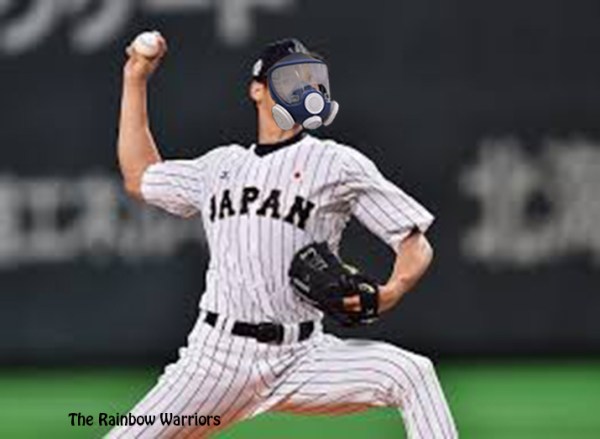
LAUSANNE, Switzerland – The world governing body for baseball and softball is calling on the organizing committee of the 2020 Tokyo Olympics to secure “a second stadium in the metropolitan area,” and is making it a prerequisite for the body to approve a plan to hold some games for the additional event in Fukushima Prefecture, it has been learned.
The organizing committee is finding it difficult to accept the idea of setting up “a second stadium” and negotiations are bound to reach a deadlock. The decision to make Fukushima an Olympic venue may have to wait until next spring or later.
The request from the World Baseball Softball Confederation was made known in a letter sent to the Tokyo Organizing Committee of the Olympic and Paralympic Games. Yoshiro Mori, the president of the organizing committee, revealed the content of the letter in an interview with The Yomiuri Shimbun on Wednesday. Mori is attending a board meeting of the International Olympic Committee held in Lausanne, Switzerland.
The IOC board approved of the plan to make Yokohama Stadium in the city of Yokohama the main venue for the additional event, but the decision on Fukushima was deferred.
According to Mori, the letter stated that the three possible venues in the prefecture – stadiums in the cities of Fukushima, Iwaki and Koriyama – were worthy candidates, but also set two conditions in order for the WBSC to approve the plan: to upgrade the stadium to be decided such as by turfing the infield and to secure a second stadium in the metropolitan area.
The IOC currently has plans to divide the six participating national teams into two groups for the preliminary round, so that eight to 10 games will be held in total including the final. The WBSC, on the other hand, intends to make the qualifying games a round robin of all six teams, which would likely increase the total number of games to from 17 to 19. With this in mind, the world body is hoping to add a second stadium to the event, such as Seibu Prince Dome in Tokorozawa, Saitama Prefecture, or Zozo Marine Stadium in Chiba.
Mori made it clear after the IOC board meeting that he would oppose the idea of a second stadium in the metropolitan area. He explained that the organizing committee has an understanding with the IOC that hosting an Olympic event in a disaster area should be considered separately as part of ongoing restoration efforts. “We have reconfirmed with the IOC that the principle of one venue still stands,” he said.
Financial concerns are another reason for opposing the second stadium plan. A senior official of the organizing committee said, “The budget will likely swell, and therefore, it would be difficult [to accept the idea].”
Mori had discussions with IOC President Thomas Bach at a luncheon on Wednesday. The IOC side informally told Mori that it backs the idea of hosting events in Fukushima and also that it will hear from the WBSC about the matter. The Japan side intends to continue negotiations with the WBSC while working in tandem with the IOC, and hopes to reach a conclusion at an IOC board meeting to be held next spring or later.
Deferring the decision to host the event in Fukushima will likely hinder preparations for the event, such as modifying the stadium and securing operation fees, and may put unwanted pressure on the disaster area.
The IOC board meeting on Wednesday came to a conclusion on the venues of five other additional events, including karate and surfing.
According to the decision, karate will be held at Nippon Budokan in Chiyoda Ward, Tokyo, while skateboarding and sport climbing will take place in the Odaiba and Aomi districts in Koto Ward, Tokyo. Tsurigasaki Beach in Ichinomiya, Chiba Prefecture, is the venue for surfing.
The organizing committee informed the board of its plan to cap the total cost of holding the Games at 2 trillion yen ($17.5 billion) and promoted Japan’s efforts to cut down costs.
An Option Discussed For Fukushima Contaminated Water: Evaporation
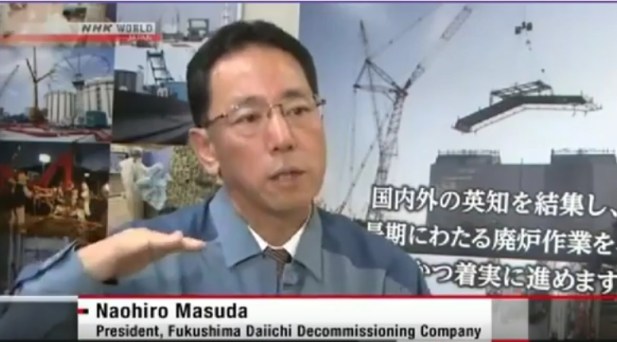
The person in charge of decommissioning the Fukushima Daiichi nuclear power plant has revealed a possible new way to deal with the radioactive water stored there: just let it evaporate.
“The amount of radioactive water at the plant continues to increase. We need to find a way to reduce it,” says Naohiro Masuda, president of the Fukushima Daiichi Decommissioning Company.
Masuda and his team of 6,000 workers have struggled with the problem of contaminated water. Workers must constantly inject water into the crippled reactors to cool molten debris and then pump it out. Groundwater flowing into the reactor buildings adds to the problem.
Executives with the plant’s operator, TEPCO, have said they will continue storing the water on site. Masuda says evaporation is one of the options being discussed.
“Diluting the contaminated water and discharging it into the ocean has been discussed. But another option is evaporating the water. This method was used following the Three Mile Island nuclear accident in the US,” he says.
Masuda says the task force of the government is discussing the methods. Masuda’s engineers and workers use purification equipment to remove most of the radioactive substance, but they can’t remove it all. Local fishermen strongly oppose releasing water directly into the ocean. The evaporation method could be an acceptable alternative for them, although some experts say its environmental consequences are unclear.
Handling contaminated water is just one aspect of the highly complex decommissioning process. Masuda believes that he’ll need to rely on the international community for support.
“We’ll be cooperating mainly with the United States, Britain, France, and Russia. We’re already getting help from people at nuclear-related facilities in these counties. We’re learning how to decommission and shut down facilities and deal with contaminated soil,” he says.
Abe Sees Fukushima Progress!!!
Radiation risks are being swept under the rug. That restoration plan voluntarily chooses to ignore the risks for people to be living in a contaminated environment, not differentiating between the external and internal exposures and their sure harmful consequences to people health. Not to mention the ongoing incineration of contaminated waste in the Fukushima Prefecture 19 municipal incinerators, continuously redistributing radioactive nanoparticles into the environment. All done in the name of economic reconstruction!
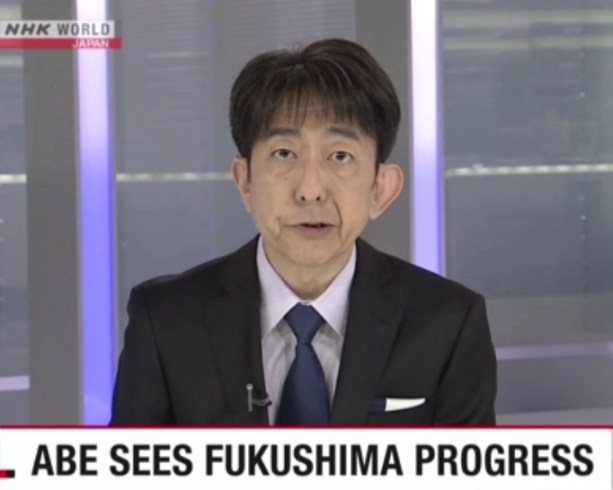
Cabinet to approve Fukushima restoration plan
Prime Minister Shinzo Abe has visited Fukushima Prefecture to inspect the progress of restoration following the 2011 nuclear accident.
Abe visited a machinery parts manufacturer in Minamisoma City on Saturday.
The government and Fukushima Prefecture have been working to create a cluster of robotics’ companies in the city.
The president of the manufacturer told the prime minister that he hopes the robotics industry will help revitalize the local economy.
Abe responded that the state-of-the-art robot testing facilities that had been built in the city should attract companies from around the world, and that he wants the region to develop around them.
Abe later visited the town of Kawamata, where an evacuation order is expected to be lifted next March.
He ate fermented natto soybeans manufactured in the town using local products.
Abe told reporters after the inspection that his government intends to help people from areas where the evacuation order will be lifted with housing and rebuilding their lives.
He also said his cabinet will approve a plan before the end of the month to accelerate Fukushima’s restoration. He said it includes partial governmental funding for decontamination in non-entry zones.
https://www3.nhk.or.jp/nhkworld/en/news/20161210_23/
Fukushima’s Radiation Detected on Oregon’s Shores
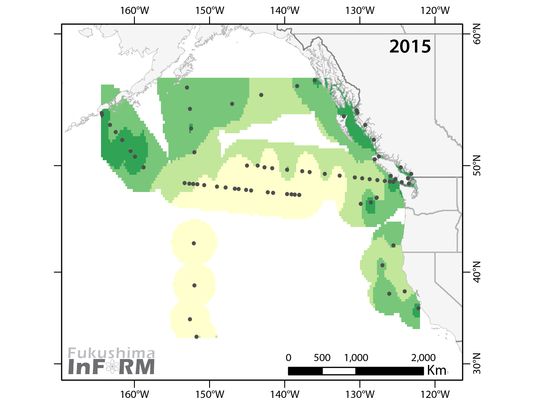
That Fukushima’s radiation was detected on Oregon shores by Woods Hole chemical oceanographer Ken Buesseler thru its crowdfunded, citizen-science seawater sampling project and officially admitted is one thing, however a lot is still left unsaid or unknown regarding its possible biological effects on the marine ecosystem, as for lack of fundings or political will too few studies are being made.

Fukushima Nuclear Disaster Bill to Double to $188 Billion
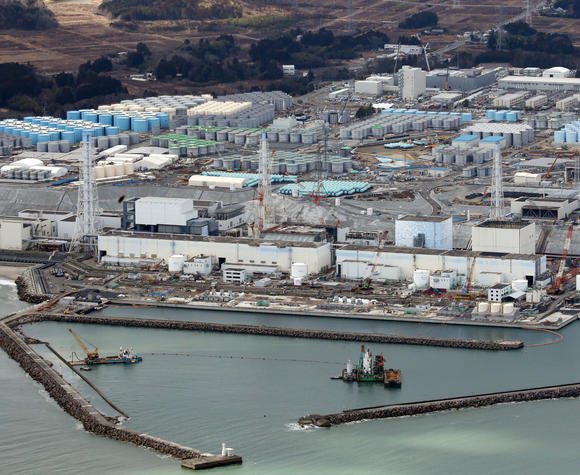
Fukushima radiation has reached U.S. shores

Loan ceiling for TEPCO to be raised

Japan to increase loan to Fukushima operator Tepco to $123 billion
Question to ask: why call this a loan when the law, like USA Price Anderson Act, limits nuclear power co from liability and puts the govt on the hook for everything beyond that?
Answer: I’d say most likely simple propaganda. That’s the taxpayers TRILLIONS that’s going to a ‘forever’ nuclear power plant black hole. That money will never be paid back to govt. The only thing I can imagine is that the Govt reneges on the agreement and socializes utilities in Japan. Because either the corporation nor govt can survive unless they do that…. or they can play fictionalized accounting for public.
What do you think?

Japan will increase an interest-free loan to the operator of the wrecked Fukushima nuclear plant, Tokyo Electric Power, by more than a third to 14 trillion yen ($123 billion), a source familiar with the matter said on Thursday.
Spiraling costs from the world’s worst nuclear disaster since Chernobyl in 1986 are threatening the viability of the utility known as Tepco and hampering its ability to clean up its wrecked Fukushima Daiichi nuclear plant.
The increase in the loan from 9 trillion yen is to cover the costs for compensation and decontamination areas around the plant, according to the source, who is not authorized to speak to the media.
Three reactors melted down at the plant after a magnitude 9 earthquake in March 2011, which sparked a tsunami that devastated a large section of Japan’s northeastern coastline.
More than 15,000 people were killed in the natural disaster, which also caused a loss of power and cooling at the Fukushima station.
Explosions in the wake of the reactor meltdowns led to a massive release of radiation that prompted the evacuation of 160,000 people from areas around the plant, many of whom will never be able to return.
The disaster is likely to cost 22.6 trillion yen ($199 billion), more than double an earlier government estimate.
Costs for decommissioning the wrecked reactors will be covered by a separate arrangement from the loan, according to the Nikkei newspaper, which earlier reported the increase in the loan for Tepco.
http://www.reuters.com/article/us-japan-fukushima-support-idUSKBN13X00G?il=0
Fukushima Long Active Fault
A seismologist says about three-fifths of an active fault running more than 50 kilometers off the northeastern prefecture of Fukushima shifted in last month’s powerful earthquake.
The magnitude-7.4 quake on November 22nd registered a 5 minus on the Japanese seismic scale of 0 to 7. A tsunami 1.4 meters high was observed at a port in Miyagi Prefecture.
Professor Shinji Toda of Tohoku University analyzed the active fault that triggered the temblor, using data on seabed terrain and the locations of aftershocks.
He says a stretch of about 30 kilometers in the fault that runs from northeast to southwest shifted in the earthquake.
He believes a shift of the entire fault would have caused a more powerful quake, with a possible magnitude of 7.7.
He warns that the remaining part of the fault is close to the shore and has the potential to trigger a magnitude-7 quake.
Toda’s findings contradict a 2014 analysis of the area by Tokyo Electric Power Company, the operator of the damaged Fukushima Daiichi nuclear power plant.
It stated that 2 fault lines, each about 20 kilometers long, could cause an earthquake with a magnitude of up to 7.1, much less than that of November’s quake.
Toda says it is important to improve that analysis, since the quake was more powerful than the utility’s estimate.
TEPCO says it will review its estimates if necessary.
Fukushima Fish and Shellfish Radiation Levels Drop”Announced”

Volunteer group continues checking fish off Fukushima as radiation levels drop
An olive flounder, estimated at 11 years old, measuring 90 centimeters long and caught in waters near the Fukushima No. 1 Nuclear Power Plant, is seen on a ship about 2 kilometers from the plant, on Nov. 13, 2016.
IWAKI, Fukushima — As radioactive cesium levels in fish caught off the Fukushima Prefecture coast show lower levels that fall within safety limits set by the government, the Mainichi Shimbun recently accompanied a volunteer group that continues to measure these fish on one of its outings.
The group, called “Iwaki Kaiyo Shirabetai Umi Labo” (Iwaki marine investigative squad ocean lab), began its activities three years ago. Rather than relying on the national government, Fukushima nuclear plant operator Tokyo Electric Power Co. or others for data on radioactive pollution in the ocean off Fukushima Prefecture, the group aims to obtain this information itself and share it across the country.
On Nov. 13, a Mainichi Shimbun reporter boarded one of the group’s fishing ships, which set out from Hisanohama Port in Iwaki, Fukushima Prefecture. Two kilometers from the disaster-stricken plant, the group pulled up a large, 90-centimeter, 7.7-kilogram olive flounder. This fish was caught by Eriko Kawanishi, a civil servant who came from Tokyo to participate in the outing and said it was her first time ever to hold a fishing rod. A 90-centimeter fish would be a rare catch even for a veteran fisherman.
The olive flounder was refrigerated and taken back to veterinarian Seiichi Tomihara at the Aquamarine Fukushima aquarium in Iwaki for dissection. Based on the growth rings on its “otoliths,” a structure located near the brain, Tomihara estimated the fish’s age at 11 years. He said there is research estimating the life expectancy of olive flounders at around 12 years, adding, “This looks like one of the oldest (one can find).”
A 1-kilogram slice of the fish put in a detector showed 14.6 becquerels of radioactive cesium — below the 100 becquerels-per-kilogram national safety limit for regular food products. Lately the research group has found no fish, including bottom-dwelling fish like olive flounder, that exceed this limit. In addition, radiation checks done by the prefectural government find hardly any cases of fish that top the safety limit.
Riken Komatsu, 37, joint-representative for the group, says, “This is the first time for us to check such an old olive flounder, and I thought there would be dozens of becquerels detected. The result was lower than I had imagined and I feel relieved.”
Fish that were already adult at the time of the disaster, with a slowed metabolism and a narrow range of habitat, tend to show high radiation levels, Komatsu says. With time having passed since the disaster, the generational replacement of the fish in the area has moved forward. The group says the highest radiation level it has detected so far was 138 becquerels from a 56-centimeter olive flounder in July 2014.
Olive flounder caught off of Iwaki are known as “Joban-mono” and have a good reputation. There is hope among locals that the fish will regain their pre-disaster popularity.
Komatsu says, “The prefectural government and fishing cooperatives are also releasing radiation readings from fish taken off Fukushima Prefecture, but I feel there are few taken from waters near the nuclear plant. Stronger data showing the fish’s safety (like data from fish near the plant) should raise the value of Fukushima olive flounder.”
http://mainichi.jp/english/articles/20161205/p2a/00m/0na/022000c

Surf clams caught in waters off Iwaki, Fukushima Prefecture, in June
Radiation in fish off Fukushima tests below detectable level
FUKUSHIMA–Radiation in all seafood caught off Fukushima Prefecture tested below the detectable level in November for the first time since the 2011 nuclear disaster.
Species including bass, rockfish and stone flounder–sales of which were banned by the central government–were tested between Nov. 11 and Nov. 28, and the prefectural government said they all fell below the detection threshold, meaning radioactive cesium was not detected in any samples.
The main reason is that most fish species have undergone a generation change over the past five years with the contaminated marine life dying out, said officials at the prefectural government’s fisheries experimental station.
In addition, the passage of time helped fish exude radioactive cesium from their bodies.
The prefectural government began the tests in April 2011 following the disaster at the Fukushima No. 1 nuclear plant the previous month.
Forty thousand fish and shellfish samples have been checked from 186 species over the past five and a half years.
The initial tests found that more than 90 percent of the samples were contaminated with radioactive cesium above the central government’s safety limit of 100 becquerels per kilogram.
The percentage of polluted fish and shellfish then declined annually.
The tests since April last year showed that the pollution in all samples was within the safety limit.
The monitoring covers seafood caught in 30 locations, in waters with a depth of 5 meters and at a distance of hundreds of meters from the shore, including the area in a 20-kilometer radius of the crippled plant.
http://www.asahi.com/ajw/articles/AJ201612060039.html
As Costs of Disaster Keep Rising, State Ownership of Tepco Continues

Tokyo says Tepco may stay nationalized to deal with massive cost of nuclear disaster
Faced with massive ongoing costs stemming from the 2011 nuclear crisis in Fukushima, Tokyo Electric Power Co. Holdings Inc. may remain under state control longer than initially planned, the government said Monday.
Under the current plan, the utility would gradually reduce government involvement in its management from April.
However, at a key panel meeting the government proposed a revised option in light of the huge compensation and decommissioning expenses that are involved.
The government leads the business operations of the utility, known as Tepco, acquiring 50.1 percent of its voting rights through the state-backed Nuclear Damage Compensation and Decommissioning Facilitation Corp.
Some ministry bureaucrats have also been dispatched to the utility.
It is understood the state-backed body will assess efforts to reform the company in late March and make a decision on whether to reduce state involvement.
“The direction of Tepco reform is coming into sight,” said Economy, Trade and Industry Minister Hiroshige Seko at the panel meeting. “We have to come up with a more detailed picture of the reform.”
The government is seeking to split the activities of the utility into “business operations,” including retail sales and power generation, and “Fukushima operations” related to decommissioning reactors at the disaster-hit Fukushima No. 1 nuclear plant and paying compensation, which would remain under public control.
As for Tepco’s business operations, the government plans to free them of state control at an early date, hoping to promote industry reorganization involving nuclear and energy distribution businesses.
The plan was revealed at the panel meeting at the trade ministry to study compensation and decommissioning issues facing the utility. The panel will compile proposals by the end of this year.
The government also seeks cooperation from other power companies in reactivating Tepco’s Kashiwazaki-Kariwa nuclear power plant in Niigata Prefecture, which would be the main source of its revenue.
With the involvement of other utilities, the government hopes to ease local distrust of Tepco’s nuclear plant operations. Two reactors at the Kashiwazaki-Kariwa plant are under prolonged safety examinations by nuclear regulators.
State ownership of TEPCO likely to continue as costs keep rising
The government will likely prolong its effective state ownership of Tokyo Electric Power Co. Holdings Inc. because the expected costs for decommissioning its ruined Fukushima No. 1 nuclear plant and paying compensation continue to soar.
The industry ministry mentioned the rising expenses at a meeting on Dec. 5 with scholars and others.
The ministry at the meeting showed a six-item report titled, “Tokyo Electric Power Co. and the state’s role.” One pillar of the report was that the state should urge TEPCO to perform its responsibilities.
However, one of the participants said, “The state should hold a certain ratio of (TEPCO) shares for a long period.”
The government-approved Nuclear Damage Compensation and Decommissioning Facilitation Corp. currently holds 50.1 percent of shares with voting rights of TEPCO.
The government planned to reduce the stake to less than 50 percent if it concluded at the end of this fiscal year that TEPCO could operate independently.
However, that scenario has collapsed.
Some sources now say total costs, including expenses for decommissioning and compensation, will probably exceed 20 trillion yen (about $176 billion).
TEPCO initially said that it would need a total of 11 trillion yen to resolve problems related to the plant that suffered a triple meltdown after being hit by the Great East Japan Earthquake and tsunami in March 2011.
That amount includes 2 trillion yen to decommission the reactors, 5.4 trillion yen to pay compensation to people affected by the disaster and 2.5 trillion yen to decontaminate areas polluted with nuclear substances.
However, an internal report worked out by the industry ministry in August showed that the costs for decommissioning would probably increase by 4 trillion yen and the compensation sum would likely rise by 3 trillion yen, making the total amount 18 trillion yen.
Human Error Stopped Reactor 3 Cooling System
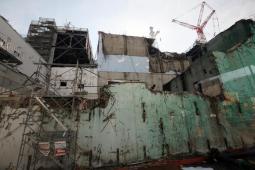
Cooling water briefly stopped at Fukushima plant
Injections of water to cool melted fuel in a reactor at the Fukushima Daiichi nuclear power plant stopped briefly due to human error on Monday.
The plant’s operator, Tokyo Electric Power Company, says an alarm system was activated at around 10 AM when a water pump at the No. 3 reactor shut down.
An internal investigation by the utility found that a worker had mistakenly hit the pump’s switch with his elbow while checking instruments. TEPCO resumed the water injections using a different pump about 1 hour later.
The utility notified local prefectural authorities and nearby areas of the problem just one minute before it resumed the water injections.
TEPCO officials say they detected no changes in the temperature at the bottom of the reactor or in radiation levels at monitoring posts around the plant.
Also on Sunday night, cooling operations temporarily stopped in the spent nuclear fuel pool at the plant’s numbers 1, 2 and 3 reactors when some valves inexplicably opened.
TEPCO says it takes these human errors seriously and will do it best to prevent recurrences.
http://www3.nhk.or.jp/nhkworld/en/news/20161205_27/
Fukushima reactor briefly loses cooling during inspection
One of the melted reactors at tsunami-hit Fukushima nuclear power plant had a temporary loss of cooling when a worker accidentally bumped a switch while passing through a narrow aisle of switch panels during an inspection and turned off the pumping system.
The plant operator, Tokyo Electric Power Co., said cooling for the No. 3 reactor, one of the three reactors that melted following the 2011 earthquake and tsunami, was out for nearly one hour Monday until a backup pump kicked in.
TEPCO said the reactor had enough water left inside and there was no temperature increase or radiation leak from the incident.
TEPCO acknowledged some other key switches are in similarly tight locations.
Anthropocene, Capitalocene, Chthulucene, staying with the trouble in Fukushima
In the space-time of environmental devastation announced by the Anthropocene, nuclear catastrophe is a type of “fuzzy boundaries trouble” that challenges our capacity for understanding. We know from Günther Anders that it operates in the supraliminary sphere, so large that it cannot be seen or imagined, which causes cognitive paralysis. By Ulrich Beck that produces an anthropological shock, the transformation of the consciousness of the subjects in relation to the experience of insecurity and uncertainty in the face of an invisible threat. By Svetlana Alexeivich that is characterized by vagueness and indefinition, which produces a war without enemies. And by Olga Kuchinskaya that generates a politics of invisibility regarding public knowledge of its consequences for life.
As Chernobyl before, the Fukushima disaster has reached the maximum level in the scale of accidents, when several nuclear reactors melted down 200 kilometers from the most populous metropolitan area of the planet. The dangerous radionuclides, once enclosed between concrete and steel walls, began to blend intimately with the biosphere. Before this mutant ecology, the artists have responded from the first moments. Through photography, guerrilla art, dance, video art or fiction narrative, this artistic response to the nuclear crisis has faced a double invisibility: the one of ionizing radiation and the institutional invisibility – the affirmation of the authorities that the problem “is under control”.
Taking as a theoretical framework the interdisciplinary discussion of the Anthropocene and its critical epistemologies, such Jason Moore’s Capitalocene and Donna Haraway’s Chthulucene, we investigate how artists are staying with the trouble in Fukushima. Recalibrating our sensory systems to adjust them to the contradiction and volatility of industrial advances, we explore the ability of art to construct an ontology complementary to hegemonic technoscience, one that allows us a more in-depth understanding of what nature and we humans has become in the Anthropocene.
Mom of student called ‘germ’ at school links bullying to Fukushima disaster
The mother of a fourth-year elementary school student in Niigata, who has been staying home from school since late November after being called “germ” by his peers and his teacher, spoke to the Mainichi Shimbun, saying that her son was bullied because he came from nuclear disaster-hit Fukushima Prefecture.
The family evacuated from Fukushima after the nuclear disaster. While the Niigata Municipal Board of Education has denied a link between the bullying of the student and his Fukushima roots, according to the mother, the student started being called “germ” around March of this year, which marked five years since the disaster, and this is one reason she argues that there is a connection.
According to the mother, around March 11 of this year when the nuclear disaster issue came up in class, her son proactively talked about his own experiences.
“He must have been happy to be able to give lots of answers,” she says. However, it was around that time that he started being called “germ” by his classmates.
“Some kids who knew he had come from Fukushima started calling him germ, and that led to kids who didn’t know him also calling him that, like a nickname,” she says.
In June, the student talked to his teacher, complaining that he was “being treated like a germ.” At that point the student is thought to have not considered the name as bullying, and when the teacher referred to him as “germ” after summer vacation ended, he didn’t appear to be deeply bothered by it.
In early November, though, it was reported in the news that a junior high school student in Yokohama who had evacuated from Fukushima Prefecture was bullied by being called “germ.” When the student in Niigata heard this, he said, “It’s the same as me,” and the mother says she thinks “he probably began to see himself as being bullied.” On the mother’s advice, the student talked to his teacher about it again on Nov. 17. When he came home, he triumphantly said with a smile that he had talked to the teacher.
After a strong earthquake off the Fukushima Prefecture coast early on the morning of Nov. 22 this year, the boy went off to school looking anxious, he and his mother having not yet been able to get in contact with the father, who works in Fukushima Prefecture. During recess that day, while the student was receiving teacher-parent correspondence from his teacher, the teacher called him “germ” again. The shocked student returned home, and since Nov. 24 has been staying home from school, saying, “I want to go to school, but I can’t because that teacher is there.”
According to the mother, at first school authorities denied the teacher had called the student “germ.” On Nov. 25 the father called the school and said tearfully that “There are kids who commit suicide (when they are bullied).” Although the teacher apologized, the mother says that the teacher treated them coldly, saying it was only this year that they had become the student’s homeroom teacher. The teacher has said they want to apologize to the student, but the student is refusing to see the instructor and the school principal has been visiting the family’s home every day to try and deal with the matter.
The family has been planning to move after the free rent for the government-leased apartment they are living in ends at the end of this fiscal year. The mother says, “My son had been asking that we stay in the same school district, but now that this has happened, we have no choice but to have him change schools,” adding, “We evacuated voluntarily (from Fukushima), and I don’t want to impose on the people of Niigata.”
According to the Niigata Municipal Board of Education, there are 291 children who have evacuated from Fukushima Prefecture to the city of Niigata. It holds that “there is no bullying of students related to their Fukushima roots.”
———-
Timeline of events involving the bullying of the student:
2011:
March — The Great East Japan Earthquake and the Fukushima No. 1 Nuclear Power Plant disaster occur. The student evacuates to the city of Niigata.
2016:
Around March — Student begins to be ostracized by peers and called “germ.”
April — Student enters fourth grade and homeroom teacher changes.
June — Student speaks to teacher about being called “germ.” Teacher disciplines classmates who bullied student.
Early November — News is reported of a junior high school student in Yokohama who evacuated from Fukushima Prefecture and was bullied, including being called “germ.”
Nov. 17 — Student again speaks to teacher about being bullied.
Nov. 22 — During recess, student is called “germ” by teacher in classroom in front of classmates.
Nov. 24 — Student begins to stay home from school (Nov. 23 was a school holiday).
Nov. 29 — School questions students about incident. Multiple students testify that teacher called student “germ,” and teacher also says it is true.
(Based on sources including student’s parents and the Niigata Municipal Board of Education)
http://mainichi.jp/english/articles/20161205/p2a/00m/0na/020000c
Fukushima reactor N° 3 briefly loses cooling during inspection
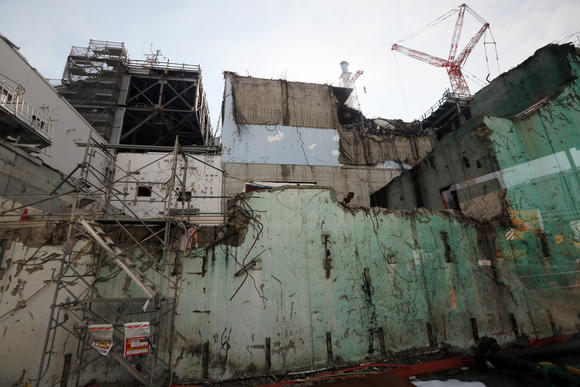
TOKYO — One of the melted reactors at the tsunami-hit Fukushima nuclear power plant had a temporary loss of cooling Monday when a worker accidentally bumped a switch while passing through a narrow isle of switch panels during an inspection and turned off the pumping system.
The plant’s operator, Tokyo Electric Power Co., said cooling for the No. 3 reactor, one of the three that melted following the 2011 earthquake and tsunami, was out for nearly an hour before a backup pump kicked in.
The reactor had enough water left inside and there was no temperature increase or radiation leak from the incident, TEPCO spokesman Yuichi Okamura said at a news conference.
Even though there was no radiation leak or overheating of the core, or any injuries, the incident was a reminder that Fukushima’s decommissioning work is running on a very fragile system.
The plant was largely running on makeshift pipes, wiring and other equipment in the first two to three years following the 2011 disasters, suffering a series of minor blackouts – including those caused by rats chewing cables – cooling stoppages and other problems.
The plant has since largely stabilized, but it remains vulnerable to unanticipated incidents as it continues to struggle with decommissioning work, which is expected to last decades.
Monday’s incident occurred when the worker was passing by a dimly lit isle that was only 85 centimeters (2.8 feet) wide, flanked by tall switch panels on both sides, Okamura said. With radiation levels still high, the worker was wearing a full-face mask and hazmat suit when he lost his balance while carrying equipment. His elbow jammed into the switch, breaking off its safety cover and inadvertently turning the lever to turn off the water injection pump to the No. 3 reactor.
Okamura acknowledged the lack of space at the site and said that the plant will seek ways to eliminate human errors like one on Monday.
1 This Month
10 March A LIVE WEBINAR THE REAL EFFECTS OF NUCLEAR POWER
What the Industry Isn’t Telling Us
1:00 PM Mountain, 2 pm Central, 3 pm Eastern. Live on the Keepers of the Water Facebook page



18 March Webinar @ 1 PM EST: An Assessment of SMR Projects: The Case of Canada
register for the zoom:
https://us02web.zoom.us/webinar/register/WN_o8BIIOUvQ2ONJR1nta65DQ#/registration


of the week – STOP SMALL MODULAR REACTORS IN CANADA
To see nuclear-related stories in greater depth and intensity – go to https://nuclearinformation.wordpress.com
-
Archives
- March 2026 (99)
- February 2026 (268)
- January 2026 (308)
- December 2025 (358)
- November 2025 (359)
- October 2025 (376)
- September 2025 (258)
- August 2025 (319)
- July 2025 (230)
- June 2025 (348)
- May 2025 (261)
- April 2025 (305)
-
Categories
- 1
- 1 NUCLEAR ISSUES
- business and costs
- climate change
- culture and arts
- ENERGY
- environment
- health
- history
- indigenous issues
- Legal
- marketing of nuclear
- media
- opposition to nuclear
- PERSONAL STORIES
- politics
- politics international
- Religion and ethics
- safety
- secrets,lies and civil liberties
- spinbuster
- technology
- Uranium
- wastes
- weapons and war
- Women
- 2 WORLD
- ACTION
- AFRICA
- Atrocities
- AUSTRALIA
- Christina's notes
- Christina's themes
- culture and arts
- Events
- Fuk 2022
- Fuk 2023
- Fukushima 2017
- Fukushima 2018
- fukushima 2019
- Fukushima 2020
- Fukushima 2021
- general
- global warming
- Humour (God we need it)
- Nuclear
- RARE EARTHS
- Reference
- resources – print
- Resources -audiovicual
- Weekly Newsletter
- World
- World Nuclear
- YouTube
-
RSS
Entries RSS
Comments RSS
 nuclear-news