State minister rules out sarcophagus option
Japan’s state minister for industry has ruled out the option of sealing off disabled reactors at the Fukushima Daiichi nuclear plant with a Chernobyl-style sarcophagus.
Yosuke Takagi met Fukushima Governor Masao Uchibori in Tokyo on Friday.
Uchibori said he was shocked to hear the word “sarcophagus” and called the option unacceptable.
Two days earlier, a government body charged with decommissioning the plant operated by Tokyo Electric Power Company mentioned the sarcophagus method for the first time.
The body said it remained committed to removing fuel debris from the reactors that suffered meltdowns in the March 2011 accident. But it presented a technical report that left room for entombing the reactors in a massive metal and concrete structure.
Responding to Uchibori, Takagi said the government has no intention of using such an option, and that completing the decommissioning process is the top priority.
Takagi said the government’s policy is to stand by the people of Fukushima, and that his ministry has told the decommissioning body to rewrite its technical report.
http://www3.nhk.or.jp/nhkworld/en/news/20160715_27/
Radioactive Forest
July 9, 2016
The Fukushima nuclear accident in 2011 turned the surrounding towns into a desolate land, making the area into a “radioactive forest”. Without human presence, the land is roamed by wildlife like civets, macaques and wild boars. A project is underway to study the deserted areas by attaching a camera to wild boars to record the conditions of the former farmlands. 5 years after the disaster, we take a close look at how radiation has affected the wildlife, and what it entails for us humans.
Preventing Recriticality in Fuel Debris at Fukushima Daiichi Nuclear Power Station
This video released on July 16, 2016 by Tepco intends to explain the conditions of the fuel retained in the reactors of Units 1-3 at Fukushima Daiichi Nuclear Power Station, and TEPCO’s measures to prevent recriticality- return to a point at which a nuclear reaction becomes self-sustaining- in the fuel debris there.
Study shows bulk of fuel still in crippled Fukushima No. 2 reactor

TOKYO, July 14, Kyodo
A study on the disaster-hit Fukushima Daiichi nuclear power plant has found that most of the melted fuel in the No. 2 reactor is still present in the reactor core area, sources close to the matter said recently.
According to the study that used a cosmic ray imaging system, around 200 tons of fuel and other melted substances is estimated to have accumulated at the bottom of the pressure vessel, the first time the current location of the fuel has been specified.
The finding is important for devising ways to remove the so-called fuel debris, the most challenging task in decommissioning the Nos. 1 to 3 reactors that suffered meltdowns in the nuclear crisis that began in March 2011.
https://english.kyodonews.jp/news/2016/07/421290.html
Deposition of radiocesium on the river flood plains around Fukushima

The environment in the area around Fukushima Daiichi Nuclear Power Plant has been contaminated by widely deposited significant amount of radioactive materials, which were released to the atmosphere caused by the Fukushima Daiichi Nuclear Power Plant accident due to the Great East Japan Earthquake, which occurred on March 11, 2011. The radiocesium released in the accident mainly affects radiation dose in the environment. Decontamination work in the contaminated area except a mountain forests has been conducted to decrease the radiation dose. However, there are concerns that the redistribution of this radiation due to water discharge will occur due to the resulting transport of radiocesium. In particular, the deposition of soil particles containing radiocesium on the flood plains in the downstream areas of Fukushima’s rivers can potentially increase the local radiation dose. Therefore, it is important to understand the influence of the deposition behavior of radiocesium on the radiation dose.
Investigations of rivers have been performed to enhance the understanding of the mechanisms by which radiocesium is deposited on these flood plains. It was found that the spatial distribution of the radiocesium concentration on the flood plain along the river is heterogeneous with a dependence on the depositional condition and that the number of points with high air dose rates is limited. In detail, the radiocesium concentration and air dose rates in flood channels are higher than those at the edges of the river channels. Based on these heterogeneity and hydrological events, the deposition and transport mechanisms of the radiocesium due to water discharge at rivers were also interpreted, and a conceptual model was constructed.
http://www.sciencedirect.com/science/article/pii/S0265931X16301187

‘Stone coffin’ eyed for decommissioning Fukushima plant: report
The government-funded Nuclear Damage Compensation and Decommissioning Facilitation Corp. (NDF) eyes an option of covering the disaster stricken Fukushima No. 1 Nuclear Power Plant with concrete in the future as in the Chernobyl disaster, it has been learned.
In its first planning report drawn up on July 13, the NDF leaves room for adopting the “sarcophagus (stone coffin) method,” in which nuclear fuel debris that melted in the Fukushima crisis will be confined inside reactor buildings using concrete and other materials.
The NDF points out in the report that it will be difficult to manage such a sarcophagus safely over a long period of time, and emphasizes that it is planning to remove fuel debris from the Fukushima nuclear plant for now. However, the report also says, “It is appropriate to flexibly review the plan in accordance with the conditions inside (nuclear reactors and other parts) that will be revealed later.”
The report also states, “It is necessary to fully consider the uncertainties over passing down responsibilities for a long period of time and concerns over easy postponement from one generation to another.”
The sarcophagus method was adopted at the Chernobyl nuclear complex in the former Soviet Union in the wake of the core meltdowns there in 1986.
http://mainichi.jp/english/articles/20160714/p2a/00m/0na/009000c
Makers of Fukushima reactor not liable: court
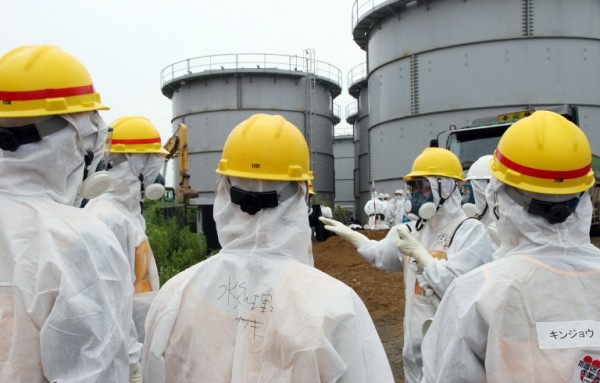
TOKYO – A Japanese court on Wednesday turned down a class-action lawsuit seeking damages from nuclear plant makers Toshiba, Hitachi and GE over the Fukushima meltdown disaster, the plaintiffs, one of the companies and a report said.
About 3,800 claimants in the suit, hailing from Japan and 32 other countries including the United States, Germany and South Korea, had sought largely symbolic compensation from the nuclear power plant manufacturers.
Under Japanese liability law, nuclear plant providers are usually exempt from damage claims in the event of an accident, leaving operators to face legal action.
The plaintiffs’ lawyers, however, had argued that that violated constitutional protections on the pursuit of happy, wholesome and cultured livelihoods.
But the Tokyo District Court ruled that the law “is not unconstitutional”, according to lawyers for the plaintiffs.
“We knew it was difficult to win under the current legal system in Japan, but it’s clearly wrong that nuclear (plant) manufacturers don’t have to bear any responsibility for an accident,” Masao Imaizumi, 73, one of the plaintiffs, told AFP.
“If they are spared responsibility, it could lead to disregard for product quality,” he said, adding that the plaintiffs will appeal.
Toshiba welcomed the decision.
“The company recognises the verdict as an appropriate ruling handed out by the court,” it said in a statement.
Hitachi and GE’s Japan office could not be reached for comment.
Japan’s Jiji Press also reported that the suit was rejected.
The suit — which sought just 100 yen (96 US cents) per claimant — was the first to be brought against nuclear power-plant suppliers over the accident, Akihiro Shima, lead lawyer for the plaintiffs, said previously.
The suit was first filed in January 2014 with just over 1,000 claimants, but more joined and the number nearly quadrupled.
The plaintiffs had alleged that the companies failed to make necessary safety updates to the Fukushima reactors, swamped on 11 March 2011 by a magnitude 9.0 earthquake-sparked tsunami that lead to the worst nuclear accident since Chernobyl in 1986.
Embattled plant operator Tokyo Electric Power is already facing massive lawsuits and compensation costs.
https://www.enca.com/world/makers-of-fukushima-reactor-not-liable-court
Reactor decommissioning plan cites ‘sarcophagus’
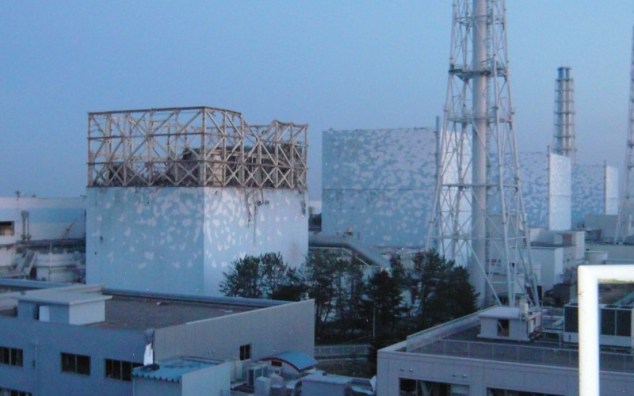
Reactor decommissioning plan cites ‘sarcophagus’
The government body charged with decommissioning the reactors at the Fukushima Daiichi nuclear plant says it remains committed to removing the fuel but sealing off the buildings that house them could be an option.
The Nuclear Damage Compensation and Decommissioning Facilitation Corporation issued its latest report Wednesday on its plan.
It says 2 methods will be used to remove molten fuel depending on the condition of the reactors.
One entails filling the containment vessels with water to shield workers from radiation. The second does not use water.
The new plan also introduces the option of creating a “sarcophagus” to seal off the buildings with the nuclear fuel inside.
This method was used at the Chernobyl nuclear plant in Ukraine.
The plan favors removing the nuclear fuel because of the long-term safety issues involved with a sarcophagus. It urges a flexible review of all available options.
It also notes the importance of addressing long-term public concerns about the plan.
The government and the plant operator, Tokyo Electric Power Company, plan to decide by the middle of next year how to remove the fuel from the reactors. They hope to begin work at one of them by 2021.
http://www3.nhk.or.jp/nhkworld/en/news/20160713_25/
Fukushima mayors react to decommission plan
Reacting to the new plan, the heads of municipalities around the Fukushima Daiichi nuclear plant have urged the government to stick to its promise regarding nuclear waste disposal.
The mayor of the city of Minamisoma, Katsunobu Sakurai, said the government and TEPCO must be made to abide by their initial pledge to remove the fuel from Fukushima Prefecture. Until this is done, he said, the evacuees won’t feel that it’s safe to return home.
He warned against using the word “sarcophagus” lightly. He said its mention only points out the inadequacy of decommissioning technology.
The mayor of the town of Namie, Tamotsu Baba, said a sarcophagus should not be considered because engineers are hard at work figuring out ways to remove the fuel.
He said all they can do is to have faith that the initial pledge will be kept, even if it takes 30 or 40 years to remove the fuel.
The mayor of the town of Okuma, Toshitsuna Watanabe, also urged the government and the utility to stick to their disposal promise.
Evacuation order lifted in Minami-Soma after 5 years, affecting 10,000 people
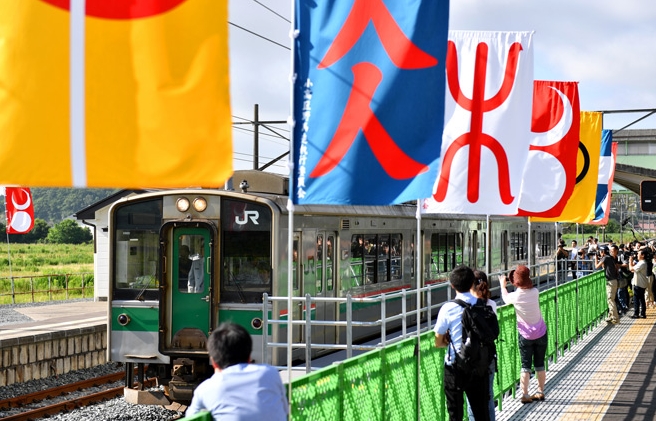
For the first time in five years, a train begins service on the 9.4-kilometer stretch between Odaka and Haranomachi stations in Minami-Soma, Fukushima Prefecture, on East Japan Railway Co.’s Joban Line at 7:33 a.m. on July 12.
Evacuation order lifted in Minami-Soma after 5 years
MINAMI-SOMA, Fukushima Prefecture–In good news for residents, an evacuation order for the southern part of the city here was lifted on July 12 for the first time since the massive earthquake and tsunami crippled the Fukushima No. 1 nuclear power plant five years ago.
However, due to lingering fears of radiation contamination, less than 20 percent of the populace are set to return to their homes.
The central government allowed residents back into the southern region of the city after midnight on July 11. It marks the sixth time that evacuation orders have been lifted for locales in Fukushima Prefecture, following such municipalities as Naraha and Katsurao.
The latest lifting in Minami-Soma affects a total of 10,807 residents in 3,487 households in all parts of the Odaka district and parts of the Haramachi district, making it the largest number of people to be let back into their homes since evacuation zones were established following the 2011 nuclear disaster.
Two residents living in a household in an area designated a “difficult-to-return” zone in the southern part of the city are still not allowed back home.
However, only about 2,000 residents signed up to stay overnight at their homes in the area ahead of the lifting of the evacuation order.
That is likely because many still fear the effects of radiation from the destroyed power plant, which straddles the towns of Futaba and Okuma to the south of Minami-Soma. In addition, five years was more than enough time for residents who evacuated elsewhere to settle down.
With at least some of the residents returning home, East Japan Railway Co. resumed service on the 9.4-kilometer stretch between Odaka and Haranomachi stations on the Joban Line for the first time in more than five years on the morning of July 12. The first train of the morning entered Odaka Station carrying 170 or so people on two cars as traditional flags used in the Soma Nomaoi (Soma wild horse chase) festival on the platform greeted passengers.
The central government is pushing to lift evacuation orders on all areas of the prefecture excluding difficult-to-return zones by March 2017.
http://www.asahi.com/ajw/articles/AJ201607120054.html
Japan lifts evacuation orders in Fukushima affecting 10,000 people
FUKUSHIMA, Japan (Kyodo) — The government on Tuesday further scaled down areas in Fukushima Prefecture subject to evacuation orders since the March 2011 nuclear disaster at the Fukushima Daiichi complex, enabling the return of more than 10,000 residents to the city of Minamisoma.
Following the move, the city will become mostly habitable except for one area containing one house. But many residents seem uneager to return, having begun new lives elsewhere.
The government is in the process of gradually lifting evacuation orders issued to areas within a 20-kilometer radius of the plant of Tokyo Electric Power Company Holdings Inc. and in certain areas beyond the zone amid ongoing radiation cleanup efforts.
Eight municipalities in Fukushima Prefecture have areas defined as evacuation zones, which are divided into three categories based on their radiation levels. The most seriously contaminated area is called a zone “where it is expected that the residents have difficulties in returning for a long time.”
In Minamisoma, the government lifted evacuation orders for areas except for the difficult-to-return zone. As of July 1, the areas had a registered population of 10,807, or 3,487 households.
To encourage evacuees to return, the central government and the city reopened hospital facilities, built makeshift commercial facilities and prepared other infrastructure.
Radiation cleanup activities have finished in residential areas, but will continue for roads and farmland until next March.
The government hopes to lift the remaining evacuation orders affecting areas other than the difficult-to-return zones by next March, officials said.
http://mainichi.jp/english/articles/20160712/p2g/00m/0dm/031000c
Fukushima’s Ice-Wall – A Fridge Too Far
The Tōhoku earthquake and tsunami on March 11, 2011 caused significant damage to the TEPCO Fukushima Daiichi nuclear power generation site. The damage inflicted to the plant’s cooling system, caused a ‘Loss of Coolant Accident’ resulting in nuclear meltdowns and releases of radioactive materials from several of its reactors. It was the largest nuclear disaster since the Chernobyl disaster of 1986 and only the second disaster (along with Chernobyl) to measure Level 7 on the International Nuclear Event Scale.
The reactor buildings were severely damaged to their foundations, and having been built on ‘made ground’ above a highly active and porous aquifer up to 50 metres deep, ground water began to penetrate the damaged reactor building’s basement at a significant rate. Initially this proved an aid to the immediate situation, with the cooling system out of action an emergency system was set up utilising site waters to cool the damaged reactors, with 400 tons of water being continuously poured into the damaged reactor buildings every day to cool them. On the downside, this cooling water became contaminated by the exposed molten fuel. Added to that, approximately 400 tons per day of groundwater flowing into the basements of the damaged buildings also became contaminated due to cracks in the reactor containment vessels. Approximately 800 tons of contaminated water was required to be pumped up every day from the damaged buildings and treated to minimise its harmful contaminant content. Even after treatment, these stored waters contained significant amounts of caesium-134, caesium-137, strontium-90 and tritium. The water that was not reused for cooling was stored in holding tanks. Needles to say the contaminated water is accumulating as such a rate that some discharges to the sea will become inevitable.
The technical problems posed for the authorities are immense. High level contamination around the damages reactors, massive structural damage, derelict buildings and radioactive debris spread over an extensive area. And an apparently unstoppable flow of ground water flooding buildings wherein the corium stumps of 3 melted-down reactors still lay. And as if to make matters worse, the water levels in the basement behaved tidally, indicating that the contaminated waters had a seriously large conduit or ‘preferential pathway’ to the open sea. With all of these issues, even with the Chernobyl experience, the Fukushima clean-up project is a massive, unique and highly challenging situation, that may take as long as 50 years or more to fully address.
In years following the disaster the Japanese authorities, struggling to meet the daunting challenges, came under increasing internal and external pressure to seek external assistance in the clean-up and remediation of the Fukushima plant. In response, in mid-2013, Japan’s International Research Institute for Nuclear Decommissioning Authority (IRID) made a worldwide call for technologies to address their radio-chemical contaminated water, and other technologies to assist to remediate the site. In a global ‘brainstorm’ they drew in a significant amount of good ideas and prospective valuable new technologies.
There are several key stages to ‘brainstorming‘. Setting the context and defining the problems faced at Fukushima are largely self evident. The plant needs to be made safe and decommissioned, and the wider environment beyond the plant needs to be remediated and restored, at least as far as is possible. In generating ideas, there needs to be a flow of ideas that are uncompromised by ‘mindset’. To this end those involved in the process are generally selected from both within and without the problem owning group and from as wide a range of expertise as possible. So as not to prohibit radical ideas or ideas that would be outside the technical culture of the problem owning group, it is quite normal to reserve any critical review at this stage, until everything is on the table. Thereafter, the filtering of ideas commences. The most promising are shortlisted and then follows a more detail examination of the pros and cons of each, where their merits and de-merits weighed. On selection of the best idea, any specific problems are addressed and if acceptable, the front runner goes forward to be implemented as an operational project.
Consider the operation requirements of decommissioning the Fukushima reactor buildings. There needs to a be robust containment wall put in place, to (a) control the immediate ingress and discharge of water (b) prevent spread of contamination during decommissioning and (c) a coffer must be installed to contain for what will remain a site of significant radiation risk for hundreds of years to come. The ‘brainstorming process seems to have fallen short at Fukushima. The concept of the ice-wall was mooted long before IRID’s call for technology, and advanced as the optimum solution before any wide-ranging brainstorming took place. Moreover, it would appear that the overseeing authorities had become ‘mindset’ on this solution, announcing the decision to construct the Ice-wall in September 2013 despite IRID still seeking and collecting worldwide technology submissions. Installation of facilities to create the ice-wall commenced in June 2014 and was completed on February 9, 2016 at an estimated to cost some ¥34.5 billion ($339 million). Activation was on March 31 this year, with commencement of the freezing of the seaward side wall. Freezing of the land-side wall commenced on June 6 and has as yet to achieve and control over the water ingress to the ice-walled coffer. Yet despite this commitment to the ‘ice-wall’ as a solution to the problem, serious questions arise as to whether this technology is capable of meeting the short term needs, let alone the medium or long-term containment needs.
Ice-wall technology has been used in Japan on hundreds of occasions in civil engineering projects to stem flooding and avoid collapse issues in tunnelling. The purported principal benefit of using a frozen barrier compared with a physical barrier is that it avoids the challenges of building a wall around such underground obstacles as pipes, which it can freeze plug, and if complete, create a seamless barrier. Once in place, frozen walls take a long time to melt and therefore if the site were hit by another earthquake or tsunami the wall might stay intact for a couple of months, allowing time for its refrigeration plant to be repaired and power restored.
As for the cons, relative to what is required at Fukushima, ice-wall technology has only ever been used on a short term basis, and never for a semi-permanent installation. None have run for the decades that Fukushima’s wall would need to be in place. The Fukushima wall at 1,500 metres in length, 30 metres in depth and at circa 70,000 cubic metres in volume would be nearly double the size of the largest prior ice-wall ever constructed. Curiously it was designed only as a partial barrier in that it doesn’t reach to 50 meters to the impermeable rock strata below the aquifer and thus it has no containment floor beneath the site. Such a wall has never been constructed on such a highly active aquifer and it is quite a different matter to freezer moving water. As an added complication, due to the proximity of the sea to the site and the existence of preferential pathways to the sea, the groundwater would have a high mineral content and be highly saline, containing salts of sodium, potassium and critically calcium. Owing to this mixed salinity, freezing to below 0oC would not be nearly enough to freeze the soil-water column solid and stop the water flow. The ground soil-water column would have to be taken to below -21oC and possibly to -41oC. TEPCO are utilising a CaCl2/card-ice eutectic coolant, which has a minimum freezing temperature of -41oC ‘at the pump’ and closer to -25oC in the cooling pipes. It would be hard pressed to get the ground temperature to -21oC due to heat ingress, and even at its coldest it won’t freeze a calcium rich saline system solid. As for the heat ingress into the system, we mustn’t forget that we are trying to enclose 3 very warm meltdown corium stumps, effectively comprising a ‘hot-spring’ at the centre of the ice-wall structure. Over and above that heat, the Fukushima site is located next to the Pacific and has seasonally warm southerly currents bathing the site’s shore front during the summer months bringing yet more heat into the system. Even with a heat exchanger rated at 12.6 Mega Watt, (that’s about enough energy to run a small town), it’s a big ask, and I fear that given the geotechnical circumstances the desired ice-wall project outcomes are beyond the capacity of this technology.
A complication of ice-wall technology is that it causes ground heave. The ice causes the ground to swell, creating a sheer between the unfrozen ground and the ice swollen frozen ground. So, further damage to the foundations of the stricken buildings and localised subsidence is likely. A greater problem might ensue when the wall is thawed. The chewing of the ground by the ground heave process would likely destroy subsoil texture and leave the ground more permeable to water than before.
Given the pros and cons of an ice-wall I ask the question; why didn’t TEPCO opt for a jet grouted cement/mortar double wall that could have totally enclosed the site, as this was the method of choice for controlling groundwater migration at Chernobyl? It would be possible to jet grout below the buildings and flexible ‘soft wall’ mortars could be used rather than Ordinary Portland Cement (OPC) to guard against fracture by future earthquakes.
At present TEPCO contend that the ice wall project is going to plan. However, Japan’s Nuclear regulatory authority (NRA) aren’t yet convinced, pointing out that the ice wall has yet to impact the collection of water in waterfront wells. Test wells within and without the ice wall indicated water levels tracking each other over time, showing the internal and external groundwater systems still interconnected. Moreover, the much vaunted advantage of the ice wall in being able to seal around a plug pipes appears not to be the case a Fukushima, where underground pipes and conduits remain warm and are probably acting as the preferential pathways for water ingress and egress. NRA committee member Toyoshi Fuketa recently stated, “This is not a wall in a true sense. Perhaps it’s more akin to a bamboo screen, with groundwater trickling through the gaps”. It would now seem that in response to criticism and to control the water flow TEPCO are now resorting to a hybrid approach by trying to cement closed the holes in the wall. The problem with cement is, it doesn’t set well below 0oC, but other related sealant options are available.
Thus far, it would appear that after 5 years with the bill racing toward $500 million, all TEPCO’s Ice-wall project has achieved is a very expensive steaming ‘slushy’ and no control over water ingress into the site. Indeed there is little control on water egress from the site other than by continual pumping from the reactor building basement to tanks to maintain the basement water levels below groundwater, and in doing so hope migration of contamination into the sea is prevented. Maybe it’s time to ‘call it a day’, purge the mindset and re-brainstorm the problem.
https://www.linkedin.com/pulse/fukushimas-ice-wall-fridge-too-far-peter-j-hurley
Who will pay for decommissioning the Fukushima reactors?
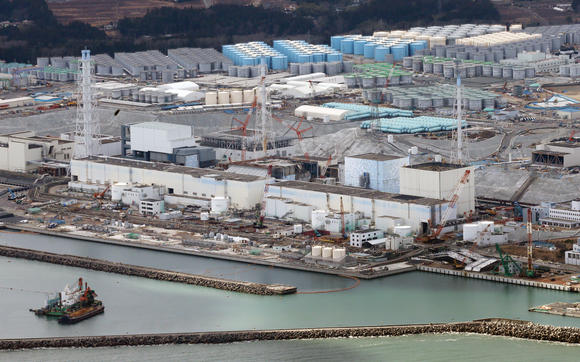
TOKYO — Energy policy was not high on the agenda in Sunday’s upper house election in Japan, in which the ruling Liberal Democratic Party consolidated its power. But Prime Minister Shinzo Abe, the Japanese people and the country’s power companies are facing a difficult question over the fate of the future of nuclear power in Japan: who will foot the costly bill for decommissioning the crippled Fukushima Daiichi nuclear power plant?
Every visit to the site, which was devastated by a magnitude-9.0 earthquake and subsequent tsunami five years ago, shows things are moving forward. A full-face mask is no longer needed in 90% of the compound. An underground ice wall is being constructed to reduce the amount of groundwater entering the basements of the reactor buildings. But what really caught my eye this time was the cream puffs.
Workers engaged in the cleanup effort can now buy the sweets at a convenience store that opened at the site in March. “Every day, we sell at least 50,” a clerk said. This represents a significant improvement in working conditions. In addition, last year, a large lounge and a cafeteria opened, providing the 6,000-plus workers with hot meals for the first time.
“Decommissioning is a project that will last 30 or 40 years, and we will have to pass the work on to future generations,” said Akira Ono, who stepped down as the plant’s manager at the end of June. “We must turn this place from a disaster site to a decommissioning site,” he added.
But the road ahead is fraught with obstacles. “We haven’t even started climbing the mountain, and we don’t even know how high it is,” said Naohiro Masuda, head of the decommissioning project and a managing executive officer of Tokyo Electric Power Co. Holdings, better known as Tepco, the plant’s operator. The most difficult task is going to be the removal of nuclear debris believed to be sitting inside the containment vessels after it melted through the reactor cores. No one precisely knows the current state of the debris.
No matter how long it takes, though, we must climb this mountain. Completing the project will require determination, technology and money. The actual cost will become more clear next year, when the company determines how it is going to remove the debris. Tepco hopes to start removal in 2021.
“The overall decommissioning is estimated to cost over 10 trillion yen ($98 billion),” a government official said. But nobody mentions who will pay the bill and how.
Currently, compensation and decontamination are being covered by the state, on Tepco’s behalf, without charging interest. Tepco and other power companies will eventually have to reimburse the government for compensation payouts through a pool of contributions. The government will recoup decontamination costs by selling the Tepco shares it owns.
Under this program, introduced immediately after the nuclear accident so that Tepco could meet all of its compensation obligations without going bankrupt, 11 power companies that operate nuclear reactors, including Tepco, together made a general contribution of 163 billion yen in the fiscal year to March. Tepco added another 70 billion yen as a special contribution. Although general contributions are meant to create a contingency fund for any future severe accidents at the country’s electric companies, they are in reality being used to cover Fukushima-related compensation claims.
Power companies must make general contributions for decades, and the cost is passed on to consumers through higher electricity bills. But with the liberalization of Japan’s retail electricity market in April, this mechanism will become increasingly difficult to maintain. Previously, dominant power suppliers, such as Tepco, could recoup the cost by assessing a fee on users within their territories. But that may no longer be possible as government-approved rates will be abolished in a few years, making way for new suppliers to step in with cheaper rates.
http://asia.nikkei.com/Business/Trends/Who-will-pay-for-decommissioning-the-Fukushima-reactors
Fukushima Myth: Pacific Genocide
The latest video from Goddard
I have always been opposed to the minimalist lies of the pro-nuke spinners aiming to trivialize the Fukushima ongoing catastrophe but I have always been opposed also to the exaggerated claims of the sensationalists feeding their fear hungry gullible fans with much nonsense.
Like the sharp edge of a razor is that path, so the wise say—hard to tread and difficult to cross.
I always also said that the sensationalists with their exaggerated claims provide the fodder to be later used against us anti-nukers to suppress our rightful concerns in the eyes of the general public.
I have always been opposed to the sensationalization of Fukushima, the “Pacific is dying from Fukushima”, high-pitched drama on internet played by some websites, bloggers, Youtubers, the same ones that Goddard is now quoting in this video: Enenews, Natural News, Info Wars, Kevin Blanch and others.
There are many things causing the North American Pacific coastline ecocide at the same time, it is a convergence of many factors. These pre-date Fukushima.
That said I do believe that there should be wide scale fish testing, not just due to Fukushima but to the long term radioactive contamination of the Pacific. But having that happen, having it done properly and without it being hijacked by vested interests is extremely difficult. Why there should be wide scale fish testing is to determine the range of contamination among fish and where the high readings pop up to try to better understand where and what species are showing up with high readings and also what are the real averages being seen. Again, a big undertaking that can easily be hijacked making it meaningless.
The main danger is for the people living in eastern Japan, which has been contaminated at various degrees depending on the locations. The contaminated food, which when constantly consumed, even at a low level of contamination, will certainly have mid-term and long-term harmful consequences on the health of the people.
Another danger is the danger of radiation contaminated food products exported from Japan oversea to other countries with more lax radiation control and regulations, where people will buy them and consume them unknowingly of their contamination. As an example, in 2013 some tuna fish imported from the Philippines which was radiation contaminated was found sold in a supermarket in Switzerland. Of course that Philippines tuna had been contaminated by radioactive nanoparticles coming from Fukushima Daiichi in nearby Japan, and not from Diablo Canyon in far-away California.
To expose the false exaggerated claims, the sensationalism and the sensationalists, still does not change nor remove the fact that Fukushima contamination is spreading slowly but surely into our environment, and therefore there should be more measures and controls made to protect the people from possibly present radioactive contamination. As our governments are more busy protecting the financial interests than the people health, concerned citizens should organize themselves in local radwatch groups, to learn and to practice radiation measuring, in their surrounding environment and in their food, so as to protect themselves.
To resume: the Pacific ocean is not dying from Fukushima, but Fukushima radioactive contamination is slowly but surely, continously spreading into our environment, to slowly bioaccumulate and to affect the food chain.
That said, the biggest risks are still for the Fukushima people who are being left on location to live everyday with omnipresent radiation and contamination.
As I See It: Has nothing been learned from TEPCO’s ‘meltdown’ cover-up?

The March 14, 2011 press conference at the Tokyo Electric Power Co. (TEPCO) head office in Tokyo in which then TEPCO vice president Sakae Muto (second from right) was reportedly told by then company president Masataka Shimizu not to use the expression “core meltdown.”
A third-party panel set up by Tokyo Electric Power Co. (TEPCO) to investigate the company’s cover-up of the core meltdowns that occurred at its Fukushima No. 1 Nuclear Power Plant following the March 11, 2011 Great East Japan Earthquake and tsunami revealed in a report last month that then TEPCO president Masataka Shimizu had ordered the company not to use the term “meltdown” to describe what had occurred. The report also stated that the organizational cover-up took place against a backdrop of “what is presumed to be a request that came from the prime minister’s office.”
Then Chief Cabinet Secretary Yukio Edano has objected to the report, saying that the very people who were involved, himself included, were not consulted by the panel before it drew its conclusion. Edano also said that he sent a letter of protest to TEPCO seeking an apology and a retraction of the report.
There are many missing pieces to the investigative report, but without a doubt, TEPCO acted irresponsibly toward local residents. A meltdown refers to a severe incident in which nuclear fuel melts and leeches out. If the facts had been revealed to the public, they could have fled further and avoided going outdoors. TEPCO bears a heavy responsibility for exposing local residents to risks more dangerous than they would have been otherwise.
On March 14, 2011, three days after the nuclear crisis broke out, then TEPCO vice president Sakae Muto was in the midst of a press conference when a company PR official passed him a handwritten note indicating that a core meltdown had taken place, and whispered into his ear that “the prime minister’s office has instructed that this expression not be used.” The third-party investigative panel concluded that this message was from then TEPCO president Shimizu. In accordance with the instructions, Muto and TEPCO used the term “core damage,” a word with a less serious connotation than core meltdown, making the incident seem less severe than it actually was.
The residents of the Fukushima Prefecture town of Namie — the northerly neighbor of the town of Futaba, one of the two towns that the stricken nuclear plant straddles — were forced to evacuate without crucial information. According to the Namie Municipal Government, some 8,000 of the town’s 21,000 or so residents evacuated on March 12, 2011, to the town’s Tsushima district, further northwest of the nuclear plant. At the time, however, the wind had been blowing in that direction, putting the residents directly in the path of radioactive materials being emitted in massive amounts from the crippled nuclear plant.
Local resident Hidezo Sato, 71, evacuated from the town center and stayed at a community center in Tsushima until March 15. “There were other evacuees who said we should be fleeing farther away, but I didn’t think the situation was that grave,” he recalls. “If we’d known there’d been a core meltdown, it would’ve determined how we evacuated.” The community center where he was taking refuge was overflowing with people. Not knowing that he was downwind from the troubled nuclear plant, Sato sat by a fire outdoors. He also saw children going into grassy areas, where radioactive materials are known to collect.
“I would’ve avoided going outdoors had I known there’d been a meltdown,” says Yoko Hashimoto, 64, who also evacuated to the Tsushima district. “Five years have passed since the disaster broke out, and I’m worried that I’ll start seeing the health effects of radiation exposure. Why wasn’t the meltdown announced right away?” It is only natural for residents whose safety was all but ignored by TEPCO to feel anger toward the utility. The power company had always emphasized the happy coexistence of its nuclear plants and local communities. Yet when a serious incident took place, the local residents were neglected. This more than explains why the residents are distrustful and angry.
It wasn’t until at least two months later that TEPCO admitted that core meltdowns had occurred. And even then, it was only because the then Nuclear and Industrial Safety Agency, which has since been disbanded, demanded an overall report on the disaster. Moreover, it wasn’t until February of this year that TEPCO announced that it had discovered an internal company manual stipulating that damage to 5 percent or more of nuclear fuel be defined as a nuclear meltdown. Until then, the utility had cited the fact that it didn’t have any standards by which to define nuclear meltdowns as its excuse for delaying the announcement that such a phenomenon had occurred. But indeed, according to the manual, then vice president Muto could have said at the press conference on March 14, 2011, that a nuclear meltdown had taken place.
Hirotada Hirose, professor emeritus at Tokyo Woman’s Christian University and an expert in disaster risk studies, says that while local residents may have been thrown into confusion if information about the core meltdown had been made public, the merits of them evacuating farther away and reducing their exposure to radiation would have outweighed the possible risks of panic. “The physical and psychological damage that residents have suffered because information was not provided to them are far greater.” He adds, “Regardless of whether or not TEPCO actually received instructions from the prime minister’s office (not to use the expression ‘core meltdown’), it should have decided on its own to release accurate information. TEPCO lacks awareness and responsibility as the operator of nuclear plants that are at risk of creating serious crises.”
There is still much more room for improvement in TEPCO’s attitude toward its responsibilities. After the report on the meltdown cover-up was released, TEPCO President Naomi Hirose was asked at a press conference how the utility expected to work with the prime minister’s office if another serious incident were to occur. He refused to respond in clear-cut terms, instead stating, “That’s a difficult question to answer in general terms.”
On the one hand, the third-party investigative panel should be praised for digging up the fact that then TEPCO president Shimizu instructed the cover-up. On the other hand, however, the probe into the utility’s relationship with the prime minister’s office is insufficient. Residents harbor distrust toward not just TEPCO, but the government as well. Local residents will remain unconvinced unless further investigation into the extent and the manner in which the government interfered with the nuclear crisis is conducted.
Core meltdowns are not a problem specific to TEPCO. Whenever there’s a problem surrounding a nuclear plant, it often turns out that similar things are taking place at other plants run by other utilities. Can we say that TEPCO’s latest case is an isolated event? There’s a fear that when a nuclear accident takes place, we won’t be able to trust the power companies involved to provide us with appropriate information that respects and reflects the needs of affected residents. If utilities are going to restart halted nuclear reactors and extend the number of years its aging reactors are allowed to operate, they must take away important lessons from the Fukushima crisis and be prepared to disseminate information to the public from their standpoint. (By Mirai Nagira, Science and Environment News Department)
http://mainichi.jp/english/articles/20160706/p2a/00m/0na/008000c
Former Japanese Leader Starts Fund for US Vets Who Helped Fukushima

Former Japanese Prime Minister Junichiro Koizumi has started a fund for U.S. veterans who say they were sickened by radioactive fallout from the 2011 disaster at the Fukushima Dai-ichi nuclear power plant.
YOKOTA AIR BASE, Japan — A former Japanese prime minister is calling on his countrymen to donate to a fund for U.S. veterans who say they were sickened by radioactive fallout from the 2011 disaster at the Fukushima Dai-ichi nuclear power plant.
“They went so far to do their utmost to help Japan,” Junichiro Koizumi told a news conference Tuesday in Tokyo alongside fellow former Prime Minister Morihiro Hosokawa, according to Asahi Shimbun. “It is not the kind of issue we can dismiss with just sympathy.”
Hundreds of veterans, claiming a host of medical conditions they say are related to radiation exposure after participating in Operation Tomodachi relief efforts, have filed suit against the nuclear plant’s operator, the Tokyo Electric Power Co. A massive earthquake caused a tsunami that swamped a large stretch of northeastern Japan and inundated the power plant. Experts are still dealing with continuing leaks from the reactors.
The suit asserts that TEPCO lied, coaxing the Navy closer to the plant even though it knew the situation was dire. General Electric, EBASCO, Toshiba Corp. and Hitachi were later added as defendants for allegations of faulty parts for the reactors.
Illnesses listed in the lawsuit, which is making its way through the courts, include genetic immune system diseases, headaches, difficulty concentrating, thyroid problems, bloody noses, rectal and gynecological bleeding, weakness in sides of the body accompanied by the shrinking of muscle mass, memory loss, leukemia, testicular cancer, problems with vision, high-pitch ringing in the ears and anxiety.
People can donate to the fund, called the Operation Tomodachi Victims Foundation, at Japanese credit union Jonan Shinyo Kinko, Eigyobu honten branch, account No. 844688.
Donations, accepted through March 31, 2017, will be transferred to a U.S. bank and used, under the management of a judge, to support the veterans, according to a news release from the credit union.
TEPCO to reuse tanks holding radioactively contaminated water at Fukushima plant

Tokyo Electric Power Co. (TEPCO) will reuse highly contaminated tanks at the crippled Fukushima No. 1 Nuclear Power Plant to store radioactively contaminated water after treatment, company sources said.
The company will return contaminated water to flange-type tanks that had held such water after removing radioactive materials from the water using the Advanced Liquid Processing System (ALPS). This is because TEPCO has failed to prevent contaminated water from being generated on the premises of the plant or to secure enough storage tanks to hold treated water.
TEPCO had submitted the reuse plan to the Nuclear Regulation Authority, which approved it on July 6 or earlier. TEPCO is set to begin reusing contaminated tanks as early as this month.
Flange-type tanks are assembled by tightening multiple steel plates with bolts. Since such tanks have higher risks of leaking contaminated water, TEPCO is gradually replacing them with tanks assembled by welding steel plates together.
TEPCO is trying to freeze underground soil to surround reactor buildings at the Fukushima power plant to prevent underground water from flowing beneath them and becoming contaminated with radioactive materials.
However, as the efforts have proven ineffective, the utility has decided to reuse flange-type tanks, which it had initially planned to dismantle.
Massive amounts of water are flowing onto the premises of reactor buildings at the atomic power station, generating some 400 tons of radioactively contaminated water a day. TEPCO uses ALPS to purify contaminated water, but the system cannot remove radioactive tritium.
The power company has stored the treated water mainly in welded-type tanks. There are already 1,000 water tanks on the premises of the power station.
http://mainichi.jp/english/articles/20160707/p2a/00m/0na/003000c
1 This Month

26 September – International Day for the Total Elimination of Nuclear Weapons


PLEASE OPPOSE HR 8255 AND S.3639 – bills would accelerate satellite deployment, with no environmental review or safeguards – https://ncstd5li.quorum.us/campaign/169331/
To see nuclear-related stories in greater depth and intensity – go to https://nuclearinformation.wordpress.com
-
Archives
- September 2026 (206)
- August 2026 (330)
- July 2026 (355)
- June 2026 (287)
- May 2026 (306)
- April 2026 (356)
- March 2026 (251)
- February 2026 (267)
- January 2026 (308)
- December 2025 (358)
- November 2025 (359)
- October 2025 (375)
-
Categories
- 1
- 1 NUCLEAR ISSUES
- business and costs
- climate change
- culture and arts
- ENERGY
- environment
- health
- history
- indigenous issues
- Legal
- marketing of nuclear
- media
- opposition to nuclear
- PERSONAL STORIES
- politics
- politics international
- Religion and ethics
- safety
- secrets,lies and civil liberties
- spinbuster
- technology
- Uranium
- wastes
- weapons and war
- Women
- 2 WORLD
- ACTION
- AFRICA
- Atrocities
- AUSTRALIA
- Christina's notes
- Christina's themes
- culture and arts
- Events
- Fuk 2022
- Fuk 2023
- Fukushima 2017
- Fukushima 2018
- fukushima 2019
- Fukushima 2020
- Fukushima 2021
- general
- global warming
- Humour (God we need it)
- Nuclear
- RARE EARTHS
- Reference
- resources – print
- Resources -audiovicual
- Weekly Newsletter
- World
- World Nuclear
- YouTube
-
RSS
Entries RSS
Comments RSS
 nuclear-news